

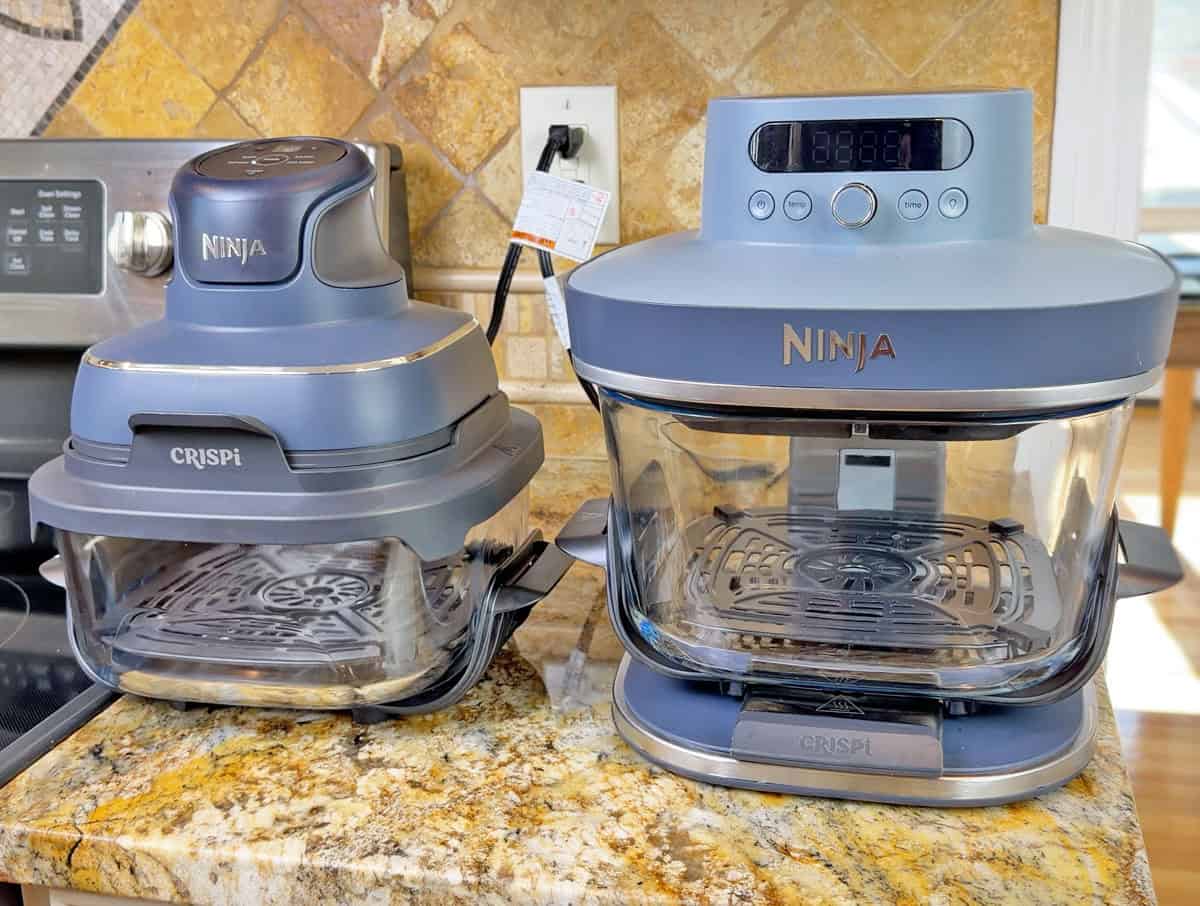
The Ninja Crispi and Ninja Crispi Pro are two of the most unique air fryers on the market right now.
Both use borosilicate glass containers instead of traditional baskets, both market themselves as nontoxic (designed without PFAS and PTFE), and both promise crispy results you can watch happen in real time.
But despite sharing a name and a general concept, they’re actually very different machines with a $100 price gap between them.
I tested both models side by side, cooking frozen fries, chicken wings, butternut squash, and cookies while measuring noise levels, surface temperatures, capacity, and more. The results were surprising, and not always in the Pro’s favor.
Here’s a full breakdown of how the Ninja Crispi and Crispi Pro compare, and which one (if either) is actually worth your money.
Key Takeaways
If you’re in a rush, here’s a quick breakdown of what actually matters before choosing between the Ninja Crispi and the Crispi Pro.
- The cooking surface is identical on both models. Despite the Pro’s larger 6-qt container, both have the same 8×8-inch cooking surface (64 sq in). Both fit 4 bread slices and 11 wings.
- The Pro adds precise temperature control. The original Crispi only offers preset modes with no way to set a specific temperature. The Pro lets you dial in from 80 to 450°F in 5-degree increments.
- Cooking performance was nearly identical. Fries, wings, and squash came out great on both. Cookies struggled on both due to top-down-only heating.
- The original Crispi has a real safety concern. Its detachable PowerPod means exposed hot coils sitting just two inches above your counter. The Pro’s fixed base eliminates this.
- The Pro has quality control problems. Many customers have reported E2 errors out of the box, units turning on by themselves, and chemical smells from the rubber components. It’s also the loudest air fryer I tested at 67 dBA.
- Neither is the best value for most people. Traditional air fryers like the Instant Pot Vortex Plus and COSORI TurboBlaze offer more cooking space, quieter operation, and fewer issues at a lower price.
Bottom Line: The Crispi Pro is the better of the two if you want a glass air fryer, but at $280 with a small cooking surface and notable quality issues, most people are better off with a traditional air fryer.
Compare prices and learn more about both at the links below:
- Ninja Crispi on SharkNinja.com and Amazon
- Ninja Crispi Pro on SharkNinja.com and Amazon
Use the links below to navigate the comparison:
- Comparison Chart
- Design and Build
- Cooking Functions
- Cooking Performance
- Capacity
- Safety and Usability
- Bottom Line: Should You Buy the Ninja Crispi or Crispi Pro?
Comparison Chart
| Feature | Ninja Crispi | Ninja Crispi Pro |
|---|---|---|
| Price | $180 (SharkNinja.com) | $280 (SharkNinja.com) |
| Containers Included | 4-qt + 6-cup | 6-qt + 2.5-qt |
| Cooking Functions | 4 (Max Crisp, Air Fry, Bake, Recrisp) | 6 (Max Crisp, Air Fry, Bake/Proof, Roast, Recrisp, Dehydrate) |
| Temperature Control | Preset modes only (375–450°F) | Adjustable, 80–450°F in 5° increments |
| Wattage | 1500W | 1800W |
| Cooking Surface | 8″ x 8″ (64 sq in) | 8″ x 8″ (64 sq in) |
| Wings Capacity | 11 | 11 |
| Total Weight | 9.1 lbs | 17.5 lbs |
| Large Container Weight | 4.2 lbs | 5.2 lbs |
| Dimensions (W x D x H) | 11.5″ x 9.75″ x 11.25″ | 12.2″ x 11.8″ x 12.25″ |
| Cord Length | 36″ | 33.25″ |
| Noise Level | 62 dBA | 67 dBA |
| Heating Element | Detachable (lifts off) | Fixed in base (overhead) |
| Portable | Yes | No |
| Container Shape | Straight-sided | Tapered |
| Warranty | 1 year | 1 year |
Design and Build
The biggest design difference between the Ninja Crispi and Crispi Pro is where the heating element lives, and it changes the entire experience of using each machine.
The original Crispi uses what Ninja calls the “PowerPod,” a detachable unit that contains the heating element, fan, and controls. You place a glass container on any flat surface, set the PowerPod on top, and it cooks from above.
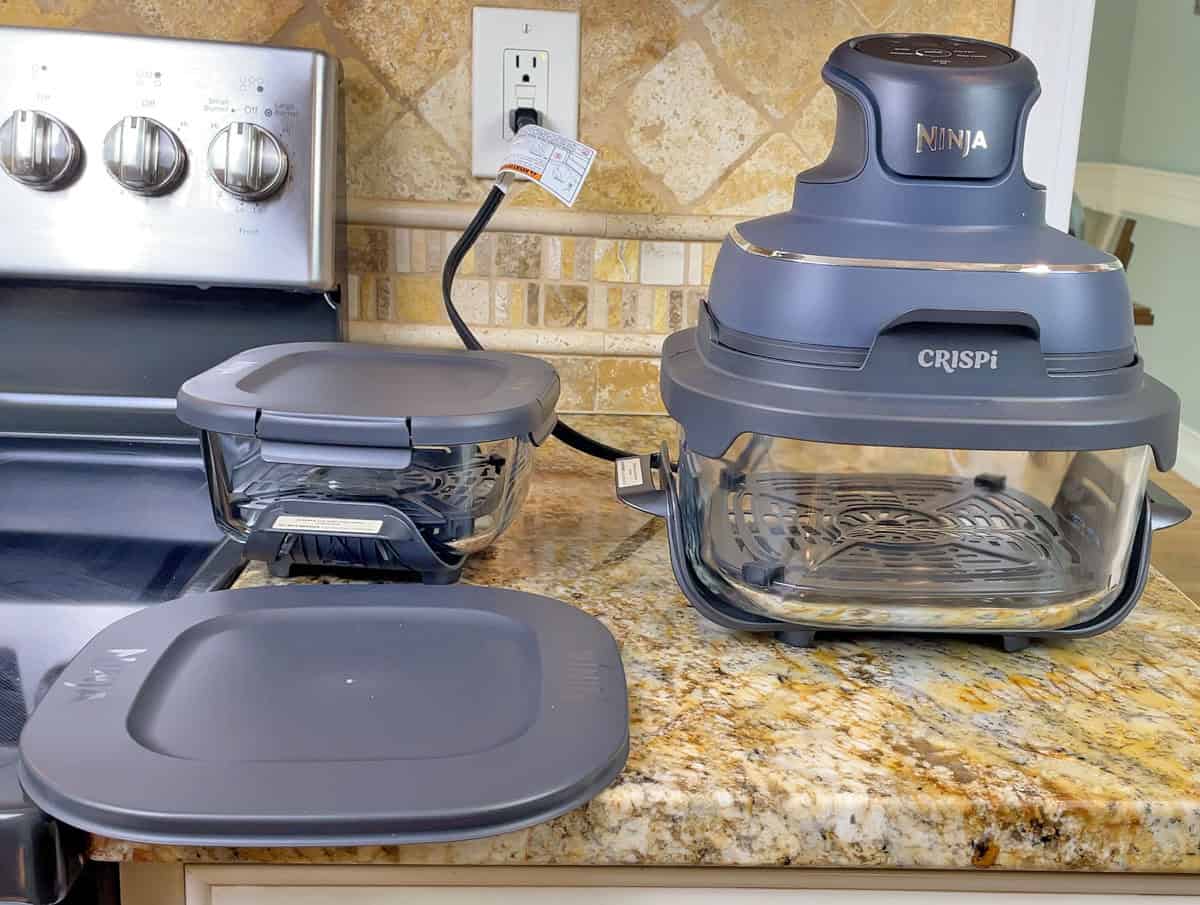
When you want to check your food or serve, you lift the entire PowerPod off and set it down somewhere else. It’s a unique concept, and it’s what makes the Crispi portable. You can technically bring it anywhere there’s an outlet.
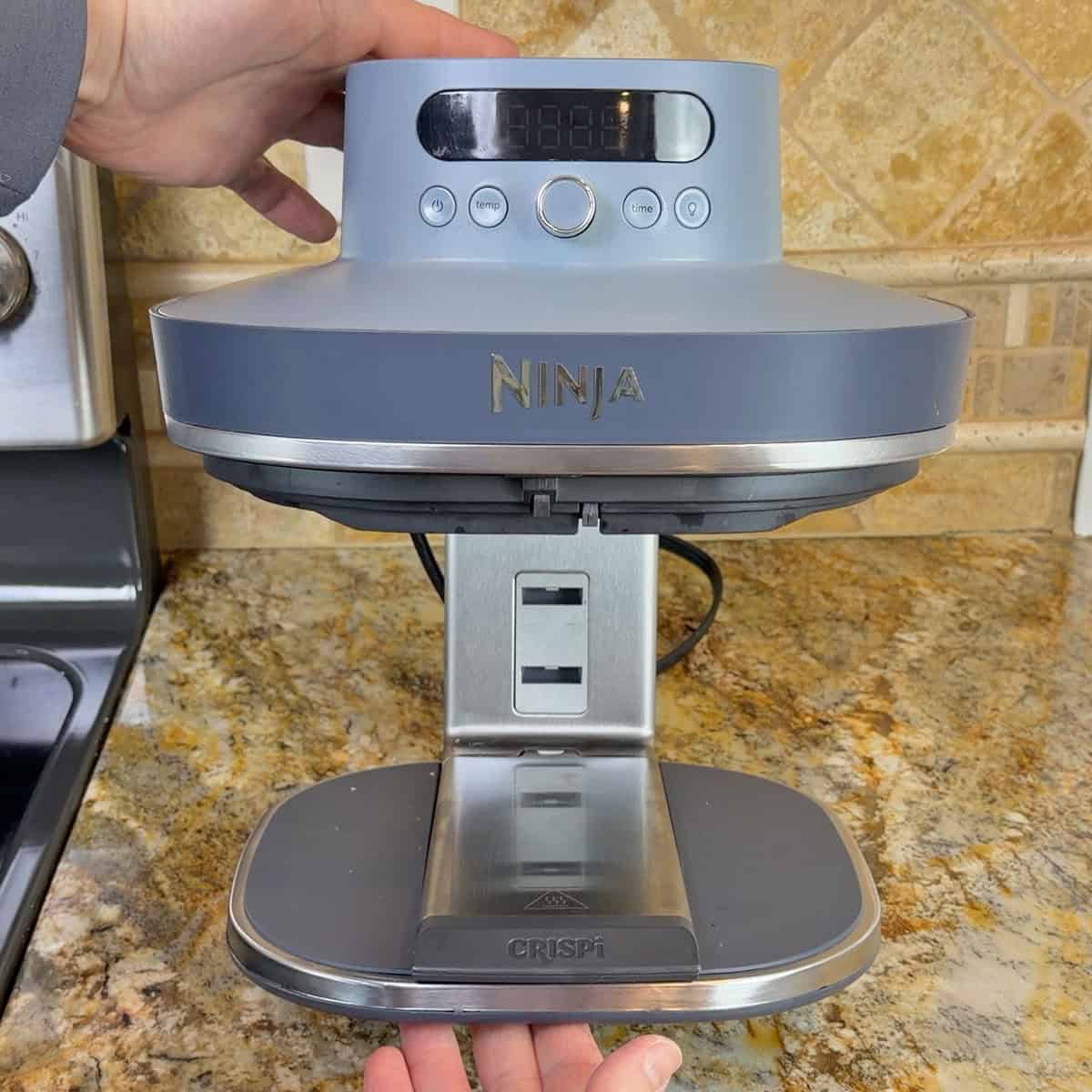
The Crispi Pro works more like a traditional countertop appliance. It has a fixed base unit with the heating element mounted overhead, and you insert the glass container into a modular platform from the top.
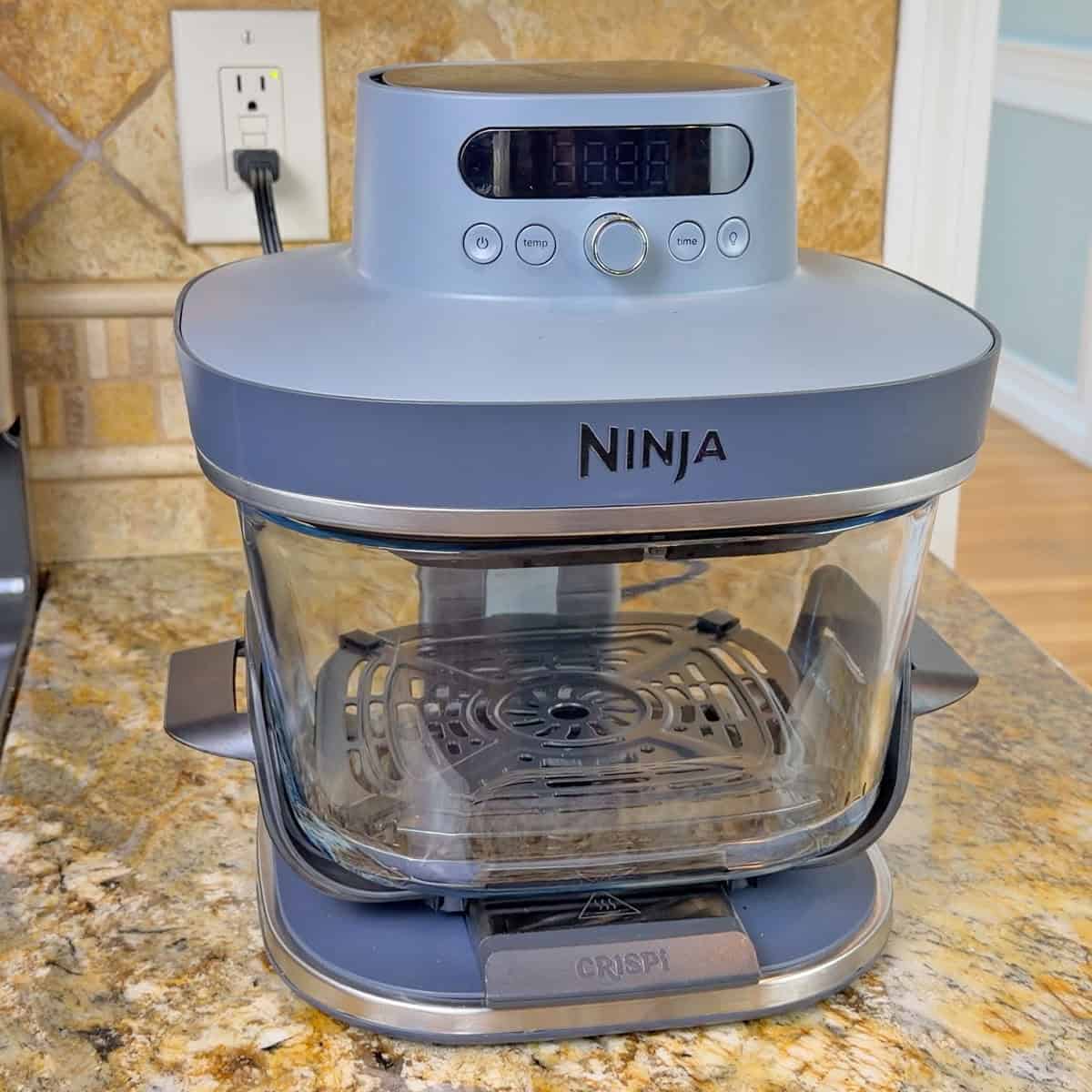
That platform has three height settings to accommodate the 2.5-qt, 4-qt (sold separately for $50), and 6-qt containers. It’s a more conventional setup, and at 17.5 pounds total, it’s clearly meant to stay on your counter.
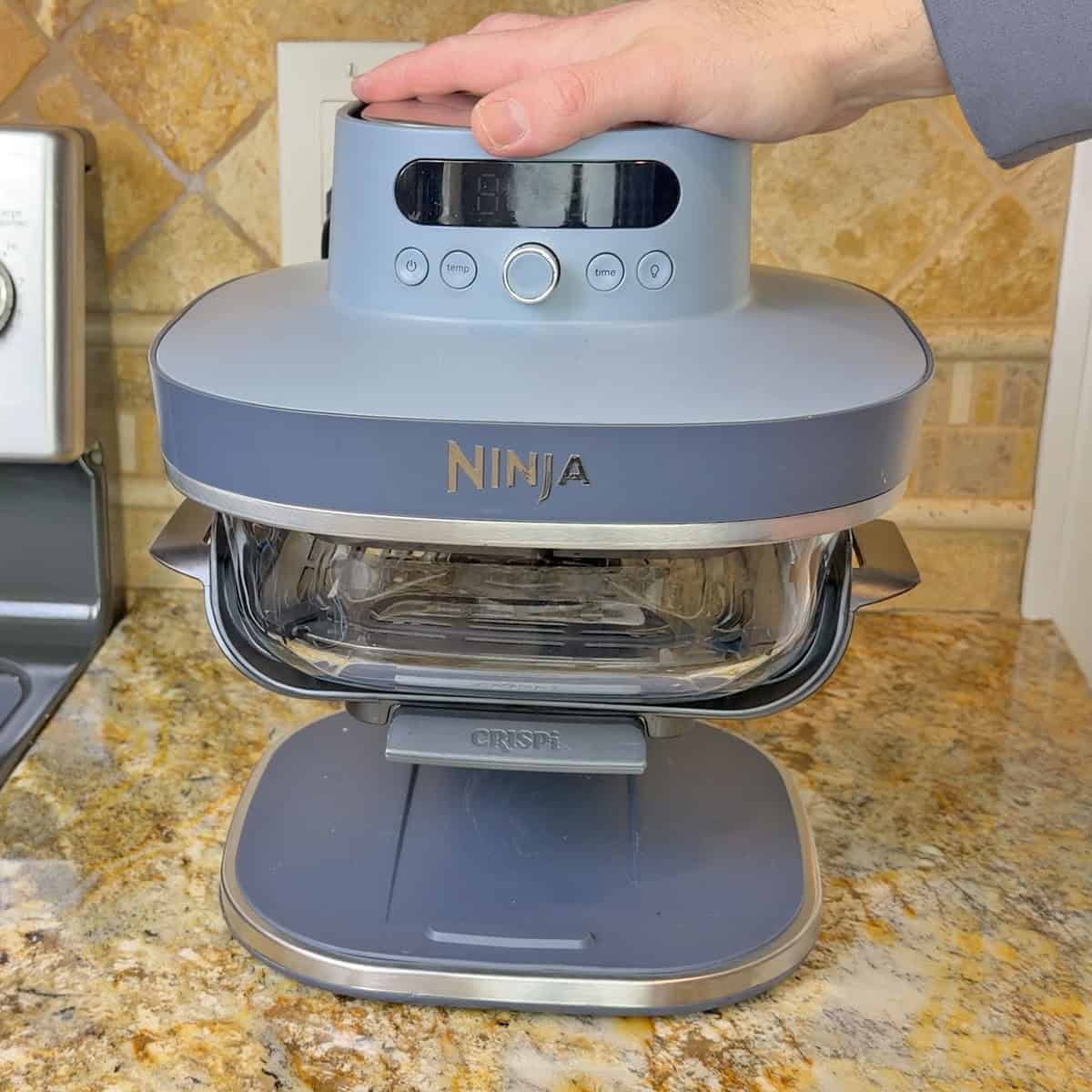
Both models use borosilicate glass containers with ceramic-coated aluminum crisper plates. Both include BPA-free plastic storage lids so you can cover leftovers and put them straight in the fridge. The materials themselves are the same.
Where things start to separate is in the container design. The original Crispi has straight-sided glass containers, which means the crisper plate sits flat and secure at the bottom. The Pro’s containers are tapered, wider at the top and narrower at the bottom. This causes the crisper plate to fit less securely.
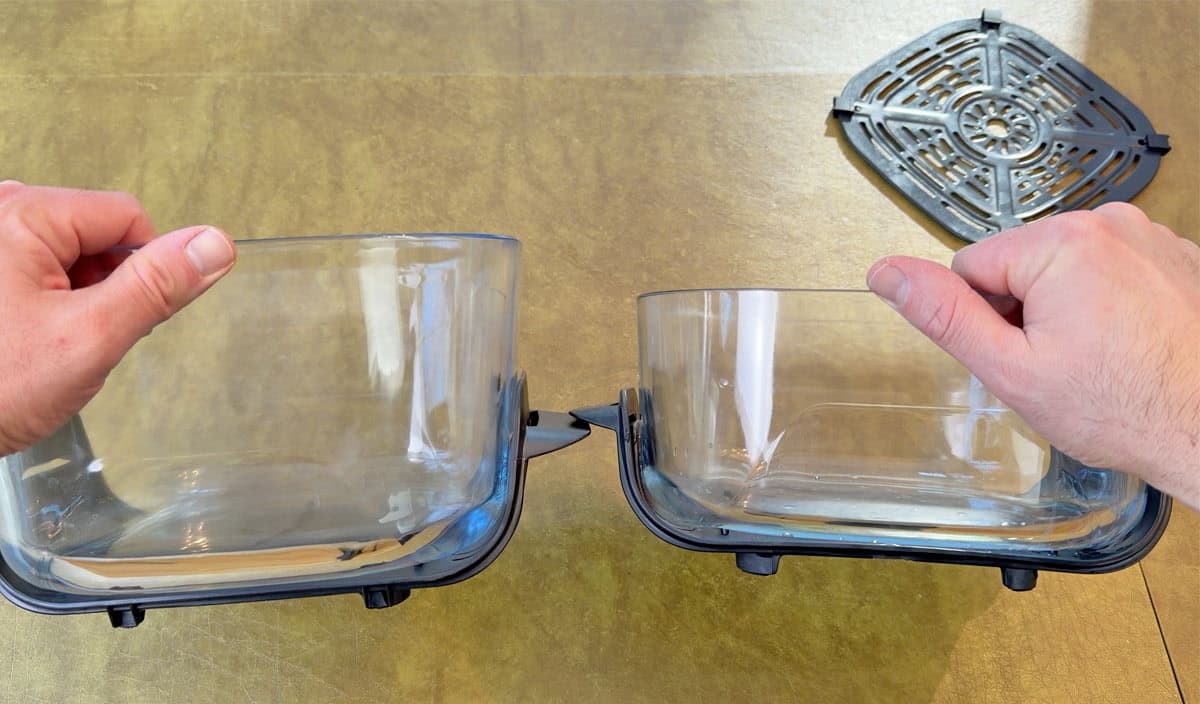
In my testing, the plate would spring up in the corners and even fall out if I tipped the container at an angle. It’s not a dealbreaker, but it’s a noticeable step down in fit compared to the original.
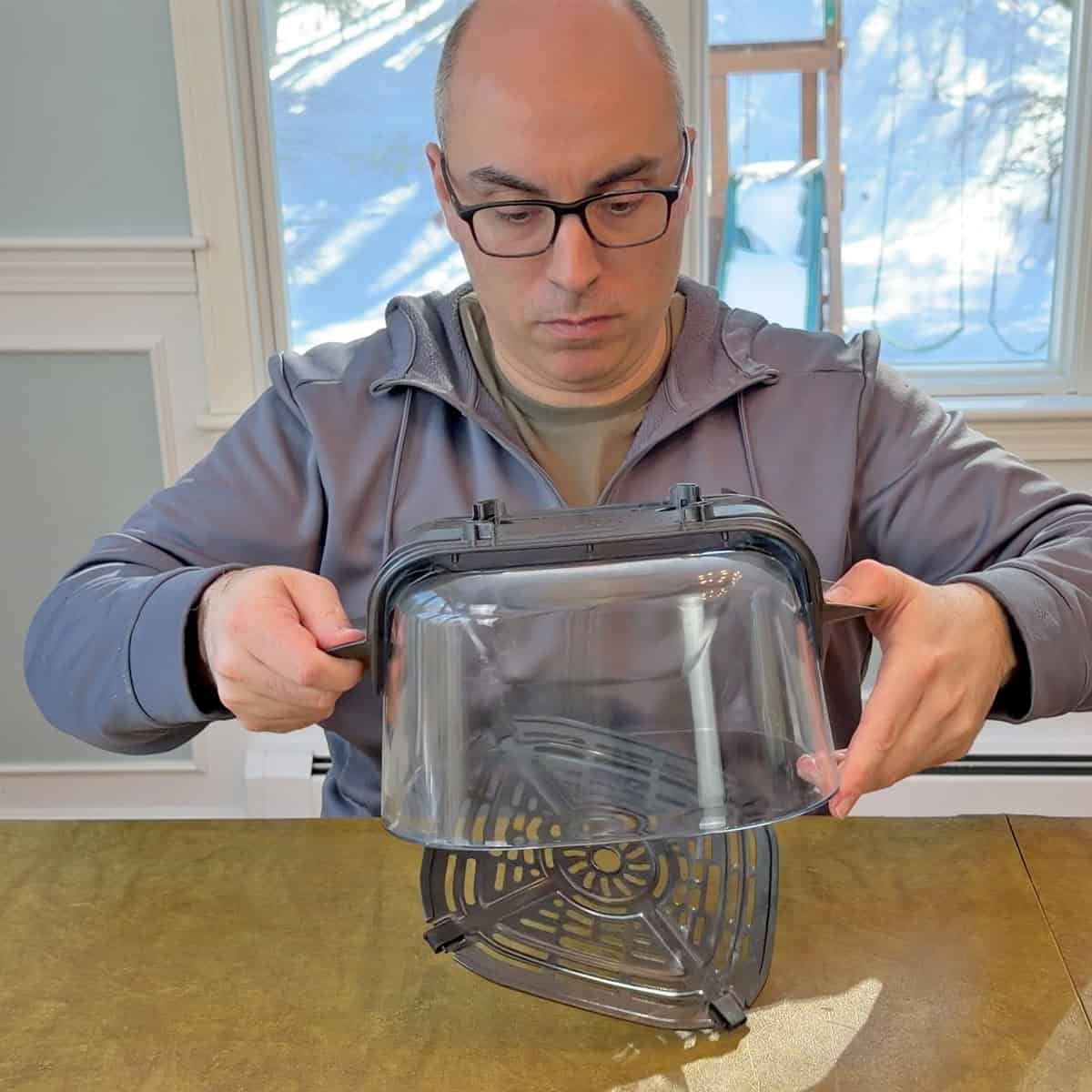
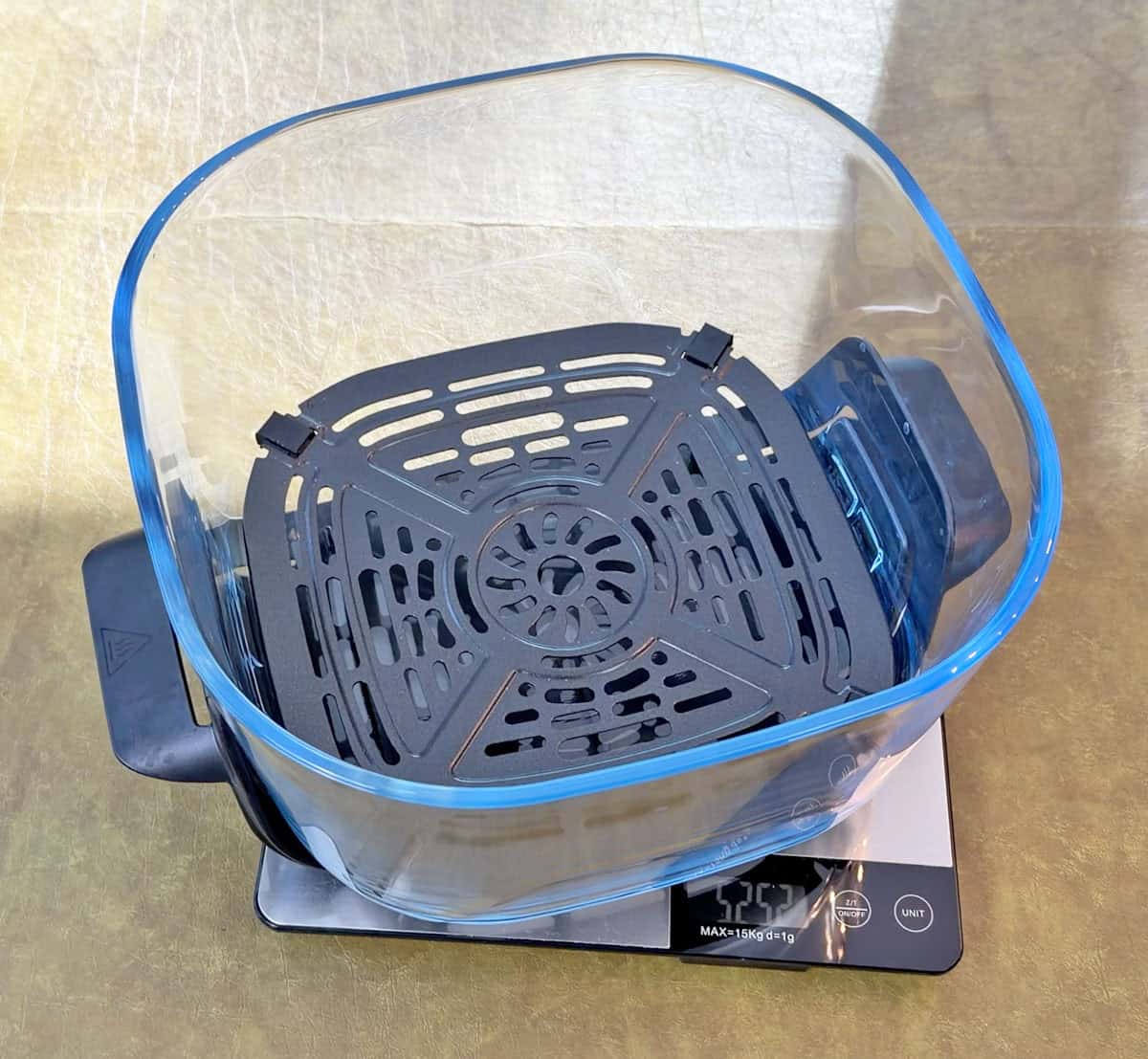
The weight difference is also significant in everyday use. The Crispi’s large container weighs 4.2 pounds, and the Pro’s weighs 5.2 pounds. That might not sound like much on paper, but when the glass is scorching hot and you’re trying to move it with two hands, every pound counts.
Temperature Control and Cooking Functions
This is where the Crispi Pro has its biggest advantage on paper. The original Crispi gives you four preset cooking modes:
- Recrisp (380–400°F)
- Air Fry (400–425°F)
- Max Crisp (425–450°F)
- Bake (375–400°F)
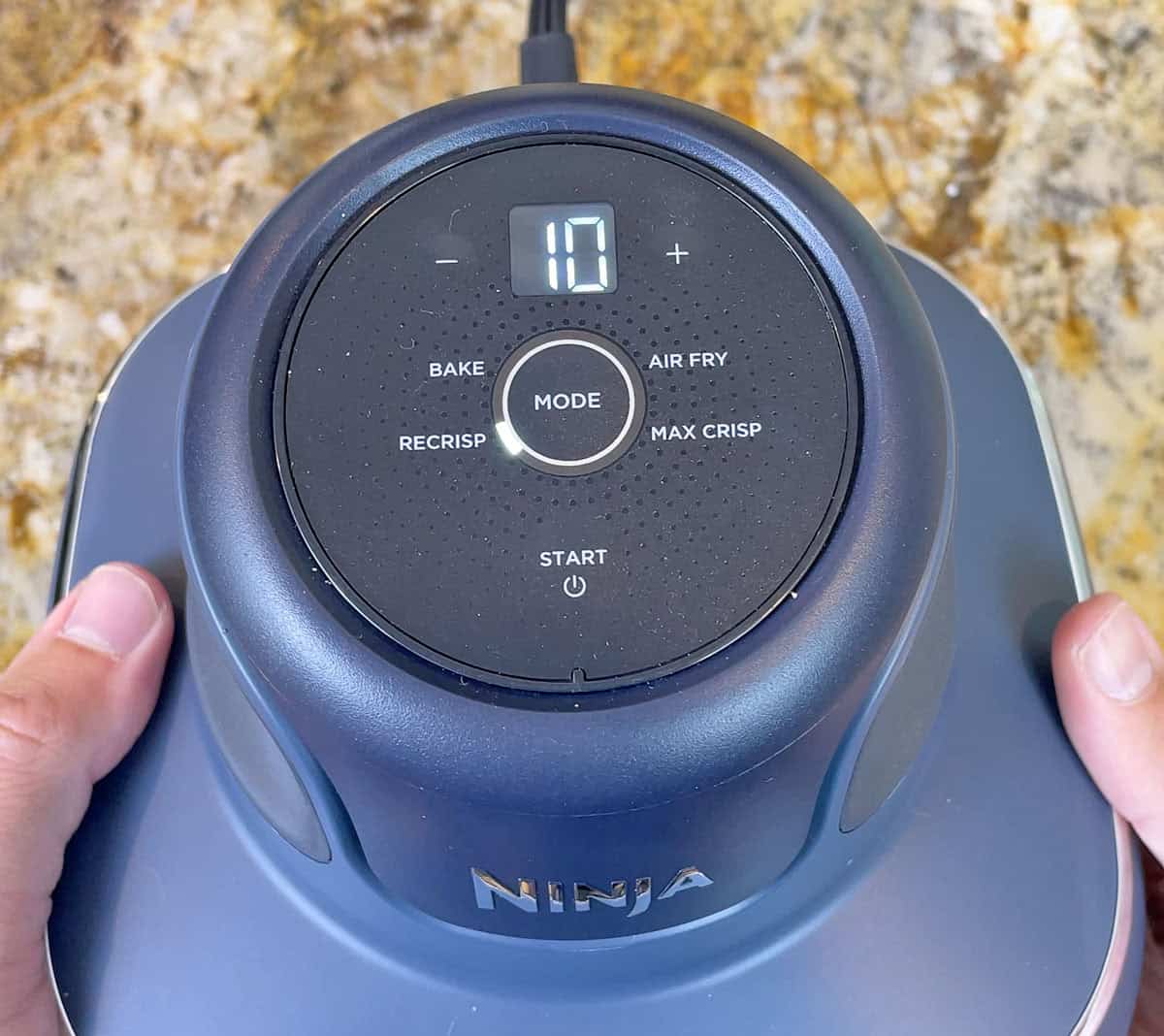
There’s no way to set a specific temperature. If a recipe calls for 350°F or 375°F exactly, you’re stuck picking the closest mode and hoping for the best.
The Crispi Pro fixes this entirely. You get precise temperature control from 80°F all the way up to 450°F in 5-degree increments. It also adds two extra cooking functions, Roast and Dehydrate, bringing the total to six. The dehydrate function in particular opens up a use case the original Crispi can’t touch, and the low end of 80°F gives you options for proofing dough or gently warming food.
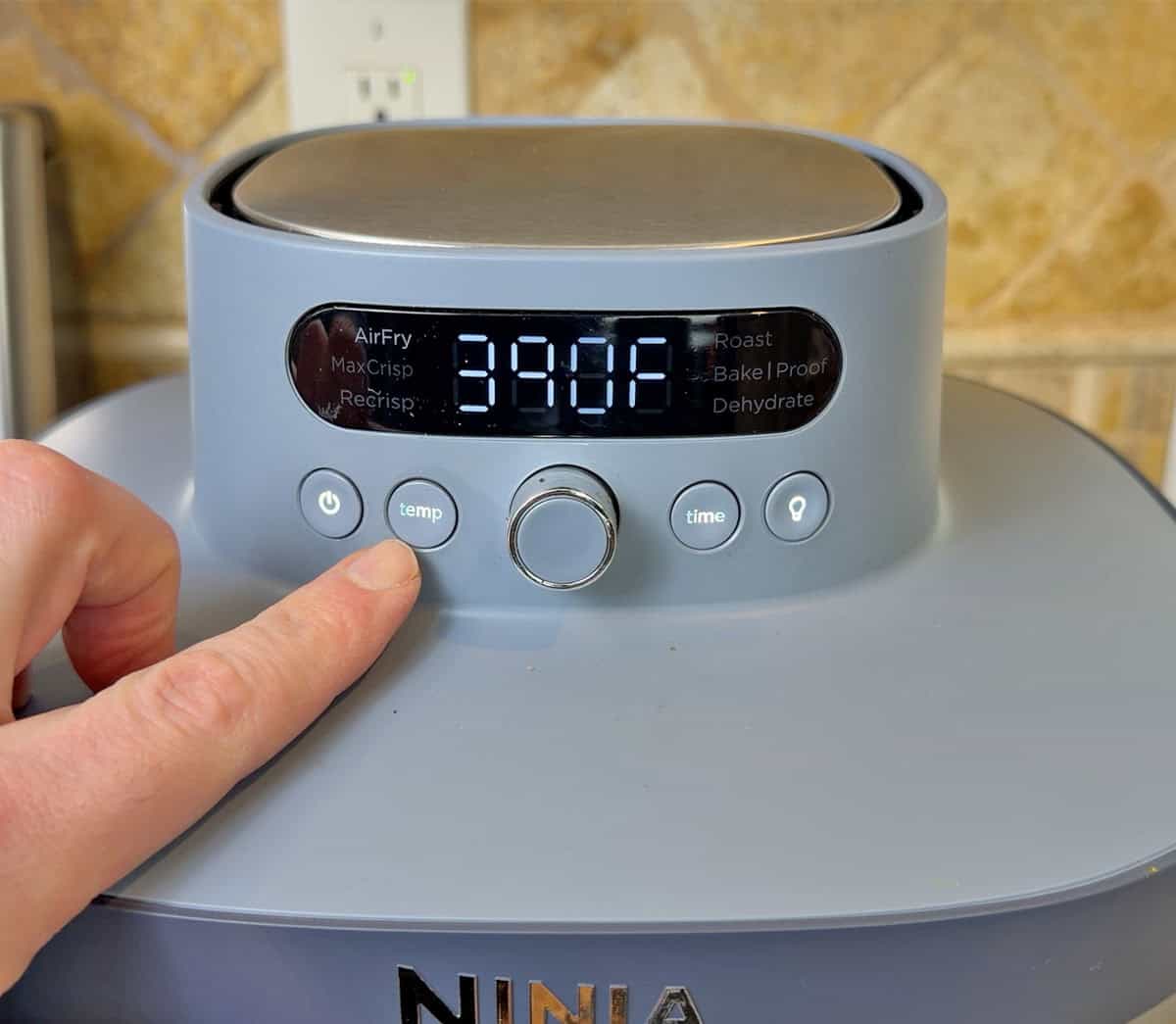
For anyone who likes to follow recipes precisely or experiment with different temperatures, the Pro is clearly the better tool. That said, the performance gap between the two was much smaller than the spec sheet would suggest, which brings us to the actual test results.
Cooking Performance
I ran both models through the same set of tests, and the results were close enough that you’d have a hard time telling the food apart.
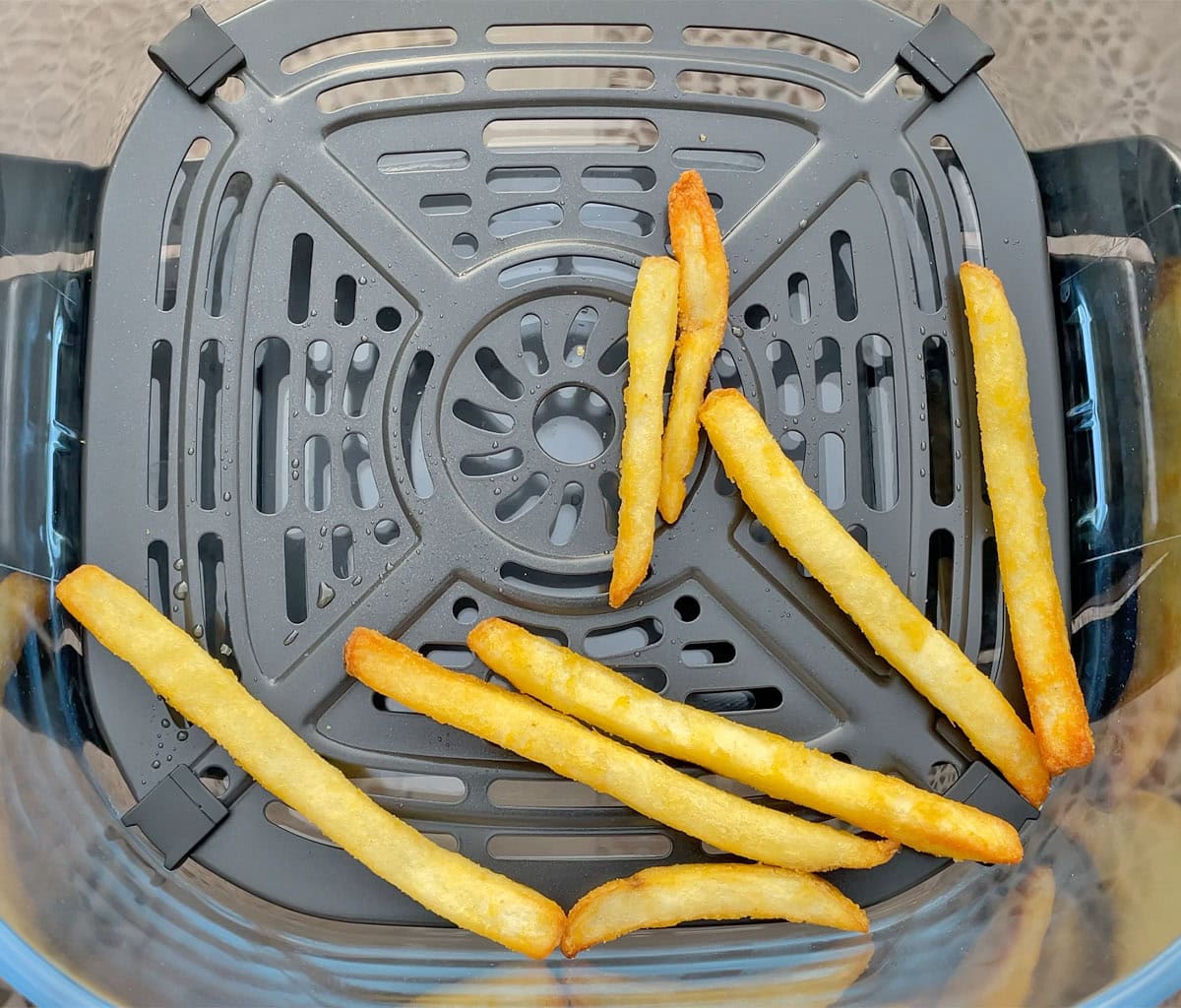
Frozen fries came out perfect on both machines. Crispy exterior, fluffy interior, evenly cooked. About 10 minutes from frozen to done.
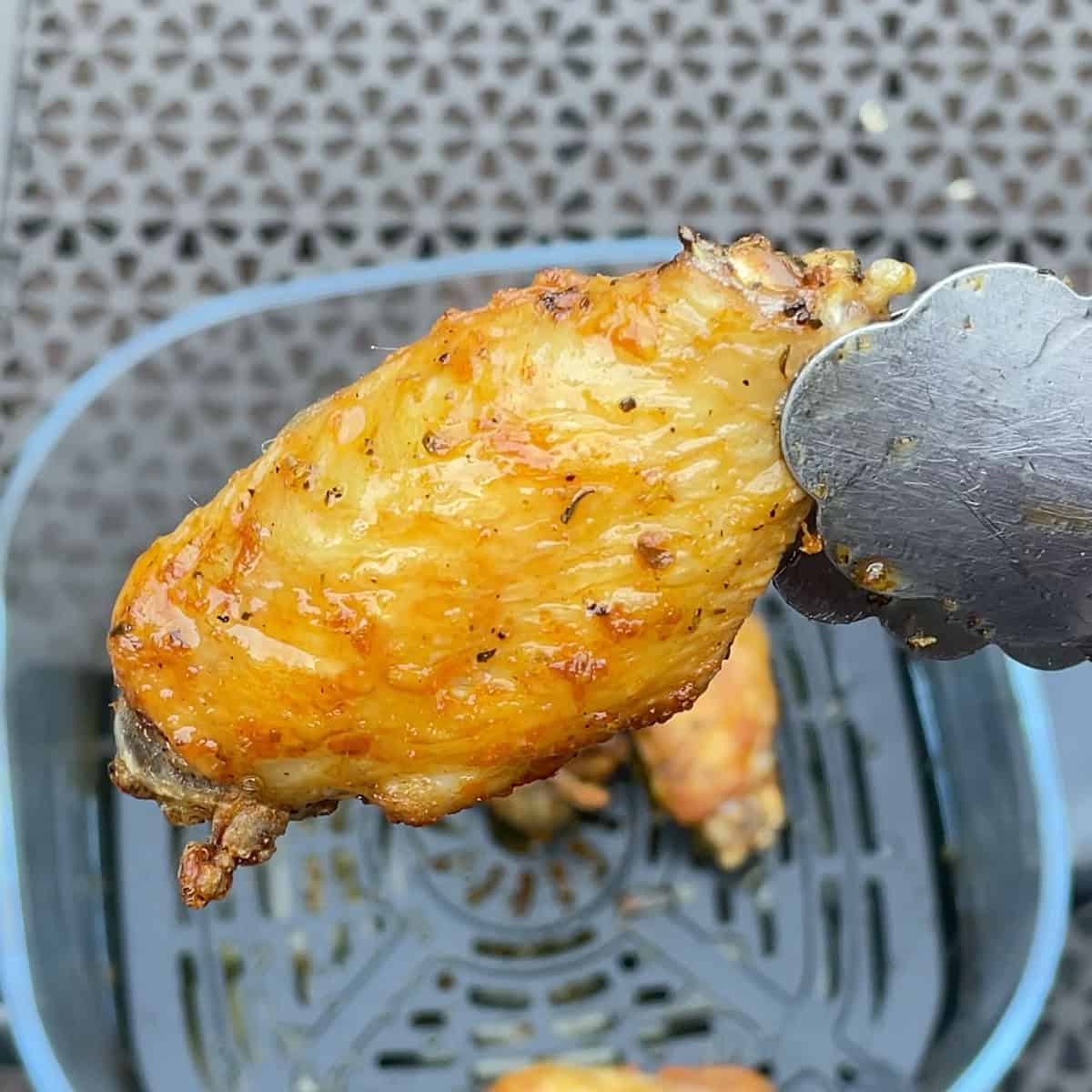
Wings were also excellent on both, finishing in roughly 23 minutes with crispy, evenly browned skin all around. No flipping needed on either model.
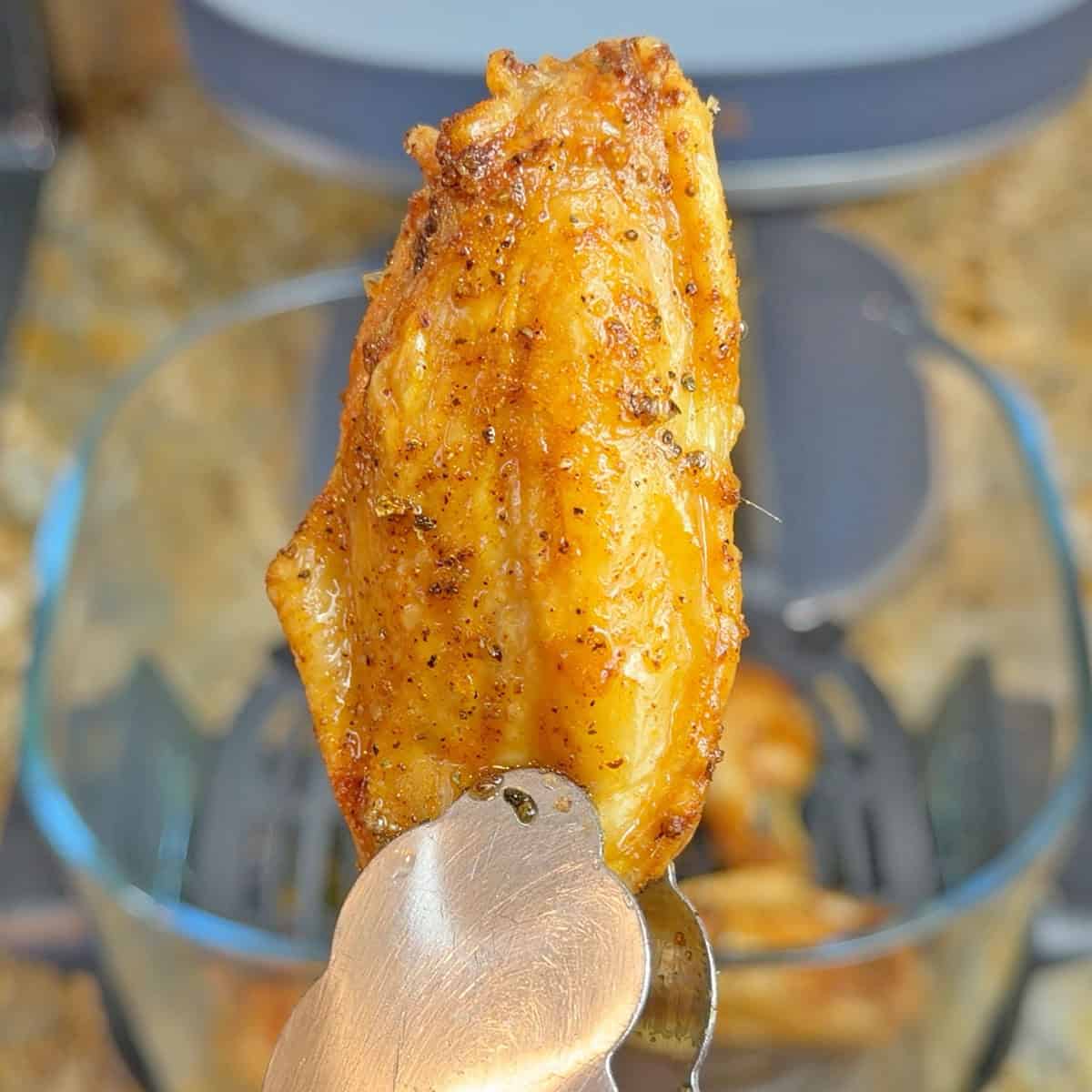
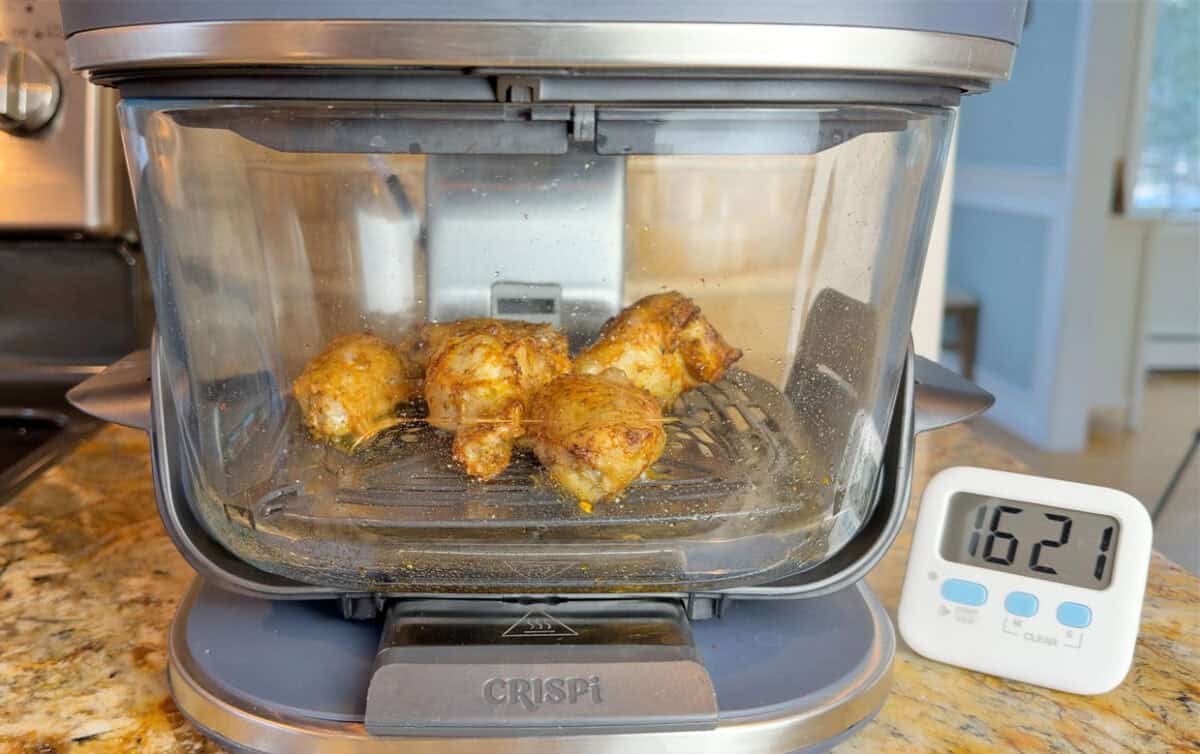
One advantage both models share is the glass cooking container. You can see the food as it cooks, which is more useful than it sounds. You don’t need to open the unit to check progress, so heat stays inside and cooking remains consistent. It also makes it easy to tell exactly when food is ready or when something actually needs to be flipped instead of guessing.
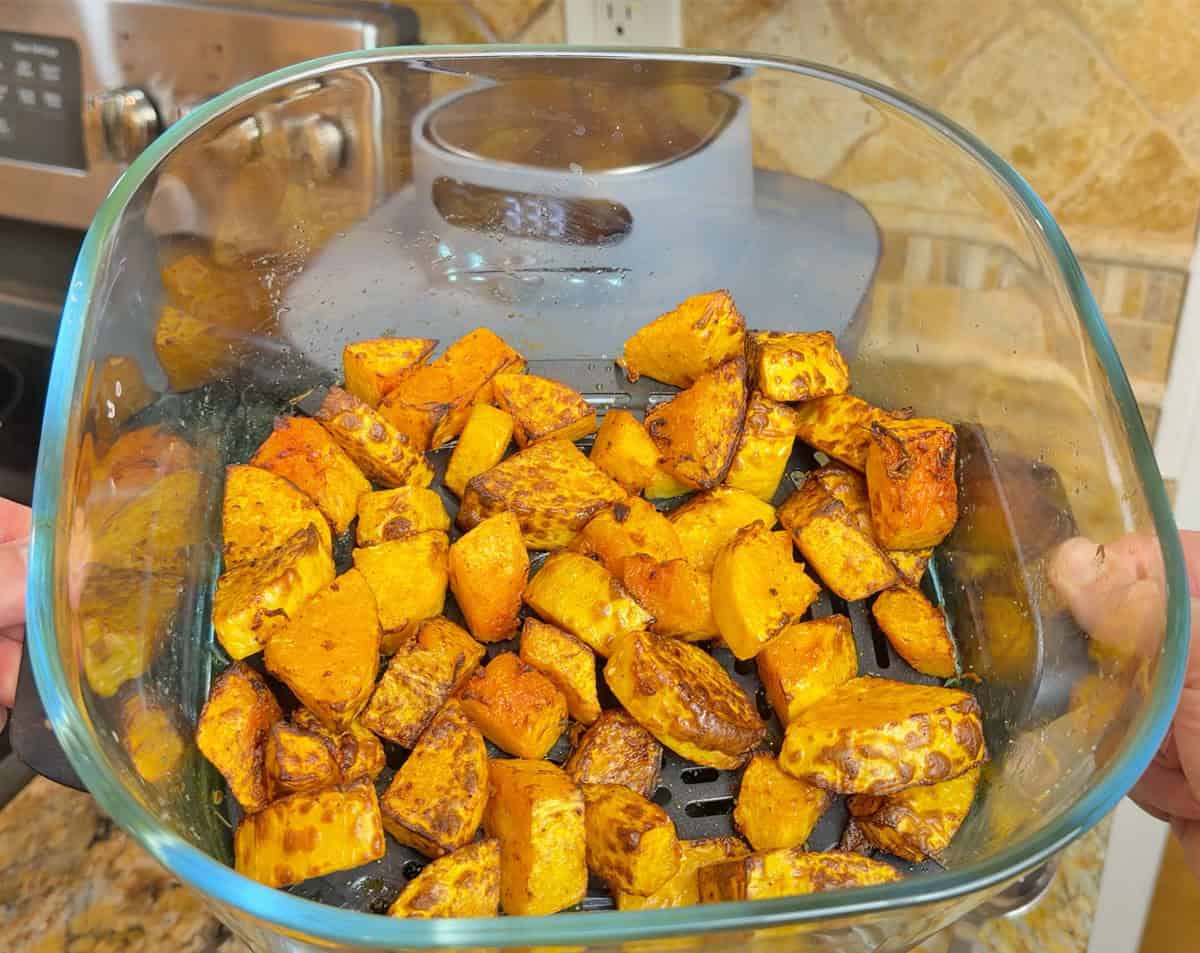
Butternut squash cooked evenly on both, though the Pro browned the exterior a bit faster than the squash softened inside. A small temperature adjustment fixed this, which is something you can actually do on the Pro thanks to its precise controls. On the original Crispi, you’d just have to accept whatever the preset mode gives you.
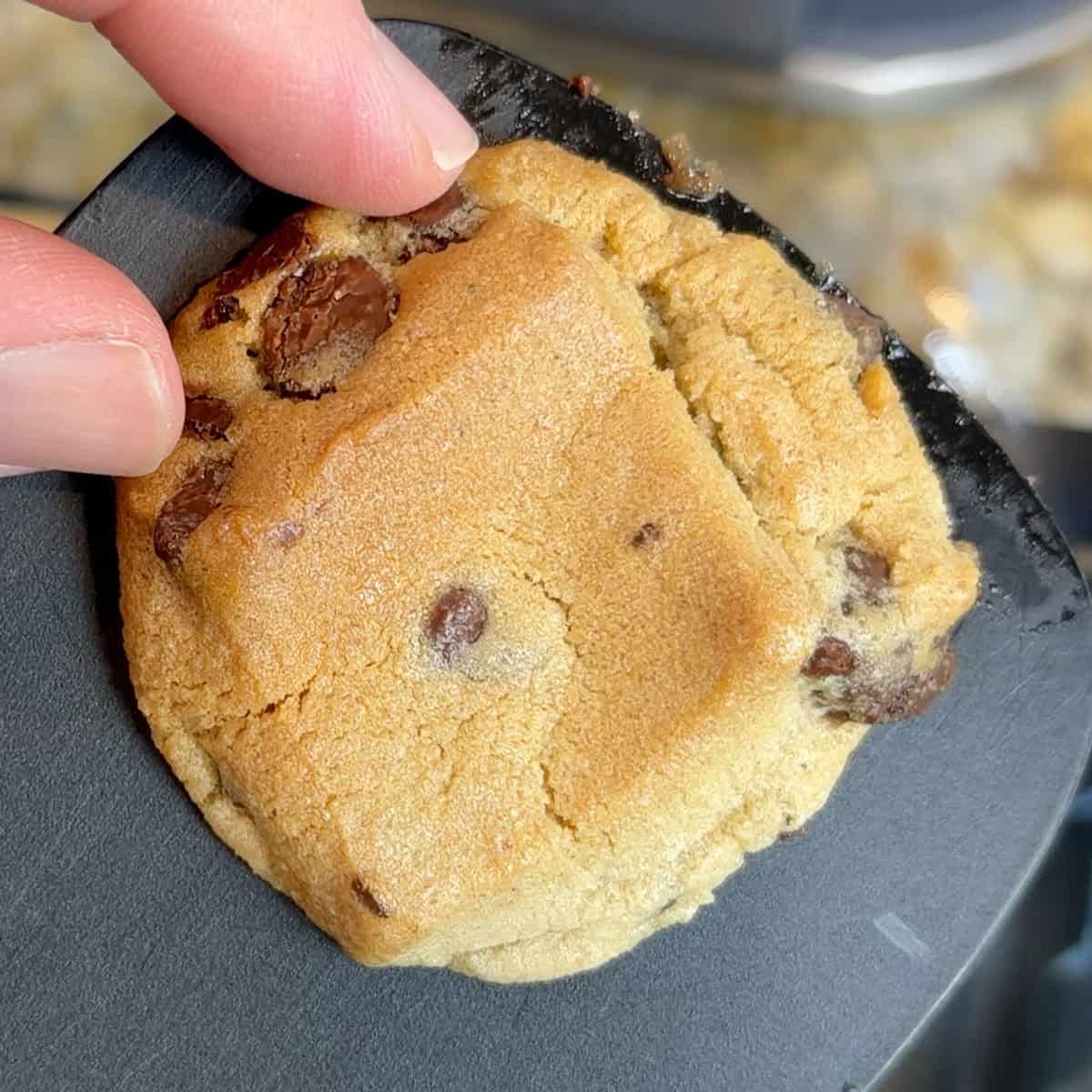
Cookies were the weak spot for both. The tops browned too quickly while the bottoms stayed underdone, and the dough stuck to the glass surface on both models. This is a limitation of top-down-only heating. Without a heating element below the food, baked goods don’t get the bottom heat they need. It’s not a flaw unique to either model.

The takeaway here is that the Pro’s extra 300 watts of power and precise temperature control didn’t produce noticeably better results in the tests that matter most. For air frying and crisping, both machines deliver solid performance.
Capacity
This is one of the most misleading aspects of the Crispi Pro. Ninja’s product page says the 6-qt container can serve up to 10 people and fit a 7.5-pound chicken. Those claims are technically about volume, not usable cooking space, and the difference matters a lot.
Both the Crispi and the Crispi Pro have an identical 8-by-8-inch cooking surface. That’s 64 square inches on each model, regardless of which container you use.
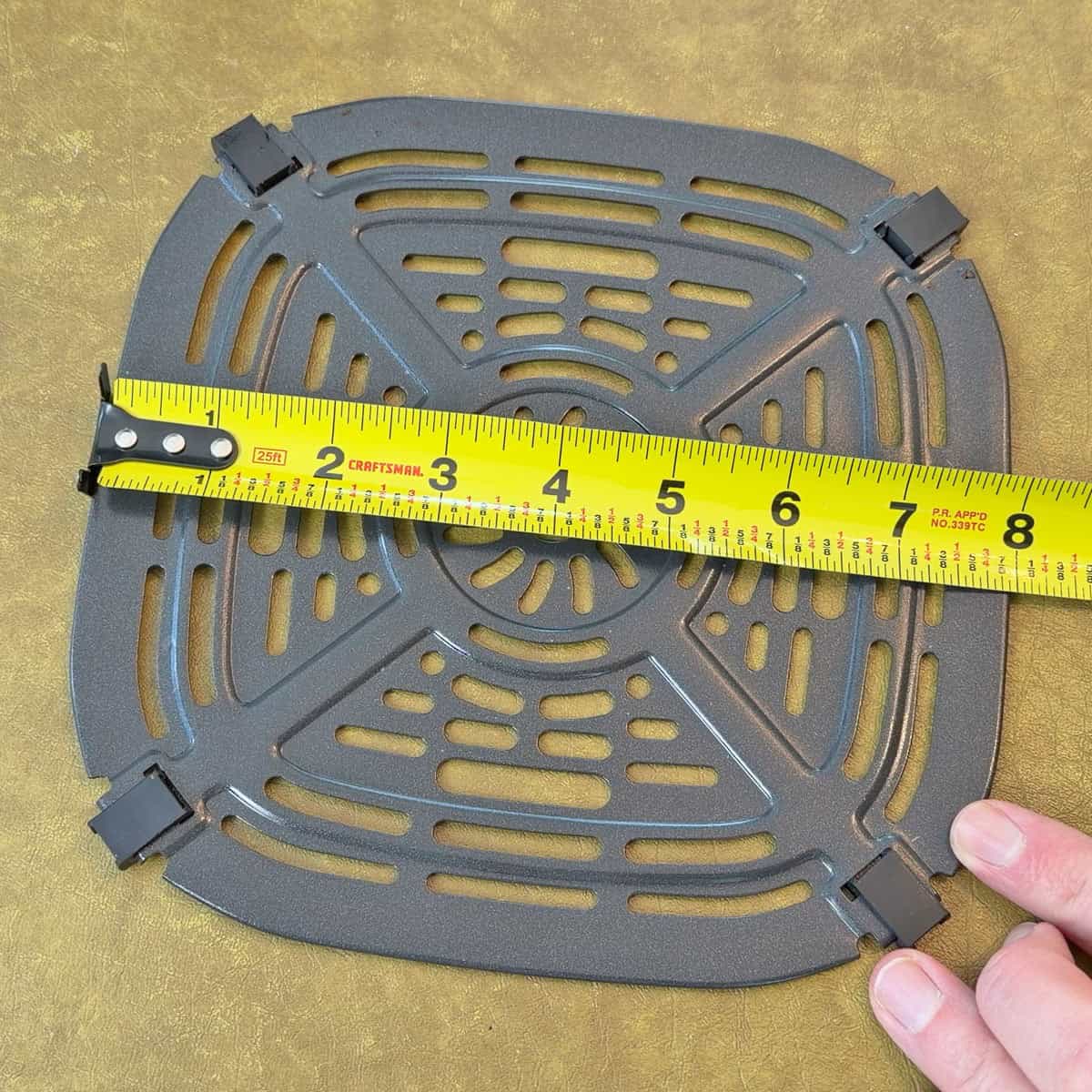
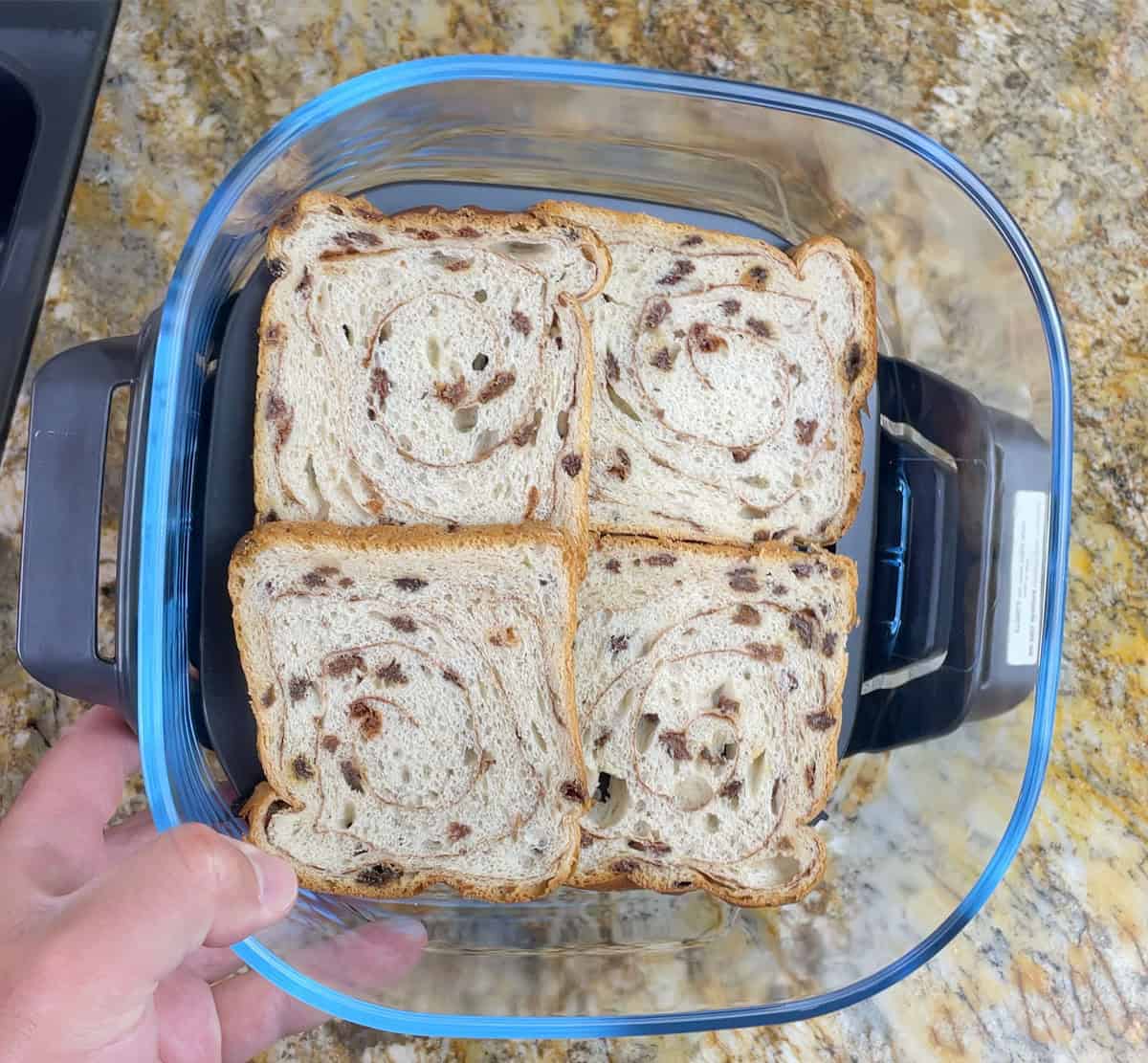
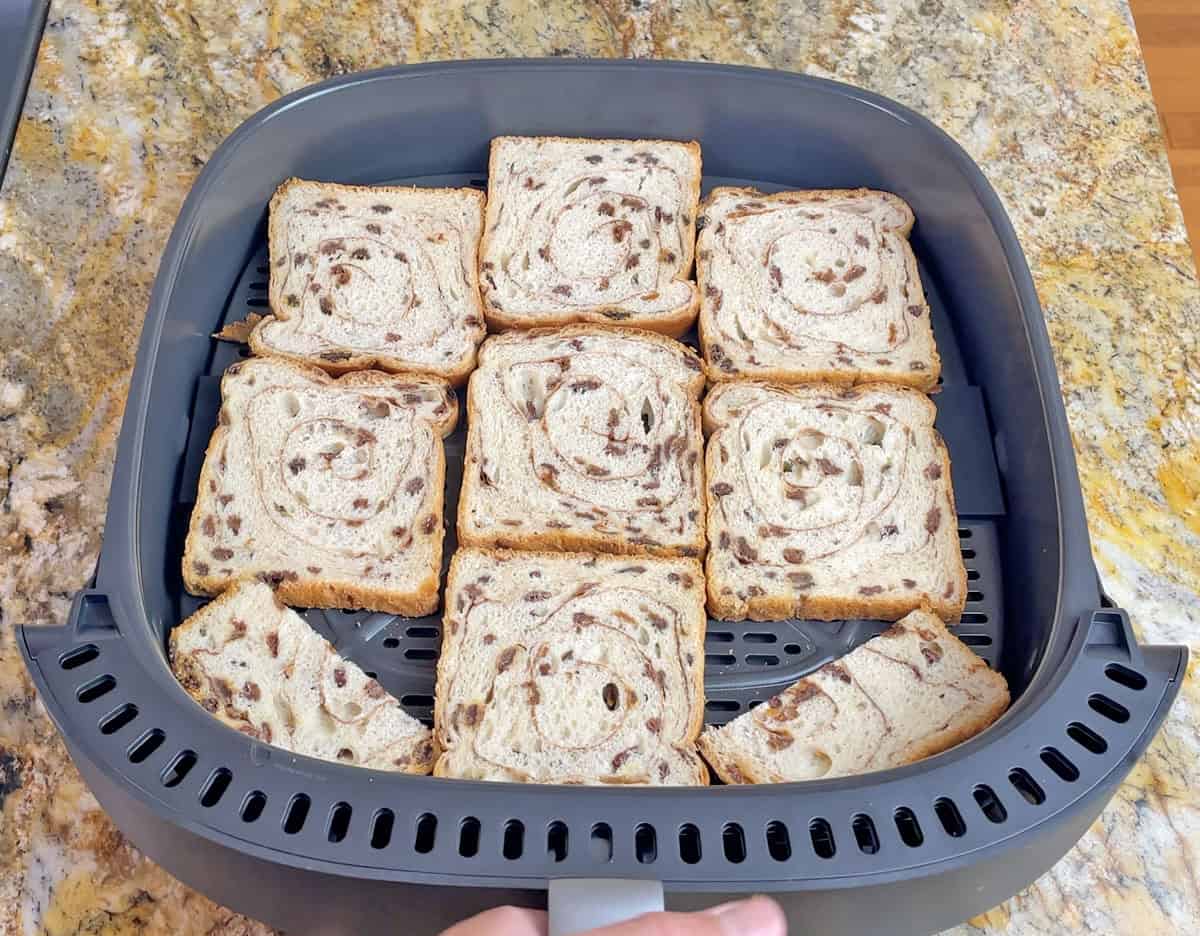
In my testing, both fit the same amount of food: four overlapping slices of bread and 11 chicken wings. The Pro’s higher quart rating comes from the container being taller, not wider, and since the tapered shape narrows toward the bottom, the extra volume doesn’t translate to extra food on the crisper plate.
To put this in perspective, the Typhur Dome 2 has 144 square inches and fits 8 slices of bread. Both Crispis are on the smaller end for air fryers in this price range.
It’s also worth noting that the Crispi Pro doesn’t include a 4-qt container. You get the 6-qt and the 2.5-qt. If you want something in between, the 4-qt is a $50 add-on. The original Crispi comes with both a 4-qt and a 6-cup container, which is a more practical everyday pairing.
Safety and Usability
Both models share some frustrating usability issues. The glass containers get extremely hot during cooking. I measured surface temperatures above 190°F, and they stay hot for five to ten minutes after cooking ends.
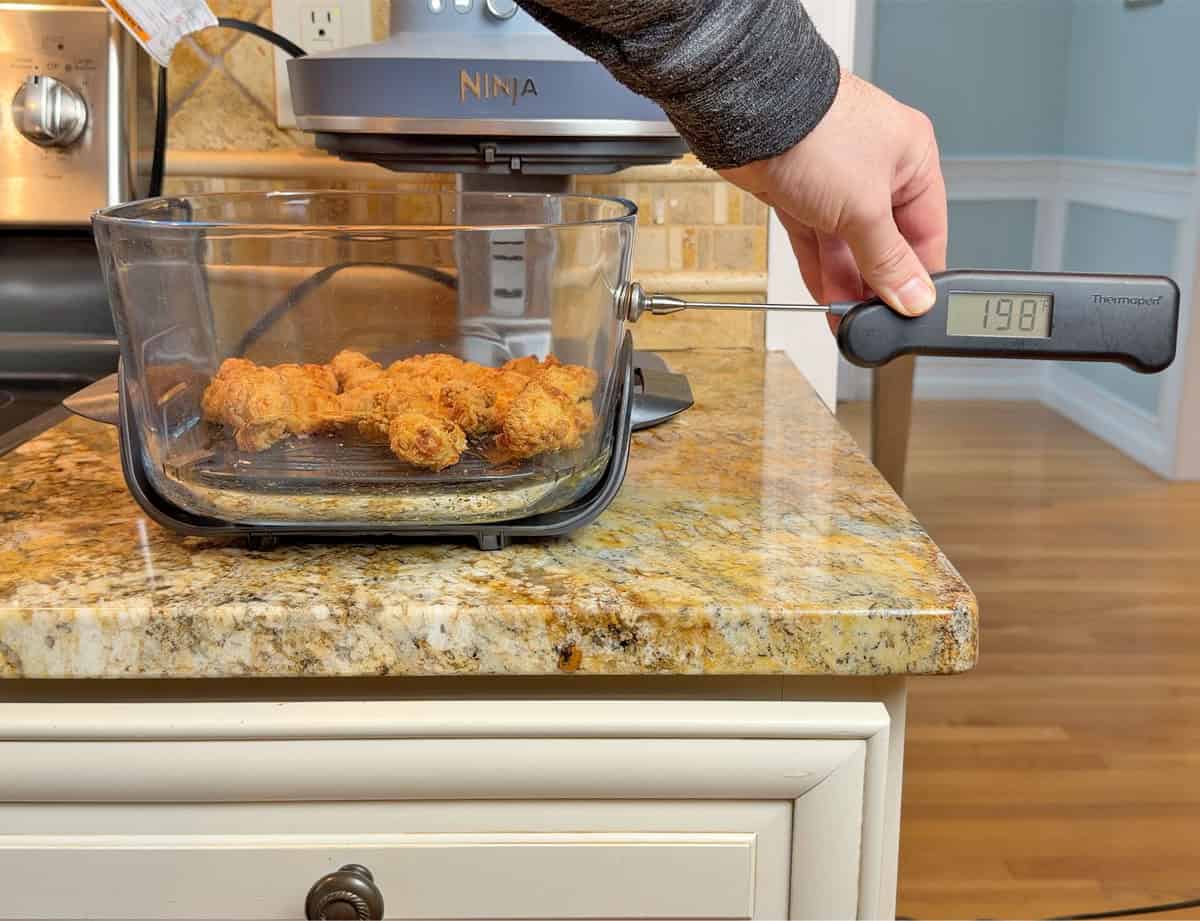
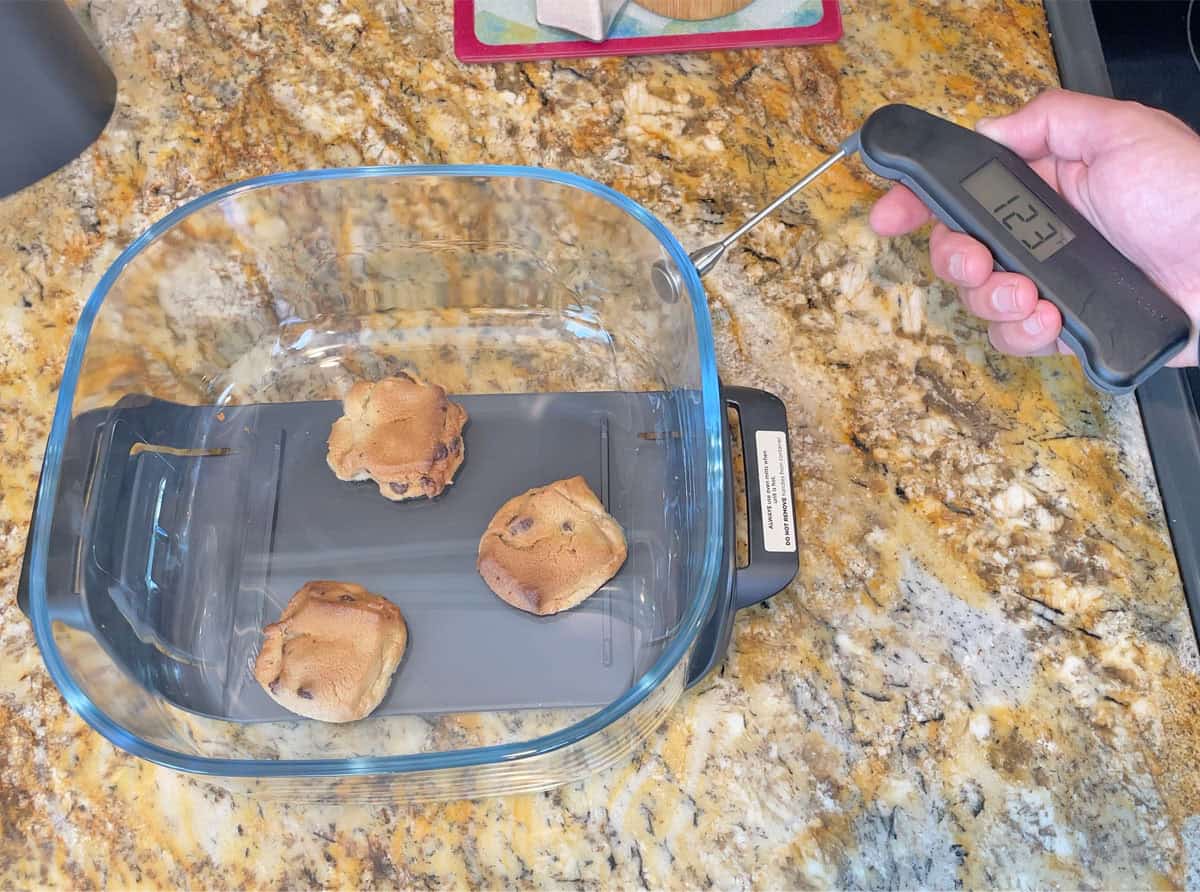
Because the containers are heavy (4+ pounds on the Crispi, 5+ on the Pro), you really need two hands to move them safely. There’s also a gap between the glass and the plastic base on both models that traps food debris and water, with no good way to clean it out thoroughly.
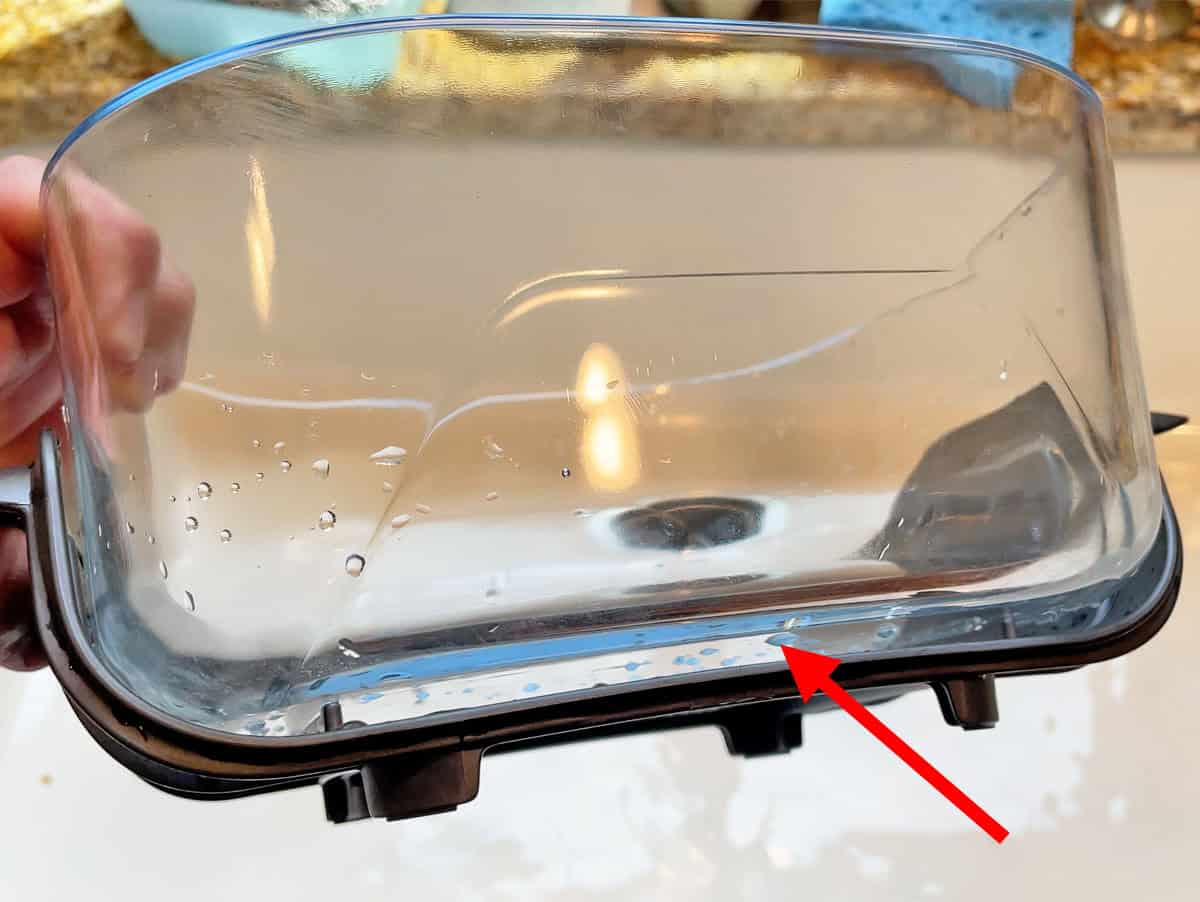
Beyond the shared issues, each model has its own problems.
The original Crispi’s detachable PowerPod is, in my opinion, a genuine safety concern. When you lift it off the glass to check or serve your food, you’re holding a unit with exposed hot coils on the bottom. You set it down on your counter, and those coils sit just about two inches above the surface.
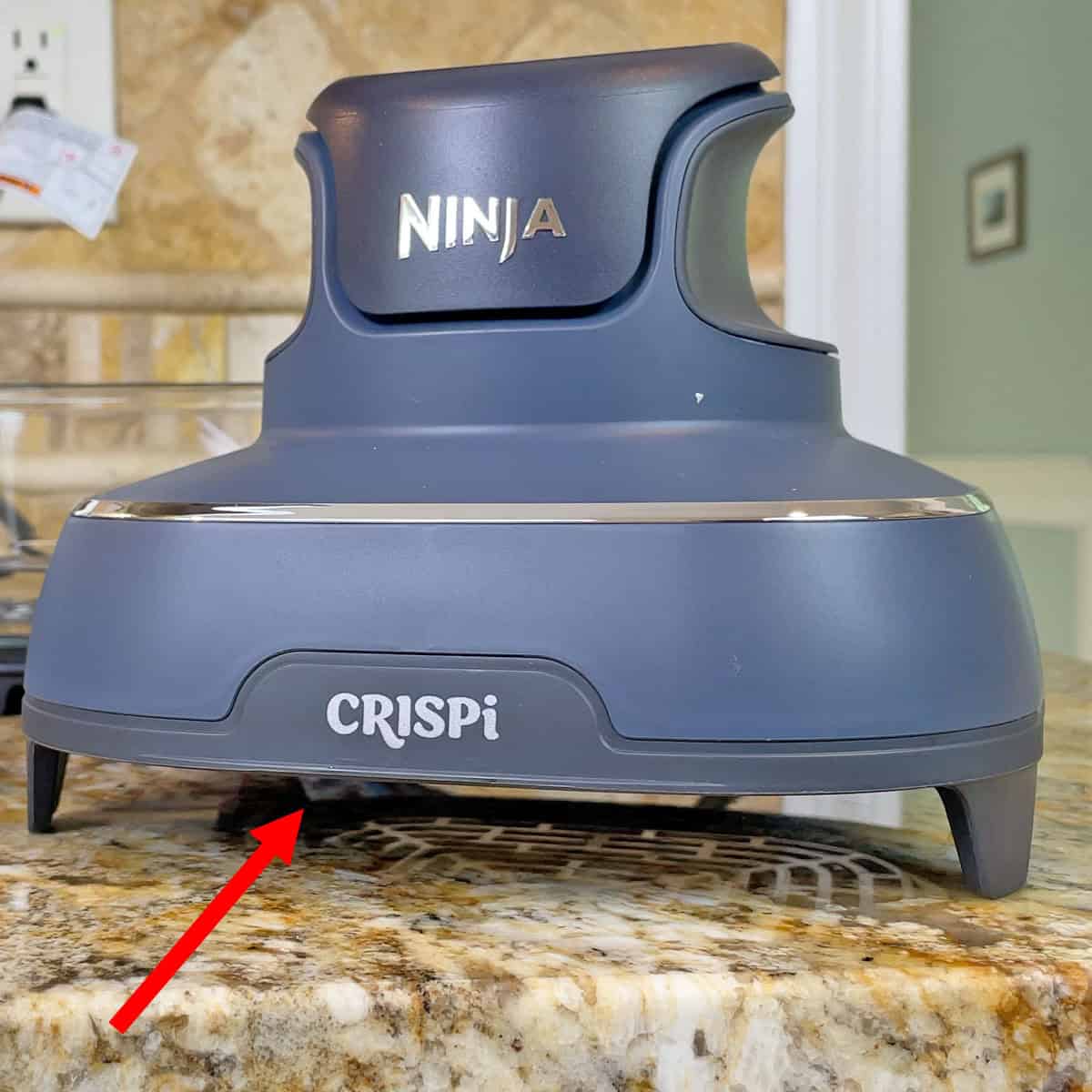
I tested how much heat the PowerPod transfers to the counter while sitting on its heat-safe feet, and the surface temperature only rose by about 8 degrees, so the feet do their job on a bare countertop (it leave a heat ring on a quartz countertop).
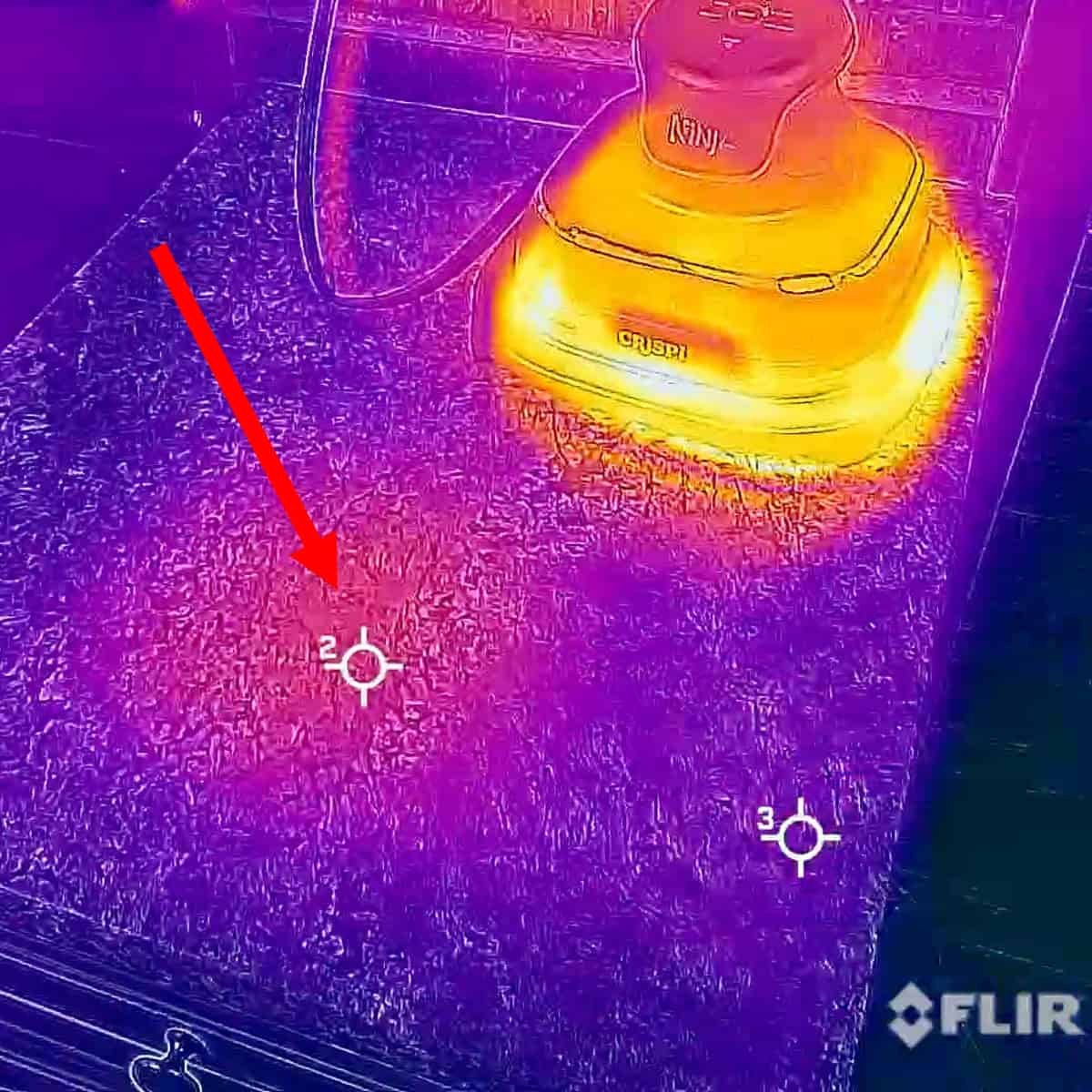
But here’s the real issue: you’re not always setting it down on a bare counter. If you’re not paying close attention and set the hot PowerPod down on top of a cook book or a paper towel, or anything else that happens to be nearby, you’ve got a serious problem.
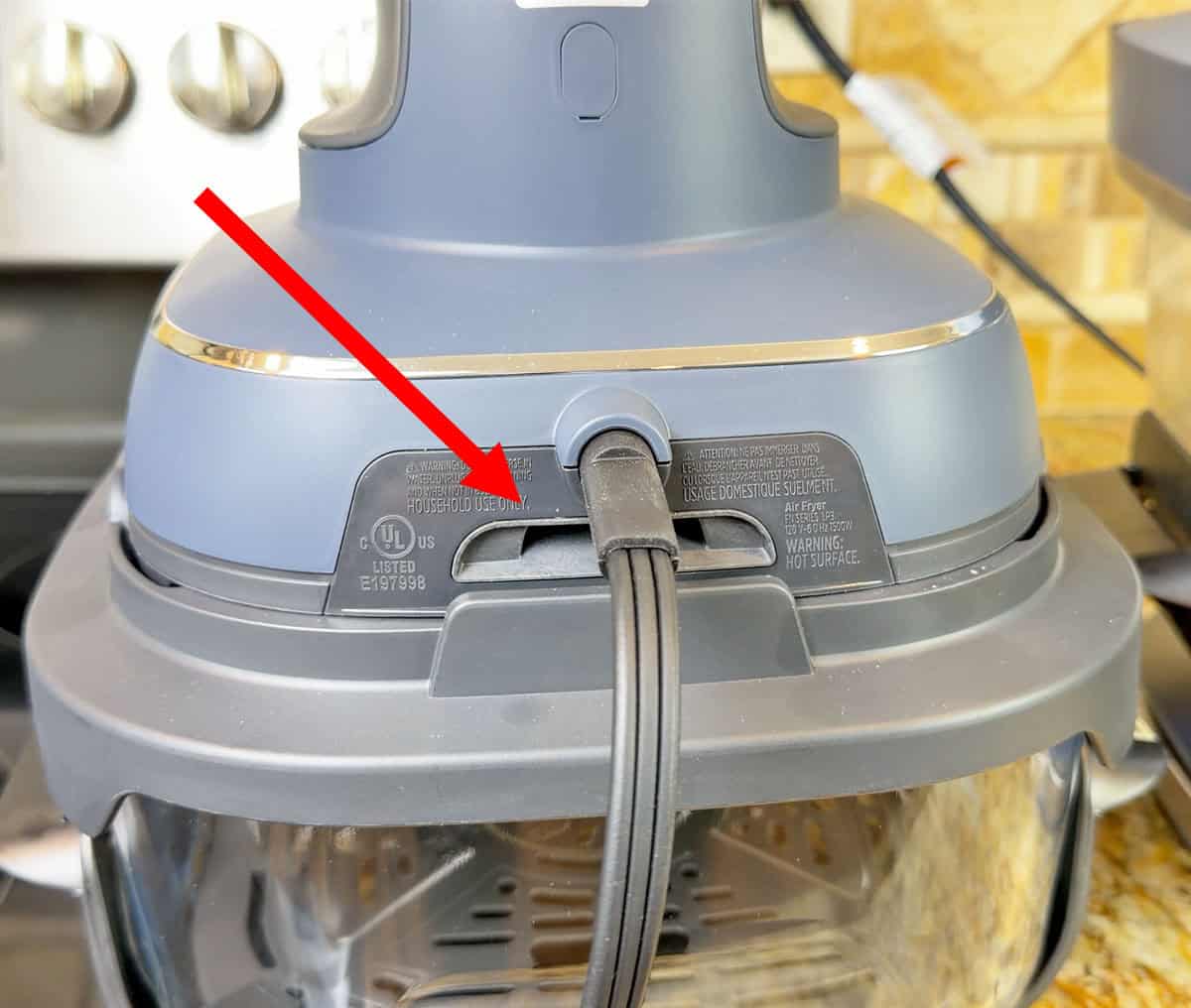
The power cord also runs right past the exhaust vent, which blasts hot air directly onto the cable. The whole concept of a portable, detachable heating element that you’re repeatedly picking up and setting down feels risky, especially in homes with kids.
The Crispi Pro avoids that specific issue since the heating element stays fixed overhead. But it introduces a different set of concerns. Multiple users have reported E2 error codes right out of the box. There are reports of units turning on by themselves. Some owners have noticed a strong chemical smell from the rubber components, which is ironic for a product marketed as nontoxic.
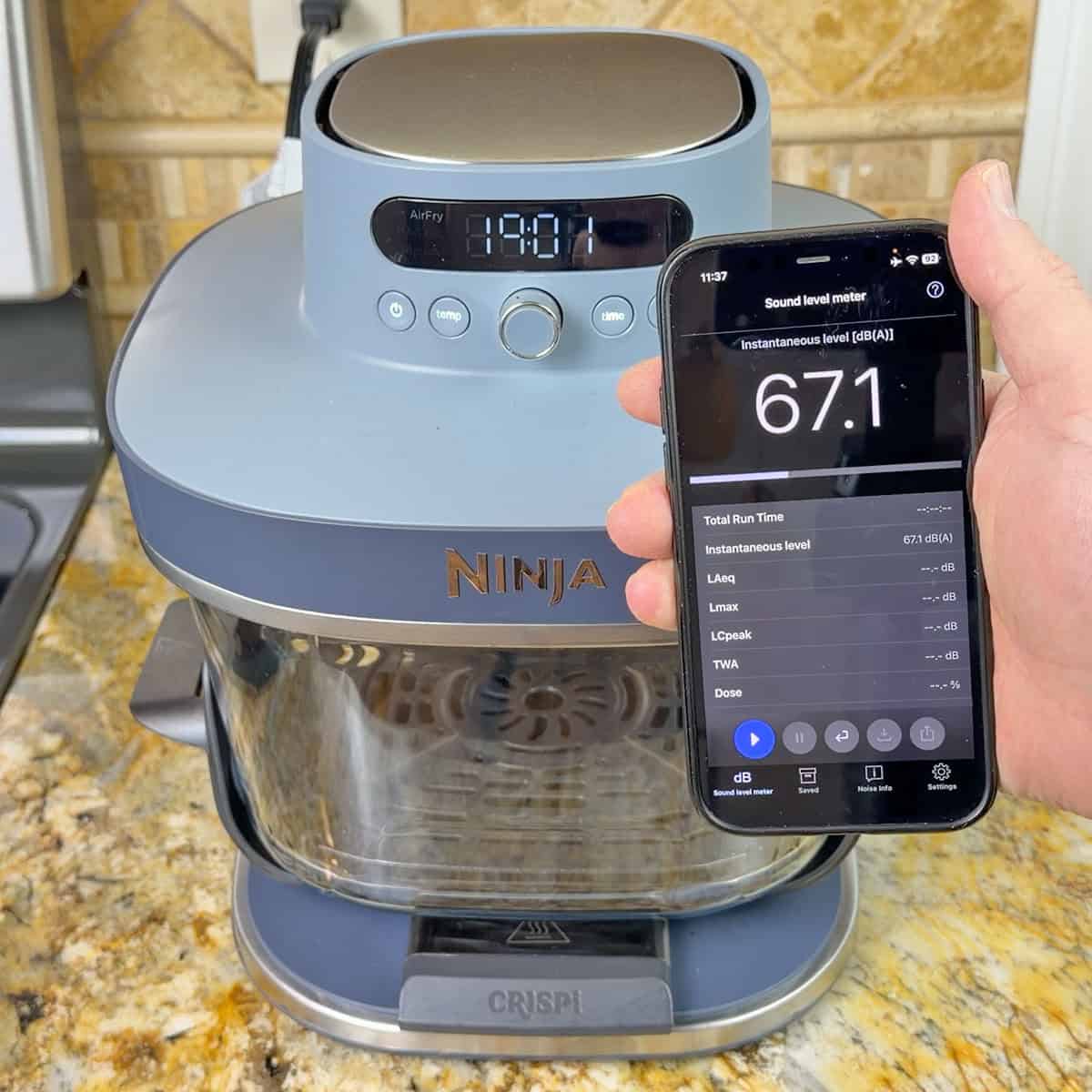
It’s also the loudest air fryer I tested at 67 dBA, noticeably louder than the original Crispi at 62 dBA and far louder than competitors like the Typhur Dome 2 at just 51 dBA.
I also wanted to put the glass durability claims to the test, since shattered containers are one of the biggest concerns people have with both Crispis. Borosilicate glass is marketed as thermal shock resistant, meaning it can handle rapid temperature changes without cracking.
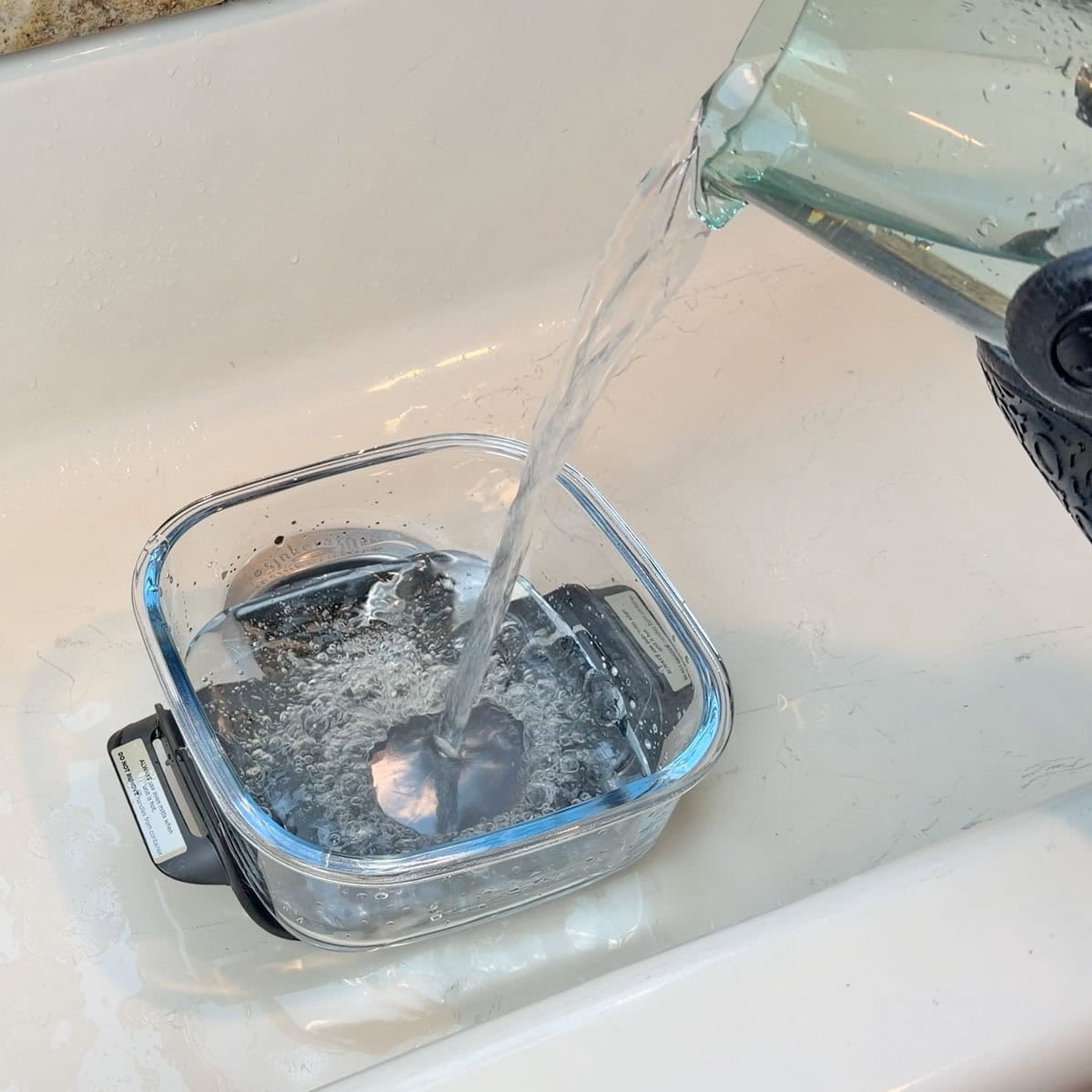
I ran both models through the most extreme scenarios I could think of: I took the glass containers straight from the freezer and put them into the unit at max heat, and then I took containers at full cooking temperature and poured ice water on them. Both passed without any cracking, chipping, or visible stress marks. That’s reassuring, and it suggests the glass itself is well made.
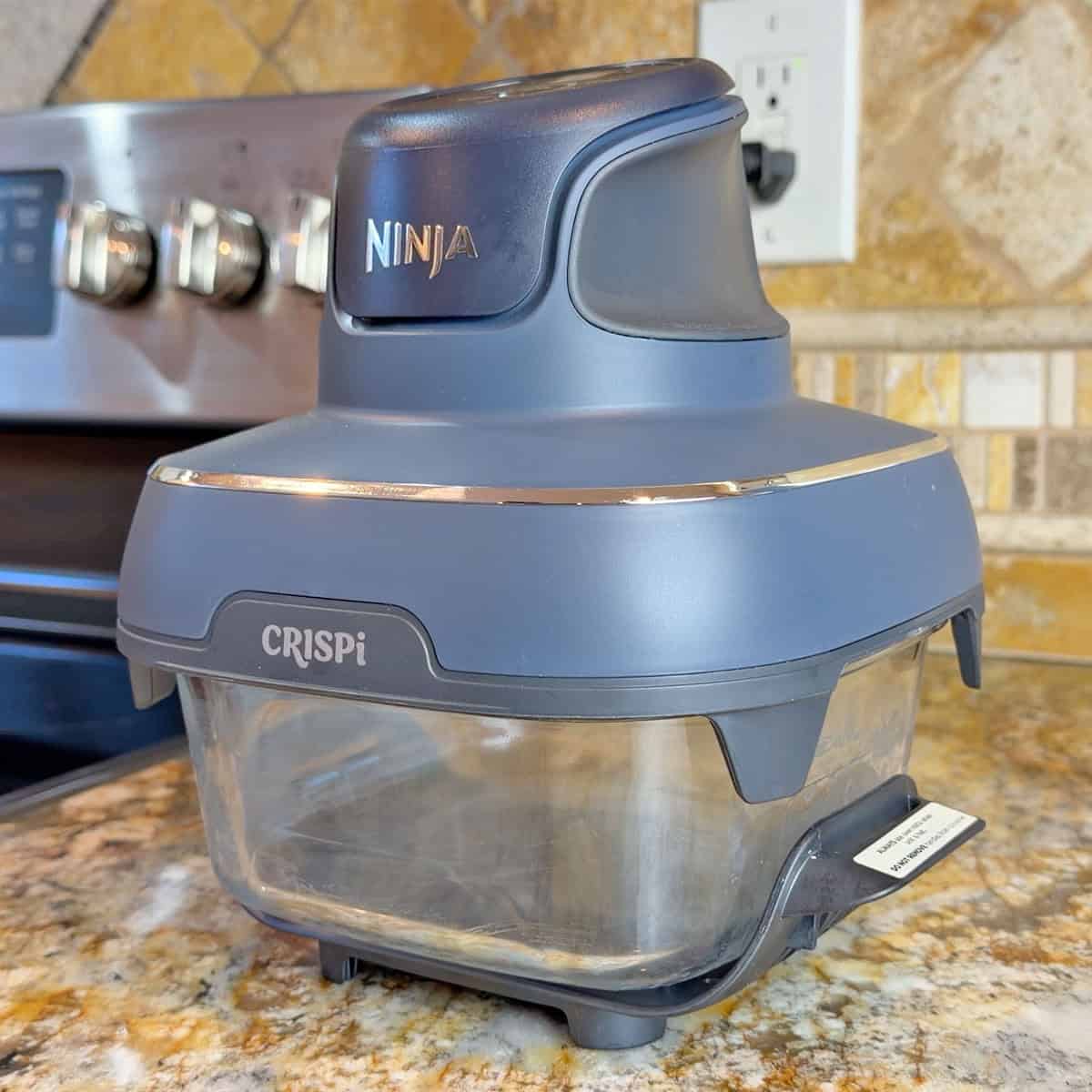
But there are still documented reports from other owners of containers shattering during normal use, so the glass isn’t bulletproof. It’s something to keep in the back of your mind, especially since replacement containers run $44 to $60.
Bottom Line: Should You Buy the Ninja Crispi or Crispi Pro?
If you’re committed to a glass air fryer, the Crispi Pro is the better option. It eliminates the original’s most serious safety issue, gives you precise temperature control, and adds useful functions like dehydrate.
But at $280 with an 8×8-inch cooking surface, notable quality control issues, and the loudest fan of any air fryer I’ve tested, it’s not for everyone.
The original Crispi is even harder to recommend. The lack of temperature control limits its versatility, and the portable heating element design creates safety issues I can’t overlook. The performance is fine, but you can get the same results from air fryers without those tradeoffs.
For most people, a traditional air fryer is going to be the smarter buy. The Instant Pot Vortex Plus offers more cooking space, fits 16 wings, and runs at a quieter 55 dBA. The COSORI TurboBlaze delivers solid performance with 77 square inches of surface area at the lowest price of the bunch.
And if you want the best overall performance and budget isn’t the constraint, the Typhur Dome 2 outperformed both Crispis in every test I ran, with dual heating elements, 144 square inches of cooking surface, and the quietest operation at 51 dBA.
The glass container concept is genuinely appealing, and I understand wanting to cook and store in the same nontoxic vessel. But the execution on both Crispi models has too many compromises for me to give either a strong recommendation.
Compare prices and learn more about both at the links below:
- Ninja Crispi on SharkNinja.com and Amazon
- Ninja Crispi Pro on SharkNinja.com and Amazon
Related Topics
- Ninja vs. Instant Pot vs. Cosori vs. Typhur vs. Chefman (Best Air Fryer?)
- Ninja Crispi Review: Pros & Cons You Must Know Before Buying
- Ninja Crispi Pro Review: Worth the High Price?
- 5 Types of Air Fryers: A Guide to Help You Choose
- I Tested T-fal Infrared Air Fryers: Are They Actually Better?
- Zojirushi vs Tiger: Which Rice Cooker Is the Best?
- Air Fryer vs. Convection Toaster Oven: Cooking Test Results Revealed
- 19 Pros and Cons of Air Fryers: Are They Worth It?
- Zojirushi vs Cuckoo: Which Rice Cooker Is Better? (Test Results)
- HexClad vs. Ninja NeverStick Cookware: 11 Key Differences
