
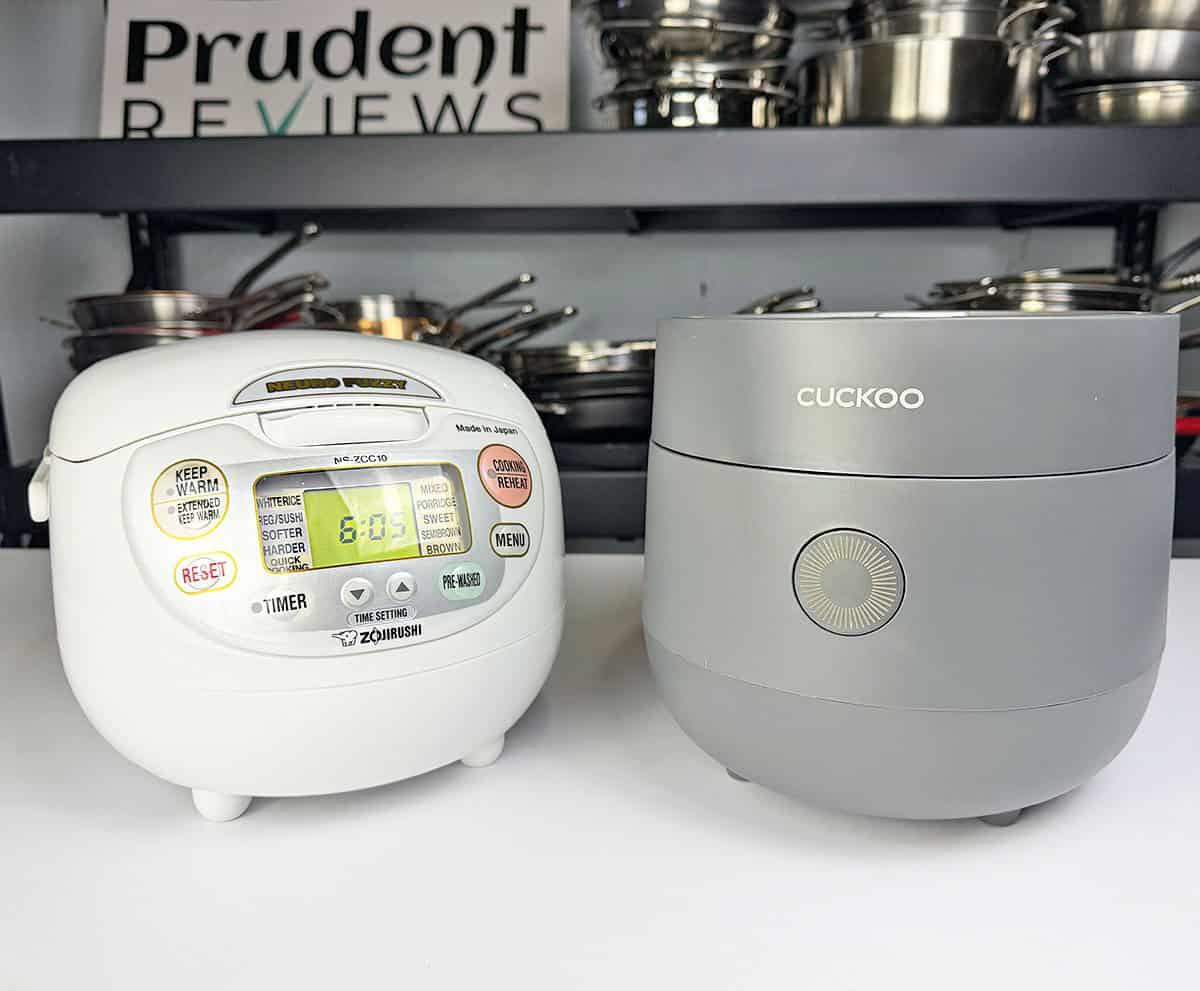
Are you shopping for a rice cooker but can’t decide between Zojirushi and Cuckoo?
Both brands offer fuzzy logic technology, extensive settings, and strong reputations in the rice cooker market. Zojirushi has won awards from America’s Test Kitchen and The New York Times, while Cuckoo delivers similar features at a lower price.
But which brand makes better rice? And are the design differences worth the price gap?
I tested each brand’s most popular model side by side, cooking over 50 batches of rice. I tested white rice at one, three, and five cups, brown rice, sushi rice, quick cook modes, and the keep warm function.
In this Zojirushi vs. Cuckoo comparison, I break down the key differences in performance, design quality, and cook times so you can decide which brand is the better fit.
Key Takeaways
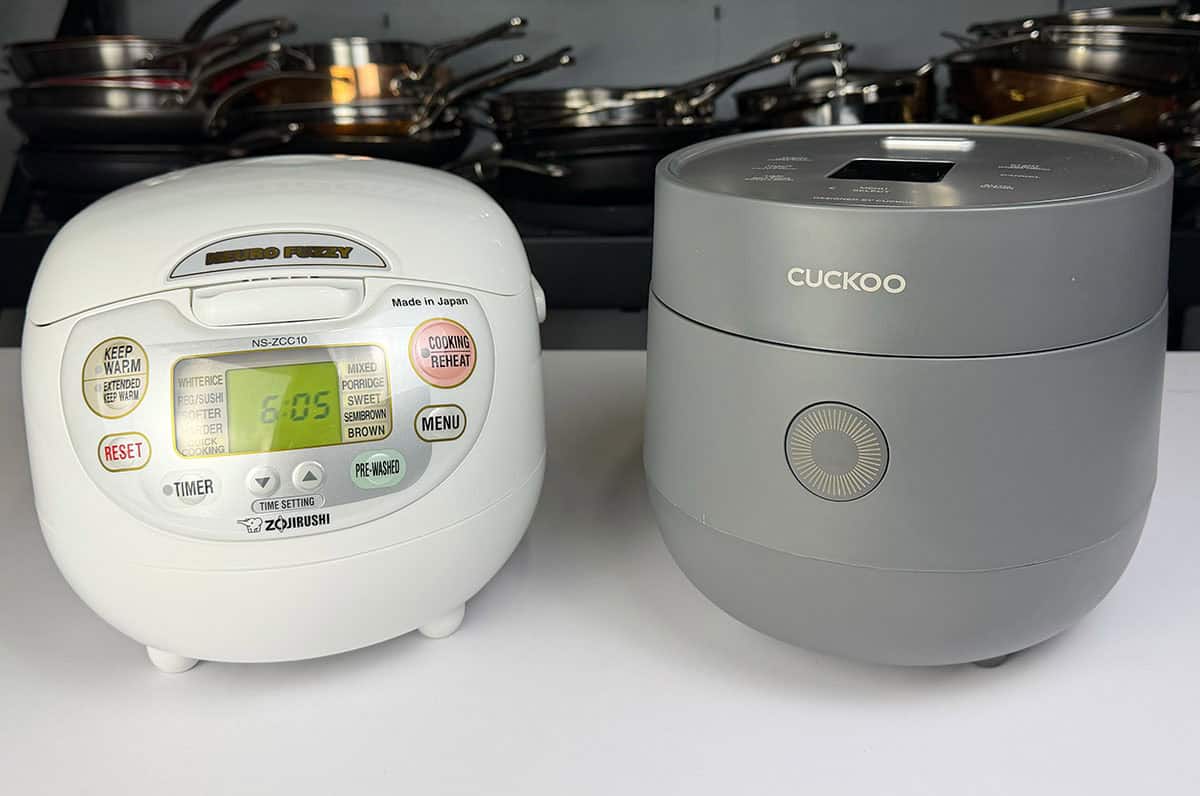
- Both rice cookers produce excellent white rice results across all batch sizes, but in my tests, medium grain sushi rice cooked in the Zojirushi came out perfectly sticky without turning mushy while the Cuckoo’s was a little too wet and mushy. For brown rice, the Zojirushi produces slightly softer grains while the Cuckoo’s grains split open and turn mealy. Skip to Performance section to see the results.
- The Cuckoo’s lid flies open so aggressively that it lifts the front feet off the counter and will smack cabinets under 18 inches. The Zojirushi’s lid opens smoothly without jolting the unit.
- The Zojirushi offers better design quality with a retractable 50-inch cord, heat-resistant pot handles, easy-to-read water markings, and responsive physical buttons. The Cuckoo uses a touchscreen that often requires multiple presses.
- The Cuckoo cooks faster: 44 minutes for three cups of white rice versus 53 minutes, and 60 minutes for brown rice versus over 100 minutes.
- The Zojirushi costs significantly more, but the superior design and versatility justify the price if you cook rice regularly and want a unit that won’t frustrate you.
- Both brands offer multiple rice cooker models on Amazon. I tested the Zojirushi NS-ZCC10 and Cuckoo CR-0675FG for this comparison, but you can browse the full Zojirushi lineup and Cuckoo lineup to see other capacities and features.
Use the links below to navigate the comparison:
- Comparison Chart
- Design and Usability
- Performance
- Bottom Line: Should You Buy a Zojirushi or Cuckoo Rice Cooker?
Comparison Chart
| Feature / Test | Zojirushi | Cuckoo |
|---|---|---|
| Model | NS-ZCC10 | CR-0675FG |
| Price | $$$$$ (Amazon) | $$$ (Amazon) |
| Capacity (Uncooked) | 1 to 5.5 cups | 1 to 6 cups |
| Weight | 6.4 lb | 7.9 lb |
| Bowl Material | PTFE nonstick | PTFE nonstick |
| Fuzzy Logic | Yes | Yes |
| Detachable Inner Lid | Yes | Yes |
| Cord Length | 50.5 inches | 35.5 inches |
| White Rice (3 cups) Result | Perfect texture, ideal stickiness | Perfect texture, ideal stickiness |
| Brown Rice Result | Slightly mushy and clumpy | Grains split, mealy texture |
| Sushi Rice Result | Excellent, perfectly sticky | Too wet and mushy |
| White Rice (3 cups) Time | 53 minutes | 44 minutes |
| Brown Rice Time | 103 minutes | 60 minutes |
| Quick Mode Time Saved | 14 minutes | 14 minutes |
| Keep Warm Temperature | 174°F | 185°F |
Design and Usability
Both rice cookers share similar capacities and features, but the design differences become obvious the moment you start using them.
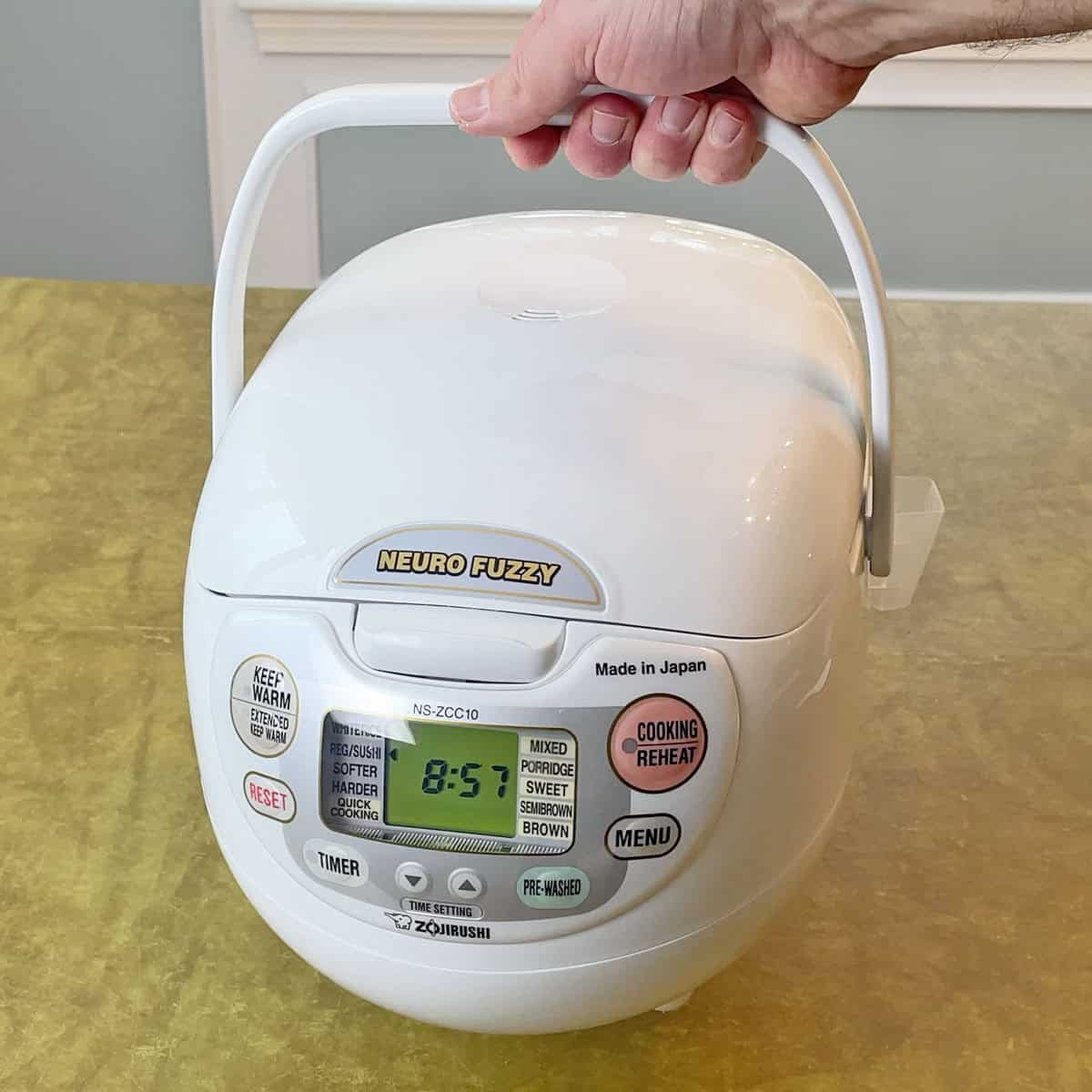
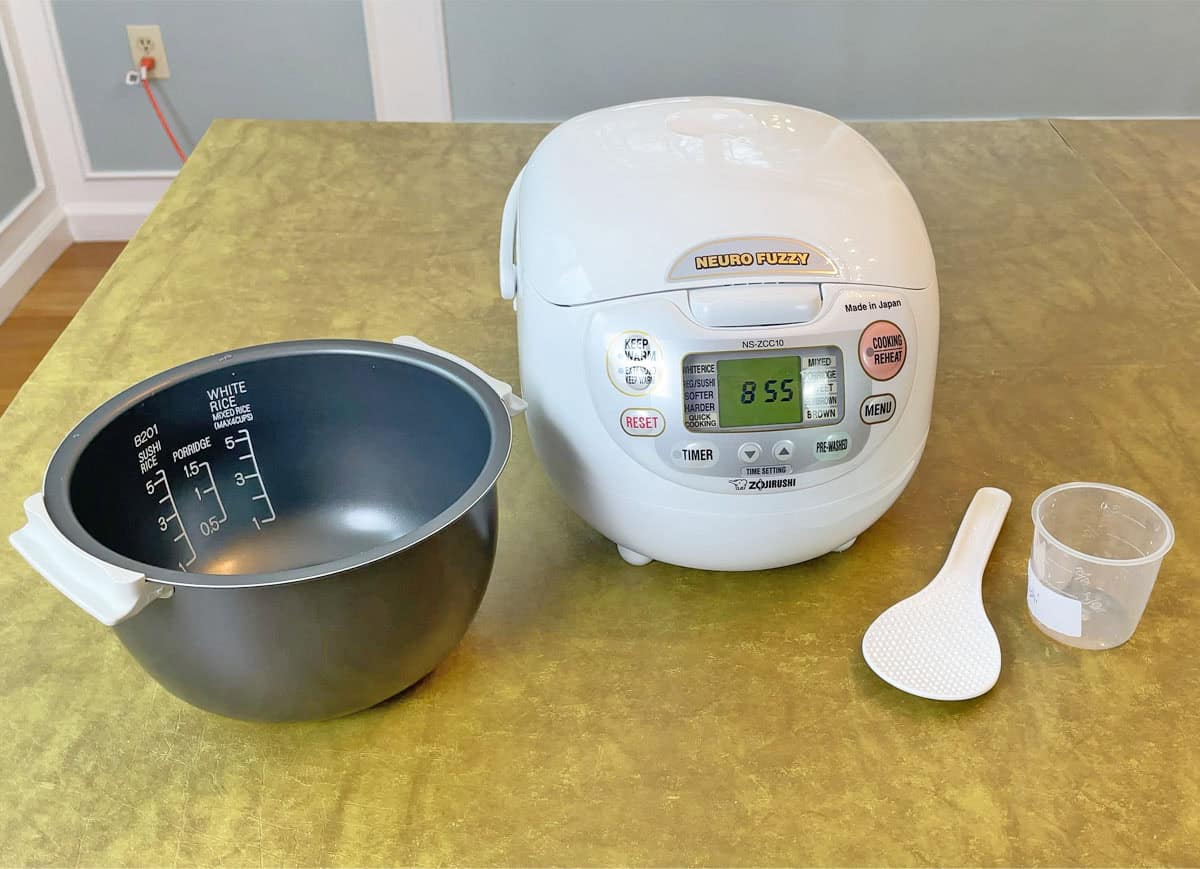
The Zojirushi features a folding handle that makes it easy to move around the counter.
The inner pot includes heat-resistant plastic handles, so you can lift it out while it’s still hot without needing gloves.
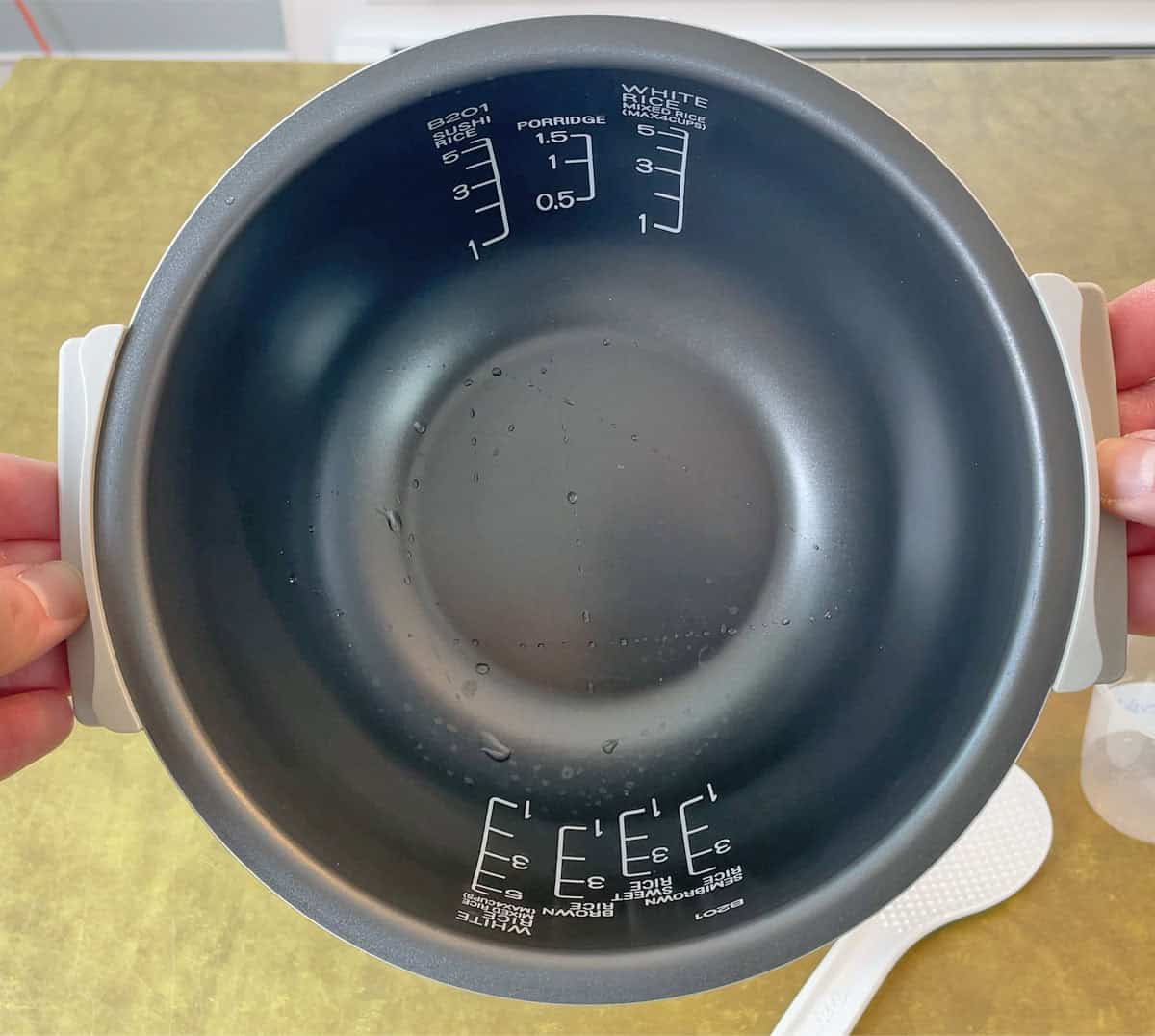
The handles also force the pot to sit in the correct orientation, so the measurement markings always face forward. The water level markings inside the pot are white against a black coating, making them easy to read in any lighting.
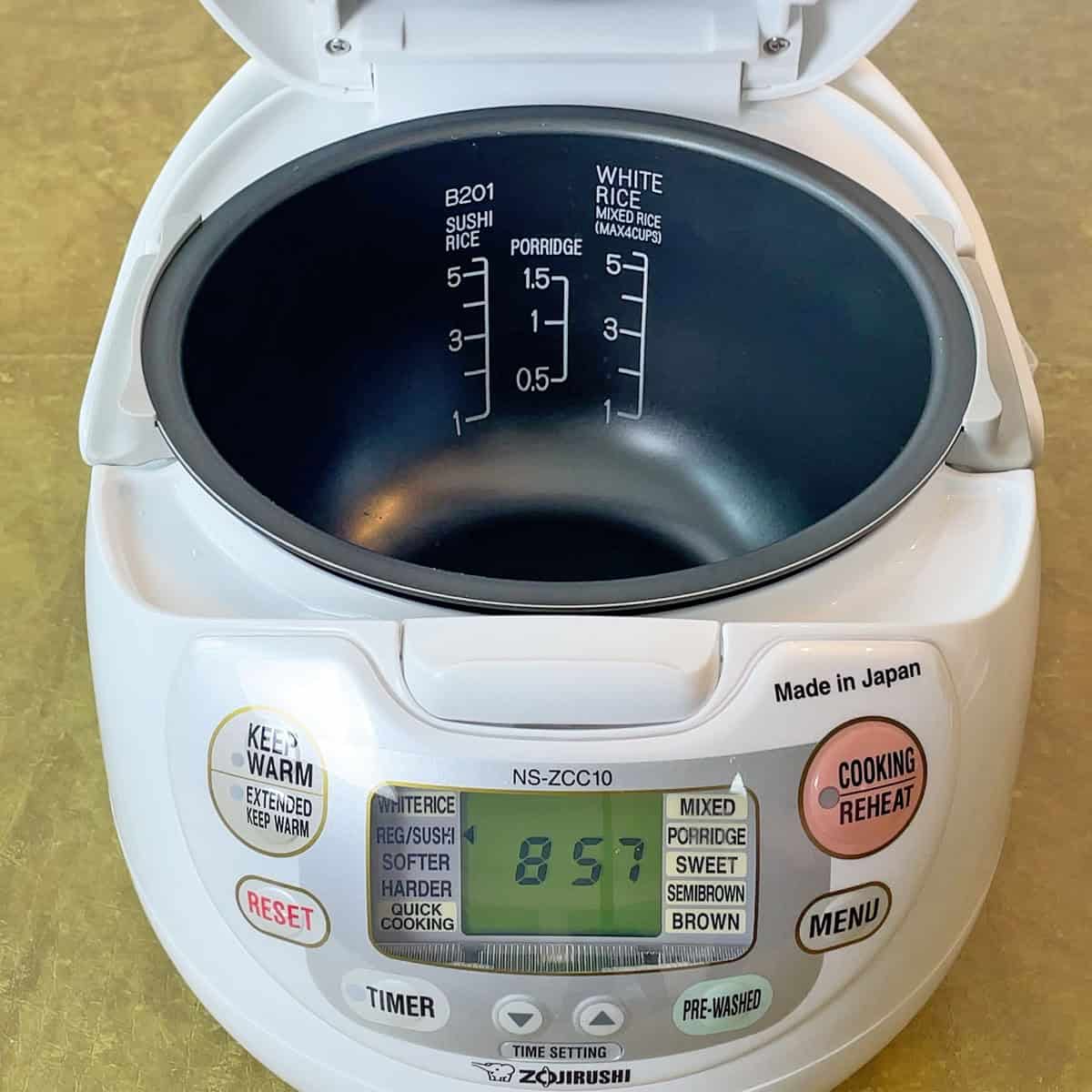
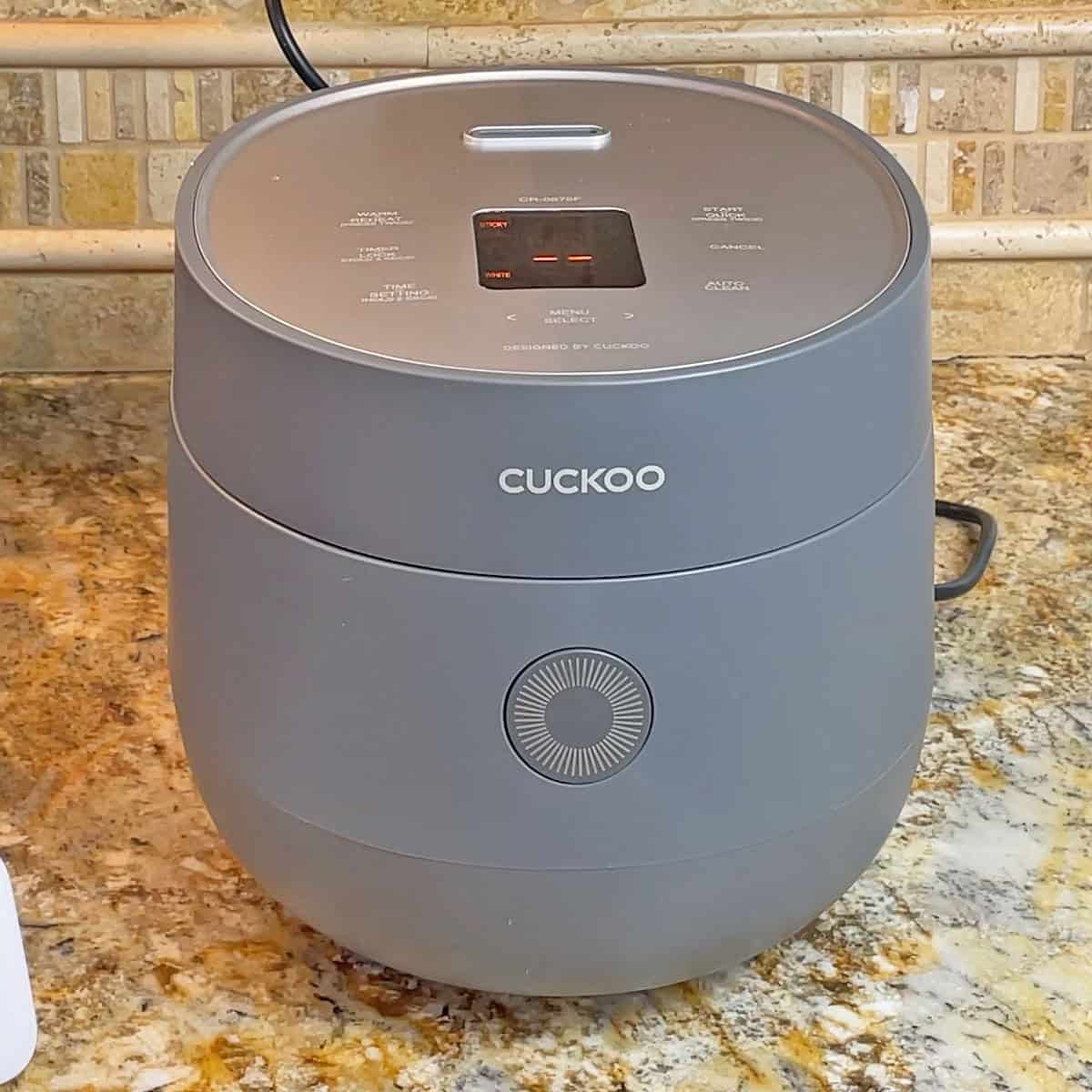
The Cuckoo uses a fixed body design without a handle. At 7.9 pounds, it’s heavier than the Zojirushi’s 6.4 pounds, which makes it less convenient to move.
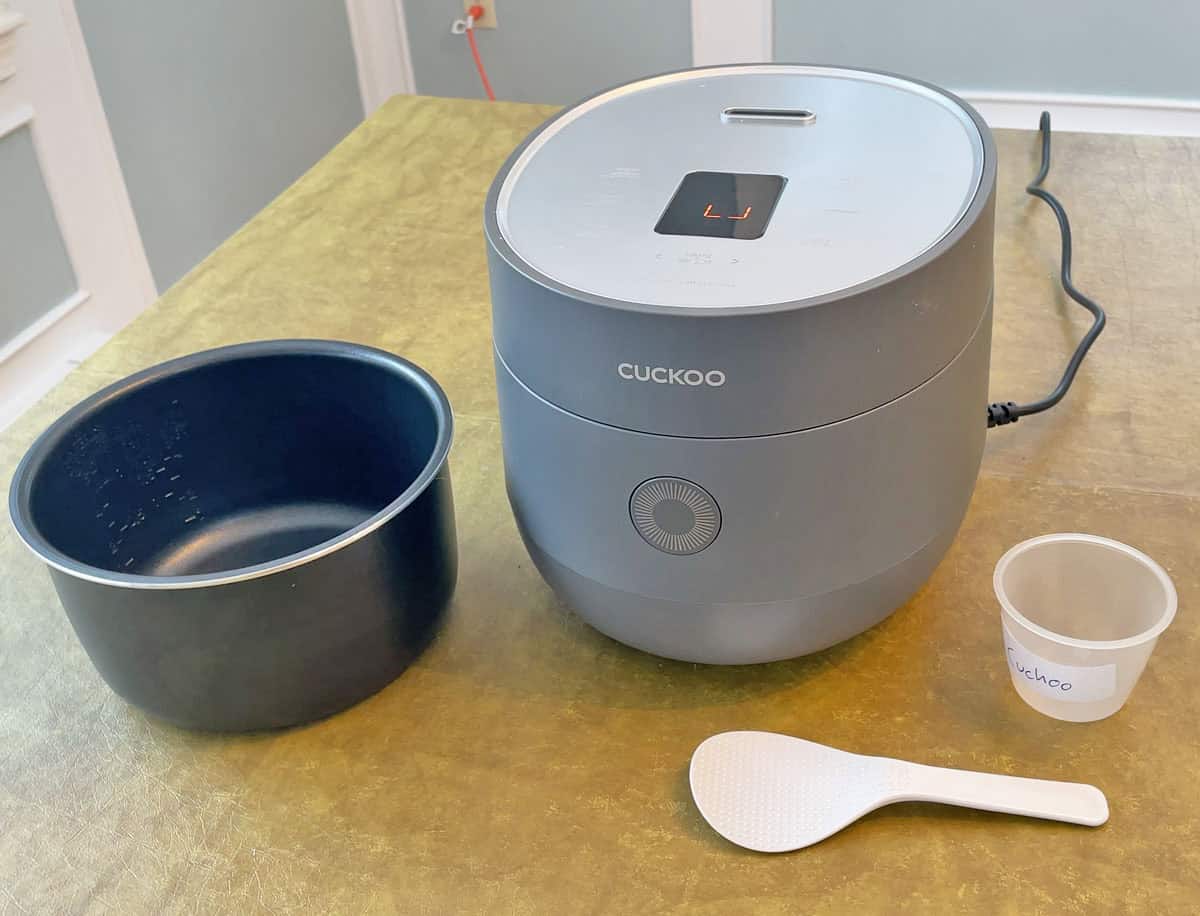
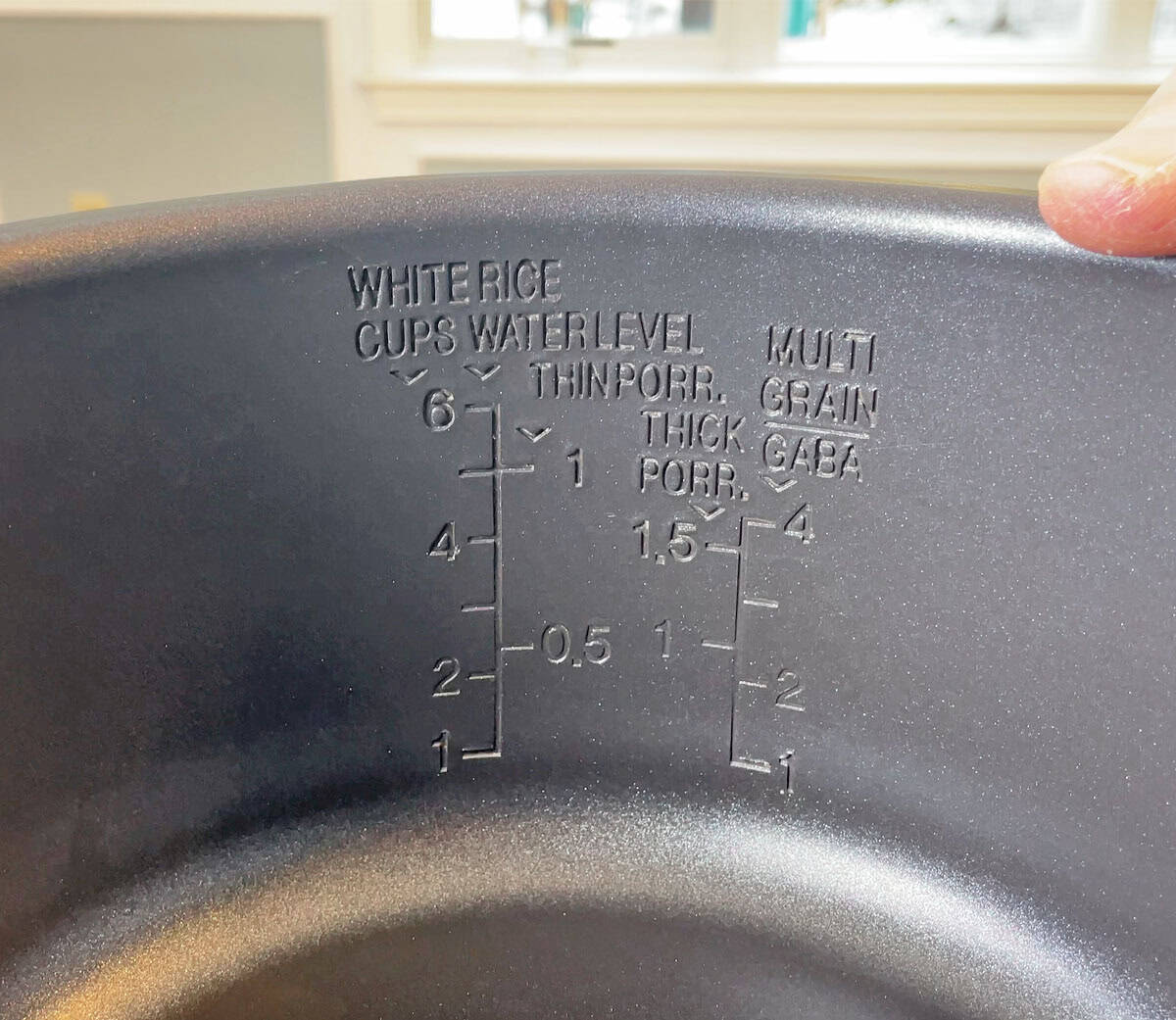
The water level markings are engraved but the same color as the pot, so they’re harder to see unless the lighting is good.
The biggest design difference is the lid mechanism. When you press the button on the Zojirushi, the lid opens slowly and smoothly. It doesn’t jolt the unit or slam into your cabinets.
The Cuckoo’s lid, however, is heavy and tall. When you press the button, it flies up so aggressively that it literally lifts the front feet off the counter and jerks the entire unit. It’s startling every single time.
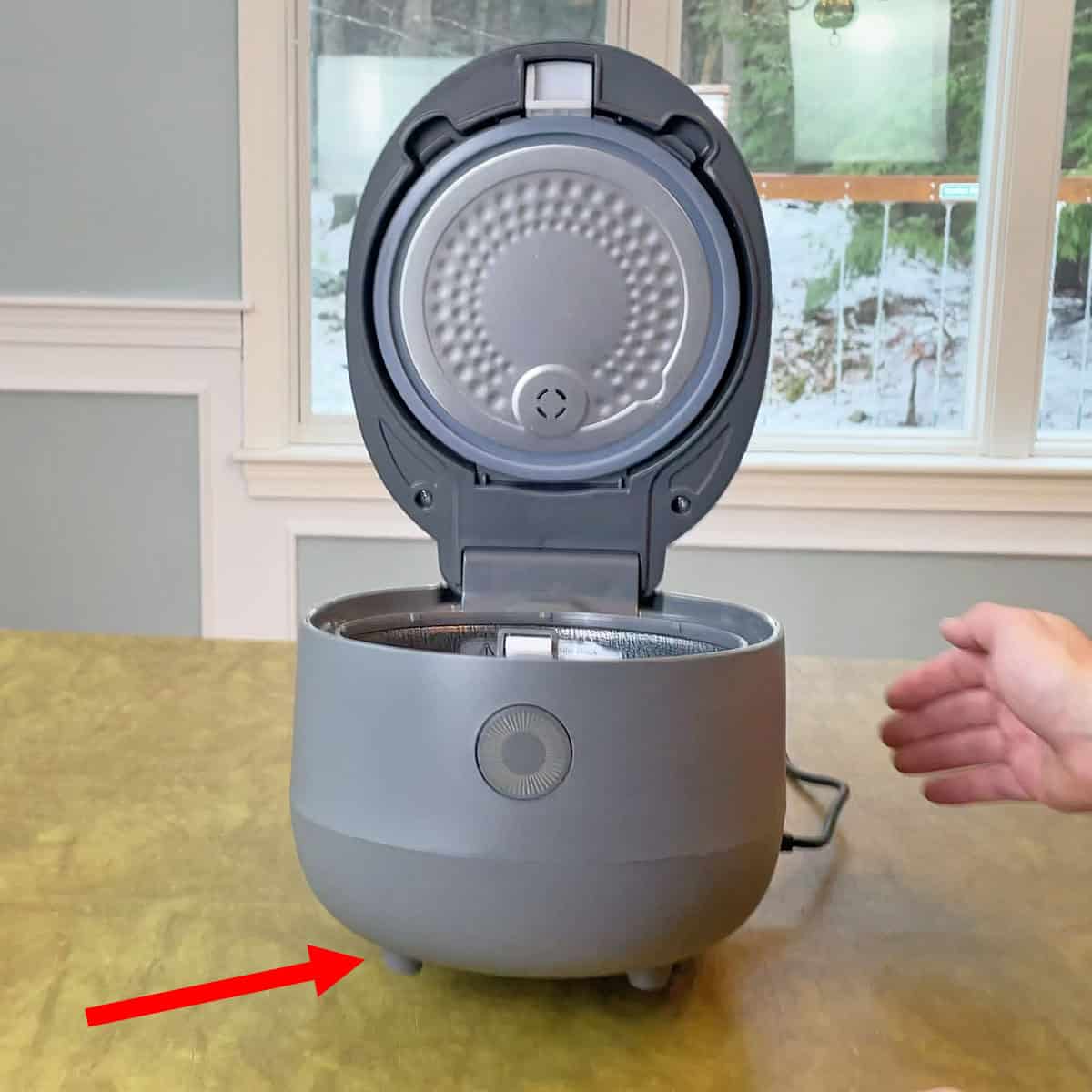
If you have cabinets 18 inches or less above your counter, the Cuckoo’s lid will smack into them hard. I was lucky it didn’t chip the paint or damage my cabinets, but it’s loud and forceful enough that it easily could.
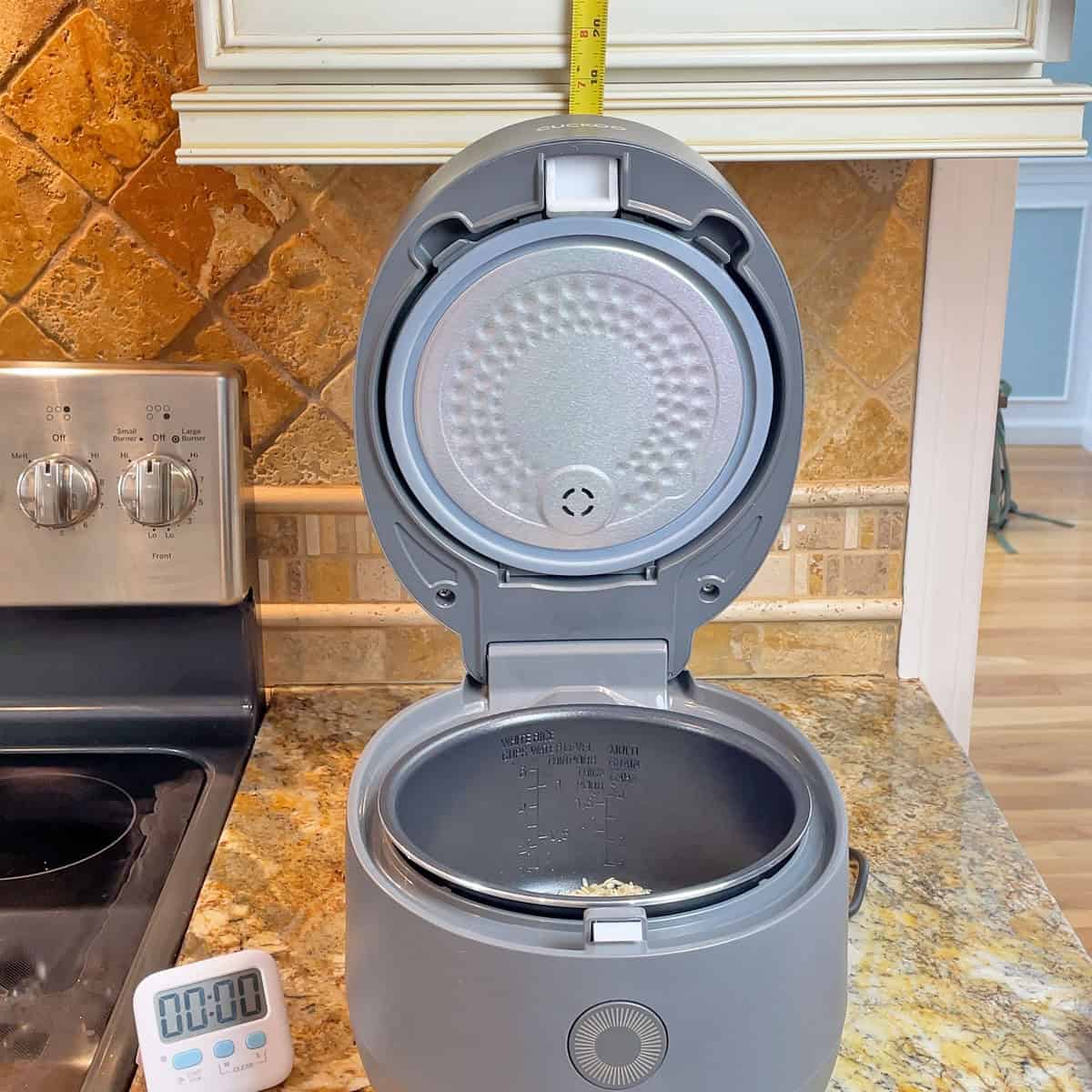
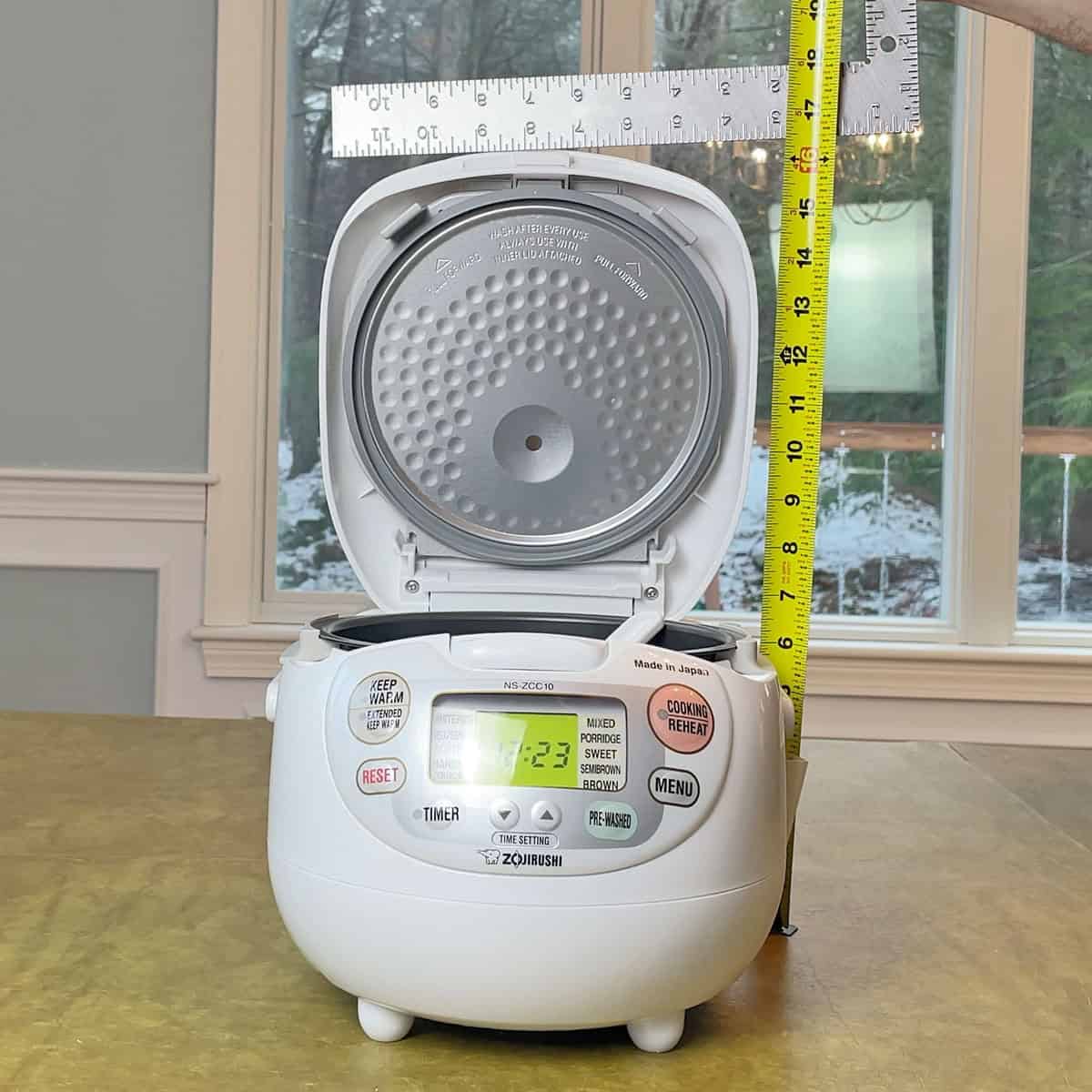
The Zojirushi requires about 16.5 inches of clearance, while the Cuckoo needs over 18 inches when the lid is fully open.
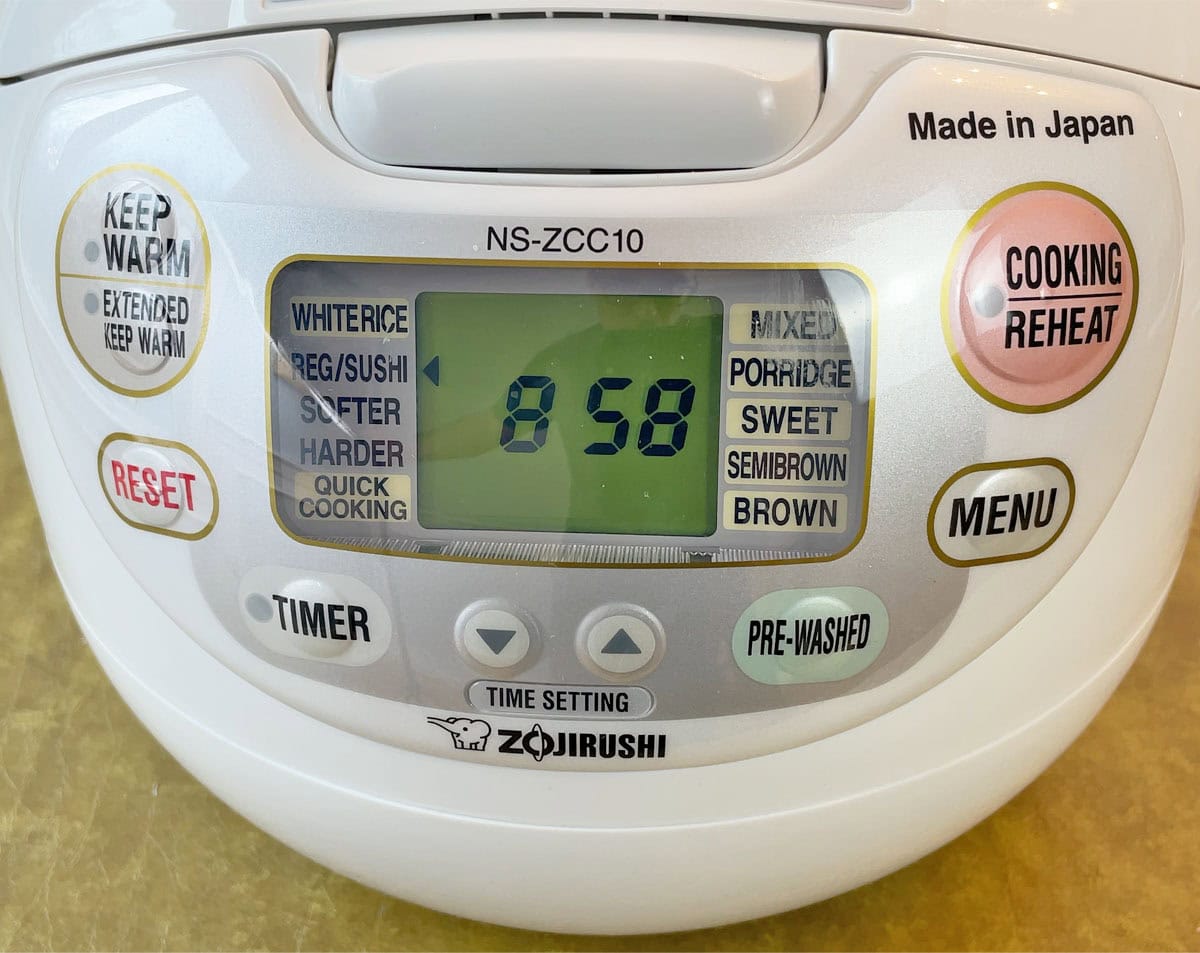
The control interfaces also differ. The Zojirushi uses physical buttons with a clear LCD display showing all available settings. The buttons are responsive and easy to press.
The Cuckoo features a touchscreen that looks sleek but isn’t as reliable. I had to press buttons twice multiple times throughout testing to get them to register.
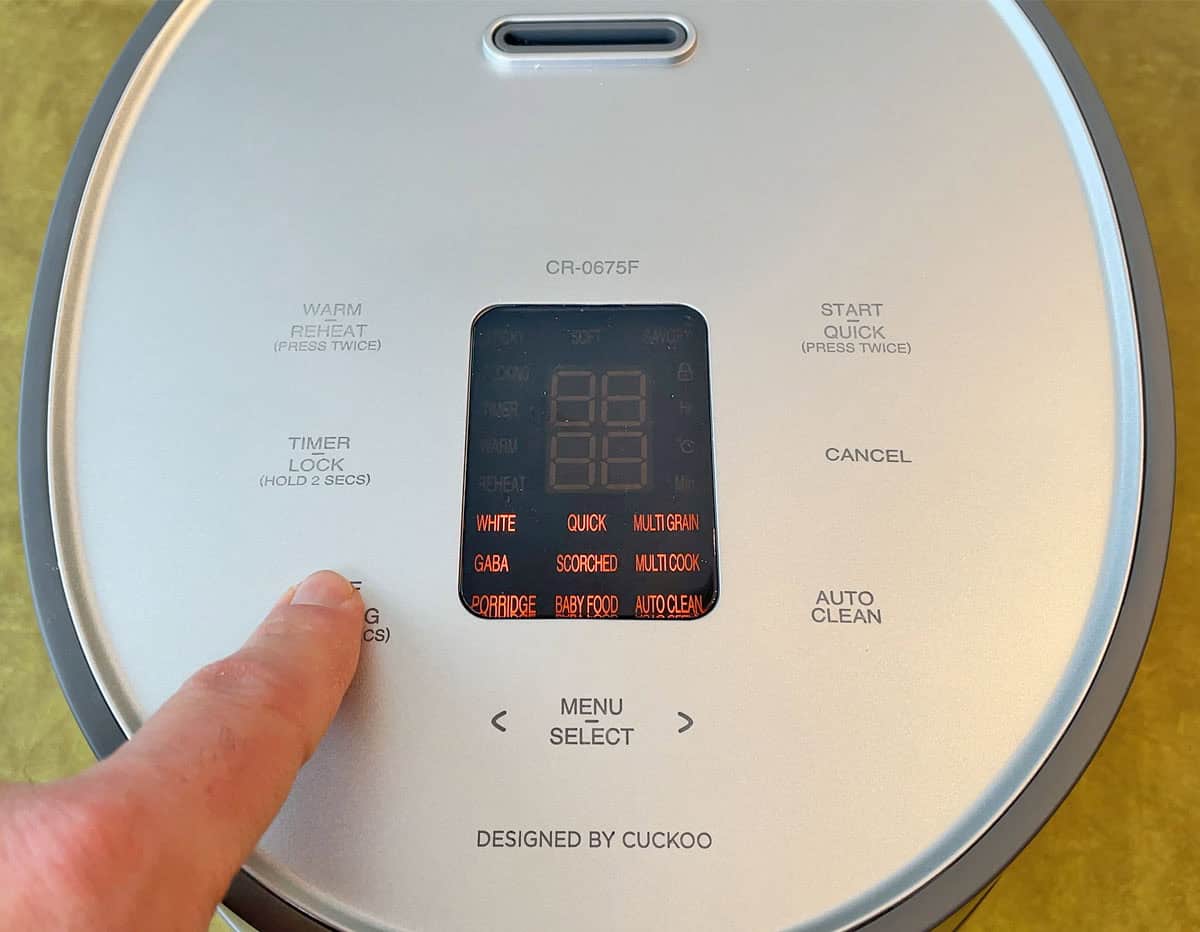
One feature the Cuckoo offers that Zojirushi doesn’t is an auto-clean mode. You add two cups of water and it steams the components for 22 minutes. It loosens starch buildup, but you still need to wipe everything down after. It’s a nice extra, but not essential.
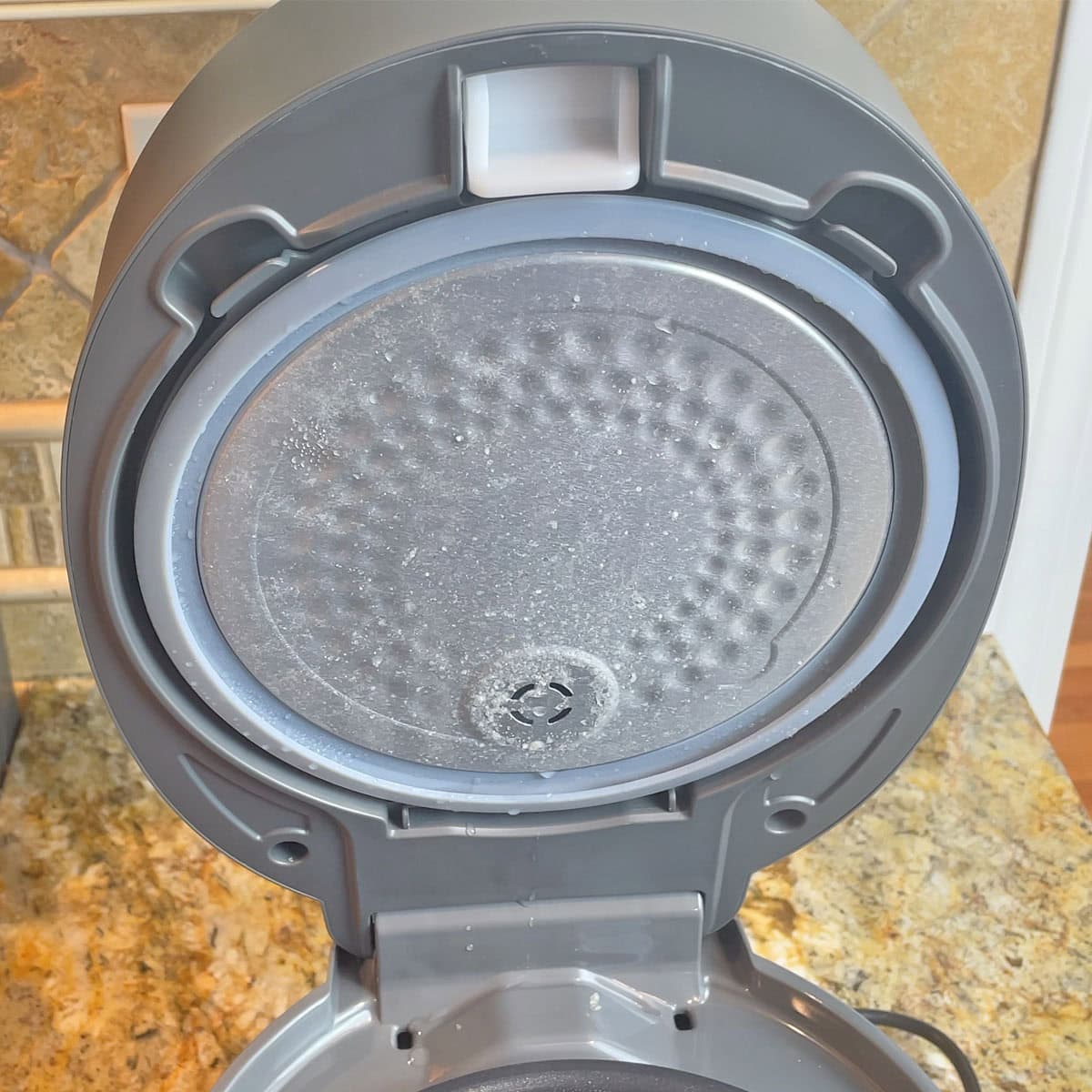
The Zojirushi includes a retractable power cord that’s 50.5 inches long, the longest of any rice cooker I tested. The Cuckoo’s cord is fixed at 35.5 inches, which limits where you can place it on your counter.
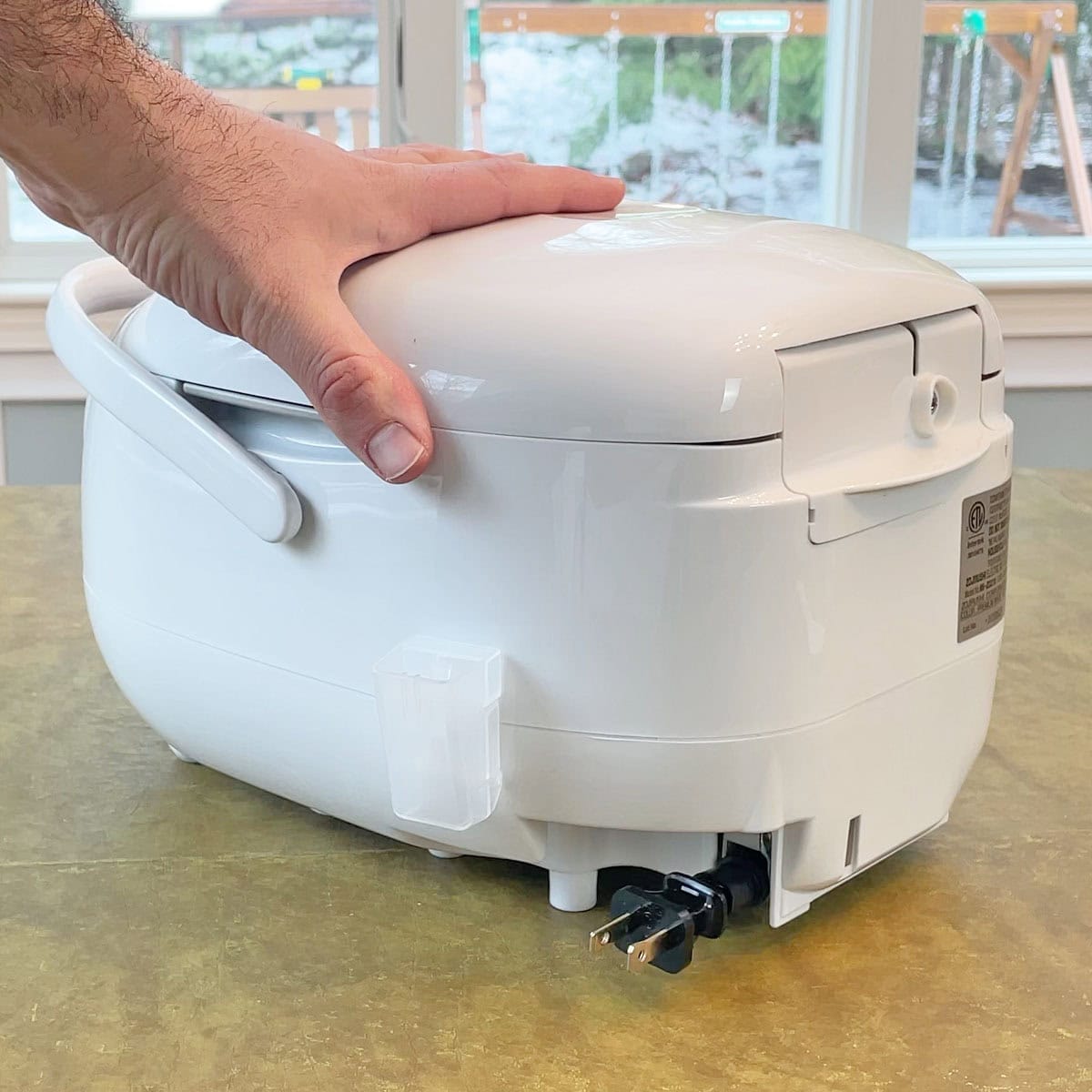
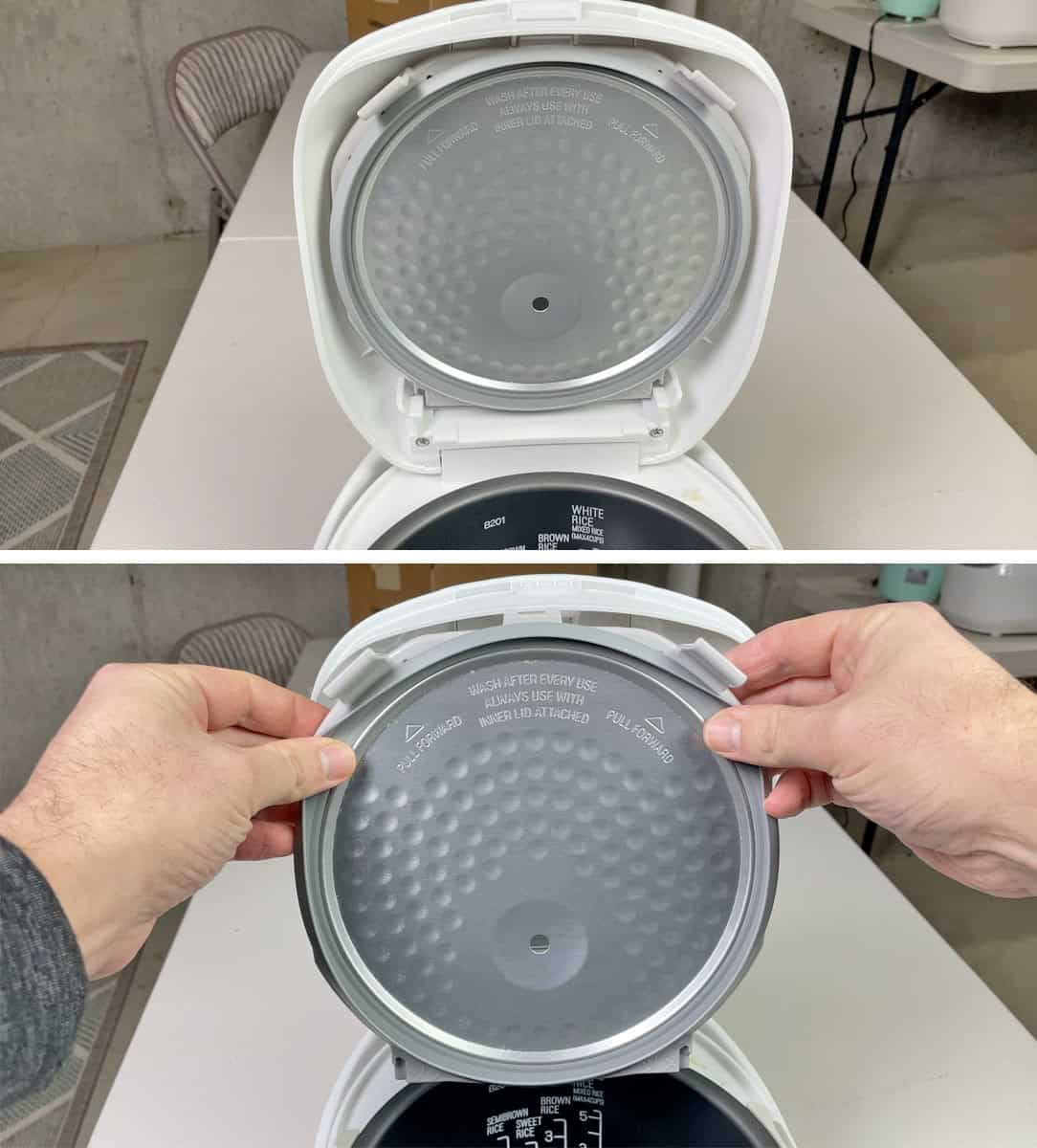
Both rice cookers have removable inner lids that pop off for cleaning, which is important for maintaining the unit over time.
Performance
Both rice cookers feature fuzzy logic technology, which is supposed to automatically adjust cooking time and temperature based on how much rice you’re making and the moisture levels in the pot. The idea is that you get consistently perfect rice regardless of batch size.
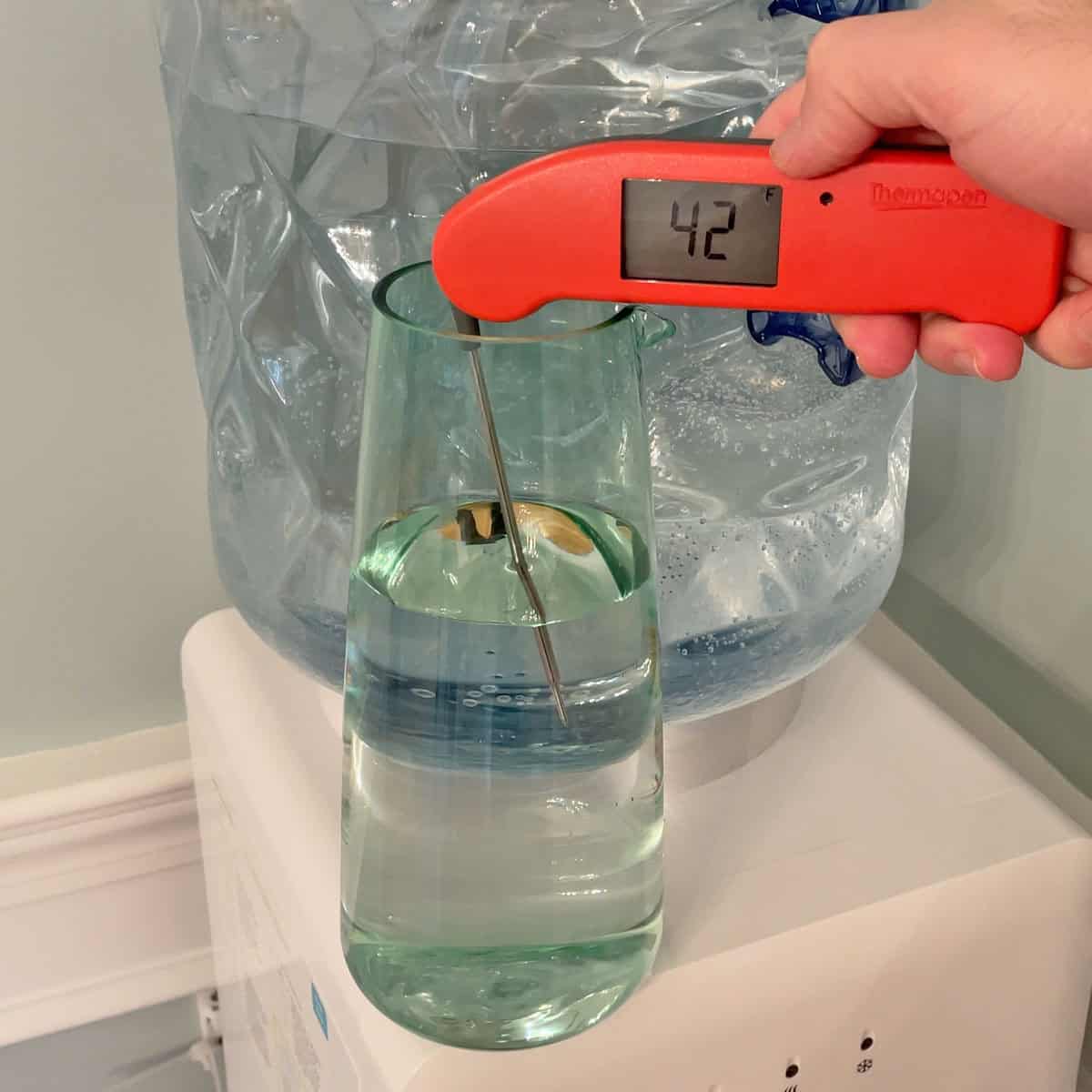
I tested this by cooking multiple batches of white rice in each cooker, starting with small one-cup batches, then three cups, then five cups. I also tested brown rice, sushi rice, and the quick cook mode. For every test, I used the same bottled water chilled to 42 degrees, rinsed the rice for two minutes, and followed each brand’s water recommendations.
Beyond these controlled tests, I’ve also been using both rice cookers weekly for almost a year to get a feel for how they perform over time.
White Rice: Both cookers performed great. The Zojirushi’s medium and large batches turned out perfect with good chew, clear grain separation, and just enough stickiness.
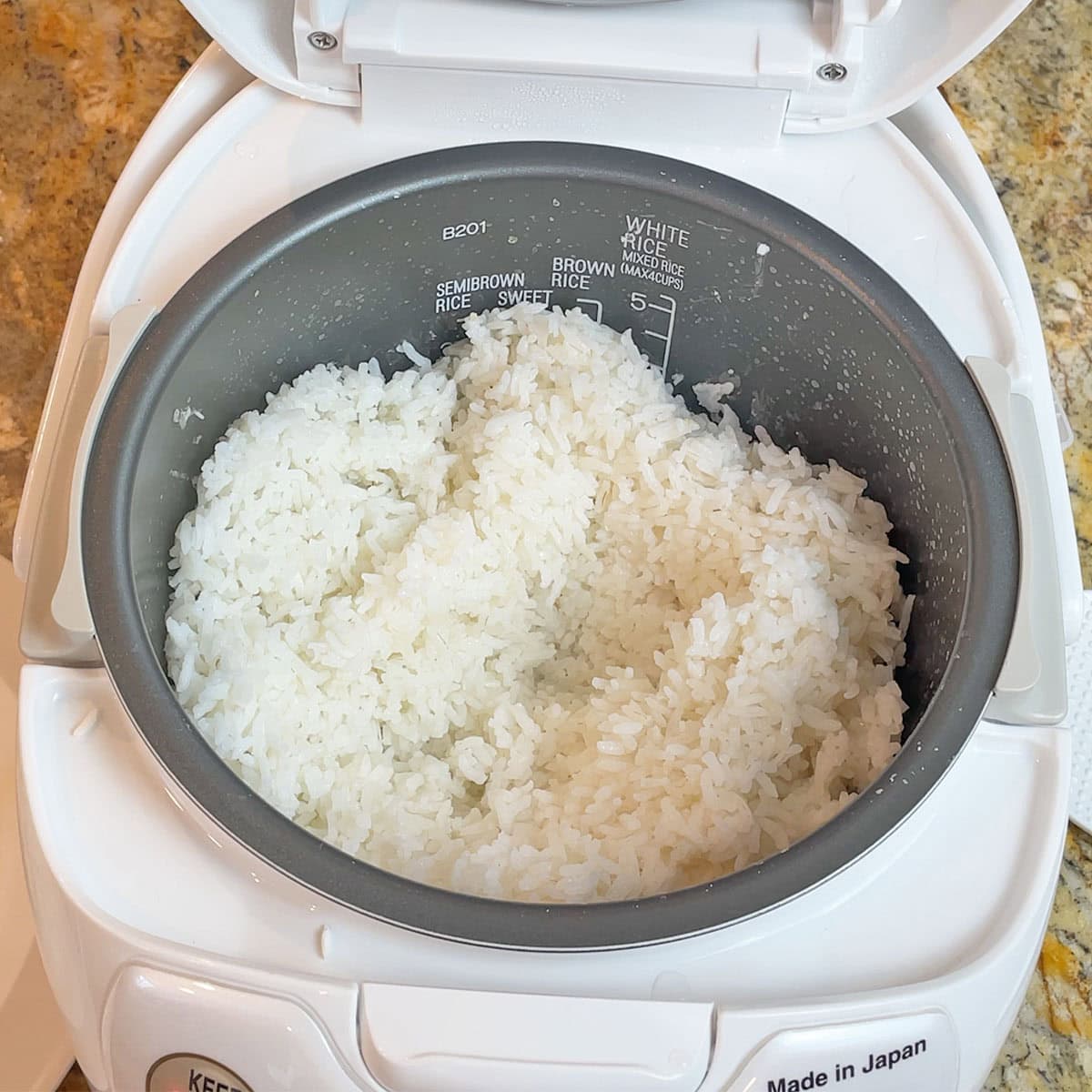
The smallest batch was slightly softer but still excellent.
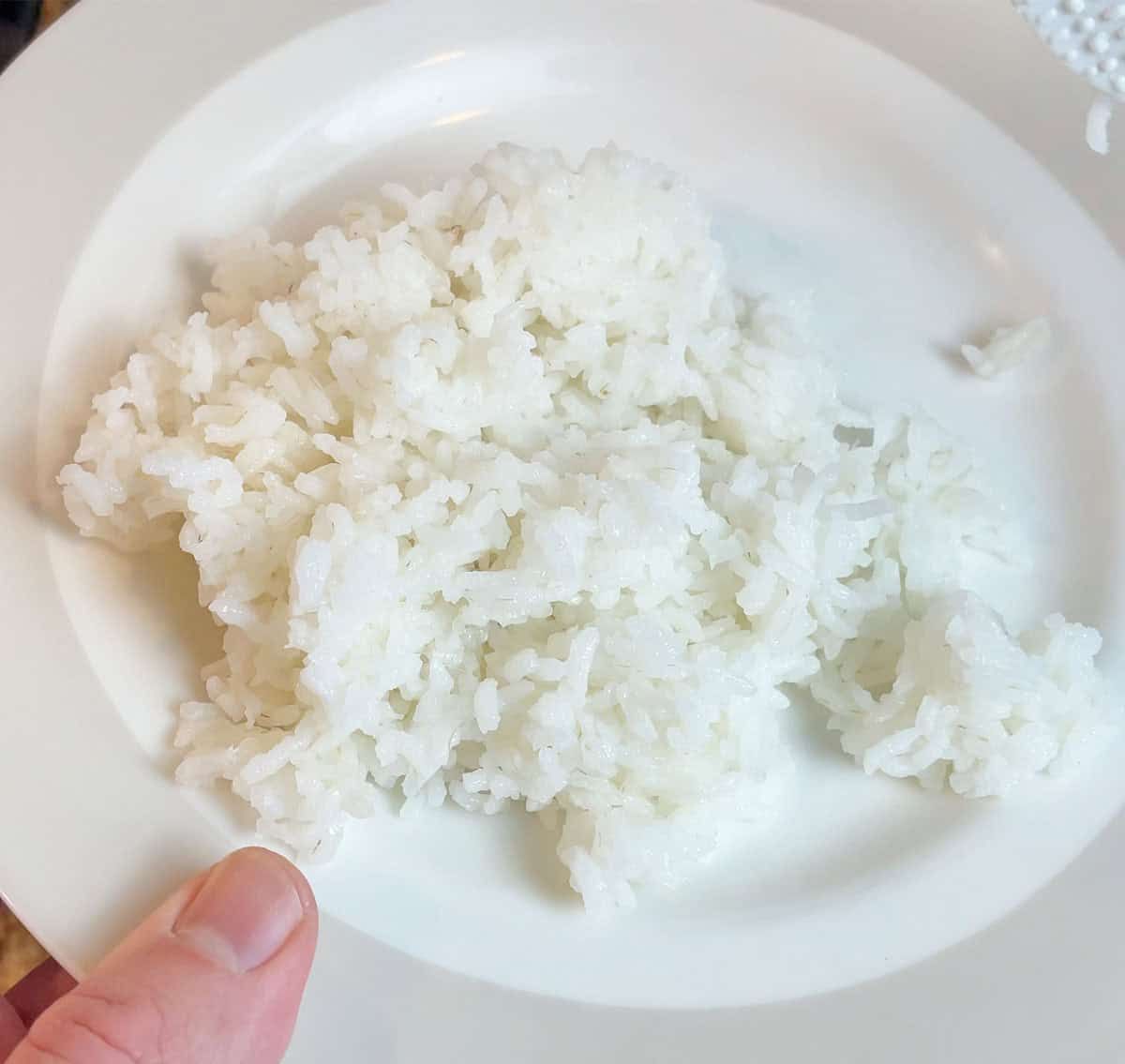
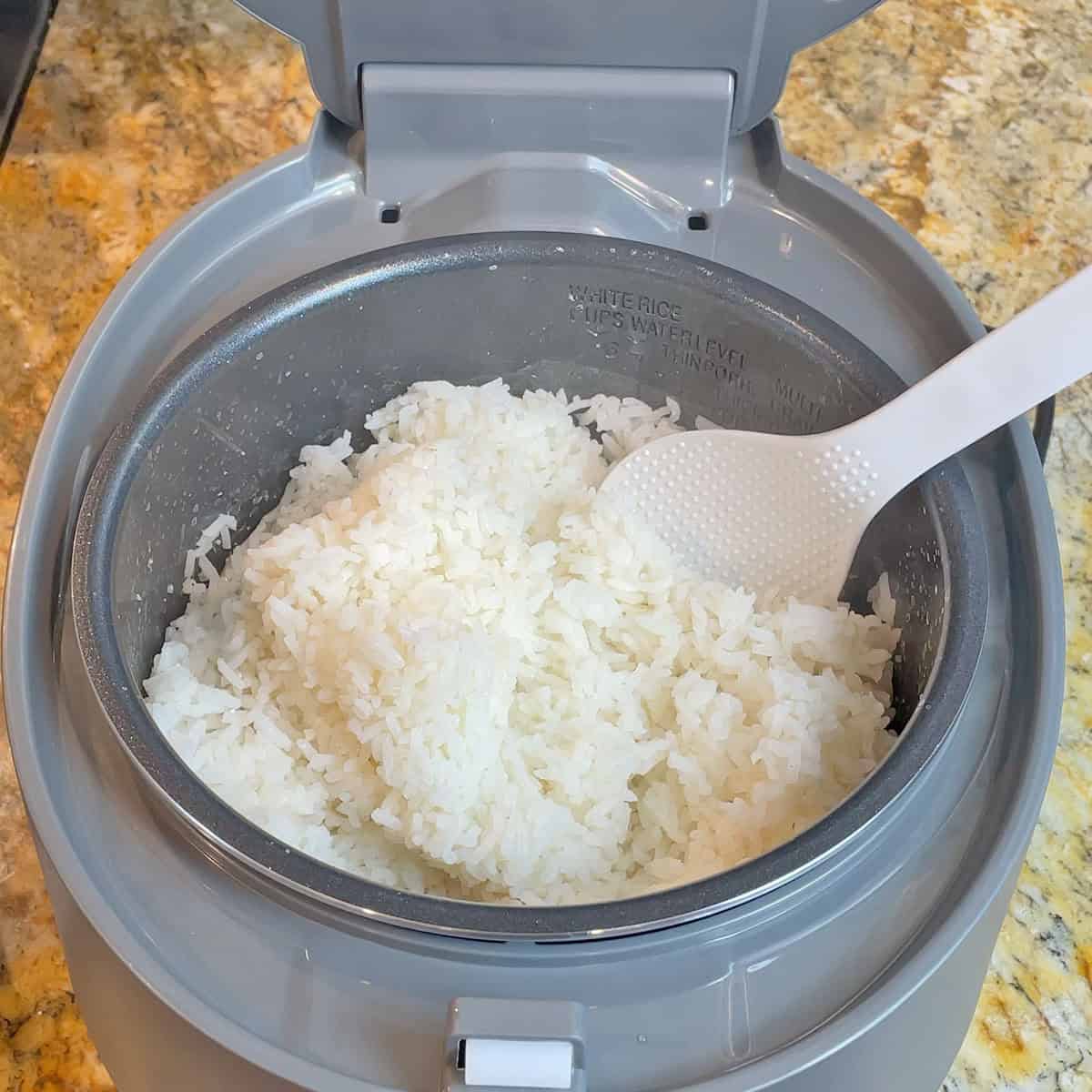
The Cuckoo delivered the same quality across every batch size. If you’re only cooking white rice, you won’t notice a performance difference between them.
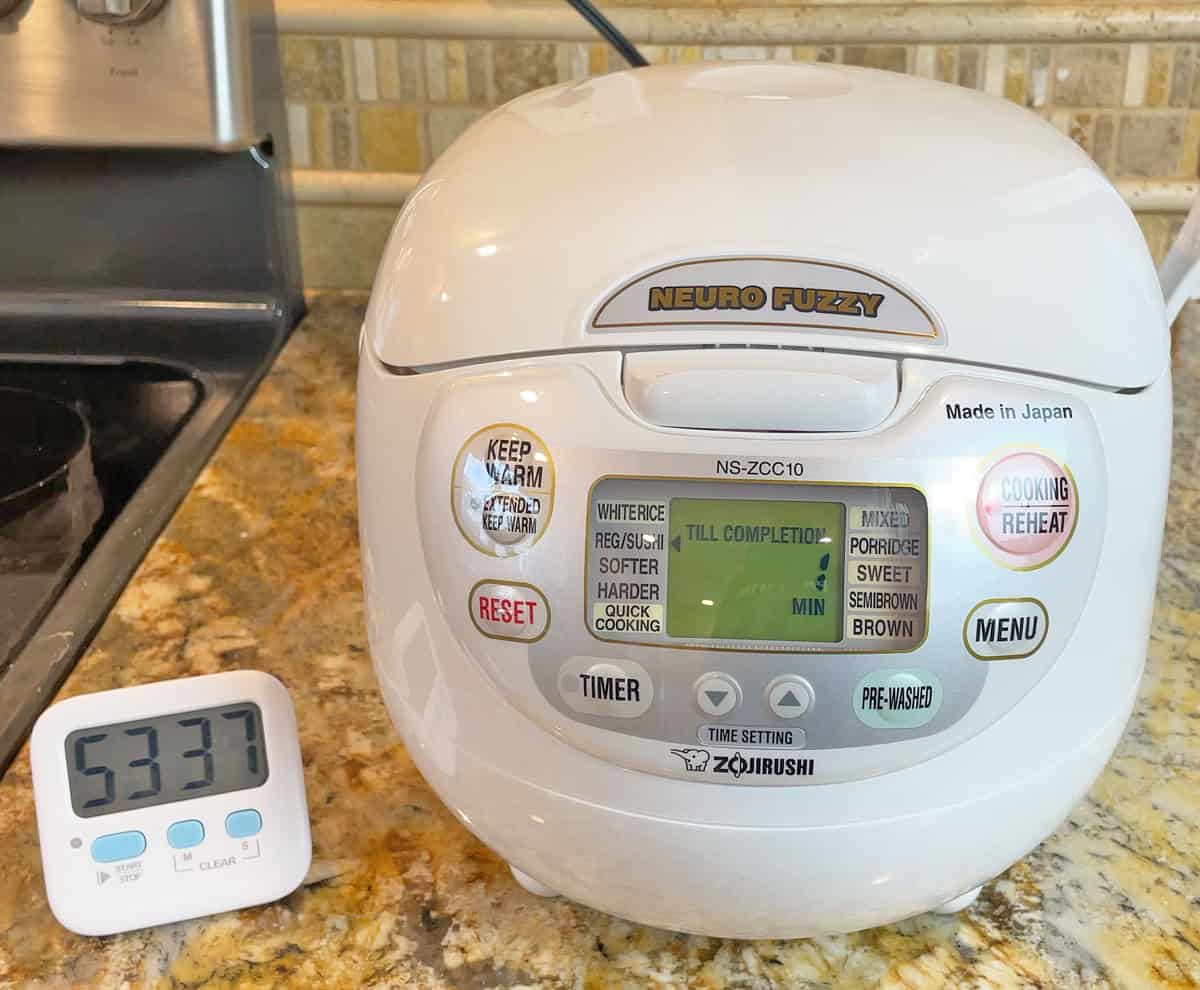
The Zojirushi took 53 minutes to cook three cups while the Cuckoo finished in 44 minutes.
Brown Rice: The Zojirushi’s brown rice came out softer and clumpier than I like, but it was still edible.
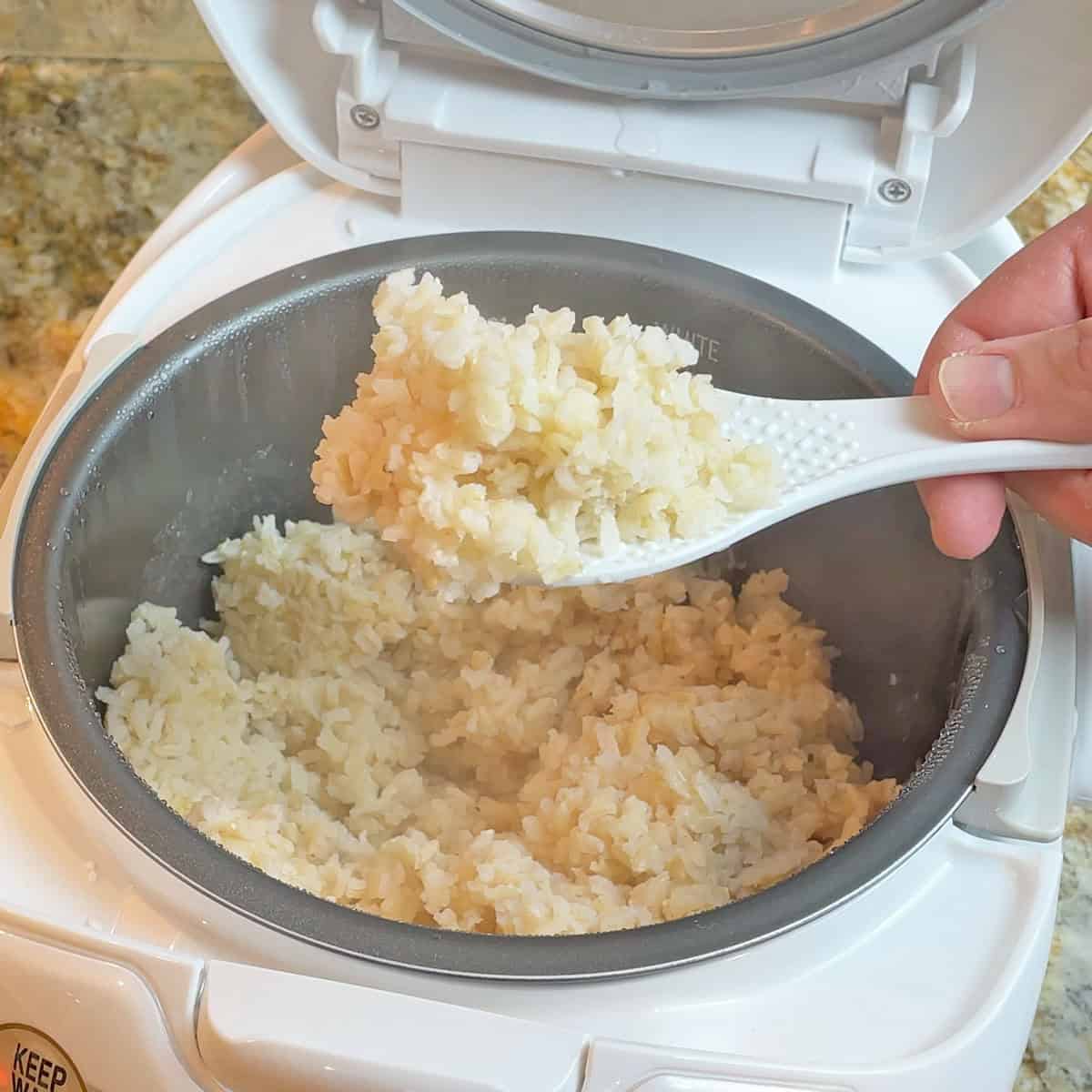
The Cuckoo’s brown rice was not great. The grains split open and turned mealy with an unpleasant texture.
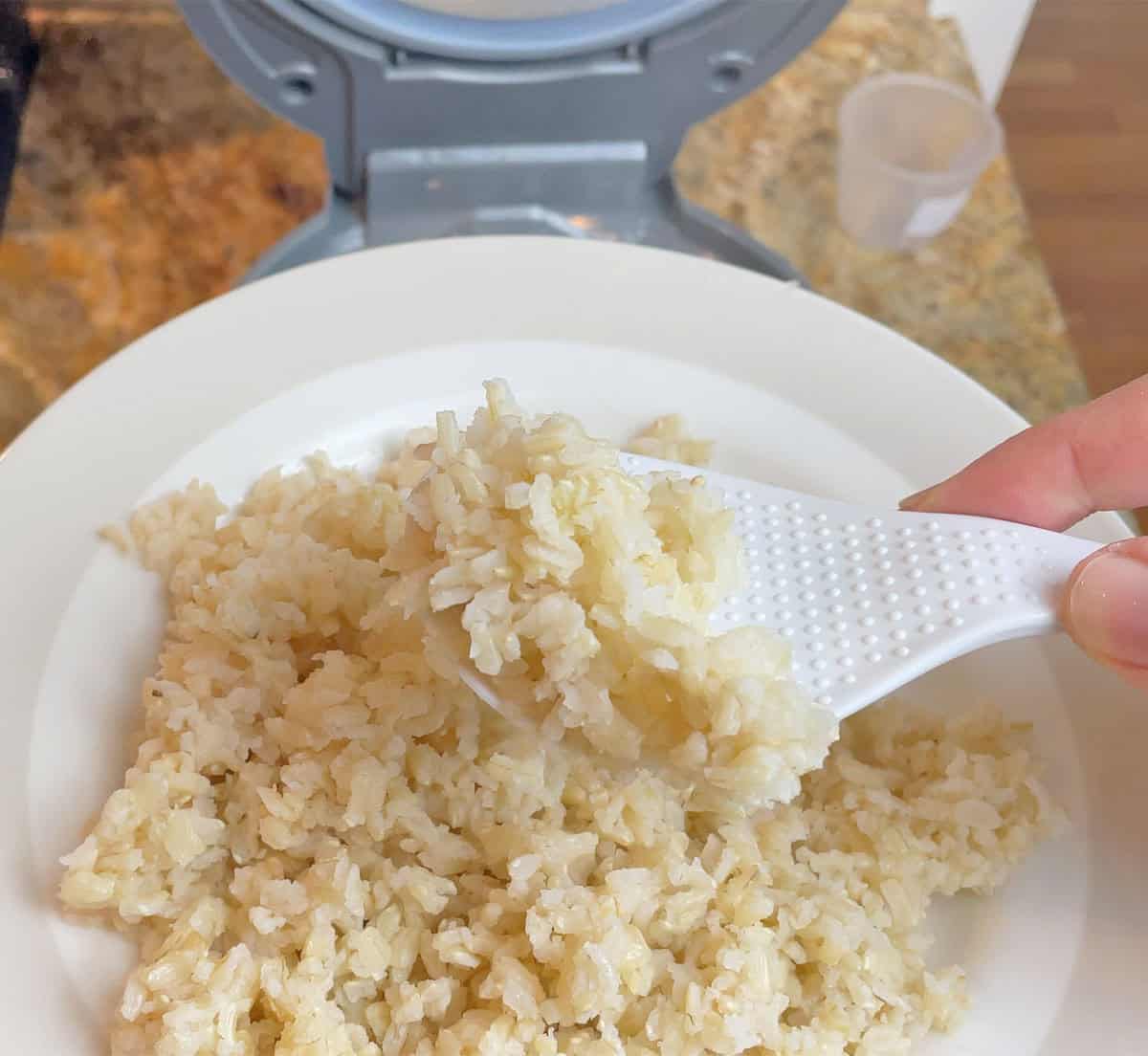
After cooking dozens of batches in both, I stopped using the Cuckoo for brown rice entirely. The Zojirushi took over an hour and 40 minutes to cook brown rice. The Cuckoo finished in 60 minutes, but speed doesn’t matter when the results are poor.
Sushi Rice: The Zojirushi produced excellent medium grain sushi rice with the right sticky texture without turning mushy. The Cuckoo’s sushi rice was too wet and overly mushy. If you cook sushi rice often, the Zojirushi is the better choice.
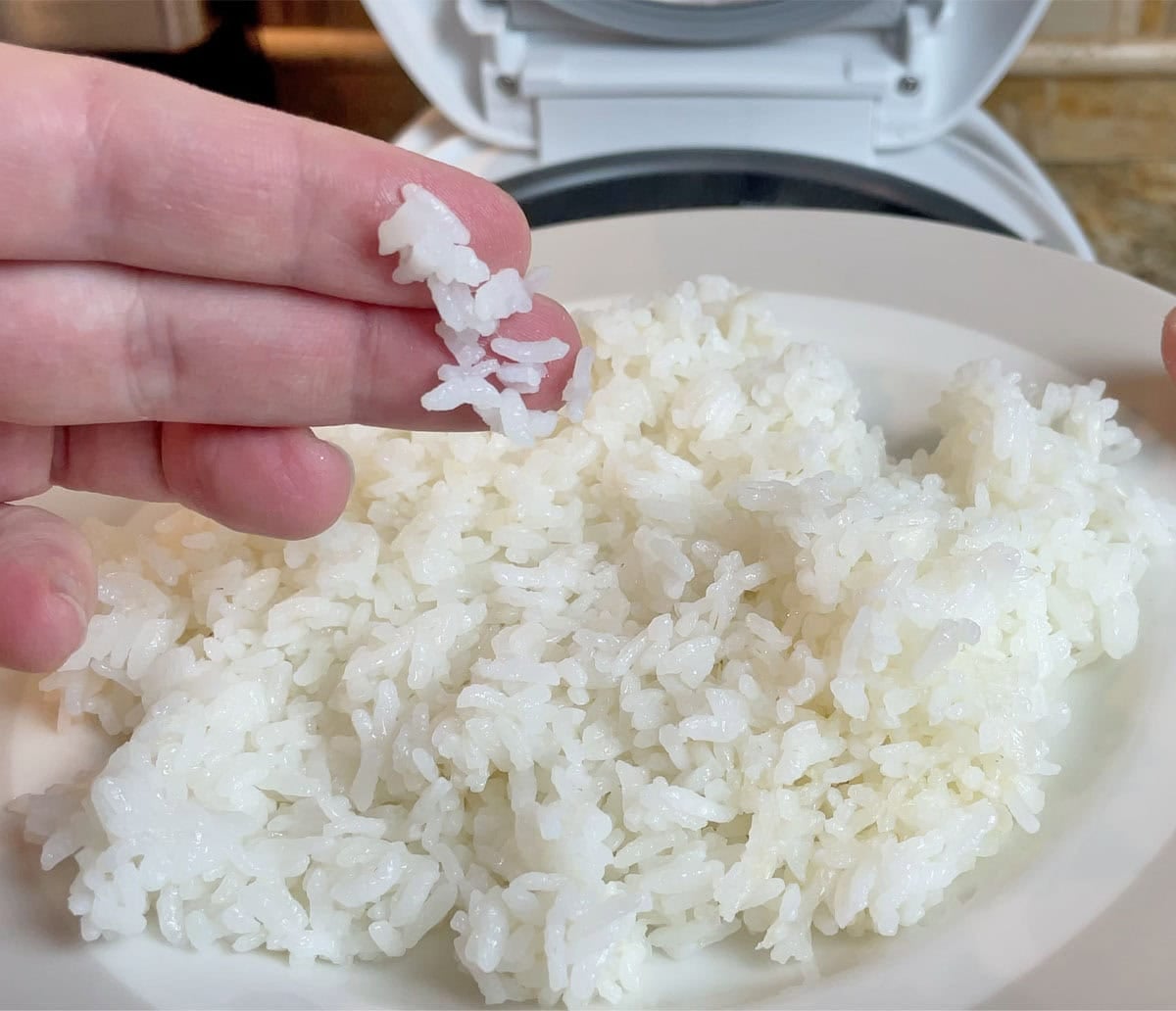
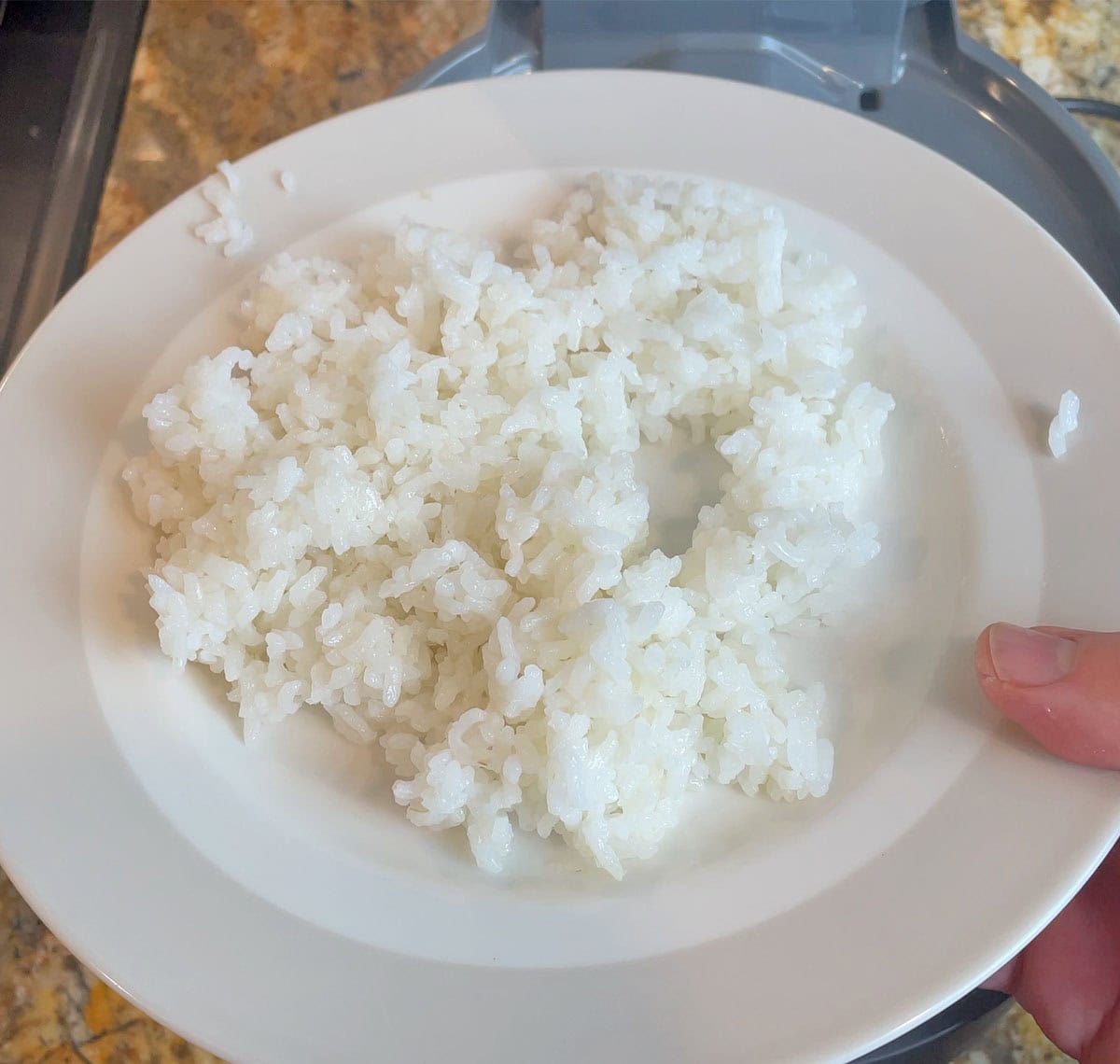
Quick Cook Mode: Both brands saved 14 minutes when I cooked three cups of white rice on quick mode. The texture was nearly identical to the regular mode. The Zojirushi went from 53 minutes down to 39, and the Cuckoo dropped from 44 to 30 minutes.
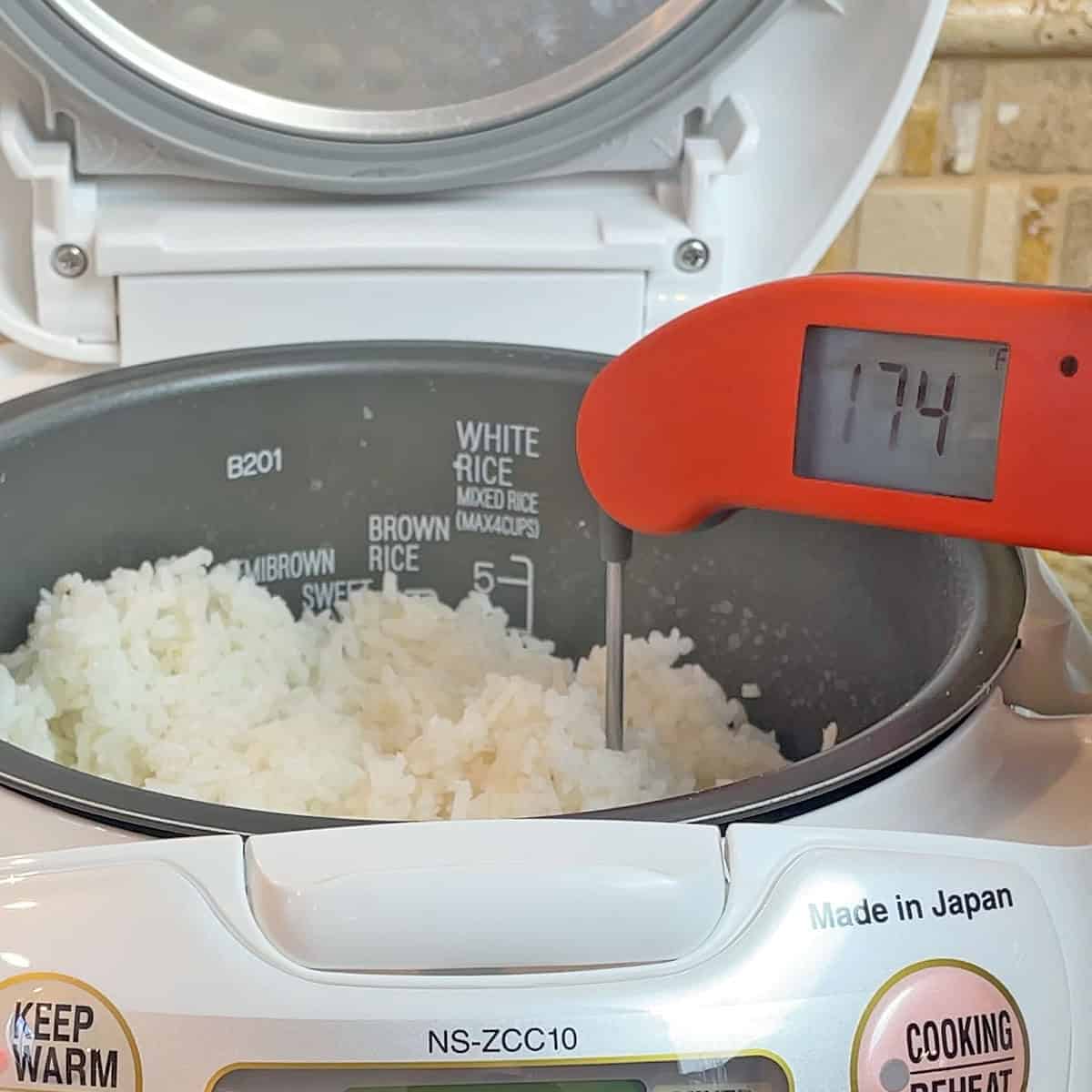
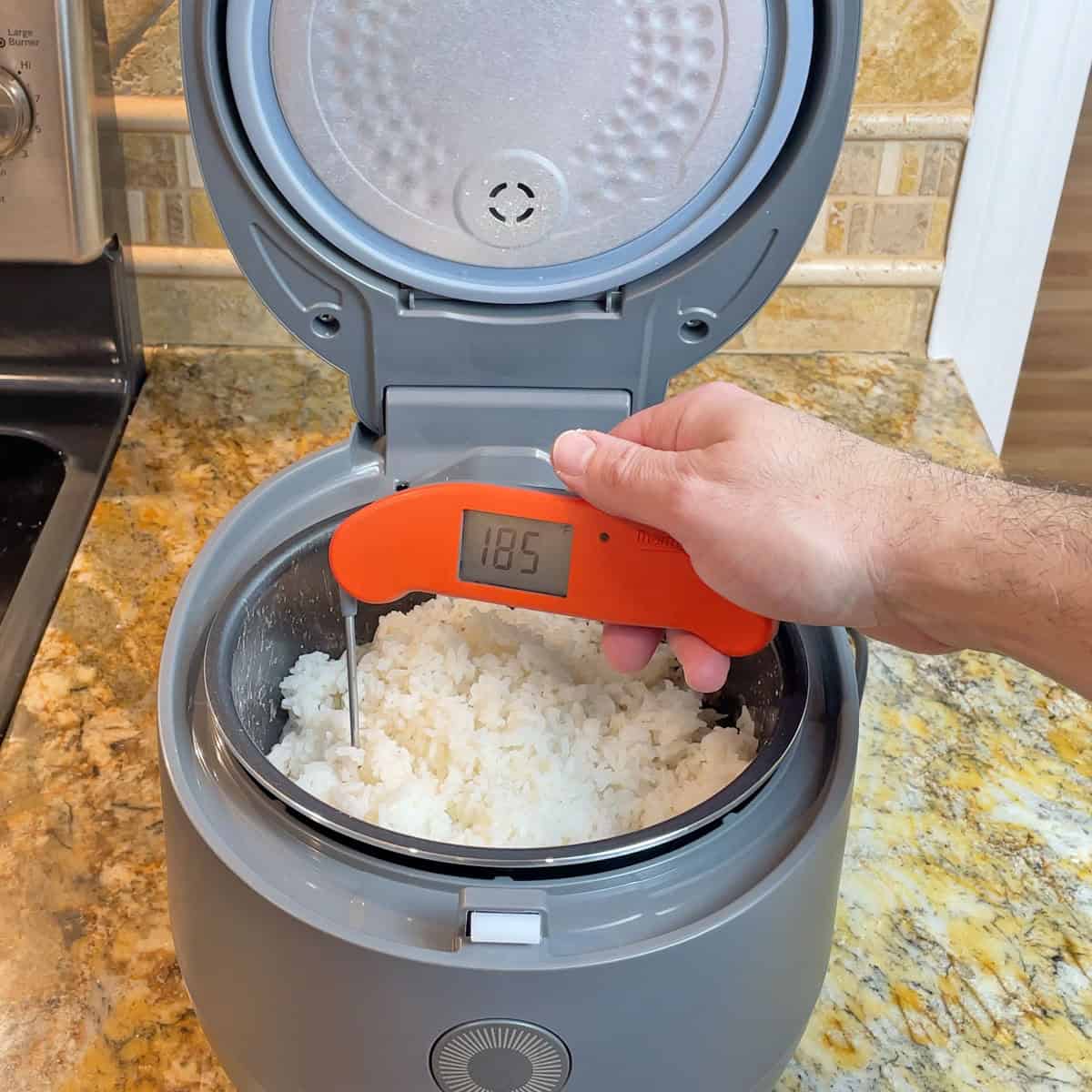
Keep Warm Function: After leaving rice on the keep warm setting for three hours, the Zojirushi held the rice at 174°F and the Cuckoo at 185°F. Both maintained good texture without drying out or getting mushy.
Noise and Mess: Neither cooker makes much noise during cooking, and neither bubbled up or made a mess around the vent like some rice cookers do. The Zojirushi plays a happy little tune when you start and finish a batch instead of the standard beep.
Bottom Line: Should You Buy a Zojirushi or Cuckoo Rice Cooker?
The Zojirushi is the better rice cooker overall, and after using both for nearly a year, it’s not even close for me.
The design quality is noticeably superior with a smooth-opening lid that won’t jolt your counter or smack your cabinets (a real concern with the Cuckoo), a retractable 50-inch cord, heat-resistant pot handles, easy-to-read water markings, and responsive physical buttons that actually work when you press them.
It also handles sushi rice significantly better and produces slightly better brown rice, though neither cooker excelled at brown rice in my testing.
The trade-off is that it cooks slower. Three cups of white rice takes 53 minutes compared to the Cuckoo’s 44 minutes, and brown rice takes over an hour and 40 minutes versus 60 minutes.
The Cuckoo makes sense if you’re on a tighter budget and only plan to cook white rice. It’s significantly cheaper than the Zojirushi and delivers the same white rice quality. The faster cook times are also a benefit. However, I’m not a fan of the aggressive lid mechanism that lifts the unit off the counter, a less responsive touchscreen, and inferior results with brown rice and sushi rice.
If you cook rice multiple times per week and want a rice cooker that will last years without annoying you, the Zojirushi is worth the extra money. If you’re a casual rice eater on a budget who sticks to white rice, save the cash and get the Cuckoo.
Both brands offer multiple rice cooker models on Amazon with different capacities and price points. You can check out the Zojirushi NS-ZCC10 and Cuckoo CR-0675FG I compared here, or browse the full Zojirushi rice cooker lineup and Cuckoo’s full selection to find the model that fits your needs and budget.
Related Topics
- Zojirushi vs Tiger: Which Rice Cooker Is the Best?
- Zojirushi Rice Cooker Review: Is It Worth the High Price?
- How Long Does Rice Take in a Rice Cooker? (With 5 Examples)
- Ninja Crispi Review: Pros & Cons You Must Know Before Buying
- Ninja vs. Instant Pot vs. Cosori vs. Typhur vs. Chefman (Best Air Fryer?)
- 5 Types of Air Fryers: A Guide to Help You Choose
- Air Fryer vs. Convection Toaster Oven: Cooking Test Results Revealed
- 19 Pros and Cons of Air Fryers: Are They Worth It?

