

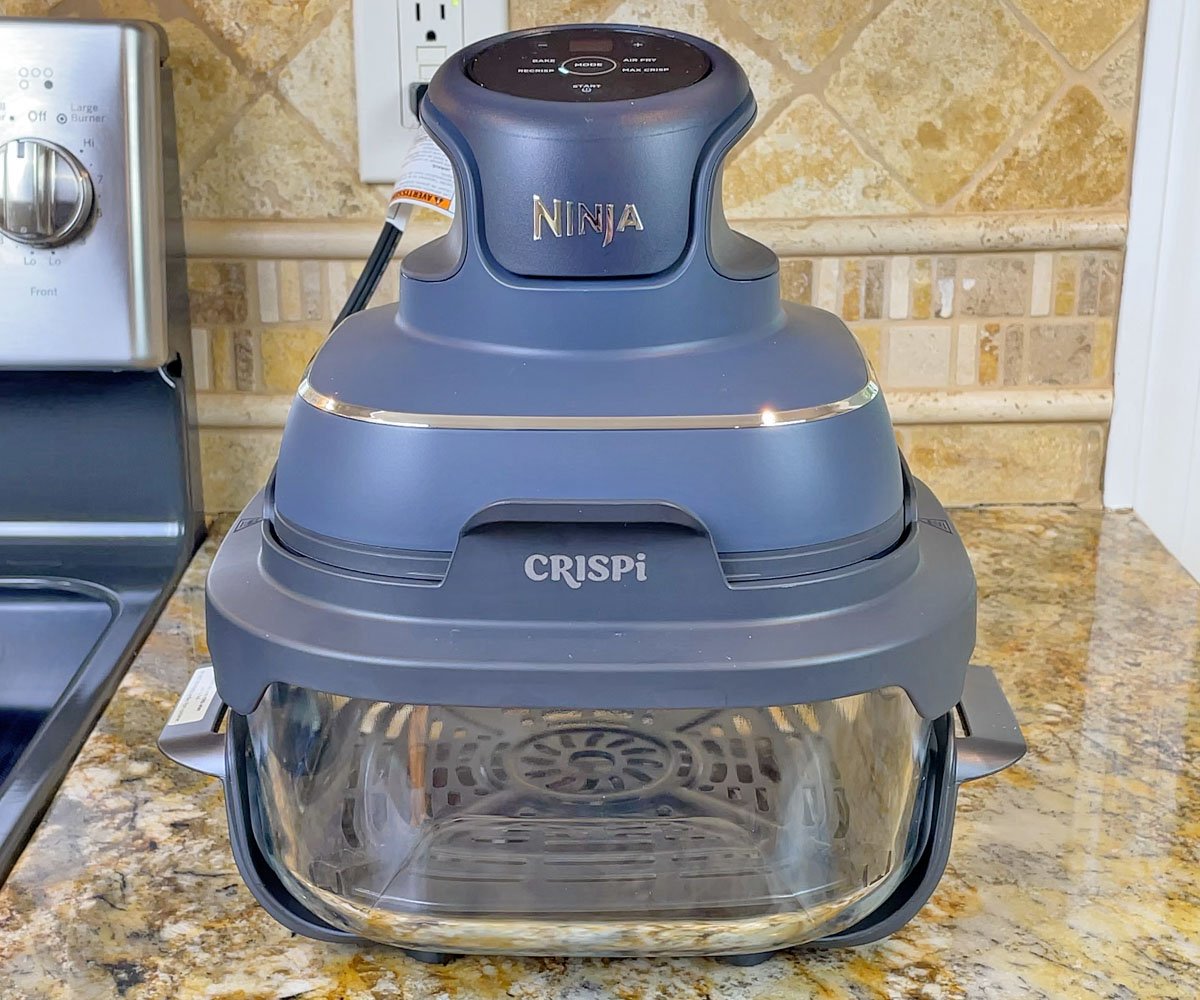
The Ninja Crispi is one of the most popular “non-toxic” air fryers you can buy right now.
It cooks your food in borosilicate glass instead of a coated aluminum basket, it’s marketed as portable, and you can watch everything crisp in real time. The concept is genuinely appealing.
But after cooking over 100 meals in the Crispi and testing it head-to-head against six other air fryers, I found one design choice that makes it really hard to recommend. Here’s my brutally honest review.
Key Takeaways
- The cooking performance is solid. Fries, wings, and roasted vegetables all came out great. Performance was on par with the best air fryers I’ve tested.
- The PowerPod is a safety concern. The detachable heating element has exposed hot coils on the bottom and sits just two inches above your counter when you set it down. If anything flammable is underneath, that’s a real problem.
- You can’t set a specific temperature. The Crispi only offers four preset modes, with the lowest starting at 375°F. No way to dial in an exact number.
- The cooking surface is small. At 64 square inches (8×8 inches), it fits about 11 wings. Competing air fryers at similar or lower prices fit 14 to 25.
- The “non-toxic” claim is misleading. Your food still sits on a ceramic-coated crisper plate, which is a sol-gel coating whose full ingredients manufacturers won’t disclose. It’s PFAS-free, which is a real improvement over Teflon, but independent testing has found other concerning substances in ceramic coatings, and there’s no legal definition for “non-toxic” in cookware.
- Noise is reasonable. At 62 dBA, it’s middle of the pack and noticeably quieter than the Crispi Pro (67 dBA).
- The Ninja Crispi is available on SharkNinja.com and Amazon where you can read more reviews and check the current price.
Use the links below to navigate this review:
- How It Works
- Materials: Is It Actually Non-Toxic?
- Cooking Performance
- Capacity and Dimensions
- Safety and Usability
- Glass Durability
- Bottom Line: Is the Ninja Crispi Worth Buying?
How It Works
The Ninja Crispi doesn’t look or work like a traditional air fryer. There’s no drawer, no fixed housing. Instead, it uses what Ninja calls a “PowerPod”. This detachable unit holds the heating element, fan, and controls. You set a glass container on any flat surface, place the PowerPod on top, pick a mode, and it cooks from above.
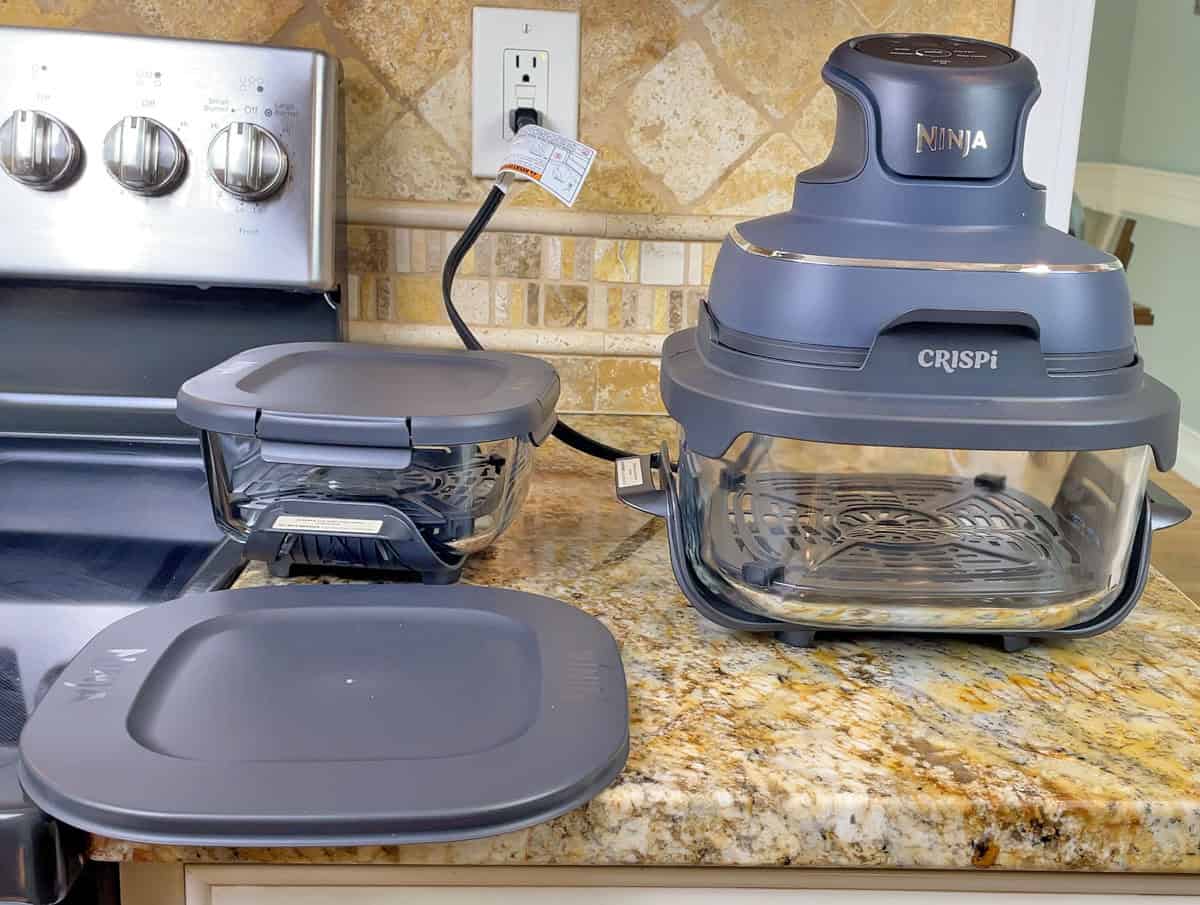
When you want to check your food or serve it, you lift the entire PowerPod off and set it down somewhere nearby. That’s what makes the Crispi “portable” – you can technically use it anywhere with a flat surface and an outlet.
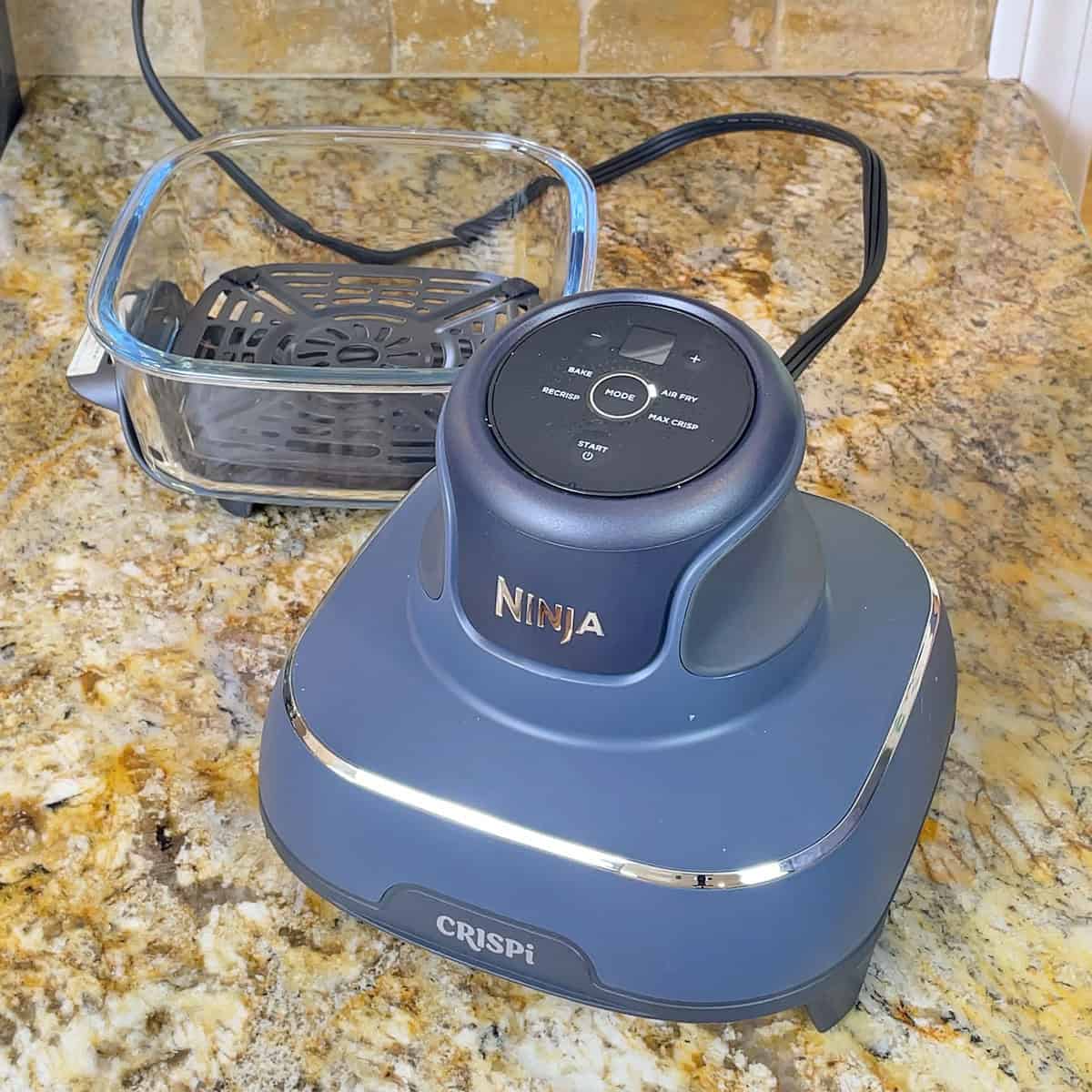
It comes with two containers: a 4-quart and a smaller 6-cup (1.5-quart). Both are straight-sided borosilicate glass with BPA-free plastic lids, so you can cover leftovers and go straight into the fridge. Each one includes a ceramic-coated aluminum crisper plate that elevates food and lets air flow underneath.
There’s no way to set a specific temperature. You get four preset modes, each locked to a range:
- Recrisp: 380–400°F
- Air Fry: 400–425°F
- Max Crisp: 425–450°F
- Bake: 375–400°F
If a recipe calls for 350°F or anything below 375°F, you’re stuck picking the closest mode and adjusting the time. It works, but it means guesswork, especially for recipes designed around specific temperatures.
Materials: Is It Actually Non-Toxic?
This is the number one reason people are interested in the Crispi, so it’s worth being really precise about what “non-toxic” actually means here.
Your food does cook inside a borosilicate glass container, and the glass itself is free of PFAS, PTFE, BPA, and other chemicals commonly associated with traditional nonstick coatings. That part checks out.
But your food doesn’t actually sit on the glass. It sits on a ceramic-coated aluminum crisper plate. And this is where the marketing gets complicated.
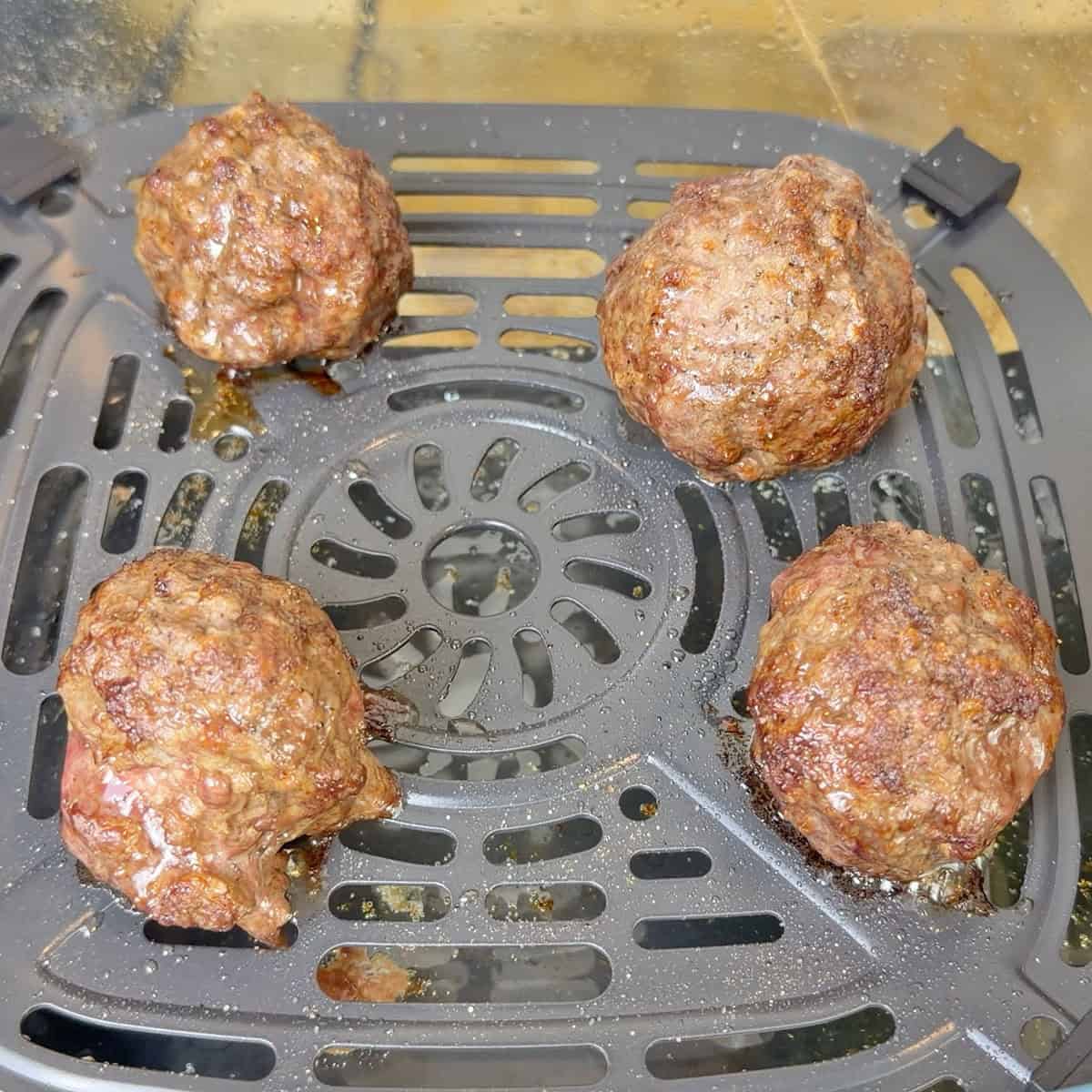
First, the good news. Consumer Reports tested ceramic-coated pans labeled “PTFE-free” and found zero PFAS among the 96 chemicals they screened for. Environmental chemists at Duke University confirmed that PFAS aren’t needed in the ceramic coating manufacturing process.
So the coatings used on the Crispi’s crisper plate are genuinely free of the “forever chemicals” that have been linked to serious health issues.
Now, the more complicated picture. The “ceramic” nonstick on the Crispi’s crisper plate isn’t actually ceramic in the traditional sense. It’s what researchers call a “quasi-ceramic” – a sol-gel coating made from a mix of silica, metals, organic polymers, and other chemicals sprayed onto an aluminum surface. A Guardian investigation found that no legal definition for “nontoxic” or “ceramic” exists for cookware, and most companies shield their exact formulas behind confidential business information laws, making independent verification difficult.
That same investigation highlighted findings from independent testing that detected titanium dioxide, lead, and other metals in popular ceramic-coated cookware brands. Titanium dioxide is a potential carcinogen that’s banned for use in food in the European Union, though not in cookware.
A 2016 study showed that titanium dioxide from ceramic coatings can migrate into food during cooking. The state of Washington has since ordered ceramic cookware producers to submit their nonstick ingredients for review (the first regulatory effort of its kind in the U.S.) because, as the state’s senior toxicologist put it, “it’s challenging for regulators to know when we’re moving to safe alternatives.”
There are also durability concerns. Ceramic coatings degrade with regular use. They scratch, chip, and lose their nonstick properties, often within 6 to 18 months according to multiple independent assessments.
The American Ceramic Society notes that when the coating flakes, the particles are primarily silicon dioxide, which is generally considered biologically inert. But researchers have flagged unanswered questions about nanoparticles from degraded coatings and how they may behave differently in the body. And once the coating wears through entirely, the underlying aluminum substrate gets exposed to food, a particular concern with acidic ingredients like tomatoes or citrus.
So what does this mean for the Crispi? The crisper plate uses the same type of sol-gel ceramic coating you’ll find across many air fryers in this price range, including the COSORI TurboBlaze and Ninja Air Fryer Pro.
The Crispi doesn’t eliminate the coating, it reduces how much coated surface area surrounds your food, since the container walls and base are uncoated glass instead of coated aluminum. But calling the whole system “non-toxic” oversimplifies a picture that’s still being researched, and the coating your food actually touches is the same one you’d find in a standard air fryer.
Cooking Performance
The Crispi held its own against every air fryer I tested – with one notable exception.
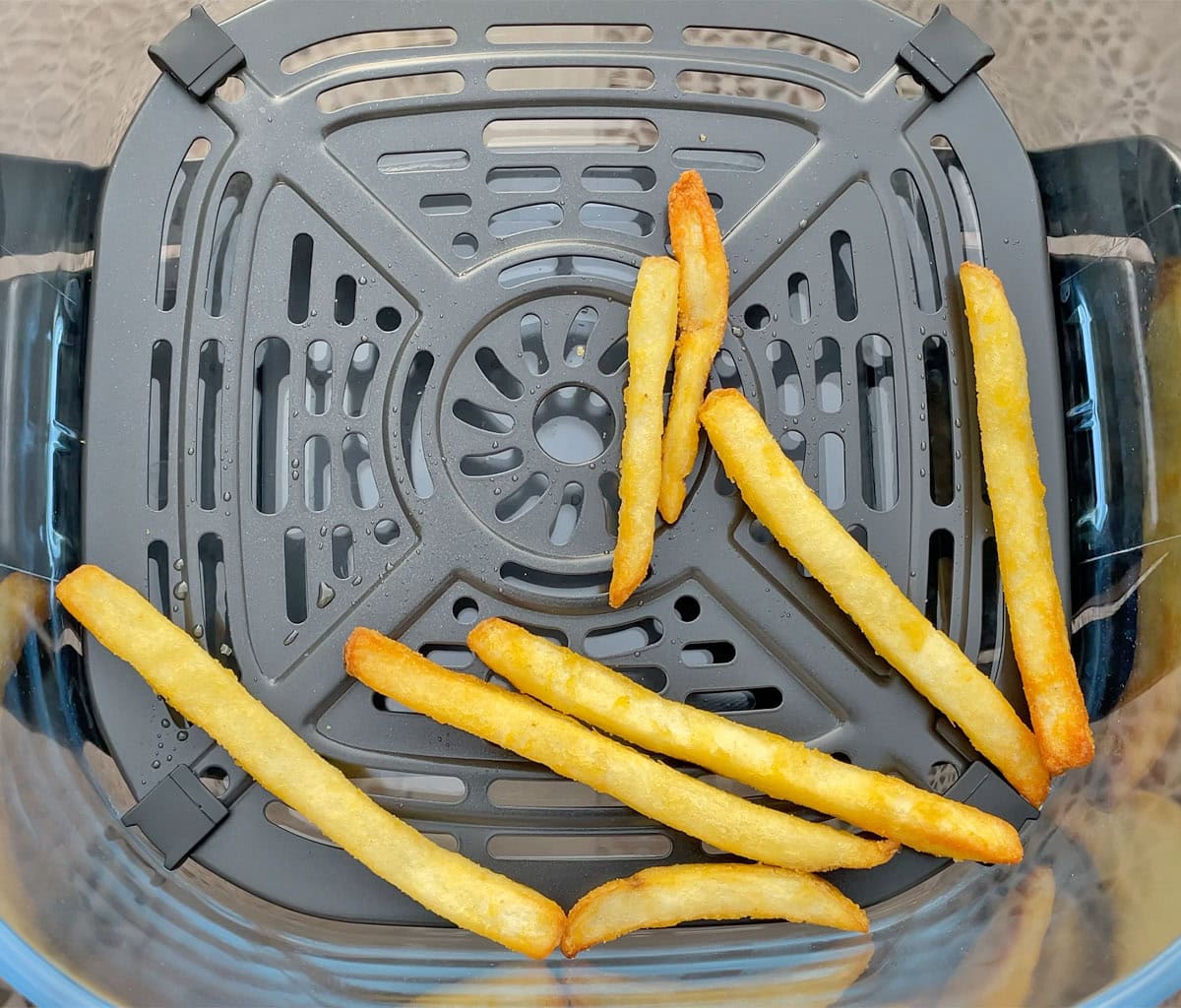
Frozen fries came out perfectly crisped and evenly cooked in about 10 minutes.
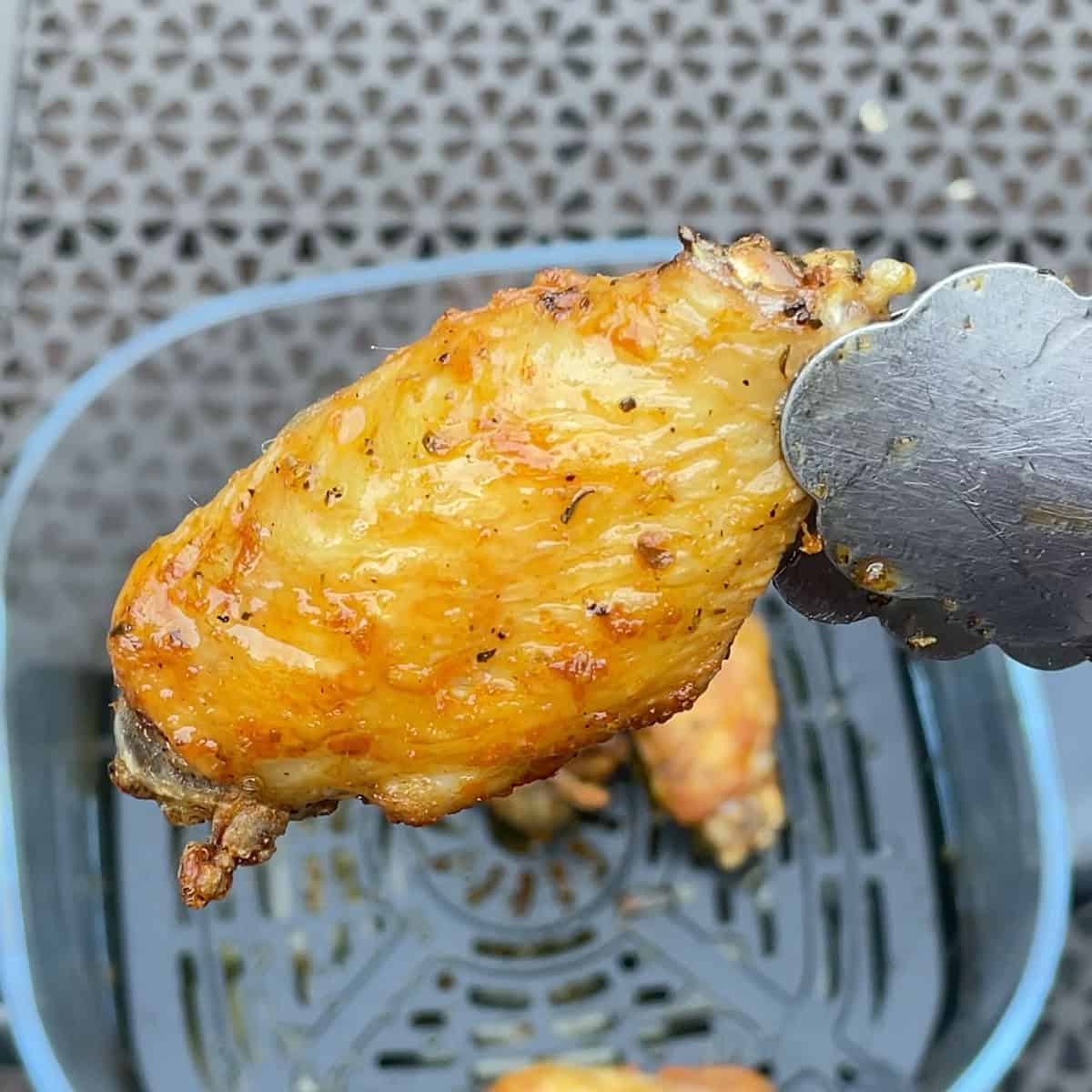
Chicken wings were excellent, finishing in 23 minutes with crispy, evenly browned skin all the way around. That was right in line with the competition, though the Typhur Dome 2 finished wings faster at 18 minutes thanks to dual heating elements on top and bottom. Butternut squash roasted nicely with good color and a crispy exterior over a soft interior.
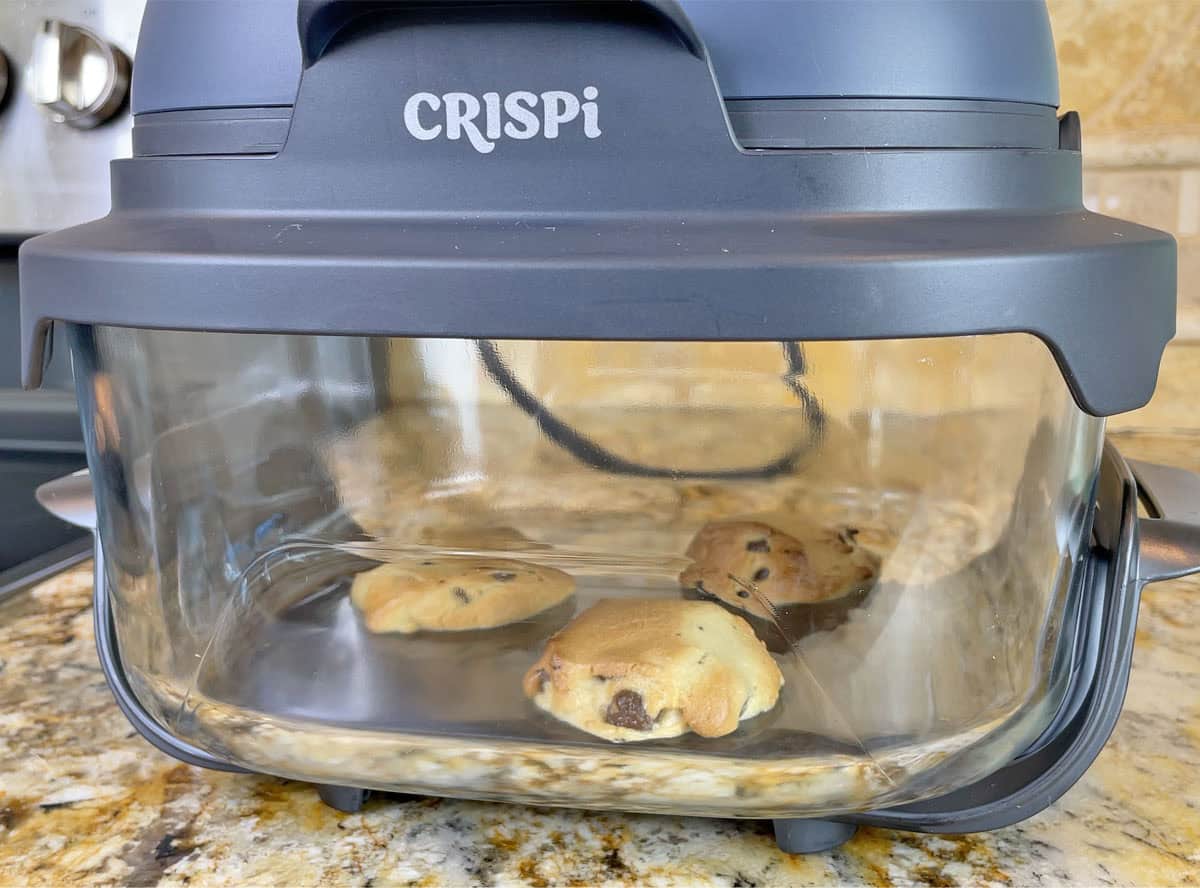
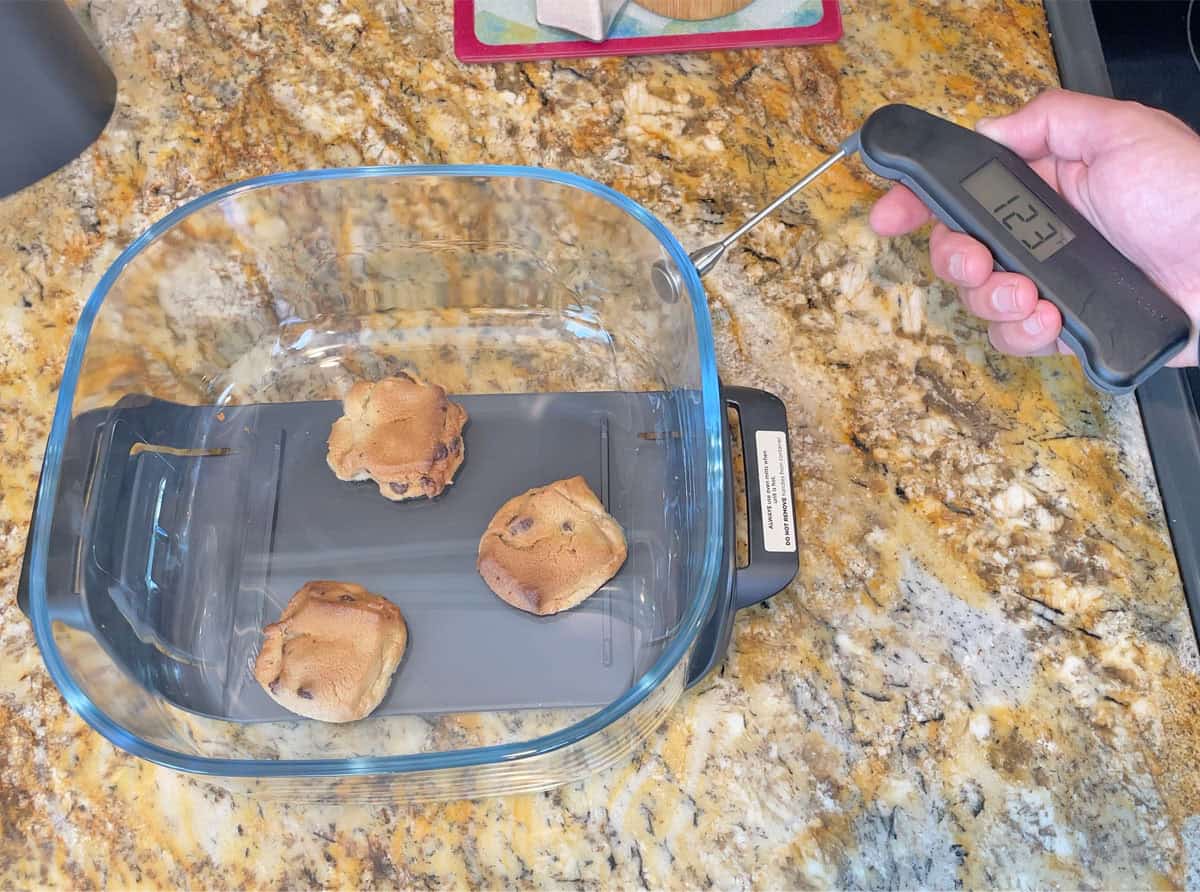
Cookies were a different story. The tops browned way too fast while the bottoms were completely undercooked, and the dough stuck badly to the glass. I needed a spatula to pry them off. Every other air fryer I tested released them cleanly. This is a fundamental limitation of top-only heating. Without an element below the food, baked goods just don’t get the bottom browning they need.
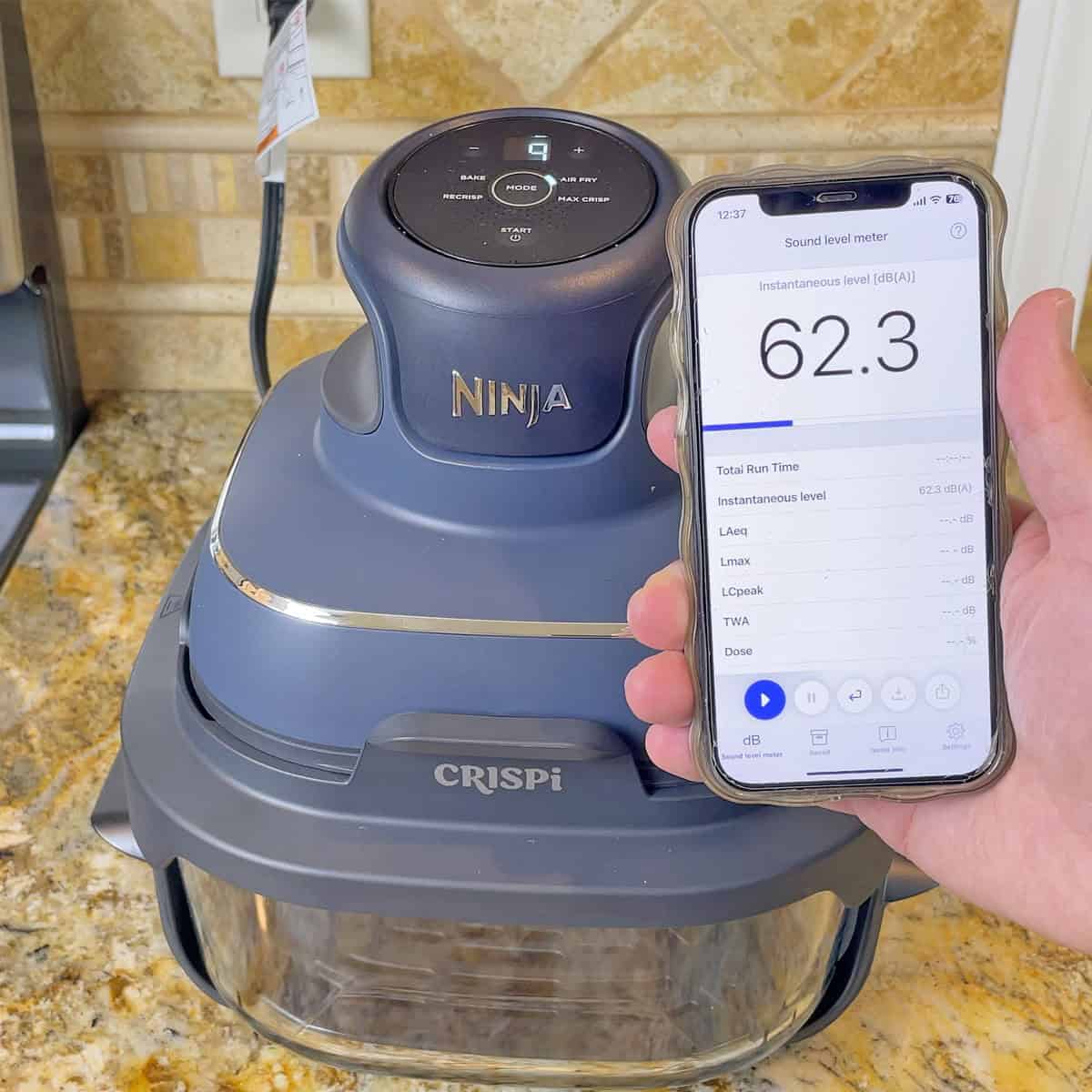
Noise was reasonable at 62 dBA on air fry mode at 400°F. That’s quieter than the Ninja DoubleStack XL (63–66 dBA) and noticeably quieter than the Crispi Pro at 67 dBA. The quietest air fryer I tested was the Typhur Dome 2 at 51 dBA.
Beyond the formal tests, I cooked a ton of everyday food in the Crispi over several weeks. I also used the containers to store food in the fridge and reheat it, and I was impressed by the results. Food crisps back up fast without drying out.
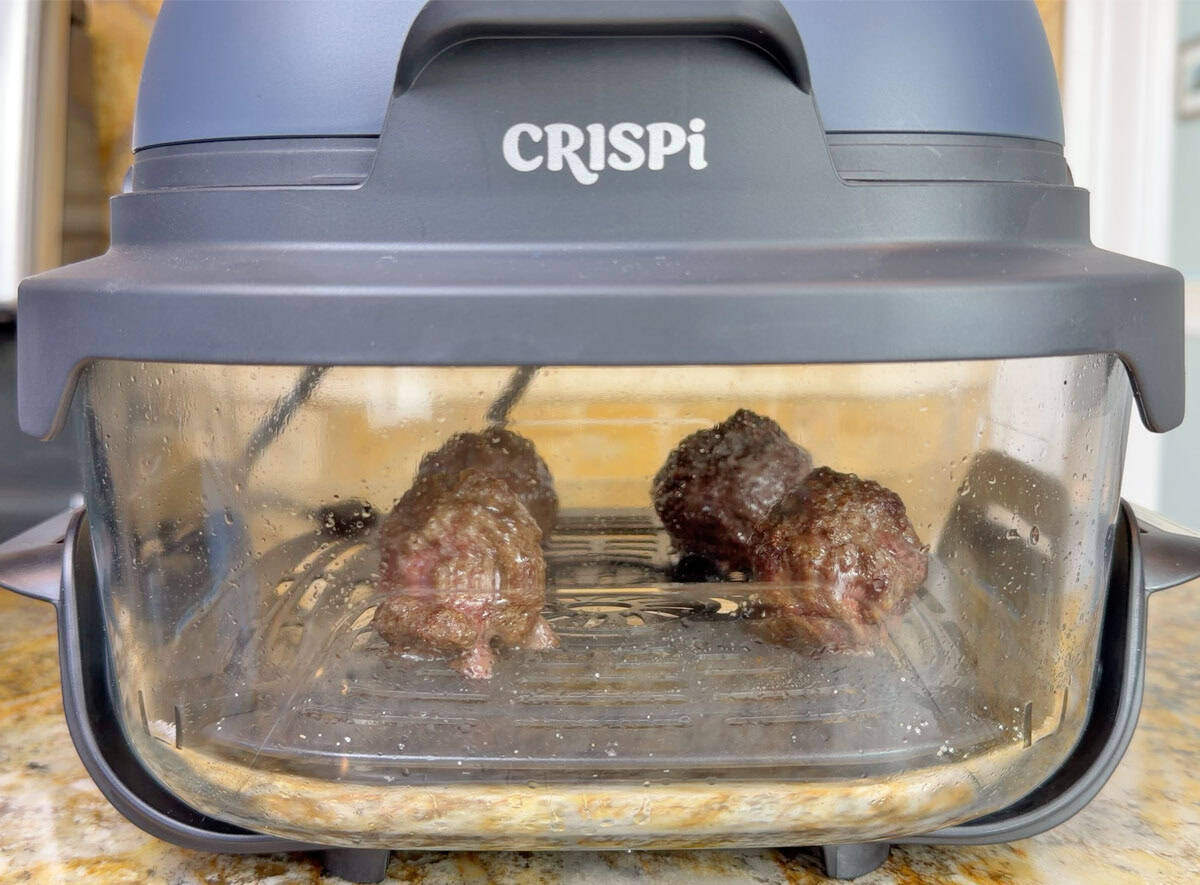
And being able to see everything through the glass is more useful than it sounds. You know exactly when to flip, when to pull, and you never lose heat opening a basket to peek inside.
Capacity and Dimensions
The Crispi’s large 4-quart container has an 8-by-8-inch cooking surface (64 square inches). That’s enough for about four overlapping slices of bread or 10 to 11 chicken wings without stacking. For one or two people, it’s workable. For a family, it’s probably not enough room.
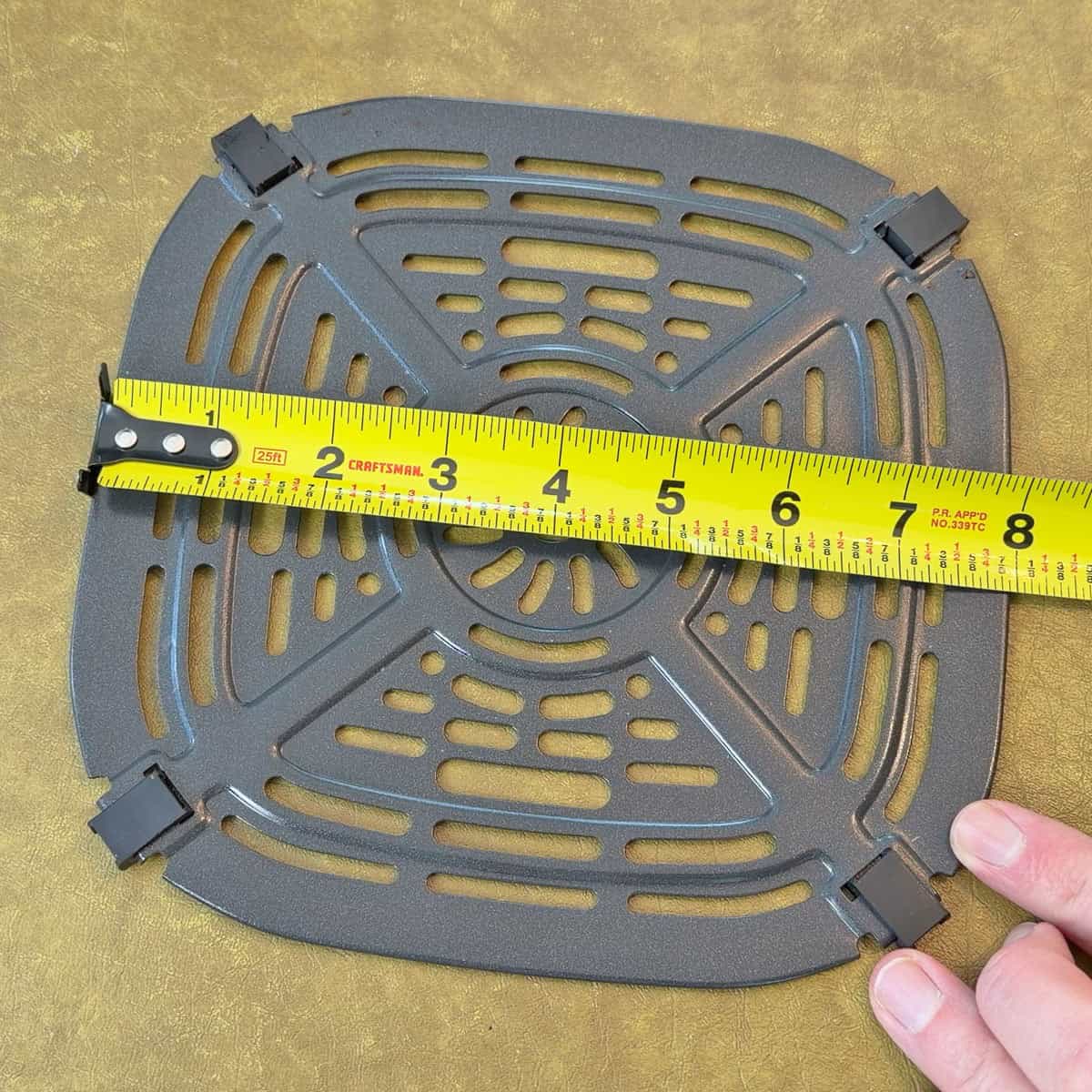
For context: the Instant Pot Vortex Plus offers 88 square inches and fits 16 wings. The COSORI TurboBlaze has 77 square inches and fits 14. The Typhur Dome 2 gives you 144 square inches and fits 25. The Crispi is one of the smaller options I tested in terms of usable cooking space.
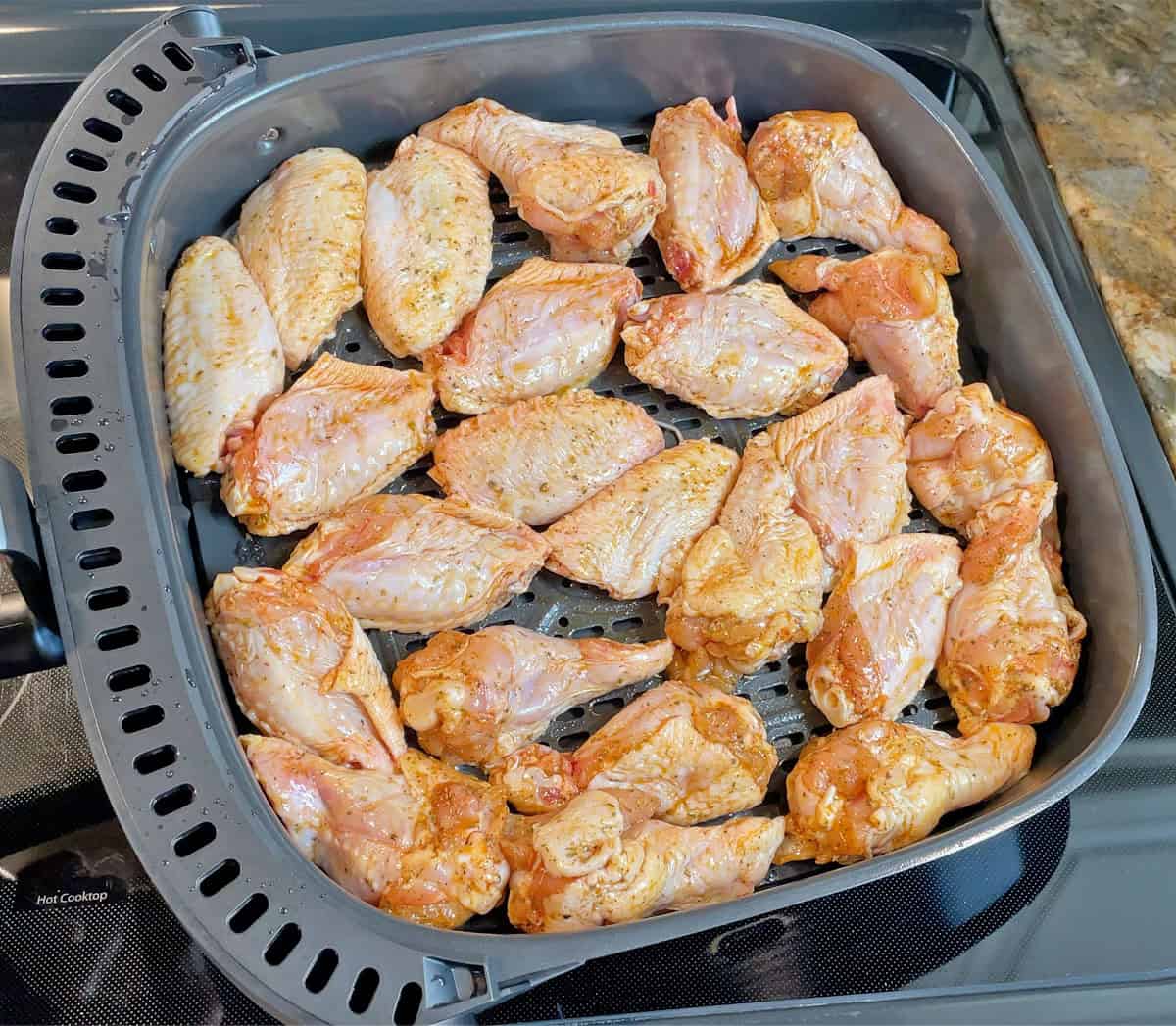
The smaller 6-cup container has a 5.7-by-5.7-inch surface (about 33 square inches). That’s enough for around 6 wings.
Where the Crispi does win is countertop footprint. At just 112 square inches (11.5 by 9.75 inches), it takes up less counter space than any air fryer I tested. It’s also the shortest at 11.25 inches. If your counter is tight, that’s a real advantage. The cord is 36 inches (longer than most competitors) which helps with outlet placement.
Total weight is 9.1 pounds, significantly lighter than the Crispi Pro (17.5 pounds) and the Typhur Dome 2 (20.2 pounds).
Safety and Usability
Every time you want to check your food, flip something, or serve, you lift the entire PowerPod off the glass container. You’re now holding a unit with exposed hot coils on the bottom, and you need somewhere to set it down. Those coils sit about two inches above whatever surface you place them on.
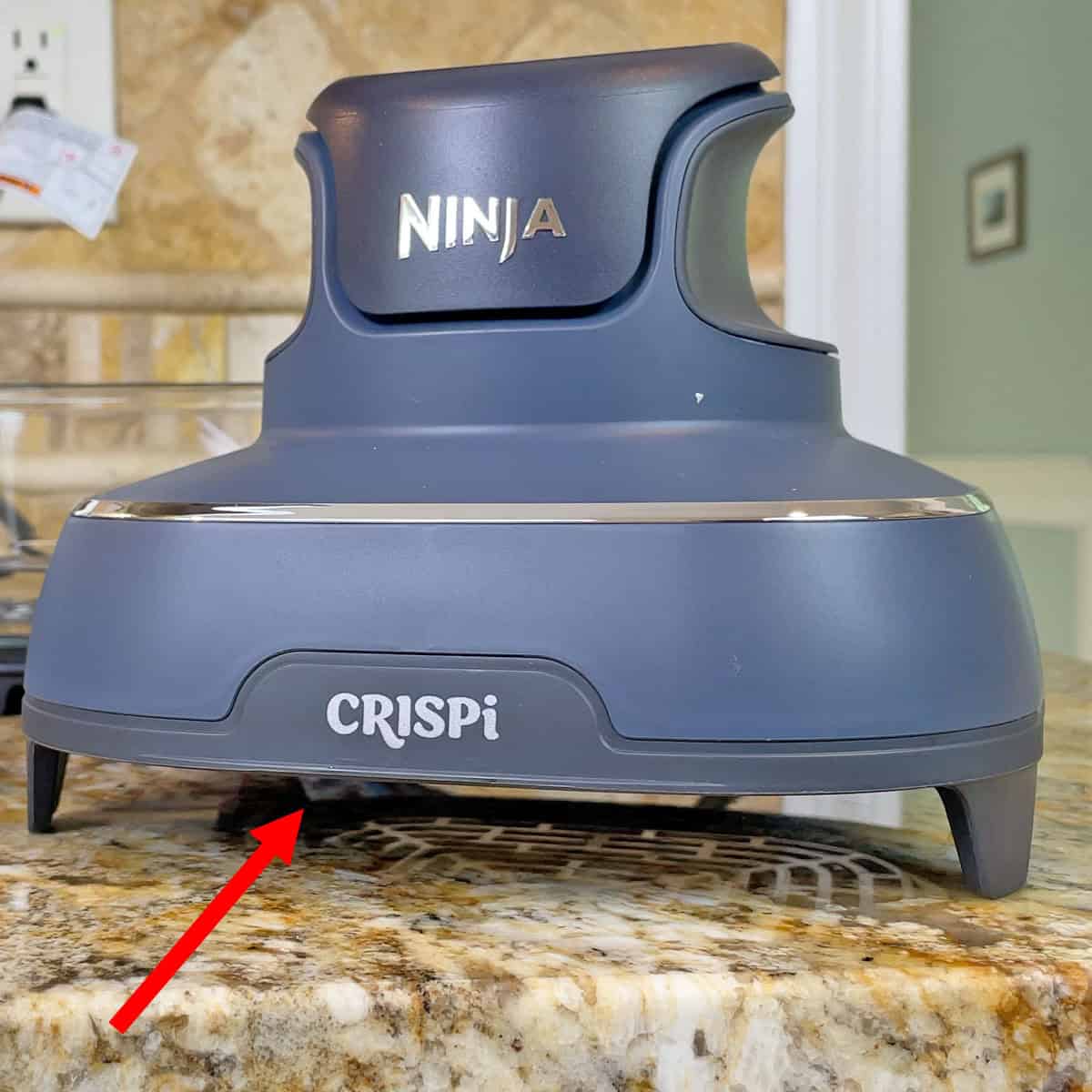
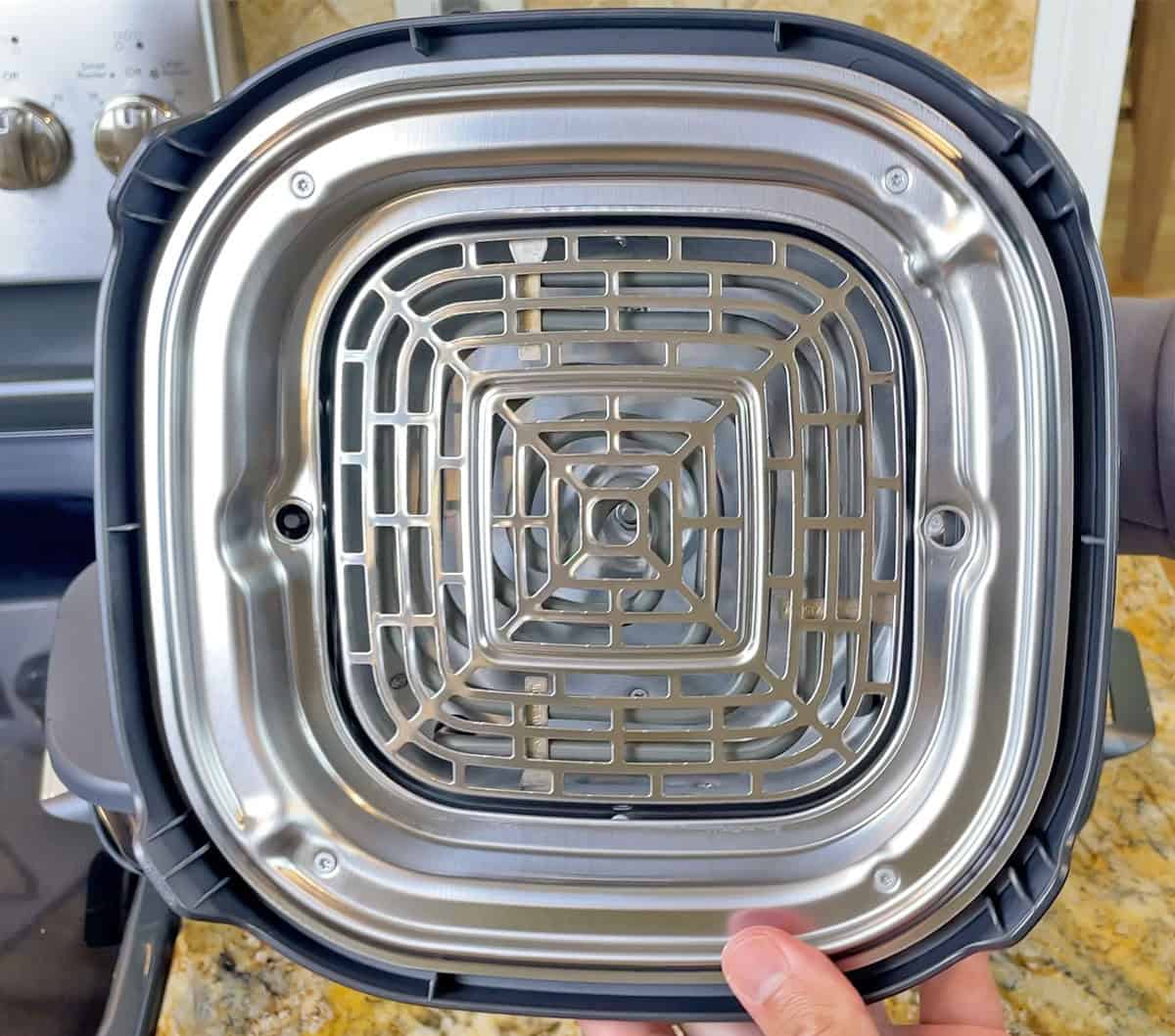
If you have quartz countertops, you probably know that they aren’t pure stone. They’re made with resins that can melt if something too hot sits on them, leaving a permanent white heat ring that can’t be buffed out. It’s why most quartz manufacturers say never to place hot pots or pans directly on the surface.
To see how much heat the PowerPod actually transfers, I ran the Crispi on Air Fry mode for ten minutes, lifted off the PowerPod, and set it directly on a granite countertop. The surface temperature only rose by about eight degrees. So the heat-safe feet do their job. You should be fine setting the PowerPod on quartz or granite without a trivet.
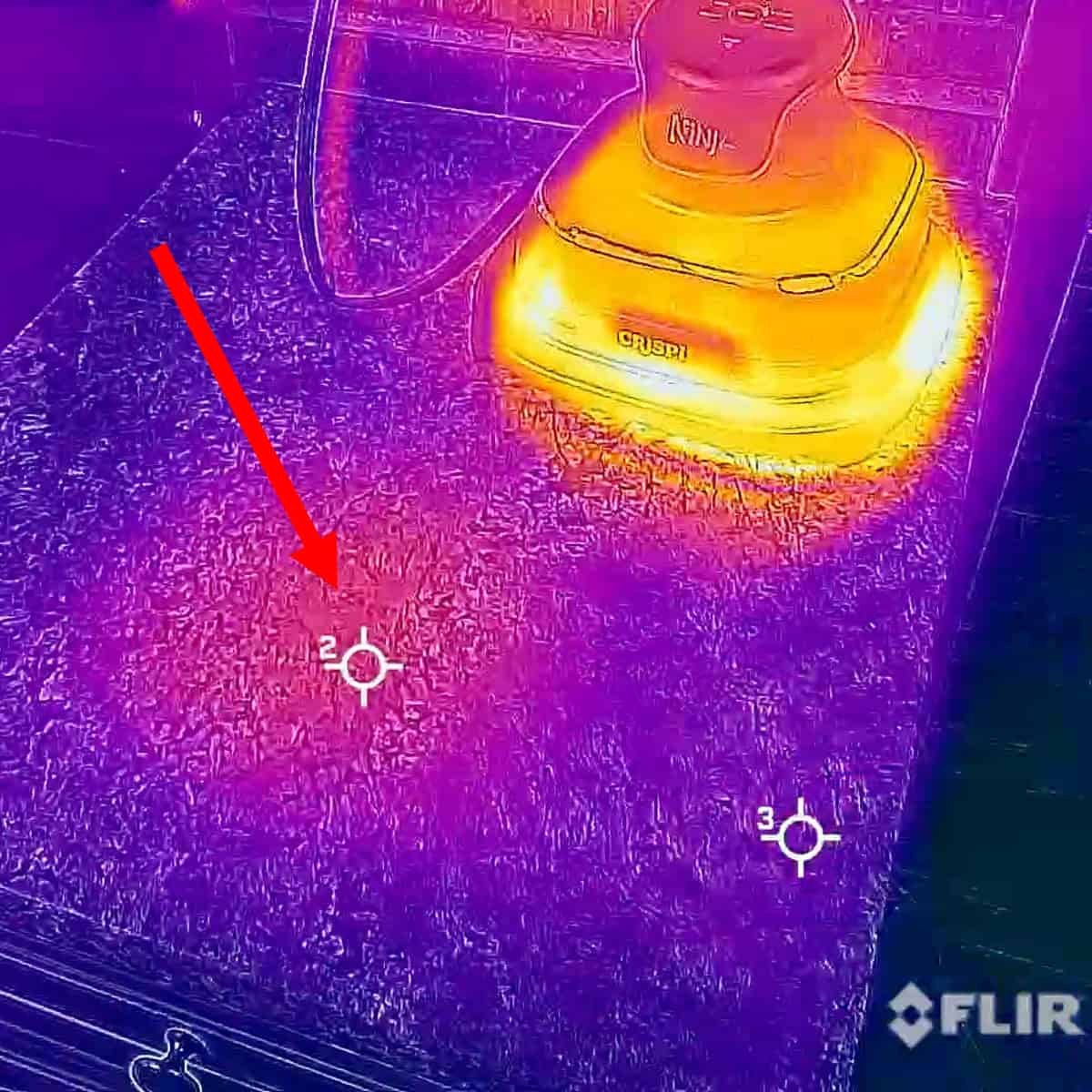
That said, kitchens aren’t always bare and clean. If you set the hot PowerPod on a cookbook, a paper towel, paper food packaging, or anything else that happens to be nearby, you’ve got a real problem.
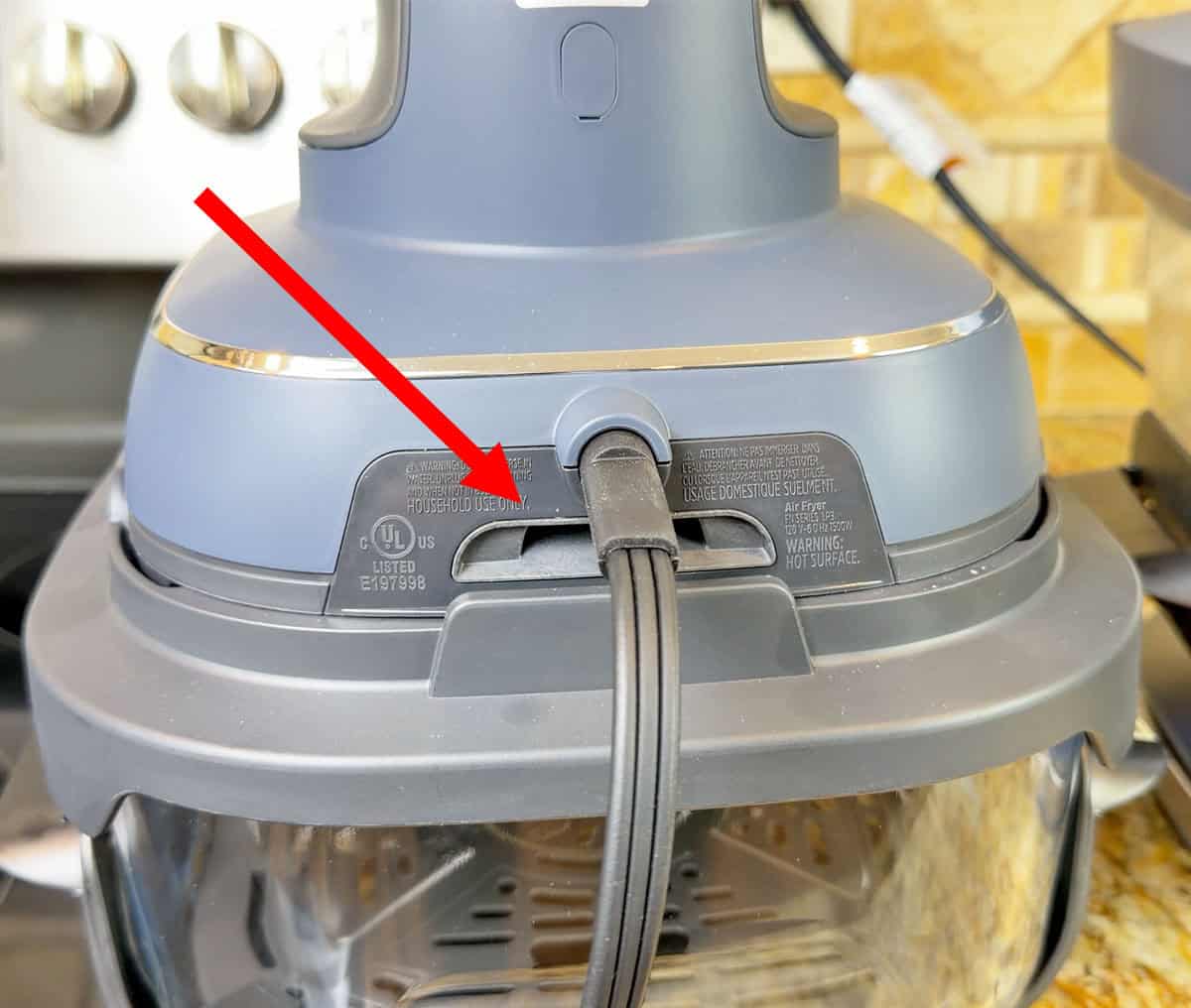
There’s also a design quirk where the exhaust vent sits directly below the power cord, blasting hot air onto the cable during cooking. It never melted in my testing, but it’s sloppy design for an appliance at this price point.
The glass containers themselves get extremely hot during cooking and stay that way for 5 to 10 minutes afterward. The handles and the plastic guard nearest the glass also warm up. You can grip them without oven mitts if you’re careful, but I usually use them anyway. Most traditional air fryers keep the handle and outer body cool enough that you never think about it.
The large glass container weighs 4.2 pounds. Traditional aluminum baskets weigh around 2.5 pounds. That extra weight combined with the heat makes handling the Crispi noticeably more cumbersome than a standard air fryer drawer you can slide out with one hand.
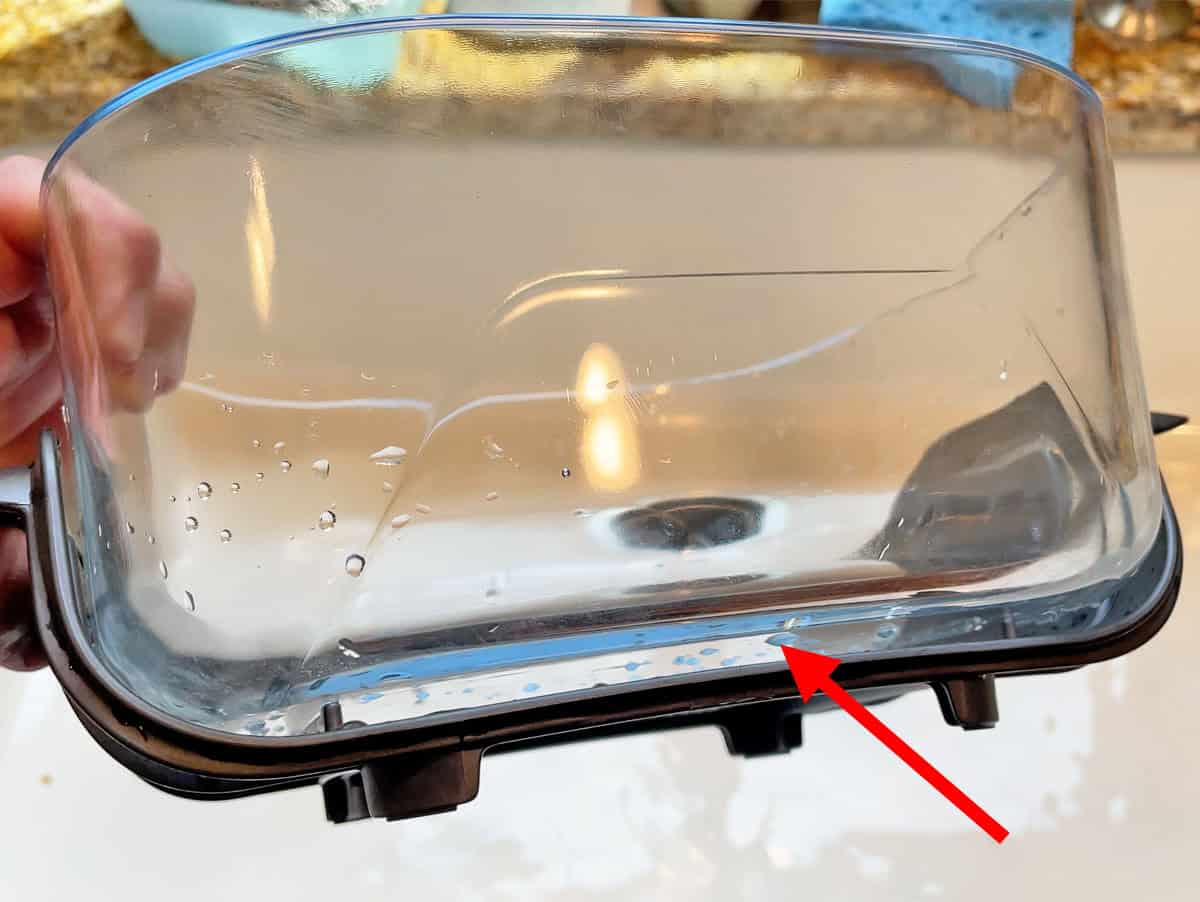
On the positive side, the glass is dishwasher safe and doesn’t hold onto odors. Cooking, covering with the included lid, and storing leftovers in the same container is a really nice workflow. The downside is that the plastic base is permanently bonded to the glass, and there’s a small gap underneath that traps food and water with no great way to scrub or dry it out.
One thing the Crispi does well: the crisper plate stays put. The straight-sided container walls hold it securely in place. After removing the plate 100 times and shaking the container, the plate didn’t budge. That’s better than several competitors, including the Instant Pot Vortex Plus and COSORI TurboBlaze, where the plates loosened or fell out with hard shaking.
Ninja markets the Crispi as portable, and technically it is — the PowerPod detaches, the containers have lids, and it’s lighter than most countertop air fryers. But realistically, the PowerPod is bulky, the glass is heavy, and nobody’s tossing this in a bag to bring to the office.
Glass Durability
Borosilicate glass is marketed as thermal shock resistant, and I wanted to test that claim.
I heated the container on Max Crisp for 10 minutes, then immediately ran cold tap water over it. Nothing. Then ice water. Still nothing.
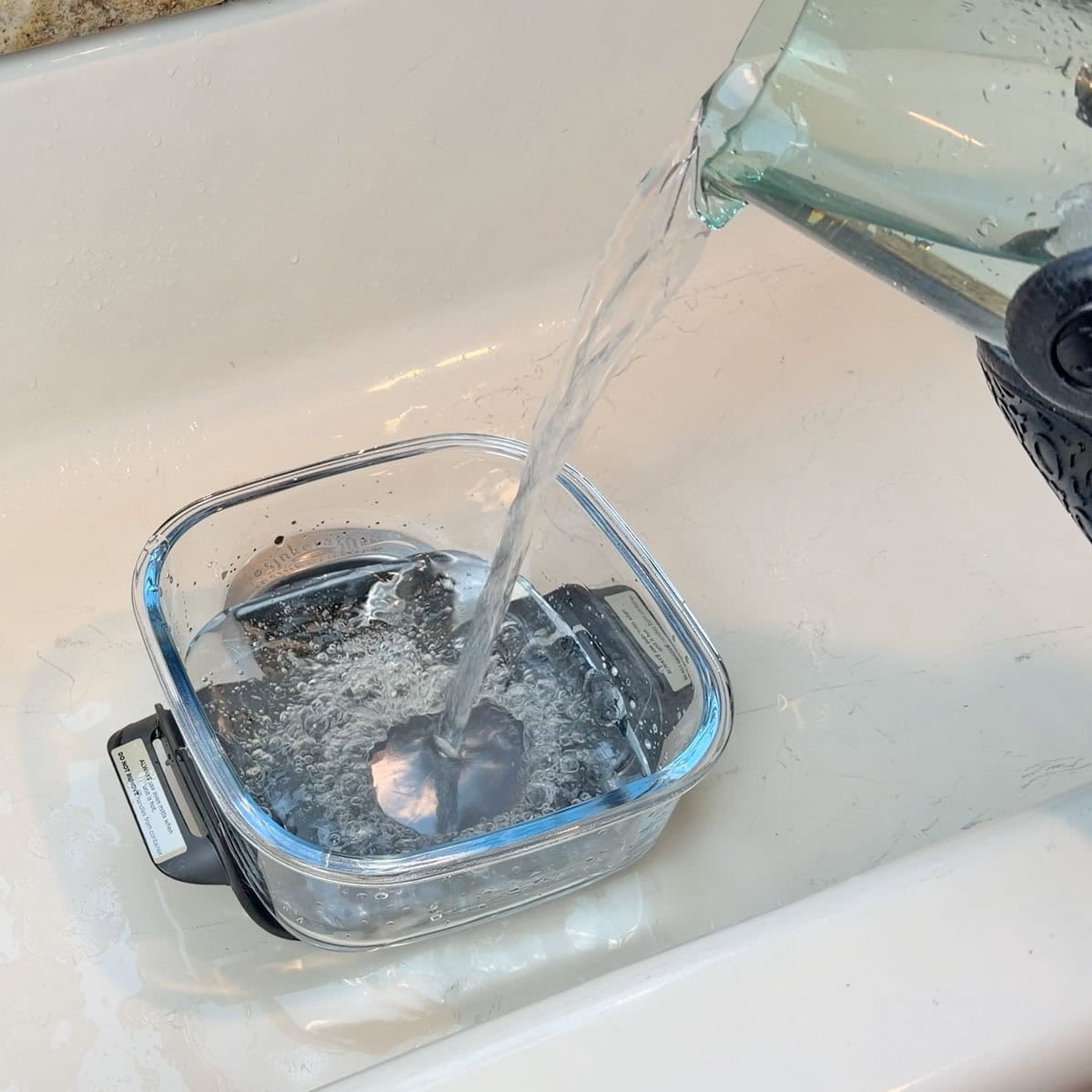
Then I froze the container for several hours and went straight to Max Crisp. I honestly expected it to shatter going from extreme cold to high heat that fast, but it held up without any cracking, chipping, or visible stress.
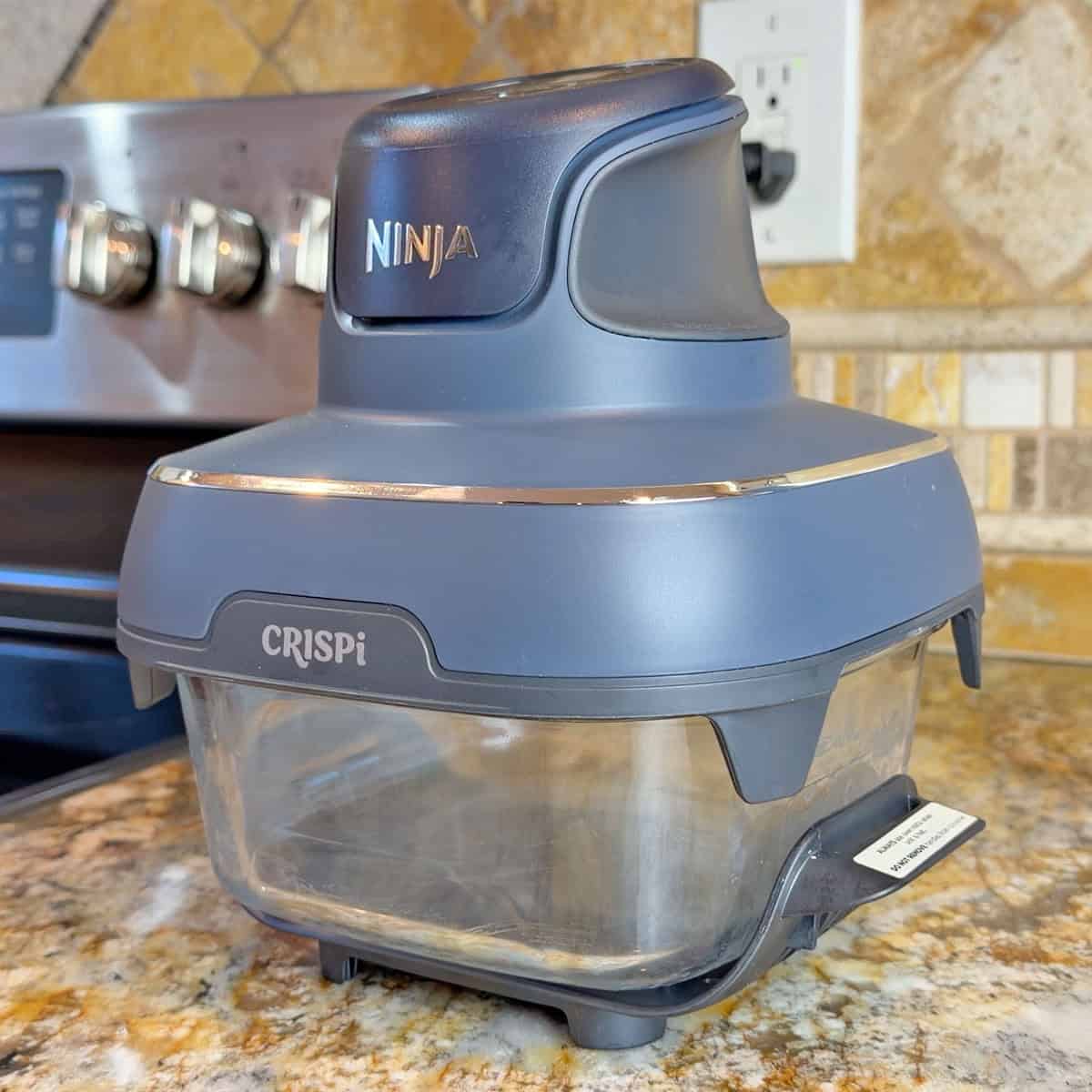
That tells me the glass itself is well-manufactured. But there are documented reports from other owners of containers shattering during normal use, most likely from pre-existing chips or hairline cracks that weren’t visible.
That’s not just a durability issue, it’s a safety concern. We’re talking about hot glass potentially breaking apart while you’re handling it or while food is cooking inside. Replacement containers also cost between $44 and $60, so it’s an expensive problem on top of a dangerous one.
Bottom Line: Is the Ninja Crispi Worth Buying?
There’s a lot to like about the Crispi as a concept. Cooking in glass feels cleaner, watching your food crisp is genuinely useful, and the cook-store-reheat workflow with the included lids is convenient. It’s reasonably quiet at 62 dBA, the crisper plate stays secure, and it performed well in nearly every cooking test.
But I can’t get past the PowerPod. A detachable heating element with exposed hot coils that you’re repeatedly lifting and setting down near whatever happens to be on your counter is a design I’m not comfortable recommending. Add in the lack of temperature control (the lowest setting starts at 375°F), the limited 64-square-inch cooking surface, and the baking issues, and there are better options out there.
If you like the glass concept but want a safer, more capable machine, the Ninja Crispi Pro eliminates the detachable PowerPod, adds precise temperature control from 80–450°F, and includes more cooking modes.
If you’re open to a traditional air fryer, the Instant Pot Vortex Plus gives you 88 square inches and fits 16 wings at a lower price. The COSORI TurboBlaze delivers strong performance with 77 square inches and is the most budget-friendly option in the group. And for the best overall performance I’ve measured, the Typhur Dome 2 has dual heating elements, 144 square inches, and whisper-quiet 51 dBA operation.
The glass air fryer concept is a good idea. The original Crispi’s execution just has too many compromises for me to give it a strong recommendation.
The Ninja Crispi is available on SharkNinja.com and Amazon where you can read more reviews and check the current price.
Related Topics
- Ninja Crispi vs. Crispi Pro: Key Differences to Know Before Buying
- I Tested T-fal Infrared Air Fryers: Are They Actually Better?
- Ninja vs. Instant Pot vs. Cosori vs. Typhur vs. Chefman (Best Air Fryer?)
- 5 Types of Air Fryers: A Guide to Help You Choose
- Ninja Crispi Pro Review: Worth the High Price?
- Zojirushi vs Tiger: Which Rice Cooker Is the Best?
- Air Fryer vs. Convection Toaster Oven: Cooking Test Results Revealed
- 19 Pros and Cons of Air Fryers: Are They Worth It?
- Zojirushi vs Cuckoo: Which Rice Cooker Is Better? (Test Results)
- HexClad vs. Ninja NeverStick Cookware: 11 Key Differences
- Zojirushi Rice Cooker Review: Is It Worth the High Price?

The pod does not clean with wet cloth. After one week I see the pod is turning brown.
The bod does not clean with wet cloth. After one week I see the pod is turning brown.