

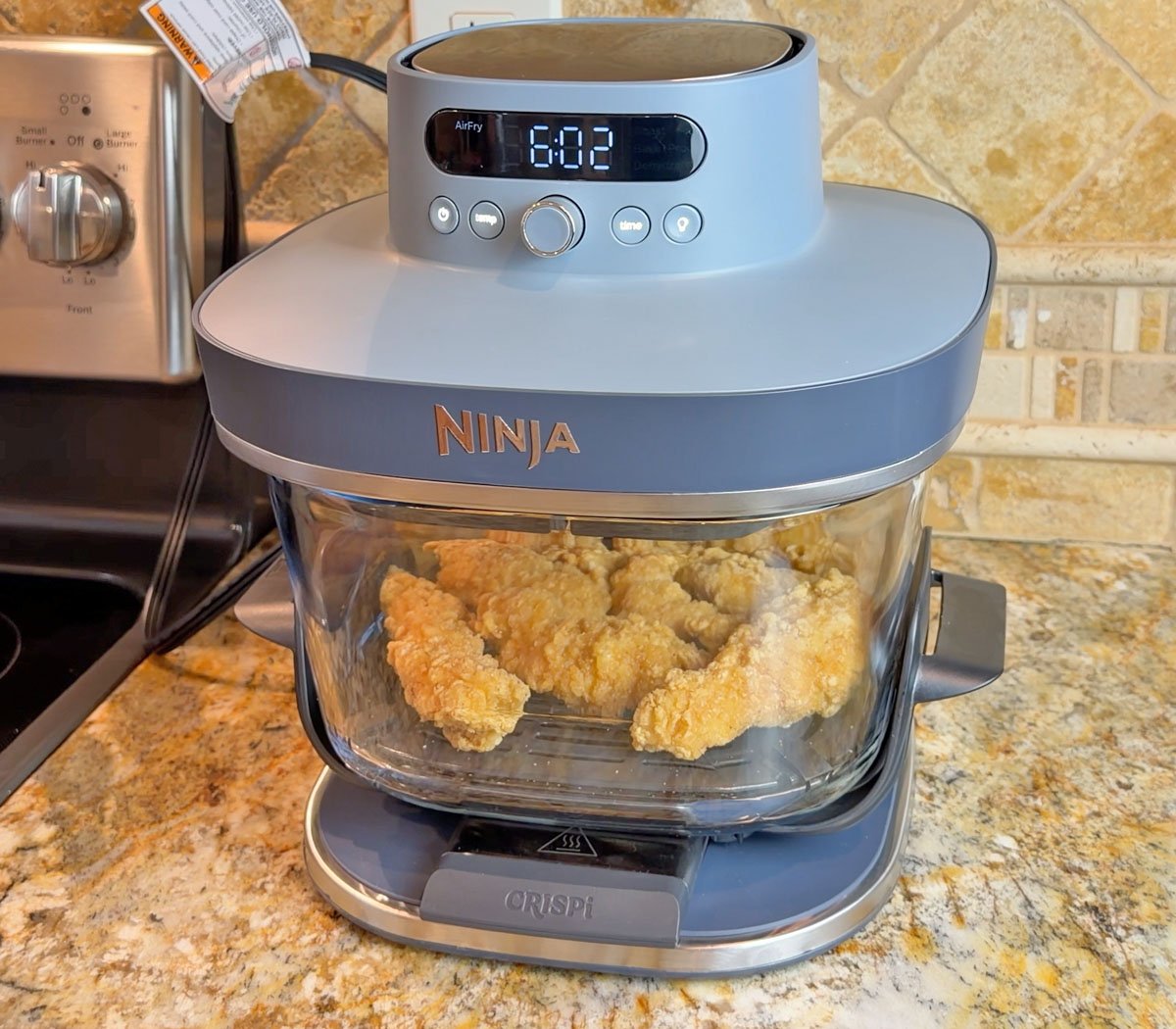
The Ninja Crispi Pro is a glass air fryer that Ninja says is a non-toxic, healthier way to cook. It’s also one of the most expensive air fryers on the market. So the question is simple: is it actually worth it?
I spent weeks cooking over 100 meals and put it through the same controlled tests I use for every air fryer review, including noise, capacity, cooking performance, and glass durability.
By the end of this review, you’ll know exactly what the Ninja Crispi Pro does well, where it falls short, and whether it deserves a spot on your counter.
Key Takeaways
- The fixed heating element is a big upgrade. Unlike the original Ninja Crispi, there are no exposed hot coils sitting on your counter. This makes the Pro a safer, more practical air fryer than the original.
- Temperature control is excellent. Adjustable from 80–450°F in 5-degree increments, plus added Dehydrate and Roast functions.
- Cooking performance matched the original. Wings, fries, and squash came out great. Cookies didn’t cook evenly. The tops browned before they could cook through.
- The 6-quart capacity is misleading. The cooking surface is 64 square inches (8×8 inches) – identical to the original Crispi. The extra volume is vertical, not horizontal. It fits the same 11 wings.
- It’s the loudest air fryer I tested. 67 dBA is noticeably louder than every competitor, including the original Crispi at 62 dBA.
- The “non-toxic” claim is an oversimplification. Your food cooks on a sol-gel “ceramic” crisper plate whose full ingredients are proprietary. It’s PFAS-free (an advantage over Teflon), but independent testing has found titanium dioxide, lead, and other substances in other ceramic cookware coatings.
- Bottom line: The Ninja Crispi Pro’s glass containers reduce the amount of nonstick coating surrounding your food and let you monitor cooking without opening the unit and losing heat, but traditional air fryers offer more cooking space, quieter operation, and better value.
- Where to Buy: The Ninja Crispi Pro is available at Amazon and SharkNinja.com.
Use the links below to navigate this review:
- Design and Build
- Is It Non-Toxic?
- Cooking Performance
- Safety and Usability
- Glass Durability
- Capacity
- Temperature Control and Cooking Functions
- Bottom Line: Is the Ninja Crispi Pro Worth It?
Design and Build
The Ninja Crispi Pro looks and works more like a traditional countertop appliance than its predecessor, the original Crispi.
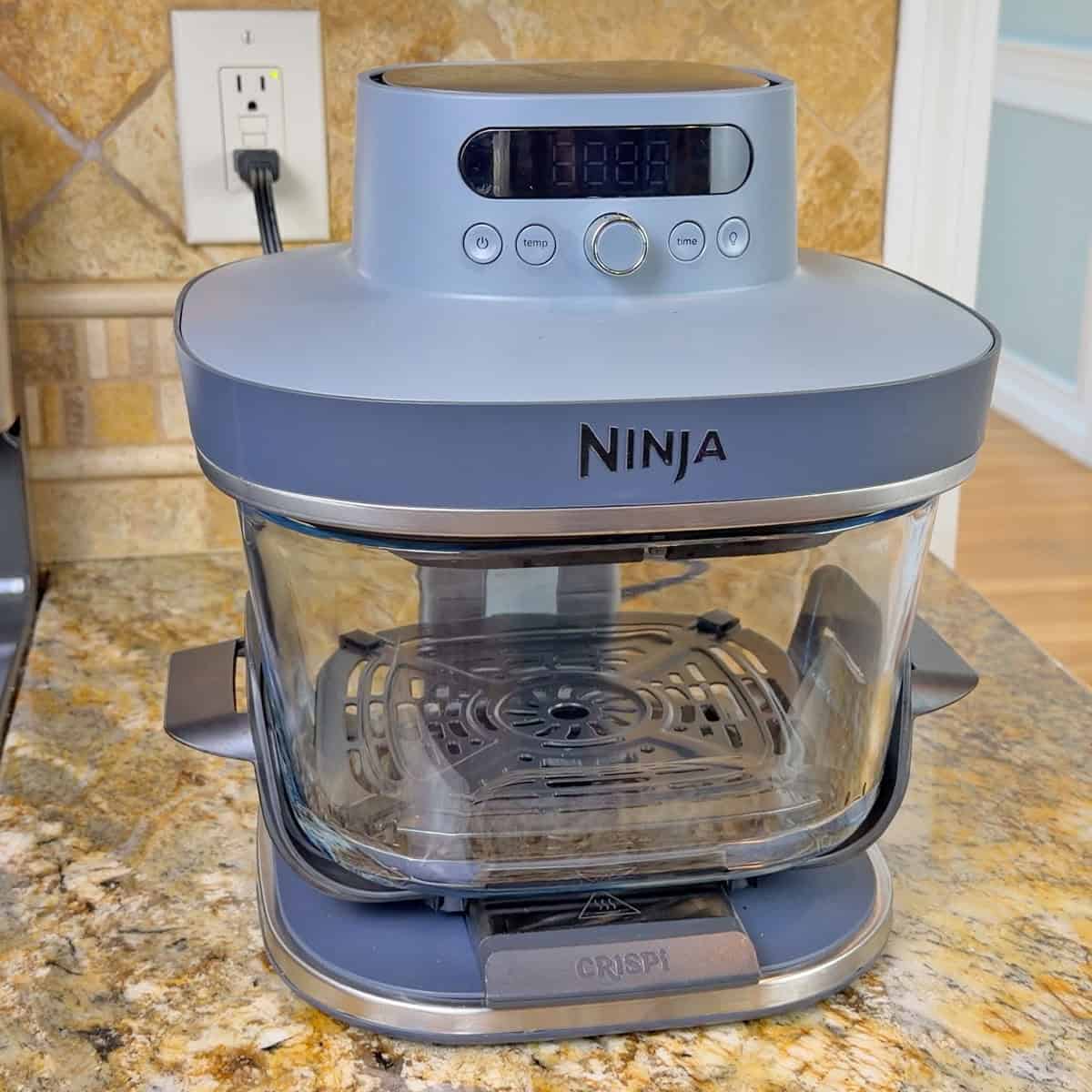
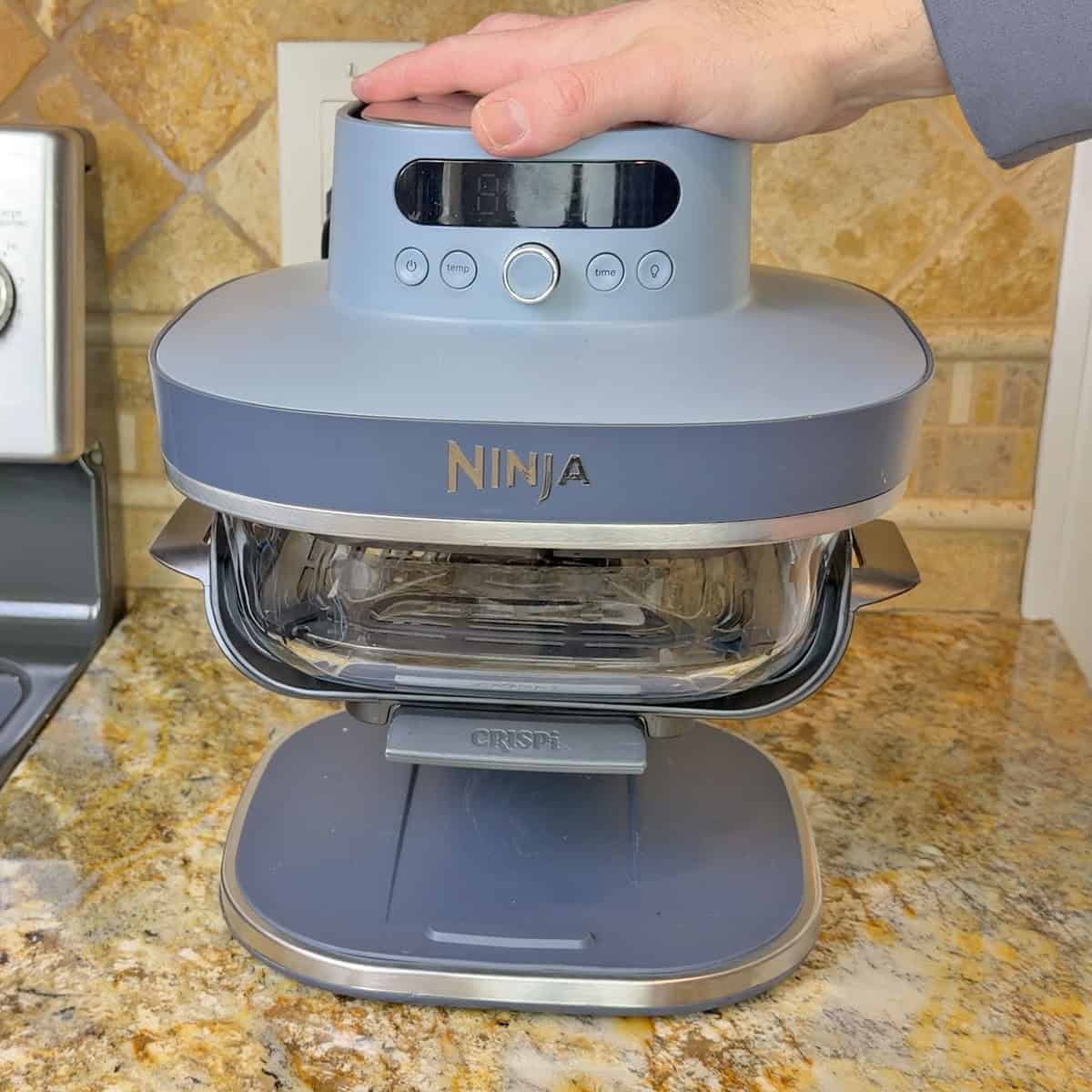
The heating element is mounted overhead inside a fixed base, and you insert the glass container from the top into a modular platform. The platform has three height settings for the included 6-quart and 2.5-quart containers, plus a 4-quart container that’s sold separately.
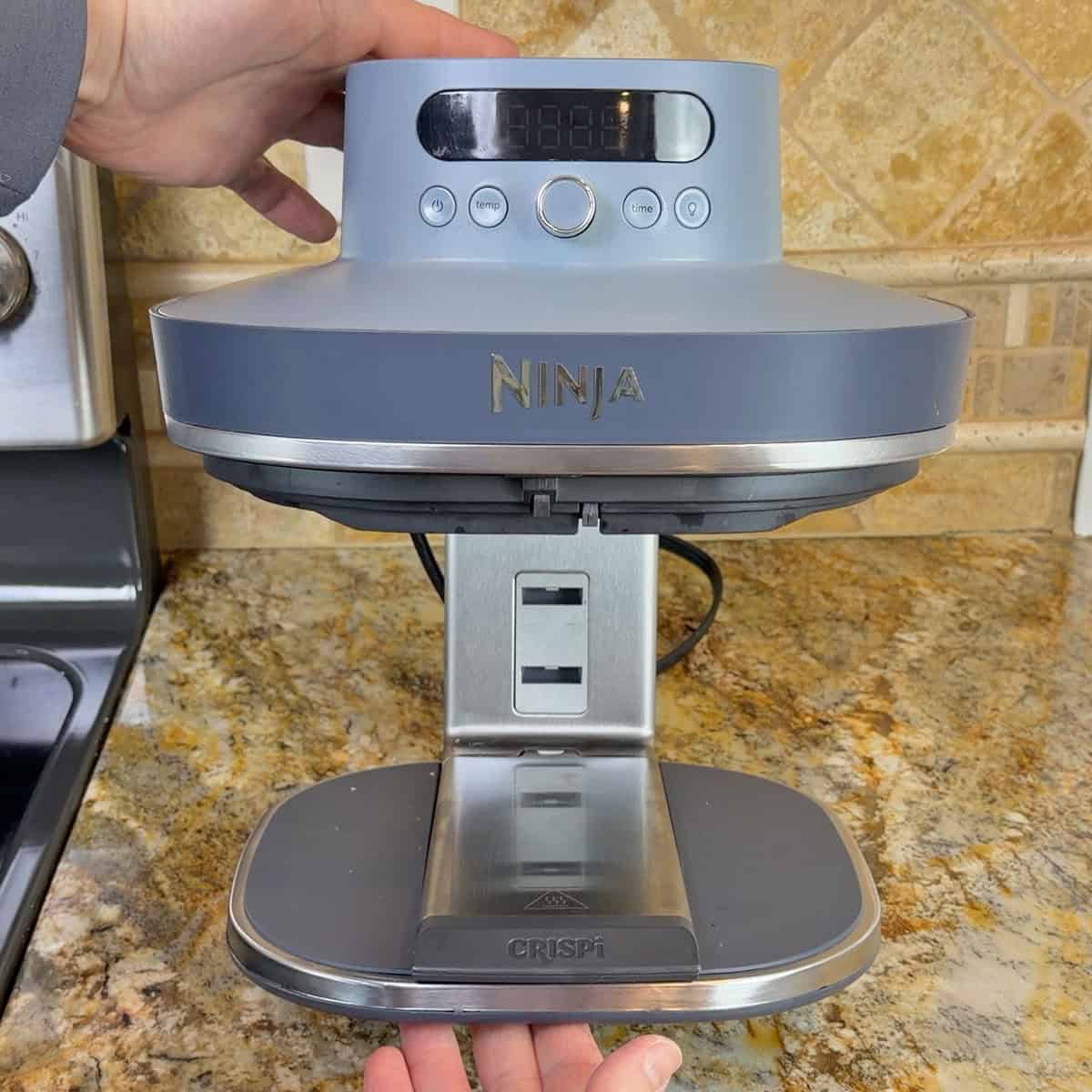
This fixed design eliminates the original Crispi’s most problematic feature – a detachable heating unit with exposed hot coils that you had to repeatedly lift off and set on your counter. With the Pro, the heating element stays where it belongs (and is safe).
The tradeoff is size and weight. The whole unit weighs 17.5 pounds, nearly double the original’s 9.1 pounds. The footprint is 12.2 by 11.8 inches (144 square inches), compared to the original’s more compact 112 square inches. At 12.25 inches tall, it clearly wants to stay in one spot on your counter.
Both containers are borosilicate glass with BPA-free plastic storage lids for refrigerating leftovers. But unlike the original Crispi’s straight-sided containers, the Pro’s are tapered (wider at the top, narrower at the bottom). This matters because it affects how well the crisper plate fits.
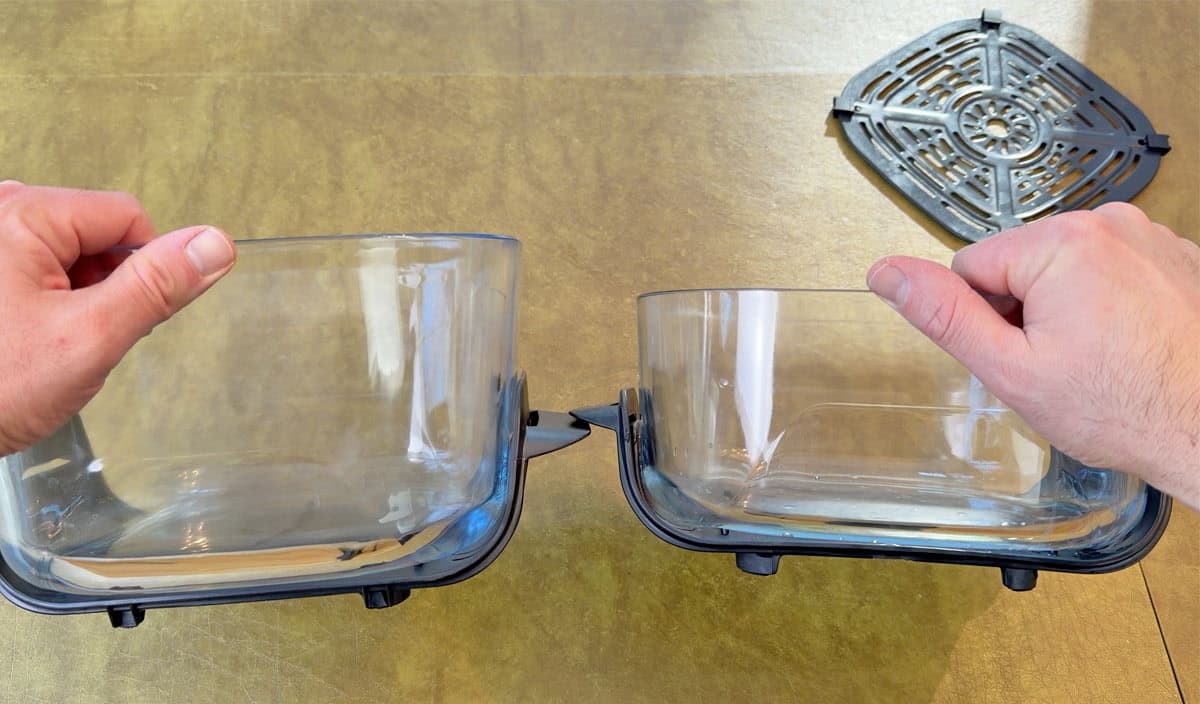
In my testing, the plate would spring up in one corner after pressing it down, and it slid out easily when I tipped the container to pour food onto a plate. The original Crispi’s straight walls held the plate firmly in place, so this is actually a step backward.
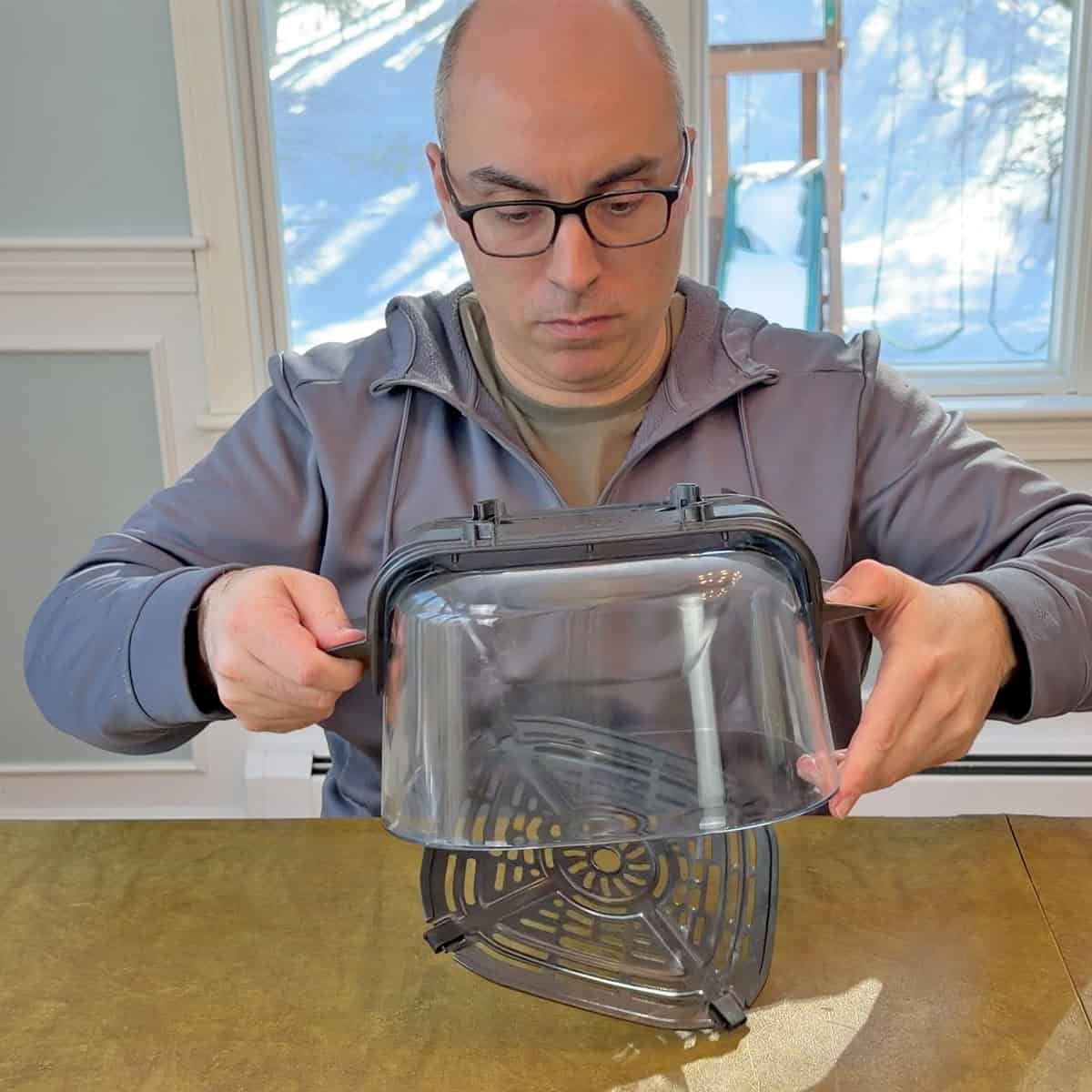
The cord measures 33.25 inches, which is a few inches shorter than the original and shorter than most air fryers I tested.
Is It Non-Toxic?
Ninja markets the Crispi Pro as “designed without PFAS and PTFE.” The borosilicate glass containers are genuinely free of those chemicals, and cooking inside glass does reduce the total amount of coated material surrounding your food compared to a traditional all-aluminum basket. Consumer Reports confirmed through lab testing that ceramic coatings don’t contain PFAS, so that part of the claim holds up.
But your food still sits directly on a ceramic-coated aluminum crisper plate, which is the same type of coating found on most air fryers in this price range.
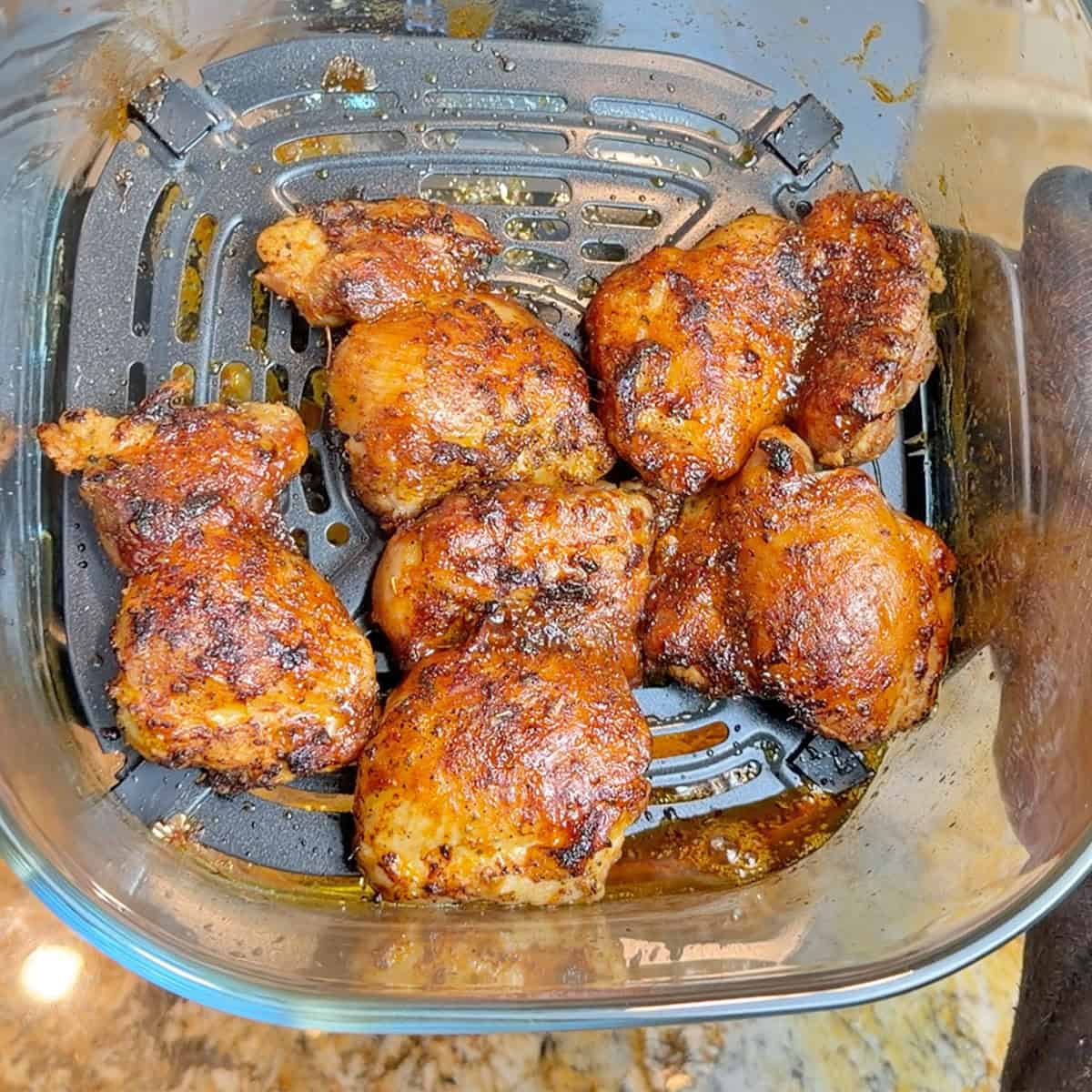
These coatings aren’t traditional ceramics. They’re sol-gel coatings made from silica mixed with metals and other chemicals, sprayed onto aluminum. A Guardian investigation reported that no legal definition for “nontoxic” or “ceramic” exists in the cookware industry, and that independent testing has detected titanium dioxide, lead, and other metals in popular ceramic coatings. Ninja doesn’t disclose the full ingredients in its coating.
These coatings also wear down faster than PTFE, often losing effectiveness within 6 to 18 months. Once degraded, the aluminum underneath can be exposed to your food, and aluminum can react with acidic ingredients.
So while the Crispi Pro does eliminate PFAS and reduces the amount of coated material around your food, calling it fully “non-toxic” oversimplifies a more complicated reality. The material of the crisper plate where the food actually sits is common across today’s air fryers.
Cooking Performance
I tested the Ninja Crispi Pro alongside 8 other air fryers, cooking the same foods at the same settings across all models to compare them fairly.
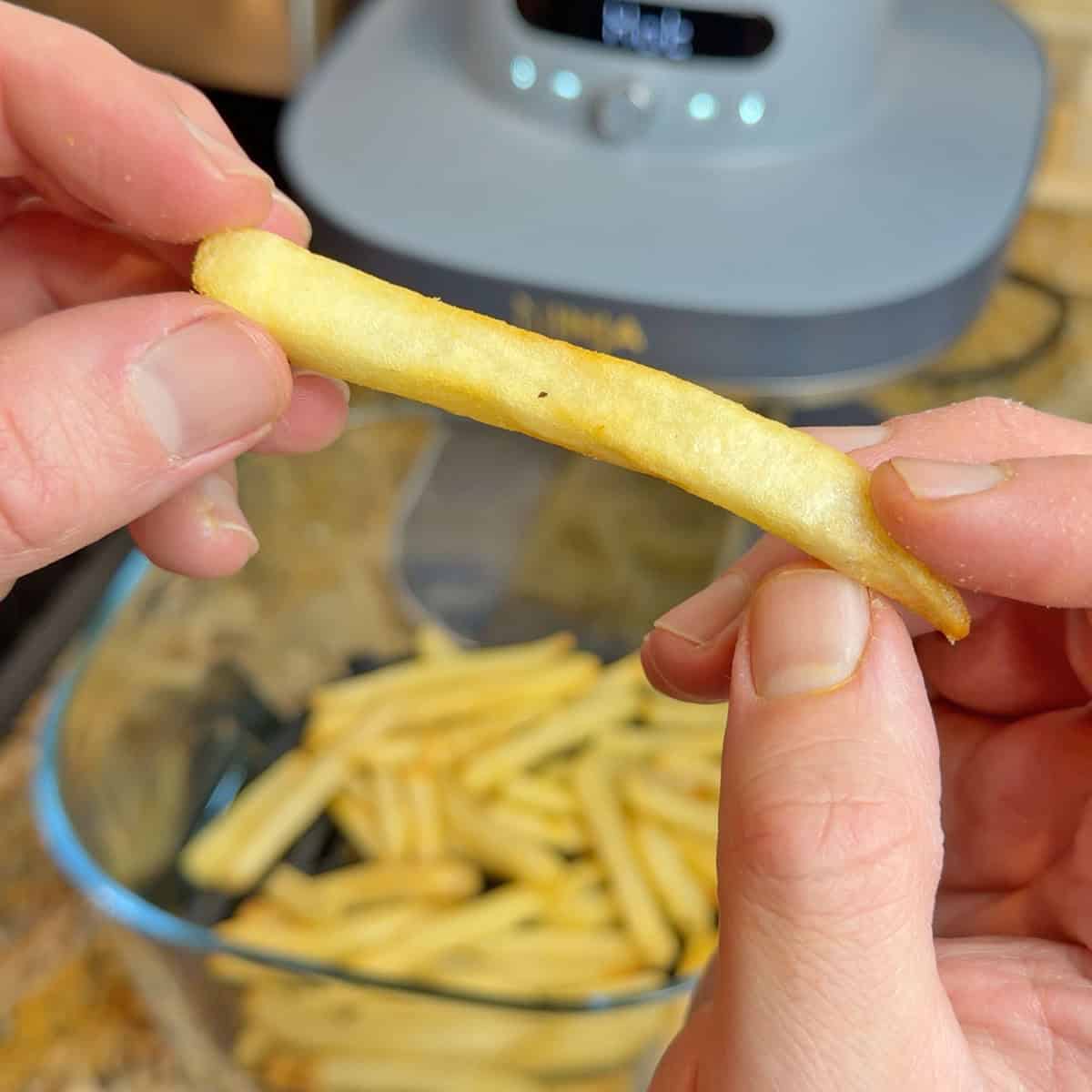
Frozen fries came out perfectly crisped and evenly cooked in about 10 minutes.
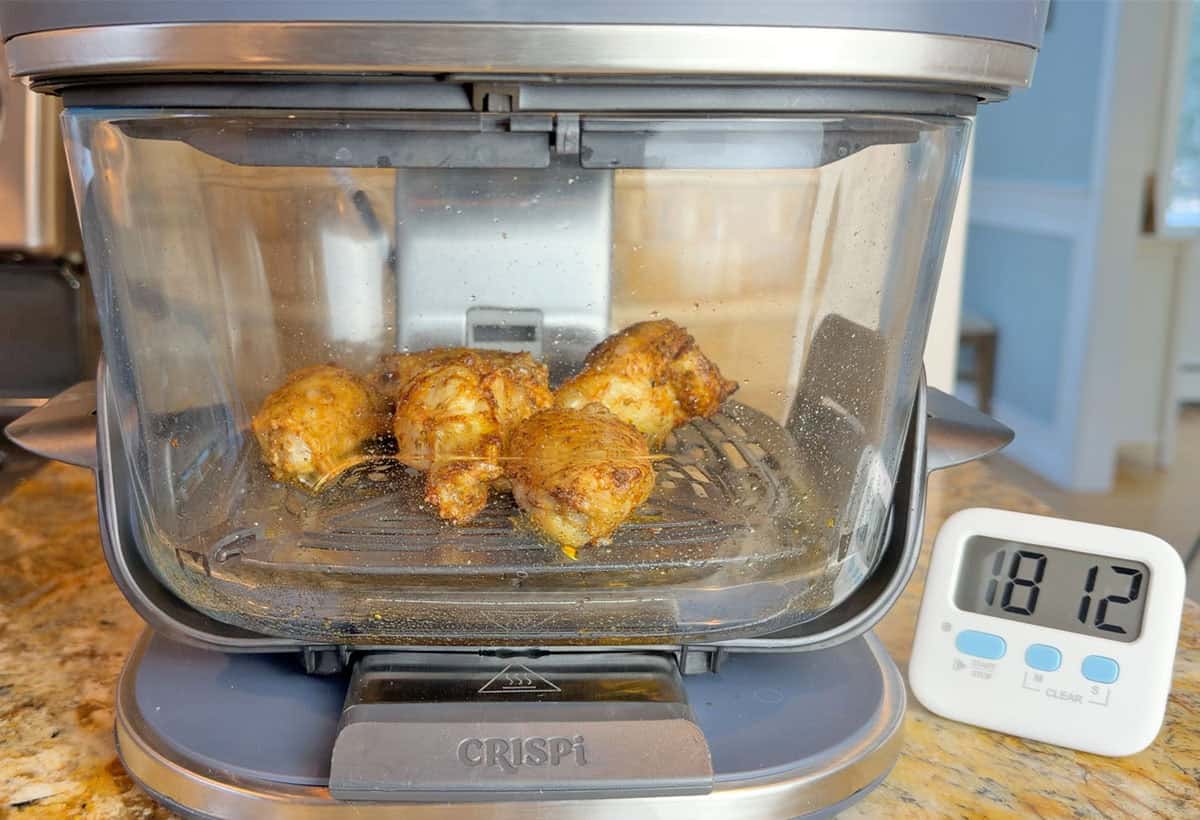
Chicken wings were great too, with uniformly browned, crispy skin and juicy meat after roughly 23 minutes.
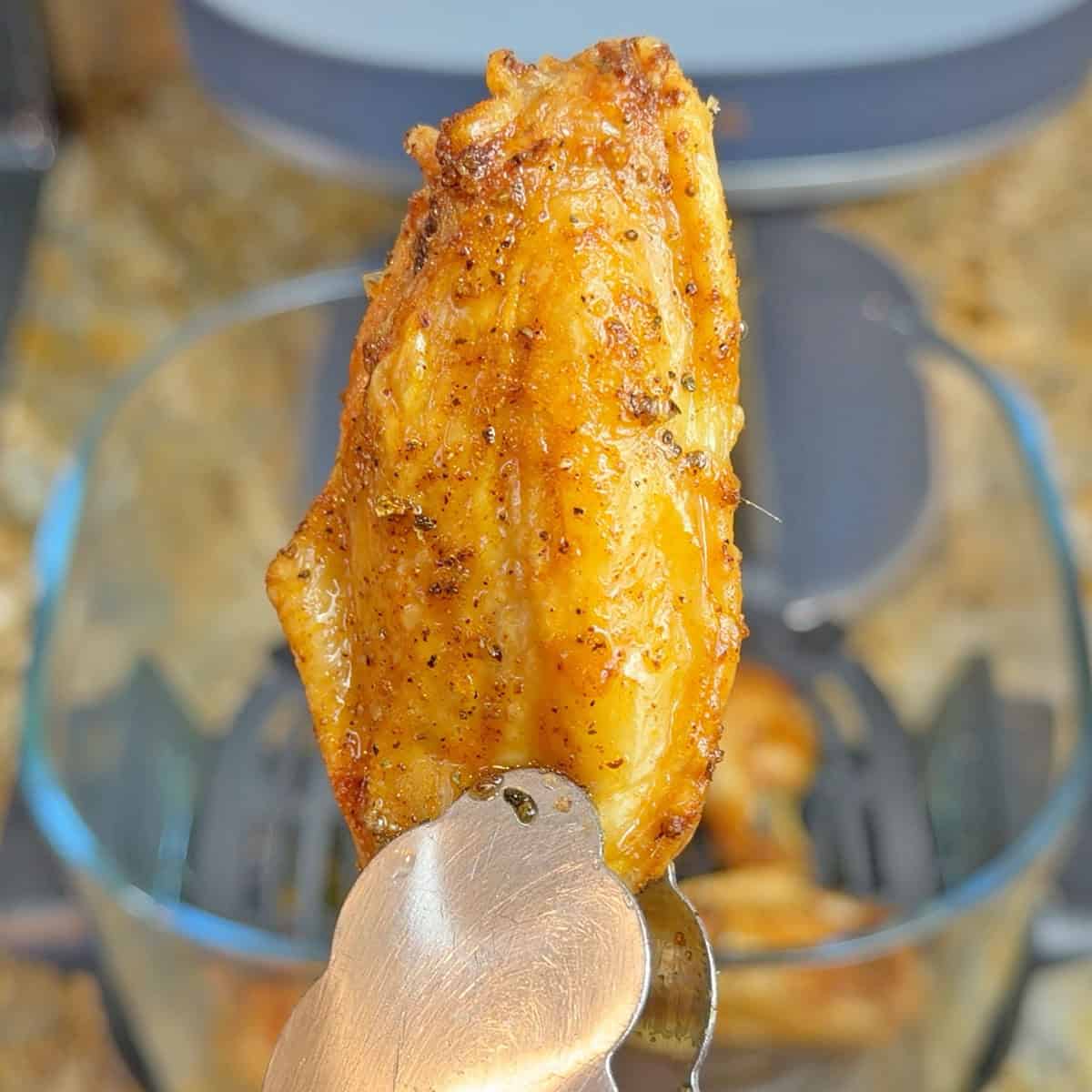
That’s right in line with most of the air fryers I tested, though the Typhur Dome 2 was the clear winner here, finishing wings in just 18 minutes thanks to heating elements on both top and bottom.
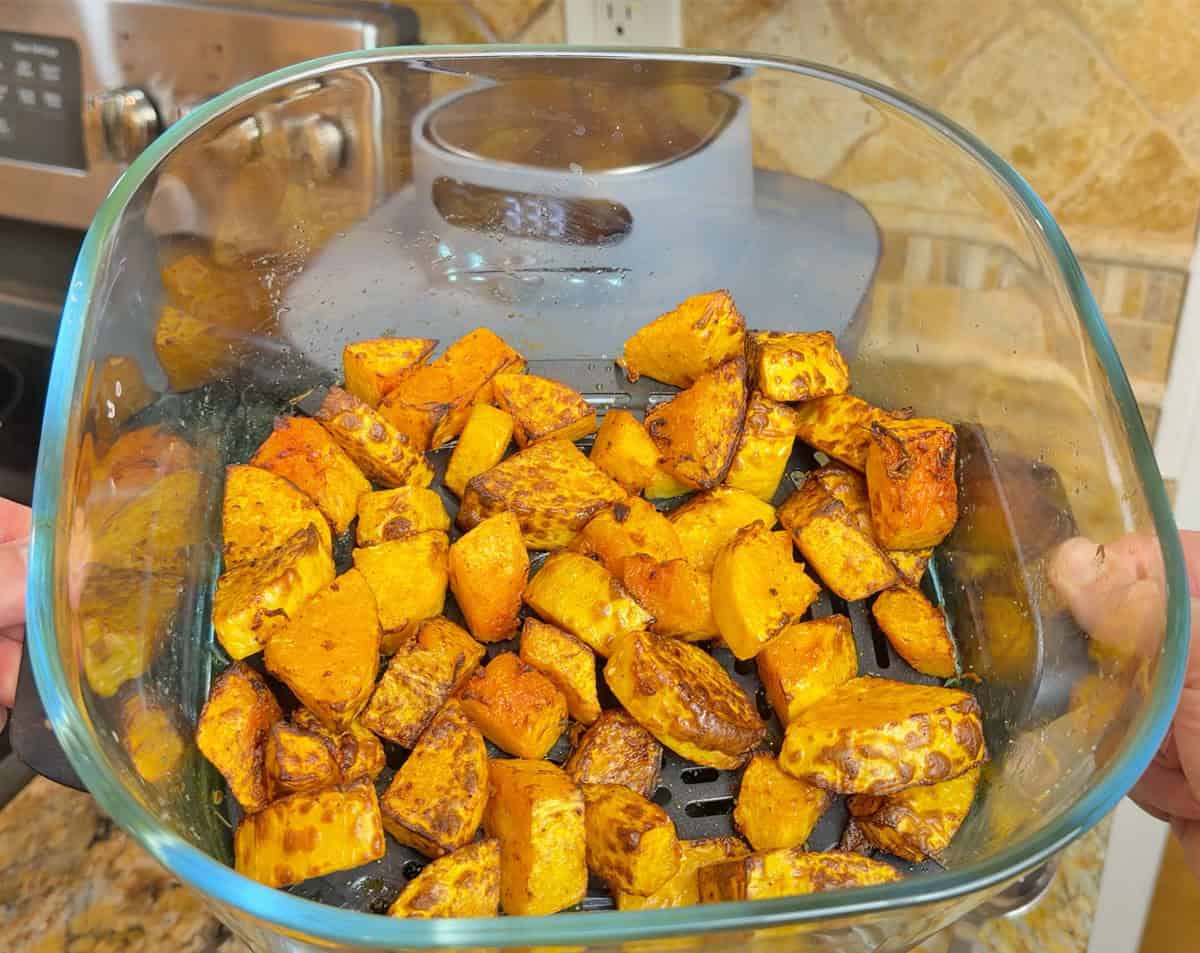
Butternut squash gave me a little trouble. The outside started browning before the interior had softened, so I had to dial the temperature down mid-cook. It came out well after 28 minutes, but it took more babysitting than I expected. That said, this is exactly the kind of situation where the precise temperature controls prove their worth.
Cookies were the weak spot. The tops browned fast while the bottoms stayed raw, and there’s really no way around it since the Ninja Crispi Pro only heats from above. The only air fryer that handled cookies evenly was the Typhur Dome 2 with its dual heating elements.

One thing I grew to really appreciate was the see-through glass. Being able to watch your food without opening the unit keeps heat consistent and lets you time flips and pulls perfectly. After weeks of daily cooking, from chicken thighs to meatballs to reheated leftovers, this ended up being one of my favorite things about the whole design.
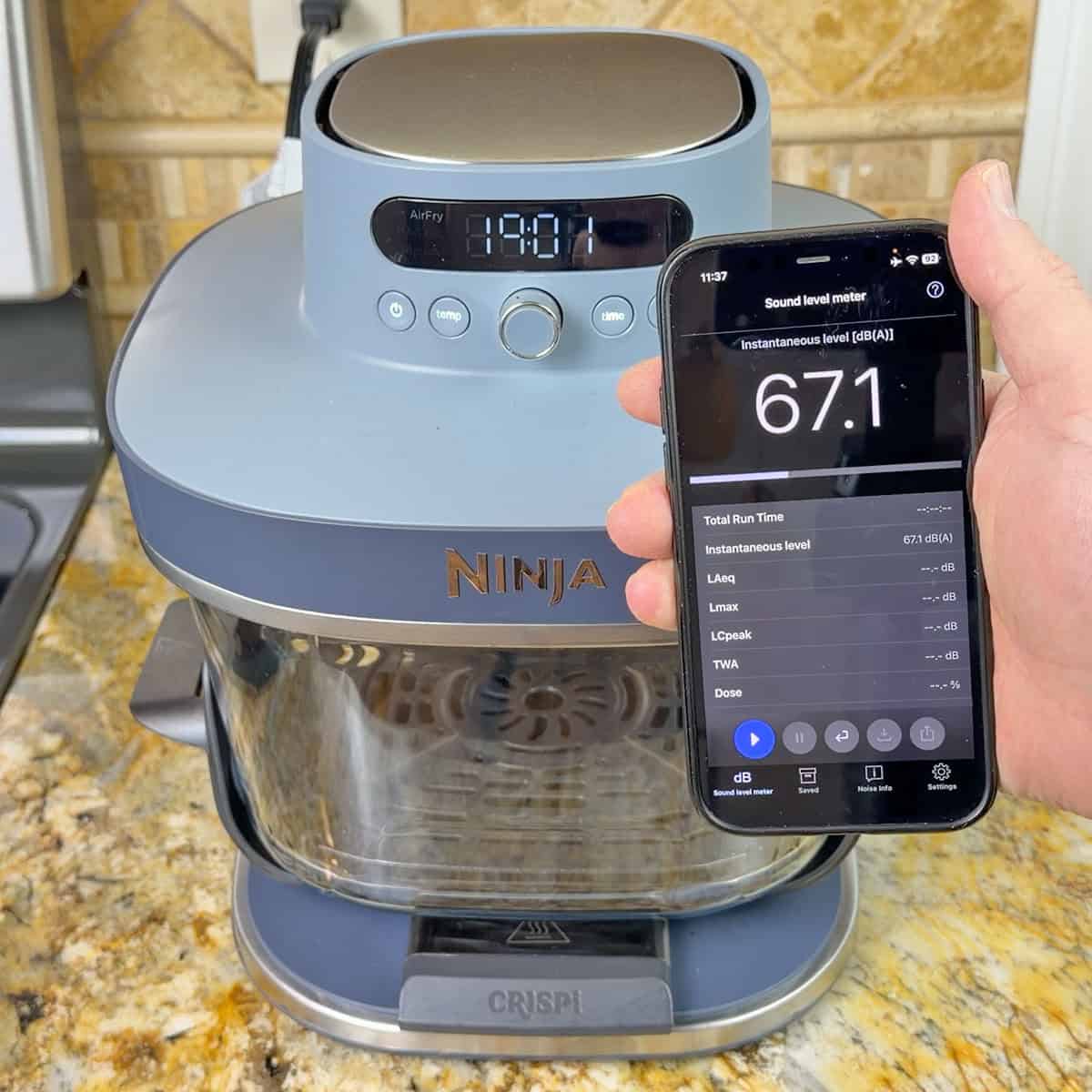
Fair warning though: the Ninja Crispi Pro is the loudest air fryer I’ve ever tested. At 67 dBA on air fry mode at 400°F, it’s noticeably louder than the Ninja DoubleStack XL running both fans (66 dBA), and way louder than the Typhur Dome 2 (51 dBA) or the Instant Pot Vortex Plus (55 dBA). If noise matters to you, this is worth considering.
Safety and Usability
The biggest safety improvement on the Ninja Crispi Pro is the fixed heating element. On the original Crispi, the heating element is a detachable unit called the PowerPod that you have to lift off and set on your counter every time you check or remove food. That means exposed hot coils sitting a couple inches above whatever surface is nearby.
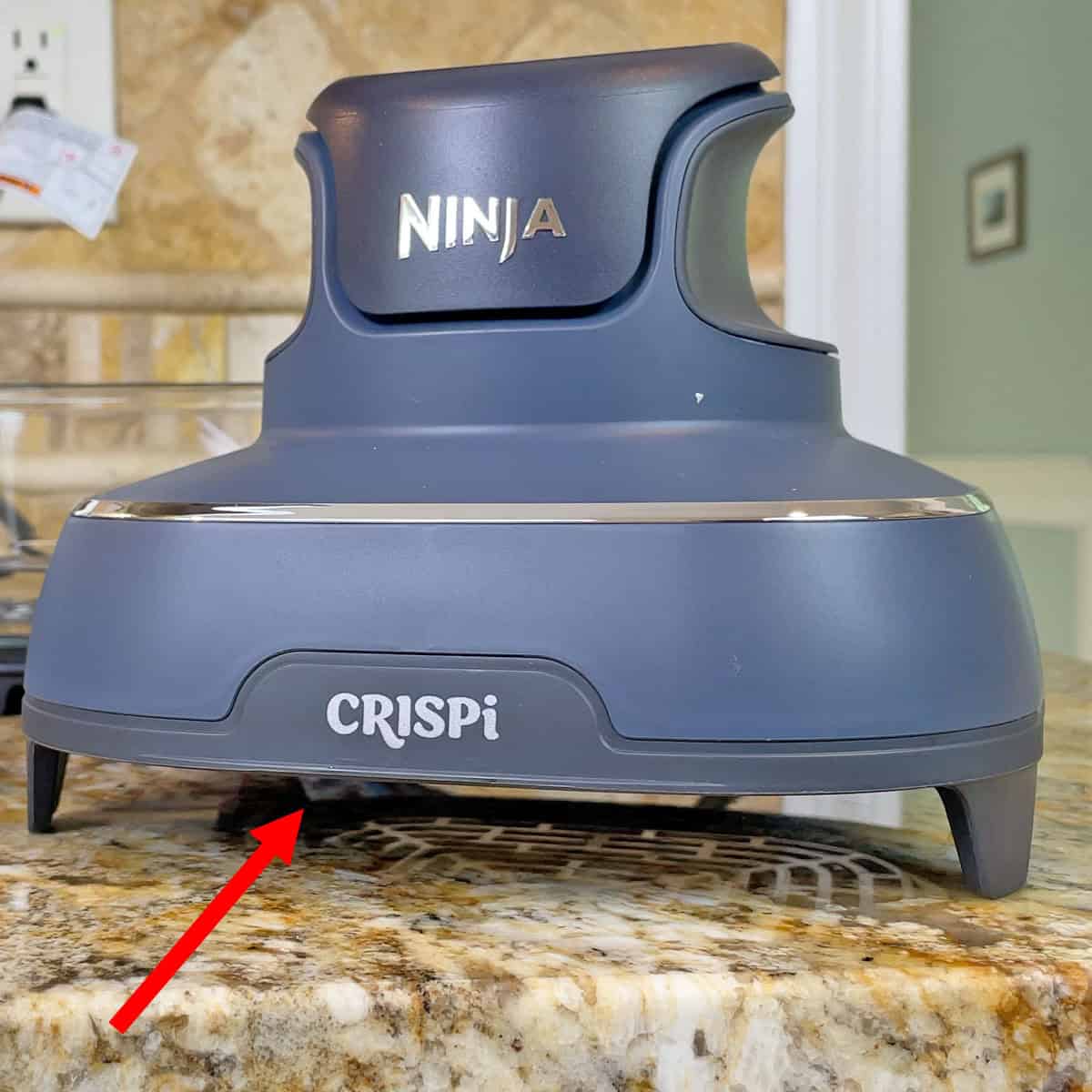
The Ninja Crispi Pro eliminates that entirely. The heating element is mounted overhead inside the base, so you never handle it directly and there’s no chance of setting hot coils on top of something flammable. For households with kids or anyone who doesn’t want that extra thing to worry about, this is a meaningful upgrade.
That said, the glass still gets dangerously hot during and after cooking. I recorded surface temperatures above 190°F, and the containers stayed too hot to grab comfortably for 5 to 10 minutes after the cooking cycle ended. The handles and the plastic guard near the glass warm up noticeably too.
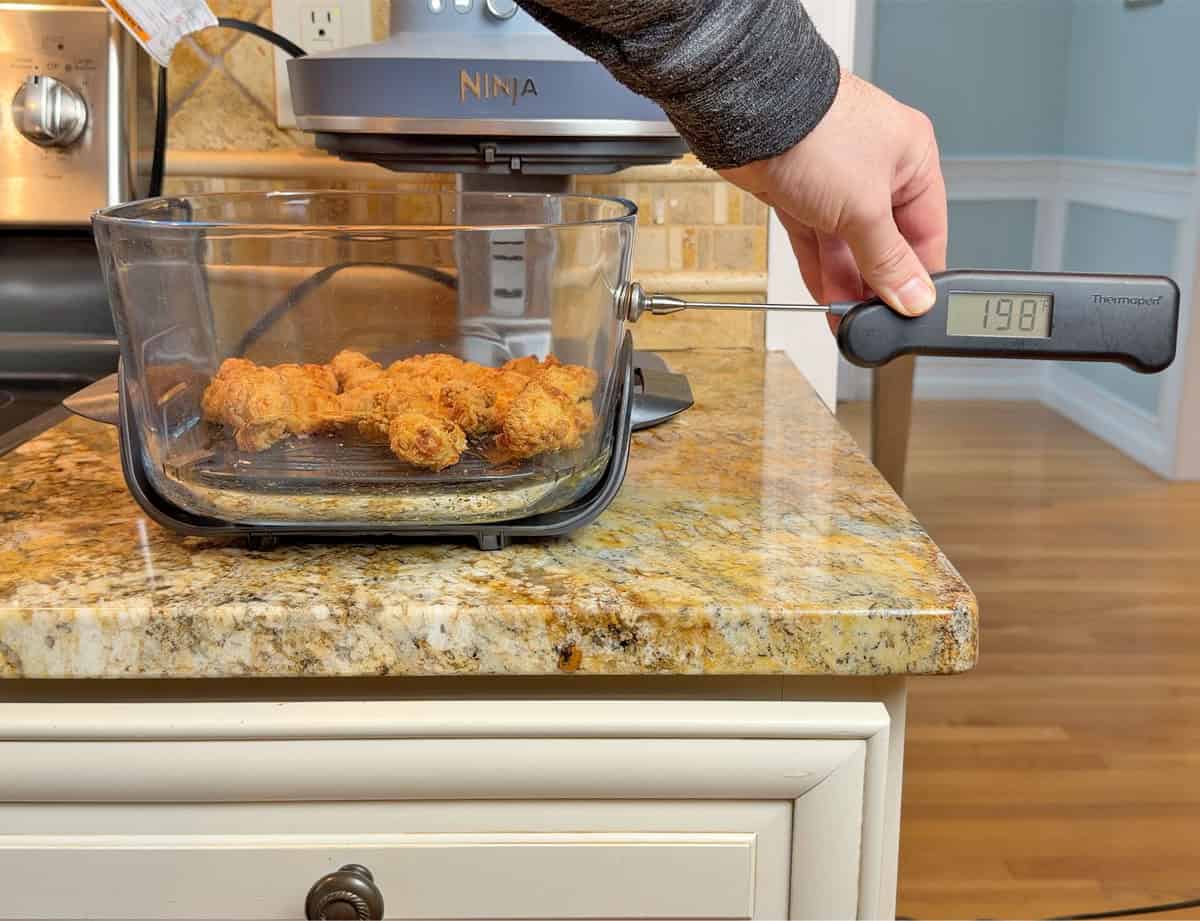
The weight makes this worse. At 5.2 pounds, the large container is more than double the typical aluminum air fryer basket (around 2.5 pounds). You need two hands to remove it, and you have to carefully line it up to slot it back under the heating element. It’s a slower, more deliberate process than simply sliding a drawer in and out.
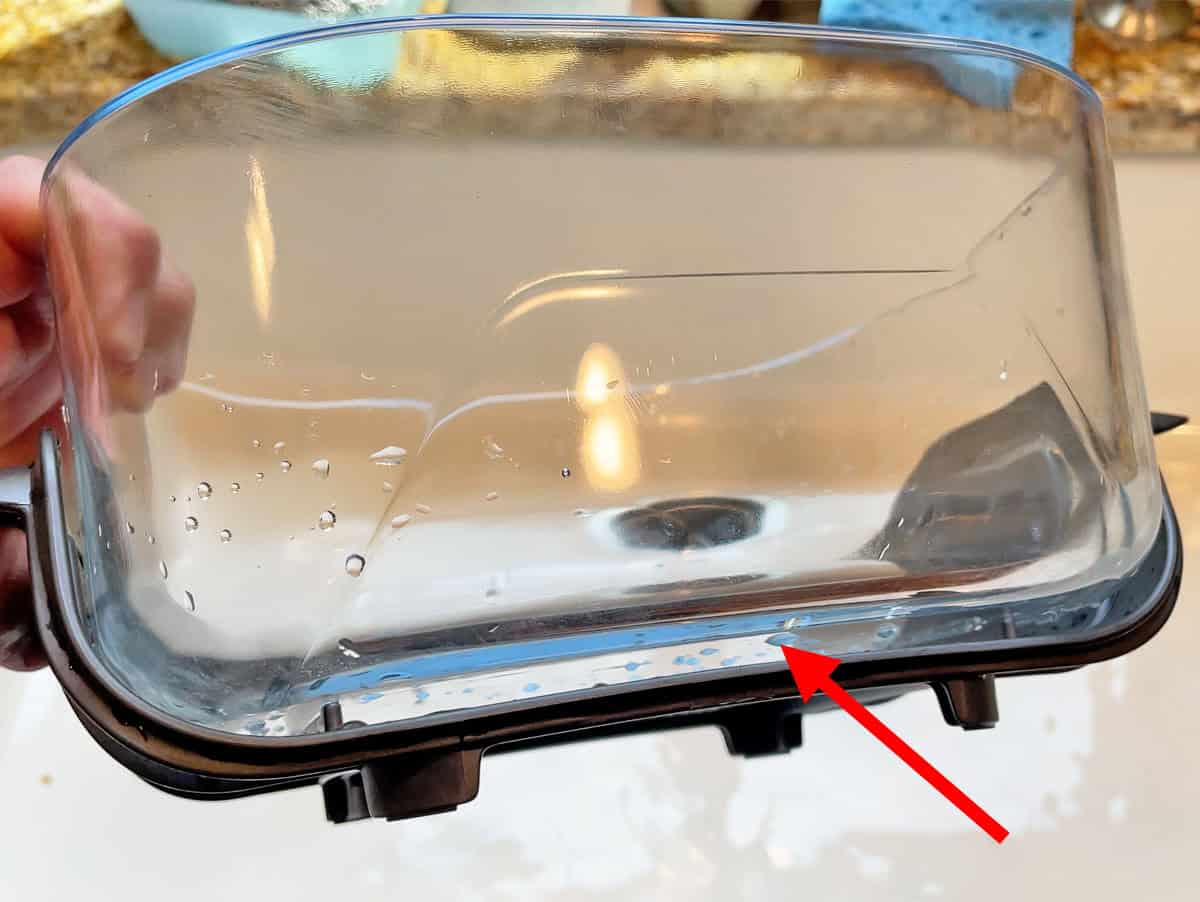
Both containers have a gap between the glass and the permanently attached plastic base where food debris and water get trapped. You can rinse it, but actually scrubbing or fully drying that gap is tough. It’s a long-term hygiene concern I noticed and several other owners have flagged.
On the upside, the containers are dishwasher safe and don’t hold onto cooking odors. The storage lids make it easy to go from cooking to storing leftovers without dirtying another dish.
Glass Durability
One concern you’ll see from owners online is the glass cracking or shattering during regular use. Since both Crispi models use borosilicate glass, I wanted to see how durable it actually is, so I put the containers through the most extreme thermal shock tests I could think of.
I heated a container at max temperature for 10 minutes, then poured ice water directly onto the hot glass. No damage. No cracking, no chipping, no visible stress.
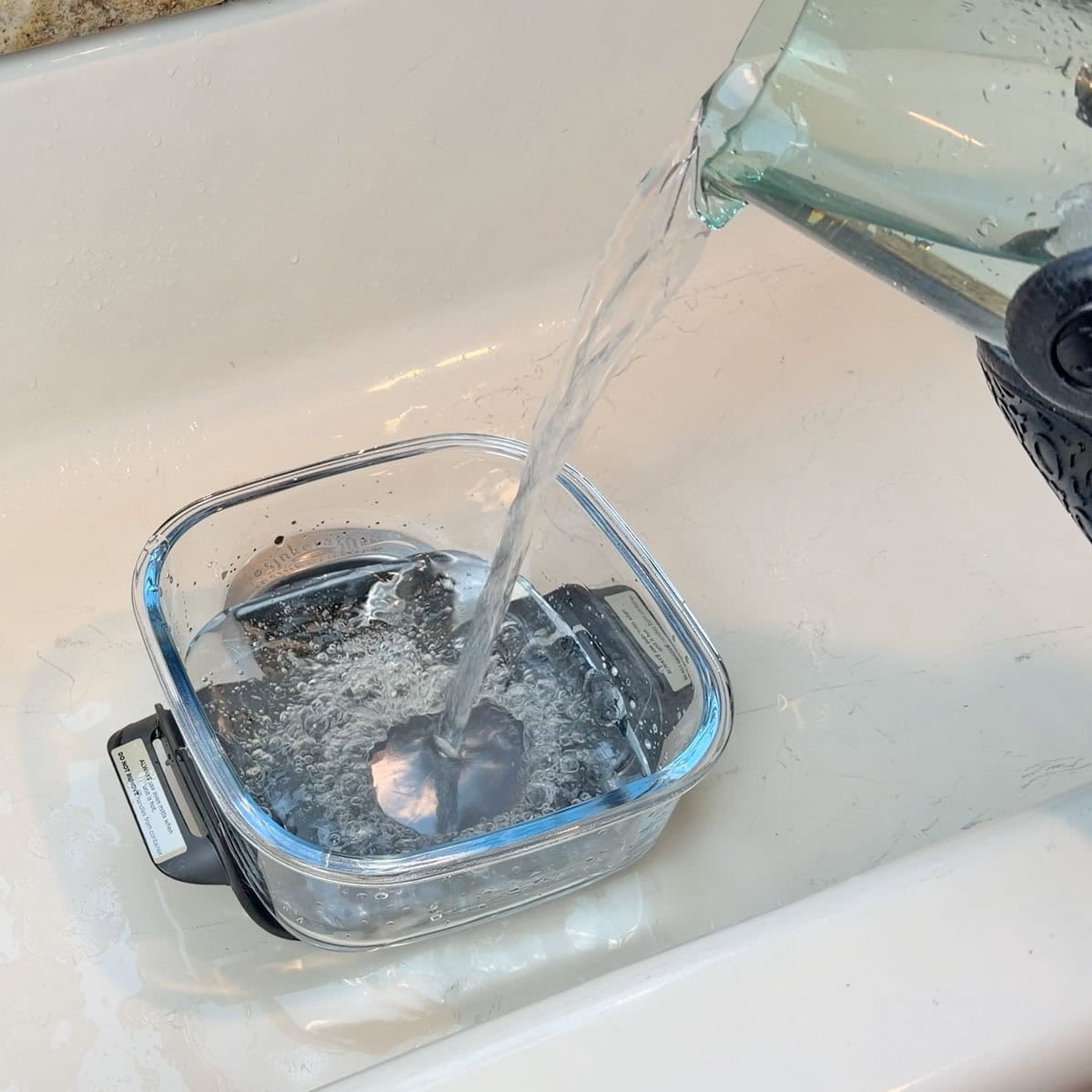
Then I froze a container for several hours and immediately put it into the unit on the highest setting. Same result, completely fine. Both tests go well beyond anything a normal cooking scenario would demand, and the glass held up impressively.
So why are some owners reporting broken glass? Most likely those containers had pre-existing micro-fractures or chips that weren’t visible. It’s not something you can really prevent, but it is something to be aware of. Replacement containers run $44 to $60 depending on size, so a broken container isn’t just a safety issue, it’s a real expense.
Capacity
Ninja’s marketing claims the 6-quart container can serve up to 10 people and fit a 7.5-pound chicken. Those claims reference total volume, not the flat surface where food actually sits. And the gap between those two things is bigger than you’d expect.
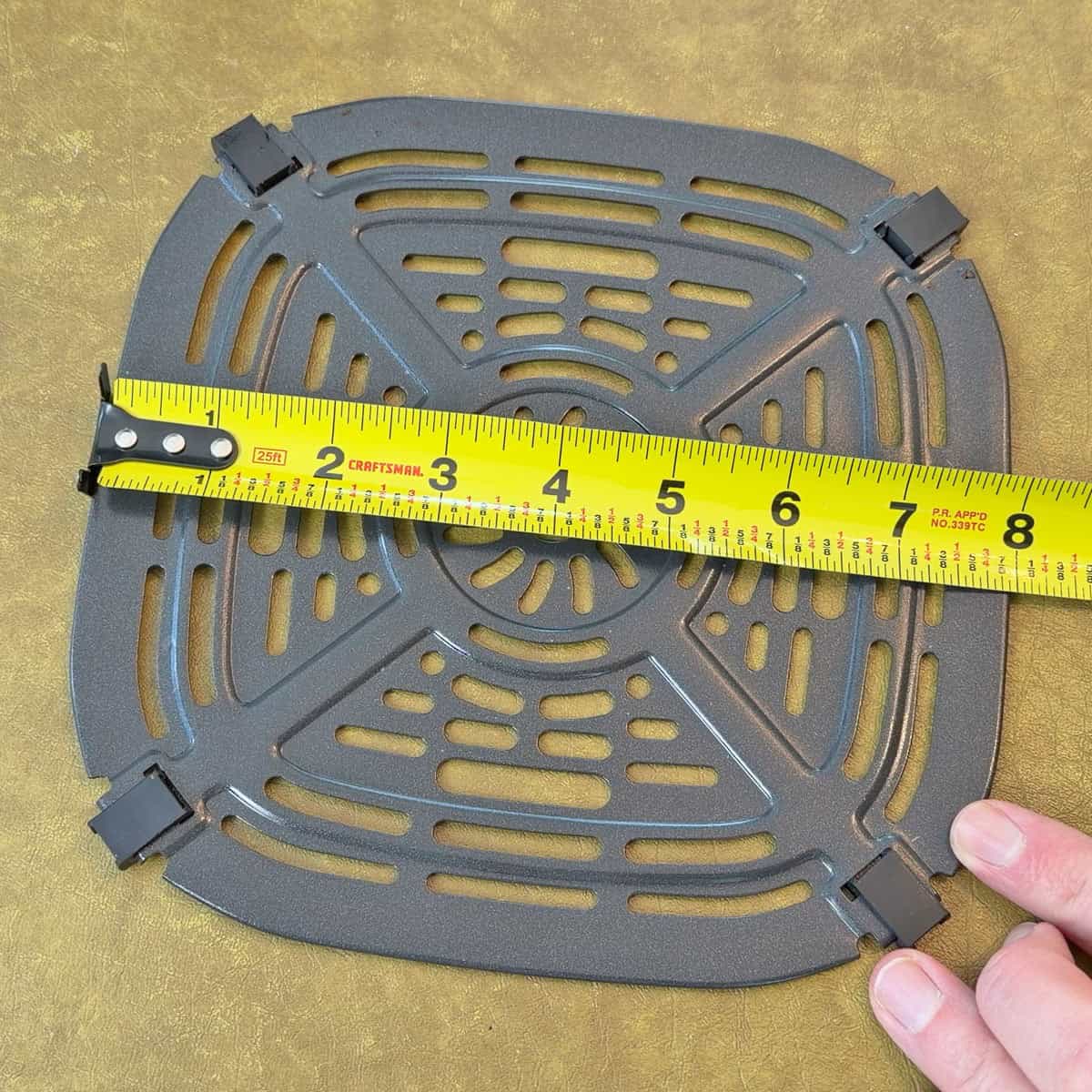
The cooking surface on the Crispi Pro is 8 by 8 inches (64 square inches). That’s identical to the original Crispi’s 4-quart container. Both models fit the same amount of food: four overlapping bread slices and about 11 wings laid flat.
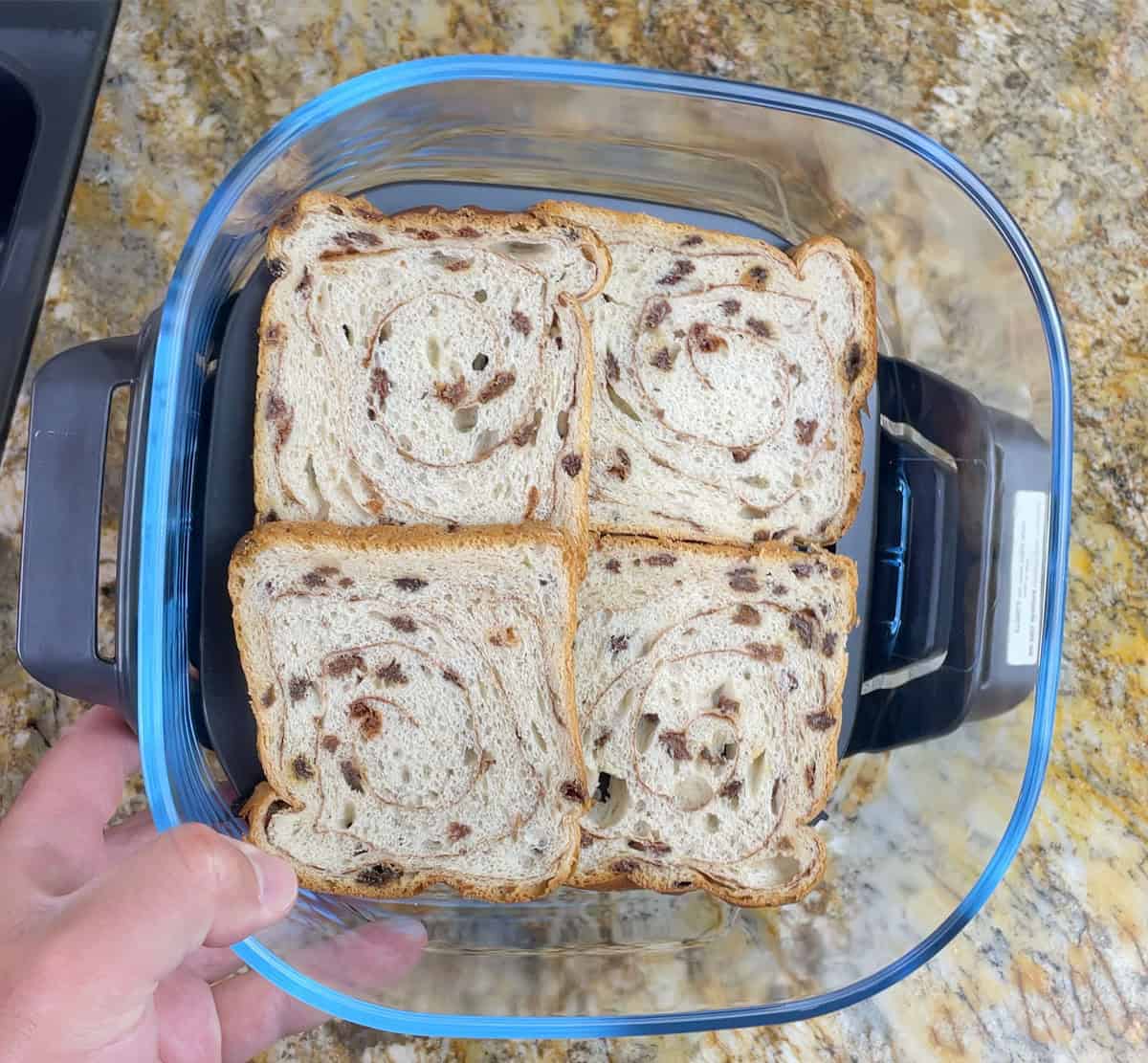
The Ninja Crispi Pro’s extra quarts come from the container being taller, not wider. And because the glass tapers inward toward the base, that extra vertical space doesn’t really translate to more food on the crisper plate.
To put it in perspective: the Instant Pot Vortex Plus has 88 square inches and holds 16 wings. The COSORI TurboBlaze offers 77 square inches and fits 14. The Typhur Dome 2 gives you 144 square inches and holds 25. The Crispi Pro has less usable cooking area than air fryers that cost significantly less.
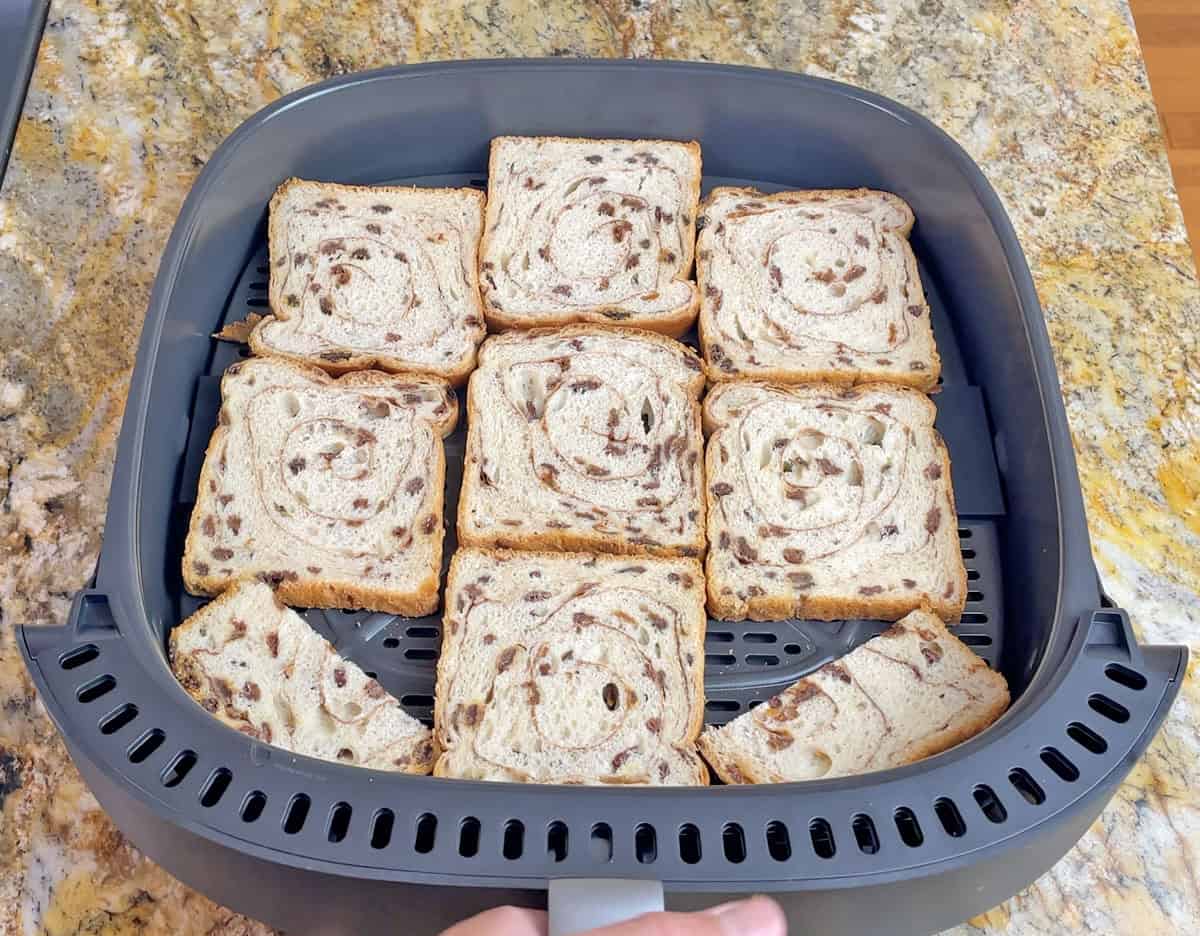
It’s also worth flagging that the Pro doesn’t include a 4-quart container. You get the 6-quart and the 2.5-quart. If you want the mid-size option, that’s a separate purchase.
Temperature Control and Cooking Functions
The original Crispi limits you to four preset modes locked into broad temperature ranges, with no option below 375°F. The Crispi Pro gives you full adjustability from 80°F to 450°F in 5-degree increments.
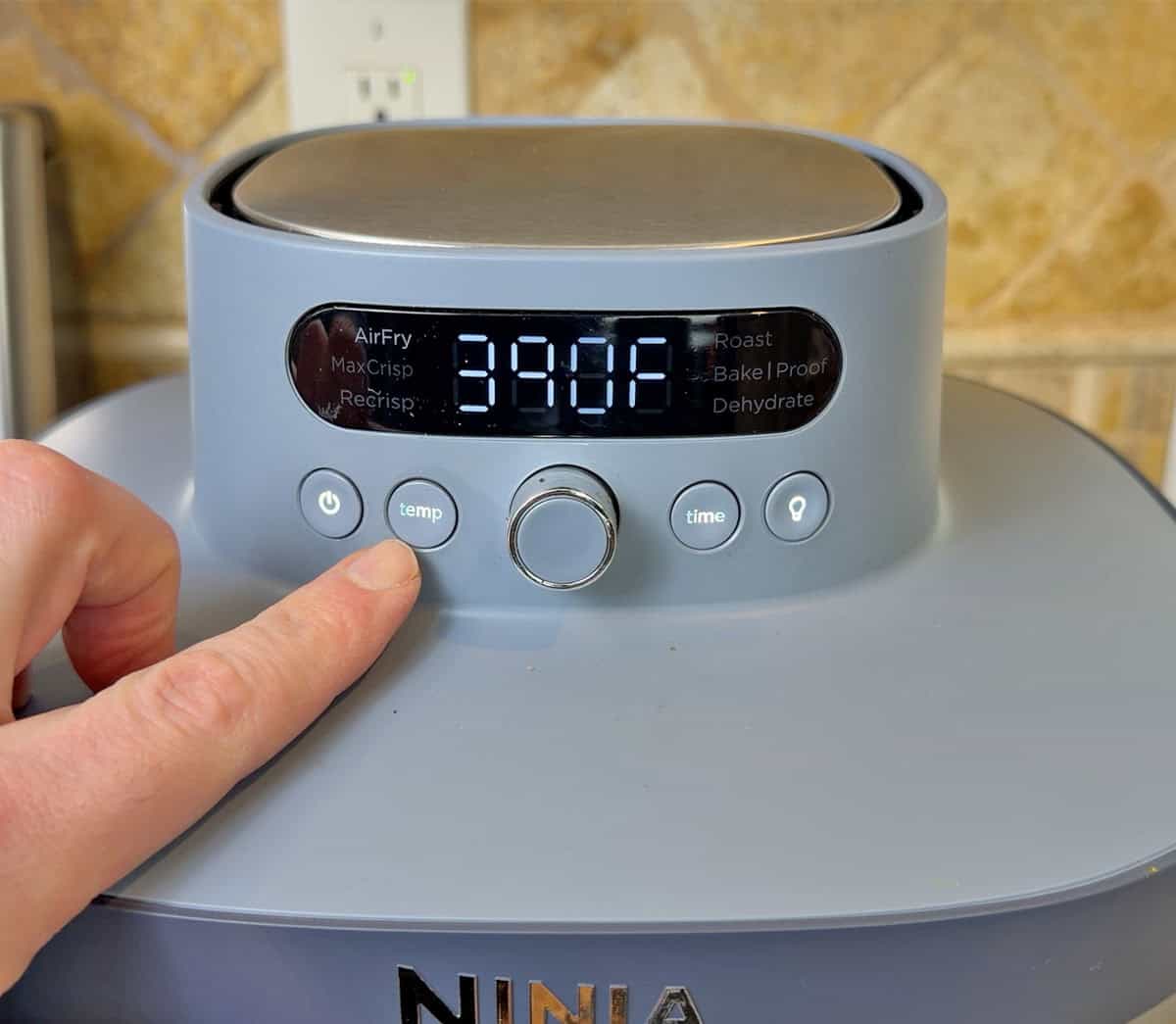
The low end is great for proofing dough or gently warming food, and the Dehydrate function lets you make jerky, dried fruit, and similar snacks.
The Crispi Pro offers six cooking functions total: Max Crisp, Air Fry, Bake/Proof, Roast, Recrisp, and Dehydrate (the original only has four).
For anyone who follows recipes precisely or likes to experiment with temperature adjustments, the Crispi Pro is clearly the better tool. Being able to dial in an exact temperature instead of hoping a preset gets you close enough is a meaningful quality-of-life improvement.
The Pro also draws more power at 1,800 watts (vs. 1,500 for the original), which means faster preheating and better heat recovery when you drop cold food in. Worth noting: most household outlets are rated for 1,800 watts, so avoid running other high-draw appliances on the same circuit.
Bottom Line: Is the Ninja Crispi Pro Worth It?
There’s a lot to like about the Ninja Crispi Pro. The fixed heating element is a safe, practical design. Precise temperature control from 80–450°F makes it a versatile cooking tool. Functions like Dehydrate and Roast add genuine utility. And the glass container concept is appealing, letting you watch your food cook and store leftovers in the same vessel.
But the value is hard to justify at this price point. The cooking surface is only 64 square inches, which is significantly smaller than air fryers that cost much less. It’s the noisiest air fryer I’ve tested at 67 dBA. The quality control complaints are concerning. And the 6-quart capacity claim doesn’t hold up when the usable cooking area fits the same 11 wings as a 4-quart model.
If you’re committed to a glass air fryer and understand those tradeoffs, the Ninja Crispi Pro is the best option available right now.
But if you’re open to a traditional air fryer, there are strong alternatives at every price point.
- The Instant Pot Vortex Plus offers 88 square inches, holds 16 wings, and runs at a quieter 55 dBA for notably less money.
- The COSORI TurboBlaze delivers solid performance at 77 square inches and is the most budget-friendly in the group.
- And for the best results I’ve measured regardless of price, the Typhur Dome 2 brings dual heating elements, 144 square inches, and the quietest operation at 51 dBA.
The Ninja Crispi is available on Amazon and SharkNinja.com where you can check the current price, read dozens of reviews, and learn more.
Related Topics
- Ninja Crispi Review: Pros & Cons You Must Know Before Buying
- Ninja Crispi vs. Crispi Pro: Key Differences to Know Before Buying
- I Tested T-fal Infrared Air Fryers: Are They Actually Better?
- Ninja vs. Instant Pot vs. Cosori vs. Typhur vs. Chefman (Best Air Fryer?)
- 5 Types of Air Fryers: A Guide to Help You Choose
- Zojirushi vs Tiger: Which Rice Cooker Is the Best?
- Air Fryer vs. Convection Toaster Oven: Cooking Test Results Revealed
- 19 Pros and Cons of Air Fryers: Are They Worth It?
- Zojirushi vs Cuckoo: Which Rice Cooker Is Better? (Test Results)
- HexClad vs. Ninja NeverStick Cookware: 11 Key Differences
