

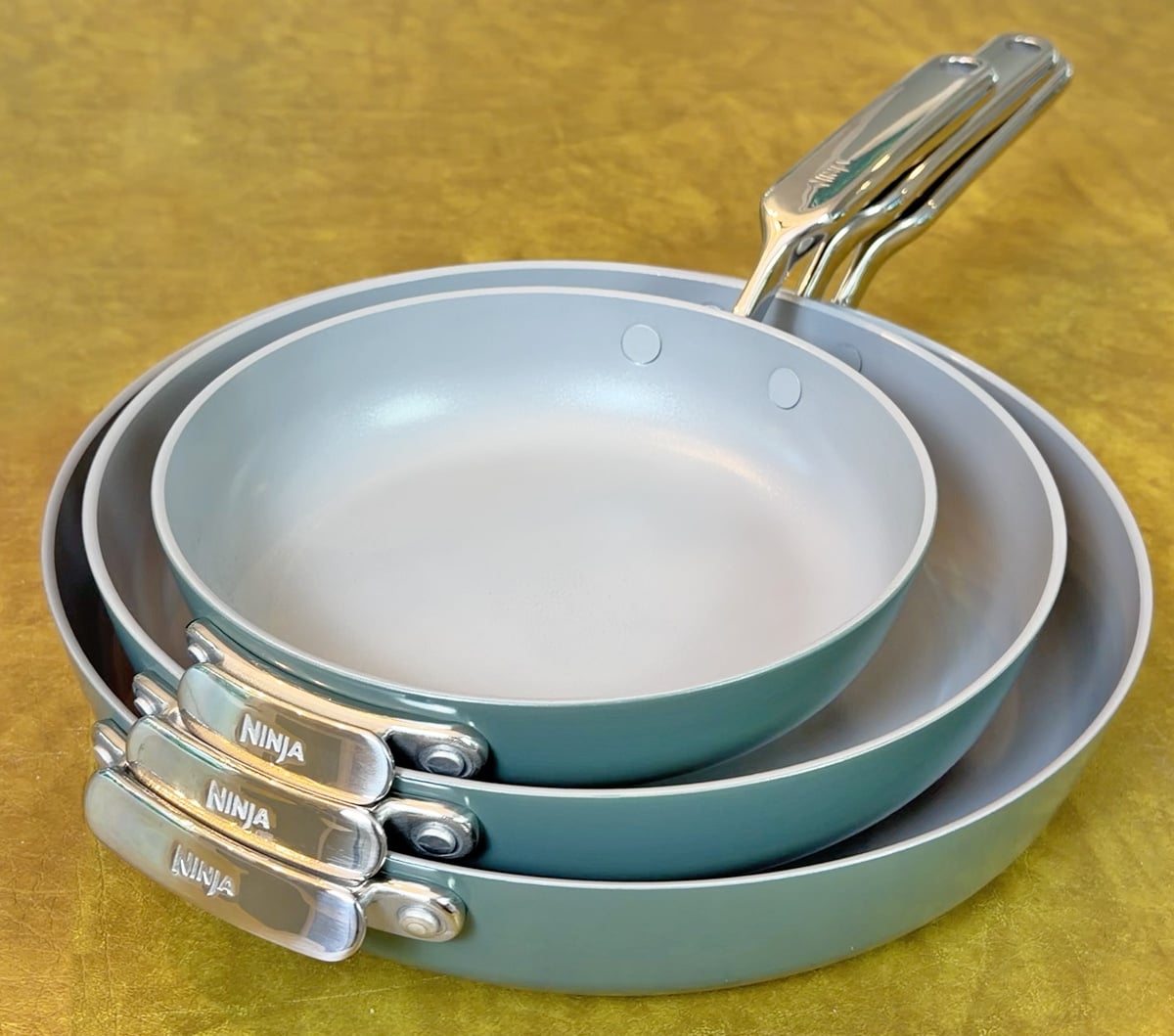
Ninja claims its NeverQuit ceramic nonstick pans are twice as durable as Caraway and can withstand extreme abuse, including a pressure washer, blowtorch, and power sander.
To see if those claims hold up, I pushed Ninja NeverQuit and comparable pans from Caraway and Made In to the extreme.
I put all three through a series of increasingly aggressive tests, starting with routine cleaning, moving on to scraping and impact tests, and finishing with extreme abuse from a pressure washer, blowtorch, and power sander.
After every test, I examined each pan under a digital microscope to check for damage. I also cooked an egg in each pan at the same temperature and with the same amount of fat to see how the nonstick performance held up.
In this Ninja NeverQuit review, I’ll share the results of those tests, what I like and don’t like about the design, and whether these pans are actually worth buying.
Key Takeaways
Ninja NeverQuit is worth buying if you’re looking for relatively affordable ceramic nonstick pans. It has a comfortable, secure handle, flush rivets that make cleaning easier, and a clever stacking system that helps protect the coating during storage. It’s also compatible with induction cooktops.
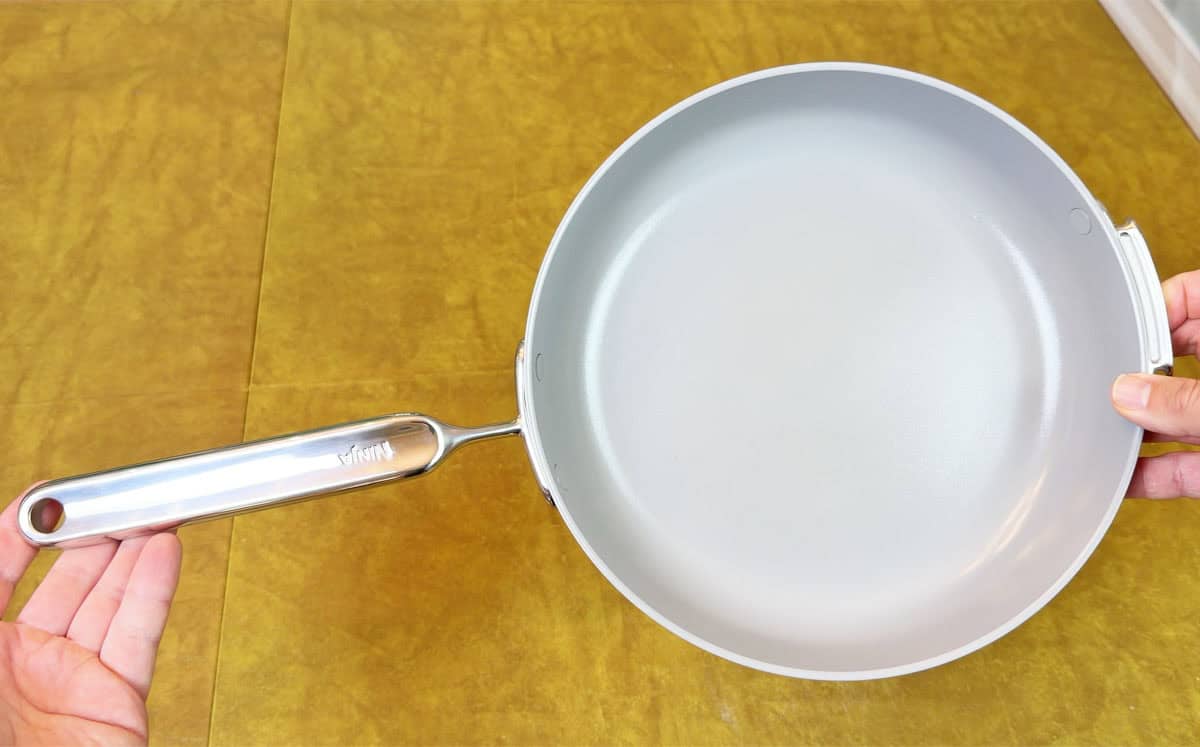
The coating is durable, but my tests didn’t support Ninja’s claim that it’s twice as durable as Caraway. The pans survived a pressure washer, blowtorch, and power sander while still releasing eggs. However, the coating suffered significant damage, and Caraway and Made In performed similarly.
On the negative side, the metal stacking guides reached temperatures above 200°F during my testing, which creates a burn risk. And despite Ninja advertising the coating as metal utensil safe, I was able to scratch it with a metal spatula.
The biggest reason I recommend Ninja NeverQuit is the value. Its three-piece frying pan set costs significantly less than equivalent sets from Made In and Caraway. Ninja also offers a three-year coating warranty, although that doesn’t necessarily cover the gradual loss of nonstick performance.
One downside is that Ninja doesn’t sell these pans individually. You have to buy the three-piece set, which isn’t ideal if you only need one frying pan. If that’s the case, I’d save money and get a less expensive option like the Tramontina Professional.
You can check the latest price of Ninja NeverQuit on Amazon and SharkNinja.com.
Use the links below to navigate the review:
- Design: What I Like and Don’t Like
- Nonstick Performance
- Scrubbing Test
- Wood Spatula Scraping Test
- Hard Impact Test
- Metal Spatula Scraping Test
- Metal Whisk Test
- Pressure Washer Test
- Blowtorch Test
- Power Sander Test
- Bottom Line: Is Ninja NeverQuit Worth Buying?
Design: What I Like and Don’t Like
Durability is the main selling point of Ninja NeverQuit, but there are several design details that stood out during my testing.
One of my favorite features is the handle. It’s comfortable to hold, and there’s a groove along the top that helps prevent the pan from rotating or tilting in your hand. This makes the pan feel more secure when you’re lifting it or moving food around.
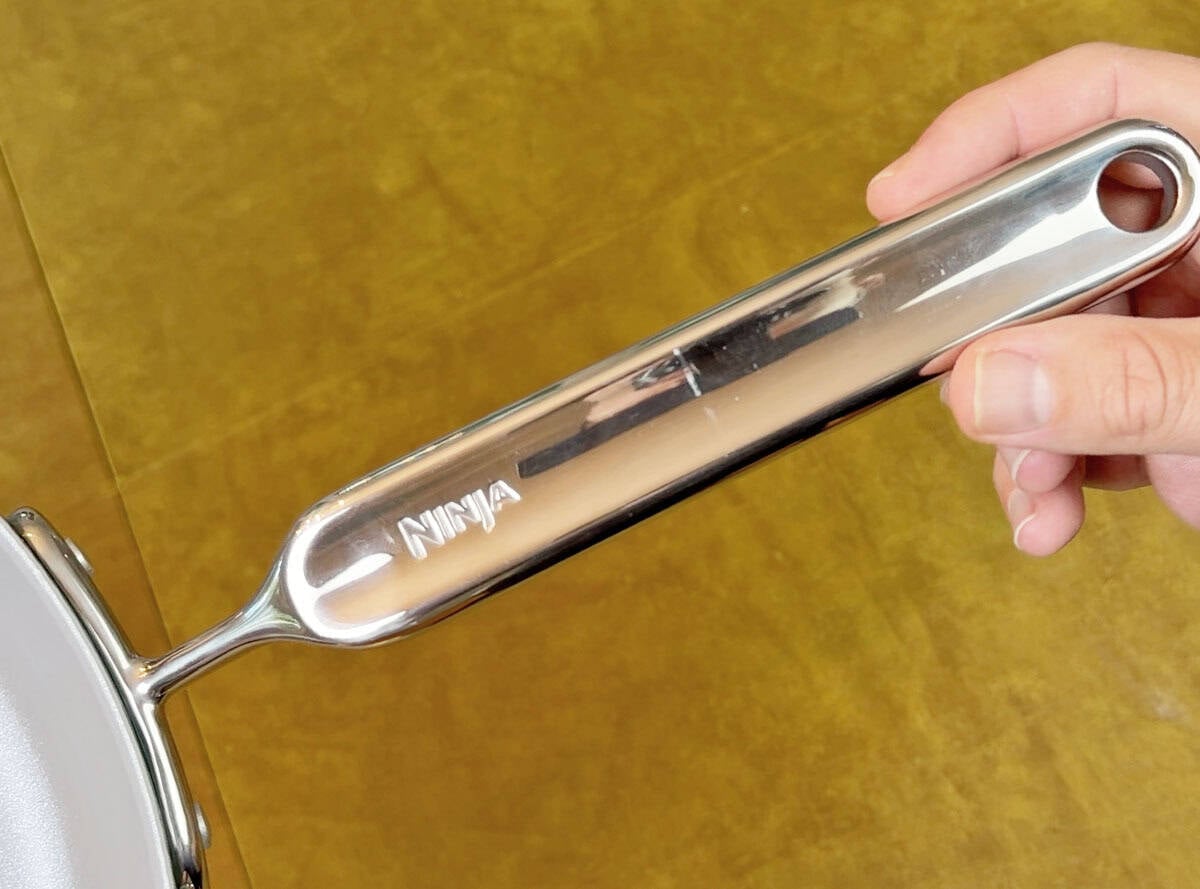
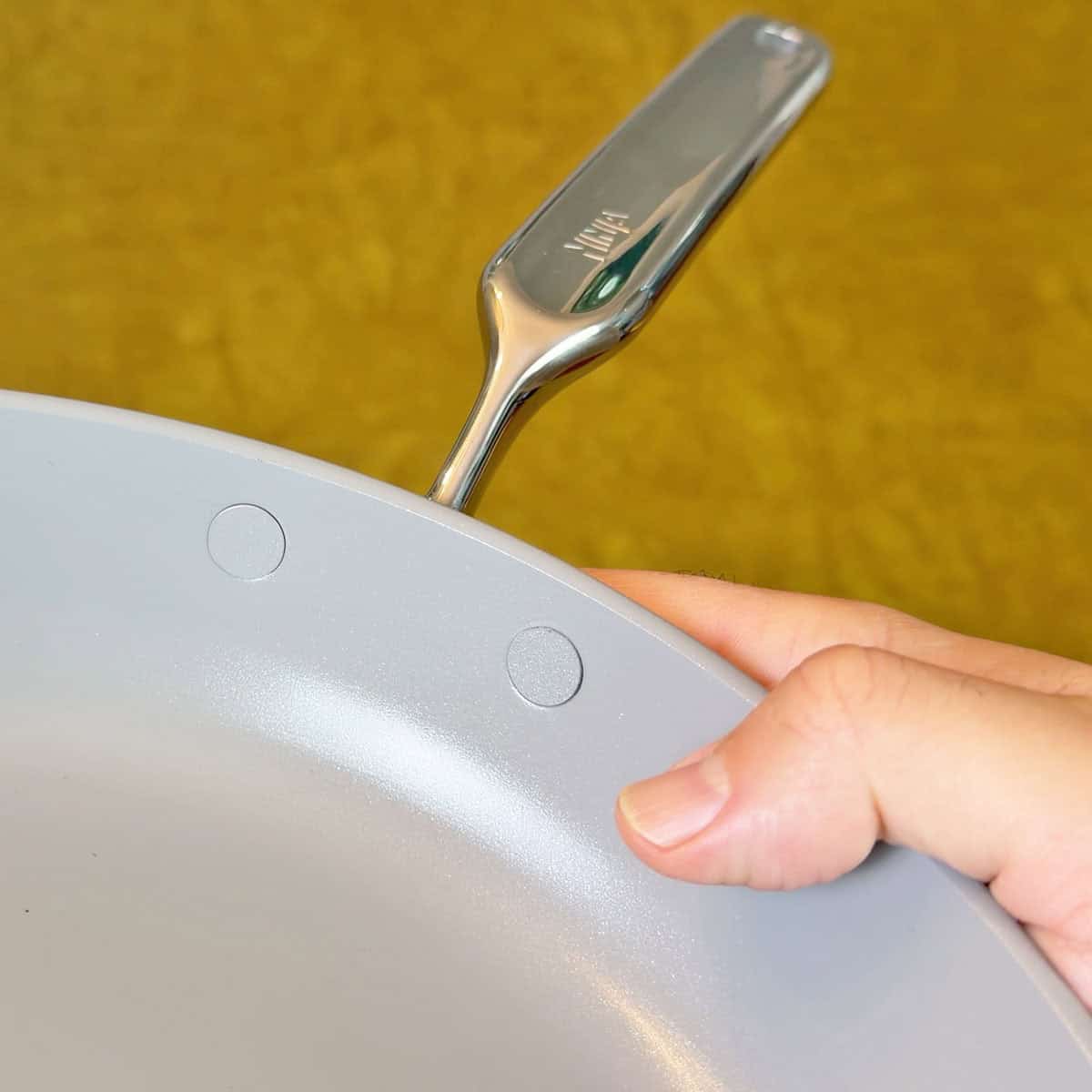
I also like the flush rivets connecting the handle to the pan. On most frying pans, the rivets protrude into the cooking surface, creating areas where food and grease can collect. Ninja’s rivets sit flush with the interior, making the pan a little easier to clean.
Another benefit is the steel induction plate on the bottom. Most nonstick pans are made of aluminum, which isn’t magnetic and won’t work on induction cooktops by itself. Ninja NeverQuit is also made of aluminum, but the steel plate on the bottom makes it compatible with induction, as well as gas and electric cooktops.
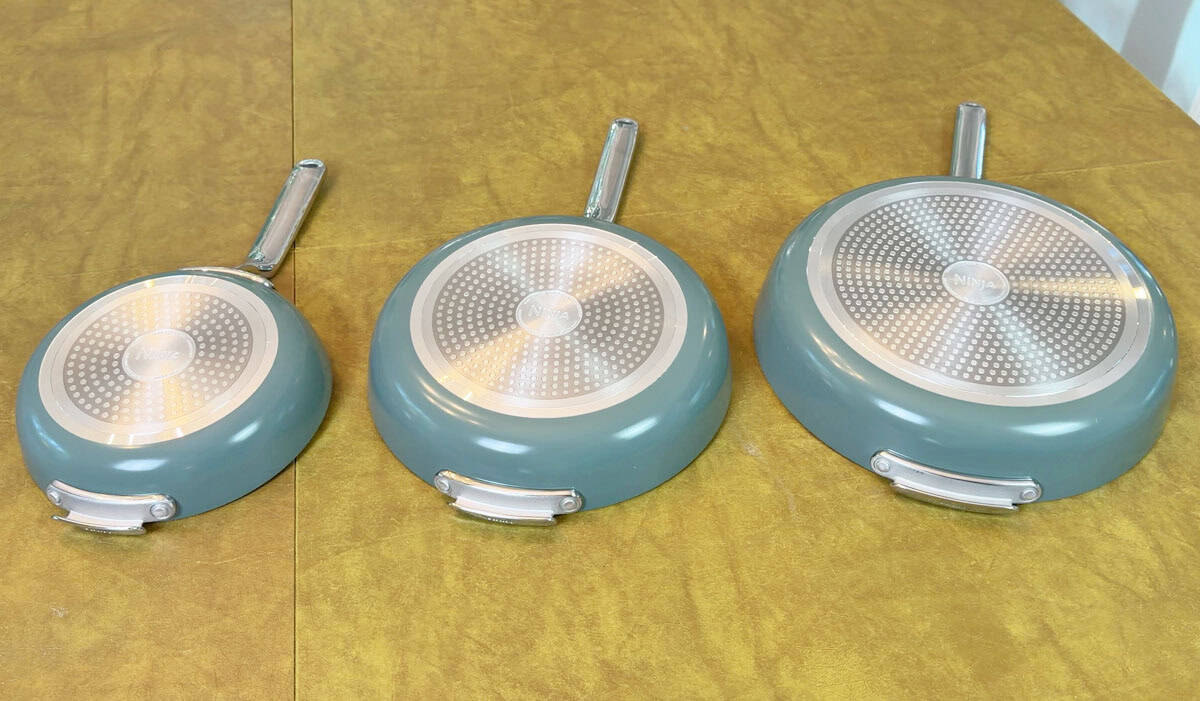
One of Ninja’s more interesting design features is its built-in stacking system. The pans have small metal guides that keep the pans separated when you stack them. I like this because stacking cookware directly on top of other pans can scratch or chip the nonstick coating over time.
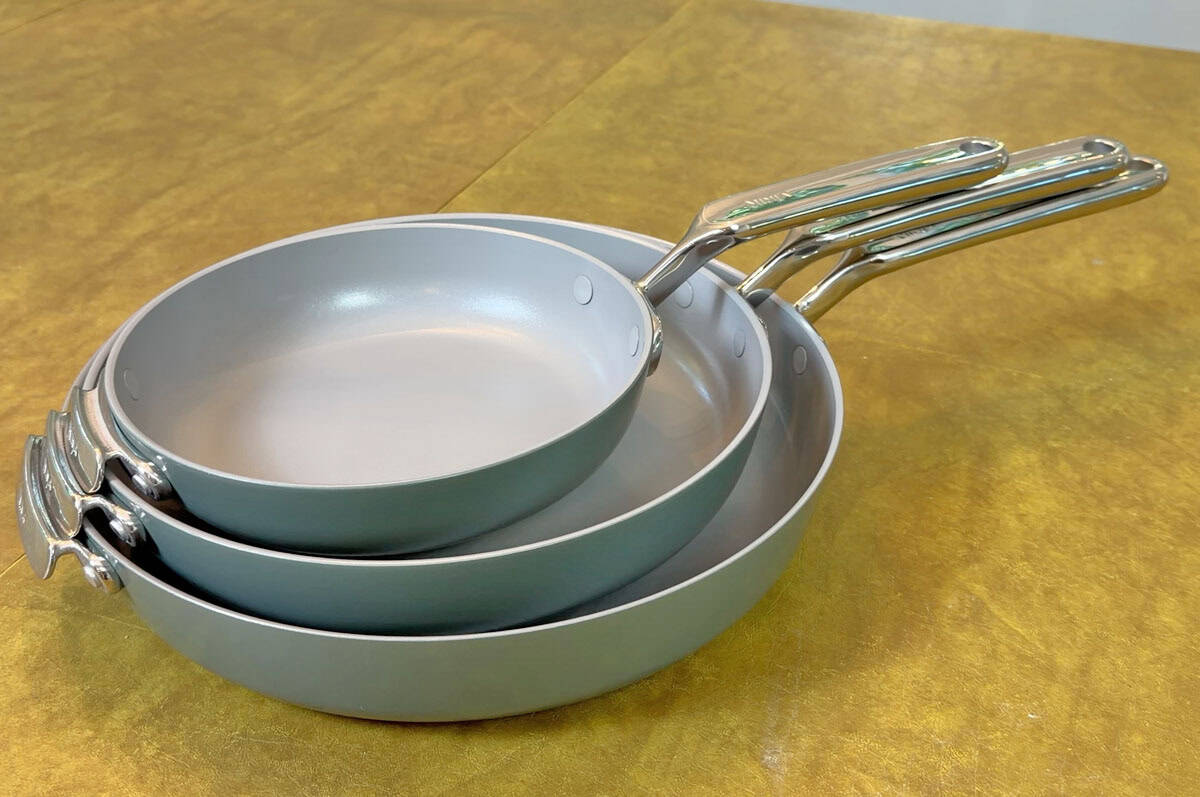
However, the system isn’t foolproof. You still need to line up the handles correctly. If they’re misaligned, the pans can slip and bang against each other (which happened to me a few times).
My biggest complaint is how hot those metal guides get. During my testing, they reached temperatures above 200°F. I actually burned my hand a couple of times while washing the pans. Even though the water had cooled down the pan itself, the guides were still extremely hot because I hadn’t rinsed them directly.
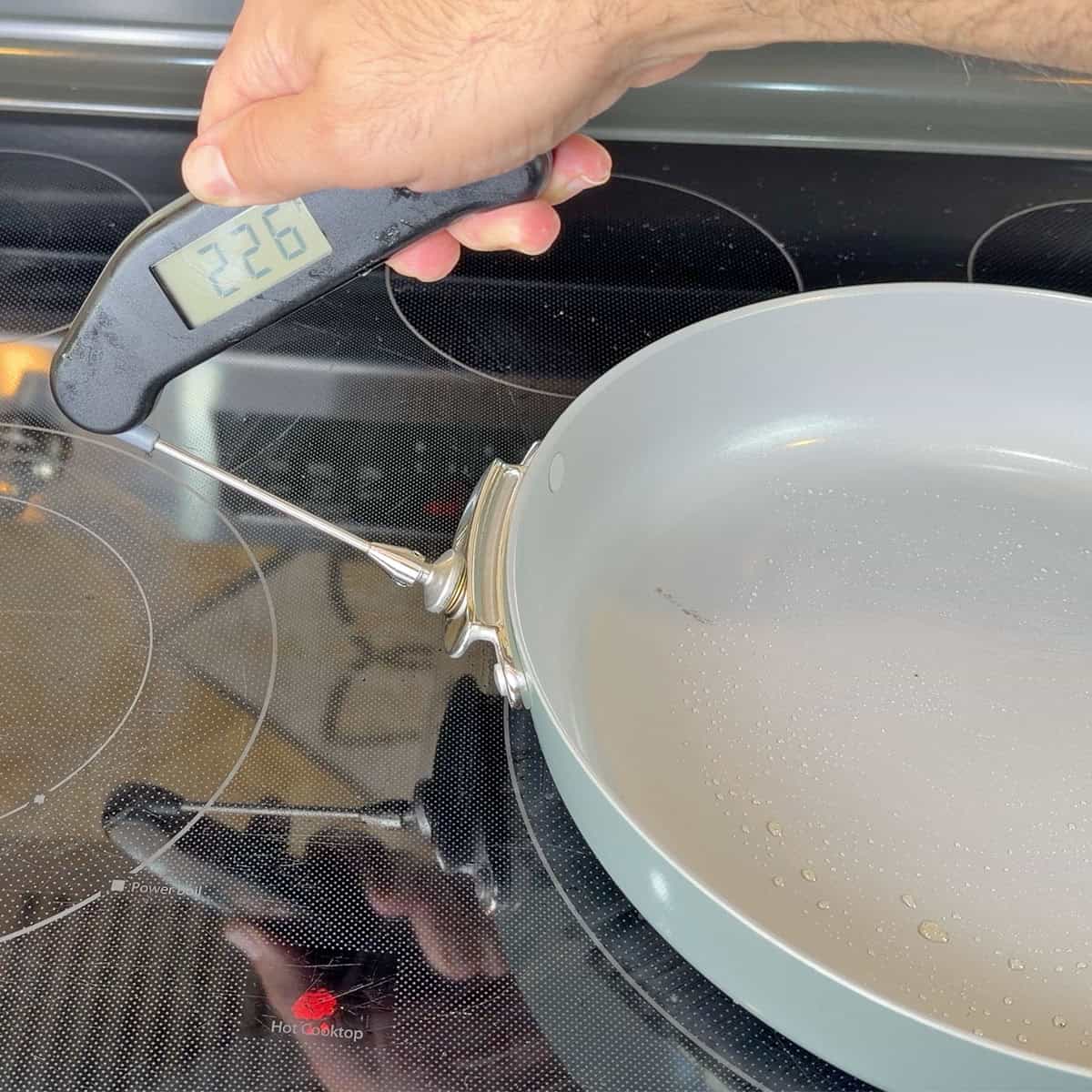
It’s easy to overlook this, so be careful not to touch the guides while cooking or immediately afterward.
Nonstick Performance
Before putting Ninja NeverQuit through the durability tests, I wanted to see how well it performed brand new.
To give the results some context, I put two other popular ceramic nonstick pans through the exact same tests: Caraway and Made In CeramiClad 2.0.
All three pans have ceramic nonstick coatings rather than traditional PTFE (Teflon). Ceramic nonstick cookware has become increasingly popular because it’s made without PFAS, chemicals that have raised health and environmental concerns.
I chose Caraway because Ninja specifically calls it out in its marketing, claiming NeverQuit is twice as durable. I included Made In because it’s a popular cookware brand that recently redesigned its ceramic nonstick pans with a coating it claims is 43% more durable than the original.
I tested the 10-inch version of each pan, starting with a basic egg test to establish their initial nonstick performance. I heated each pan to 300°F, added half a teaspoon of oil, and cooked an egg.
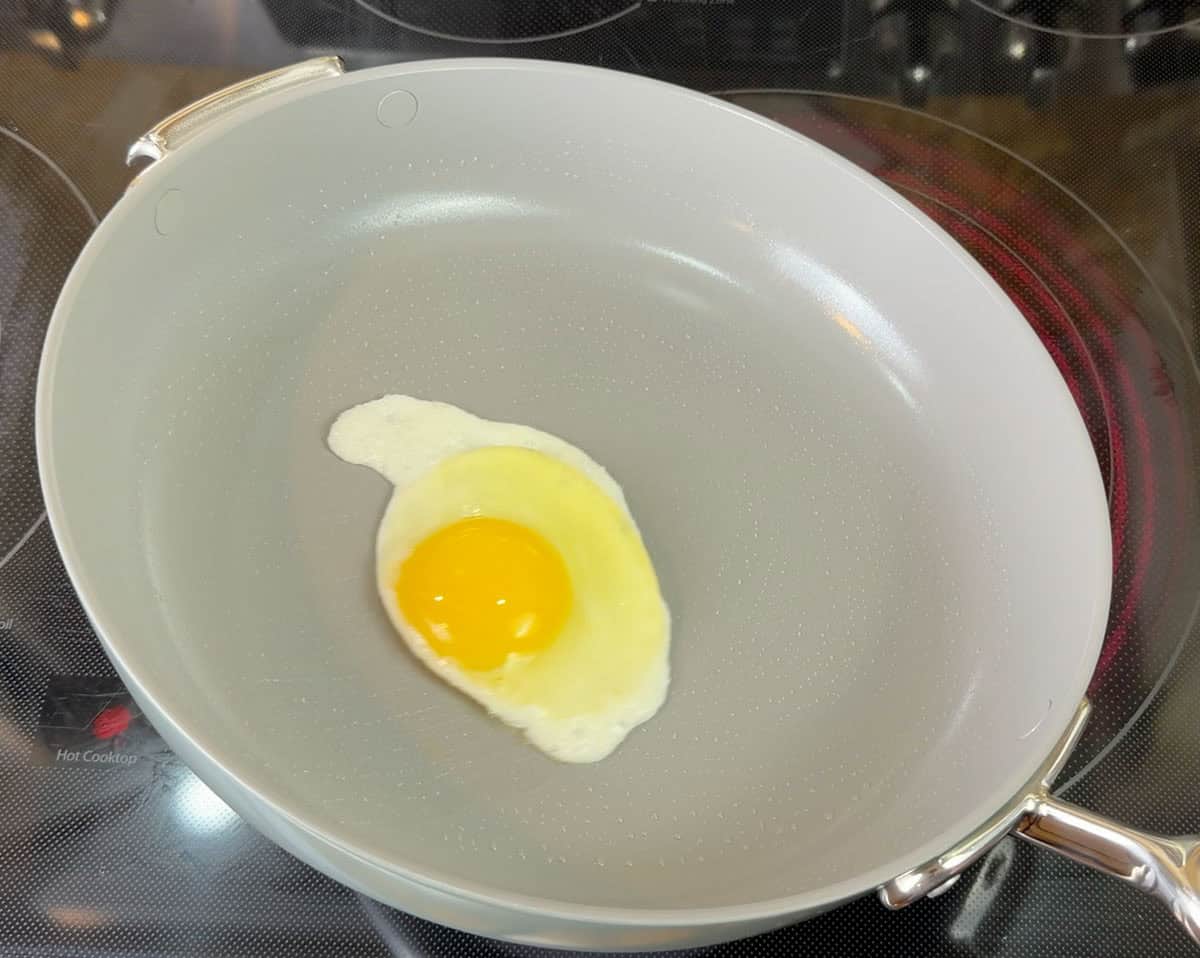
As expected, all three performed really well. The eggs slid around easily, and nothing stuck.
That’s what I’d expect from new ceramic nonstick cookware. The more important question is how well the coatings hold up after repeated cleaning, scraping, and other forms of wear.
Durability Tests
Ninja makes some bold durability claims about NeverQuit. The company says its coating is twice as durable as Caraway’s and advertises it surviving a pressure washer, blowtorch, and power sander.
To see how those claims hold up, I put Ninja, Caraway, and Made In through eight increasingly aggressive tests.
After each test, I examined the cooking surfaces with a digital microscope and cooked another egg to see if the nonstick performance declined.
Scrubbing Test
For the first test, I attached a Scotch-Brite sponge to a stand mixer with the rough side pressed firmly against the cooking surface. I added a quarter cup of water and a drop of dish soap, then let it run on low for 10 minutes.
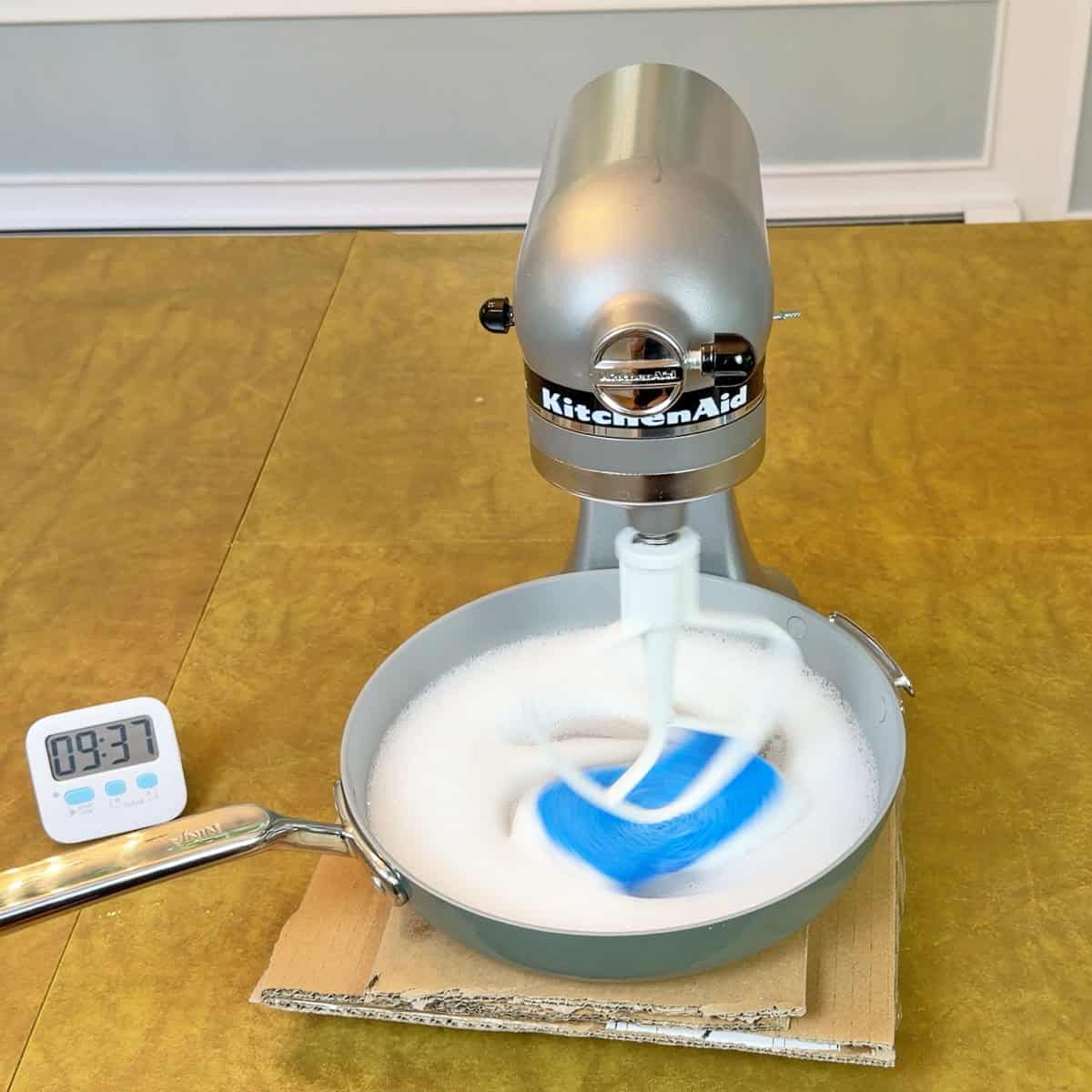
The goal was to simulate the impact of washing each pan dozens of times. Ten minutes may not seem like a long time, but these pans start off so slick that you can usually clean them by hand in seconds.
After rinsing and drying each pan, I looked at the surfaces under a digital microscope and didn’t see any damage.
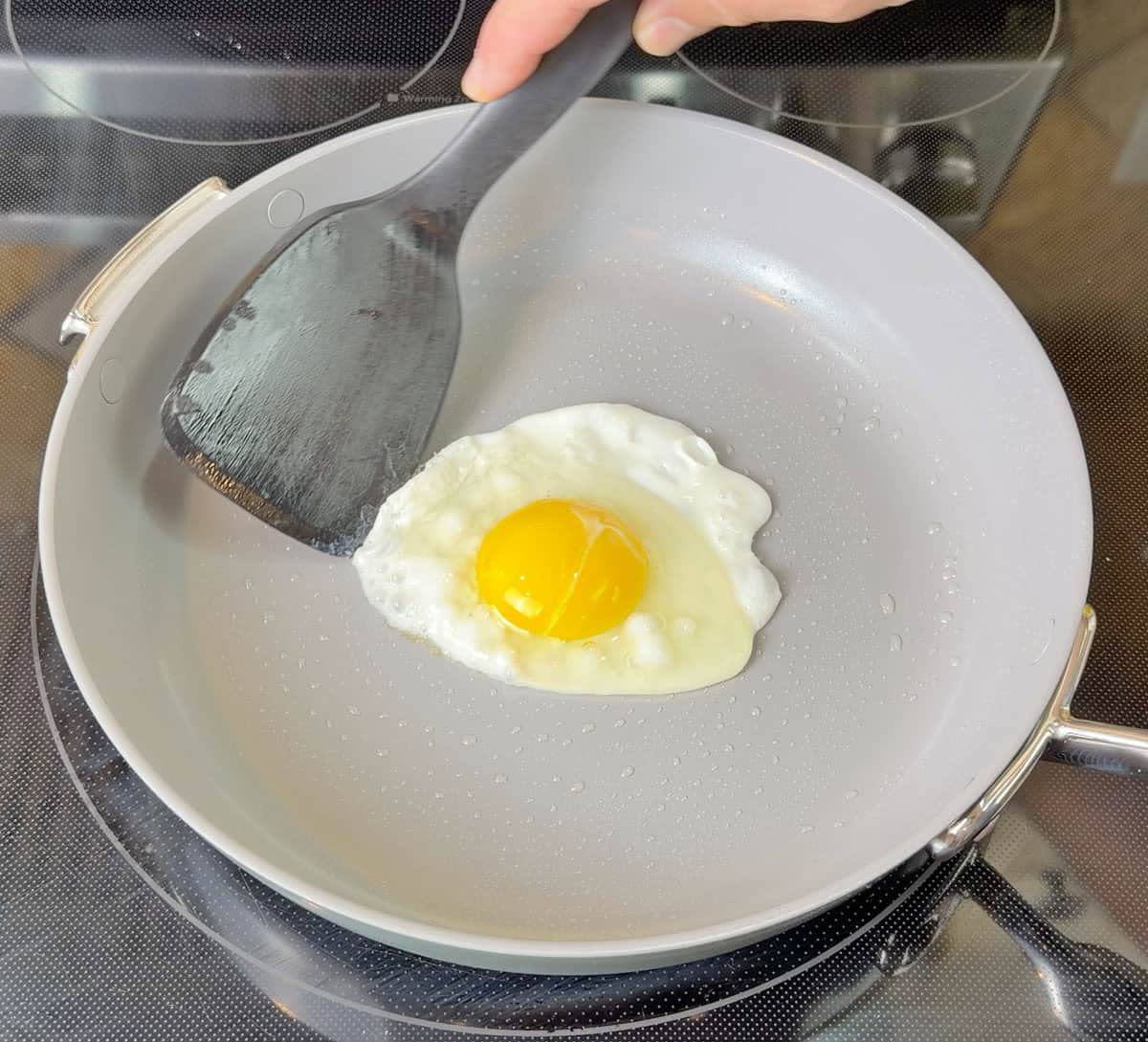
But when I cooked another egg, all three stuck a little bit. Nothing major, but definitely a difference from the first test.
Wood Spatula Scraping Test
For the next test, I took a wooden spatula and added a 5-pound weight to apply consistent pressure. Then I scraped it across each pan 150 times.
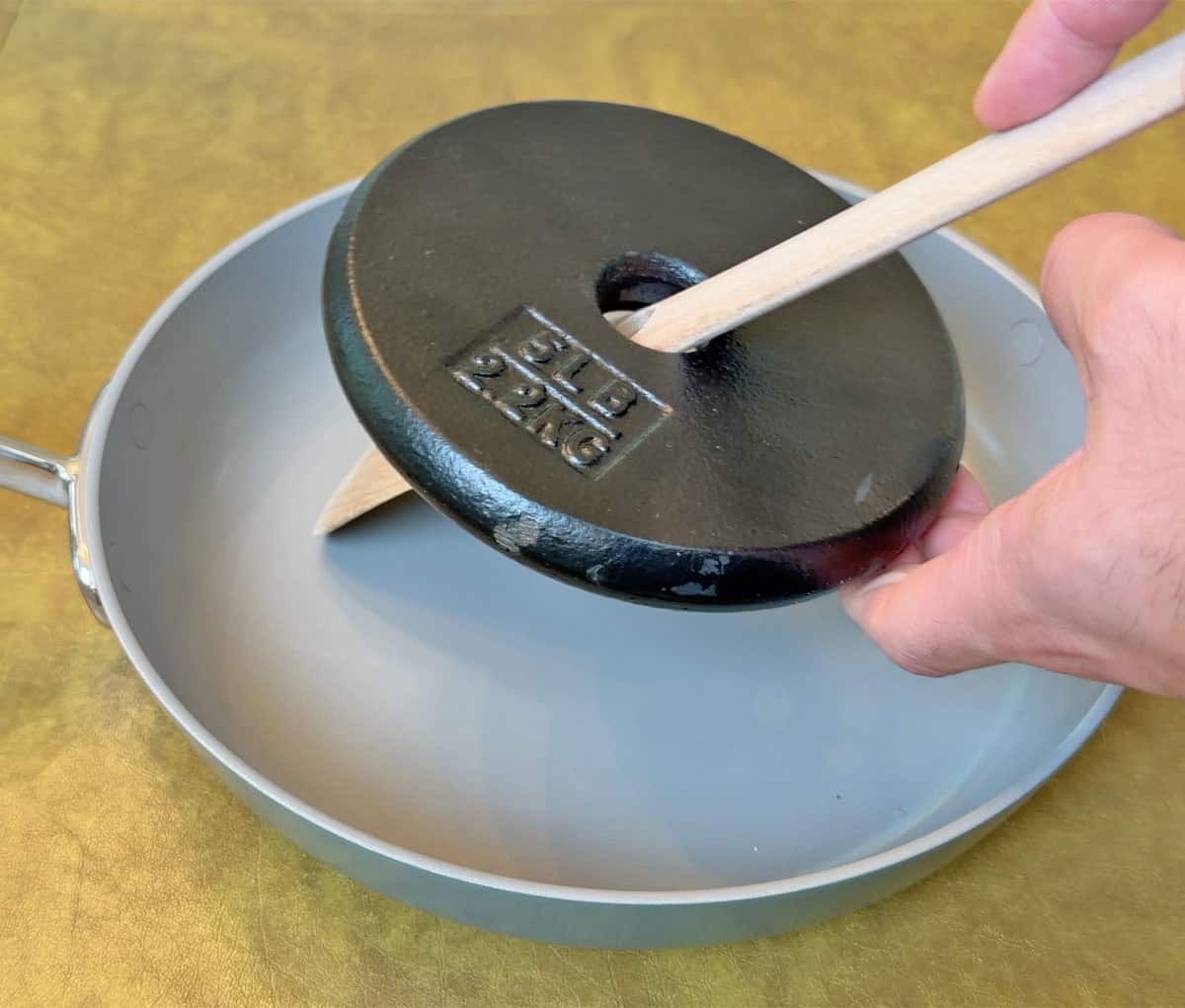
All three pans had some light marks left behind, but they wiped right off. Under the microscope, I couldn’t see any scratches or damage.
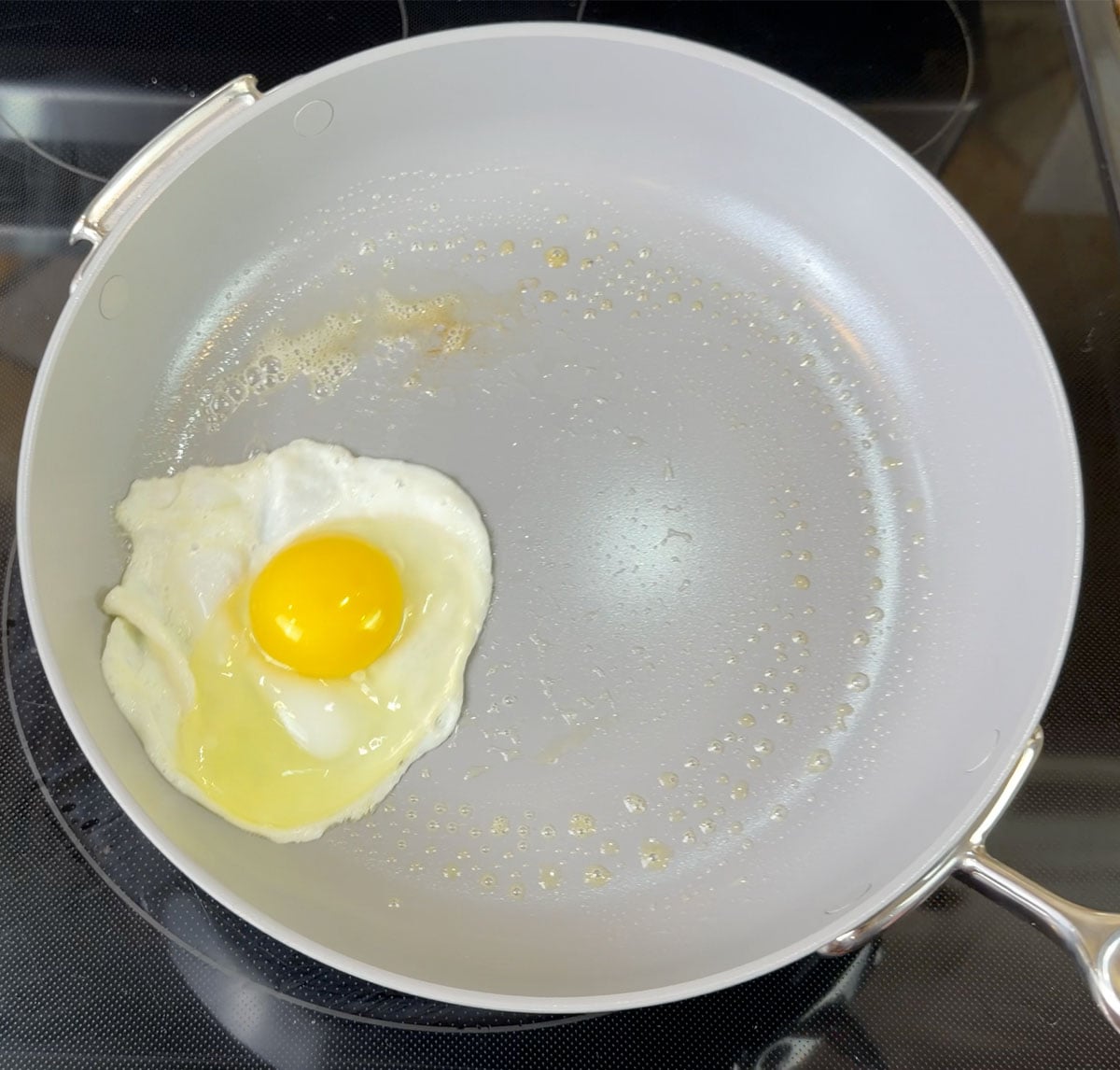
I cooked another round of eggs, but this time I switched from half a teaspoon of oil to 4 grams of butter to give the eggs a better chance of not sticking.
All three eggs slid around perfectly fine.
This was encouraging because wooden utensils are commonly recommended for ceramic nonstick cookware. None of the pans showed any visible coating damage from this test.
Hard Impact Test
Next, I took a 2-pound stainless steel saucepan and dropped it onto the cooking surface of each pan 20 times from about 2 inches high.
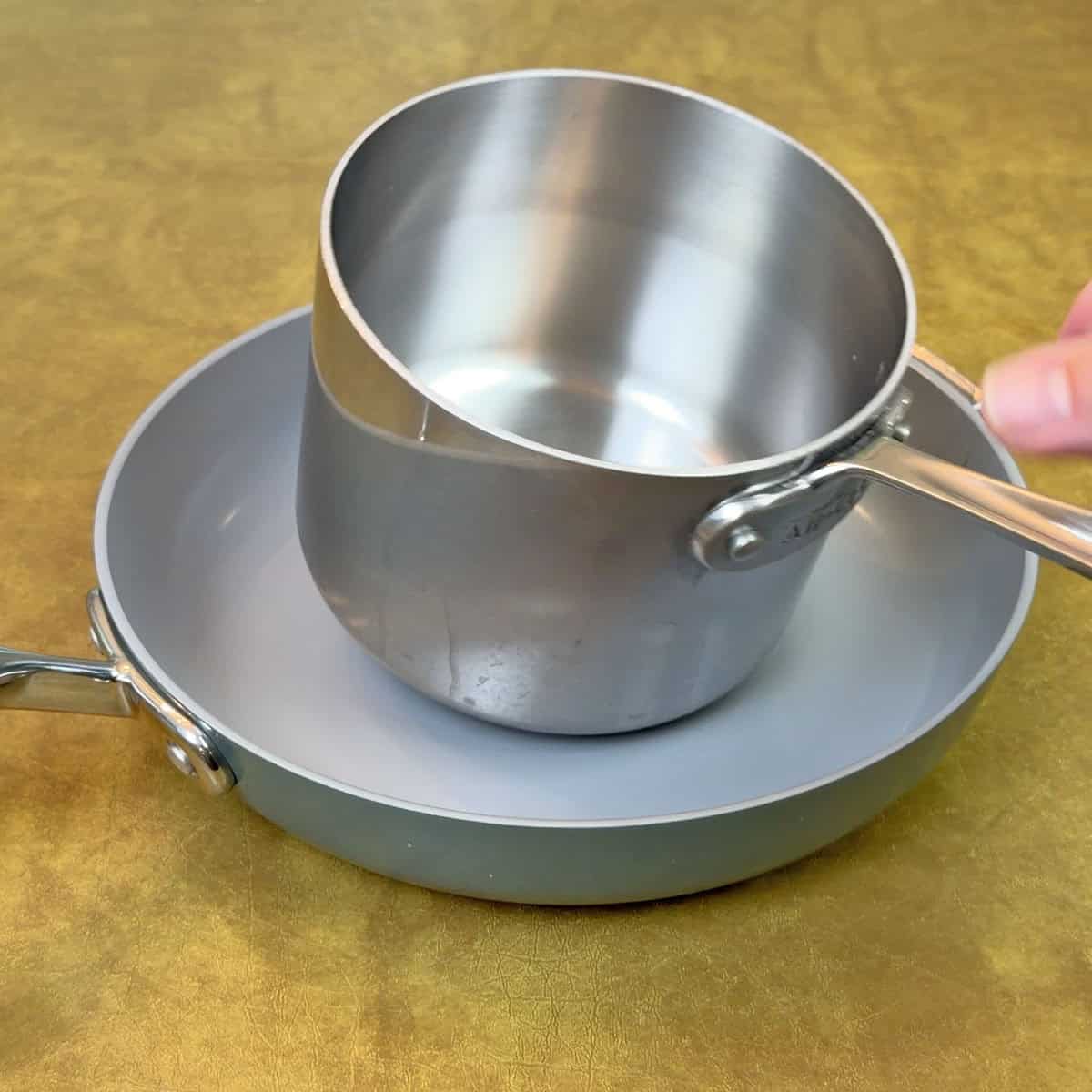
The goal was to simulate what happens when you stack cookware. You’re not always going to set pans down gently or use a pan protector, and over time, the impact from stacking can damage the coating.
The drops were incredibly loud, but surprisingly, there weren’t any chips or visible damage on any of the pans, even under the microscope.
When I cooked another egg in each pan, all three performed fine. There was no noticeable decline in nonstick performance.
Metal Spatula Scraping Test
Ninja advertises NeverQuit as metal utensil safe, which is one of its biggest selling points. Caraway and Made In both recommend avoiding metal utensils.
To test Ninja’s claim, I used a metal spatula with a relatively sharp edge. Just like the wooden spatula test, I added a 5-pound weight to apply consistent pressure, then scraped it back and forth across each pan 50 times.
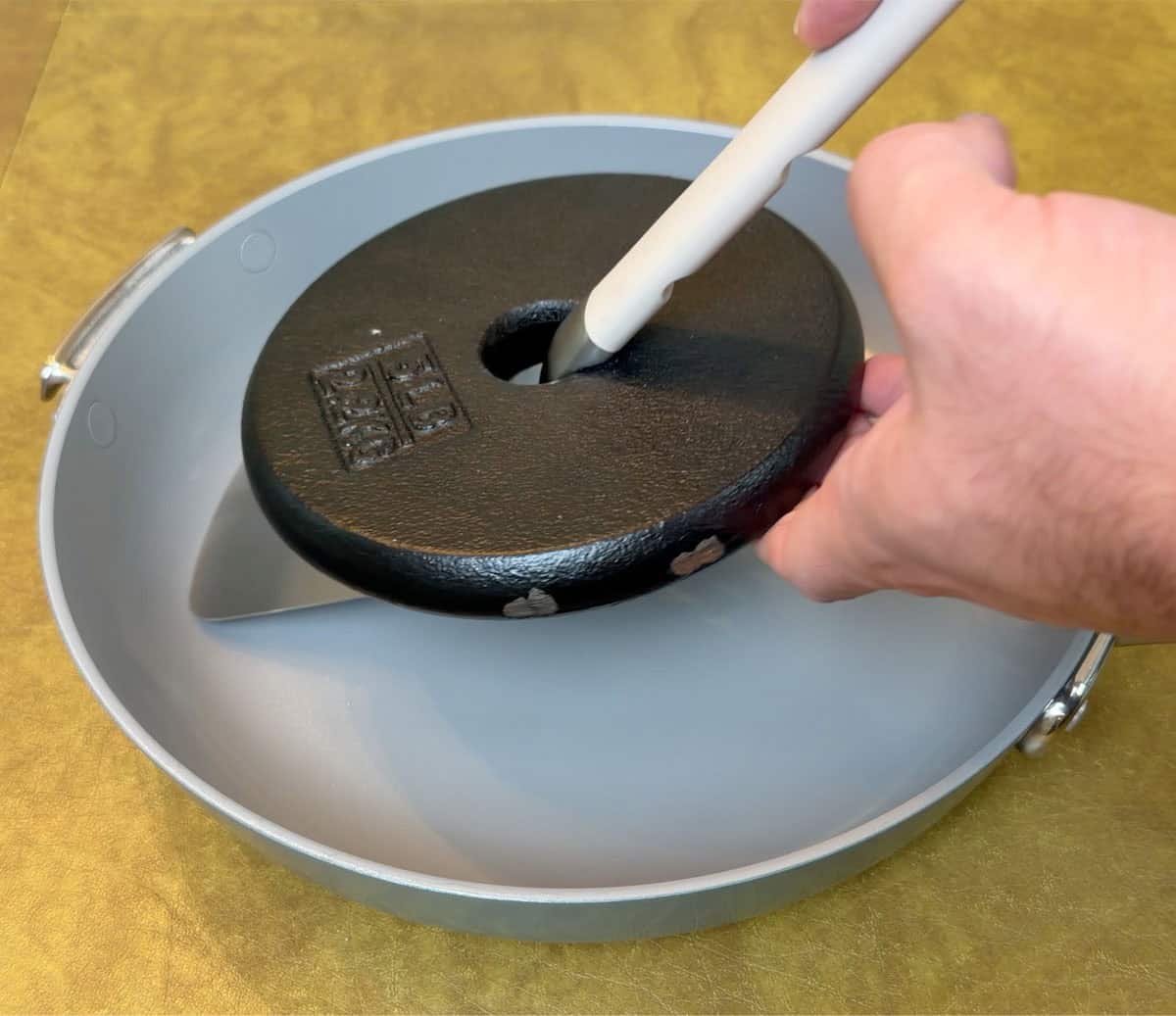
The Ninja pan held up pretty well overall, but in one spot, the spatula dug into the coating and left a noticeable scratch.
Made In got a similar scratch, but surprisingly, Caraway didn’t have any visible damage.
Under the microscope, I could clearly see the scratches on Ninja and Made In. I could also feel them when I rubbed a toothpick across the surface.
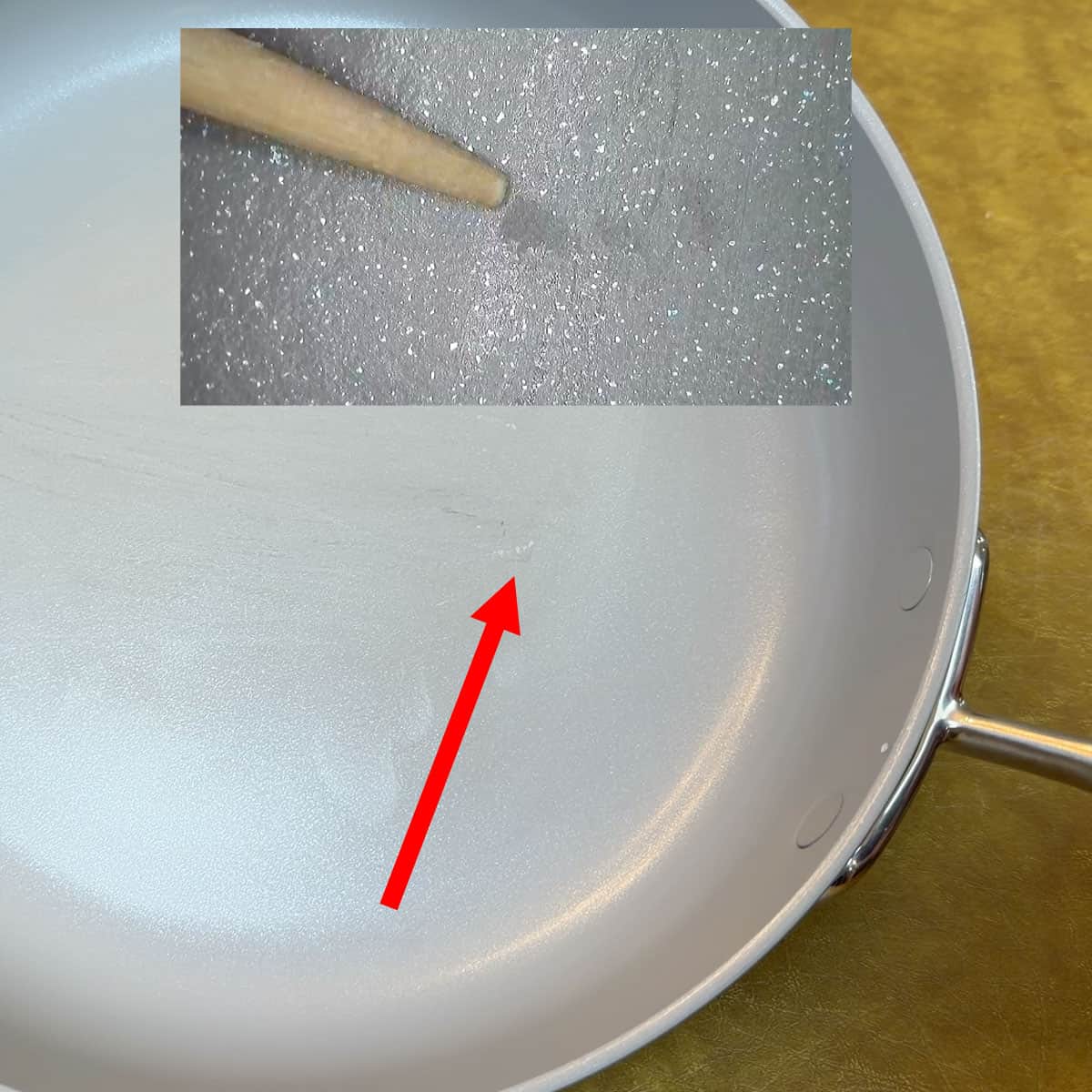
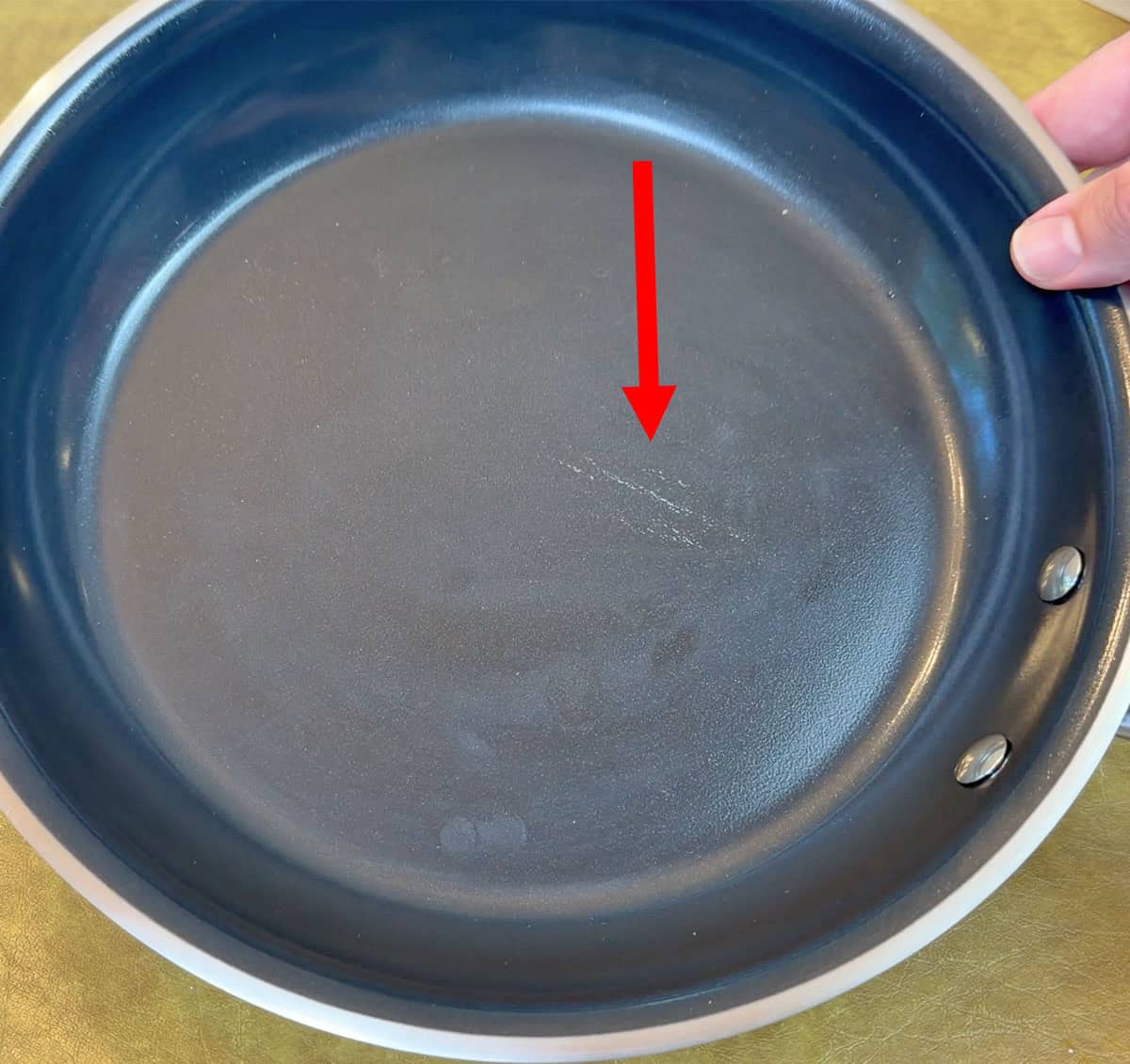
Despite the scratches, all three eggs slid around perfectly fine afterward.
My takeaway is that Ninja’s coating isn’t scratchproof. It might tolerate occasional contact with metal utensils, but based on this test, I’d still recommend using wood or silicone utensils to extend its life.
Metal Whisk Test
To take things a step further, I attached a metal whisk to the mixer and positioned each pan so the whisk was pressed firmly against the cooking surface. Then I turned the mixer on for 30 seconds.
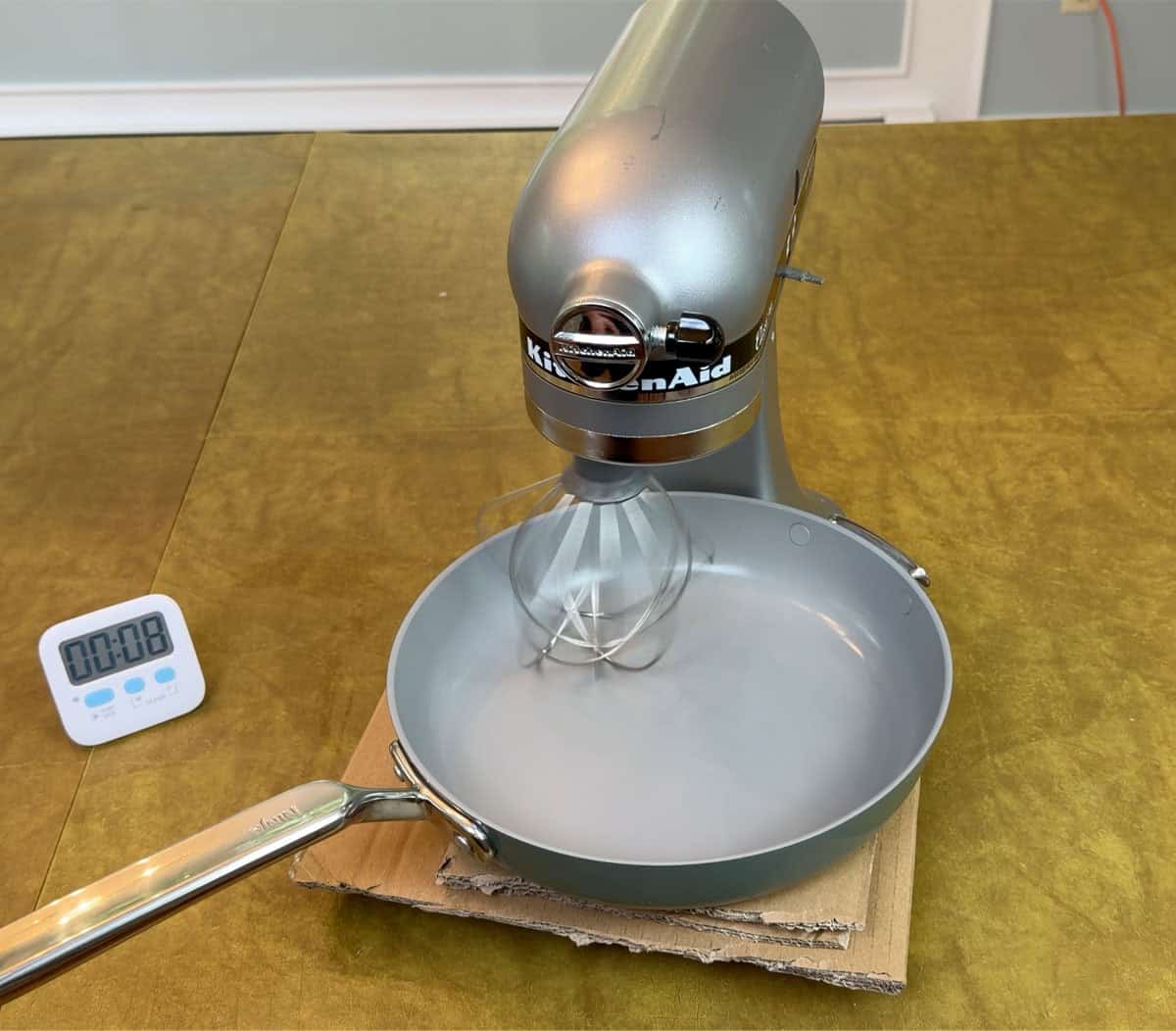
This test did some serious damage. All three pans developed deep circular scratches where the whisk was spinning. Some of the marks were metal rubbing off the whisk, but the coatings themselves were clearly getting scraped away.
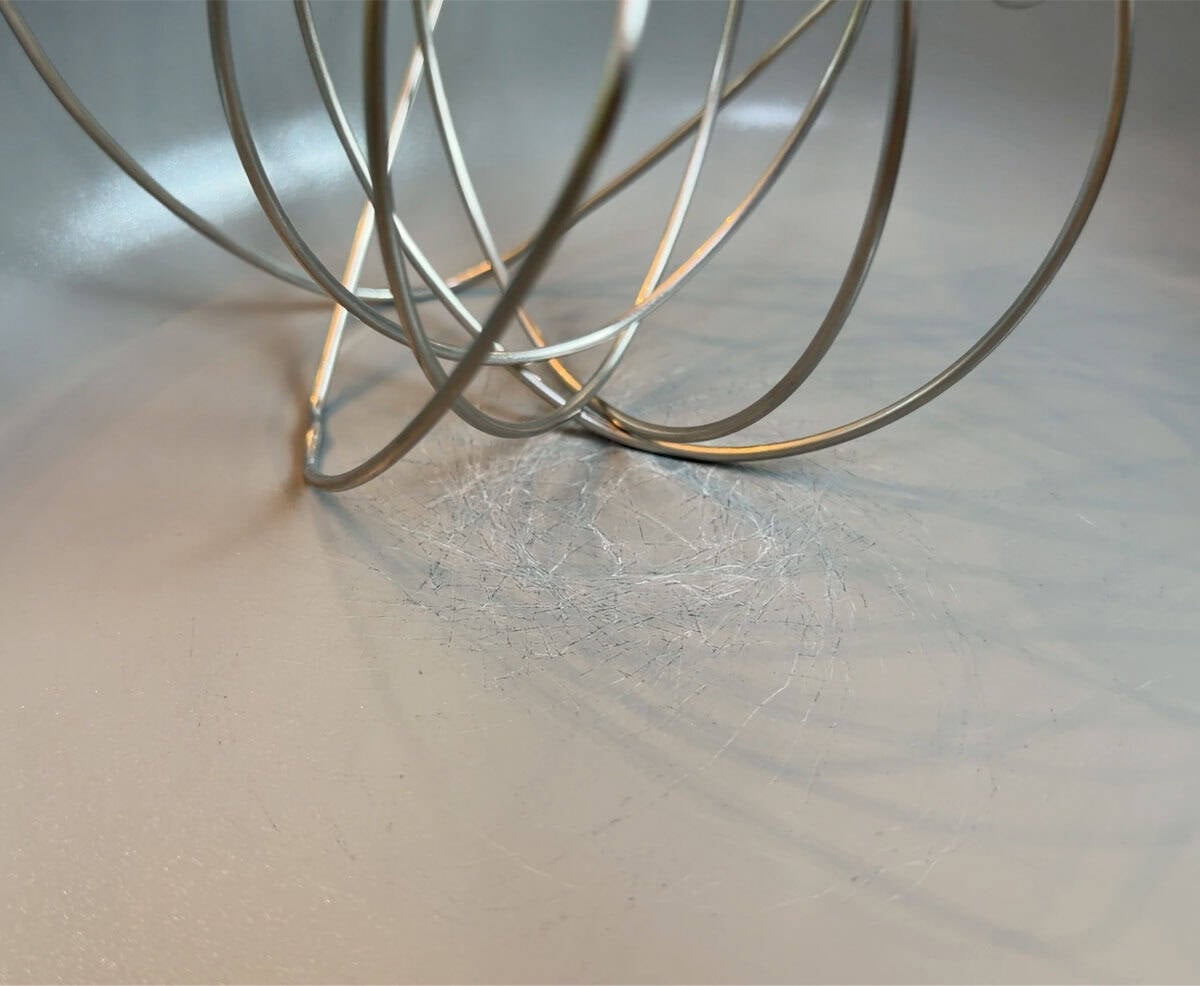
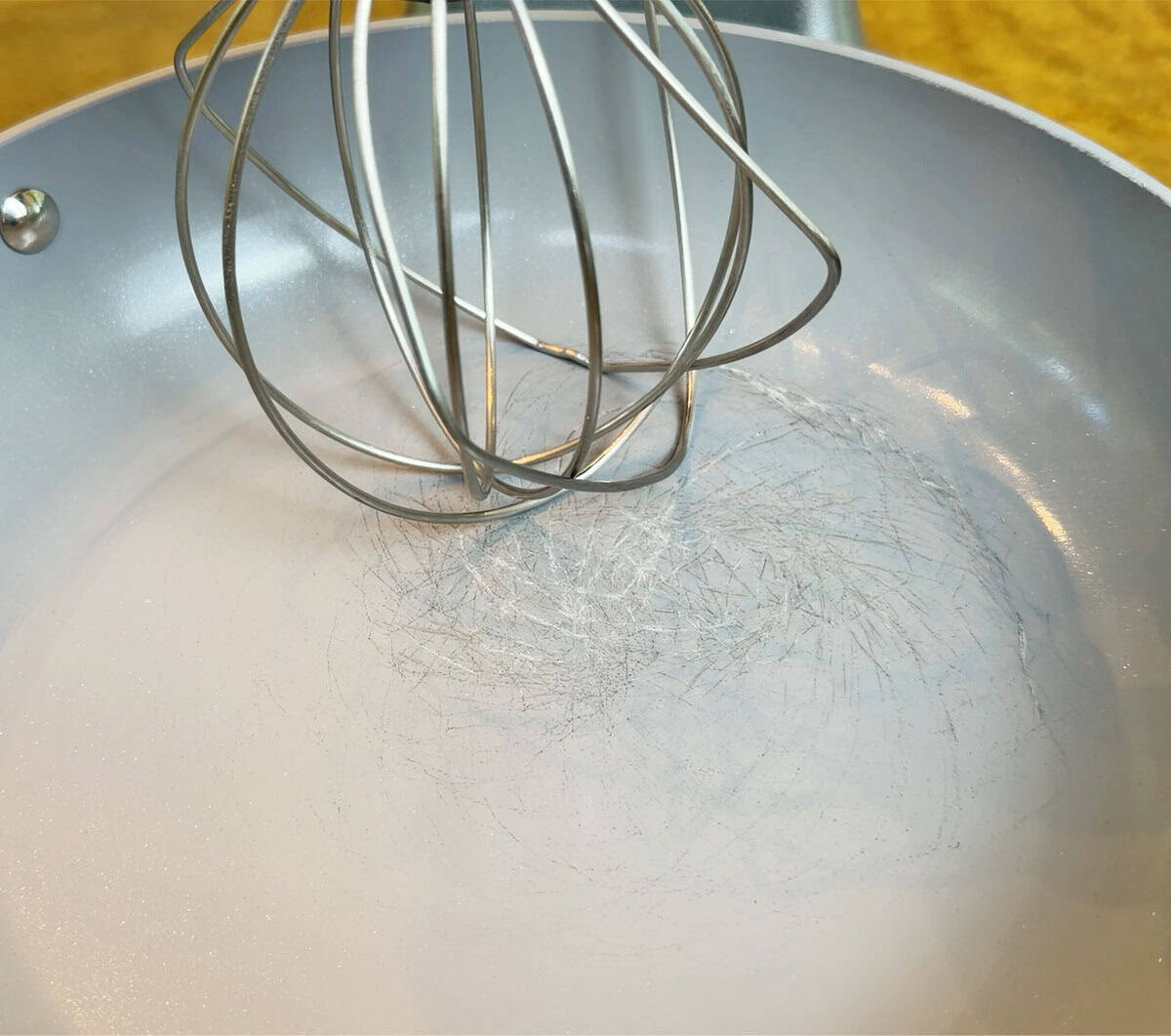
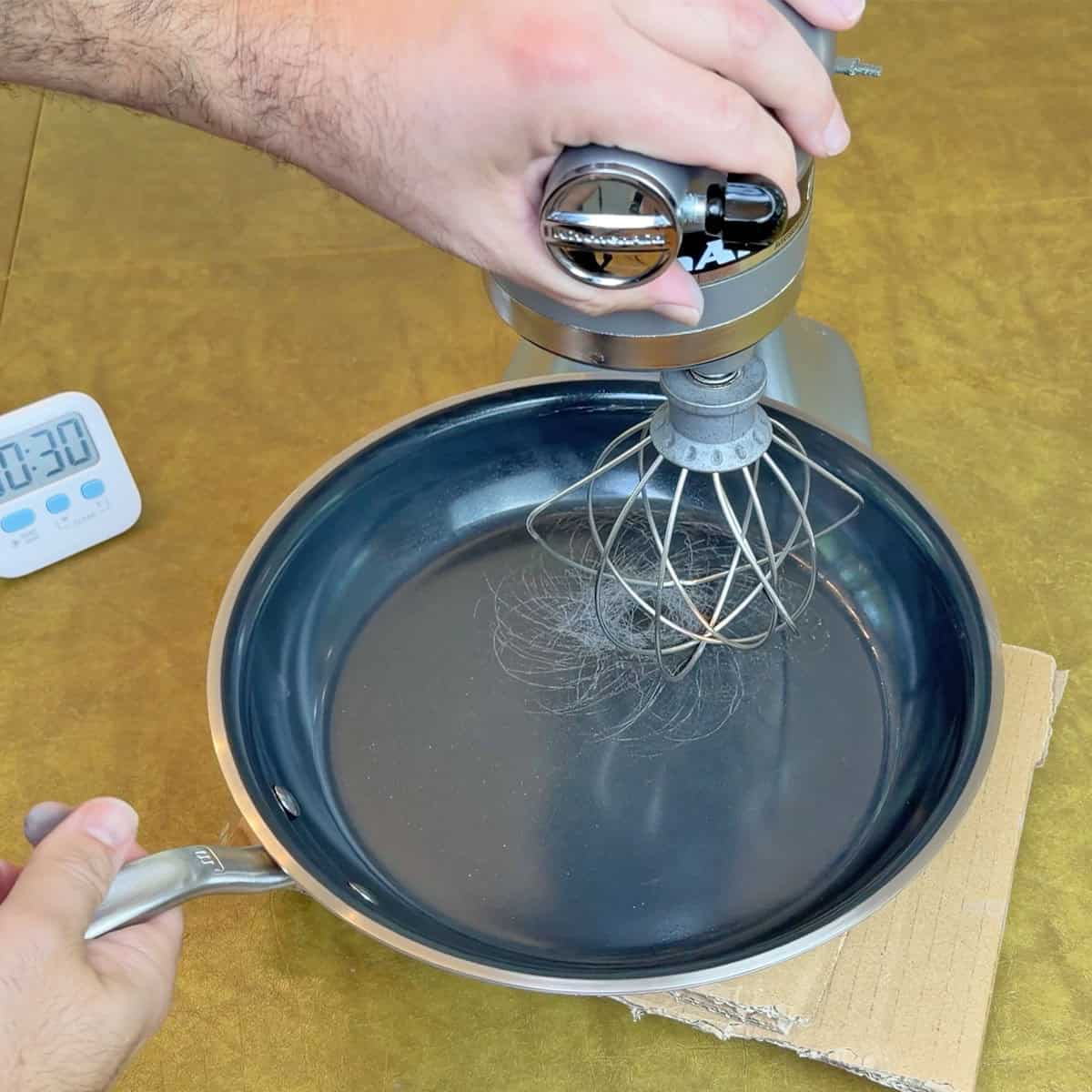
When I rubbed my finger across the surface, powder from the damaged coating came off onto my finger. Under the microscope, the scratches and gouges were even more obvious.
Under normal circumstances, I wouldn’t keep cooking with pans that were this badly scratched. But for the sake of testing, I wanted to see if the eggs would still stick.
After thoroughly cleaning each pan, I cooked another egg in each one. Surprisingly, all three slid around perfectly fine.
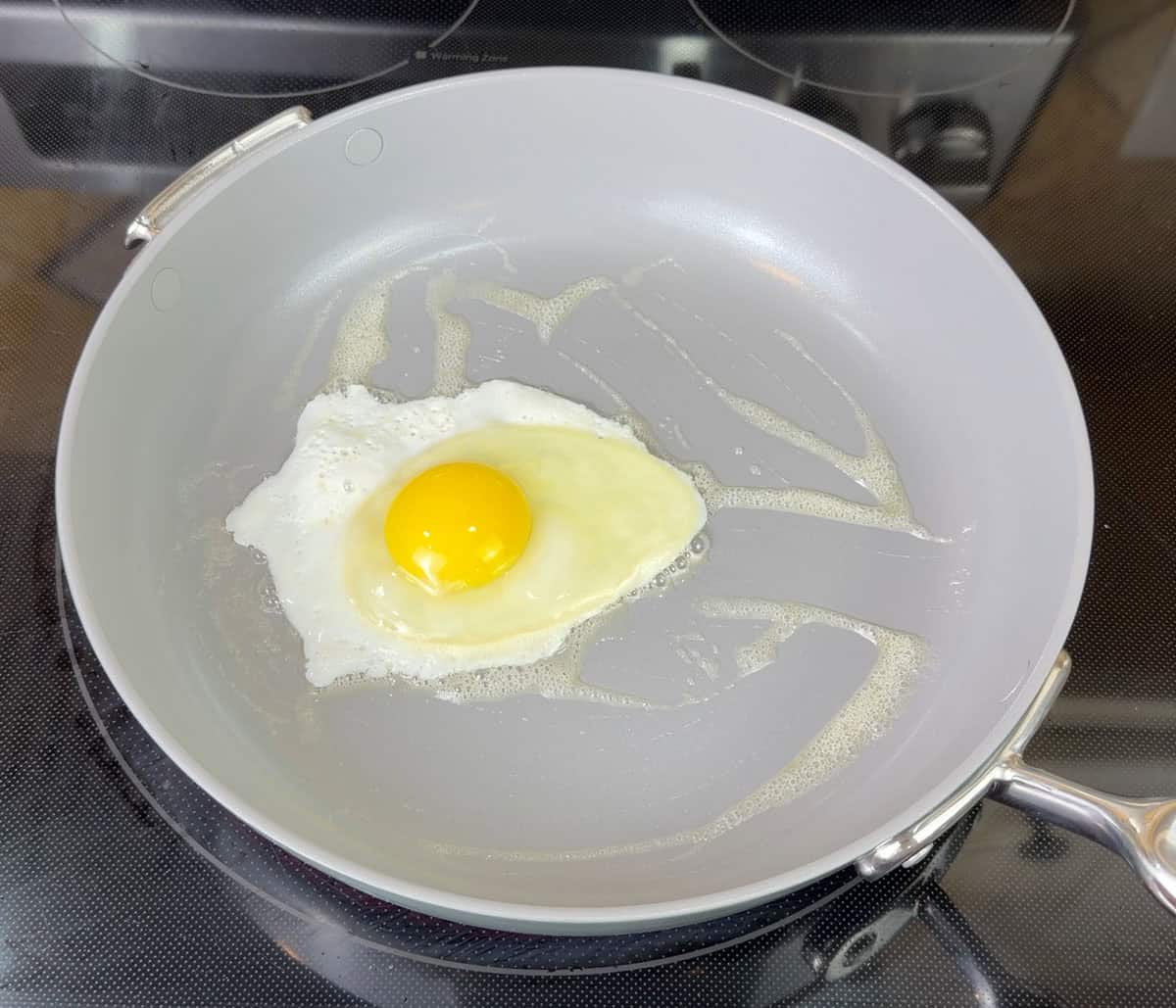
This highlights an important distinction between coating durability and nonstick performance. A pan can still release food even after its coating has suffered significant physical damage.
Pressure Washer Test
At this point, all three pans were pretty badly scratched, but the eggs were still sliding around without sticking.
So I moved on to the three extreme tests Ninja shows in its ads, starting with the pressure washer.
I took all three pans outside, leaned them against a stone wall, and blasted the cooking surfaces with a pressure washer from close range for 15 seconds each.
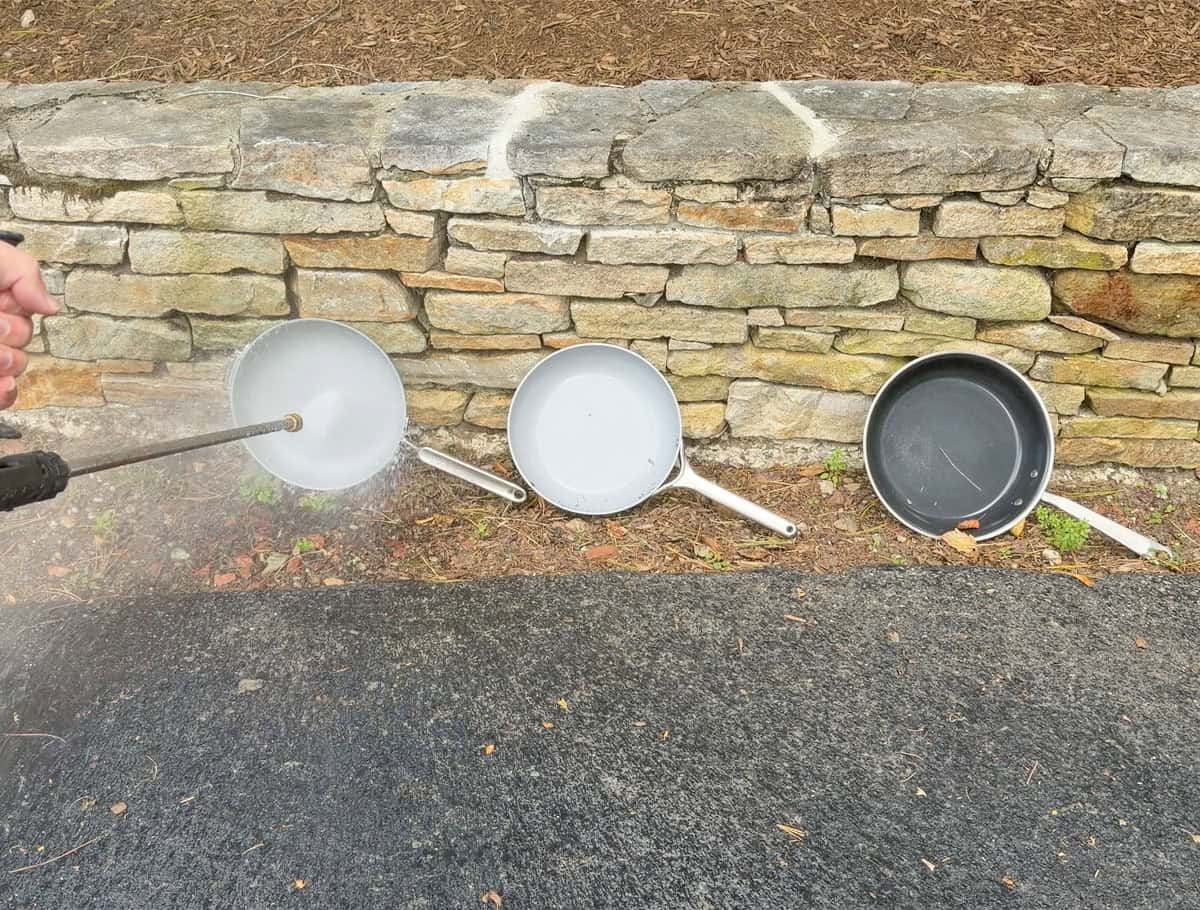
I thought the water pressure might strip off some of the coating, especially in areas that were already scratched, but that didn’t happen.
I couldn’t see any additional damage. When I cooked another egg in each pan, Ninja and Caraway still performed perfectly.
Made In had a tiny bit of egg stick to the center, but the difference was pretty minor.
Ninja passed this test, but so did Caraway. I didn’t see evidence that Ninja’s coating was more resistant to pressure washing.
Blowtorch Test
Next was the blowtorch test. I took a propane torch and aimed the flame directly at the cooking surface of each pan for 15 seconds.
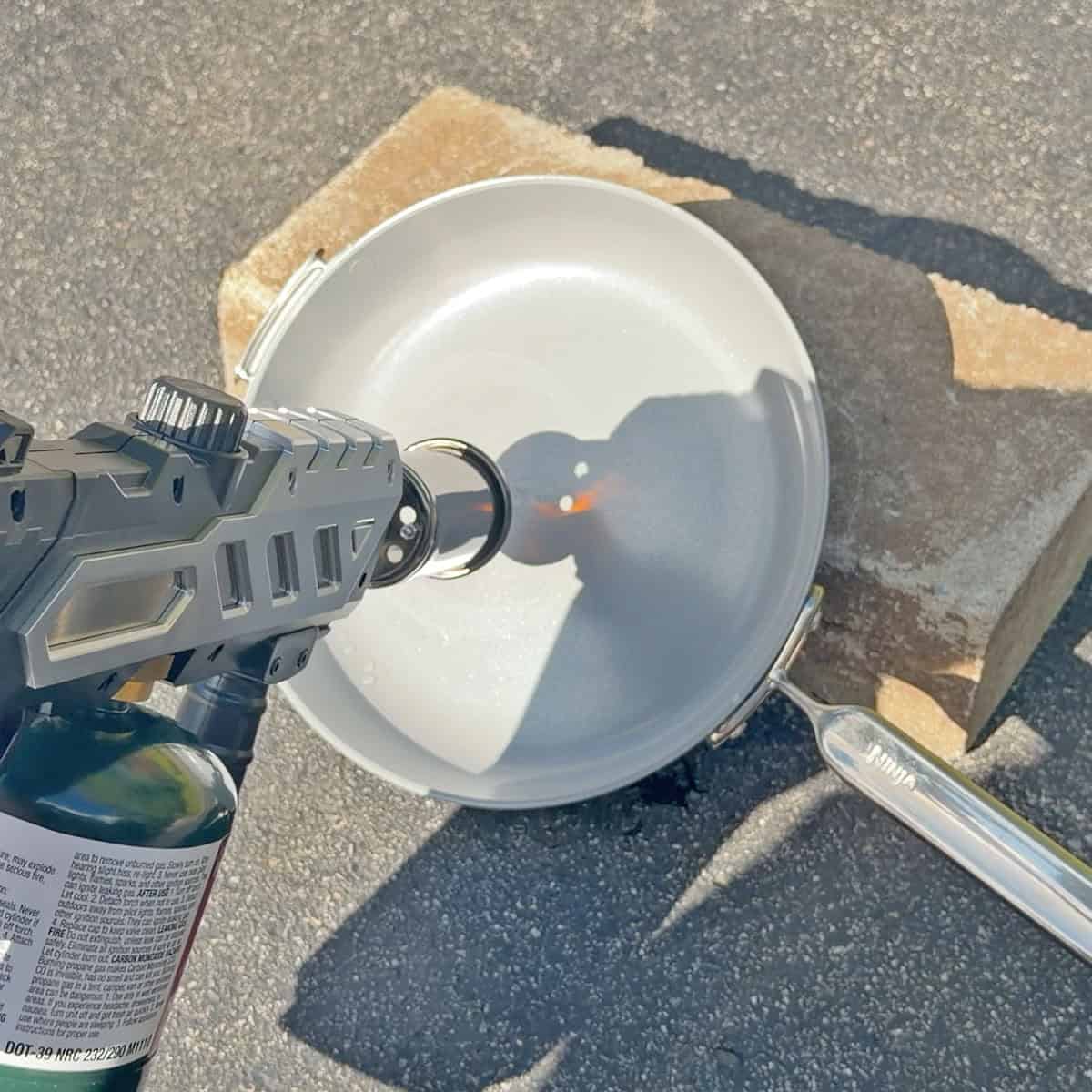
As I held the flame in place, I noticed a circular pattern forming on the coatings, almost like something on the surface was burning off.
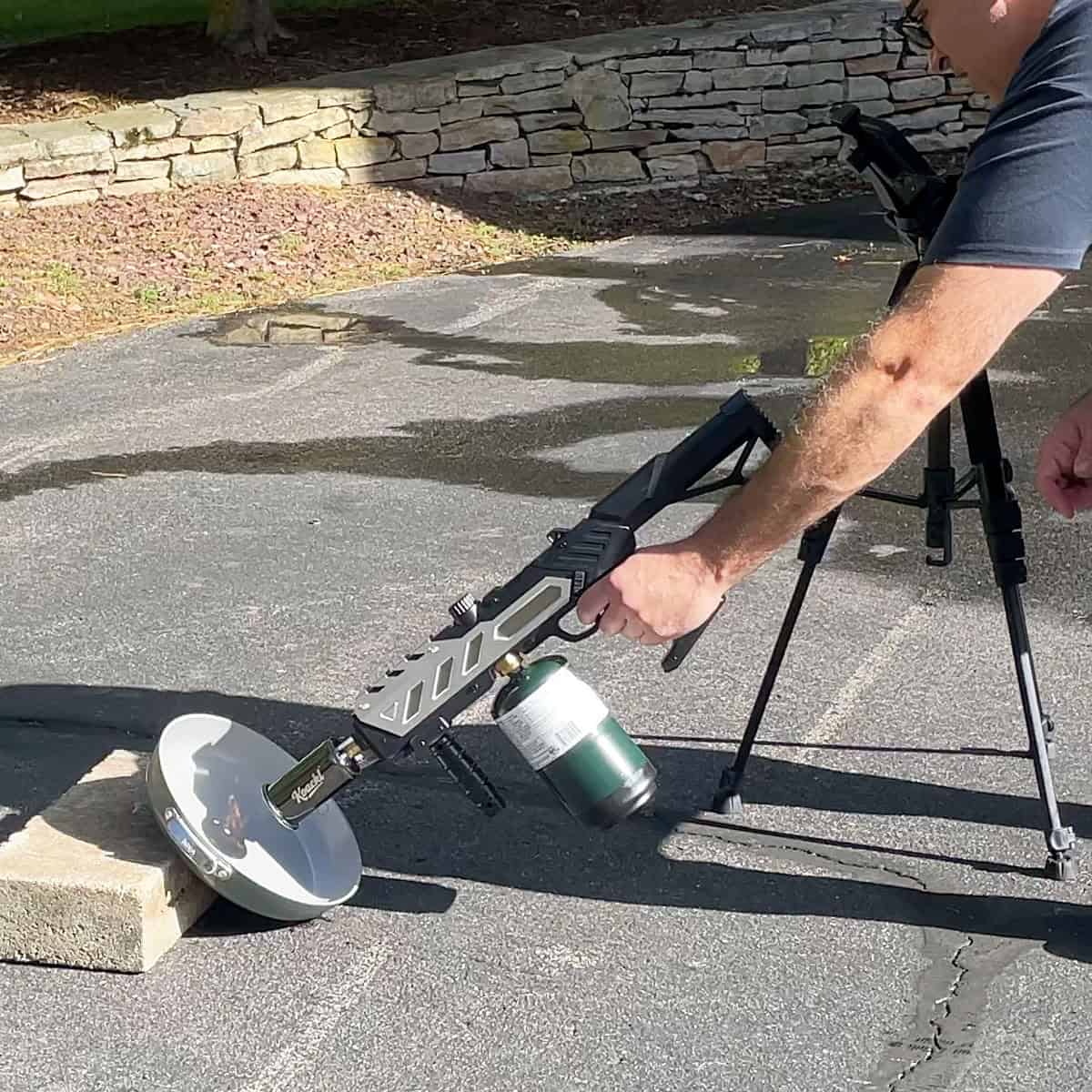
Made In had the most discoloration, but none of the pans had obvious new physical damage beyond the scratches that were already there. Under the microscope, I didn’t see any major changes either.
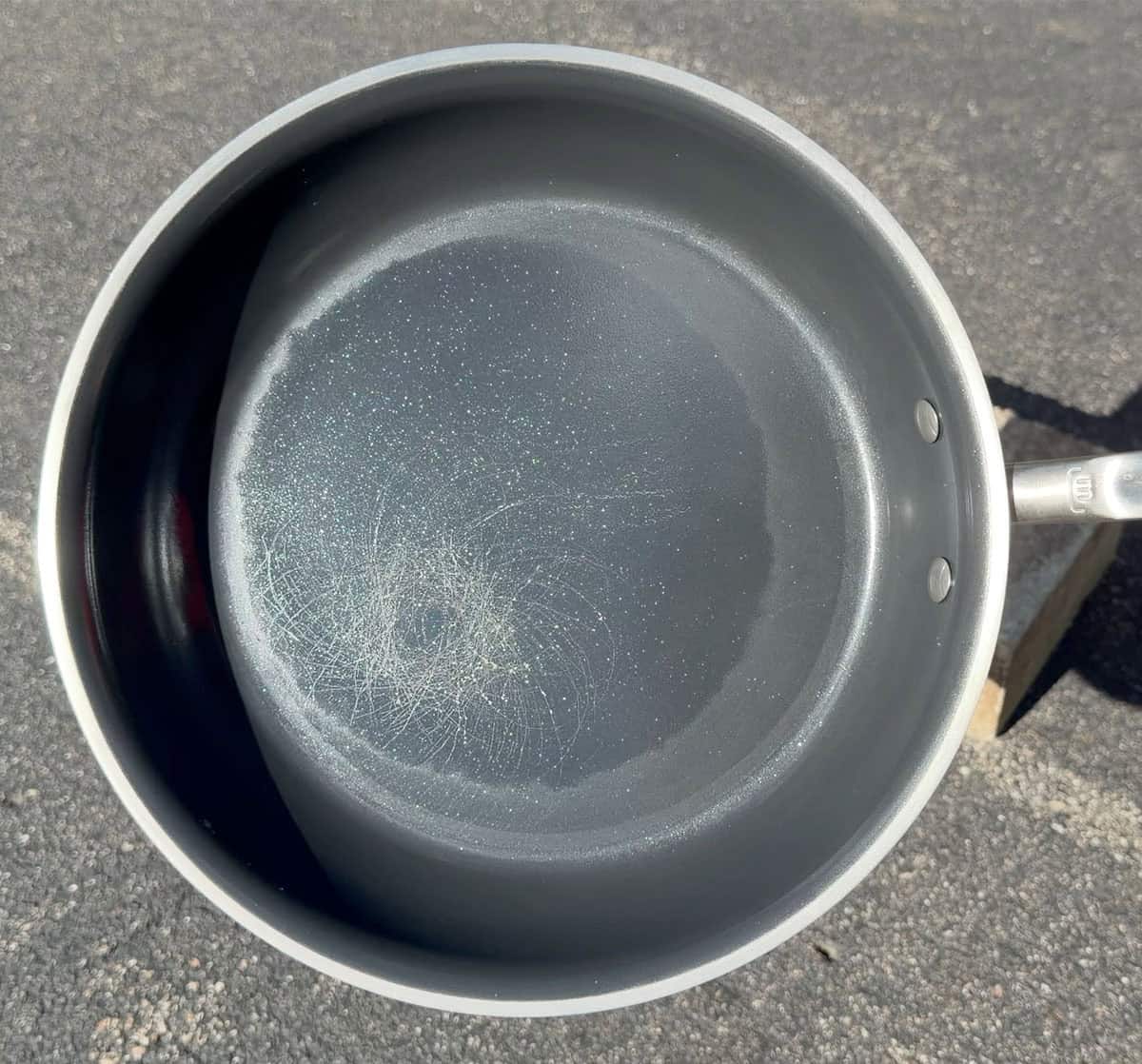
But when I cooked another egg, all three stuck a little bit. Ninja had the most sticking, while Caraway and Made In stuck in a few small spots too.None of the eggs were completely stuck, but it was definitely a change from the previous tests.
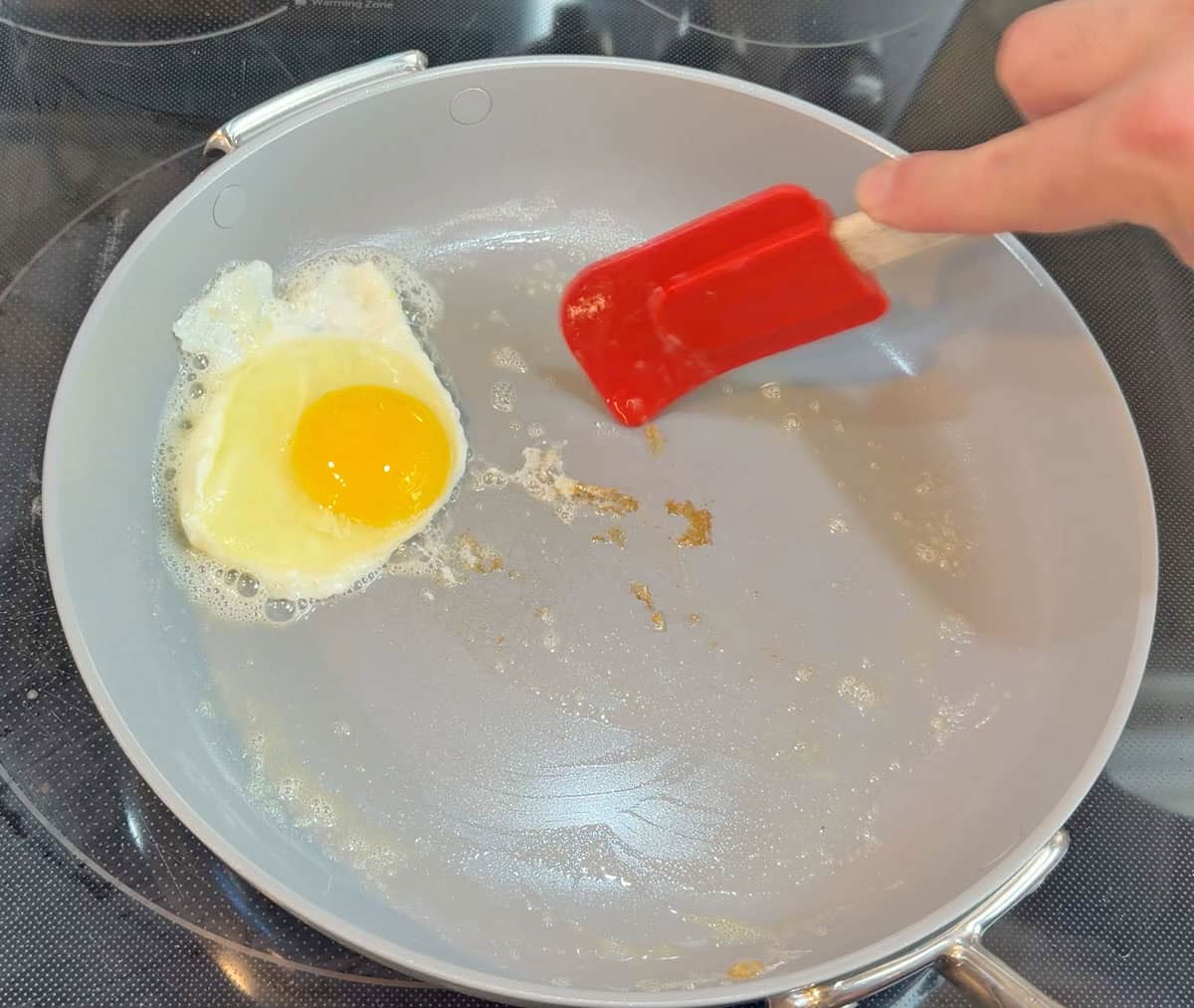
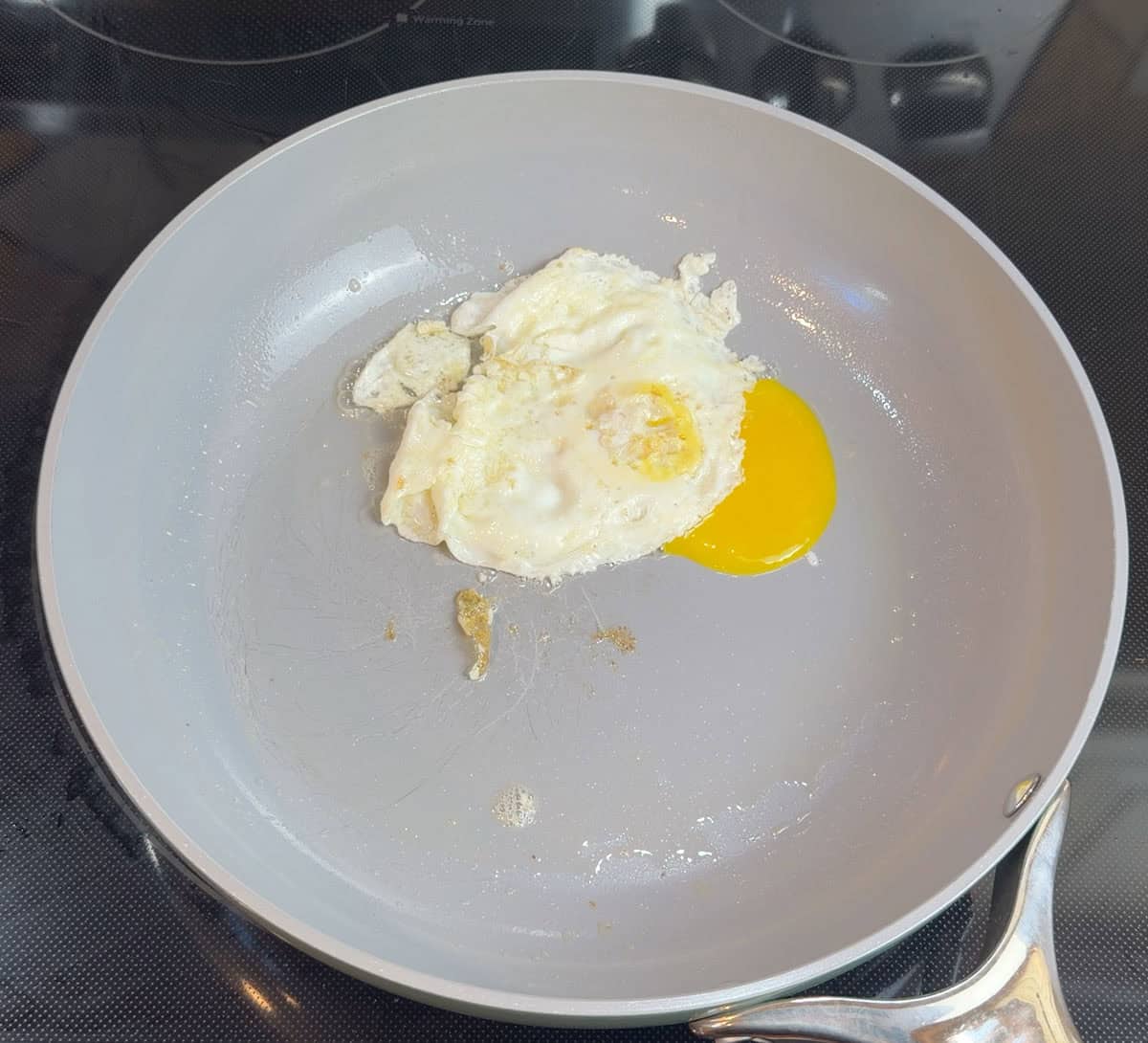
This was one of the few tests where Ninja performed slightly worse than its competitors. However, the differences were small, and a single egg test isn’t enough to establish that one coating is more heat-resistant.
I also wouldn’t recommend exposing any ceramic nonstick pan to a direct torch flame during normal use. This was an intentionally extreme test, not a demonstration of safe everyday cooking conditions.
Power Sander Test
The last test was the power sander. I used 120-grit sandpaper and sanded the cooking surface of each pan for 15 seconds.
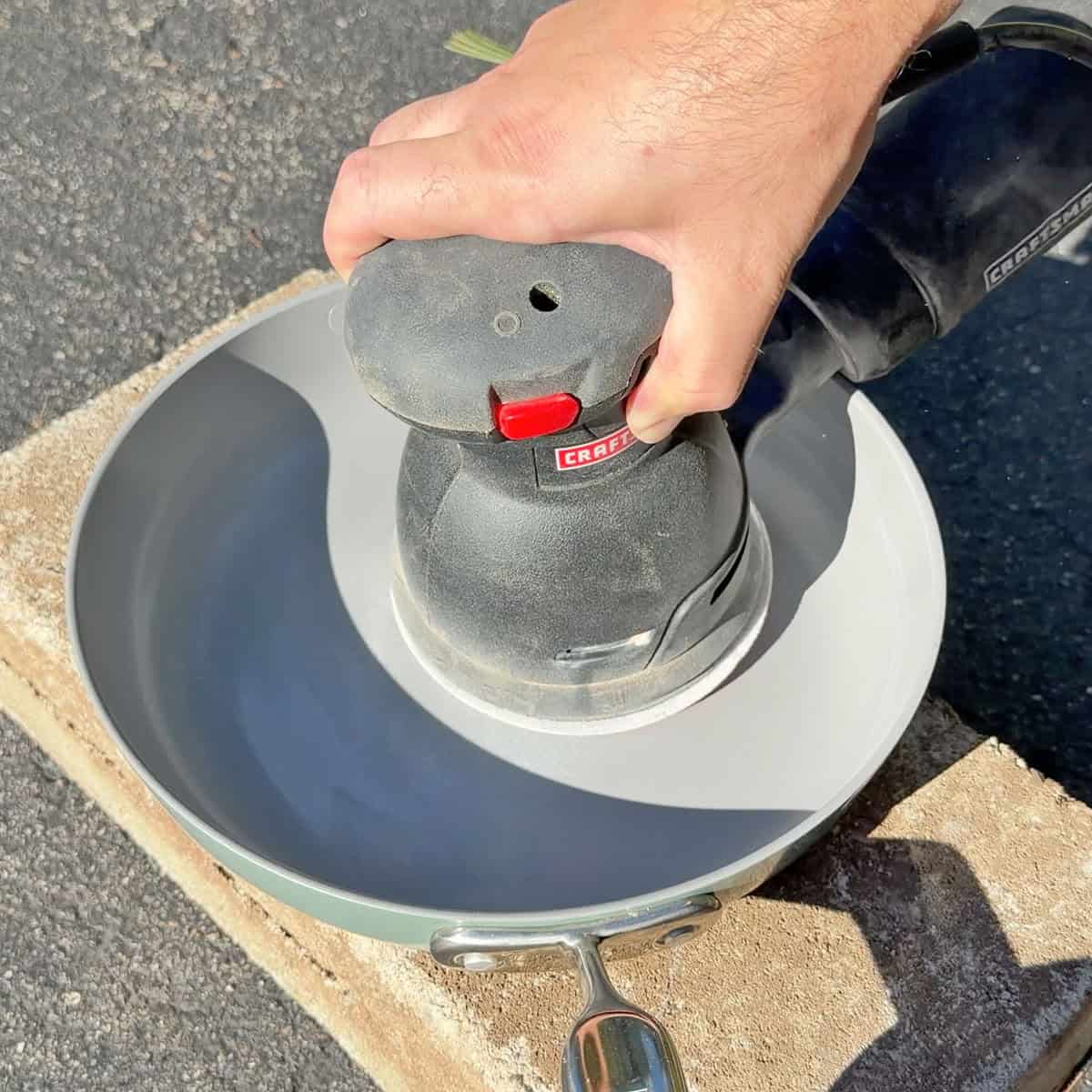
As expected, this did some serious damage. The sandpaper scraped off some of the coating, and all three pans were discolored and noticeably rougher.
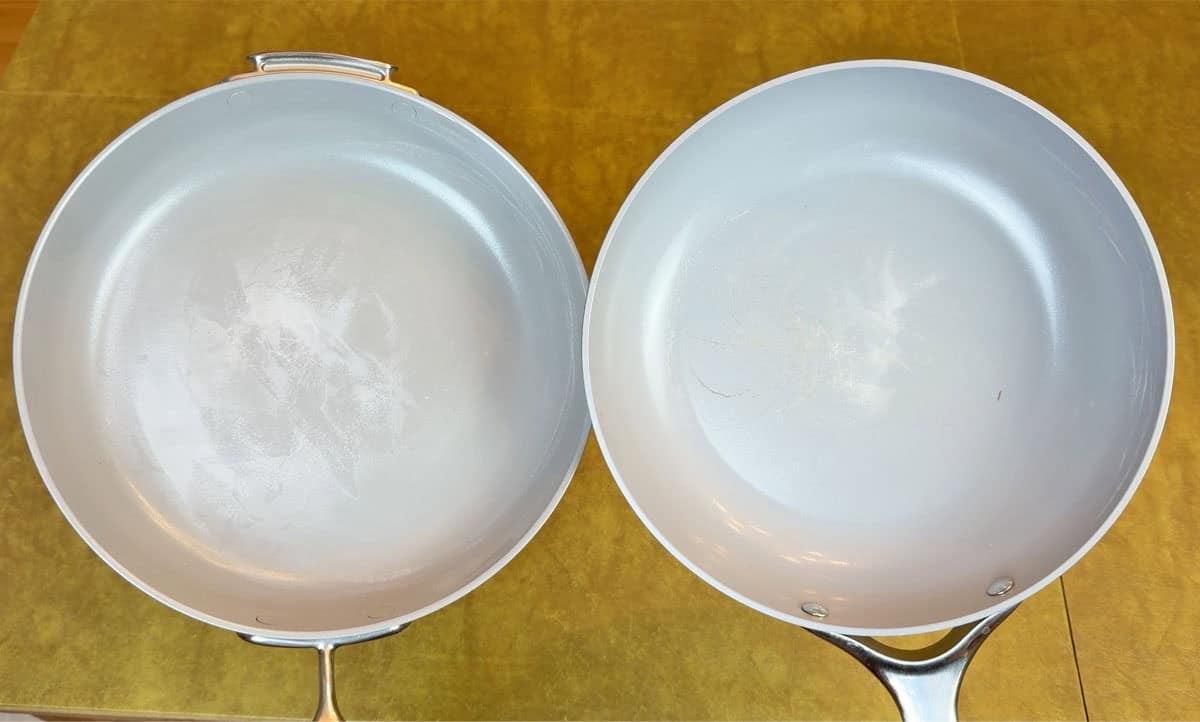
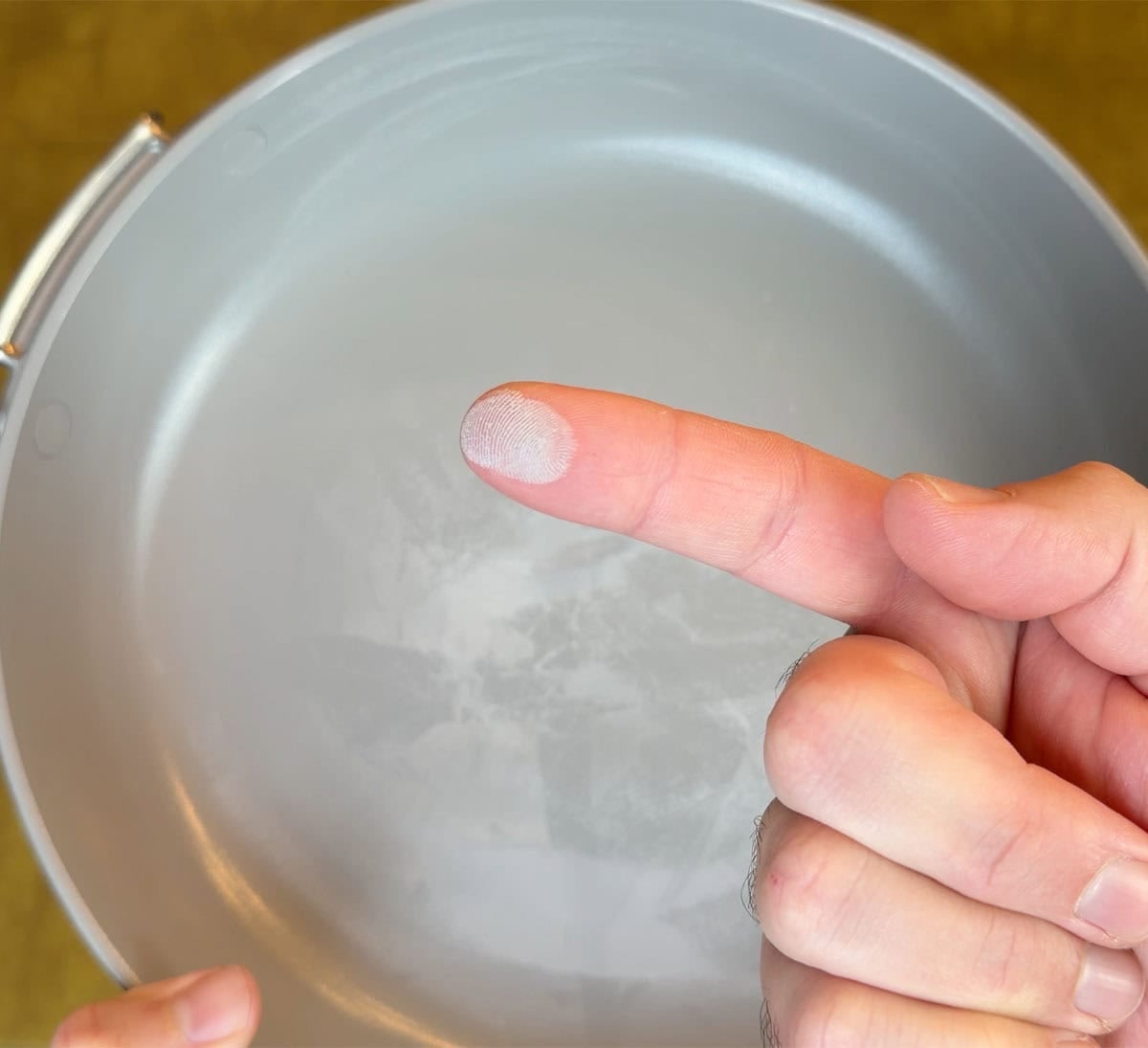
When I rubbed my finger across the sanded areas, powder from the coating came off. Under the microscope, the difference between the sanded and untouched areas was obvious.
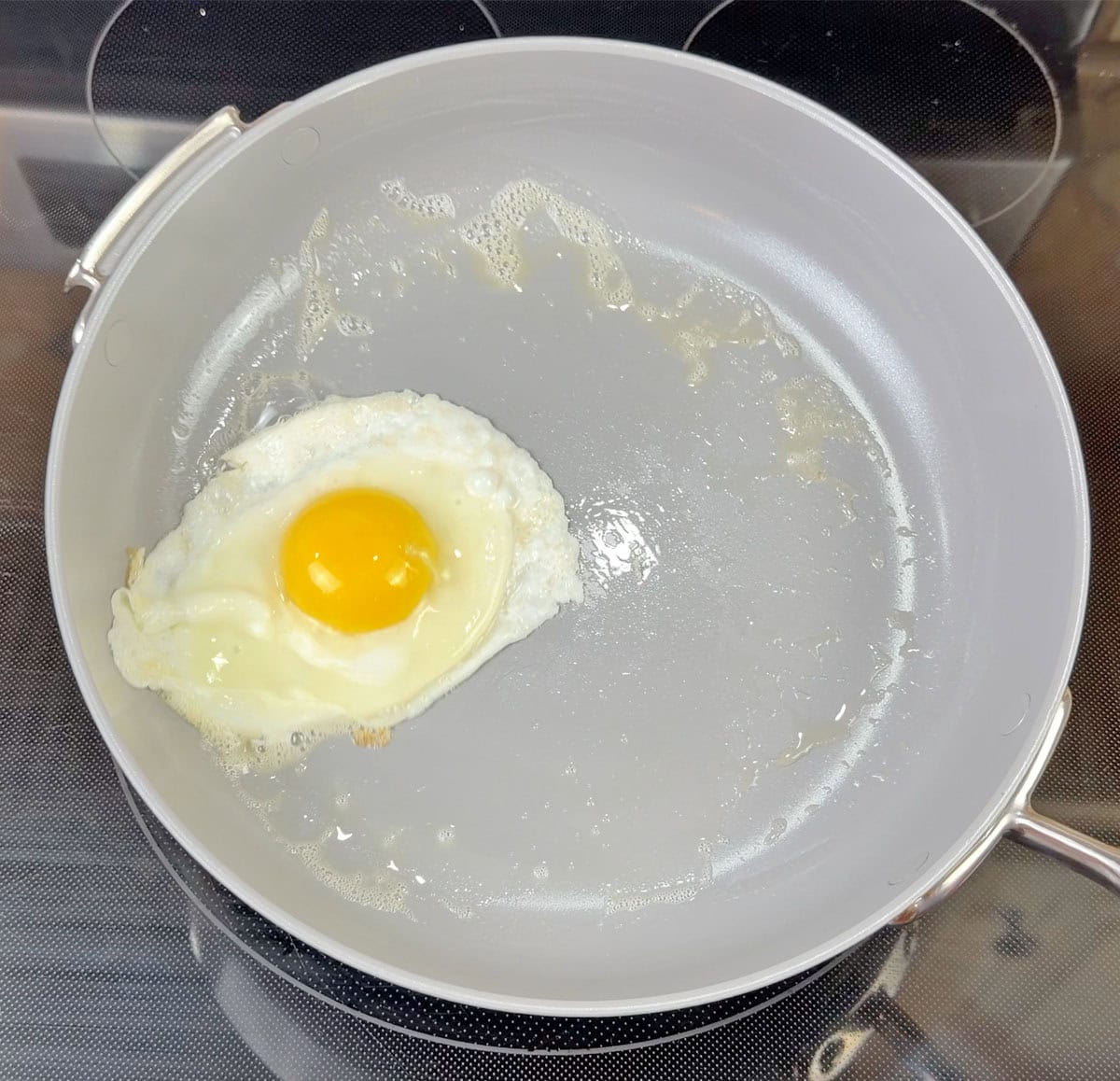
After thoroughly cleaning each pan, I cooked one final egg in each one. I was shocked to see that all three eggs slid around perfectly fine. Even after all the scratching, scraping, and sanding, the coatings were still releasing eggs.
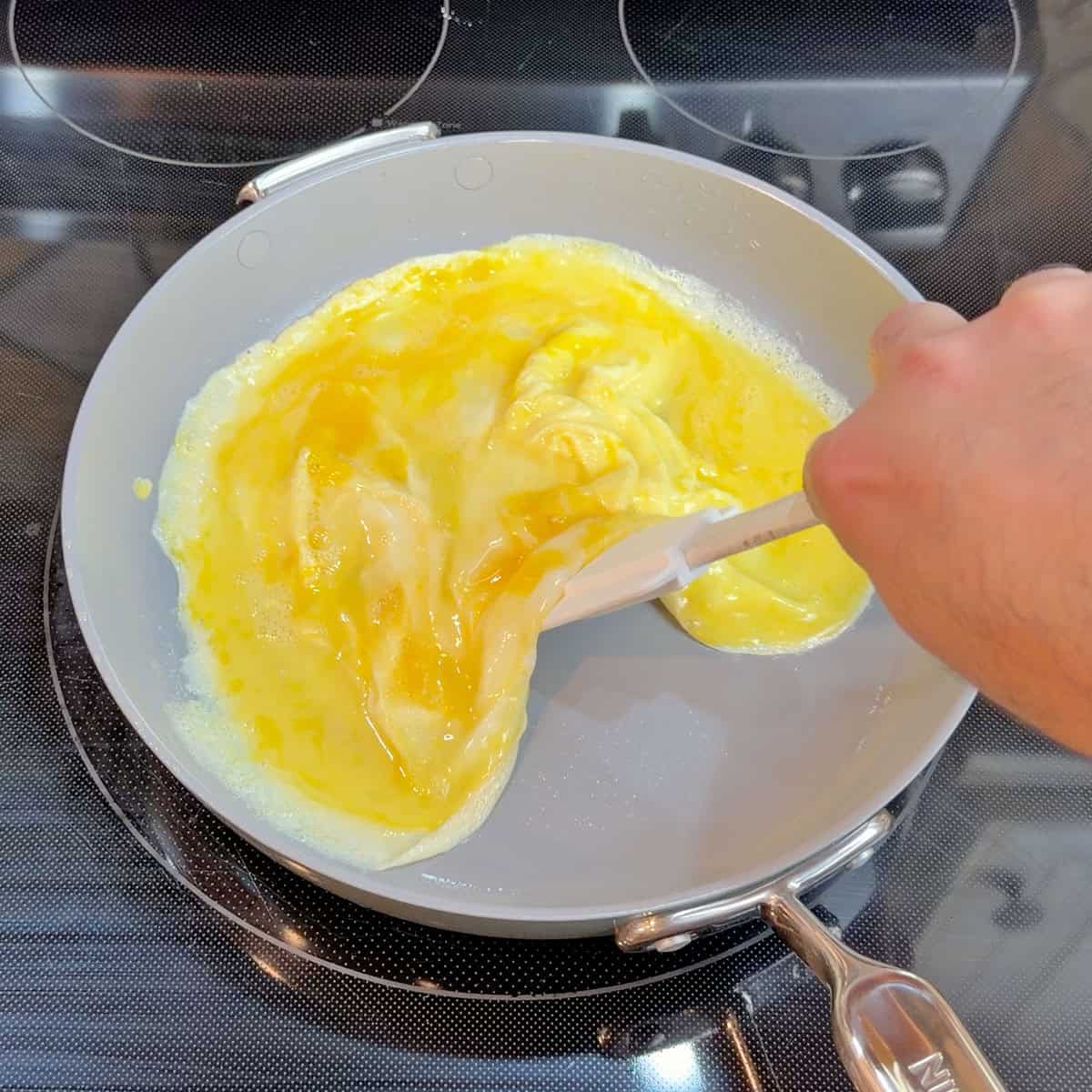
Just for good measure, I also cooked an omelette in the Ninja NeverQuit and Caraway pans. Neither one stuck at all.
Bottom Line: Is Ninja NeverQuit Worth Buying?
Ninja NeverQuit is a good ceramic nonstick pan at a fair price. So, yes, I do think it’s worth buying.
Although I couldn’t verify Ninja’s claim that its coating is twice as durable as Caraway, I was impressed that it continued releasing eggs even after the extreme abuse I put it through. However, Caraway and Made In performed similarly, so I wouldn’t buy Ninja based on its durability claims alone.
The biggest reason I recommend Ninja NeverQuit is the value. Its three-piece frying pan set is significantly less expensive than comparable options from Caraway and Made In, yet it performed just as well in most of my tests.
I also like the comfortable handle, flush rivets, induction-compatible base, and stacking system. Ninja also offers a longer coating warranty than Caraway and Made In, although that doesn’t guarantee the nonstick performance will last longer.
My general advice is to use nonstick cookware mainly for eggs and other delicate foods. For everything else, I recommend uncoated cookware like stainless steel, cast iron, and carbon steel, which can last for decades with proper care.
Ninja NeverQuit is a great option if you’re looking for relatively affordable ceramic nonstick frying pans. But if you only need one pan, I’d also consider the less expensive Tramontina Professional, which has performed extremely well in my testing.
You can check the latest price of Ninja NeverQuit on Amazon and SharkNinja.com.
Related Topics
- Ninja Crispi Review: Pros & Cons You Must Know Before Buying
- Ninja Crispi Pro Review: Worth the High Price?
- Ninja Crispi vs. Crispi Pro: Key Differences to Know Before Buying
- I Tested T-fal Infrared Air Fryers: Are They Actually Better?
- Ninja vs. Instant Pot vs. Cosori vs. Typhur vs. Chefman (Best Air Fryer?)
- HexClad vs. Ninja NeverStick Cookware: 11 Key Differences

