

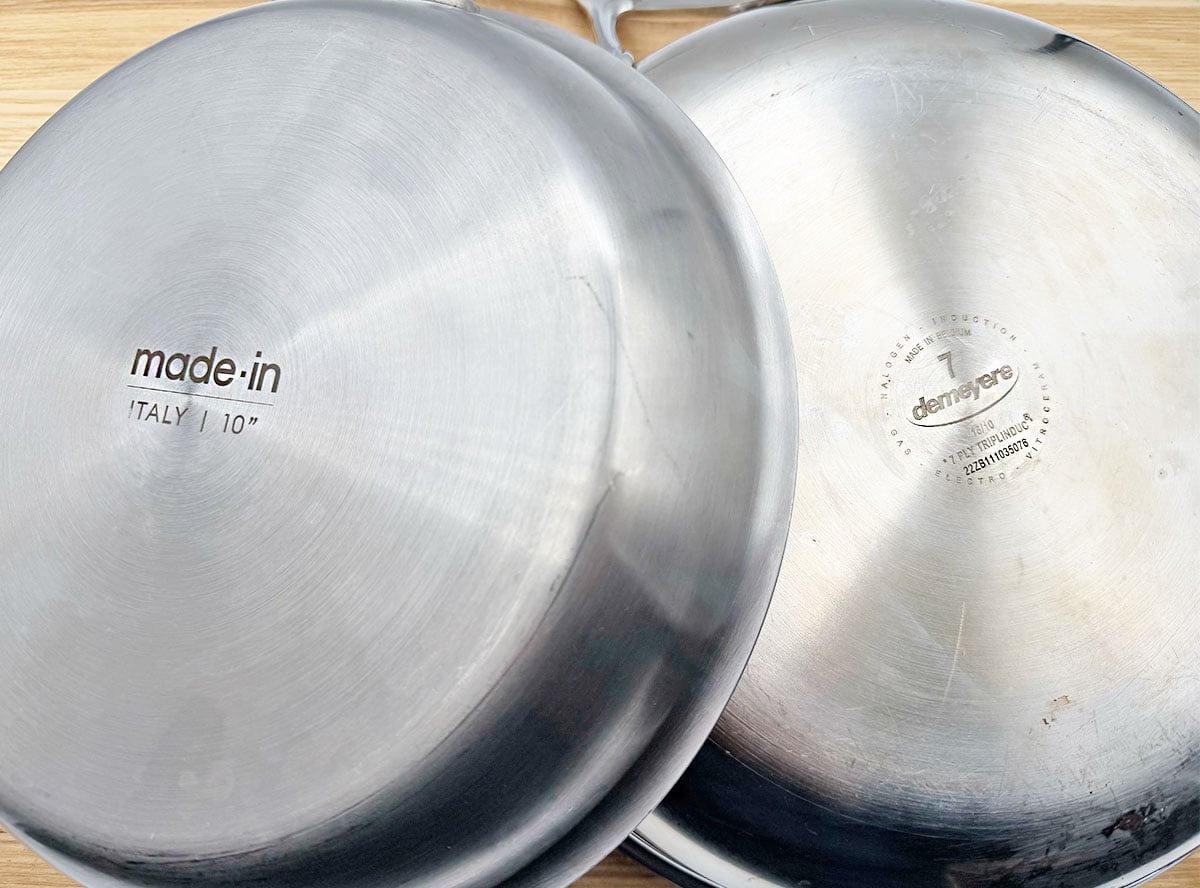
Are you shopping for premium stainless steel cookware and can’t decide between Made In and Demeyere?
I’ve been cooking with both for years and recently tested their frying pans head-to-head. In this comparison of Made In vs. Demeyere, you’ll learn how their pots and pans differ in construction, design, heating speed, heat retention, heat distribution, thickness, weight, and more.
By the end, you’ll have all the information necessary to make the right choice for your kitchen.
Key Takeaways
Demeyere Atlantis Proline is the clear winner if heat retention is your top priority. Its 7-ply, 5mm-thick construction holds temperature better than almost every stainless steel pan I’ve tested.

If you sear a lot of meat or cook on induction (it was the only pan in my 31-pan test that didn’t buzz or click on induction), Atlantis is hard to beat. The trade-off is weight and speed. At 5.2 lbs, it’s nearly as heavy as cast iron, and it was one of the slowest pans to heat up.
Demeyere Industry performs well, but the price is hard to justify over Made In. Industry’s heat conduction, thickness, and weight are all close to Made In’s numbers. The upgrades you get (welded rivetless handles, Silvinox finish) are nice, but those features aren’t worth the much higher price.

For most home cooks who don’t want to spend a fortune, Made In is the better value. It heats faster than both Demeyere pans, has the widest flat cooking surface I’ve tested (10 inches), and is oven safe to 800°F. It delivers premium performance at a price that’s much easier to stomach.

You can check the latest prices for Made In on MadeInCookware.com and Amazon, and Demeyere on Amazon and Zwilling.com.
Use the links below to navigate the comparison:
- Made In vs. Demeyere: Comparison Table
- Heat Conduction
- Heat Retention
- Heat Distribution
- Thickness and Weight
- Cooking Surface Size
- Rivets vs. Rivetless
- Exterior Finish
- Price
- Bottom Line: Should You Buy Made In or Demeyere?
Made In vs. Demeyere: Comparison Table
| Feature | Made In | Demeyere Industry | Demeyere Atlantis Proline |
|---|---|---|---|
| Price | $$$ (view price) | $$$$ (view price) | $$$$$$ (view price) |
| Construction | 5-ply fully clad | 5-ply fully clad | 7-ply fully clad |
| Materials | Stainless steel, aluminum core | Stainless steel, aluminum core | Stainless steel, aluminum core |
| Where it’s made | Italy | Belgium | Belgium |
| Diameter (rim to rim) | 13″ | 11.5″ | 12″ |
| Flat cooking surface | 10″ | 9″ | 8.7″ |
| Wall height | 2″ | 2.3″ | 2.3″ |
| Weight | 3.2 lbs | 3.2 lbs | 5.2 lbs |
| Thickness | 2.8mm | 3.0mm | 5.0mm |
| Handle length | 8.1″ | 8.5″ | 8.2″ |
| Rivets | Yes | No (welded) | No (welded) |
| Sealed rims | No | No | Yes |
| Exterior finish | Brushed | Brushed | Polished |
| Oven safe | 800°F | 500°F | 500°F |
| Induction compatible | Yes | Yes | Yes |
| Warranty | Lifetime | Lifetime | Lifetime |
Heat Conduction
I ran a series of controlled tests to compare heating performance across Made In and Demeyere pans. Demeyere doesn’t make a 12-inch frying pan (they offer 11-inch and 12.5-inch), so I tested the 11-inch versions of both the Atlantis Proline and Industry collections. For Made In, I used the 12-inch 5-ply frying pan.
To get clean measurements, I put each pan on the same burner at the same heat setting and measured the surface temperature in the center after one and two minutes. I ran this same test on 31 of the highest-rated stainless steel frying pans on the market. Made In was one of the fastest. Demeyere Atlantis was one of the slowest.
After one minute, Made In hit 415°F in the center. Industry reached 421°F. Atlantis only hit 304°F. After two minutes, Made In climbed to 529°F, Industry to 496°F, and Atlantis to 350°F.
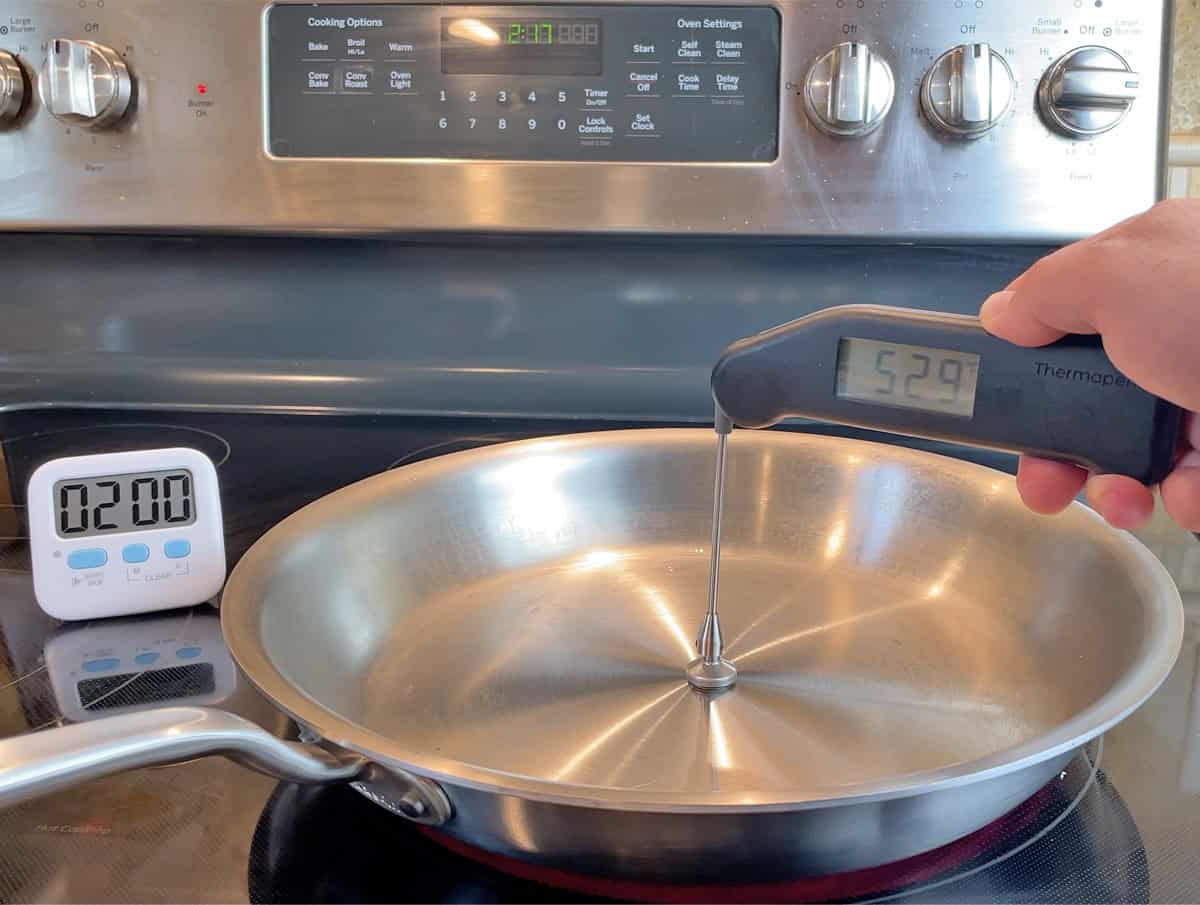
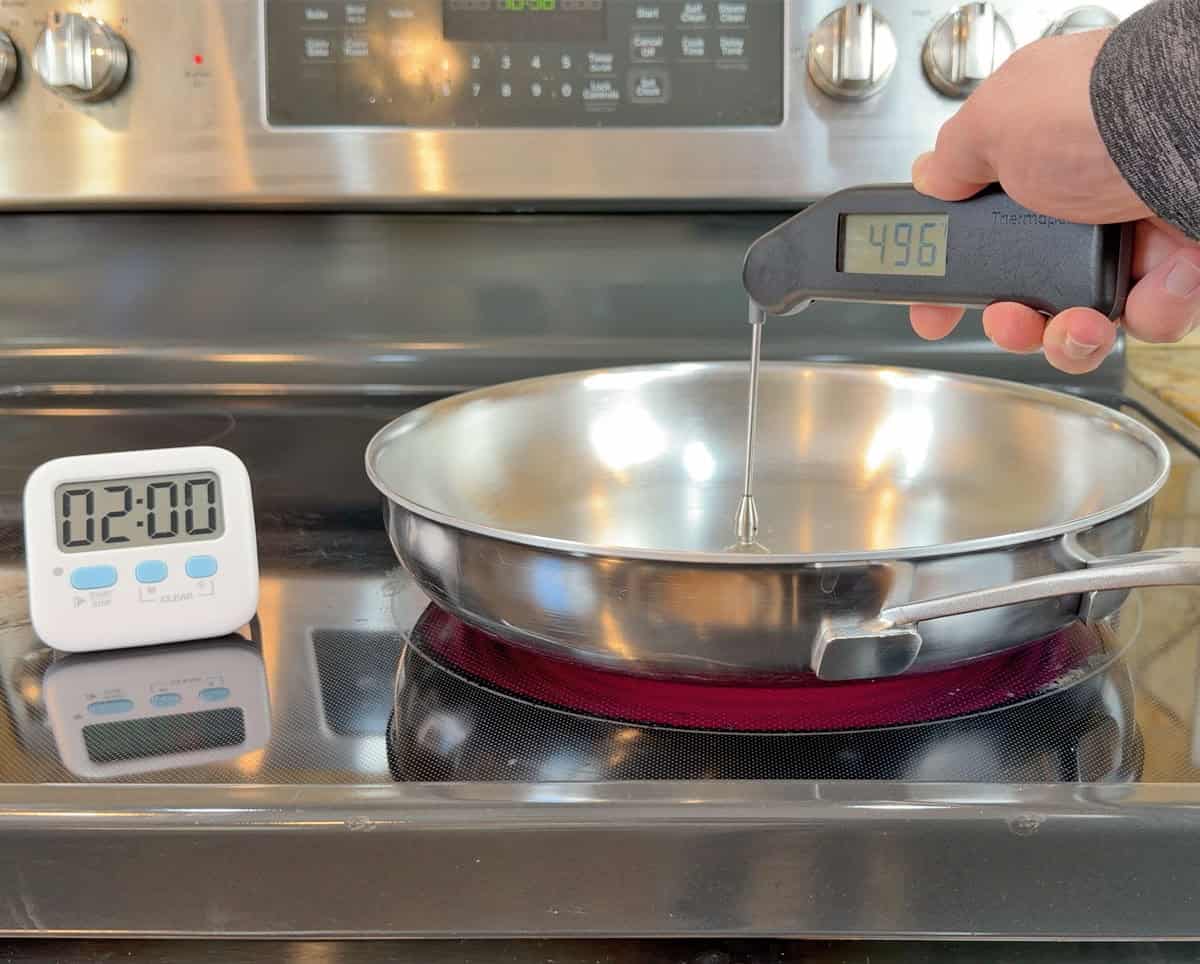
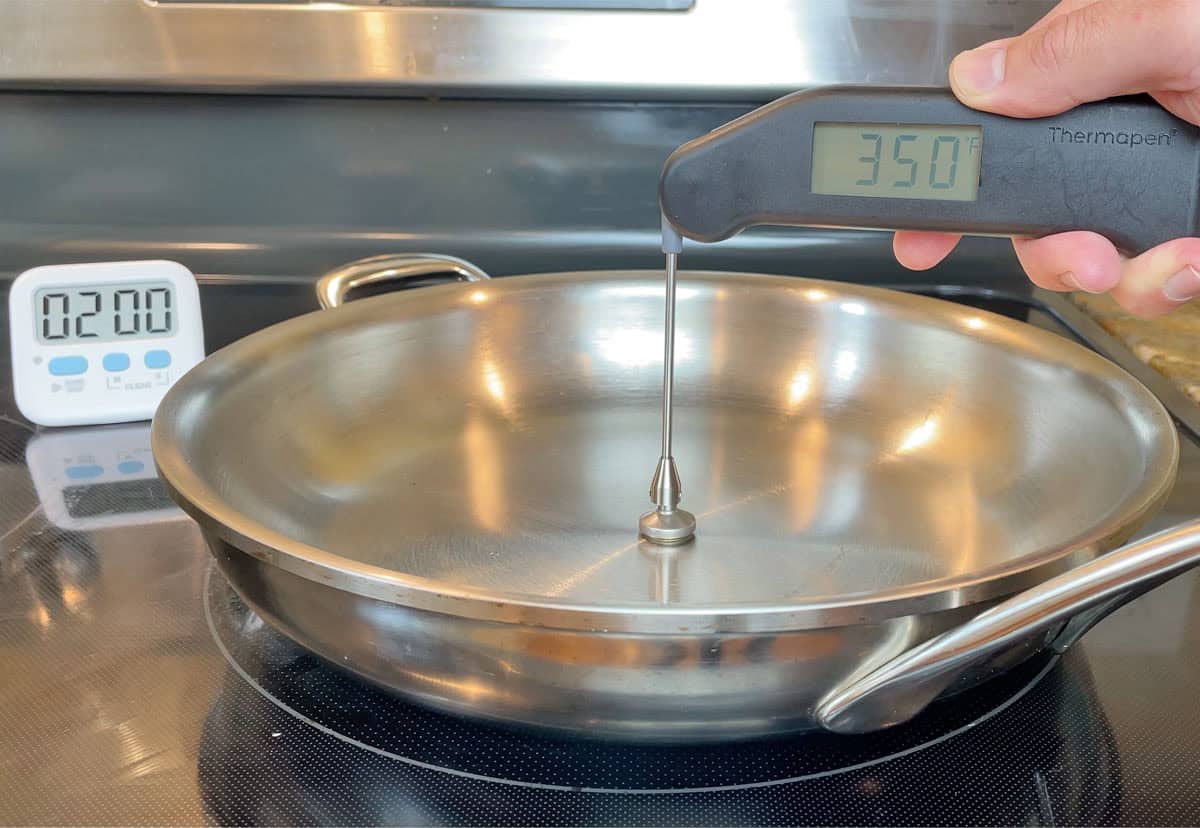
The difference is massive. Made In ranked 2nd overall in heat conduction out of 31 pans. Demeyere Industry ranked 8th. Demeyere Atlantis ranked 30th.
If you’re the type of cook who preheats a pan for a minute or two before adding oil and food, Made In gets you cooking faster. Demeyere Atlantis needs more patience, sometimes several minutes of preheating before it’s ready.
Heat Retention
Heat retention is where Demeyere Atlantis separates itself from nearly every other stainless steel pan. I heated each pan to 400°F, removed it from the heat, and measured the surface temperature after five minutes.
Atlantis Proline held at 166°F, which ranked 2nd out of 31 pans. Demeyere Industry came in at 132°F (14th). Made In measured 123°F (25th).
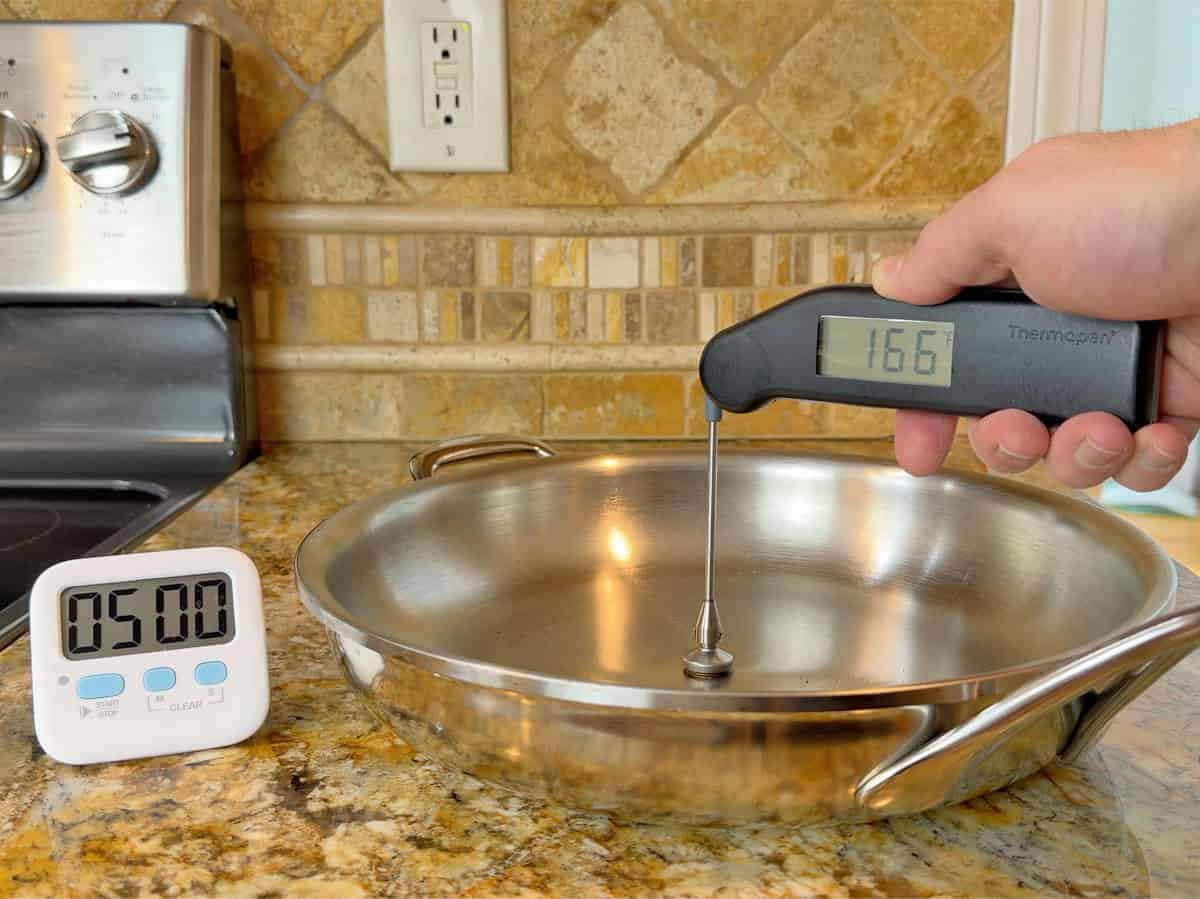
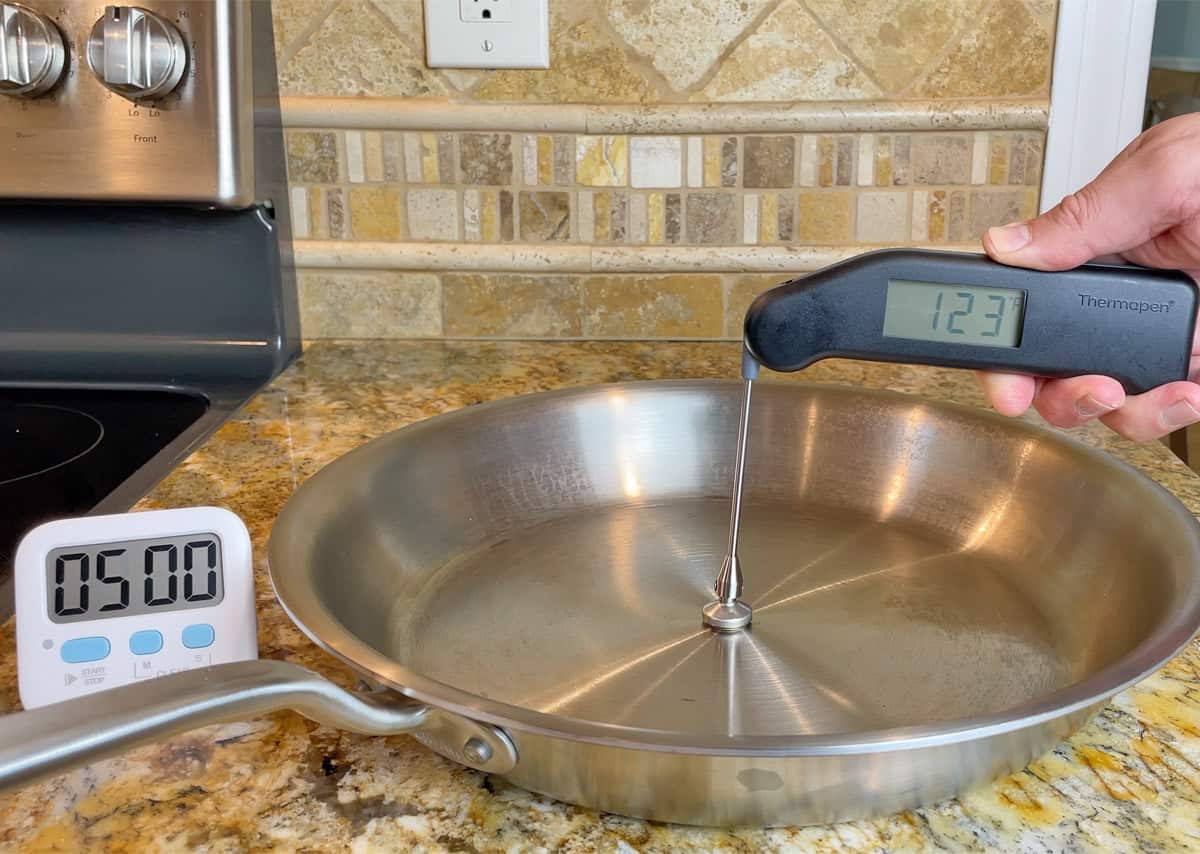
That 43-degree gap between Atlantis and Made In is significant. When you place a cold steak or piece of fish on a hot pan, Atlantis will maintain its sear temperature much better. Made In will recover quickly because it heats fast, but there’s a brief dip that Atlantis avoids entirely.

If heat retention is your priority (and you do a lot of searing), Atlantis is the clear winner.
Heat Distribution
Even heating means fewer hot spots, which leads to more consistent browning and less burnt food.
To see how Made In and Demeyere compare in this category, I measured the surface temperature at the outer edge of each pan after two minutes and compared it to the center temperature to see how evenly the heat spreads.
Made In had a 125°F difference between the center and the outer edge, which ranked it 26th out of 31 pans for heat distribution. Demeyere Industry had a 63°F gap (14th), and Atlantis had a 61°F gap (12th).
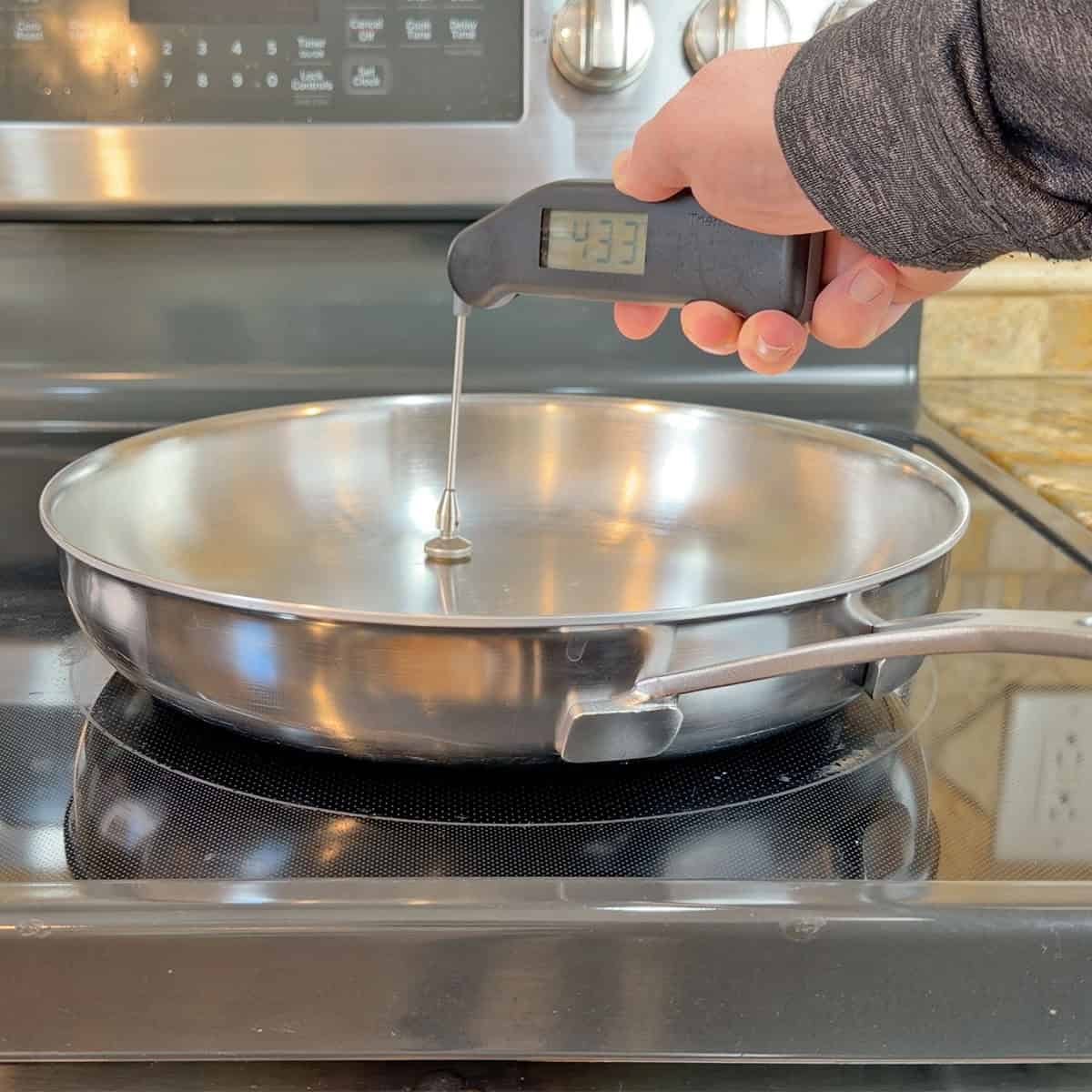
Both Demeyere pans distribute heat more evenly than Made In. This is consistent with what I’ve observed while cooking. Demeyere produces more uniform browning across the entire cooking surface, while Made In can run a little hotter in the center if you don’t give it enough time to preheat.
Thickness and Weight
Demeyere Atlantis Proline is 5.0mm thick, which makes it the second thickest pan I’ve ever tested. Made In measures 2.8mm. Demeyere Industry is in between at 3.0mm.
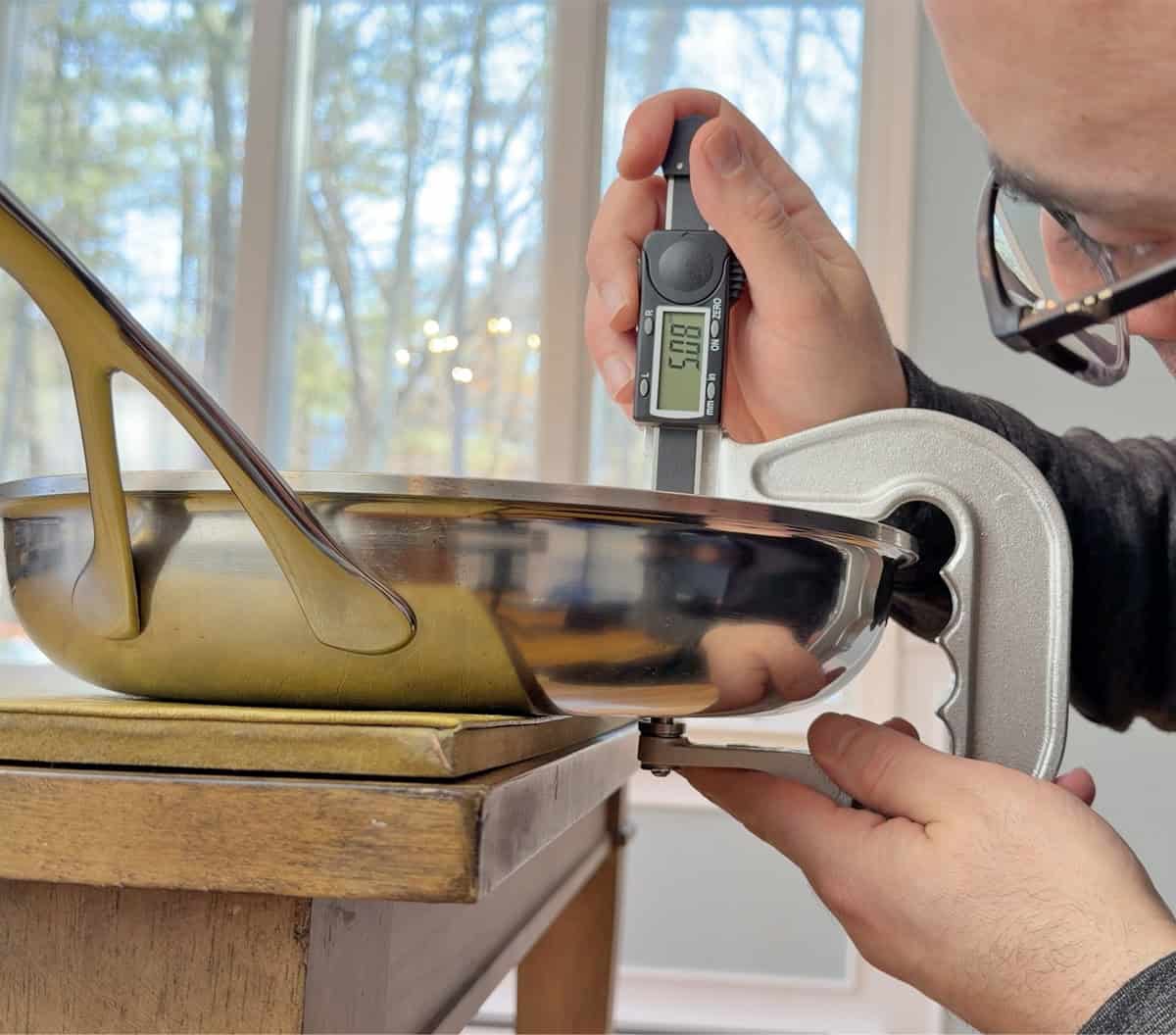
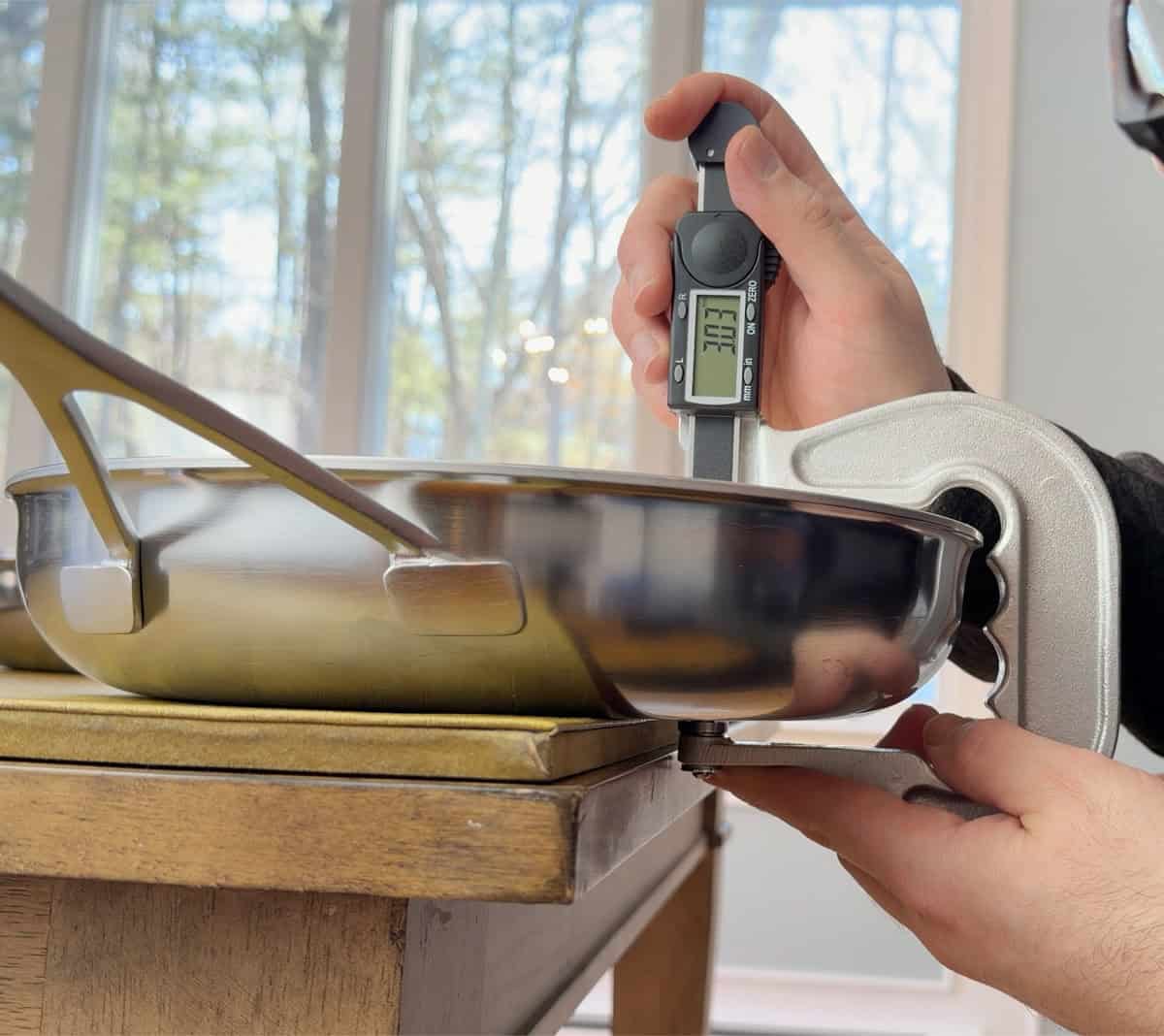
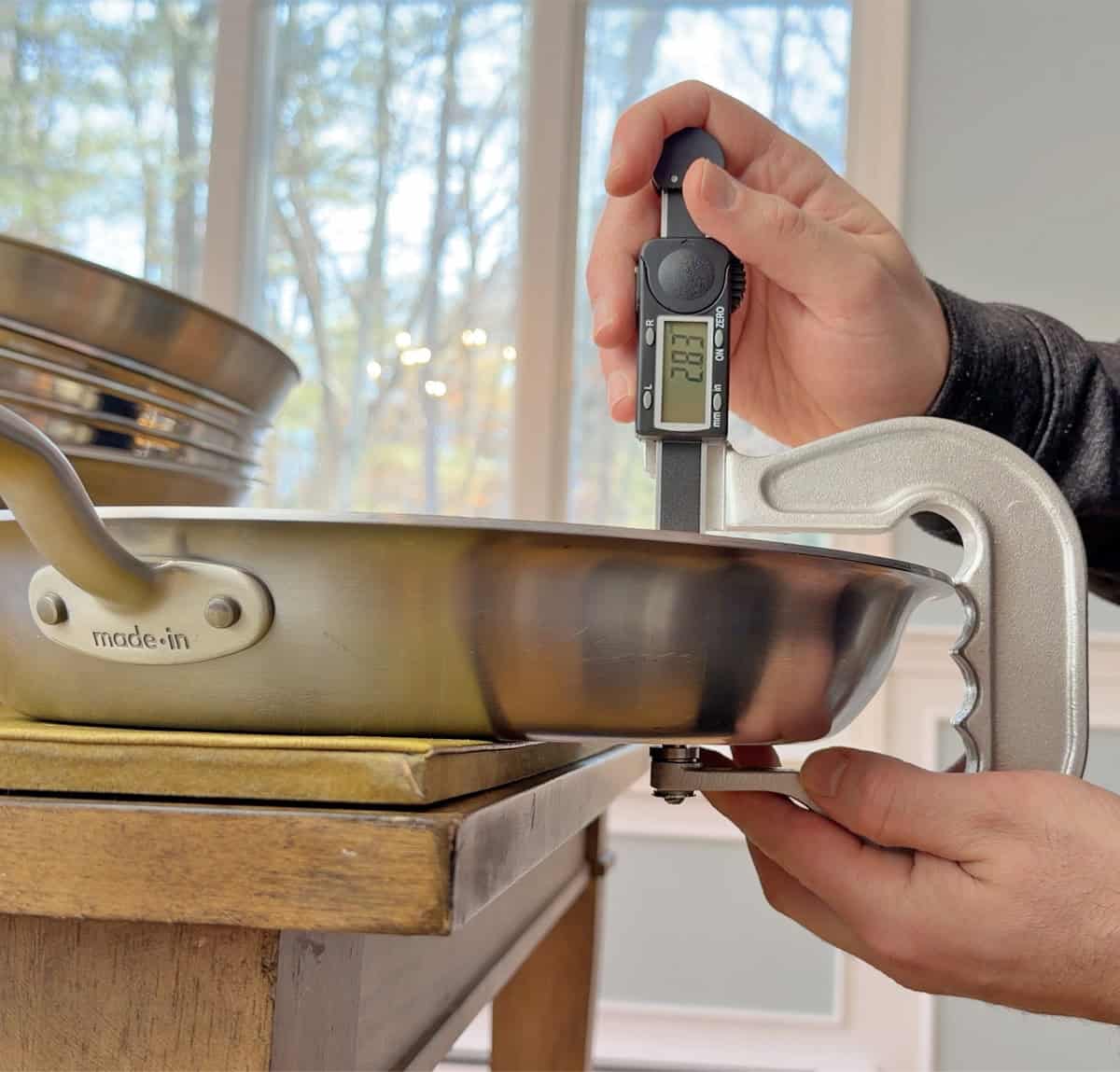
That thickness difference explains most of the performance differences above. Thicker pans retain heat better but take longer to heat up. Thinner pans respond faster but lose heat more quickly.
Weight follows the same pattern. Atlantis Proline weighs 5.2 lbs, which is nearly cast iron territory. Made In and Industry both weigh 3.2 lbs.
If you’re someone who likes to pick up your pan with one hand, toss vegetables, or flip eggs with a wrist flick, the Atlantis Proline is going to be a challenge. Most people will need two hands, and it even has a helper handle for that reason. Made In and Industry are both manageable with one hand for most cooks.
Cooking Surface Size
Made In has the widest flat cooking surface of any pan I’ve tested at 10 inches. Demeyere Industry measures 9 inches, and Atlantis Proline comes in at 8.7 inches.

That’s a 15% larger cooking area on Made In compared to Atlantis, which is a noticeable difference when you’re searing multiple chicken breasts or cooking for a family. More flat surface means less overcrowding, which means better browning.
Made In also measures 13 inches rim to rim (despite being listed as a 12-inch pan), thanks to its wide flared rims. Atlantis is 12 inches and Industry is 11.5 inches.
Rivets vs. Rivetless
Both Demeyere collections (Atlantis and Industry) have welded, rivetless interiors. The cooking surface is completely smooth with nothing for food or grease to get stuck on. Cleaning is noticeably easier.

Made In uses traditional rivets. They’re secure and well-built, but over time, grease and grime can accumulate around the rivet heads. It’s not a dealbreaker, but it does require a bit more effort to keep clean.

One thing to know about Demeyere’s welded handles: they can break. After a few months of using my Atlantis Proline, the handle snapped off. When I examined it, I found the handle was attached by four small pegs, not fully welded as I expected. Demeyere replaced the pan, and I haven’t had any issues since. I also found other customers reporting the same problem. It’s rare, but it’s something to be aware of.

Exterior Finish
Made In has a brushed stainless steel exterior. It hides fingerprints well and gives the pan a modern look.
Demeyere Atlantis has a polished exterior, while Industry has a brushed finish similar to Made In. But both Demeyere collections have something Made In doesn’t: Silvinox. This is a patented electrochemical surface treatment that removes iron and impurities from the steel’s surface, keeping the pan looking new even after years of use. It resists fingerprints, discoloration, and smudging better than untreated stainless steel.

Because of this, my Demeyere pans still look close to new, while my Made In pan shows more wear on the exterior. It’s cosmetic, not functional, but if you care about how your cookware looks over time, Demeyere has an edge here.
Price
Made In’s 12-inch frying pan costs $139 on MadeInCookware.com. On Zwilling.com, Demeyere Industry is $220, and Demeyere Atlantis Proline is $340.
The Atlantis premium is easier to justify than Industry’s. You’re paying $200 more than Made In, but you’re getting a fundamentally different pan: 7-ply construction, 5mm thickness, the best heat retention I’ve tested, and induction performance that no other stainless steel pan matched.
Industry is harder to recommend at $220. Its heat conduction, thickness, and weight are all similar to Made In’s numbers. The rivetless interior and Silvinox finish are nice perks, but an $80 gap over Made In is steep for what amounts to incremental improvements.
Bottom Line: Should You Buy Made In or Demeyere?
If you want the best heat retention in stainless steel, the best induction performance (zero buzzing), and a pan built to last decades, Demeyere Atlantis Proline is worth the investment.
If you want strong all-around performance without the heavy price tag, Made In gets you 90% of the way there at a much lower price. Demeyere Industry is a solid pan, but it sits in an awkward middle ground where the upgrades over Made In don’t match the price difference.
Learn more and check the latest prices for Made In on MadeInCookware.com and Amazon, and Demeyere on Amazon and Zwilling.com.
Related Topics
- Made In Cookware Review After 3+ Years (With Test Results)
- Is Demeyere Cookware Worth the High Price? An In-Depth Review
- All-Clad vs. Made In: The Ultimate Cookware Comparison
- Made In Carbon Steel Cookware (In-Depth Review)
- Demeyere vs. All-Clad: How Does Their Cookware Compare?
- Fissler vs. All-Clad vs. Demeyere: Which Cookware Is the Best?
- Hestan vs. Demeyere Cookware: 9 Differences
- Demeyere Atlantis vs. Industry: 9 Key Differences
- Made In vs. Hestan: Which Stainless Steel Cookware Is Better?
- Are Made In Sheet Pans Worth Buying? (Review & Test Results)
- Best Stovetop Griddle? I Tested Made In, Lodge, HexClad, Hestan
- Made In vs. Caraway Cookware: 11 Key Differences
- Calphalon vs. Made In: Which Cookware and Knives Are Better?
- Made In vs. Le Creuset: Which Dutch Ovens Are Better?
- Made In vs. Misen: How Do Their Kitchen Knives and Cookware Compare?
- Made In vs. Wusthof: Which Kitchen Knives Are Better?

