

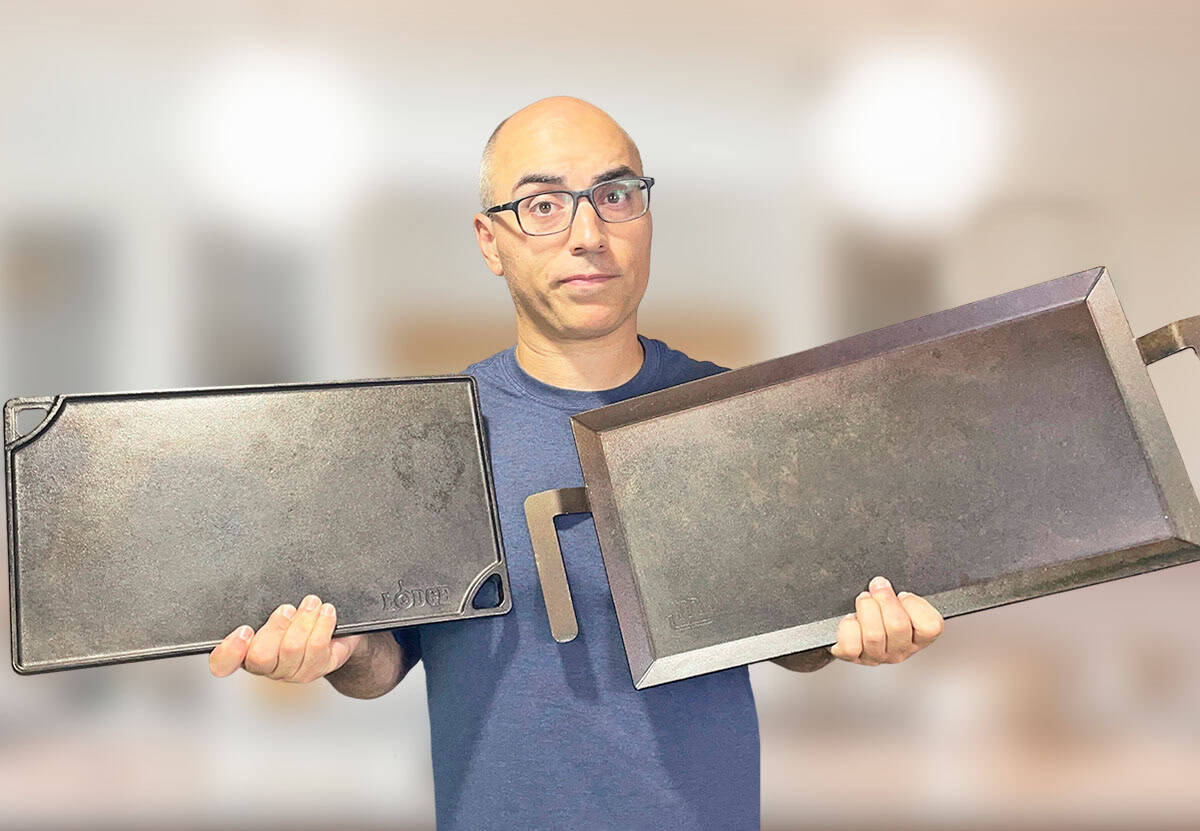
Are stovetop griddles worth buying or are they just another bulky pan taking up space in your kitchen? And if you do get one, which brand is the best?
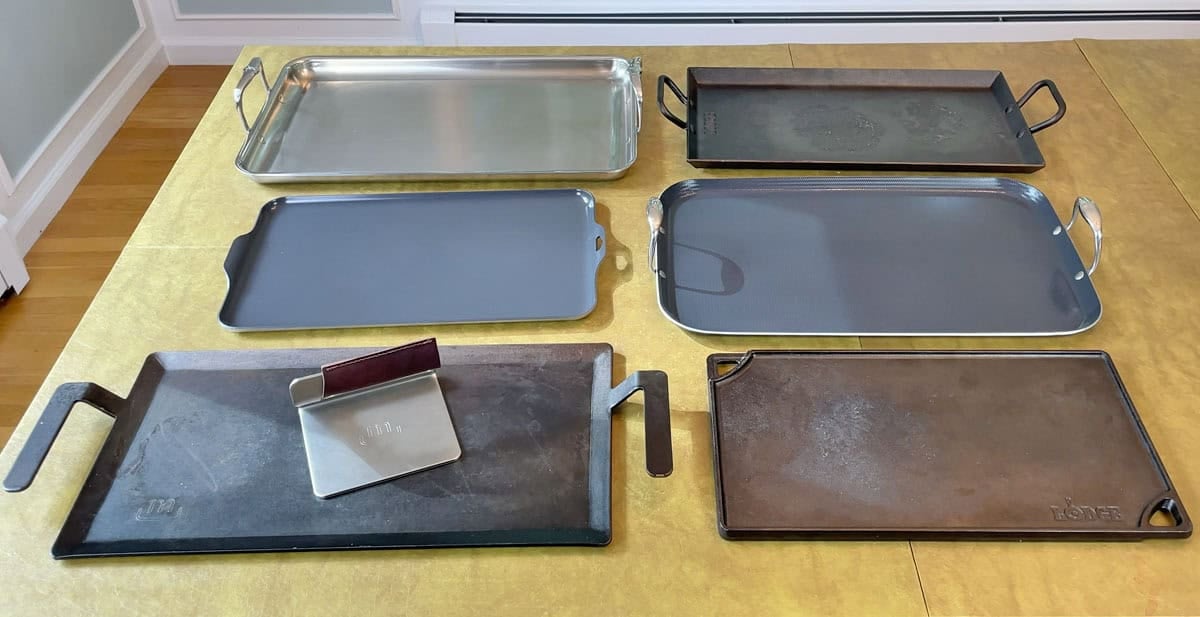
To answer these questions, I tested six of the highest rated griddles on the market, including Made In, Lodge Cast Iron, Lodge Carbon Steel, Nordic Ware, HexClad, and Hestan.
Besides cooking eggs, pancakes, fish, chicken, steak, sandwiches, and vegetables, I put each griddle through a series of controlled tests.
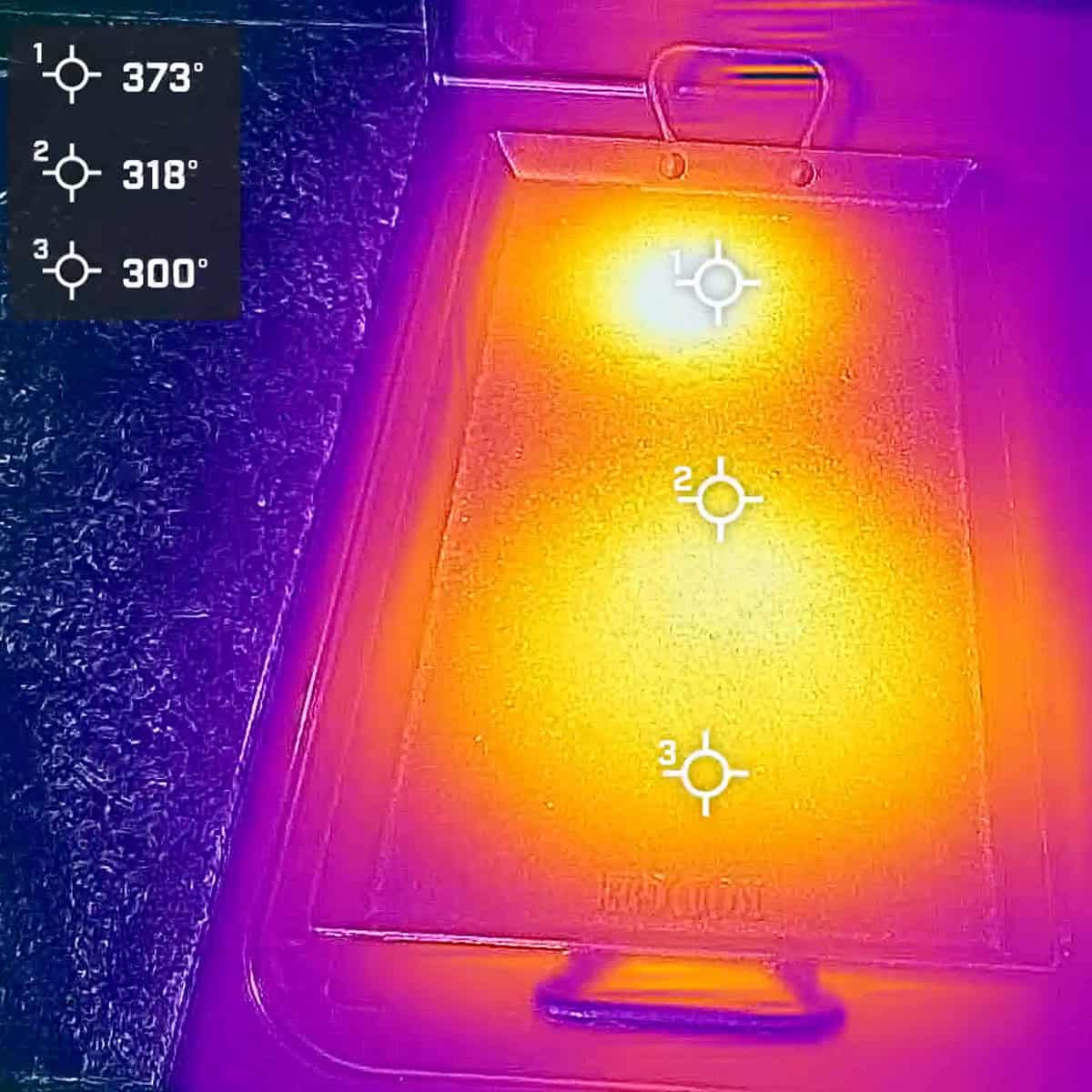
I compared how fast and evenly they heat by preheating each one for 4 minutes on medium and measuring multiple areas of the pan with a thermal camera and surface thermometer.
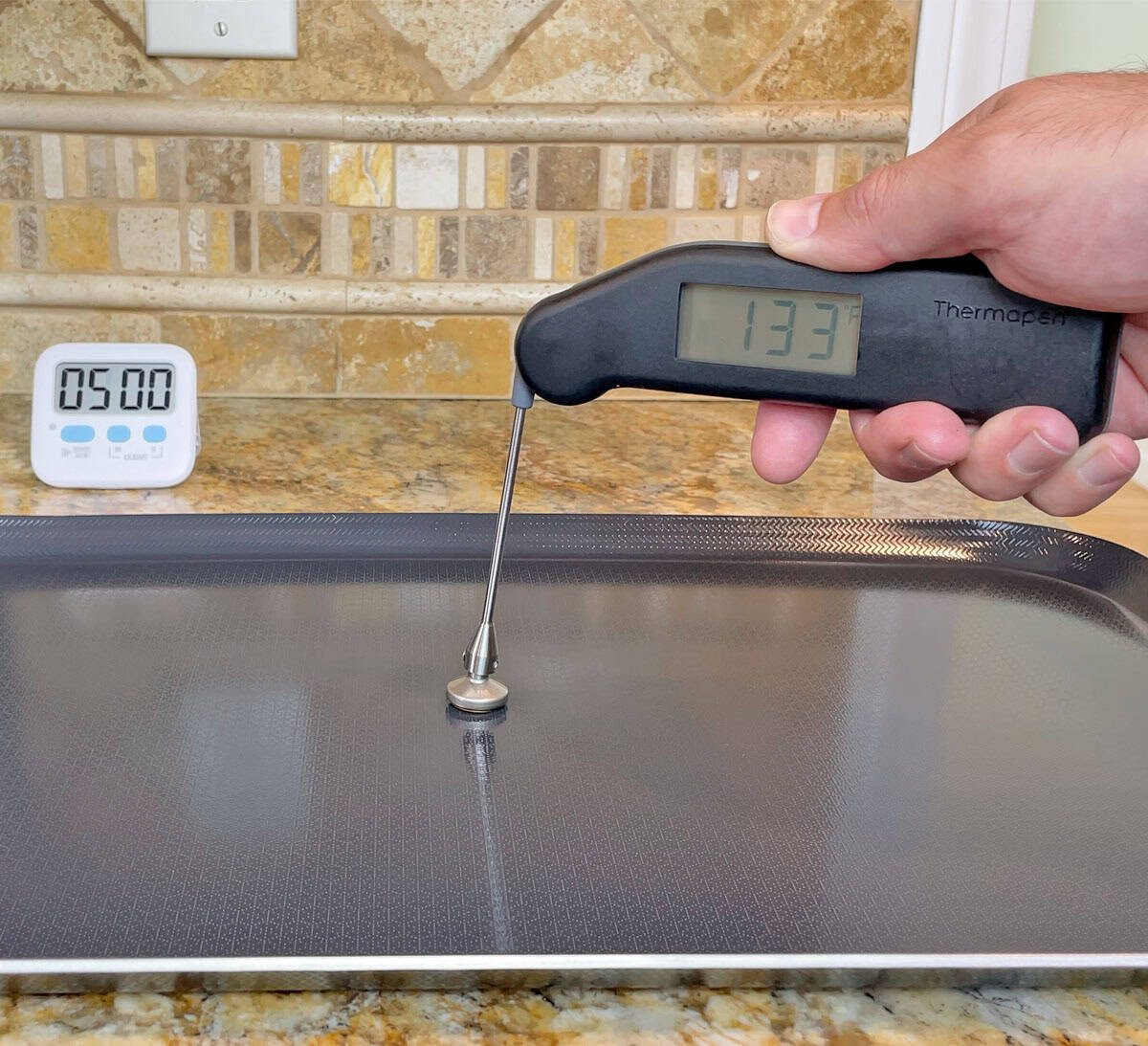
I tested heat retention by heating them to exactly 400 degrees Fahrenheit, removing them from the stove, and measuring the surface temperature after 5 minutes.
I checked for warping right out of the box and again while heating them to 450 degrees. I even tested how hot the handles got after 10 minutes on medium heat.
Besides all that, I also compared key details like weight, thickness, handle design, how easy they are to clean.
In this review, I break down the pros and cons of each griddle. By the end, you’ll know which are worth buying, which ones have major deal-breaking flaws. I’ll start with the least expensive and end with the most expensive.
Prefer video? Watch my hands-on testing below:
Key Takeaways
- Made In carbon steel is the best overall griddle. It works on all cooktops, handles open flames, and will last for decades, though it does warp slightly.
- Hestan offers the largest cooking surface and strong heat retention, but most stoves cannot heat it evenly across the full base.
- HexClad heats the most evenly and is excellent for eggs and other sticky foods, but the nonstick coating will wear down and the pan warps upward.
- Lodge Cast Iron is unmatched in durability and heat retention, but at 10 pounds with no real handles, it is not safe or practical for glass or ceramic cooktops.
- Lodge Carbon Steel and Nordic Ware warped so severely that they were unstable and difficult to use. Neither is a good long-term choice.
Use the links below to navigate the review:
- Comparison Chart
- Nordic Ware Two Burner Griddle
- Lodge Cast Iron Reversible Griddle
- Lodge Carbon Steel Griddle
- HexClad Double Burner Griddle
- Made In Carbon Steel Griddle
- Hestan Double Burner Griddle
- Bottom Line: Which Stovetop Griddle Is the Best?
Comparison Chart
Swipe to view the entire chart on mobile.
| Nordic Ware | Lodge Cast Iron | Lodge Carbon Steel | HexClad | Made In | Hestan | |
|---|---|---|---|---|---|---|
| Where to Buy | Amazon | Amazon | Amazon | HexClad.com | MadeInCookware.com | Amazon |
| Where It’s Made | USA | USA | USA | China | Sweden | Thailand |
| Materials | Aluminum, nonstick | Cast iron (preseasoned) | Carbon steel (preseasoned) | 3-ply stainless + ceramic nonstick | Carbon steel (preseasoned) | 3-ply stainless steel |
| Total Size (in.) | 16.6 × 10.25 | 16.75 × 9.5 | 18.5 × 10 | 19.6 × 12.25 | 19.2 × 10.5 | 21 × 13 |
| Flat Area (in.) | 16 × 9.25 | 16.4 × 9 | 17.25 × 9 | 18.25 × 11.25 | 18 × 9 | 19.25 × 11.5 |
| Cooking Area (sq in.) | 148 | 148 | 155 | 205 | 162 | 221 |
| Weight | 2 lb | 10 lb | 7.8 lb | 5.3 lb | 9.9 lb | 6.2 lb |
| Thickness | 3 mm | 4.4 mm | 3.3 mm | 3.2 mm | 4.2 mm | 3.2 mm |
| Handle Length | 3 in (lips) | Loops only | 4 in | 3.5 in | 5.5 in | 5 in |
| Dishwasher Safe | No | No | No | Yes | No | Yes |
| Induction | No | Yes | No (not for flat-tops) | Yes | Yes | Yes |
| Open Flame Safe | Yes | Yes | Yes | Yes (not ideal) | Yes | Yes |
| Fits 24″ Oven | Yes | Yes | Yes | Yes | No | Yes |
| Top Reason to Buy | Lightweight, heats fast, great for eggs | Extremely durable, best heat retention | Lighter than cast iron, has real handles | Most even heating, excellent for eggs | Most versatile, works on all cooktops and open flames | Largest cooking surface, strong heat retention |
| Top Reason Not to Buy | Severe warping, poor heat retention | Very heavy, unsafe on glass cooktops | Warping makes it unstable | Nonstick coating wears down, warps upward | Uneven heating across surface | Too large for most stoves to heat evenly |
Nordic Ware Two Burner Griddle
The Nordic Ware two burner griddle is made in the USA and is the most affordable option I tested.
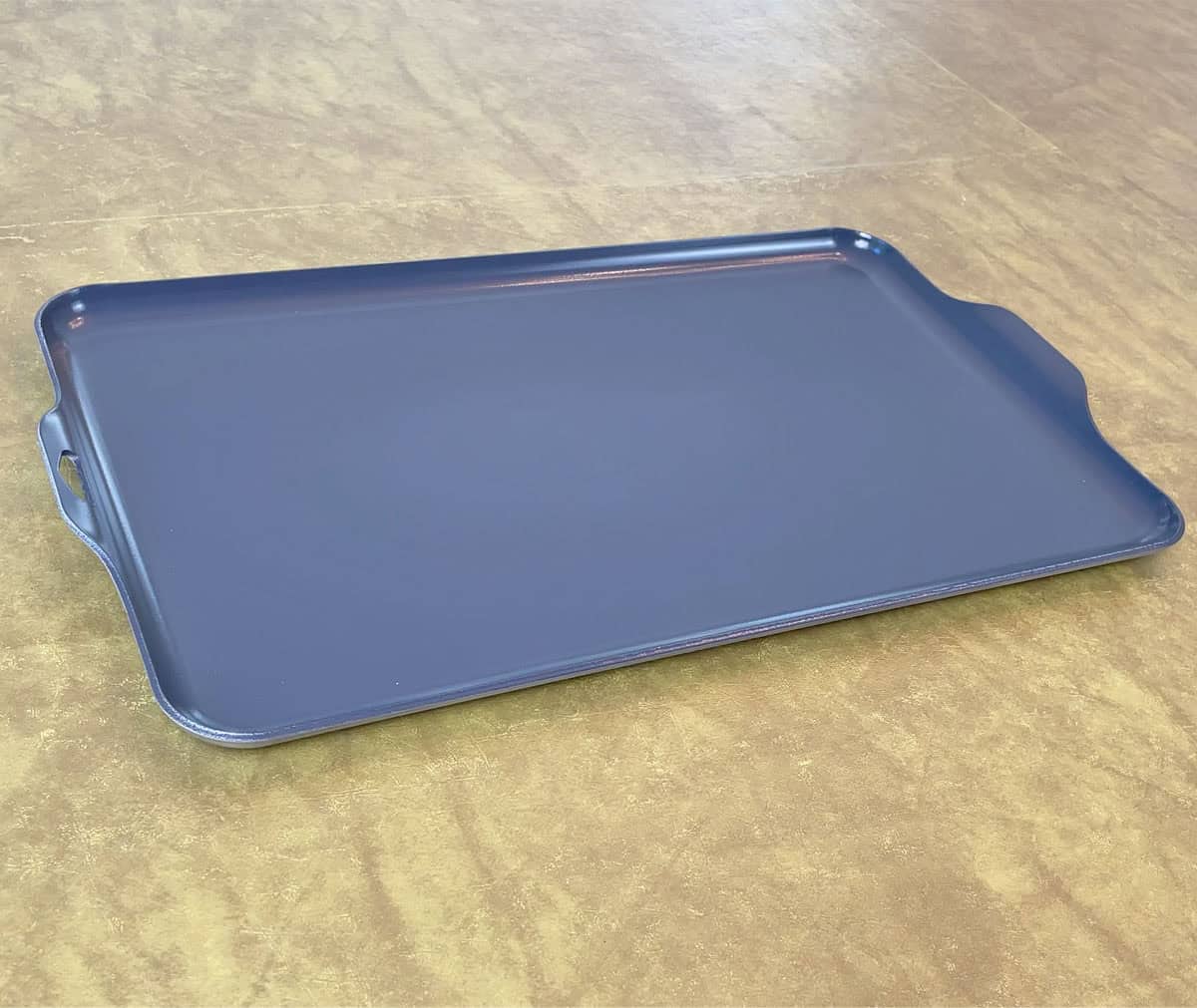
It’s constructed from lightweight aluminum with a ceramic nonstick coating. It weighs only 2 pounds, making it by far the easiest griddle to lift, clean, and store. Its flat cooking surface measures 148 square inches, tied with the Lodge Cast Iron for the smallest of the group.
In terms of performance, Nordic Ware heated the fastest. After four minutes on medium heat, it reached 413°F over the back burner and 384°F in the center, the highest readings in my test.
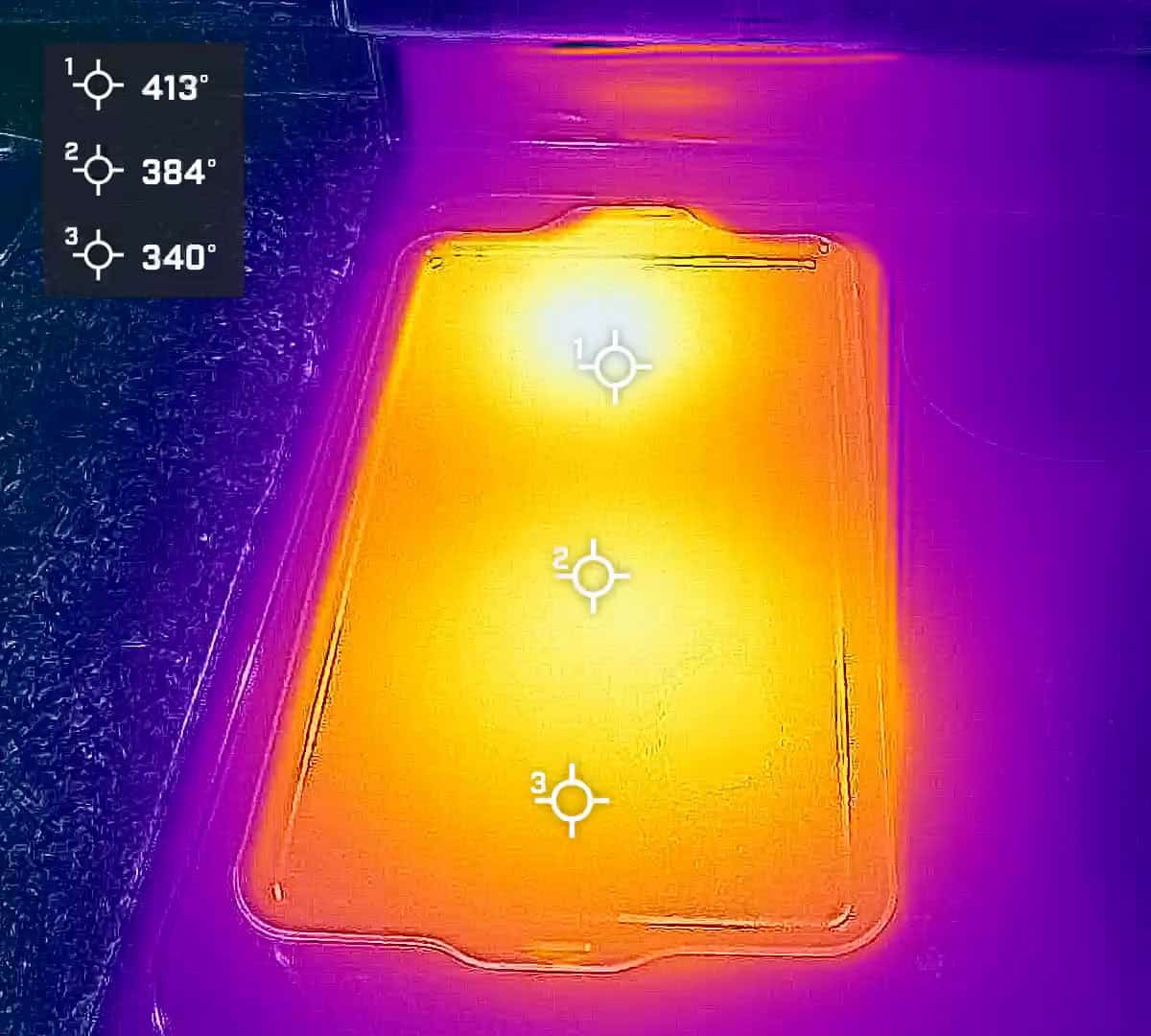
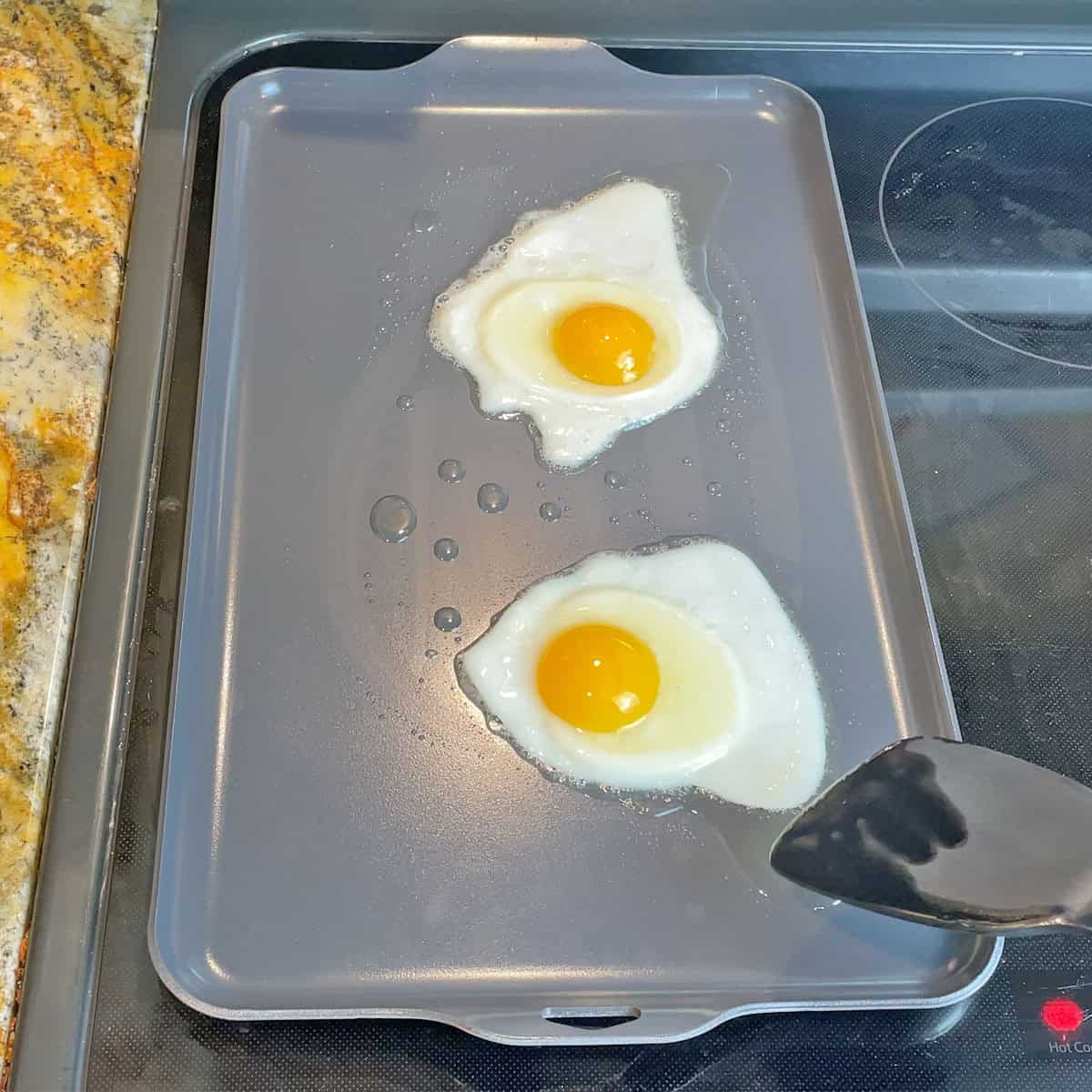
That rapid heating paired with the slick nonstick coating made it excellent for cooking eggs with almost no sticking. For quick breakfasts, it’s hard to beat the convenience.
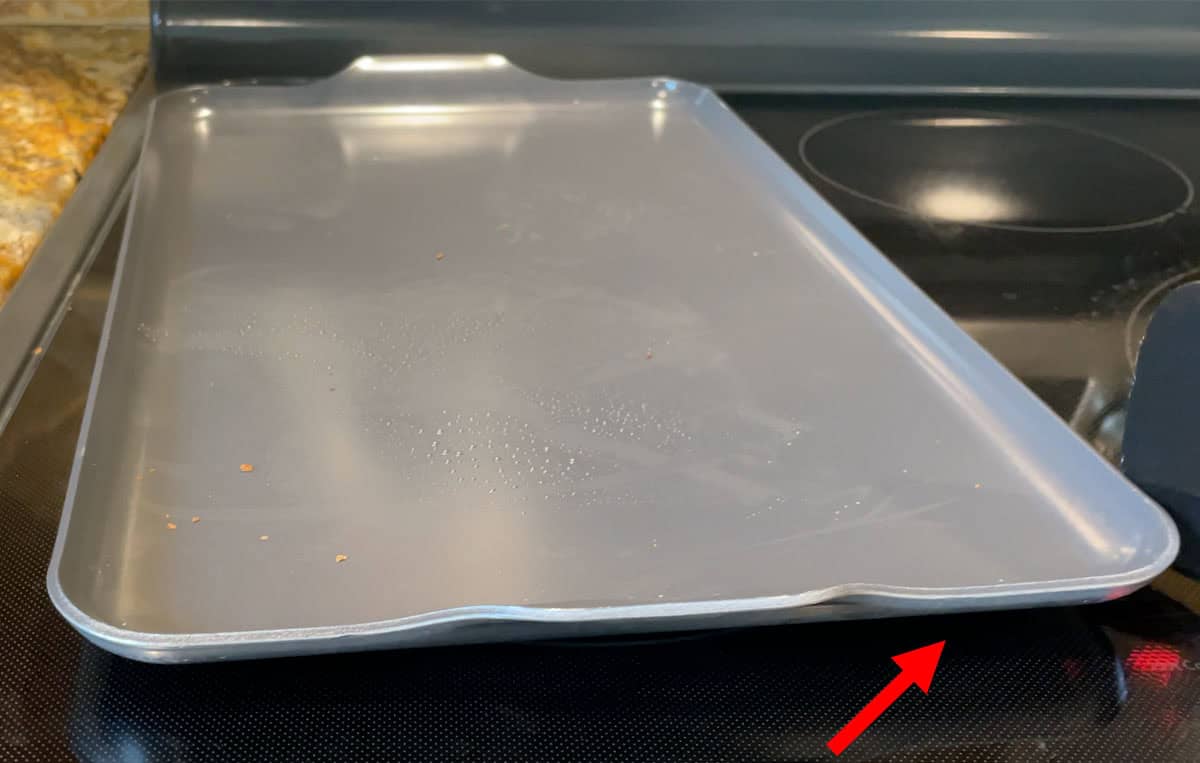
The downsides, however, are significant. The aluminum construction is just 3 mm thick, which makes it prone to warping. Out of the box it was slightly convex, but when I heated it to 450°F, the bottom bowed so severely that it spun and wobbled on my stovetop. It became essentially unusable for tasks like flipping pancakes or searing meat evenly.
Heat retention was also poor. After reaching 400°F and sitting off the heat for five minutes, the surface dropped to just 121°F, compared to 212°F for Lodge Cast Iron. That means food cools the surface quickly, forcing you to wait for the burners to catch up.
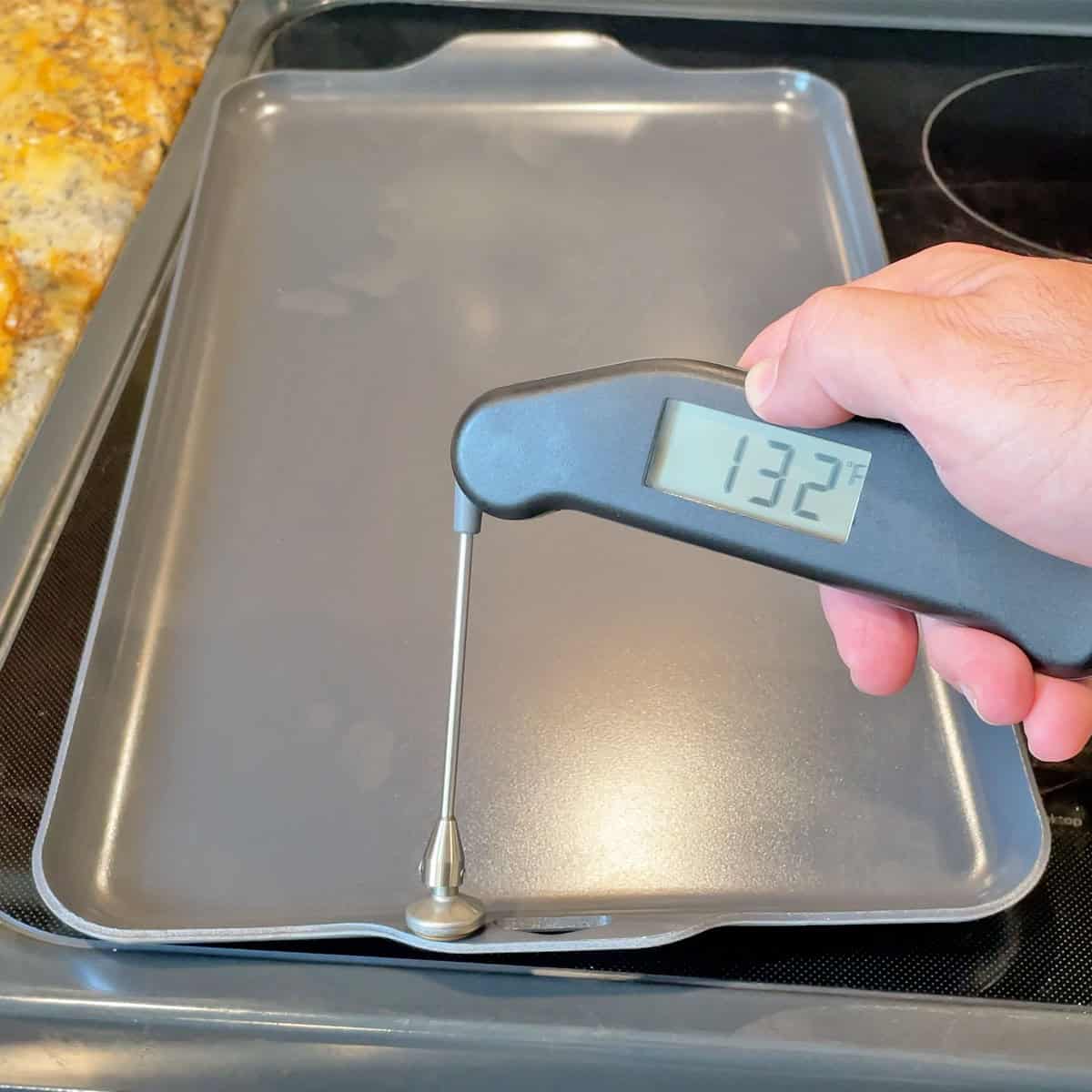
Handle design is another flaw. Instead of real handles, it has thin lips at the edges that reached 132°F during my handle test, which is hot enough to burn your hand if you forget an oven mitt.
Finally, it isn’t induction-compatible, and while Nordic Ware markets it as grill-safe, the thin aluminum would likely degrade quickly over open flames.
Overall, this griddle’s lightweight build and fast heating make it tempting for occasional eggs or pancakes, but the warping and poor heat retention make it a bad long-term investment. If you want something durable and versatile, this isn’t it.
Check the current price and read more reviews on Amazon.
Lodge Cast Iron Reversible Griddle
The Lodge Cast Iron Reversible Griddle is made in the USA. It has a reversible design with a flat griddle on one side and a ridged grill surface on the other.
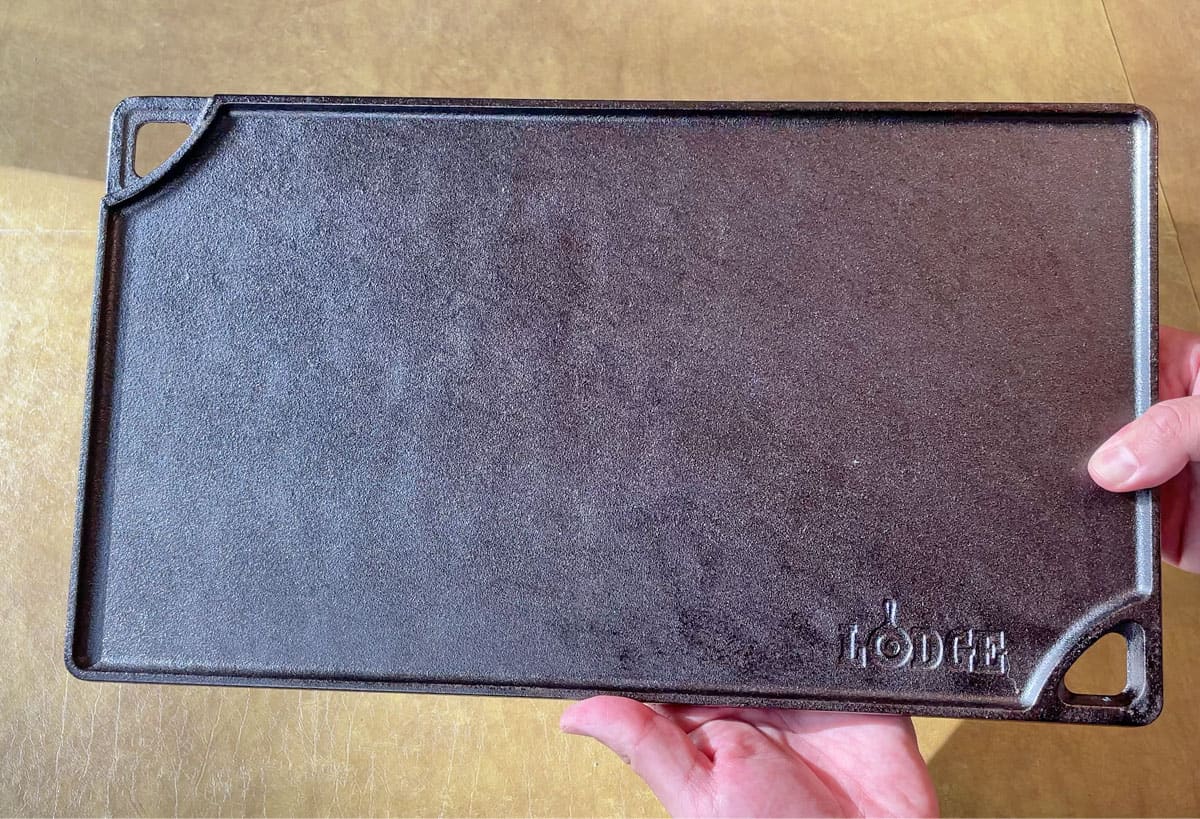
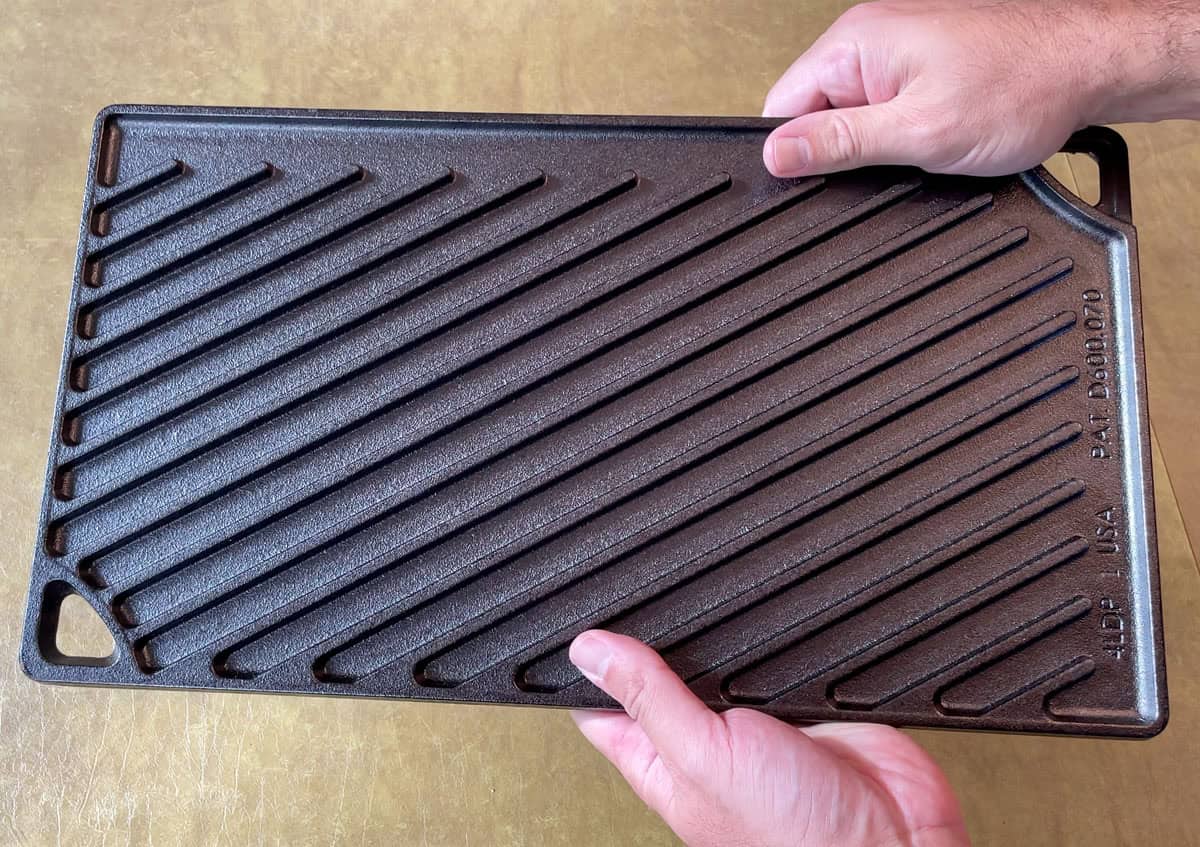
At 10 pounds and 4.4 mm thick, it is the heaviest and thickest griddle I tested. The usable flat cooking area is only 148 square inches, which ties with the Nordic Ware for the smallest in this group.
Durability is the main advantage. Cast iron has no coating that can wear down over time. In my warping test, it stayed completely flat. Out of the box it was level, and even after heating it to 450°F, there was no change.
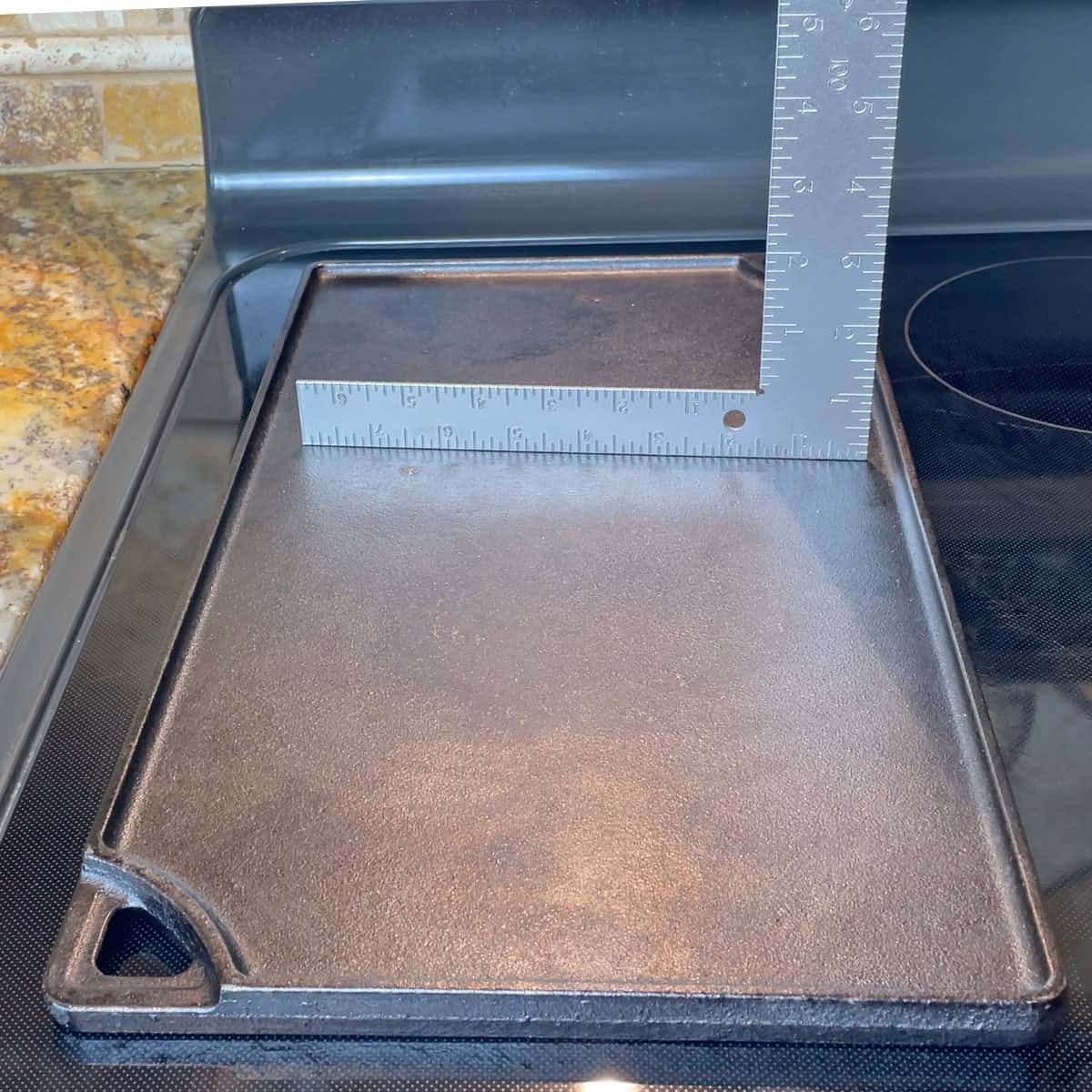
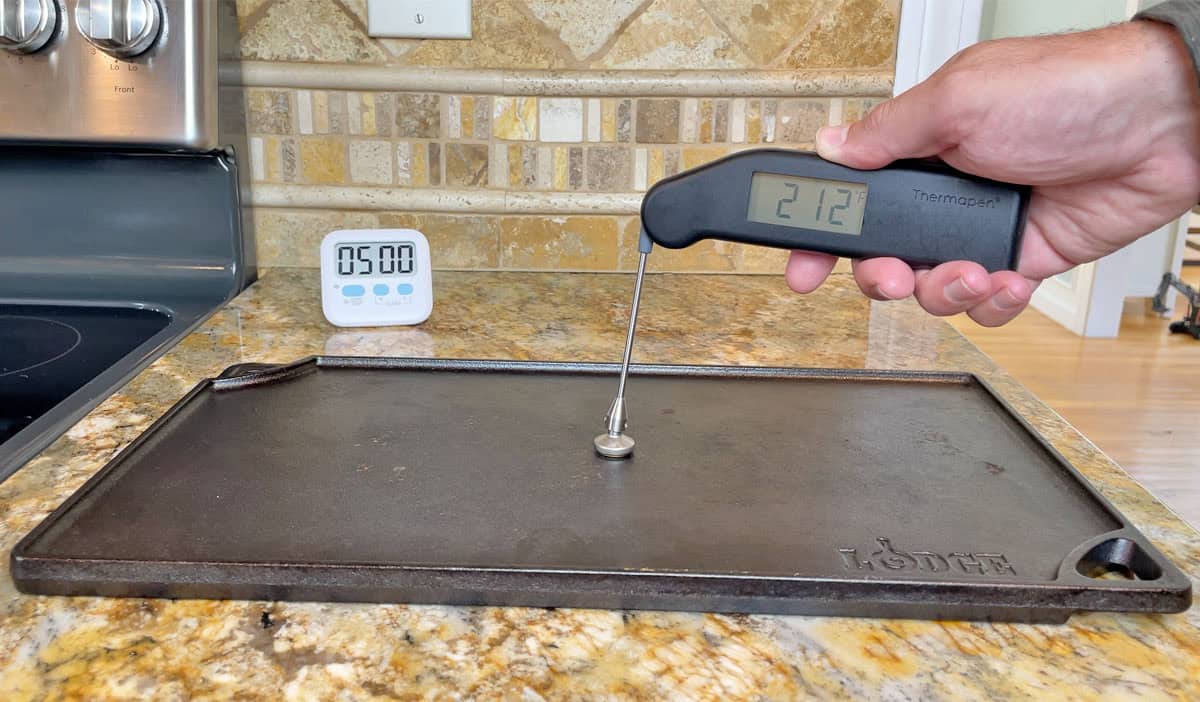
It also held heat better than any other griddle. After heating to 400°F and removing it from the burner, the surface was still 212°F after five minutes. The next closest result was the Made In griddle at 143°F. Strong heat retention is important if you are cooking pancakes or searing meat in batches because the surface does not cool quickly when you add food.
The biggest weakness is heating speed. This griddle was the slowest to preheat. After four minutes on medium heat, the back position measured 321°F, the center 287°F, and the front 282°F. These temperatures are too low for searing, which means you need to let it heat for much longer before cooking. When I tested smash burgers, the meat cooked through before a crust could form because the surface was not hot enough.
Another downside is that this griddle has no real handles. Instead, it has small corner loops. At 10 pounds, moving it is difficult, and on a glass cooktop it feels risky. Even when I lowered it carefully, it landed hard and felt like it could crack the glass.
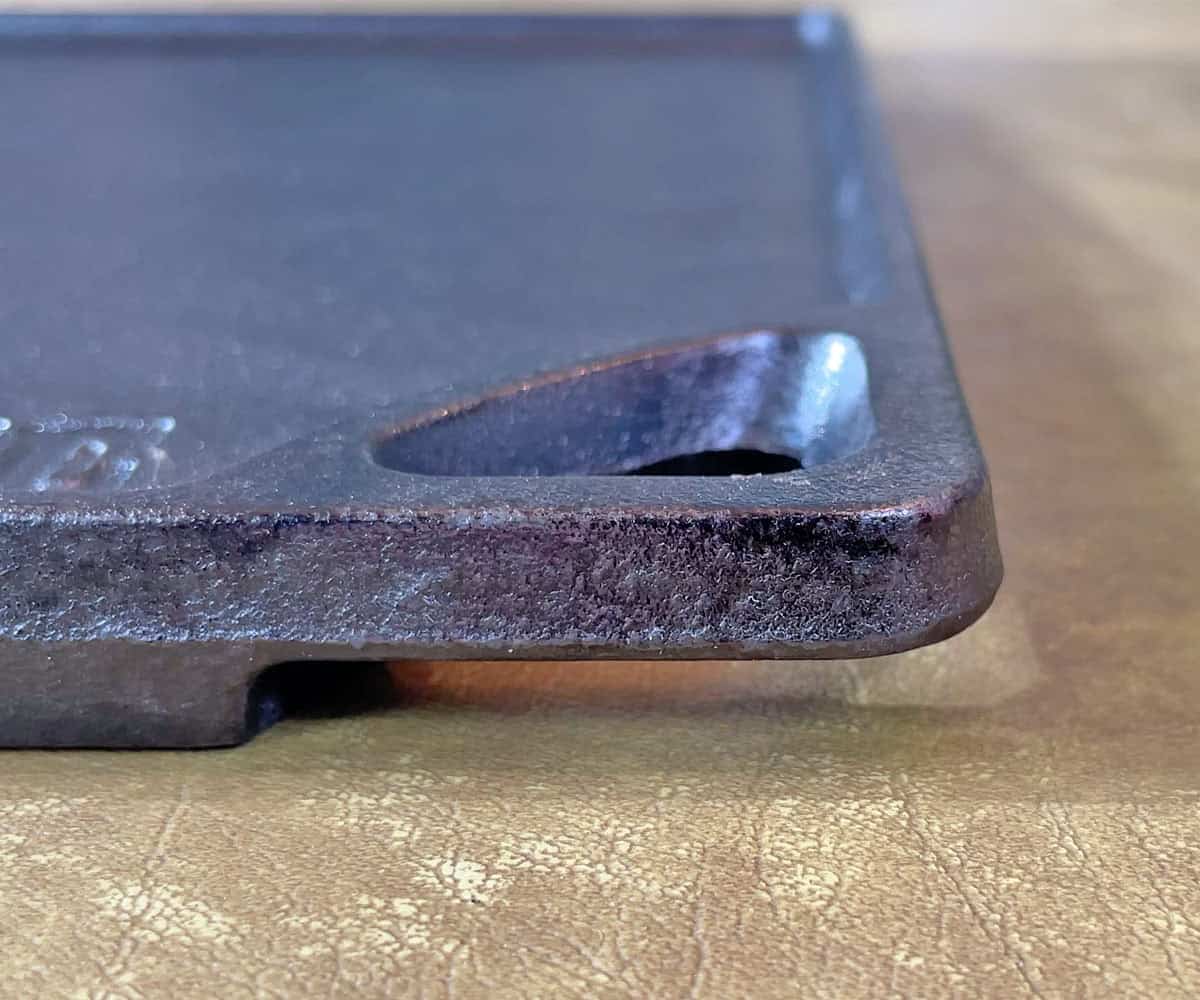
The Lodge Cast Iron griddle is extremely durable and excellent at holding heat. However, it is slow to warm up, very heavy, and awkward to move. It works best on outdoor grills or gas stoves, but I would not recommend it for glass or ceramic cooktops.
Check the current price and read more reviews on Amazon and LodgeCastIron.com.
Lodge Carbon Steel Griddle
The Lodge Carbon Steel griddle is made in the USA and comes preseasoned. Compared to the cast iron version, it is lighter at 7.75 pounds and slightly thinner at 3.3 mm.
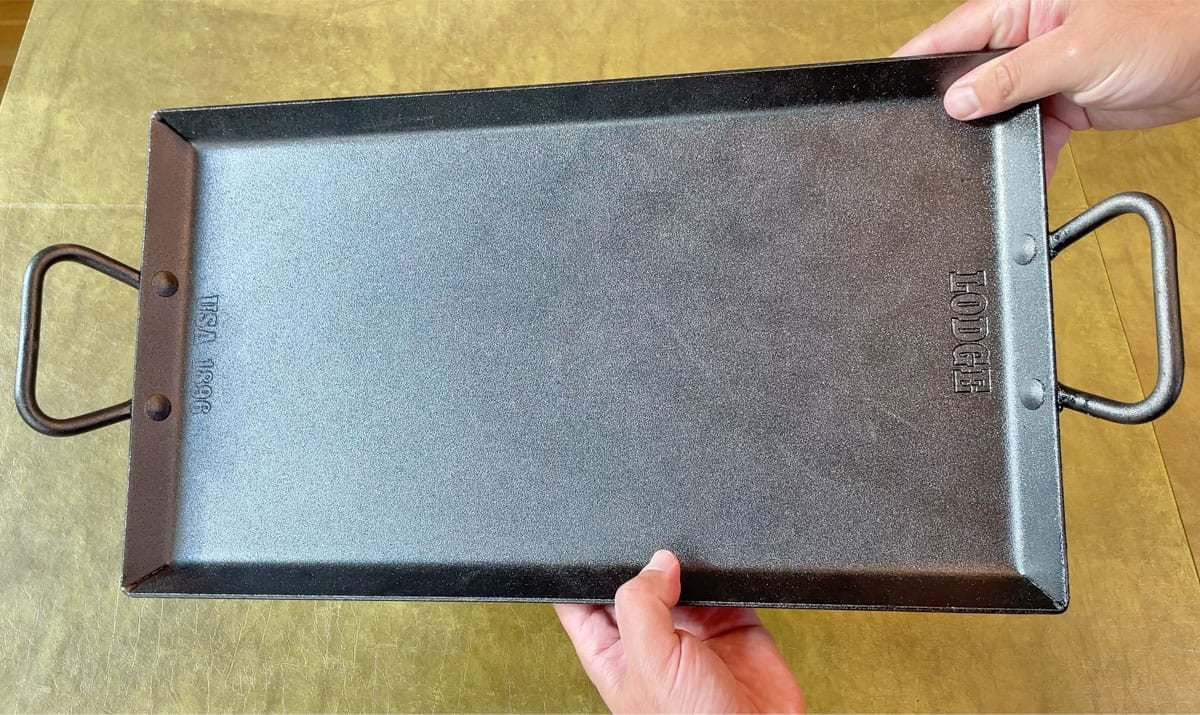
The usable flat cooking surface is larger at 155 square inches, and it has 1-inch sidewalls that do a better job of containing food. It also comes with full-length handles that are easier to grip than the small loops on the cast iron model.
Unfortunately, this griddle has a serious flaw. Out of the box, it was not flat. The bottom had visible gaps when checked with a straight edge, and once heated to 450°F, the warping became much worse.
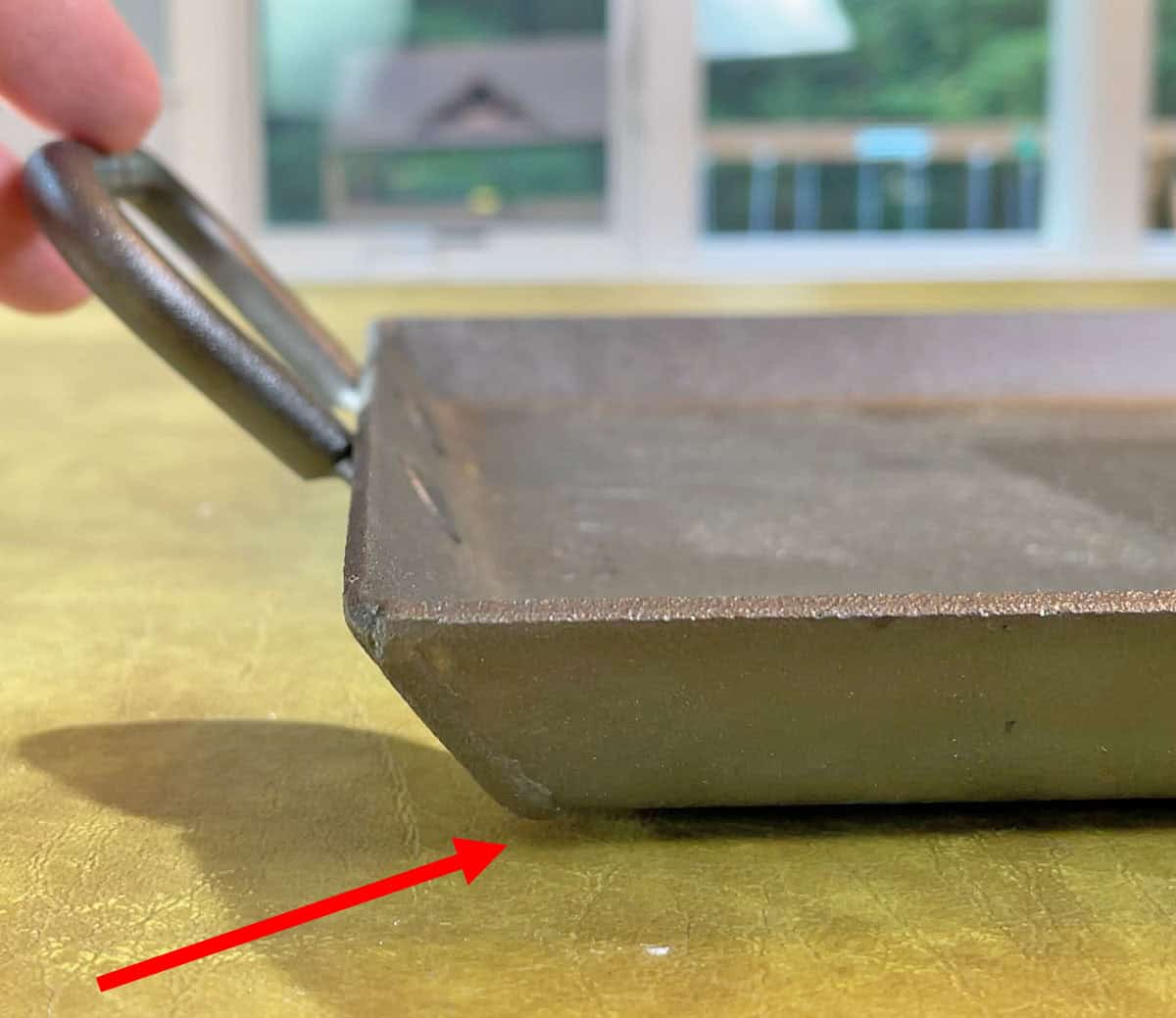
During cooking tests it wobbled and shifted on the stovetop, which made it nearly impossible to use on a flat electric surface. Lodge acknowledges this issue on its website, noting that it is not intended for smooth-top stoves, and their customer service confirmed it might warp on those surfaces. I tested it anyway to compare it directly to the others, but the results showed why the warning exists.
Heat retention was average. After heating to 400°F and cooling for five minutes, the surface dropped to 141°F, good for 4th place out of 6. It heated faster than the Lodge cast iron griddle but didn’t heat as evenly. After four minutes on medium heat, the back position reached 372°F, the center 318°F, and the front 300°F, with a 72°F difference between the hottest and coldest spots.
Build quality is another weak point. The cooking surface is rougher than other carbon steel options, and the seams where the corners are pressed together are visible and unfinished.
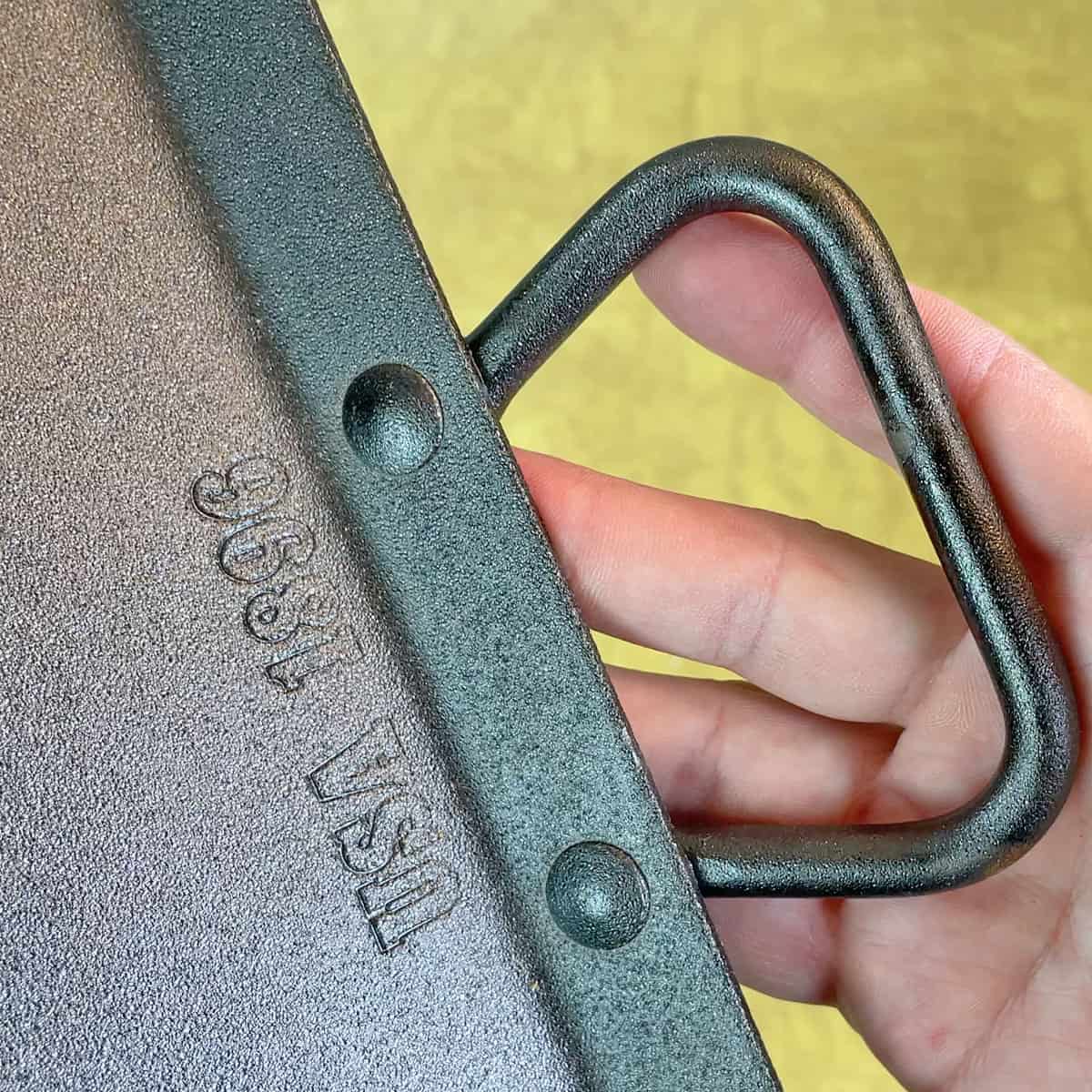
The handles reached 112°F during my heat test, hot enough to require oven mitts after just 10 minutes on medium heat. None of these issues are deal breakers on their own, but combined with the warping, they make the griddle feel cheaply made.
Overall, Lodge Carbon Steel is lighter and easier to handle than cast iron, but the severe warping and uneven heating make it impractical for flat cooktops. It can work on an outdoor grill or open flame, but for everyday use indoors, I would not recommend it.
Check the current price and read more reviews on Amazon and LodgeCastIron.com.
HexClad Double Burner Griddle
The HexClad Double Burner Griddle is made of 3-ply stainless steel with a ceramic nonstick coating and HexClad’s signature hybrid surface.
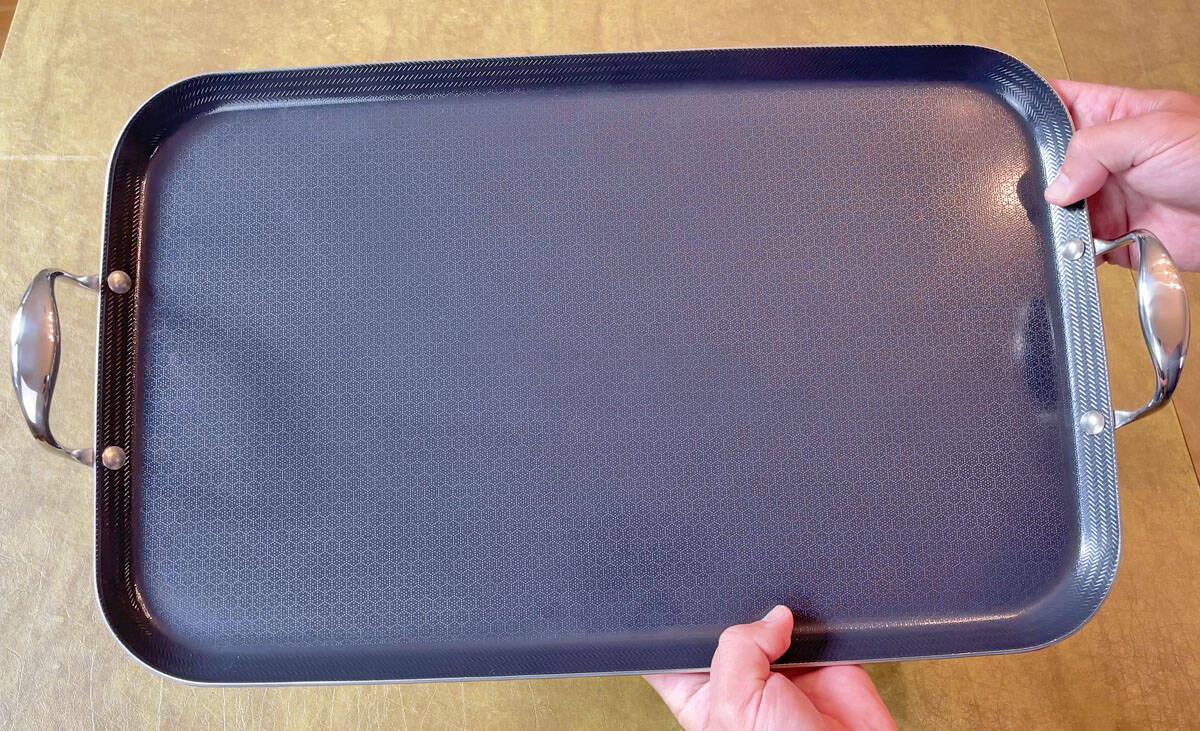
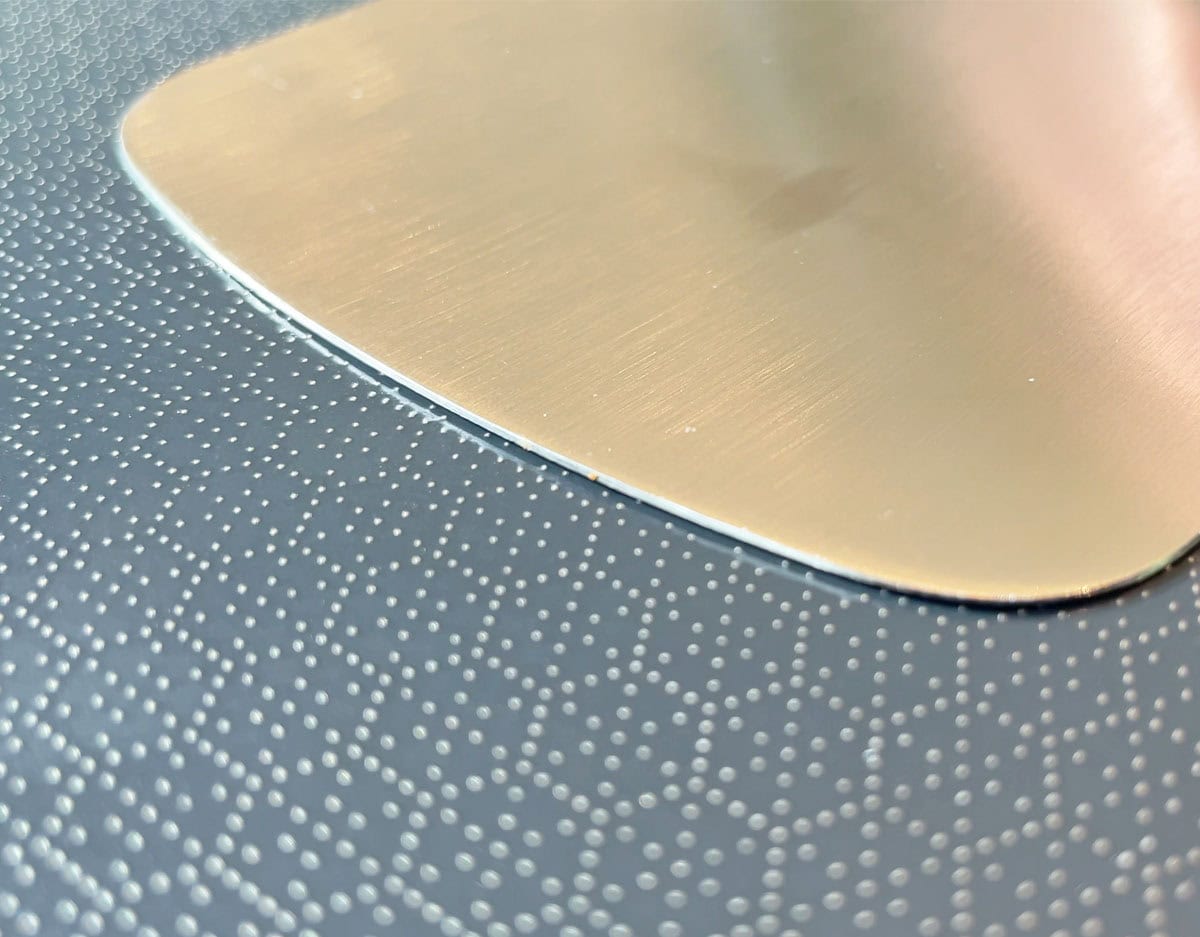
The raised stainless ridges are designed to protect the coating so your spatula glides across the steel instead of scraping directly on the nonstick layer. In practice, the ridges provide some protection, but there is still enough exposed area for the coating to scratch. Like any nonstick surface, this layer will also degrade from heat and repeated use.
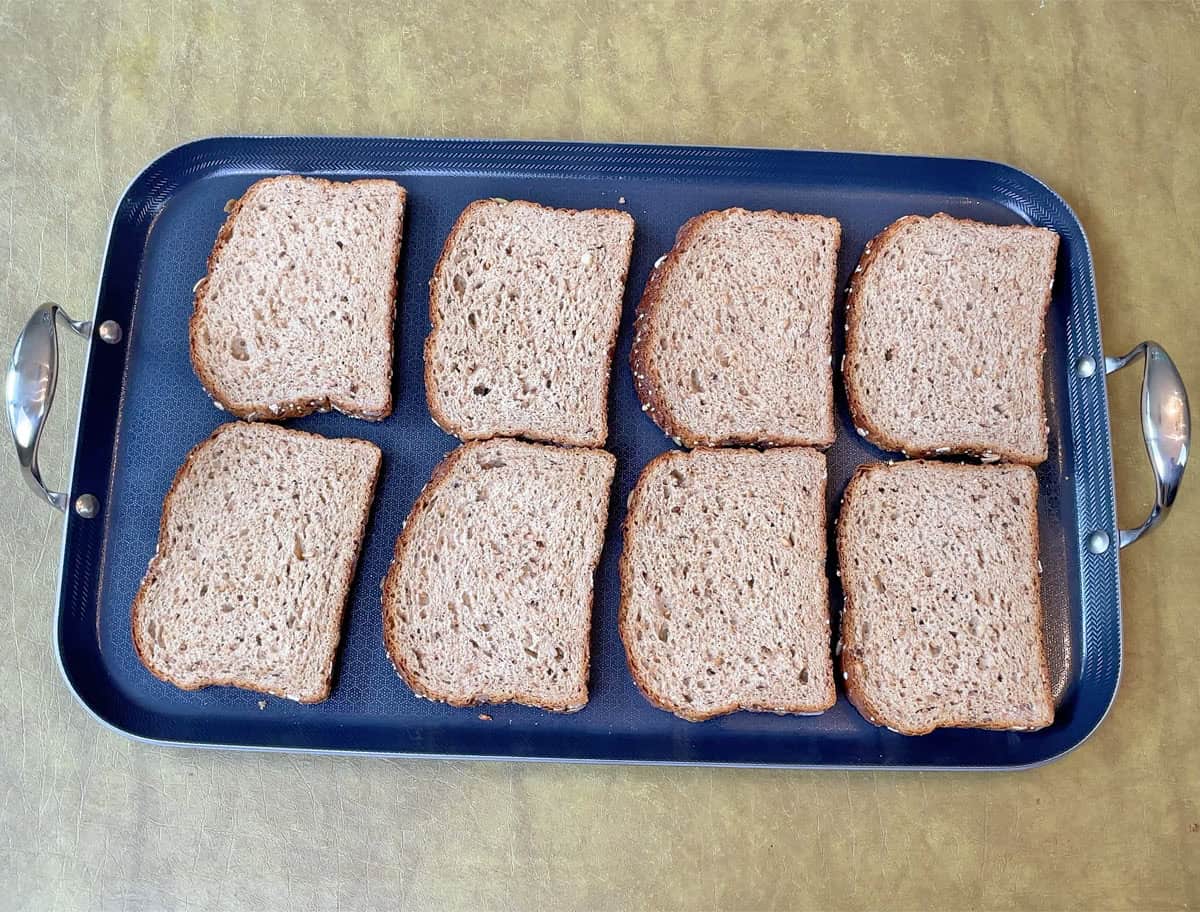
When the coating is intact, performance is excellent. At 5.31 pounds and 3.2 mm thick, the griddle is light enough to handle easily but still feels solid. The flat cooking surface measures 205 square inches, second only to the Hestan in size, and it can hold about 8 slices of bread at once.
Eggs slid off with no resistance, pancakes released cleanly, and cleanup was simple with just a rinse and wipe.
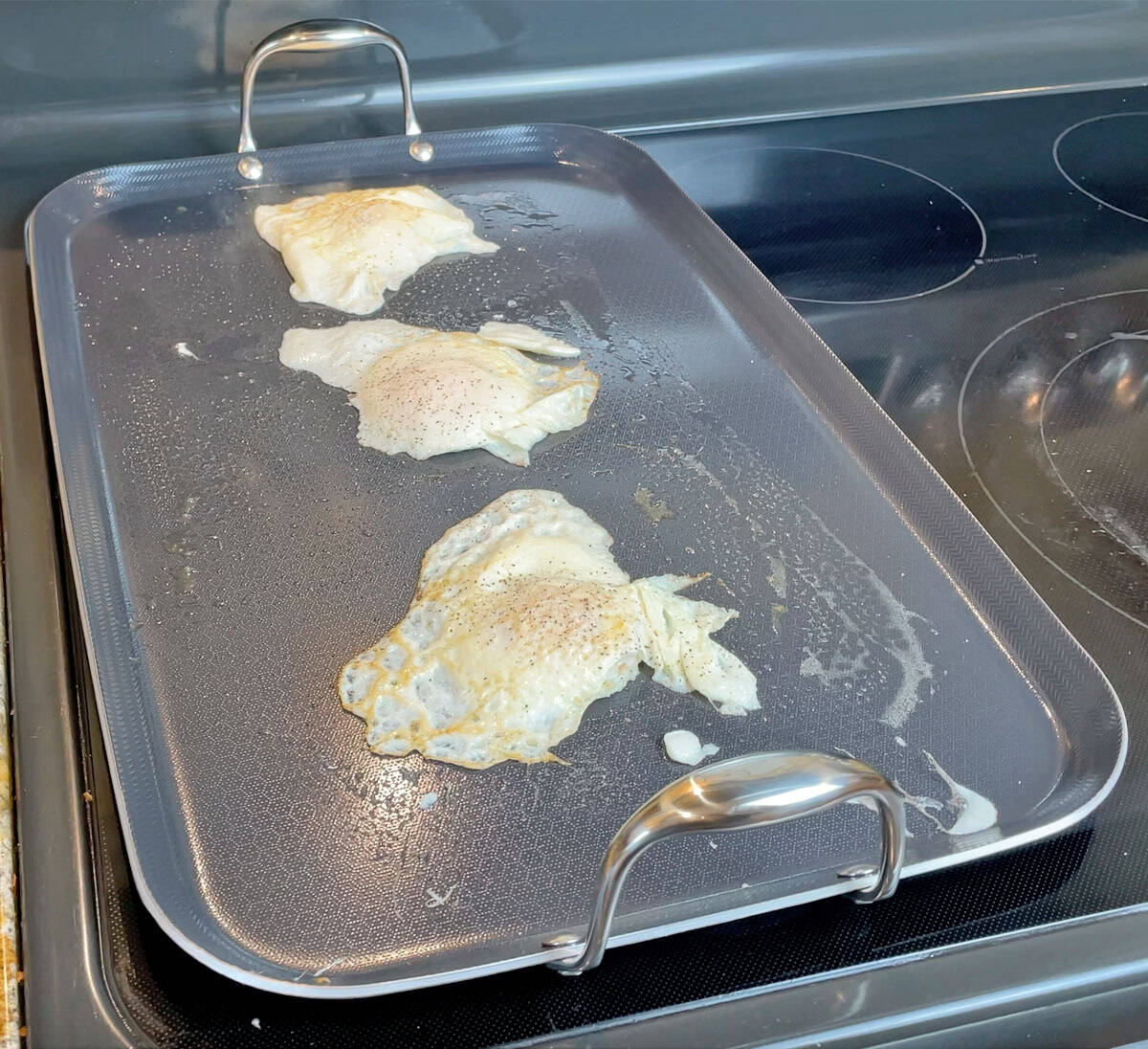
Heating was more consistent than any other griddle in my tests. After four minutes on medium heat, the back measured 353°F, the center 346°F, and the front 315°F, with only a 38°F difference between hottest and coldest spots.
Heat retention, however, was modest. After reaching 400°F and cooling for five minutes, the surface dropped to 133°F, near the bottom of the group.
Handle design is another positive. The vertical handles are short and don’t stick out, which saves space on the stovetop. In my handle test, the tops stayed safe to grab at around 92°F, though the stems closer to the pan ran hotter.
The main drawbacks are durability and stability. In my warping test, the griddle bowed upward in the center, which caused oil and liquids to pool along the edges instead of staying evenly distributed. This makes it harder to sear meat or fry eggs without chasing the oil. Over time, the nonstick surface will also wear down, and replacement is the only option once it loses effectiveness.
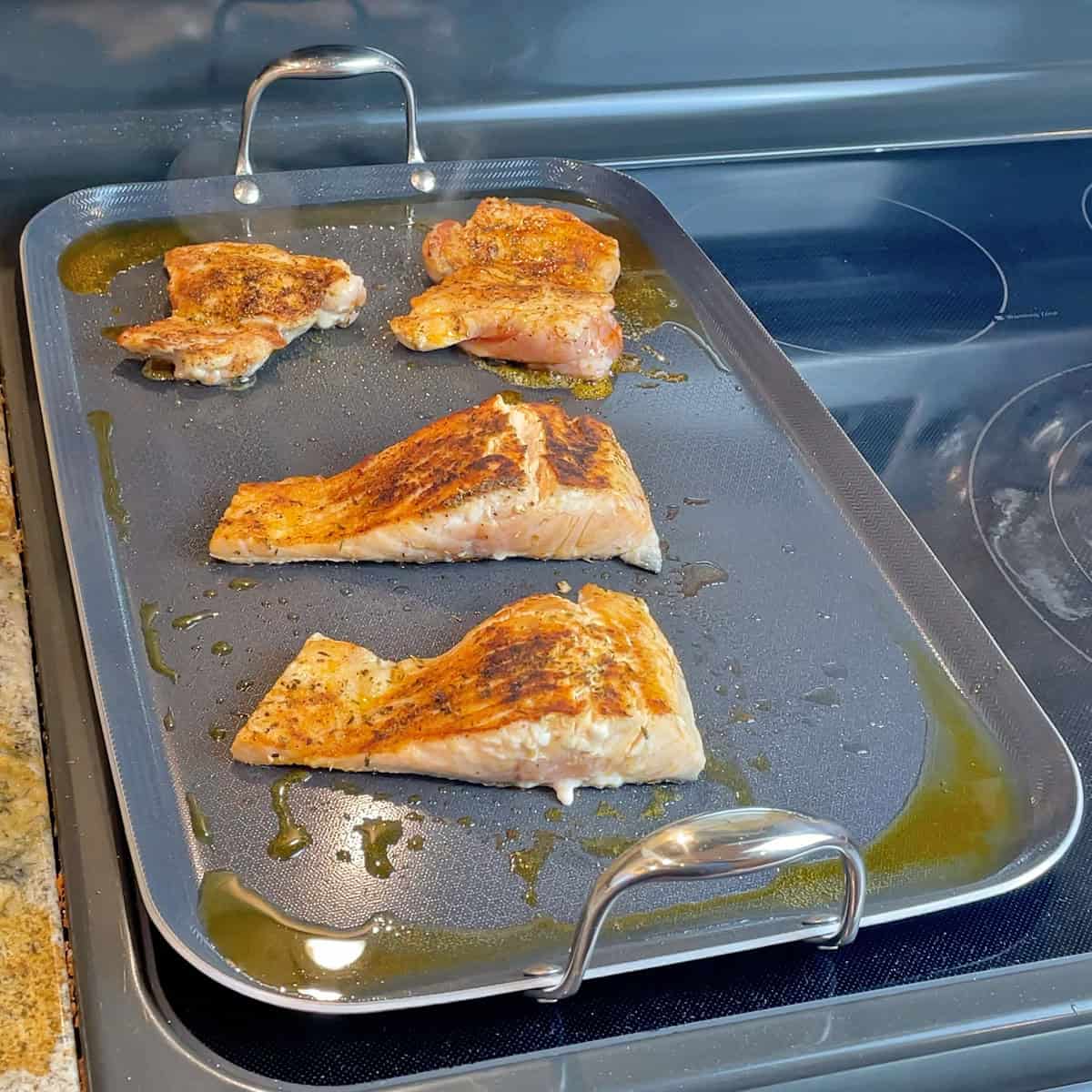
The HexClad griddle is one of the most even-heating and user-friendly options, especially for foods that stick easily like eggs and potatoes. However, the limited heat retention, upward warping, and eventual nonstick failure keep it from being a long-term solution. It is best if you value ease of use and even heating but do not need a griddle that will last a lifetime.
Check the current price and read more reviews on HexClad.com and Amazon.
Made In Carbon Steel Griddle
The Made In carbon steel griddle is manufactured in Sweden. At 9.88 pounds and 4.2 mm thick, it is heavy and solid, but it has long handles and a slim 0.5-inch wall height that make it easier to maneuver than Lodge Cast Iron.
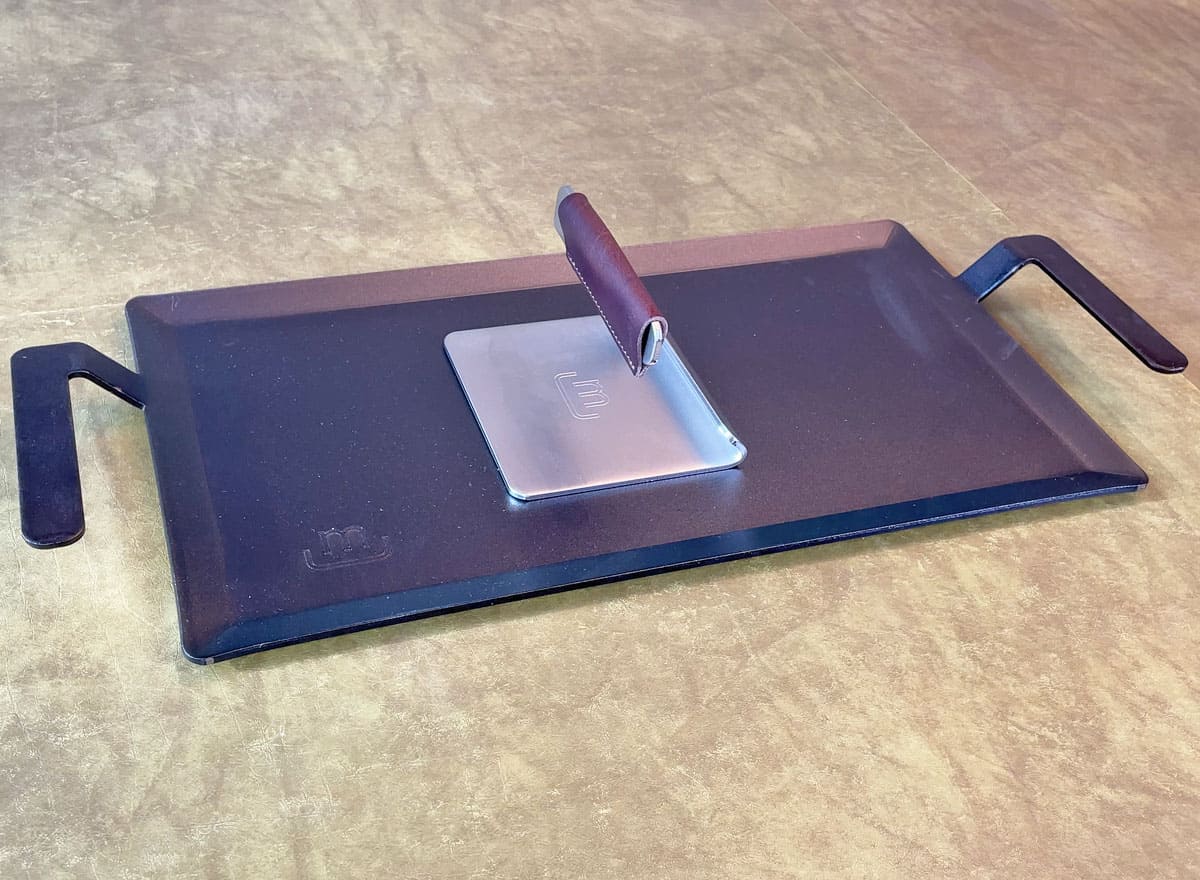
The usable flat cooking surface measures 162 square inches, which gives you more space than the Lodge models but less than HexClad or Hestan.
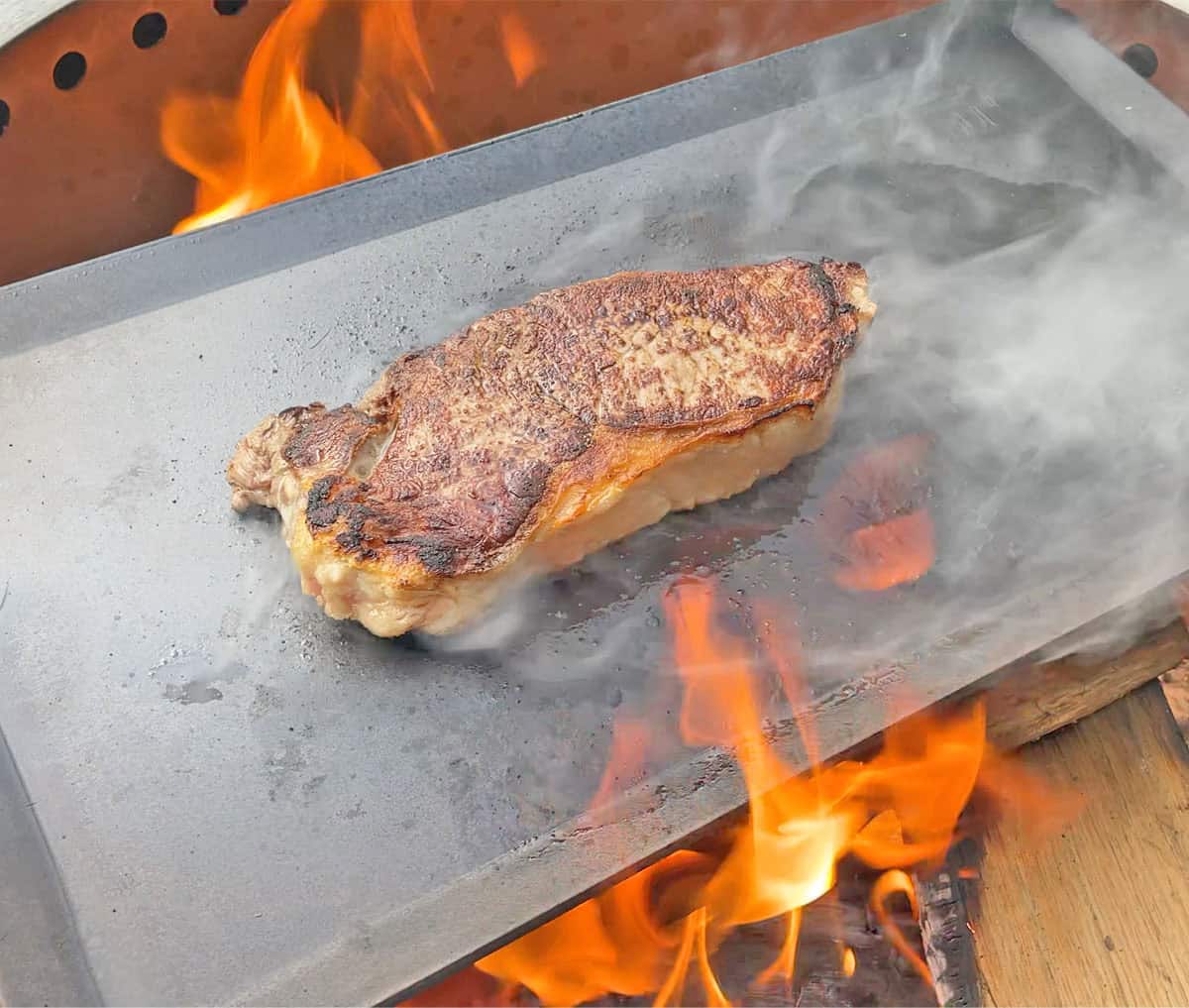
The biggest advantages are durability and versatility. Unlike Nordic Ware and HexClad, this griddle has no nonstick coating to wear down. The preseasoned carbon steel surface improves with use and can handle any level of heat. I cooked steak directly over a fire pit, and the griddle got hot enough to sear perfectly. The baked-on oil only enhances the seasoning, which makes it an excellent option for both indoor and outdoor cooking.
In terms of design, Made In is a clear step up from Lodge’s carbon steel griddle. The surface is smoother with no visible seams in the corners.
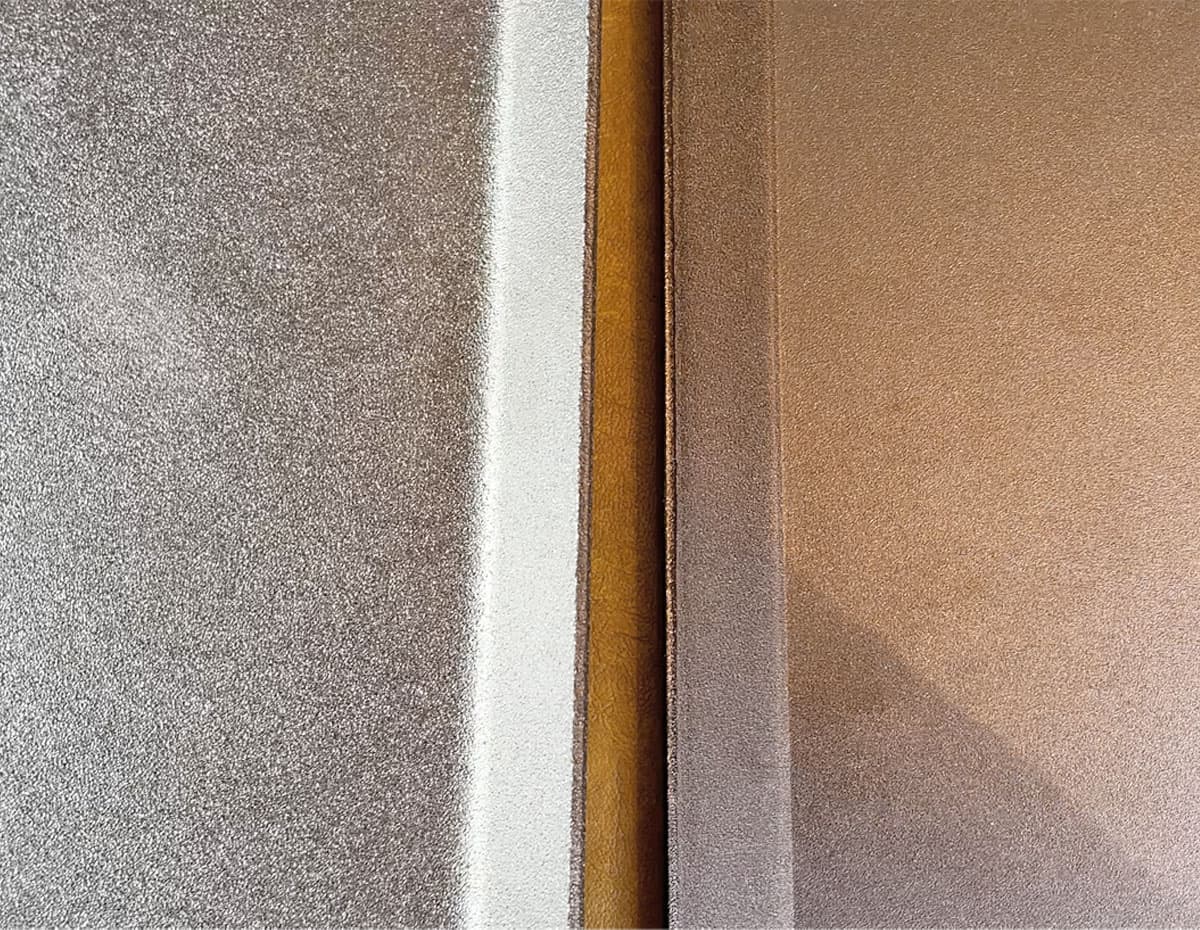
It’s thicker, which makes it sturdier. And the long handles allow you to place it gently on a cooktop instead of dropping it like a block of iron. Most importantly, it sits flat enough to work on flat electric and induction cooktops, something Lodge Carbon Steel could not manage.
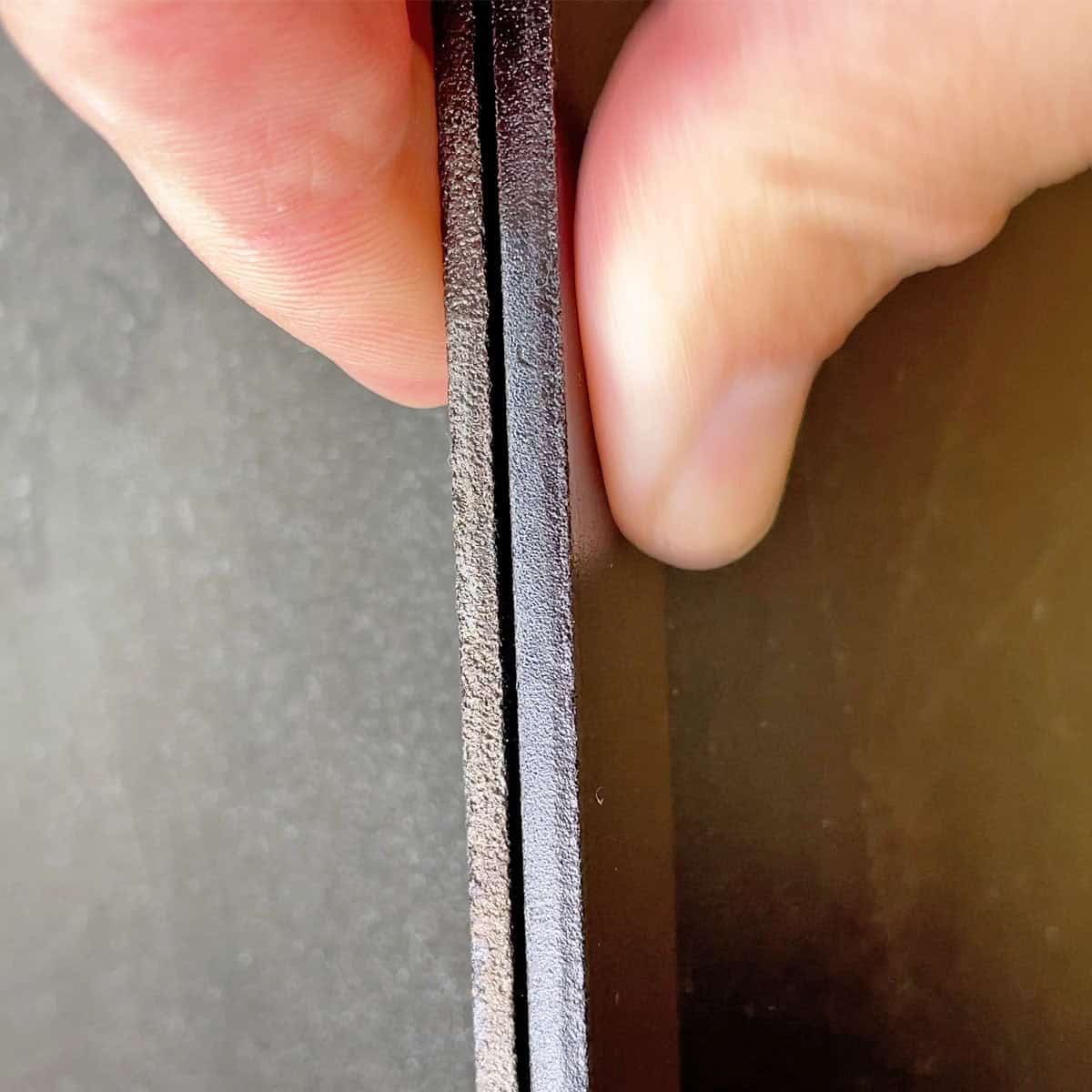
The griddle did show slight warping in my tests. Out of the box it was flat, but once heated it bowed just enough that it shifted on the stovetop when I scraped with a spatula. It never spun like Nordic Ware or wobbled like Lodge Carbon Steel, but I sometimes had to hold the handle to keep it steady.
Heat performance was a mix of strengths and weaknesses. After four minutes on medium heat, the back reached 362°F, the center 358°F, and the front 252°F. That 110°F spread was the most uneven of the group.
On the positive side, it preheated faster than Lodge Cast Iron and gave me much better browning on smash burgers once I allowed the hot zones to come up to temperature.
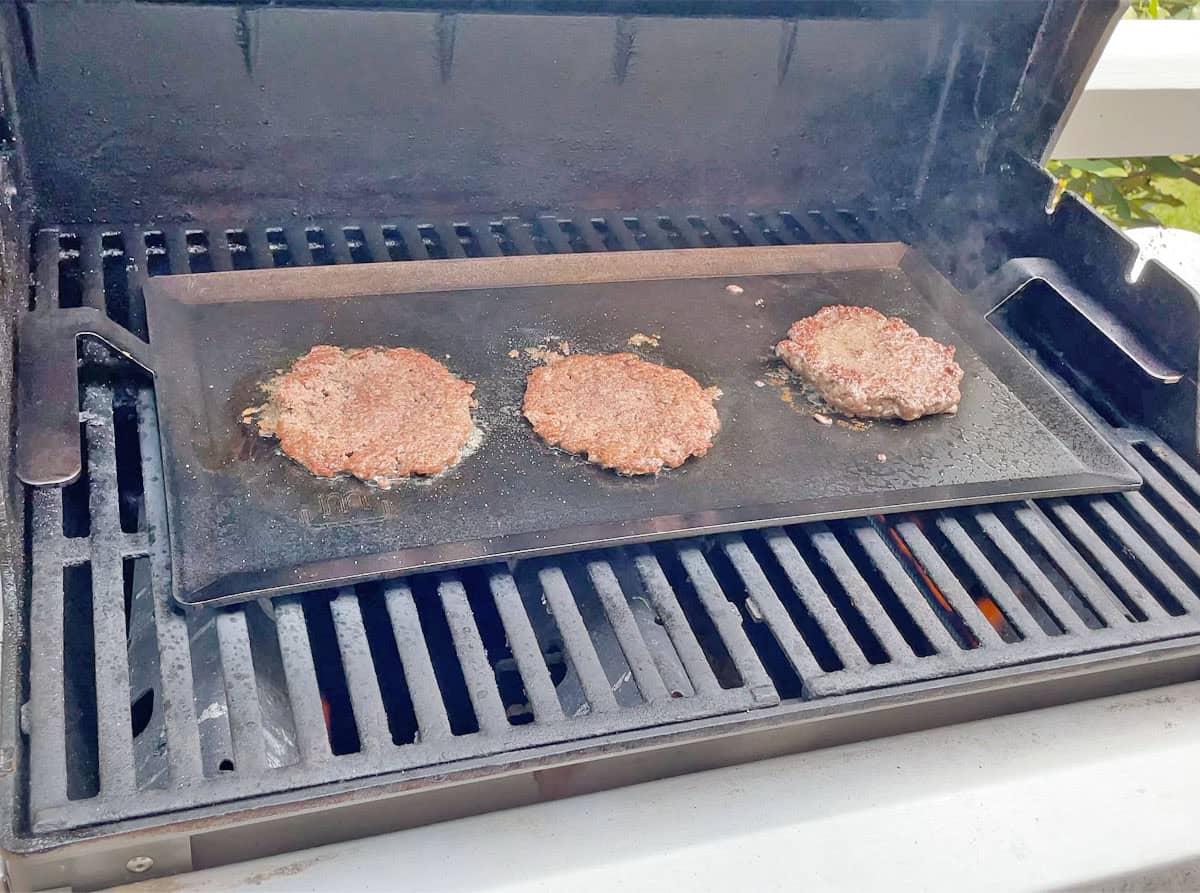
Heat retention was strong as well, holding 143°F after five minutes off the burner, which ranked it in third place, only behind Hestan and Lodge cast iron.
The handles performed reasonably well in my safety test, staying around 117°F near the base, 100°F in the middle, and 92°F at the tips.
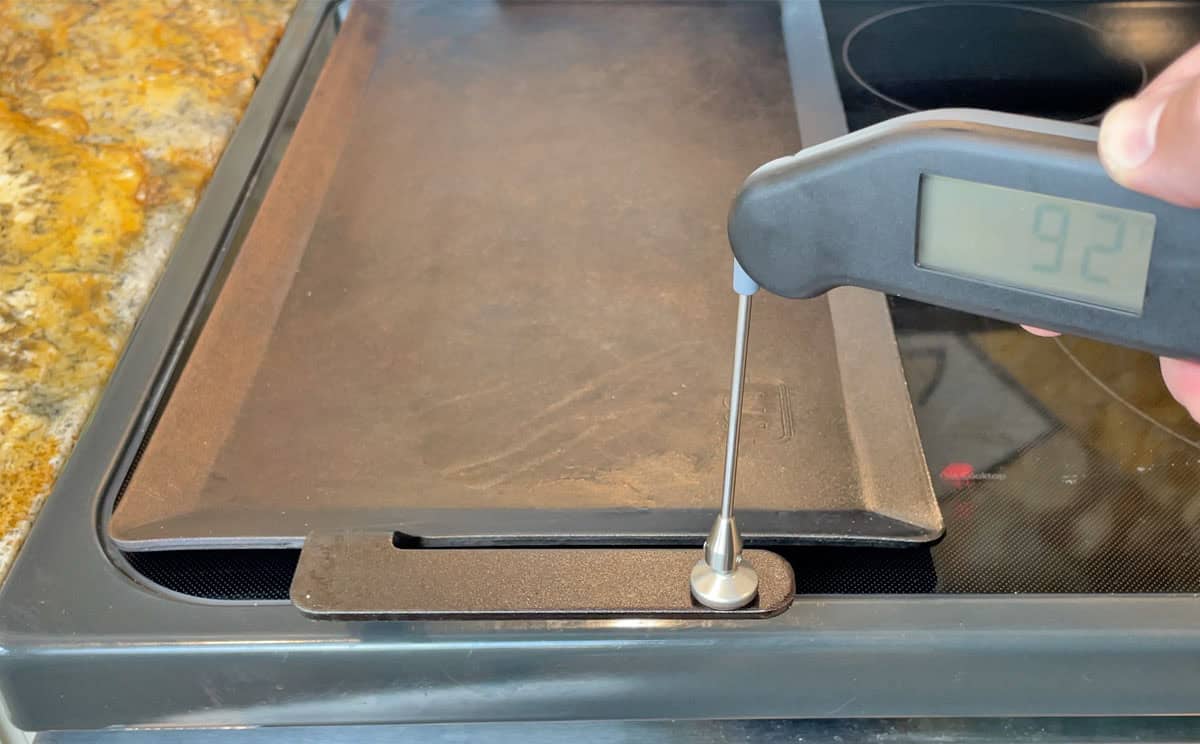
They were not dangerously hot, but their flat shape and sharp edges made them uncomfortable to grip for long periods. Because the handles stick out, the griddle also will not fit in a standard 24-inch oven.
The preseasoned surface is slicker than Lodge’s carbon steel, which helped with eggs, but it is not as forgiving as a true nonstick coating. Large griddles are also hard to keep evenly heated, so eggs and delicate foods sometimes stick if they drift into cooler zones.
The Made In griddle is not perfect, but it is the most versatile option I tested. It sits flat enough for electric and induction cooktops, withstands open flames, and should last for decades without wearing out. If you want one griddle that can handle almost any cooking environment, this is the one to choose.
Check the current price and read more reviews on MadeInCookware.com and Amazon.
Hestan Double Burner Griddle
The Hestan Double Burner griddle is the largest of the group. It measures 21 by 13 inches with a usable flat cooking surface of 221 square inches, enough to fit about 10 slices of bread at once.
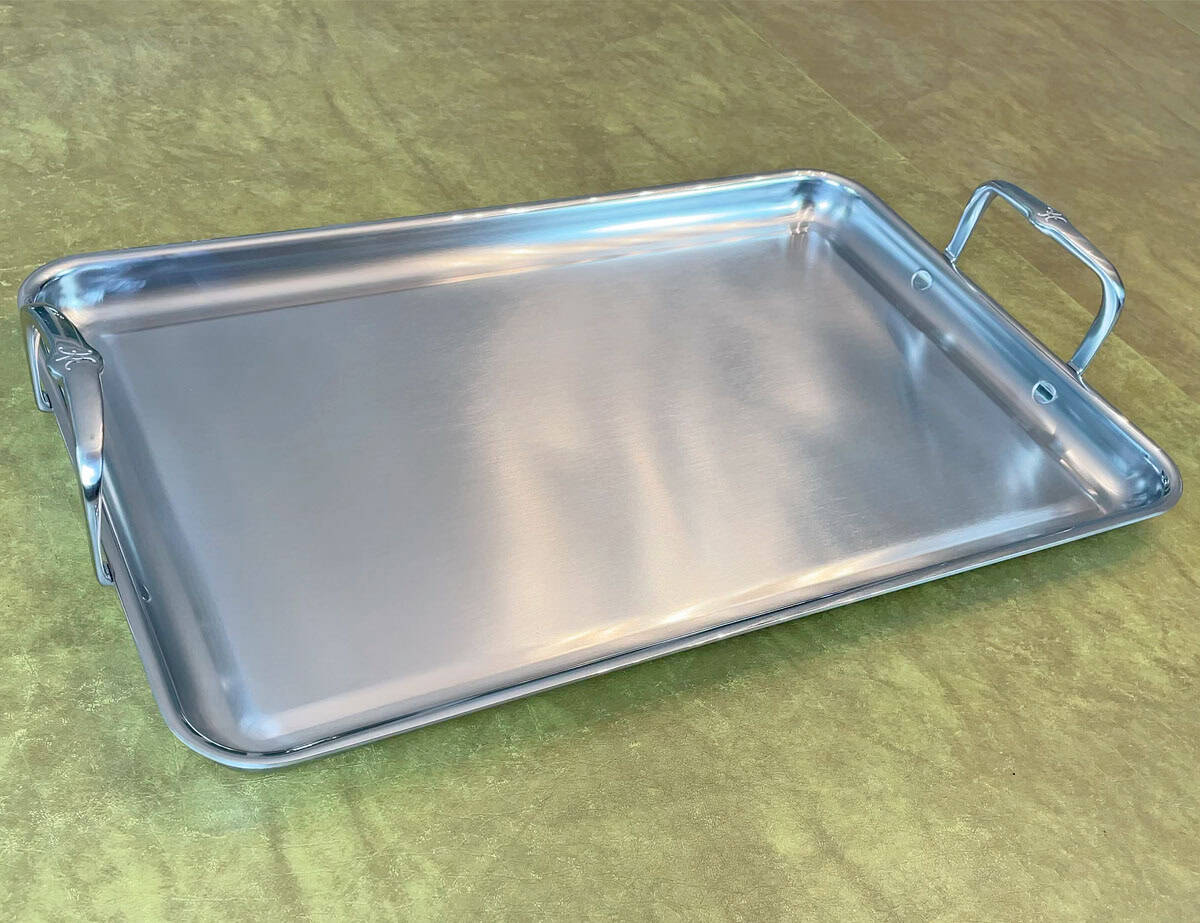
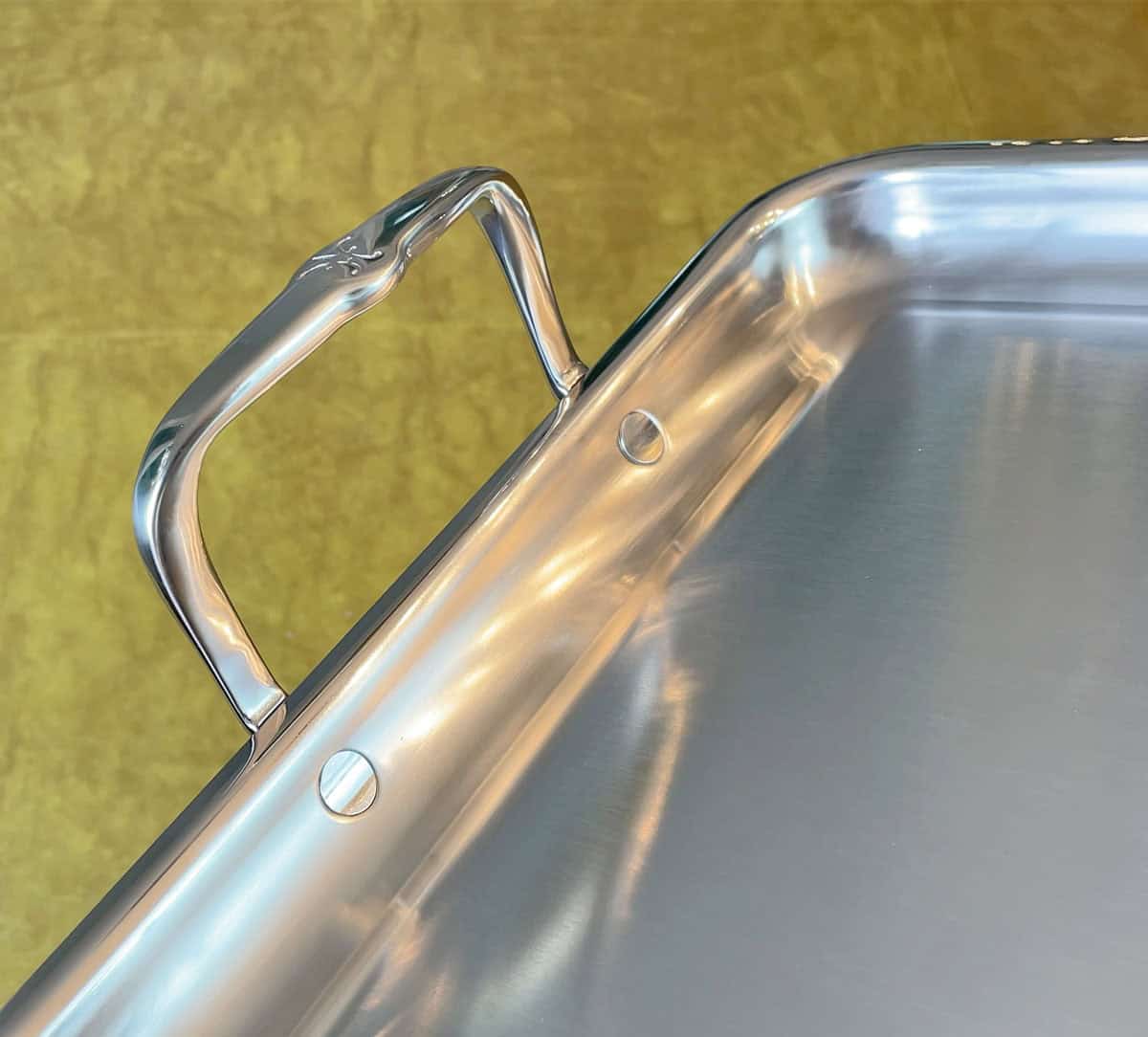
At 6.22 pounds and 3.2 mm thick, it is lighter than Lodge Cast Iron and Made In but much larger in cooking area. The design is high-end, with 1.25-inch sidewalls, flush rivets for easier cleaning, and tall vertical handles that make it easier to lift. The handles also stayed the coolest in my tests, measuring just 80°F after 10 minutes on medium heat.
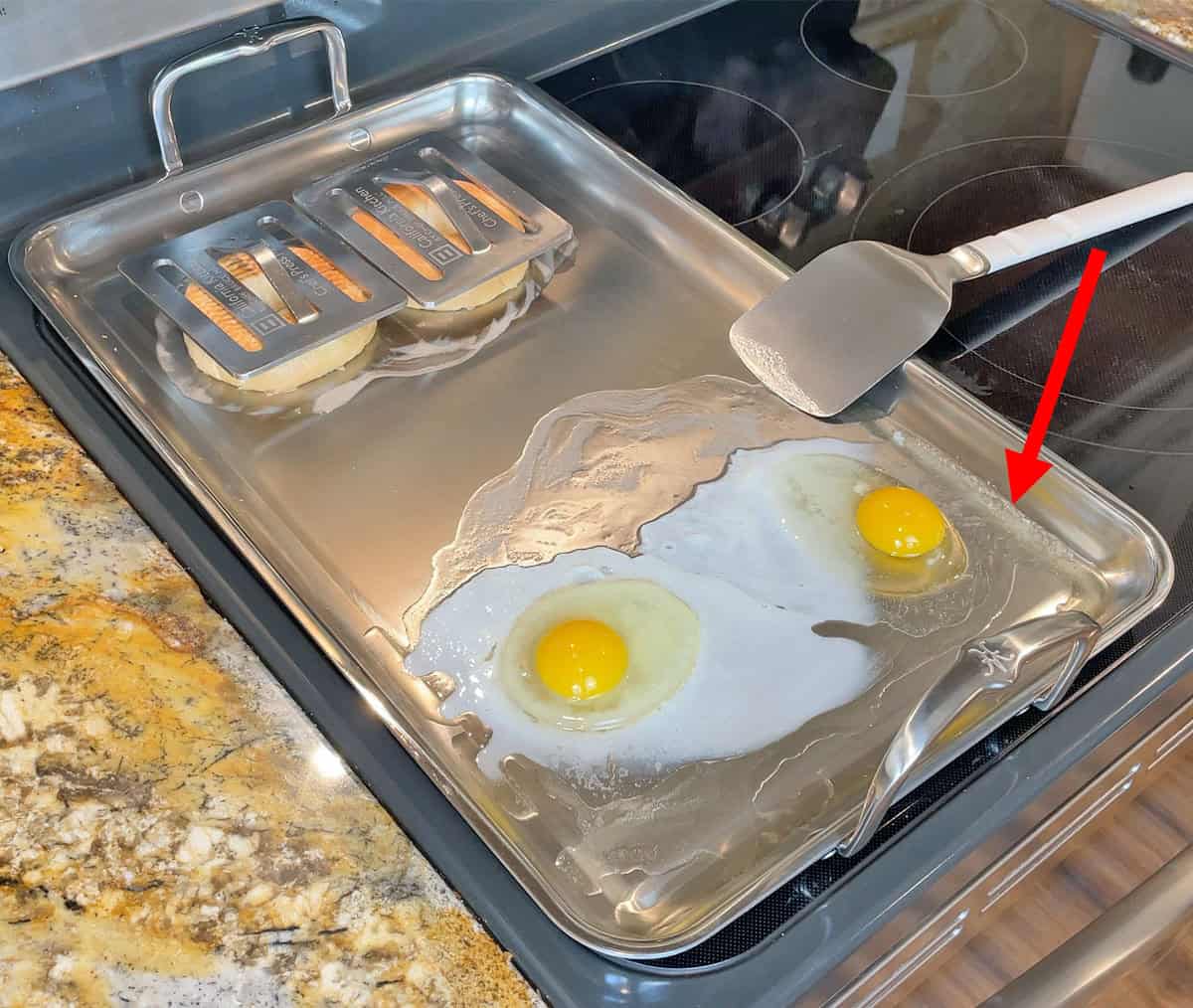
Performance was mixed. It took longer to preheat than most of the others, and the outer zones never reached the same temperatures as the sections directly over the burners. When I cracked eggs near the edges, the whites spread toward the drip channel instead of setting in place. Once the pan was fully preheated, the areas directly above the burners worked well and were surprisingly nonstick for stainless steel, which is not known for releasing food easily.
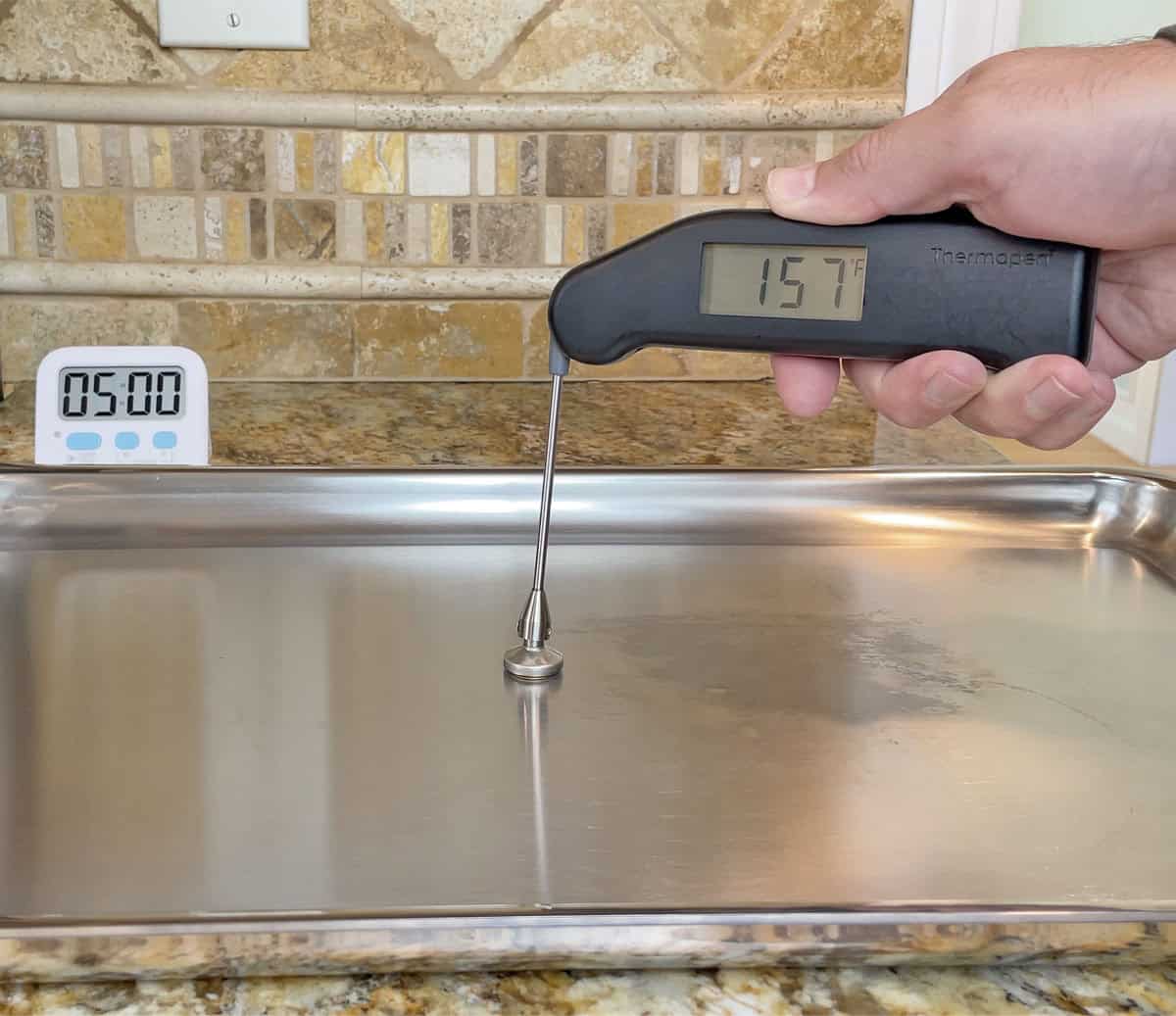
Heat retention was a strength. After reaching 400°F and cooling for five minutes, the surface measured 157°F, the second-best result behind Lodge Cast Iron at 212°F. That made it more reliable for cooking multiple batches without losing as much heat between rounds.
While the cooking surface is huge, most household cooktops cannot heat it evenly across the entire base. That means you pay a premium for space that you often cannot use effectively. On a large bridge burner, it performs better, but on a standard stovetop the edges stay much cooler than the center.
I also tested it outdoors over a fire pit. The steak cooked fine, but the stainless surface discolored, and oil burned into the metal, leaving stains that were difficult to scrub clean. Hestan says this griddle is safe for grills, but it clearly is not built for extreme open-flame cooking the way carbon steel is.
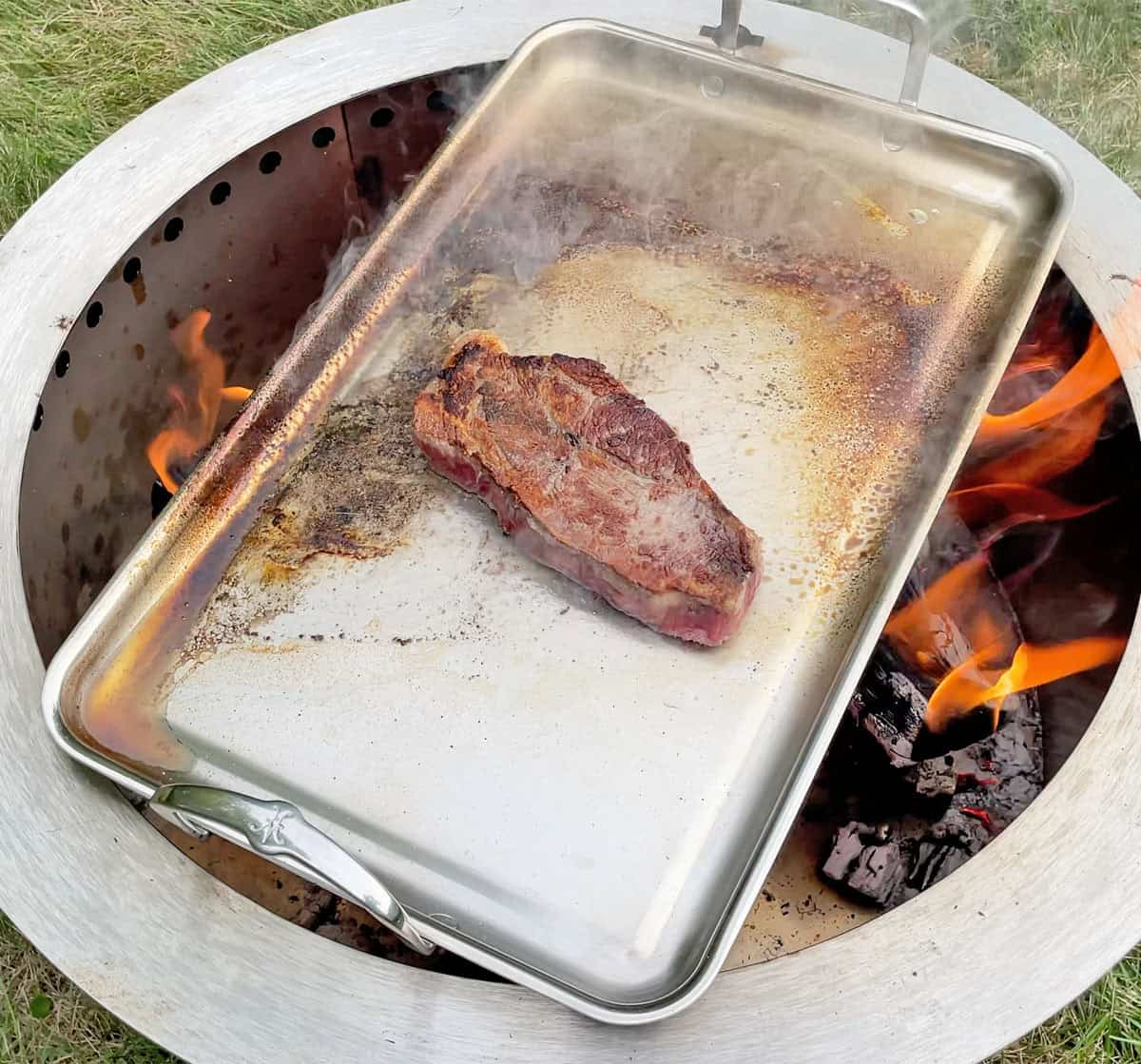
The Hestan griddle is impressive for its size, premium design, and strong heat retention. However, its large footprint makes it hard to heat evenly on most cooktops, and its stainless surface is not ideal for outdoor use. It works best indoors if you need maximum space and value design features like tall handles and flush rivets.
Check the current price and read more reviews on Amazon and HestanCulinary.com.
Bottom Line: Which Stovetop Griddle Is the Best?
Now that you know how each griddle performed, here are my recommendations. But first, I need to address the question: are stovetop griddles even worth it at all?
The truth is, they’re not essential for every kitchen. Because they span across multiple burners, none of them heat perfectly even — hot and cold spots are just the nature of these pans. And performance really depends on your burner setup.
If you’ve got a bridge burner that links two burners together, you’ll get much better results than on a standard stove like mine. In a lot of cases, one large round pan or two smaller pans will be easier to manage.
That said, griddles do have their place. They can be really handy for big batches of pancakes, grilled sandwiches, or turning your grill into a flat top.
With all that in mind, if you do plan to buy one, my top pick for most people is Made In. It’s incredibly durable and versatile. It works well on any cooktop and can handle extremely high heat.
I also like Hestan and HexClad but for different reasons. Hestan’s huge and you can use it as a roasting pan too, but you need to make sure it’s preheated well to avoid cold spots on the sides. HexClad is the best option for eggs and other sticky foods, but the nonstick coating will eventually fail.
Lodge Cast Iron works well on gas stoves and grills, but don’t buy it if you have a flat cooktop because it’s difficult to safely put down and pick up.
And I don’t recommend Nordic Ware or Lodge Carbon Steel. The warping was so bad that they were both basically unusable.
Read more reviews and compare the current prices of all 6 griddles at the links below:
- Made In griddle: MadeInCookware.com, Amazon
- HexClad griddle: HexClad.com, Amazon
- Hestan griddle: HestanCulinary.com, Amazon
- Lodge Cast Iron griddle: LodgeCastIron.com, Amazon
- Lodge Carbon Steel griddle: LodgeCastIron.com, Amazon
- Nordic Ware griddle: Amazon
Related Topics
- Best Cast Iron Skillet: I Tested 6 Top Brands to Find the Winner
- Are Lodge Cast Iron Skillets Any Good? My Review After 5+ Years
- Made In vs. Demeyere: Which Stainless Steel Pans Are Better?
- Made In Carbon Steel Griddle Review: Pros, Cons, and Test Results
- Made In vs. Hestan: Which Stainless Steel Cookware Is Better?
- Stargazer vs. Lodge: Which Cast Iron Skillets Are Better?
- Smithey Cast Iron Skillet Review: Is It Worth the High Price?
- Lodge Classic vs. Chef Collection: Which Skillet Is Better?
- Smithey vs. Lodge Cast Iron: Is the Pricier Skillet Better?
- Lodge Dutch Oven In-Depth Review: Pros and Cons You Need to Know
- Made In Cookware Review After 3+ Years (With Test Results)

