

Smithey Ironware has quickly become one of the most talked-about cast iron brands since launching in 2015.
Isaac Morton founded the company in Charleston, South Carolina, with the goal of bringing back the smooth, polished cooking surfaces found on vintage cast iron skillets from the 1800s, but with modern manufacturing precision.
The result is a line of cast iron cookware that looks and feels premium. But does it actually perform better than more affordable options from Lodge, Calphalon, Stargazer, and Field Company?
To find out, I put the Smithey No. 12 Skillet through a series of controlled tests, measuring heat conduction, heat retention, food release, pouring accuracy, and induction compatibility. I also compared its design, handle, and build quality against five other popular cast iron skillets.
In this review, I’ll share my test results, highlight where Smithey excels and where it falls short, and help you decide if it’s worth the investment.
Key Takeaways
If you’re considering a Smithey cast iron skillet, here’s what you need to know before buying:
- Heat Retention: Smithey ranked #1 in both of my heat retention tests, outperforming Lodge, Stargazer, Field Company, and Calphalon by a significant margin. This is cast iron’s most important trait.
- Cooking Surface: The ultra-smooth, polished interior provides excellent food release. Eggs glided across the surface without sticking in my tests.
- Handle Design: Smithey’s flat, wide handle is the most comfortable and secure of the six brands I tested, especially when using an oven mitt or towel.
- Induction Performance: Smithey stayed completely flat, made no buzzing or clicking noises, and performed well across all induction tests. Field Company warped on induction; Smithey didn’t.
- Seasoning Maintenance: The smooth surface doesn’t hold seasoning as well as rougher brands like Lodge. Expect blotchy, uneven seasoning for the first few months.
- Price: At $220 for the No. 12 Skillet, Smithey costs significantly more than Lodge (under $30) and is one of the most expensive cast iron skillets on the market. It’s only available at Smithey.com.
Use the links below to navigate the review:
- Specs and Design
- Cooking Surface and Seasoning
- Handle and Helper Handle
- Heat Conduction
- Heat Retention
- Egg Test (Food Release)
- Pouring Test
- Induction Cooktop Performance
- Real-World Cooking Performance
- Product Line and Pricing
- Pros and Cons
- Bottom Line: Should You Buy a Smithey Skillet?
Specs and Design
Here’s how the Smithey No. 12 Skillet compares to five other popular 12-inch cast iron skillets I tested:
Swipe to view the entire chart on mobile.
| Feature | Smithey No. 12 | Lodge Classic | Lodge Chef Collection | Stargazer | Field Company No. 10 | Calphalon |
|---|---|---|---|---|---|---|
| Price | $$$$$ (Smithey.com) | $ (Amazon) | $$ (Amazon) | $$$$ (Stargazer) | $$$$ (Field Company) | $$ (Amazon) |
| Made In | Charleston, SC | South Pittsburg, TN | South Pittsburg, TN | WI, OH, PA | IN, IL, WI | China |
| Weight (lb) | 7.2 | 8.1 | 6.3 | 6.5 | 5.5 | 7.2 |
| Flat Cooking Surface (in) | 10 | 10 | 9.75 | 9.5 | 9.7 | 9.5 |
| Wall Height (in) | 2.3 | 2.2 | 1.9 | 2.4 | 2.1 | 2.0 |
| Handle Length (in) | 5.3 | 5.0 | 5.5 | 7.6 | 5.5 | 4.8 |
| Interior Texture | Smooth | Rough | Rough | Smooth | Smooth | Rough |
| Pour Spouts or Flared Rims | Pour Spouts | Pour Spouts | Pour Spouts | Flared Rims | Flared Rims | Pour Spouts |
| Heat Ring | Yes | No | No | No | Yes | No |
Smithey’s No. 12 is a well-proportioned skillet. At 7.2 pounds, it sits in the middle of the pack, lighter than the Lodge Classic (8.1 lbs) but heavier than Field Company (5.5 lbs).
It has the largest flat cooking surface tied with Lodge Classic at 10 inches, and the tallest walls at 2.3 inches (tied with Stargazer at 2.4), which helps prevent splattering when searing.

The bottom of the skillet features a heat ring around the edge. According to Smithey, this ring is ground flat after casting to ensure the skillet sits perfectly level on any cooktop. I initially worried this would hurt performance on induction burners since the center of the bottom doesn’t directly touch the cooktop surface, but my testing confirmed it had no negative impact.

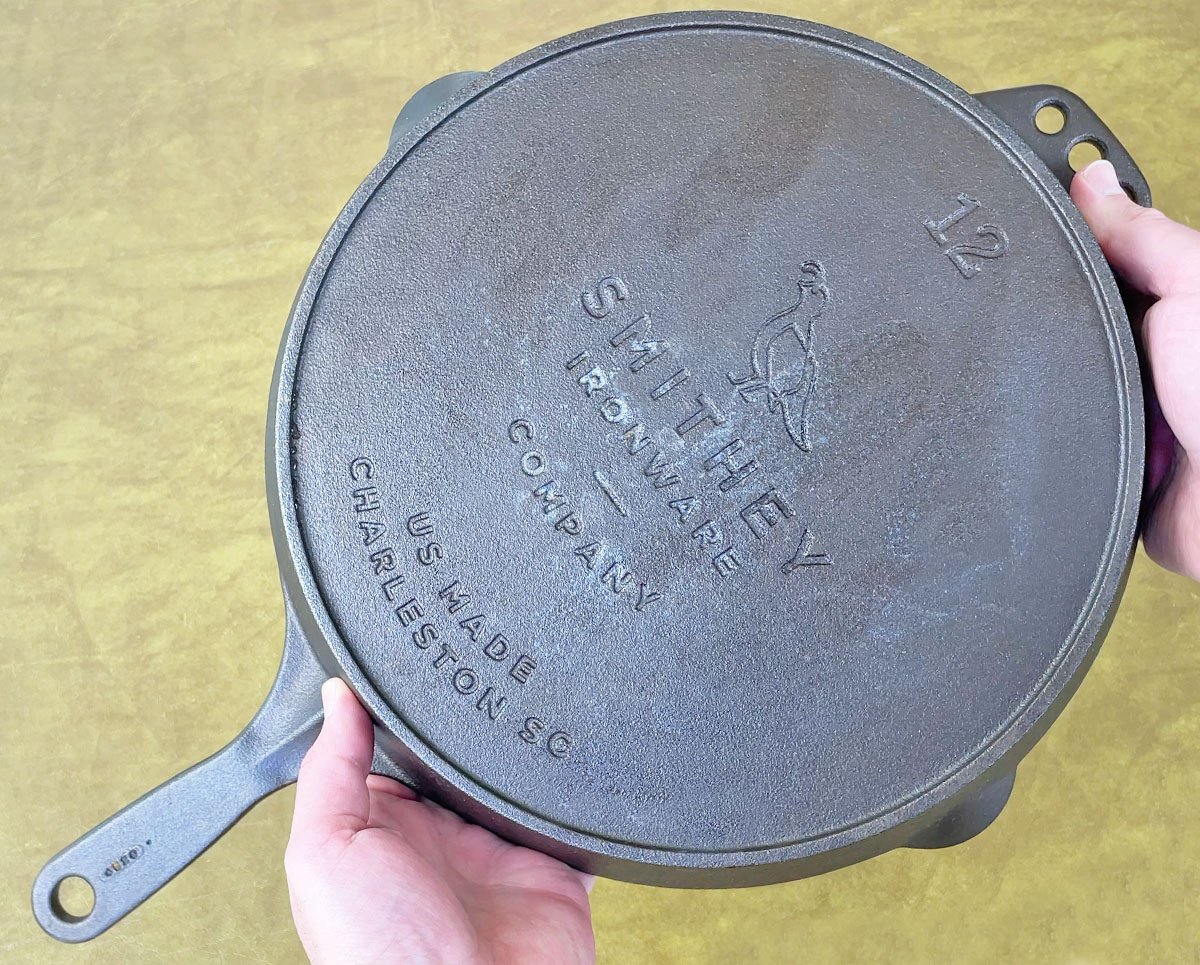
The bottom is also engraved with the skillet size, the Smithey quail logo, “SMITHEY IRONWARE COMPANY,” and “USA MADE CHARLESTON SC.” It’s a nice touch that adds to the heirloom feel.
Cooking Surface and Seasoning
This is where Smithey separates itself from budget brands. After the skillet comes out of the mold, Smithey grinds, polishes, and smooths the cooking surface. The result is a sleek, almost glass-like interior that feels noticeably different from the rough, pebbly texture on Lodge and Calphalon skillets.
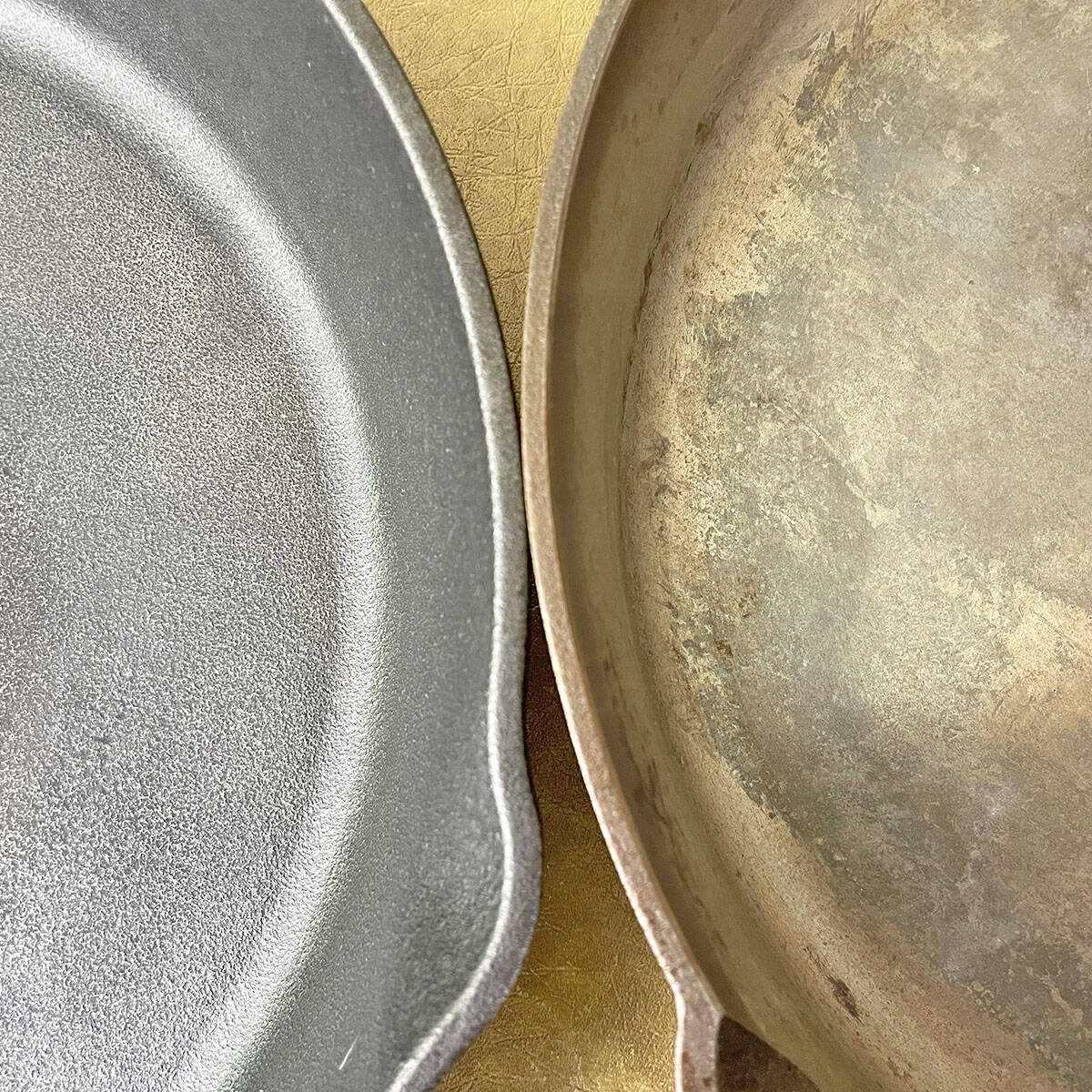
The smooth surface does provide better food release, which I confirmed in my egg test (more on that below). But there’s a trade-off: seasoning doesn’t adhere as well to a smooth surface.
Smithey skillets come pre-seasoned with grapeseed oil, which gives them a lighter bronze color compared to Lodge’s darker soy-based seasoning. I seasoned my Smithey three additional times before using it, and even then, the seasoning got blotchy and wore off when cooking on high heat.

Lodge’s rougher texture grabs onto seasoning and holds it much longer. You’ll only need to re-season a Lodge once or twice a year. With Smithey, expect fading and inconsistency for the first few months until a durable layer builds up through regular use.
The good news is that this is mostly a cosmetic issue. Even with blotchy seasoning, Smithey’s non-stick performance remained excellent during my testing. One minor annoyance with Lodge’s rough surface: paper towel fibers snag and get left behind when drying. That doesn’t happen with Smithey.

Handle and Helper Handle
Smithey’s handle is flat, 5.3 inches long, and maintains a consistent width throughout. A small Valley Quail logo is engraved on the side near the base of the handle.

Of the six cast iron skillets I tested, Smithey has the best handle. It feels secure in your bare hand, and more importantly, it’s wide enough that an oven mitt or towel won’t slip when you grab it. That’s a common problem with thinner handles like those on the Lodge Classic, Calphalon, and Field Company skillets.

The Stargazer handle is longer at 7.6 inches, which keeps your hand further from the heat. But its cup-shaped design digs into your hand, making it uncomfortable over time. Smithey strikes a better balance between comfort and control.

On the opposite end of the skillet, Smithey’s helper handle is a small ledge with three circular holes. The holes reduce weight, add grip texture, and let you hang the skillet from a hook. It looks great and works fine, though Lodge’s helper handle is more functional. Lodge’s trapezoid shape with a wider opening provides a more secure grip, especially when wearing oven mitts.

At 1.1 inches, Smithey’s helper handle is on the smaller side (tied with Lodge Classic). Stargazer’s helper handle is the largest at 1.75 inches, followed by Calphalon at 1.5 inches.
Heat Conduction
To test how quickly each skillet heats up, I poured two cups of cold water into each and heated them on the same burner until the water reached a full boil.
Electric Cooktop Results:
| Skillet | Time to Boil |
|---|---|
| Field Company No. 10 | 1:54 (1st) |
| Stargazer | 2:02 (2nd) |
| Smithey No. 12 | 2:39 (3rd) |
| Lodge Chef Collection | 2:43 (4th) |
| Calphalon | 2:48 (5th) |
| Lodge Classic | 3:01 (6th) |
Smithey finished 3rd. Field Company was the fastest, which makes sense since it’s the lightest and thinnest skillet. But as you’ll see in the next section, heating fast is not what makes a cast iron skillet great.
Heat Retention
Heat retention is the primary reason people buy cast iron. You want a skillet that stays hot when you drop a cold steak onto the surface, maintaining a consistent sear without losing temperature.
I ran two separate heat retention tests across all six skillets.
Test 1: After boiling 2 cups of water, I removed each skillet from the heat and measured the water temperature after 10 minutes.

Test 2: I heated each skillet empty until the surface reached 300°F, removed it from the heat, and measured the surface temperature after 5 minutes with an infrared thermometer.

| Skillet | Water Temp After 10 Min | Surface Temp After 5 Min |
|---|---|---|
| Smithey No. 12 | 105°F (1st) | 158°F (1st) |
| Lodge Classic | 102°F (2nd) | 136°F (5th) |
| Stargazer | 101°F (3rd) | 142°F (3rd) |
| Lodge Chef Collection | 100°F (T-4th) | 138°F (4th) |
| Calphalon | 100°F (T-4th) | 144°F (2nd) |
| Field Company No. 10 | 95°F (5th) | 129°F (6th) |
Smithey won both tests, and it wasn’t particularly close. In the surface temperature test, Smithey held onto 158°F after 5 minutes, a full 14 degrees higher than the second-place finisher (Calphalon at 144°F) and 29 degrees higher than Field Company (129°F).
This means when you’re searing a steak or frying chicken, the Smithey skillet will recover heat faster and maintain a more consistent temperature than any other skillet I tested. For cast iron, that’s the metric that matters most.
Egg Test (Food Release)
To test non-stick performance, I preheated each skillet for 2 minutes, added one teaspoon of oil and one teaspoon of butter, then cooked a single egg.
Smithey’s performance was phenomenal. The egg slid around the surface like a hockey puck and didn’t stick at any point. I didn’t have to nudge it with a spatula; simply tilting the pan was enough to get it moving.

For comparison, here’s how all six performed:
| Skillet | Egg Test Result |
|---|---|
| Smithey No. 12 | No sticking |
| Stargazer | No sticking |
| Lodge Classic | No sticking |
| Field Company No. 10 | Minimal sticking |
| Lodge Chef Collection | Minimal sticking |
| Calphalon | Noticeable sticking |
Smithey and Stargazer were the top performers. Lodge Classic also did well despite its rougher surface. The takeaway is that any well-seasoned cast iron skillet can cook eggs without sticking, but the polished surfaces on Smithey and Stargazer provide an extra level of effortless food release.
Pouring Test
Both Lodge and Smithey use pour spouts rather than flared rims (Stargazer and Field Company have flared rims). I ran two pouring tests to see how well each design controlled liquid.
In the first test, I poured 2 cups of water from each skillet into a glass. Smithey’s pour spouts are larger and deeper than Lodge’s, but the initial rush of water still caused some spilling. Once the flow slowed, the water poured precisely. Lodge’s smaller spouts had similar spilling issues.

In the second test using beef fat (which is thicker), Smithey performed well with minimal dripping, on par with both Lodge skillets.

Stargazer was the clear winner in pouring accuracy thanks to its flared rims, which controlled the liquid from any angle without spilling. If precise pouring is a priority for you, Stargazer has the edge. But for most cooking scenarios, Smithey’s pour spouts work fine.
Induction Cooktop Performance
Induction cooktops heat fast, but that speed can cause warping, uneven cooking, and loud buzzing or clicking noises. I tested Smithey, Lodge Classic, and Field Company on the same induction cooktop (the Breville Control Freak) to see how each handled these common issues.
To test speed, I set the cooktop to 400°F and timed how long it took for the center of each skillet to reach that temperature. As soon as the center hit 400°F, I measured the edge temperature with a surface thermometer to see how evenly the heat spread across the surface. A larger gap between the center and edge means more uneven cooking.
To test warp resistance, I measured how flat the bottom of each skillet was before and after heating it to 425°F for two minutes. Throughout testing, I also tracked whether the skillets buzzed, clicked, wobbled, or showed any signs of warping, like oil pooling at the edges.
| Test | Smithey | Lodge Classic | Field Company |
|---|---|---|---|
| Time to 400°F | 2:13 | 2:14 | 1:51 |
| Edge Temp (at 400°F center) | 299°F | 280°F | 322°F |
| Temp Difference | 101°F | 120°F | 78°F |
| Warping | None | None | Significant |
| Buzzing/Clicking | None | None | Yes |
Field Company warped significantly on induction. The center bowed downward, the pan wobbled on the cooktop, and it buzzed and clicked throughout testing. Based on those results, I can’t recommend Field for induction cooking.
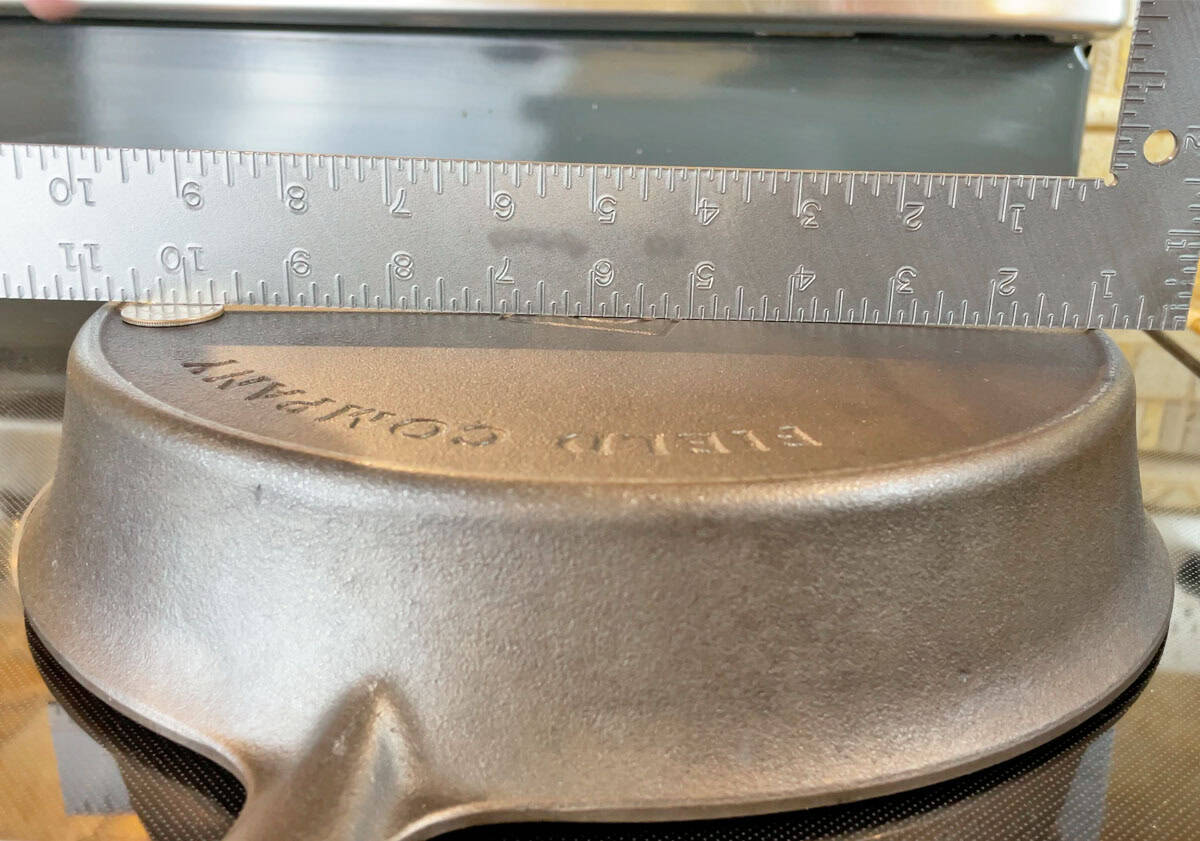
Smithey and Lodge both stayed completely flat and produced no noise. Smithey had slightly better heat distribution (101°F difference vs. Lodge’s 120°F), and they reached 400°F at nearly the same speed.
If you have an induction cooktop and want a cast iron skillet, Smithey is the best option I’ve tested.
Real-World Cooking Performance
Beyond controlled tests, I’ve been cooking with the Smithey No. 12 for several months. I’ve used it for searing steaks, frying chicken, cooking eggs, roasting vegetables, baking cornbread, and more.
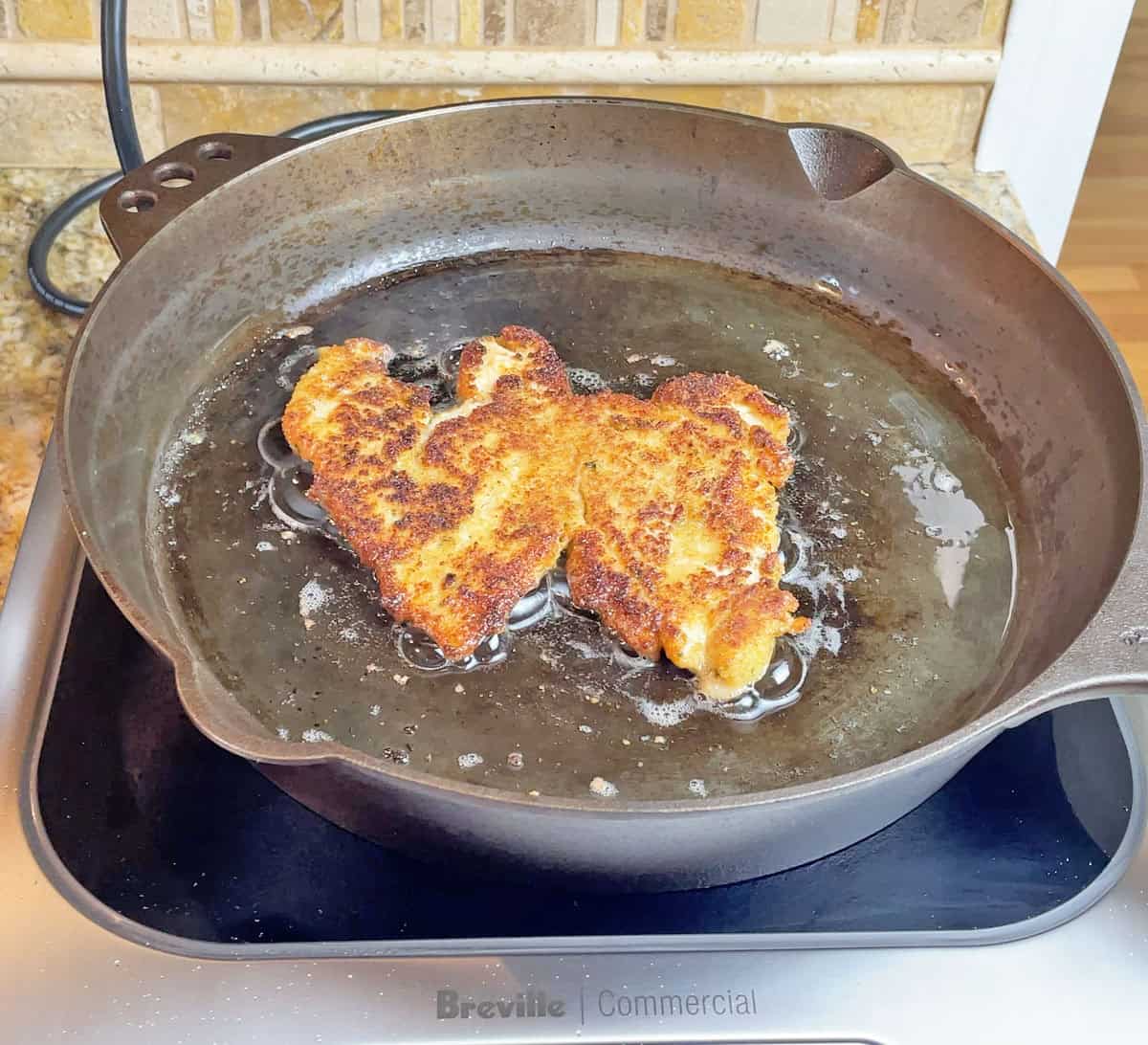
It performs exactly how you’d expect a high-quality cast iron skillet to perform. It heats slowly but steadily, holds temperature well when food hits the surface, and produces excellent sears and crusts.

The smooth interior feels nice to clean. A quick scrub with coarse salt or a chain mail scrubber, followed by a light coat of oil, and it’s ready for next time.
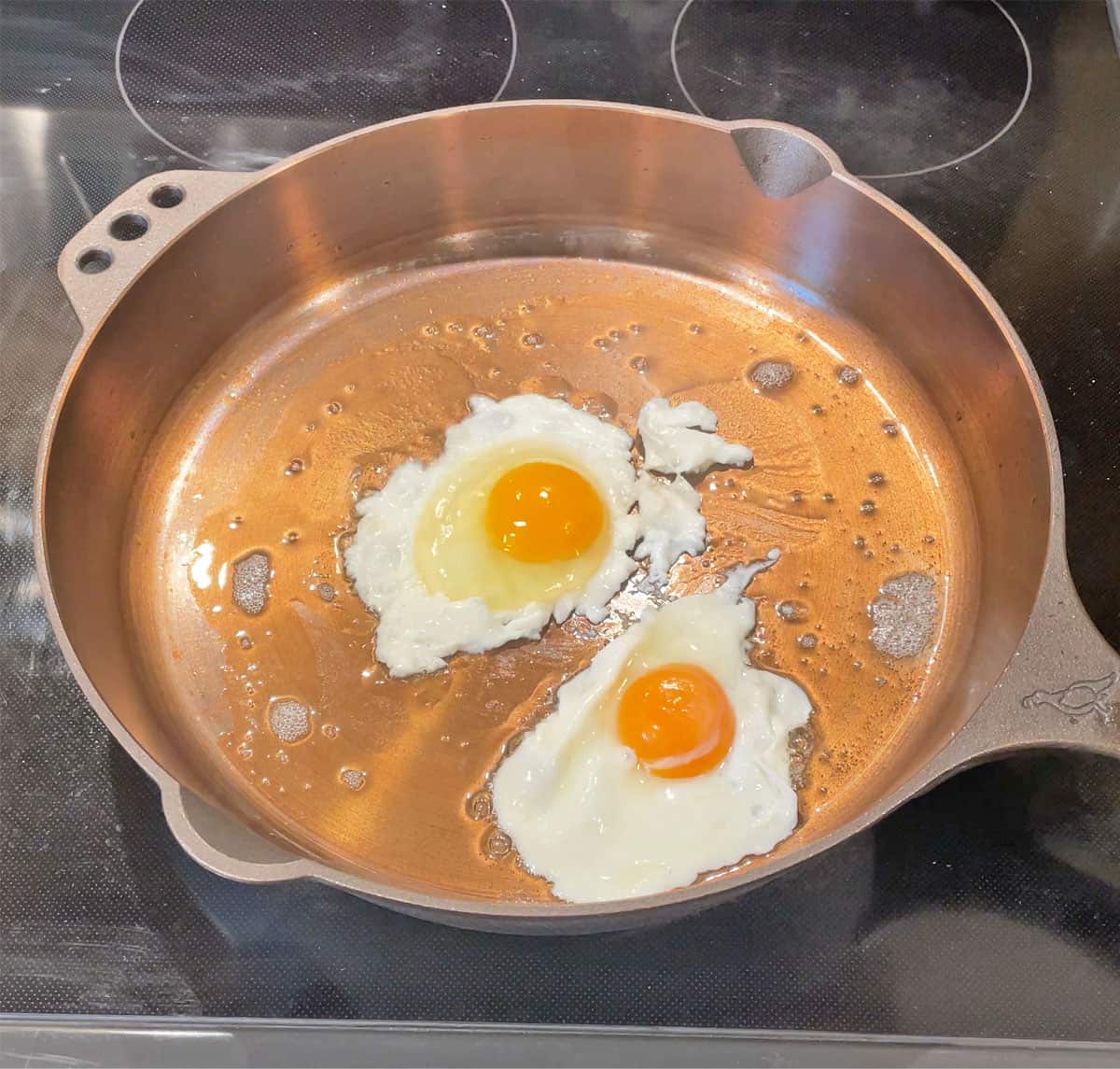
Lodge, Stargazer, and Field Company all sear, bake, and fry effectively too. They’re all hunks of iron molded into slightly different shapes. The real-world performance gap between a $25 Lodge and a $220 Smithey isn’t nearly as dramatic as the price gap.
Where Smithey earns its premium is in the details: the comfortable handle, the smooth cooking surface, the superior heat retention, the quiet induction performance, and the overall build quality. These are things you appreciate more and more over years of daily use.
Product Line and Pricing
Smithey offers a focused lineup of cast iron cookware (only on Smithey.com). Here’s a breakdown of their current products and prices:
Skillets:
- No. 6 Skillet: $85
- No. 10 Skillet: $180
- No. 12 Skillet: $220
- No. 14 Skillet: $250
Chef Skillets (curved walls, lighter):
- No. 8 Chef Skillet: $120
- No. 10 Chef Skillet: $160
Dual Handle Skillets:
- No. 6 Dual Handle: $85
- No. 12 Dual Handle: $220
- No. 14 Dual Handle: $250
Griddles:
- No. 10 Flat Top Griddle: $125
- No. 12 Flat Top Griddle: $140
- Double Burner Griddle: $295
Specialty:
- No. 11 Deep Skillet + Glass Lid: $230
- No. 12 Grill Pan: $220
Dutch Ovens:
- 3.5 QT: $225
- 5.5 QT: $300
- 7.25 QT: $375
Most Smithey products are engravable, which makes them a solid gift option. They also carry accessories like seasoning oil ($15) and a spatula ($40). Every piece comes with a lifetime guarantee.
For comparison, a Lodge Classic 12-inch skillet costs under $30, and even Lodge’s premium Blacklock 12-inch is well under $100. The price difference is largely driven by Smithey’s small-batch production, the extra step of machining and polishing the cooking surface, and the brand’s focus on heirloom-quality craftsmanship.
Pros and Cons
Pros:
- Best heat retention of any cast iron skillet I’ve tested
- Ultra-smooth, polished cooking surface for excellent food release
- Comfortable, wide handle that stays secure with oven mitts
- No warping or noise on induction cooktops
- Made in the USA (Charleston, SC)
- Thoughtful design details (quail logo, three-hole helper handle, heat ring)
- Lifetime guarantee
- Engravable for gifting
Cons:
- Expensive ($220 for the No. 12)
- Smooth surface doesn’t hold seasoning well; expect blotchy, uneven seasoning for months
- Pour spouts still spill during an initial rush of liquid (flared rims like Stargazer’s are more effective)
- Helper handle is functional but less secure than Lodge’s
- At 7.2 lbs, it’s not the lightest option (Field Company is 5.5 lbs)
- Limited product line compared to Lodge’s extensive range of sizes and collections
Bottom Line: Should You Buy a Smithey Skillet?
If you want the best-performing cast iron skillet available and price isn’t the deciding factor, Smithey is the one to get. It ranked first in heat retention by a wide margin, produced the best food release alongside Stargazer, has the most comfortable handle of the six brands I tested, and performed flawlessly on induction.

The craftsmanship is evident every time you pick it up. The smooth interior, the quail logo, the heat ring, the three-hole helper handle. These details matter when you’re using something every day for the rest of your life.
That said, cast iron is cast iron. A Lodge Classic (see my review) at a fraction of the price will sear a steak, bake cornbread, and fry an egg just fine. The performance gap does not match the price gap. If you’re on a budget, Lodge is still the best value in cast iron cookware.
But if you appreciate fine craftsmanship, want the best heat retention on the market, and plan to keep this skillet for decades, Smithey is worth the investment. It’s the skillet I named the best overall in my cast iron skillet comparison, and after months of testing and daily use, that hasn’t changed.
Want to learn more or check the current price? Smithey cast iron skillets are only available at Smithey.com.
Related Topics
- Smithey vs. Lodge Cast Iron: Is the Pricier Skillet Better?
- Best Cast Iron Skillet: I Tested 6 Top Brands to Find the Winner
- Lodge Classic vs. Chef Collection: Which Skillet Is Better?
- Are Lodge Cast Iron Skillets Any Good? An In-Depth Review
- Best Stovetop Griddle? I Tested Made In, Lodge, HexClad, Hestan, and Nordic Ware
- Stargazer vs. Lodge: Which Cast Iron Skillets Are Better?
- Lodge Dutch Oven In-Depth Review: Pros and Cons You Need to Know
- Lodge vs. Tramontina: Which Dutch Ovens Are Better?
- Stargazer Cast Iron Skillet Review: Is It Worth the High Price?
- Cast Iron Skillet Sizes: A Guide to Help You Choose

