

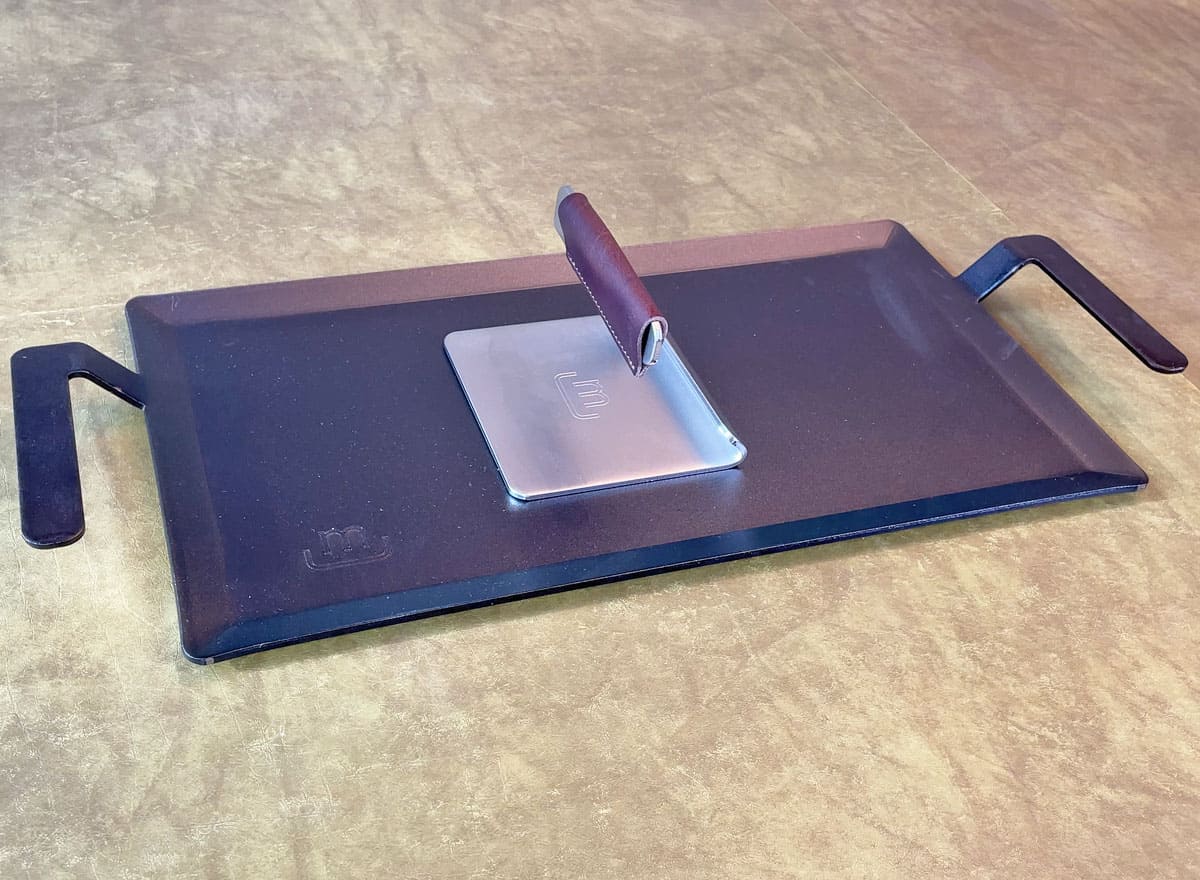
Is the Made In Carbon Steel Griddle worth buying? I’ve been using it for years, and more recently I put it through a series of controlled tests alongside other highly-rated griddles from Lodge, HexClad, Hestan, and Nordic Ware.
To find out how Made In stacks up, I measured how quickly and evenly it heats, how well it holds onto that heat, and whether it stays flat or warps under high temperatures. I also checked how hot the handles get after heating it for 10 minutes.
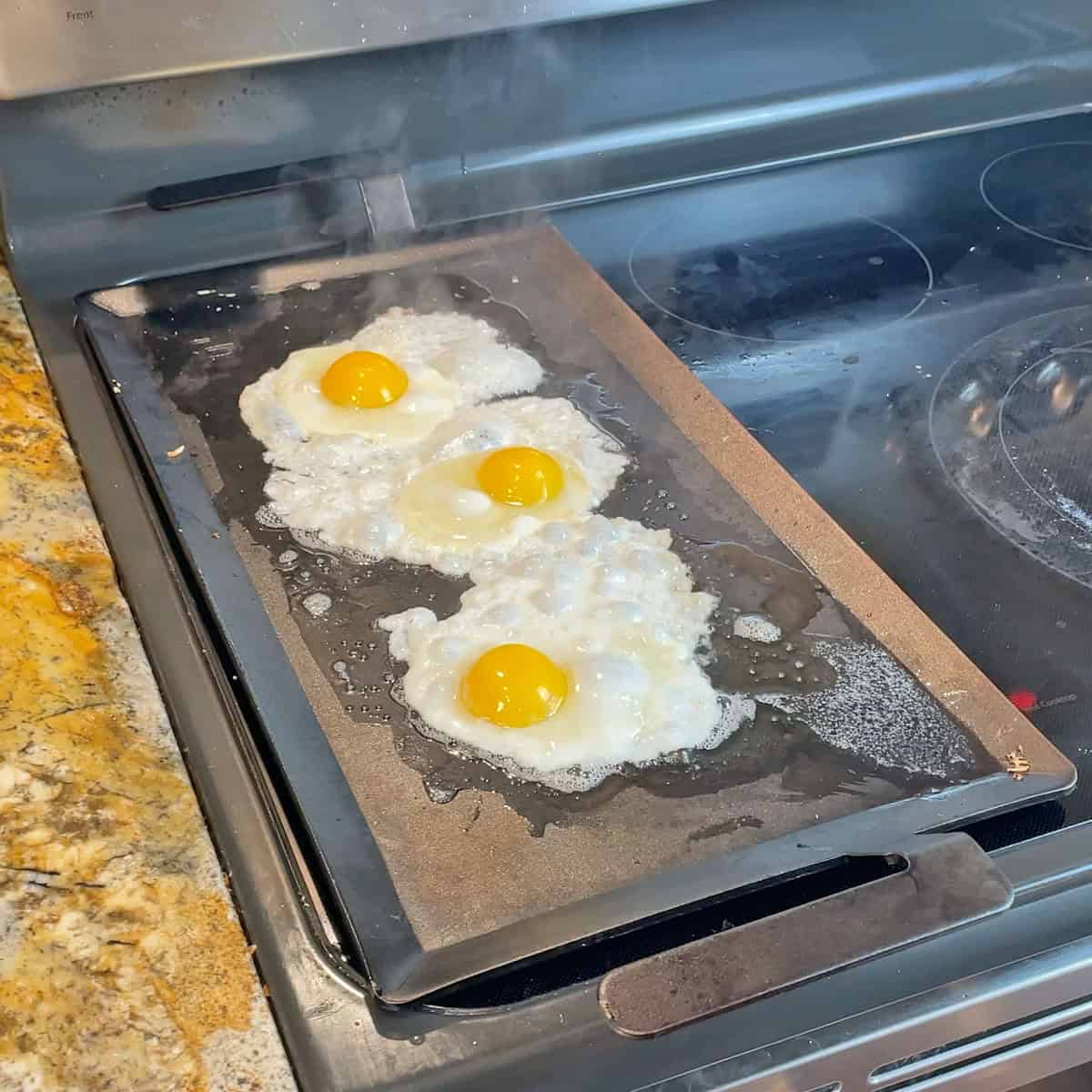
I also cooked tons of food on it, including eggs, pancakes, steak, burgers, and vegetables.
In this review of the Made In Carbon Steel Griddle, I’ll walk you through the biggest pros and cons I found so you know exactly what to expect before you buy it.
Key Takeaways
- The Made In Carbon Steel Griddle is highly versatile. It works on all cooktops and performs well on a propane grill or even a firepit.
- Its build quality is superior to Lodge Carbon Steel. Made In is thicker and pressed from a single piece of steel with seamless corners. It also has a smoother cooking surface that releases food better, especially eggs. Lodge is thinner and has welded corners, a rougher surface, and warped severely on my flat cooktop.
- Made In retains heat well, ranking just behind Lodge Cast Iron and Hestan in my tests.
- On the negative side, it heats unevenly, it bows slightly under high heat, and it is heavy. The handles are bulky, uncomfortable, and sharp enough to scratch your sink if you are not careful.
- If you want a griddle that can move between indoor and outdoor cooking and last for decades, the Made In Carbon Steel Griddle is the best one I’ve tested.
- It’s available on Amazon and MadeInCookware.com. If you buy directly from Made In, use the code PRUDENT at checkout to save 10%.
Use the links below to navigate the review:
- Pro: Versatility
- Pro: Durability
- Pro: Build Quality vs. Lodge Carbon Steel
- Pro: Heat Retention
- Pro: Handle Function
- Con: Uneven Heating
- Con: Slight Warping
- Con: Heavy and Bulky
- Con: Handle Comfort
- Bottom Line: Is the Made In Carbon Steel Griddle Worth Buying?
Pro: Versatility
One of the biggest advantages of the Made In griddle is that it works on every type of cooking surface. It sits flat enough to use on induction and smooth-top electric ranges, something Lodge’s carbon steel griddle couldn’t manage since it wobbled and rocked during testing.
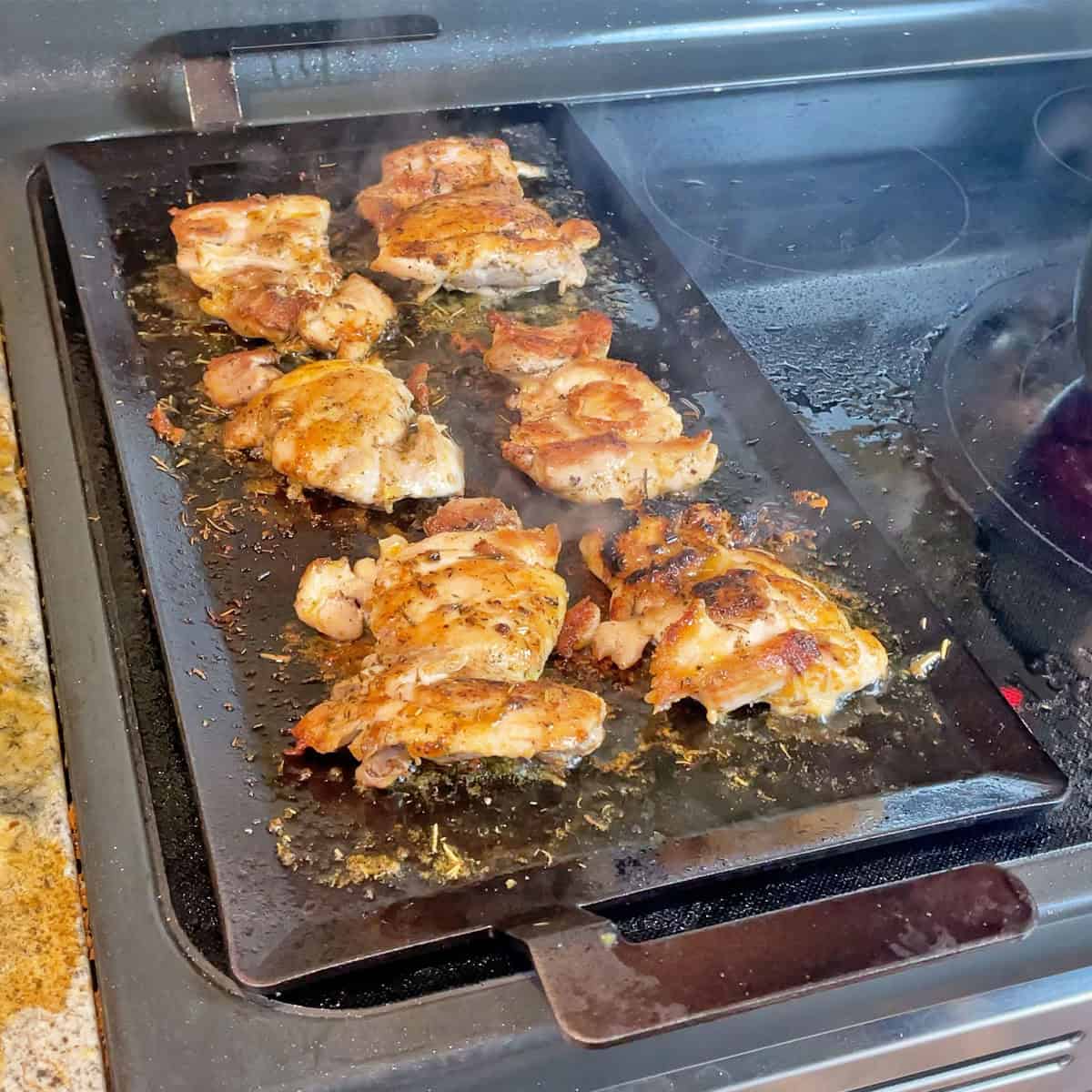
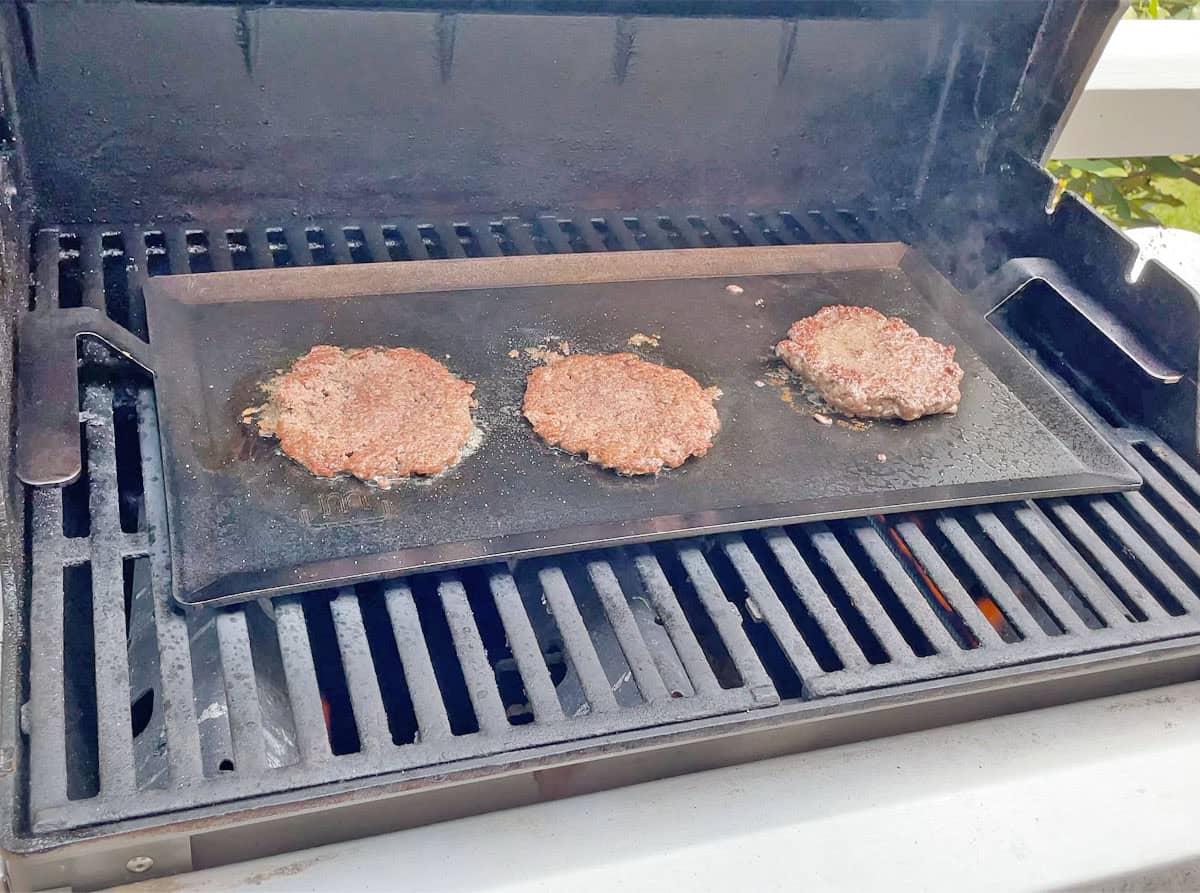
It’s also ideal for turning a propane grill into a flat top. Instead of food slipping between the grates, you get a wide, flat surface that’s perfect for vegetables, pancakes, and smash burgers, all while still taking advantage of the power of the grill burners.
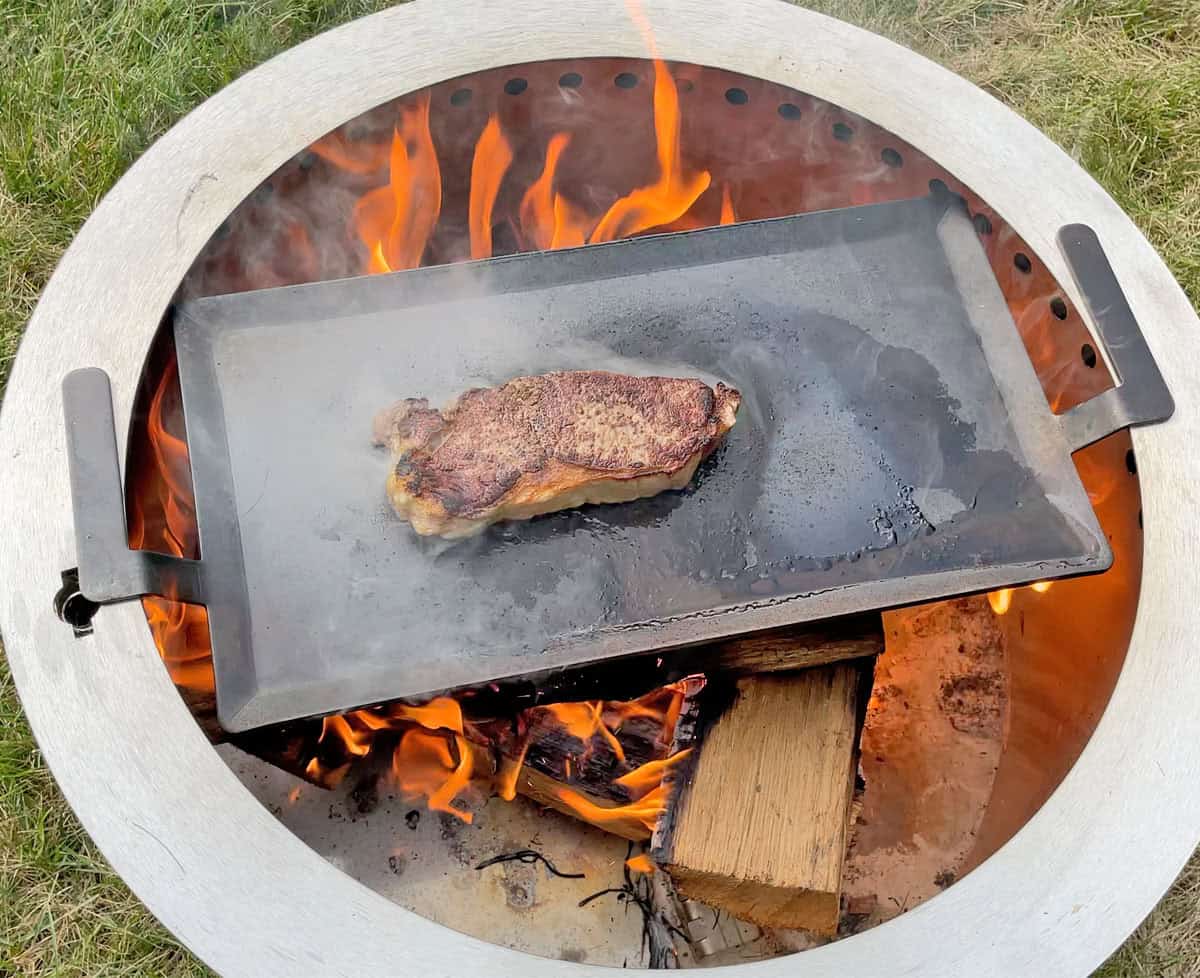
I also tested it over a firepit with the flames running high. The griddle got screaming hot, seared a steak perfectly, and cleaned up easily afterward. The oils and fat baked into the surface only added to the seasoning.
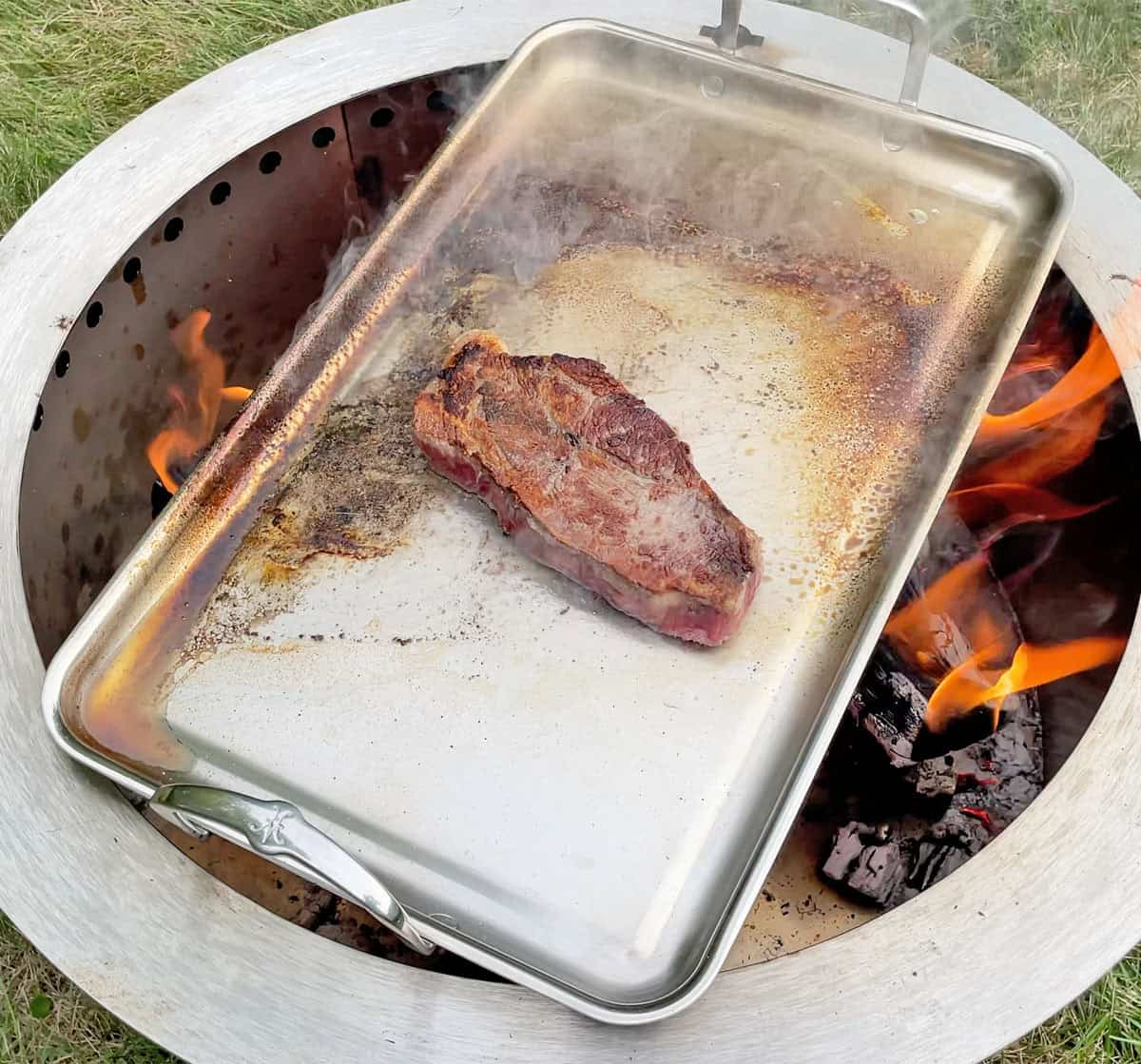
When I tried the same with the Hestan stainless steel griddle, the oils burned into the steel, left behind stubborn stains, and took a lot of scrubbing to remove.
Pro: Durability
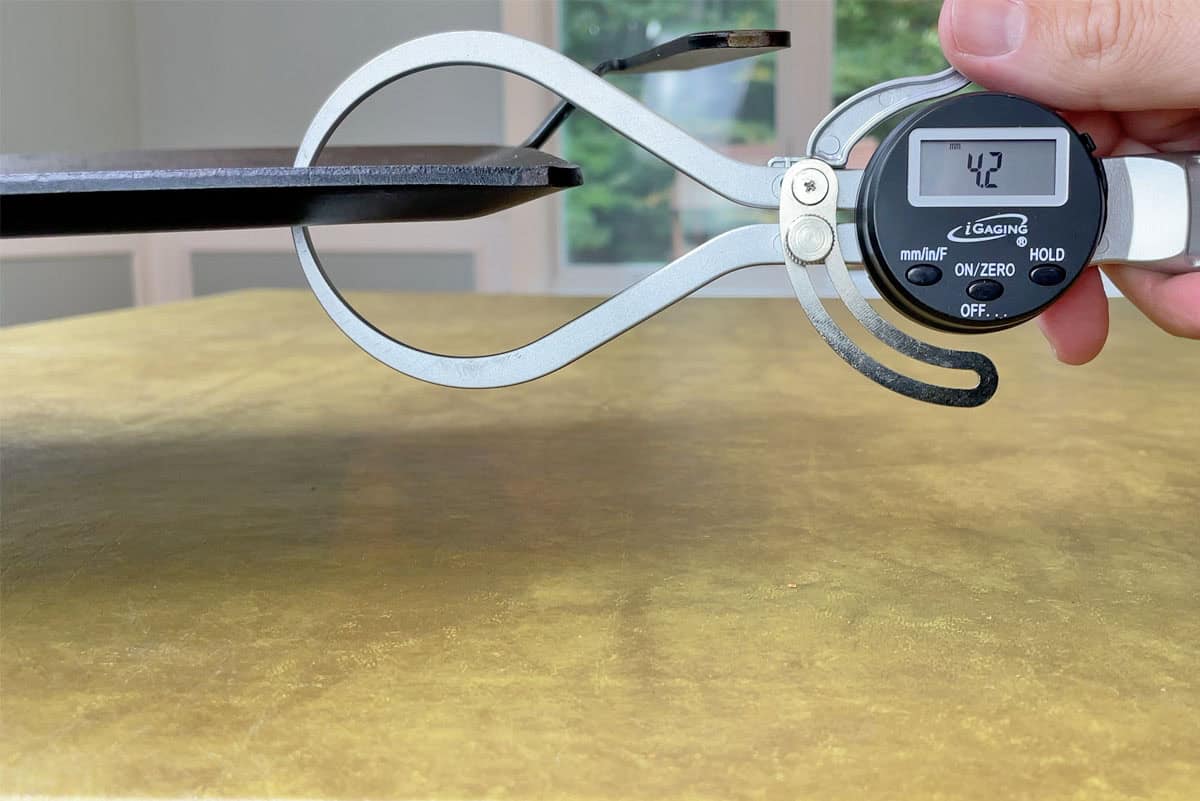
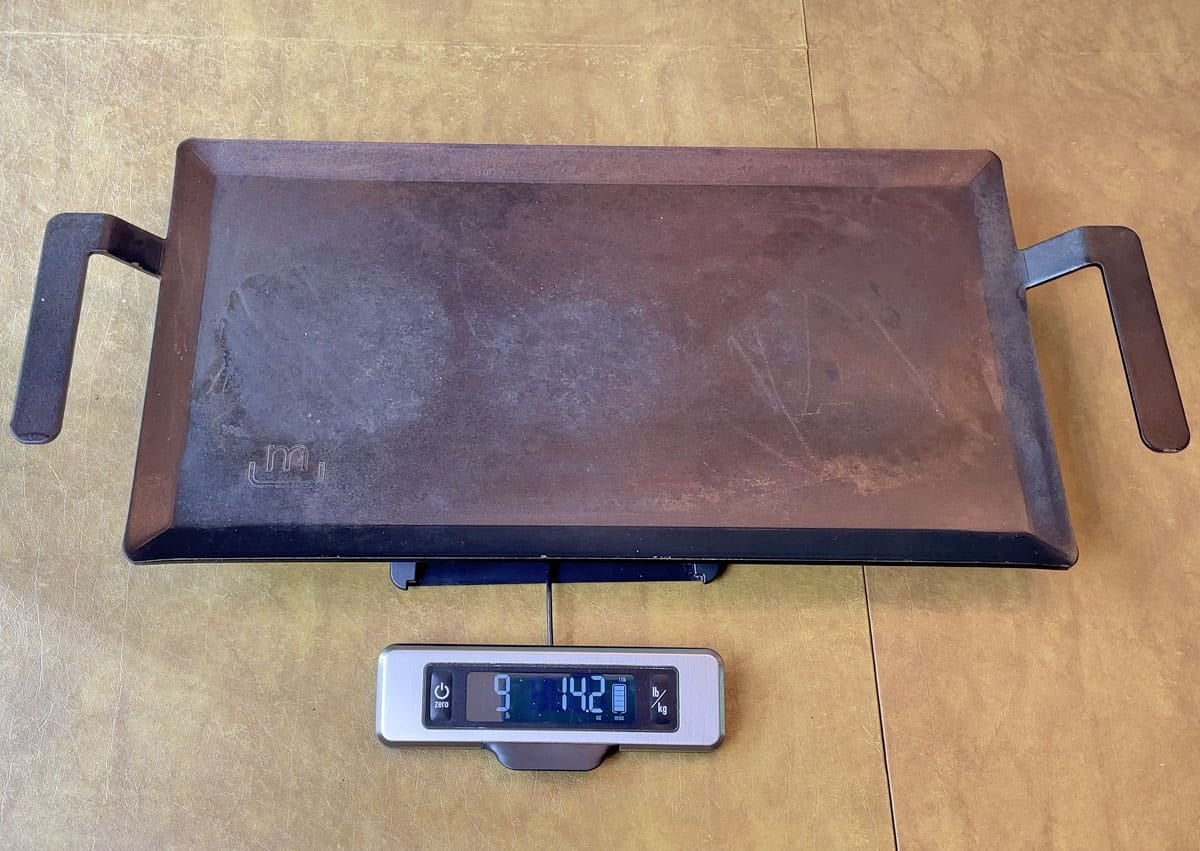
The Made In griddle is built from thick, 4.2 mm carbon steel, and it feels solid at nearly 10 pounds. Unlike nonstick griddles such as HexClad or Nordic Ware, there is no coating to scratch, peel, or wear down.
The surface is preseasoned, and each time you cook with it and apply oil, that seasoning layer improves. Over time, it develops a slicker, more resilient cooking surface that actually gets better with use instead of degrading.
This durability is why carbon steel griddles like Made In’s can last for decades. I have used mine for years without any sign of the surface breaking down. It can handle extremely high heat without issue, whether that is searing steaks over a firepit or running it at maximum burner output indoors.
It is the kind of pan you can rely on for the long haul, which is not true for lighter aluminum or coated options.
Pro: Build Quality vs. Lodge Carbon Steel
The griddle most often compared to Made In’s is Lodge Carbon Steel. They are the two most similar options on the market, and chances are you may be wondering if you should save money and buy Lodge since it is significantly cheaper.
When I tested both side by side, the differences were obvious. The Lodge griddle wasn’t flat out of the box, and it warped even more once it was heated. On my stovetop it wobbled and even spun around, so parts of the surface never touched the heat source. It simply didn’t work.
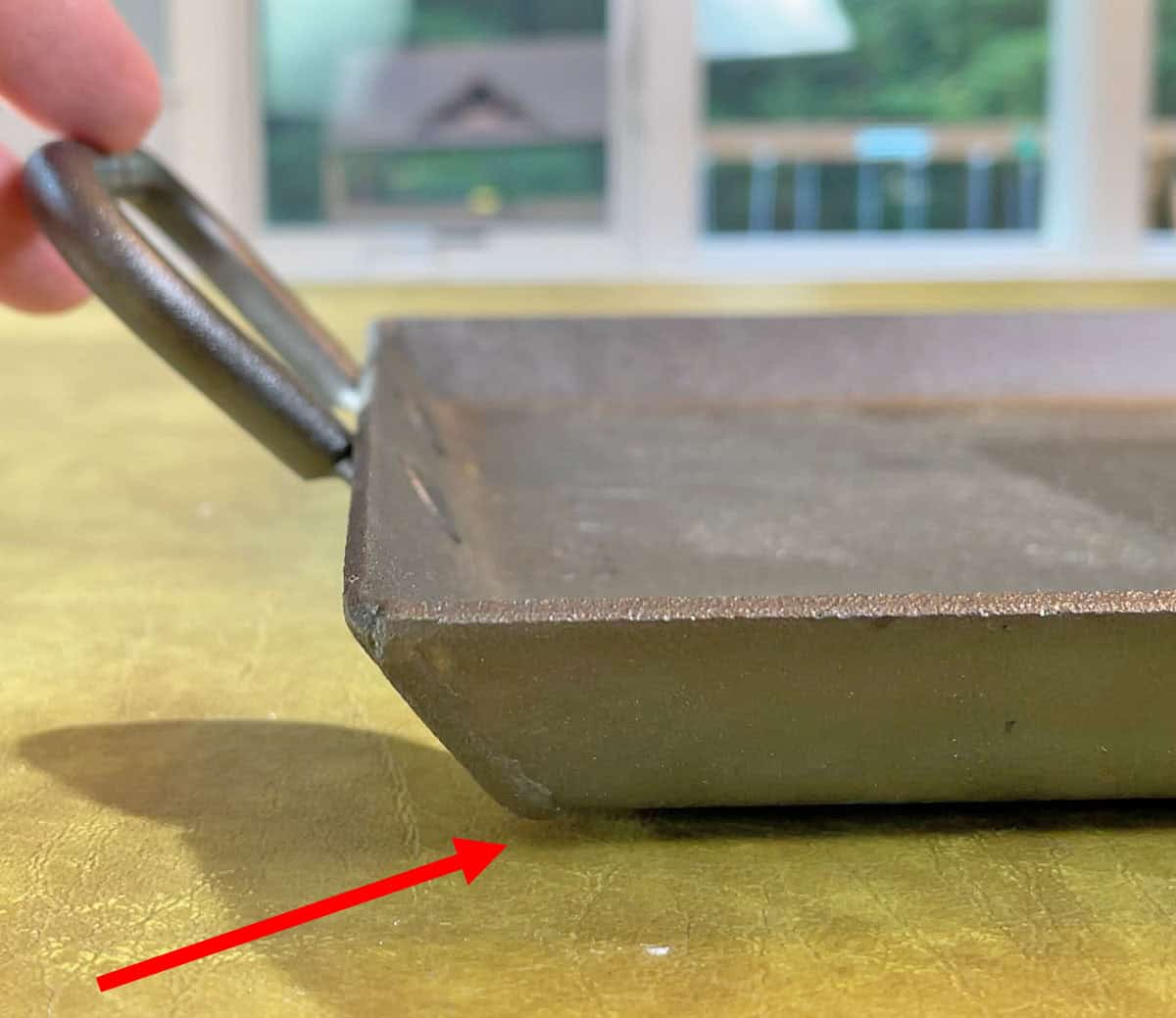
Lodge even says in their product description that it’s not recommended for flat-top ranges, and my testing confirmed why.
Those performance issues come down to build quality. The Made In griddle is 4.2 mm thick, while Lodge is only 3.3 mm. That extra thickness gives Made In more stability and a sturdier feel.
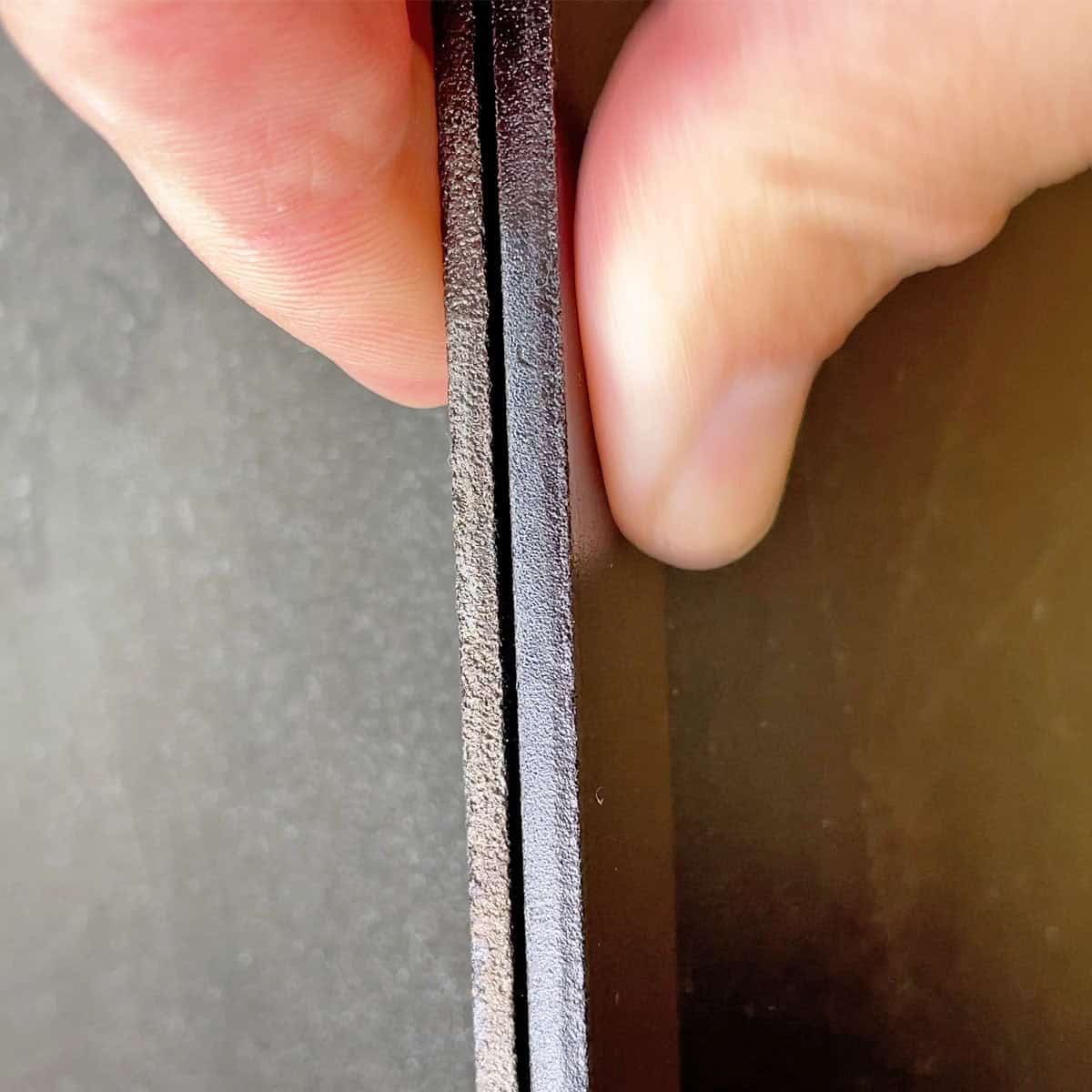
It is also pressed from a single piece of steel, so the corners are smooth and seamless. Lodge’s version is bent sheet metal with welded corners, which look rougher and less refined.
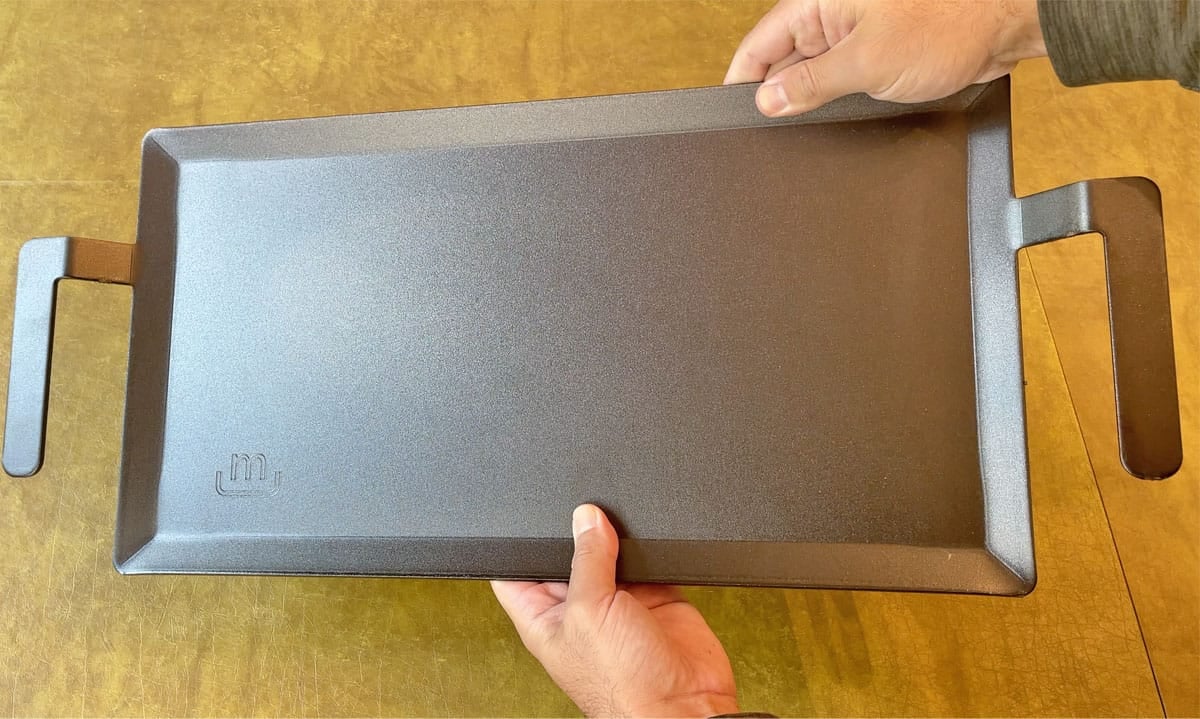
Also, Lodge’s cooking surface is noticeably rougher, while Made In’s is smoother and more polished.
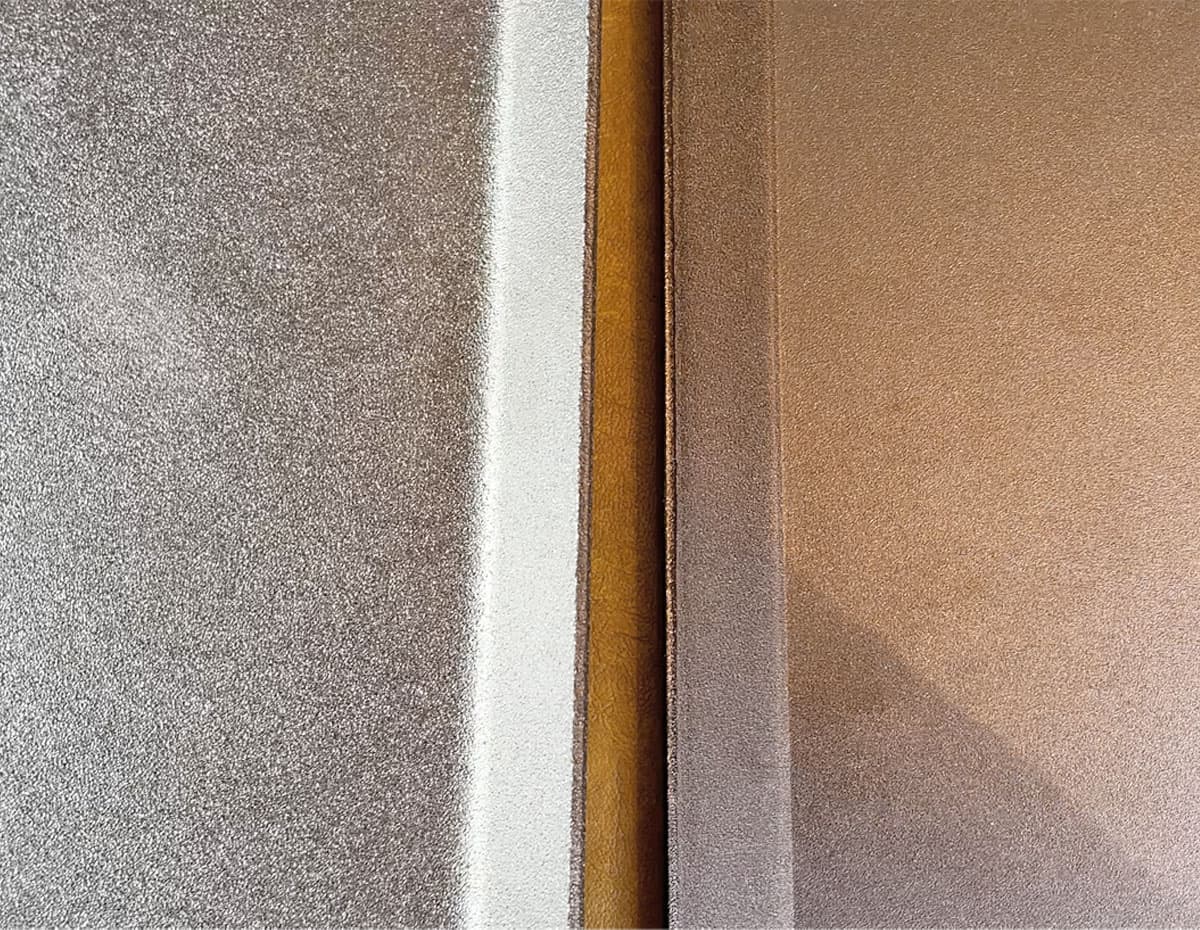
That smoother surface released food better in my tests, especially delicate items like eggs, while Lodge’s made sticking more likely.
Pro: Heat Retention
The Made In griddle holds heat well once it is hot. In my controlled test, after heating it to 400°F and removing it from the burner, the surface was still 143°F five minutes later. That result ranked third out of the six griddles I tested, behind only Lodge Cast Iron at 212°F and Hestan at 157°F.
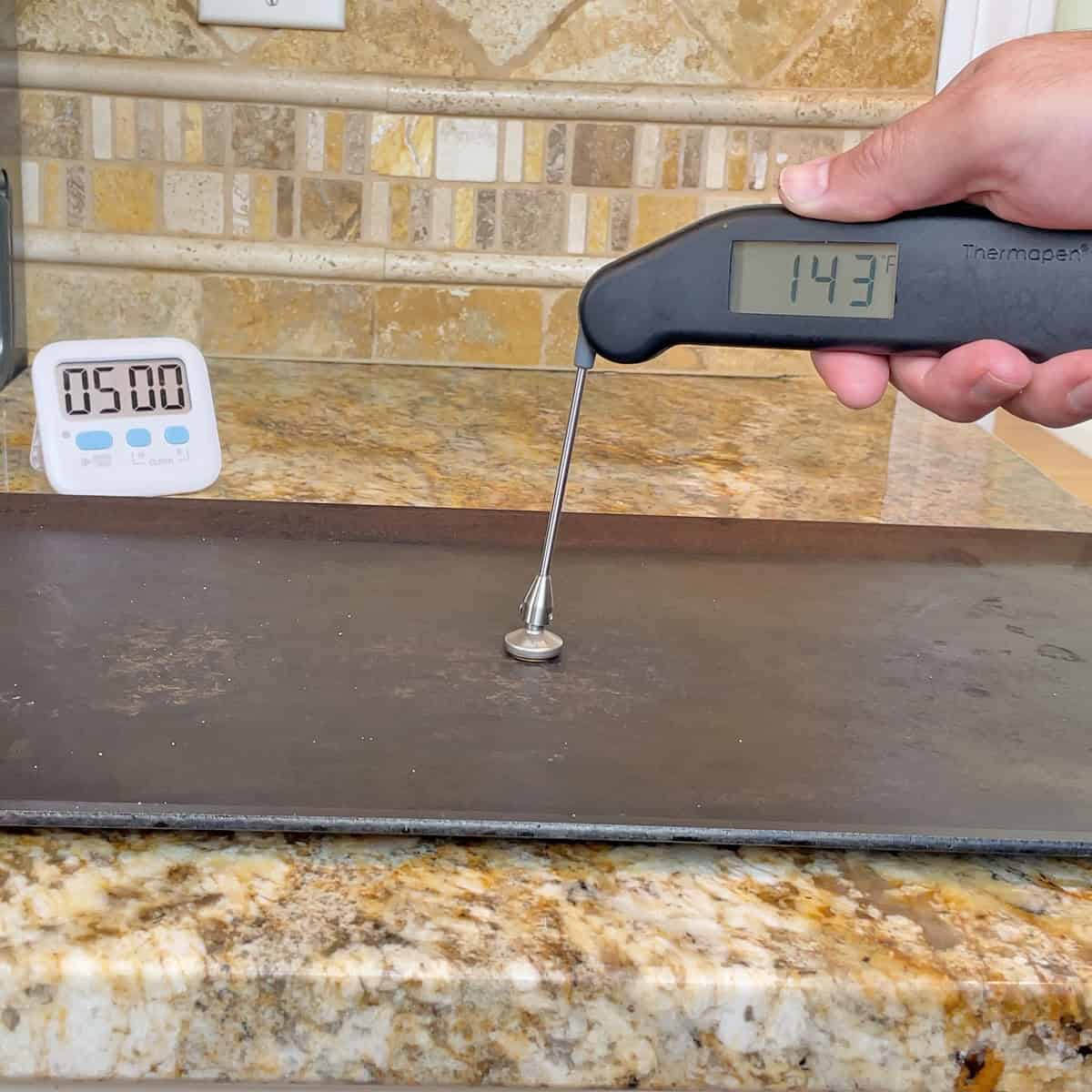
Good heat retention matters when you are cooking in batches. With the Made In griddle, you can cook a round of pancakes or sear several burgers and then start the next batch without the surface temperature crashing. Nonstick options like Nordic Ware and HexClad dropped off much faster, which forces you to wait for the heat to recover.
Pro: Handle Function
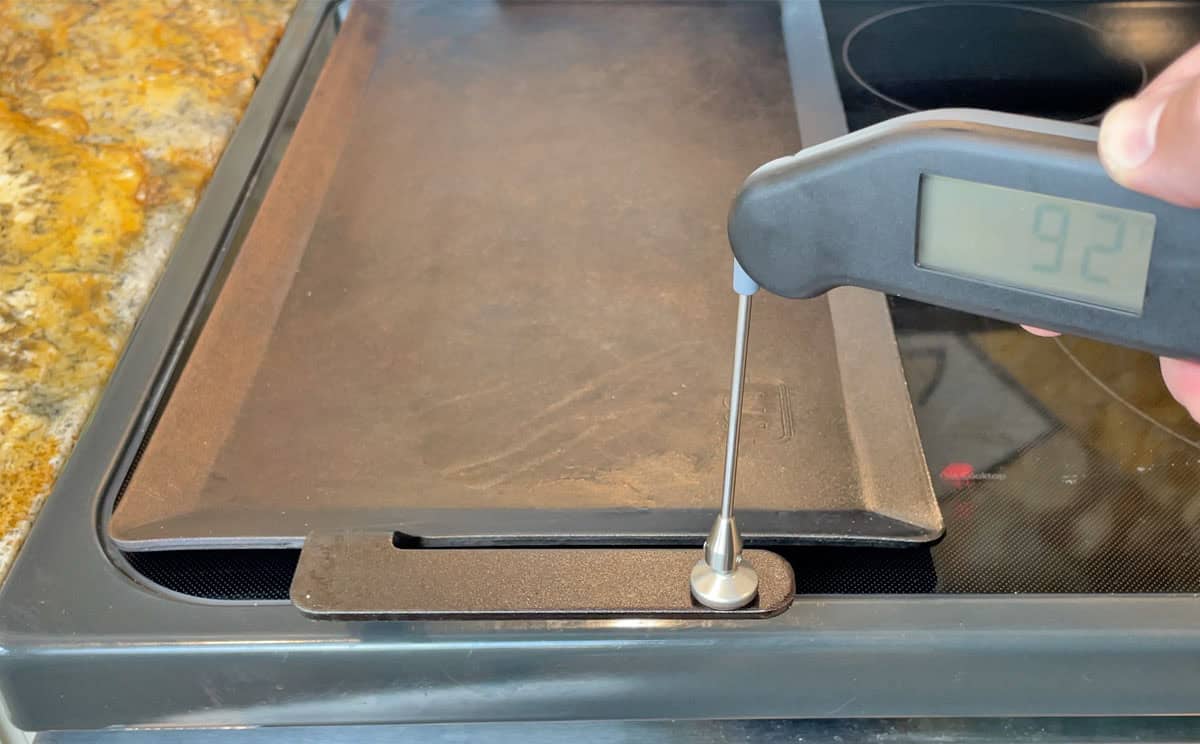
Made In’s handles make the griddle easier and safer to use than many of the others I tested. At 5.5 inches long, they give you enough leverage to lift and move the nearly 10-pound pan with control.
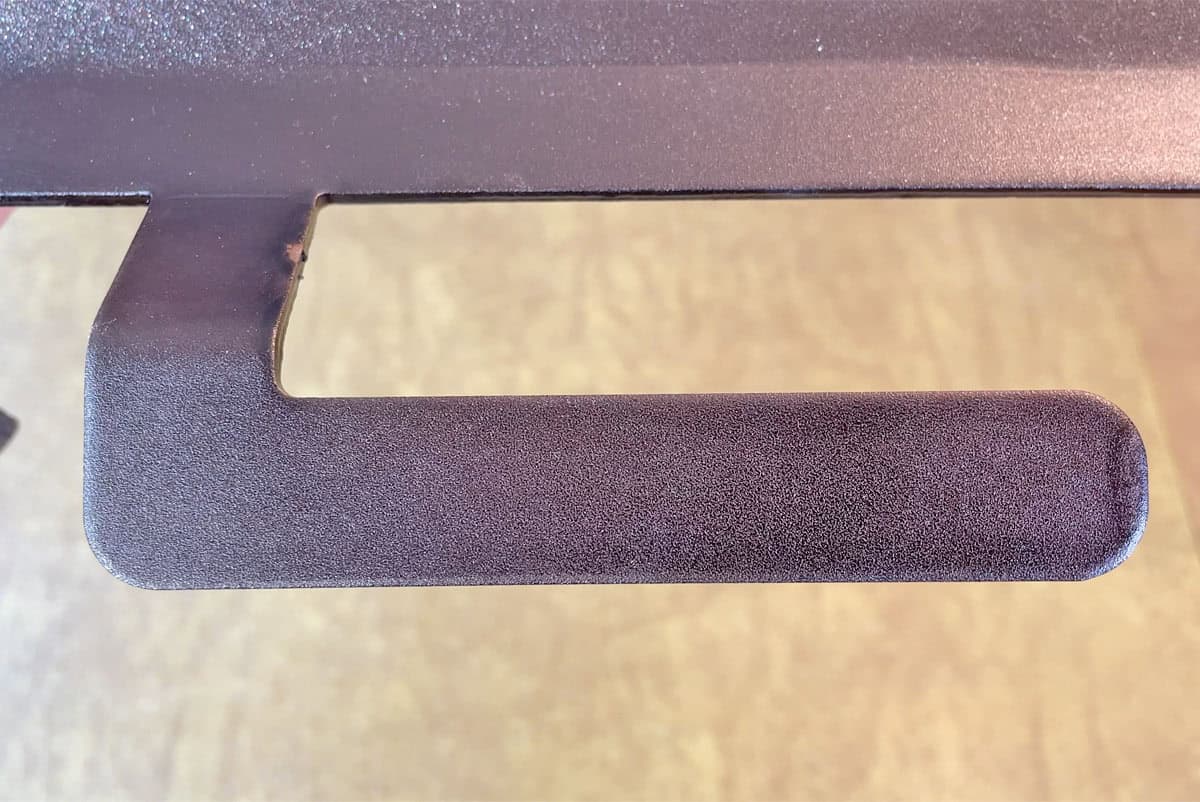
During my handle temperature test, they measured 117°F near the base, 100°F in the middle, and 92°F at the tips. That is warm but not dangerously hot, and it means you can adjust or reposition the griddle with a towel or mitt without much trouble.
The design is also an improvement over Lodge Cast Iron, which only has small corner loops. Moving a 10-pound cast iron griddle with two fingers through tiny loops feels awkward and unsafe, especially on glass or ceramic cooktops.
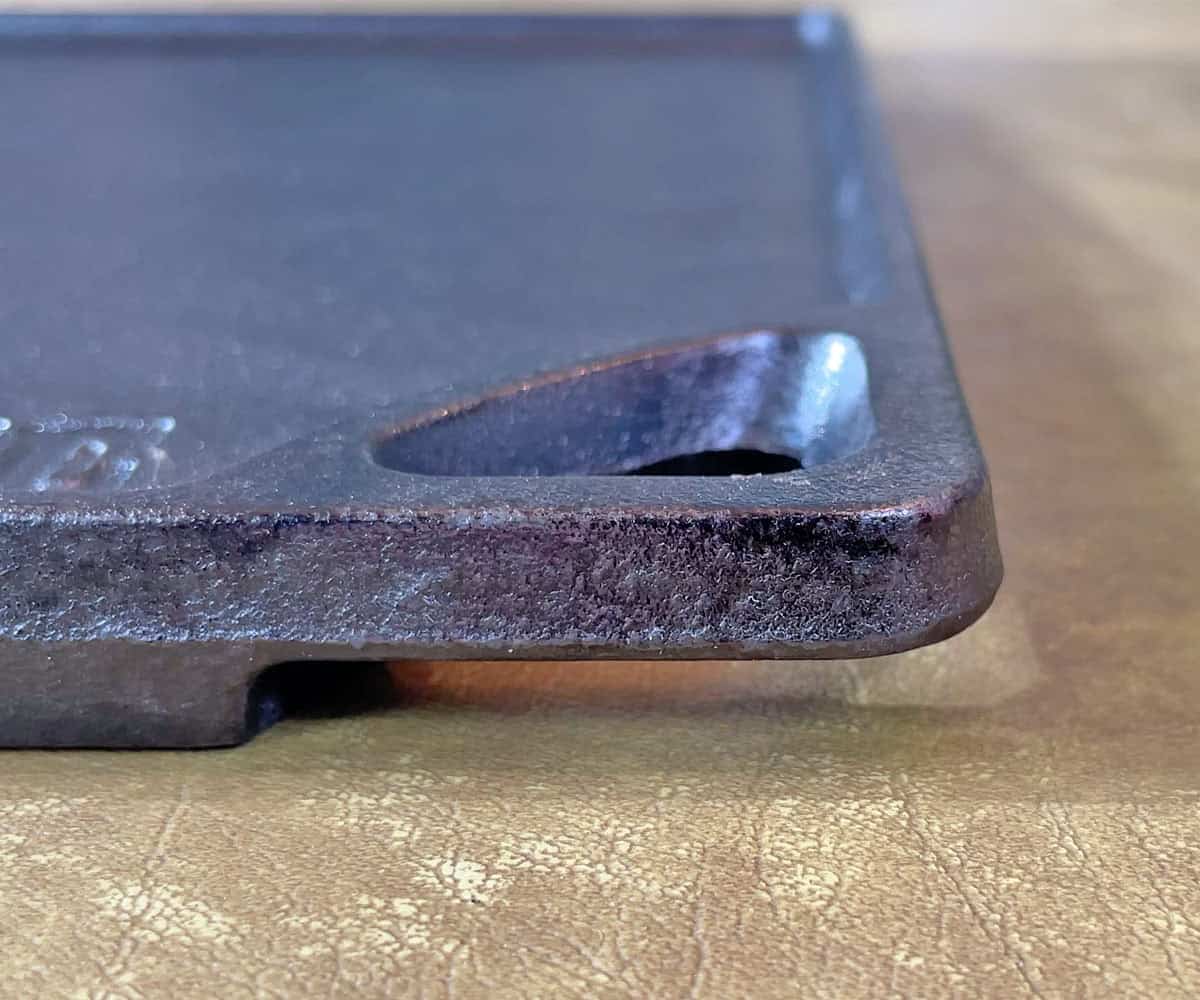
The longer handles on the Made In griddle make it easier to lower gently onto the stove and safer to lift off when it is hot.
Con: Uneven Heating
The biggest weakness of the Made In griddle is uneven heating across the surface. After four minutes on medium heat, the back measured 362°F, the center 358°F, and the front only 252°F. That is a 110°F difference, the widest spread of all the griddles I tested.
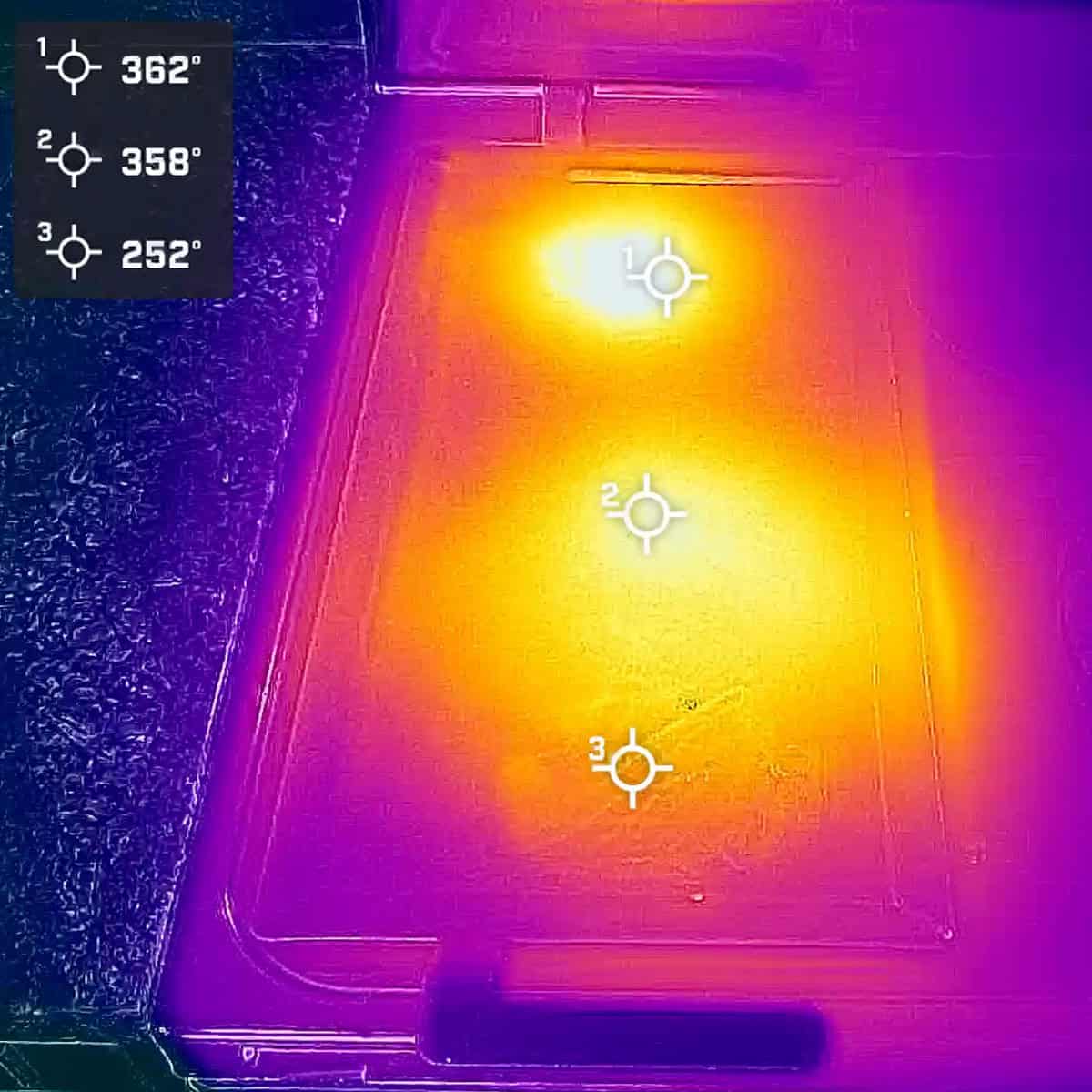
Because of this, one area of the pan may cook pancakes perfectly, while the other areas burn or undercook them. Large griddles are always harder to heat evenly, but others like HexClad and Lodge Cast Iron did noticeably better in this test. Their temperature spreads were under 40°F.
With Made In, you need to be aware of the hot and cool zones and either rotate food or let it preheat longer to even things out.
Con: Slight Warping
Out of the box, the Made In griddle sat flat on my stovetop, but in my warping test it bowed slightly once it was heated to high temperatures. The change was not severe, but I could feel the griddle shift a bit when scraping with a spatula.
It never spun like the Nordic Ware or wobbled like Lodge Carbon Steel, but it also was not as stable as Lodge Cast Iron, which stayed completely flat.
The warping doesn’t make the Made In unusable, but it is worth knowing that you may need to hold the handle steady if you are pushing or scraping food aggressively.
Con: Heavy and Bulky
At just under 10 pounds, the Made In griddle is one of the heaviest options I tested. It feels solid and sturdy, but the weight makes it harder to move, clean, and store compared to lighter options like HexClad at 5.3 pounds or Nordic Ware at only 2 pounds.
The size also limits where you can use it. The long handles stick out, and the overall length means it does not fit in a standard 24-inch oven.
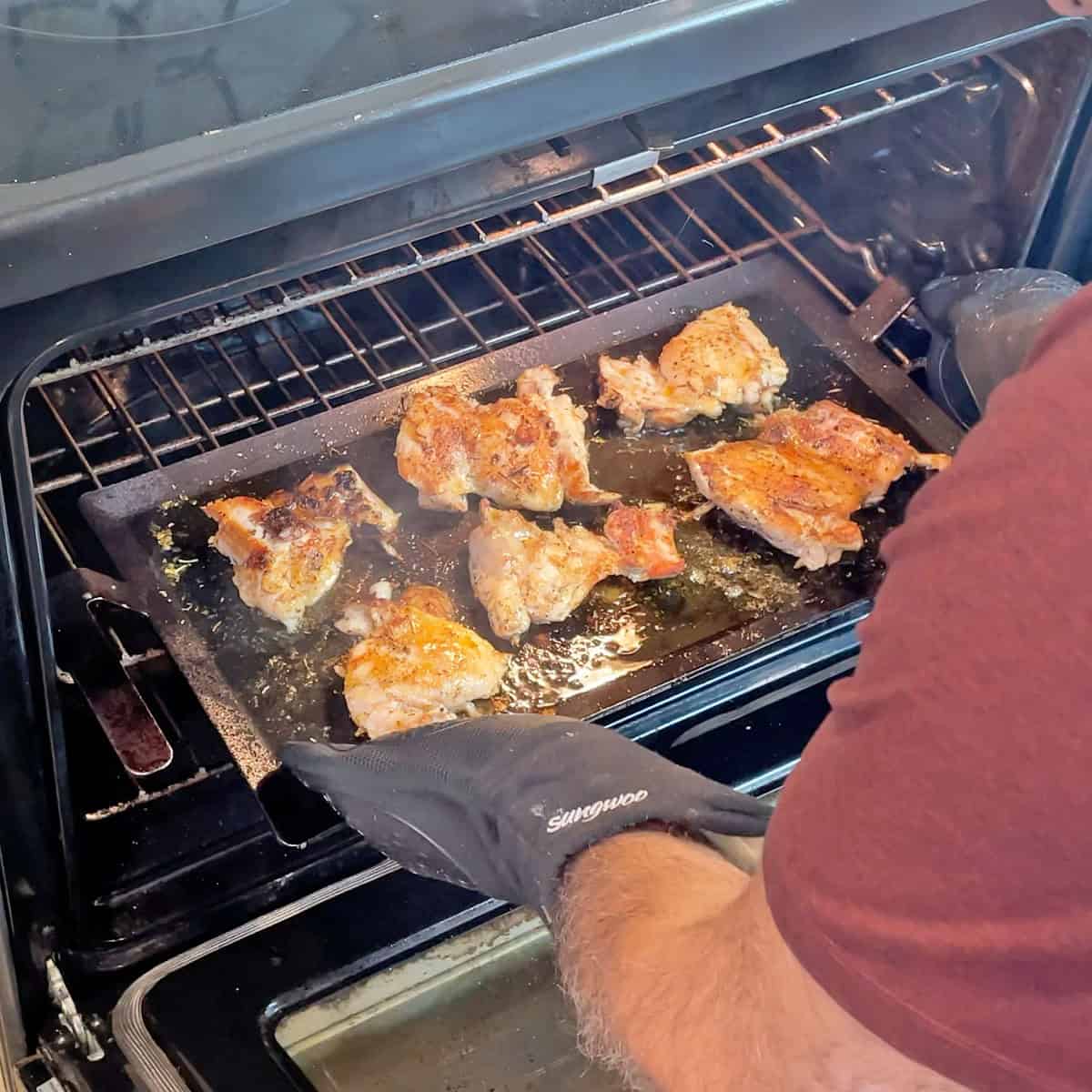
If you are planning to use it indoors only, make sure you have enough space on your stovetop and storage shelf to accommodate it.
Con: Handle Comfort
Although the Made In griddle’s handles are long and functional, they are not the most comfortable to hold. The flat design with squared edges can dig into your hand if you need to carry it for more than a few seconds. Because they extend straight out from both sides, they also take up extra room on the stovetop and can bump into other pans.
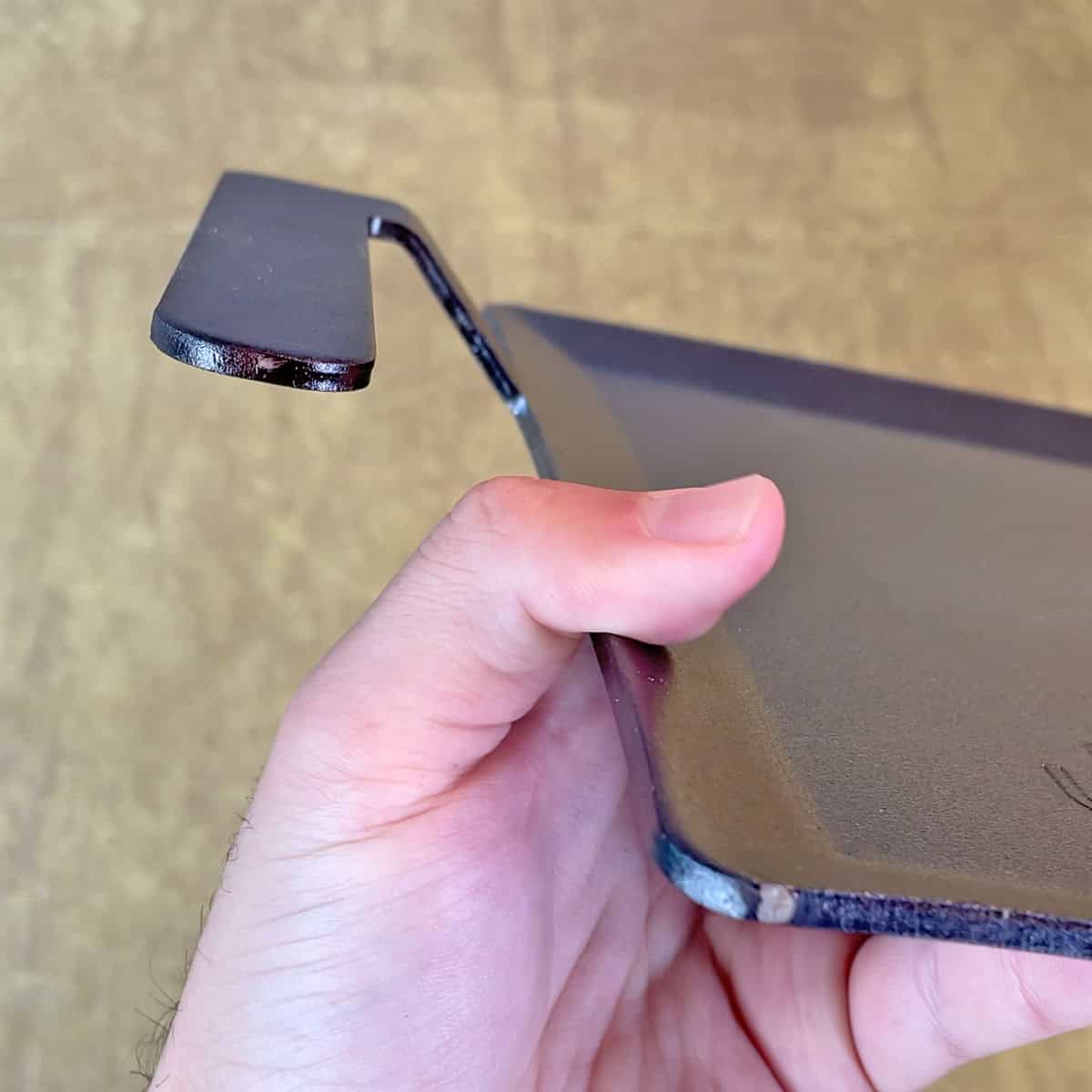
The handles have sharp corners that can easily scratch your sink if you are not careful when washing or moving the griddle around. Compared to the rounded vertical handles on the Hestan griddle, Made In’s felt sharper and less user-friendly.
Bottom Line: Is the Made In Carbon Steel Griddle Worth Buying?
The Made In Carbon Steel Griddle is not perfect but it proved to be the most versatile griddle I tested.
It works on every type of cooktop, can handle open flames up to 1200°F, and the preseasoned carbon steel surface only improves with use.
Lodge Carbon Steel is the closest alternative, but its surface is rougher, the corners are welded, and it warped more severely in my tests. The Made In griddle has a smoother surface, a cleaner build, and better stability, which makes it the clear choice if you plan to use a griddle often.
If you are looking for a griddle that can go from your stovetop to a propane grill to a firepit and hold up for decades, the Made In Carbon Steel Griddle is the best option.
You can read more reviews and check the current price on Amazon or MadeInCookware.com. If you decide to buy directly from Made In, use the code PRUDENT at checkout to save 10%.
Related Topics
- Best Stovetop Griddle? I Tested Made In, Lodge, HexClad, Hestan, and Nordic Ware
- Best Induction Cookware? I Tested All-Clad, Lodge, Demeyere, Made In & More
- Are Made In Sheet Pans Worth Buying? (Review & Test Results)
- Made In CeramiClad vs. Caraway vs. GreenPan vs. Our Place vs. Carote
- Made In vs. Heritage Steel: 9 Key Differences Explained
- Made In vs. Caraway Cookware: 11 Key Differences
- All-Clad vs. Made In: The Ultimate Cookware Comparison

