


In this guide, I highlight the best alternatives to HexClad cookware. You’ll learn how each option differs in construction, performance, price, and more.
So if you’re thinking about buying HexClad, but want to weigh all the options, keep reading.
Key Takeaways
HexClad pans are convenient and versatile, but they depend on a nonstick coating that will eventually wear down. Several alternatives offer similar or better performance at lower prices or with longer lasting materials.
Anolon X and Henckels Paradigm are the closest matches to HexClad. Both use hybrid surfaces that protect a nonstick coating with raised stainless steel, and both cost significantly less. Paradigm heats faster and has a smoother exterior that is safer for glass cooktops. It now comes in two versions (PTFE and ceramic), but the hybrid stainless-steel-over-coating design is the same. Anolon X is lighter and easier to handle.

Cooksy and Frieling Black Cube also deliver hybrid performance at lower prices. Cooksy has rivetless handles and a helper handle on larger pans. Black Cube has a nearly identical design to HexClad but costs far less.
Misen Carbon Nonstick gives you the core benefits of HexClad without using any nonstick coating. The nitrided carbon steel surface is naturally slick, highly durable, and resistant to rust, so you avoid the long term downside of coating wear.
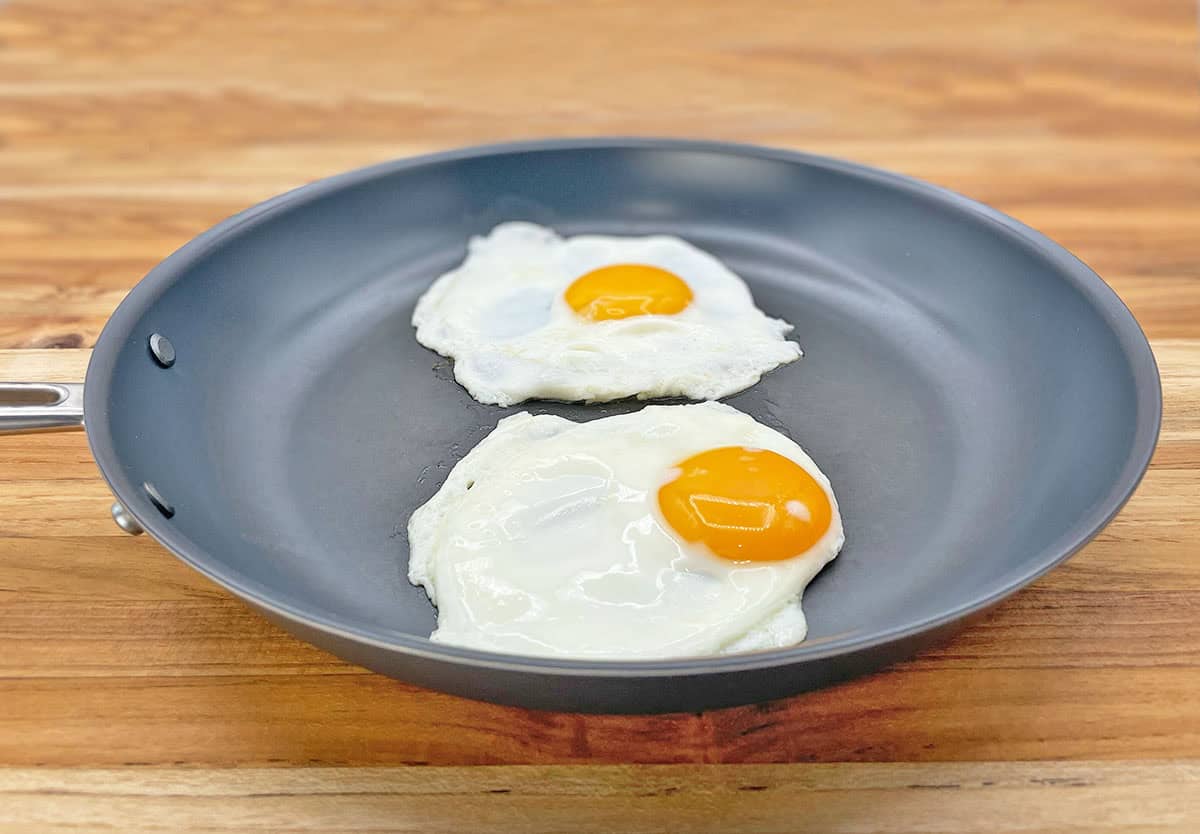
Misen Carbon Nonstick pan
Made In is a good option if you prefer to use specialized tools instead of one hybrid pan. A Made In stainless steel pan will outperform HexClad for searing and a Made In nonstick pan will release delicate foods more easily.
The right alternative depends on what you value. If you want something that matches HexClad’s hybrid feel for less money, Henckels Paradigm is the best option. If you want maximum durability and no coating concerns, choose Misen Carbon Nonstick. If you prefer task specific performance, go with Made In.
Use the links below to navigate the guide:
- HexClad Alternatives: Comparison Chart
- HexClad Alternative 1: Anolon X
- HexClad Alternative 2: Henckels Paradigm
- HexClad Alternative 3: Cooksy
- HexClad Alternative 4: Frieling Black Cube Quick Release
- HexClad Alternative 5: Misen Carbon Nonstick
- HexClad Alternative 6: Made In Stainless Steel and Non-Stick Pans
- Bottom Line: Which HexClad Alternative Is Best for You?
HexClad Alternatives: Comparison Chart
The chart below provides a quick comparison of HexClad versus the top alternatives.
Swipe to view the entire chart on mobile.
| HexClad | Anolon X | Henckels Paradigm | Cooksy | Black Cube | Misen Carbon Nonstick | Made In Stainless Steel and Non-Stick | |
|---|---|---|---|---|---|---|---|
| Base Construction | 3-ply stainless steel | Aluminum | 3-ply stainless steel | 3-ply stainless steel | 3-ply stainless steel | Nitrided carbon steel | 5-ply stainless steel |
| Cooking Surface | Stainless steel and ceramic non-stick hybrid | PTFE non-stick with stainless steel mesh | Stainless steel and PTFE or ceramic non-stick hybrid | Stainless steel and PTFE non-stick hybrid | Stainless steel and PTFE non-stick hybrid | Nitrided carbon steel | Stainless steel or PTFE or ceramic non-stick |
| Handles | Riveted, stainless steel | Flush rivets, stainless steel | Riveted, stainless steel | Rivet-less, stainless steel | Rivet-less, stainless steel | Riveted, stainless steel | Riveted, stainless steel |
| Oven-Safe Temperature | 500°F | 500°F | 500°F | 500°F | 500°F | 1,100°F | Stainless surface – 800°F; non-stick – 500°F |
| Induction-Compatible | Yes | Yes | Yes | Yes | Yes | Yes | Yes |
| Metal Utensil-Safe | Yes | Yes | Yes | Yes | Yes | Yes | Stainless surface – yes; non-stick – no |
| Dishwasher-safe | Yes | Yes | Yes | Yes | Yes | No | Stainless surface – yes; non-stick – no |
| Price | $$$$ (HexClad.com) | $$$ (Amazon) | $$ (Amazon) | $$$ (Amazon) | $$ (Amazon) | $$$ (Misen) | $$$ (Made In) |
HexClad Alternative 1: Anolon X
Anolon X is an excellent alternative to HexClad, especially if you’re on a budget.
Like HexClad, Anolon X pans feature a hybrid cooking surface with raised stainless steel protecting the non-stick coating underneath.

However, the aluminum construction and thinner walls make the pans light and easy to handle while keeping the price more accessible.
This collection features various cookware pieces, from sauciers and saute pans to complete 7, 8, and 10-piece cookware sets.
The cookware has a minimalist design in black and silver with rounded walls, giving it a similar look to HexClad.

Like HexClad, Anolon X pans are metal utensil-safe, oven-safe up to 500°F, and dishwasher-safe.
Here are a few more reasons why Anolon X is an excellent alternative to HexClad:
Why It’s a Great HexClad Alternative
- Anolon X pans are made from aluminum rather than HexClad’s stainless steel. Aluminum is lighter and easier to maneuver.
- Anolon X is more affordable than HexClad. For example, HexClad’s 8-inch frying pan costs $140, while the Anolon X 8.25-inch frying pan is just $80 (prices are subject to change).
- Like HexClad cookware, Anolon X pans are induction-compatible due to their edge-to-edge magnetic steel bases.
- Anolon’s cookware features proprietary SearTech™ technology that keeps oil in the middle of the pan. Unlike traditional non-stick pans that allow the oil to run to the edges, Anolon’s design keeps the oil directly under the food, resulting in less sticking, more even caramelization, and a better sear. This SearTech™ technology is similar to HexClad’s hexagonal steel pattern design.
- The stainless steel mesh on Anolon’s pan helps to protect the pan from damage or wear and tear from utensils. However, the sides are not protected since the mesh is only present on the flat portion of the interior.

- Anolon X pans have flush rivets that attach the handle to the pan’s body, unlike the protruding rivets on HexClad’s cookware. Flush rivets make Anolon X pans much easier to clean than HexClad.

- One disadvantage of this pan compared to HexClad is that the stainless steel mesh on an Anolon X model only covers the flat portion of the cooking surface. The laser-etched steel on HexClad pans is present throughout the entire pan (including the walls).
Bottom Line
If you’re on a budget, Anolon X is a solid alternative to HexClad. The lightweight aluminum construction not only makes the pan more affordable but also makes it easier to handle.
Anolon X pans have several thoughtful design features, like flush rivets, an induction base, and secure handles.
However, the thinner aluminum construction and steel mesh only on the flat cooking surface are downgrades compared to HexClad’s thicker fully-clad stainless steel construction and laser-etched steel hexagons throughout.
Check the current prices of Anolon X cookware on Anolon.com and Amazon. Or learn more by reading my in-depth Anolon X review and comparison of Anolon X vs. HexClad.
HexClad Alternative 2: Henckels Paradigm
Henckels Paradigm (formerly Henckels HXagon) is another excellent alternative to HexClad because you get almost the same hybrid cooking surface at a fraction of the cost.

Henckels is known for its quality kitchen knives but recently launched the Paradigm cookware collection to capture some of the demand for hybrid cookware created by HexClad.
Like HexClad, these pans have a hexagonal-patterned interior with raised stainless steel peaks that protect the non-stick coating below.
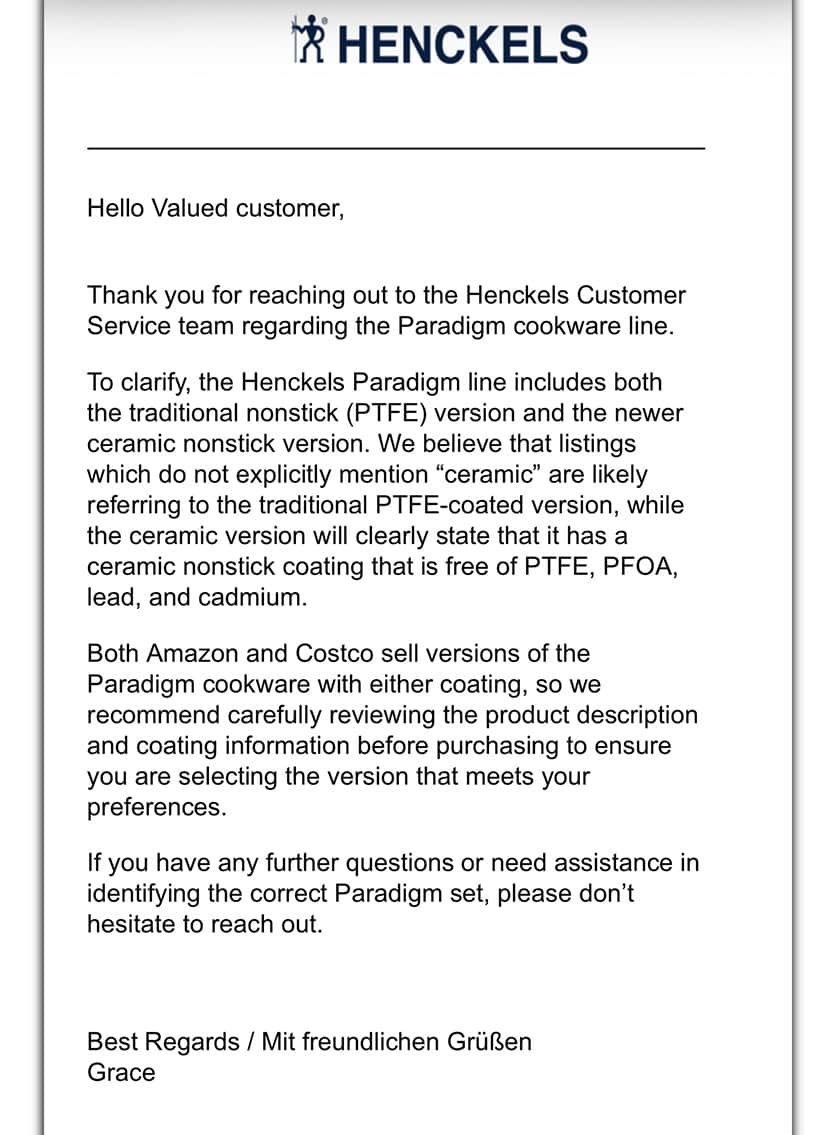
The Paradigm line is now offered in two coating options — a traditional PTFE-based version and a newer ceramic version. Both use the same hybrid stainless-steel-over-nonstick design.
I’ve been testing these pans for months, and they deliver an exceptional sear while allowing delicate foods like eggs to release without sticking.
Here are some reasons Henckels Paradigm cookware is a solid alternative to HexClad.
Why It’s a Great HexClad Alternative
- Like HexClad, Henckels Paradigm pans feature a hybrid cooking surface. However, Paradigm pans have a higher ratio of exposed stainless steel. As I observed when cooking chicken thighs, the increased steel allows for better browning.

- Henckels originally launched Paradigm with a PTFE-based nonstick coating, but they now offer a ceramic-coated version too. Both versions use the same hybrid stainless-steel pattern, but the coating type varies depending on the listing. The screenshot below shows how retailers distinguish between them.
- Thanks to its conductive aluminum core, Henckels Paradigm pans heat up quickly. In my heat conduction test, the 12-inch pan boiled two cups of water in 2 minutes and 19 seconds. HexClad took 2 minutes and 30 seconds to boil the same amount of water.
- Henckels handles are rounded like HexClad but feature an engraved logo and small thumb groove. At 8.5 inches long, they are a half inch longer than HexClad’s handles, keeping your hand further from the heat.

- HexClad extends its hybrid non-stick and stainless steel pattern to the bottom of its pans, while Henckels Paradigm pans have polished stainless steel bottoms. The non-stick coating makes HexClad easier to clean but poses some risks. A Prudent Reviews reader told me the raised hexagons on her HexClad pan scratched her glass cooktop. With the smooth polished steel bottom, Henckels Paradigm pans avoid potential damage to delicate surfaces. Without non-stick coating, the exterior may require occasional scrubbing to remove stains, but many people find this a worthwhile tradeoff.

- Henckels Paradigm costs less than half the price of comparable HexClad pans.
The main downside compared to HexClad is that Henckels Paradigm pans are 2.4 mm thick, while HexClad is 3 mm thick.

The thinner construction means Henckels Paradigm doesn’t retain heat quite as well. But the exceptional value more than makes up for this small compromise in performance.
Check current prices and read reviews of the Henckels Paradigm collection at Amazon. Or read my in-depth Henckels Paradigm review and comparison of HexClad vs. Henckels Paradigm to learn more.
HexClad Alternative 3: Cooksy
Cooksy is another solid HexClad alternative, offering a similar hybrid cooking surface at a more affordable price point.

With Cooksy, you get the same excellent searing and food release but also some unique benefits HexClad doesn’t offer.
Why It’s a Great HexClad Alternative
- Cooksy pans have the same 3-ply stainless steel construction as HexClad, and both brands’ pans are approximately 3mm thick.
- Based on my controlled tests, HexClad conducts heat slightly faster on electric cooktops, but Cooksy outperforms HexClad on induction. Both retain heat well, but HexClad has a slight edge.

- The cooking surface on Cooksy pans has a higher ratio of exposed stainless steel than HexClad, which allows for even better browning and caramelization. However, the increased steel means you need more oil or butter to prevent eggs from sticking.

- Cooksy is transparent about using the well-regarded “Eterna” non-stick coating by Whitford. HexClad is less transparent. They only mention using a “high-grade non-stick coating” and don’t disclose the supplier.
- Cooksy’s frying pans feature a convenient helper handle, while HexClad’s do not. Helper handles make it easier to transfer the pan when it’s full of heavy food.

- Cooksy attaches its handles with screws on the outside of the pan rather than rivets. Because of this, the cooking surface is completely smooth and easier to clean. HexClad’s riveted handles tend to collect oil and food particles.

- Cooksy pans have a polished stainless steel exterior. HexClad extends its hybrid pattern to the pan’s bottom. The non-stick coating makes HexClad’s bottom easier to clean, but as I mentioned, there’s a risk of the raised still scratching your cooktop.

- Cooksy pans are around 22% less expensive than HexClad pans.
The main drawback of Cooksy is the limited selection. Cooksy only offers a few frying pans, saucepans, stock pots, and sets. HexClad has a much wider range, including specialty items like roasters and pizza pans.
Bottom line — if you’re looking for premium hybrid cookware at a lower price, Cooksy is an excellent HexClad alternative. You’ll get rivetless handles, a smooth bottom, and helper handles.
You can check the current prices of Cooksy pans on Amazon or read more about the brand in my in-depth HexClad vs. Cooksy comparison.
HexClad Alternative 4: Frieling Black Cube Quick Release
Frieling Black Cube Quick Release is another affordable alternative to HexClad. It’s the closest you can get to HexClad in terms of design, but it costs much less.
Like Hexclad, the Black Cube pans are designed to deliver the searing power of stainless steel with the food release of non-stick.
The cooking surface features raised steel dots that prevent the non-stick coating from getting scratched.
It looks almost exactly like HexClad, but instead of tiny steel hexagons etched into the cooking surface, Black Cube’s pattern is shaped like tiny triangles.
Here’s why Black Cube cookware is a good alternative to HexClad.
Why It’s a Great HexClad Alternative
- Like HexClad, Frieling’s Black Cube cookware has a durable 3-ply stainless steel body. A layer of aluminum is sandwiched between two layers of stainless steel to create a lightweight-yet-sturdy design.
- The interior is a combination of stainless steel and PTFE non-stick; the hybrid pattern extends up the pan walls. The tiny stainless steel dots are slightly raised above the non-stick cooking coating to protect it from metal spatulas scraping across.
- One notable difference between Black Cube and HexClad is the handle design — the Frieling Black Cube has a rivet-less handle, while Hexclad’s handles have rivets. Cookware with rivetless handles is easier to clean since food won’t get stuck at the juncture between the body of the pan and the handle. This small detail may not seem like much, but it makes a difference.
- Another significant difference is the exterior. The bottom and exterior walls of HexClad pans feature the hybrid pattern, while Black Cube pans have a polished stainless steel exterior. Stainless steel is more difficult to clean and prone to discoloration, so you’ll spend more time scrubbing the outside of Black Cube pans than with HexClad.
- The most significant difference between HexClad and Black Cube cookware is the price. HexClad is twice as expensive, and considering the design and construction are so similar, Black Cube is a much better value.
Bottom Line
Out of all the pans on this list, the Frieling Black Cube is the most similar to HexClad due to its 3-ply construction and hybrid non-stick cooking surface. If you’re looking for a HexClad clone at a much lower price, check out Black Cube.
Read more reviews of Black Cube cookware and check the current prices on Amazon. Learn more in my in-depth comparison of HexClad vs. Black Cube.
HexClad Alternative 5: Misen Carbon Nonstick
Misen’s Carbon Nonstick pan is one of the best HexClad alternatives because it delivers the core things people want from HexClad.
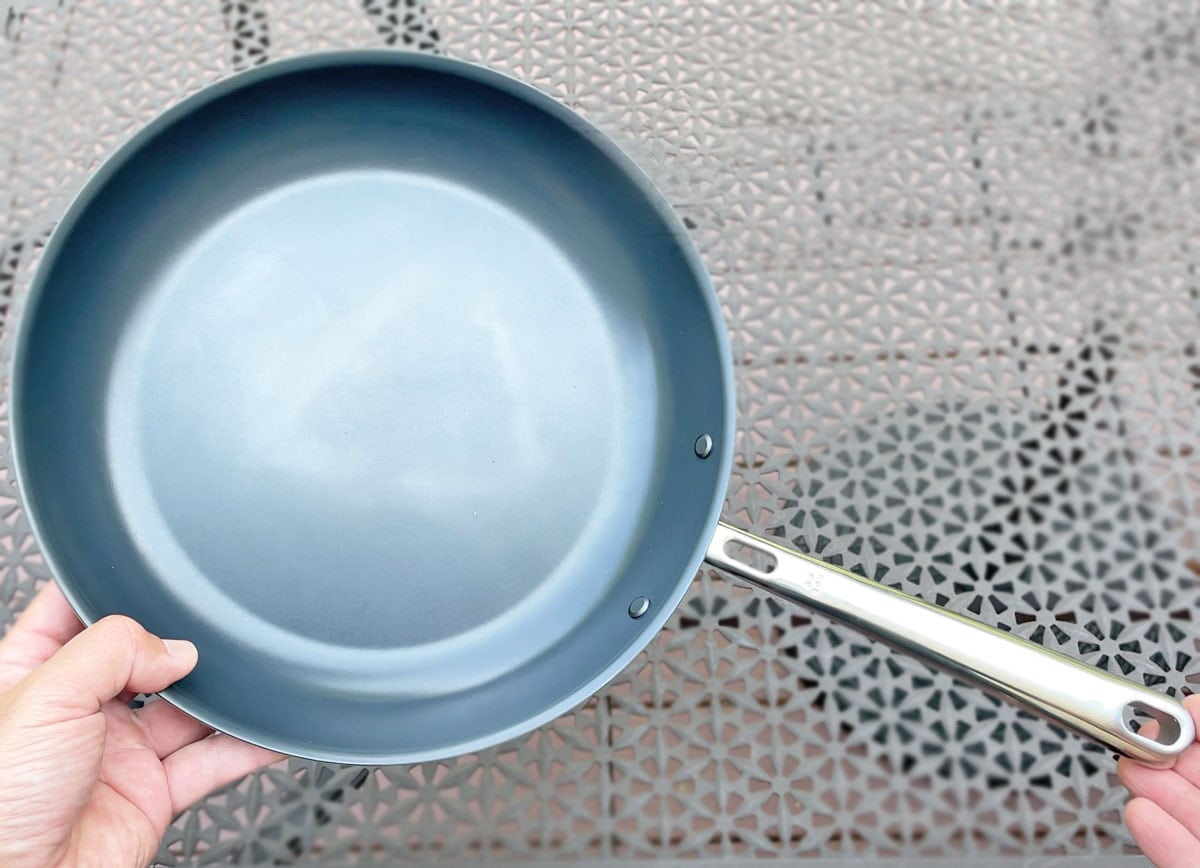
It gives you easy food release, metal utensil safety, high-heat versatility, and simple cleanup, but it does all of that without using a nonstick coating that can eventually wear out.
The cooking surface is nitrided carbon steel with an aluminum core. The nitriding process hardens and smooths the steel so the surface becomes naturally slick and resistant to rust and corrosion.
Why It’s a Great HexClad Alternative
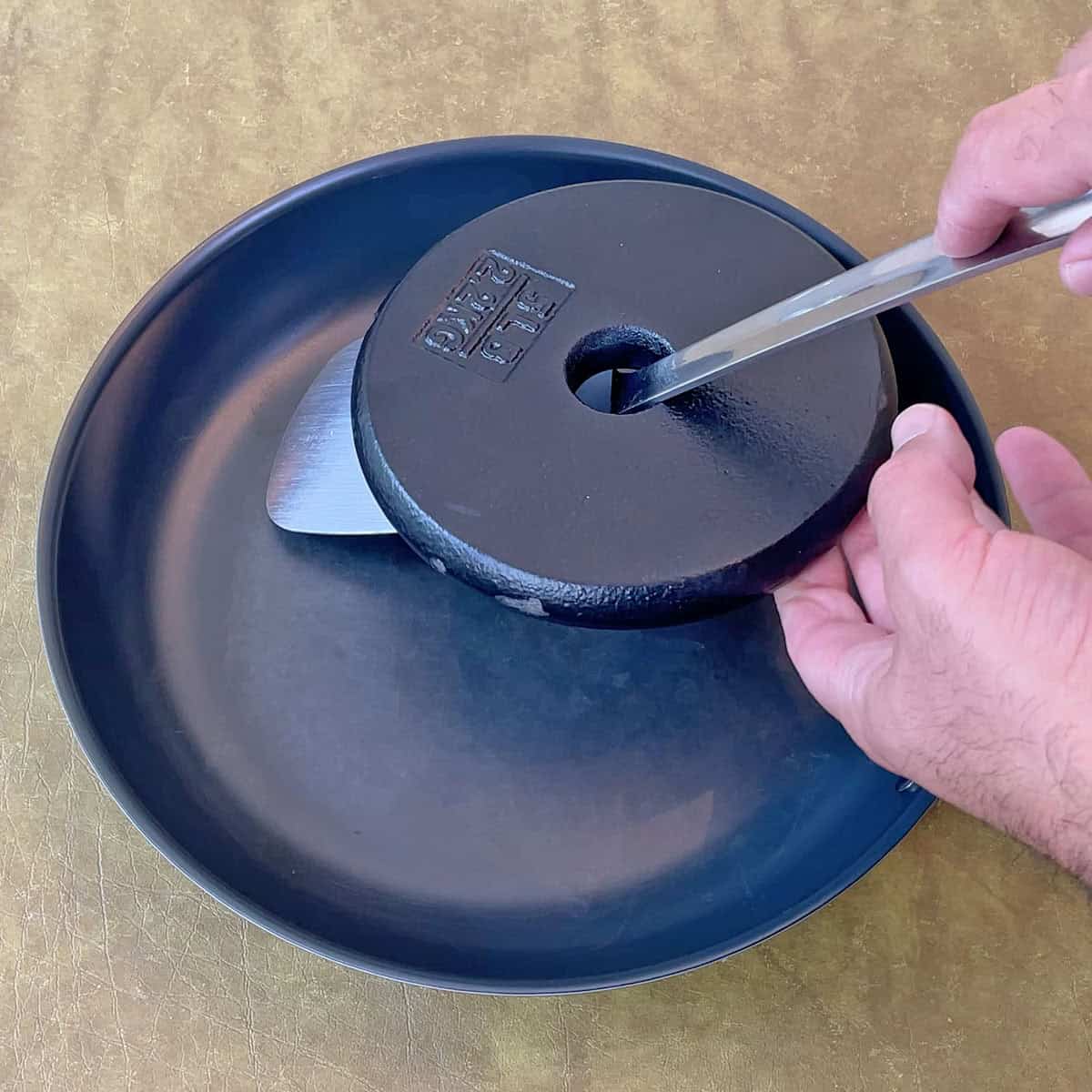
- There is no coating to scratch or peel. HexClad protects a ceramic nonstick coating with raised stainless steel peaks. Once that coating loses its release, the pan is never the same. The Misen pan has no coating at all. In my durability tests with a weighted ladle, a metal spatula, and a stand mixer whisk, I saw only light rub marks and no damage. When I did the same tests on ceramic, Teflon, and hybrid pans like HexClad, the coated surfaces all scratched.
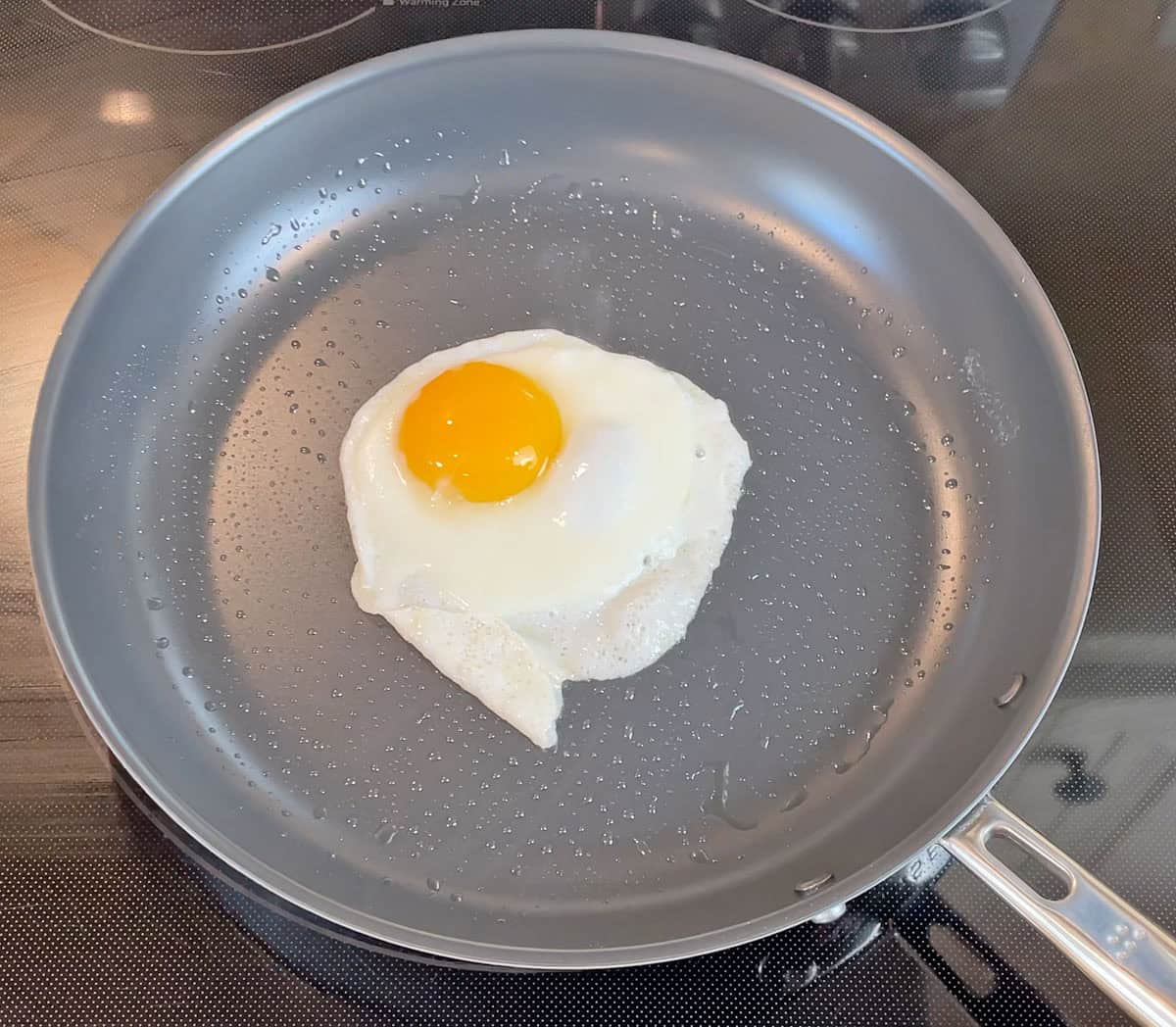
- You still get the easy food release HexClad buyers want. In my egg tests, a fried egg slid out with only 4 grams of butter. Scrambled eggs, omelets, pancakes, vegetables, and burgers all released cleanly. It is not as slippery as a brand-new PTFE pan, but it is significantly more nonstick than stainless steel, cast iron, or traditional carbon steel. It gives you the same forgiving experience people look for in a hybrid pan.
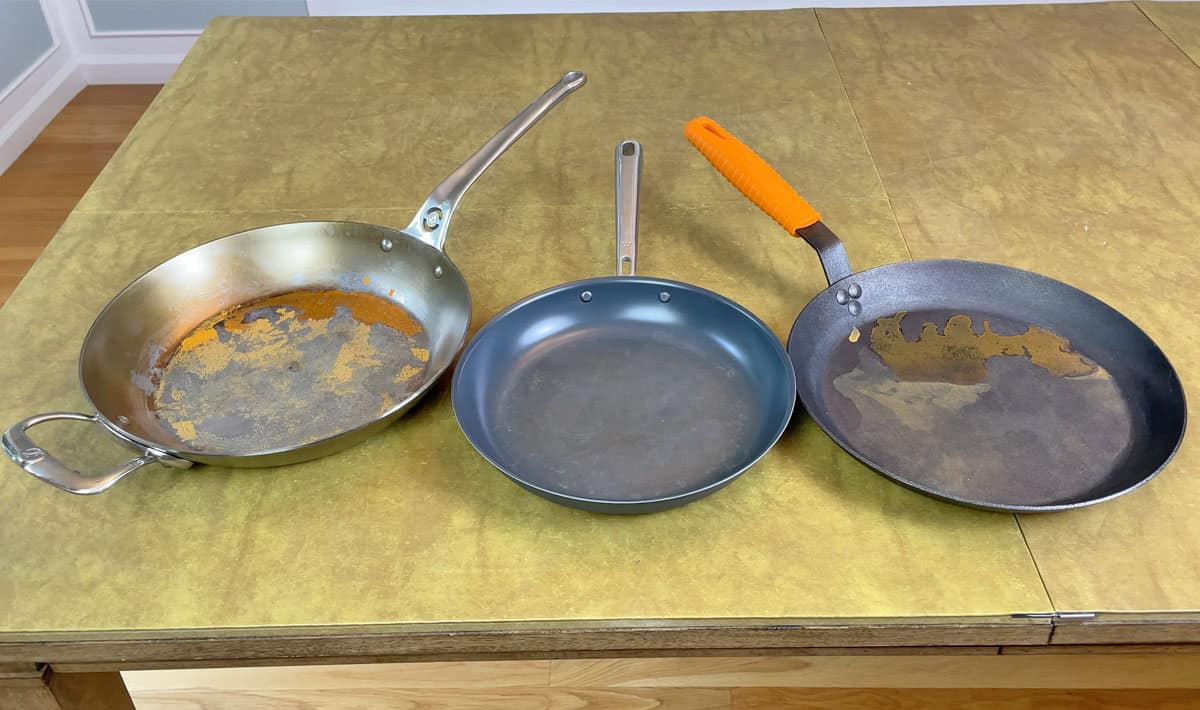
- It handles acidic foods and water exposure better than any coated hybrid surface. When I soaked the Misen pan next to Lodge and de Buyer carbon steel pans overnight, the de Buyer rusted and the Lodge eventually developed spots after tomato tests stripped some seasoning. The Misen pan did not rust at any point. Simmering crushed tomatoes did not change the surface at all. With HexClad, prolonged exposure to acidic foods will slowly wear down the coating underneath the steel pattern.
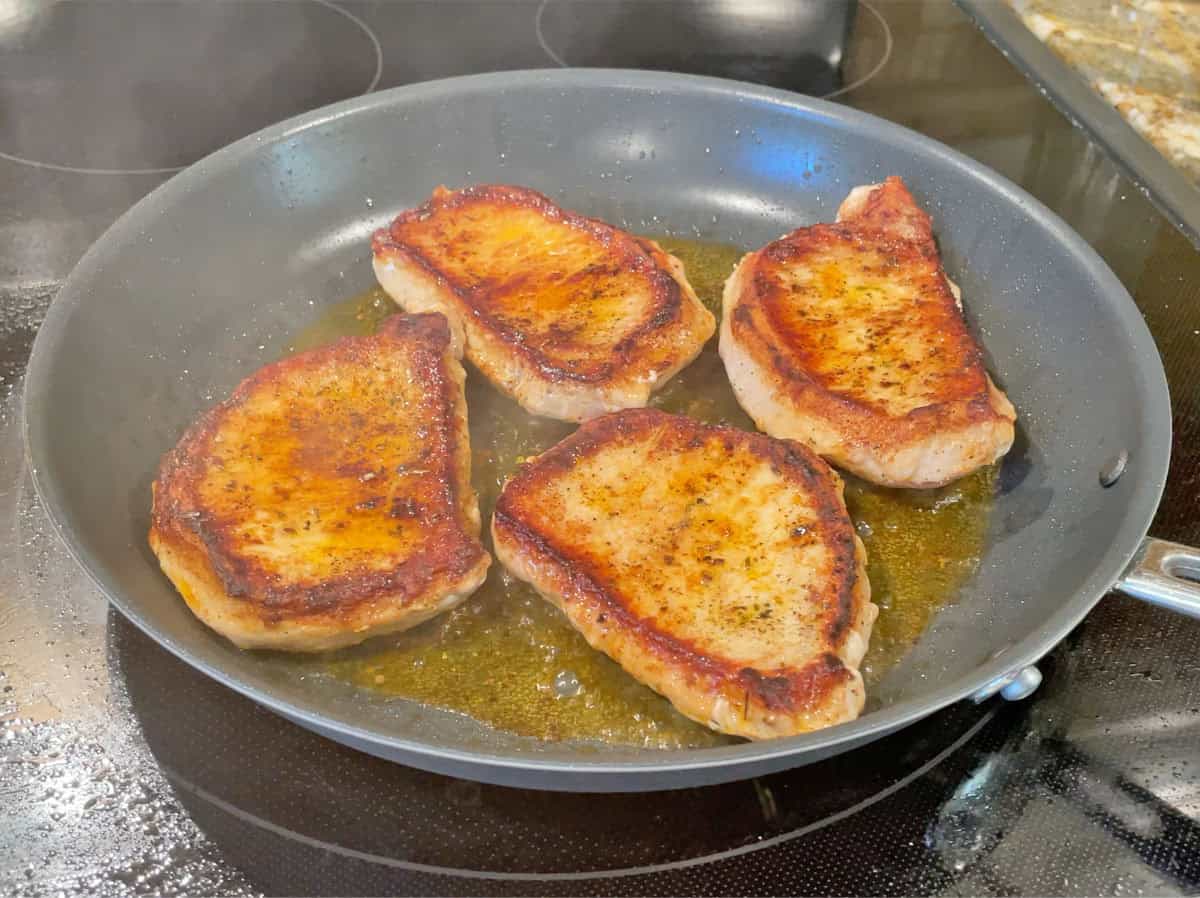
- It heats fast and responds quickly on the stove. The pan reached 535°F in two minutes in my heat conduction test and the edge was only 70°F cooler. It heated faster and more evenly than most carbon steel pans I have tested. It also cooled quickly in the heat retention test, which gives you more control if a pan starts overheating. That level of control is something HexClad struggles with because the raised pattern can create slightly uneven contact.
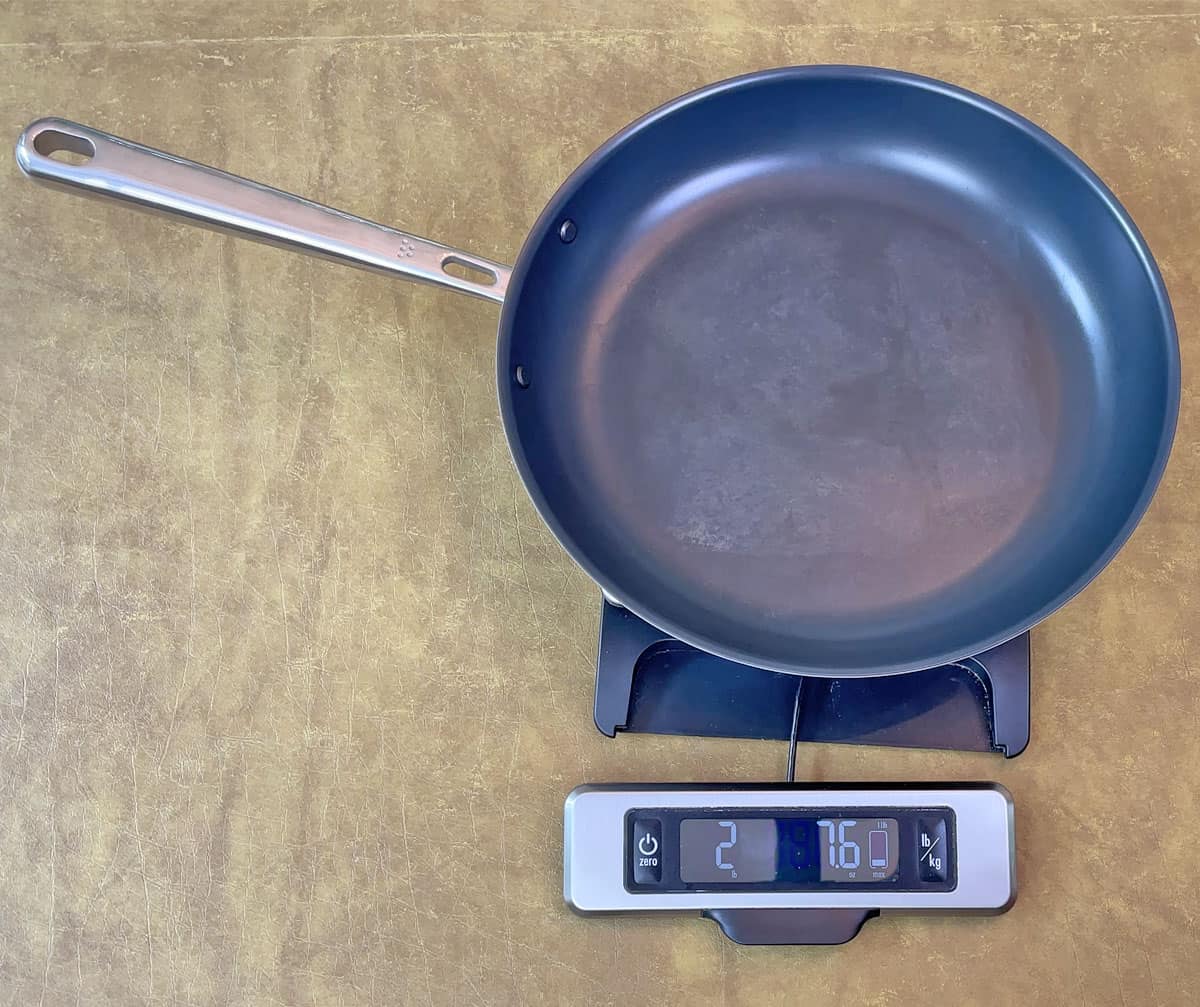
- It weighs about the same as HexClad but with better balance. The 12 inch Misen Carbon Nonstick pan weighs about 3 pounds, which is similar to HexClad. It feels lighter because the walls taper and the aluminum core lowers the density. It is easier to lift, tilt, and pour, especially for quick tasks like eggs or reheating leftovers.
The main tradeoffs compared to HexClad are the shallow 1.75 inch walls, which limit capacity and allow more splatter, and the lower heat retention. The pan cools quickly by design, so it is not ideal for searing several thick steaks or holding steady heat for long shallow frying sessions.
Bottom Line
If you like HexClad because it is nonstick enough for eggs, tough enough for metal tools, and easy to cook on without much fuss, the Misen Carbon Nonstick pan gives you all of that but with no coating to break down. It is naturally slick, highly durable, rust resistant, and easier to maintain than traditional carbon steel. It is the best option if you want the benefits of a hybrid pan without the long term downside of owning a coated surface.
You can check current prices at Misen.com or read my full review for more details and test results.
HexClad Alternative 6: Made In Stainless Steel and Non-Stick Fry Pans
Made In is one of the best cookware brands. They’ve been producing restaurant-quality cookware at fair prices since 2017. They offer stainless steel, non-stick, carbon steel, copper, and enameled cast iron cookware.

HexClad is known for its hybrid stainless steel non-stick pans. And while it’s quality all-purpose cookware, it’s not always the best option when you need precise results.
If you’re cooking recipes like crepes or delicate fish or trying to get that perfect sear, a hybrid pan may not provide the precision you need.
Instead of a HexClad hybrid pan, consider two separate pans from Made In — one non-stick and the other stainless steel.

Why It’s a Great HexClad Alternative
- HexClad pans are good at searing and cooking eggs without sticking is doable, but it’s not the best at either of those tasks. Made In stainless steel pans sear better than HexClad, and Made In non-stick pans release delicate foods like eggs more easily. Having two pans specializing in different functions provides more control and better results. There’s a reason why professional kitchens have a mix of stainless steel and non-stick pans rather than a bunch of hybrid pans — pro chefs want to use the best tool for the task.

- Made In stainless steel and non-stick pans are made with a 5-ply stainless steel base with a thick aluminum core. This type of construction is similar to HexClad’s 3-ply base (learn more about the difference between 3- and 5-ply cookware in this guide).
- While HexClad’s cookware is only oven-safe to 500°F, Made In’s stainless steel pan can safely handle up to 800°F
- You can broil with a Made In stainless steel pan; HexClad is not broiler-safe.
- While buying two Made In pans is more expensive, the stainless steel pan can last forever. HexClad and Made In non-stick pans will eventually need to be replaced.
Bottom Line
Buying two Made In pans costs more than one HexClad pan, but you get much more control over your food preparation and better results.

HexClad offers a better sear than most non-stick pans and has better food release than stainless steel, but it’s not the best option for either scenario.
If you have the budget, a combination of Made In stainless steel and non-stick pans is an excellent alternative to HexClad.
Check out Made In pans on MadeInCookware.com or Amazon, or read my comparison of Made In vs. HexClad to learn more.
Bottom Line: Which HexClad Alternative Is Best for You?
HexClad makes quality all-purpose pans, but they’re pricey and won’t last forever (read my full HexClad review).
The alternatives in this guide are either cheaper, longer lasting, or offer superior performance. But which one is right for you?
Anolon X (Anolon.com): Anolon X’s pans are similar in construction to HexClad, but are thinner, lighter, and much more affordable.
Henckels Paradigm (Amazon.com): Henckels Paradigm offers the hybrid textured cooking surface of HexClad at less than half the price. It heats faster, has a longer handle, and its smooth exterior protects glass cooktops. The only downgrade is slightly thinner construction, which results in interior heat retention. For most home cooks, the exceptional value outweighs this small compromise in performance.
Cooksy (Amazon): Cooksy offers a hybrid cooking surface similar to HexClad at a much lower cost. The key differences are that Cooksy pans have rivetless handles, a smooth steel exterior, a higher ratio of stainless steel on the cooking surface, and a helper handle on fry pans. The main downside is the limited selection.
Frieling Black Cube (Amazon): Black Cube pans are nearly the same as HexClad in terms of construction and design. They have a similar hybrid cooking surface with raised stainless steel triangles protecting a non-stick coating. The two main differences are Black Cube pans are rivetless and significantly more affordable.
Misen Carbon Nonstick (Misen.com): This pan delivers the same things people want from HexClad, including easy food release, metal utensil safety, and high heat tolerance, but it does it without any nonstick coating to wear out. The nitrided carbon steel surface is naturally slick and highly durable, so you get long term performance without worrying about scratching or degrading a coating.
Made In (MadeInCookware.com): Two Made In pans cost more than one HexClad pan, but you get more control and better results. Instead of one hybrid pan that does it all well, buy a stainless steel and non-stick pan that together produces superior results.
Bottom line — the best HexClad alternative cookware for you depends on your cooking style and budget.
If you want an alternative that’s as close to HexClad as possible but costs less, go with Anolon X or Henckels Paradigm.
Misen provides similar cooking benefits, costs less, and lasts significantly longer.
If you don’t mind investing more and have room in your kitchen for two pans, go with Made In.
Read more reviews and compare the current prices of each HexClad alternative at the links below:
- HexClad: HexClad.com, Amazon
- Anolon X: Anolon.com, Amazon
- Henckels Paradigm: Amazon
- Cooksy: Amazon
- Black Cube: Amazon
- Misen: Misen.com
- Made In: MadeInCookware.com
Related Topics
- HexClad Cookware Review: Is It Worth the Money?
- HexClad vs. Made In: The Ultimate Cookware Comparison
- HexClad vs. All-Clad: Which Cookware Is Better?
- HexClad vs. Ceramic vs. Teflon: Best Non-Stick Pan Material?
- Henckels Paradigm Review: Pros and Cons to Know Before Buying
- HexClad vs. Black Cube Cookware: 9 Key Differences
- Taima Titanium Review: I Tested It vs. 4 Other Titanium Pans
- HexClad vs. Cooksy: 9 Key Differences to Know Before Buying
- HexClad vs. Onyx Cookware: What’s the Difference?
- HexClad vs. Henckels Paradigm: Which Hybrid Pans Are Better?
- HexClad vs. Anolon X: Which Hybrid Pans Are Better?
- HexClad vs. Stainless Steel Cookware: 7 Key Differences
- HexClad vs. Ninja NeverStick Cookware: 11 Key Differences
- HexClad vs. Cast Iron Cookware: 11 Differences
- Anolon X Review: Is This Hybrid Cookware Worth Buying?
- HexClad vs. Le Creuset: 7 Differences & How to Choose
- Are HexClad Knives Any Good? An In-Depth Review
- HexClad vs. Misen Cookware: An In-Depth Comparison
- HexClad vs. Calphalon: Which Cookware Is Better?
- HexClad vs. GreenPan Cookware: An In-Depth Comparison
- HexClad vs. Caraway Cookware: 9 Key Differences
- Stargazer Cast Iron Skillet Review: Is It Worth the High Price?

