

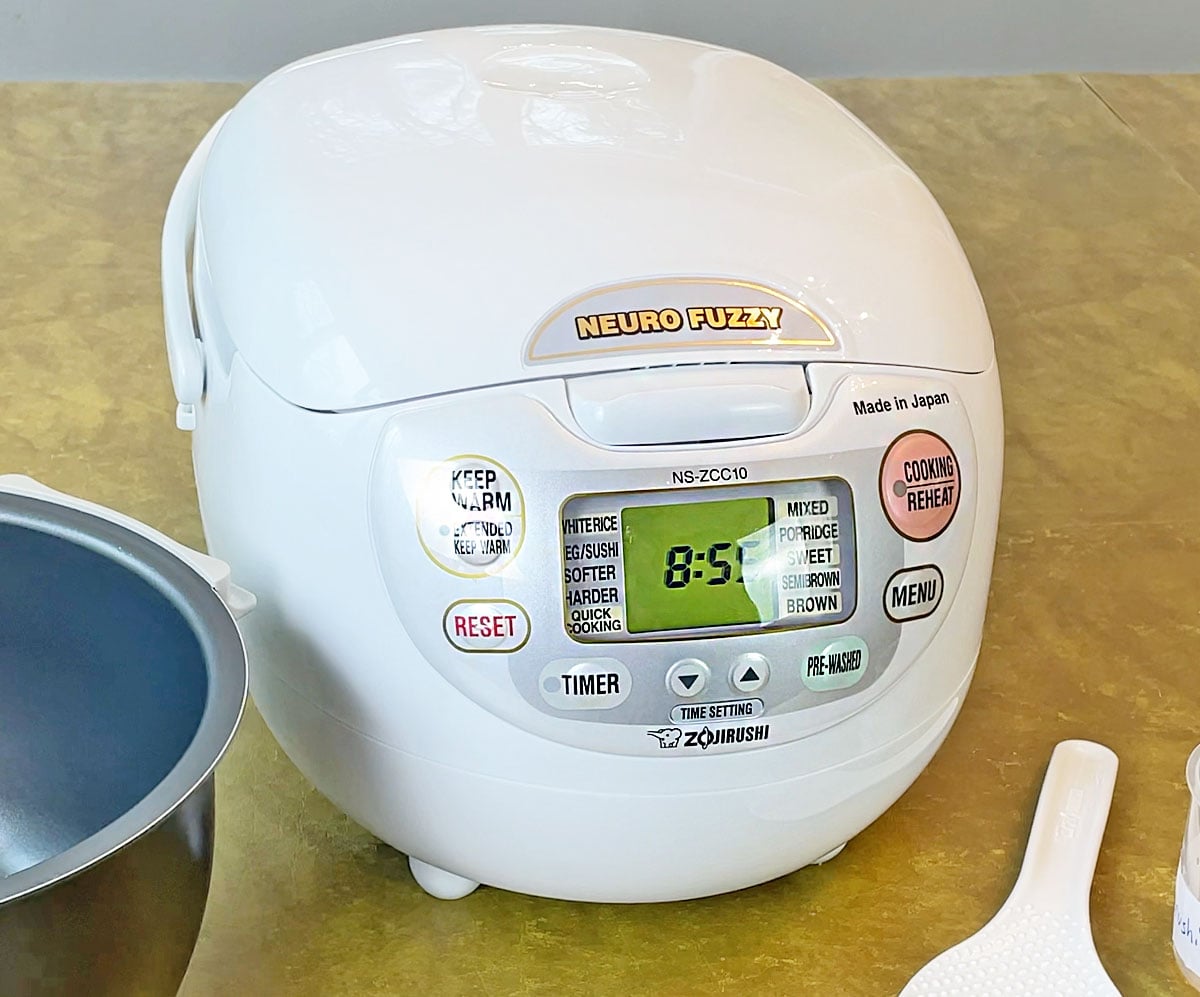
Zojirushi is the rice cooker everyone tells you to buy. It’s a top pick by The New York Times and America’s Test Kitchen, and one of the most frequently recommended rice cookers on Reddit.
But is it worth the ridiculously high price, or are the cheaper brands just as good?
To find out, I tested the Zojirushi Neuro Fuzzy Rice Cooker against seven other rice cookers from Cosori, Tiger, Toshiba, Cuckoo, Aroma, Dash, and Instant Pot.
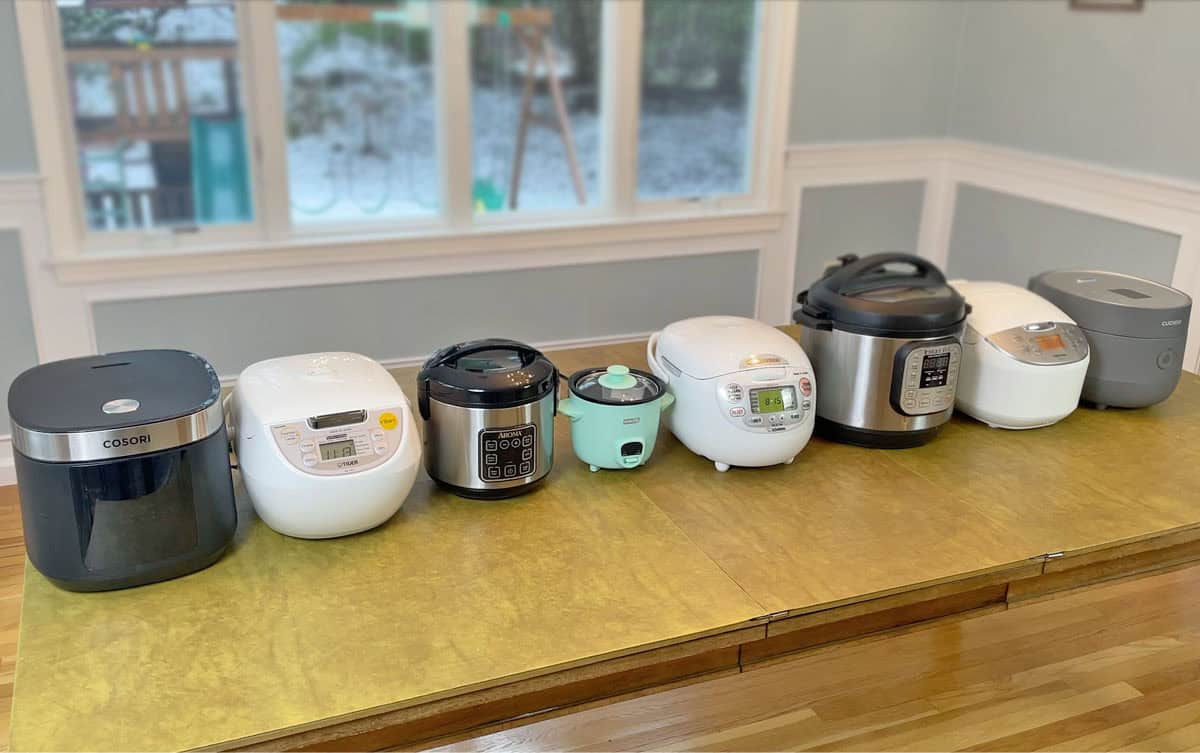
I cooked over 50 batches of rice, including small, medium, and large batches of white rice, plus brown rice and sushi rice.
I also tested the quick cook mode, soft and hard texture settings, the keep warm function, power consumption, and nonstick coating durability.
For every batch, I looked at the texture, stickiness, grain separation, moisture, and whether the bottom overcooked or turned mushy.
I also compared details, including cook time, controls, water markings, cord length, size, cleanup, and cabinet clearance.
In this review, I’ll show you what Zojirushi does best, the flaws you need to know before buying one, and whether cheaper rice cookers can match or beat it.
Key Takeaways
The Zojirushi Neuro Fuzzy is a genuinely excellent rice cooker. It produced some of the best white rice and sushi rice in my tests, its soft and hard texture settings made a noticeable difference, and its keep warm function kept rice tasting good for six hours.
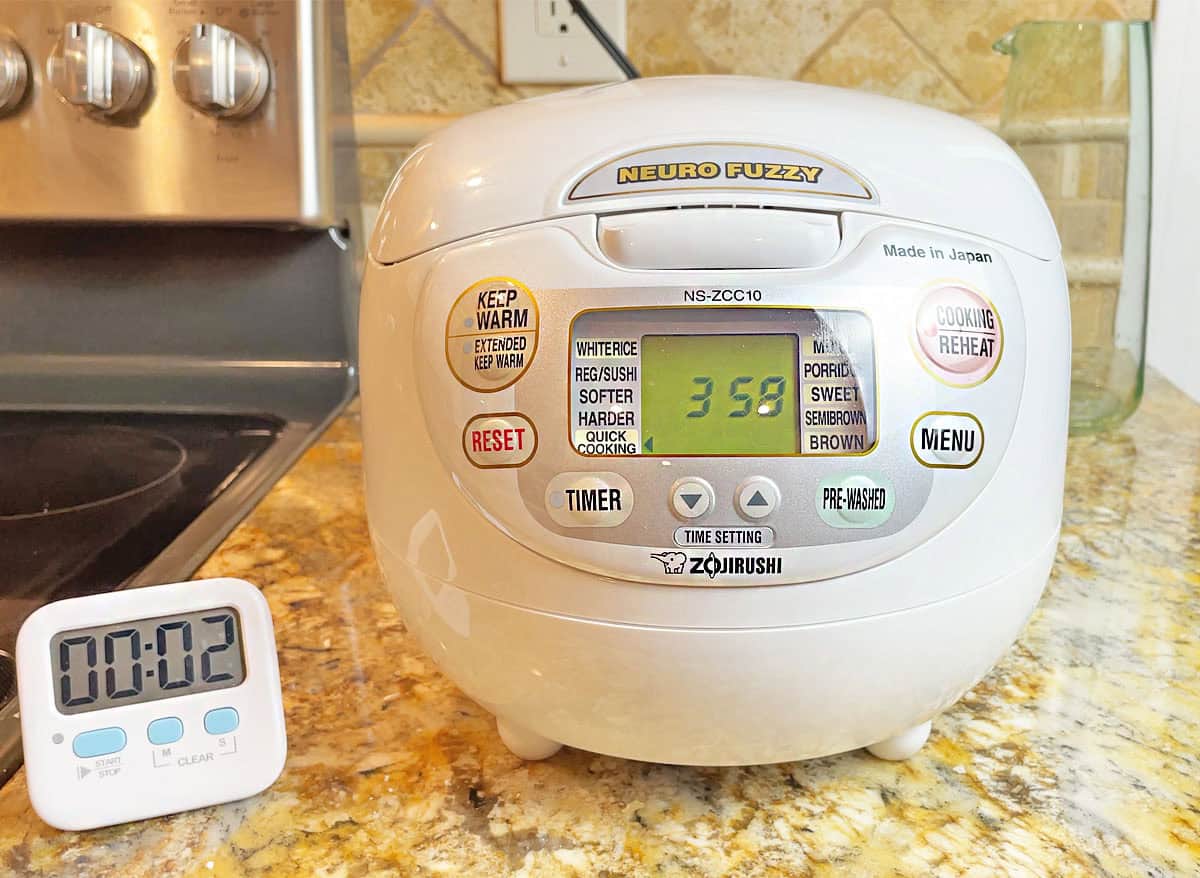
However, it was one of the slowest rice cookers I tested. It took 49 minutes to cook one cup of white rice, 53 minutes for three cups, 59 minutes for five cups, and one hour and 43 minutes for brown rice.
The more affordable Cosori performed almost as well as Zojirushi in the white rice tests, produced better brown rice, and cooked faster. Zojirushi is worth considering if you value its established reputation and thoughtful design, but Cosori is the better overall value.
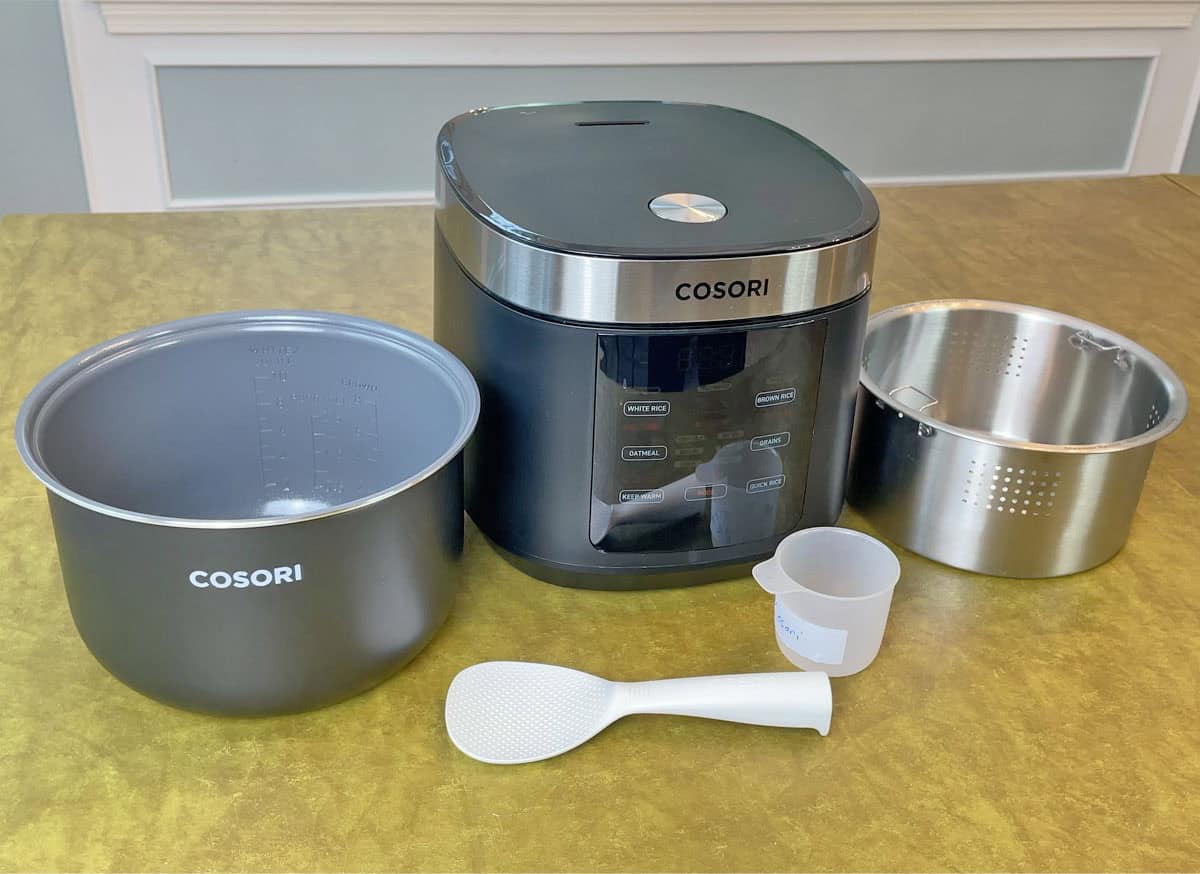
You can check the latest prices for all the rice cookers I tested here:
Click the links below to navigate this review:
- White Rice Test
- Soft and Hard Texture Settings Test
- Brown Rice Test
- Sushi Rice Test
- Cook Time
- Quick Cook Mode
- Water-to-Rice Ratio Test
- Keep Warm Test
- Design and Usability
- Nonstick Coating Durability
- Bottom Line: Is the Zojirushi Rice Cooker Worth It?
White Rice Test
For the first test, I cooked three batches of white rice in the Zojirushi and the other seven rice cookers.
In each one, I made a small batch (1 cup), a medium batch (3 cups), and a large batch (5 cups). I used the same long-grain white rice, rinsed it the same way, used the same bottled water, and followed each brand’s water markings.
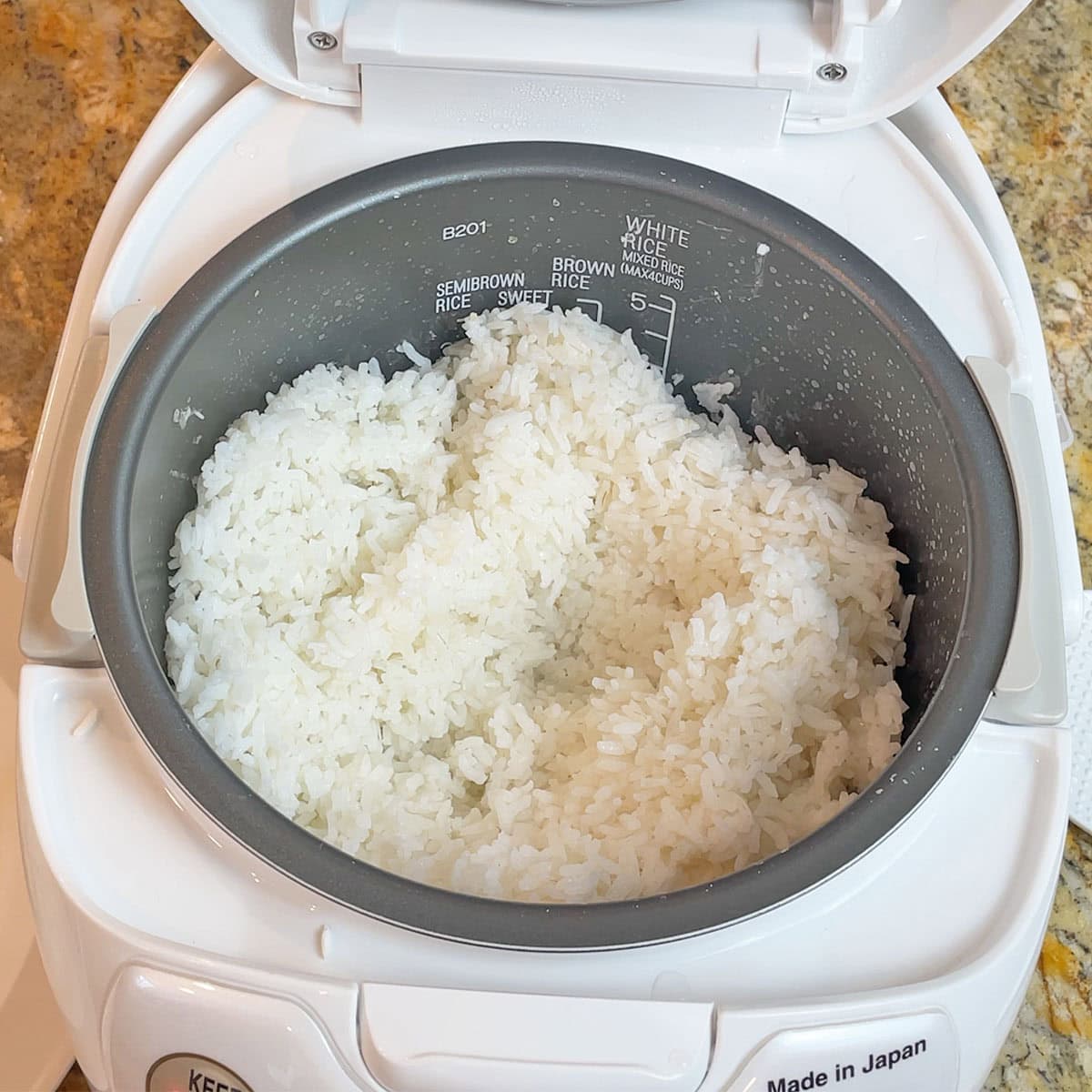
The Zojirushi did exactly what you’d hope an expensive rice cooker would do. The medium and large batches came out excellent. The grains were fully cooked, tender, slightly sticky, and easy to fluff, with clear separation and no mushiness.
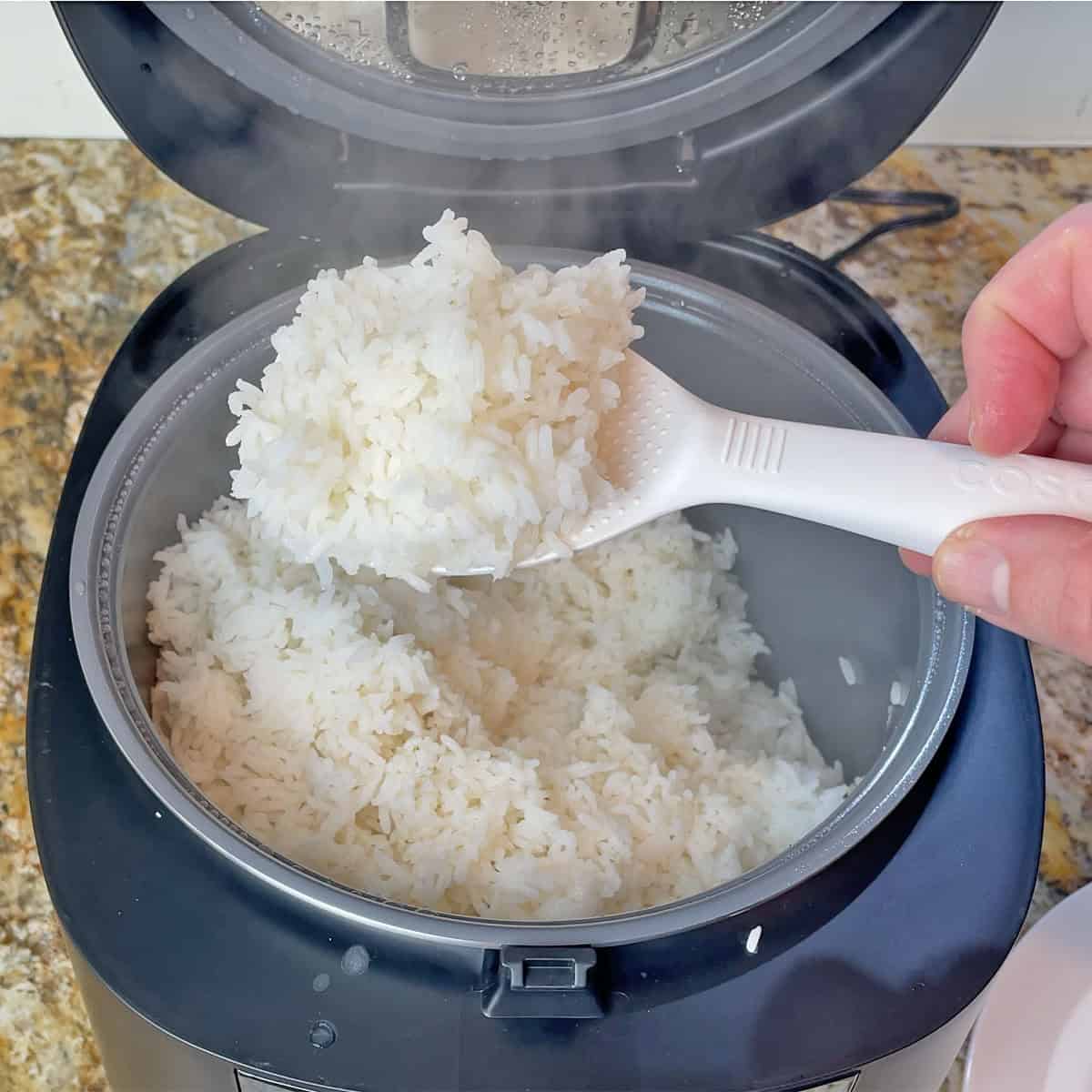
The Cosori produced similarly excellent results with both batch sizes. Its rice had full, chewy grains that were slightly sticky without turning mushy, and there was no overcooking on the bottom.
The Aroma also performed very well with its medium and large batches, although its maximum capacity limited the large test to four cups instead of five. The Tiger and Cuckoo produced excellent medium batches, while the Toshiba’s rice was slightly drier but still had good texture and chew.
The small one-cup Zojirushi batch was a little softer than the larger batches, but still very good. It wasn’t the best one-cup result I got, but it was close.
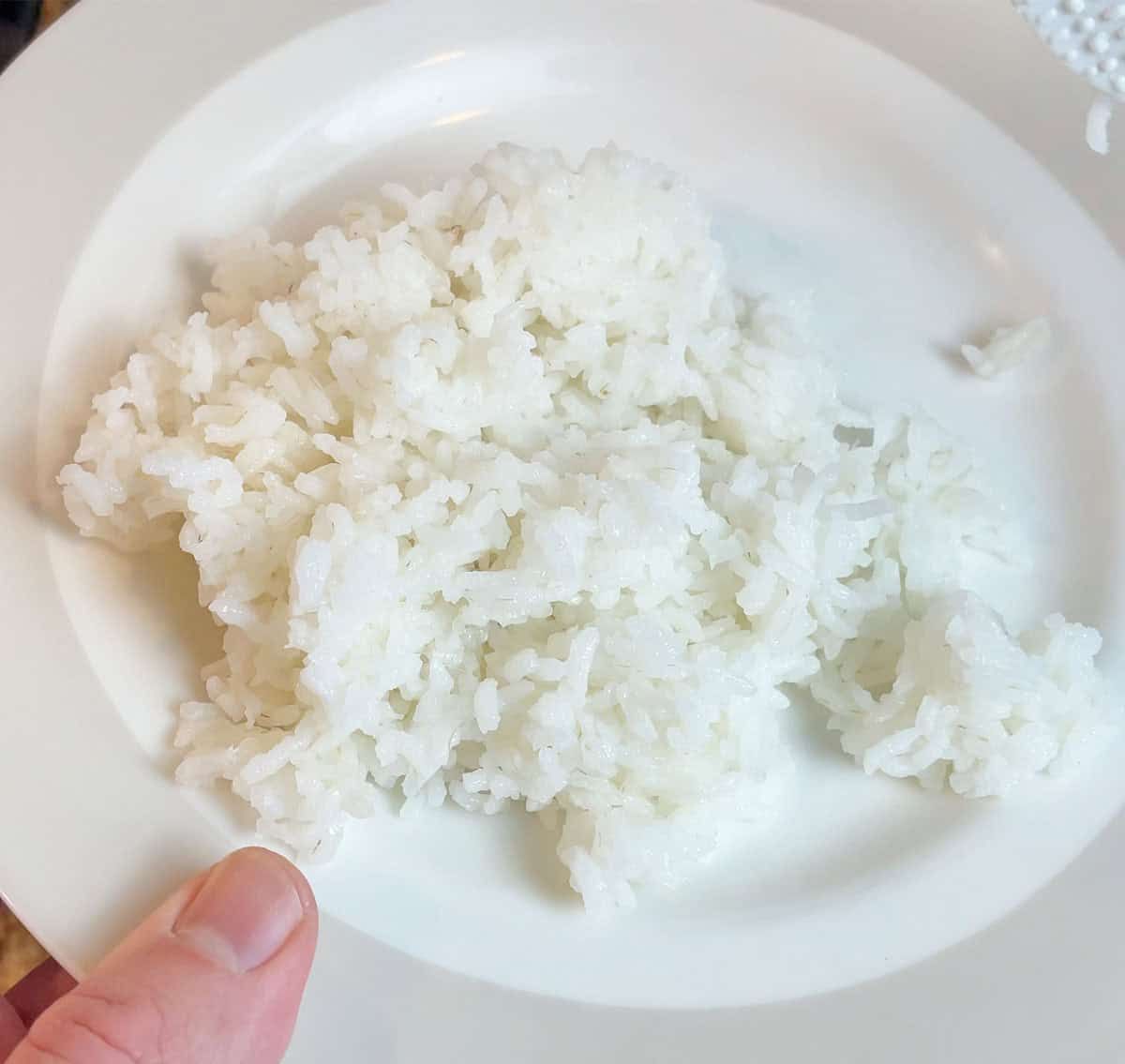
The Cosori and Cuckoo produced the best one-cup results. Both made tender rice with clear grain separation, enough stickiness to hold its shape, and no mushiness or overcooking on the bottom.
Several other cookers had bigger issues. The Tiger produced good rice, but a starchy film formed on the bottom and some of the grains fused together at the base.
The Toshiba’s rice was slightly drier than the Zojirushi and Cosori results. The Aroma’s one-cup batch was wetter and mushier, with a layer of overcooked rice on the bottom.
The Instant Pot was uneven. One area was wet and mushy, while most of the rice was dry, firm, and slightly undercooked.
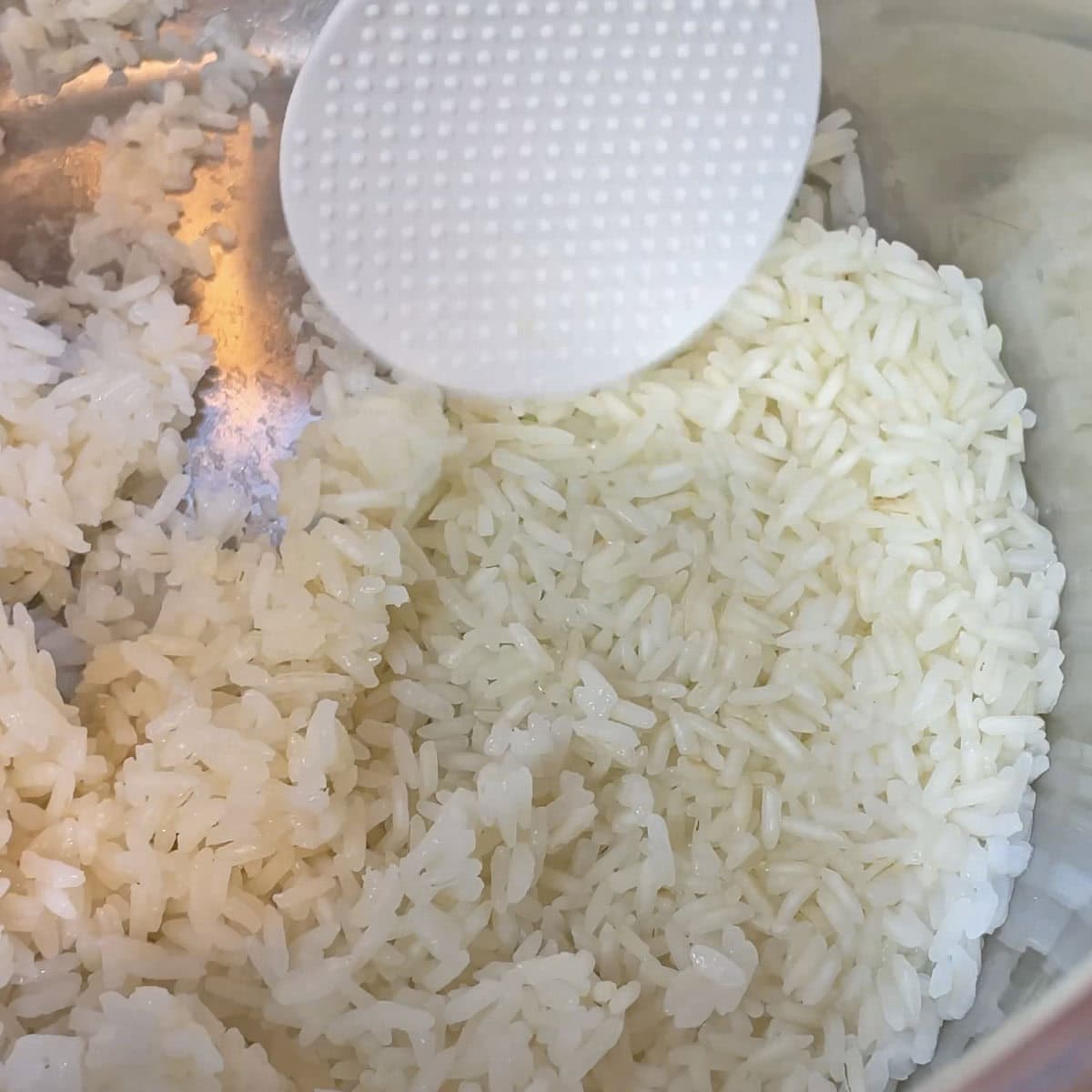
The Dash performed the worst. Even after I rinsed the rice for five minutes, water and starch bubbled over the loose lid and spilled down the sides. The rice itself came out wet and mushy.
Soft and Hard Texture Settings Test
I also tested Zojirushi’s soft and hard texture settings to see if they actually make a difference. I ran the same tests in the Cosori so I could compare the results directly.
For both tests, I used two cups of the same long-grain white rice, rinsed it the same way, and followed each cooker’s two-cup water markings.
On the soft setting, the Zojirushi rice came out fluffier, stickier, and more moist, but the grains still stayed intact. It didn’t turn mushy or wet. It finished in 55 minutes and seven seconds.
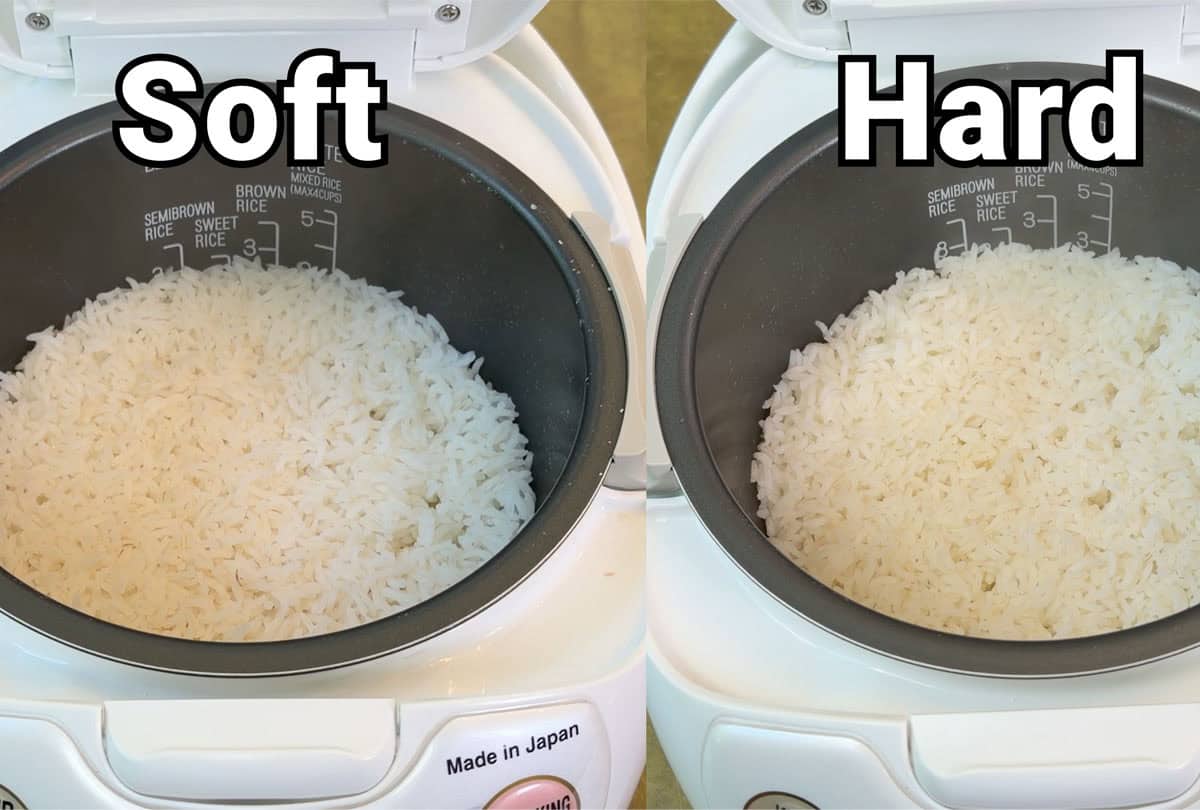
The Cosori’s soft rice was also very good. Its texture was similar to the Zojirushi, although it was slightly drier. The difference between the two was minimal.
The Cosori finished in 49 minutes and 40 seconds, about five minutes and 27 seconds faster than the Zojirushi.
On the hard setting, the Zojirushi rice had more visible grain separation, a firmer bite, and a little more chew. It was slightly drier, but that’s exactly what I’d expect from a harder rice setting. It finished in 40 minutes and 29 seconds.
The Cosori’s hard rice was nearly identical. It had clear grain separation, a firmer bite, and a slightly drier finish. I couldn’t identify a meaningful difference in texture compared to the Zojirushi. The Cosori finished in 38 minutes and 58 seconds, about one minute and 31 seconds faster.
Both cookers handled the soft and hard settings extremely well. The soft modes produced fluffier, stickier rice, while the hard modes produced more visible individual grains and a firmer chew.
So in terms of white rice, Zojirushi was one of the top performers. But things got more interesting when I tested other types of rice.
Brown Rice Test
After testing long-grain white rice in different batch sizes, I also cooked brown rice in each cooker.
With brown rice, the Zojirushi was fine, but not great. The grains were tender and evenly cooked, but they were softer and clumpier than I prefer.
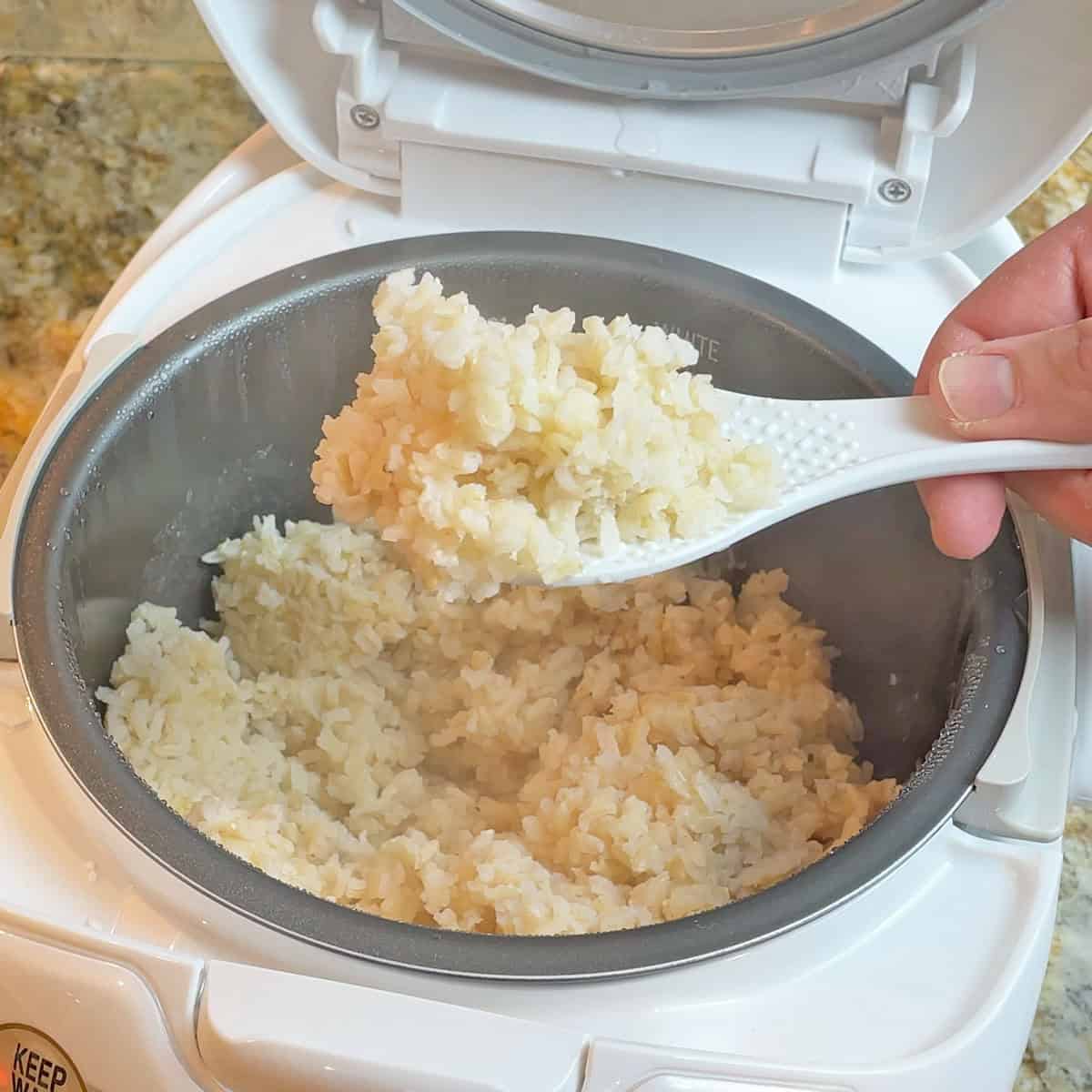
The Cosori did noticeably better in this test. Its brown rice came out tender and evenly cooked, with better grain separation and no mushiness.
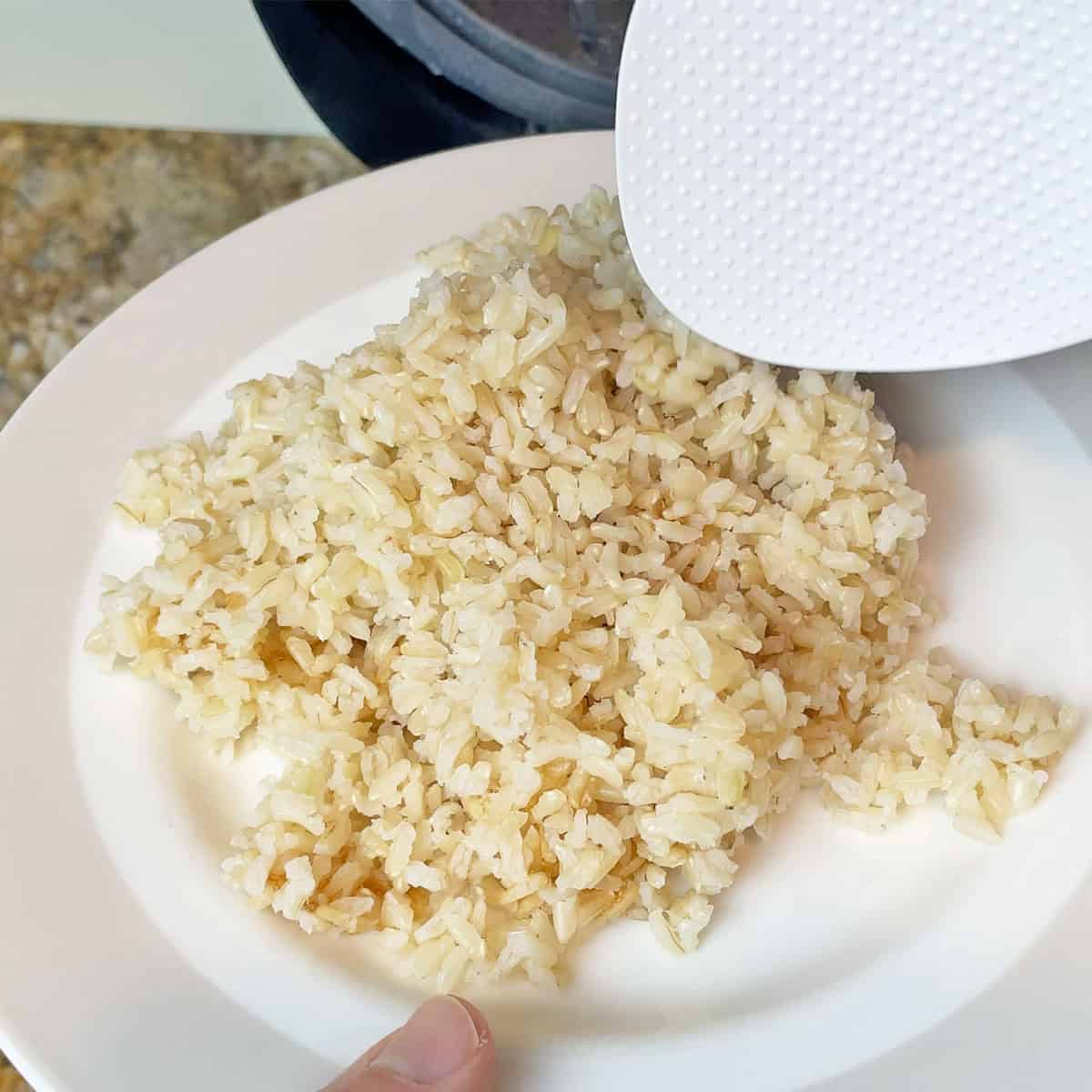
The Aroma also performed very well. Its grains were tender and chewy, with clear separation and no mushiness.
The Tiger made light, fluffy brown rice with excellent chew. The Toshiba’s brown rice had good texture and wasn’t mushy, although it was slightly drier than the Cosori result.
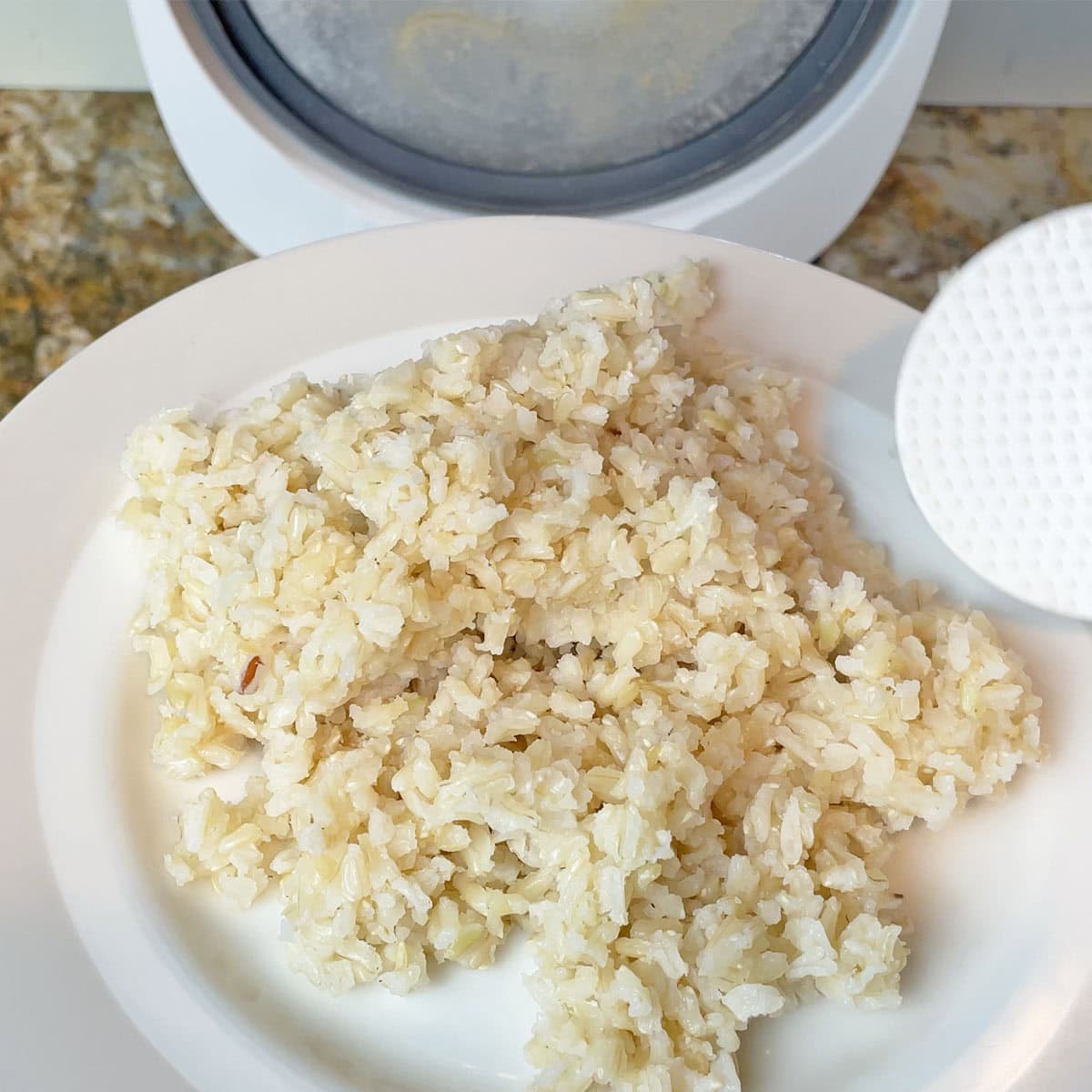
The Cuckoo’s grains split open, which gave the rice a lighter but somewhat mealy and mushy texture.
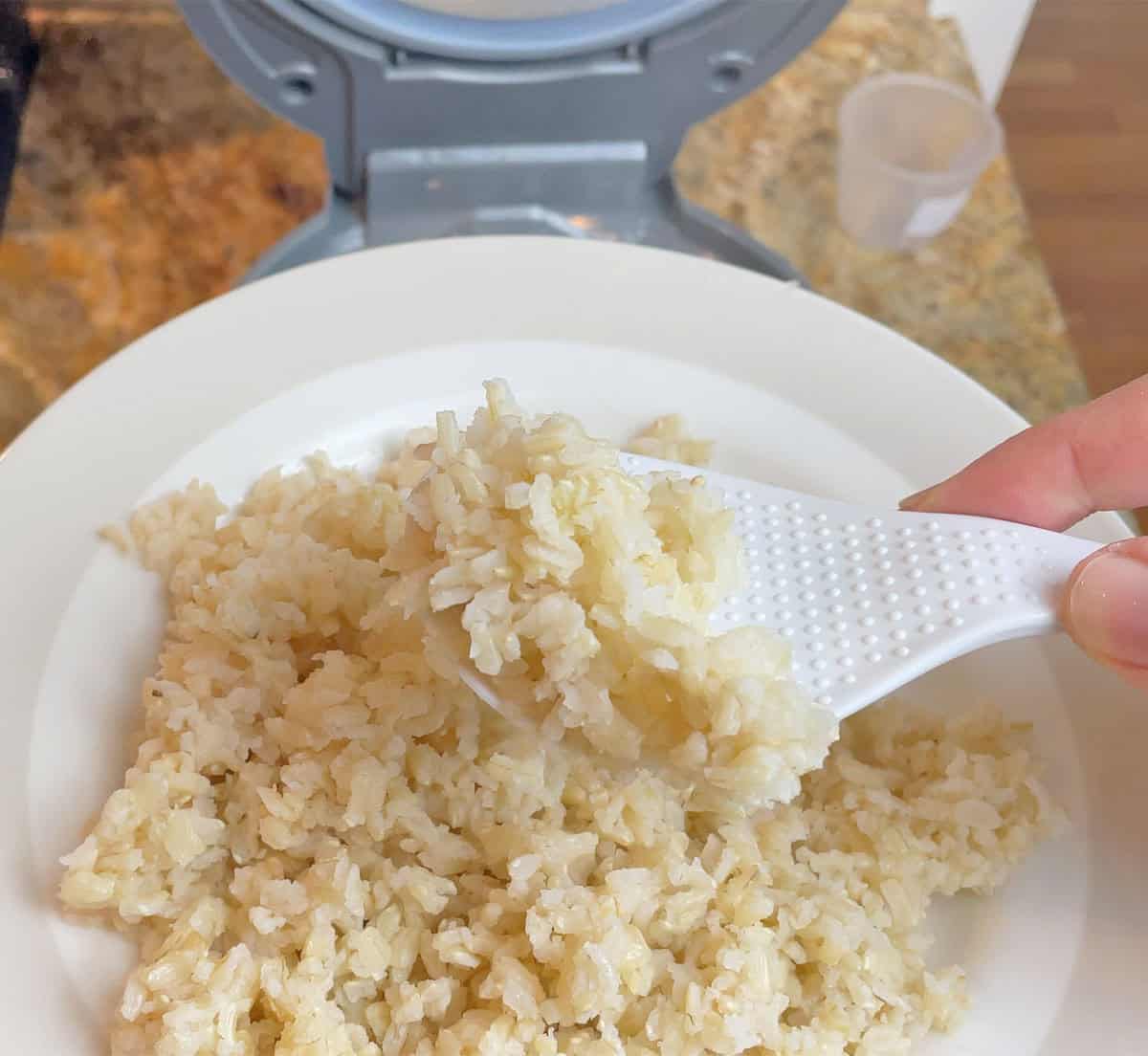
The Dash’s brown rice was wetter and mushier than ideal. It wasn’t terrible, but it wasn’t as good as the Cosori, Aroma, Tiger, or Toshiba results.
The Instant Pot produced a noticeably different texture because pressure cooking kept more of the grains intact. It also uses an uncoated stainless steel pot, so the rice stuck more than it did in the nonstick rice cookers.
Sushi Rice Test
I also tested sushi rice, which is a medium-grain white rice that’s naturally stickier than long-grain rice. That extra stickiness helps it hold together for sushi, rice bowls, and other dishes where you want the rice to clump slightly without turning mushy.
Zojirushi did extremely well here. The rice was sticky enough to hold together, but it didn’t turn wet, gummy, or mushy.
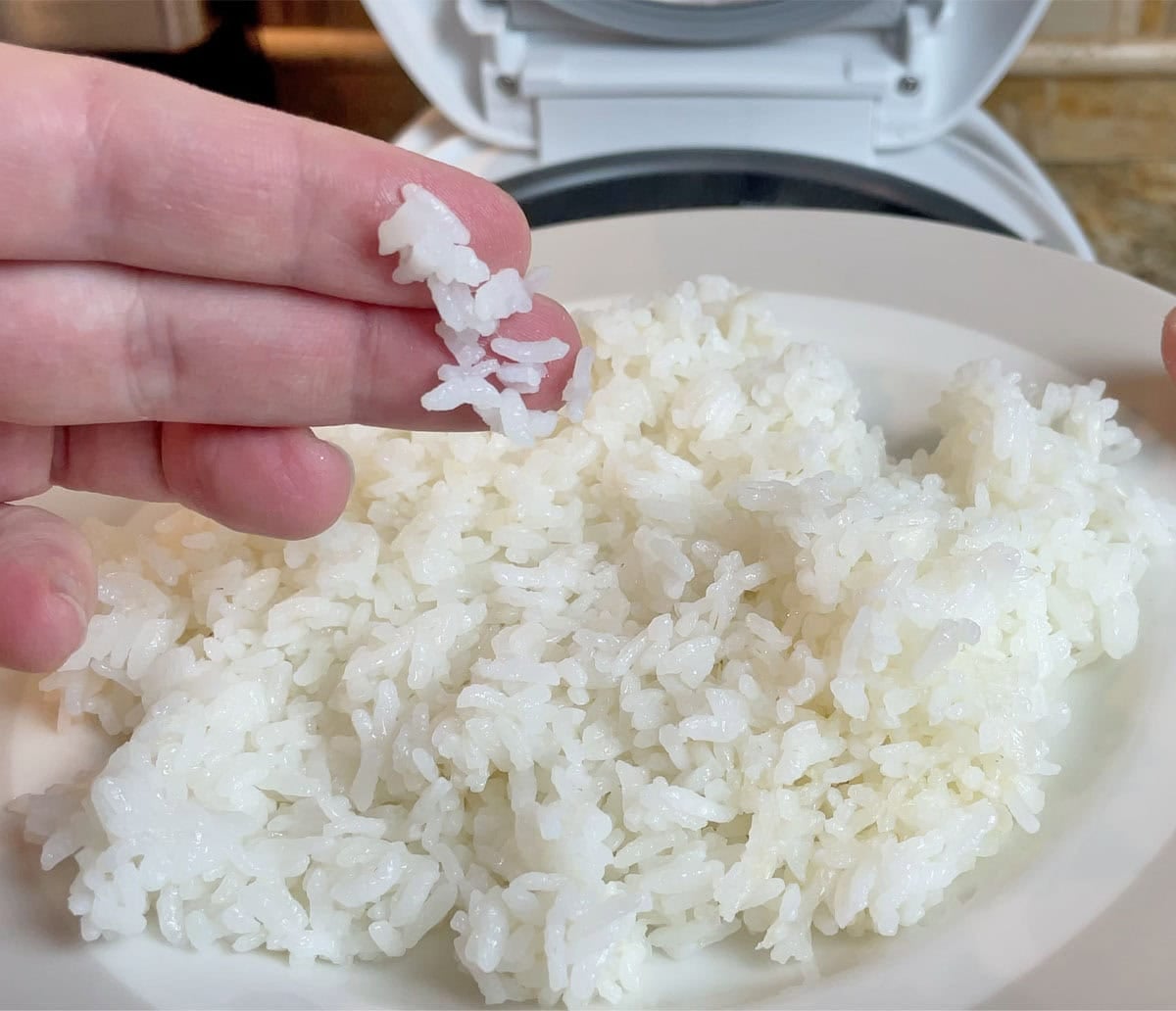
The Cosori matched the Zojirushi in this test. Its sushi rice had excellent texture and consistency and was sticky without becoming mushy.
The Tiger and Toshiba also made good sushi rice. Both produced sticky, chewy grains with the right texture for sushi.
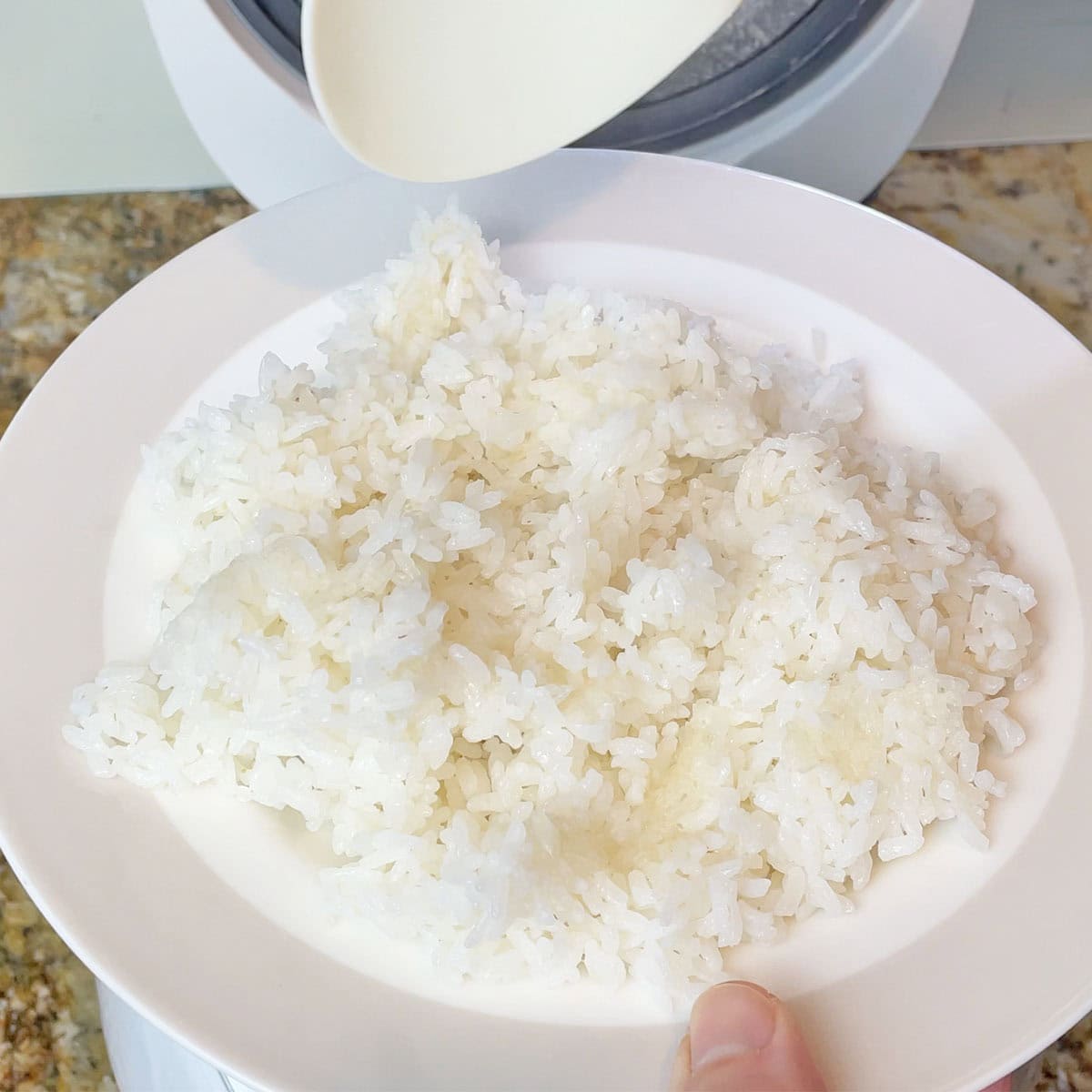
The Cuckoo and Aroma results were wetter and stickier, and both were slightly mushier than I prefer.
The Instant Pot struggled with the one-cup sushi rice batch. One section was wet and mushy, but most of the rice was dry and slightly undercooked.
Cook Time
During all of these tests, one of the key things I measured was cook time, and this is one of Zojirushi’s biggest drawbacks.
For the small one-cup batch of white rice, Zojirushi took 49 minutes, which was the slowest of the dedicated rice cookers. It was also the slowest with the medium three-cup batch at 53 minutes.
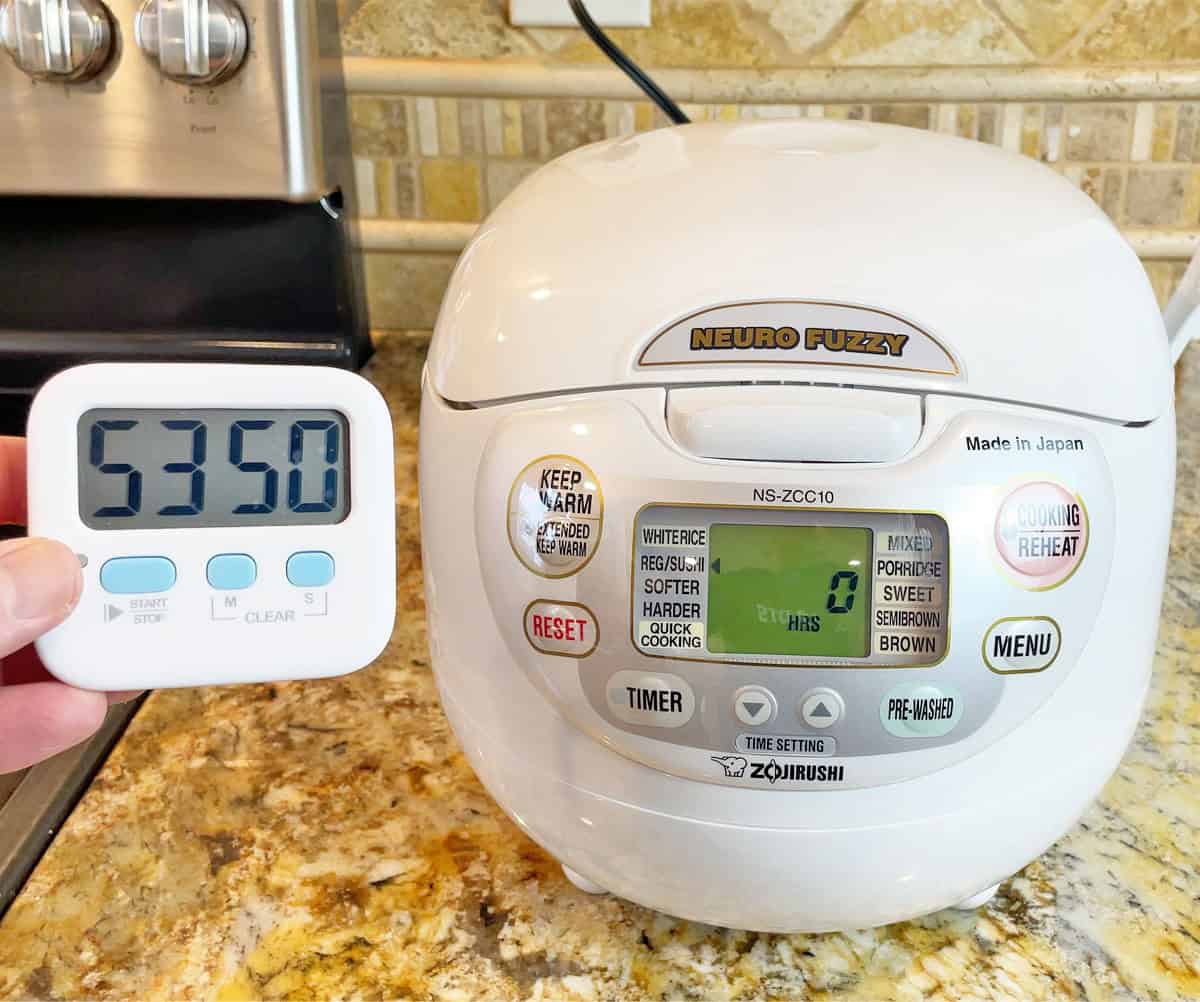
For the large five-cup batch, Zojirushi took 59 minutes, tying the Tiger for the slowest result.
The Instant Pot was significantly faster than every dedicated rice cooker, but it uses pressure to cook rice, and its results were inconsistent. The one-cup batch was unevenly cooked, with one wet and mushy area and rice that was otherwise dry and slightly undercooked.
White Rice Cook Times
| Rice cooker | Small batch | Medium batch | Large batch |
|---|---|---|---|
| Zojirushi | 49 min (1 cup) | 53 min (3 cups) | 59 min (5 cups) |
| Cosori | 42 min (1 cup) | 34 min (3 cups) | 46 min (5 cups) |
| Tiger | 38 min (1 cup) | 44 min (3 cups) | 59 min (5 cups) |
| Toshiba | 41 min (1 cup) | 47 min (3 cups) | 57 min (5 cups) |
| Cuckoo | 33 min (1 cup) | 44 min (3 cups) | 52 min (5 cups) |
| Aroma | 35 min (1 cup) | 43 min (3 cups) | 48 min (4 cups) |
| Instant Pot | 15 min (1 cup) | 21 min (3 cups) | 28 min (5 cups) |
| Dash | 39 min (1 cup) | N/A | N/A |
Brown rice was the biggest difference. Zojirushi took one hour and 43 minutes, which was by far the longest brown rice cook time I measured.
The other dedicated rice cookers finished in approximately one hour to one hour and seven minutes. The Instant Pot’s timer finished after 31 minutes, but I had to let the pressure release naturally for another 10 minutes before opening the lid, bringing the total cook time to approximately 41 minutes.
Brown Rice Cook Times
| Rice cooker | Cook time |
|---|---|
| Zojirushi | 1 hr 43 min |
| Cosori | 67 min |
| Tiger | 63 min |
| Toshiba | 65 min |
| Cuckoo | 60 min |
| Aroma | 65 min |
| Instant Pot | 41 min, including pressure release |
| Dash | 59 min |
It’s also worth noting that Zojirushi’s soft setting took about 15 minutes longer than its hard setting. The soft setting finished in 55 minutes and seven seconds, while the hard setting finished in 40 minutes and 29 seconds.
Quick Cook Mode
To see if quick cook mode could save a meaningful amount of time, I also tested that with each rice cooker.
With three cups of white rice, Zojirushi’s quick cook mode finished in 39 minutes, saving 14 minutes compared to the regular white rice setting. The rice was still very good, and I didn’t notice a major drop-off in texture.
Tiger saved the most time at 16 minutes, while Cuckoo and Zojirushi each saved 14 minutes. However, the Cosori, Toshiba, and Aroma quick modes saved only two or three minutes.
| Rice cooker | Regular mode | Quick mode | Time saved |
|---|---|---|---|
| Zojirushi | 53 min | 39 min | 14 min |
| Cosori | 34 min | 32 min | 2 min |
| Tiger | 44 min | 28 min | 16 min |
| Toshiba | 47 min | 44 min | 3 min |
| Cuckoo | 44 min | 30 min | 14 min |
| Aroma | 43 min | 40 min | 3 min |
Overall, Zojirushi was one of the slowest rice cookers I tested, especially for brown rice. Its quick cook mode helps, but even on that setting, the Cosori finished seven minutes faster on its regular white rice setting.
Water-to-Rice Ratio Test
Zojirushi uses a technology called fuzzy logic, which allows it to adjust the heat and cook time as the rice cooks instead of just heating at one steady level until the water is gone.
I saw that when I plugged it into a wattage meter. The power draw cycled up and down throughout the cook, usually jumping into the 600-watt range, then dropping back down into the 20s.
The Cosori behaved similarly, although its heating spikes reached approximately 860 watts before dropping into the 20-watt range. Both cookers cycle their heating elements instead of continuously pulling maximum power, but the Cosori had higher peaks and more dramatic changes.
But I wanted to know how much these adjustments actually help if you make a major measuring mistake. So I cooked two cups of rice but filled the water to the three-cup line.
The Zojirushi finished the test in 53 minutes and 44 seconds.
Unfortunately, the result was really bad. The rice came out wet, mushy, and clumpy, and I could easily smash it into paste with a knife.
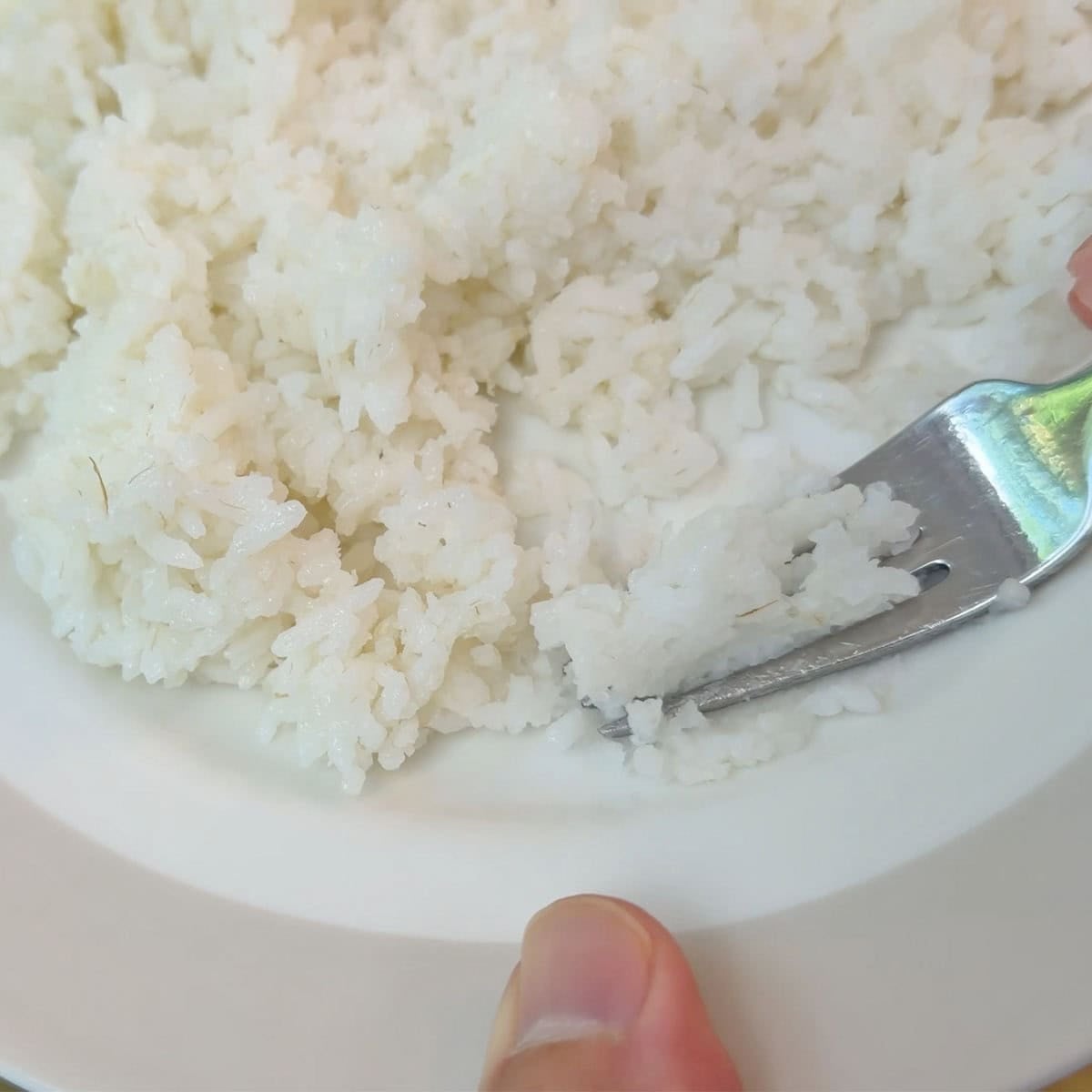
So fuzzy logic may help with small adjustments, but it can’t fix a major water-to-rice ratio mistake. Accurate measuring still matters.
Keep Warm Test
Next, I tested the keep warm function, because this is one of the main reasons to buy a rice cooker instead of just making rice on the stove.
After one hour on keep warm, the rice still tasted almost the same: warm, moist, and easy to fluff.
After three hours, it was still good, but I could tell it was starting to dry out a little.
After six hours, it was slightly drier than the three-hour mark, but not by much. It still tasted good, and the texture was still fine.
It’s also worth noting that every time I opened the lid to check it, some steam escaped, so that may have made it dry out a little faster than it would if you left it closed.
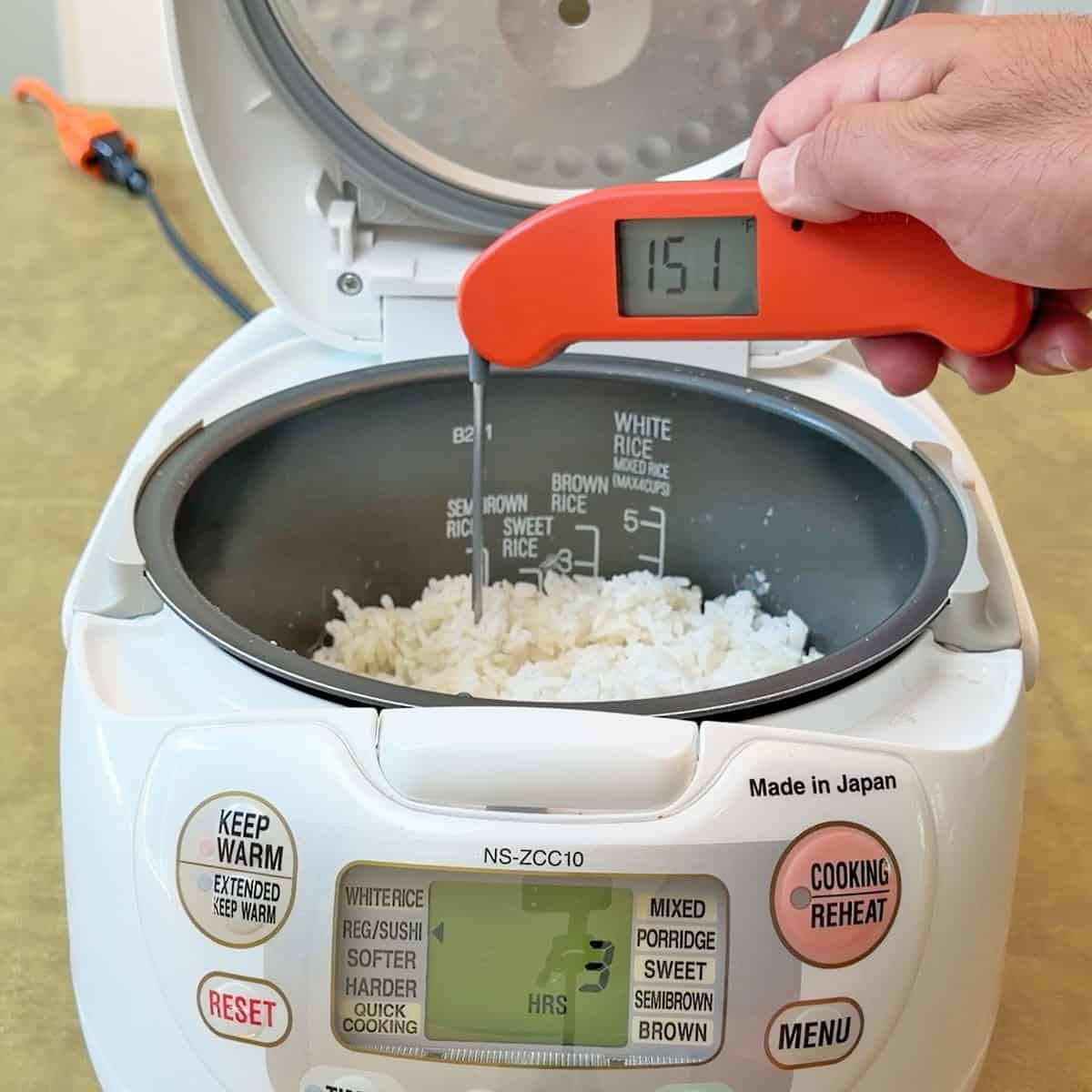
I also checked the temperature, and it stayed well above 140 degrees, so it was holding the rice at a safe temperature.
Design and Usability
Beyond these test results, Zojirushi also got a lot of the small design and usability details right.
The lid opens smoothly instead of snapping up and shaking the whole cooker.
That was a meaningful advantage over the Tiger, Toshiba, and Cuckoo. Their lids opened more abruptly, causing the units to shake or move when the lid reached the top.
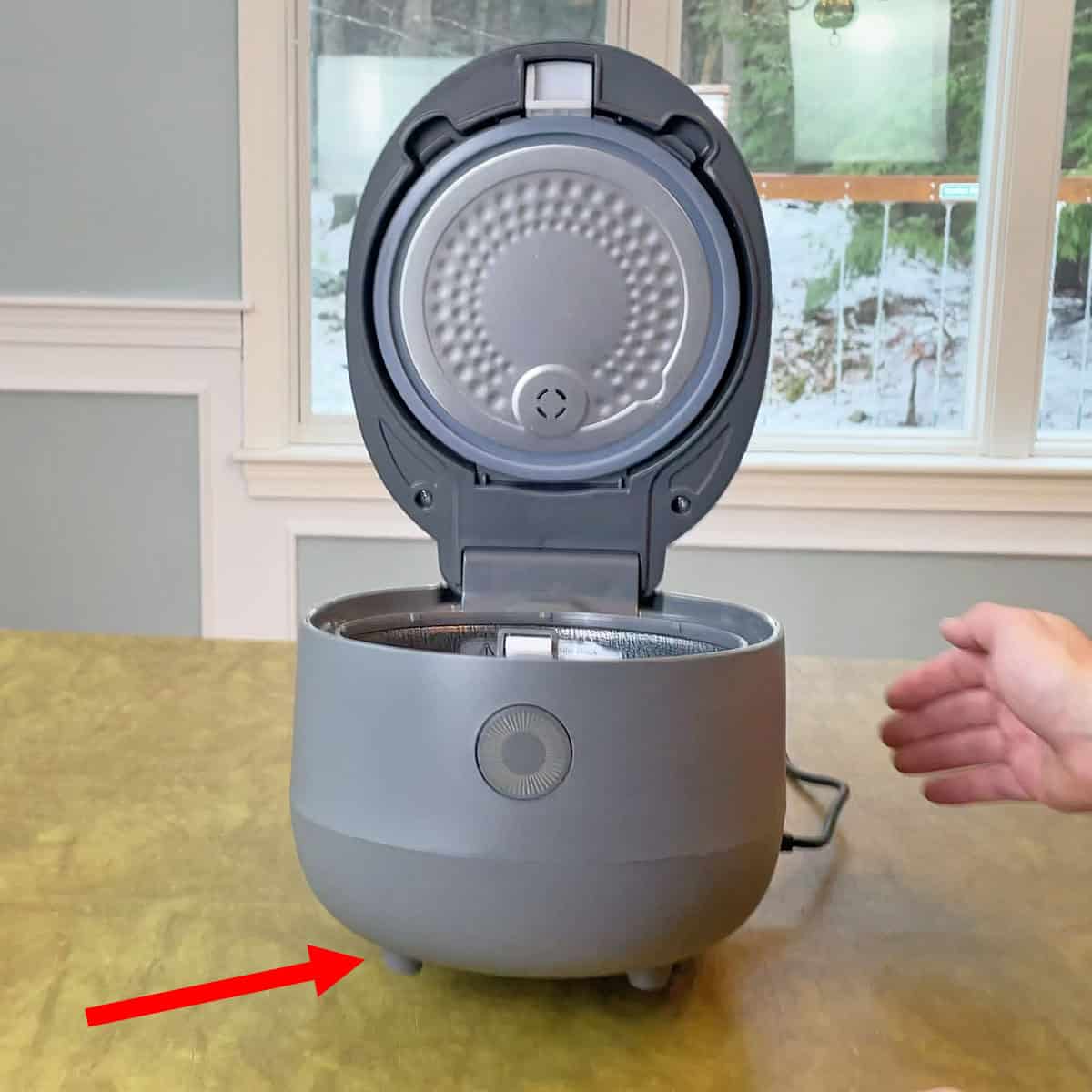
The Cuckoo’s lid was also the tallest when open. It measured 18.25 inches high and could hit an overhead cabinet if the cooker wasn’t pulled far enough forward.
The Zojirushi measured 16.5 inches with the lid open, which was similar to the Toshiba and only slightly taller than the Tiger.
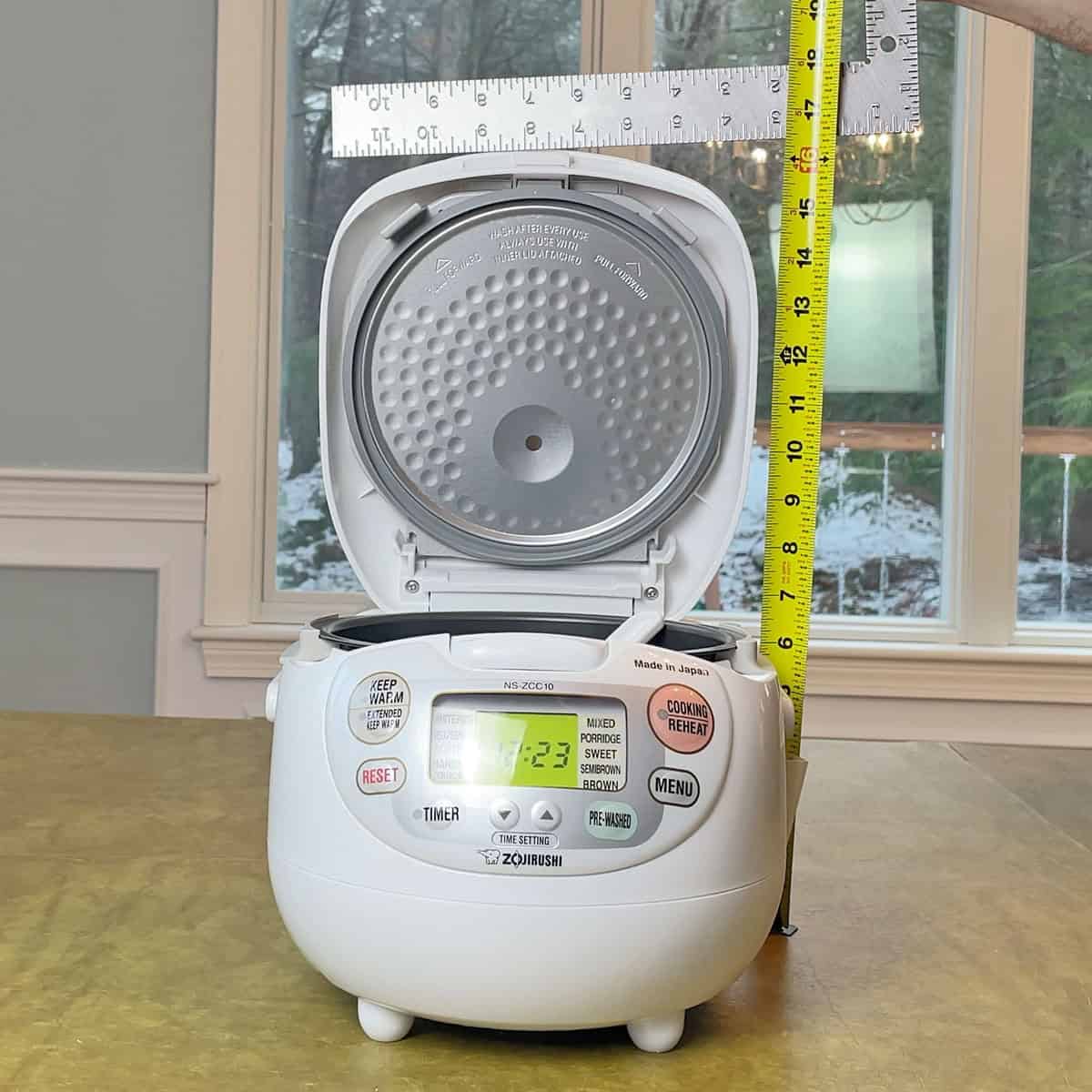
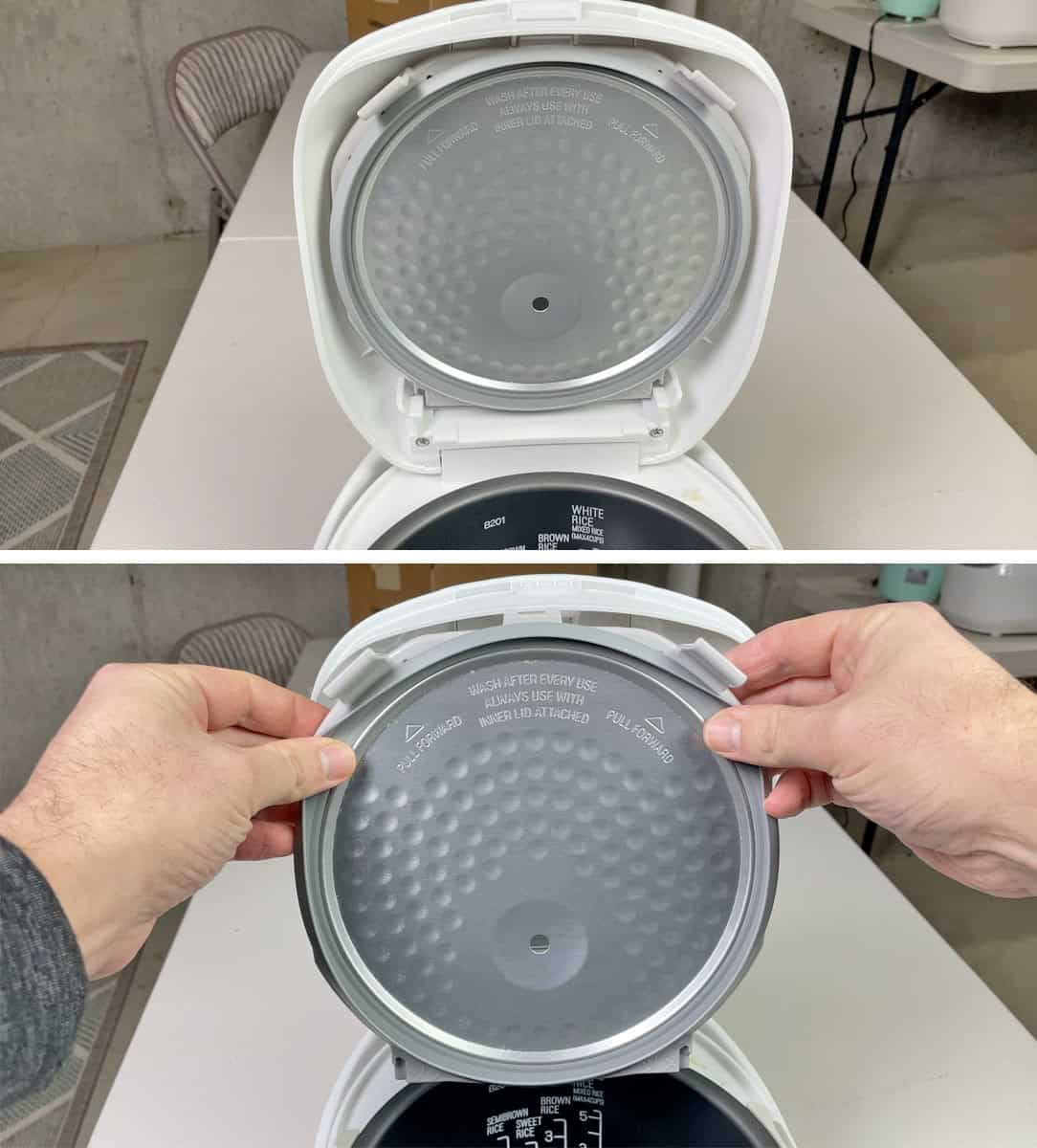
The Zojirushi’s inner lid is removable, so you can clean it in the sink. It also gives you easier access to wipe down the areas around the lid and steam vent where starch and condensation can build up.
The Cosori, Cuckoo, Aroma, Toshiba, and Zojirushi all have removable inner lids. The Tiger does not. You can remove a smaller center component, but you have to wipe the rest of the inner lid while it’s attached to the cooker.
The water markings in the Zojirushi bowl are white against a dark background, which makes them much easier to read than the engraved markings on some of the other bowls.
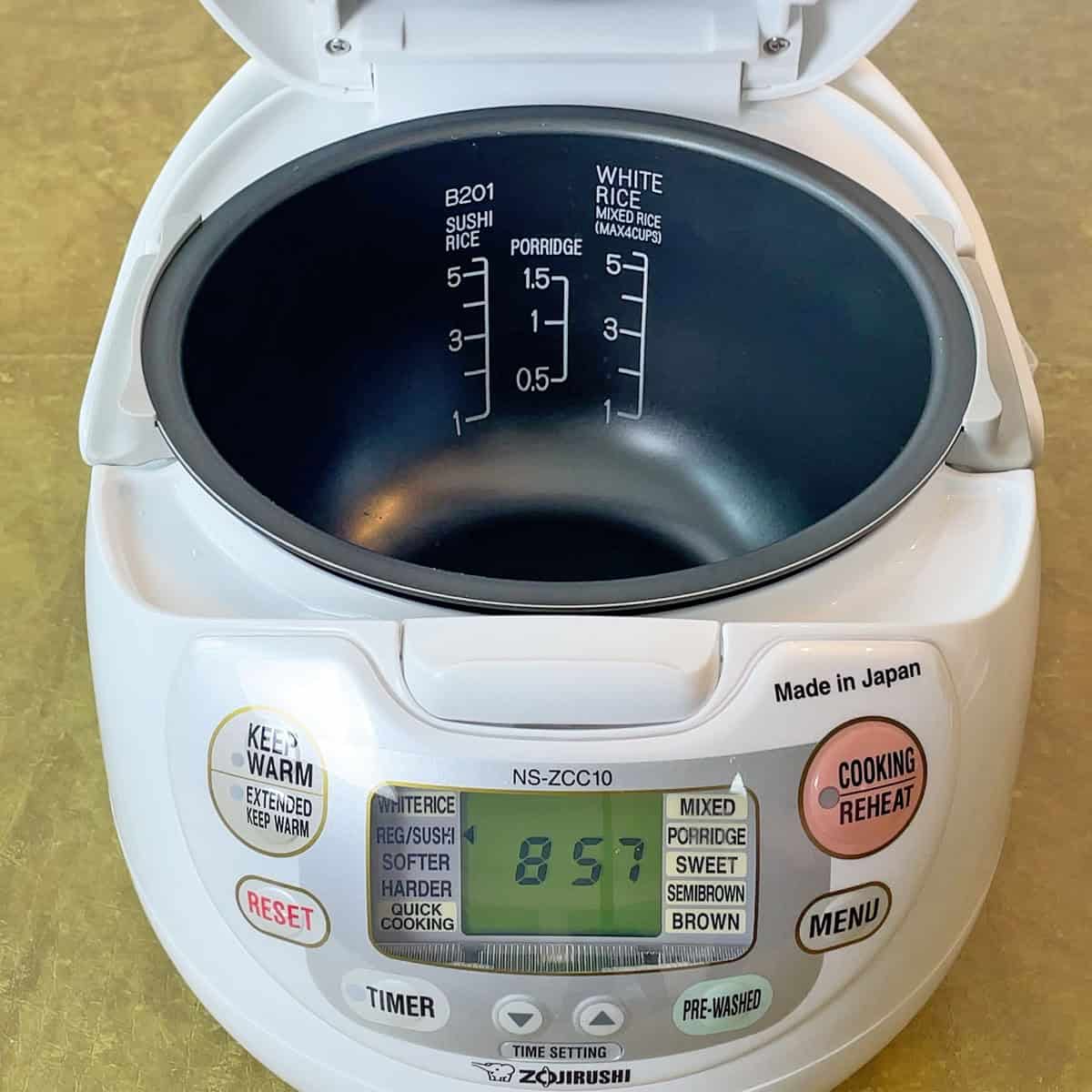
The Tiger also has high-contrast water markings, but the Cosori, Cuckoo, Aroma, and Dash use markings that are close to the same color as the bowl and can be more difficult to see.
The Toshiba uses gray markings against a light-colored bowl. They’re easier to see than same-color engraved markings but not as clear as the markings in the Zojirushi or Tiger.
I also like that the Zojirushi inner pot has handles. You can lift it out while it’s still hot, and the handles force you to place the pot in the right direction so the water markings face you.
The retractable cord is another nice touch. At 50.5 inches, it was the longest cord I measured.
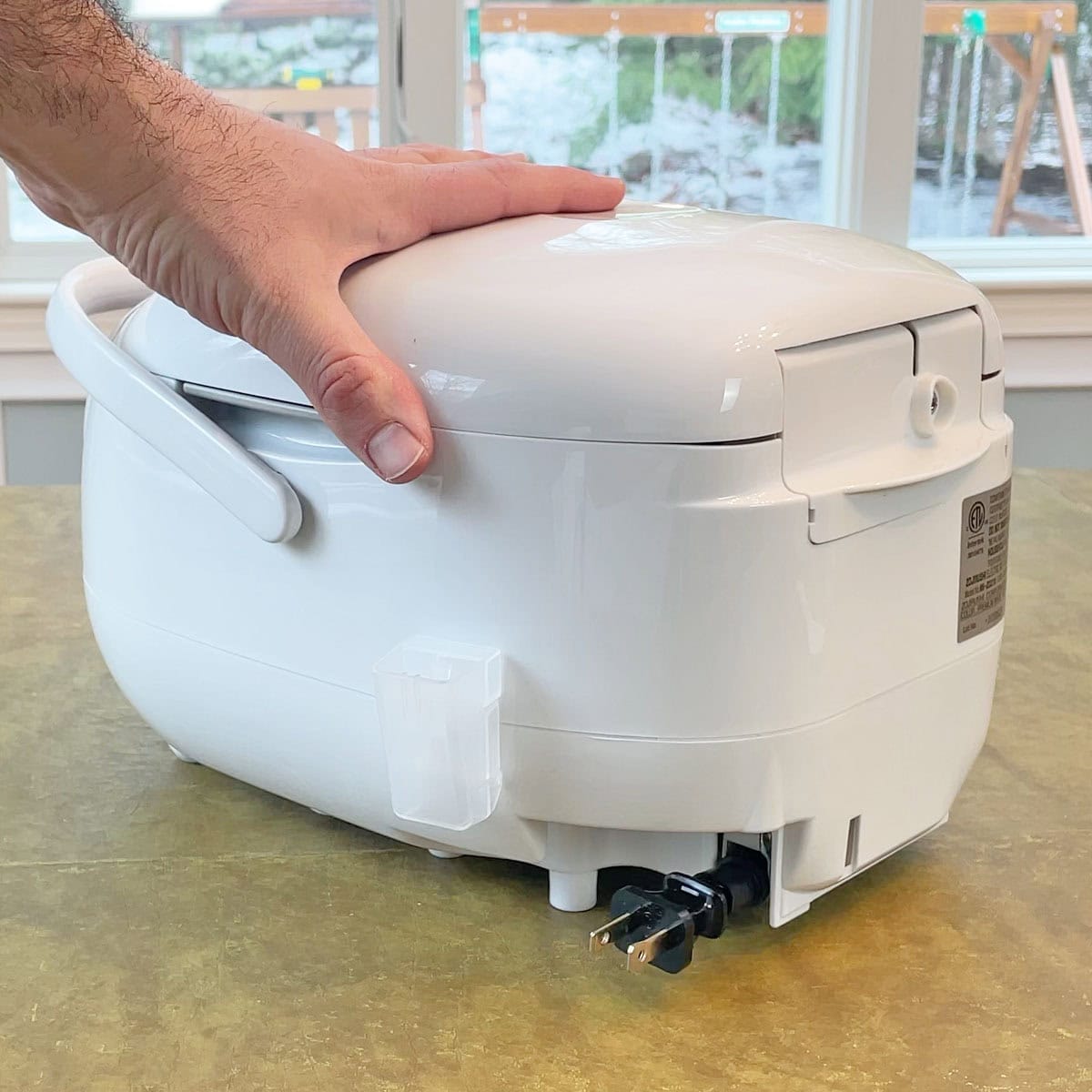
The Instant Pot had the next-longest cord at 43 inches. Most of the dedicated rice cookers had cords between approximately 27 and 36 inches.
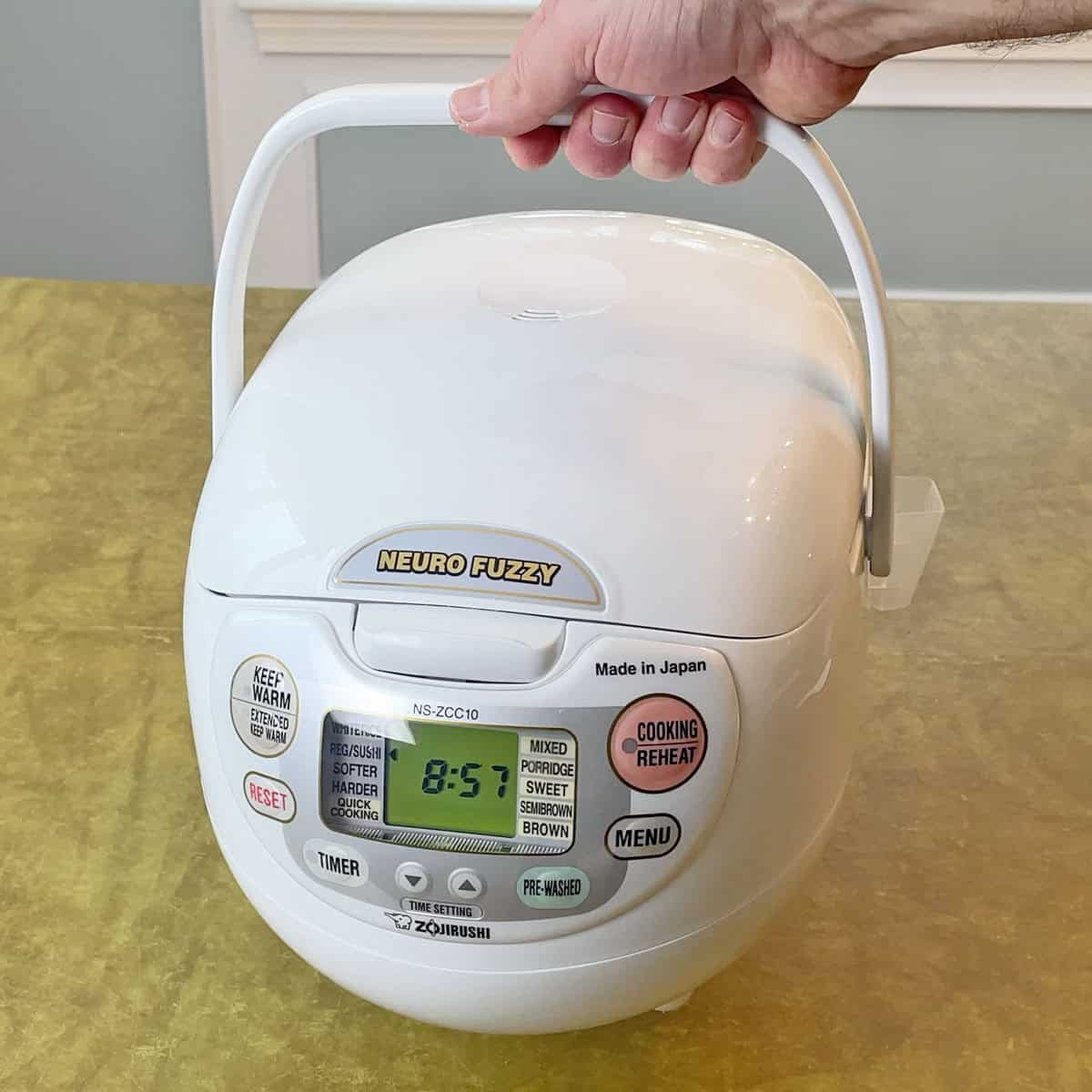
The Zojirushi also has a carrying handle and plays a short melody when you start a cycle and when the rice is finished instead of using a standard electronic beep.
Nonstick Coating Durability
The inner pot has a PTFE nonstick coating, which makes cleanup easy, but it also means you need to be careful.
I gently rubbed the surface with a metal fork and inspected it under a microscope. The coating had visible scratches.
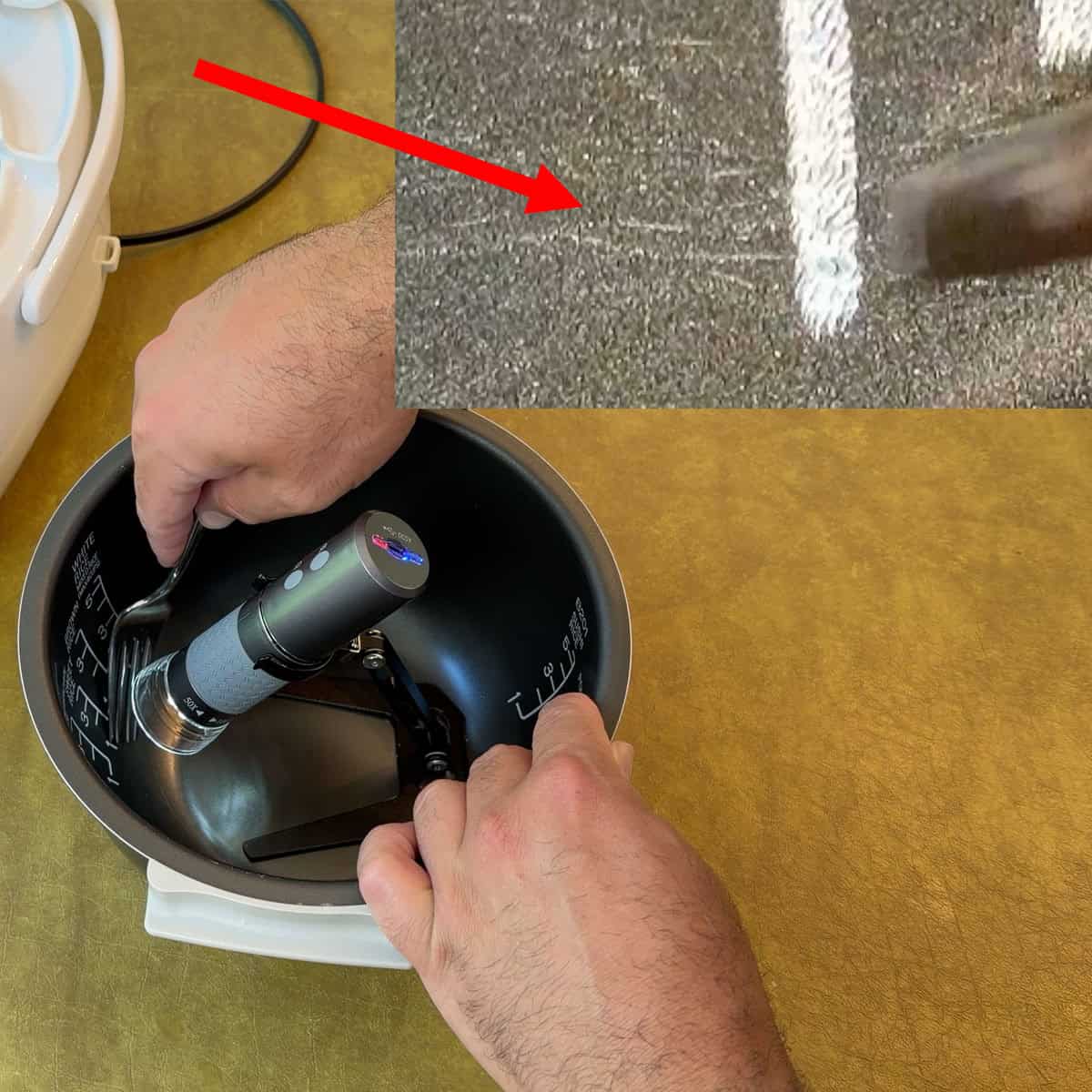
The test confirmed that metal utensils can damage the surface even with fairly gentle contact.
So if you buy this, treat the bowl like a nonstick pan. Use the included rice paddle or a soft silicone utensil, and avoid metal forks, spoons, knives, metal paddles, or anything sharp.
The Instant Pot was the only cooker I tested with an uncoated stainless steel cooking pot. That eliminates concerns about scratching a nonstick coating, but the rice stuck to the surface and required soaking before cleanup.
Bottom Line: Is the Zojirushi Rice Cooker Worth It?
After all that testing, is the Zojirushi worth it?
So, here’s my honest take. Zojirushi is a genuinely excellent rice cooker. It made some of the best white rice I tested, the soft and hard texture settings actually work, the keep warm holds up for hours, and the design is done right with handles, water markings you can actually read, a removable inner lid, and a retractable cord.
But similar to brands like Le Creuset and All-Clad, part of what you’re paying for is the name. Zojirushi has been around for over 100 years, and it has been making rice cookers for many decades.
So if you cook rice constantly and you want the established, trusted brand, I don’t think you’ll regret it.
But it’s definitely not the best value. The Cosori rice cooker costs way less, performed almost the same as Zojirushi in my white rice tests, and beat it in my brown rice test. It also cooks faster.
The bottom line is that Zojirushi is excellent, but unless you really want the legacy brand, you don’t need to spend that much to get consistently great rice.
Compare current prices for the eight rice cookers in this review:
- Zojirushi Neuro Fuzzy Rice Cooker on Amazon
- Cosori 5-Quart Rice Cooker on Amazon
- Tiger 5.5-Cup Micom Rice Cooker on Amazon
- Toshiba 6-Cup Rice Cooker on Amazon
- Cuckoo 6-Cup Rice Cooker on Amazon
- Aroma 4-Cup Digital Rice Cooker on Amazon
- Instant Pot on Amazon
- Dash Mini Rice Cooker on Amazon
Related Topics
- Zojirushi vs Cuckoo: Which Rice Cooker Is Better? (Test Results)
- Zojirushi vs Tiger: Which Rice Cooker Is the Best?
- How Long Does Rice Take in a Rice Cooker? (With 5 Examples)
- Ninja Crispi Review: Pros & Cons You Must Know Before Buying
- Ninja vs. Instant Pot vs. Cosori vs. Typhur vs. Chefman (Best Air Fryer?)
- 5 Types of Air Fryers: A Guide to Help You Choose
- Air Fryer vs. Convection Toaster Oven: Cooking Test Results Revealed
- 19 Pros and Cons of Air Fryers: Are They Worth It?
