

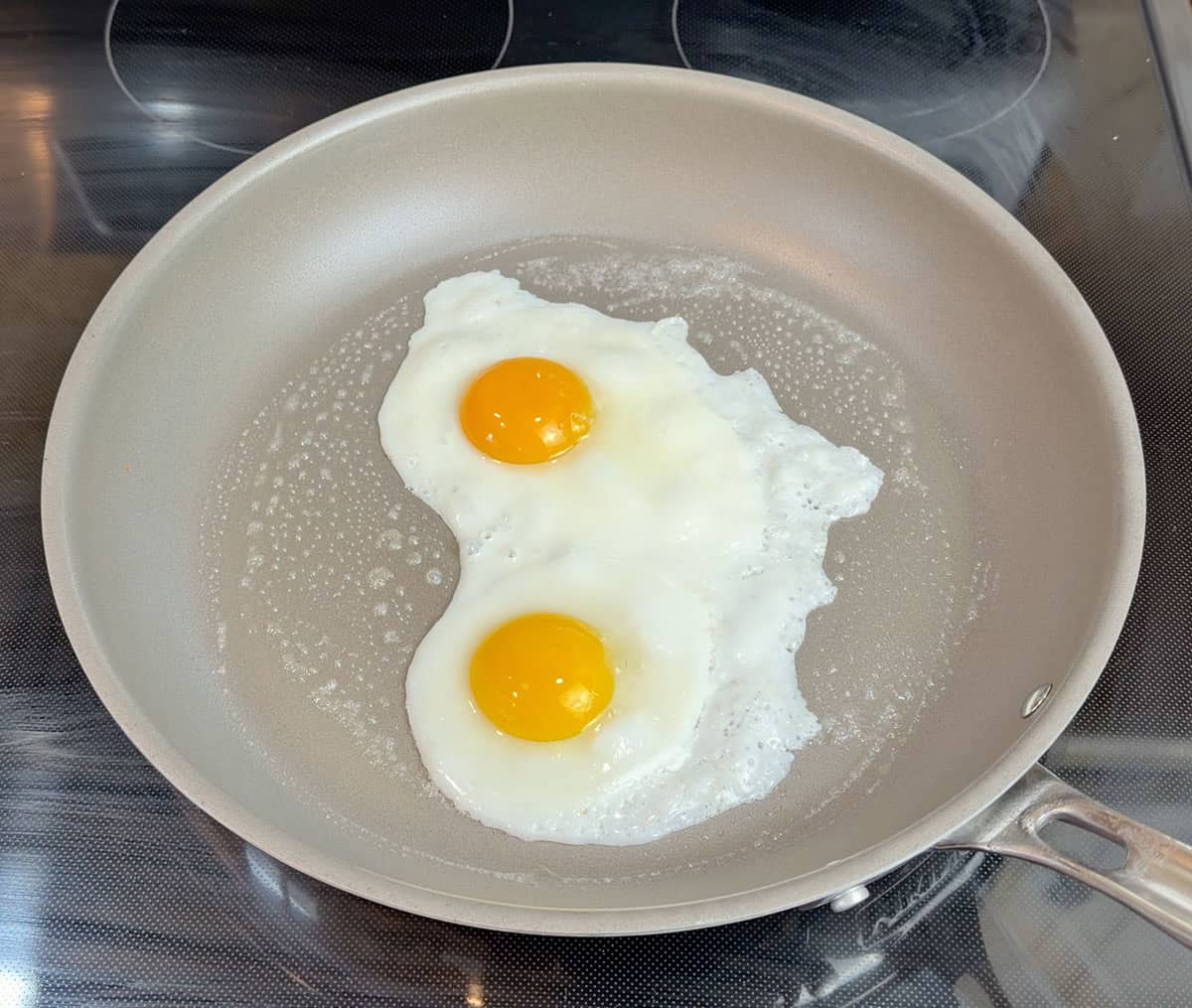
The Viking PureGlide Pro looks like a nonstick pan and cooks like a nonstick pan. But according to Viking, the cooking surface isn’t Teflon or ceramic. It’s pure titanium, sprayed onto the stainless steel surface using a plasma fusion process.
Viking claims the surface provides advanced nonstick release, is 3X harder than stainless steel, and can withstand 5,000 cycles with a pizza cutter.
I’ve been cooking with the Viking PureGlide Pro 12-inch frying pan for several months. I seared meat, fried tortillas, cooked dozens of eggs and pancakes, and sauteed vegetables.
I also tested it alongside four other titanium pans (Hestan NanoBond, Our Place Titanium Always Pan Pro, Taima Titanium, and Heritage Steel Titanium) and a stainless steel control (Henckels Clad H3).
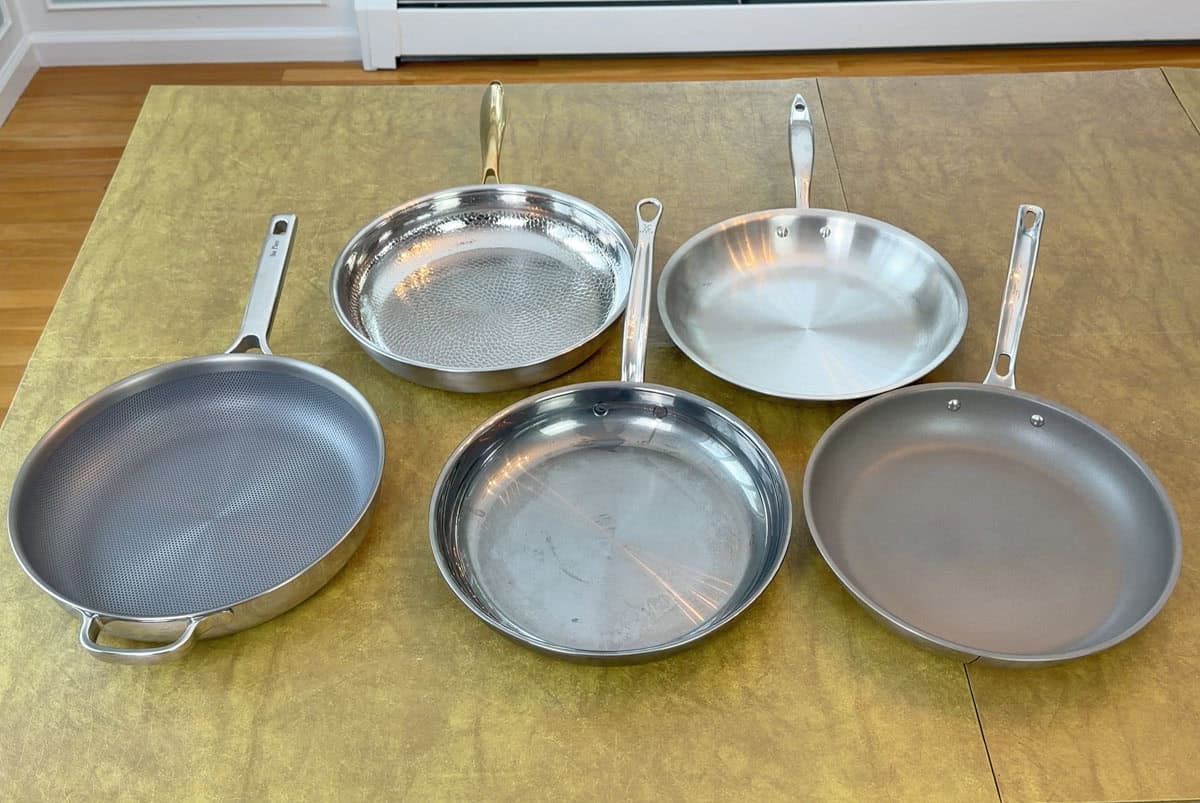
I ran them all through the same battery of tests: eggs and pancakes with and without fat, five escalating scratch tests, a post-scratch egg retest, and an aggressive salt pitting test. I also measured heat conduction, heat distribution, and heat retention using the same protocols I use on every pan I review.
In this in-depth review of Viking PureGlide Pro, I’ll break down the results and show you whether this cookware lives up to the claims.
Key Takeaways
- Nonstick performance was the best of any titanium pan I tested. With fat, the egg slid around like a hockey puck.
- Even without fat, the egg only stuck slightly in a few spots and was still flippable. Most titanium pans and all stainless steel pans failed this test completely.
- It survived every scratch test with zero permanent damage. A serrated steak knife, a Scotch-Brite sponge, a weighted metal ladle, a metal spatula, and a stand mixer whisk all failed to scratch the surface.
- Heat distribution was excellent, with just a 35-degree gap between the center and outer edge. That’s better than most pans I’ve tested.
- It’s 2.8mm thick and showed no signs of warping after months of use.
- There were zero signs of pitting or corrosion after three rounds of an aggressive salt test.
- The handle is comfortable and secure, with a groove that locks your thumb in place.
- The big unknown is long-term durability over years of use, but since the surface is titanium and not a traditional coating, there’s nothing to flake or wear down.
Bottom Line: The Viking PureGlide Pro delivers on its nonstick and durability claims better than any other titanium pan I tested. It cooks like a nonstick pan but didn’t scratch in any of my tests, and the titanium surface means there’s no coating to flake or wear down over time. If you’re looking for a pan that bridges the gap between nonstick convenience and stainless steel longevity, this is absolutely worth buying. Check out Viking PureGlide Pro on Amazon or VikingCulinaryProducts.com.
Use the links below to navigate this review:
- Specs and Construction
- What Is the PureGlide Pro Cooking Surface?
- Nonstick Performance
- Heat Performance
- Durability and Scratch Resistance
- Corrosion Resistance
- Claims vs. Reality
- Bottom Line: Is Viking PureGlide Pro Worth Buying?
Specs and Construction
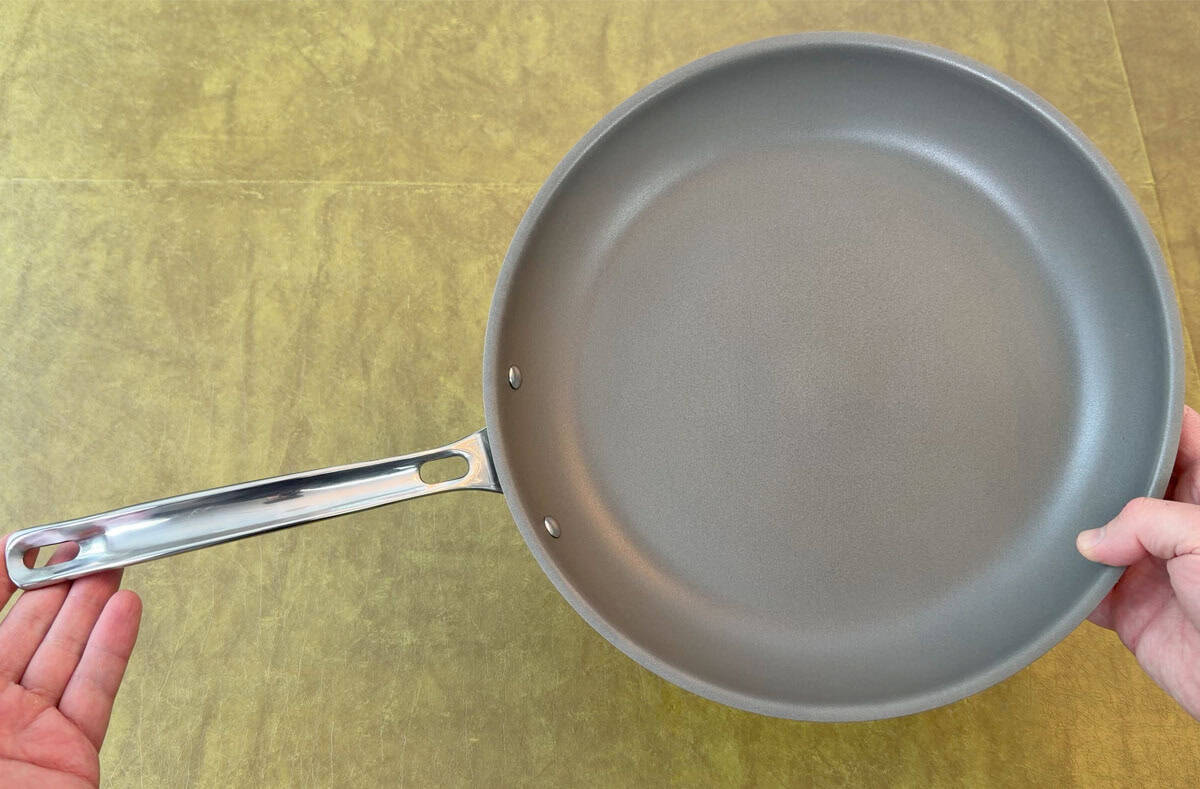
The Viking PureGlide Pro 12-inch frying pan is 12.3 inches rim to rim and 9.5 inches across the flat cooking surface.
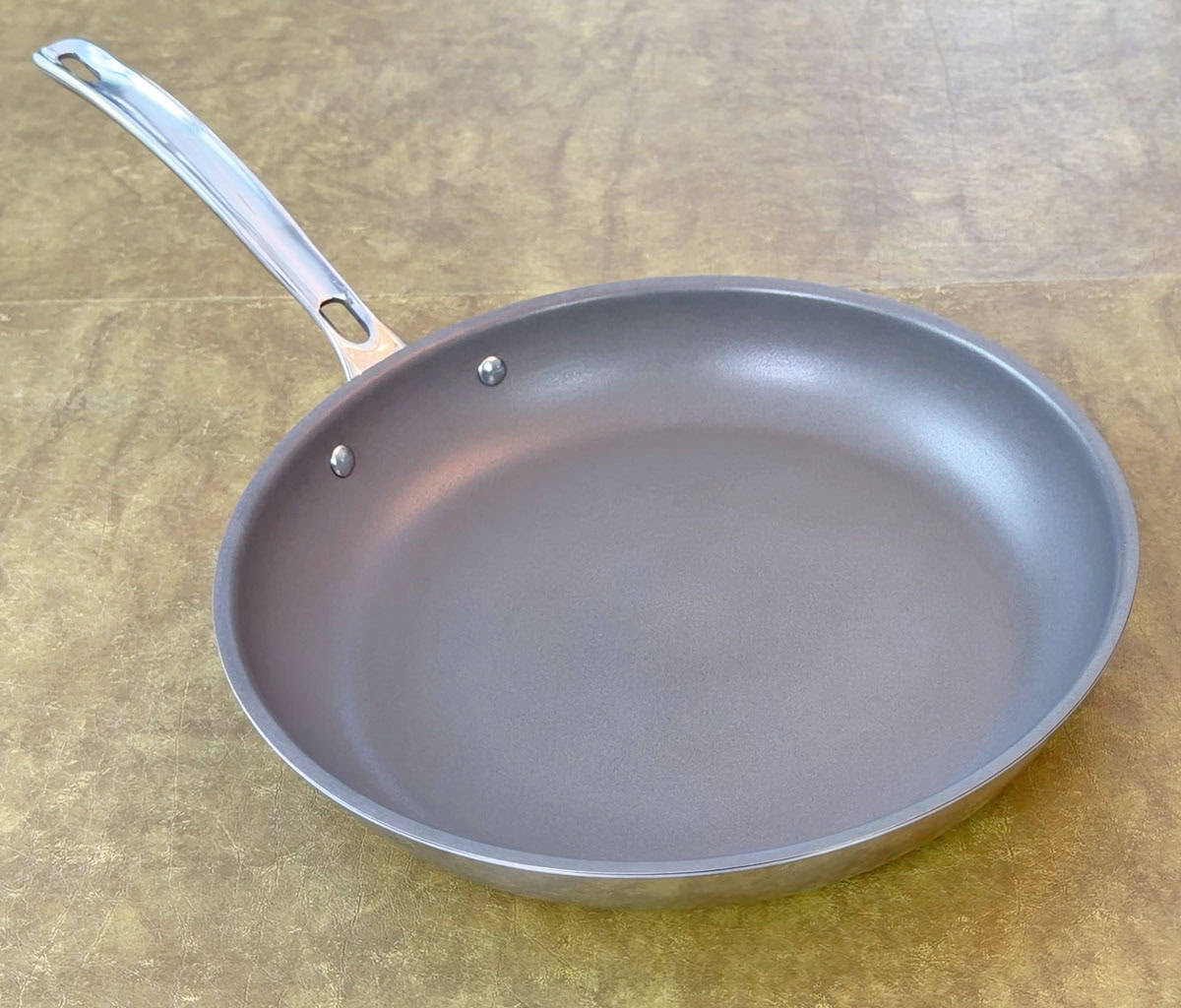
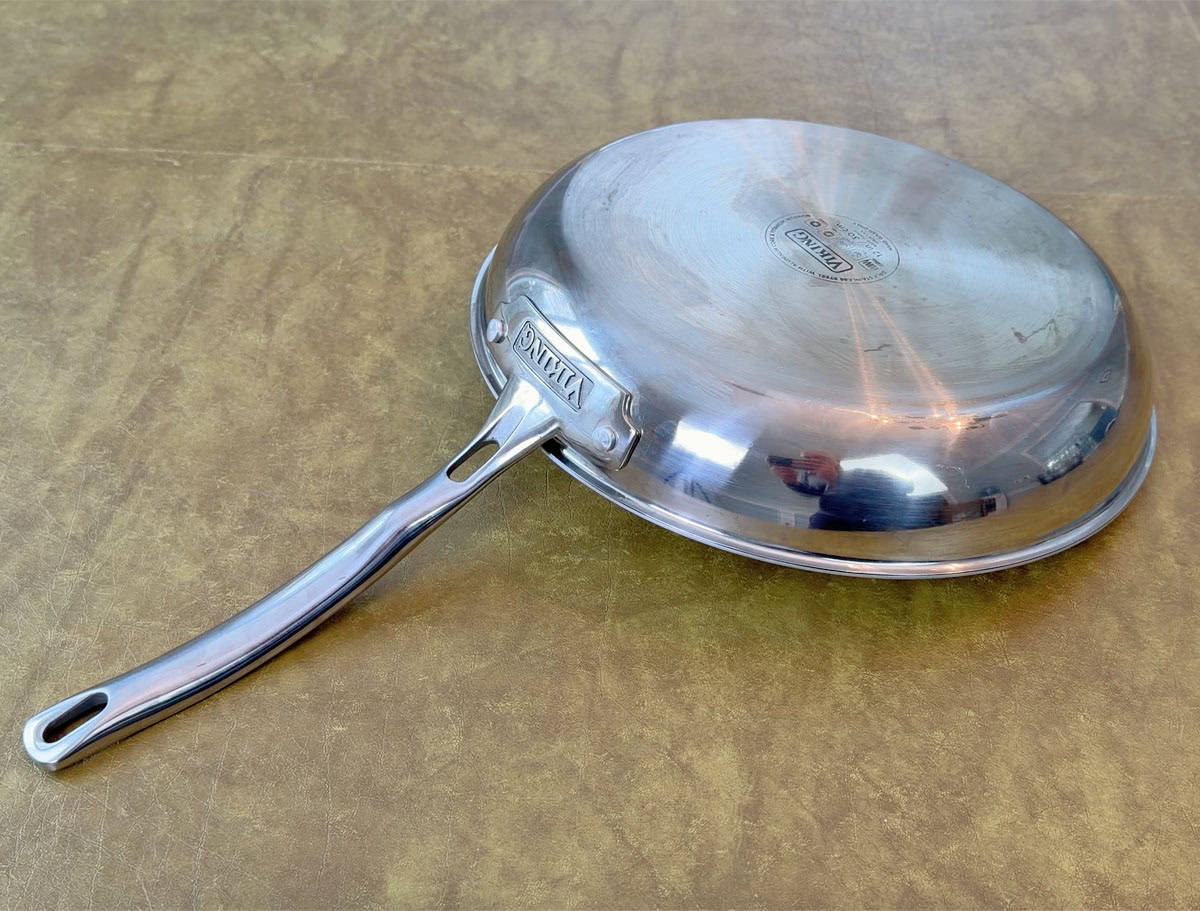
The construction is 3-ply: a titanium cooking surface, an aluminum core, and a stainless steel exterior. The exterior is polished and the pan is riveted.
The round spot you might notice in the center of the cooking surface is normal. It’s a result of the plasma fusion process, which adheres the titanium in a circular motion.
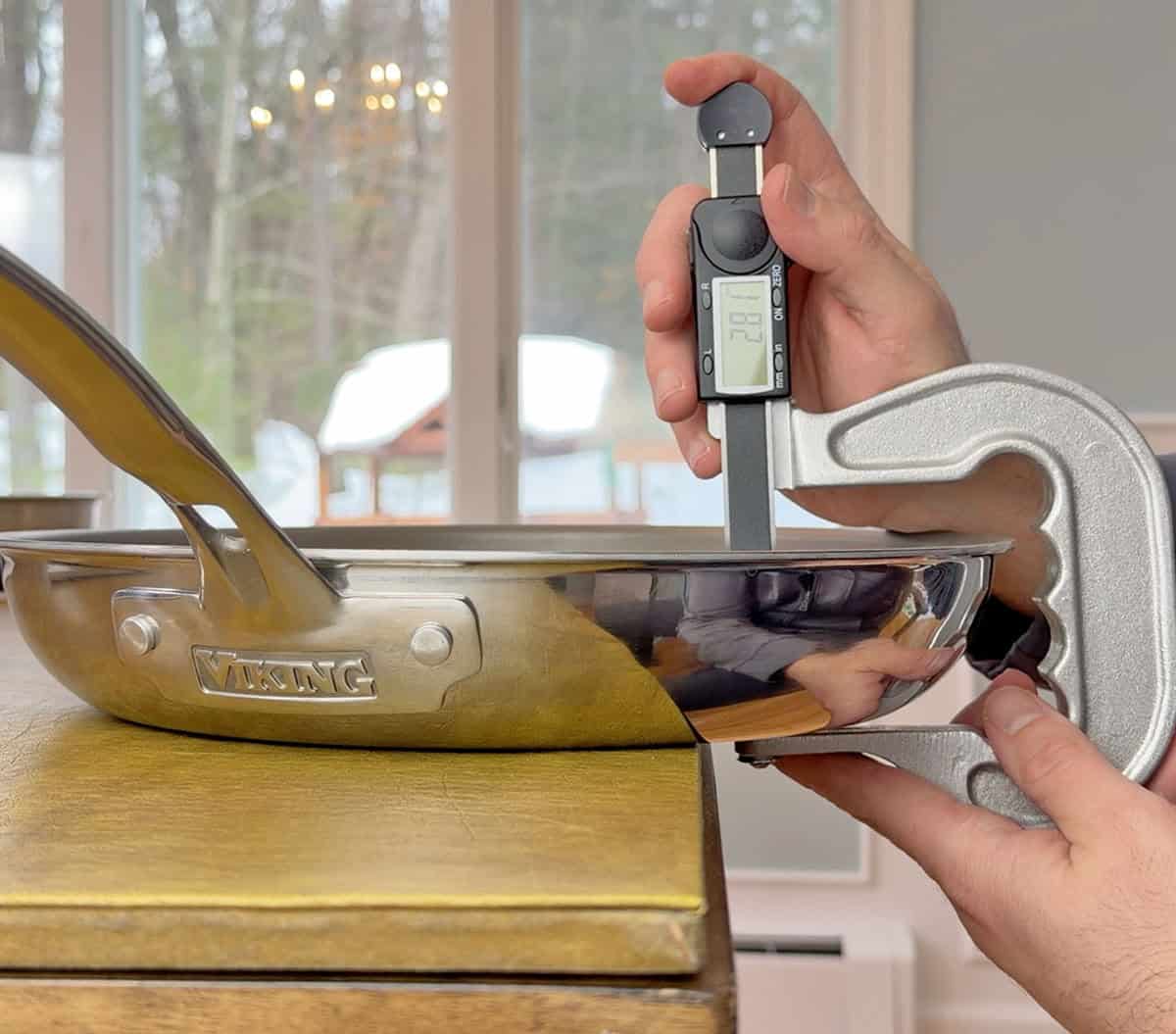
At 3.2 pounds, the pan feels solid without being heavy. The walls are 2 inches tall with a slope that makes it easy to toss and flip food. And the cooking surface is 2.8mm thick, which is right in line with most quality stainless steel pans (most range from 2.4mm to 3.1mm in my testing). After months of regular use, the pan has shown no signs of warping.
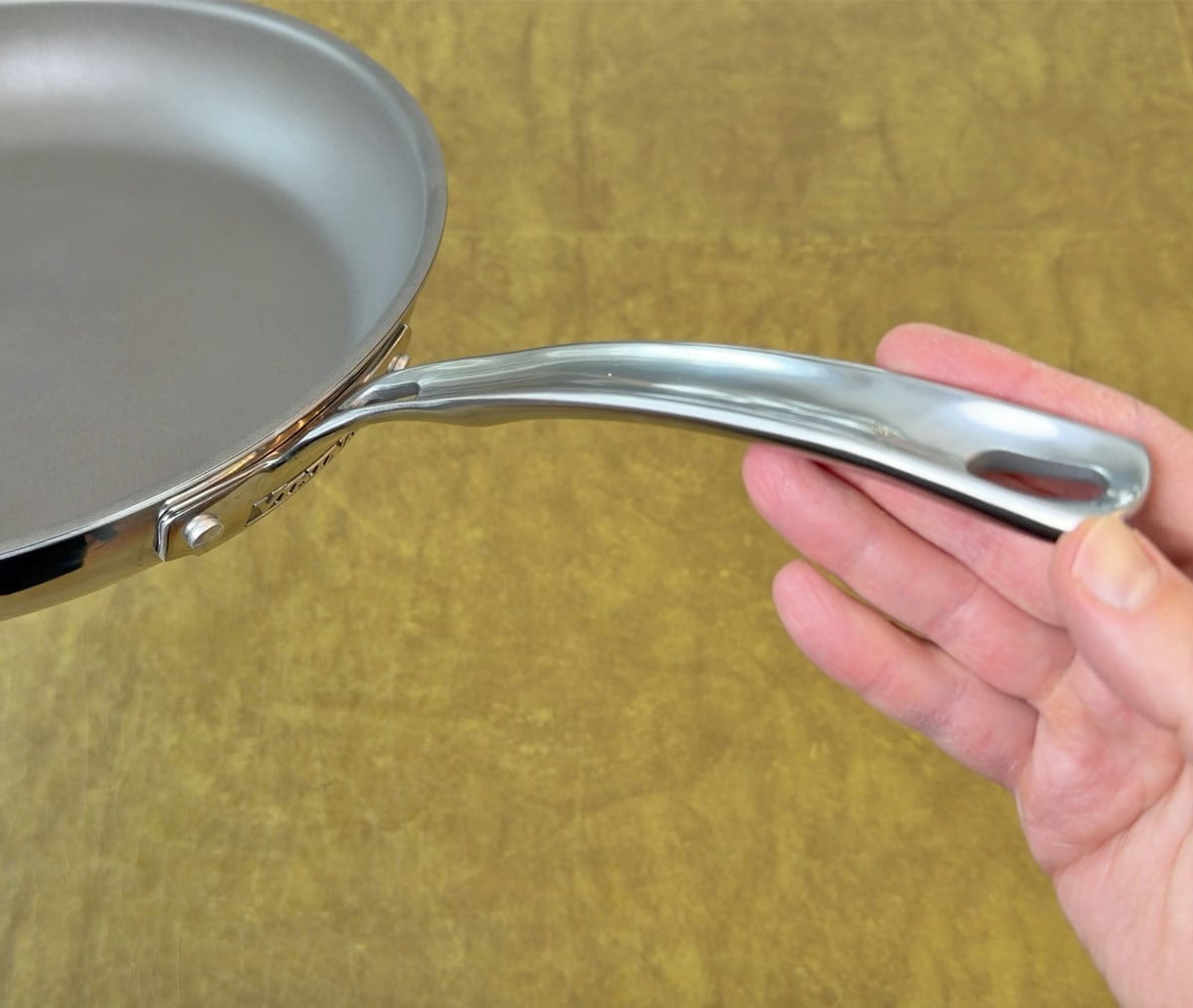
The handle is one of my favorite parts of this pan. It’s a high-polished stainless steel design with a shallow groove that reminds me of the cup-shaped handle you’ll find on All-Clad D3 and D5. But the groove isn’t as deep and the edges are more rounded, so it’s noticeably more comfortable to hold. You still get the secure grip from the groove. It locks your thumb in place and won’t rotate when you pour food out of the pan.
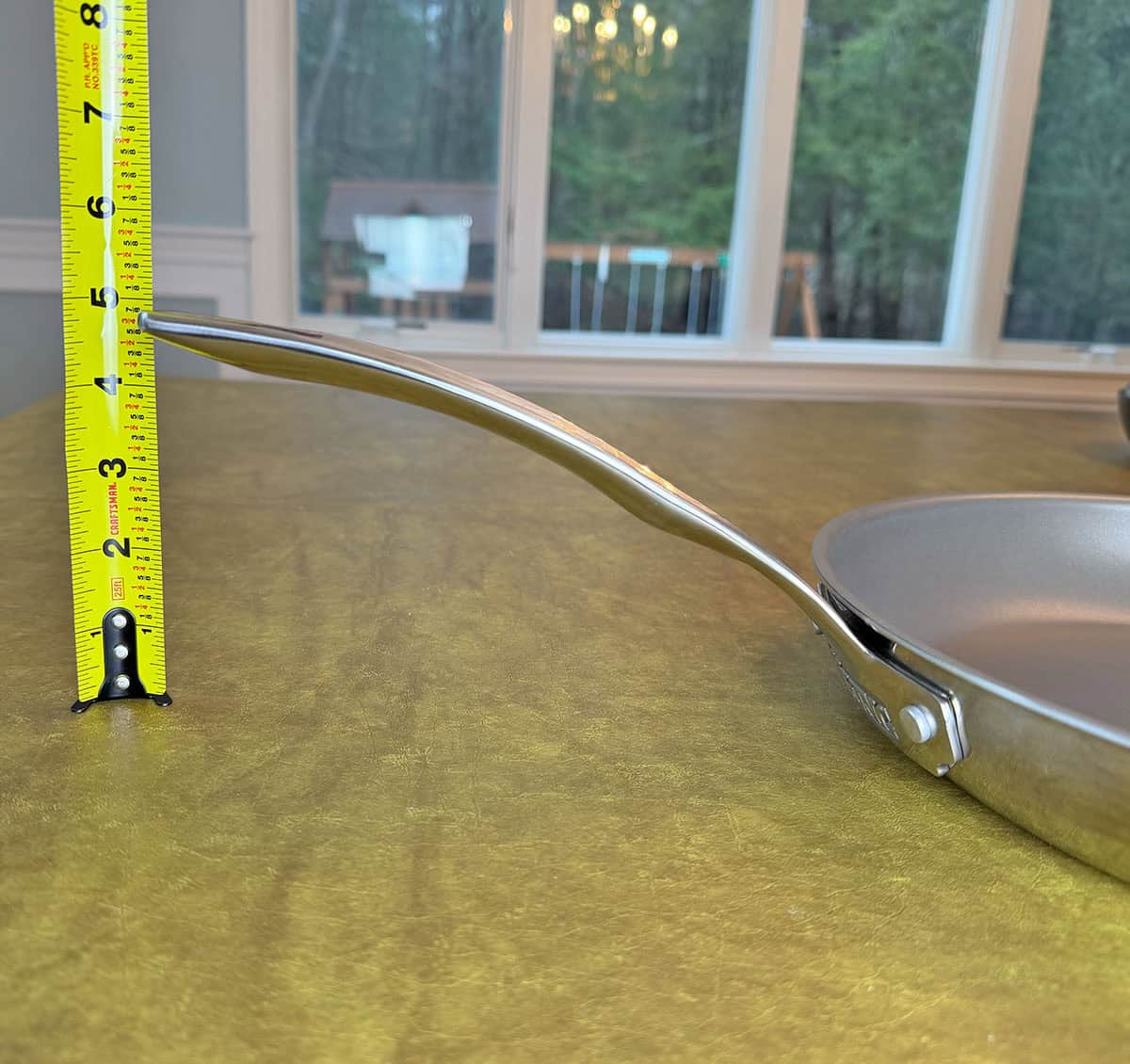
One thing to know about the handle is that it angles up higher than most pans. From the counter to the end of the handle, it measures 4.75 inches. Most pans are between 3 and 4 inches. That’s great for tossing food, but it means you’ll need more clearance between oven racks if you use it in the oven. The pan has a flared rim for drip-free pouring, and it features a heat-break between the handle and the pan body to keep the handle cool during stovetop use.
The pan is oven and broiler safe to 600 degrees and compatible with all cooktops including induction.
| Spec | Viking PureGlide Pro |
|---|---|
| Price | $170 on VikingCulinaryProducts.com |
| Made In | China |
| Construction | 3-ply (titanium, aluminum, steel) |
| Cooking Surface | Plasma-fused titanium (99.6% Ti, 0.4% silica oxide) |
| Fully Clad | Yes |
| Rivets | Riveted |
| Diameter (rim to rim) | 12.3 in |
| Flat Cooking Surface | 9.5 in |
| Wall Height | 2.0 in |
| Weight | 3.2 lbs |
| Thickness | 2.8 mm |
| Handle Length | 8.3 in |
| Handle Height (counter to tip) | 4.75 in |
| Oven Safe Temp | 600°F |
| Induction Compatible | Yes |
What Is the PureGlide Pro Cooking Surface?
The biggest question I’ve received about the Viking PureGlide Pro is what the cooking surface is actually made of. It looks and feels like a nonstick coating, but Viking describes it as a titanium surface.
To get clearer answers, I spoke with Jeff Malkasian, president of Clipper Corporation, the company that licenses the Viking name and produces Viking cookware.
According to Malkasian, the PureGlide Pro’s cooking surface is not Teflon, not ceramic, and not a traditional nonstick coating. It’s a titanium-based surface applied through a plasma spray process.
In simple terms, titanium and silicon oxide, also known as silica, are sprayed onto the pan at extremely high temperatures using a plasma gun. Clipper previously told me the surface composition is 99.6% titanium and 0.4% silica oxide.
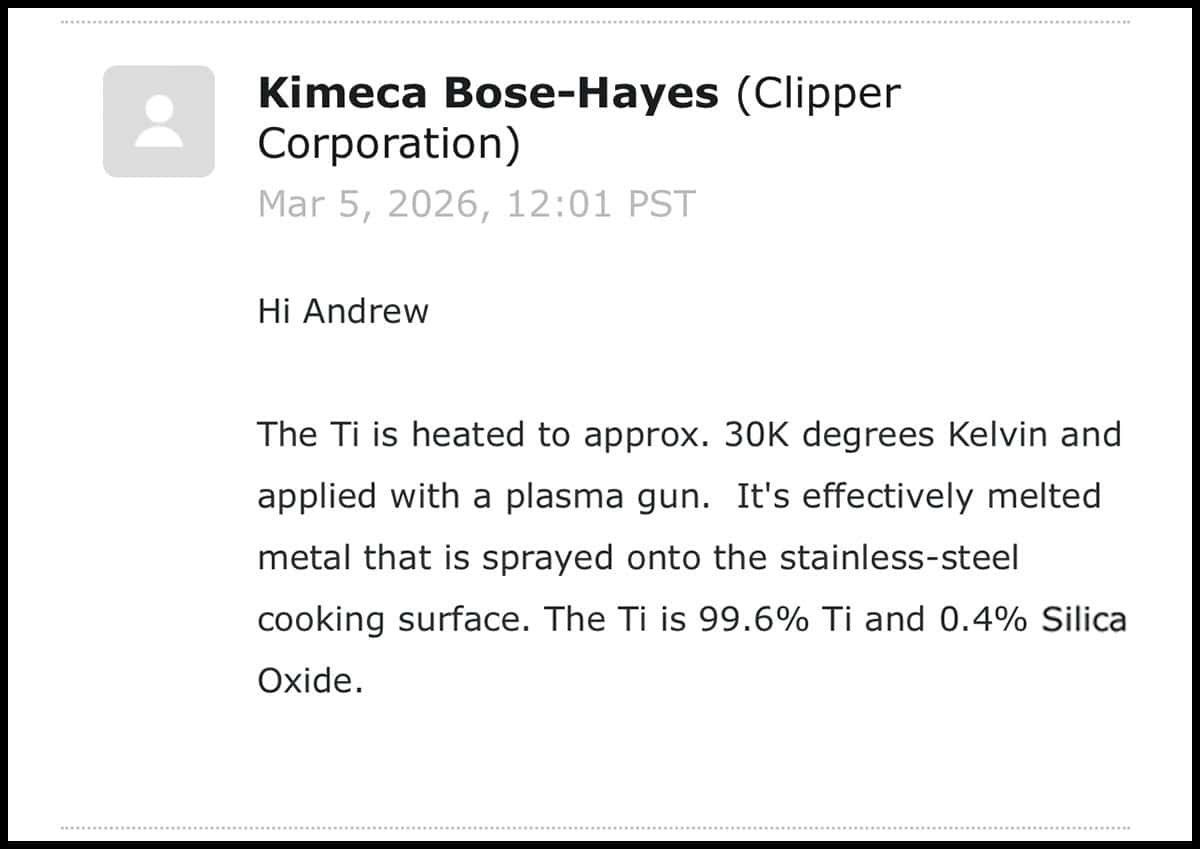
Malkasian explained that the silica is part of what gives the pan its slick feel when it’s new. Over time, some of that silica can release from the surface, which is one reason the pan may not feel quite as nonstick after months of use as it does out of the box.
But according to Malkasian, the titanium itself is permanent. Because of the way it’s sprayed onto the pan, the surface is not perfectly smooth. It has a rough, porous texture at a microscopic level. Those tiny pores can hold onto oils from cooking, creating a seasoned surface over time.
That’s the key difference between this pan and a standard stainless steel pan. Stainless steel is relatively smooth and doesn’t hold seasoning well. The PureGlide Pro’s titanium surface is rougher and more porous, so Clipper believes it can maintain a certain level of food release as oils bake into those microscopic pores.
Malkasian also followed up by email and said the “rough” surface caused by the plasma application contributes to the release.
I looked at the surface under a microscope, and you can clearly see that rough texture.

For comparison, I also looked at a ceramic nonstick pan under the same microscope, and that surface was much smoother.
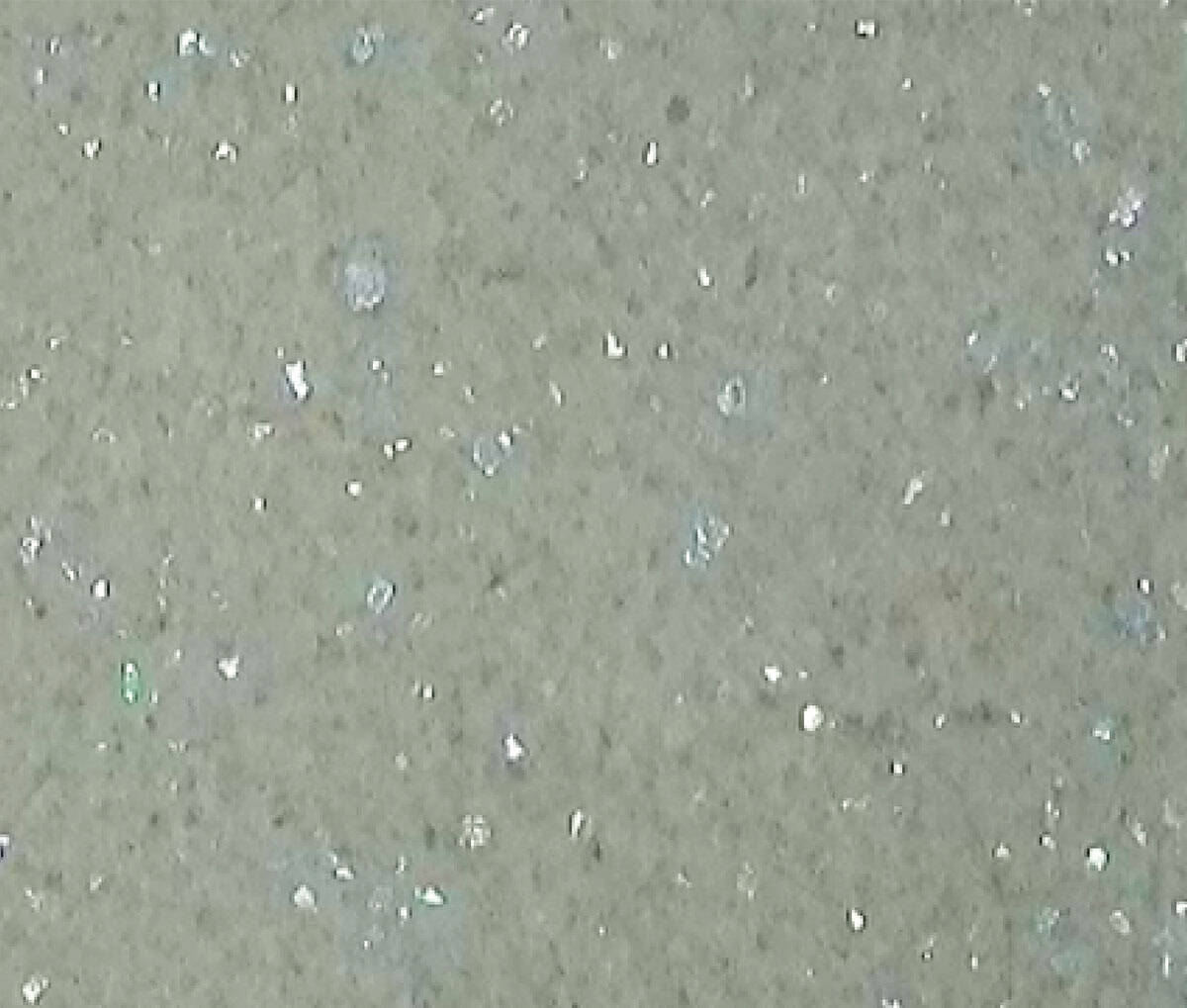
So, is this a nonstick coating? Technically, no. It’s not a traditional sprayed-on PTFE or ceramic nonstick coating. But part of the initial nonstick performance does come from silica in the surface, and Clipper confirmed that some of that silica can release over time.
That also explains why the pan is not dishwasher-safe. According to Clipper, dishwasher detergent and the harsh washing cycle can cause the silica to release faster. If that happens, the pan may lose some of its initial slickness sooner.
If the pan starts losing its food release, Malkasian said you can refresh the surface by boiling water in it to help pull debris and baked-on food out of the pores, then scrubbing it with a green brush. If you notice brown residue on the surface, he said you can also scrub it with kosher salt.
I asked whether you should intentionally season the pan like carbon steel or cast iron, and Malkasian said no. His recommendation is to simply cook with it normally and let the surface develop naturally. That said, I’m going to keep testing this and may experiment with intentional seasoning to see if it improves performance.
Nonstick Performance
Viking’s headline claim is ‘advanced nonstick release’ from the titanium cooking surface, with no PTFE (Teflon) or ceramic nonstick coating. To test that, I preheated each pan on medium-low until the cooking surface reached 325 degrees, then added a half teaspoon of oil and two grams of butter before cooking an egg. I ran every pan through the same test.
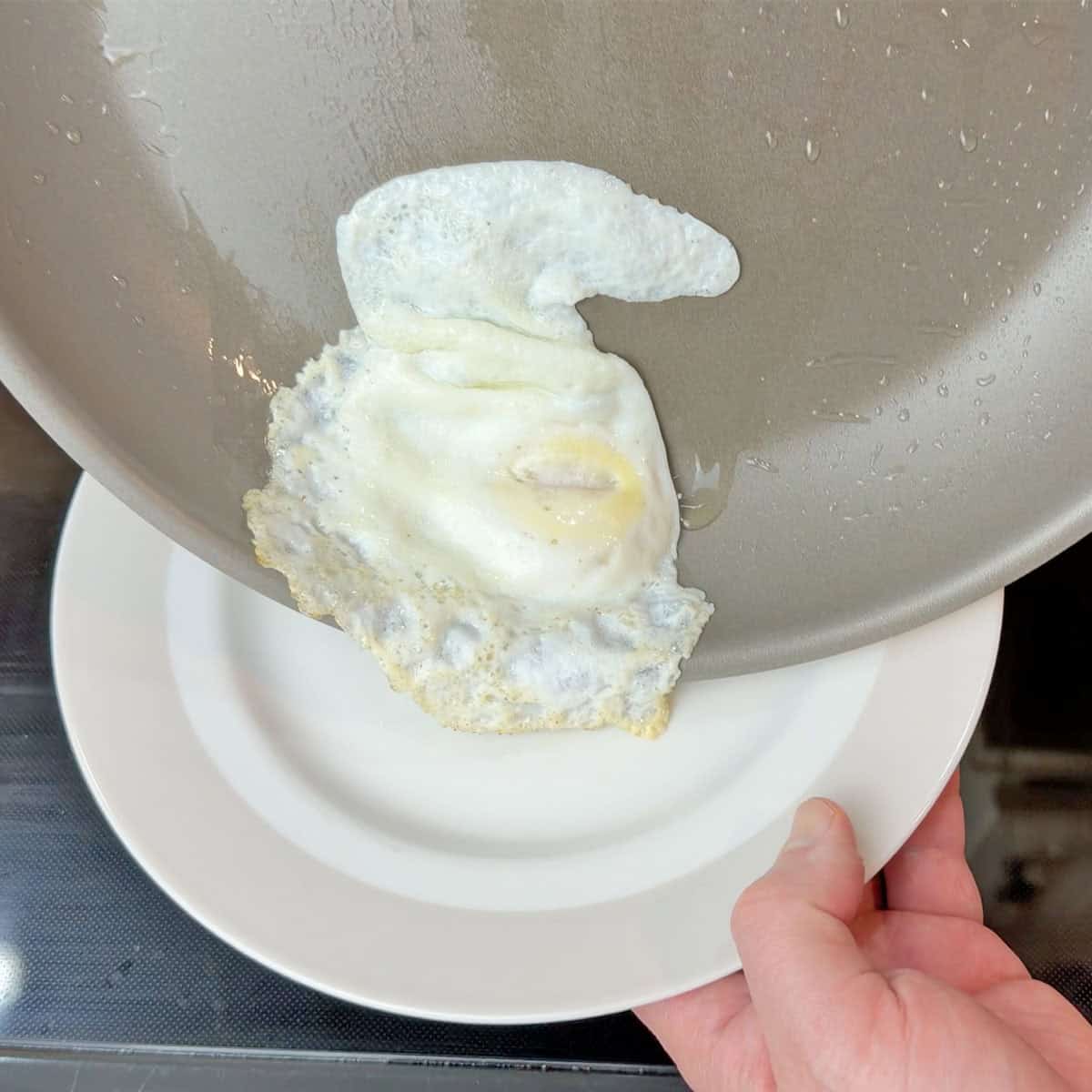
The Viking was the best performer in this test across all five titanium pans and the stainless steel control. The egg slid around like a hockey puck with just a shake of the pan. I didn’t need to nudge it with a spatula at all. For comparison, most of the other titanium pans also released the egg cleanly, but none of them glided the way the Viking did.
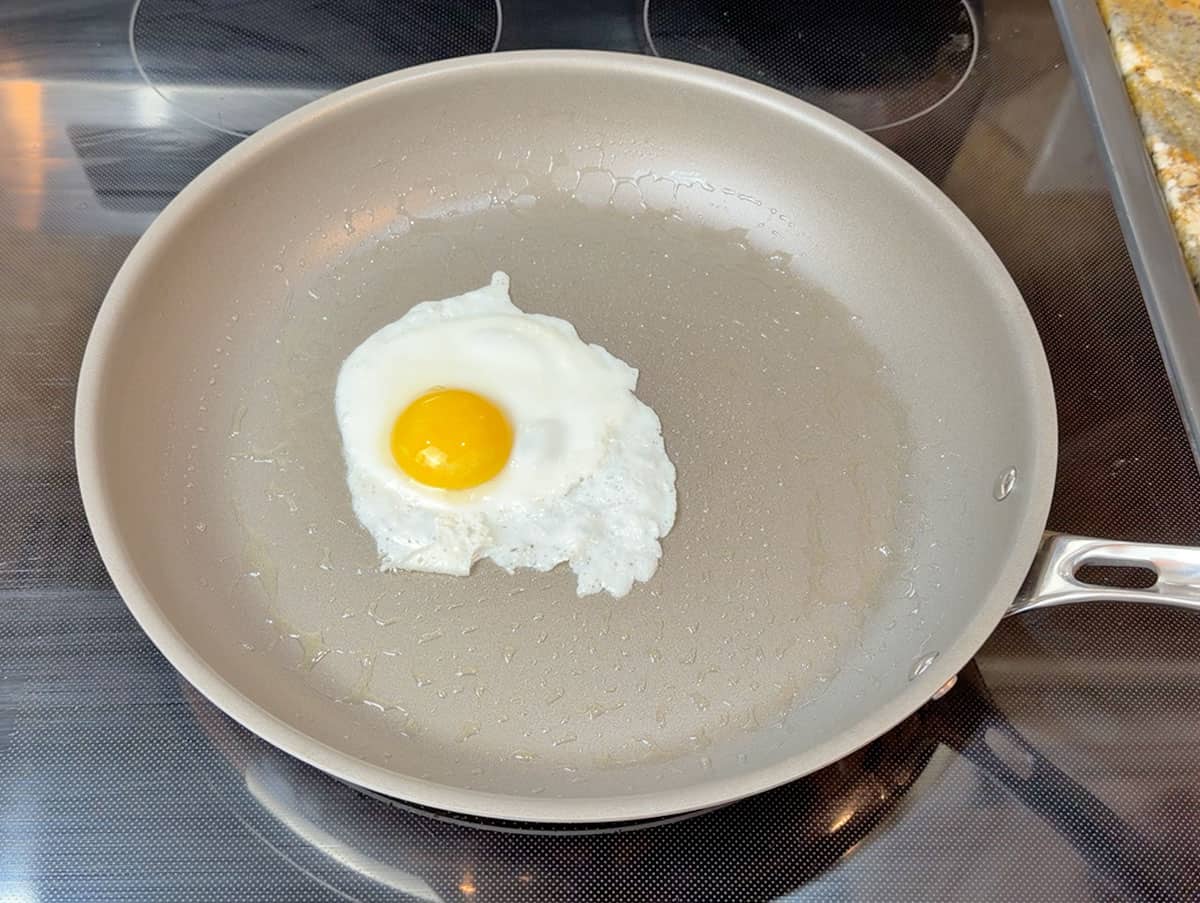
Without any fat, most pans failed this test. The Hestan NanoBond, Heritage Steel, Taima, and the stainless steel control all stuck badly. The Viking had a little sticking in a few areas, but I could still flip the egg without ripping it apart. The only pan that performed better without fat was the Our Place Titanium Always Pan Pro, which released the egg cleanly.
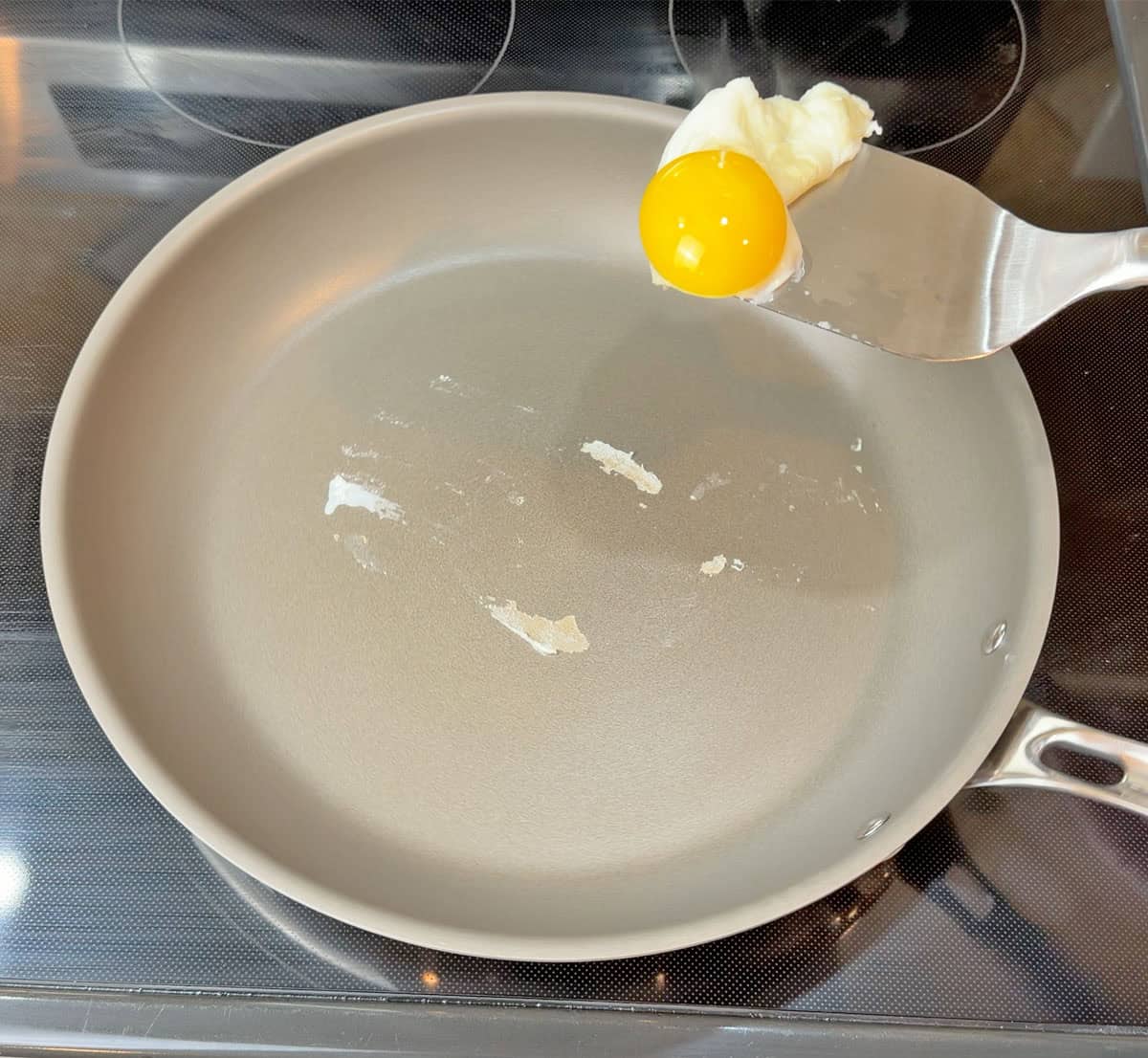
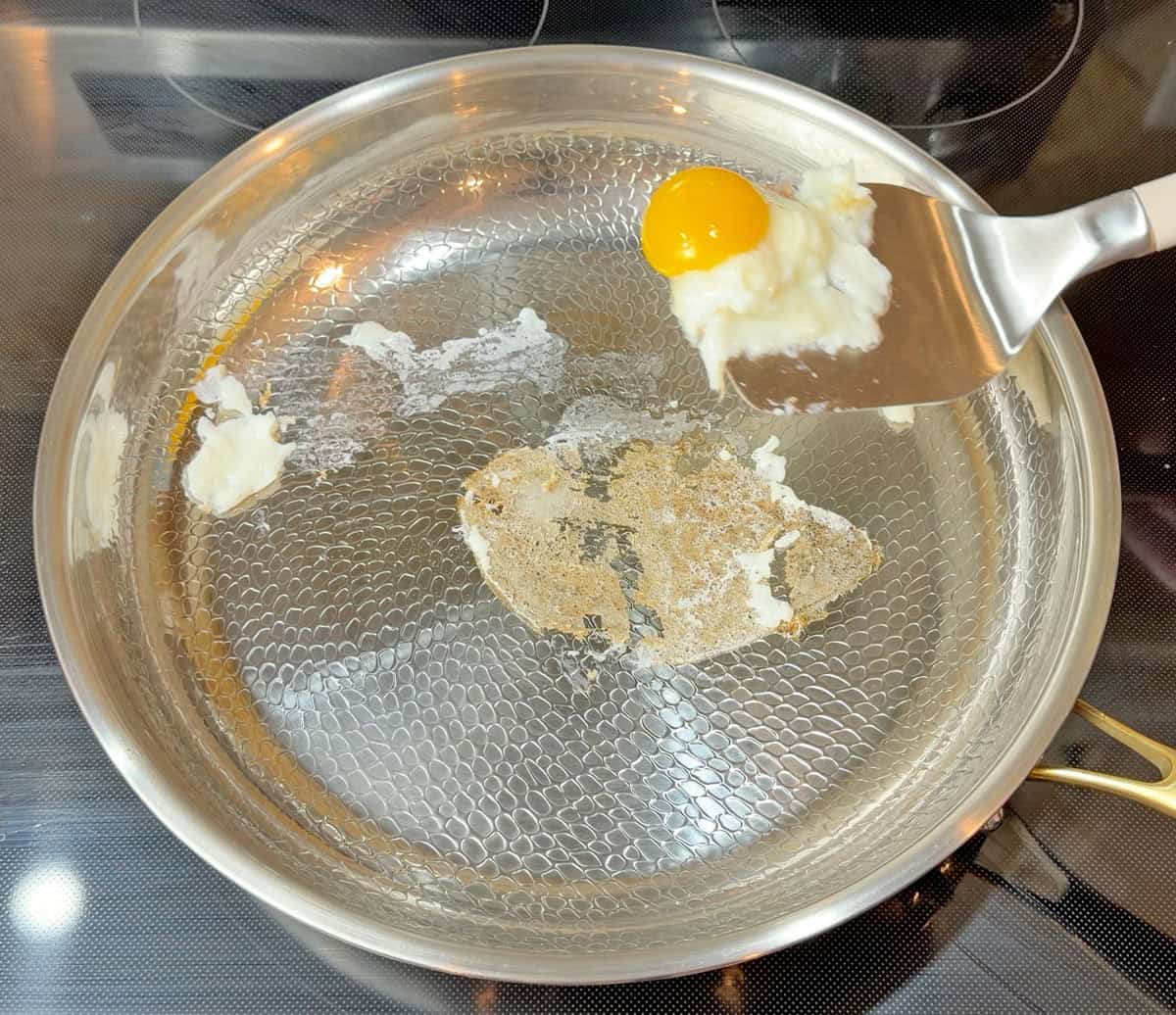
I also cooked pancakes on each pan. For the first round, I spread a thin layer of butter on the surface before adding the batter. Every pan passed without sticking. For the second round, I didn’t use any butter. The Viking performed perfectly with not even a bit of sticking. The Our Place and Taima also did well. The Heritage Steel and stainless steel control stuck the most.
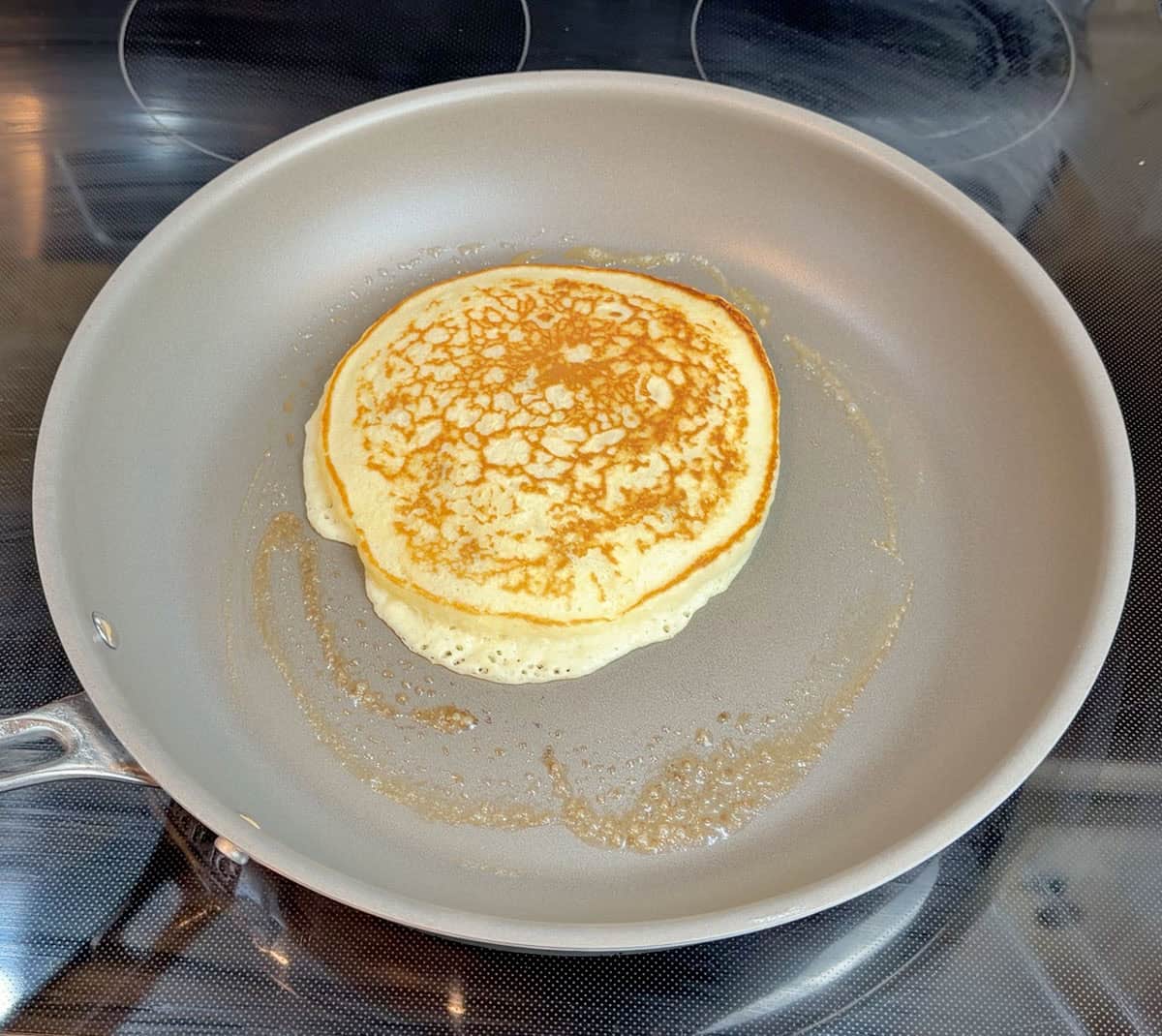
Outside of these structured tests, I’ve been cooking with the Viking PureGlide Pro almost every day for four months. What I’ve found is that butter makes the biggest difference. When I use butter, or a mix of oil and butter, the results are consistently nonstick every time.
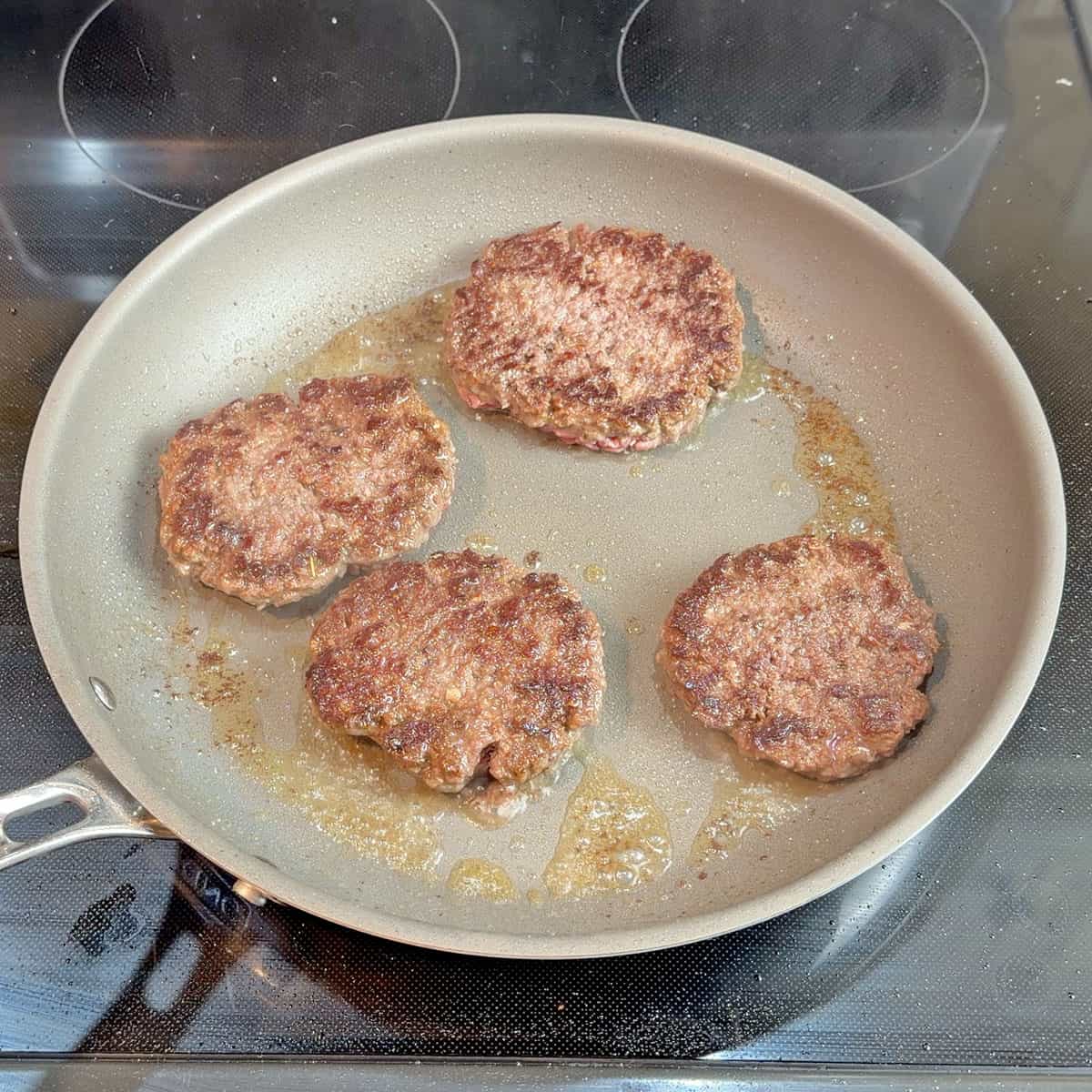
When I use just oil, the results are less predictable. Sometimes the egg releases cleanly, other times there’s some sticking.
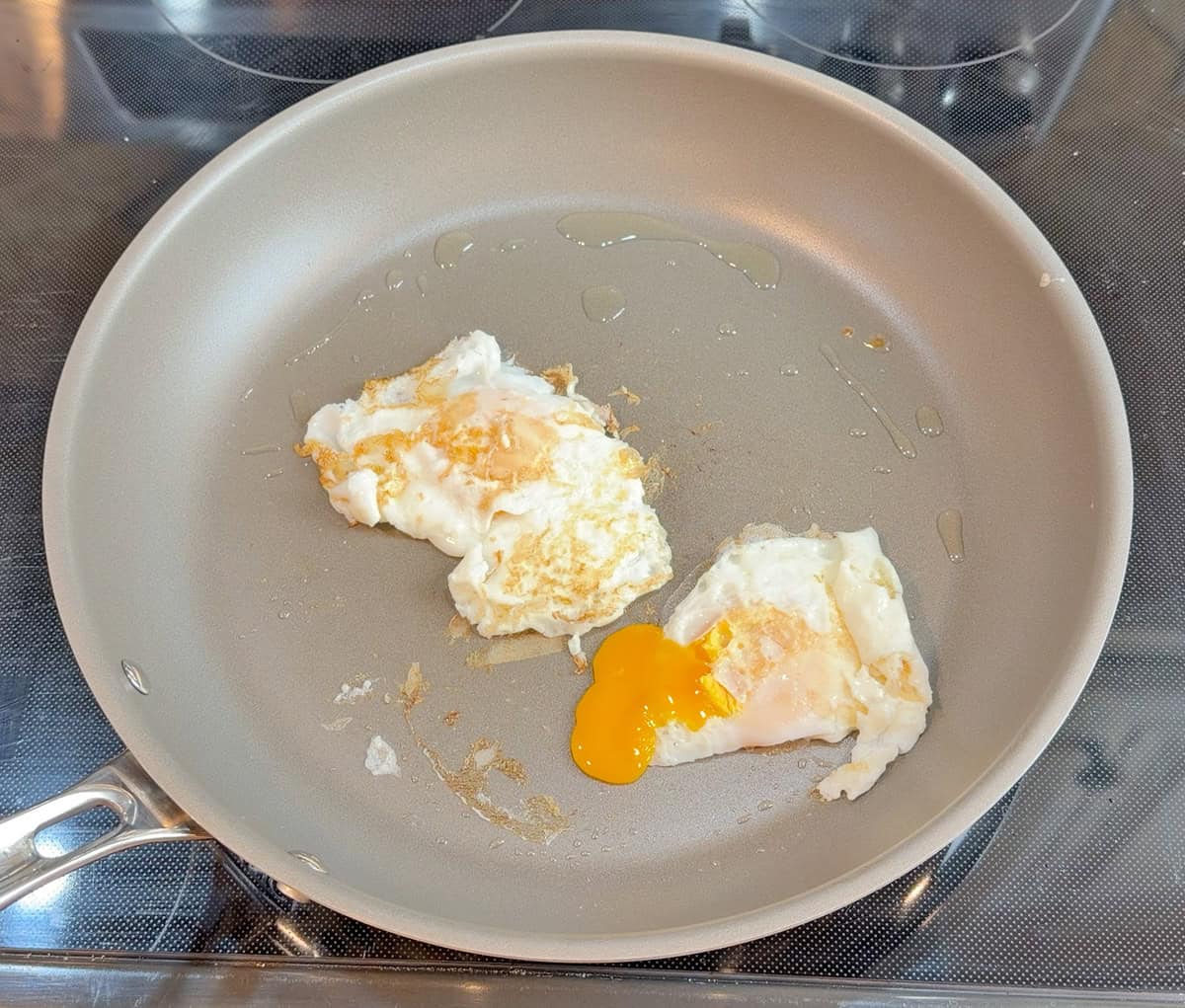
Oil also tends to flow around the pan, so unless you spread it evenly with a paper towel, there’s a chance part of the egg isn’t sitting directly over oil.
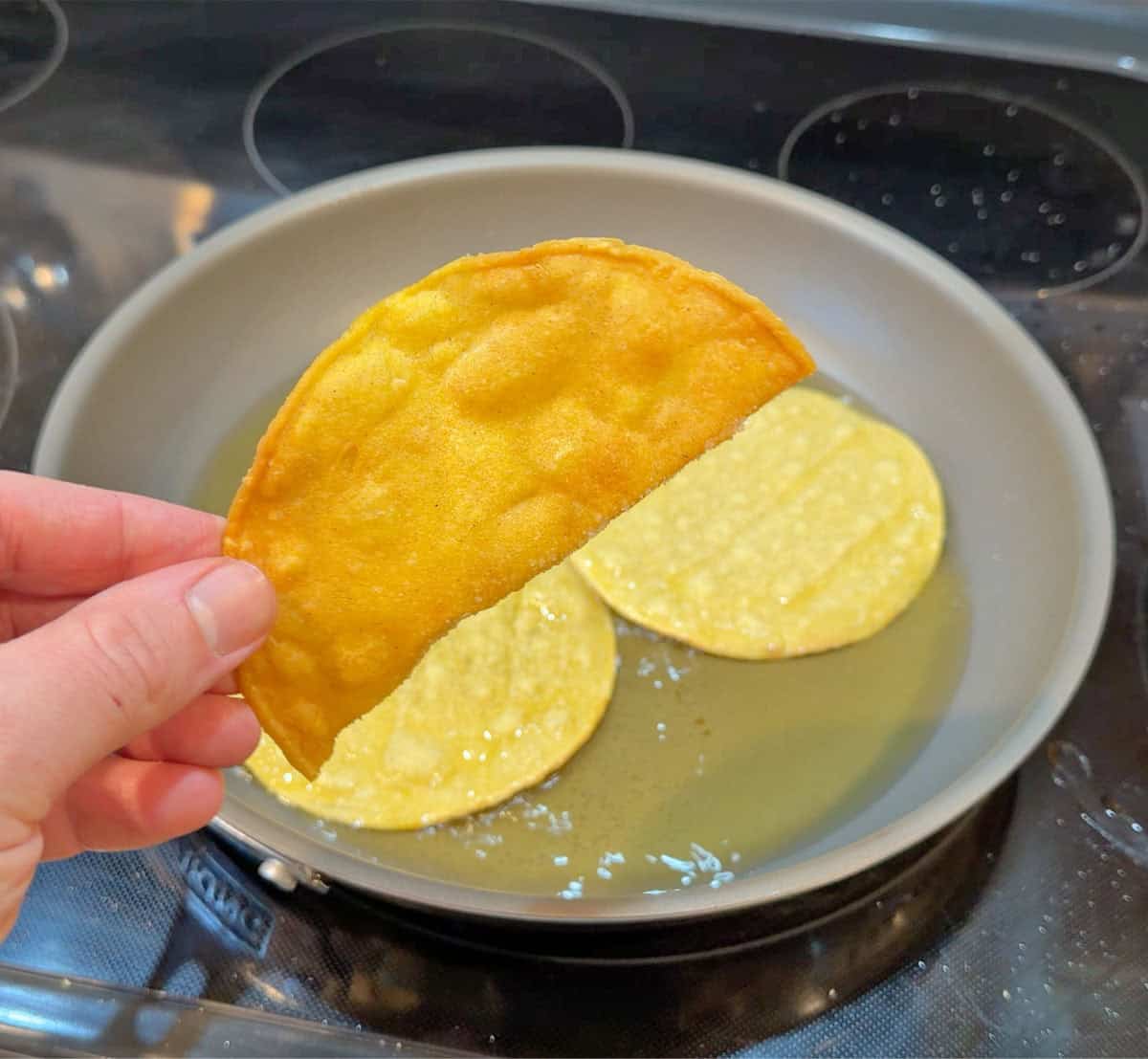
With butter or a butter-oil mix, it handles eggs, pancakes, seared meats, fried tortillas, and vegetables without any sticking. It’s hard to believe the cooking surface isn’t a traditional nonstick coating, but it’s not.
Heat Performance
Viking claims the titanium interior and aluminum core combination distributes heat uniformly and evenly all the way up the pan sides. To put that to the test, I measured heat conduction, distribution, and retention using the same protocols I use on every pan I review.
Heat conduction was on the slower side. After one minute on medium heat, the center reached 272°F. After two minutes, 375°F. That’s slower than many of the pans in my dataset. For comparison, the Made In hit 529°F at the two-minute mark and the Taima Titanium reached 522°F. But slower conduction isn’t a bad thing. It means the pan heats more gradually, which gives you more control and makes it less likely to overshoot your target temperature.
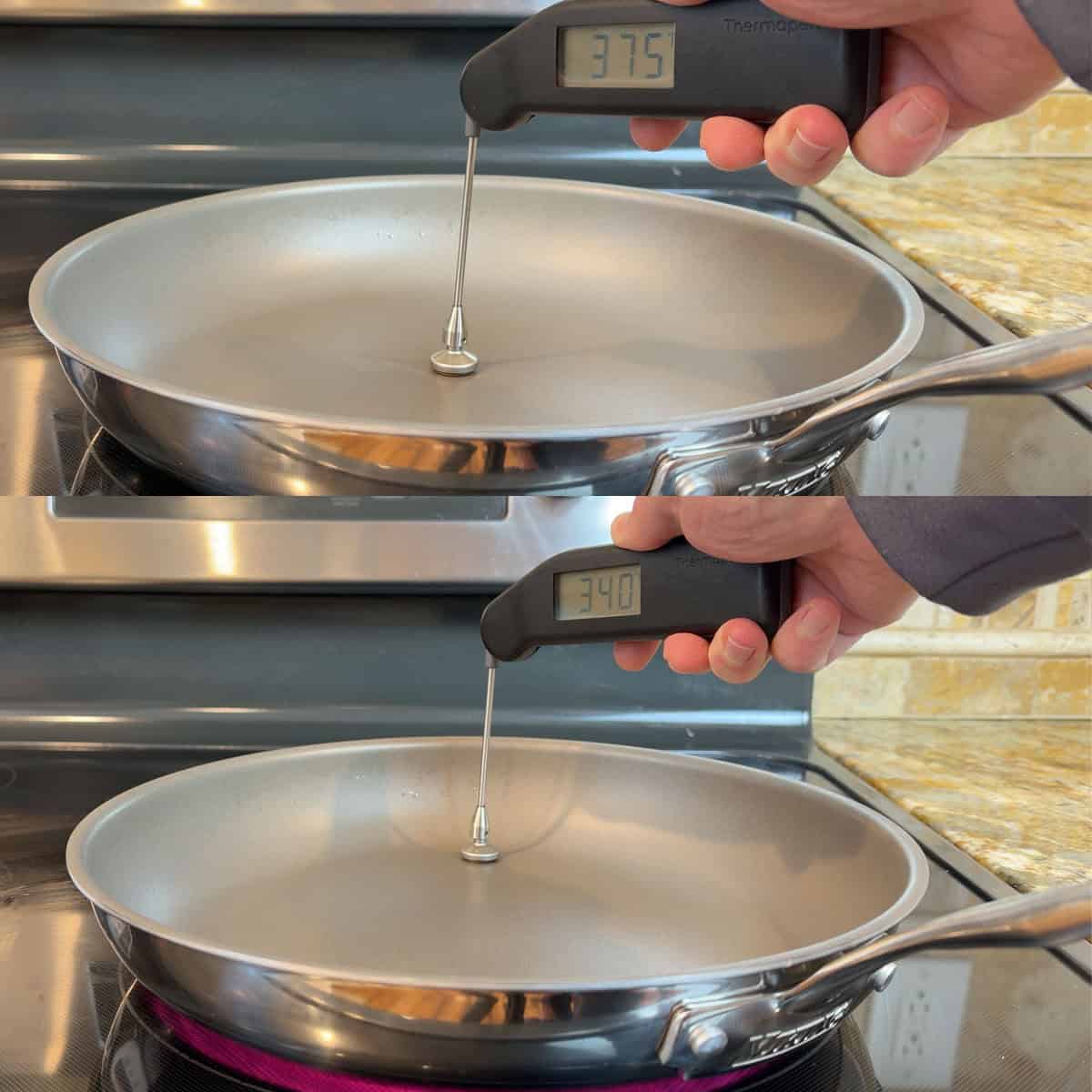
Where the Viking really shines is heat distribution. At the two-minute mark, the center measured 375°F while the outer edge was at 340°F. That’s only a 35-degree gap, which is one of the best results in my entire dataset.
For comparison, the Taima Titanium had a 140-degree gap, the Heritage Steel Titanium had a 120-degree gap, and the All-Clad D5 had a 30-degree gap. In practice, this means the Viking cooks evenly across the entire surface once it’s preheated. Pancakes brown consistently, proteins sear uniformly, and you don’t get hot spots in the center with undercooked edges.
Heat retention was solid at 125°F five minutes after heating it to 400°F and removing the pan from the burner. That’s mid-range in my dataset and perfectly adequate for everyday cooking. It means the pan holds enough heat to maintain a sear when you add cold food, without being so thick that it takes forever to respond to temperature adjustments.
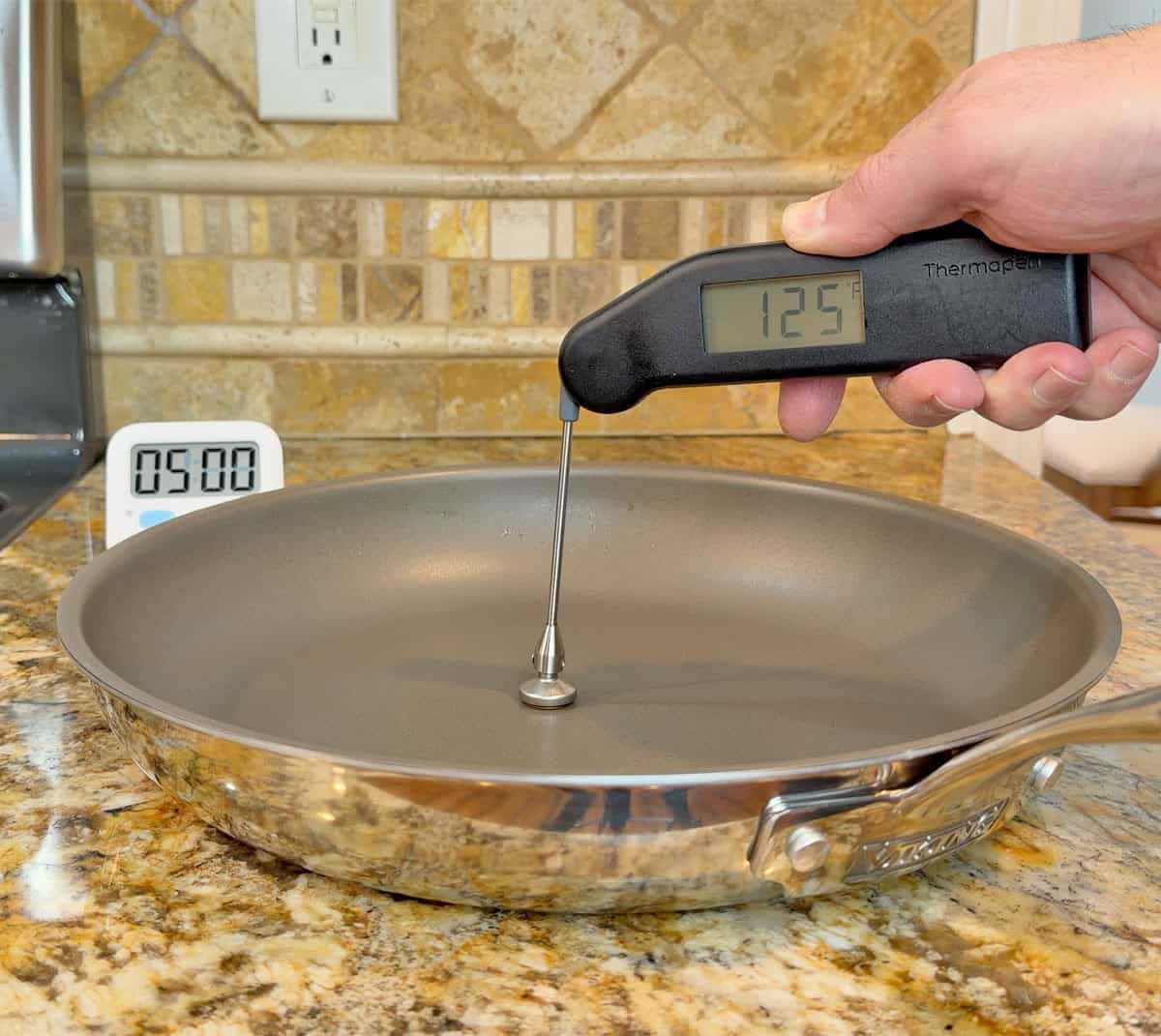
The overall heat profile is well balanced. It heats gradually, spreads that heat evenly, and holds onto it. Once you give it a few minutes to preheat, the cooking surface is consistent edge to edge. Viking’s uniform heating claim checks out.
Durability and Scratch Resistance
Viking says the PureGlide Pro is ultra-durable, metal utensil safe, 3X harder than stainless steel, and tested to withstand 5,000 cycles with a pizza cutter. To test those claims, I ran five scratch tests on every pan, escalating in intensity.
First, I attached a five-pound weight to a metal ladle and scraped it across each pan 50 times, then did the same thing with a metal spatula.
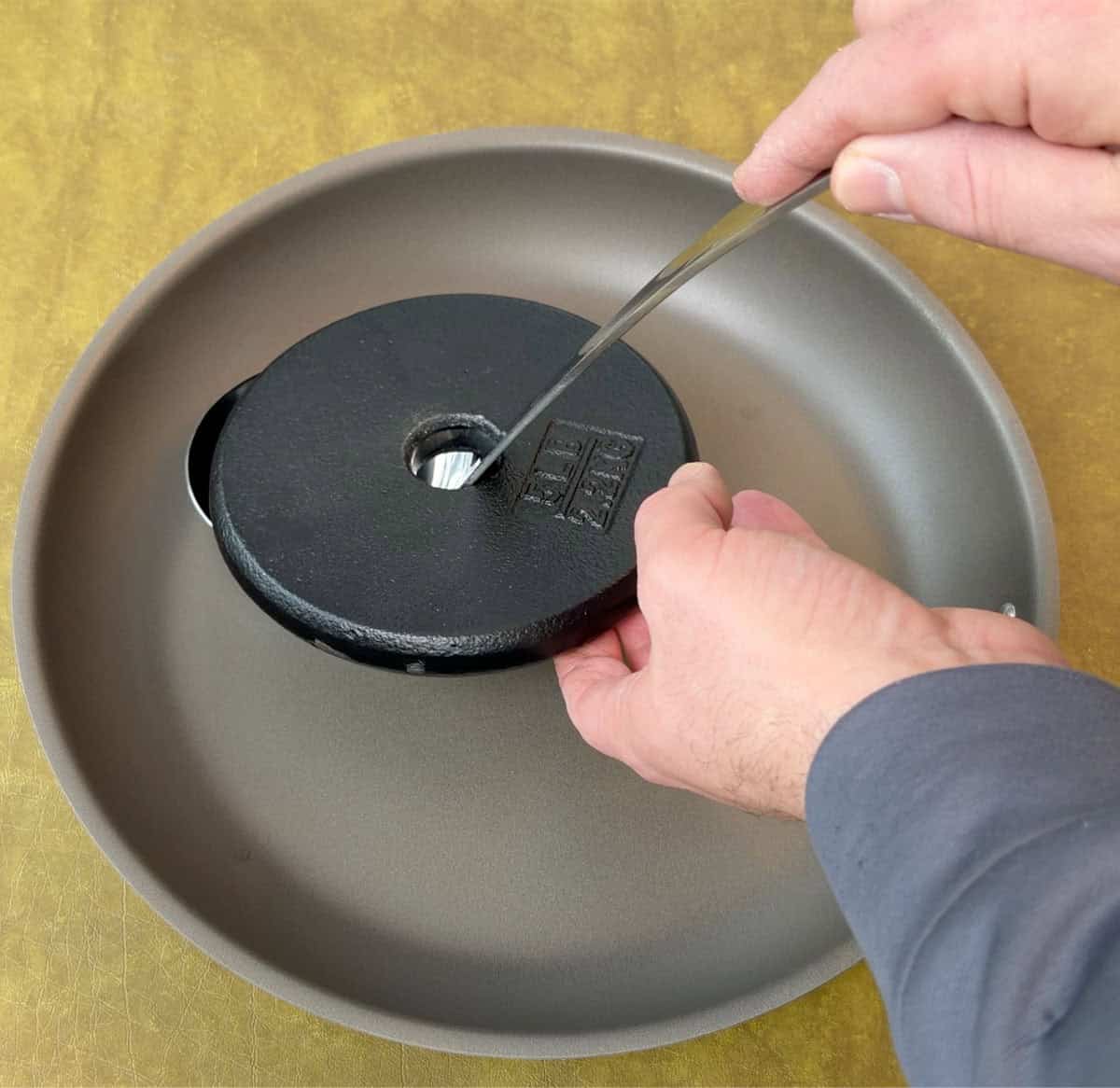
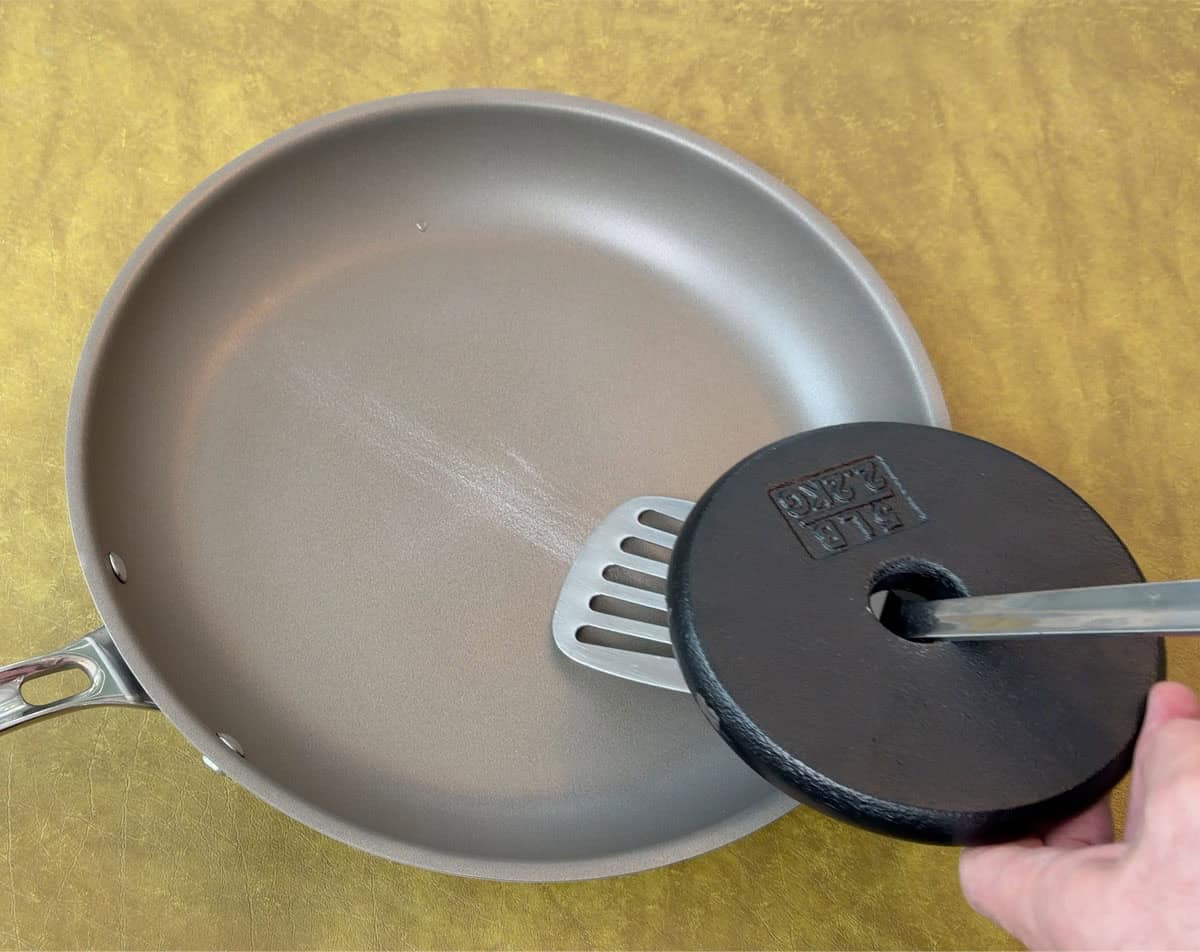
The Viking had white marks that looked concerning at first, but they turned out to be metal dust transferring from the utensil onto the pan. They wiped right off with no permanent damage to the surface. The stainless steel control had scratches you could feel with a fingernail.
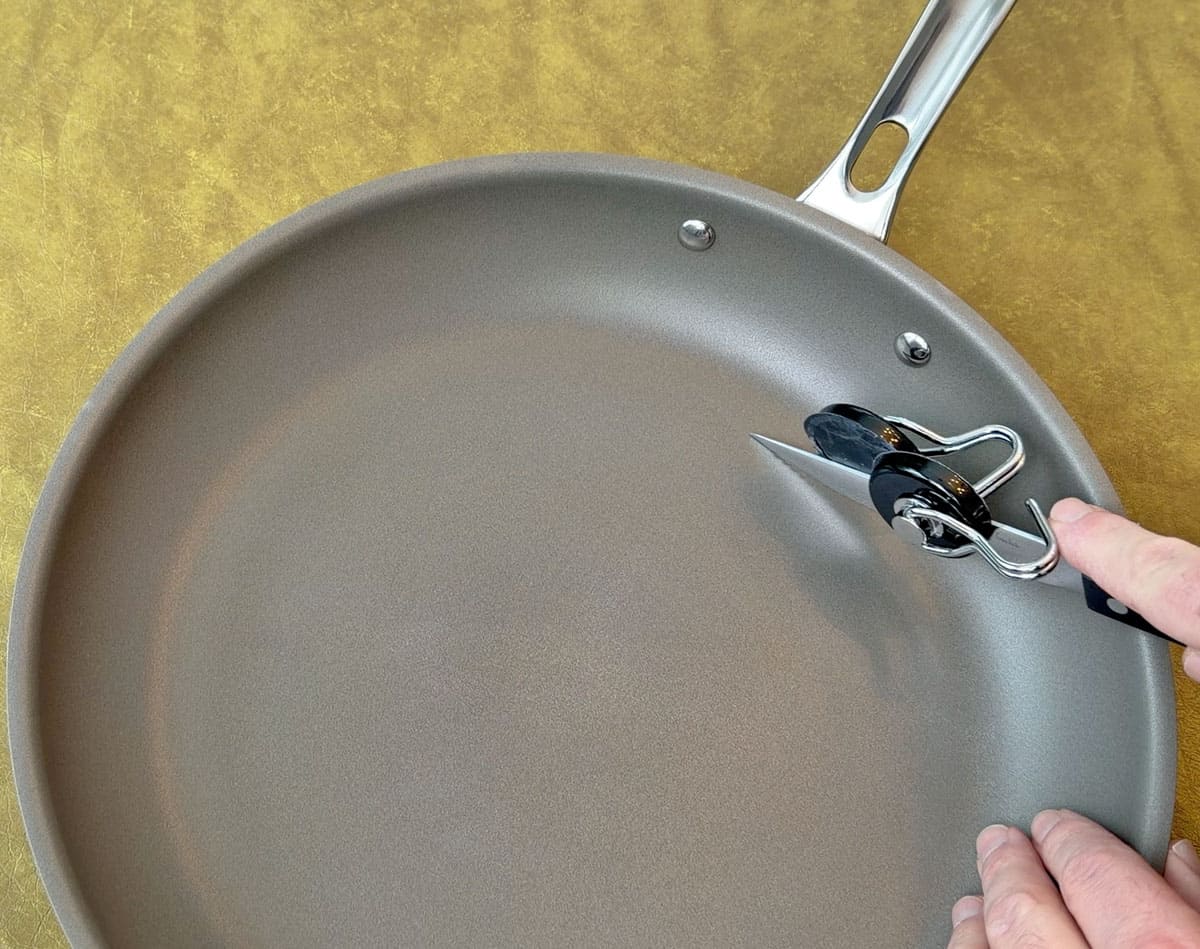
Next, I took a serrated steak knife, attached two magnets weighing 130 grams, and rubbed it across each pan 15 times. The Viking had zero scratches or damage. Nothing. For comparison, the Taima and Heritage Steel both sustained significant scratches, and even the Hestan NanoBond had minor rub marks.
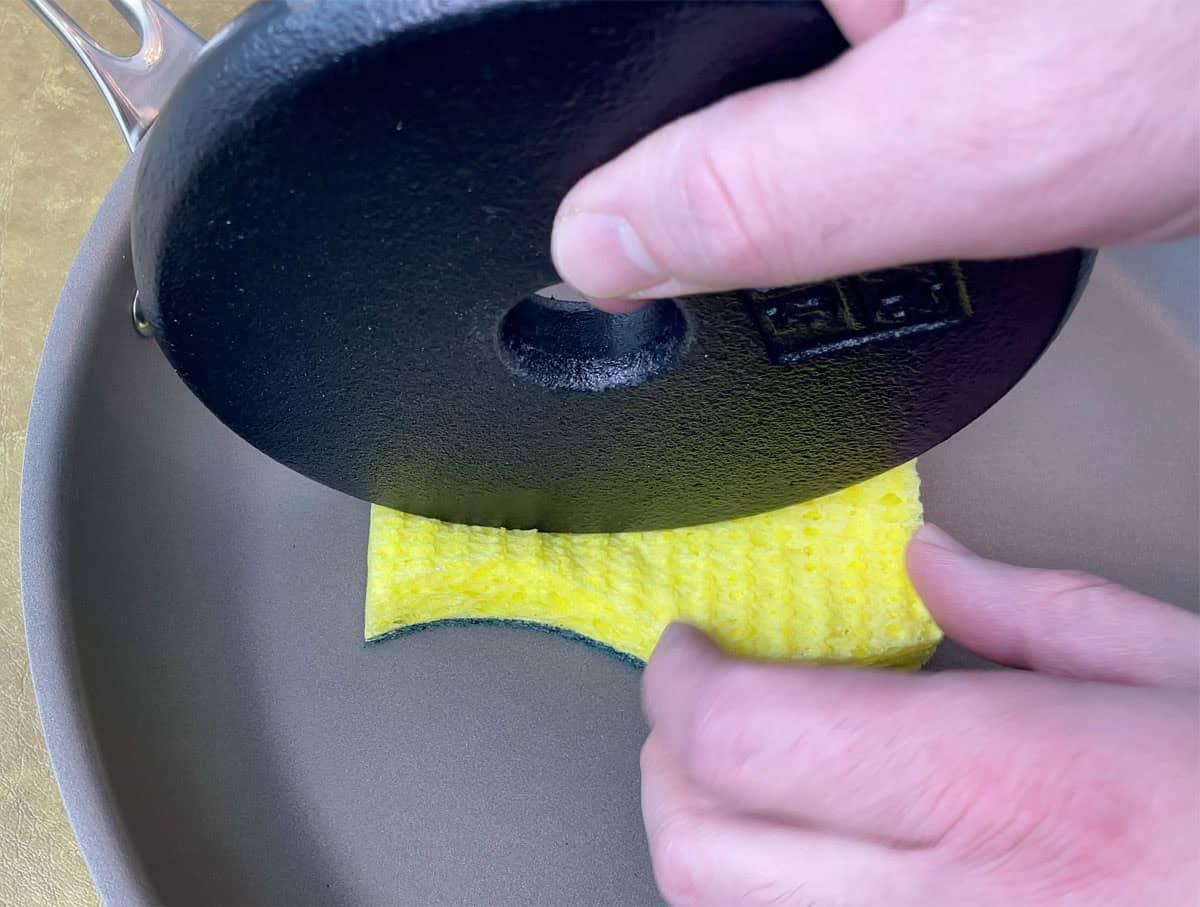
I also placed a heavy-duty Scotch-Brite sponge green side down on each pan with a five-pound weight on top and pushed it back and forth 20 times. The Viking had no noticeable scratches. The Taima, Heritage Steel, and stainless steel control all came out with visible damage.
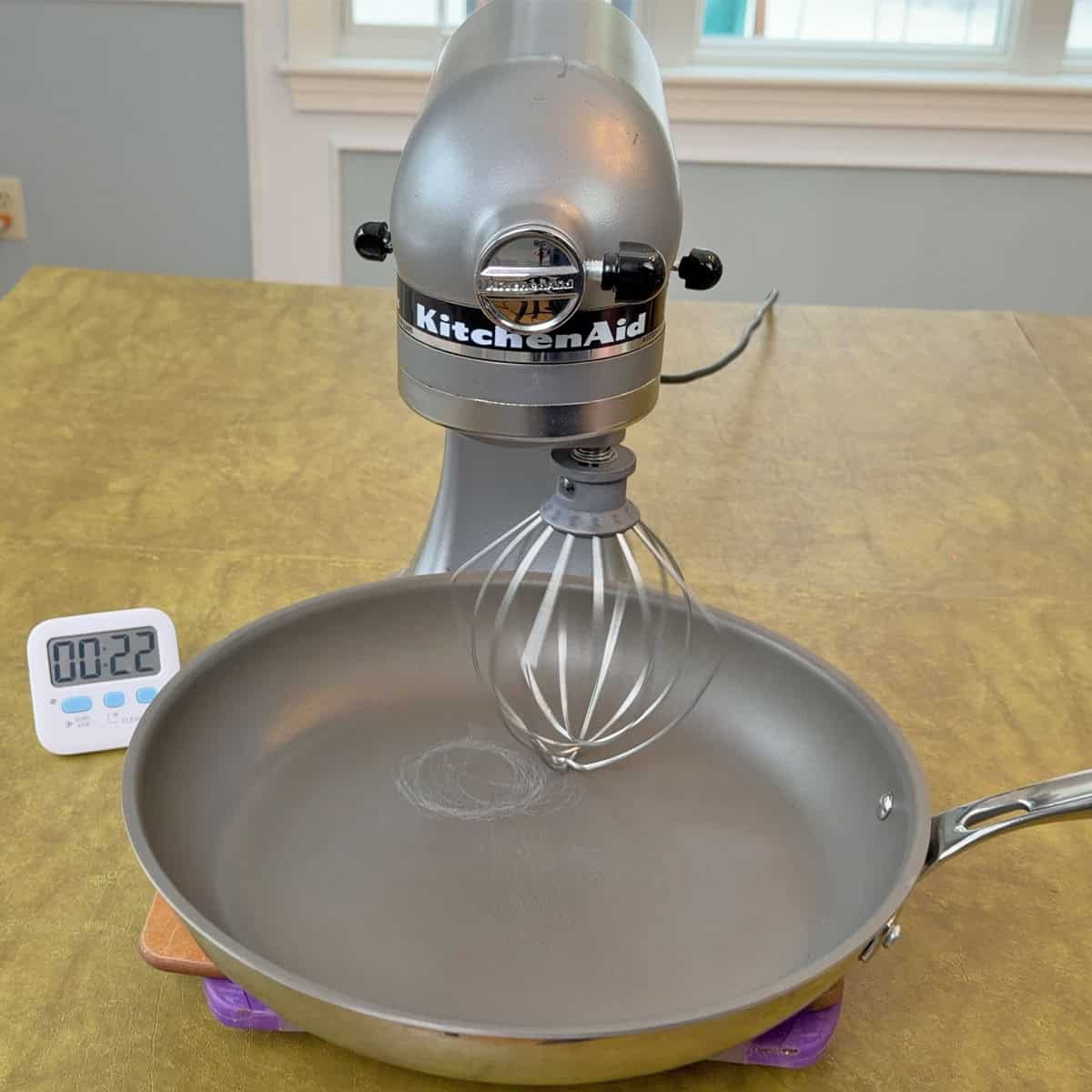
Finally, I set up a stand mixer so a metal whisk was making firm contact with the cooking surface and let it run for 30 seconds. The Viking had scary looking white marks, but once again it was mostly dust from the whisk breaking apart and transferring onto the surface.
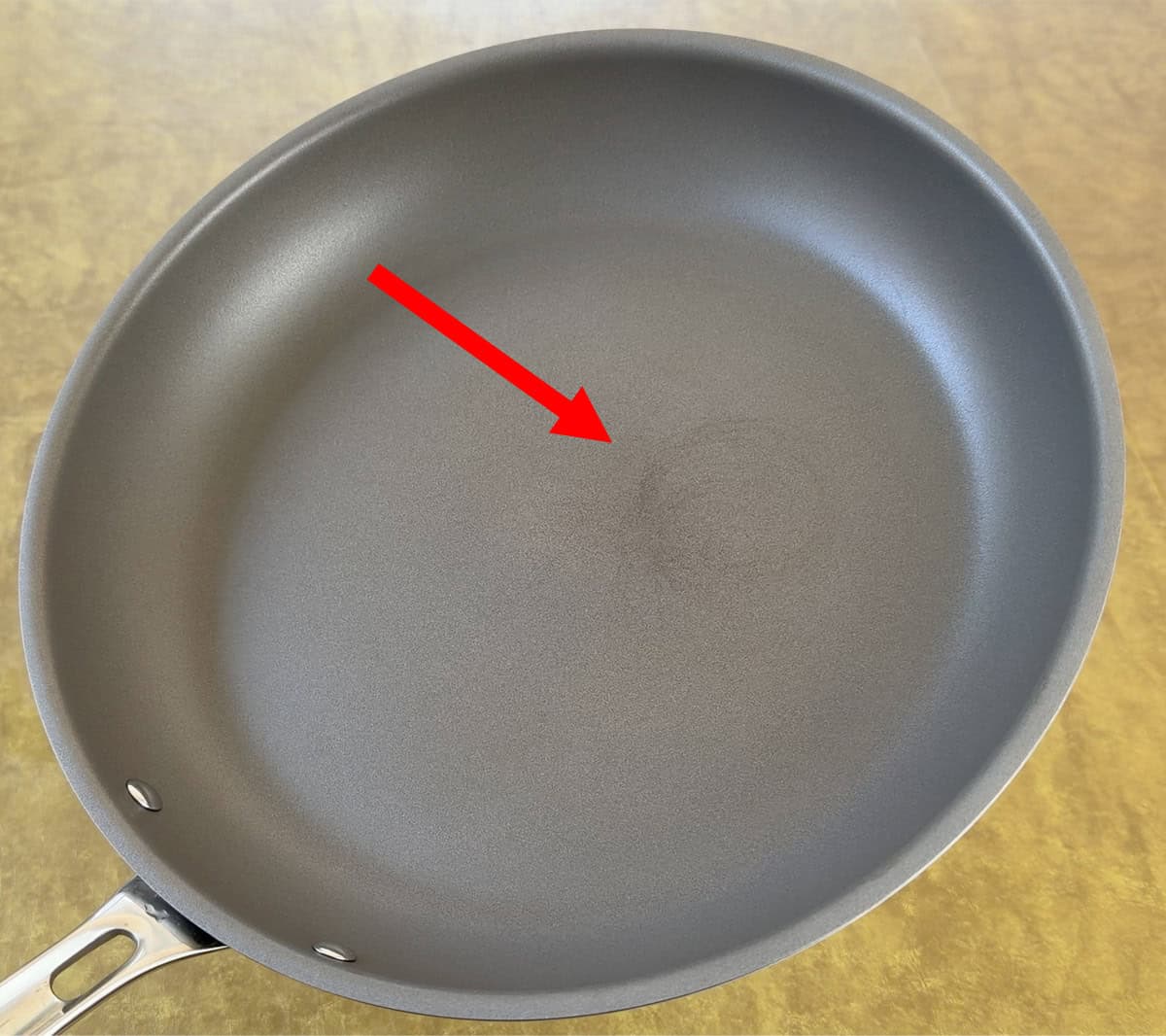
This test did leave behind a faint circular mark that you can see in certain lighting, but there’s no indentation and no actual scratch.
The Viking PureGlide Pro was the top performer in durability across all five titanium pans and the stainless steel control. Not a single test left permanent damage on the surface. That’s remarkable when you consider that a serrated knife, which cut right through a traditional nonstick pan’s coating in the same test, did absolutely nothing to the Viking.
After all five scratch tests, I reran the egg-with-fat test to see if any of the wear affected cooking performance. The Viking still had zero sticking. The surface performed exactly the same as it did before the scratch tests.
Corrosion Resistance
Viking says the PureGlide Pro is chemical-free and won’t corrode. To test that, I added 20 grams of non-iodized salt and 20 grams of filtered water to each pan, let them sit for an hour, heated them on high until the water evaporated, then let them sit for another hour before cleaning and inspecting. I repeated this three times.
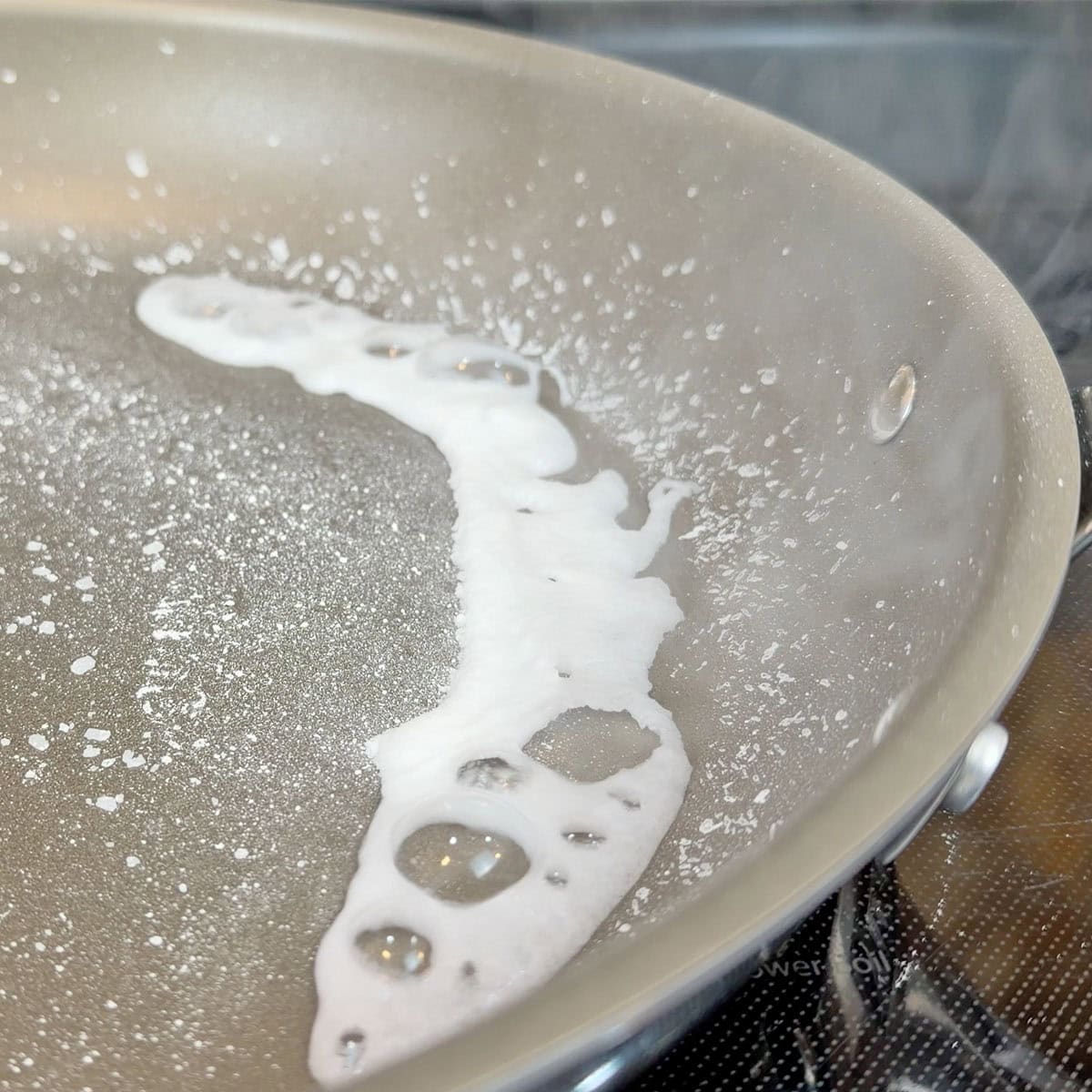
The Viking PureGlide Pro pan showed zero signs of pitting or corrosion after all three rounds. Neither did any of the other titanium pans. The stainless steel control developed dark spots after the first round that couldn’t be removed with vinegar or Bar Keepers Friend. By the third round, those spots were starting to eat into the steel with indentations you could feel with a fingernail.
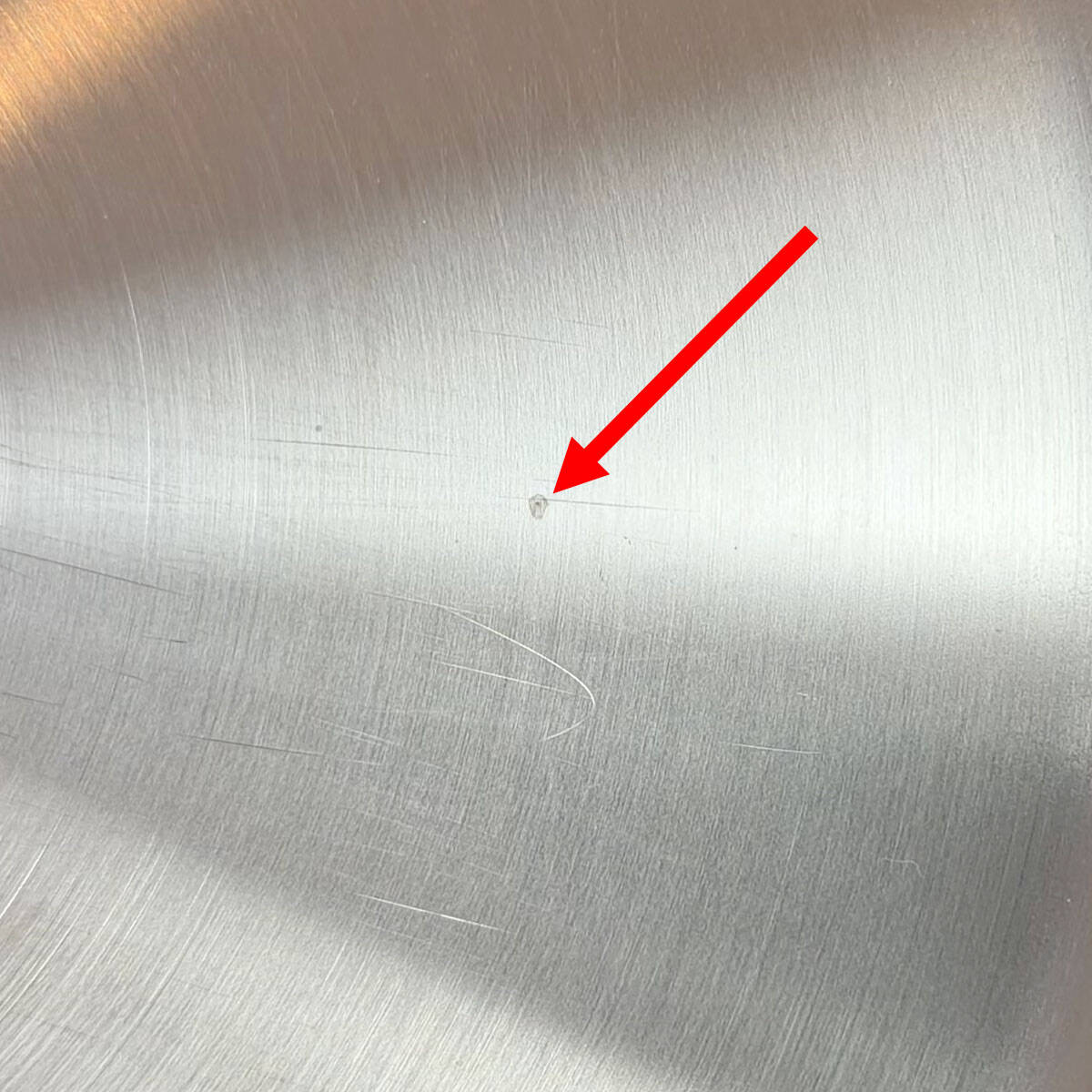
Under normal use, stainless steel won’t pit if you follow proper care. But the Viking’s titanium surface handled the worst-case scenario without any damage, which is a clear advantage over standard stainless steel.
Claims vs. Reality
| Claim | Verdict |
|---|---|
| Advanced nonstick release | Confirmed. Best nonstick performance of any titanium pan I tested. With fat, the egg glided. Without fat, it still didn’t stick much. |
| Ultra-durable | Confirmed. Not a single scratch test left permanent damage. A serrated steak knife did nothing. |
| 3X harder than stainless steel | Consistent with my results. The surface shrugged off tests that scratched every stainless steel pan. |
| Corrosion resistance | Confirmed. Zero corrosion after three rounds of aggressive salt testing. |
| Uniform heating | Confirmed. A 35-degree gap between center and outer edge is one of the best results in my dataset. |
| Metal utensil safe | Confirmed. Ladles, spatulas, a serrated knife, a Scotch-Brite sponge, and a metal whisk all failed to cause permanent damage. |
| Ergonomic handling with heat-break | Confirmed. The handle is comfortable, secure, and stays cool during normal stovetop use. |
Bottom Line: Is the Viking PureGlide Pro Worth Buying?
Of the five titanium pans I tested, Viking PureGlide Pro lived up to its nonstick and durability claims the best. It had the strongest nonstick performance in the group, survived every scratch test without permanent damage, and didn’t warp after months of regular use. Every major claim Viking makes held up in my testing.
I’ve tested other nonstick alternatives that perform well, but over time residue and buildup can form on the surface and cause sticking if you don’t keep it clean and smooth. The Viking wipes clean easily with no residue buildup, and because of that, the performance hasn’t changed.
It’s not cheap, but it’s one of the least expensive titanium pans I tested. It costs less than the Taima, the Our Place Titanium Always Pan Pro, and significantly less than the Hestan NanoBond, while outperforming most of them in the majority of tests.
My only minor complaints are that it’s not dishwasher safe, and the handle angles up more than I’d like, which puts your wrist in an awkward position while hand washing it.
The big question is long-term durability. I’ve been using it for several months and performance hasn’t declined much, but I can’t tell you what it’ll look like in three or five years. Based on what I know so far, I expect the food release to change somewhat with use, but stabilize and continue performing better than regular stainless steel when used with a little butter or oil.
If you’re looking for a pan that releases food much better than stainless steel but doesn’t have a traditional PTFE or ceramic nonstick coating, this is the one I’d buy. Just don’t expect it to behave exactly like traditional nonstick. Use a little fat, skip the dishwasher, and treat it more like a high-performance stainless pan.
Viking PureGlide Pro pans are available on Amazon and VikingCulinaryProducts.com.
Related Topics
- Taima Titanium Review: I Tested It vs. 4 Other Titanium Pans
- My Brutally Honest Review of the Our Place Titanium Always Pan Pro
- The Ultimate Viking Cookware Review: Is It Any Good?
- HexClad vs. Our Place Always Pan and Titanium Always Pan Pro
- Caraway vs. Our Place (Always Pan): Which Cookware Is Better?
- Is Hestan Cookware Worth the Splurge? In-Depth Review
- Heritage Steel Cookware Review: Is It Worth Buying?
- All-Clad vs. Viking: How Does Their Cookware Compare?
- Best Cookware Made in the USA: Top Brands Reviewed
- Best Cookware NOT Made in China: The Definitive Guide
- Is Demeyere Cookware Worth the High Price? An In-Depth Review
- 3-Ply vs. 5-Ply Stainless Steel Cookware (The Real Difference)
- 5 High-Quality Alternatives to All-Clad Cookware

