

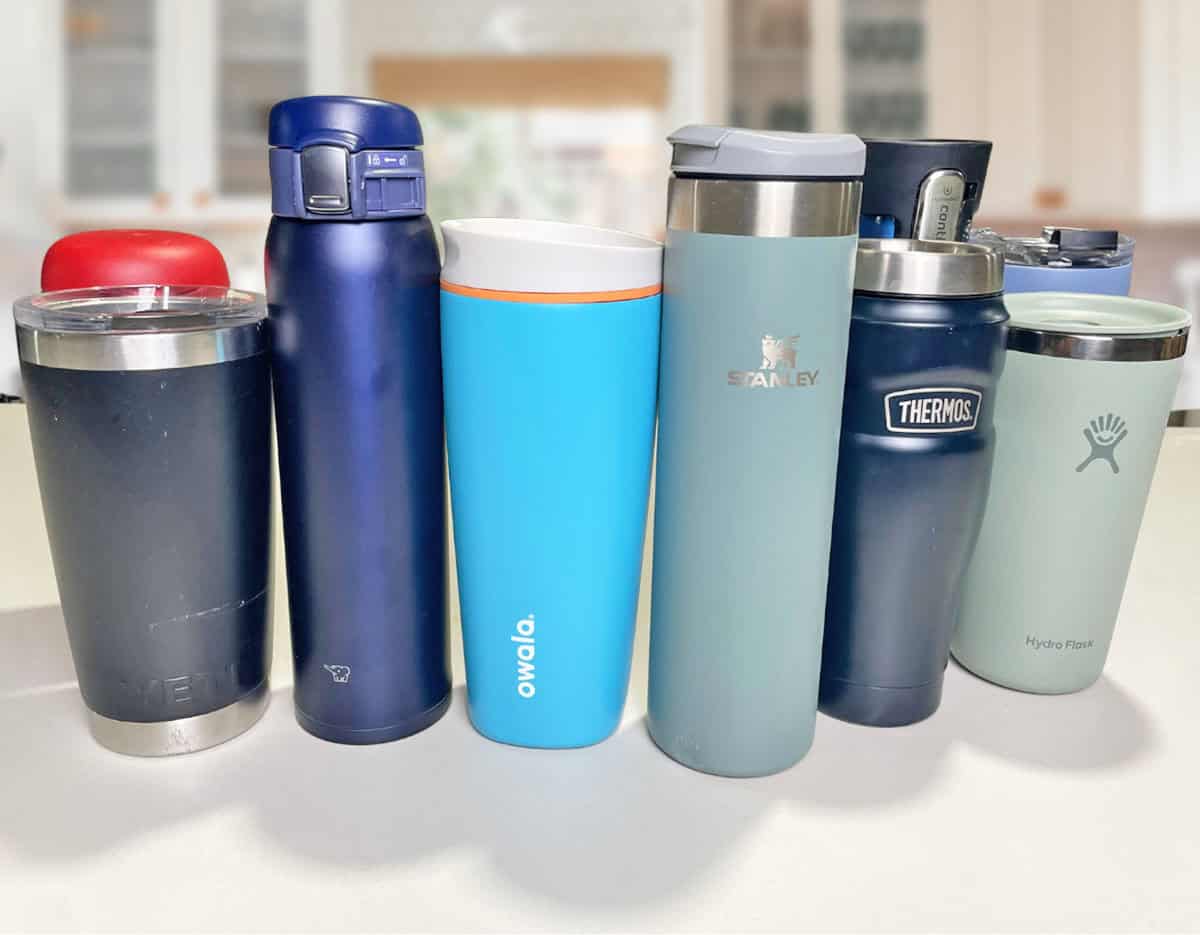
Are all insulated travel mugs the same, or do some actually perform better than others?
To find out, I tested nine of the highest-rated travel mugs side by side, including Owala, YETI, Stanley, Hydro Flask, Zojirushi, Contigo, Thermos, Simple Modern, and Fellow. I compared how well each one holds temperature, resists leaks, survives drops, and works in real daily use.
In this review, I’ll show you the results of my tests and quickly walk through the pros and cons of each travel mug. You’ll see which ones performed the best, which performed the worst, and the one mug that was the clear winner in almost every category.
Key Takeaways
Zojirushi was the clear winner. In my tests, hot drinks started at 190°F and cold drinks started at 40°F. After 15 hours outdoors, Zojirushi still held 117°F, while the weakest mug had dropped to 46°F. In the cold test, it warmed to just 51°F after 24 hours, which was colder than every other mug.
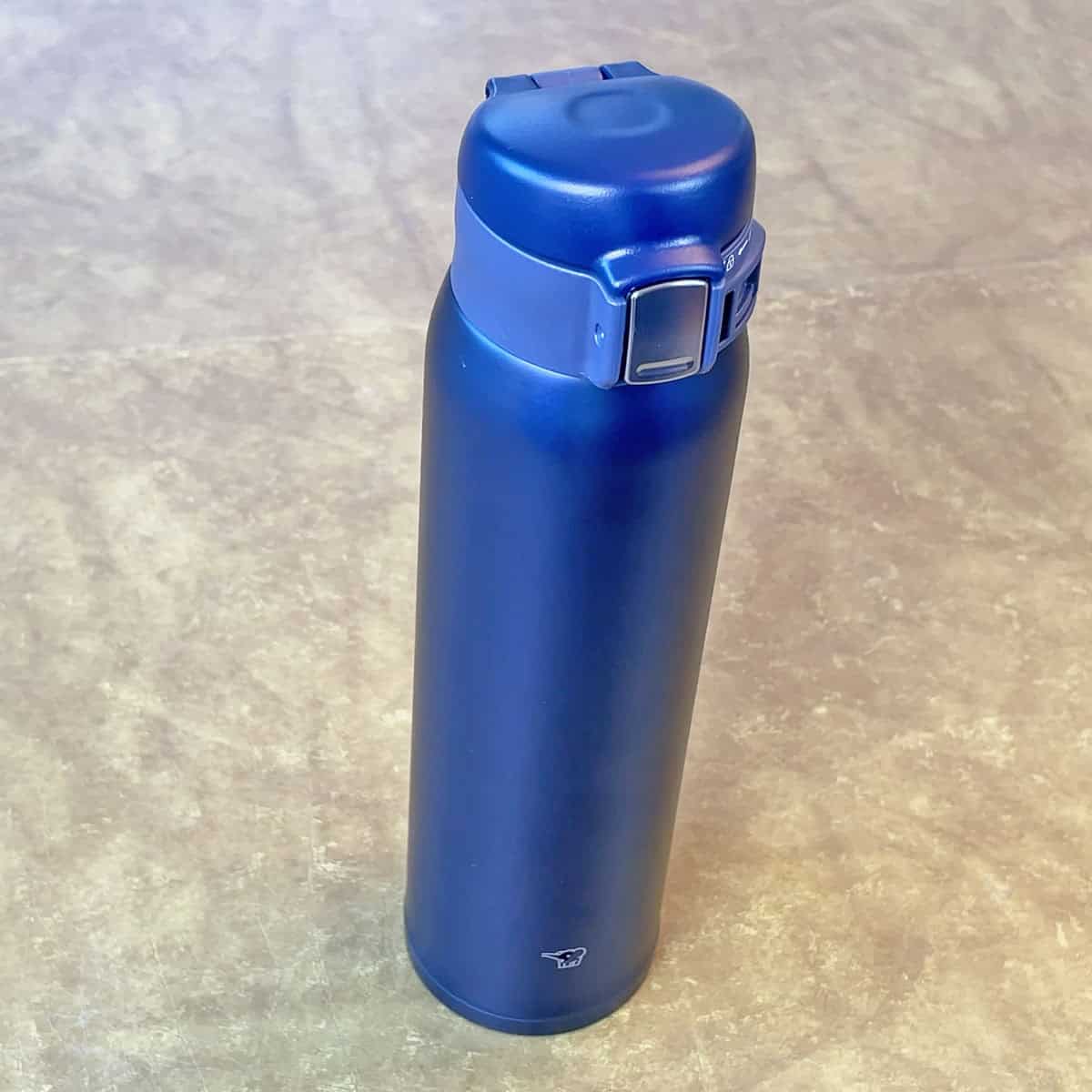
It did not leak, survived the drop test with only a minor dent, is easy to clean, and is simple to open with one hand. If your priority is keeping drinks hot or cold for as long as possible, this is the best option by a wide margin.
Contigo is the next best travel mug. Starting from the same 190°F hot and 40°F cold, it consistently ranked near the top in insulation and tied for second place at both 12 and 24 hours in the cold test.
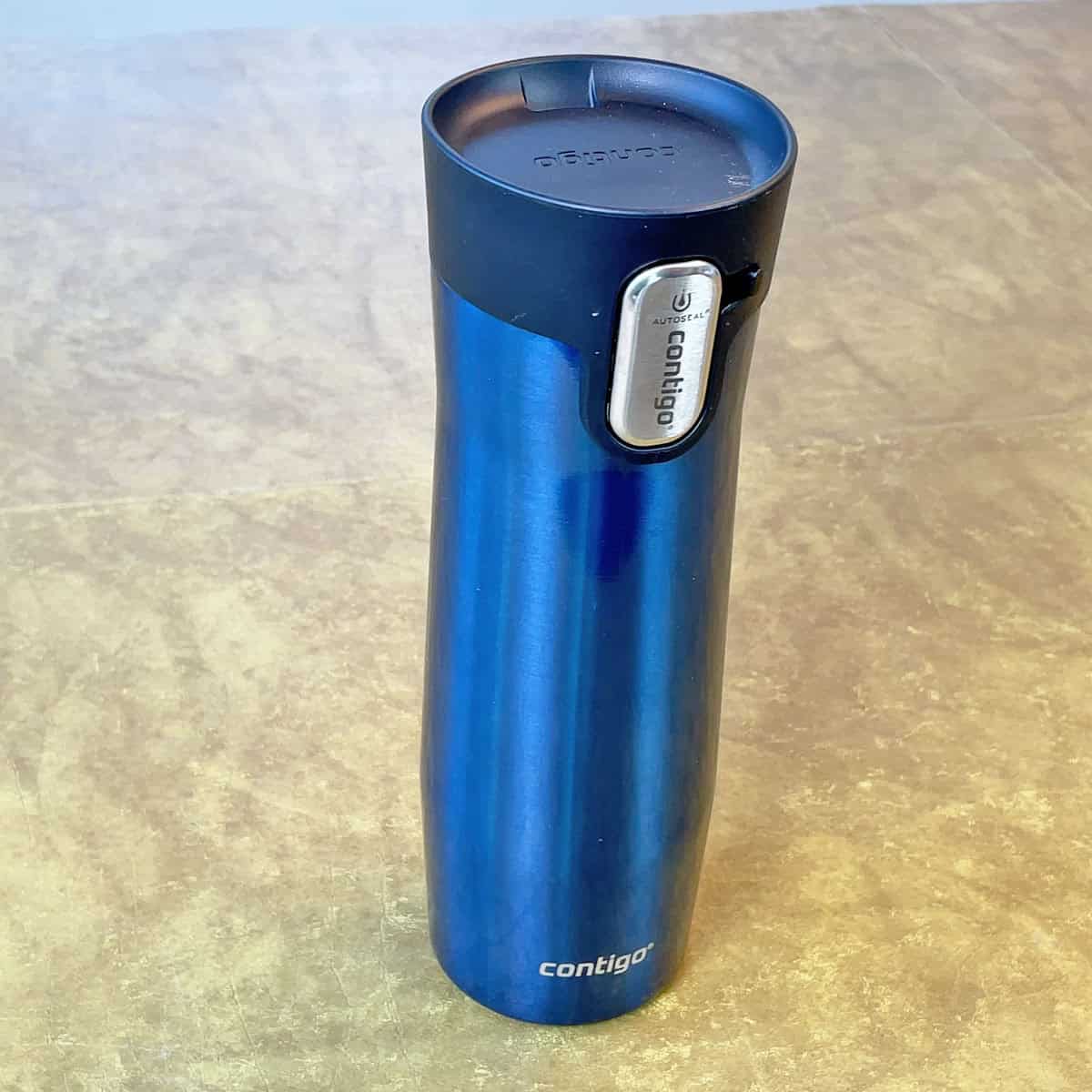
The AutoSeal button makes it one of the easiest mugs to use one-handed, leak resistance was excellent, and the slower flow rate makes it comfortable for hot drinks. It does not match Zojirushi’s insulation, but it offers the best balance of performance and everyday usability.
Use the links below to navigate the review:
- Comparison Chart
- How I Tested
- Simple Modern Voyager
- Hydro Flask All Around Tumbler
- Owala SmoothSip Slider
- Thermos Stainless King
- Fellow Carter Move
- Contigo West Loop
- Stanley AeroLight Transit Bottle
- YETI Rambler
- Zojirushi Stainless Steel Mug
- Bottom Line: Which Travel Mug Is the Best?
Comparison Chart
Swipe to view the entire chart on mobile.
| Feature | Zojirushi | Contigo | Fellow | Stanley | Thermos | Owala | YETI | Hydro Flask | Simple Modern |
|---|---|---|---|---|---|---|---|---|---|
| Where to Buy | Amazon | Amazon | Amazon | Amazon | Amazon | Amazon | Amazon | Amazon | Amazon |
| Capacity (oz) | 20 | 20 | 16 | 20 | 16 | 20 | 20 | 20 | 20 |
| One-Handed Use | Yes | Yes | No | Yes | Yes | Yes | Yes | Yes | Yes |
| Cupholder Friendly | Yes | Yes | Yes | Yes (tall) | Yes | Yes | Yes | Yes | Yes |
| Leak Test Result | No leaks | Minor splash when tipped | No leaks | Passed | Passed | Minor droplets | Leaked | Leaked heavily | Leaked |
| Drop Test Result | Minor dent only | Minor dent only | Minor dent | Lid cracked | Minor dents | Minor dent | Lid popped off | Largest dent | Dent + spill |
| Flow Rate (16 oz) | 26 sec (slowest) | 17 sec | 2 sec (fast) | 9 sec | 15 sec | 16 sec | 8 sec | 8 sec | 10 sec |
| Hot Temp @ 15 hrs (°F) | 117 | 89 | 99 | 87 | 73 | 55 | 52 | 46 | 61 |
| Cold Temp @ 24 hrs (°F) | 51 | 56 | 57 | 56 | 59 | 61 | 62 | 64 | 60 |
| Insulation Rank (Overall) | 1st | 2nd | 3rd | 4th | 5th | 7th | 8th | 9th | 6th |
| Ease of Cleaning | Moderate | Easy | Easy | Difficult | Difficult | Moderate | Easy | Very easy | Easy |
| Biggest Strength | Best insulation by far | Best balance + AutoSeal | Excellent insulation | Strong cold retention | Reliable hot retention | Ergonomic spout | Very durable body | Simple lid | Controlled pour |
| Biggest Weakness | Tall and narrow | Can tip over | Lid gets stuck | Lid cracked | Overcomplicated lid | Weak insulation | Leaks | Worst insulation | Leaks |
How I Tested
Insulation and lid design are the two biggest factors that determine how a travel mug performs. Even small differences in seals, vents, or lid mechanisms can dramatically affect heat retention, cold retention, and leaks. With that in mind, I designed these tests to isolate performance differences you actually notice in daily use.
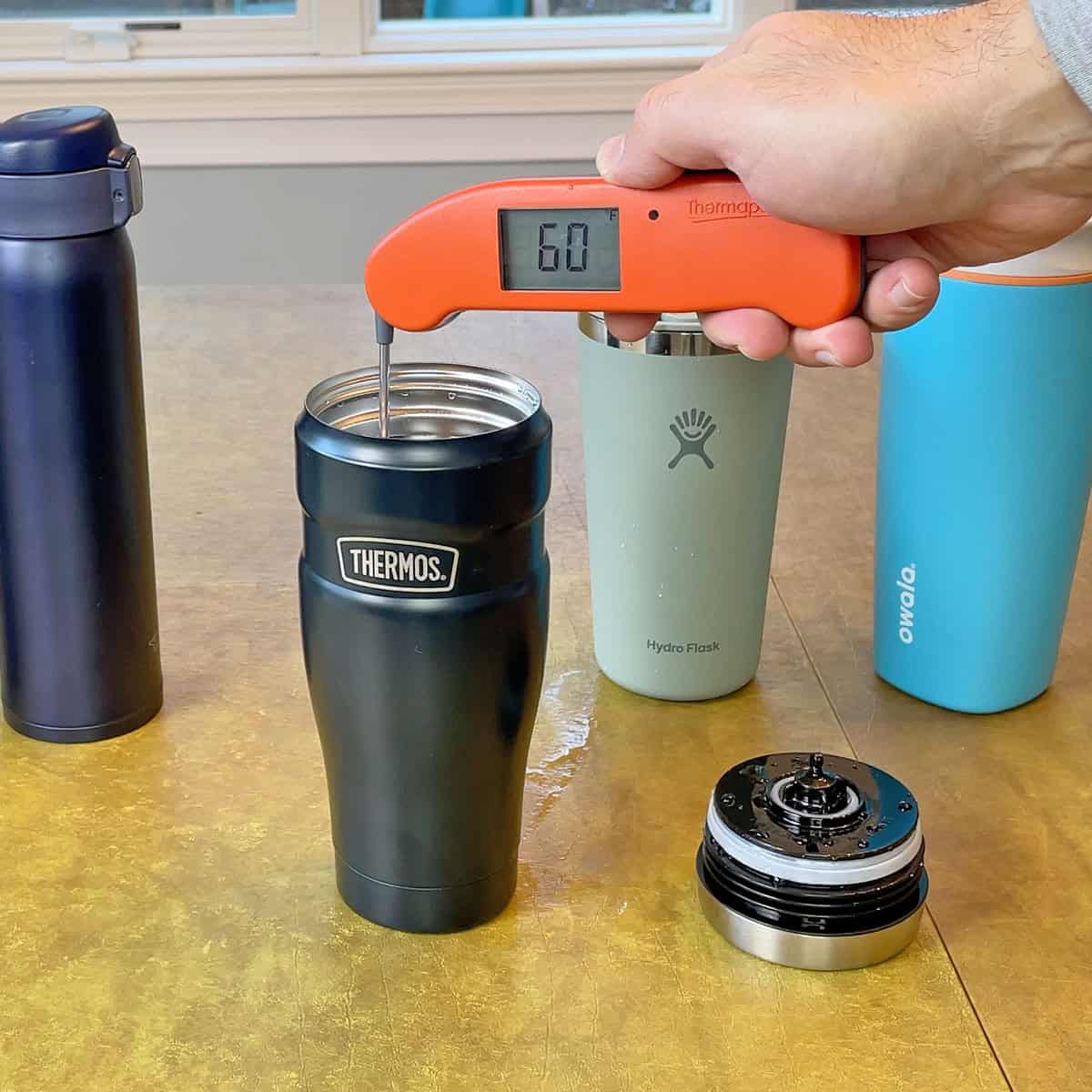
I tested hot retention by filling each mug with water heated to 190°F, sealing the lid, and measuring the temperature after 1, 3, 6, and 15 hours. I ran this test outdoors in below-freezing conditions and repeated it indoors to reflect normal home or office use. This shows both short-term heat loss and long-term insulation performance.
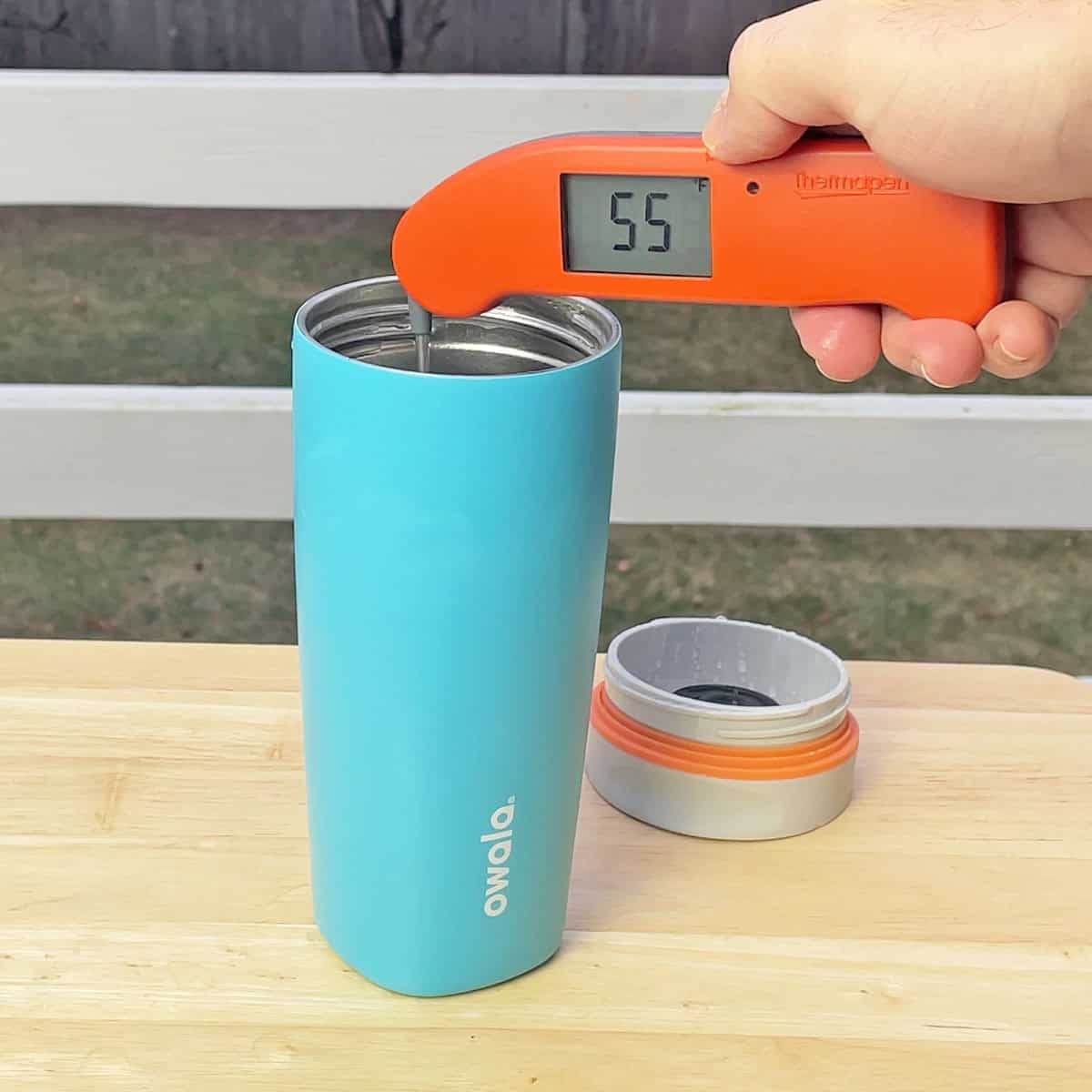
For cold retention, I filled each mug with water chilled to 40°F and recorded temperatures after 1, 3, 6, 12, and 24 hours. Most mugs perform similarly early on, so the longer intervals reveal which ones actually keep drinks cold.
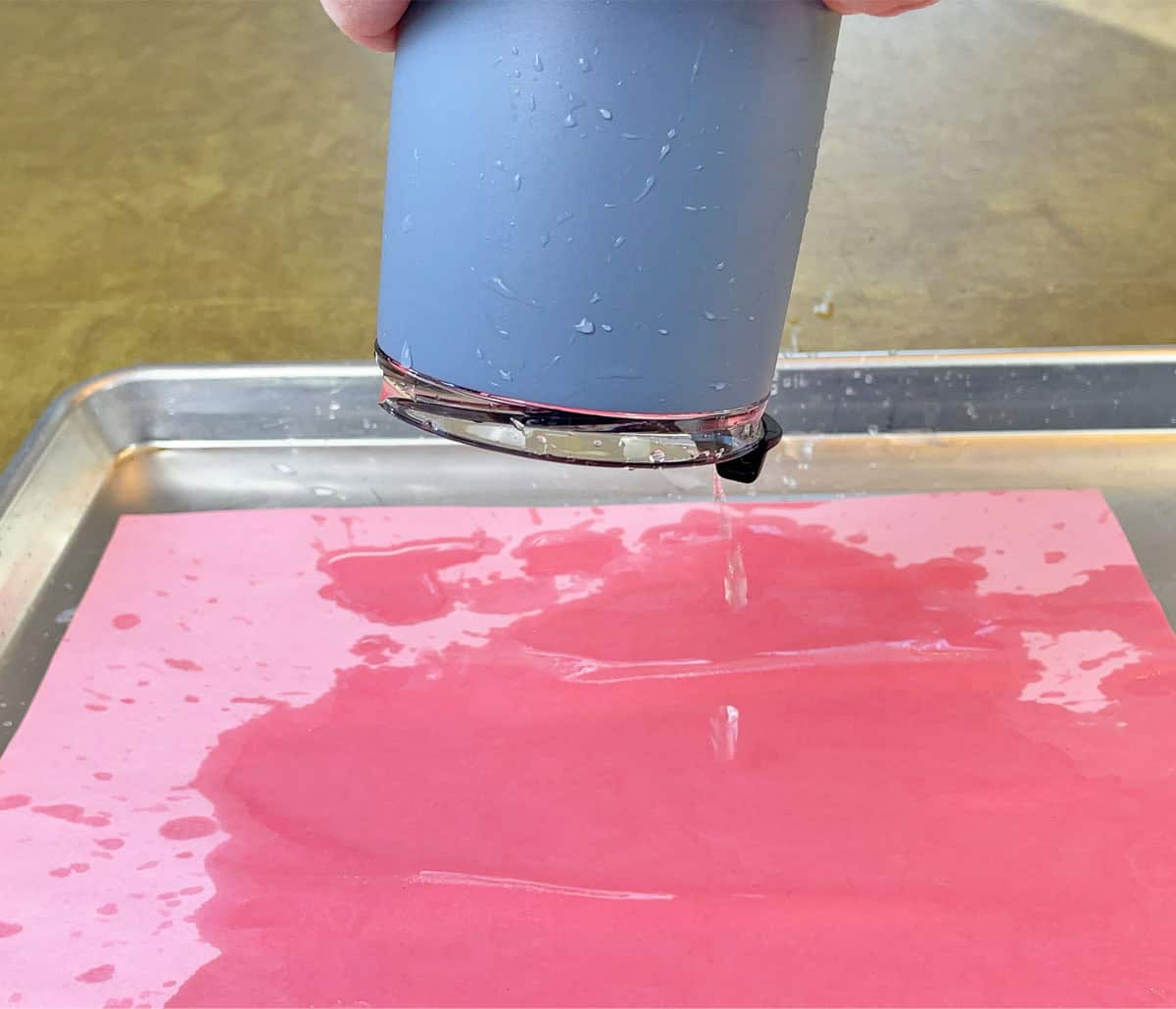
I tested leaks by filling each mug, shaking it for 30 seconds while upright and upside down, then tipping it over three times. This shows whether a lid is truly leak proof or only splash resistant.
To evaluate durability, I dropped each mug from three feet onto concrete twice. One drop was on the side, and the other was directly on the lid. I checked for dents, paint damage, cracked lids, and whether the lid still sealed and functioned correctly.

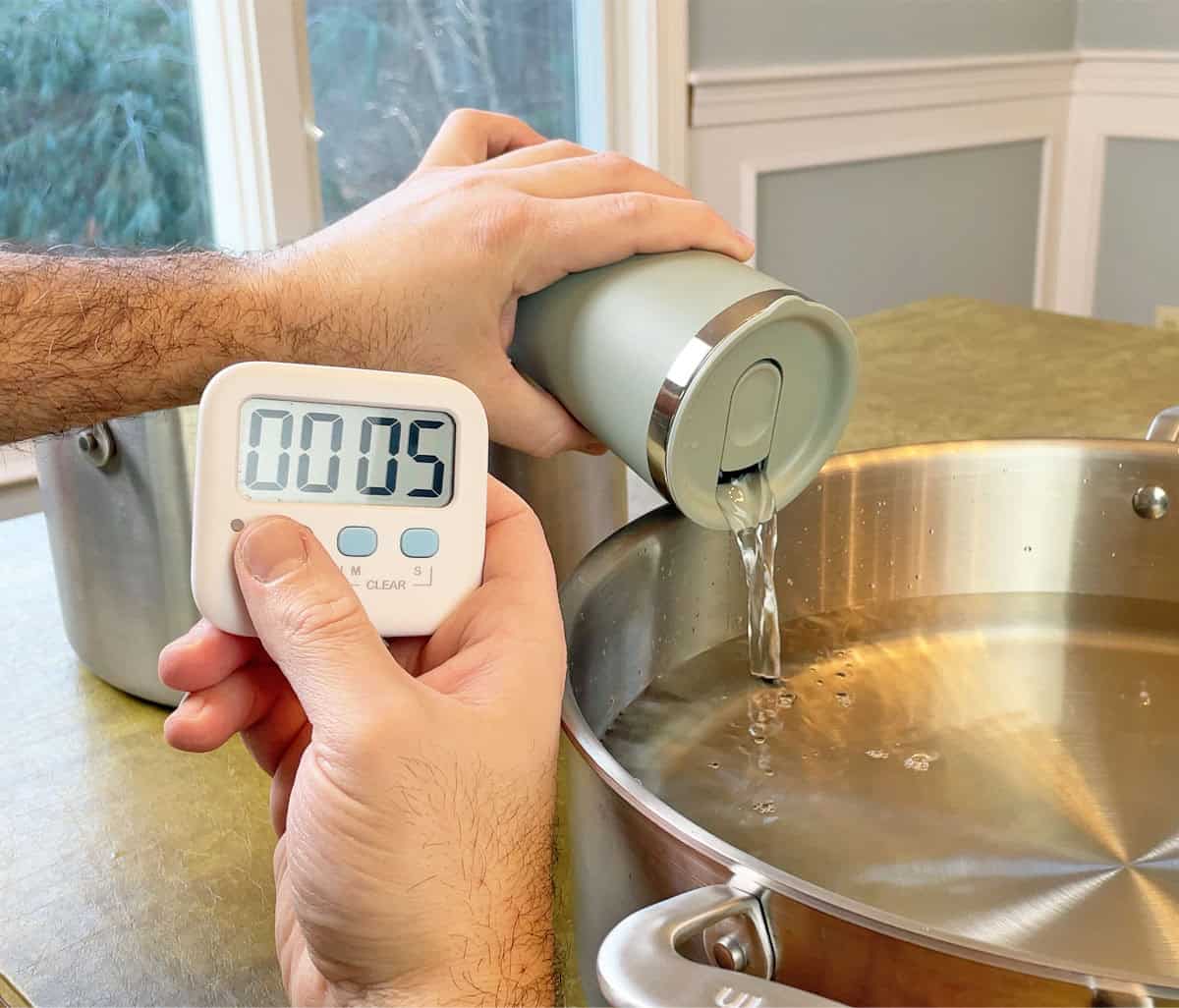
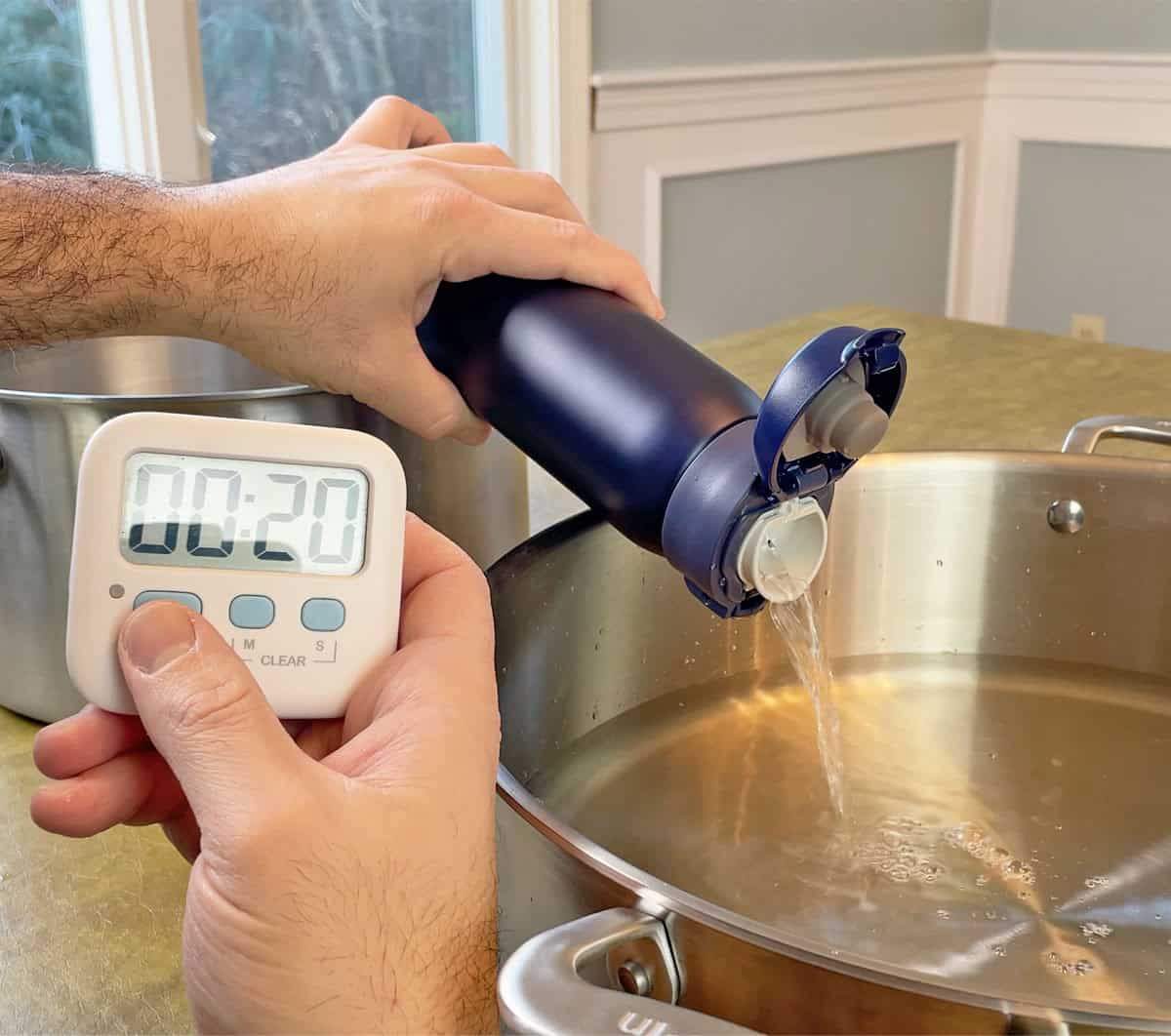
I measured flow rate by filling each mug with exactly 16 ounces of water, holding it at the same angle, and timing how long it took to empty. Faster flow increases the risk of spills or burns, while slower flow can be frustrating in daily use.
I also evaluated everyday design details, including cupholder fit, one handed operation, lid usability, and how easy each mug is to take apart and clean. These factors play a big role in how enjoyable a mug is to use long term.

Simple Modern Voyager
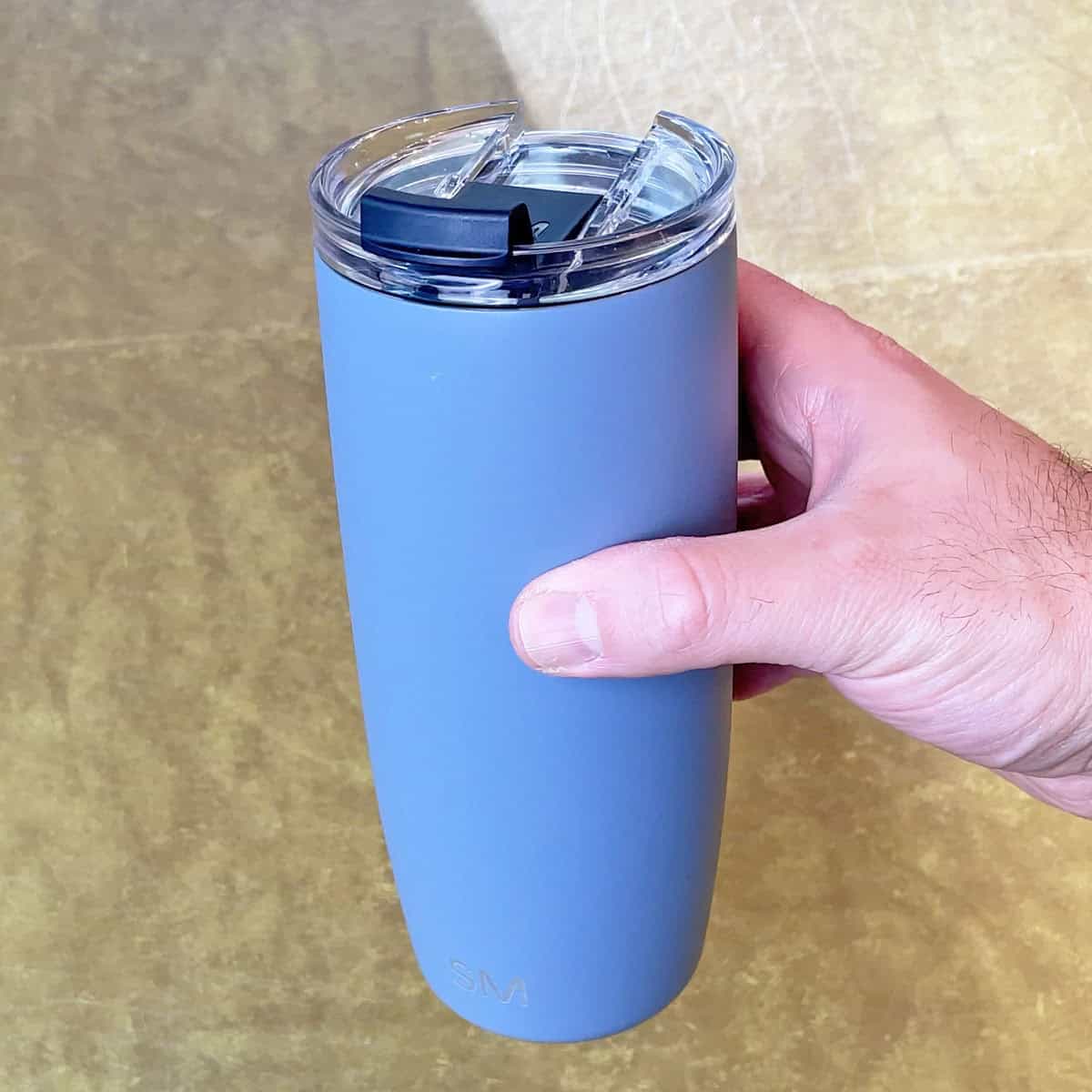
The Simple Modern Voyager holds 20 ounces and uses a twist-off lid with a flip-up drinking flap. The lid design is very simple, with a single thin gasket, which makes it quick to take apart and clean. The downside is that the gasket is a bit stubborn to remove, and because it’s thin, it feels easier to damage over time than thicker seals used on other mugs.
Insulation performance landed squarely in the middle of the pack. In the outdoor hot test starting at 190°F, it dropped to 160°F after 1 hour, 137°F after 3 hours, 105°F after 6 hours, and 61°F after 15 hours. Indoors, it held heat slightly better, measuring 174°F at 1 hour and 110°F at 15 hours. That’s acceptable for short outings, but it falls well behind the top performers once you get past the 3-hour mark.
Cold retention followed a similar pattern. Starting at 40°F, it measured 41°F at 1 hour, 46°F at 3 hours, 47°F at 6 hours, 51°F at 12 hours, and 60°F at 24 hours. Early readings were similar to most mugs, but by 12 and 24 hours it had clearly warmed faster than the leaders.
The flow rate was well controlled. It emptied 16 ounces in 10 seconds, which strikes a good balance between safety and convenience. It fits standard cupholders and is easy to open and close with one hand, and the flap stays out of the way while drinking.
Durability was decent but not standout. After the 3-foot drop tests onto concrete, it ended up with a small dent near the bottom and spilled water, but the lid itself remained intact.
The biggest drawback is leaking. Despite being marketed as leak proof, water came out of the drinking flap when shaken upright, and even more leaked when it was turned upside down and tipped over.
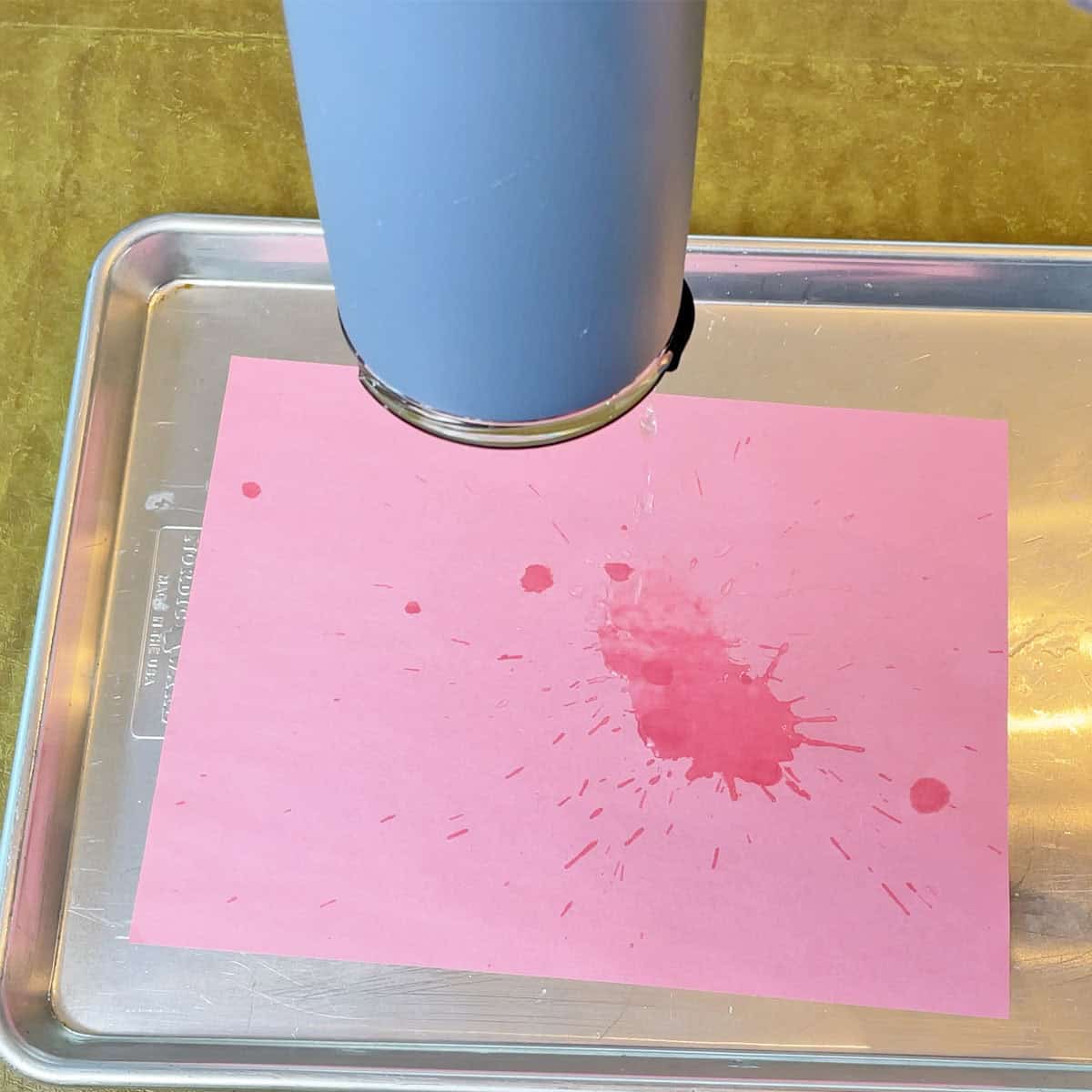
If you plan to carry a mug in a bag, this is a major limitation.
Hydro Flask All Around Tumbler
The Hydro Flask All Around Tumbler uses a simple press-in lid with a sliding tab that opens and closes the drinking hole. The slider pops off easily, which makes this one of the simplest lids in the group to take apart and clean. There are very few parts, and reassembly takes seconds.
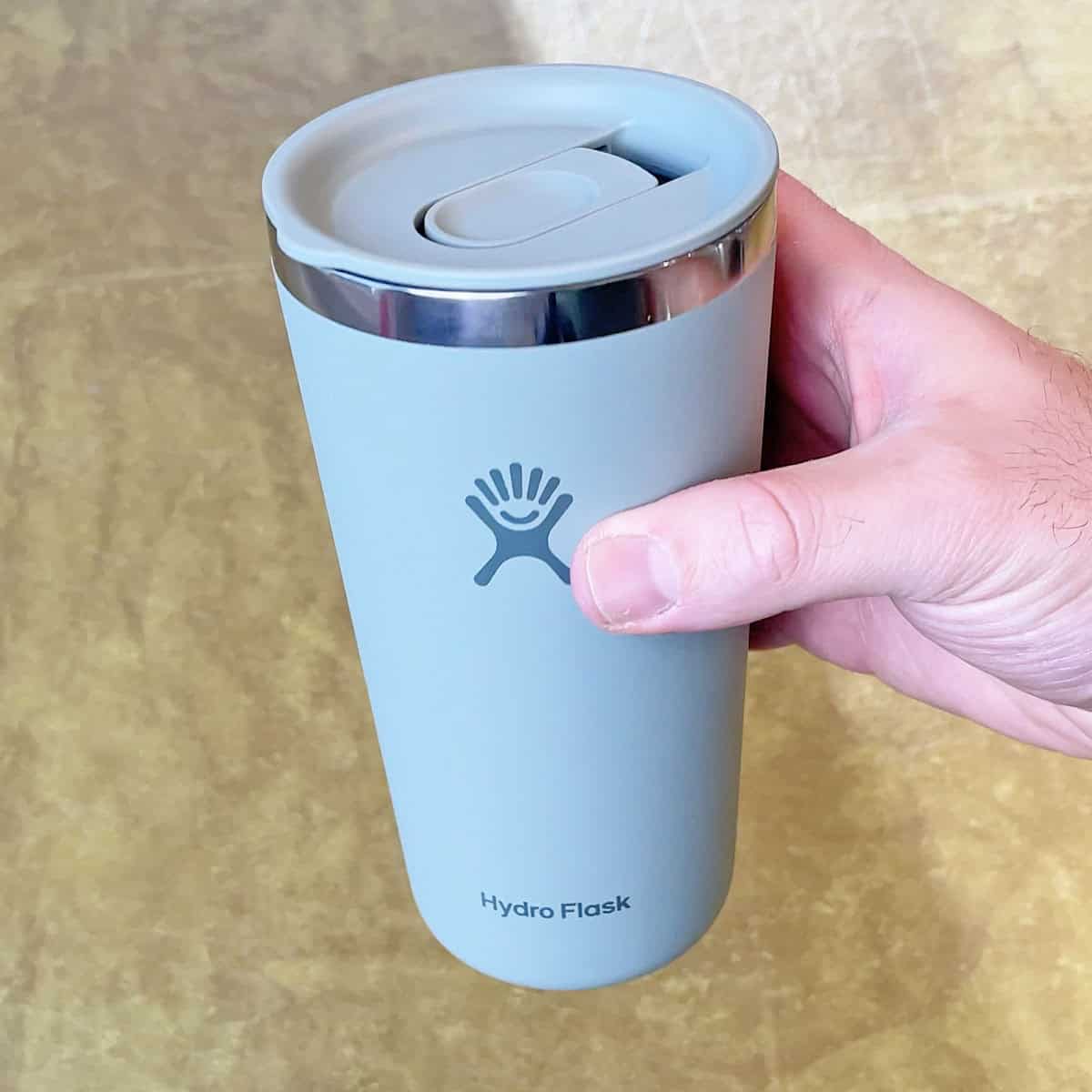
Insulation performance was the weakest of all the mugs I tested. In the outdoor hot test starting at 190°F, it dropped to 153°F after 1 hour, 125°F after 3 hours, 89°F after 6 hours, and just 46°F after 15 hours.
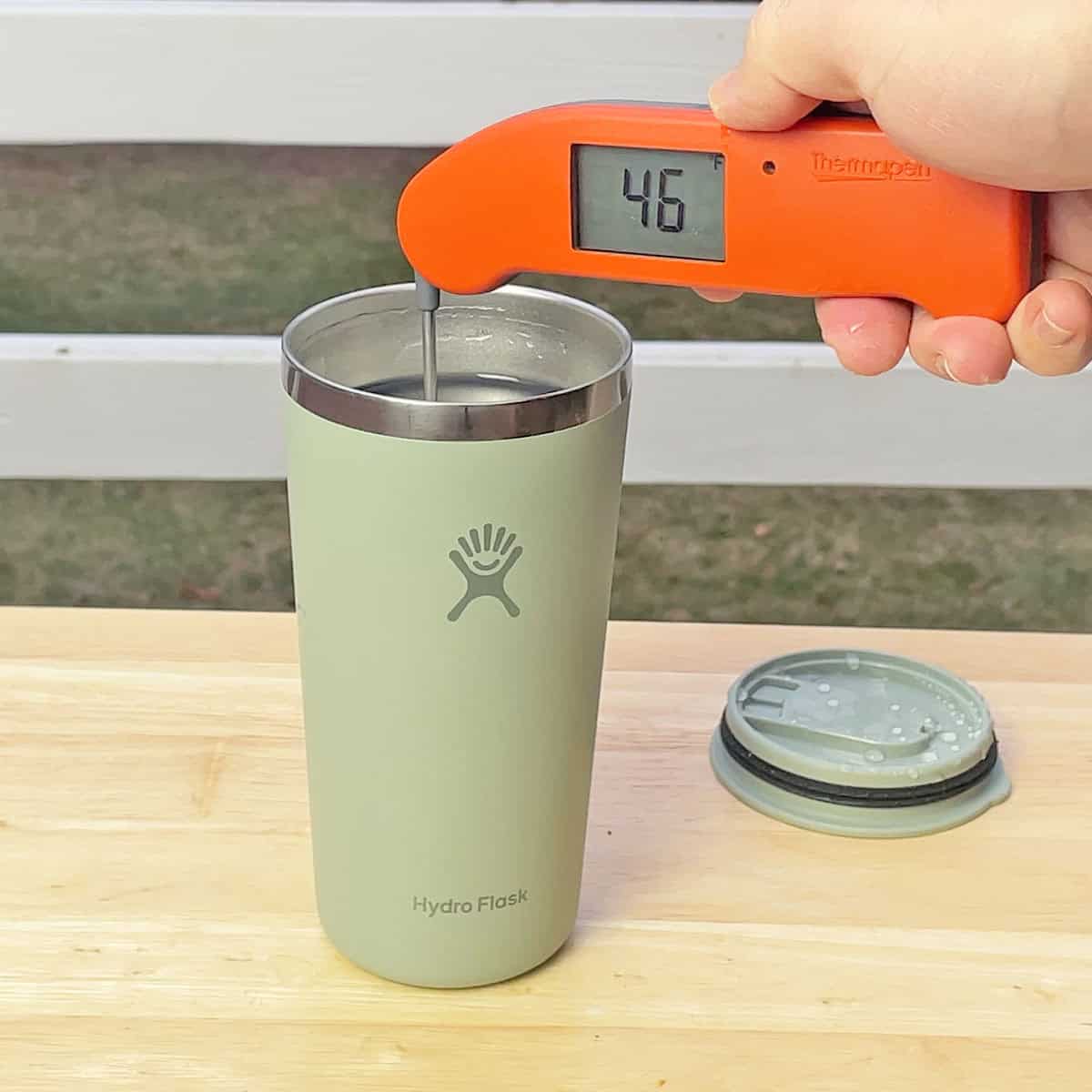
At that same 15-hour mark, the top performers were still holding temperatures well above 80°F, which makes the gap very obvious in real use. Indoor results followed the same pattern, ending at 98°F after 15 hours.
Cold retention also ranked last. Starting at 40°F, it measured 41°F at 1 hour, 47°F at 3 hours, 50°F at 6 hours, 55°F at 12 hours, and 64°F at 24 hours. Early readings were similar to other mugs, but by the longer intervals it drifted noticeably warmer than every other option.
This mug is not designed to be leak proof, and the testing confirmed that. Water came through the small vent hole when shaken upright, and it leaked heavily when turned upside down or tipped over. This limits it to desk or car use where spills are not a concern.
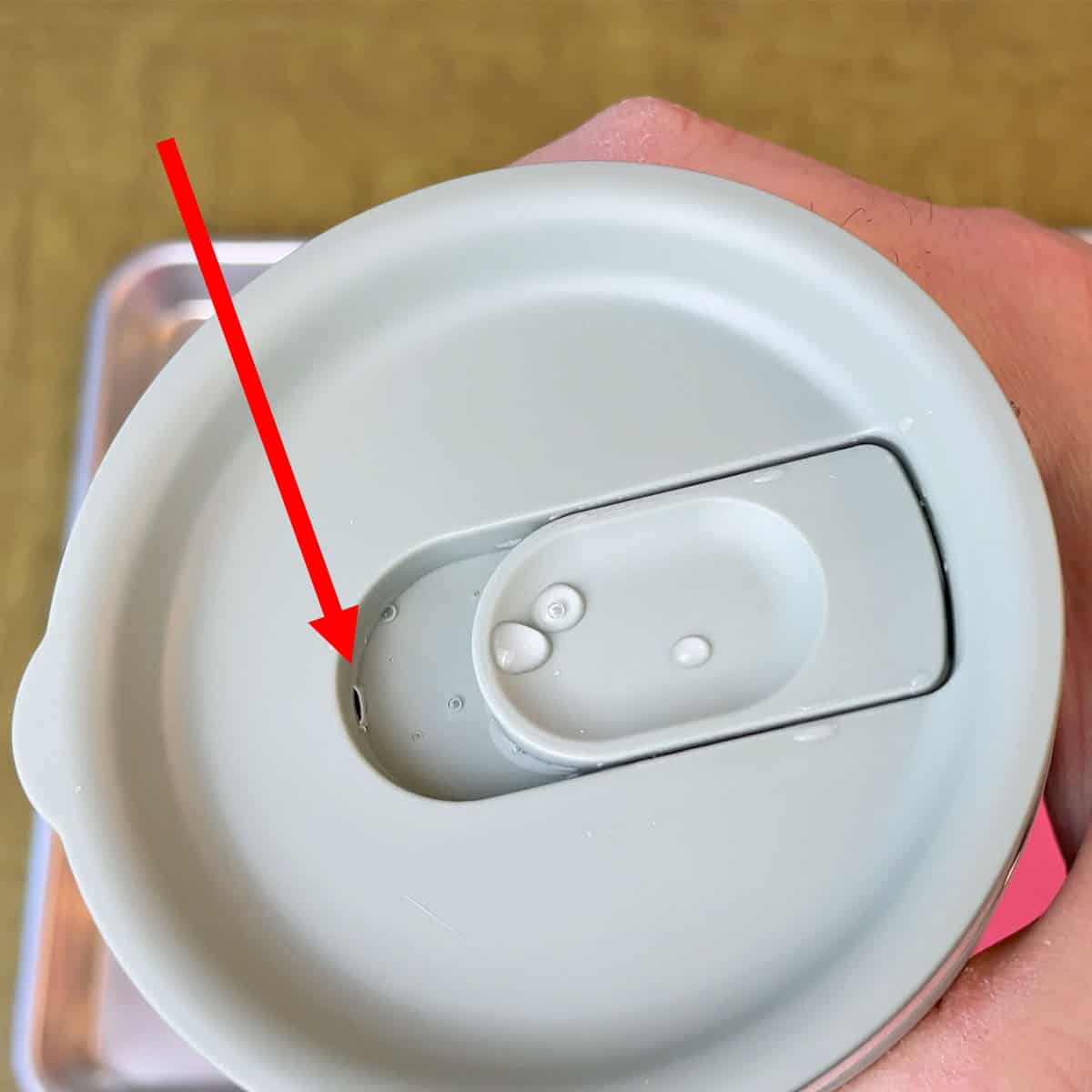
Flow rate was average. It emptied 16 ounces in 8 seconds, which is manageable but not especially controlled. It fits standard cupholders and is easy to use with one hand since the lid presses on instead of twisting.
Durability was another weak point. After the 3-foot drop tests onto concrete, it had the largest dent of any mug in the group, with visible paint chipping.

When dropped on the lid, the lid popped off and spilled water everywhere, although the lid itself was not damaged.
Owala SmoothSip Slider
The Owala SmoothSip Slider uses a sliding button on top of the lid to open and close the spout. The curved SmoothSip spout is comfortable to drink from and does a good job guiding liquid into your mouth without splashing. It is one of the more ergonomic designs in the lineup.
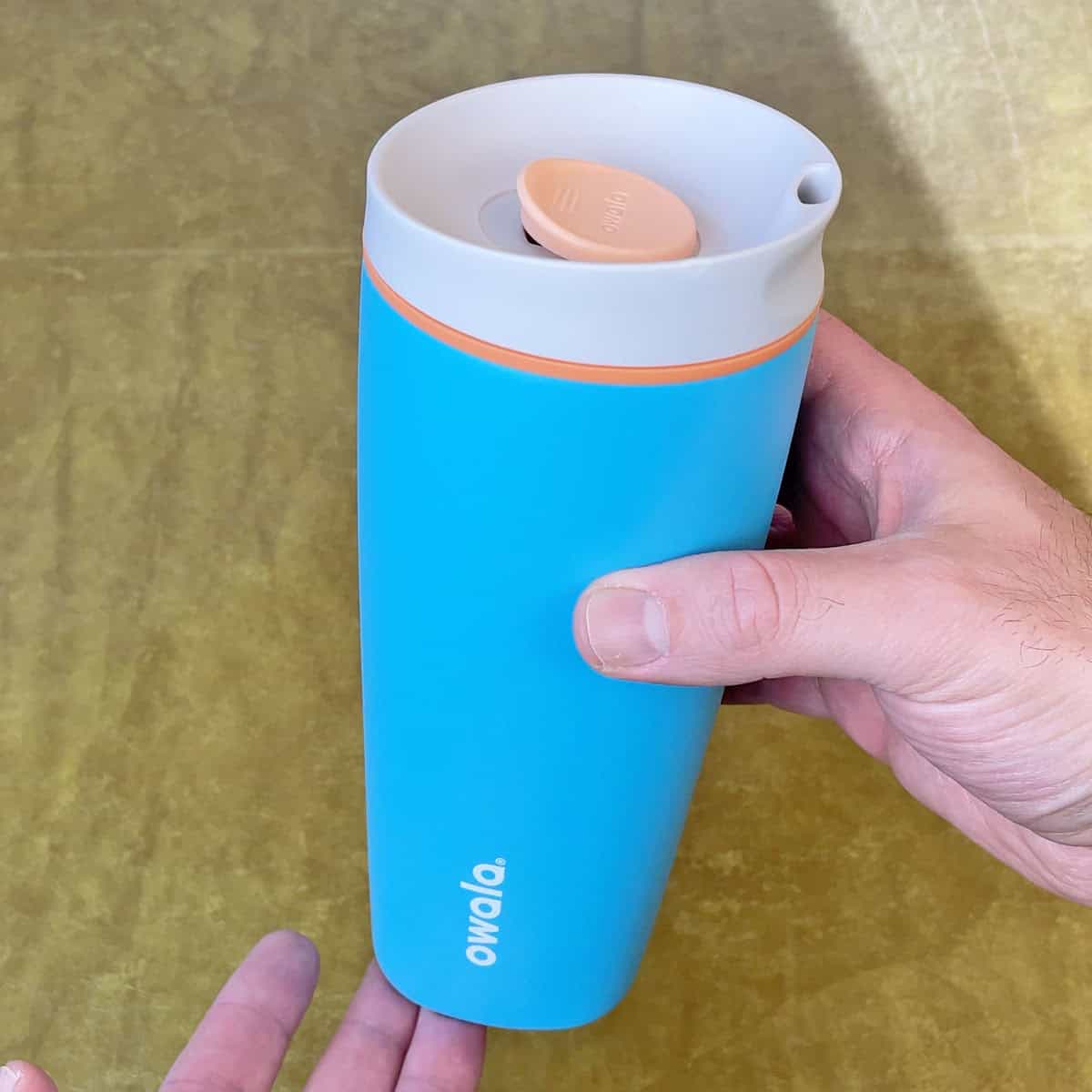
The lid is easy to take apart once you understand how it works. The thick main gasket pops off cleanly, the slider lifts off with a firm pull, and the inner plastic piece twists out. It has more parts than most lids, but after a couple of cleanings, the process takes only seconds.
Hot insulation performance was near the bottom of the group. In the outdoor hot test starting at 190°F, it dropped to 158°F after 1 hour, 133°F after 3 hours, 99°F after 6 hours, and 55°F after 15 hours. Indoor results followed the same trend, ending at 105°F after 15 hours. That level of heat loss puts it well behind the top performers, especially after the 3-hour mark.
Cold retention was better, but still not competitive with the leaders. Starting at 40°F, it measured 41°F at 1 hour, 46°F at 3 hours, 48°F at 6 hours, 52°F at 12 hours, and 61°F at 24 hours. A 21-degree increase over 24 hours ranked it 7th out of 9, which is acceptable but clearly not best in class.
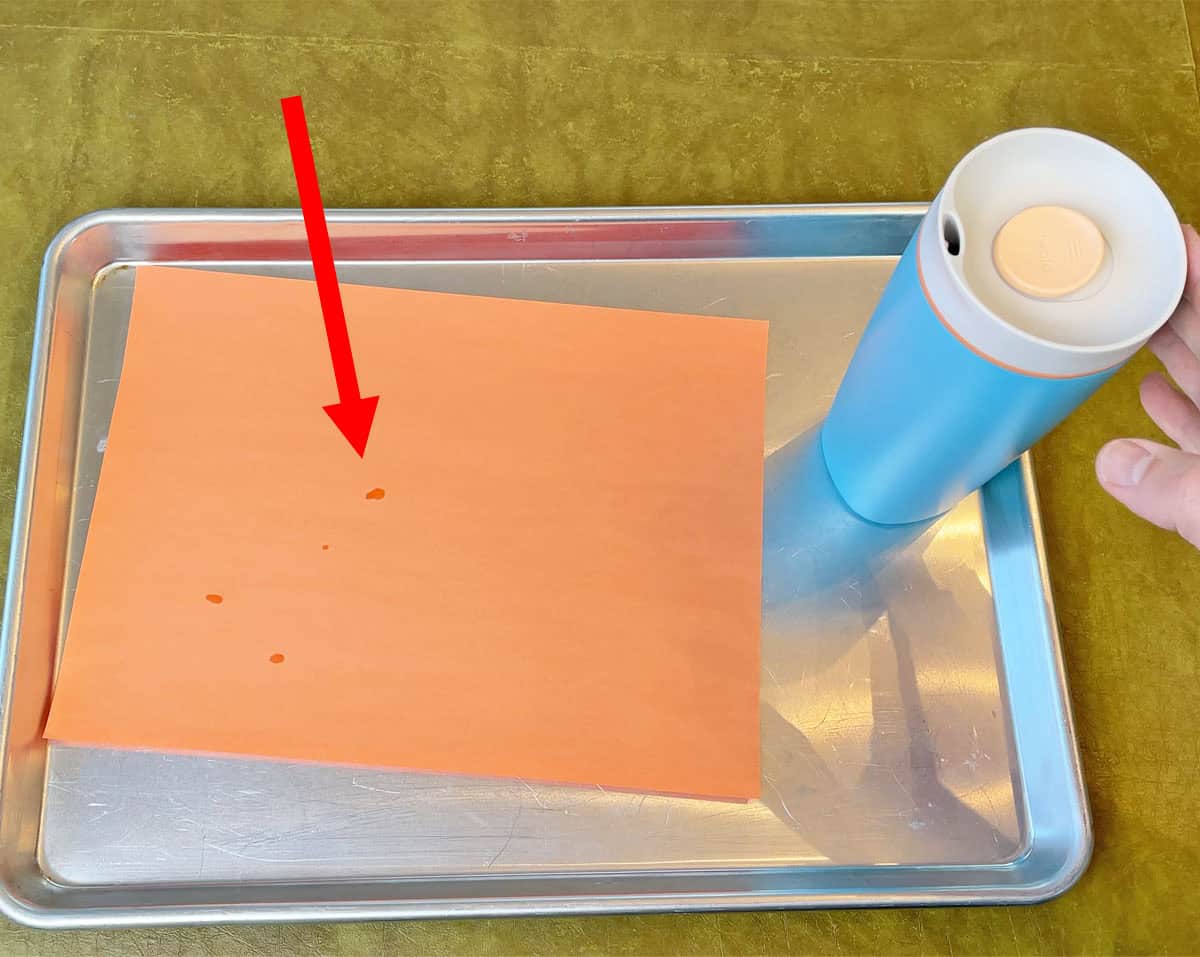
Leak performance was mostly good, but not perfect. I saw a few small droplets when shaking it upside down and tipping it over. It is close to leak proof, but I would not trust it fully in a bag.
Flow rate was on the slower side. It took 16 seconds to empty 16 ounces, which reduces the risk of spills or burns when drinking very hot liquids. It fits standard cupholders, is easy to operate with one hand, and held up well in the drop test with only a small dent on the body and no damage to the lid.
Thermos Stainless King
The Thermos Stainless King uses a flip-up spout that can be opened from either side. It’s easy to operate with one hand, but the lid design is overly complicated.
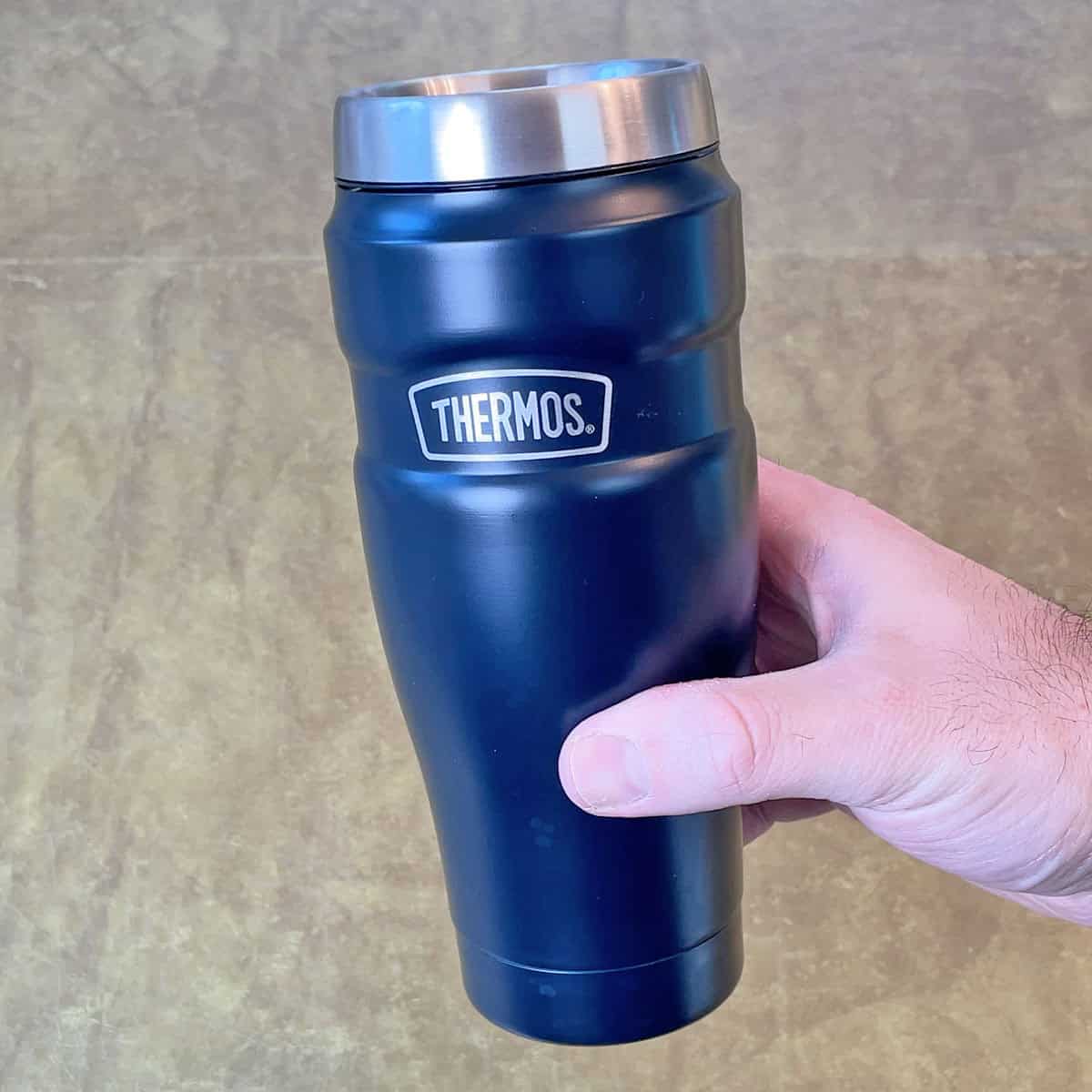
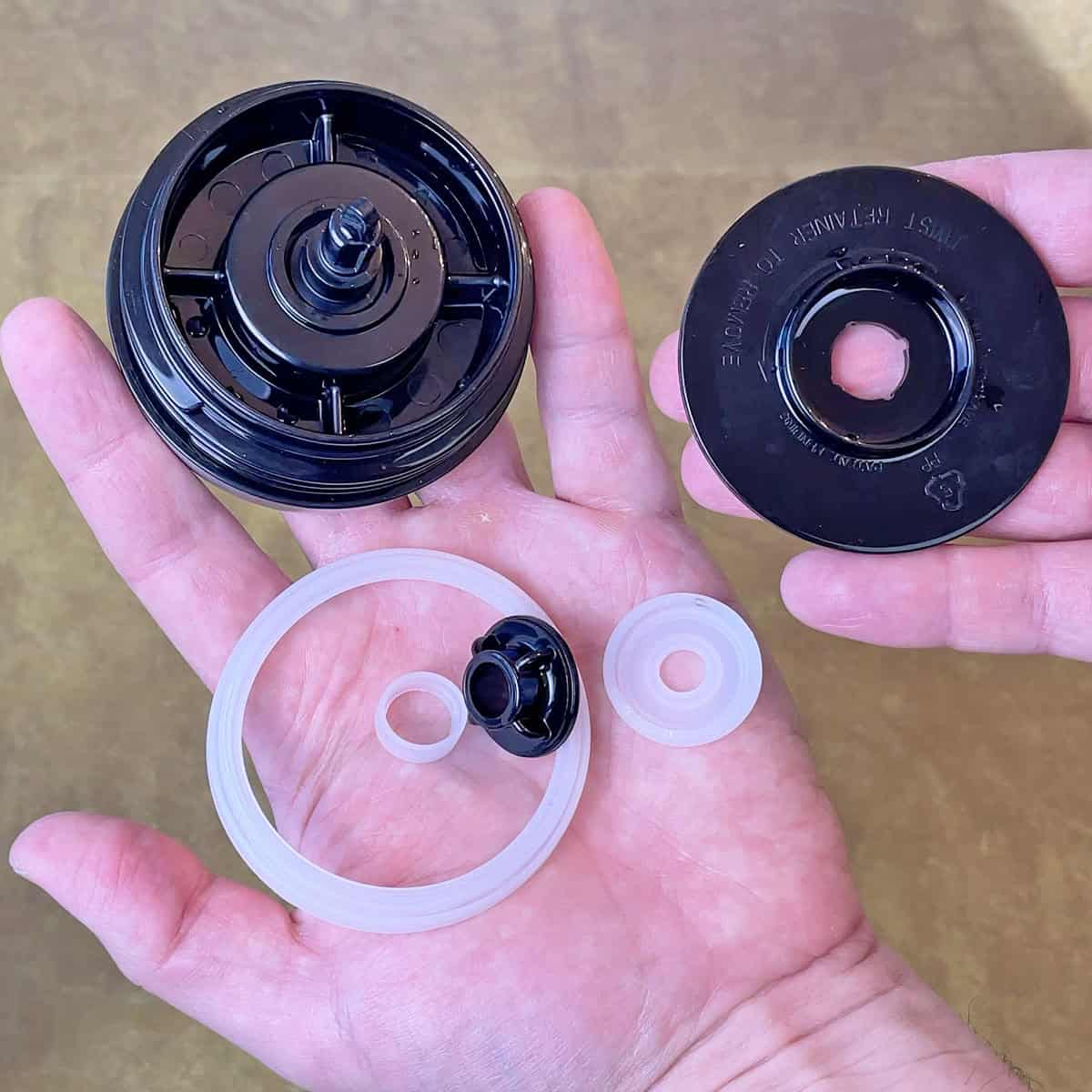
There are six separate pieces in total, including three rubber gaskets, and it’s easy to misalign or reinstall a gasket incorrectly. That makes cleaning slower and increases the chance of long-term seal issues if a gasket gets lost or damaged.
Hot insulation performance was squarely mid-pack. In the outdoor hot test starting at 190°F, it measured 168°F after 1 hour, 151°F after 3 hours, 123°F after 6 hours, and 73°F after 15 hours. Indoors, it performed better, holding 179°F at 1 hour and 126°F at 15 hours. These results place it around the middle compared to the rest of the group, with solid early heat retention but a noticeable drop by the longer intervals.
Cold retention started strong but faded over time. Beginning at 40°F, it measured 41°F at 1 hour, 45°F at 3 hours, 46°F at 6 hours, 53°F at 12 hours, and 59°F at 24 hours. That put it 7th at 12 hours and mid-pack by 24 hours, meaning it does not hold cold as long as the top performers.
Leak resistance was very good. No liquid escaped when shaken upside down, and only a single small droplet appeared when tipped over, likely from water trapped in the lid rather than an active leak. Flow rate was moderate, emptying 16 ounces in 15 seconds, which feels controlled without being frustrating.
In the drop test, it picked up small dents near the bottom and rim but continued to function normally, with no impact on the lid seal or spout operation. The biggest drawback remains the lid design. If easy cleaning and simplicity matter to you, this is one of the more frustrating options to live with long term.
Fellow Carter Move
The Fellow Carter Move mug has a screw-on lid with a removable splash guard instead of a traditional spout. The splash guard does a good job preventing liquid from sloshing out while walking and keeps ice from hitting your mouth as you drink. Because there’s no flow restrictor, liquid pours more like an open cup, so you need to be cautious with very hot drinks.
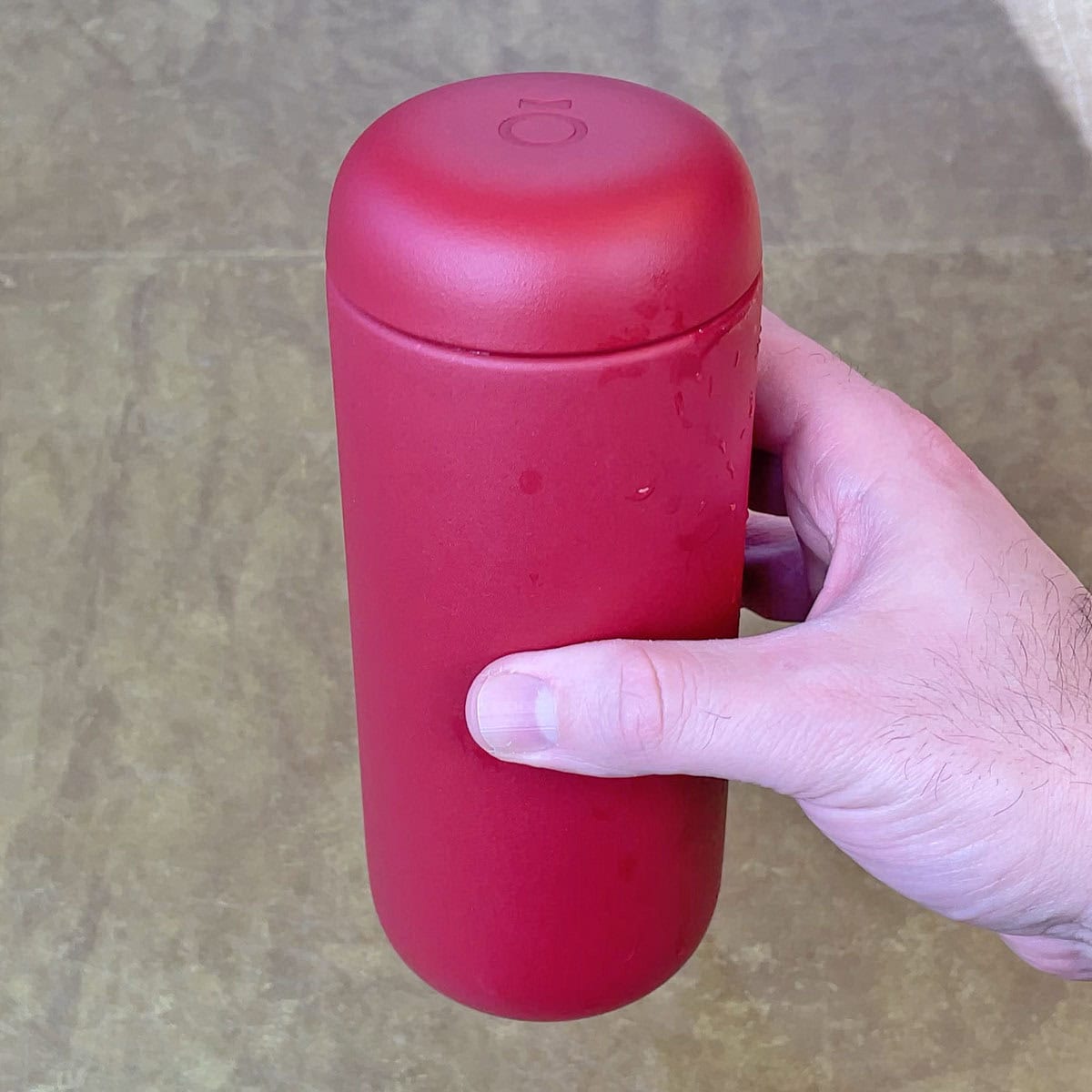
The lid is simple from a cleaning standpoint. There is only one internal piece to remove, which keeps maintenance quick. The tradeoff is usability. Since the lid twists on and off and has no button or lever, it cannot be opened easily with one hand, especially if the lid tightens itself over time.
Insulation performance was excellent. In the outdoor hot test starting at 190°F, it held 180°F after 1 hour, 167°F after 3 hours, 144°F after 6 hours, and 99°F after 15 hours. Indoors, it performed even better, measuring 183°F at 1 hour and 139°F at 15 hours. Across every hot interval, it ranked second only to Zojirushi.
Cold retention was also strong. Starting at 40°F, it measured 42°F at 1 hour, 44°F at 3 hours, 46°F at 6 hours, 50°F at 12 hours, and 57°F at 24 hours. That placed it in the upper group throughout the test and fourth overall at 24 hours, well ahead of the weaker performers.
Leak performance was flawless. No water escaped during shaking, tipping, or inversion. It fits standard cupholders, and in the drop test it only picked up a small dent near the bottom with minor paint chipping, with no impact on function.
The major downside is the lid. During the cold tests, the lid repeatedly became extremely difficult to remove. Even without overtightening, it felt almost vacuum-sealed and required significant force to break free.
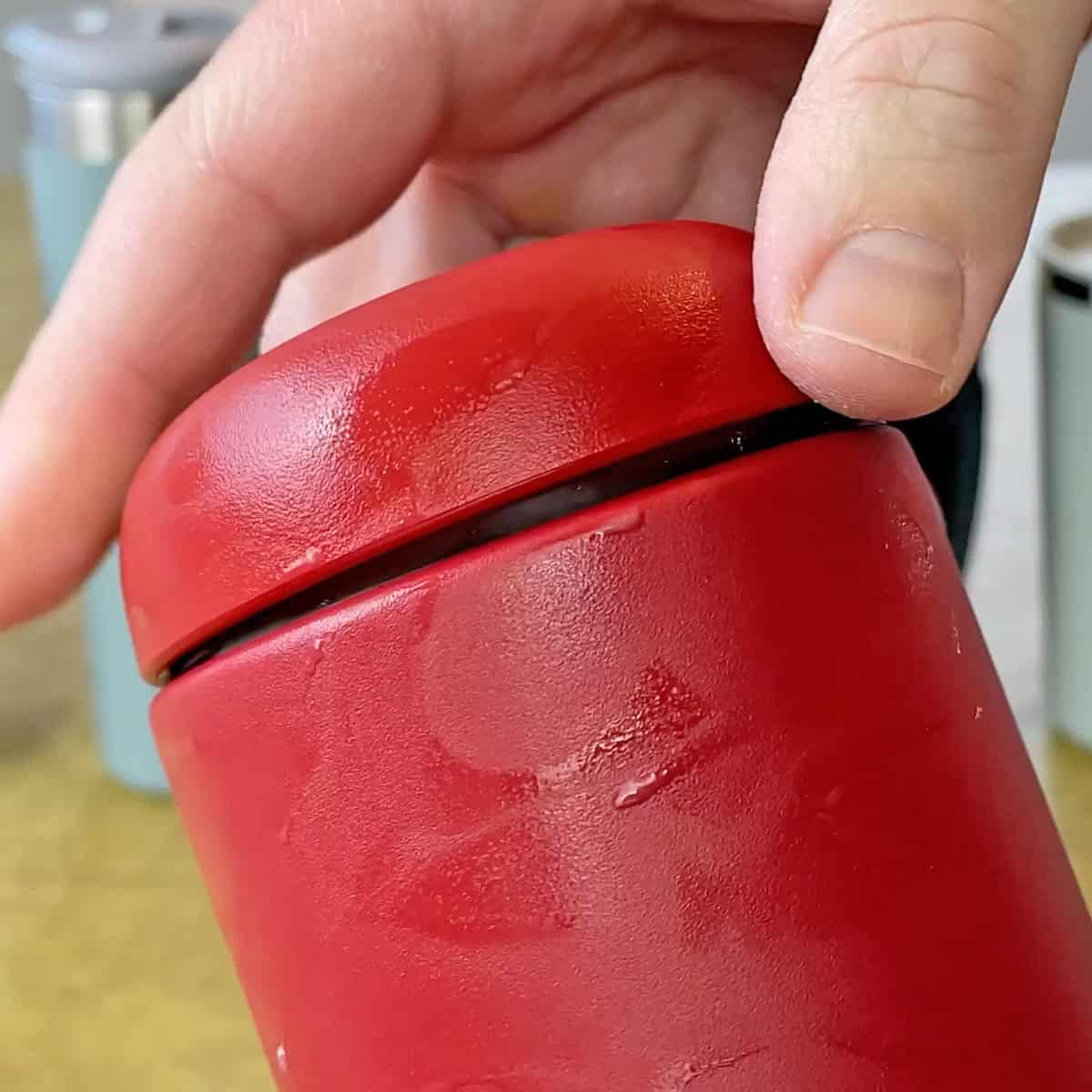
This appears to be a common issue with this design and is a serious usability concern.
Contigo West Loop
The Contigo West Loop uses an AutoSeal lid that opens only while you press the button and closes automatically the moment you release it. That design makes it one of the easiest mugs in the group to use with one hand, and you can lock the button to prevent accidental opening in a bag.
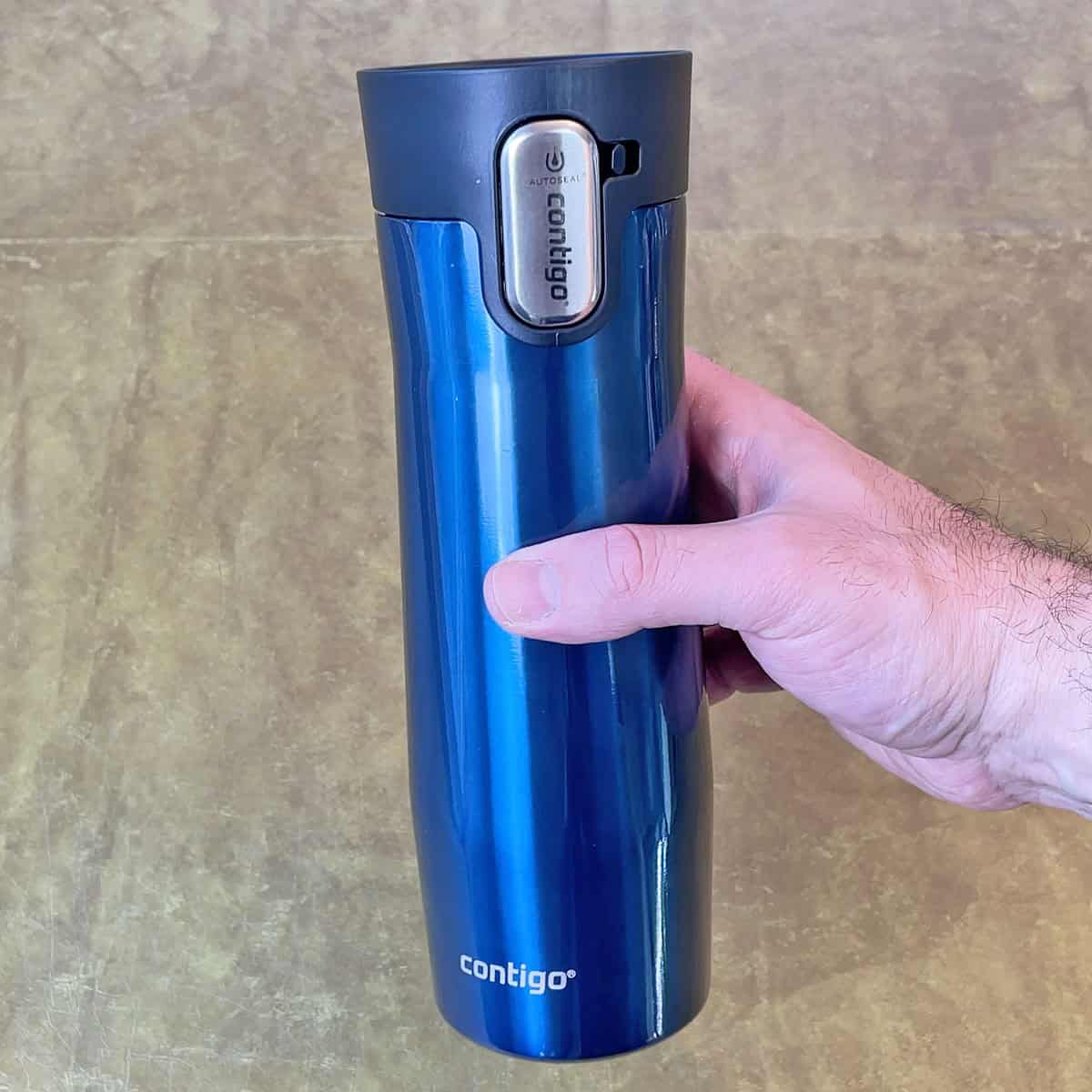
The lid is also straightforward to clean. There’s a single ring gasket to remove, and the internal channel opens with one tab.
Insulation performance was consistently strong. In the outdoor hot test starting at 190°F, it held 174°F after 1 hour, 158°F after 3 hours, 133°F after 6 hours, and 89°F after 15 hours. Indoors, it performed even better, measuring 183°F at 1 hour and 132°F at 15 hours. Across all hot intervals, it routinely landed around third place, trailing only the top two performers.
Cold retention was one of its strongest areas. Starting at 40°F, it measured 41°F at 1 hour, 44°F at 3 hours, 45°F at 6 hours, 50°F at 12 hours, and 56°F at 24 hours. At both 12 and 24 hours, it was tied for second place, outperforming Stanley, Thermos, Simple Modern, YETI, and Hydro Flask. That kind of consistency matters if you need a drink to stay cold all day.

Flow rate was slow and controlled. It took 17 seconds to empty 16 ounces, making it the second slowest in the group. That reduces splash and burn risk when sipping very hot drinks and feels intentional rather than restrictive.
Leak resistance was excellent. No water escaped when shaken upside down, and only a small splatter appeared when tipped over. In the drop test, it picked up a small dent near the bottom with minor paint chipping, but the lid remained fully functional with no impact on sealing or button action.
It fits standard cupholders, but the tall and narrow shape makes it easier to tip over than wider mugs. Overall, it combines strong insulation, excellent one-handed usability, and reliable sealing, with stability being the main tradeoff.
Stanley AeroLight Transit Bottle
The Stanley AeroLight Transit Bottle uses a flip-up drinking flap that opens easily with one hand. Day-to-day use is straightforward, but cleaning is frustrating. The main gasket removes easily, while the smaller gasket under the lid is extremely tight and difficult to reinstall. Getting it seated correctly can take several minutes, which makes routine cleaning a chore.
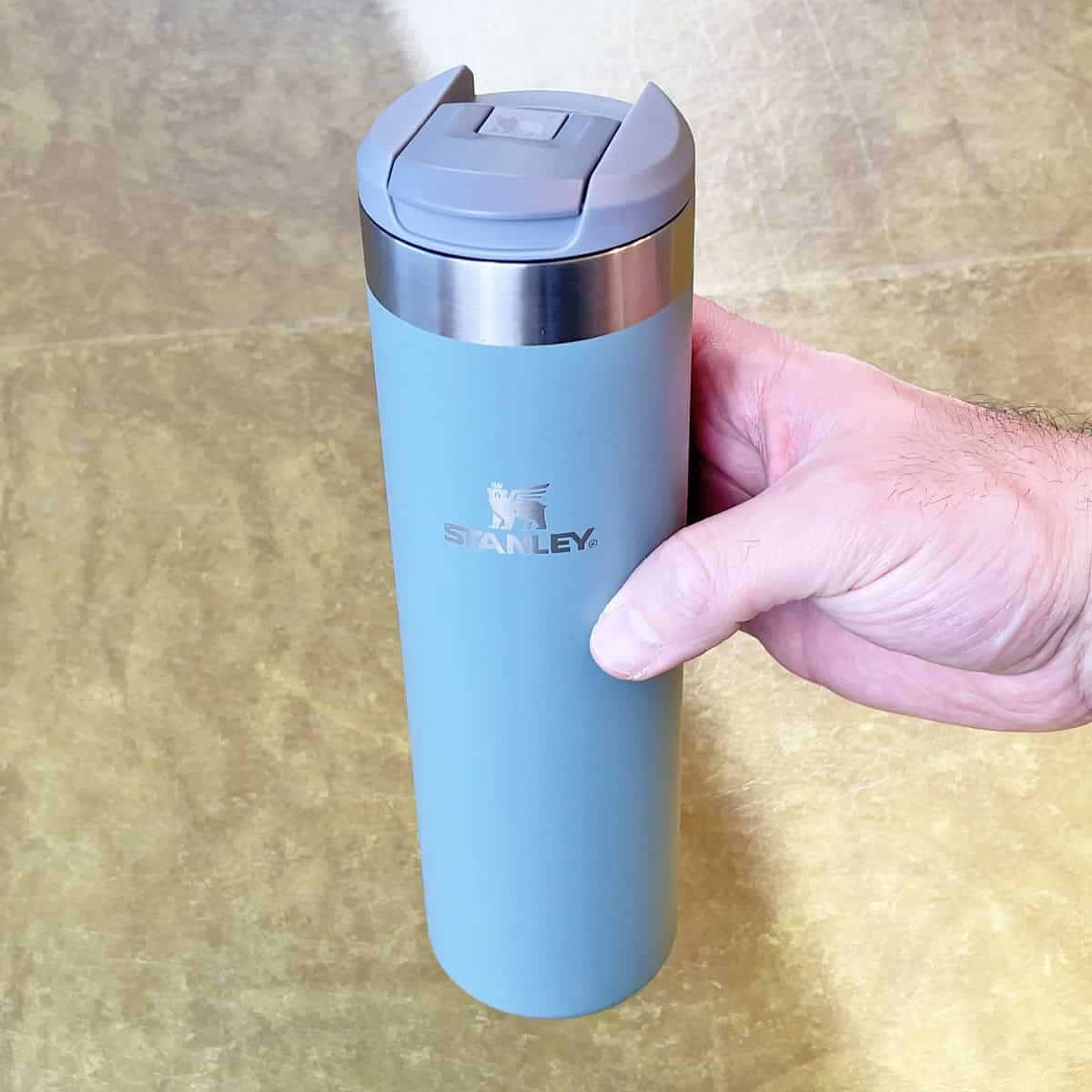
Hot insulation performance landed in the middle of the pack. In the outdoor hot test starting at 190°F, it held 173°F after 1 hour, 156°F after 3 hours, 131°F after 6 hours, and 87°F after 15 hours. Indoors, it measured 182°F at 1 hour and 130°F at 15 hours. These results are respectable, but it loses ground after the 3-hour mark compared to the top performers.
Cold retention was much stronger. Starting at 40°F, it measured 41°F at 1 hour, 44°F at 3 hours, 46°F at 6 hours, 50°F at 12 hours, and 56°F at 24 hours. At both 12 and 24 hours, it was tied for second place, making it one of the better options if cold performance is your priority.
Leak performance was solid. No water escaped when shaken upside down, and only a single tiny droplet appeared when tipped over, likely from water trapped in the lid rather than a seal failure.
It fits standard cupholders, but like other tall and narrow mugs, it can tip over more easily if bumped.
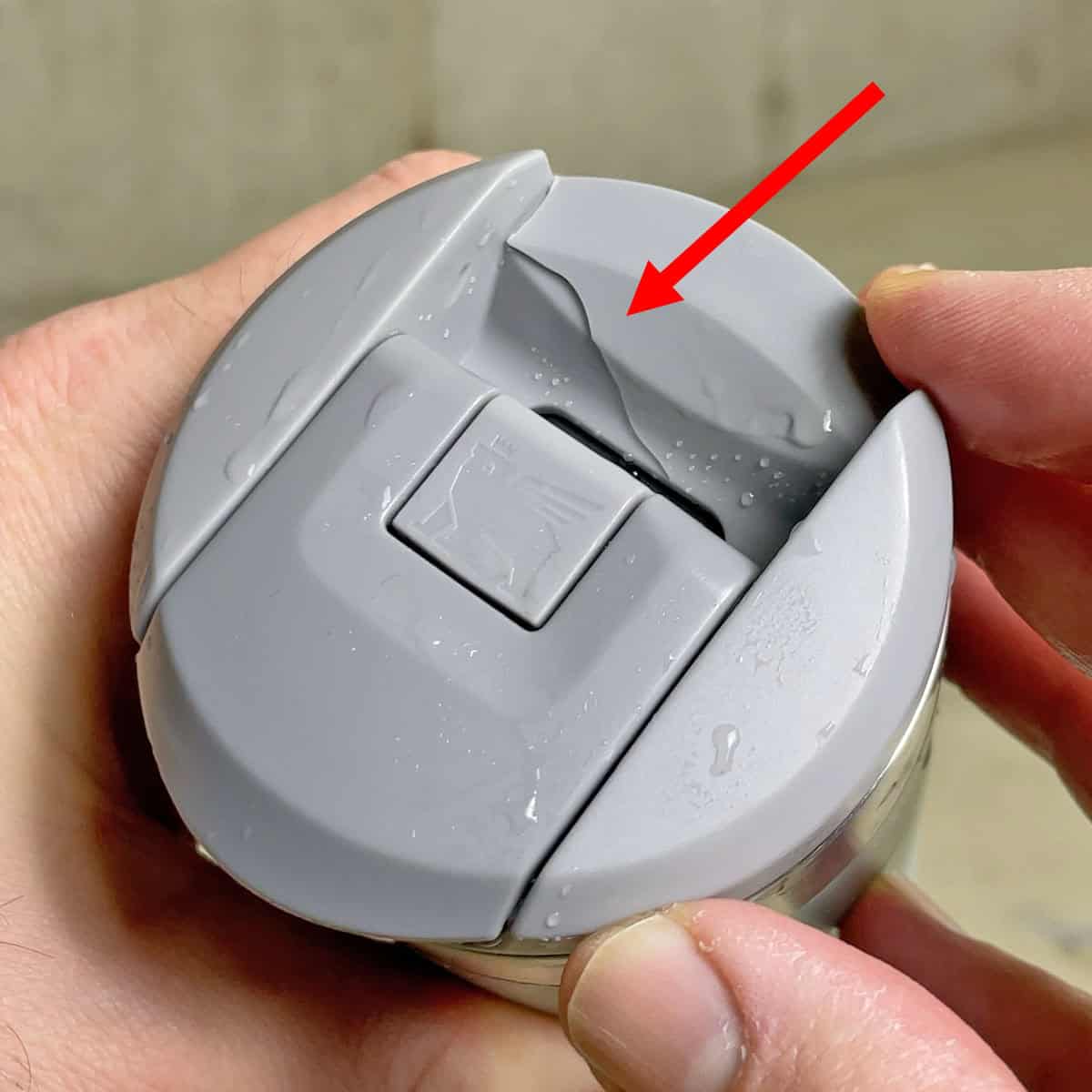
The biggest concern is durability. In the drop test, the plastic lid cracked badly when it hit the concrete. It was the only mug in the group to suffer functional damage from the drops. I contacted Stanley to ask whether this type of damage is covered under warranty, and it is not, which is a serious downside if you expect your mug to survive occasional accidents.
YETI Rambler
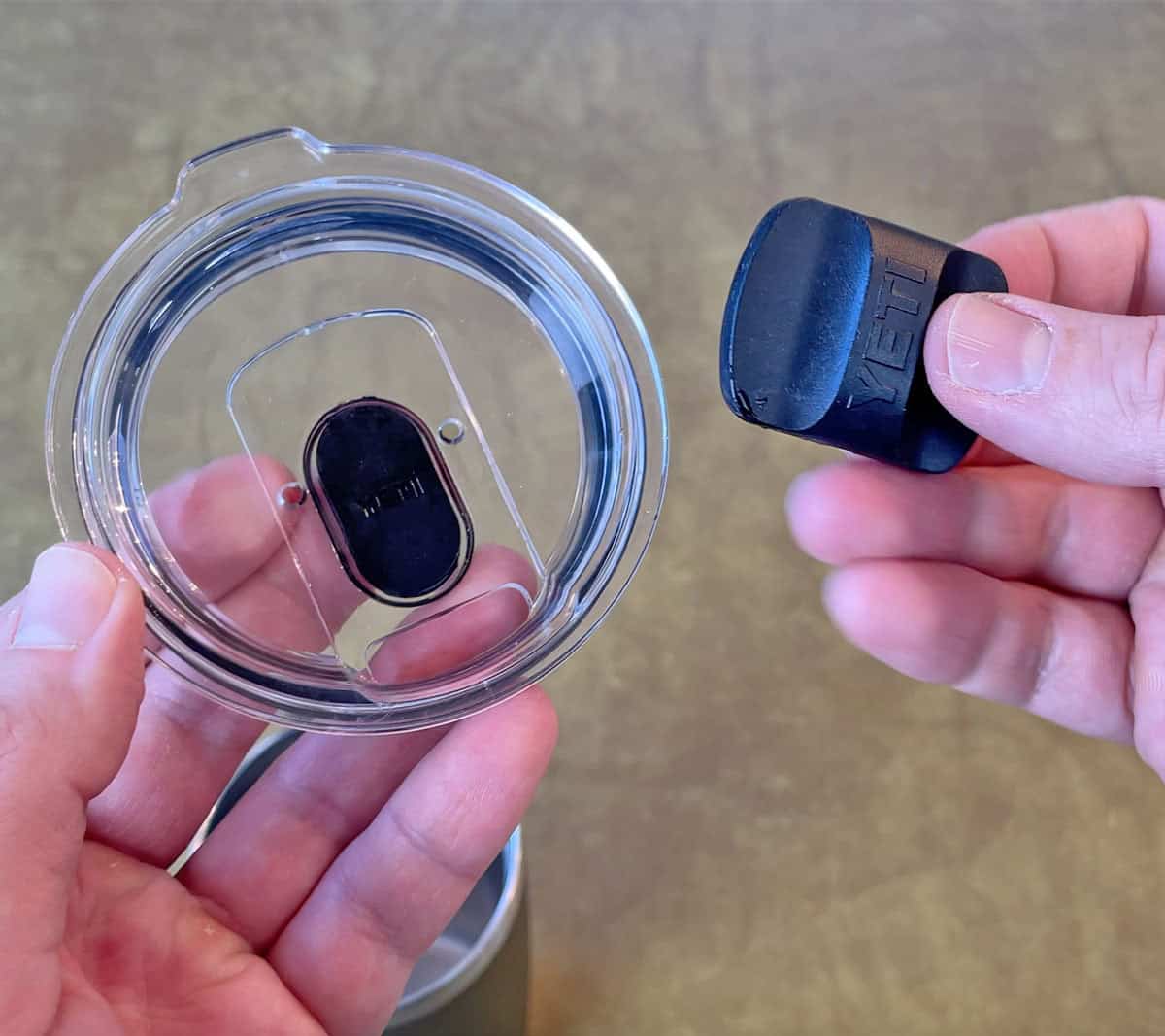
The YETI Rambler has a press-on lid with a magnetic slider that opens and closes the drinking opening.
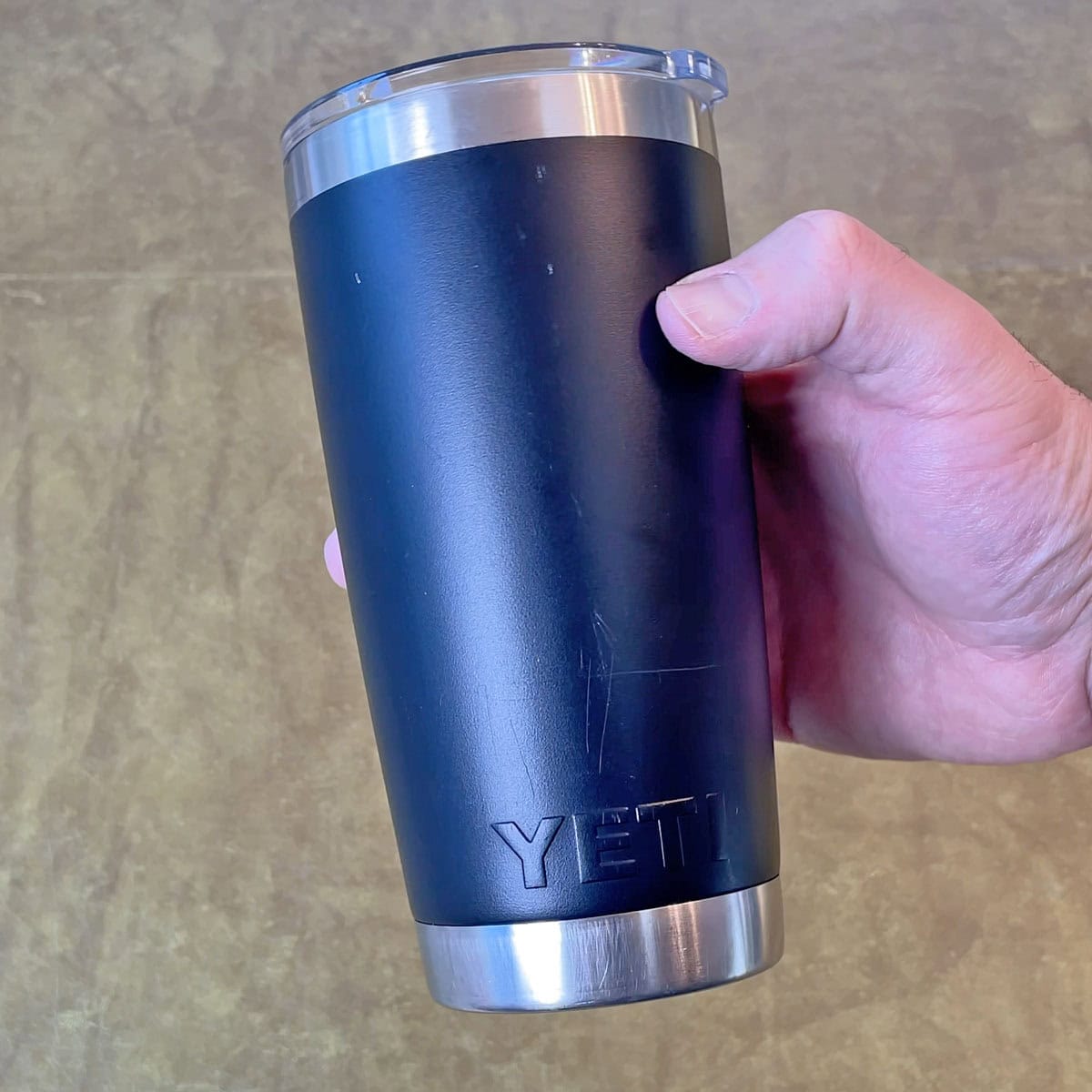
The magnet pops off easily for cleaning, and because the lid does not twist on, it is quick to remove and reinstall.
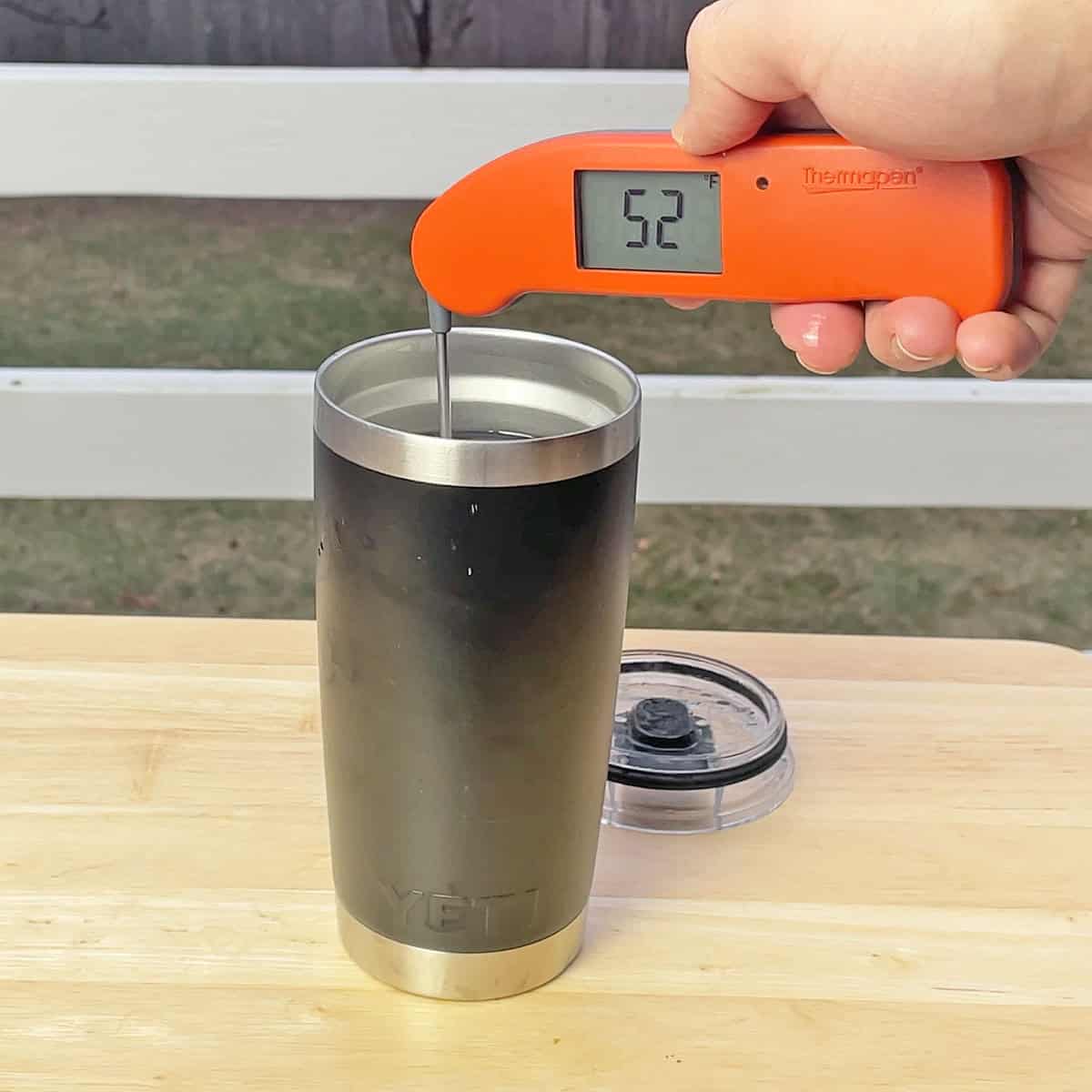
Insulation performance was near the bottom of the group. In the outdoor hot test starting at 190°F, it dropped to 158°F after 1 hour, 132°F after 3 hours, 97°F after 6 hours, and 52°F after 15 hours. Indoor results followed the same trend, finishing at 103°F after 15 hours. Across most hot intervals, it ranked seventh or eighth.
Cold retention showed a similar pattern. Starting at 40°F, it measured 41°F at 1 hour, 46°F at 3 hours, 48°F at 6 hours, 54°F at 12 hours, and 62°F at 24 hours. The early readings were tightly clustered across all mugs, but by 12 and 24 hours it had clearly warmed faster than most, ranking near the bottom.
Leak performance was weak. A small amount of water leaked out when shaken upright, and significantly more escaped when shaken upside down or tipped over. This lid is better described as splash resistant rather than leak proof.
Flow rate was fast due to the wide opening. It emptied 16 ounces in 8 seconds, making it one of the fastest in the test. That can be convenient for cold drinks, but it increases the risk of spills or burns with very hot liquids. It fits standard cupholders and is very easy to use with one hand.
Durability was excellent for the cup itself. After the drop tests, there were no noticeable dents. However, the lid popped off on both drops, and the magnetic slider flew off when it hit the ground. Nothing broke, but it is something to be aware of if you tend to drop your mug.
Zojirushi Stainless Steel Mug
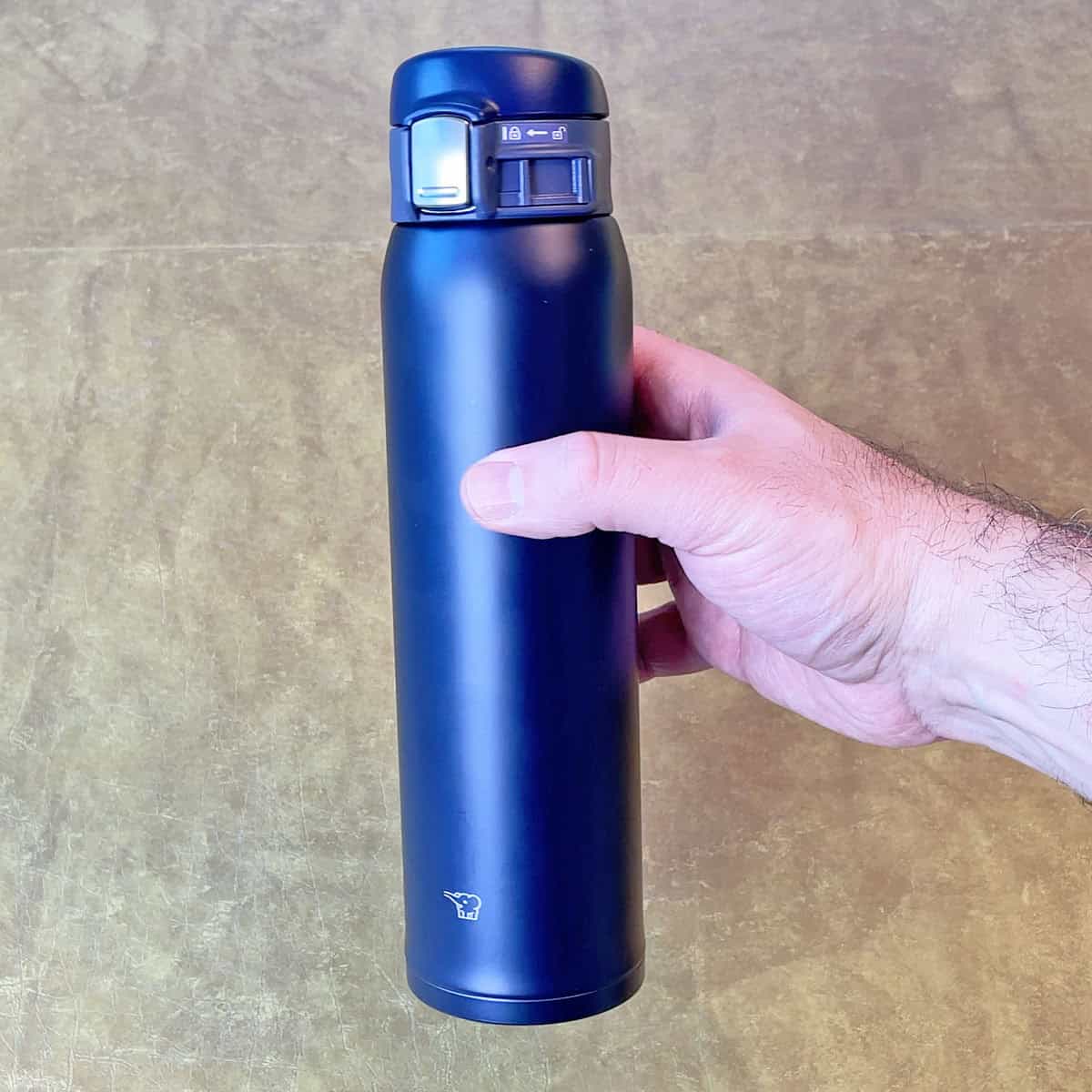
The Zojirushi Stainless Steel Mug has a one-touch button that flips the lid open and can be locked to prevent accidental opening in a bag. That design makes it very easy to open and close with one hand, and the button placement is intuitive with clear tactile feedback.
The lid comes apart fully for cleaning. The mouthpiece pops out, and both gaskets are removable. The smaller gasket under the lid takes a bit of patience to reinstall, but once it’s aligned properly, it seals well and does not feel fragile.
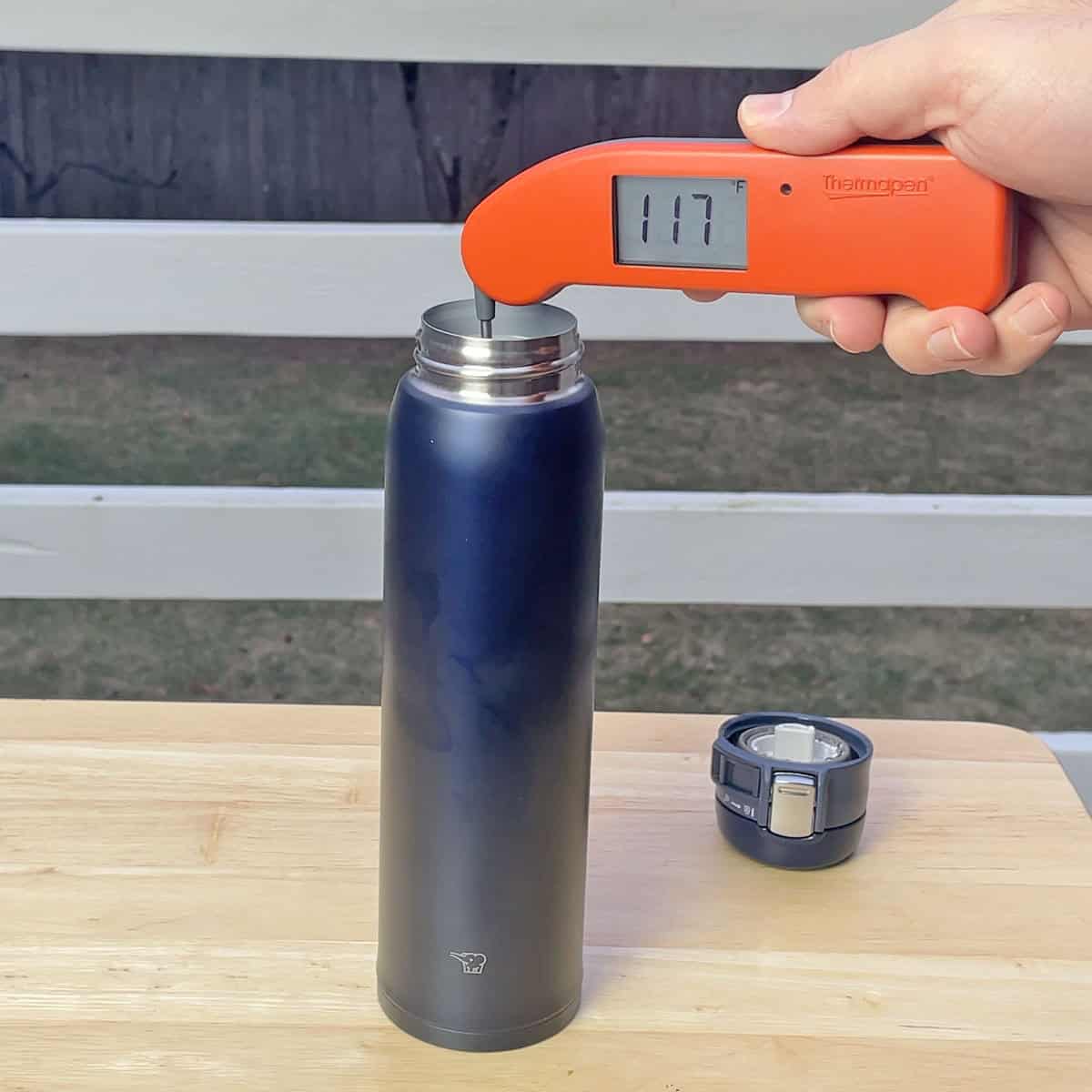
Insulation performance was the best by far. In the outdoor hot test starting at 190°F, it held 182°F after 1 hour, 173°F after 3 hours, 155°F after 6 hours, and 117°F after 15 hours. The next closest mug at 15 hours was at 99°F, while the worst performer had dropped all the way to 46°F. Indoors, it performed even better, finishing at 152°F after 15 hours. It led the field at every single hot interval.
Cold retention was equally dominant. Starting at 40°F, it measured 41°F at 1 hour, 42°F at 3 hours, 43°F at 6 hours, 47°F at 12 hours, and just 51°F at 24 hours. That was the coldest reading at every interval, including the full-day test, and clearly separated it from the rest of the group over time.

Leak performance was perfect. No water escaped during shaking, tipping, or inversion. In the drop test, it picked up only a very small dent on the body, and the lid showed no damage or loss of function.
Flow rate was the slowest of all the mugs tested. It took 26 seconds to empty 16 ounces, which is not ideal if you want to drink quickly, but it significantly reduces splash and burn risk when sipping very hot liquids.
It fits standard cupholders, though the tall and narrow shape makes it slightly more prone to tipping over if bumped.
Bottom Line: Which Travel Mug Is the Best?
After testing all nine mugs across insulation, leaks, durability, flow rate, and everyday usability, a clear ranking emerged.
My top recommendation is Zojirushi. It delivered the best insulation results by a wide margin, holding 117°F after 15 hours outdoors and staying at just 51°F after 24 hours in the cold test. It did not leak, survived the drop test with only a minor dent, is easy to clean, and is one of the easiest mugs to operate with one hand. If performance is your priority, this one stands above everything else.
Contigo is the next best option. It consistently ranked near the top in both hot and cold retention, tying for second place at 15 and 24 hours in the cold test. The AutoSeal button is excellent for one-handed use, leak resistance was strong, and the slower flow rate makes it comfortable for hot drinks.
Owala is a solid middle-ground choice. It was easy to use and clean, held up well in the drop test, and had a controlled flow rate. Insulation was weaker than the top performers, but still acceptable if ergonomics matter more to you than maximum heat retention.
YETI deserves a mention for durability. The body showed almost no damage in the drop test, but insulation ranked near the bottom, and the lid leaked when tipped or inverted. It works best as a desk or car mug rather than something you carry in a bag.
The mugs I would avoid are Fellow, because the lid repeatedly got stuck and was difficult to remove, Thermos, because the lid is overly complicated and frustrating to clean, Stanley, because the lid cracked and suffered functional damage in the drop test, Simple Modern, because it leaked despite being marketed as leak proof, and Hydro Flask, because it had the weakest insulation performance in both hot and cold testing.
If you want the shortest answer, Zojirushi is the clear winner, with Contigo close behind depending on how much you value one-handed operation versus maximum insulation.
Use the links below to read more reviews and compare the current prices of each mug:
- Zojirushi Stainless Steel Mug (Amazon)
- Contigo West Loop Travel Mug (Amazon)
- Fellow Carter Move Mug (Amazon)
- Stanley AeroLight Transit Bottle (Amazon)
- Thermos Stainless King (Amazon)
- Owala SmoothSip Slider (Amazon)
- YETI Rambler Tumbler (Amazon)
- Hydro Flask All Around Tumbler (Amazon)
- Simple Modern Voyager (Amazon)
Related Topics
- Best Water Bottle? I Tested Stanley, Owala, Yeti, Hydro Flask, and More
- Owala vs. Hydro Flask: Which Water Bottle Is Better?
- Owala vs. Yeti: Which Water Bottle Is Better?
- Owala FreeSip vs. FreeSip Sway: Key Differences & Test Results
- Berkey vs. Alexapure Water Filters: 10 Key Differences
- Berkey vs. Brita Water Filters: 10 Differences & How to Choose
- Epic Water Filters Review: The Pros & Cons You Need to Know
- ZeroWater vs. PUR: Which Water Filter Pitcher Is Better?
- Things to Buy for a New House (The Complete Checklist)
- How to Lower Your Water and Sewer Bill (30 Easy Ways)
- What Is a Sewer Bill? How It’s Calculated & Why It’s So High
- How Much Water Does a Dishwasher Use? (25 Real Examples)
- How Much Water Does a Washing Machine Use? (With 28 Real Examples)
- 7 Ways to Fix Standing Water in the Bottom of Your Dishwasher
