

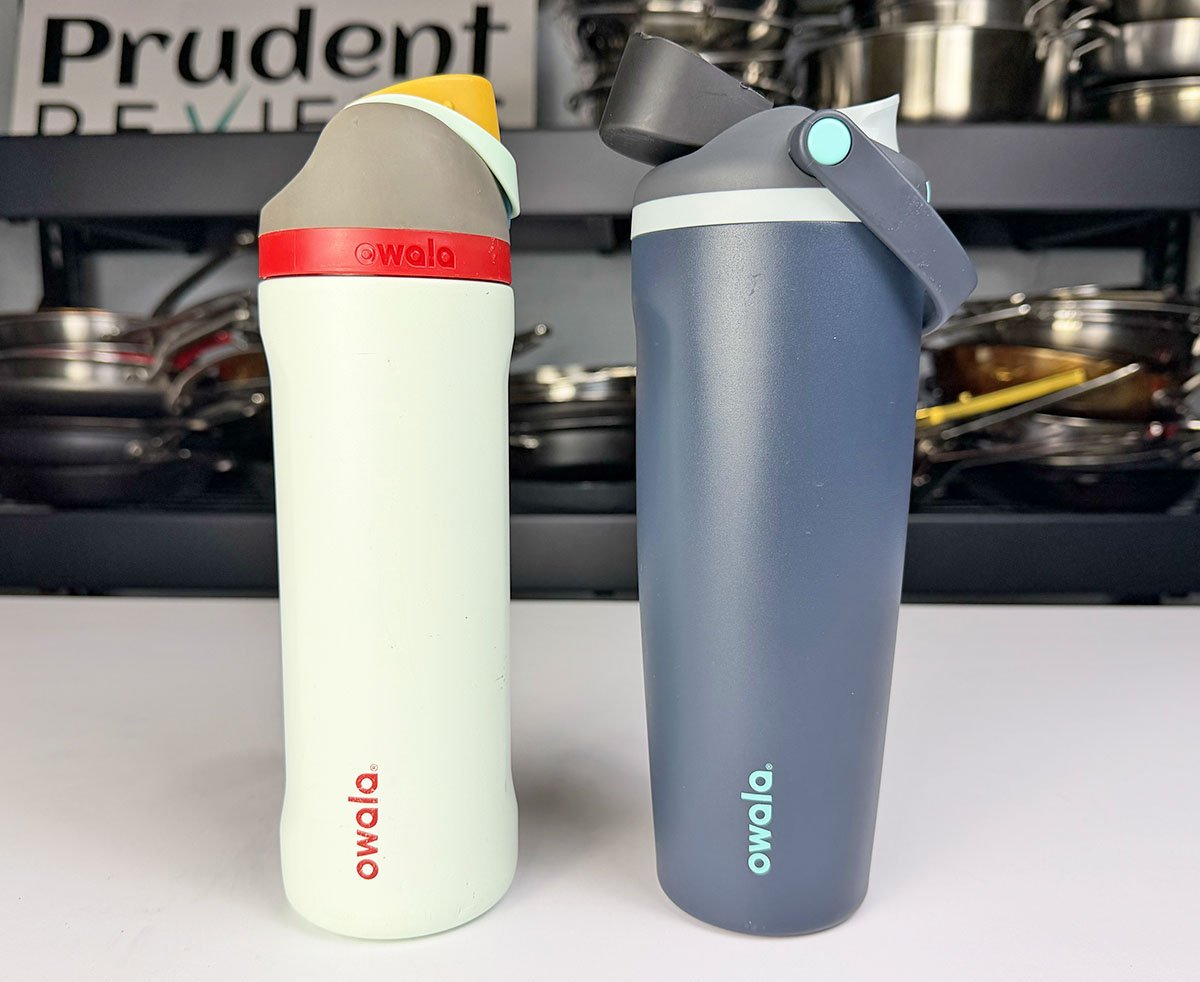
Are you shopping for a new water bottle but can’t decide between Owala FreeSip and FreeSip Sway?
Both bottles feature Owala’s popular FreeSip lid that lets you sip from a straw or drink from a spout, along with one-handed button operation and fun color options. At first glance, the Sway looks like a minor update with a trendier tumbler shape. But after testing both bottles side by side, I discovered they’re surprisingly different in ways that actually matter.
In this comparison of Owala FreeSip vs. FreeSip Sway water bottles, I put both through insulation tests, leak tests, and drop tests to see how they actually perform. I also used both daily for months to compare the design differences in real life.
Key Takeaways
The FreeSip Sway has several meaningful improvements over the original FreeSip. The larger handle is more comfortable to carry, the dedicated slider lock is more convenient than the handle-based system, and the tapered base fits better in smaller cupholders. The wider mouth opening makes cleaning easier since you can fit your hand inside instead of needing a bottle brush.
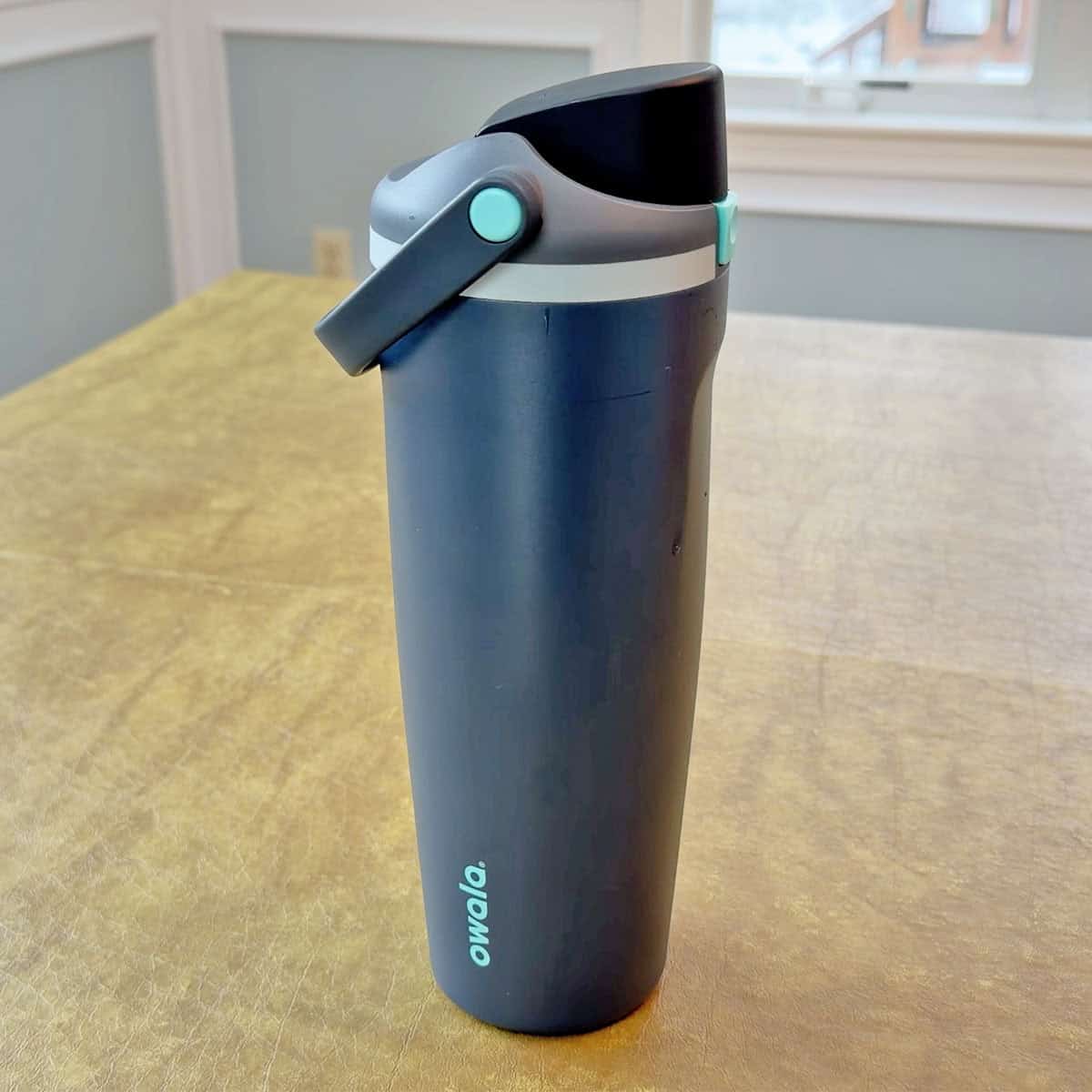

Both bottles perform nearly identically when it comes to insulation, ranking in the middle of the pack compared to brands like YETI, CamelBak, and S’well. Both keep water cold throughout the workday, but neither is the best option if insulation is your top priority.
The FreeSip Sway’s lid broke completely when I dropped it on the lid from waist height, while the original FreeSip survived with only cosmetic damage. The Sway also has a leak issue when the slider lock isn’t engaged. If it tips onto the button, the lid pops open and water spills out. Despite these concerns, the Sway’s design improvements make it the better choice for most people unless you frequently drop your bottle or forget to lock the lid.
Both bottles are available on Amazon (link to FreeSip, link to FreeSipSway) where you can read thousands of reviews and compare current prices.
Use the links below to navigate the comparison:
- Comparison Chart
- Handle and Portability
- Lock Mechanism
- Bottle Shape and Base
- Ease of Cleaning
- Button and Spring Design
- Insulation Test
- Leak Test
- Drop Test
- Bottom Line: Should You Buy the Owala FreeSip or FreeSip Sway?
Comparison Chart
| Feature / Test | Owala FreeSip | Owala FreeSip Sway |
|---|---|---|
| Model | 24oz FreeSip | 30oz FreeSip Sway |
| Price | $$ (Amazon) | $$ (Amazon) |
| Capacity | 24 oz | 30 oz |
| Size Options | 16oz, 24oz, 32oz, 40oz | 30oz, 40oz |
| Weight | 0.8 lb | ~0.96 lb (20% heavier) |
| Height | 10.68″ | 10.59″ |
| Base Diameter | 3.1″ | 2.77″ |
| Mouth Opening | 2.75″ | 3.2″ |
| Handle Type | Small 2-finger loop | Large full-hand grip |
| Lock Mechanism | Handle doubles as lock | Dedicated slider switch |
| Thread Design | External threads | Internal threads |
| Cold Water (Start) | 43°F | 43°F |
| Cold Water (6 Hours) | 48°F | 47°F |
| Cold Water (12 Hours) | 52°F | 50°F |
| Cold Water (24 Hours) | 57°F | 57°F |
| Shake Test (Leak) | Passed | Passed |
| Tip Test (Leak) | Failed (droplets leaked) | Passed when locked, failed when unlocked |
| Drop Test (Side) | Minor cosmetic damage | Minor cosmetic damage |
| Drop Test (Lid) | Survived with scrapes | Lid broke, no longer closes |
Handle and Portability
The first thing you notice when comparing these bottles is the handle. The original FreeSip has a small carrying loop that only fits two fingers, and honestly, it’s not very comfortable. I found myself carrying it by gripping the bottle body instead.
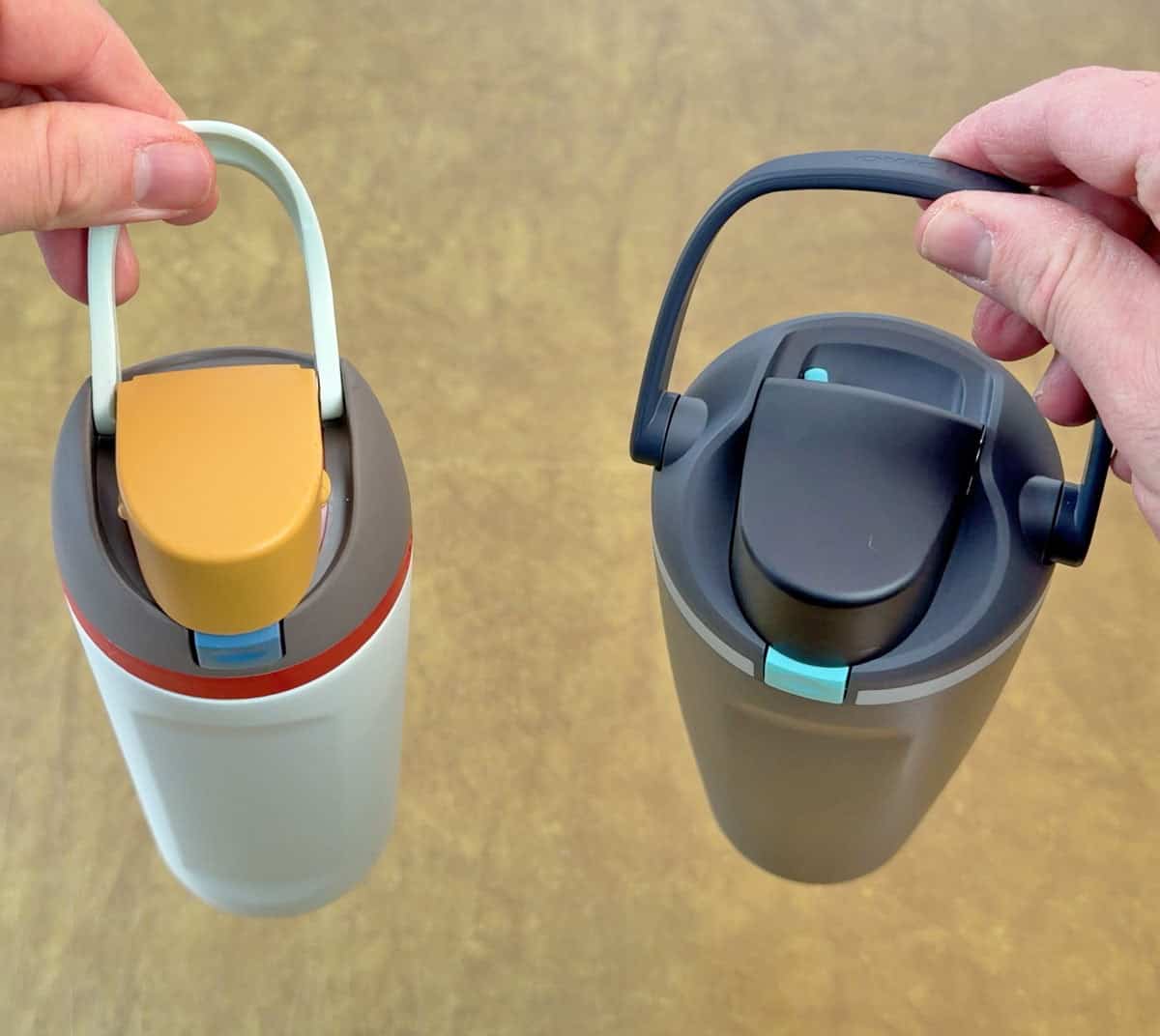
The Sway has a much larger handle that fits your entire hand, which makes it way more comfortable to carry around, especially when the bottle is full and heavy.
Lock Mechanism
The lock mechanism changed too. On the original FreeSip, you flip the handle down over the button to lock it. It works fine, but you can’t carry the bottle by the handle when it’s locked.
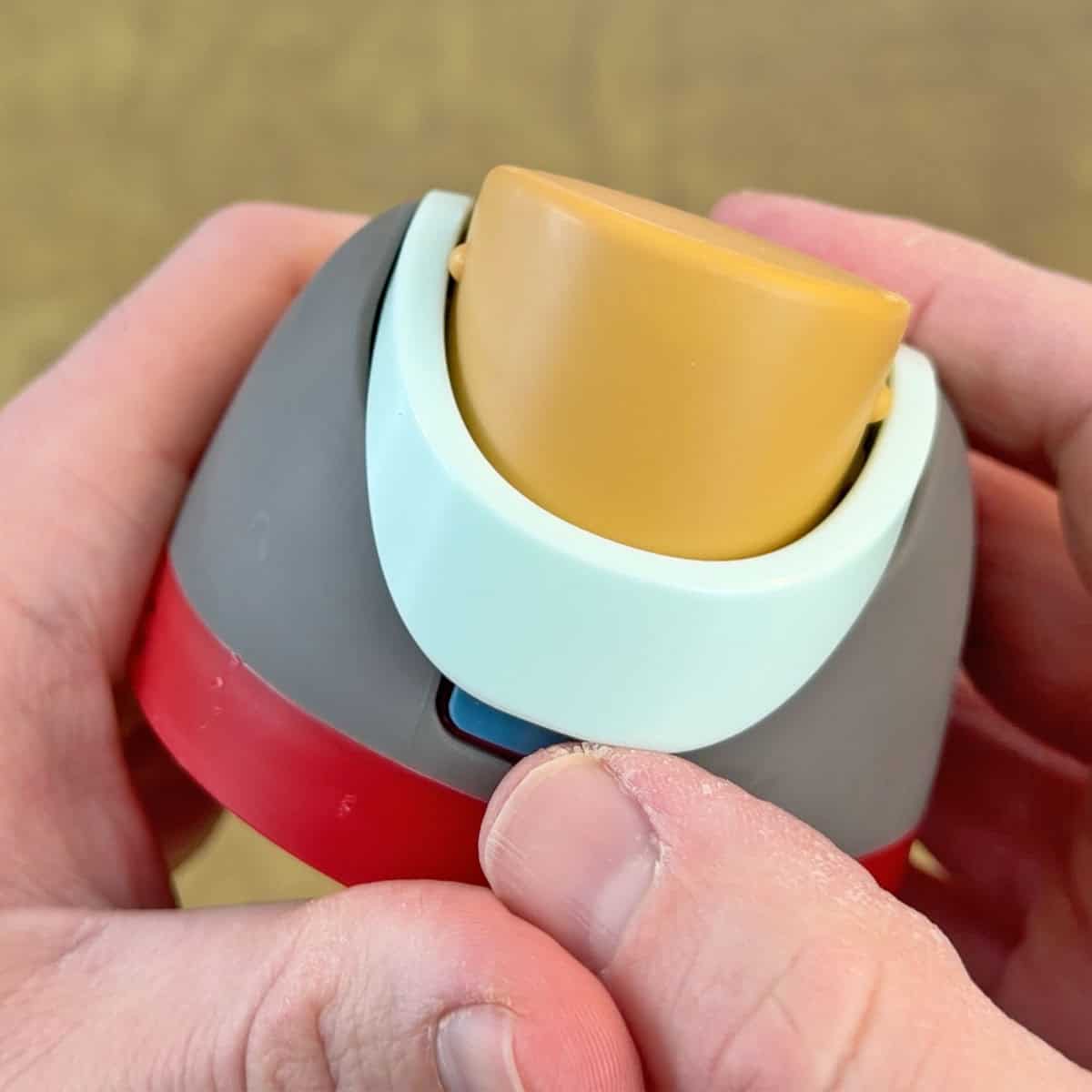
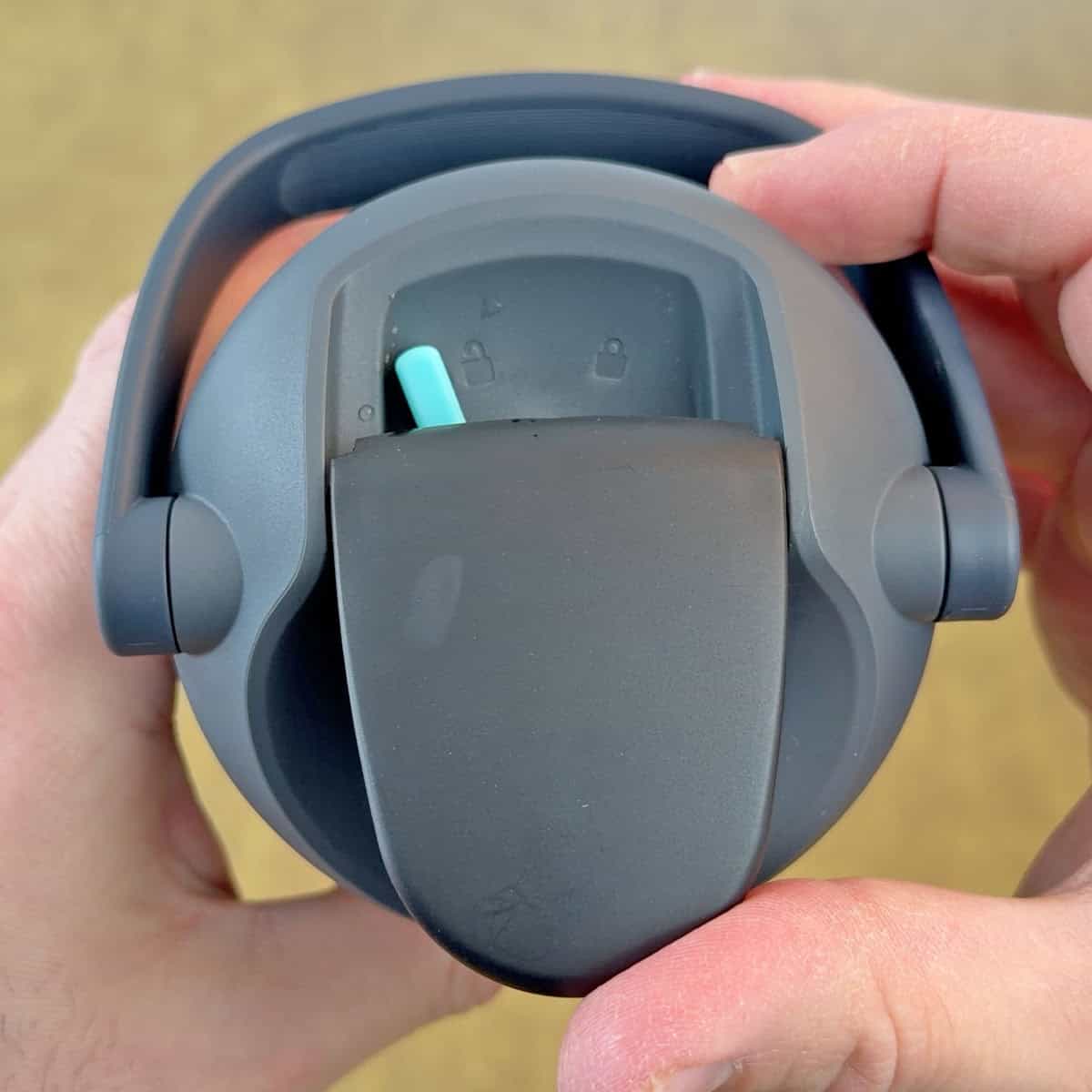
The Sway has a small slider switch behind the flip cover that locks and unlocks the lid. This means you can lock it and still use the handle, or clip it to a bag without worrying about accidentally pressing the button.
Bottle Shape and Base
The FreeSip has straight vertical walls like a traditional water bottle. The Sway tapers down toward the bottom like a tumbler, which makes the base diameter much smaller at 2.77 inches compared to the FreeSip’s 3.1 inches.
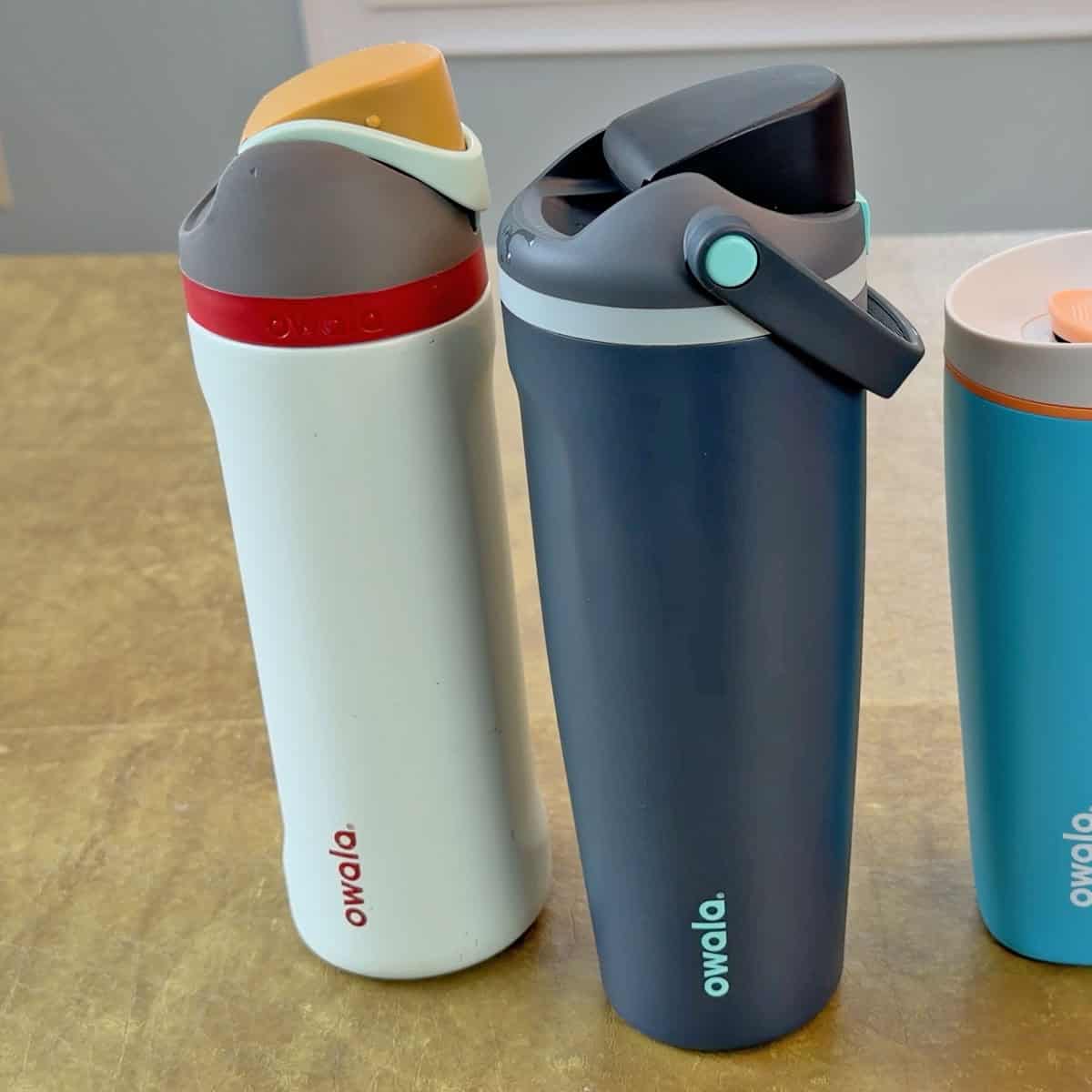
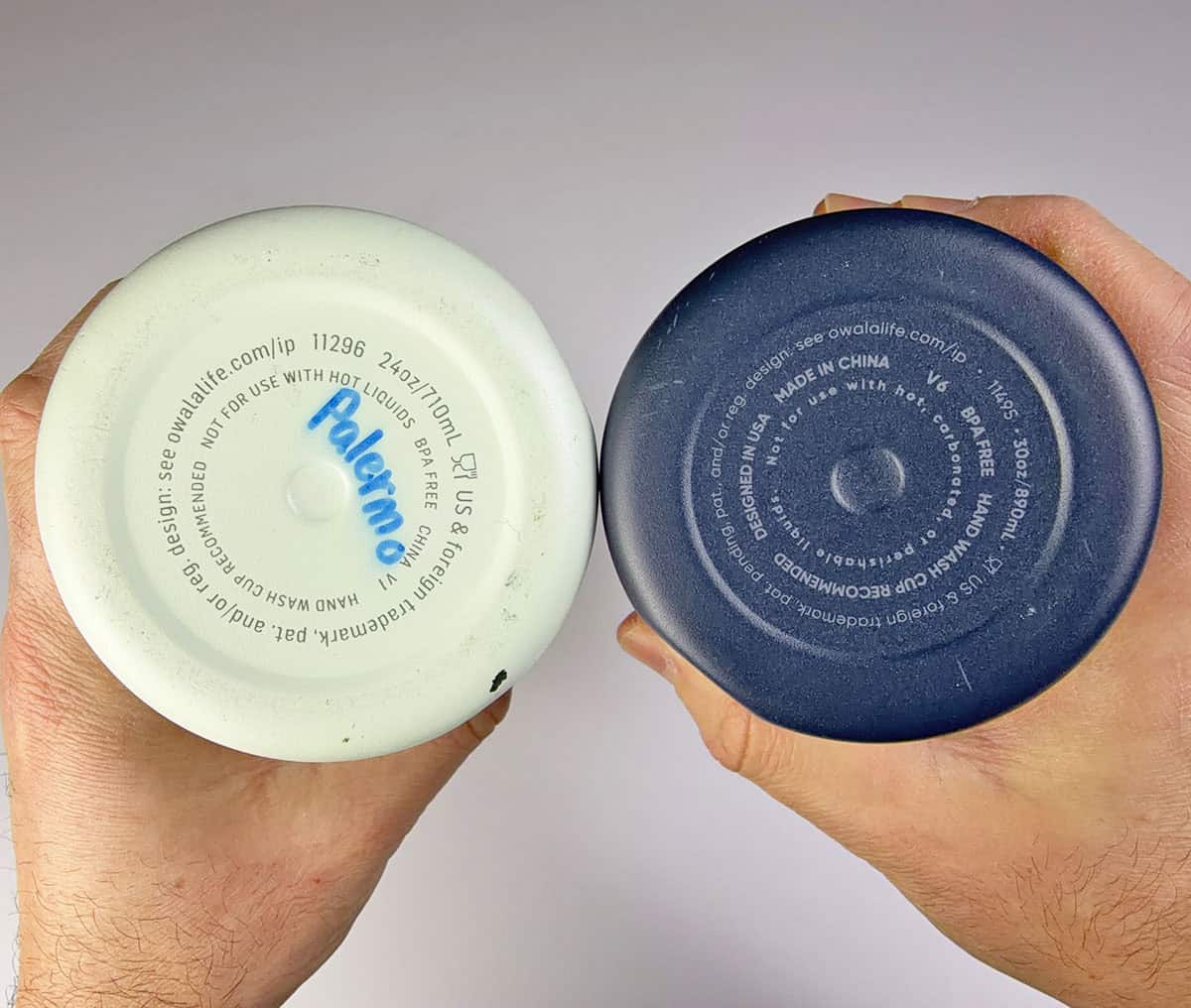
Both fit in standard car cupholders but the Sway’s tapered design is more likely to fit in smaller cupholders.
Ease of Cleaning
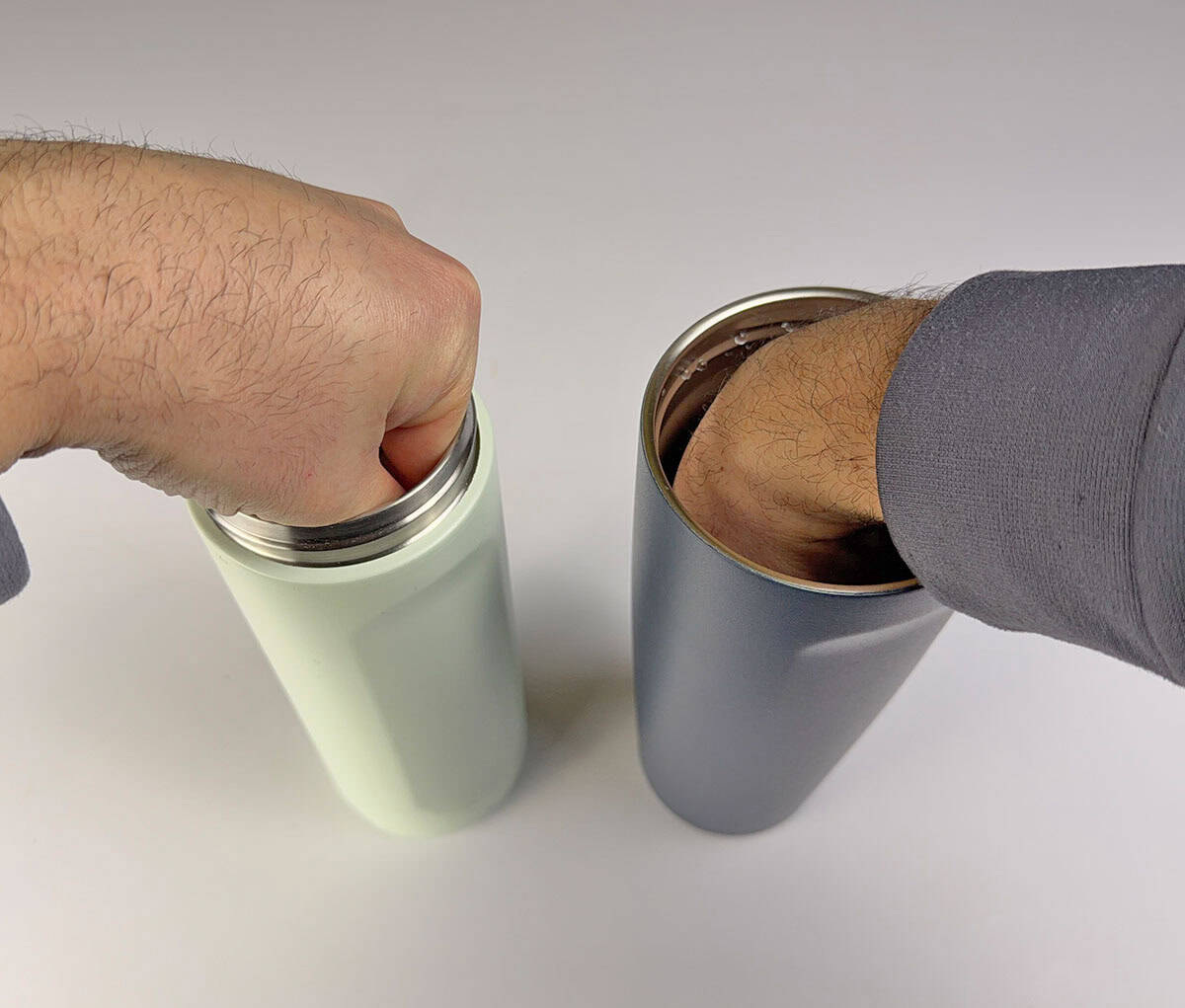
Owala widened the mouth opening on the Sway from 2.75 inches to 3.2 inches. That might not sound like much, but it makes a real difference when cleaning.
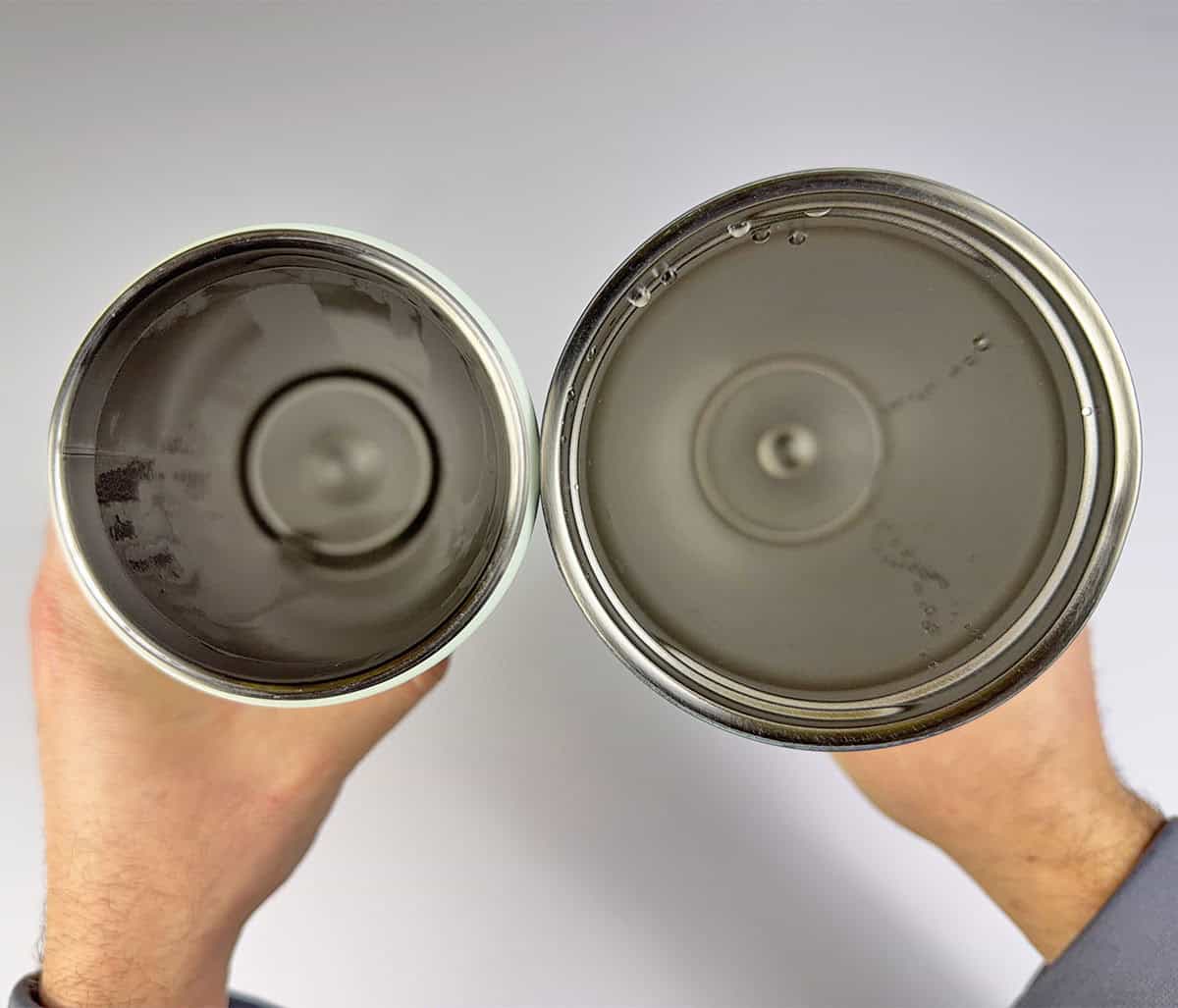
I can fit my hand inside the Sway bottle with a sponge, while the FreeSip requires a bottle brush for a thorough clean.
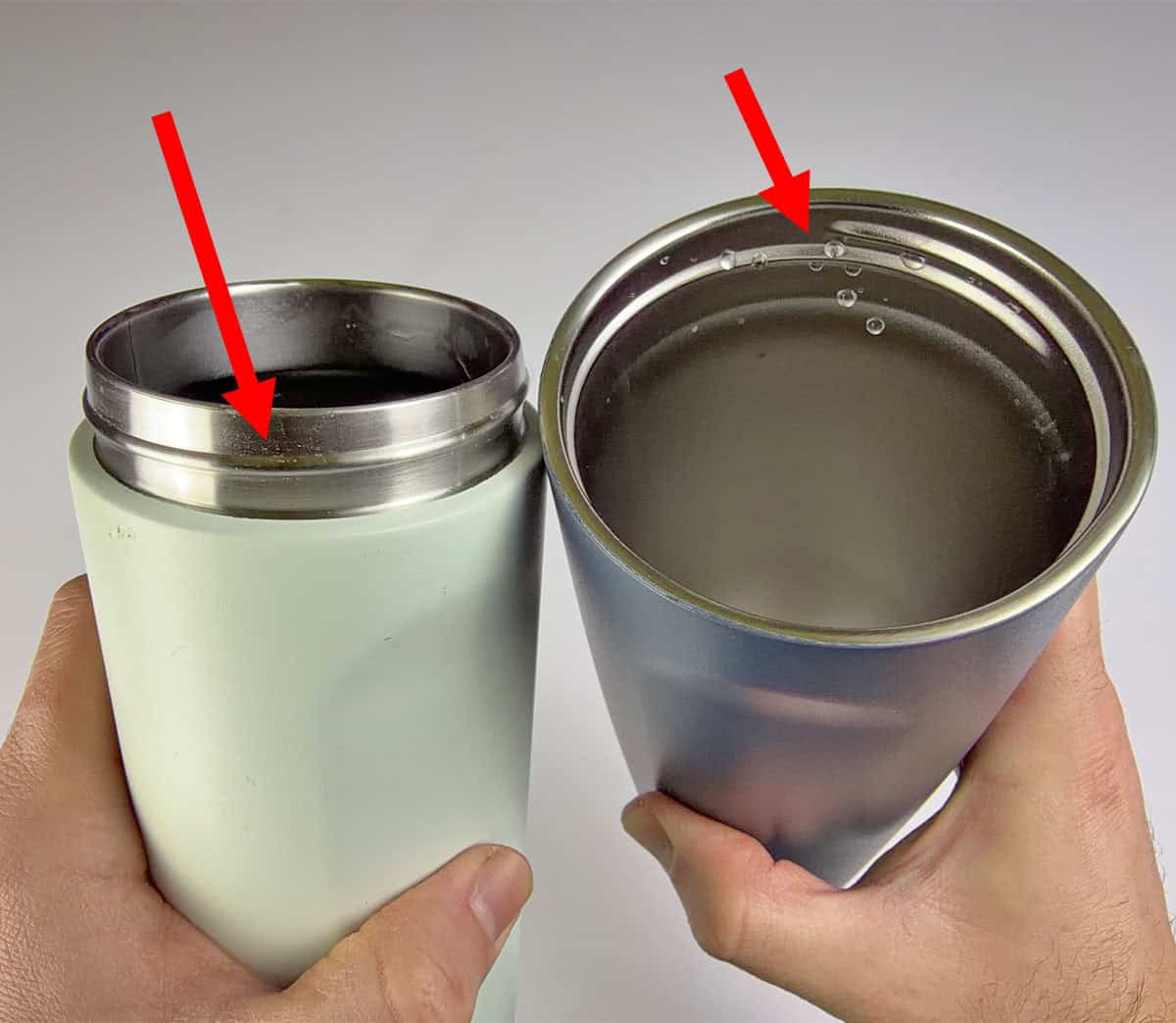
The thread design affects cleaning too. The FreeSip has external threads, and the lid screws down over them. The Sway has internal threads, and the lid screws into them. This makes the rubber gasket easier to remove for deep cleaning.
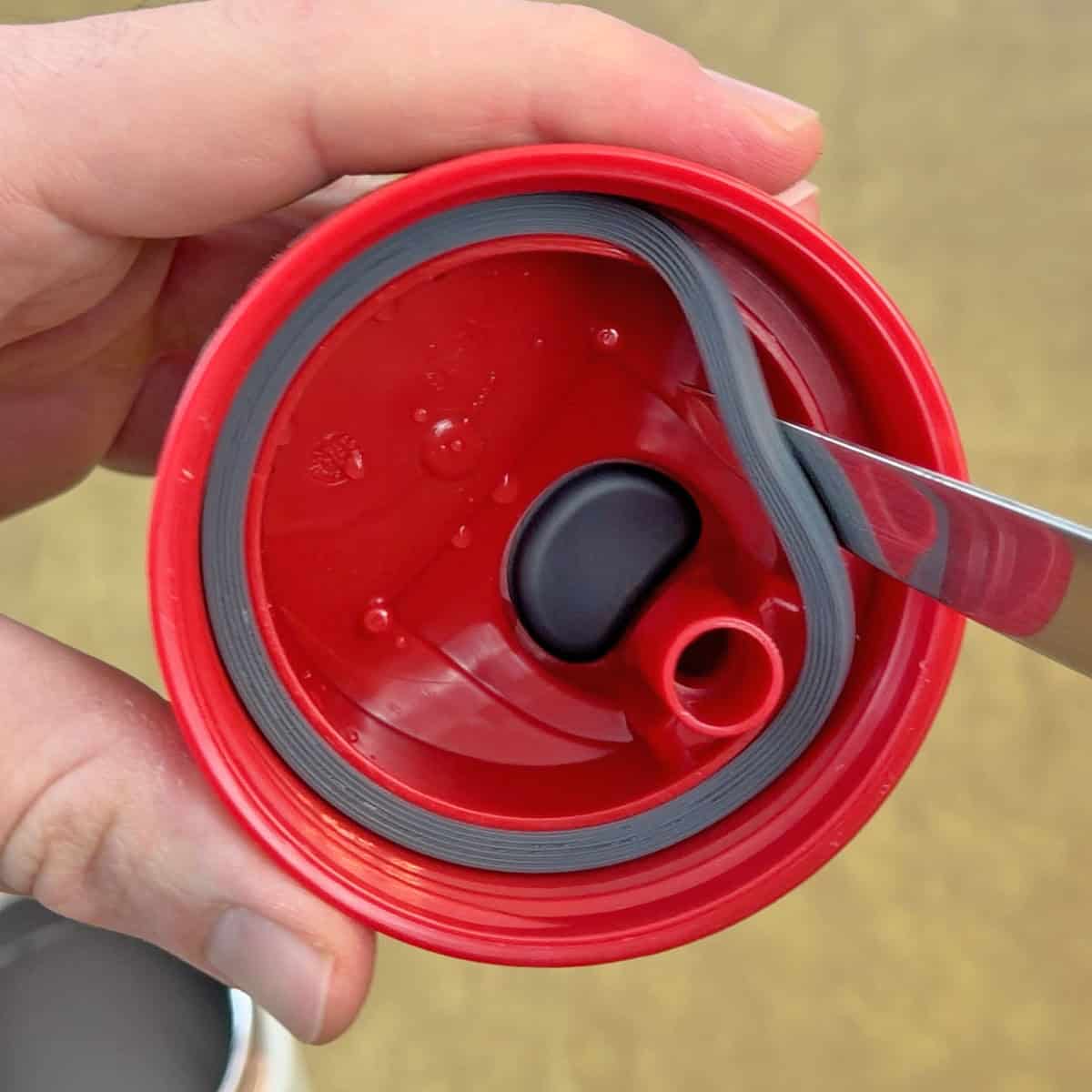
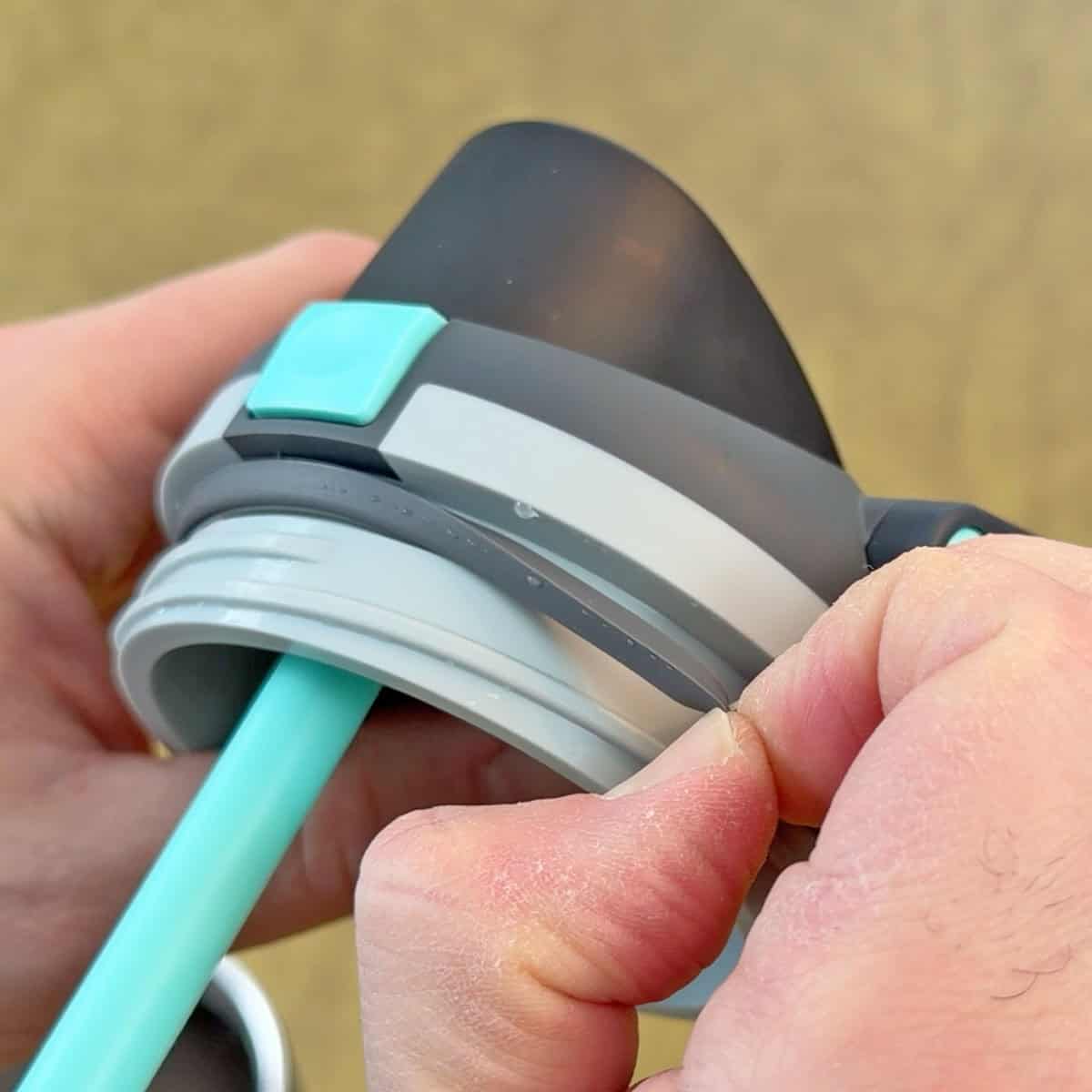
With the FreeSip, I had to use a butter knife to pop the gasket off, but with the Sway, I can pull it out by hand. The downside is that internal threads make it easier to accidentally overfill the bottle and spill water when you screw the lid on.
Both bottles have dishwasher-safe lids, and technically the bottles themselves can go in the dishwasher too. But Owala recommends hand-washing the bottles to prevent cosmetic damage to the powder coating.
Button and Spring Design
Even the springs and buttons got tweaked. The springs on the Sway have six coils instead of four, which makes the lid pop open with more force when you press the button.
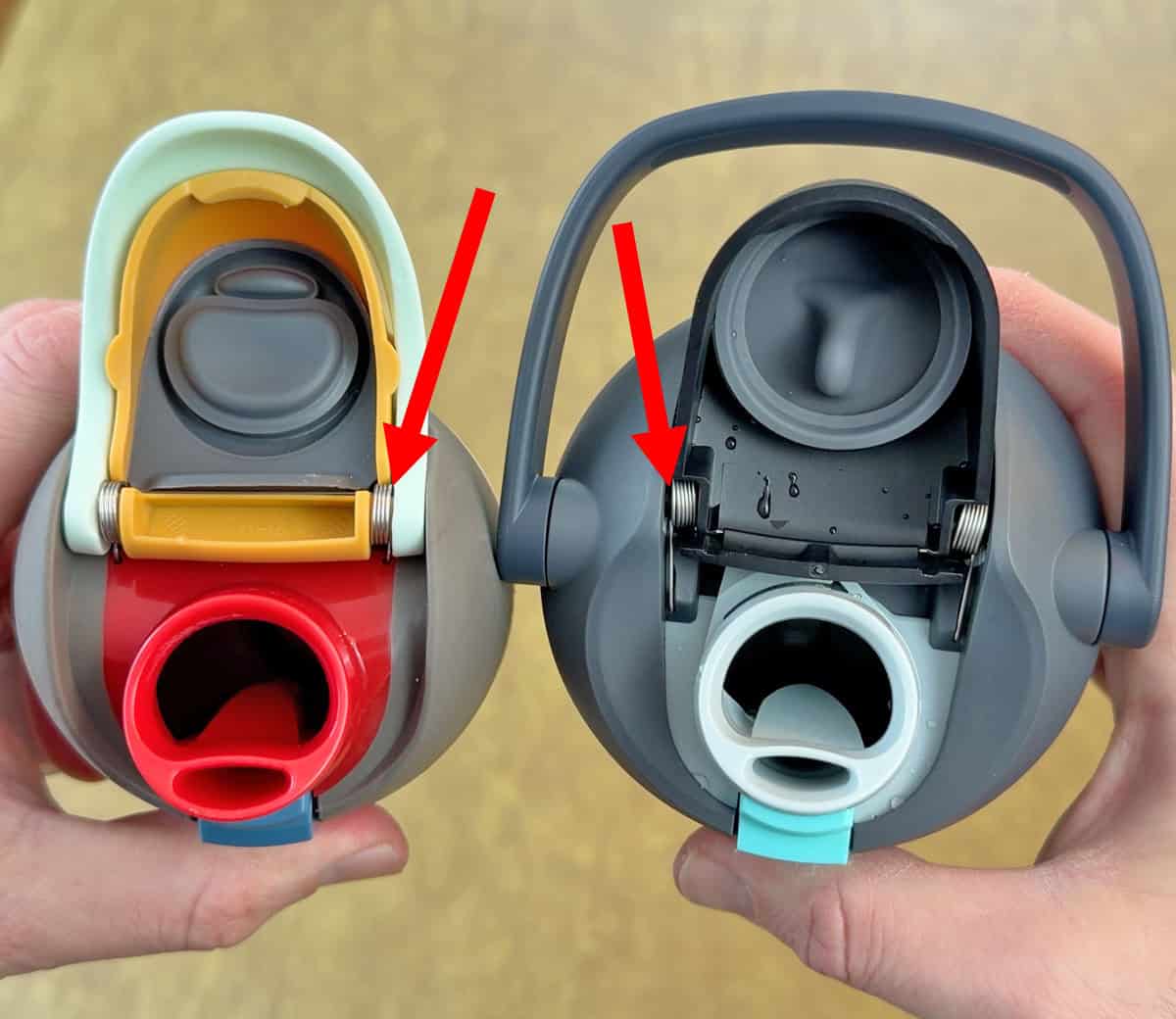
The button itself fits tighter in the lid and doesn’t wiggle as much as the original. The Sway also takes about half a turn to close the lid compared to a full turn on the FreeSip.
Insulation Test
Owala claims both bottles keep drinks cold for 24 hours. Based on my testing, they get the job done, but they’re not the best option if insulation is your top priority.
I filled both bottles with water chilled to 43 degrees, then measured the temperature after 6, 12, and 24 hours. I ran the same test with eight other insulated water bottles to see how they compare.
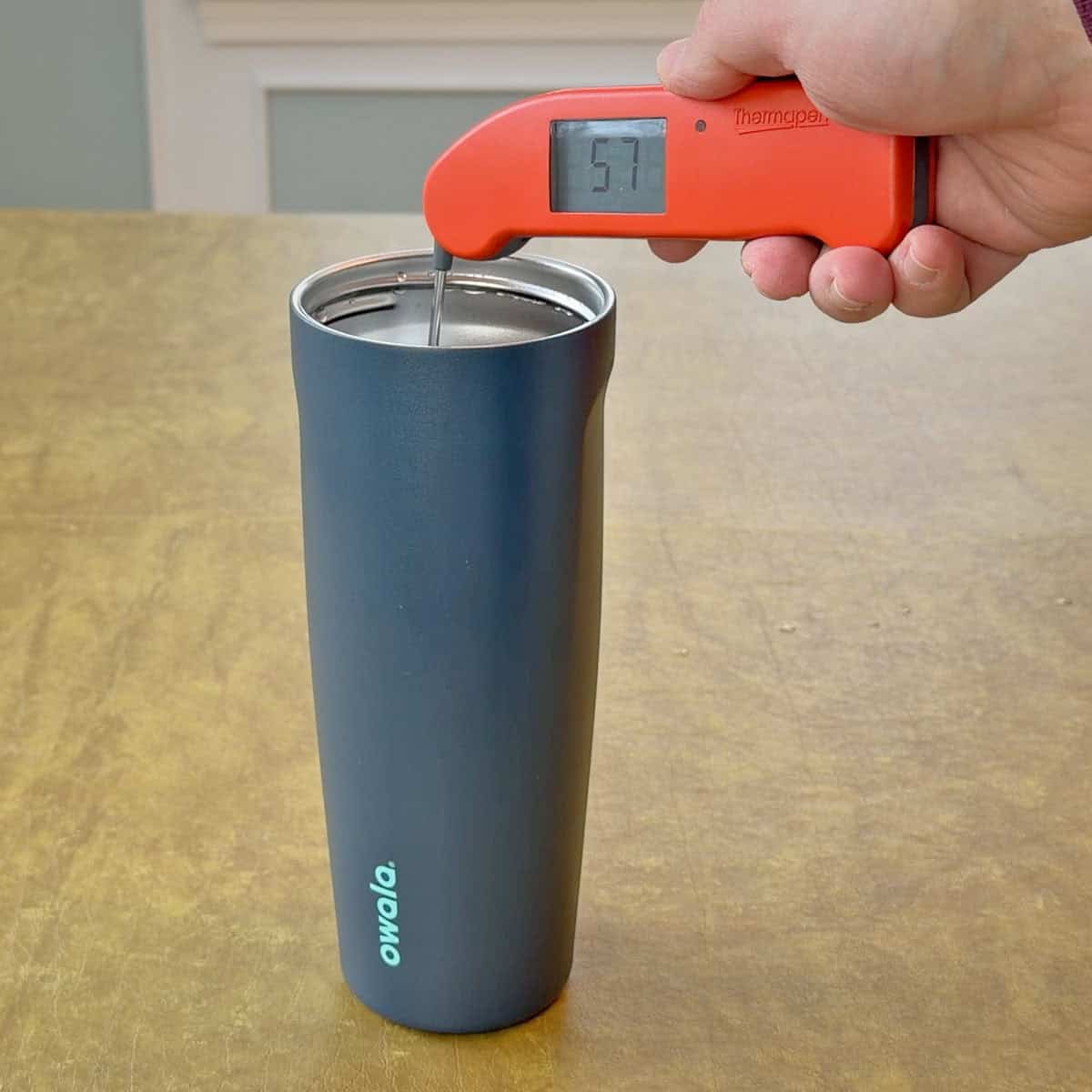

The FreeSip and FreeSip Sway performed almost identically, and both ranked in the middle of the pack. Here’s how they stacked up against the competition:
Cold Water Insulation Test Results:
| Bottle | 6 Hours | 12 Hours | 24 Hours |
|---|---|---|---|
| CamelBak | 46.0°F / 7.8°C | 49.5°F / 9.7°C | 54.5°F / 12.5°C |
| YETI | 46.2°F / 7.9°C | 49.3°F / 9.6°C | 55.4°F / 13.0°C |
| Stanley | 46.2°F / 7.9°C | 50.0°F / 10.0°C | 55.6°F / 13.1°C |
| S’well | 46.9°F / 8.3°C | 49.6°F / 9.8°C | 53.8°F / 12.1°C |
| Owala FreeSip Sway | 47.0°F / 8.3°C | 50.0°F / 10.0°C | 57.0°F / 13.9°C |
| Takeya | 47.5°F / 8.6°C | 52.0°F / 11.1°C | 58.1°F / 14.5°C |
| Owala FreeSip | 48.0°F / 8.9°C | 51.8°F / 11.0°C | 57.2°F / 14.0°C |
| Hydro Flask | 48.0°F / 8.9°C | 52.2°F / 11.2°C | 58.1°F / 14.5°C |
| Gatorade | 48.4°F / 9.1°C | 52.7°F / 11.5°C | 59.2°F / 15.1°C |
Note: All bottles started at 43°F / 6°C
As you can see, brands like YETI, CamelBak, and S’well kept water noticeably cooler. The difference wasn’t massive, only about 3 to 4 degrees after 24 hours, but it’s measurable.

For typical daily use, both bottles work fine. If you’re filling your bottle in the morning and drinking from it throughout the workday, you’ll have cold water all day. But if you work outside in hot weather or need water to stay ice cold for extended periods, other brands perform better in testing.
One more thing to note: Owala says these bottles should not be used with hot liquids. They’re designed for cold drinks only.
Leak Test
Both Owala bottles claim to be leak-proof, but my testing revealed some important differences that could affect your decision.
I tested both bottles by shaking them upside down for 30 seconds, then tipping them over three times to see if water would spill out. This simulates what happens when a bottle gets jostled in a bag or knocked over on a desk.
Both the FreeSip and FreeSip Sway passed the shake test with zero leaks. But the tip test showed where they differ.
When I tipped the original FreeSip over, a few water droplets splashed out of the spout. It wasn’t a major leak like I saw with the Gatorade bottle, but it wasn’t completely sealed either. Most of the other bottles I tested, including YETI and CamelBak, stayed tighter.

The FreeSip Sway performed better in the tip test, staying completely leak-proof with no water escaping. But there’s a catch. The FreeSip Sway only stays leak-proof when you remember to engage the slider lock behind the flip cover.
When I tested the FreeSip Sway with the lock disengaged, a small amount of water leaked out on the first two tips.
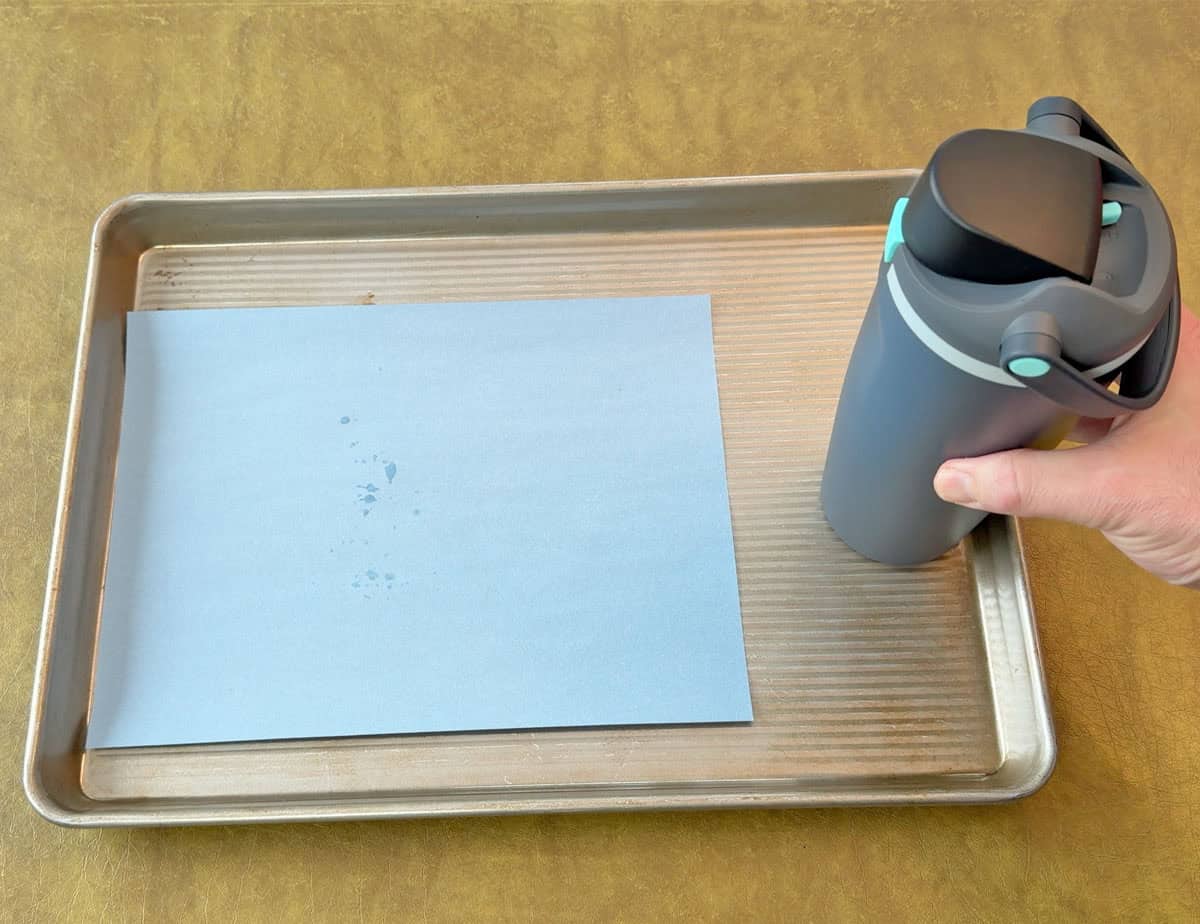
On the third tip, the bottle landed directly on the button, the lid popped open, and water spilled out everywhere. This is a realistic scenario if you toss the bottle in a bag without locking it first.
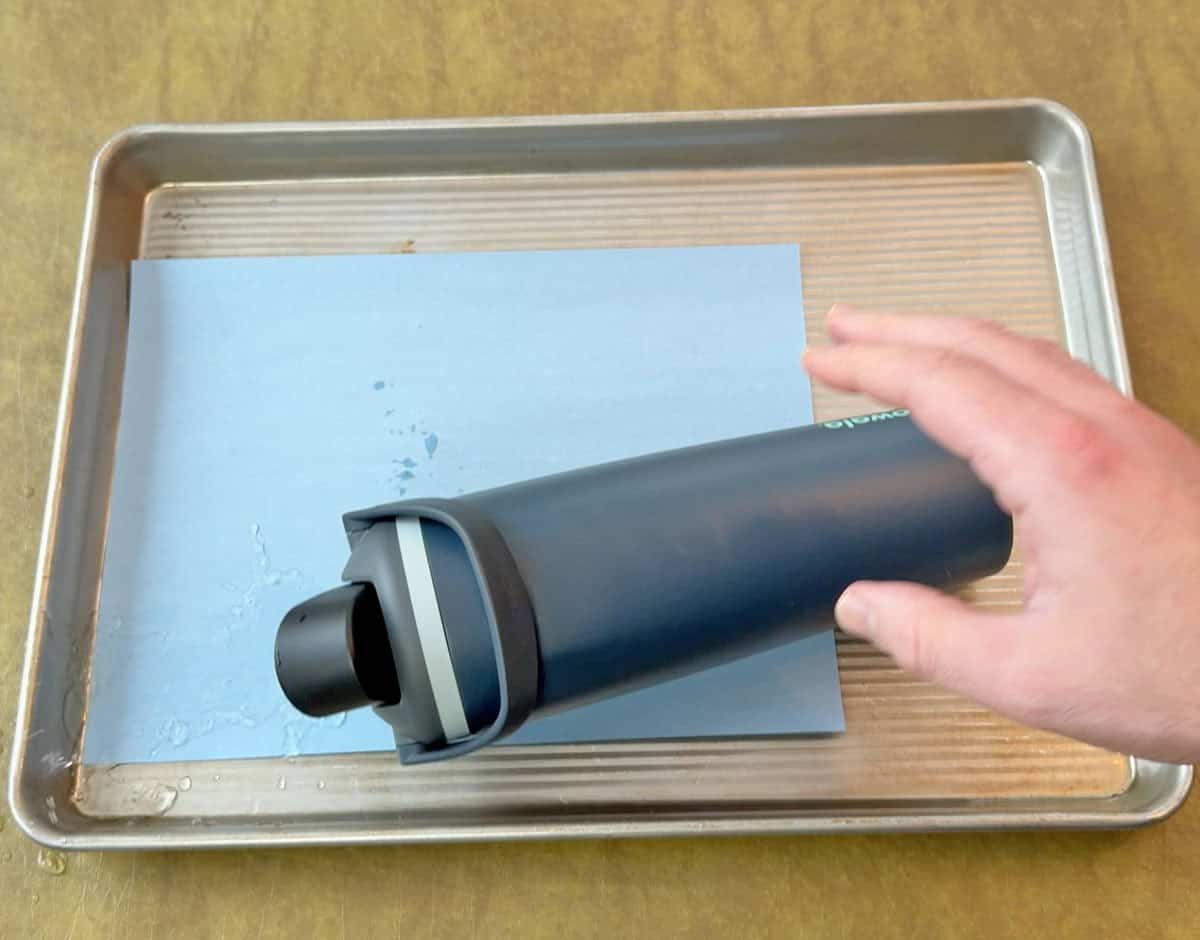
The problem is that it’s easy to forget to lock the slider. With the original FreeSip, the handle doubles as a lock, which gives you a visual reminder. With the FreeSip Sway, the slider is small and tucked behind the lid, so you might not think to check it before throwing the bottle in your bag.
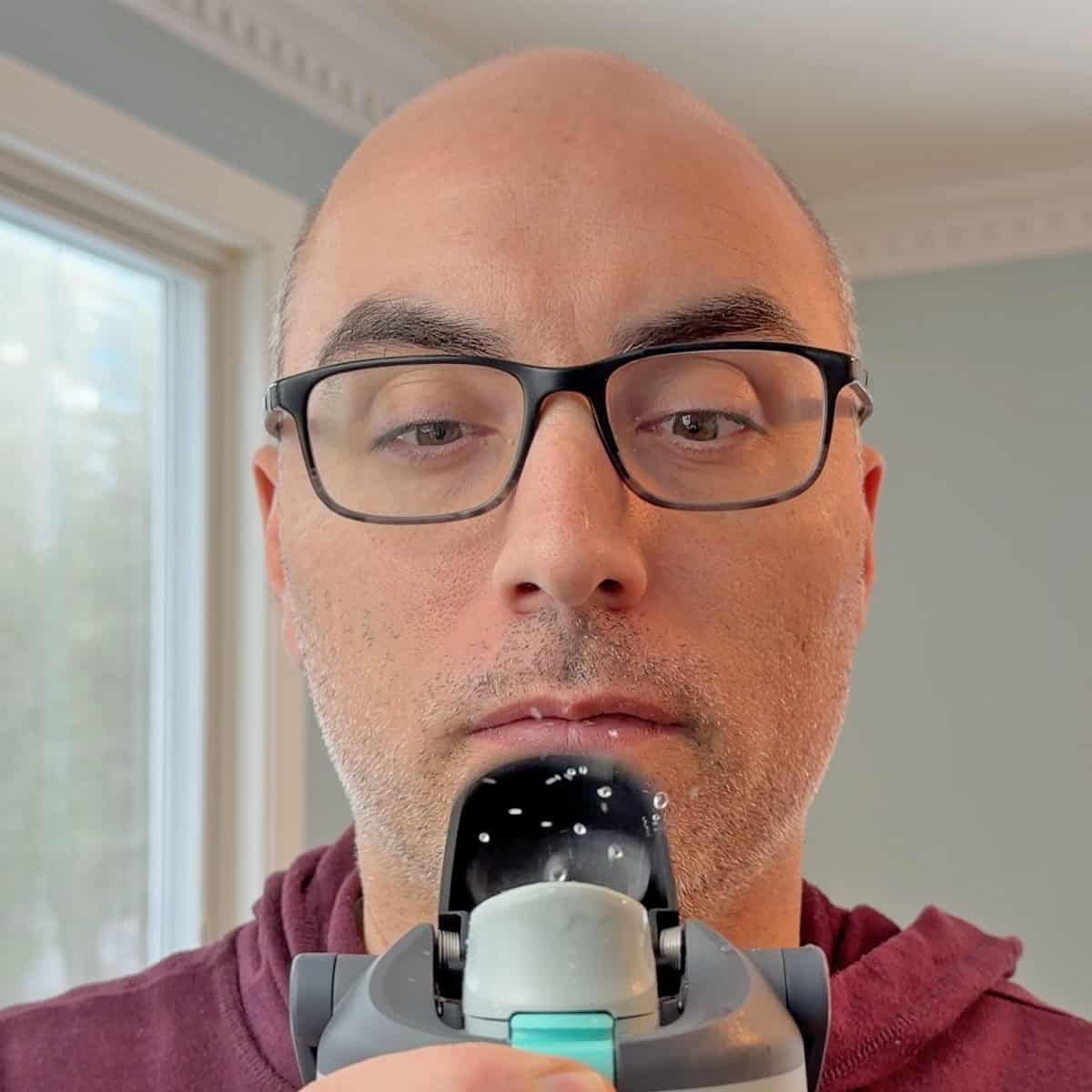
One more thing both bottles have in common: when you press the button and flip the lid open, a few water droplets can sling backward.

It’s not a huge issue, but you’ll want to avoid opening either bottle over paperwork, electronics, or someone’s face.
Drop Test
To test durability, I filled both bottles with water and dropped them from waist height twice. Once on their side, and once directly on the lid. This simulates what happens if you accidentally knock a bottle off a table or it falls out of your bag.

Both bottles handled the side drop pretty well. The FreeSip got a tiny bump on the bottom and some minor plastic and paint scrapes. The FreeSip Sway got a small dent on the bottom and slight paint cracking. Nothing major, and both bottles remained fully functional.

When I dropped the original FreeSip directly on the lid, it survived with just some plastic scrapes on the cap. The bottle still worked perfectly. No damage to the opening mechanism, no issues closing or sealing.
When I dropped the FreeSip Sway on the lid, the lid popped open, water flew out, and the closing mechanism broke.
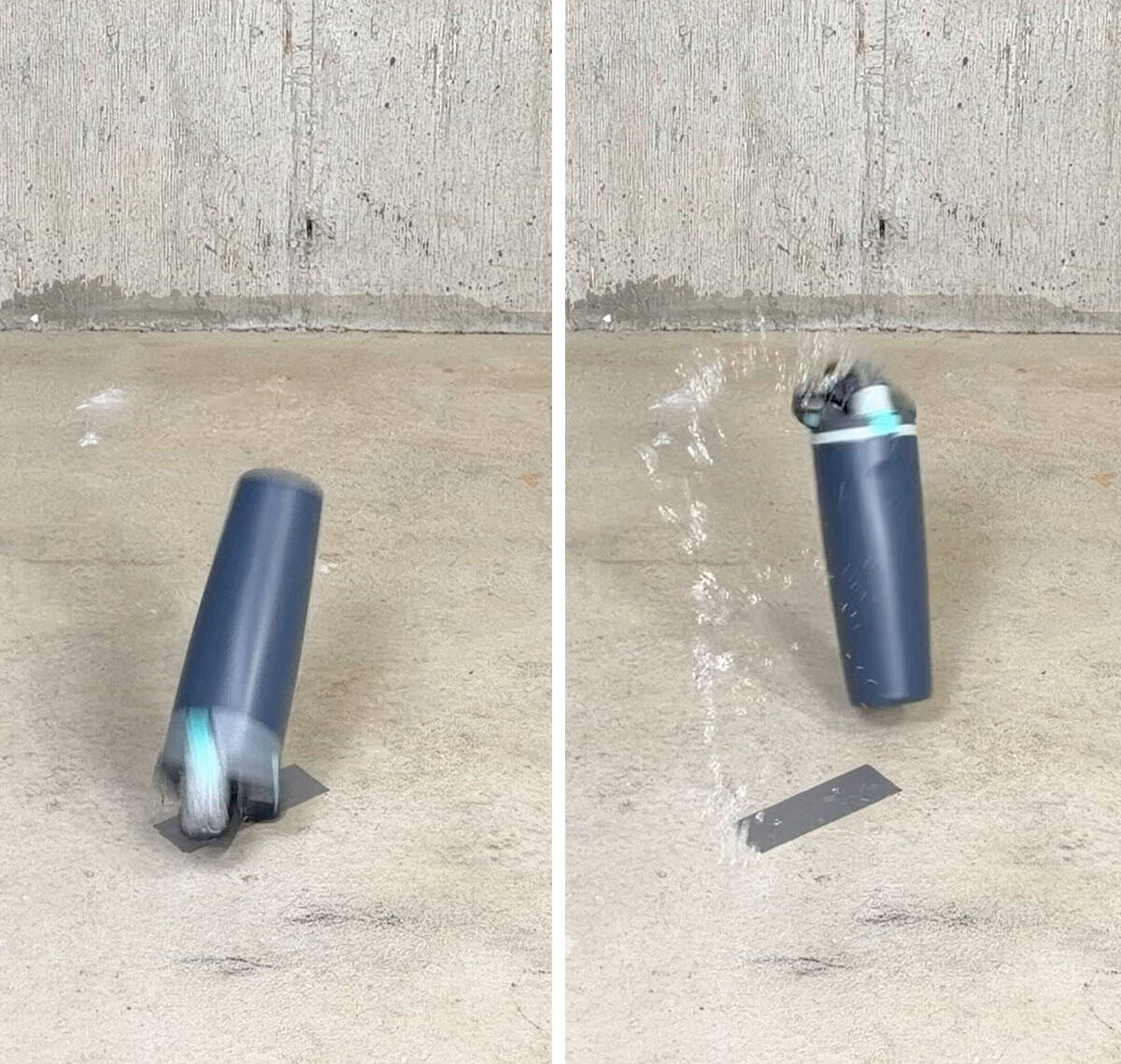
After that single drop, the lid would no longer snap down into place or stay closed. Something inside the spring-loaded mechanism got damaged, and now the lid only stays open. It won’t snap shut anymore.
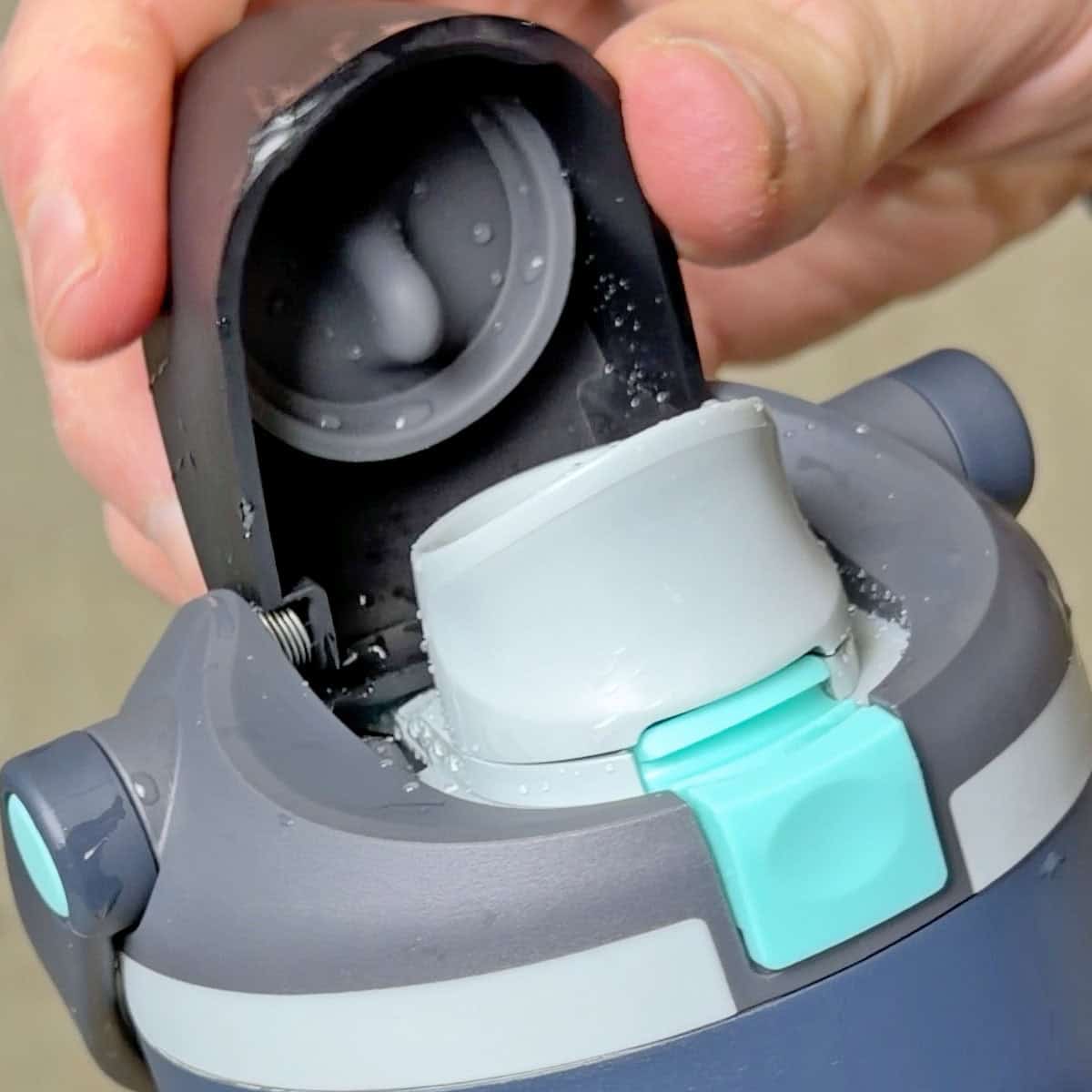
This is a waist-height drop, which is a completely realistic accident. If you set your bottle on a counter and it tips over, if it falls out of your car door, or if it drops from your hand, that’s roughly the same height.
After the test, I reached out to Owala’s customer service to see how they’d respond. I explained the lid broke after a drop and asked about replacement options.
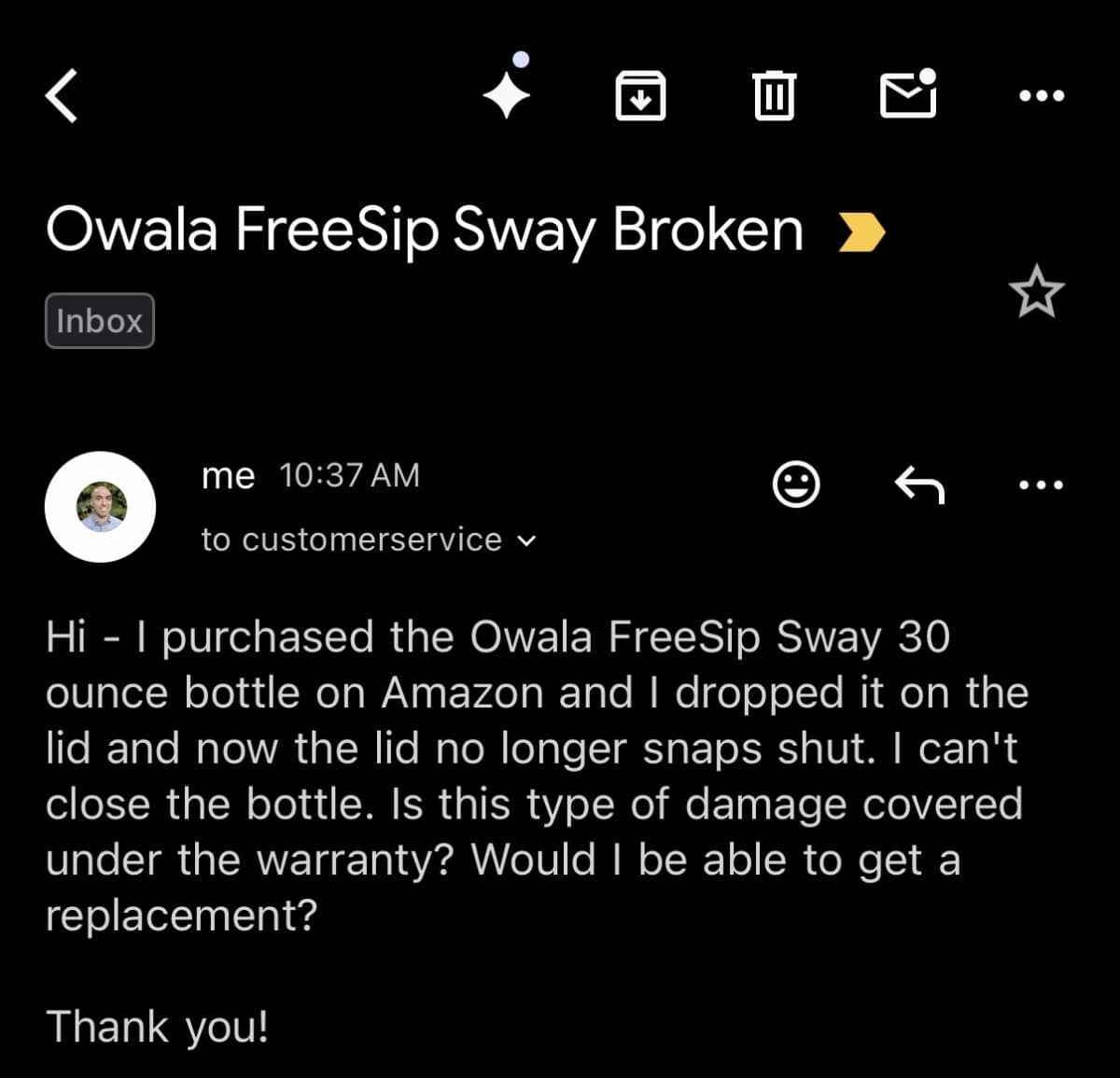
They replied in six minutes, which impressed me.
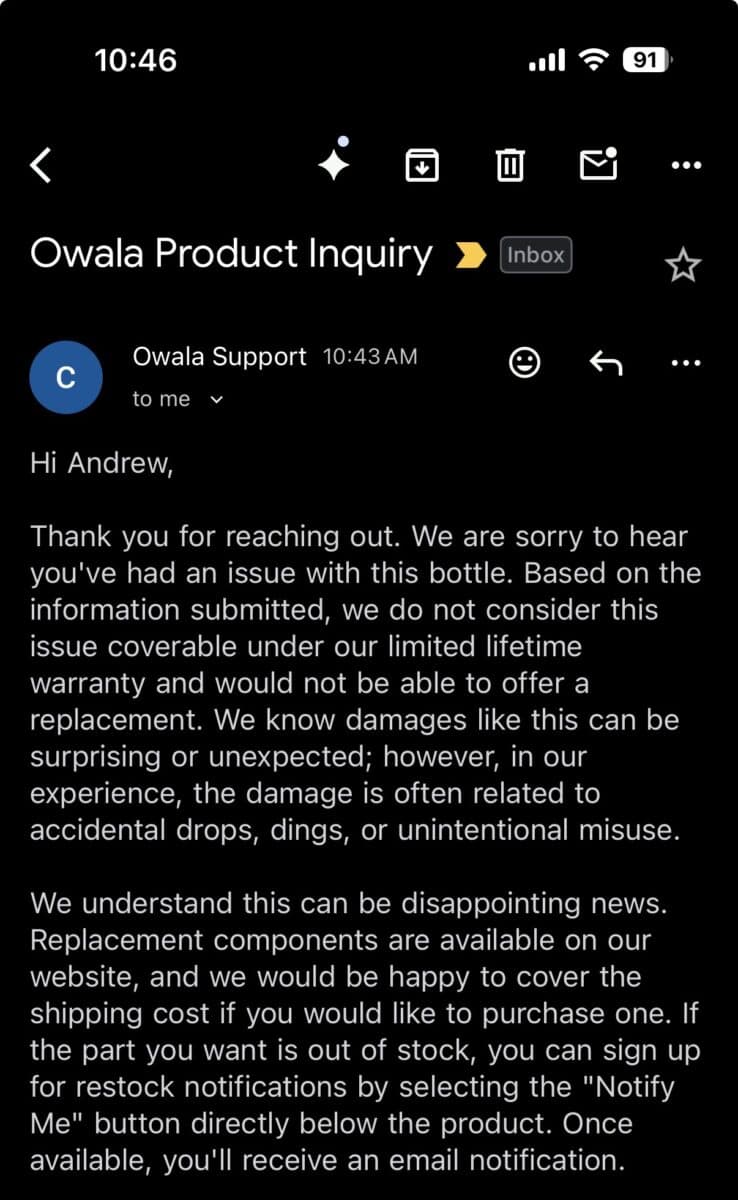
The damage wasn’t covered under warranty, but replacement lids cost $6.99 with free shipping. Not ideal, but the fix is relatively affordable and their response was fast.
Bottom Line: Should You Buy the Owala FreeSip or FreeSip Sway?
After testing both bottles extensively, I’d recommend the FreeSip Sway over the original FreeSip for most people.
Here’s why. The larger handle is significantly more comfortable to carry. The dedicated slider lock works better than the handle-based system, even with the risk of forgetting to engage it. The wider mouth opening allows you to clean it with your hand and a sponge instead of a bottle brush. The gasket pulls out by hand instead of requiring a butter knife. The tapered base fits in cupholders.
The insulation performance is nearly identical, and both have the same convenient FreeSip lid design.
That said, the original FreeSip makes sense if you prefer a thinner design or like that the handle doubles as the locking mechanism. It also survived my drop test better. When I dropped the Sway directly on the lid, the closing mechanism broke completely. The FreeSip only got cosmetic damage. Neither bottle is immune to breaking, but the FreeSip held up better in my testing.
In my opinion, the Sway’s daily usability improvements outweigh the durability concern. But if you’re rough on your gear or drops are a regular occurrence, the original FreeSip is the safer choice.
Both bottles are available on Amazon (link to FreeSip, link to FreeSipSway) where you can compare prices and read thousands of reviews.
Related Topics
- Best Water Bottle? I Tested Stanley, Owala, Yeti, Hydro Flask, and More
- Owala vs. Hydro Flask: Which Water Bottle Is Better?
- Owala vs. Yeti: Which Water Bottle Is Better?
- Best Travel Mug? I Tested Owala, Yeti, Stanley & 6 More
- Berkey vs. Alexapure Water Filters: 10 Key Differences
- Berkey vs. Brita Water Filters: 10 Differences & How to Choose
- Epic Water Filters Review: The Pros & Cons You Need to Know
- ZeroWater vs. PUR: Which Water Filter Pitcher Is Better?
- Things to Buy for a New House (The Complete Checklist)
- How to Lower Your Water and Sewer Bill (30 Easy Ways)
- What Is a Sewer Bill? How It’s Calculated & Why It’s So High
- How Much Water Does a Dishwasher Use? (25 Real Examples)
- How Much Water Does a Washing Machine Use? (With 28 Real Examples)
- 7 Ways to Fix Standing Water in the Bottom of Your Dishwasher
