

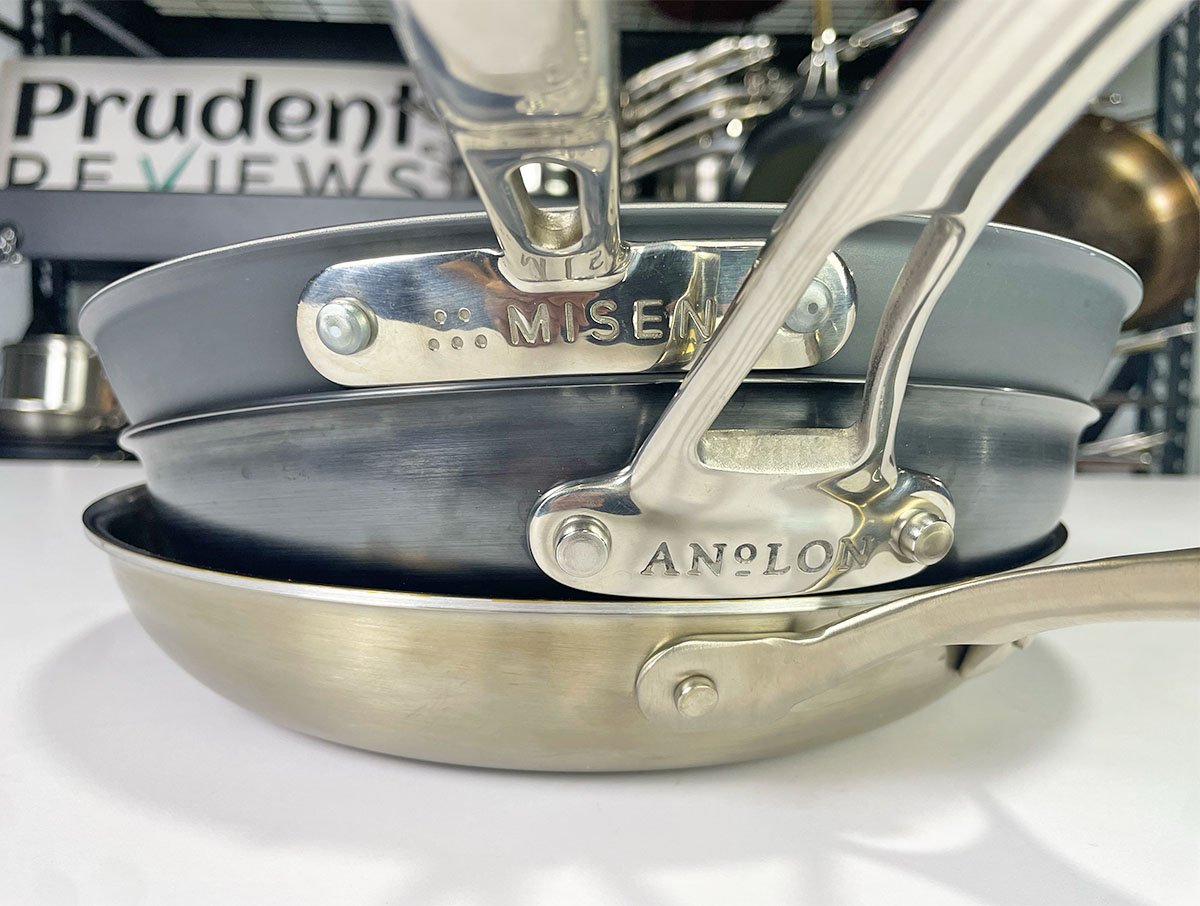
Misen claims their Carbon Nonstick pan performs like traditional nonstick but lasts forever. That bold promise led to $2 million in preorders and made it one of the most talked-about pans in recent years.
But Misen isn’t the only company making pans that deliver nonstick performance without any coatings. Strata and Anolon Everlast N2 are made with similar materials and promise similar results.
To find out which of these three pans is truly the best long-lasting alternative to traditional nonstick, I ran a series of tests. I scraped them with metal utensils, simmered acidic foods, left them wet overnight to check for rust, and cranked up the heat on a powerful induction cooktop to see if they would warp.
To measure nonstick performance, I cooked dozens of eggs in each pan — both right out of the box and after months of use. I also ran side-by-side tests where I preheated each pan to the exact same temperature and used the same amount of fat to see how evenly food released.
I put each pan through my standard heating tests to measure how quickly and evenly they conduct heat, and how well they retain it. These are the same benchmarks I’ve used on more than 60 other pans, so the results are easy to compare.
In this article, I’ll share the results of every test and give you a clear answer on whether Misen is worth the hype, or if Strata or Anolon is the smarter buy.
Key Takeaways
Misen Carbon Nonstick is the best choice if you want a pan that feels closest to traditional nonstick without the drawbacks of coatings. It is light, easy to handle, and completely maintenance-free since it does not require seasoning.
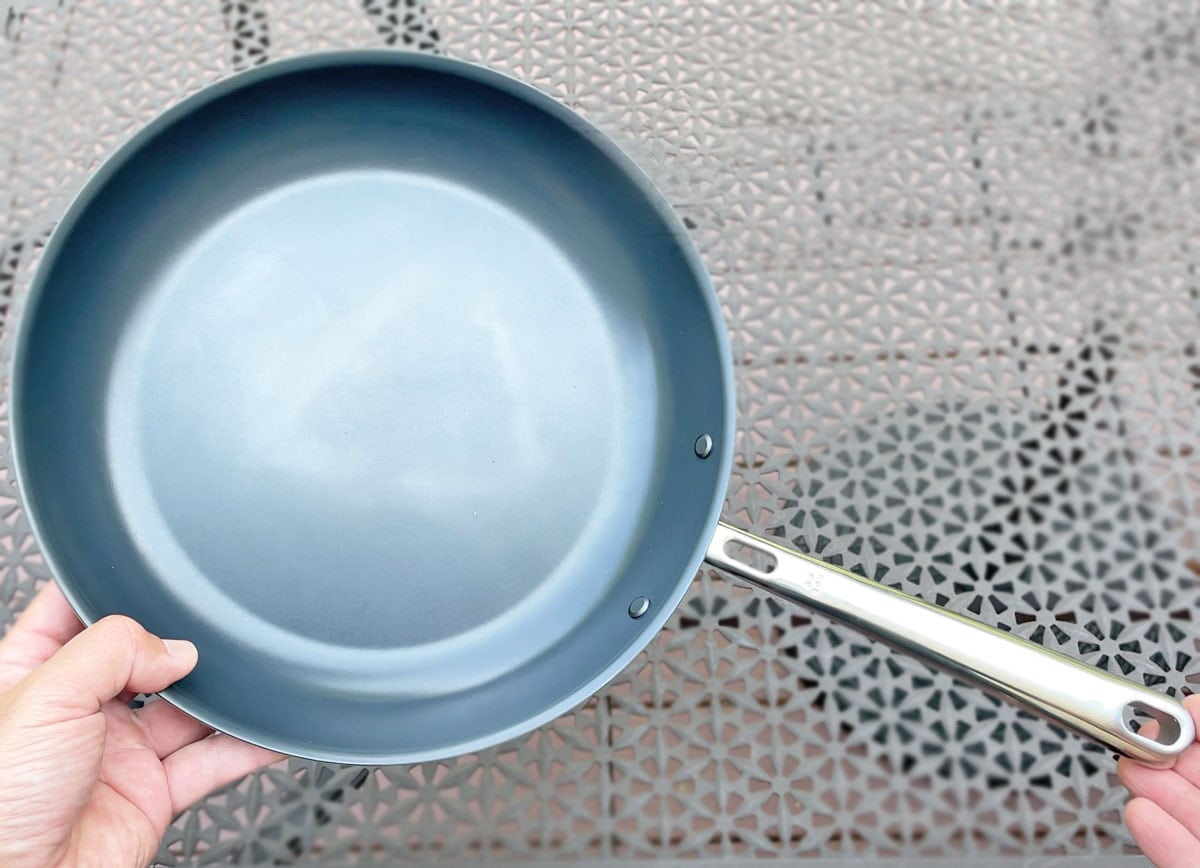
Anolon EverLast N2 makes sense if you prefer a heavier, more traditional carbon steel feel but do not want the work of seasoning. It has the highest oven-safe temperature, a polished finish, and a design that resembles cookware from de Buyer or Matfer.
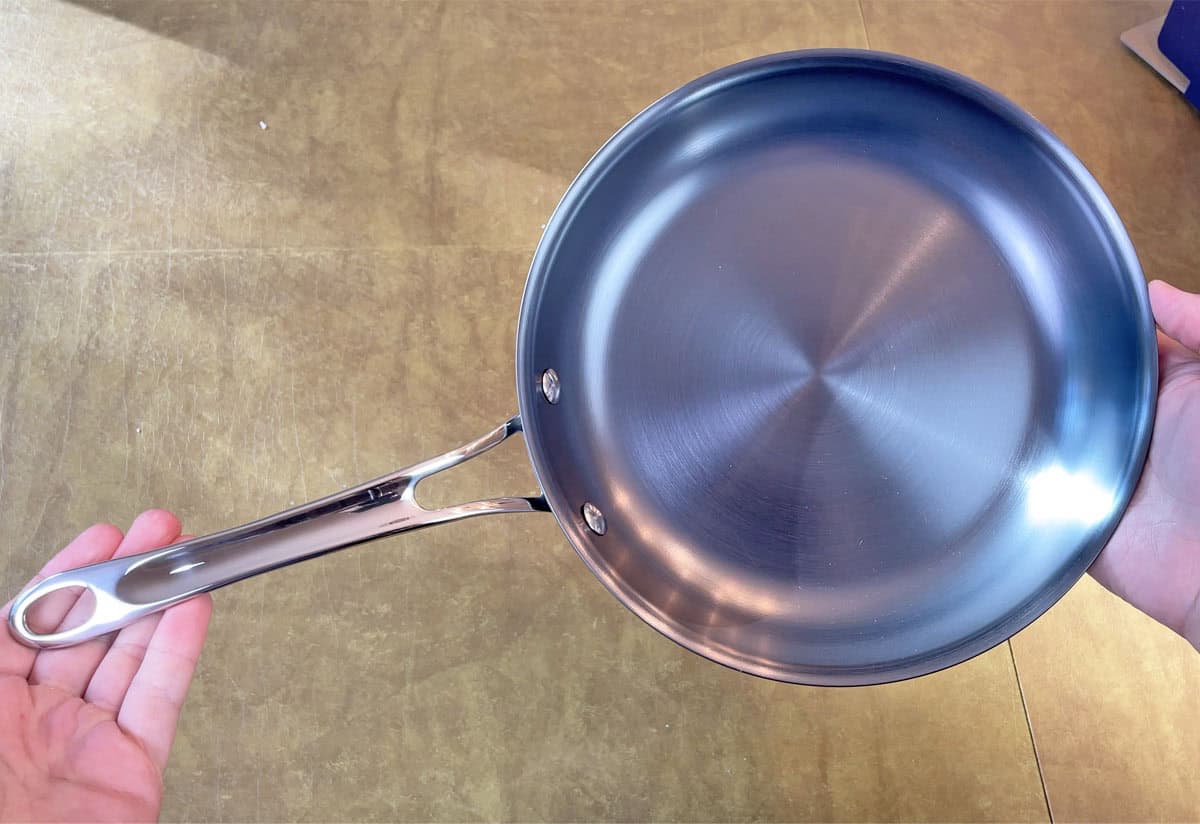
Strata heats the most evenly and has the best handle design. You don’t have to season the stainless steel exterior, but the cooking surface requires seasoning and that layer can wear down when cooking acidic foods.

Bottom line: If you want the simplest and lowest-maintenance option, go with Misen. If you prefer the heft of traditional carbon steel but still want a rust-resistant surface that you don’t need to season, choose Anolon. If you enjoy maintaining seasoning and value a pan that heats evenly with a great handle, Strata is the best option.
Learn more about each pan at the links below:
- Misen on Misen.com and Amazon
- Anolon on Anolon.com and Amazon
- Strata on StrataCookware.com and Amazon
Use the links below to navigate the comparison:
- Comparison Chart
- Construction
- Durability Test
- Warp Test
- Rust Test
- Liquid Test
- Heat Test
- Nonstick Test
- Design
- Final Verdict: Should You Buy Misen, Anolon, or Strata?
Comparison Chart
| Misen Carbon Nonstick | Anolon EverLast N2 | Strata Carbon Clad | |
|---|---|---|---|
| Where to Buy | Misen.com | Anolon.com, Amazon | StrataCookware.com, Amazon |
| Construction | 3-ply: Aluminum core with nitrided carbon steel interior and exterior | Single-layer nitrided carbon steel | 3-ply: Carbon steel cooking surface, aluminum core, stainless steel exterior |
| Weight (10 in.) | 2.48 lbs | 2.79 lbs | 2.35 lbs |
| Pan Diameter (Rim to Rim) | 10.75 in | 10 in | 10.5 in |
| Cooking Surface Diameter | 8.25 in | 7.75 in | 8 in |
| Wall Height | 1.75 in | 1.8 in | 1.8 in |
| Handle Length | 8 in, rounded | 8 in, flatter with shallow groove | 8 in, thicker and flat with groove, round hanging loop |
| Oven Safe Temp | Up to 1100 °F | Up to 1000 °F | Up to 600 °F |
| Seasoning Required | No | No | Yes (cooking surface only) |
| Rust Resistance | High (nitrided surface prevents rust) | High (nitrided surface prevents rust) | Moderate (cooking surface must stay seasoned) |
| Induction Compatible | Yes | Yes | Yes |
| Where Made | China | China | China |
| Finish / Appearance | Dark matte surface that lightens with use | Shiny with bluish tint that develops patina | Silvery exterior that turns golden brown as seasoning builds |
| Top Reason to Buy | Closest feel to traditional nonstick, lightweight, no seasoning needed | Sleek look, feels like classic carbon steel without the seasoning | Most even heating, best handle design |
| Top Reason Not to Buy | Less even heating than Strata, inferior heat retention | Heavy | Requires seasoning |
Construction
Before I get into the test results, it’s important to know that none of these pans have a Teflon or ceramic nonstick coating.
Misen is made with three layers. The core layer is aluminum, and the top and bottom layers are nitrided carbon steel.
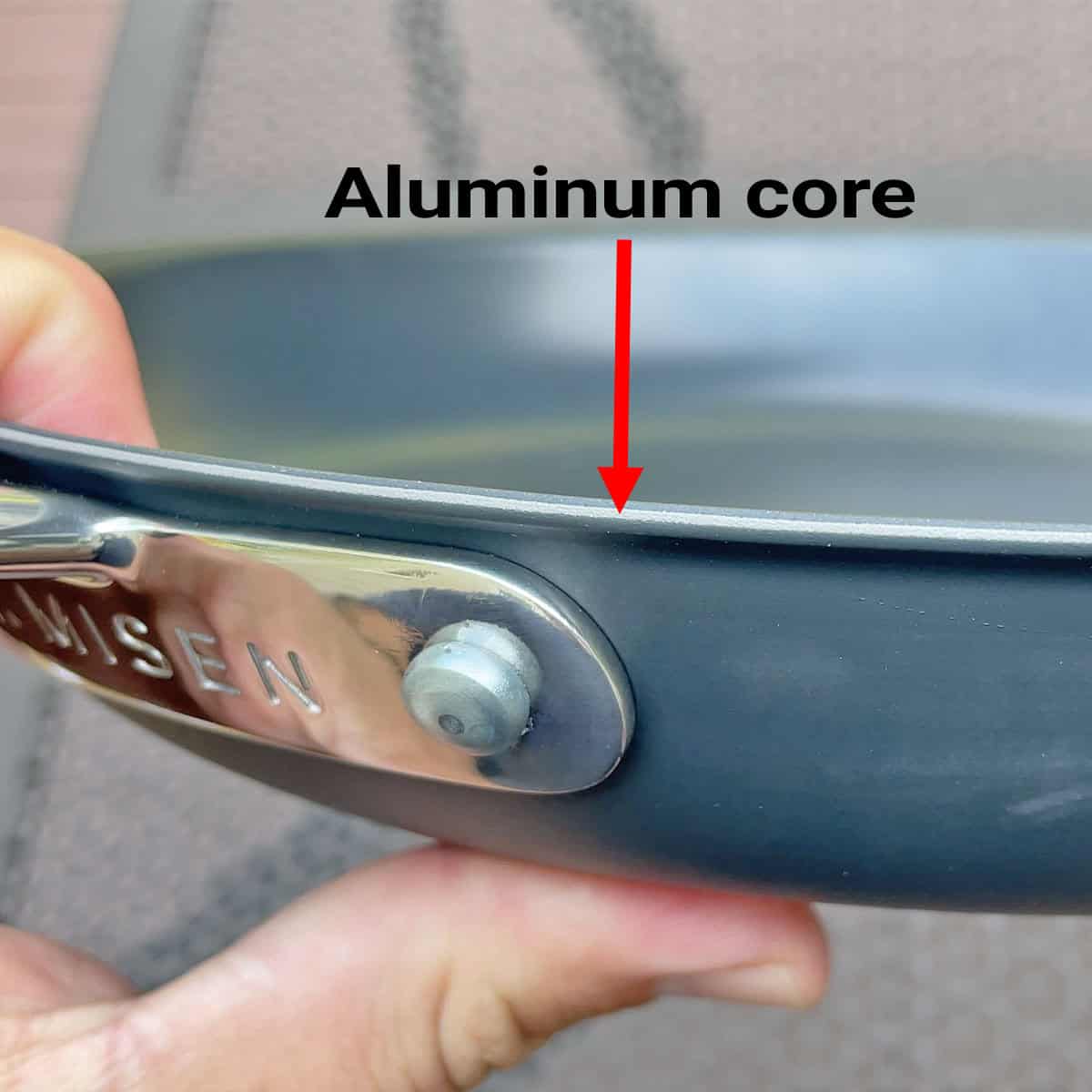
Nitriding means the steel is baked in a nitrogen-rich oven, which hardens the surface, makes it more resistant to rust, and gives it better food release than raw carbon steel, even without seasoning. The aluminum core helps the pan heat faster and more evenly since aluminum conducts heat much better than steel.
Anolon Everlast N2 is also nitrided carbon steel, but it’s just a single layer with no aluminum core. That makes it more durable and straightforward in construction, but it doesn’t spread heat as efficiently.
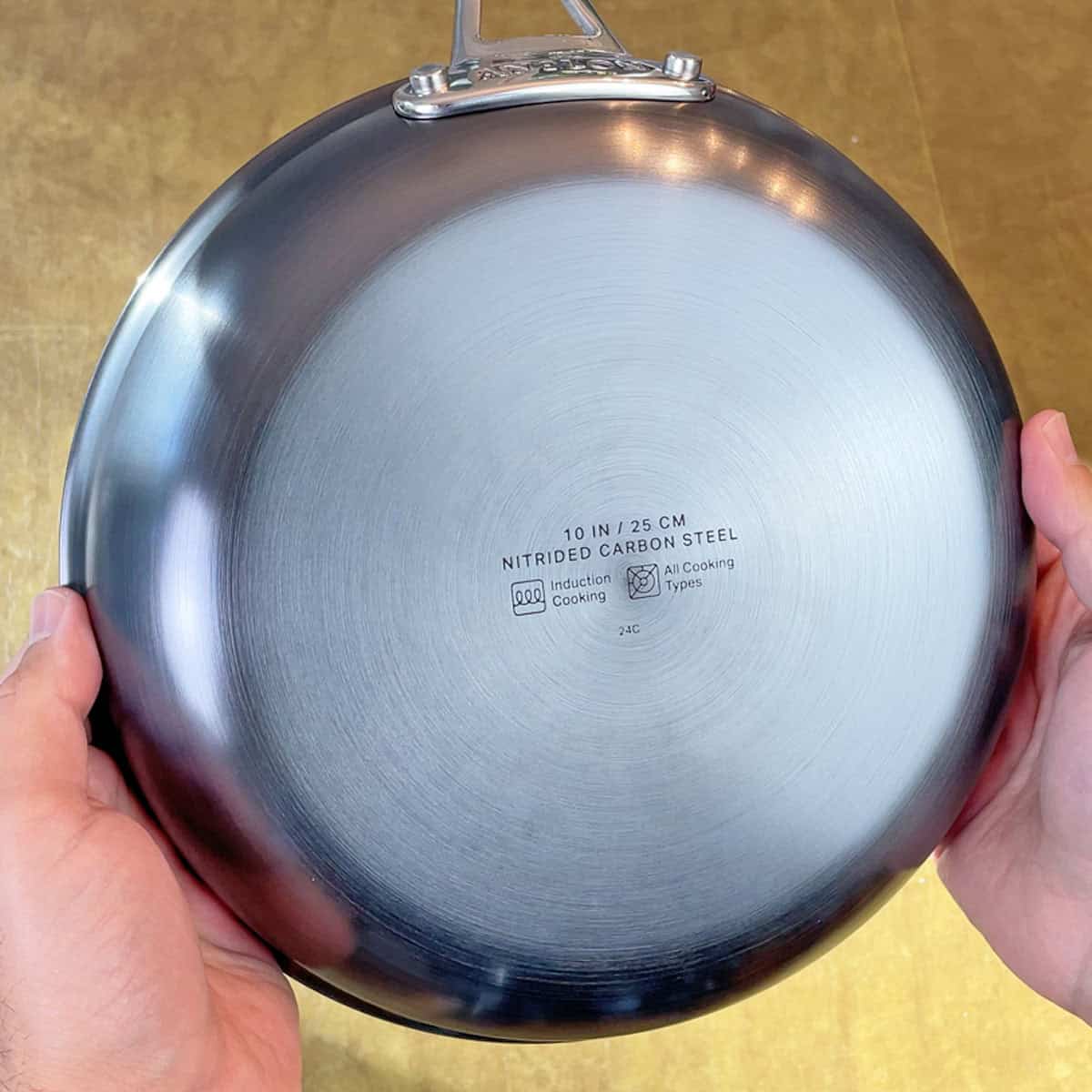
With Strata, the cooking surface is regular carbon steel, the core is aluminum, and the exterior is stainless steel. The aluminum improves heat conduction, while the stainless steel exterior makes the pan easier to maintain because it doesn’t need seasoning on the bottom. You still season the cooking surface like any other carbon steel pan, but the stainless steel shell helps prevent rust on the outside.

As I walk through the tests, you’ll see how these subtle differences in materials impact performance.
Durability Test
One of the biggest claims with these pans is durability. Since none of them have a nonstick coating, all three brands advertise that you can use metal utensils without worrying about scratching the surface.
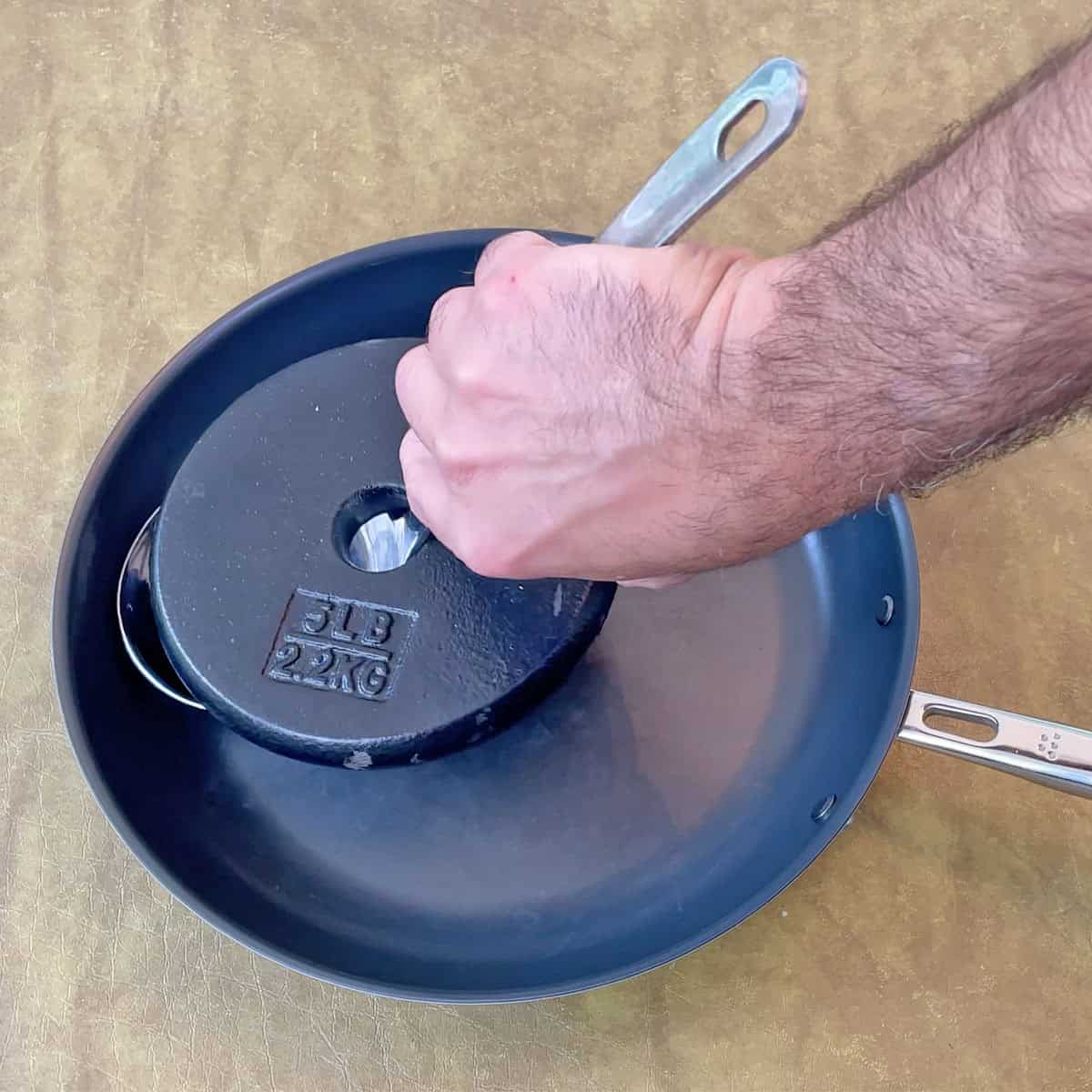
To test that claim, I set up a few tough experiments. First, I attached a five-pound weight to a metal ladle and scraped it across each pan 50 times.
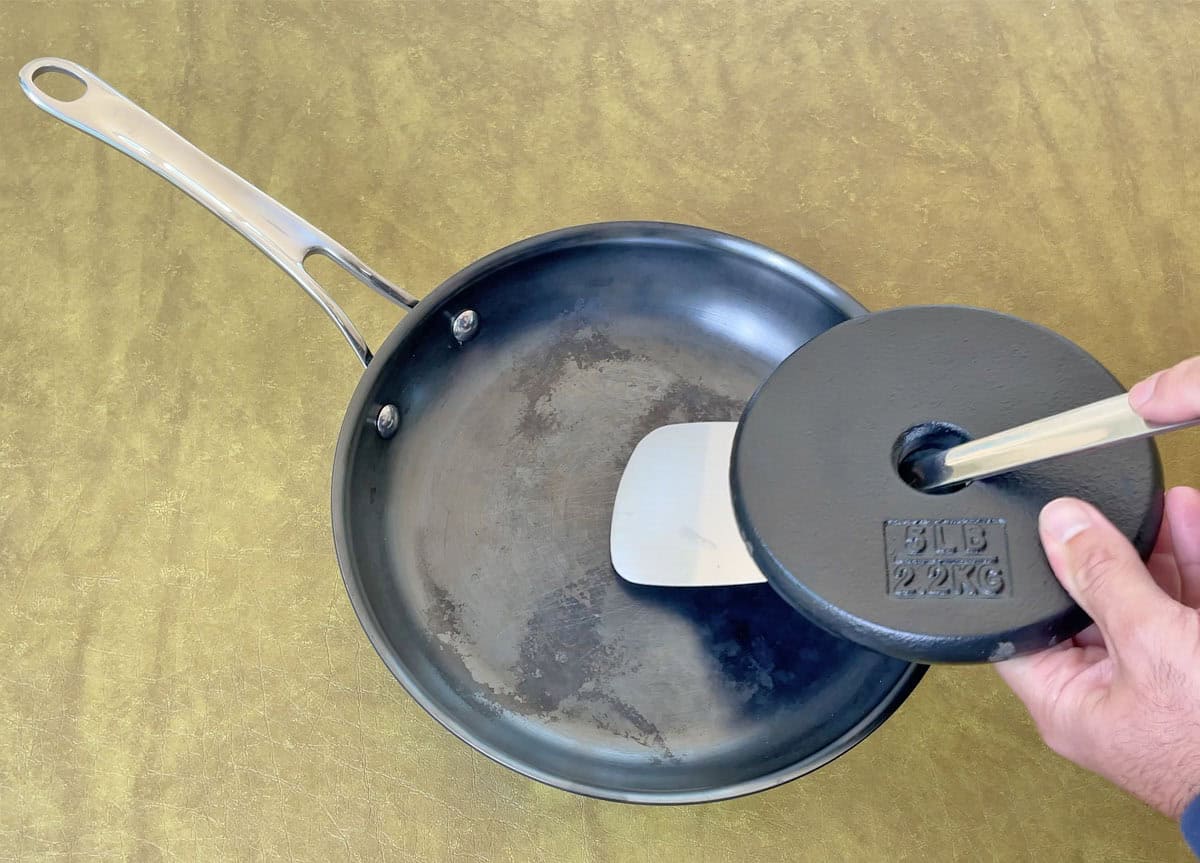
Then I repeated the same test with a metal spatula.
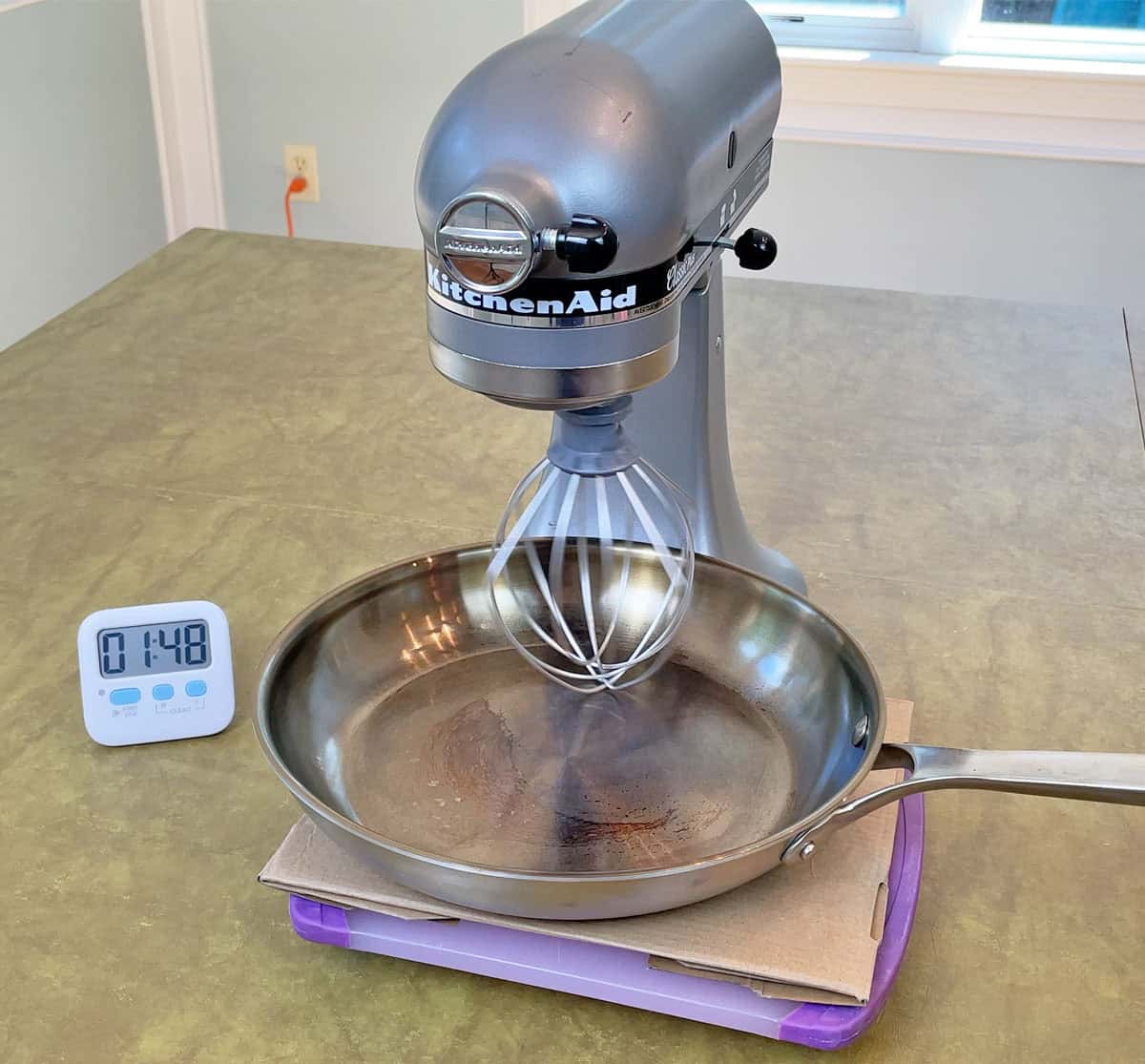
Finally, I rigged up a stand mixer so a whisk was in constant contact with the cooking surface for two minutes straight.
All three pans ended up with some light scuff marks, but there were no deep scratches and no structural damage. The surface still felt smooth to the touch, and there was no flaking or peeling since these pans don’t rely on a delicate nonstick coating.
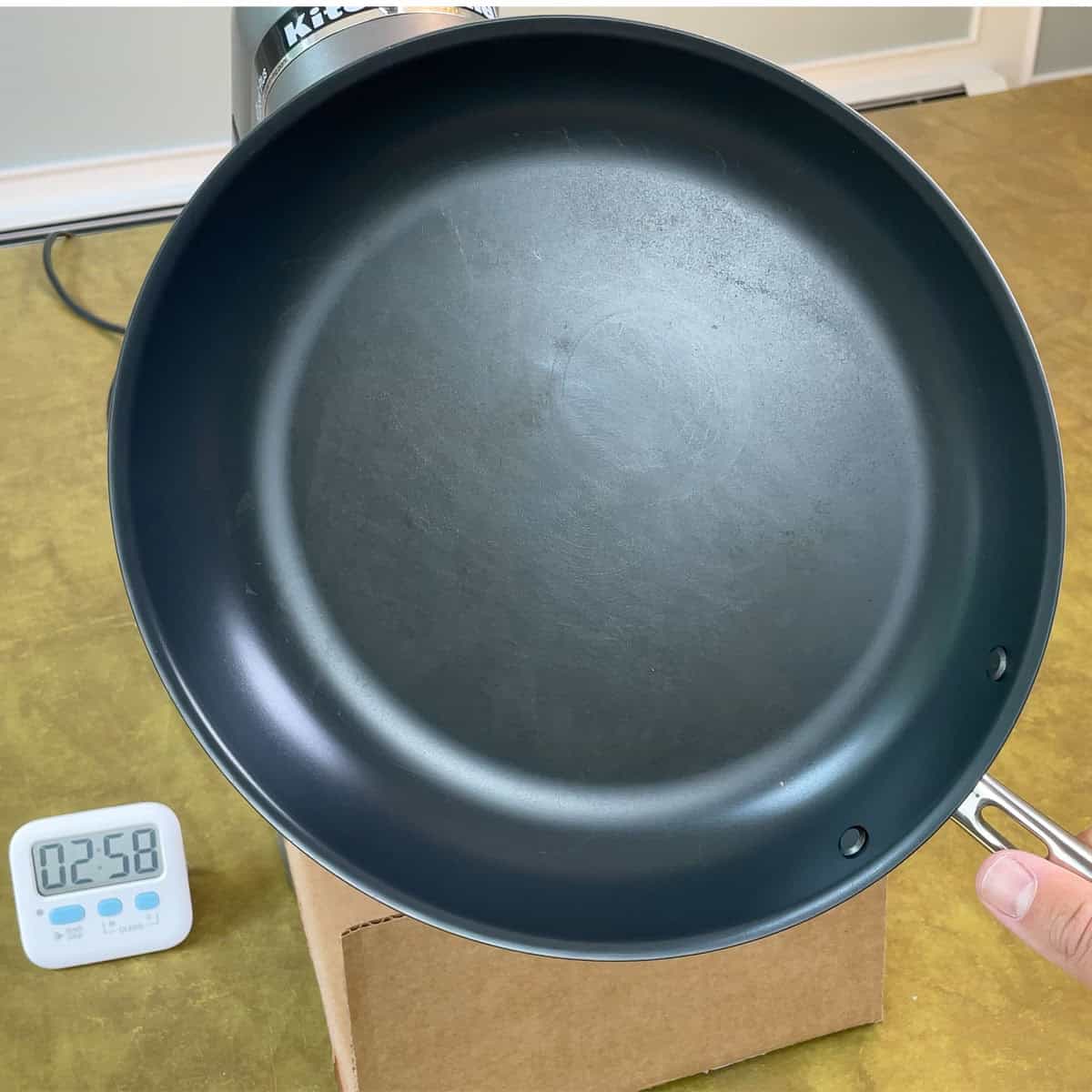
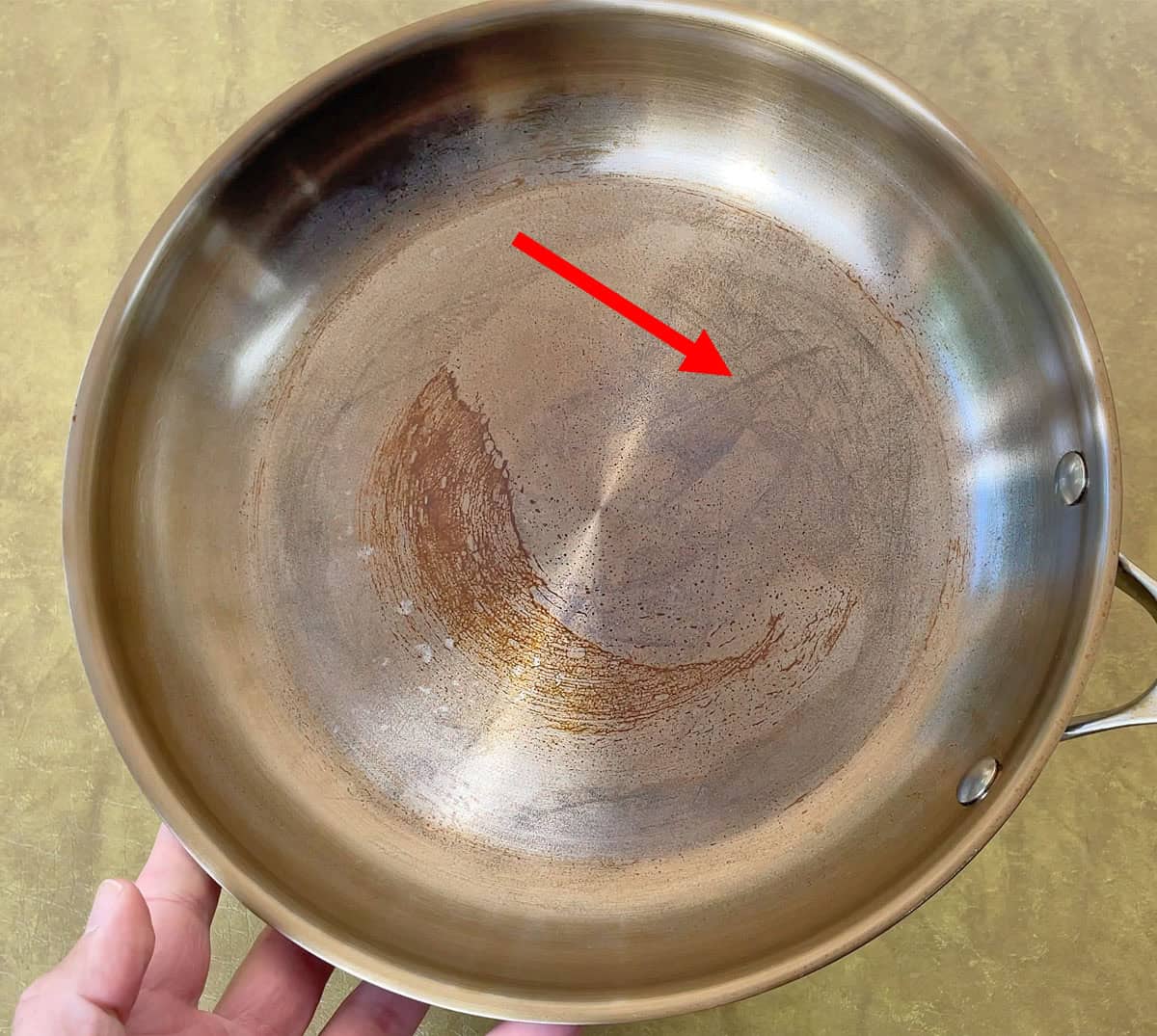
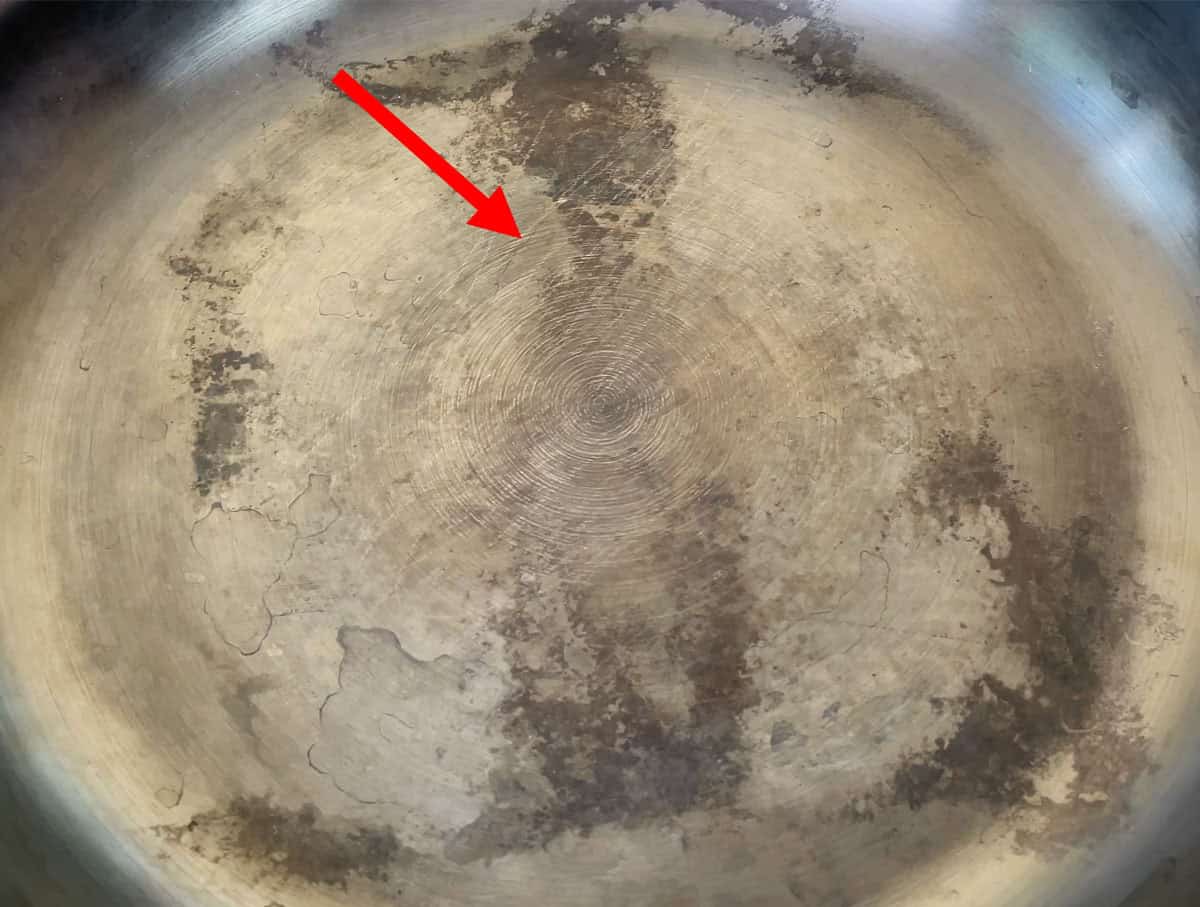
To put those results in perspective, I ran the exact same tests on a Teflon-coated pan, a ceramic nonstick pan, and a HexClad pan. All three of those showed visible scratches, and in the case of Teflon and ceramic, the coating was permanently damaged.

The carbon-steel surfaces on Misen, Strata, and Anolon clearly held up better than traditional nonstick or hybrid pans. Later on, I’ll cover whether those light scuffs had any effect on food release during my cooking tests.
Warp Test
Warping is a common concern with carbon steel pans, especially on induction cooktops that heat extremely fast. When different parts of the pan expand at different rates, it creates stress in the metal and can cause the cooking surface to bow or dome.
Since Anolon is a single layer of carbon steel, it’s more vulnerable to this issue. Misen and Strata both have aluminum cores, which, in theory, help spread heat more evenly and reduce the internal stress that leads to warping.
To test this, I first measured how flat each pan was, then heated them to 425 °F on induction for two minutes. All three started out slightly concave — which is intentional, since manufacturers build in a small curve to allow for expansion. After heating, none of them showed any visible change in flatness.
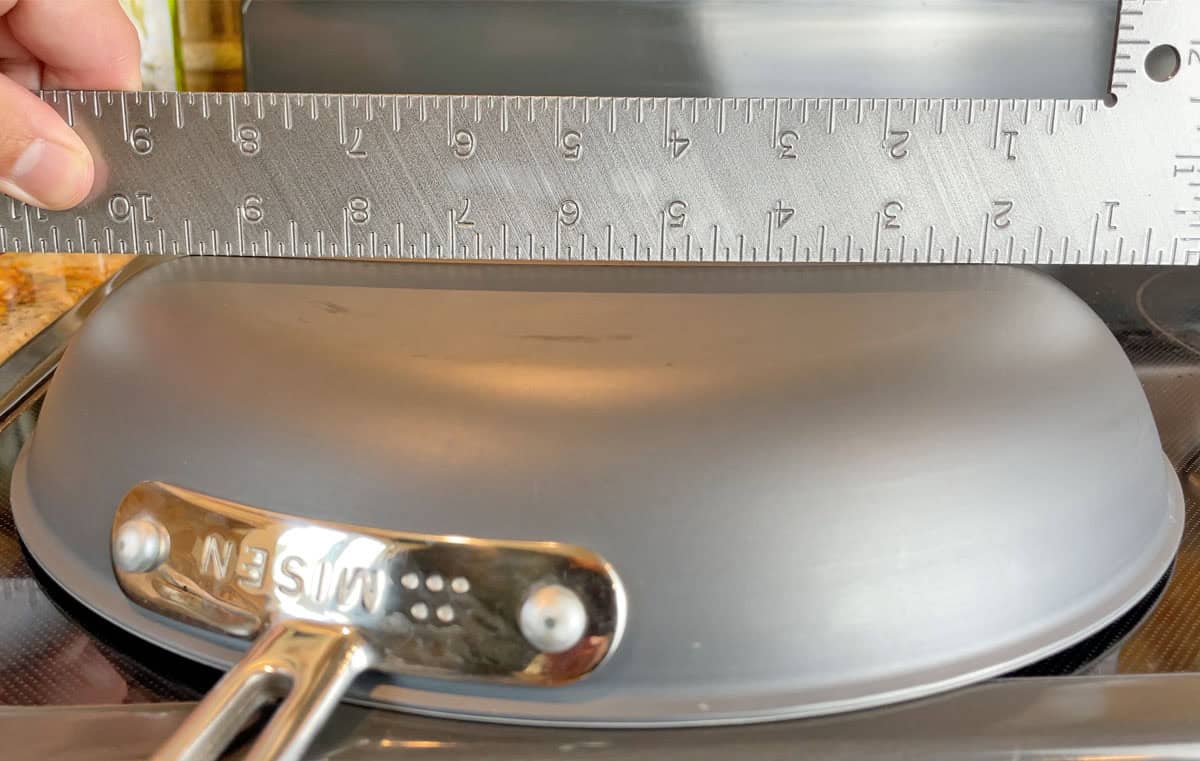
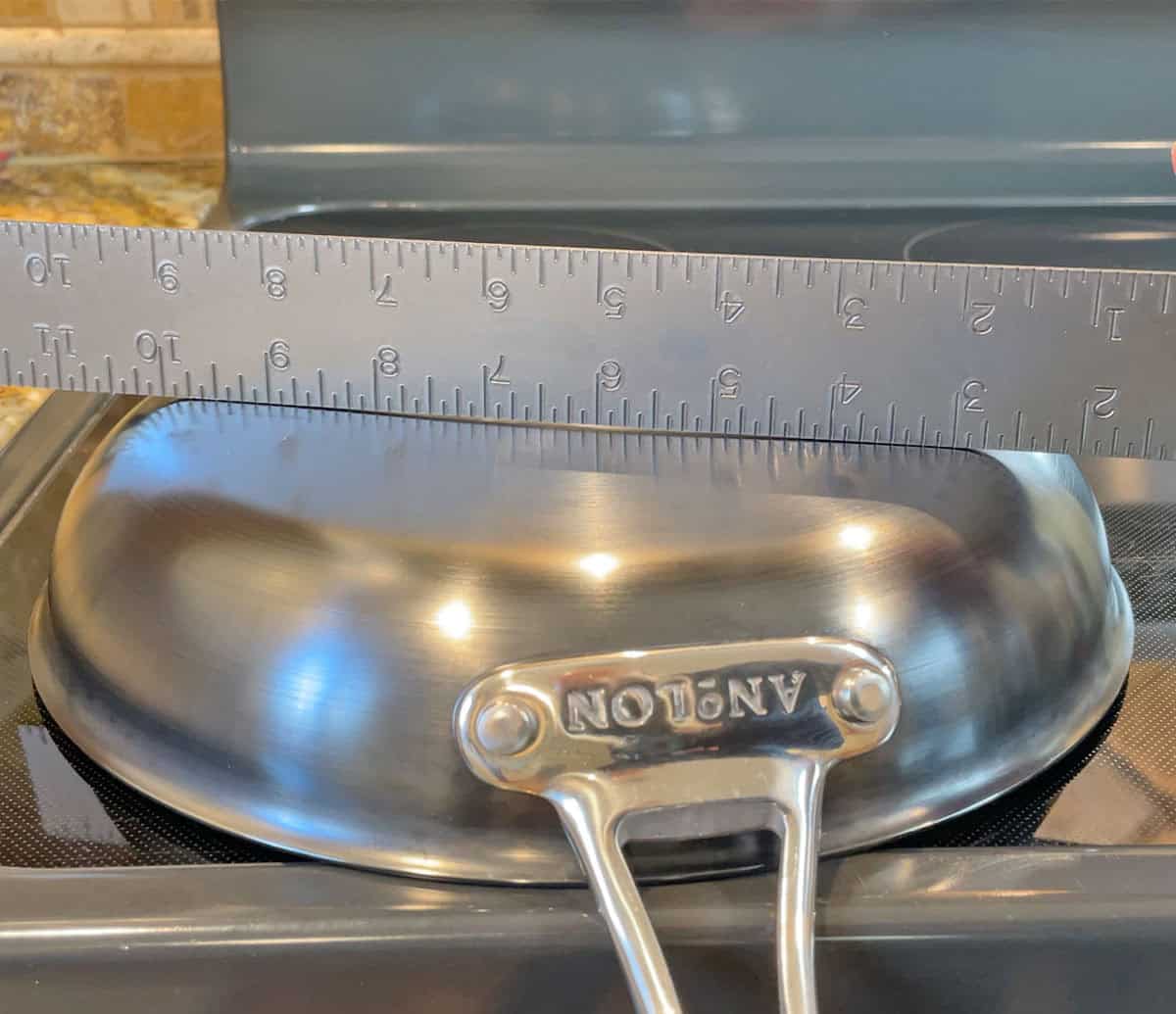
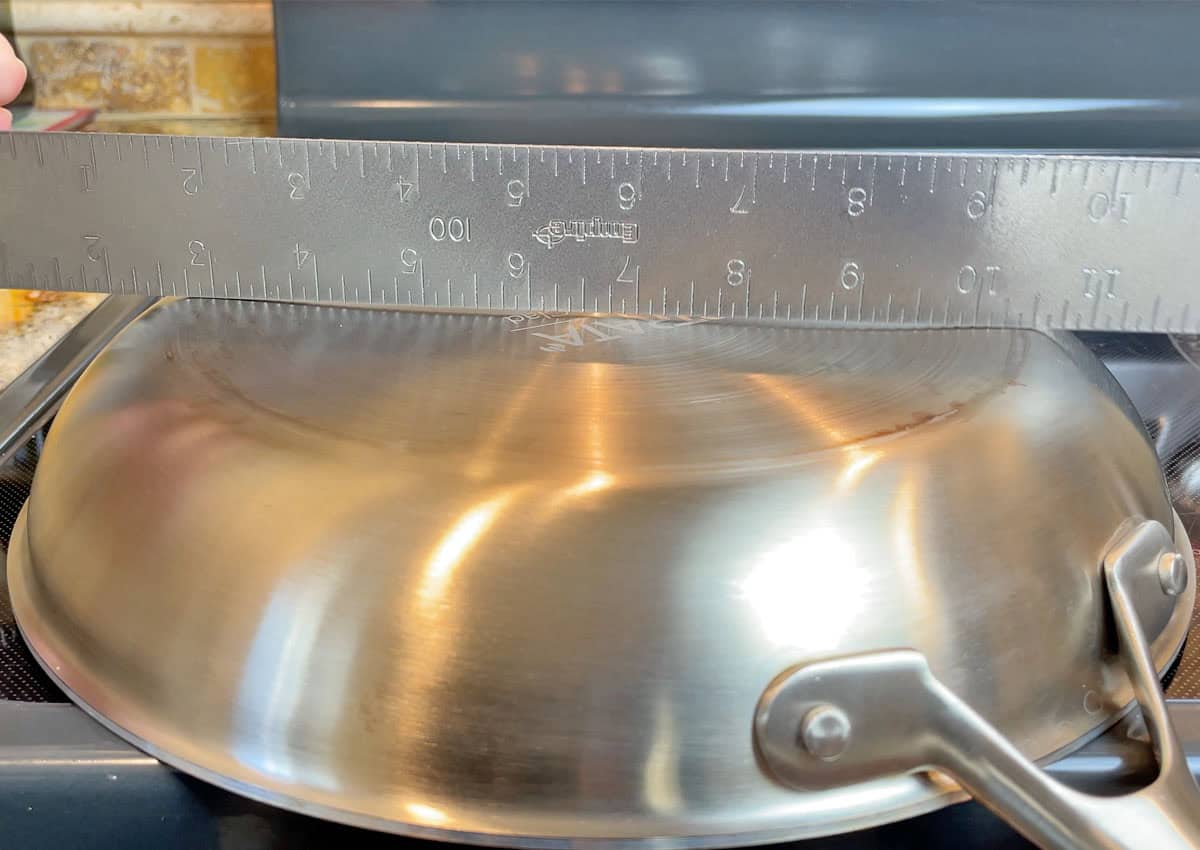
For context, I’ve run the same test on other carbon steel pans, and not all of them hold their shape this well. For example, when I tested the de Buyer Blue Carbon Steel pan under the same conditions, the center bowed upward significantly. That doming caused oil and butter to run to the edges instead of staying beneath the food, which led to uneven browning.
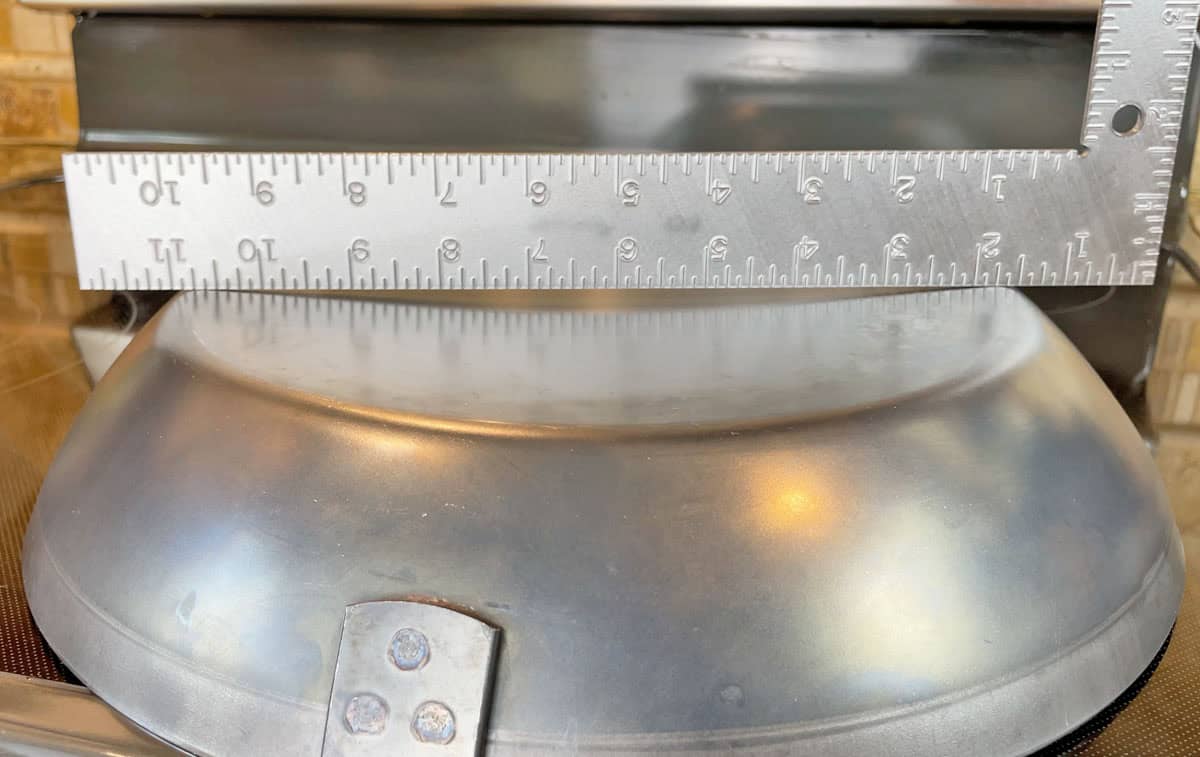
The fact that Misen, Strata, and Anolon all maintained their shape under the same stress shows they’re built with enough thickness and rigidity to withstand high heat without warping.
Rust Test
One of the biggest differences between these pans is how they handle seasoning and rust.
Misen and Anolon are made of nitrided carbon steel, and because of that, both claim you don’t need to season them. Strata, on the other hand, has a regular carbon steel cooking surface, which does require seasoning to stay protected.
To test these claims, I got all three pans wet and left them overnight. The next morning, none of them had any rust. That result suggested the nitrided layer on Misen and Anolon was doing its job, while Strata’s seasoning held up at first.
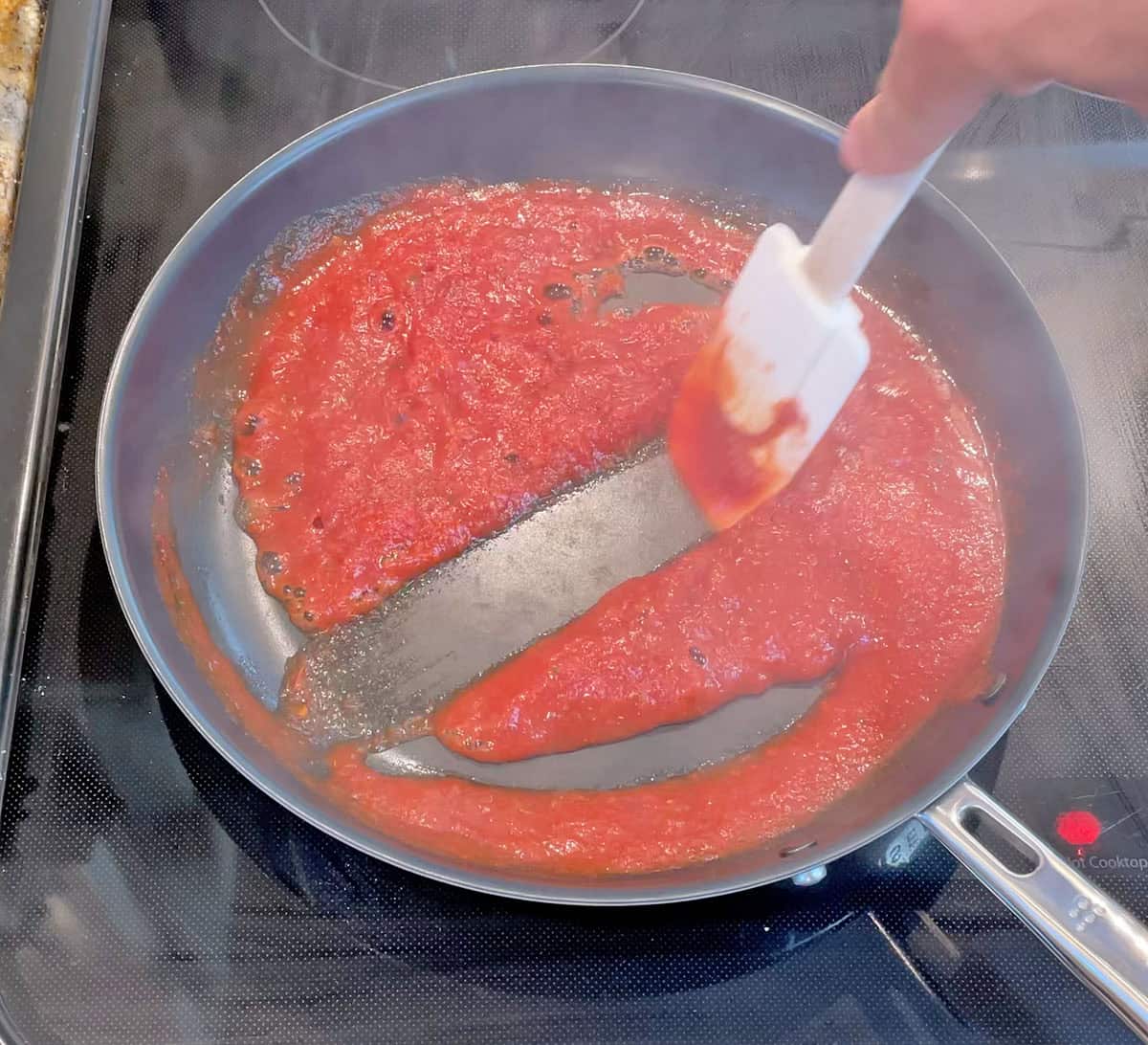
Next, I simmered crushed tomatoes in each pan for 15 minutes. Acidic foods usually break down seasoning, and that’s exactly what happened with Strata. Its surface went from dark and well-seasoned to light and patchy. Misen and Anolon were unchanged, showing no signs of breakdown.
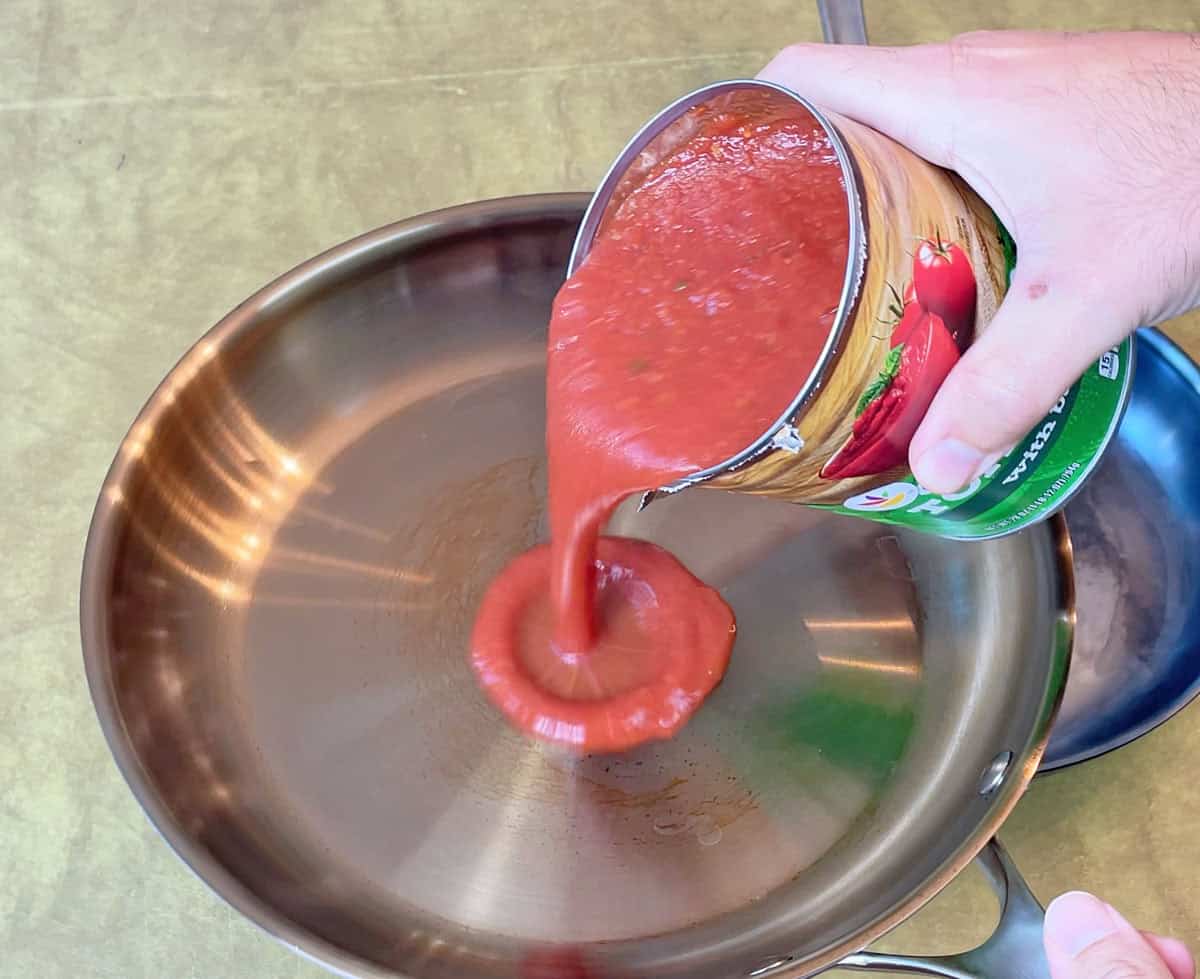
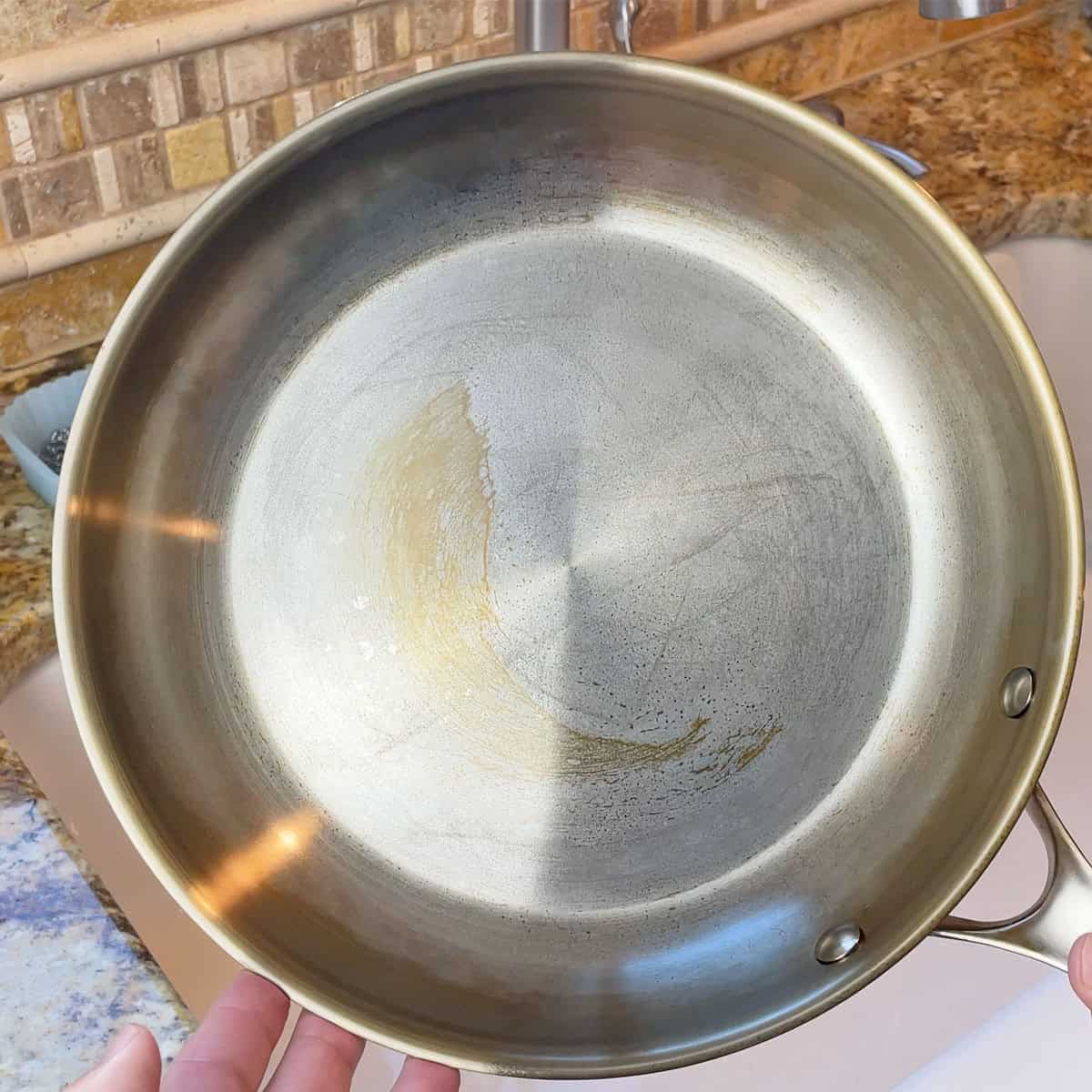
After that, I repeated the overnight water test. Again, Misen and Anolon showed no rust. But since the tomato sauce had stripped away Strata’s seasoning layer, its cooking surface came back rusty the next morning.
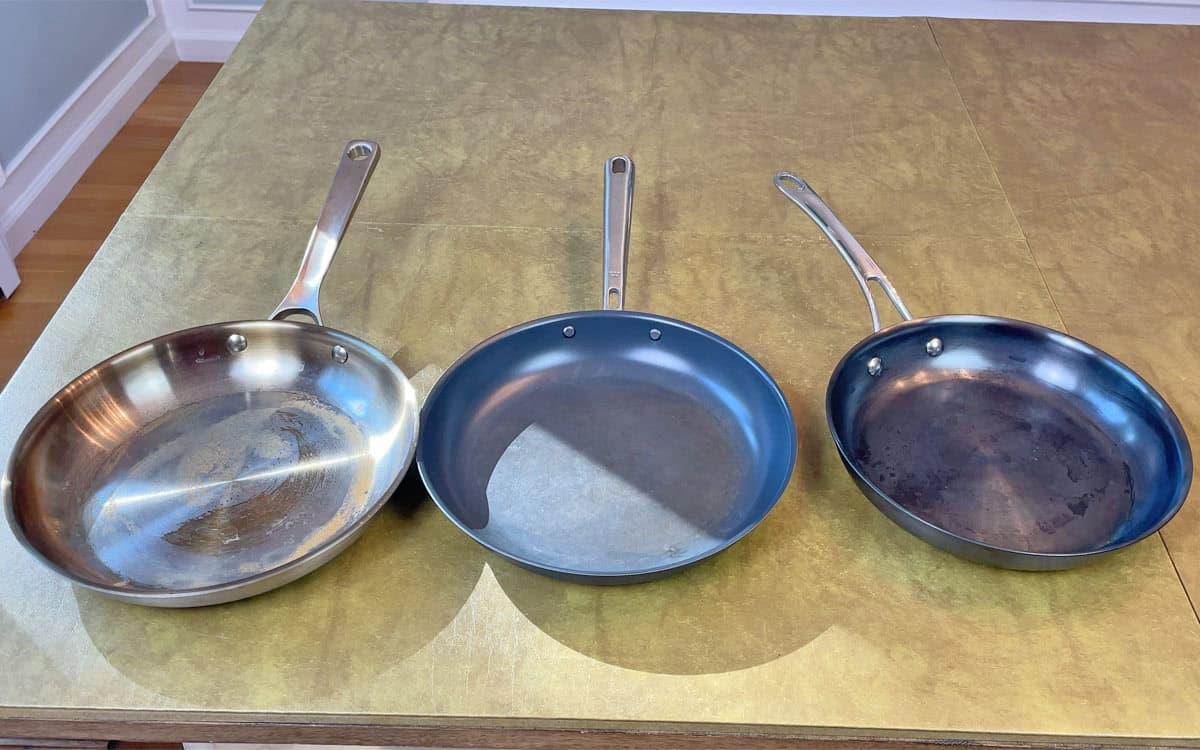
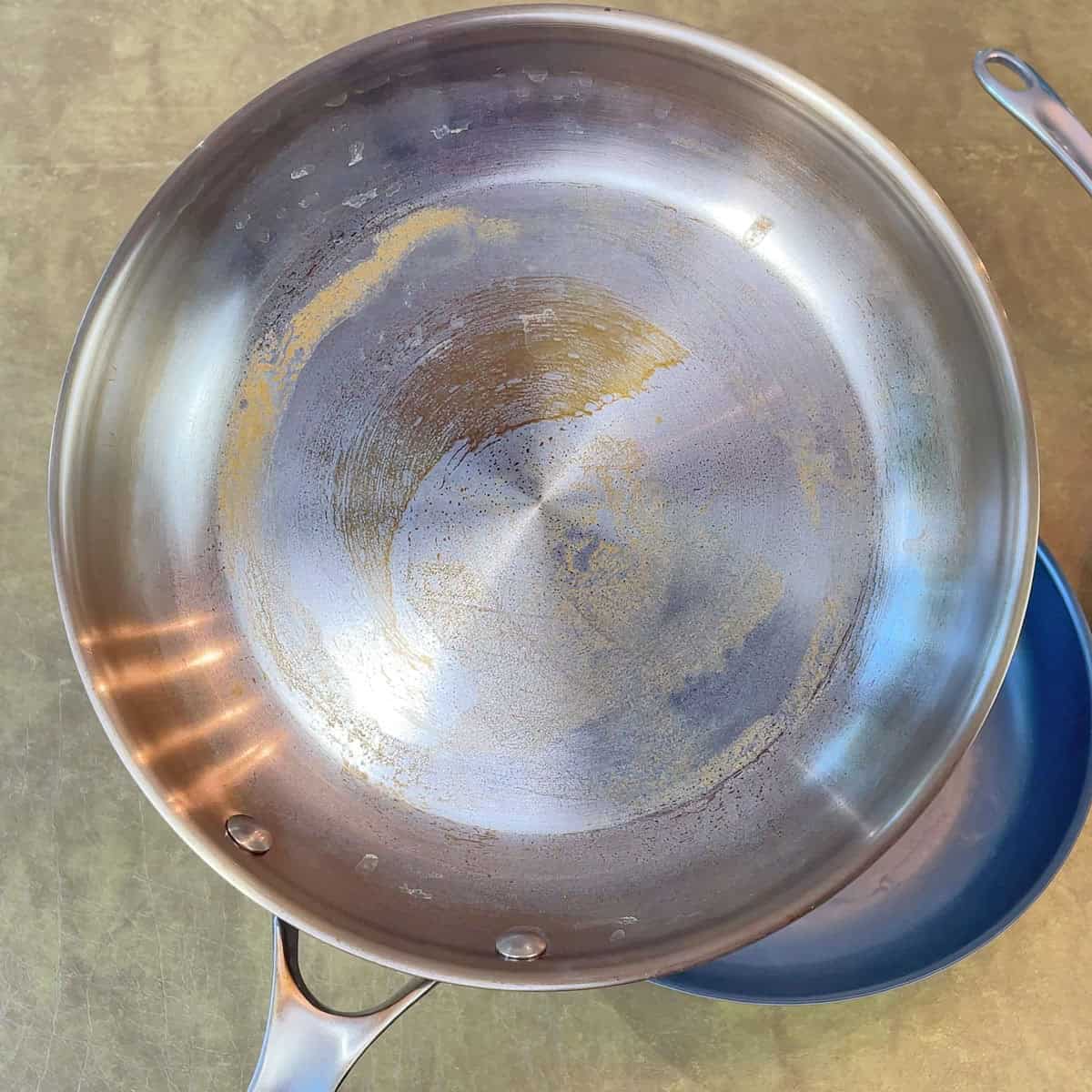
The key takeaway is that Misen and Anolon are truly low-maintenance. You don’t have to build up or constantly repair a seasoning layer, and they resist rust even after prolonged exposure to water or acidic foods.
With Strata, you do have to season it to protect the surface, and if you frequently cook acidic dishes, you’ll find that layer breaking down and needing to be rebuilt.
Liquid Test
Besides the extra maintenance, seasoned pans like Strata are also not the best option for liquid-heavy cooking.
To test this, I poured clean filtered water into each pan, boiled them for 10 minutes, and then poured the water back into glasses. The water from Misen and Anolon came out completely clear. The water from Strata was cloudy with a yellow tint, which indicates that bits of the seasoning layer were breaking down and leaching into the liquid.
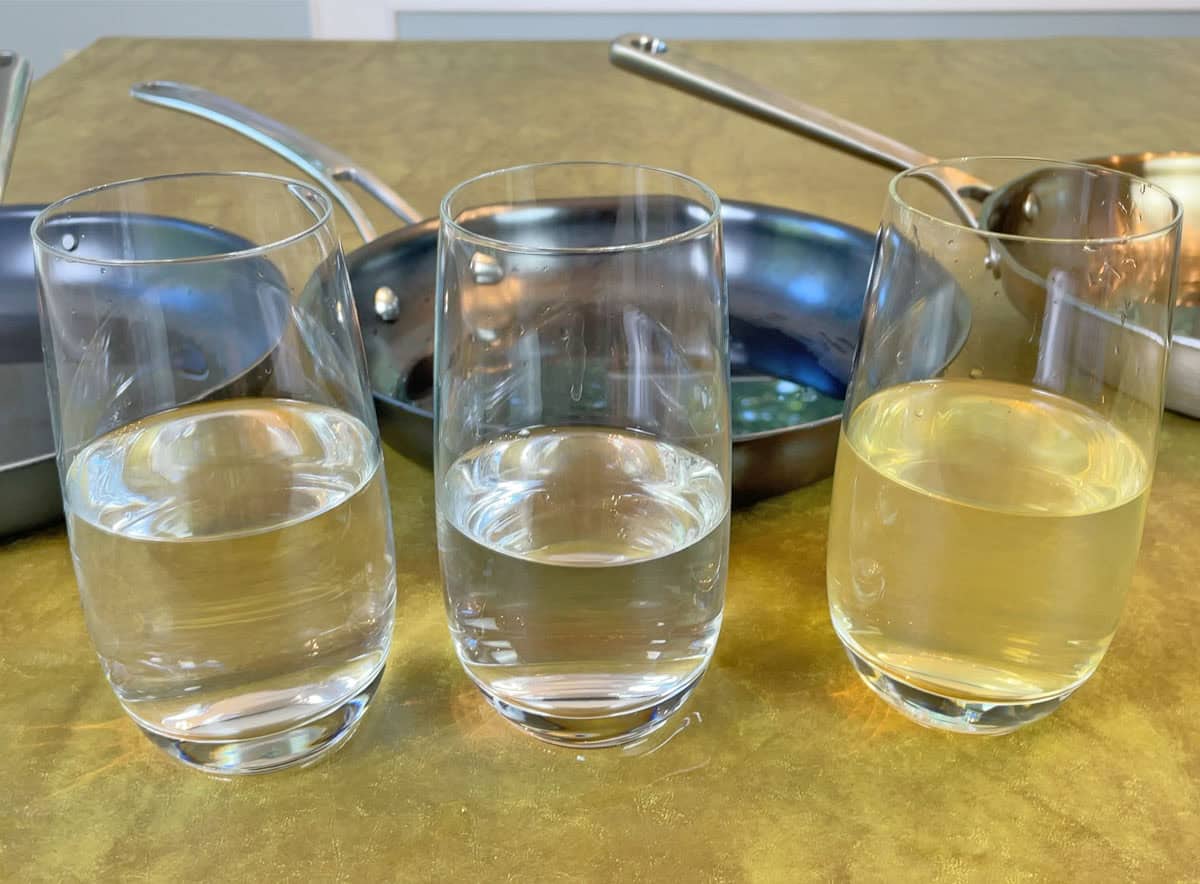
This result is normal for seasoned carbon steel or cast iron cookware, but it highlights another advantage of the nitrided surfaces on Misen and Anolon. They do not shed seasoning into liquids, which makes them better suited for soups, stews, or other recipes where the pan stays in contact with water for long periods.
Heat Test
Another key factor is how fast and evenly these pans heat, and how well they hold that heat.
To test that, I heated each pan on medium and measured the surface temperature at the center and edge after two minutes. Anolon was by far the fastest to heat. By 1 minute and 50 seconds, the center was already hotter than my surface thermometer could read, which maxes out at 575 °F. The edge measured 471 °F, which means the center was even hotter but I could not capture the exact number.
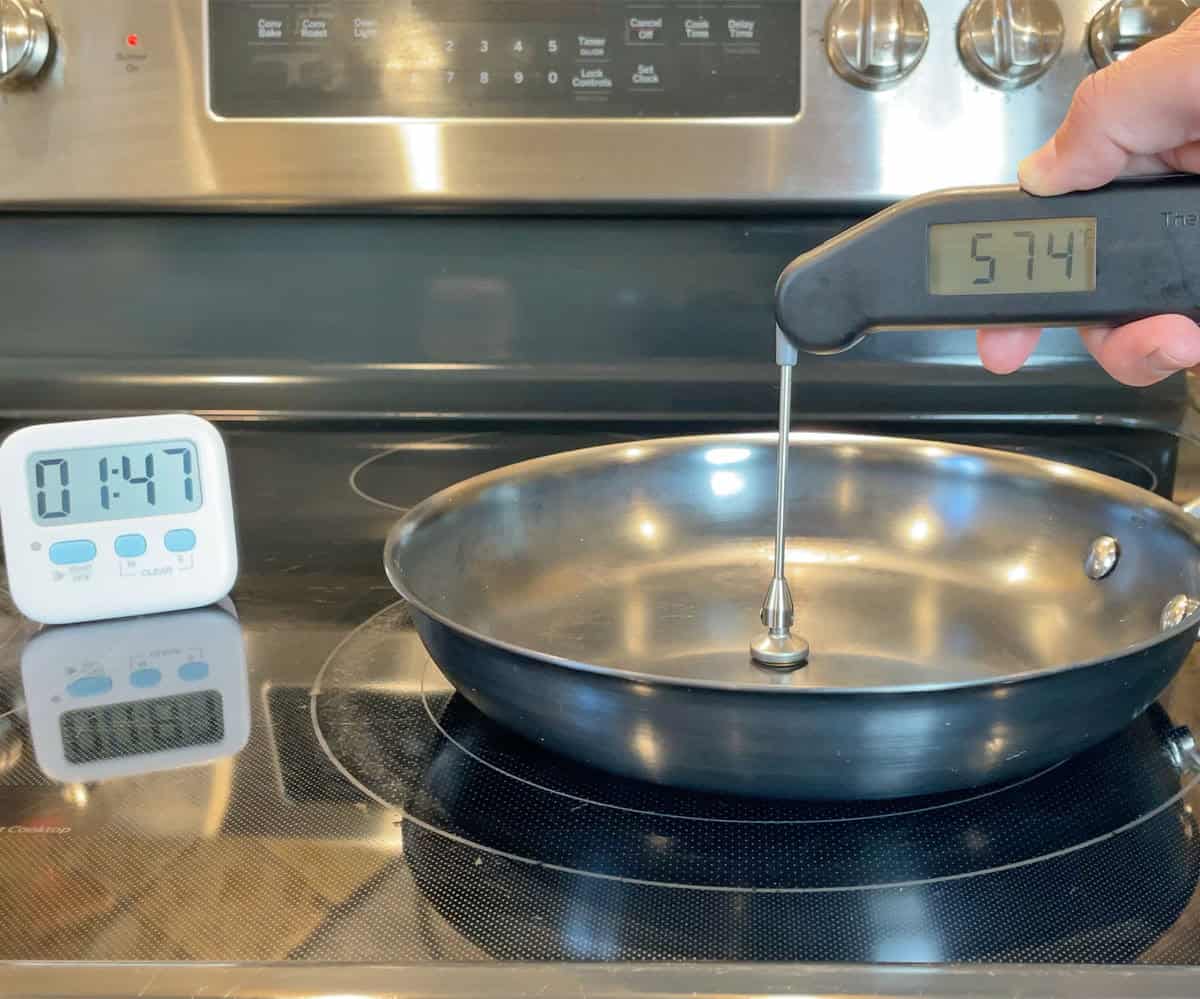
That kind of speed makes it very easy to overshoot your target temperature. A few times during testing I had to stop, open a window, and start over because the pan began smoking before I could add food.
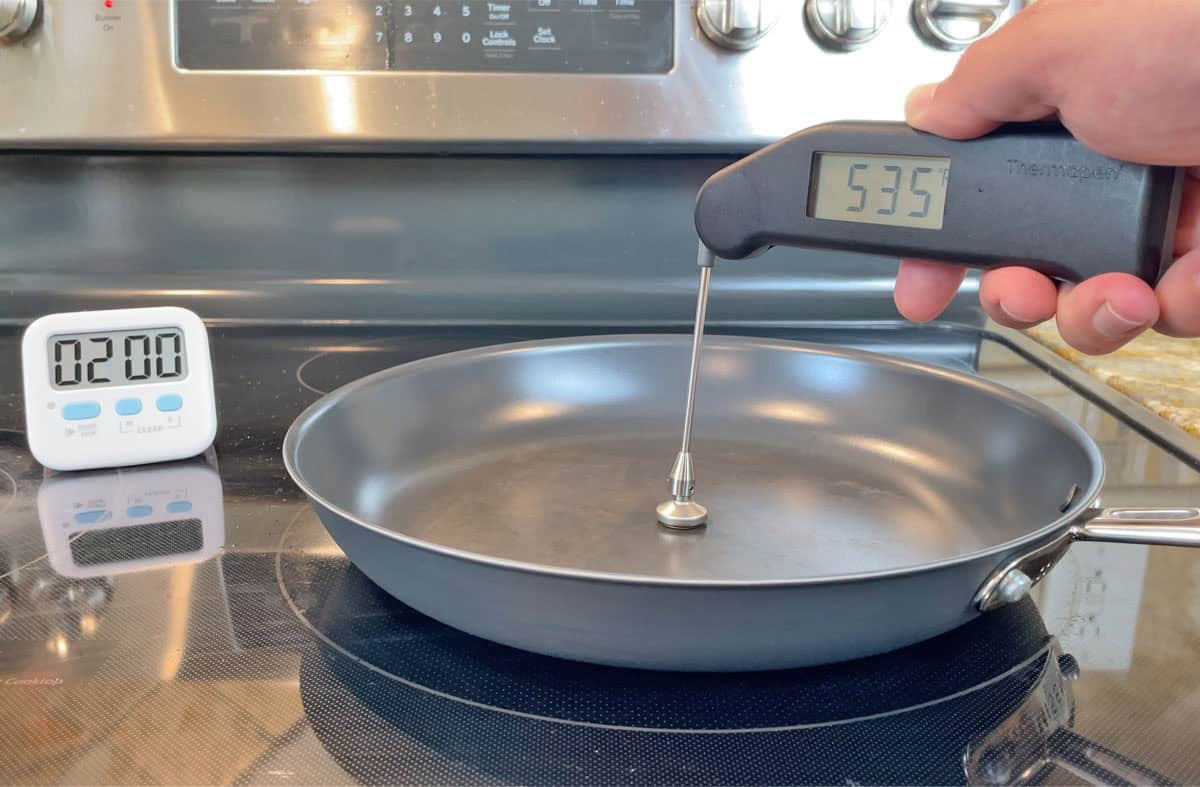
Misen was slightly more controlled but still ran hot, hitting 535°F in the center and 465°F at the edge after two minutes. That 70-degree difference showed it did not heat as evenly as Strata.
Strata was the slowest to heat, with a center reading of 418°F and an edge reading of 415°F after two minutes. But it was also the most even, with only a three-degree difference across the surface.
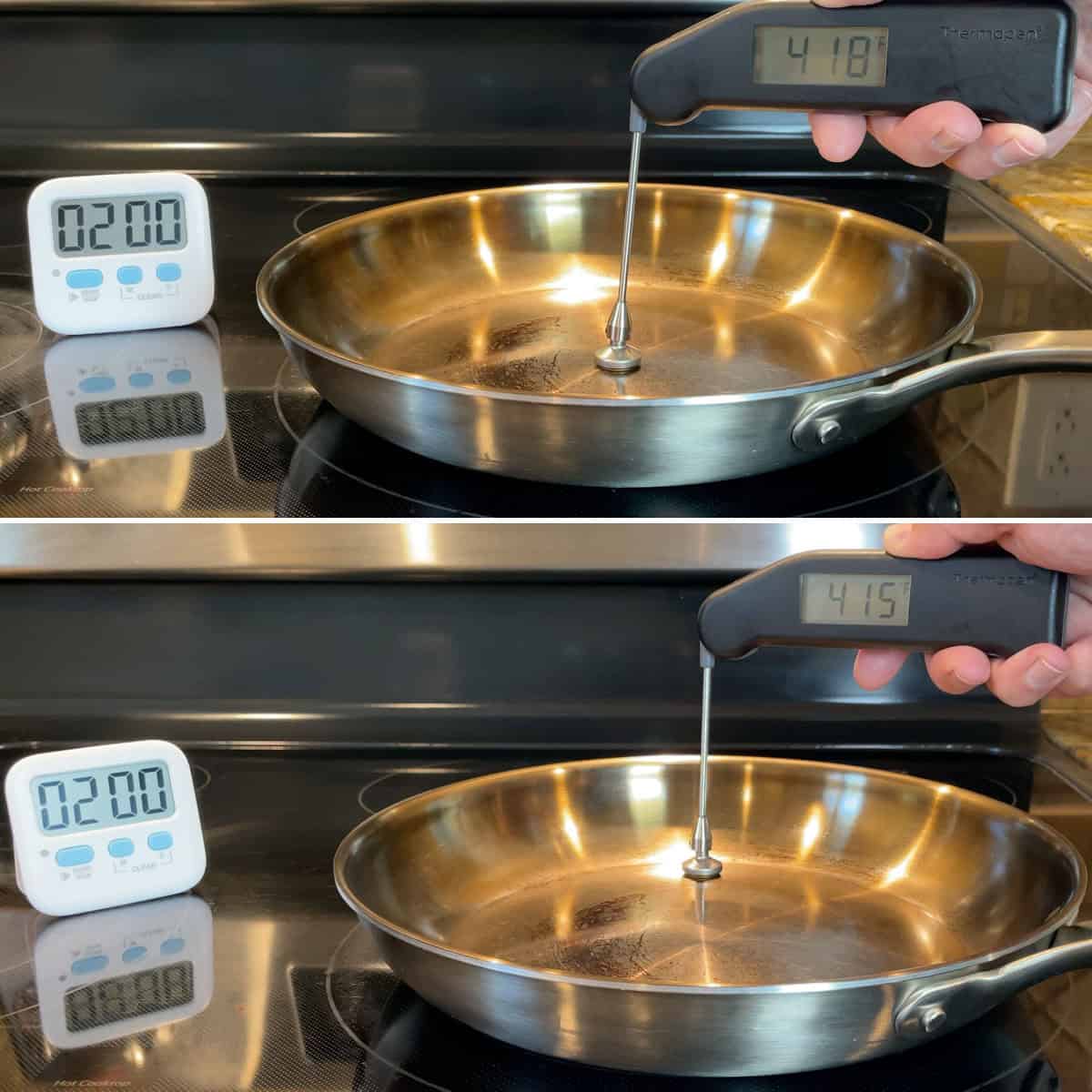
In real cooking, that evenness translated directly to results. When I cooked a full pan of chicken, the pieces around the edge browned just as evenly as the ones in the center.

That is not always the case with cast iron or traditional carbon steel pans, which often run hotter in the middle.

To measure heat retention, I heated each pan to exactly 400°F, removed them from the burner, and recorded the surface temperature after five minutes. These pans are designed to be lightweight and easy to handle, so they are not optimized for retention the way thicker carbon steel or cast iron pans are. But within this group, Strata held its temperature the best at 129°F, compared to 118°F for Anolon and 117°F for Misen.
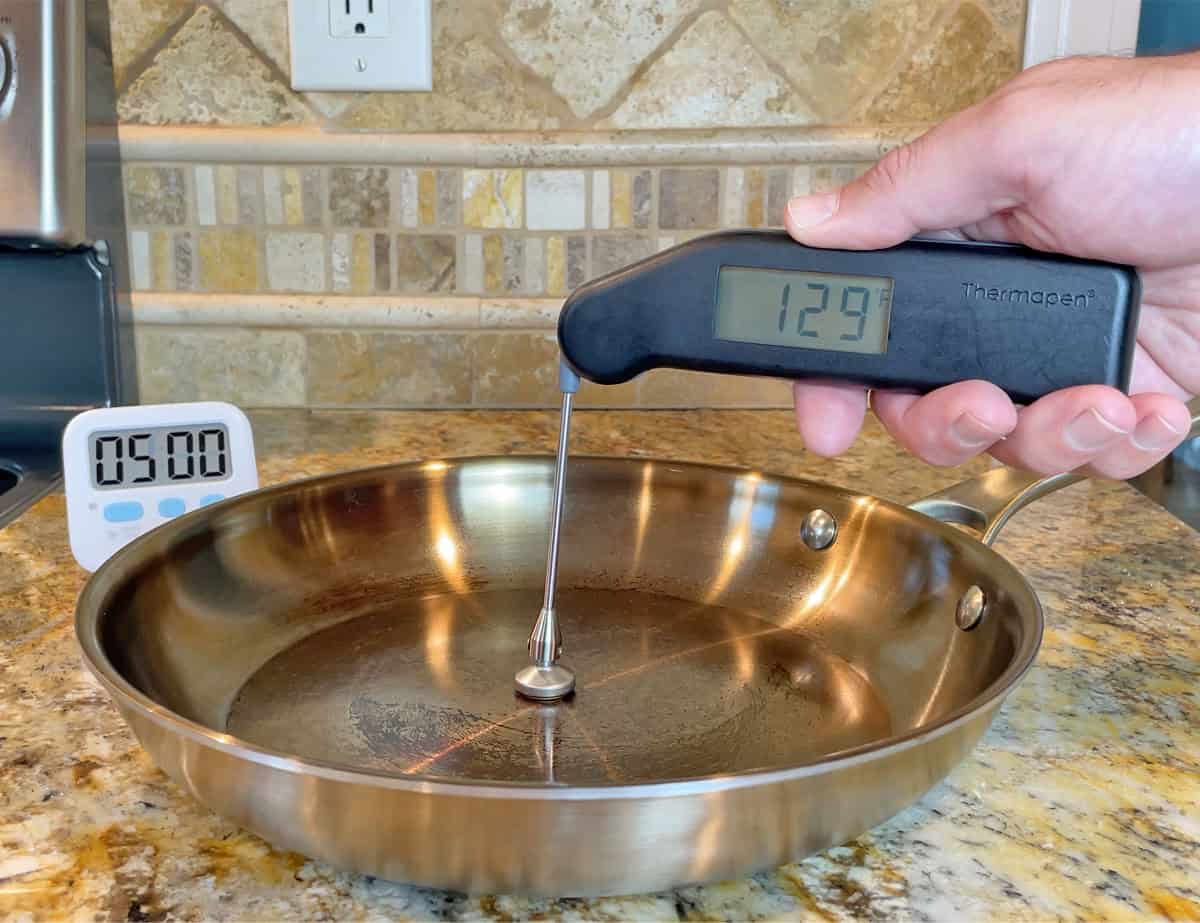
The data shows a clear trade-off. Anolon heats up the fastest but requires constant attention to avoid overheating. Misen also gets hot quickly and reaches high temperatures, but with a 70°F difference between the center and edge, it does not cook as evenly. Strata is slower to heat but much more balanced, making it the easiest to use if you want consistent results across the surface.
Nonstick Test
Arguably the most important factor with these pans is how well they release food, and whether their nonstick properties change over time.
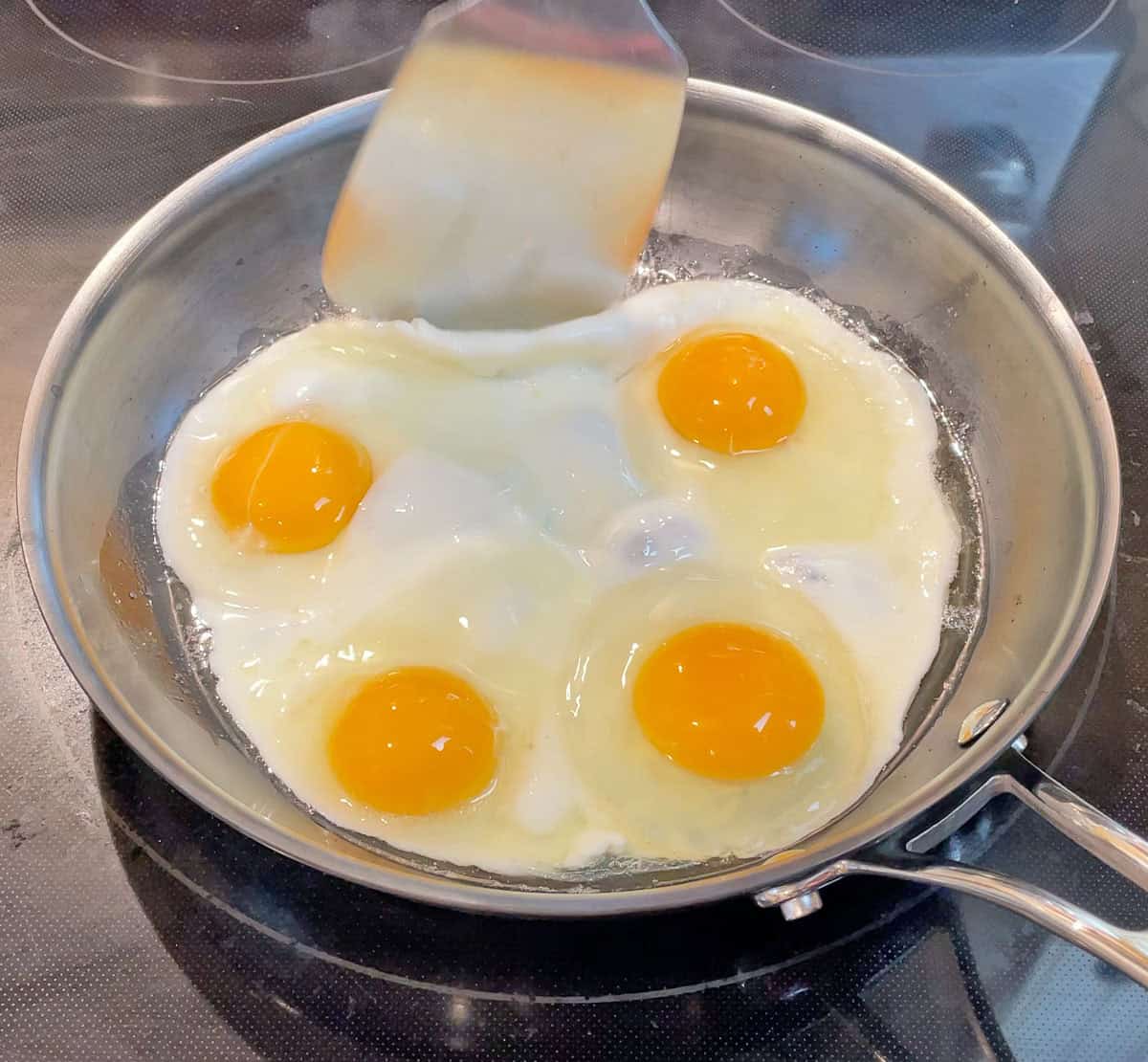
Strata and Anolon both claim their surfaces become naturally nonstick as seasoning builds. Misen goes further, branding its pan as nonstick and claiming it performs that way right out of the box.
To test these promises, I cooked a wide range of foods with each pan for several months, including eggs, pancakes, fish, vegetables, and meats. After that real-world use and after running my durability tests, I set up four controlled experiments.
Egg Test #1 (Standard Fat): I preheated each pan to 325 °F, added one teaspoon of oil and five grams of butter, and cooked an egg. All three pans passed this test. The eggs slid around the surface without sticking.
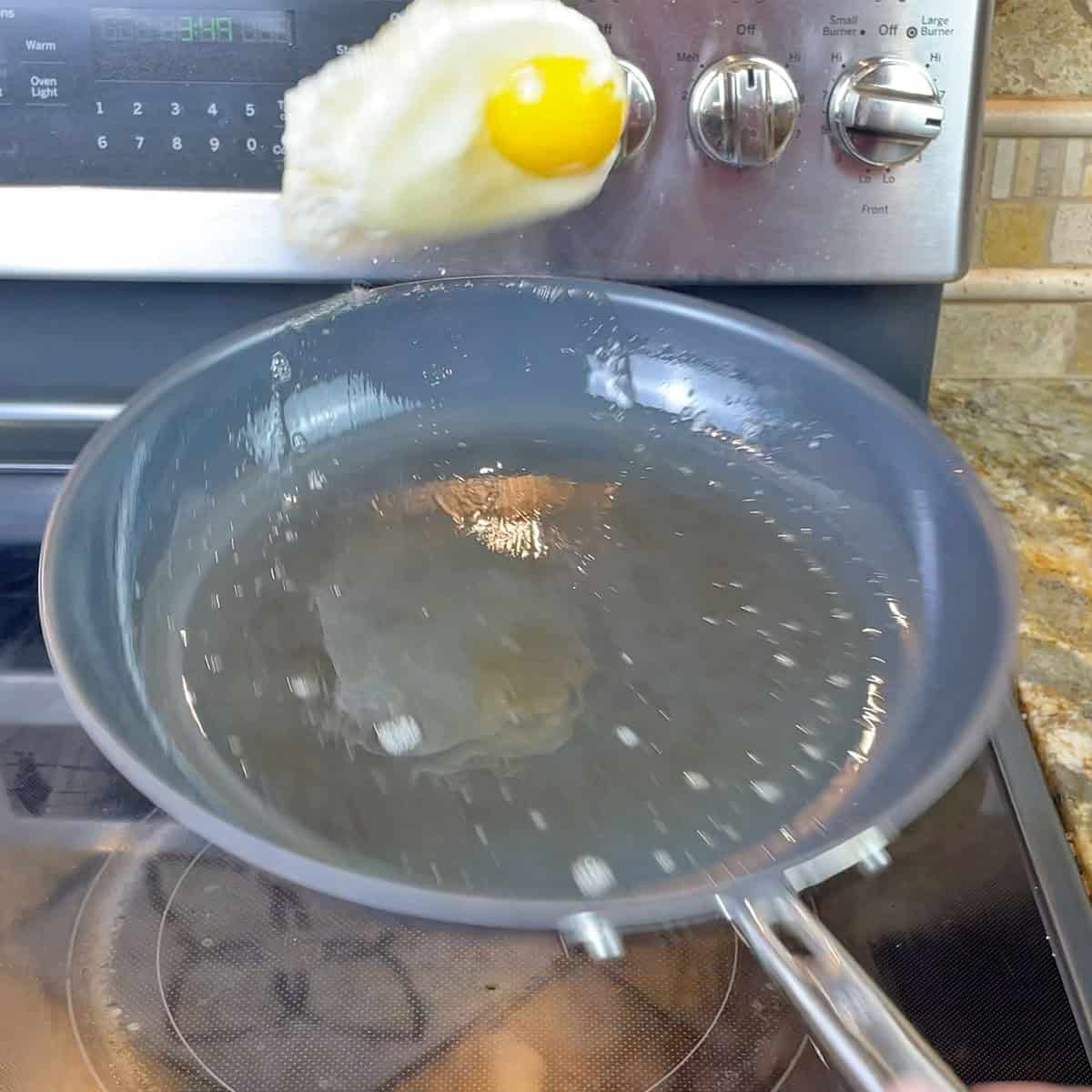
The only exception came with Anolon on my first attempt. It reached 325 °F as expected, but in the few seconds it took me to crack the egg and drop it in, the surface temperature climbed higher and the egg stuck. When I preheated it more gradually, the egg released without issues.
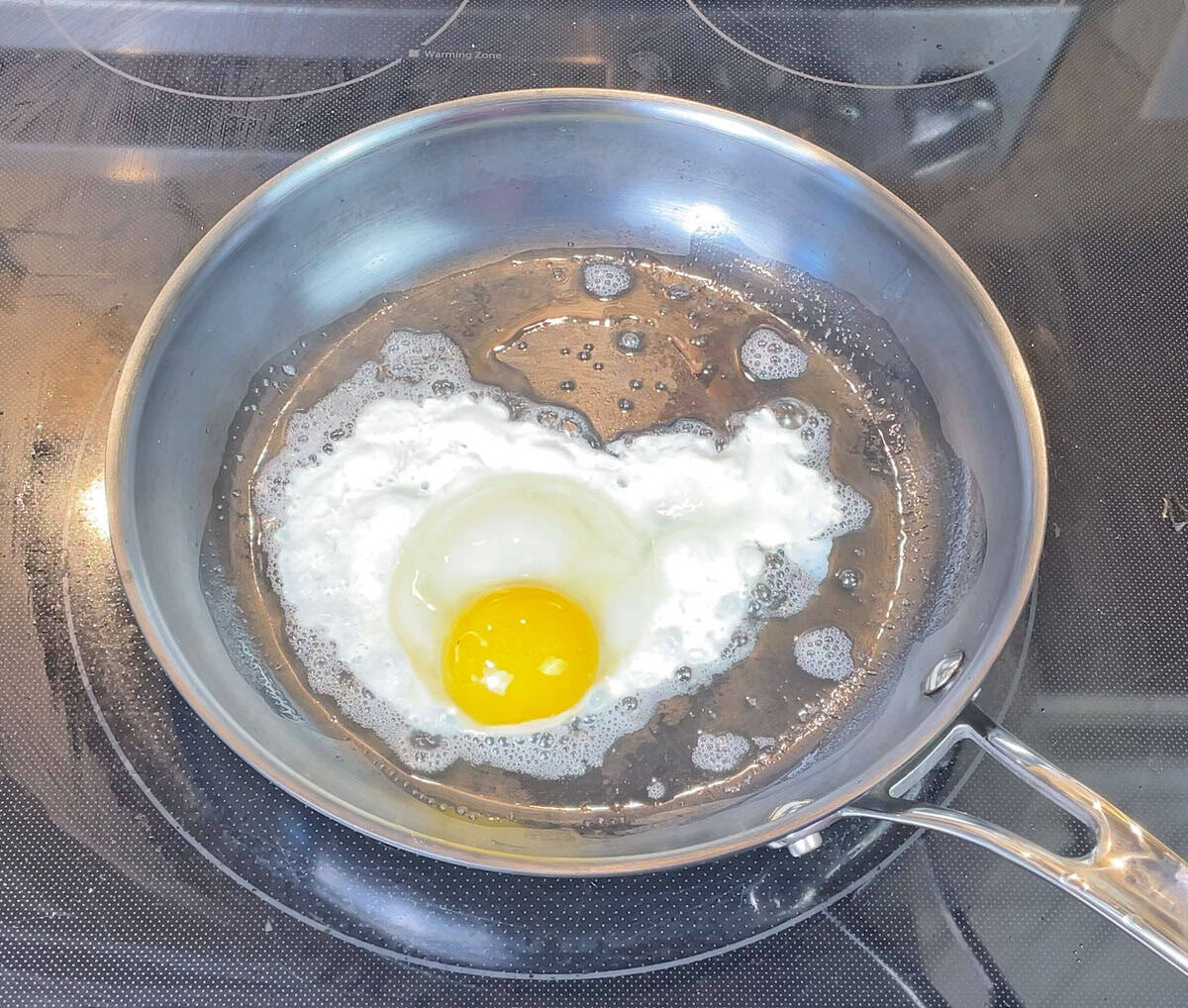
Egg Test #2 (Reduced Fat): In this trial, I reduced the amount of fat to half a teaspoon of oil and two grams of butter. Even with less fat, all three pans released the eggs cleanly and none of them stuck.
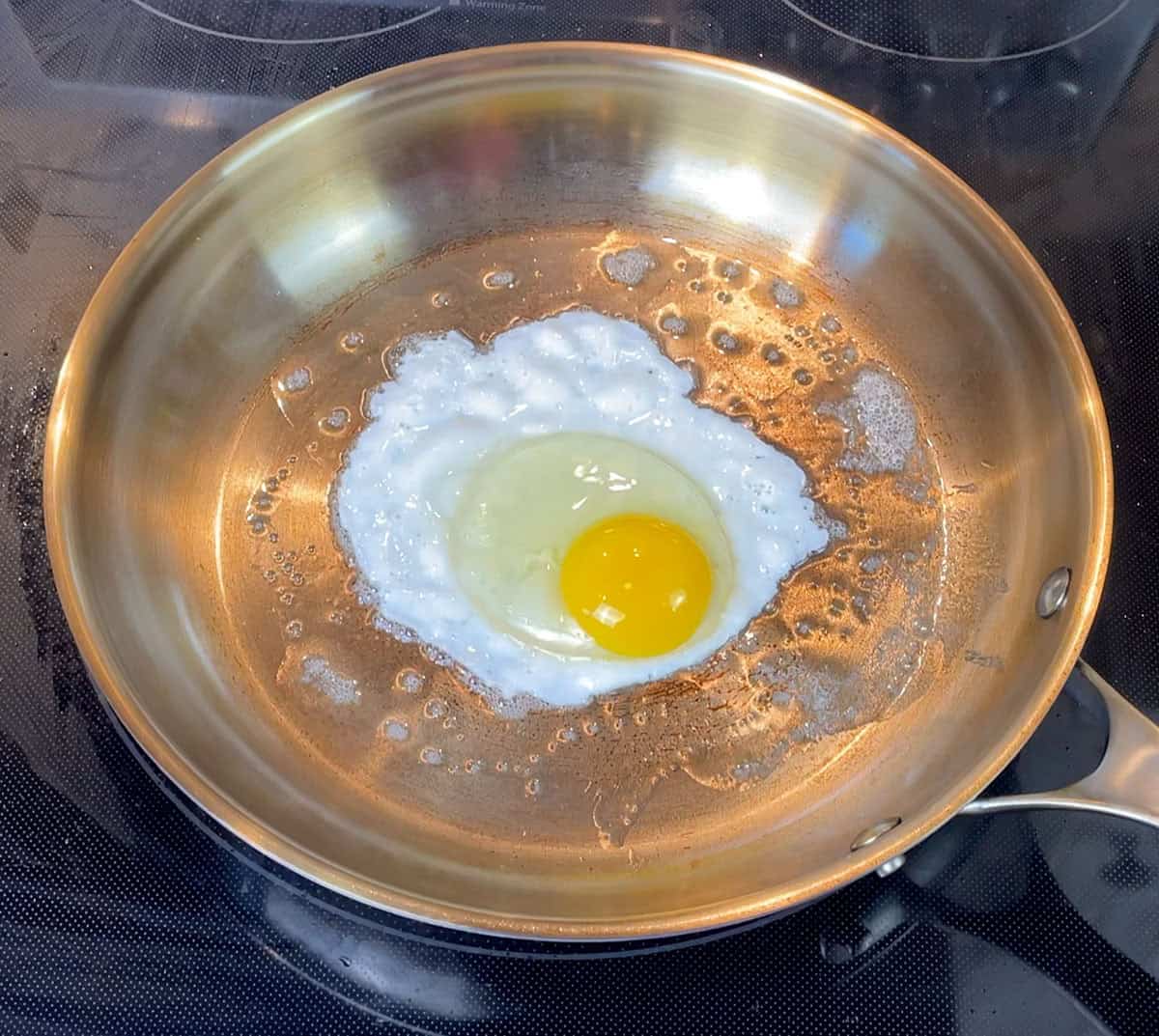
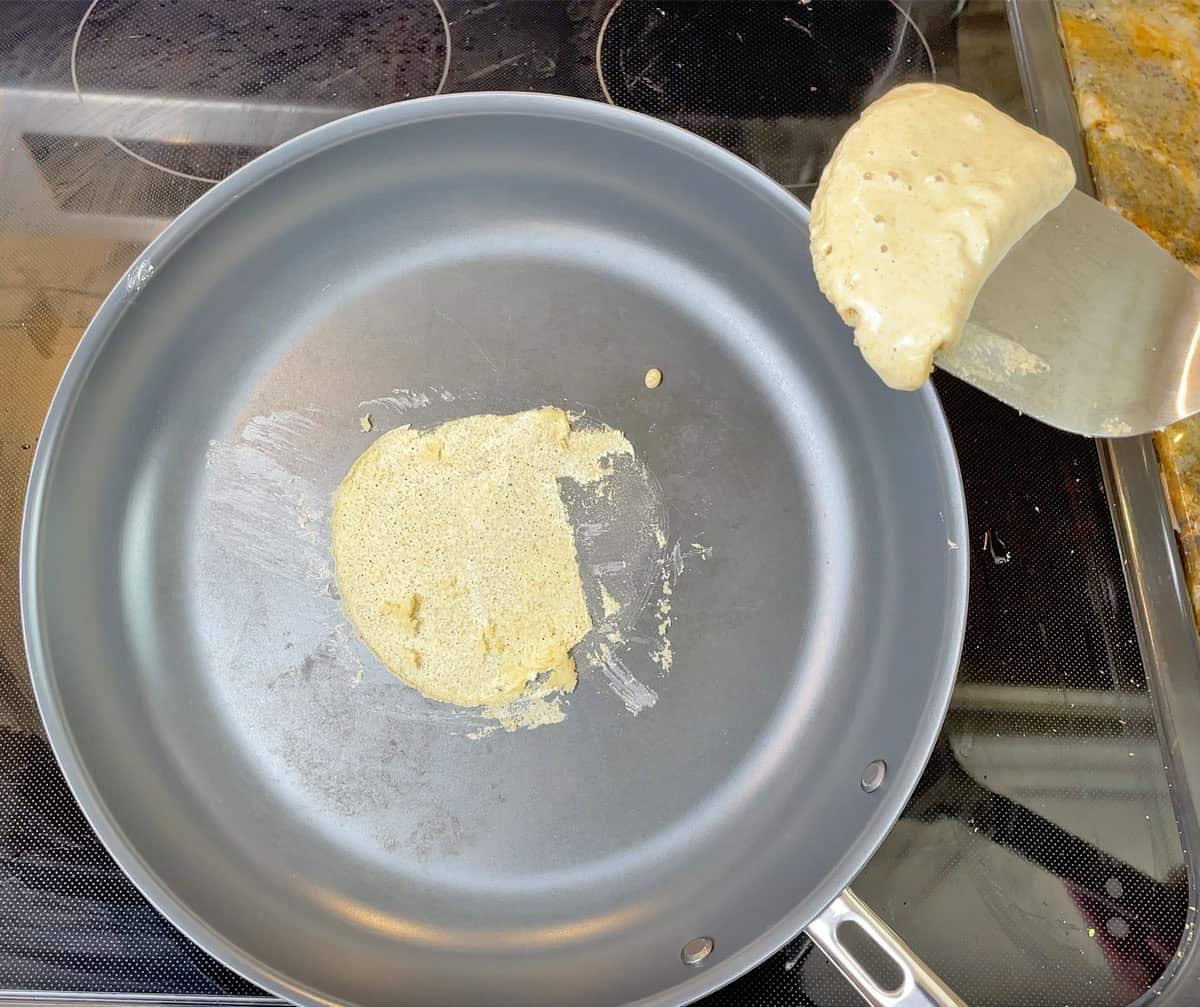
Pancake Test (Light Butter): I cooked pancakes with a light coating of butter. Misen and Anolon released the pancakes cleanly, while Strata had slight sticking. I needed to work the spatula under the pancake, but it still came off in one piece.
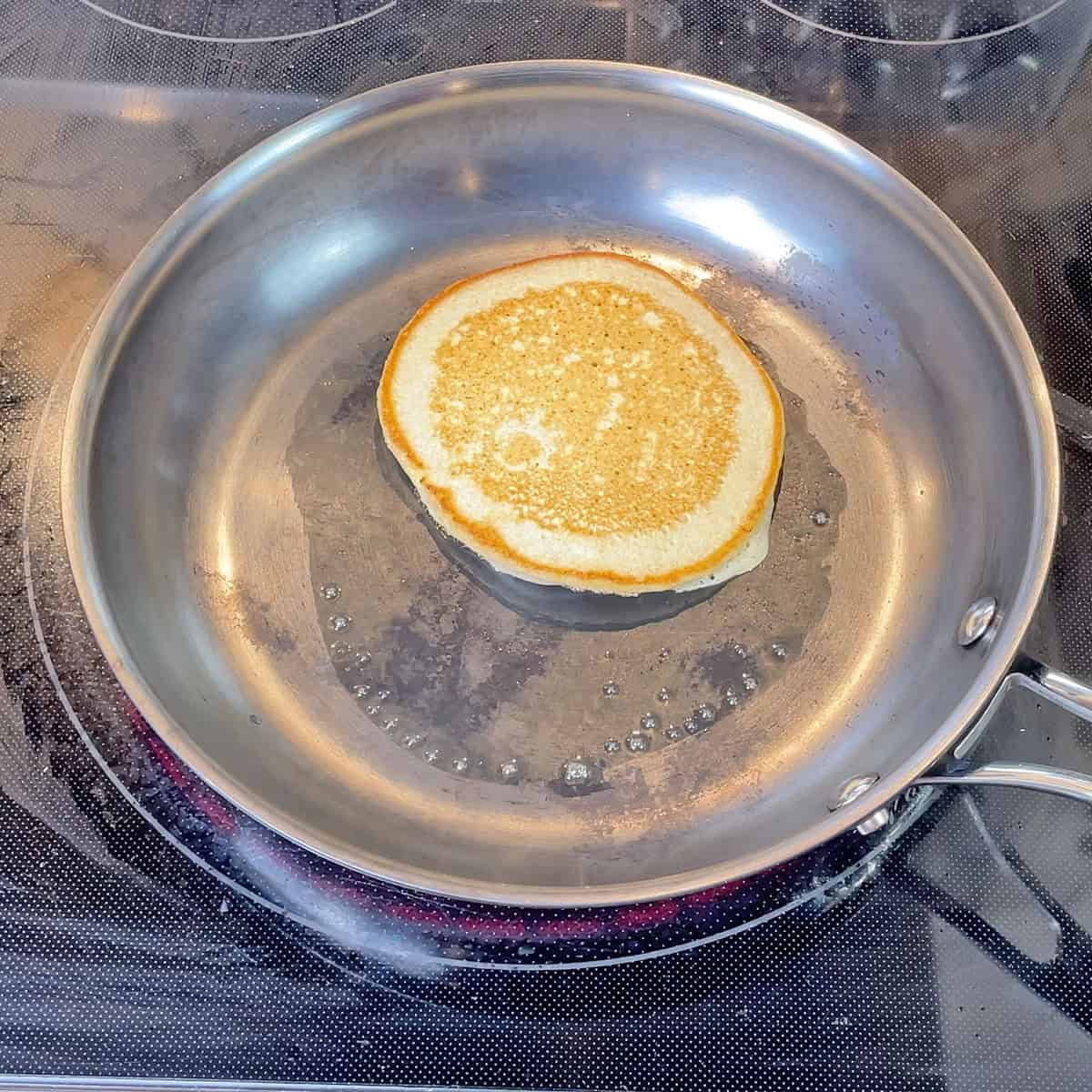
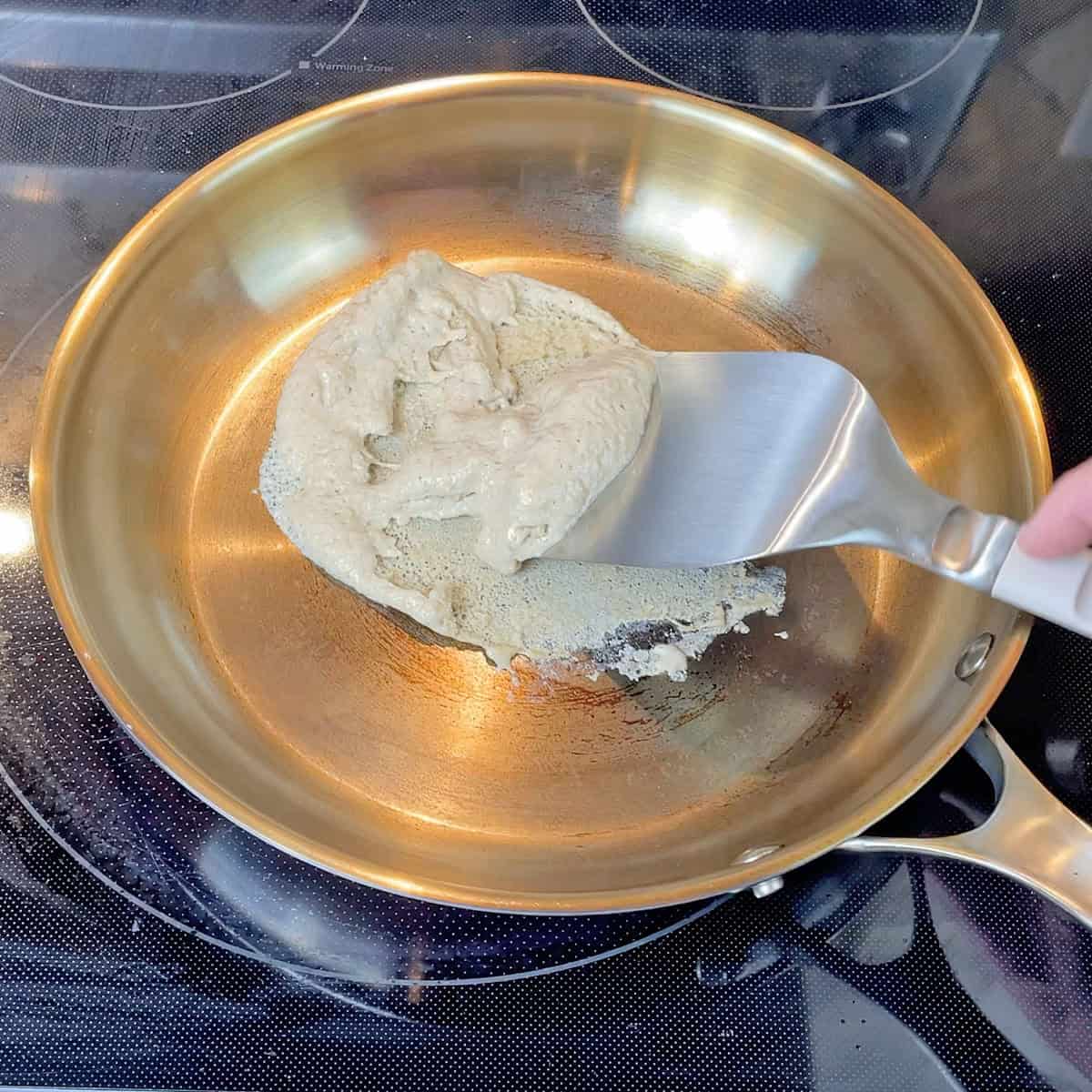
Pancake Test (No Fat): I also tested pancakes with no fat at all. Anolon stuck slightly, but I was able to flip the pancake without tearing it.
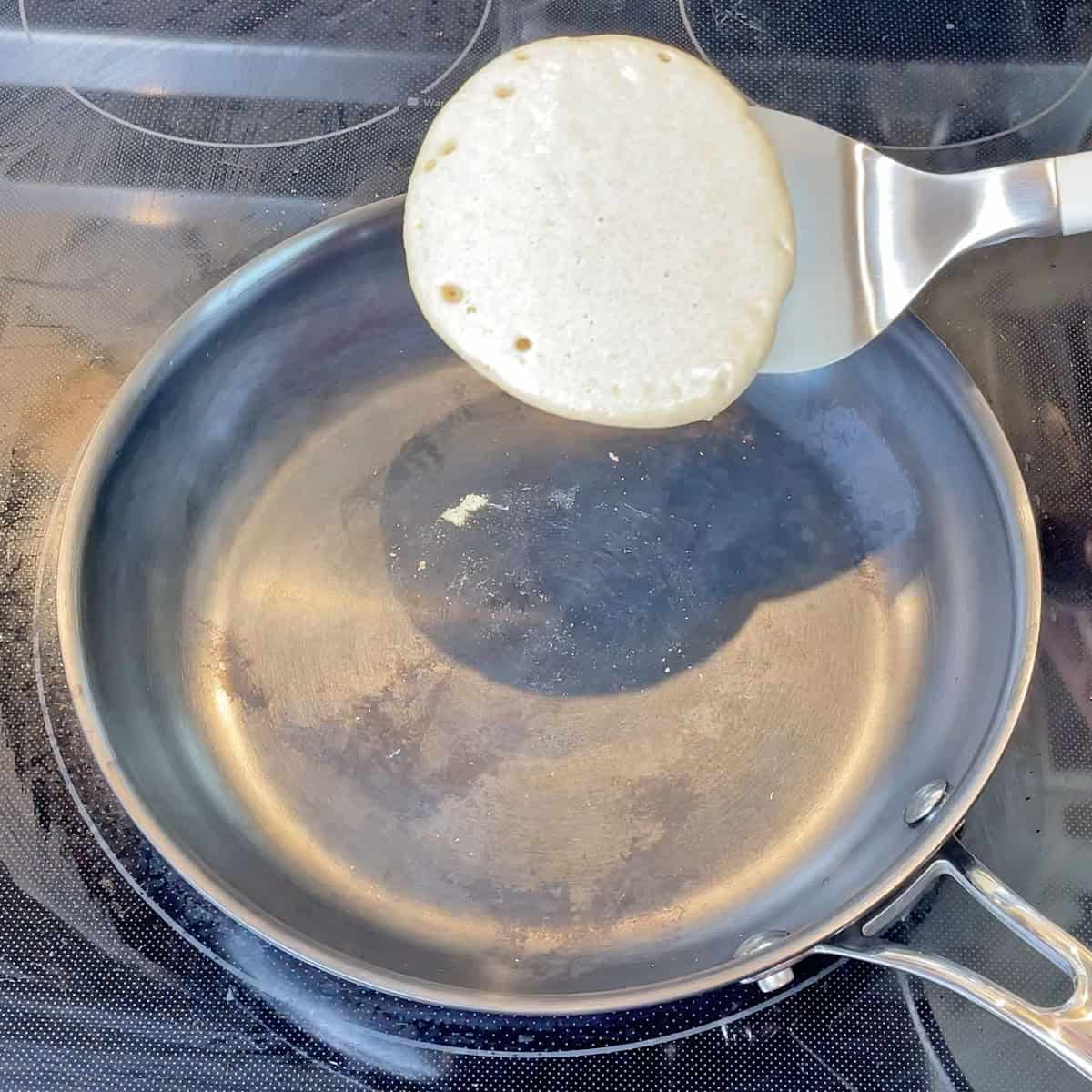
Misen stuck badly, and a thin layer of pancake stayed glued to the cooking surface, making it impossible to flip cleanly. Strata had the same issue as Misen and also left a thin layer of pancake behind.
In everyday cooking, I have not noticed a meaningful difference in food release between these three pans. Misen and Anolon were impressively nonstick right out of the box, and months later they still perform the same way.
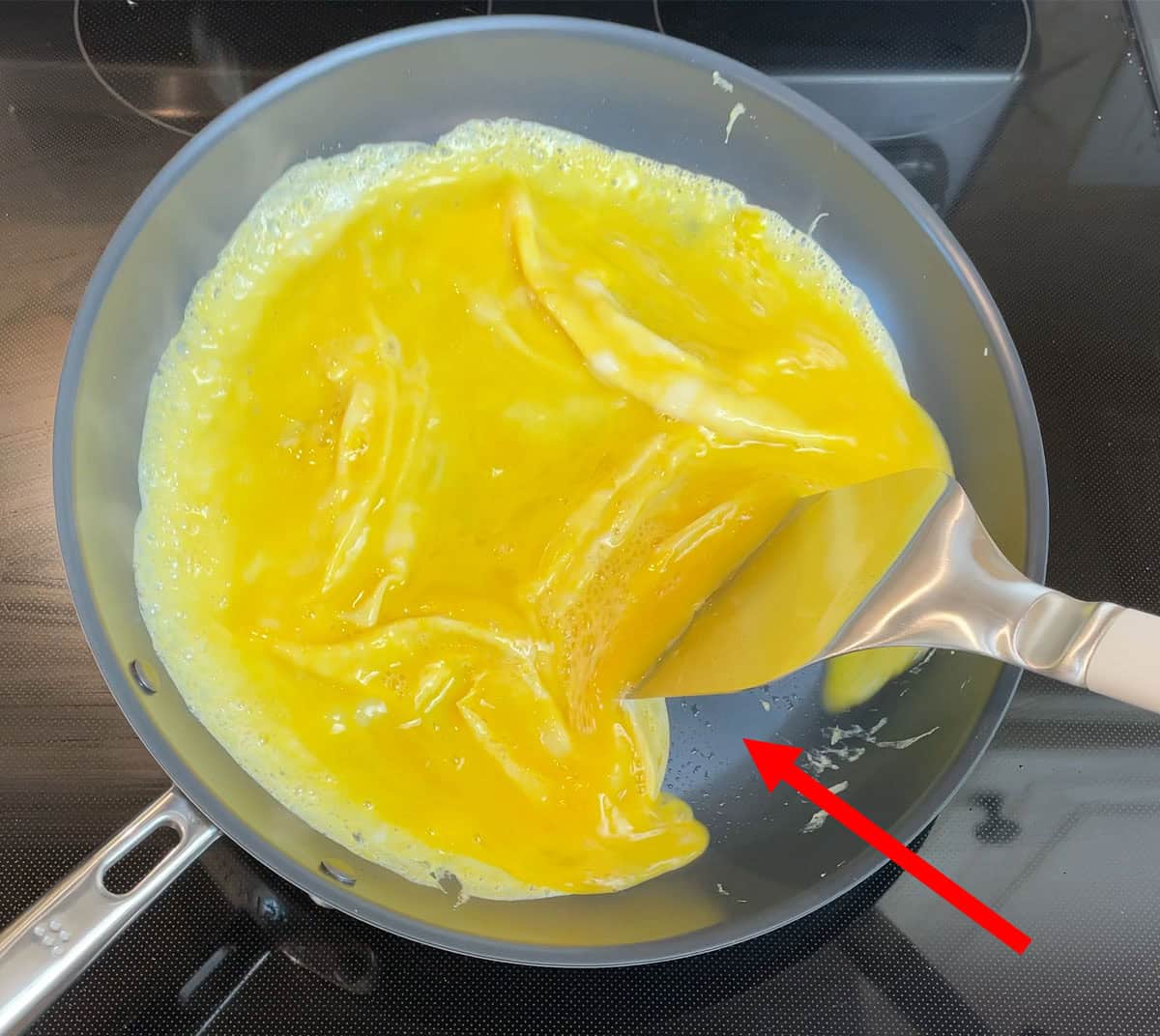
They are not as slick as a brand-new Teflon pan, but if you avoid overheating and use a small amount of oil or butter, food does not stick. The only times I had problems were when the pans got too hot.
Strata’s performance was similar. As long as you use some fat and manage the heat carefully, eggs, fish, and other delicate foods release with no issues.
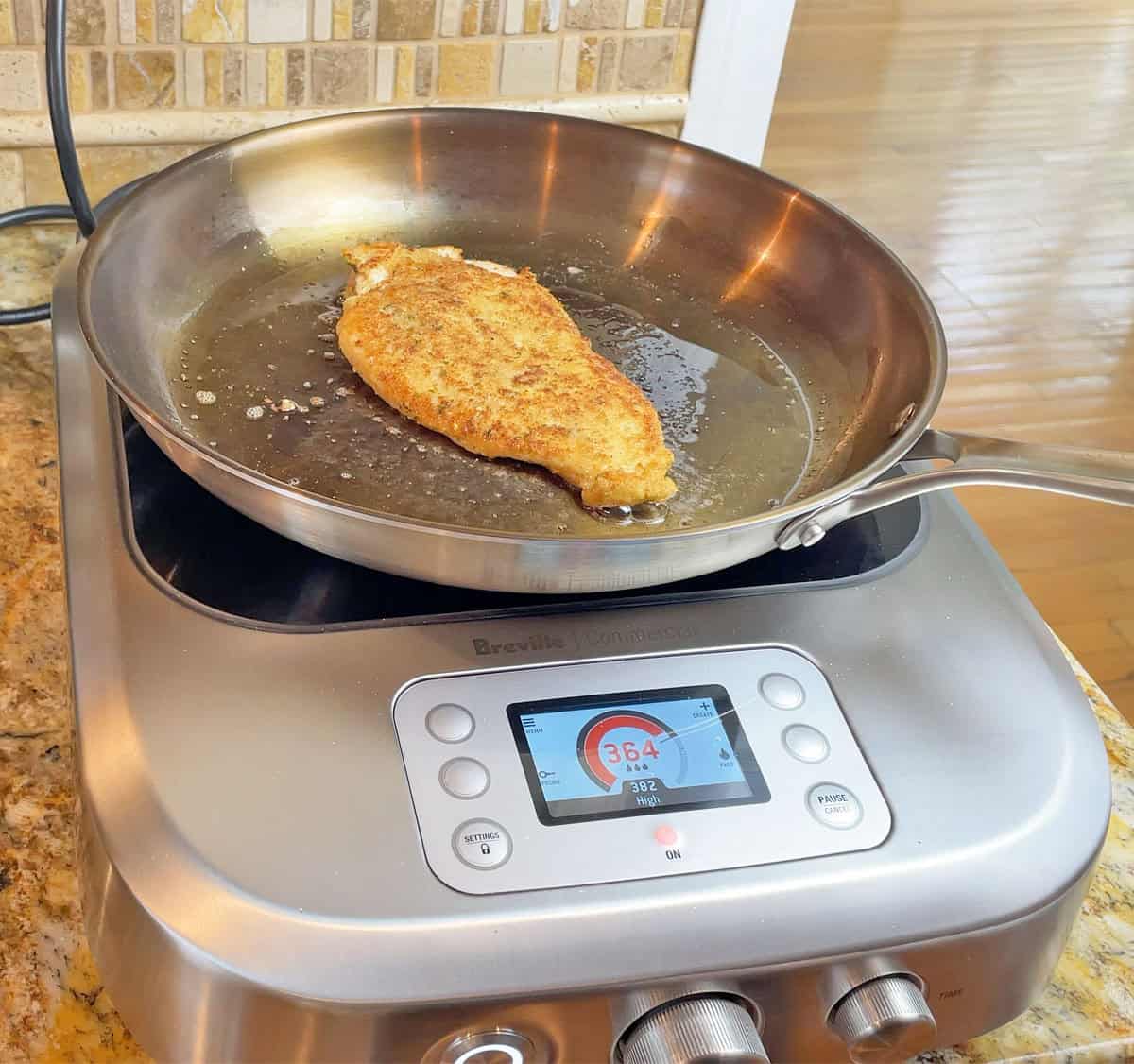
The main challenge with Strata is the seasoning. If you apply too much oil or spread it unevenly before baking the pan in the oven, the surface can turn tacky and cause sticking. You can always scrub it down and reseason, but you need to season it correctly to get the same consistent results as Misen and Anolon.
Design
Besides performance, there are a few design differences worth mentioning.
The biggest one is the handles. Misen’s handle is comfortable, but because it is fully rounded it can get slippery, especially if you are wearing an oven mitt or washing it with soapy hands.
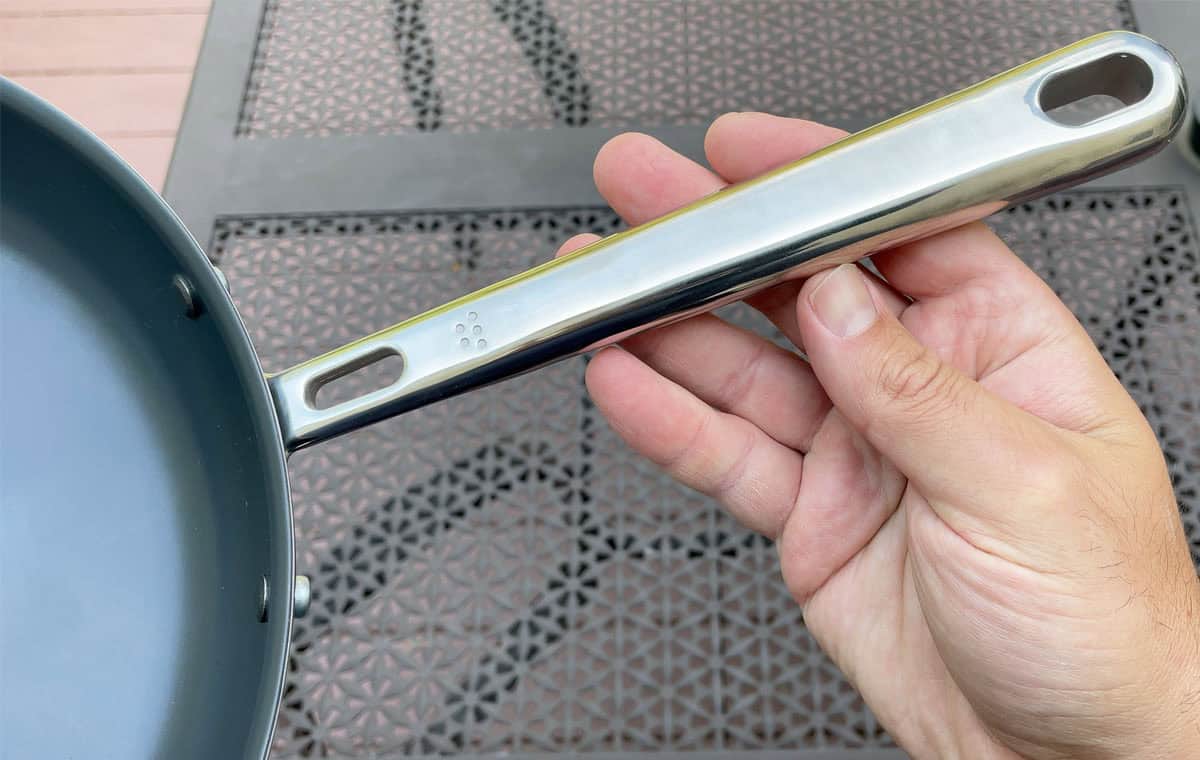
Anolon’s handle is flatter with a shallow groove along the top, which gives your thumb a place to rest and makes it feel more secure, although I wish it were not so thin.
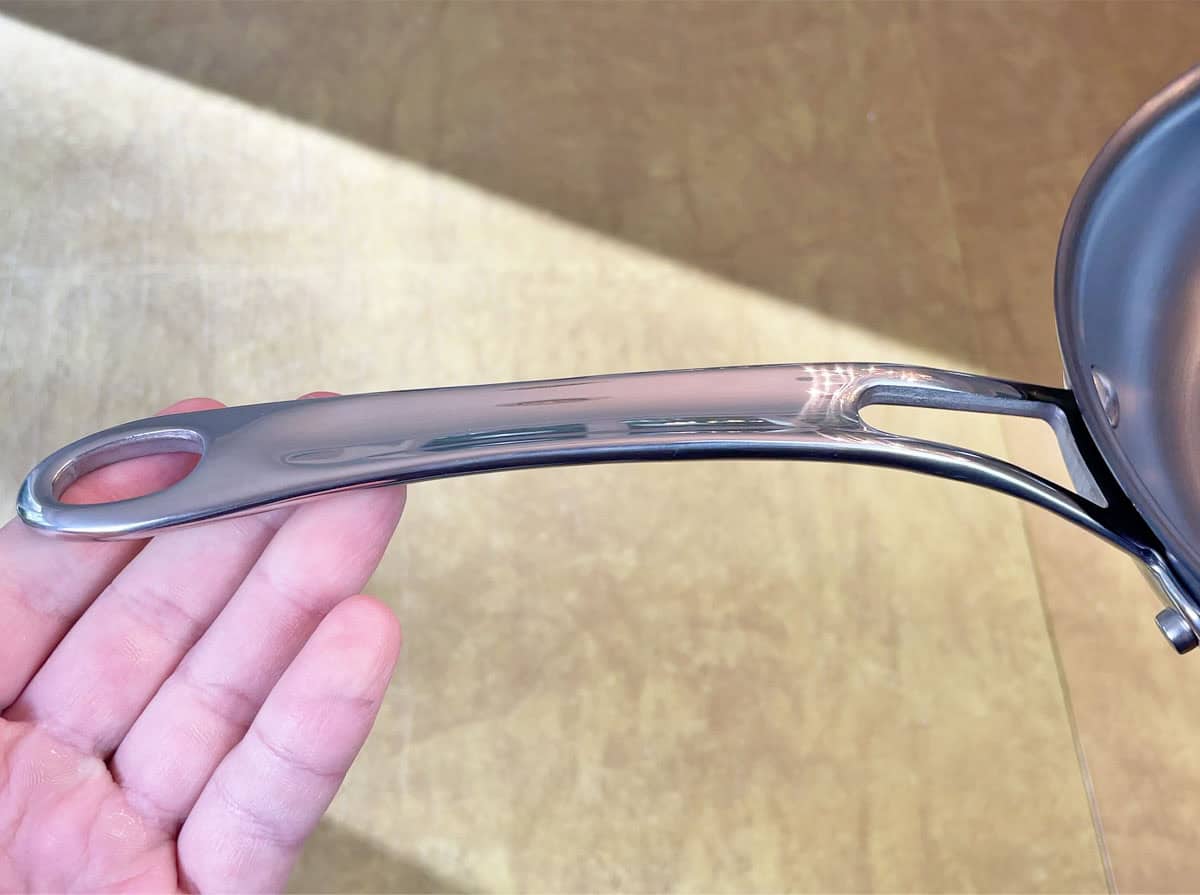
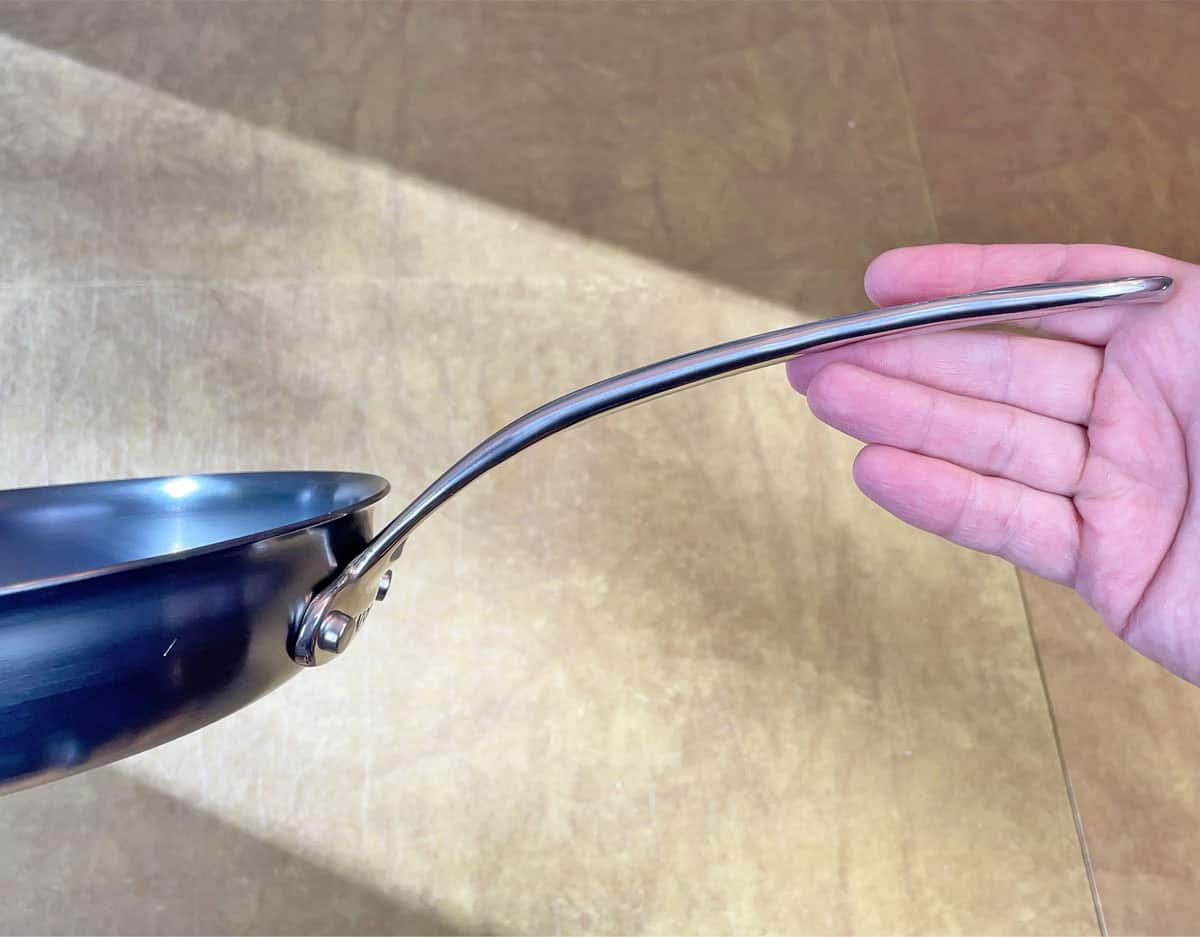
Strata’s handle is the best design of the three. It is thicker and more substantial than Anolon’s, and it is flat on top with a slight groove so it will not rotate in your hand. I also like the round hanging loop instead of the usual oval. All three handles measure 8 inches in length.

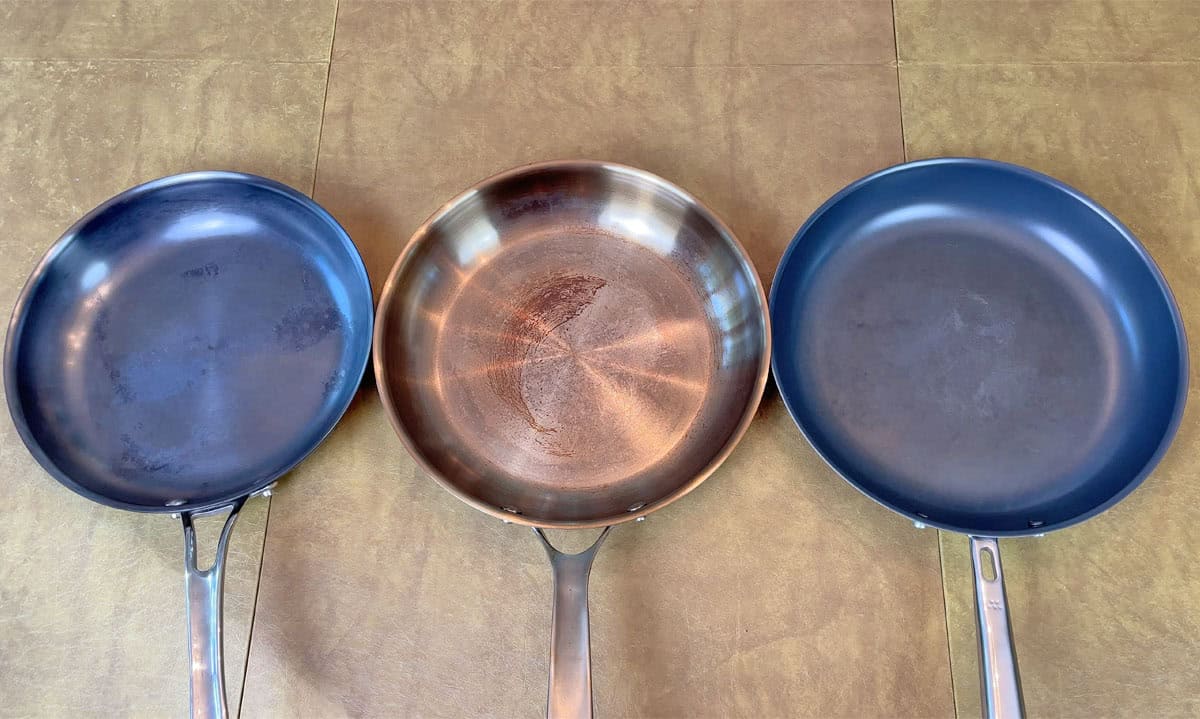
The finishes are also different. Misen has a dark matte surface that fades a bit with use.
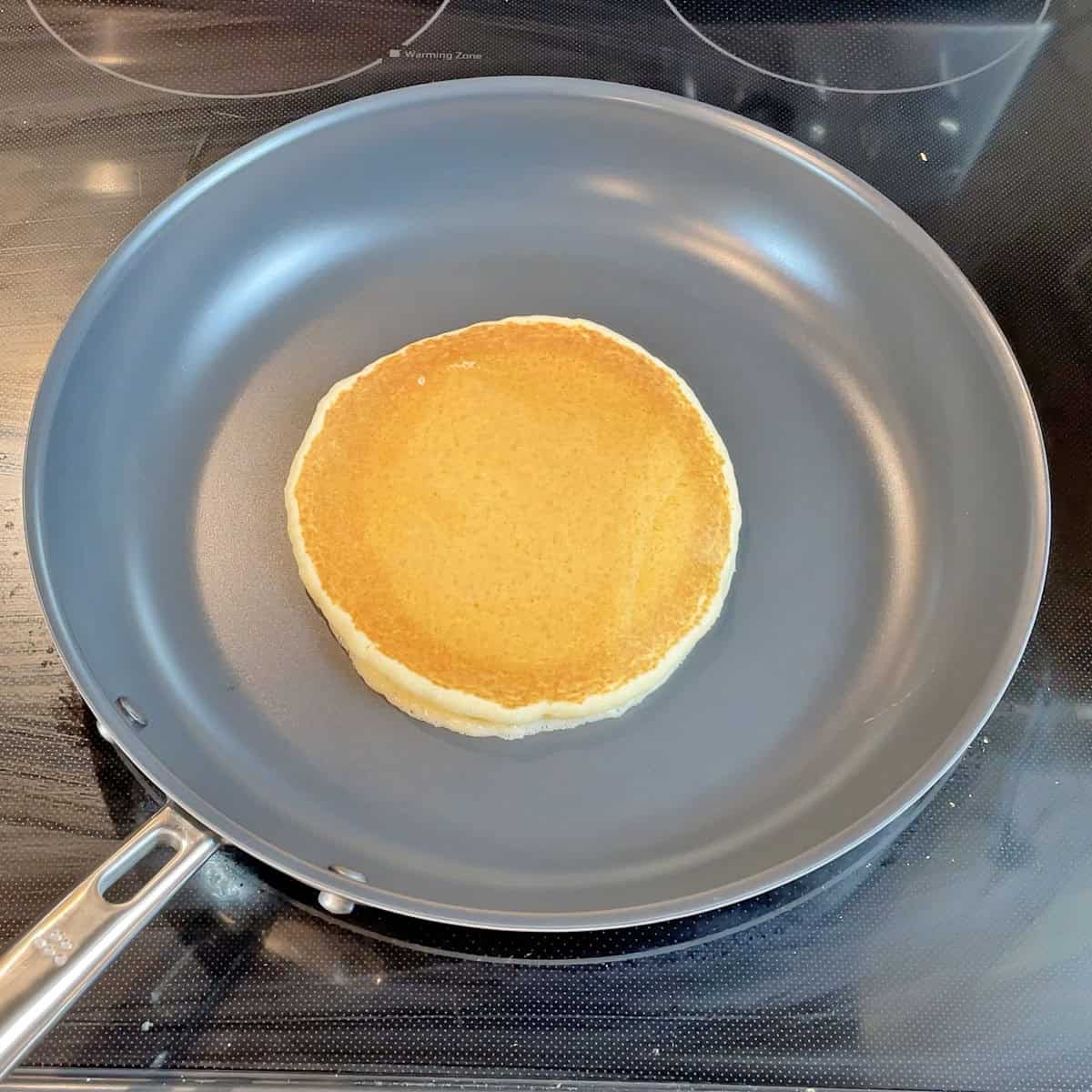
Anolon is shiny with a bluish tint that develops a patina.
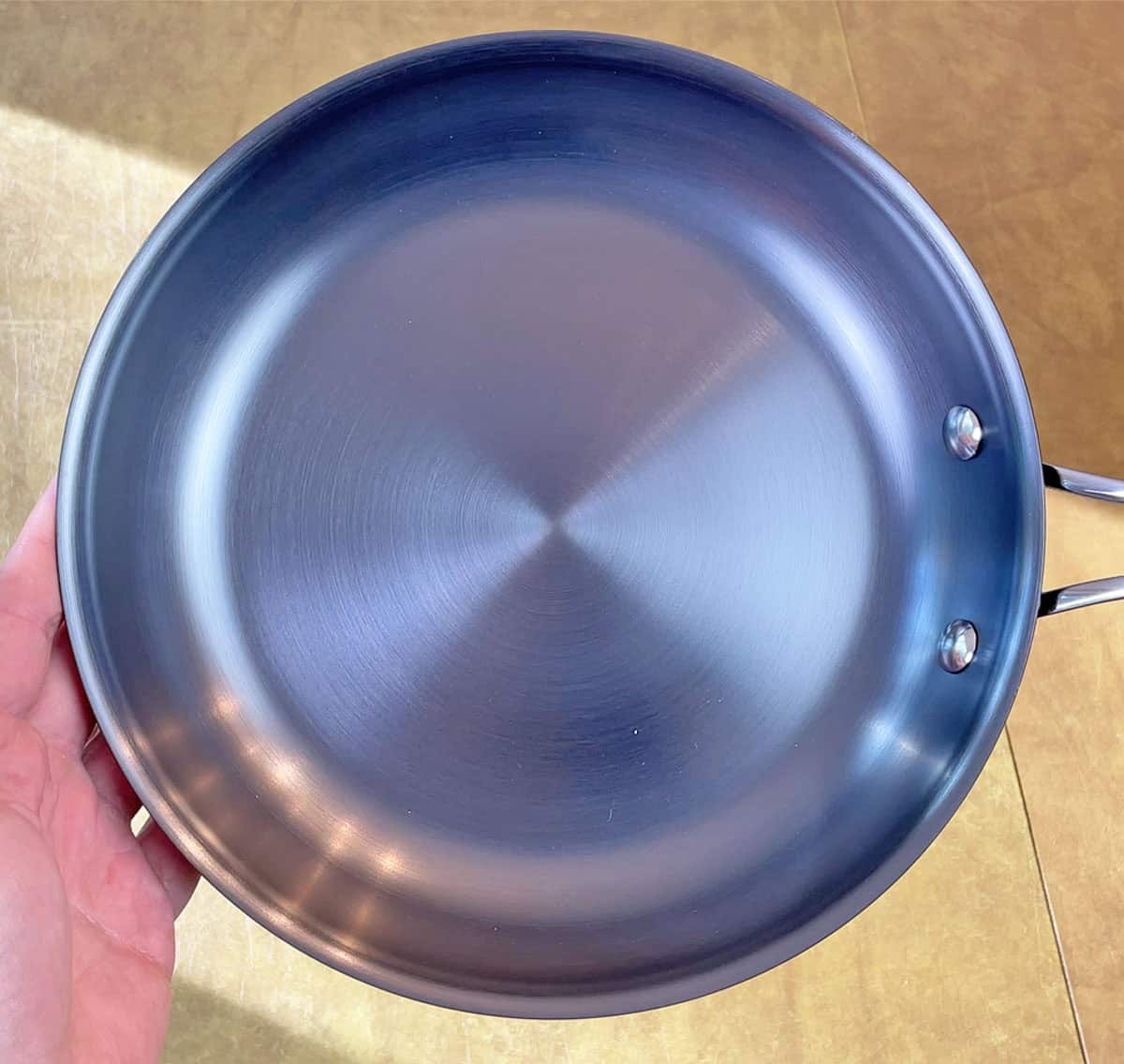
Strata starts out silvery like stainless steel but gradually turns golden brown as the seasoning builds and gets darker over time.

There are also small differences in dimensions. Among the 10-inch pans, all three weigh under 3 pounds and are easy to maneuver. Misen weighs 2.48 pounds, Strata is 2.35 pounds, and Anolon is the heaviest at 2.79 pounds.
Misen has the widest flat cooking surface at 8.25 inches, Strata is close at 8 inches, and Anolon is slightly smaller at 7.75 inches.
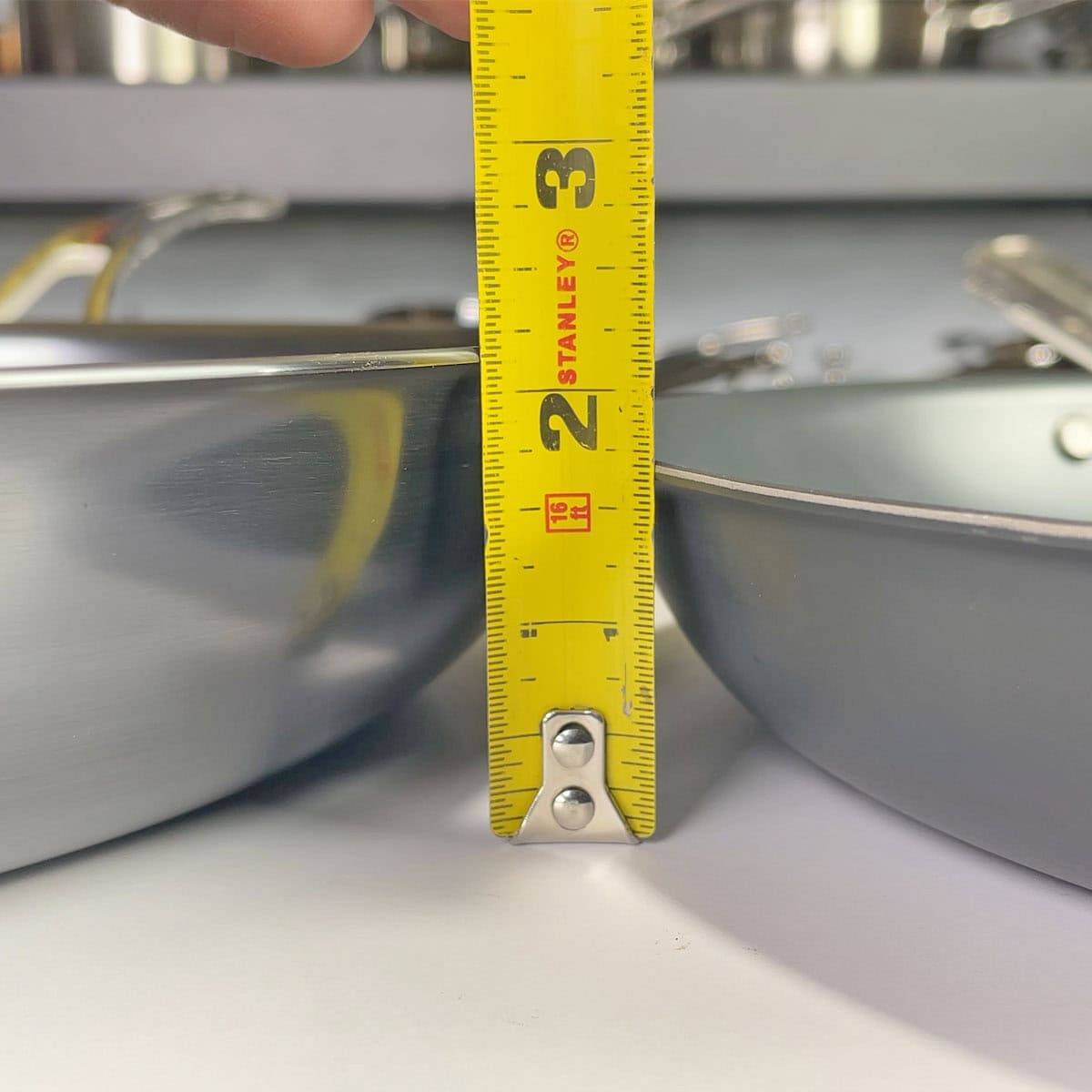
In terms of wall height, the original Misen measures 1.75 inches, while Strata and Anolon both measure 1.8 inches. The differences are minor at this size, but Misen has since released a deeper version with 2-inch sidewalls, giving it slightly more capacity and better splatter control than the original.
When you move up to the 12-inch versions, the variations become more noticeable. Strata and Misen both weigh about 3 pounds, while Anolon jumps to 4.3 pounds.
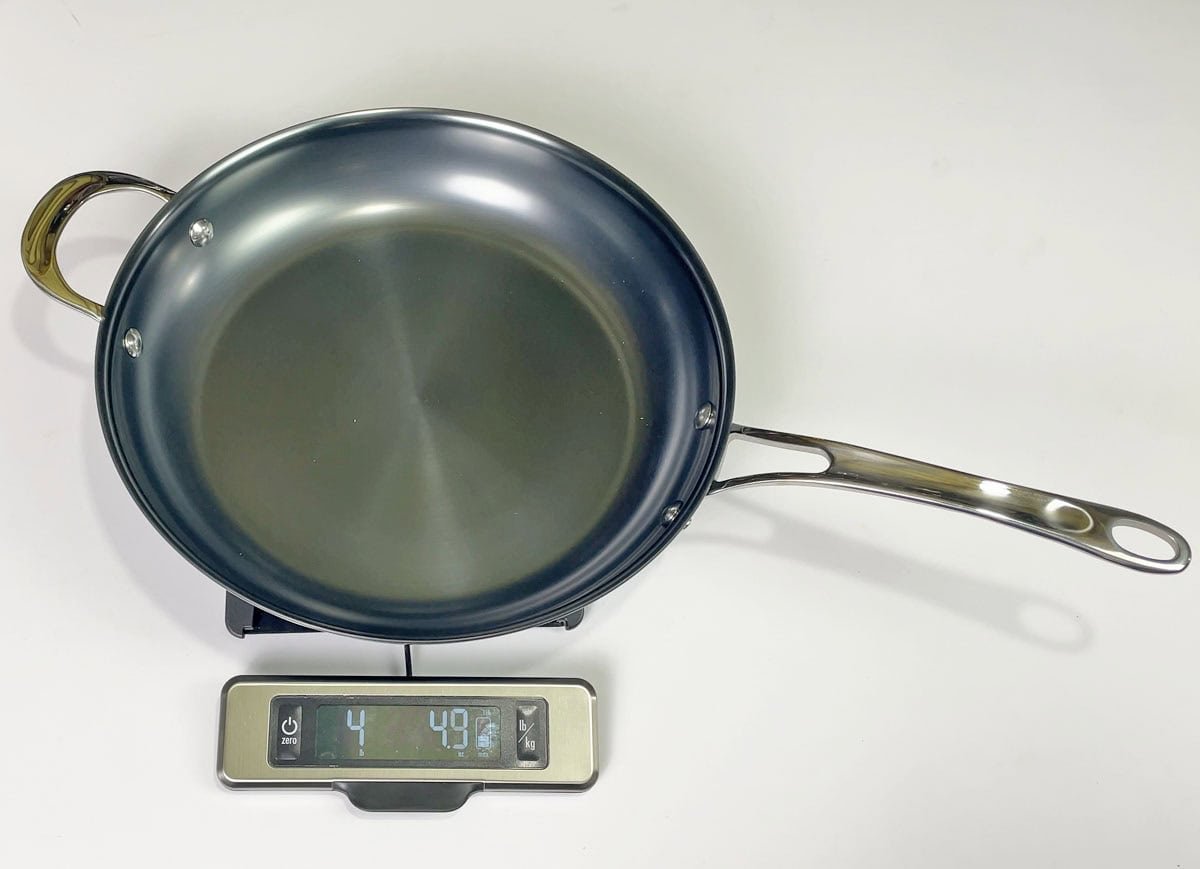
Some of that extra weight comes from the addition of a helper handle, but it also has taller walls. At that size, Anolon’s walls are just under 2.25 inches, Strata’s are just under 2 inches, and Misen’s remain the same at 1.75 inches (although the deeper version has 2.2-inch walls.
Final Verdict: Should You Buy Misen, Anolon, or Strata?
So after all that testing, which pan should you buy?
This was one of the toughest reviews I have done because all three pans performed well, and they are all priced about the same.
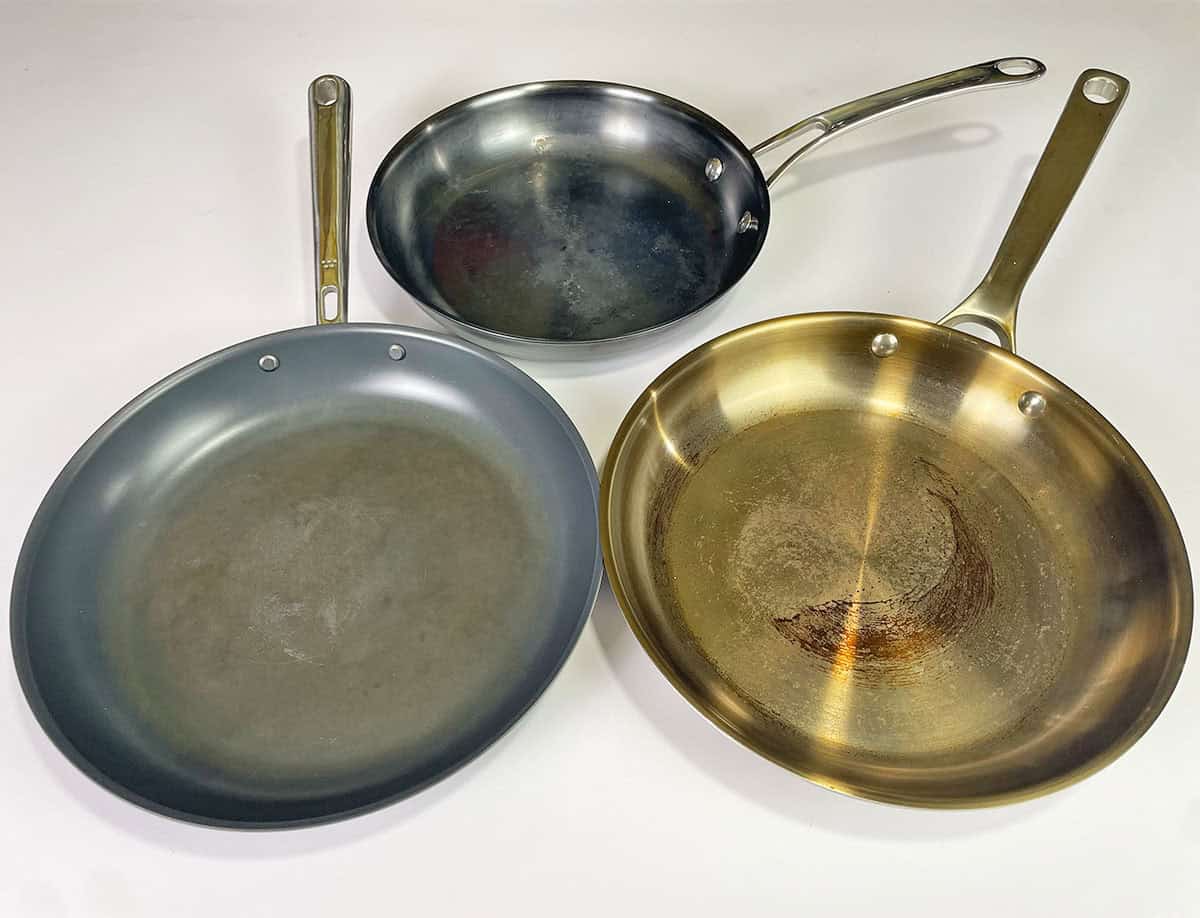
The first decision is whether you want to deal with seasoning. If you do not, then Misen and Anolon are your two options. Neither requires seasoning, neither rusts, both can handle acidic foods, and both start off with reliable nonstick performance that lasts.
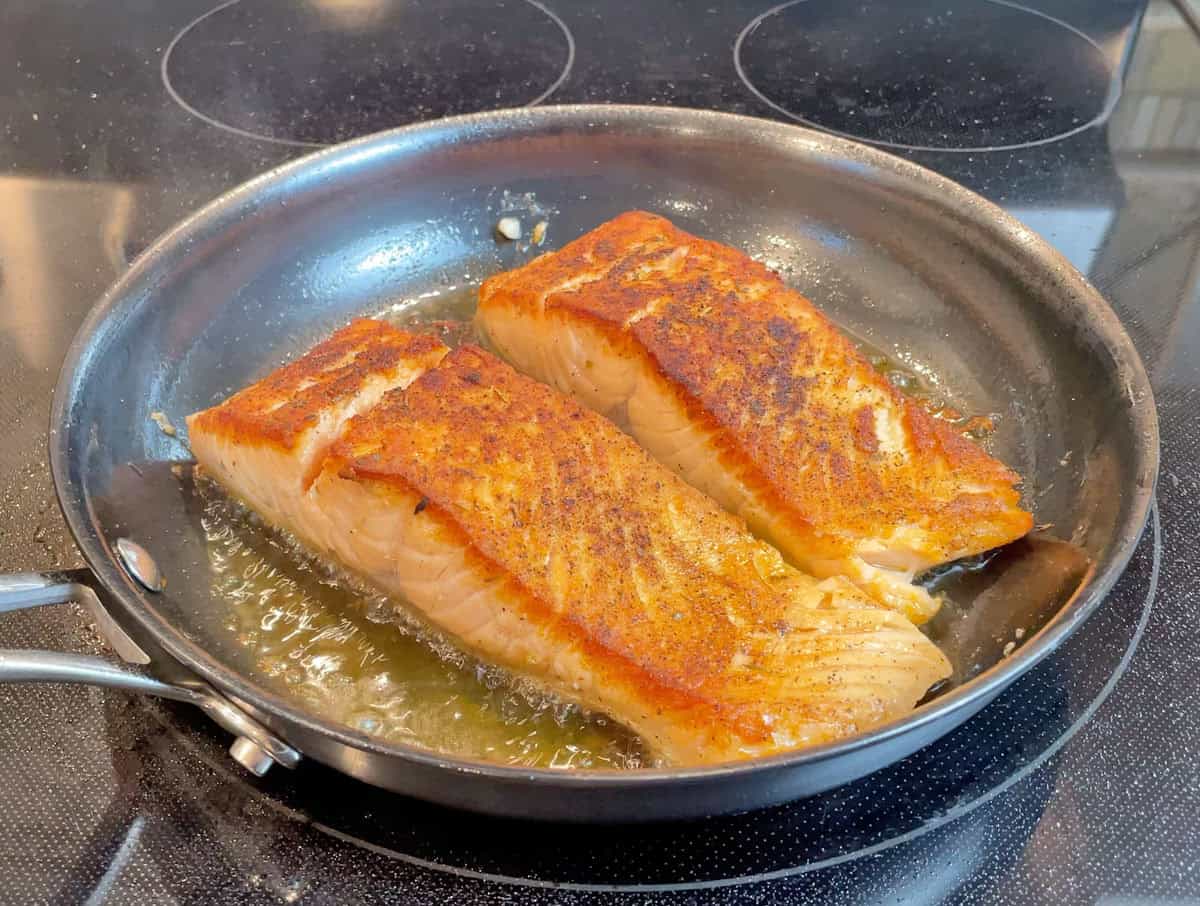
Between those two, my pick is Misen Carbon Nonstick. It is the closest replacement I have tested to a traditional Teflon-coated aluminum pan. It is light, easy to handle, and ideal for the kind of quick, everyday cooking most people rely on nonstick pans for, especially eggs.
Anolon EverLast N2, in contrast, feels more like a classic carbon steel pan. It is heavier, has taller walls, and comes with a polished finish and curved handle that make it look more elegant. If you want a pan that bridges the gap between traditional carbon steel and newer nitrided designs, it is an excellent alternative to brands like de Buyer and Matfer.
Strata is also a fantastic pan. It heats more evenly than the others, it is lightweight, and it has the best handle design of the three. But because it needs seasoning and that seasoning can break down when cooking acidic foods, it requires more maintenance than Misen or Anolon.
If you want the simplest, most low-maintenance option, go with Misen. If you enjoy the idea of building and maintaining seasoning yourself, Strata is the better choice. Anolon is a solid all-around option, but keep in mind that it is noticeably heavier. In this case, you really cannot go wrong with any of the three.
Compare current prices and learn more about each pan at the links below:
- Misen on Misen.com and Amazon
- Anolon on Anolon.com and Amazon
- Strata on StrataCookware.com and Amazon
Related Topics
- Misen Carbon Nonstick Pan Review: I Tested Every Claim
- Strata Cookware Review: The Most Unique Pan Ever Made?
- Anolon X Review: Is This Hybrid Cookware Worth Buying?
- Misenware Food Storage Containers Review: I Tested Every Claim
- Misen Cookware In-Depth Review (With Pictures)
- Misen 8-Inch Chef’s Knife Review (With Pictures)
- Misen Carbon Steel Pan Review: Everything You Need to Know
- Misen vs. All-Clad Cookware: 11 Key Differences
- Misen Non-Stick Cookware: Unboxing, Initial Testing, and First Impressions
- HexClad vs. Misen Cookware: An In-Depth Comparison
- Made In vs. Misen: Which Cookware and Kitchen Knives Are Better?
- HexClad vs. Anolon X: Which Hybrid Pans Are Better?
- Is Anolon Cookware Any Good? An In-Depth Review

