

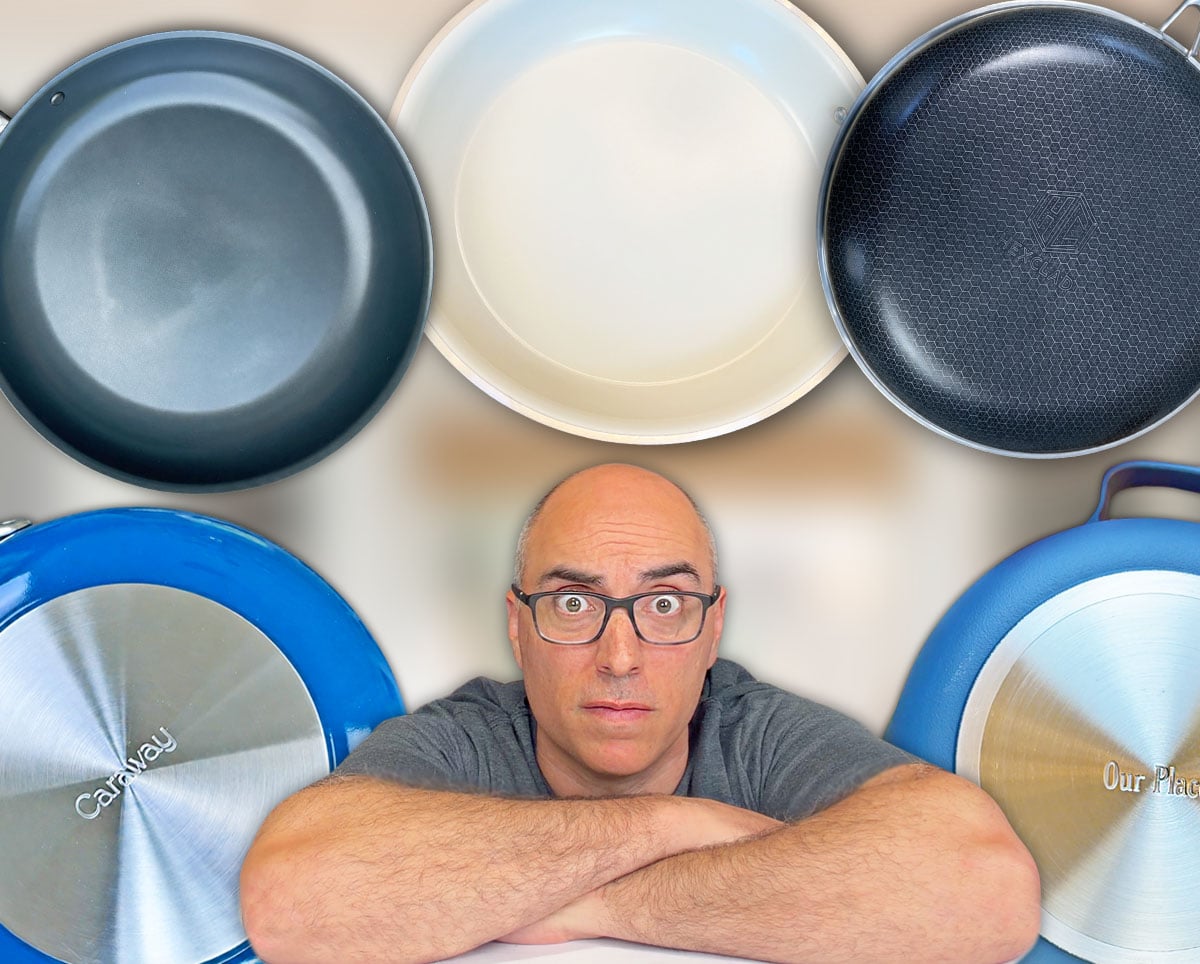
There are five cookware brands that spend more money trying to sell you pans than anyone else on the internet.
- Misen raised $2 million on Kickstarter for a single pan.
- HexClad got one of the most famous chefs on the planet as their pitchman.
- Caraway convinced millions of people that their old pans are toxic.
- Made In partnered with Michelin-star restaurants to prove their pans are pro quality.
- And Our Place says they’ve invented a nonstick surface that lasts forever.
But if you strip away the marketing, are these brands actually good?
To find out, I’ve spent years testing their cookware to see how fast and evenly they heat up, how well they retain heat, and the durability of their nonstick coatings. I also cranked up the power on induction to see if they warp, I dropped weights, utensils, and other pans on them to see if they dent or chip, and I cooked the same meals side by side to see how they compare. I’ve also used each brand for years to see how they hold up over time.
On top of all that, I went undercover and tested their customer service. I created three fake email addresses and sent each brand three emails. One asking basic product questions. Another asking for expert advice on how to choose the right products. And another about their warranty process. I graded every response on speed, accuracy, and helpfulness.
By the end of this review, you’ll know which of these brands are actually worth buying, which don’t quite live up to their marketing, and which ones you should avoid completely.
Key Takeaways
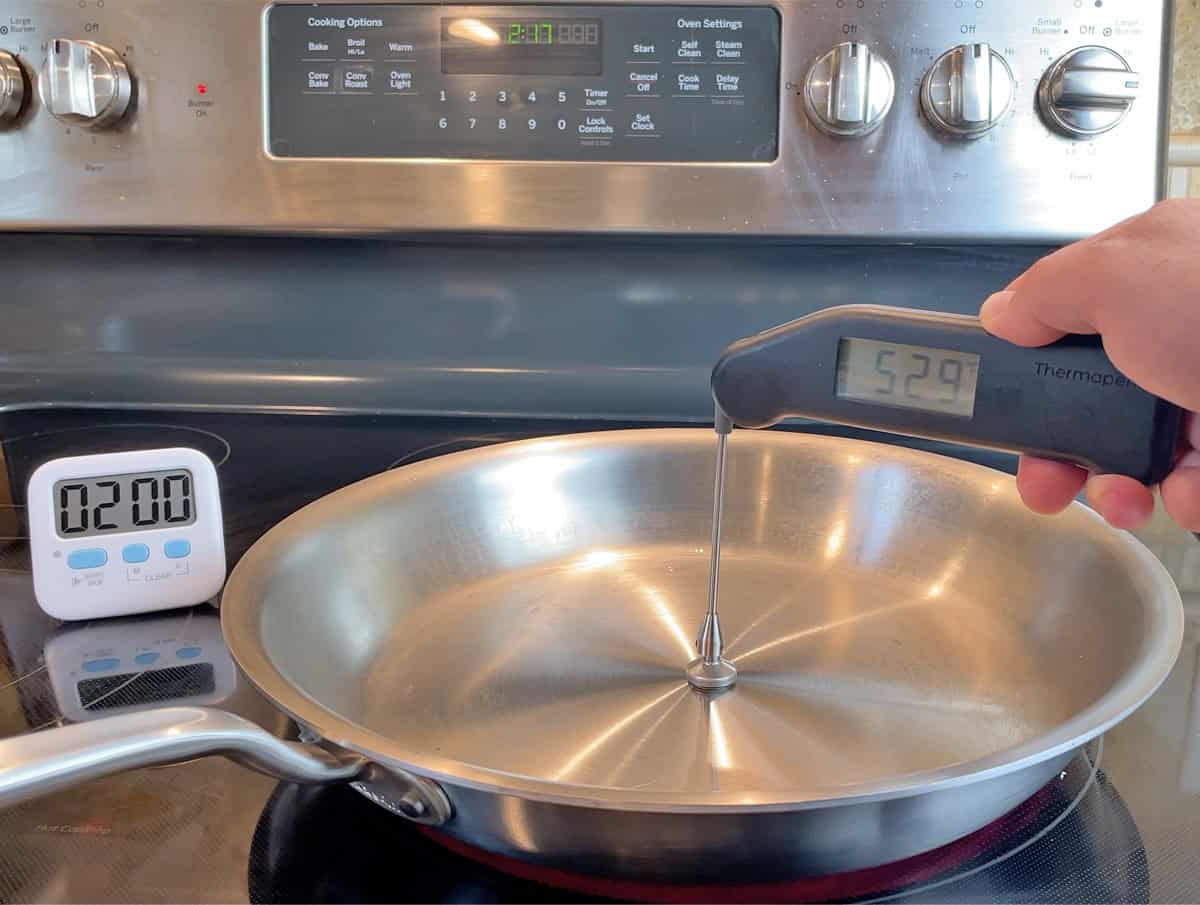
Made In is the best overall brand in this group. Their stainless steel fry pan ranked 2nd out of 31 in heat conduction (529°F at center after 2 minutes) and has the widest cooking surface of any 12-inch pan I tested. Their saucepan was the fastest to boil on induction out of the 13 I tested. Their Dutch oven ranked 2nd in both heat retention and moisture retention. And their customer service was the strongest of all five brands.
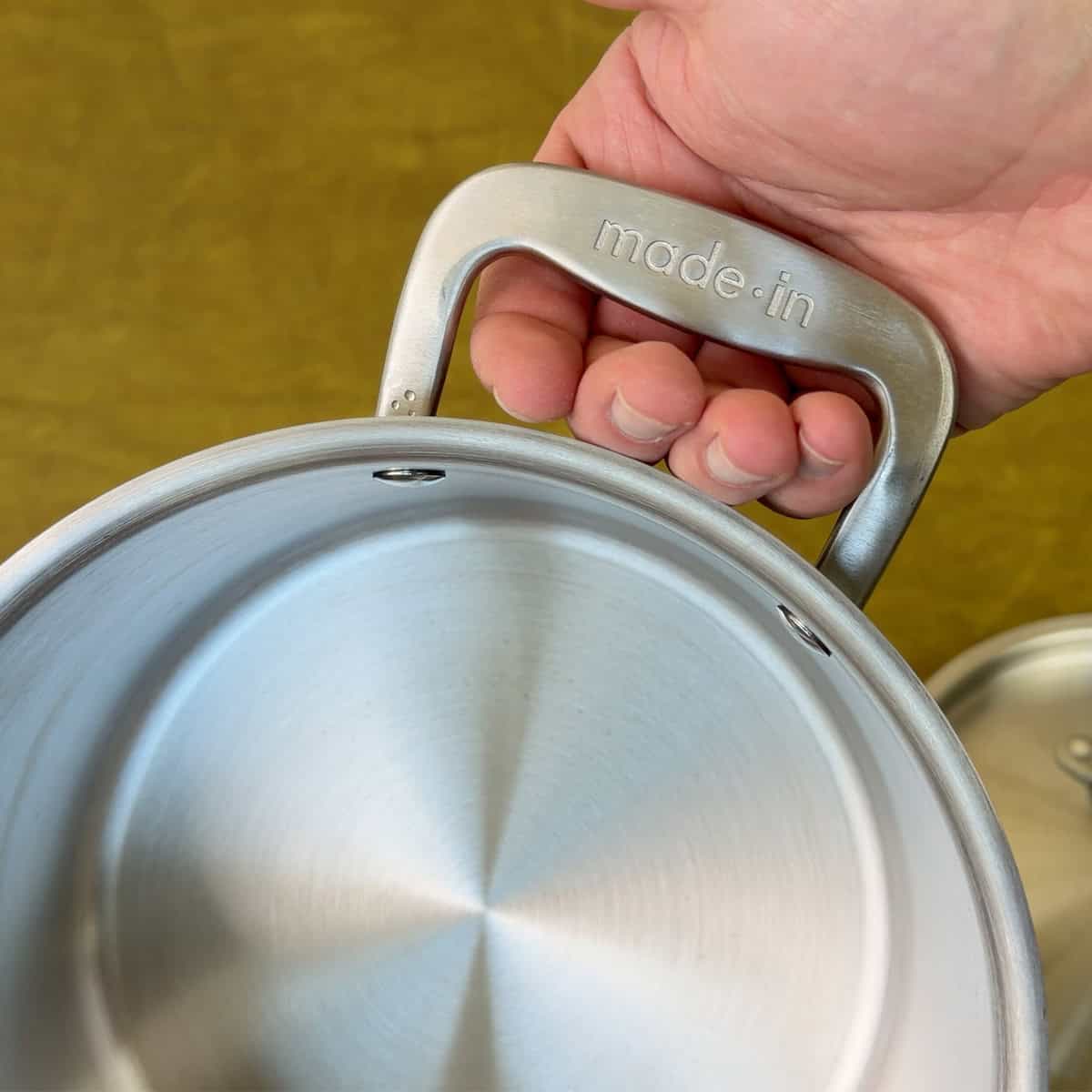
Misen is the best value in this group. Their stainless steel frying pan ranked 6th out of 31 in heat conduction (502°F at center after 2 minutes) and has sealed rims, a feature that usually only shows up on pans costing much more. Their Dutch oven posted the highest moisture retention of any Dutch oven I tested. The Carbon Nonstick is worth considering, but go in with the right expectations.
Our Place Titanium Always Pan Pro is worth a serious look. It released eggs with no grease at all and ranked 10th out of 31 in heat retention. Avoid the ceramic-coated aluminum Always Pan because it’s expensive and won’t last.

HexClad and Caraway both perform well when new. The issue is value. You’re paying a premium for a nonstick coating that will eventually wear out.
You can check the latest prices for each brand at the links below:
- Made In on MadeInCookware.com and Amazon
- Misen on Misen.com and Amazon
- Our Place on FromOurPlace.com and Amazon
- HexClad on HexClad.com and Amazon
- Caraway on CarawayHome.com and Amazon
Use the links below to navigate this comparison:
- Comparison Chart
- HexClad
- Caraway
- Our Place
- Made In
- Misen
- Bottom Line: Which Viral Cookware Brand Is Worth Buying?
Comparison Chart
Swipe to view the entire chart on mobile.
| HexClad | Caraway | Our Place | Made In | Misen | |
|---|---|---|---|---|---|
| Where It’s Made | China | China | China | Italy, France, USA, Sweden | China |
| Materials Offered | Hybrid nonstick | Ceramic nonstick, stainless steel, enameled cast iron, | Titanium, ceramic nonstick | Stainless steel, carbon steel, enameled cast iron, ceramic nonstick, cast iron | Stainless, carbon nonstick, enameled cast iron |
| Customer Service | Good | Mixed | Good | Excellent | Fast, but AI only |
| Response Time (Factual Email) | 54 min | 1h 55m | 13h 34m | 1h 9m | Instant |
| Response Time (Opinion Email) | 6 min | 40m | 14h 7m | 25m | Instant |
| Response Time (Warranty Email) | 6 min | 1m | 3m | 1h 9m | Instant |
| Top Reason to Buy | Better nonstick durability than traditional coatings | Great bakeware; ceramic nonstick performs well when new | Titanium pan releases eggs with no grease | Best overall performer across categories | Strong performance at a lower price |
| Top Reason Not to Buy | Coating still wears out; overpriced for what it is | Ceramic degrades; stainless and Dutch oven underperformed | Surface material still debated | Carbon steel pan and CeramiClad line disappoint | Carbon Nonstick overpromises |
HexClad
HexClad is the most searched cookware brand on the internet. They have over a hundred ads running on Facebook and Instagram right now, and celebrity chef Gordon Ramsay is the face of the brand.

It’s also one of the most polarizing cookware brands. If you search for reviews online, you’ll find people who absolutely love it, and just as many who think it’s a complete waste of money.
Their main selling point is that you get the searing power and durability of stainless steel and the convenience of nonstick, all in one pan. The cooking surface has raised stainless steel hexagons with a ceramic nonstick coating in the valleys between them. The steel protects the coating from getting scratched, so in theory, the nonstick lasts longer than a regular nonstick pan.
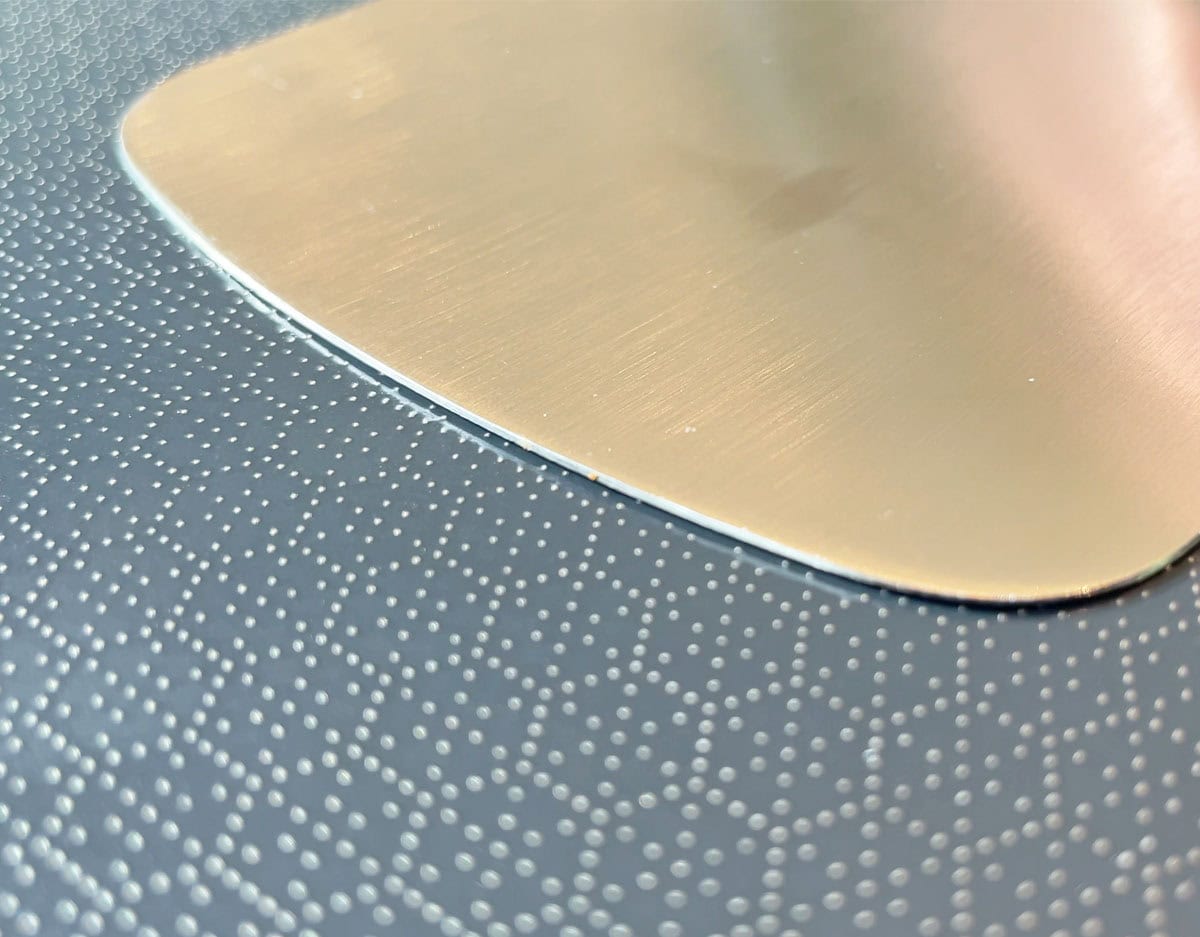
To find out if HexClad performs the way they say it does, I cooked dozens of meals in it, I tested it side by side with similar brands, and I put it through serious durability testing.

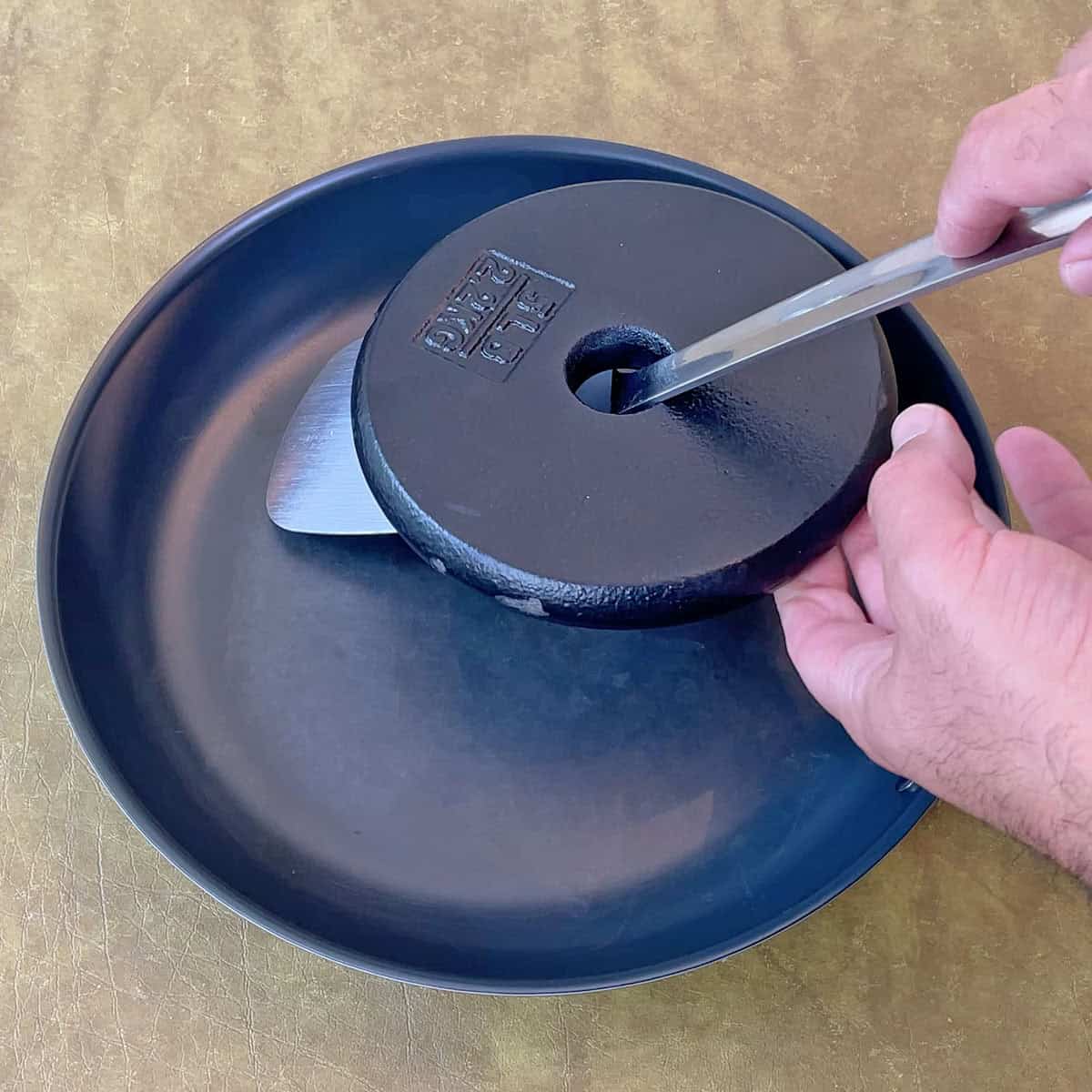
I scraped it with a ladle, whisk, and spatula, and dropped a steel saucepan on it 20 times. I also tested the HexClad double burner griddle to see how well it distributes heat, how well the nonstick performs, and how resistant to warping it is.

The key takeaway from my testing is that the hybrid concept does work, but not forever. It sears well, cooks evenly, and food releases without sticking as long as you grease the pan. If you try to cook an egg with no butter or oil, it will stick.

The steel hexagons do protect the coating from spatulas and spoons. But if the utensil is thin enough to get between the steel ridges, it will scratch the nonstick coating, which is exactly what happened during my whisk test.

I’m also not a fan of the rounded handles. They’re comfortable, but if your hands are greasy or you’re wearing an oven mitt, the pan can rotate when you tilt it.

At the end of the day, HexClad is a nonstick pan. The steel pattern gives it more protection than a traditional nonstick, but the ceramic coating underneath will still wear down over time from heat, from use, and from anything that gets between those ridges. It is not a forever pan.
The other issue is price. Other brands like Henckels Paradigm offer similar construction and performance for a fraction of the cost.
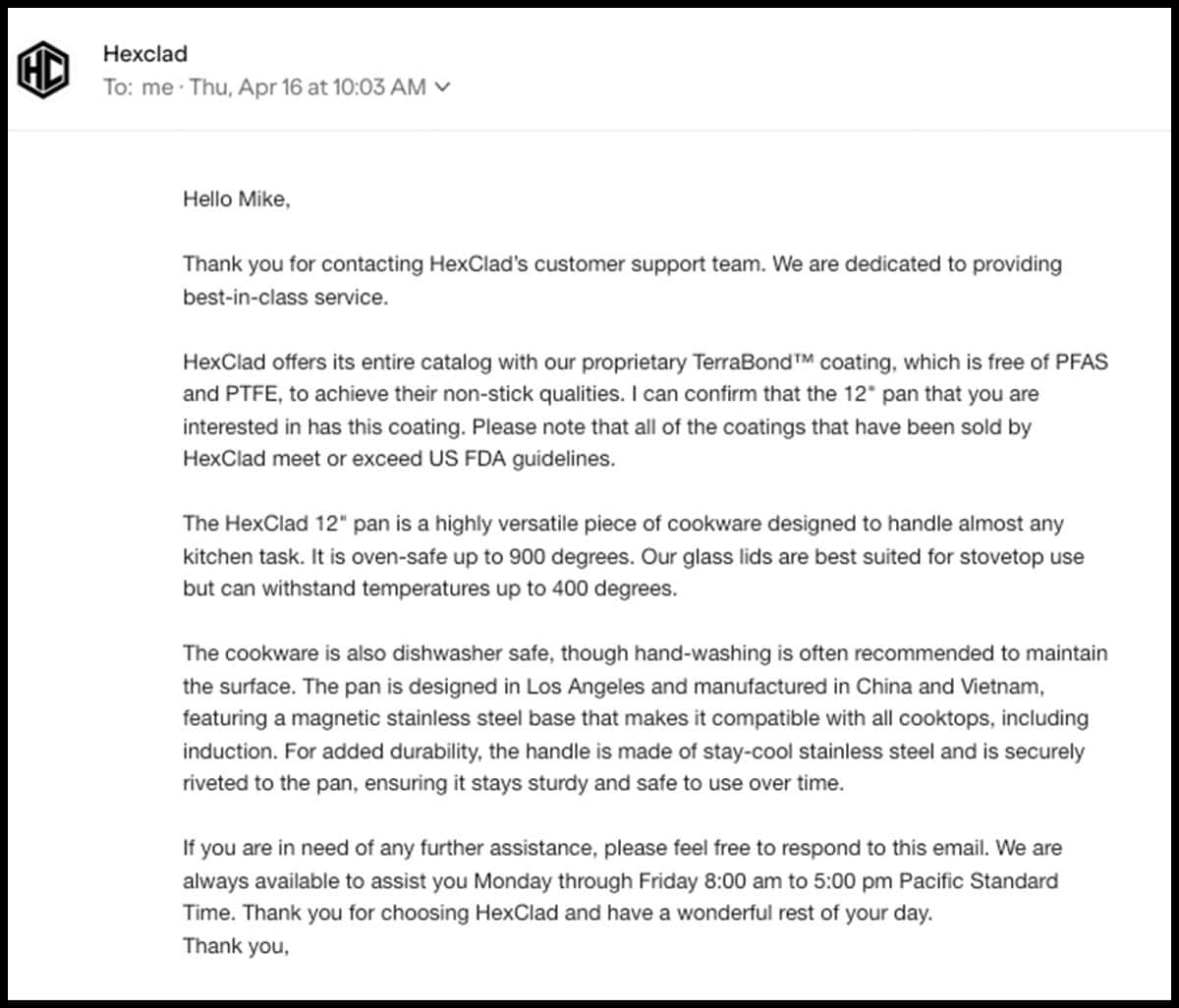
In terms of customer service, they were fast and provided thorough and accurate answers. The one miss was the factual email. I asked how the hybrid surface actually works and they never explained it.
Caraway
Caraway makes a range of kitchen products, including stainless steel and enameled cast iron pans, bakeware, knives, and food storage containers. But the product they’re best known for is their colorful ceramic nonstick cookware. Their whole pitch is that it’s non-toxic, clean, and safe.

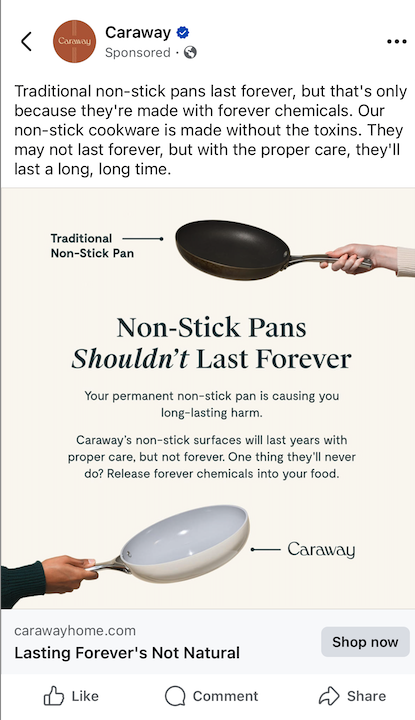
They’re not selling durability like HexClad. In fact, they ran an ad campaign openly admitting their nonstick pans won’t last forever. What they’re selling is peace of mind, and it’s clearly working because they’ve built a massive following around it.
When these pans are brand new, they look great and they perform well. The coating is slick, eggs slide around, cleanup is easy. But eventually, the nonstick properties start to degrade, and the exterior coating chips and flakes.

I also noticed that the cooking surface dips slightly near the edge, which causes eggs and oil to pool to one side.

Their stainless steel line is okay, but the handles get hot, the rims are not flared, and the rounded handle is prone to rotating when you tilt the pan.
In my testing, the stainless fry pan (10.2″ rim, 7.75″ cooking surface, 2.6mm thick) ranked 11th out of 31 in heat conduction but the center of the cooking surface was 88 degrees hotter than the edge.
It also ranked 28th out of 31 in heat retention, retaining only 120°F after heating to 400°F and letting it cool on the counter for five minutes. One of the pans I tested even arrived with a dented handle right out of the box.

The enameled Dutch oven is decent, but didn’t perform well in my moisture retention and heat retention tests, and the side handles are too small.

I also tested their food storage containers, and they’re hard to open, you can’t see through the sides, and the lid trim on mine started separating.
I’m actually a fan of their bakeware. I use their muffin tin regularly and it works well.
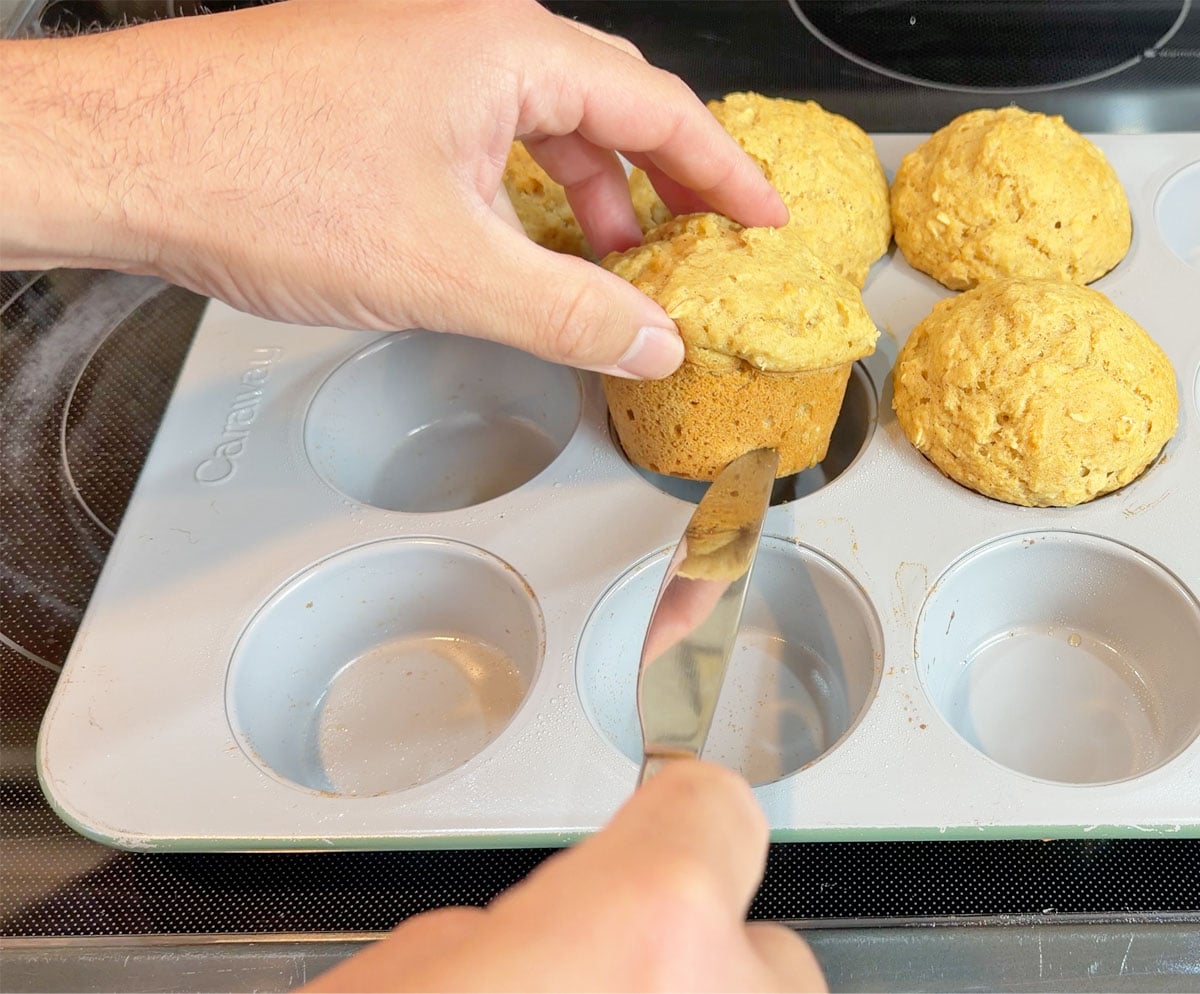
Bakeware doesn’t take the same abuse as a fry pan, so the ceramic coating holds up much better. Their sheet pan also performed well in my tests and it didn’t warp.

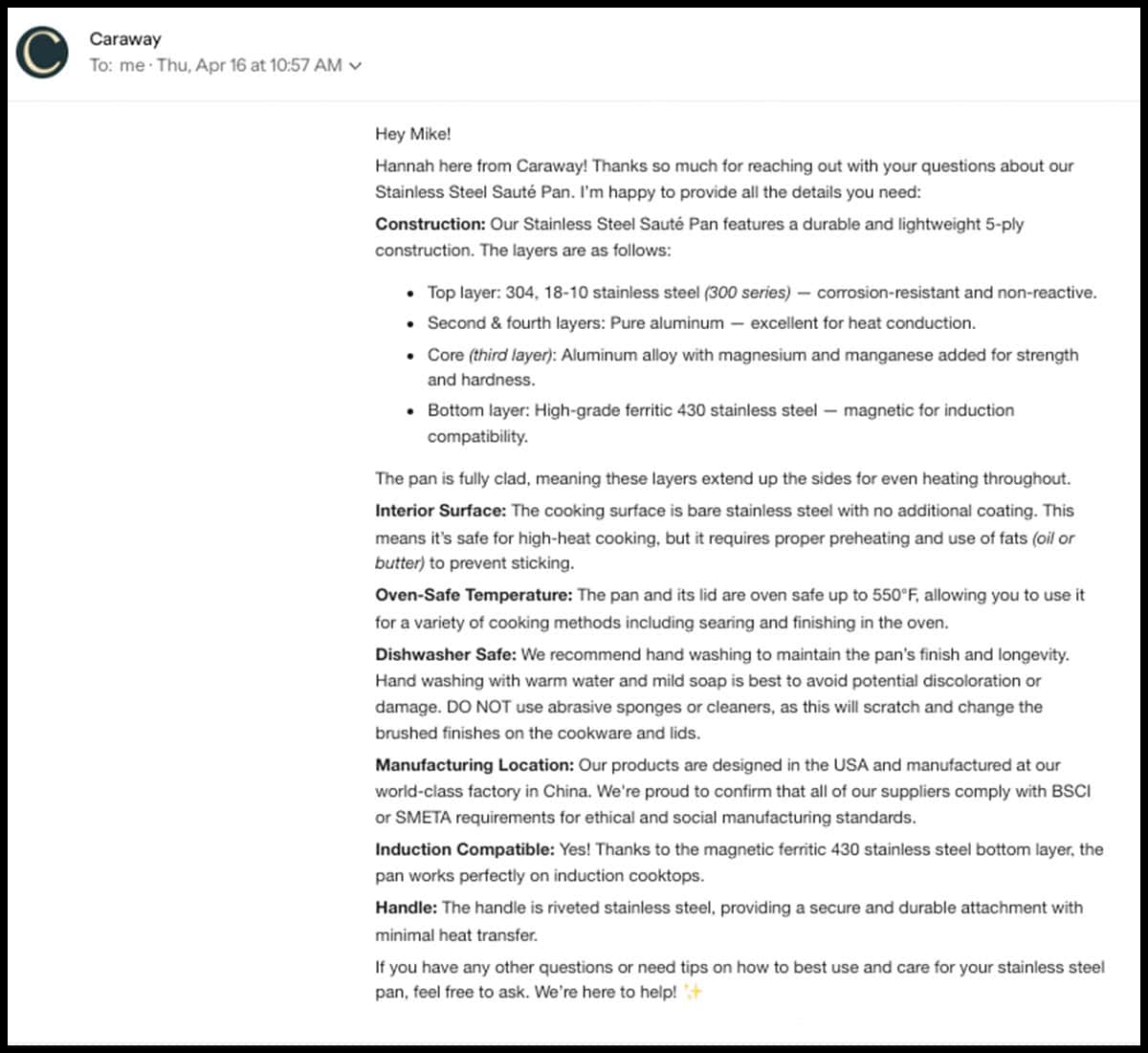
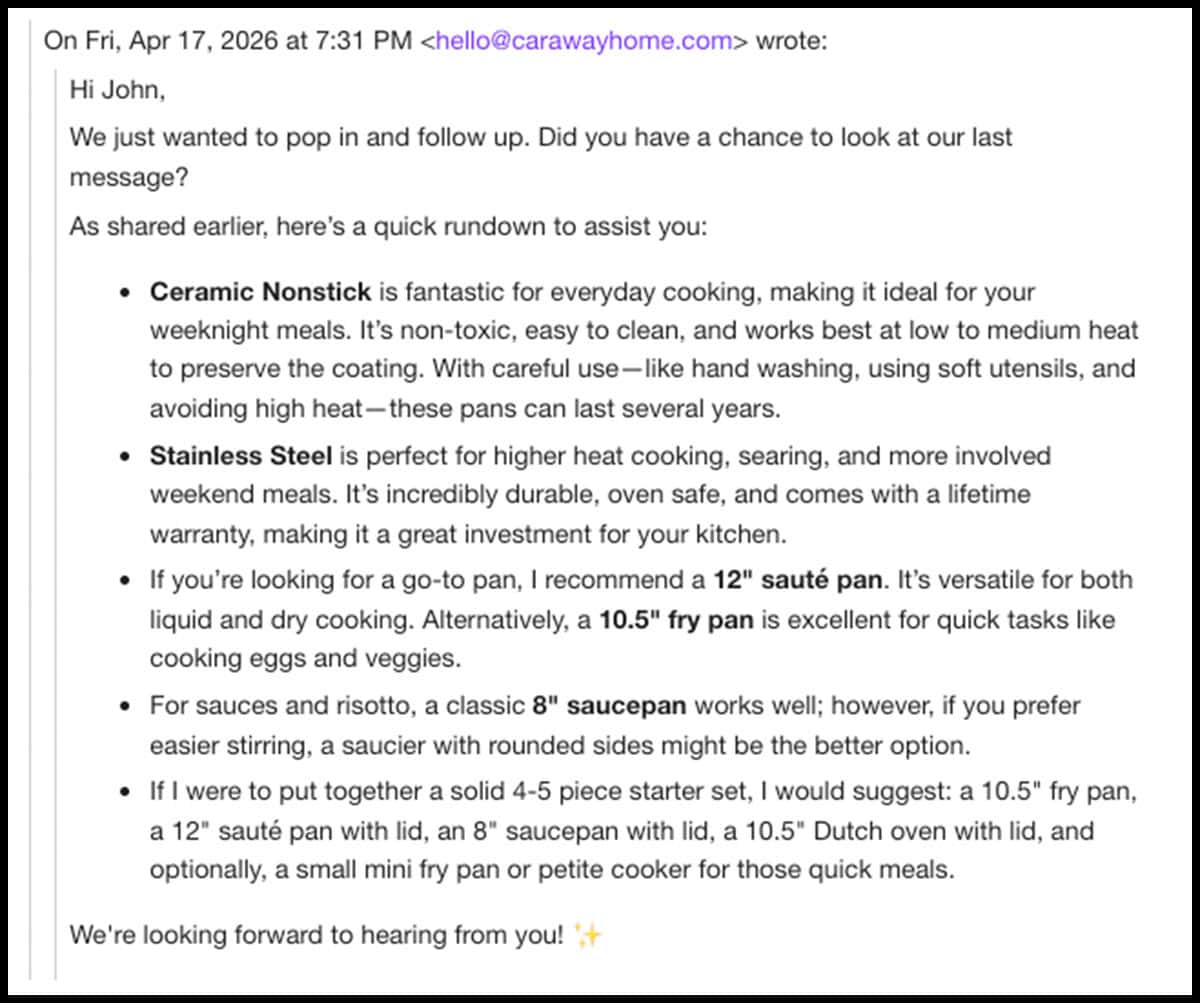
As for customer service, the response to my factual email was excellent. She gave a full layer-by-layer breakdown of the construction and answered every question.
But the opinion email never committed to a recommendation, and the warranty response covered the basics but wouldn’t give a straight answer on whether the damage would actually be covered or how long it would take.
Our Place
Our Place built their brand around the Always Pan, which they market as a 10-in-1 all-purpose pan. It went viral on social media, sold out multiple times, and became one of the most recognizable cookware products on the internet.

The reality is, it’s just an aluminum pan with a ceramic nonstick coating and taller walls than most frying pans. And just like Caraway, the nonstick properties get worse the more you use it. The handle is also thick, squared, and uncomfortable.

More recently, they released the Titanium Always Pan Pro. The shape is similar but it’s a completely different product.

Instead of a ceramic nonstick coating, the cooking surface is titanium with a textured pattern. Our Place calls it NoCo technology, short for No Coating. They claim the texture creates airflow between the food and the pan, giving you nonstick performance without any chemical coating. They also claim the surface is 300% harder than stainless steel and will last a lifetime.

The first version of this pan had major design problems. The handle was boxy and uncomfortable, the lid had a gap that blasted steam directly onto the handle, and there was a peg you had to clean around.

Our Place has since updated the design. The handle is less squared, the peg is gone, and the lid gap is closed so you can redirect the steam.
As for performance, I’ve tested this pan a lot. I cooked eggs with oil and butter and they didn’t stick at all. I cooked eggs without any grease and they still released, which almost never happens with anything other than a brand new traditional nonstick pan.
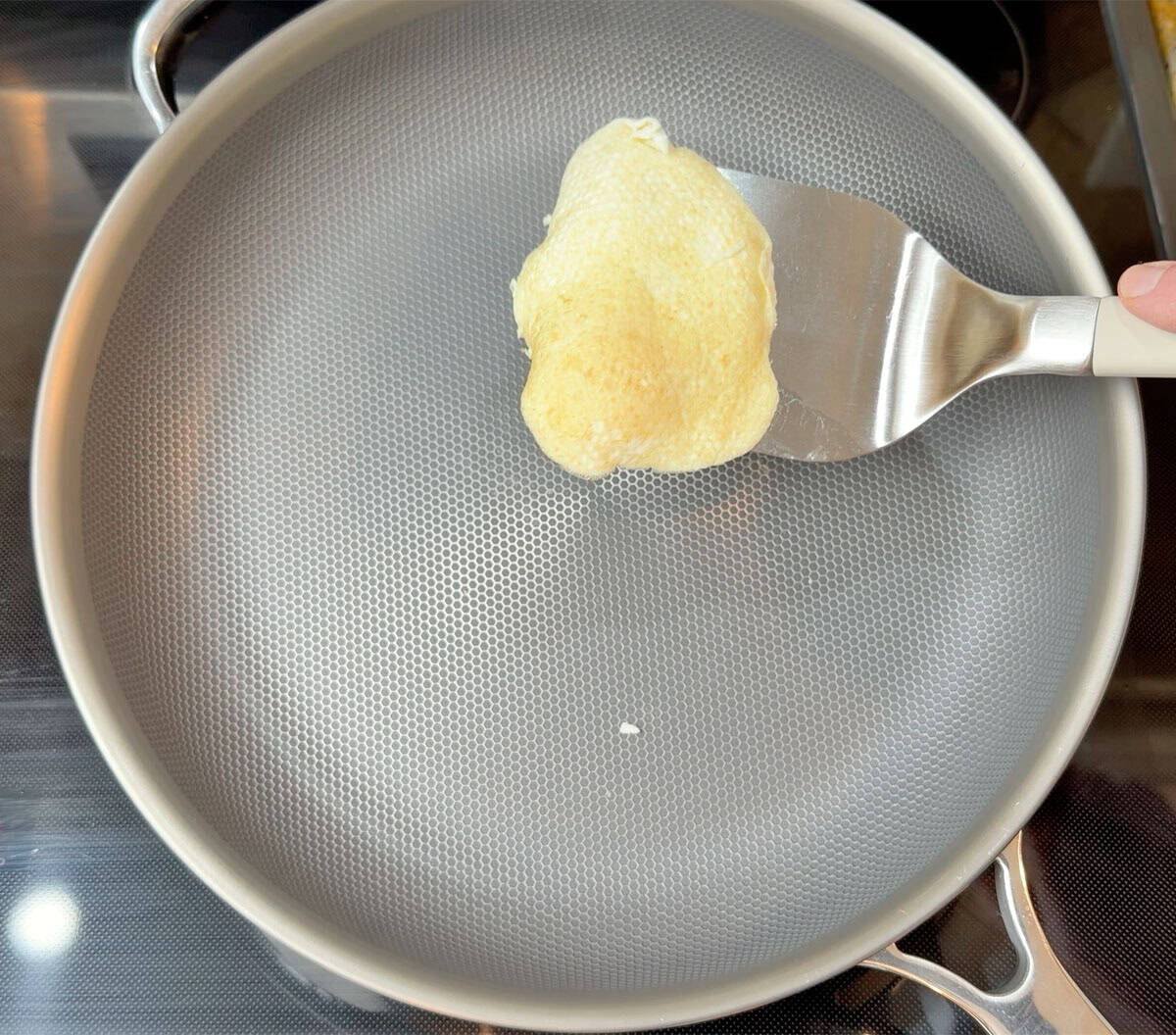
It sears well, cooks evenly, and has above-average heat retention; it ranked 10th out of 31 frying pans in my heat retention test.

I also put it through my full durability testing. It held up fine and the nonstick properties didn’t change.
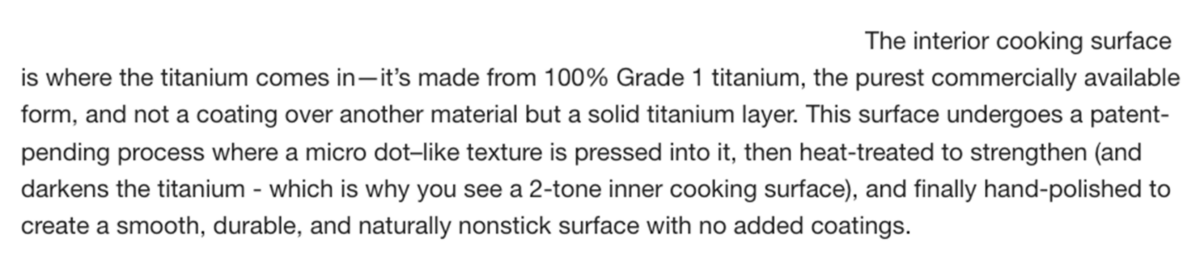
There is some debate about what this surface actually is. I’ve reached out several times and Our Place consistently says it’s pure titanium that goes through a heat-treating and polishing process. According to the company, the entire surface oxidizes during heat treatment, then the raised areas are polished back down, leaving the darker oxidized titanium visible only in the valleys of the textured pattern.
Some people online believe it’s actually a spray-on coating, and a law firm is currently investigating. I can only tell you what Our Place told me and what I’ve seen in my own testing, and so far it works.
As for customer service, the factual response was thorough, and the opinion email gave honest answers about the differences between their ceramic and titanium lines.
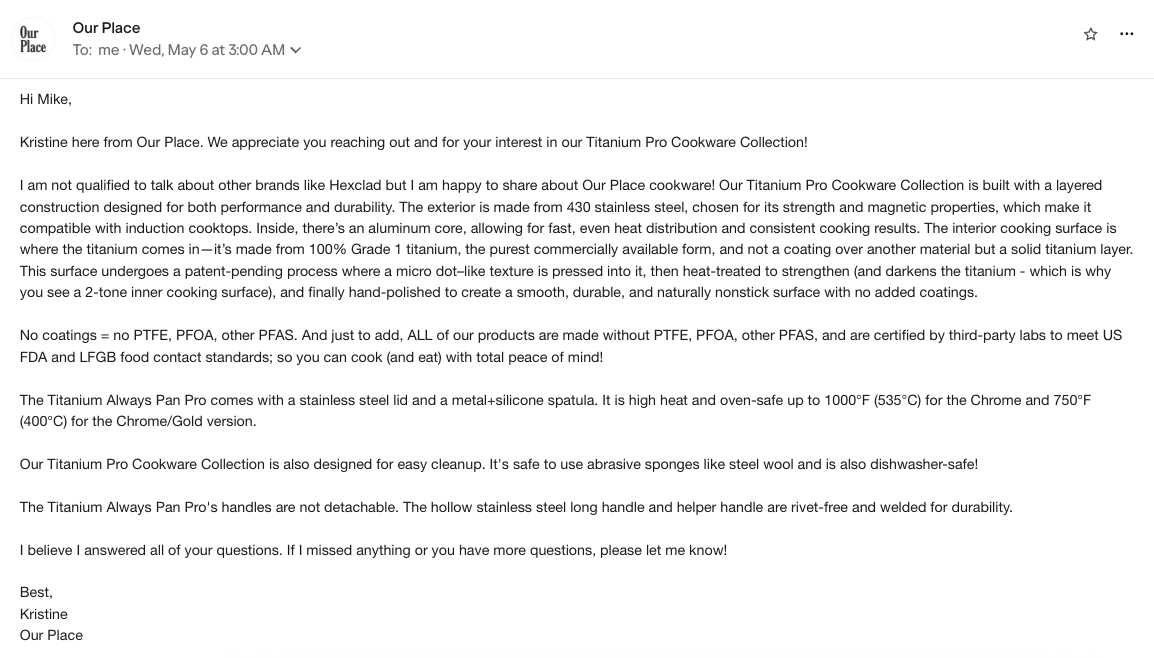
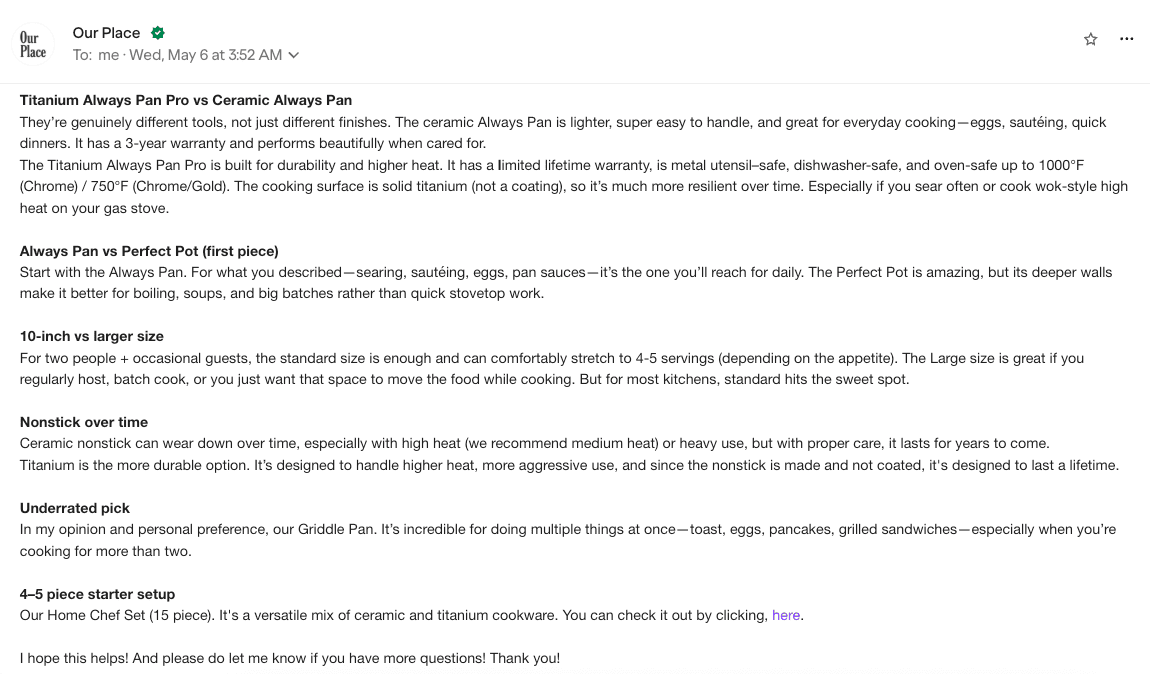
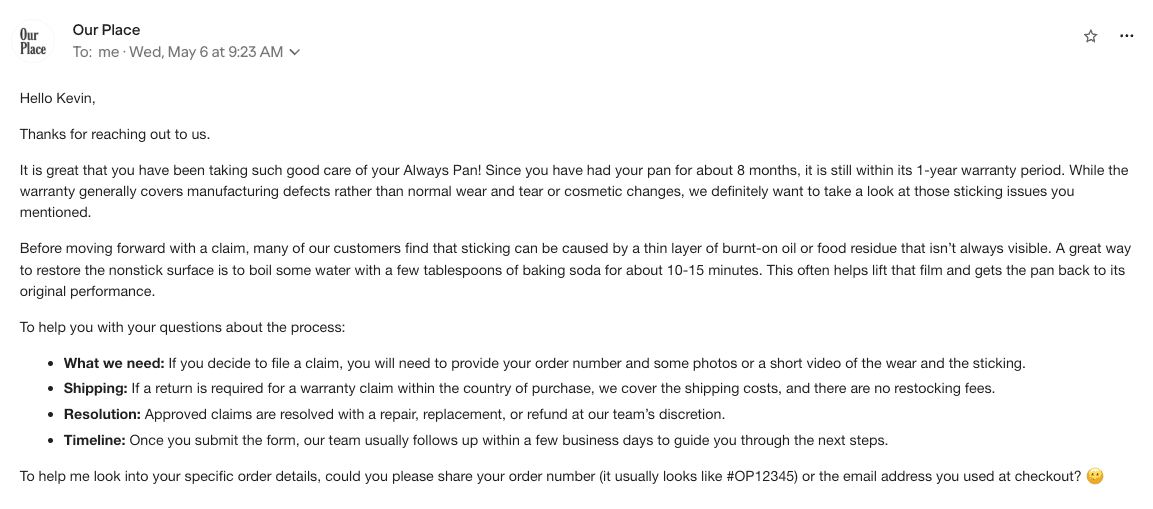
The factual and opinion emails each took over 13 hours to come back, which was the slowest response time of any brand I tested. The warranty response was the outlier. It came back in three minutes and, while it was likely AI-generated, it was still clear, detailed, and actually answered my questions.
Made In
Made In has the widest variety of cookware in the group, including stainless steel, carbon steel, enameled cast iron, ceramic nonstick, traditional nonstick, knives, dinnerware, and more.
Their main pitch is professional quality cookware for the home cook. Their pans are designed to perform in high-volume restaurant kitchens, and because they actually sell to those kitchens, they’re constantly getting feedback from pro chefs and incorporating it into the design.

I’ve been using Made In since 2018, and their stainless steel fry pan is one of my top picks in the $100 to $200 range. It has the widest cooking surface of all the 12-inch stainless steel fry pans I tested (10 inches of flat cooking surface), it ranked 2nd out of 31 in heat conduction, and the handle is secure and comfortable.
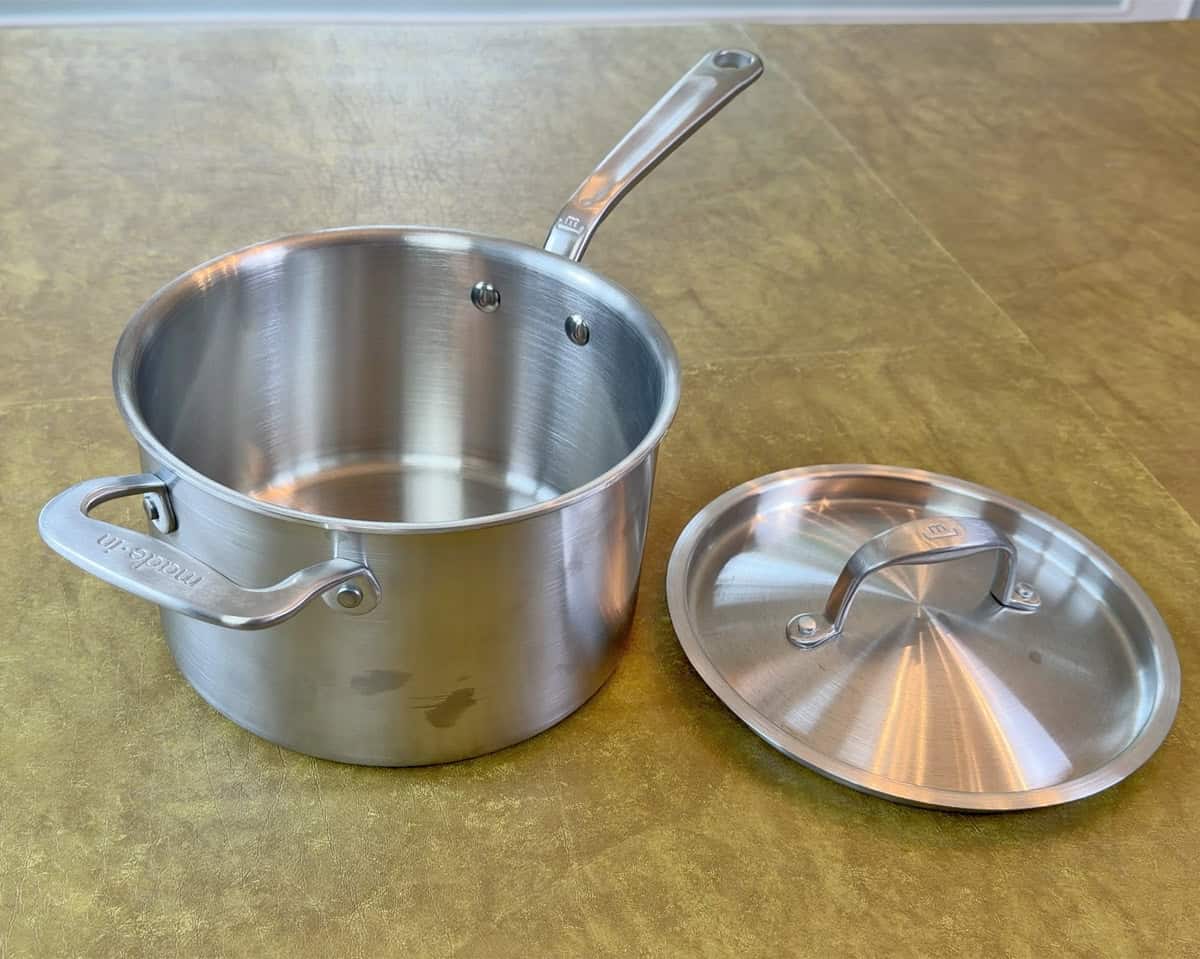
The saucepan is also excellent. It has tall walls, a very large helper handle, and it was the fastest to boil on induction out of the 13 saucepans I tested.
The Dutch oven is right up there with Le Creuset and Staub. It had the second best heat retention, the second best moisture retention, the lowest knob temperature, and the widest cooking surface out of the 7 Dutch ovens I tested in the 5 to 6 quart size.

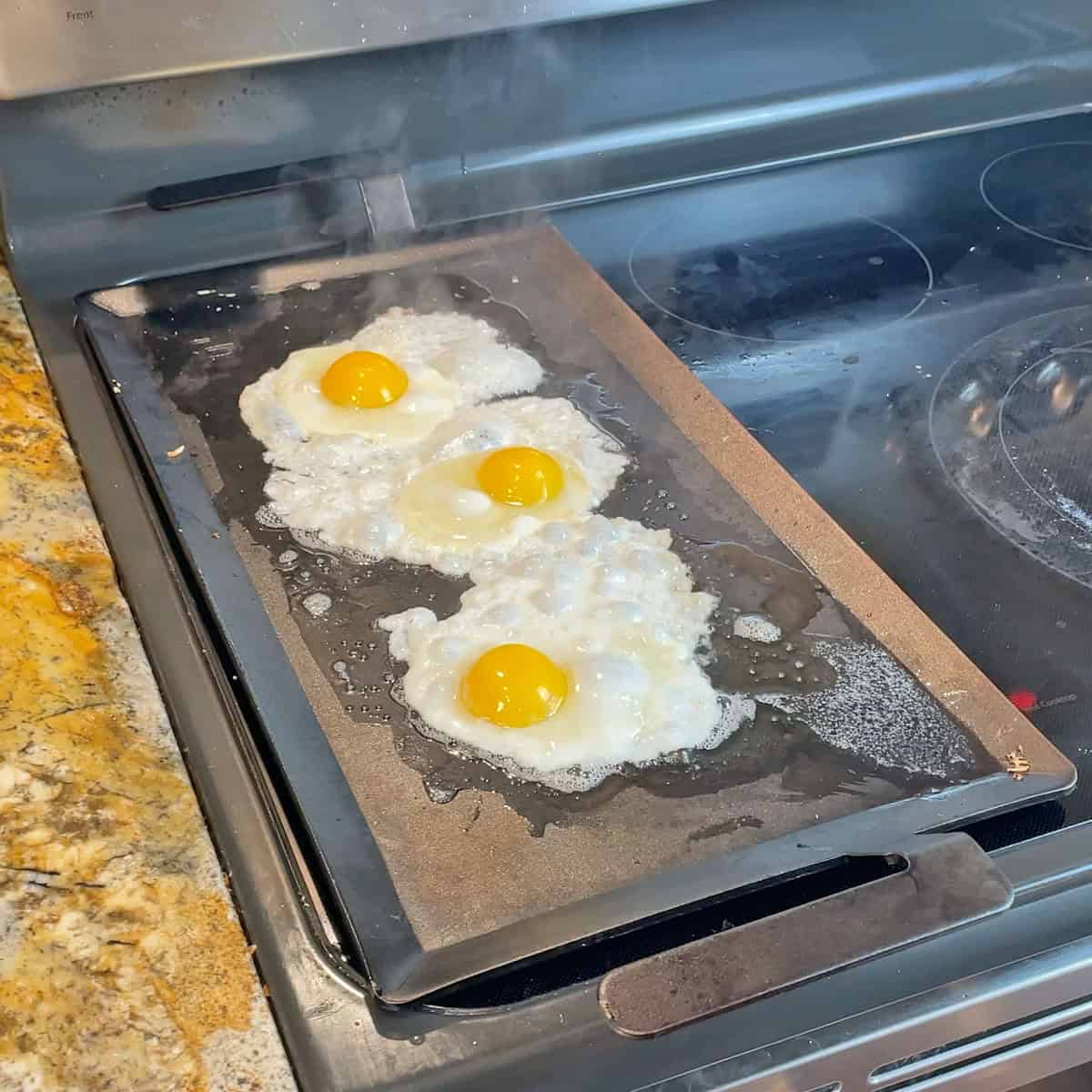
The carbon steel griddle is my top pick across all the griddles I tested. You can use it on any cooktop, on a grill, and it’s durable enough to use over a fire pit.
That said, I don’t recommend all Made In products.
The carbon steel fry pan had the worst heat retention and the worst heat distribution of any carbon steel pan I tested, and it warped during testing.
The griddle, while my top pick, also warps slightly on a flat cooktop. It’s not severe like Lodge or Nordic Ware, but enough that you sometimes have to hold the handle to keep it steady when you’re scraping food.
Their CeramiClad ceramic nonstick pan performs well and is made in the USA, but it’s one of the most expensive ceramic nonstick pans on the market. And like the ceramic nonstick lines from Caraway, Our Place, and HexClad, the coating will eventually wear out. So you’re spending a lot for a pan that won’t last forever.

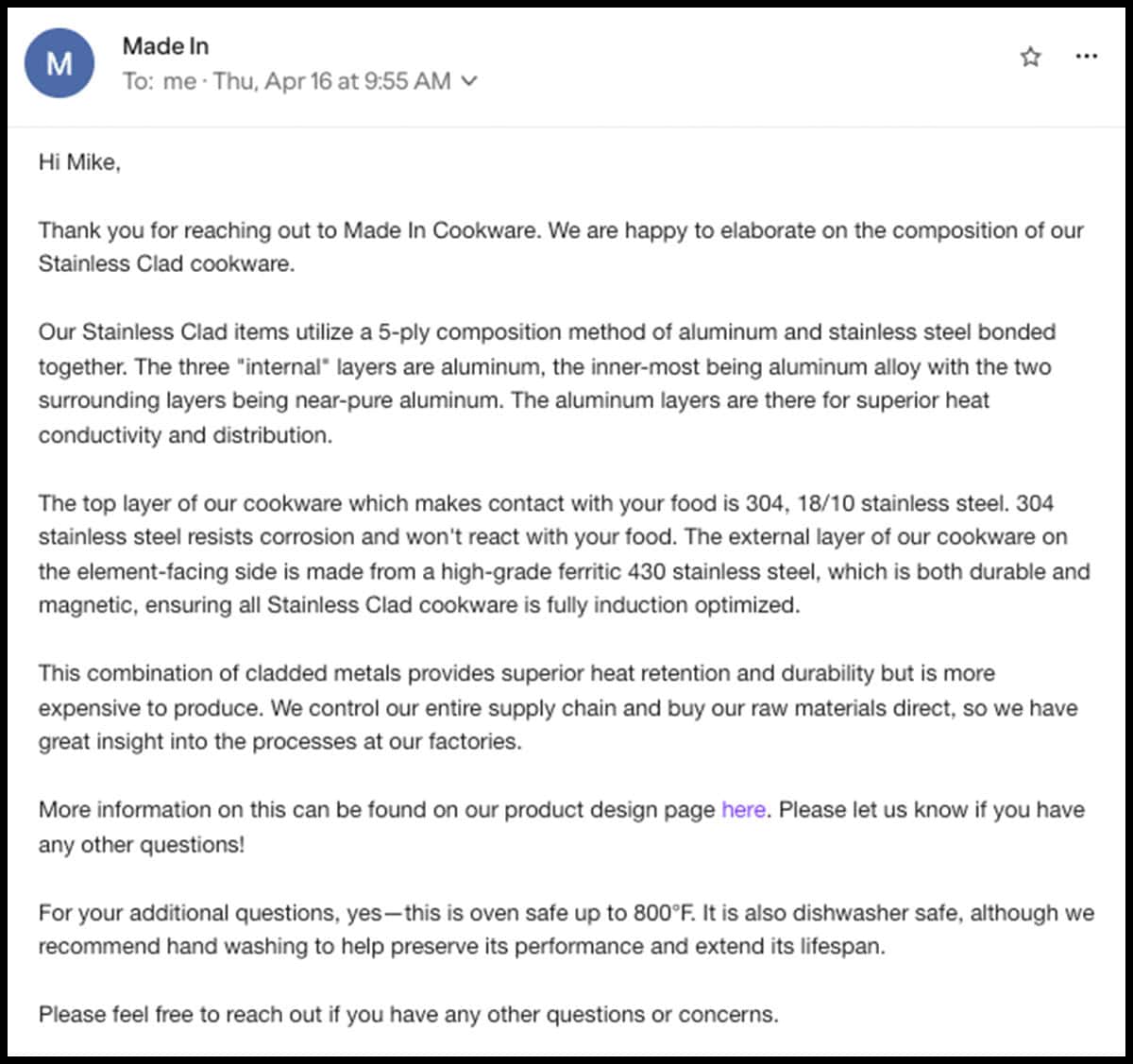
Made In’s customer service was the strongest of all 5 brands. They responded within an hour and a half to all three emails with thorough and accurate answers.
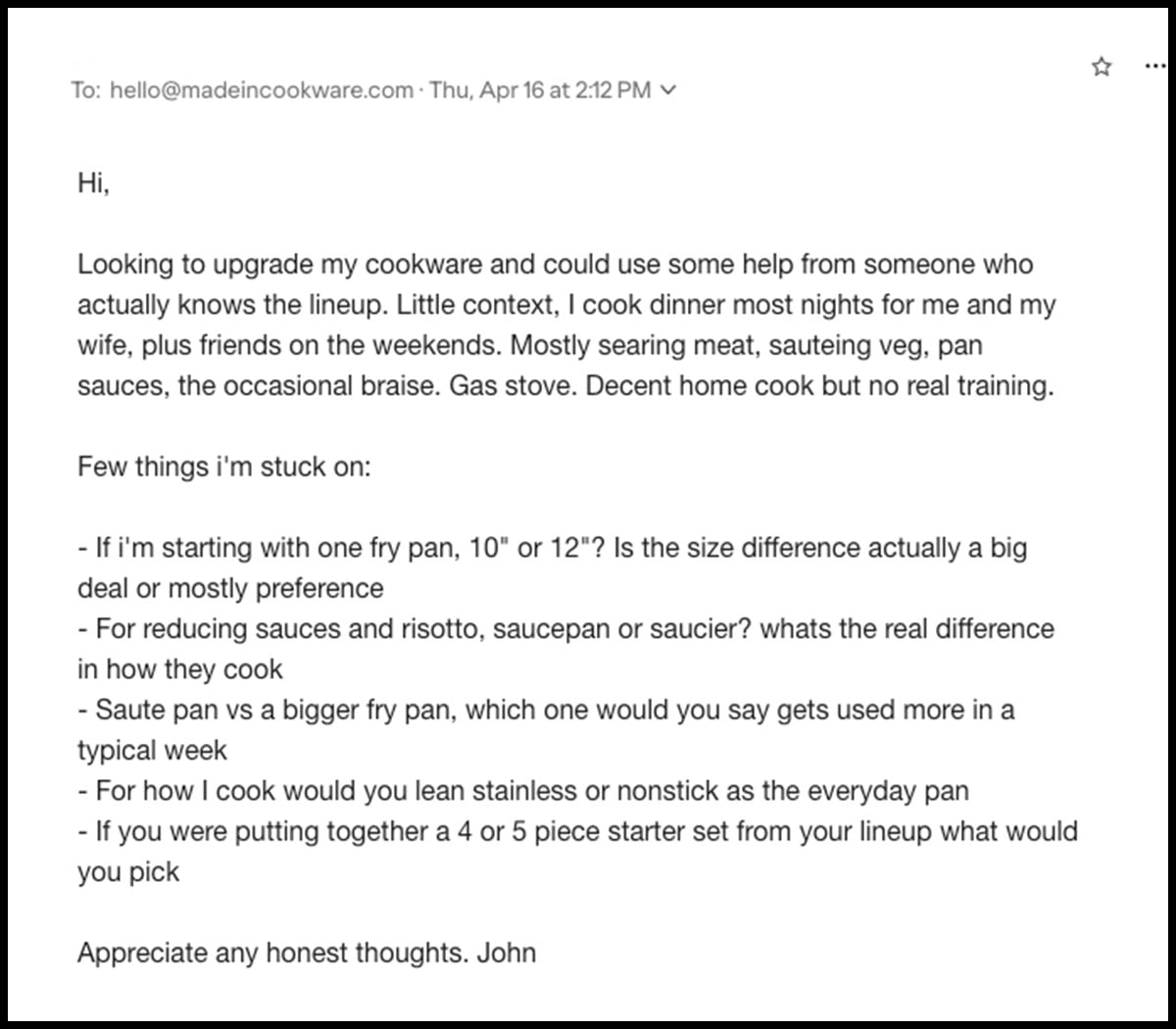
The opinion response was the best in the group. They gave me personalized recommendations and a custom 5-piece set that actually made sense for how I said I cook.
Misen
Misen markets their cookware to the average home cook who wants high performance at a fair price.
Their stainless steel frying pan delivers on that promise. It’s 5-ply, 3mm thick, has a wide cooking surface, and is one of the few pans with sealed rims that doesn’t cost hundreds of dollars. It also ranked 6th out of 31 frying pans in my heat conduction test. I don’t love the rounded handle, but otherwise it’s an excellent pan at a good price.

I also tested their Dutch oven, which has a cast iron grill pan lid. It performed well in my tests; it had the highest moisture retention of any Dutch oven I tested and you get two pans for less than the price of one Le Creuset or Staub.

But the product Misen is most known for is their newest one, the Carbon Nonstick pan. They launched it on Kickstarter and quickly raised over $2 million from more than 15,000 backers on the promise that it’s nonstick out of the box, requires no seasoning, won’t rust, and lasts forever.
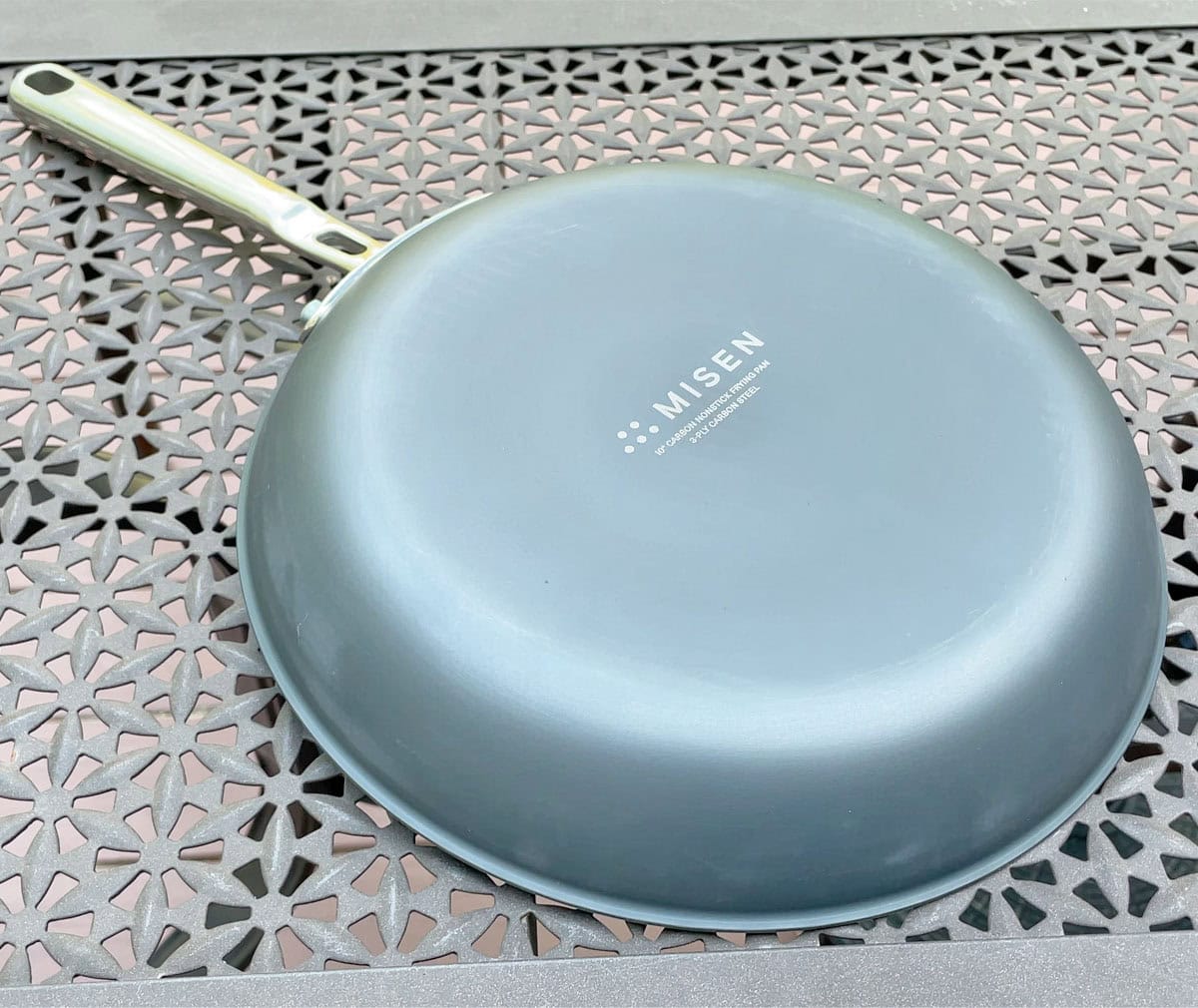
When I first tested it ten months ago, it lived up to those claims. Eggs slid around freely, simmering tomato sauce didn’t damage the surface, it didn’t rust when I left it wet overnight, and metal utensils didn’t scratch it.
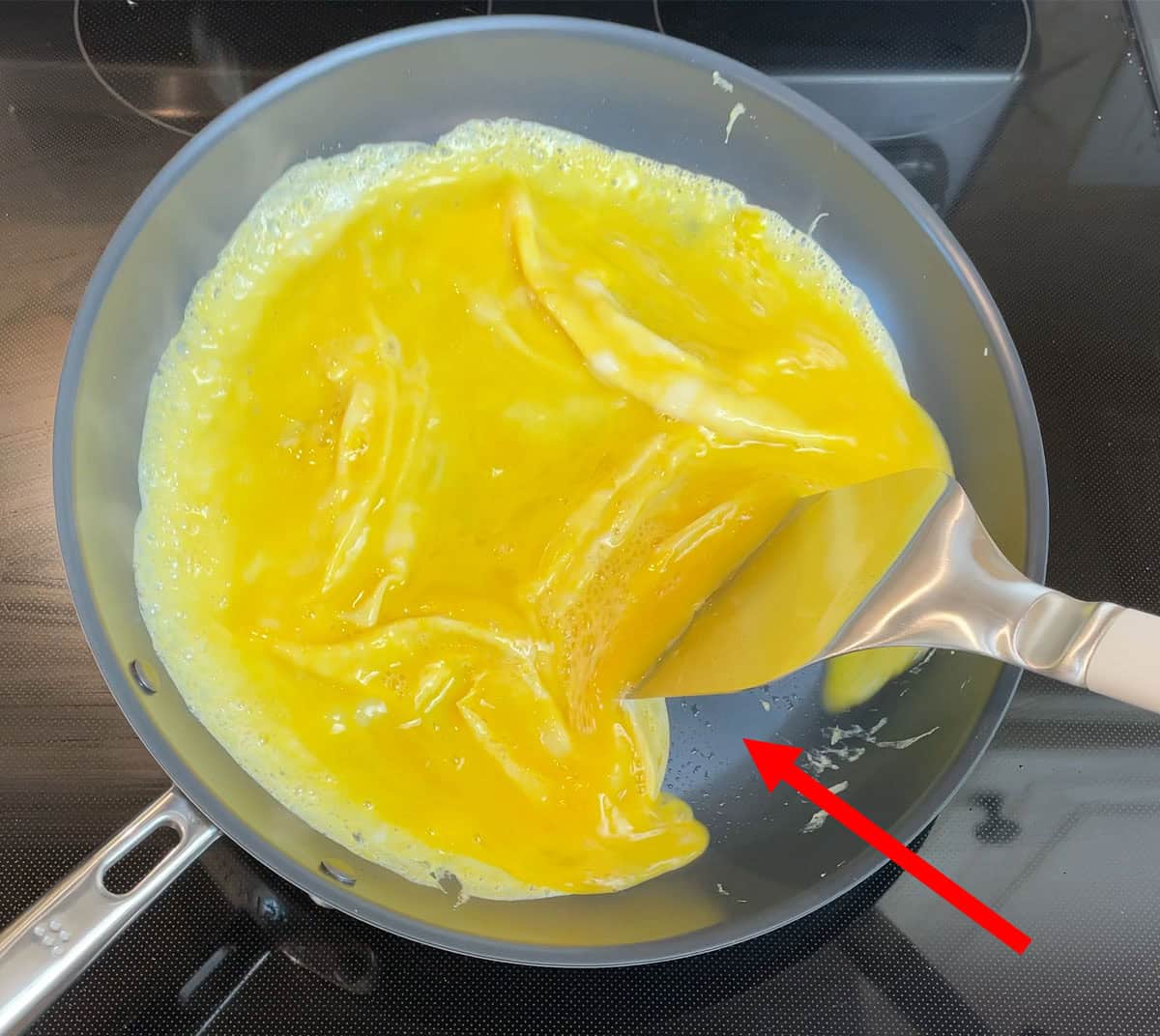
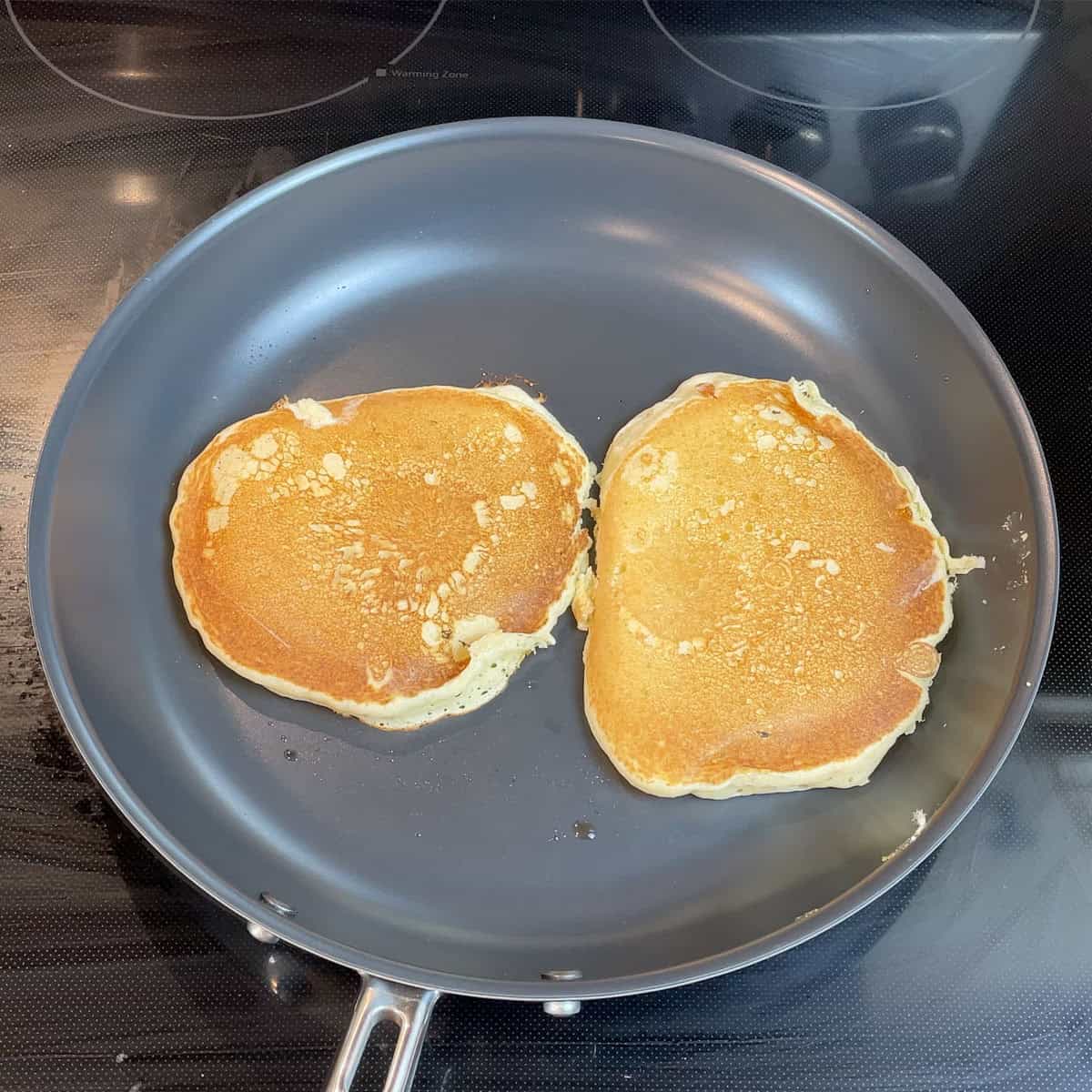
At the four-month mark, I still had no real issues with sticking. But after using it for about ten months, I’ve noticed that if the heat isn’t quite right or I don’t use enough fat, sticky foods like eggs don’t slide as easily as they did before.
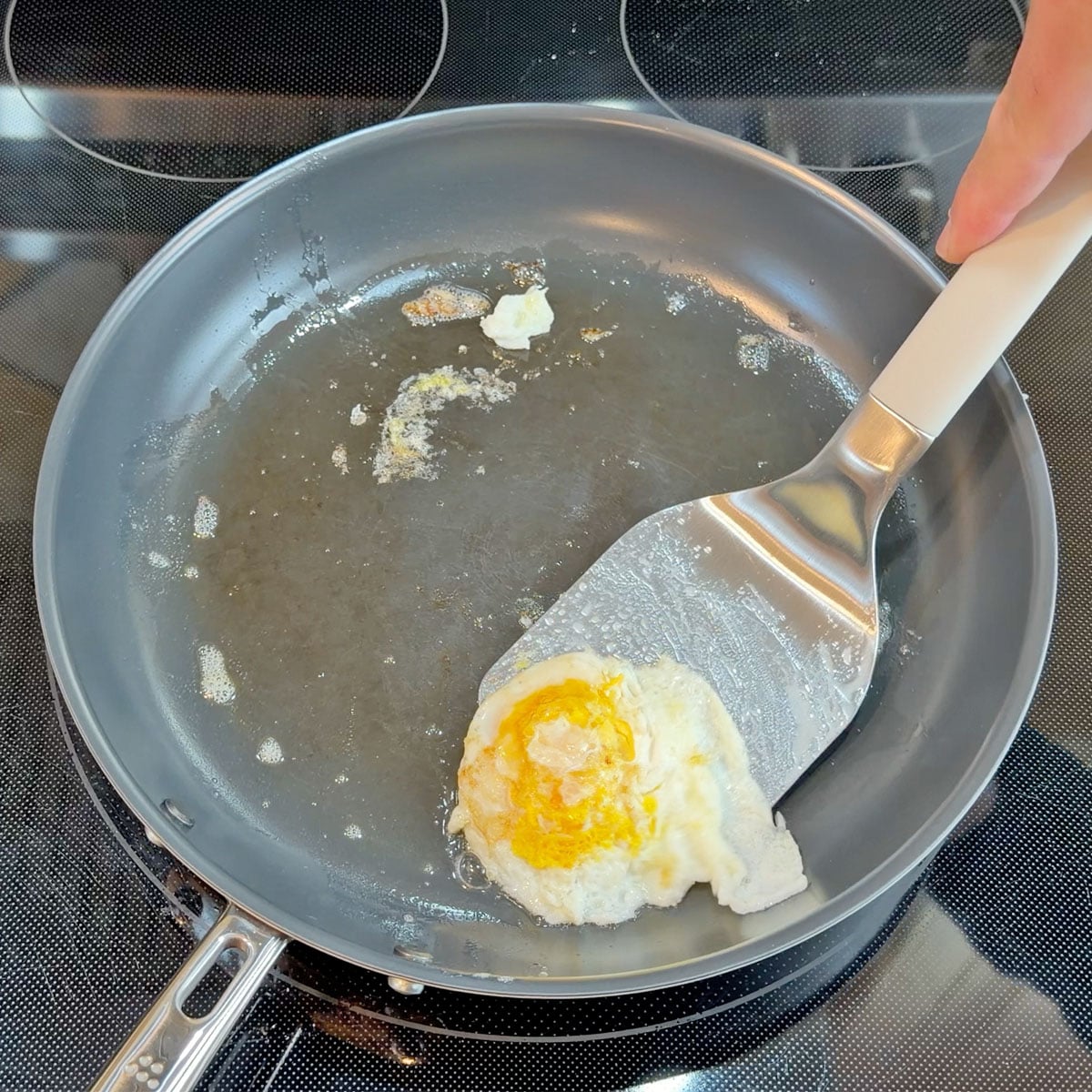
I have two theories about the performance change. First, Misen ships the pan with a thin layer of corn oil on the surface to protect it in transit. That could be why the pan feels ultra-slippery the first few times you use it. Once that washes off, the surface is still nonstick, but not nearly as slick as day one.
Second, I’ve noticed that the nitrided carbon steel surface doesn’t take on seasoning the way a regular carbon steel pan does. In my experience, trying to season it actually works against it. I’ve found that scrubbing it clean and not intentionally seasoning it keeps the surface smoother and better for eggs.
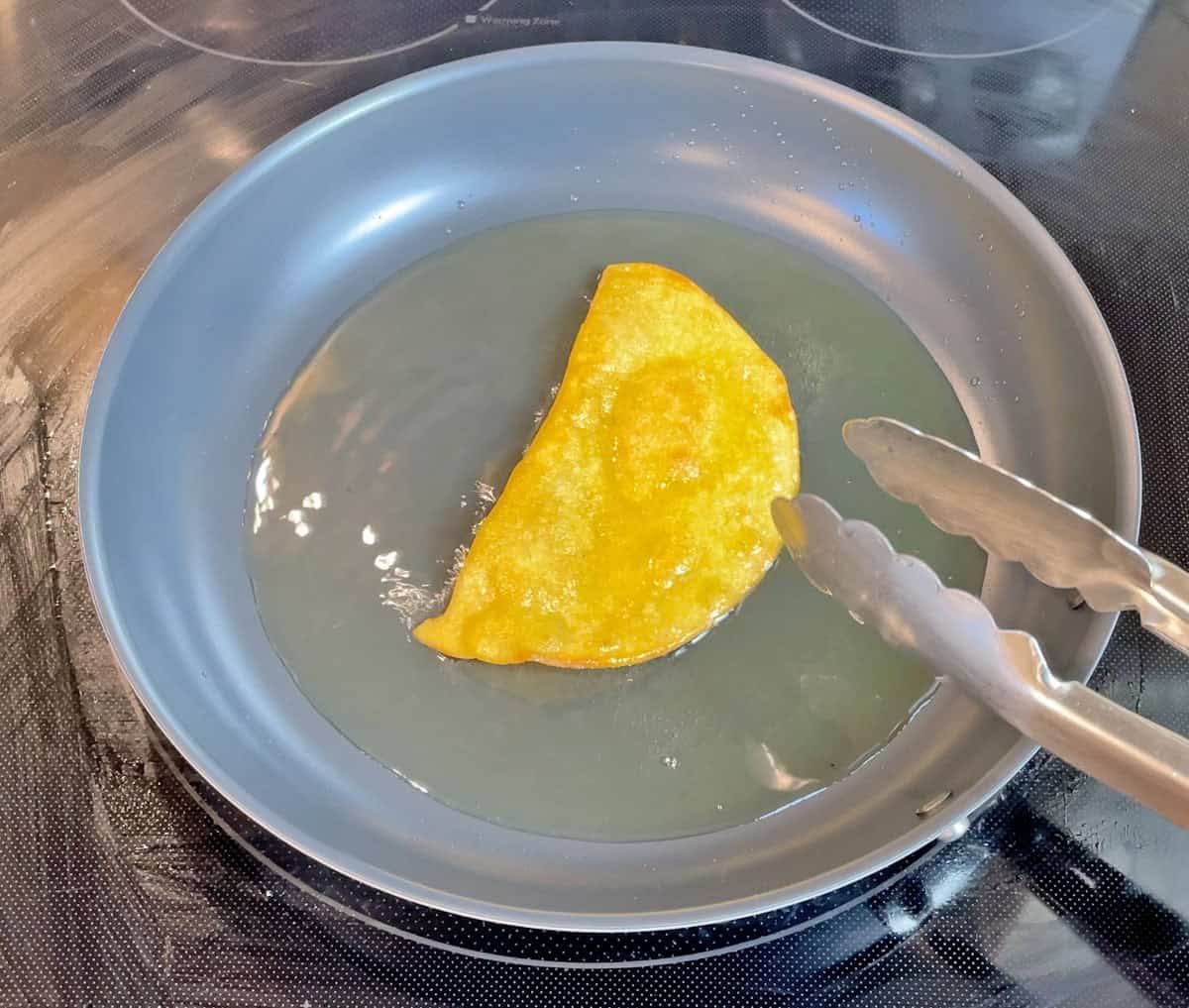
Whatever the cause, the bigger issue is the marketing. Calling it “Carbon Nonstick” sets the expectation that it will perform like a Teflon-coated pan. The reality is that it’s a carbon steel pan that doesn’t need seasoning and can handle acidic foods. It handles sticky foods well, but it’s less forgiving than traditional nonstick.
If you have any issues with your Misen pans, their customer service is fast. But that’s because they use AI. All three of my emails were answered by their AI, named Misie. The reply to my factual email was accurate and helpful, but the opinion email gave me definitions instead of real recommendations.
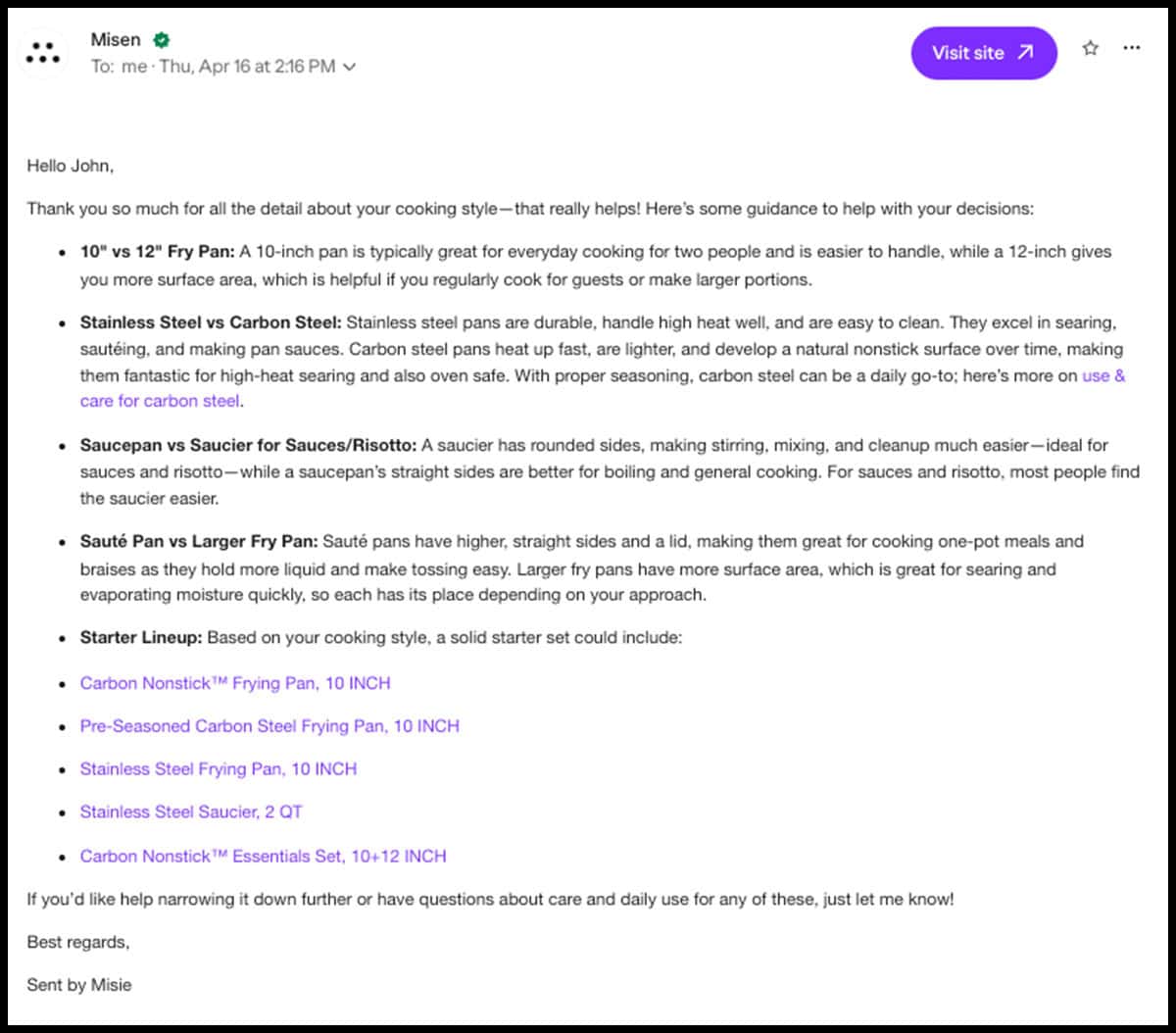
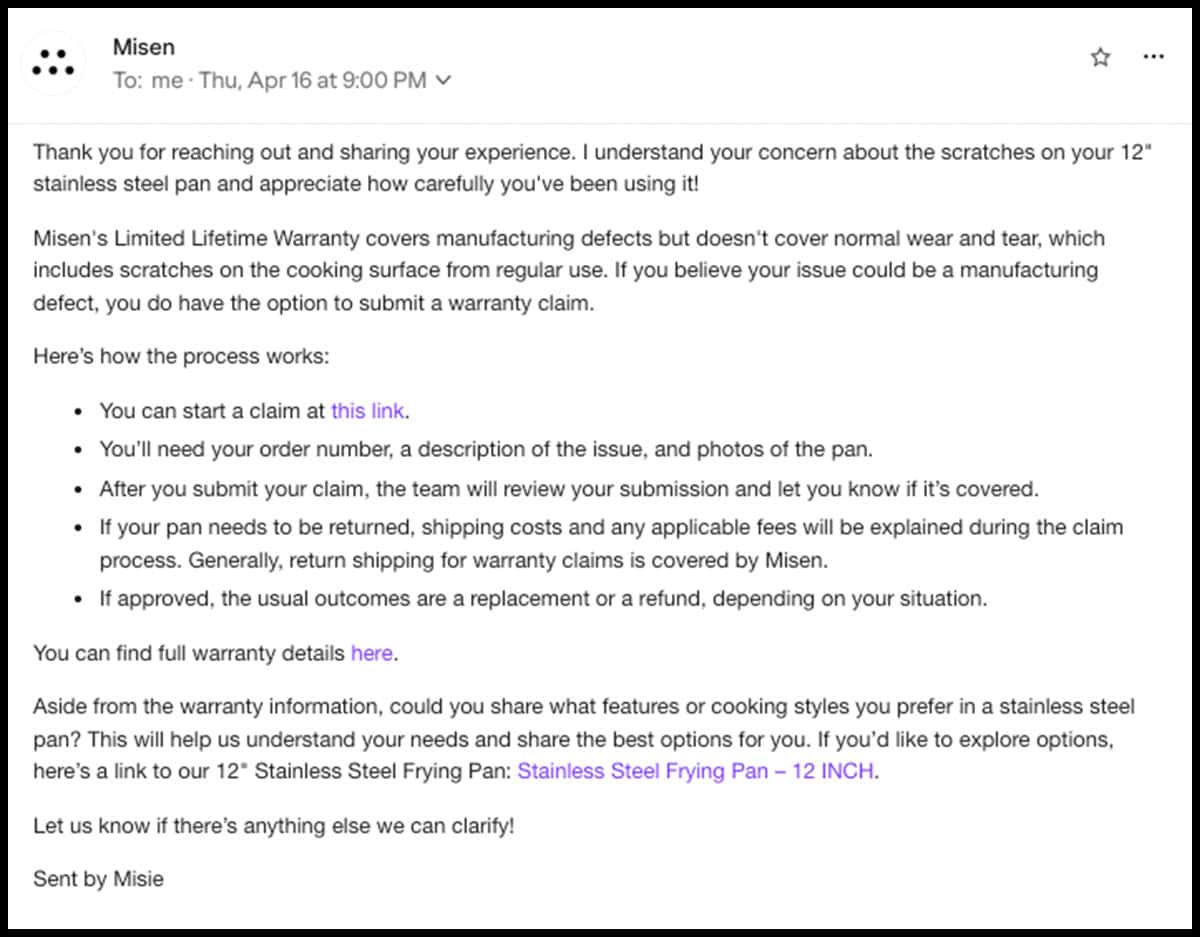
And when I asked for advice on a starter set, it recommended 3 different 10-inch pans. The warranty email was helpful, but they also tried to upsell me on a new pan, which was odd.
Bottom Line: Which Viral Cookware Brand Is Actually Worth Buying?
The best brand of this group is clearly Made In. Their stainless steel and enameled cast iron cookware is excellent, and their carbon steel griddle is my top pick across every griddle I tested. And their customer service was fast, accurate, and helpful.

But as I mentioned, they offer a wide range of products, and not all of them are winners. Based on my testing, there are better sheet pans, cutting boards, and carbon steel pans, and there are several knife brands I recommend over Made In.
Misen’s stainless steel pan is an excellent value, and their Carbon Nonstick is worth considering as long as you go into it with the right expectations.
The Our Place Titanium Always Pan is also impressive, and if the materials are what they say they are, I expect the performance to last.
As far as the other brands go, it really comes down to value. HexClad, Caraway, the original Our Place Always Pan, and Made In CeramiClad all perform well when they’re new. But they’re still coated nonstick pans, which means the coating will eventually wear down and the pan will need to be replaced.
You can get similar performance for much less from other brands like Ikea, GreenPan, and Cuisinart. It doesn’t make sense to spend over $100 on one nonstick pan, even if there are steel ridges protecting the coating. If you’re going to buy from one of these brands, I’d focus on their uncoated cookware that can actually last.
You can check the latest prices here:
- Made In on MadeInCookware.com and Amazon
- Misen on Misen.com and Amazon
- Our Place on FromOurPlace.com and Amazon
- HexClad on HexClad.com and Amazon
- Caraway on CarawayHome.com and Amazon
Related Topics
- Made In CeramiClad vs. Caraway vs. GreenPan vs. Our Place vs. Carote
- Caraway vs. Carote: My Tests Reveal the Winner
- Caraway Cookware: An In-Depth Review (With Pictures)
- Misenware Food Storage Containers Review: I Tested Every Claim
- Made In Carbon Steel Griddle Review: Pros, Cons, and Test Results
- Caraway vs. Our Place (Always Pan): Which Cookware Is Better?
- My Brutally Honest Review of the Our Place Titanium Always Pan Pro
- HexClad vs. Our Place Always Pan and Titanium Always Pan Pro
- Taima Titanium Review: I Tested It vs. 4 Other Titanium Pans
- I Tested 31 Stainless Steel Frying Pans: These Are the Best & Worst

