

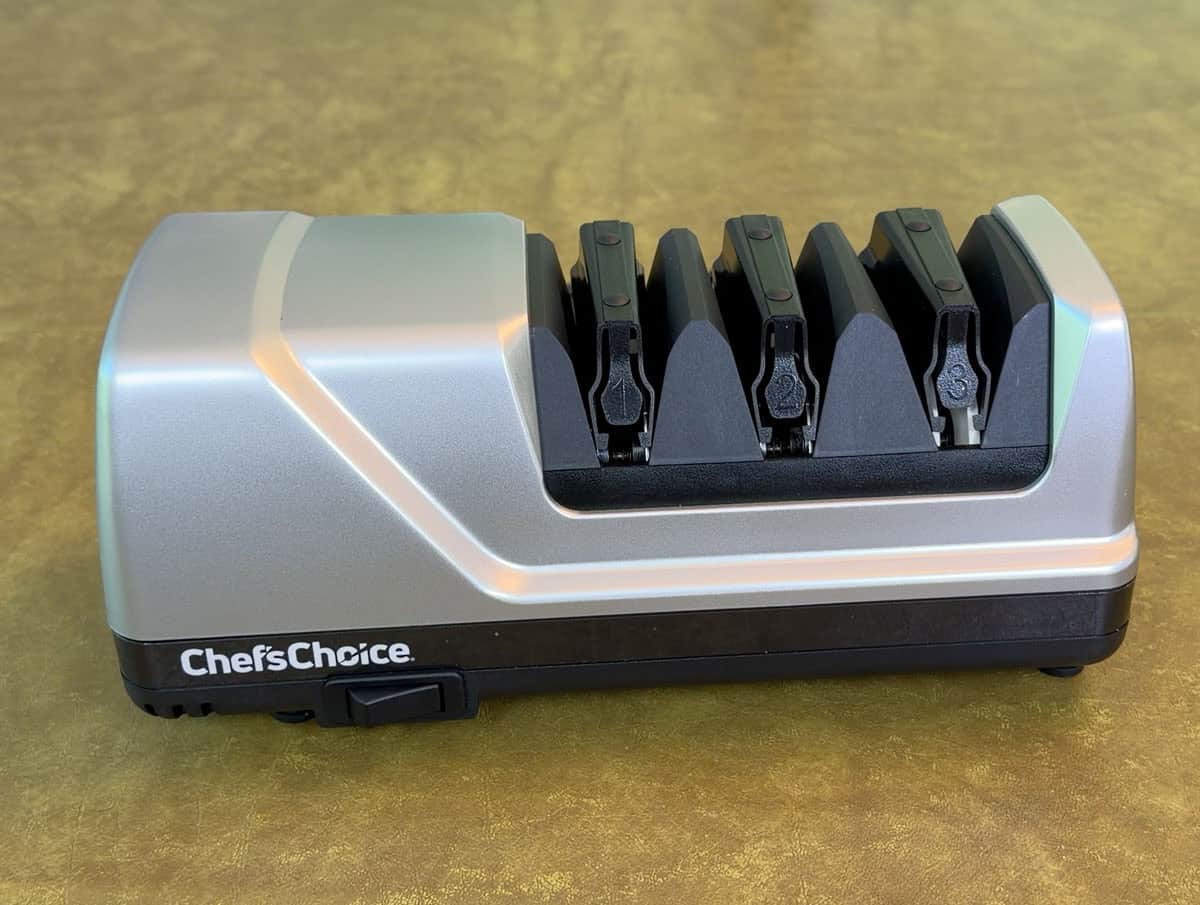
Is the Chef’sChoice 15XV knife sharpener worth buying?
To find out, I dulled three different knives, measured their sharpness before and after, and compared the results to five other sharpener types.
In this review, I’ll show you how sharp the knives got, how easy the Chef’sChoice 15XV sharpener was to use, where it outperformed other sharpeners, and the downsides you should know before buying it.
Key Takeaways
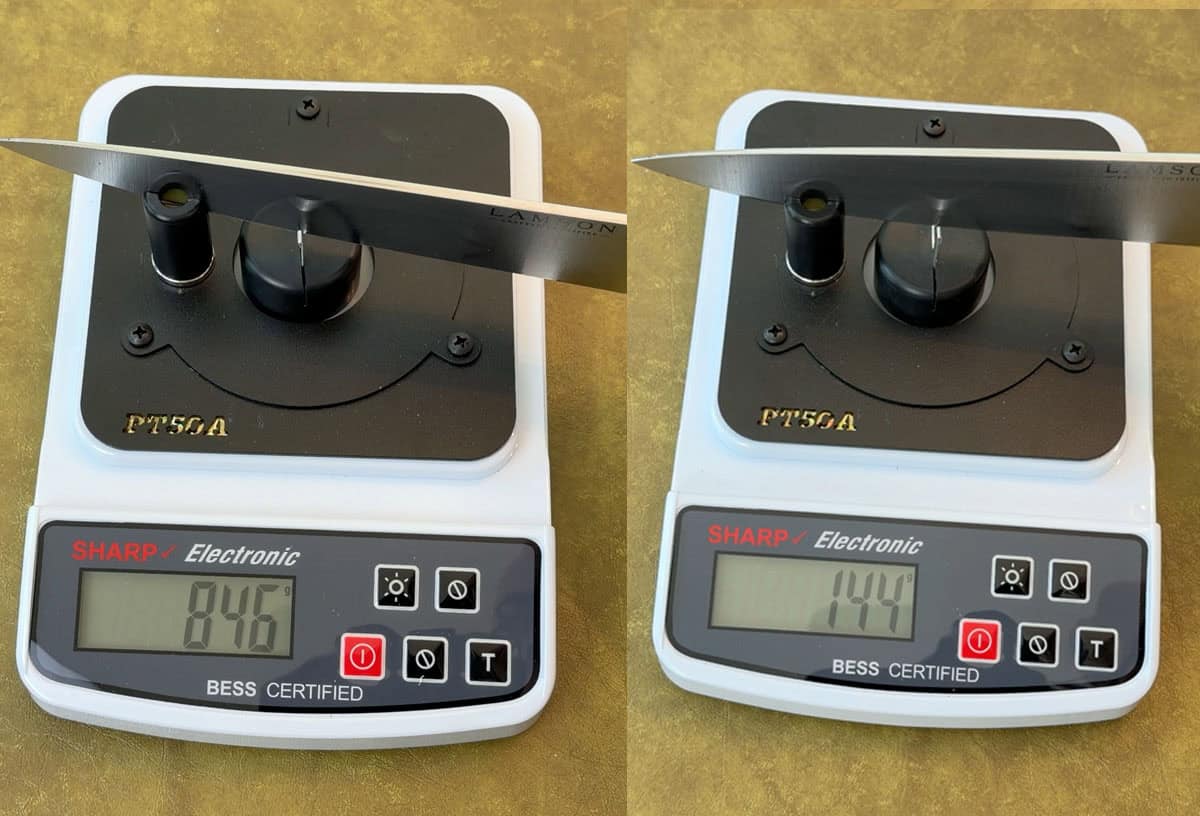
The Chef’sChoice 15XV was one of the most effective sharpeners I tested. It took a cheap chef’s knife from 924 to 173 on the BESS scale, a hard Japanese-style knife from 598 to 184, and a Lamson forged knife from 846 to 144 after a second sharpening. Lower BESS scores mean sharper edges, and anything around 200 is very sharp for a kitchen knife.
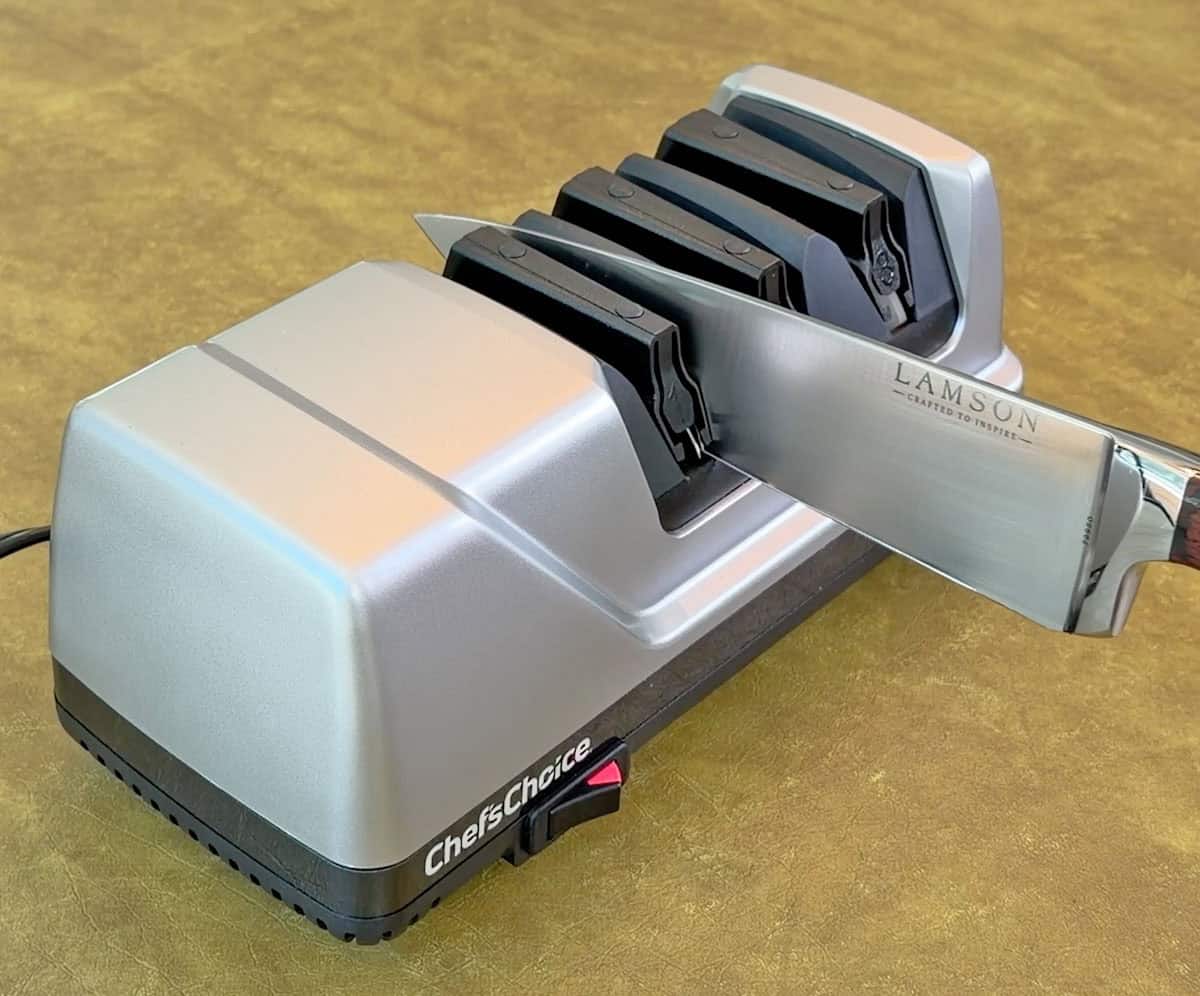
It was also one of the fastest. Each knife took about two minutes, and there was almost no setup. You just turn it on, pull the knife through each slot, and let the motorized abrasive wheels do the work.
The biggest downsides are noise, lack of visibility, and limited control. It measured in the mid to high 80-decibel range during my noise test, which is loud enough to sound like a small power tool. Since the edge is hidden inside the slot, you can’t see exactly how the knife is contacting the sharpening wheels.
Bottom line, the Chef’sChoice 15XV is worth buying if you want sharp knives fast and don’t want to learn freehand sharpening. I wouldn’t use it on every expensive knife I own, but for most home cooks, it’s one of the easiest ways to get excellent results.
You can check the current price of the Chef’sChoice 15XV on Amazon.
Use the links below to navigate the review:
- How I Tested It
- Sharpness Test Results
- Cutting Test Results
- Ease of Use
- Noise
- Control and Visibility
- Knife Compatibility
- Durability Concerns
- Chef’sChoice 15XV vs. Other Sharpeners
- Bottom Line: Is Chef’sChoice 15XV Worth Buying?
How I Tested It
I tested the Chef’sChoice 15XV on three different knives: a cheap Chef Craft Select chef’s knife, a Lamson Premier Forged knife, and an Oishya KYU knife. I chose those three to see how it handled a low-cost knife, a softer Western-style knife, and a harder Japanese-style knife.
Before sharpening, I dulled each knife on a steel cutting board and measured the edge with a BESS Certified Sharpness Tester. This tool measures how many grams of pressure it takes for the blade to cut through a thin test wire.

The lower the score, the sharper the knife. Anything over 400 still needs work. Around 300 is sharp. Around 200 is the range I was hoping to see.

After measuring the starting sharpness, I sharpened each knife according to the Chef’sChoice instructions. Then I measured each knife again and tested it on paper, tomatoes, and peppers.
I also tracked how long sharpening took, how loud the machine was, how easy it was to use, and what problems I ran into.
Sharpness Test Results
The Chef’sChoice 15XV produced some of the best results in my entire test.
| Knife | Starting Sharpness | Final Sharpness | Time |
|---|---|---|---|
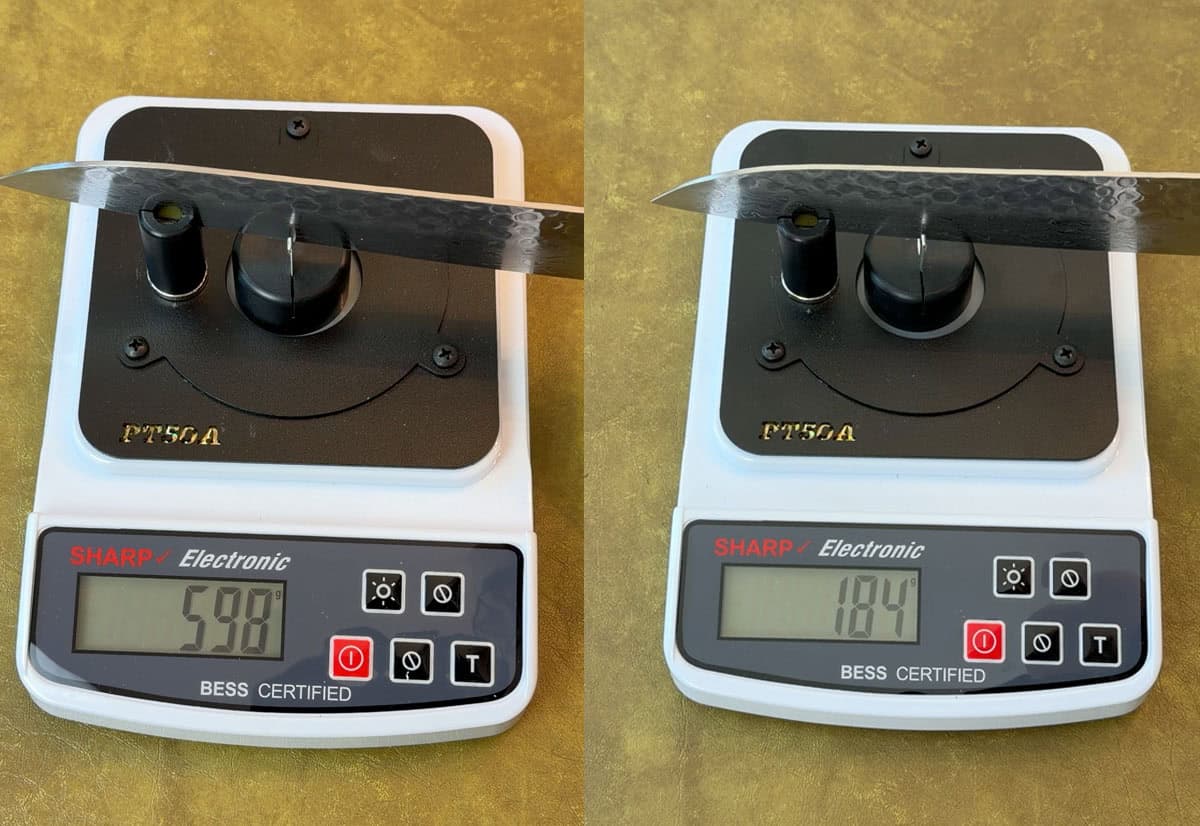
| Chef Craft Select chef’s knife | 924 BESS | 173 BESS | About 2 minutes |
| Lamson Premier Forged | 846 BESS | 144 BESS | About 2 minutes after second sharpening |
| Oishya KYU | 598 BESS | 184 BESS | About 2 minutes |
The cheap Chef Craft knife had the most dramatic improvement. It started at 924 BESS, which is extremely dull, and finished at 173. That’s a sharp edge.
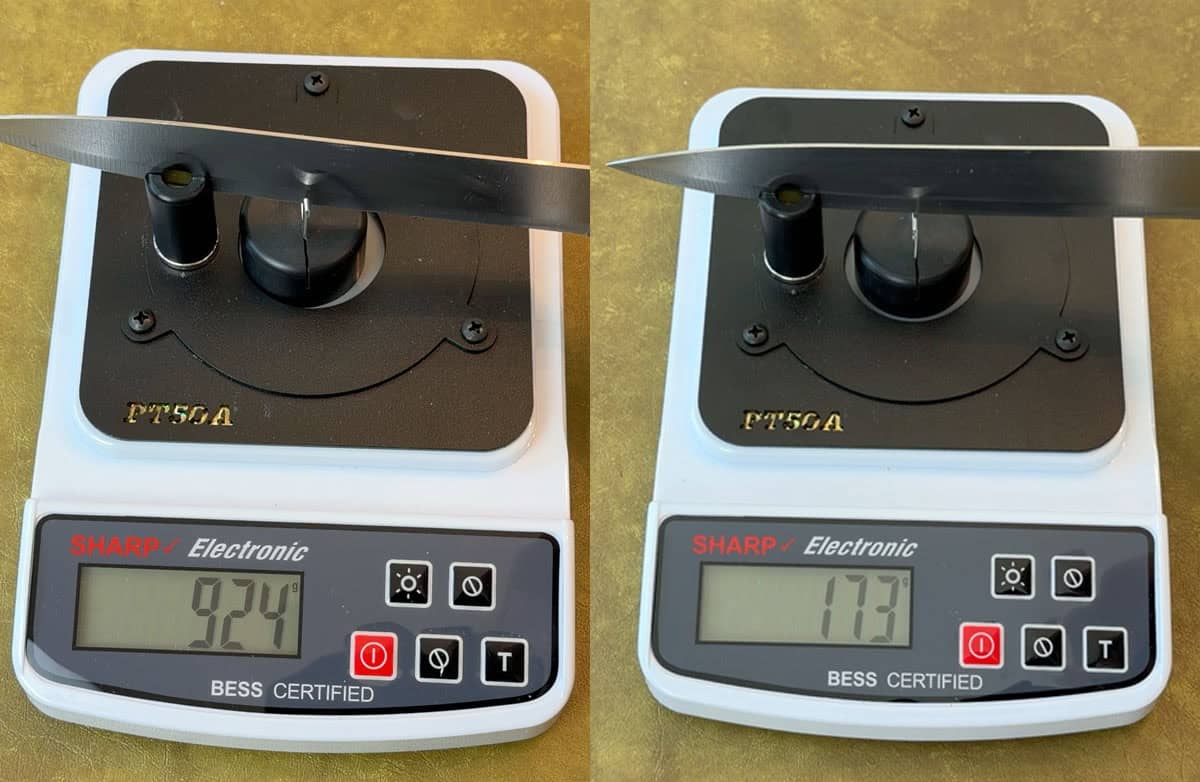
The Oishya KYU has harder steel, and it also performed well. It started at 598 and finished at 184.
The Lamson result was a little strange at first. After the first sharpening, it measured 630 and 709 (I measured it twice), which was not good. But after I sharpened it a second time, it finished at 144 and 125 in two separate readings. That was one of the sharpest results I got from any sharpener.
Cutting Test Results
The BESS scores matched what I saw in the cutting tests.
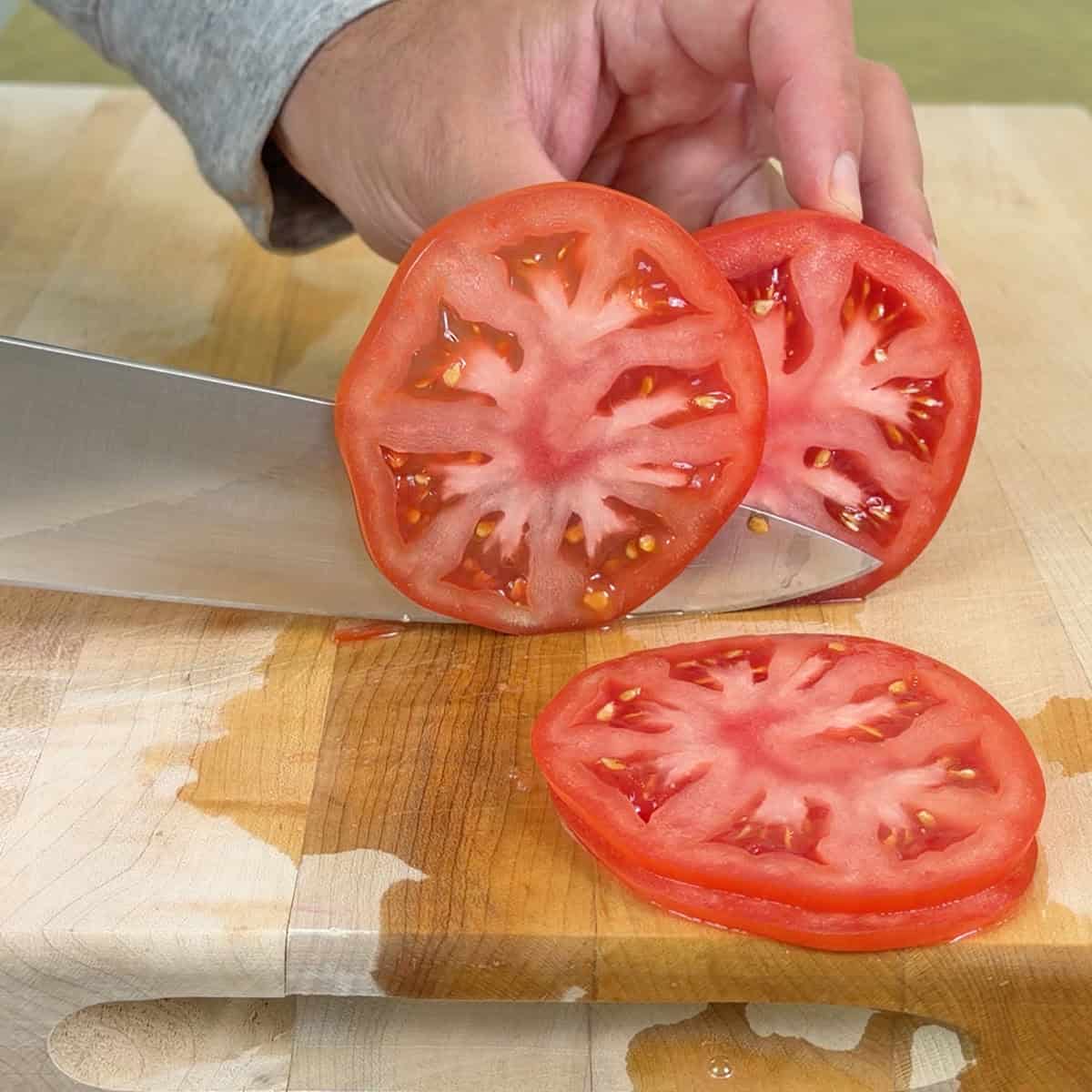
All three knives passed the paper test after sharpening. They also sliced tomatoes cleanly and cut through peppers with a crisp, noticeable edge.
The Lamson was the standout. After the second sharpening, it was sharp enough to slice through a plastic water bottle without knocking it over. Then I tried cutting through two water bottles side by side, and it made it through both.

That test is not something most people need to do at home, but it showed how sharp the edge had become.
Compared to the manual pull-through sharpener I tested, the difference was obvious. The manual model improved the knives, but the results were inconsistent. The Chef’sChoice 15XV created a much sharper edge in less time.
Ease of Use
The main reason to buy the Chef’sChoice 15XV is convenience.
There’s no soaking, no clamping, no angle setup, and no learning curve like you get with a whetstone. You plug it in, turn it on, and pull the knife through the slots.
The 15XV has angle guides that hold the knife in position while the motorized abrasive wheels sharpen the edge. I pulled each knife through each stage several times on both sides to keep the bevel even.
It was faster and easier than the Work Sharp MK2 belt sharpener. With the Work Sharp, you have to install belts, line up the knife, switch grits, and manage the metal dust. The 15XV is much cleaner and simpler.
It was also much easier than the Work Sharp Precision Adjust fixed-angle system. That system gives you more control, but you have to clamp the knife, set the angle, sharpen one side, rotate the knife, and repeat the process through the grits.
With the 15XV, the machine does most of the work.
Noise
The Chef’sChoice 15XV is loud. In my noise test, it measured in the mid to high 80-decibel range. It sounds like you’re using a small saw or power tool.
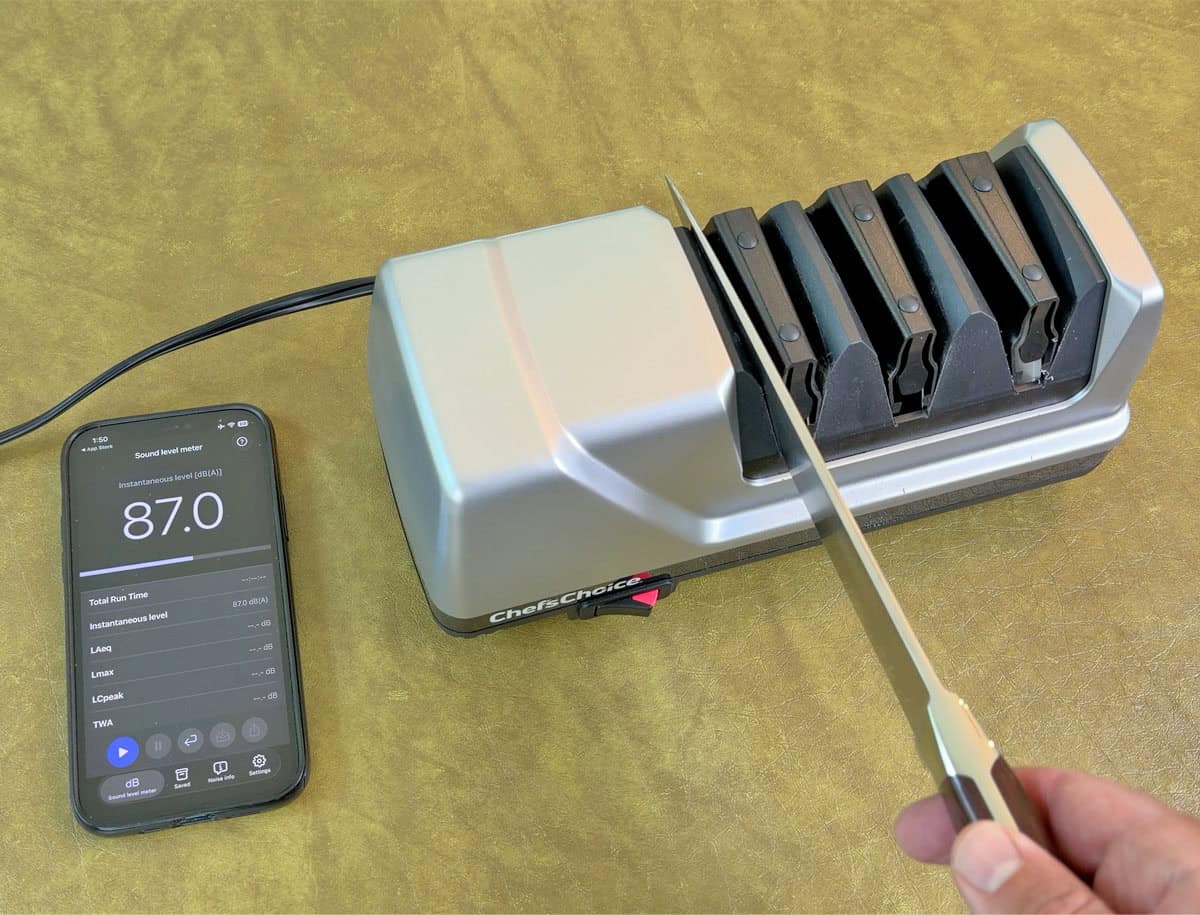
That’s not a dealbreaker, since sharpening only takes a couple of minutes. But it’s worth knowing before you buy it.
The Horl 3 rolling sharpener was much quieter, measuring in the high 60s. The whetstones were also quieter, in the mid 60s, although the scraping sound is not pleasant.
The Work Sharp MK2 belt sharpener was also loud, but not as loud as the Chef’sChoice. It measured 77 decibels while running and the low 80s while sharpening with the coarse belt.
Control and Visibility
The biggest issue with the Chef’sChoice 15XV is that you can’t see what’s happening to the edge while you sharpen.
With a whetstone, rolling sharpener, belt sharpener, or fixed-angle system, the edge is visible. You can see where the abrasive is touching and make small adjustments.
With the 15XV, the blade disappears into the slot. You have to rely on the angle guides, sound, and feel.
That makes the process less precise than it seems. If the knife isn’t seated correctly, or if your pressure changes during the pull, you might not get full contact with the abrasive wheels.
If you press the knife down too far, the edge can cut into the plastic at the bottom of the guide. If you hold it too high, the edge may not fully reach the wheels.
This is the tradeoff. The Chef’sChoice 15XV is fast and easy, but it gives you less feedback than most other sharpeners I tested.
Knife Compatibility
The Chef’sChoice 15XV sharpens to a 15-degree edge, which is useful if you want a thinner, sharper edge. But not every knife starts at 15 degrees. Many Western-style knives have wider factory angles, often closer to 20 degrees per side.
When you use the 15XV on those knives, you’re not just touching up the edge. You’re converting it to a narrower angle.
That can be a benefit if you want a sharper edge, but it also removes more metal than a light touch-up. And because the machine works quickly, mistakes matter more.
It also has limitations near the heel of the knife. If your knife has a thick bolster, a thick choil, or a handle that sits close to the cutting edge, the back of the blade may not fully reach the sharpening wheels.
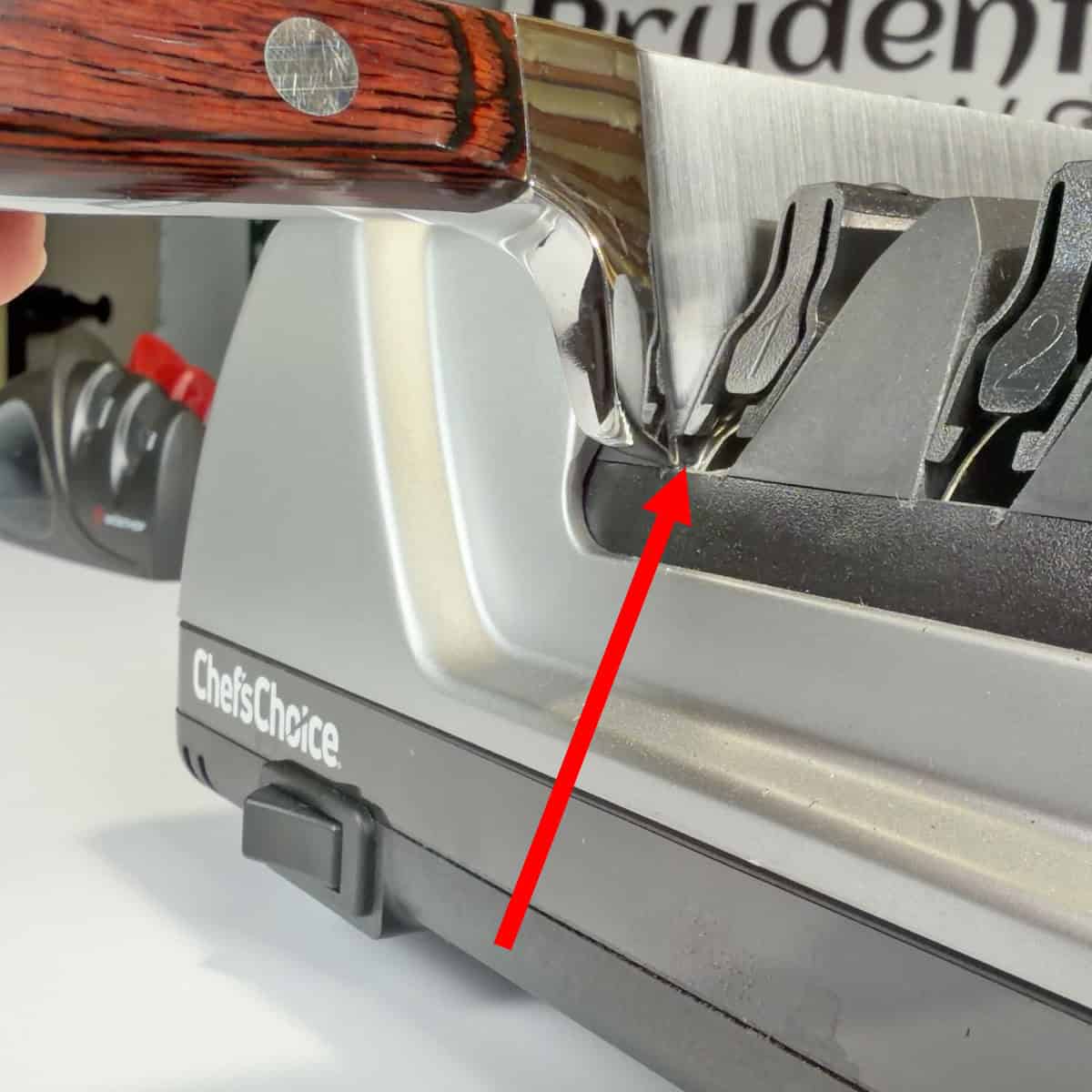
That can leave an unsharpened section near the heel. It can also create an uneven grind pattern over time.
For most standard chef’s knives, it works well. For knives with thick bolsters or unusual handle shapes, I’d be more cautious.
Durability Concerns
The Chef’sChoice 15XV is more complicated than a whetstone, rolling sharpener, or manual pull-through sharpener.
It has a motor, spinning abrasive wheels, guides, and a built-in dressing mechanism for cleaning the fine wheels. That means there’s more that can wear down, clog, or fail over time.
The fine wheels can load up with dark metal residue after repeated sharpening. If they get clogged, they won’t polish and deburr as well.
Chef’sChoice includes a dressing tool to clean the wheels, but that’s still an extra maintenance step. It’s also not as simple as rinsing off a whetstone or wiping down a rolling sharpener.
I don’t see this as a reason to avoid the 15XV, but it’s one reason I wouldn’t treat it as a lifetime tool in the same way I would a good set of whetstones.
Chef’sChoice 15XV vs. Other Sharpeners
The Chef’sChoice 15XV was one of the easiest sharpeners to recommend for most home cooks.
Compared to a manual pull-through sharpener, it was much more effective. The manual Chef’sChoice model improved the knives, but the results were not close to the 15XV. For example, the cheap knife went from 708 to 415 with the manual sharpener, but the 15XV took a similarly cheap knife from 924 to 173.
Compared to the Horl 3 rolling sharpener, the 15XV was faster and more consistent across the knives I tested. The Horl 3 did great on a harder Miyabi knife, getting it down to 163 and 208 in two readings, but it struggled with the cheap knife. After more than six minutes, that knife only improved from 535 to 508.
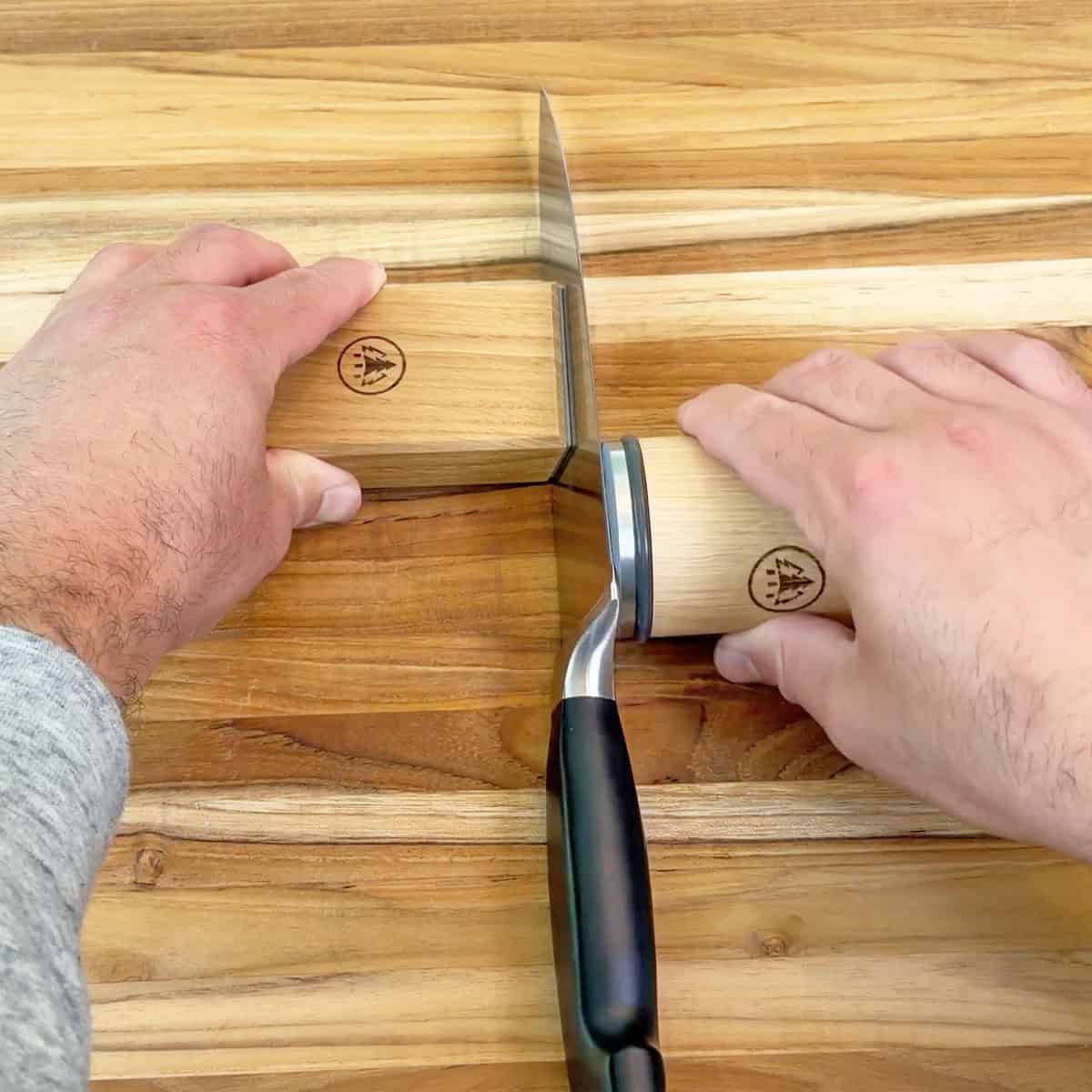
Compared to the Work Sharp MK2, the 15XV was cleaner and easier to use in the kitchen. The Work Sharp MK2 performed well, especially on the Shun Classic, which went from 543 to 160. But it threw metal dust into the air and across the table, which is a major drawback for indoor kitchen use.
Compared to whetstones, the 15XV is easier, faster, and takes less skill. But whetstones give you more control, work on almost any knife shape, and don’t lock you into one angle. The Shapton stones I tested were excellent, taking one cheap knife from 1035 to 211 and a Zwilling Pro from 941 to 266.
The 15XV is not the best sharpener for everyone. It is the best fit if you want sharp knives with minimal effort.
Bottom Line: Is Chef’sChoice 15XV Worth Buying?
The Chef’sChoice 15XV is worth buying if you want an electric knife sharpener that works fast and produces very sharp edges with little skill.
It was one of the top performers in my sharpness tests, and it was much easier to use than whetstones, fixed-angle systems, and belt sharpeners. The tradeoff is that it’s loud, less precise than it looks, and not ideal for every knife shape.
I’d buy it for everyday kitchen knives, especially if you let them get dull and want a quick way to bring them back. I’d be more cautious with expensive knives, knives with thick bolsters, or knives where I want full control over the edge angle.
You can check the latest price for the Chef’sChoice 15XV on Amazon.
Related Topics
- Horl 3 Rolling Sharpener Review: Pros, Cons & Test Results
- Horl 2 Knife Sharpener Review: Is It Worth the High Price?
- Horl 2 vs. Tumbler vs. Work Sharp: Best Rolling Knife Sharpener?
- Best Kitchen Knives Made in the USA
- 22 Practical Gifts That People Who Like to Cook ACTUALLY Want
- Are Cuisinart Knives Any Good? An In-Depth Review
- Are Calphalon Kitchen Knives Any Good? An In-Depth Review
- Misen Chef’s Knife Review: My Brutally Honest Take After 2+ Years
- Single-Bevel vs. Double-Bevel Knives: 10 Key Differences
- Best Kitchen Knives NOT Made in China: The Definitive Guide
- Which Wusthof Knives Are the Best? (With Comparison Chart)
- Wusthof vs. Zwilling J.A. Henckels: Kitchen Knives Compared
- Shun vs. Wusthof: Kitchen Knives Compared

