

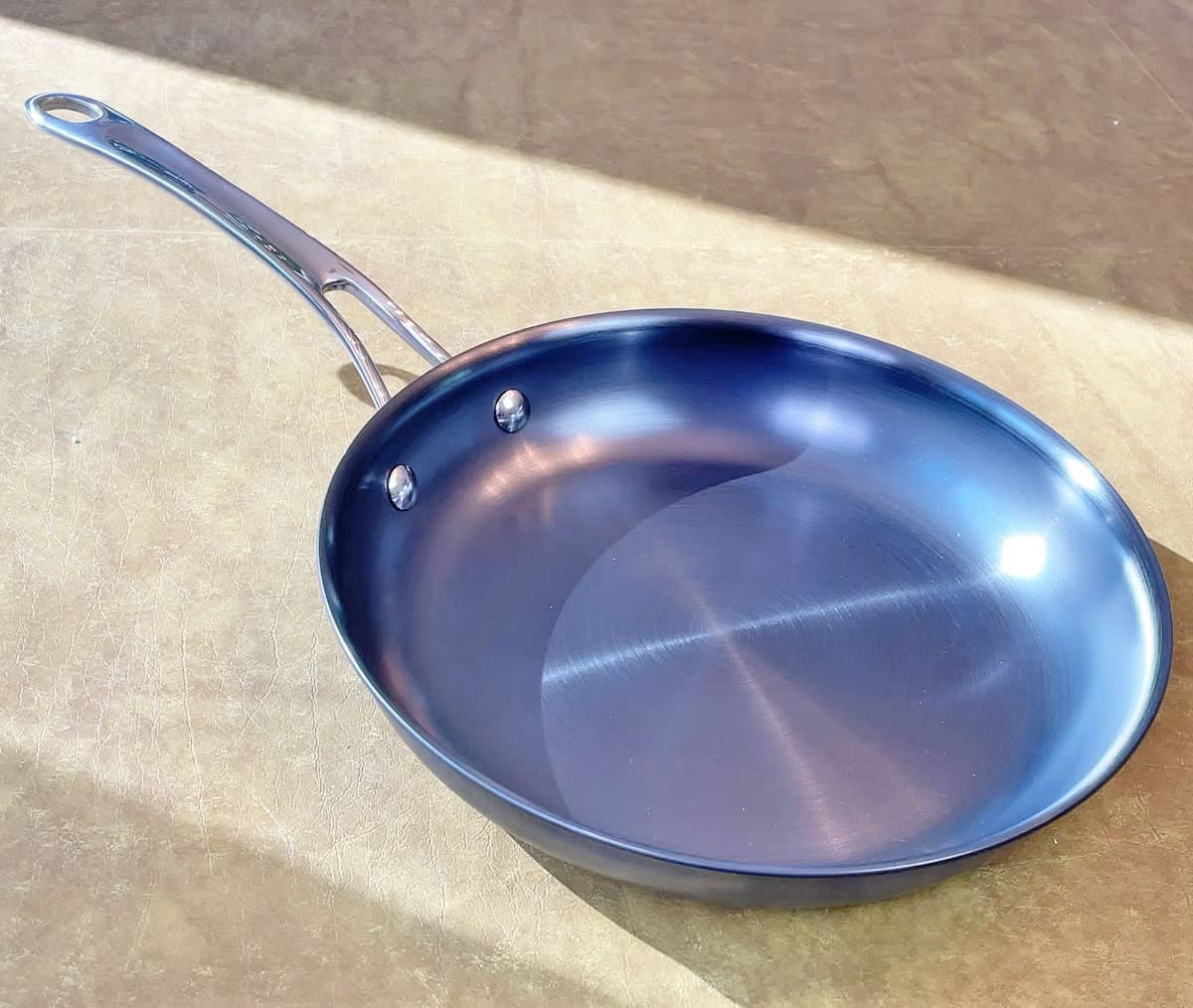
Misen’s Carbon Nonstick pan raised over $2 million in preorders thanks to a simple promise: nonstick performance without any coatings.
Anolon took notice and developed its own version, the EverLast N2 collection. Like Misen, Anolon uses nitrided carbon steel, a material engineered to be durable, rust-resistant, and naturally nonstick right out of the box.
I tested the Anolon EverLast N2 frying pan for several months to see if it delivers on those claims. I ran controlled tests for durability, heat distribution, food release, and rust resistance. To understand how it compares to the competition, I also tested it side by side with the Misen Carbon Nonstick and Strata Carbon Clad pans.
In this review, I share the results of those tests and explain where Anolon excels, where it falls short, and who it is best for.
Key Takeaways
Extremely durable: The nitrided carbon steel surface resists scratches from metal utensils and shows no signs of flaking or wear, even after my aggressive scraping tests.
Naturally nonstick right out of the box: Food releases easily with a small amount of oil or butter, and the surface maintains that performance over time without coatings or seasoning.
No seasoning required: Unlike traditional carbon steel or pans like Strata, the surface doesn’t need to be seasoned to prevent rust.
Heats fast, maybe too fast: It reaches searing temperatures in under two minutes, but you need to pay close attention to avoid overheating.
Heavy: At 4.3 pounds, the 12-inch Anolon EverLast N2 pan is significantly heavier than Strata and Misen (both around 3 pounds).
Thin Handle: The handle is flat and thin and can feel undersized if you have large hands.
Best for experienced cooks: The heat speed and responsiveness make it ideal for searing, but beginners may struggle to control the temperature.
Bottom Line: Anolon EverLast N2 gives you the benefits of traditional carbon steel (high heat performance, durability, and natural food release) without the need to season or worry about rust.
Interested in buying Anolon EverLast N2 cookware? Check the current prices and learn more on Anolon.com and Amazon.
Use the links below to navigate the review:
- Construction
- Durability Test
- Warp Test
- Rust Test
- Liquid Test
- Heat Test
- Nonstick Test
- Design
- Final Verdict: Are Anolon EverLast N2 Pans Worth It?
Construction
Anolon EverLast N2 pans are made from a single layer of nitrided carbon steel. The steel is heated in a nitrogen-rich oven, which hardens the surface and makes it highly resistant to rust, scratches, and wear while improving food release.
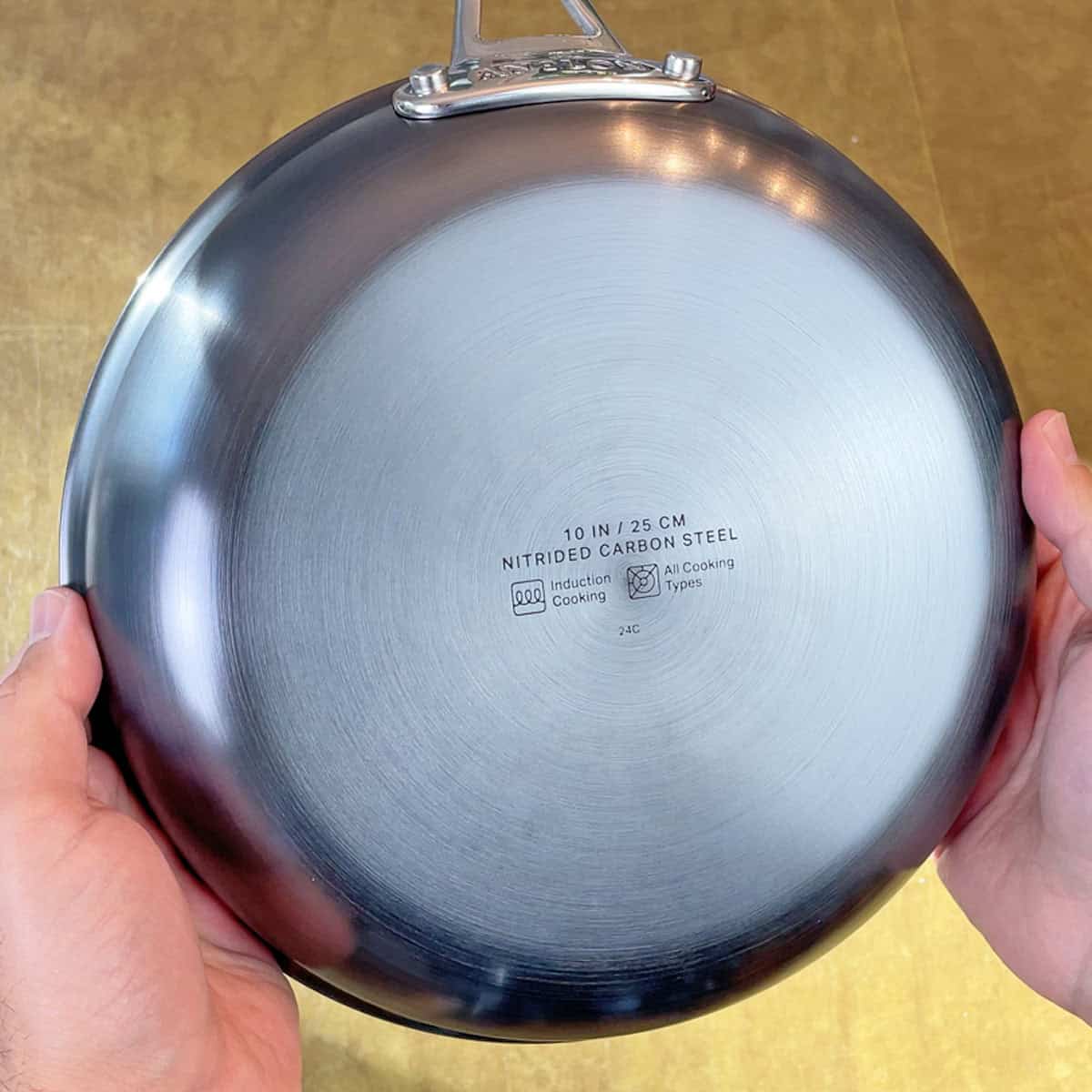
Unlike Misen and Strata, which both use aluminum cores sandwiched between layers of steel, Anolon’s single-layer design feels more like traditional carbon steel. It is dense, rigid, and built for longevity, but without aluminum, it does not distribute heat as evenly.
The surface has a polished, bluish tint that darkens into a patina over time. The hue reminds me of Hestan NanoBond, which has a similar metallic-blue sheen when new.
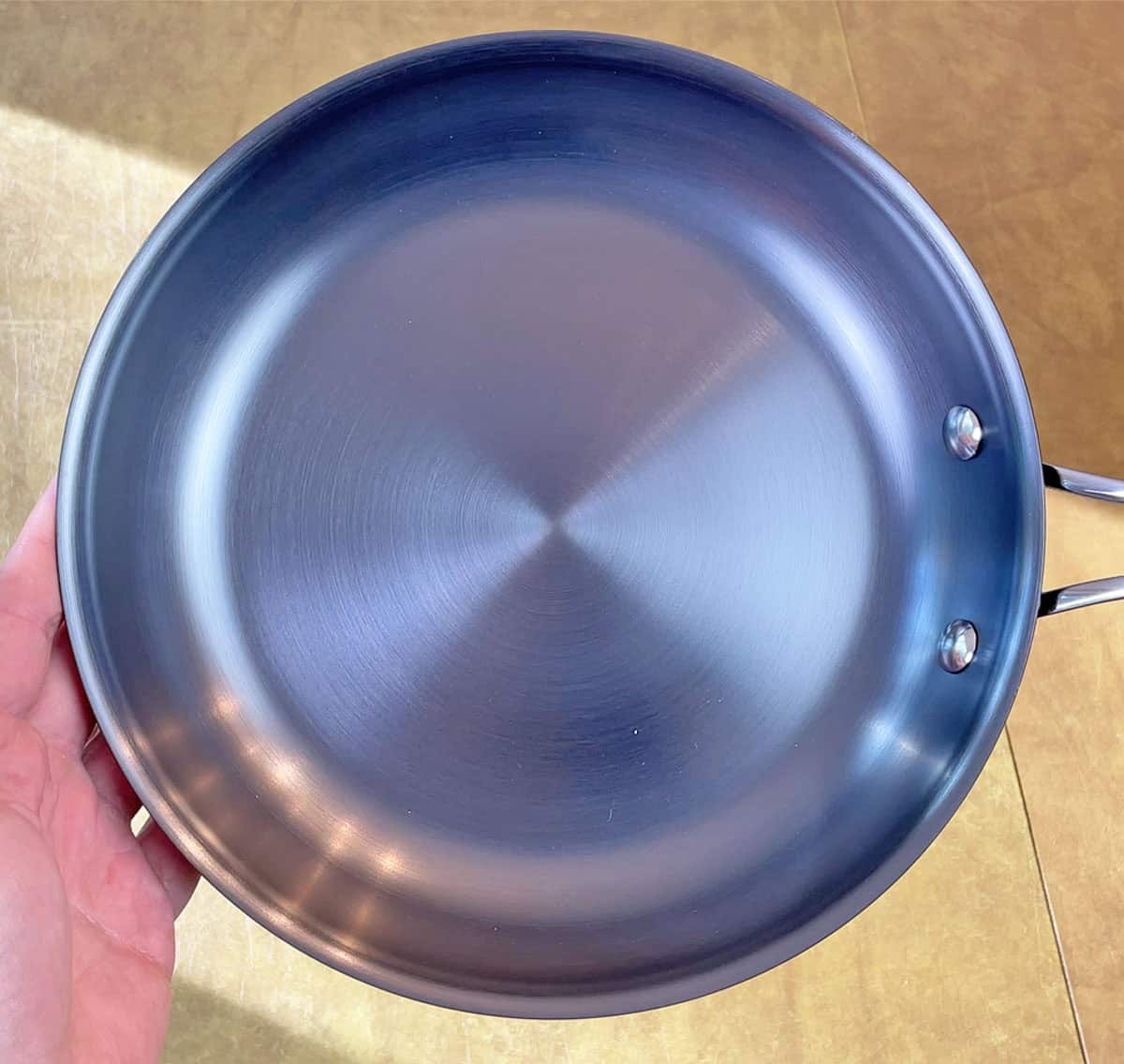
Anolon EverLast N2 is induction-compatible, oven-safe up to 1000°F, and completely free of chemical coatings (no Teflon/PTFE or ceramic non-stick coatings). It can handle stovetop searing, oven roasting, and even open-flame grilling without any issues.
Durability Test
Anolon markets EverLast N2 as a pan that can handle metal utensils without damage.
To test that claim, I attached a five-pound weight to a metal ladle and scraped it across the surface 50 times. Then I repeated the test with a metal spatula. Finally, I set up a stand mixer with a whisk spinning against the pan’s surface for two minutes straight.
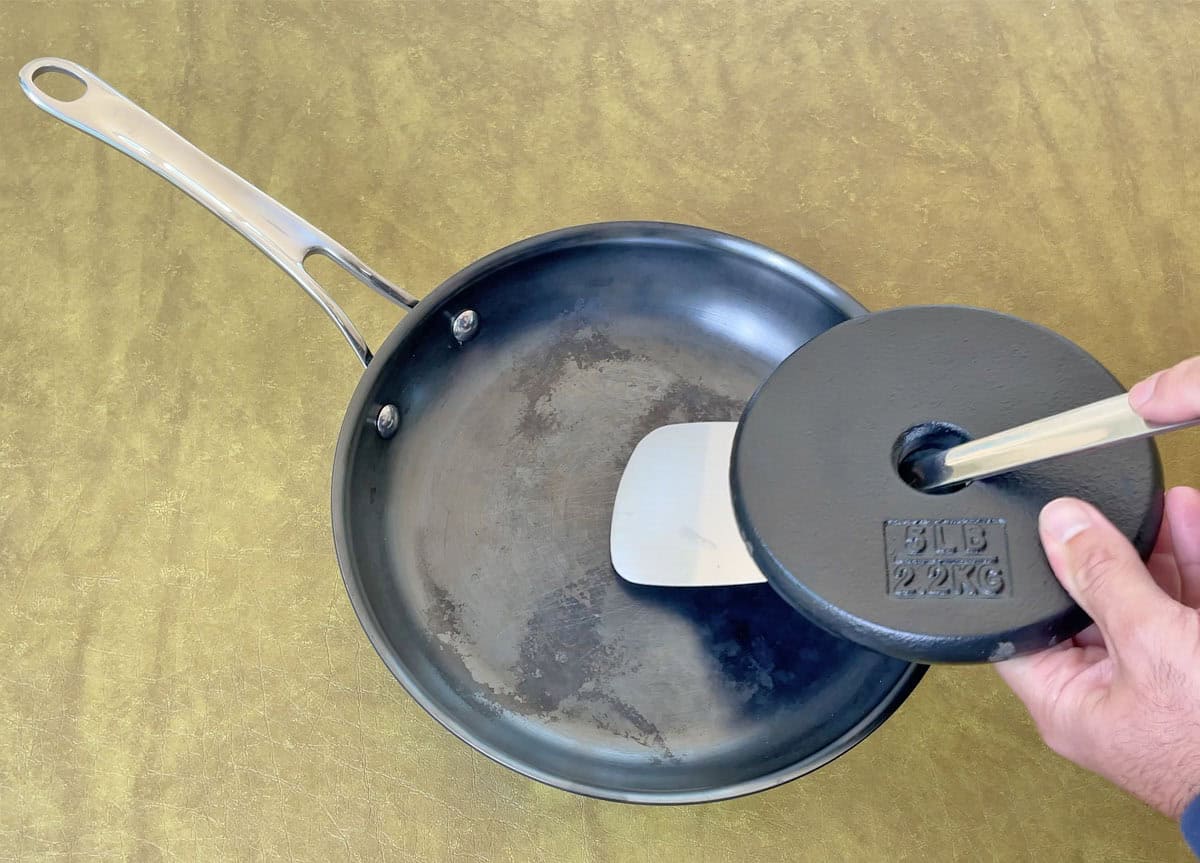
The surface showed faint scuff marks but no deep scratches, peeling, or changes in texture. When I ran my hand across the surface, it still felt completely smooth.
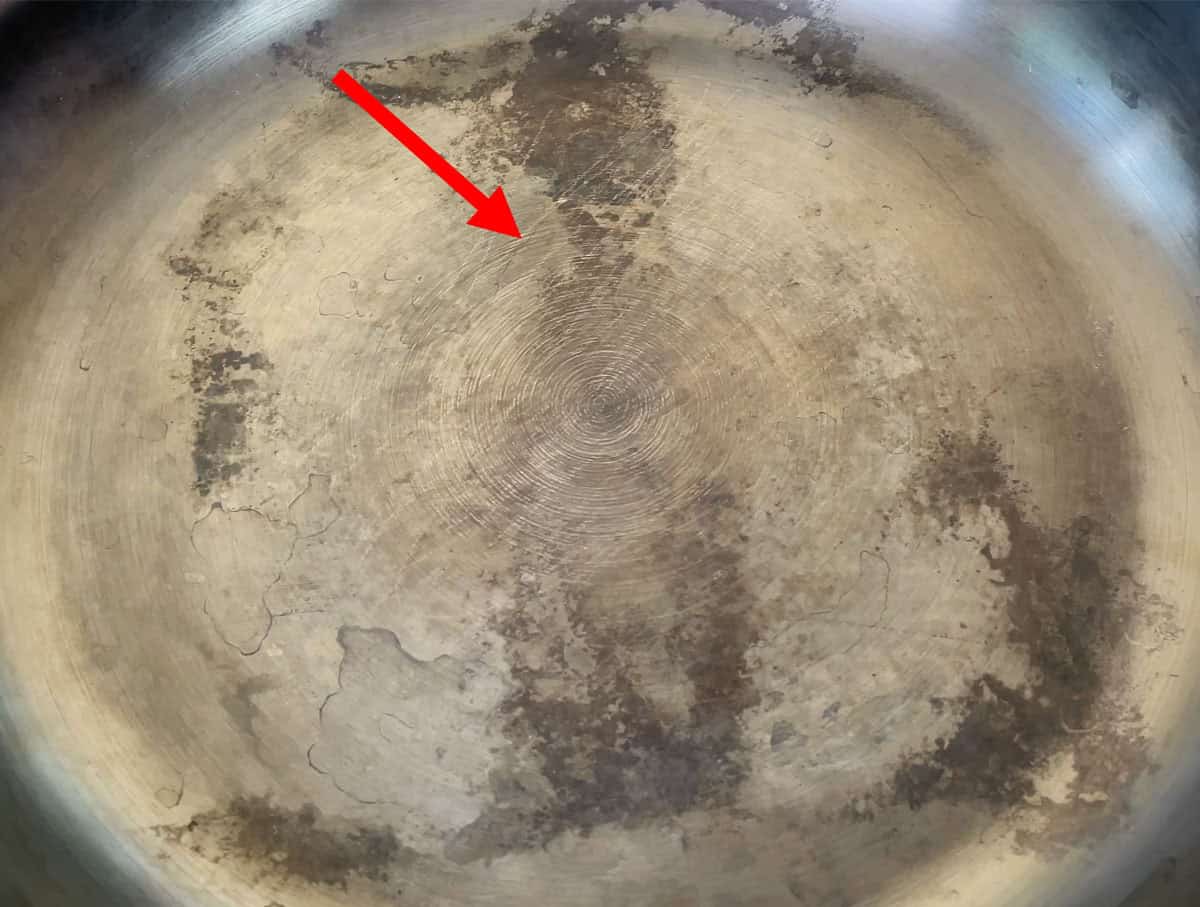
For context, I ran the same test on traditional nonstick and ceramic-coated pans, and both failed. The coatings flaked off and visible scratches appeared within seconds.

Even a HexClad pan, which combines steel and nonstick coating, showed permanent wear.
Warp Test
Warping is a common issue with carbon steel cookware, especially on induction cooktops that heat extremely fast.
To see if the Anolon EverLast N2 pan was vulnerable, I measured how flat the base was before heating, then placed it on the Breville Control Freak induction cooktop and heated it to 425 °F for two minutes. After heating, I re-measured the base to check for any change.
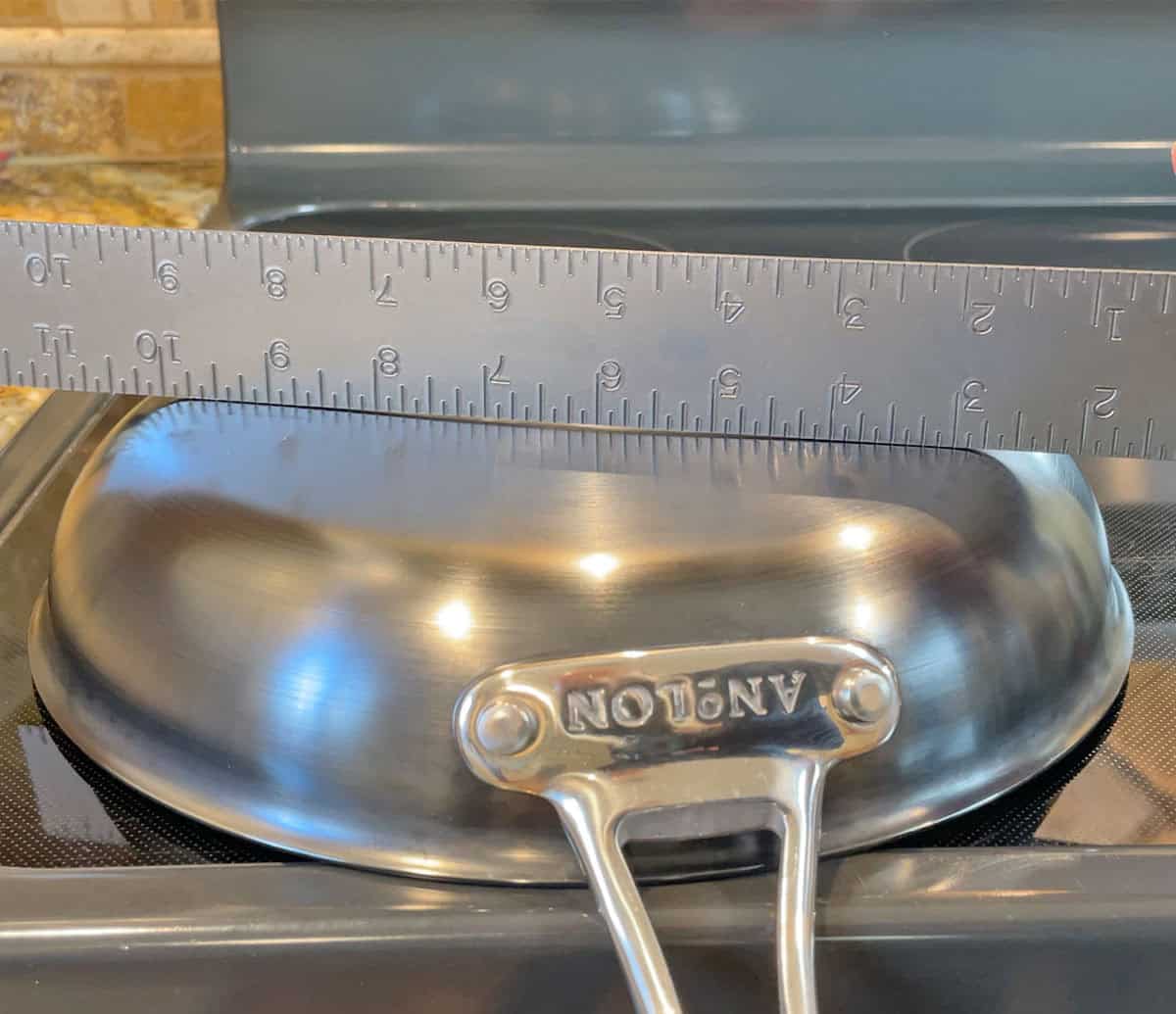
The result was impressive: there was no visible warping or distortion.
That’s significant because single-layer carbon steel pans, like de Buyer’s Blue Steel, often bow upward under the same test on the same cooktop.
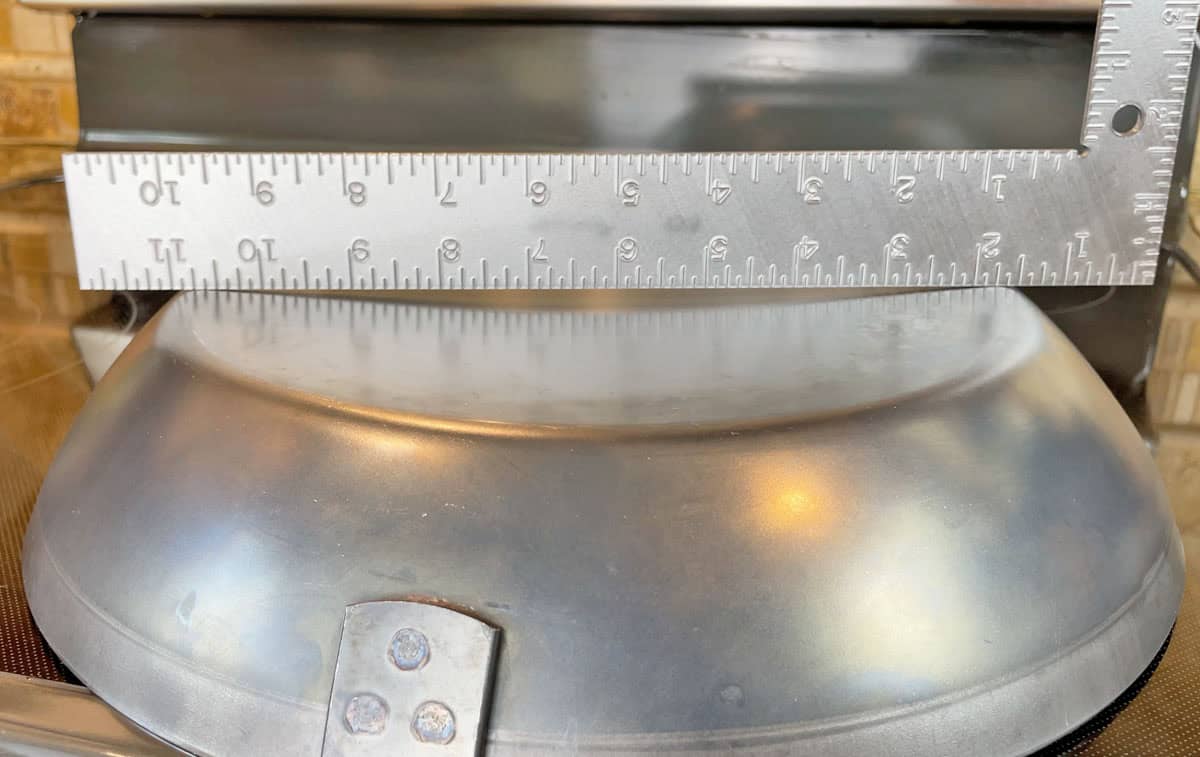
The fact that Anolon remained perfectly flat suggests a dense, evenly tempered construction that can withstand rapid, high-intensity heat without losing its shape.
Rust Test
One of the biggest advantages of the Anolon EverLast N2 cookware is its rust resistance. Traditional carbon steel must be seasoned regularly to prevent oxidation and rust, but Anolon’s nitrided surface eliminates that step.
To test this, dampened the surface, left it wet overnight, and inspected it the next morning. Not a single spot of rust appeared.
Next, I simmered crushed tomatoes, a highly acidic ingredient that usually strips seasoning, for 15 minutes. When the pan cooled, the surface looked exactly the same. No discoloration, pitting, or dulling.
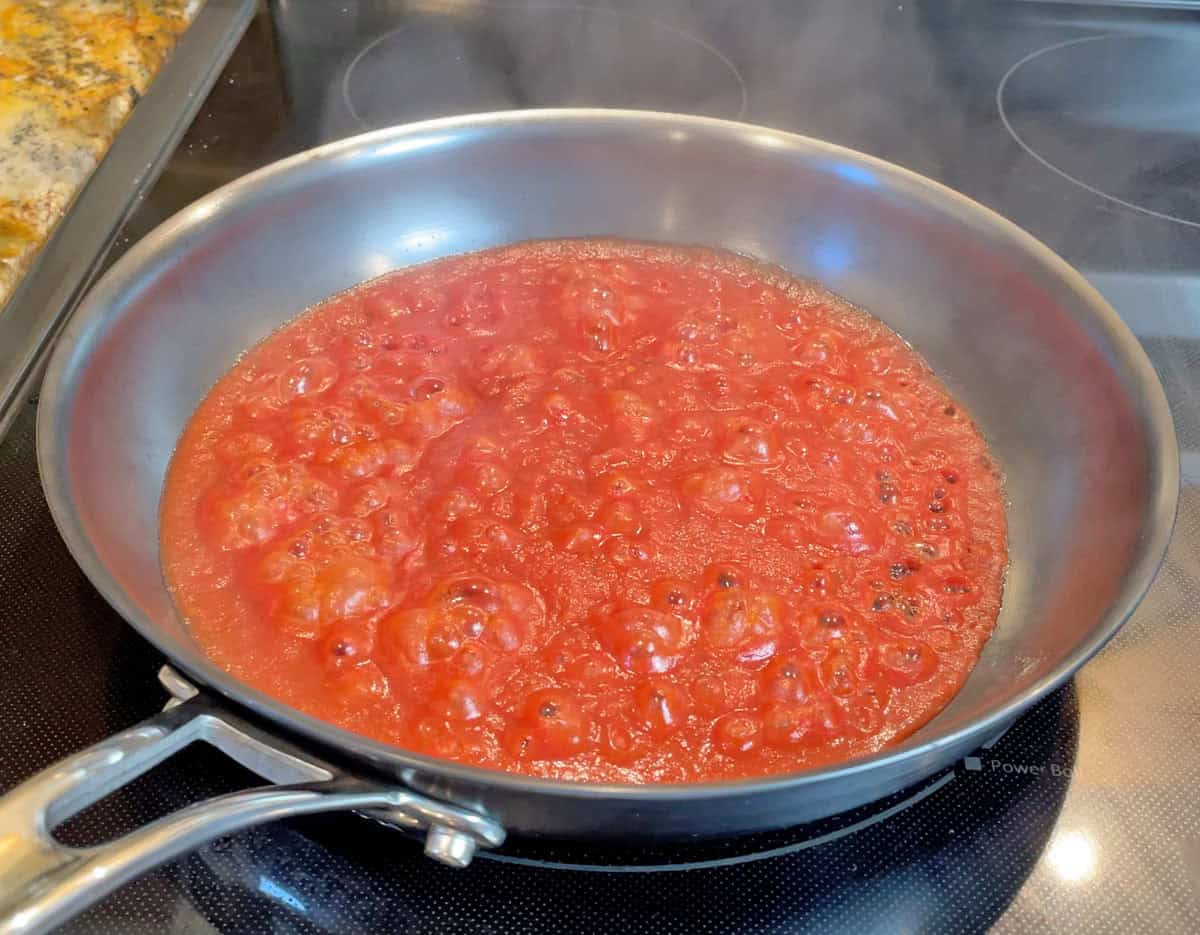
When I repeated the overnight water test after simmering the tomatoes, the results didn’t change: still no rust.
Misen performed similarly in this test, while Strata’s regular carbon steel surface lost its seasoning from the tomatoes and had significant rust the next morning.
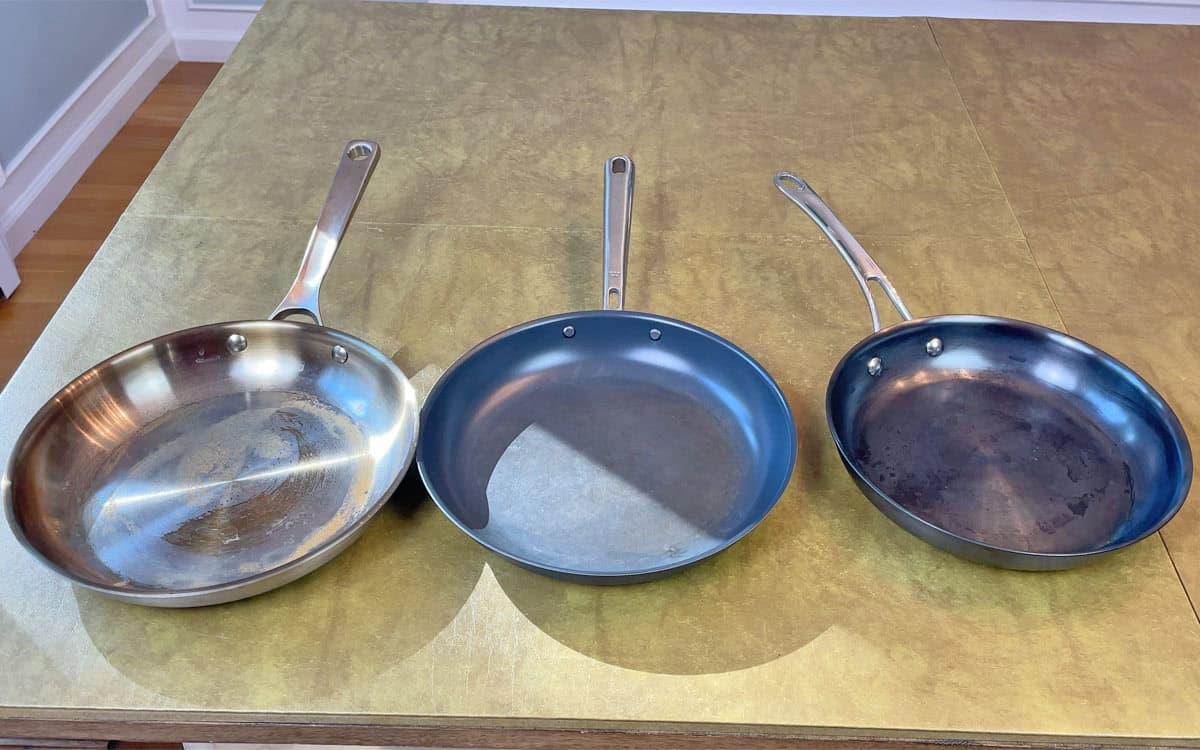
If you’ve ever owned a carbon steel pan that rusted after one wrong wash, this level of protection is a huge deal.
Liquid Test
I also tested how the pan handled liquid-heavy cooking, since seasoned surfaces often release small flakes of seasoning when you boil or simmer liquids.
I boiled filtered water in the Anolon for 10 minutes, poured it out, and compared it to water boiled in the Misen and Strata pans.
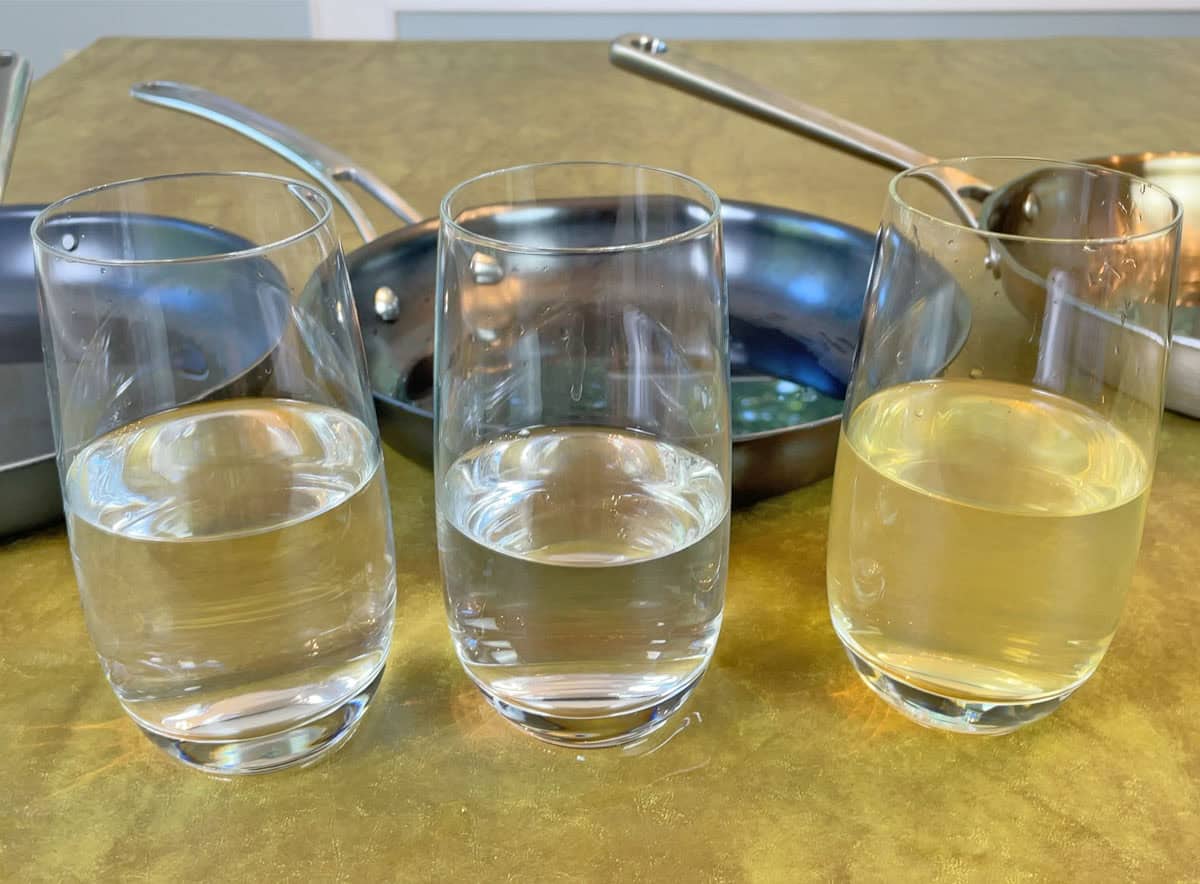
The water from Anolon and Misen was crystal clear. The water from Strata turned slightly cloudy with a yellow tint, which happens when the seasoning layer breaks down and mixes into the liquid.
Because the Anolon surface doesn’t rely on seasoning, nothing flaked off or discolored the water. It stays completely stable even during long simmers, making it well-suited for soups, stews, and braises.
Heat Test
Anolon’s biggest strength and weakness are both tied to heat.
In my standard heat conduction test, I heated the pan on medium for two minutes and measured the temperature at the center and edge. At 1 minute and 50 seconds, the center already hit 575°F, which is the maximum reading on my surface thermometer. By the full two-minute mark, it was even hotter, though I couldn’t record the exact number. The edge measured 471°F.
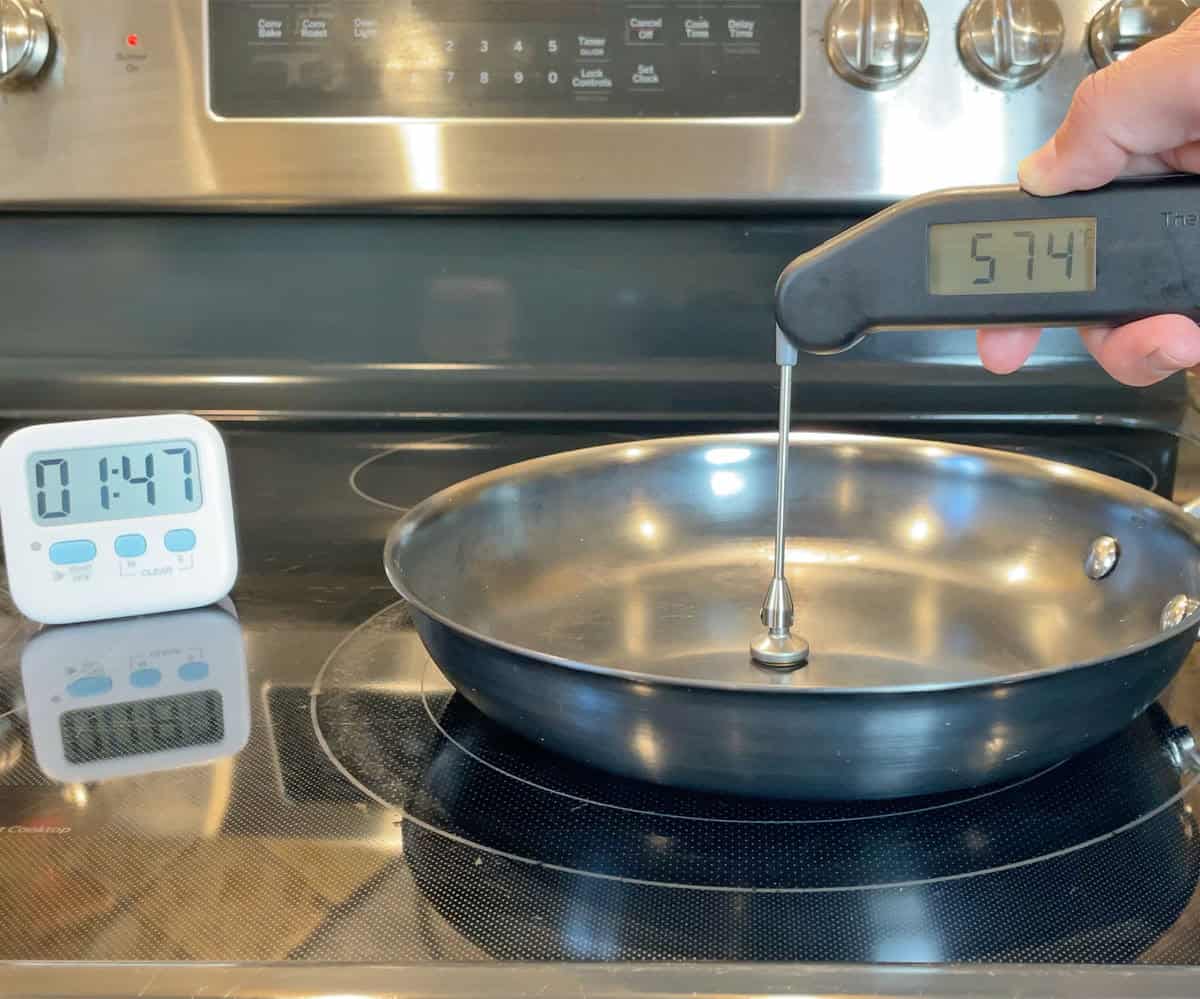
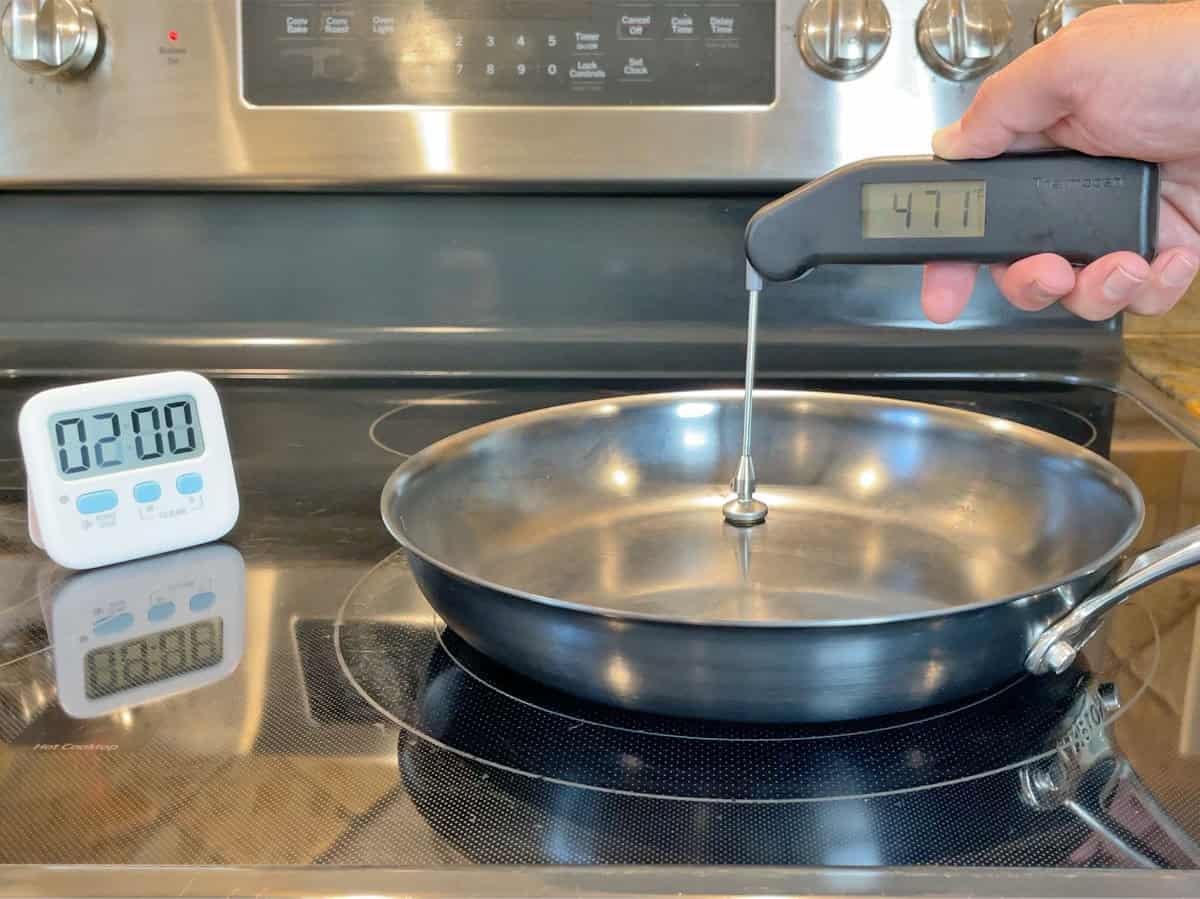
That kind of speed makes it the fastest-heating pan I’ve tested in this category, but it also means you have to be careful. If you add oil and look away for even a few seconds, it can start smoking. Managing heat with this pan takes attention and timing.
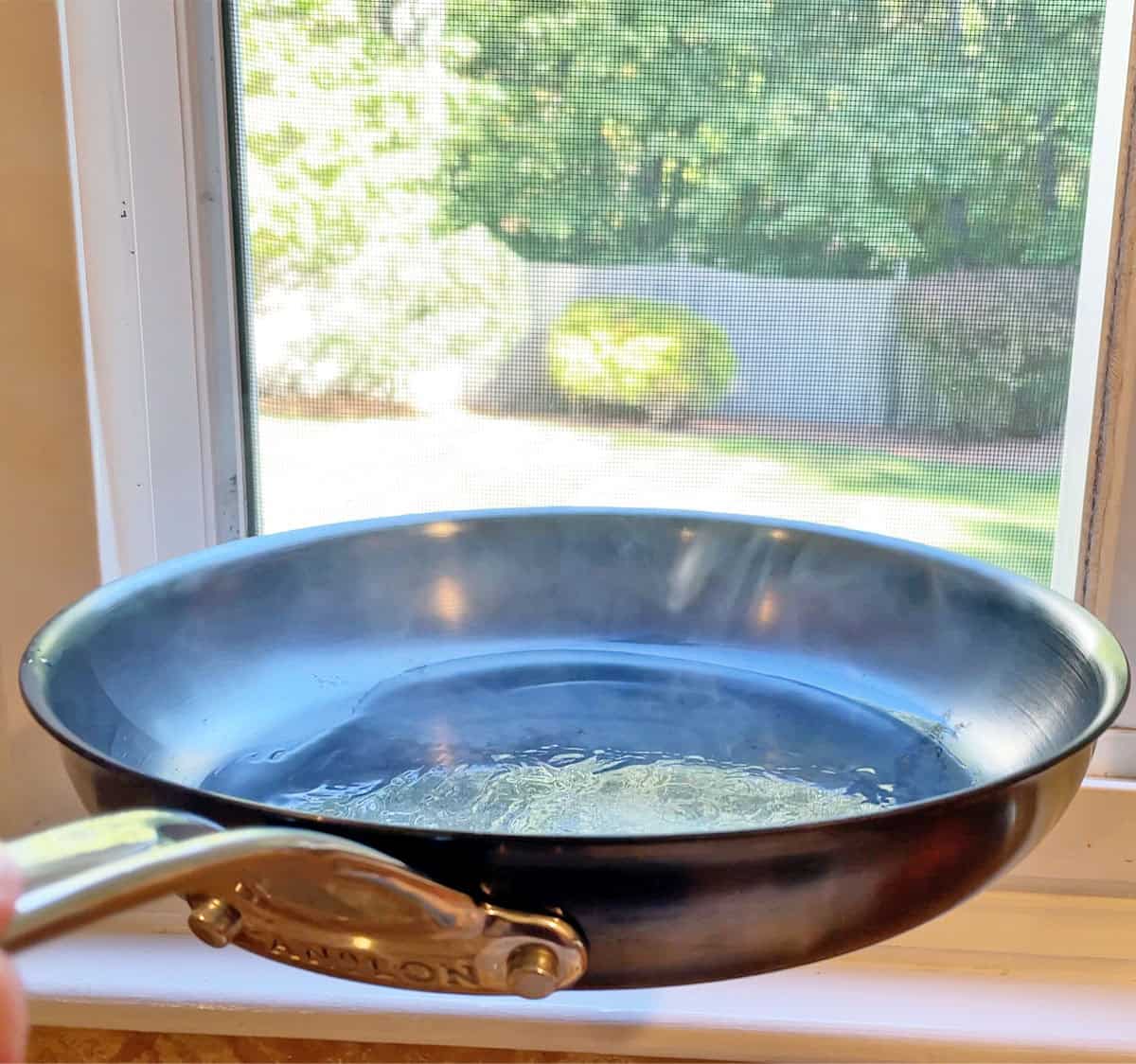
Compared to the others, Misen heated almost as quickly but was slightly more controlled, while Strata was slower and much more even. Anolon’s 100°F temperature difference between the center and edge shows that it doesn’t spread heat as evenly as Strata’s aluminum-core design, but that same quick response gives it an edge for high-heat searing.
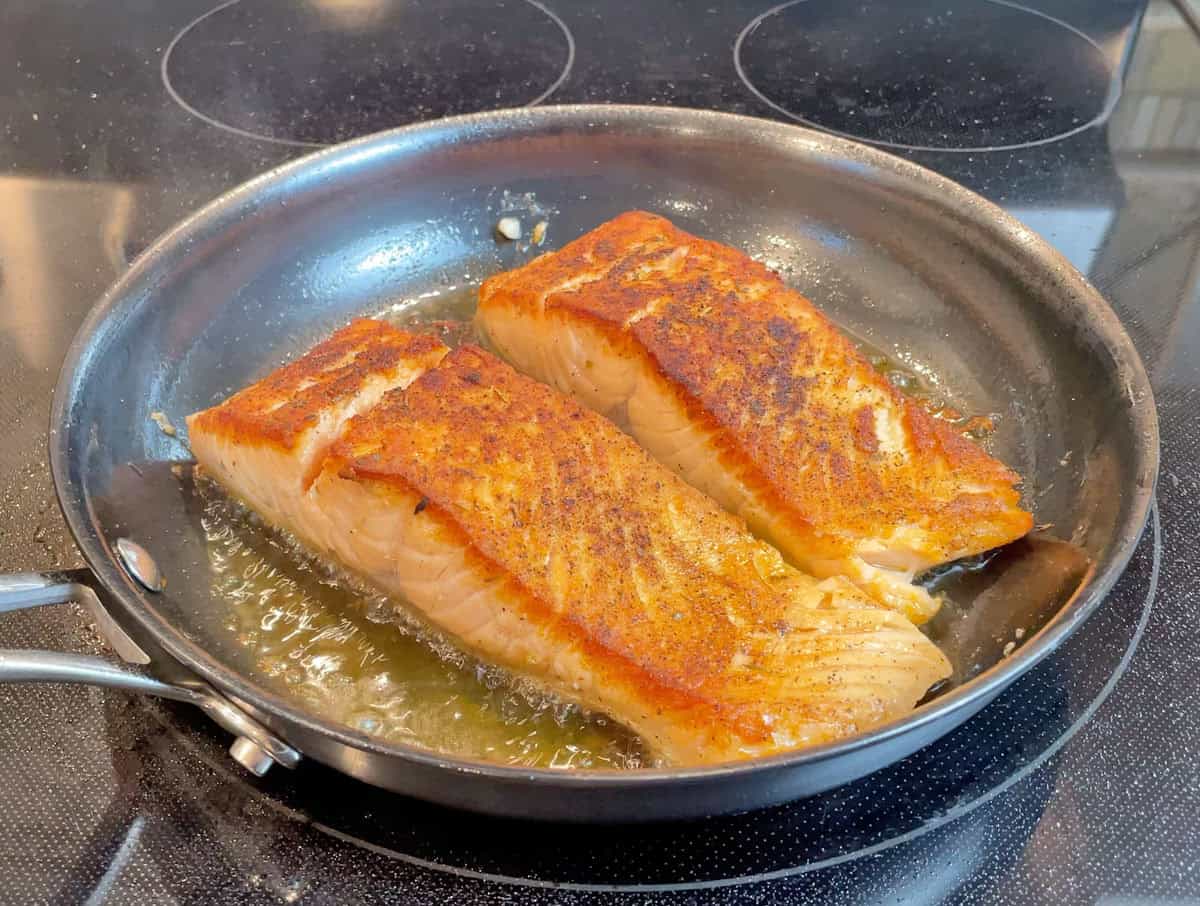
When I cooked steaks, chicken, and fish, Anolon developed a crisp, even crust faster than the others. But with delicate foods like eggs or fish, I had to preheat gradually and keep the heat lower to prevent sticking or scorching.
To measure heat retention, I heated the Anolon to exactly 400 °F, removed it from the burner, and recorded the surface temperature after five minutes. It dropped to 118 °F, which is typical for a single-layer carbon steel pan.
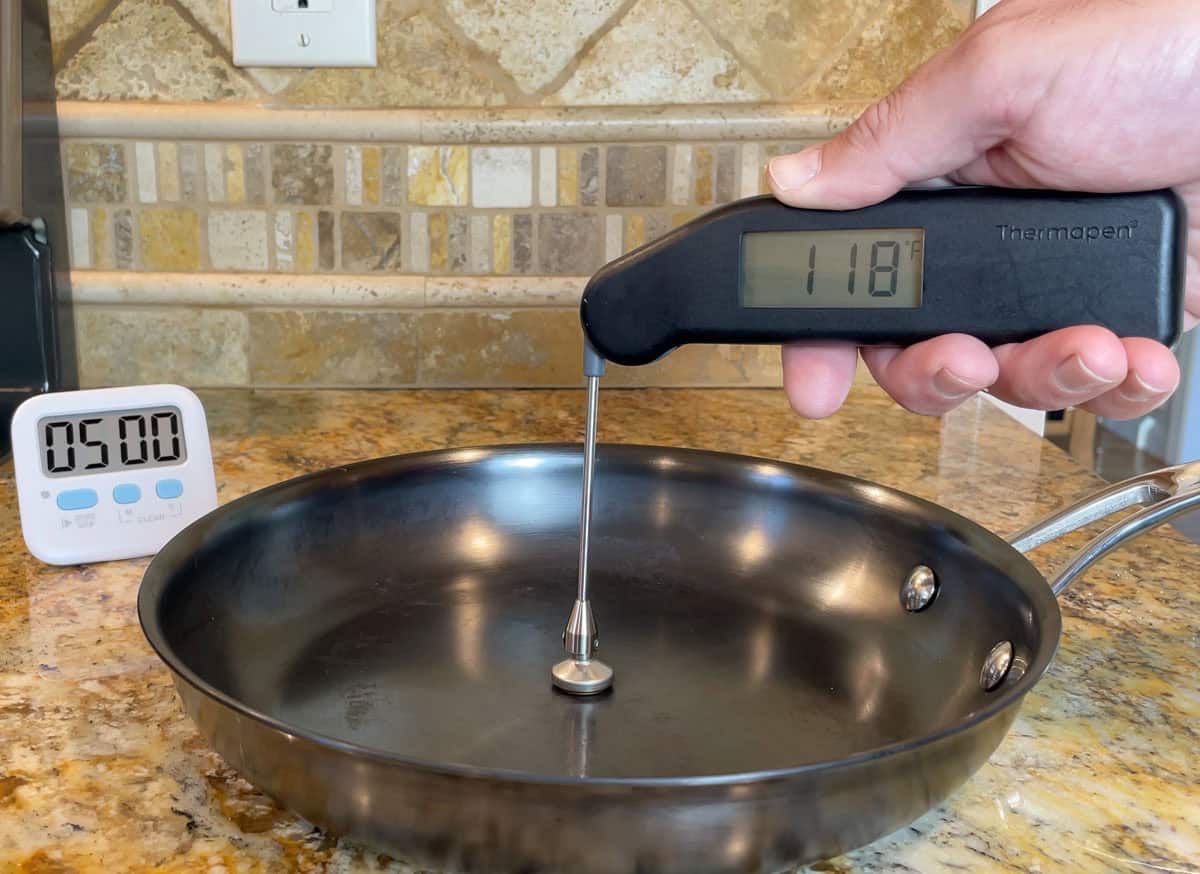
That’s slightly better than Misen (117 °F) but not as strong as Strata (129 °F), which held its heat the best.
In practical terms, that means Anolon heats up and cools down quickly. It’s great when you need precise temperature control, like when searing meat or adjusting between cooking stages. But because it loses heat faster once off the burner, it’s not as effective for keeping food warm or for tasks that rely on steady, consistent heat.
Nonstick Test
Anolon claims the EverLast N2 has a “natural nonstick surface” that becomes more nonstick with each use. The company says it’s ready to cook right out of the box without seasoning, and that the surface improves over time as a light patina forms.
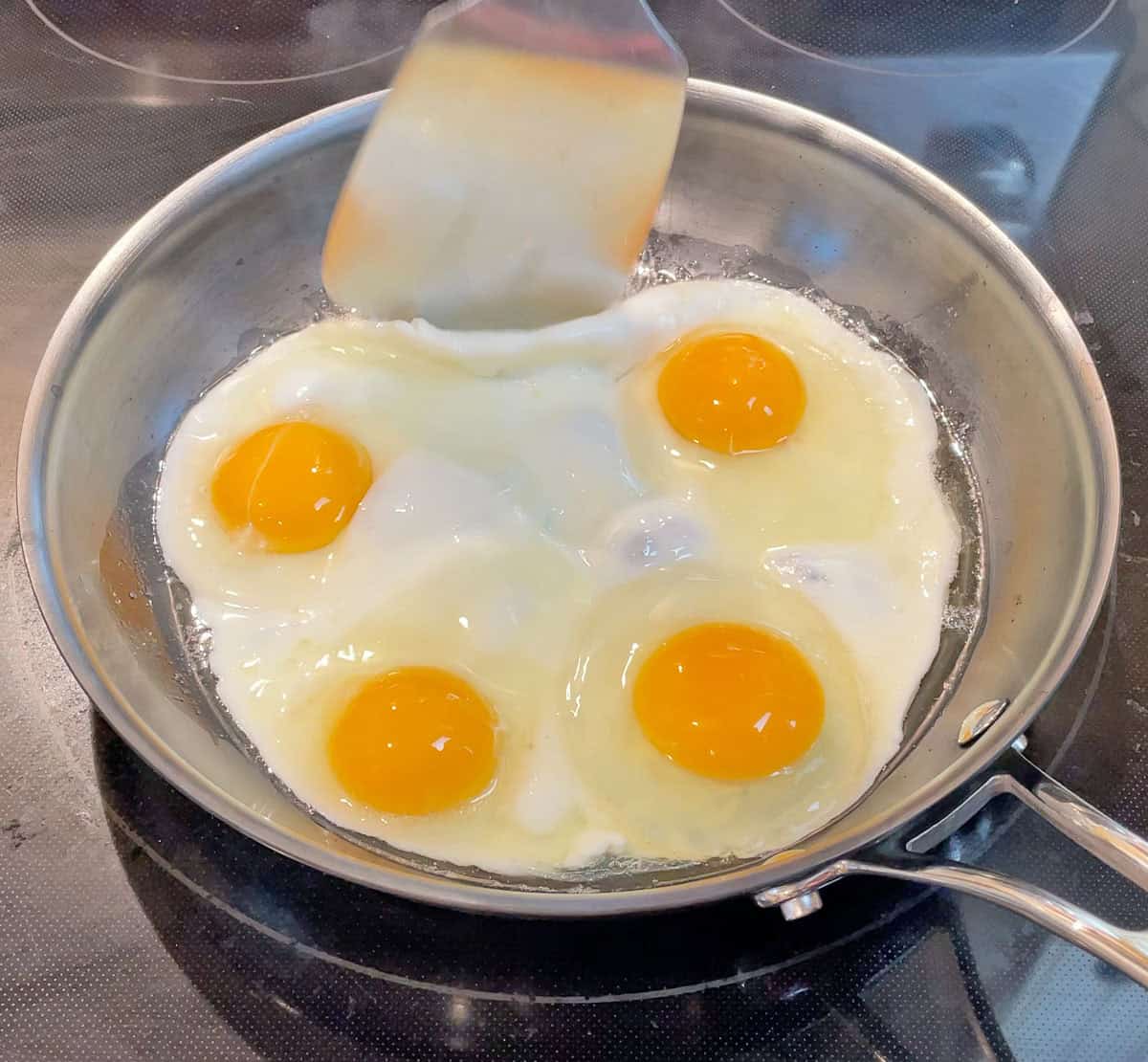
Those claims proved mostly true in my testing. Straight out of the box, the surface was smooth and mirror-like, and food released better than I expected for an uncoated pan.
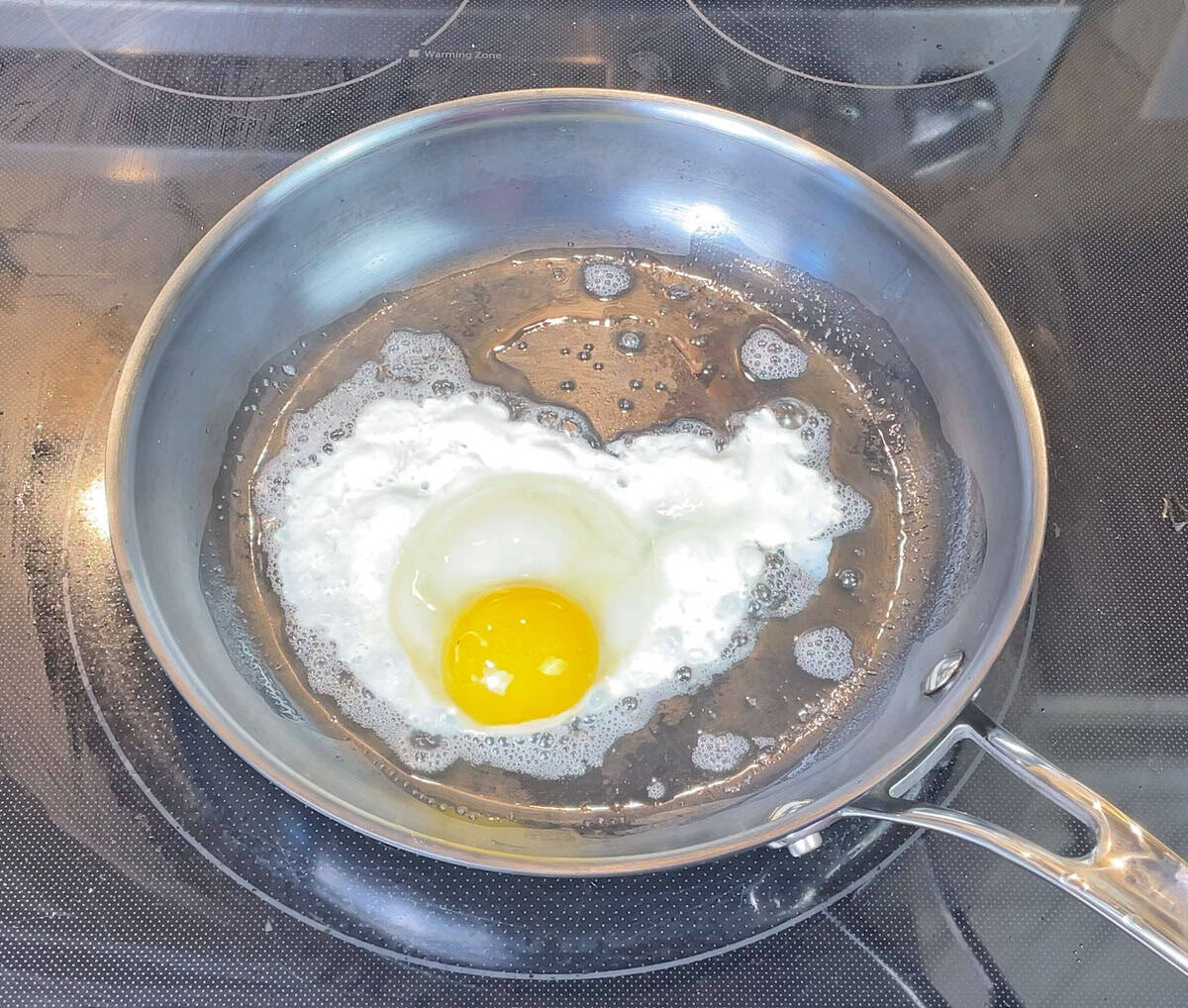
I cooked dozens of eggs, pancakes, and pieces of fish to measure food release both before and after my durability tests. With a teaspoon of oil or a small pat of butter, eggs slid cleanly every time, and pancakes flipped without tearing.
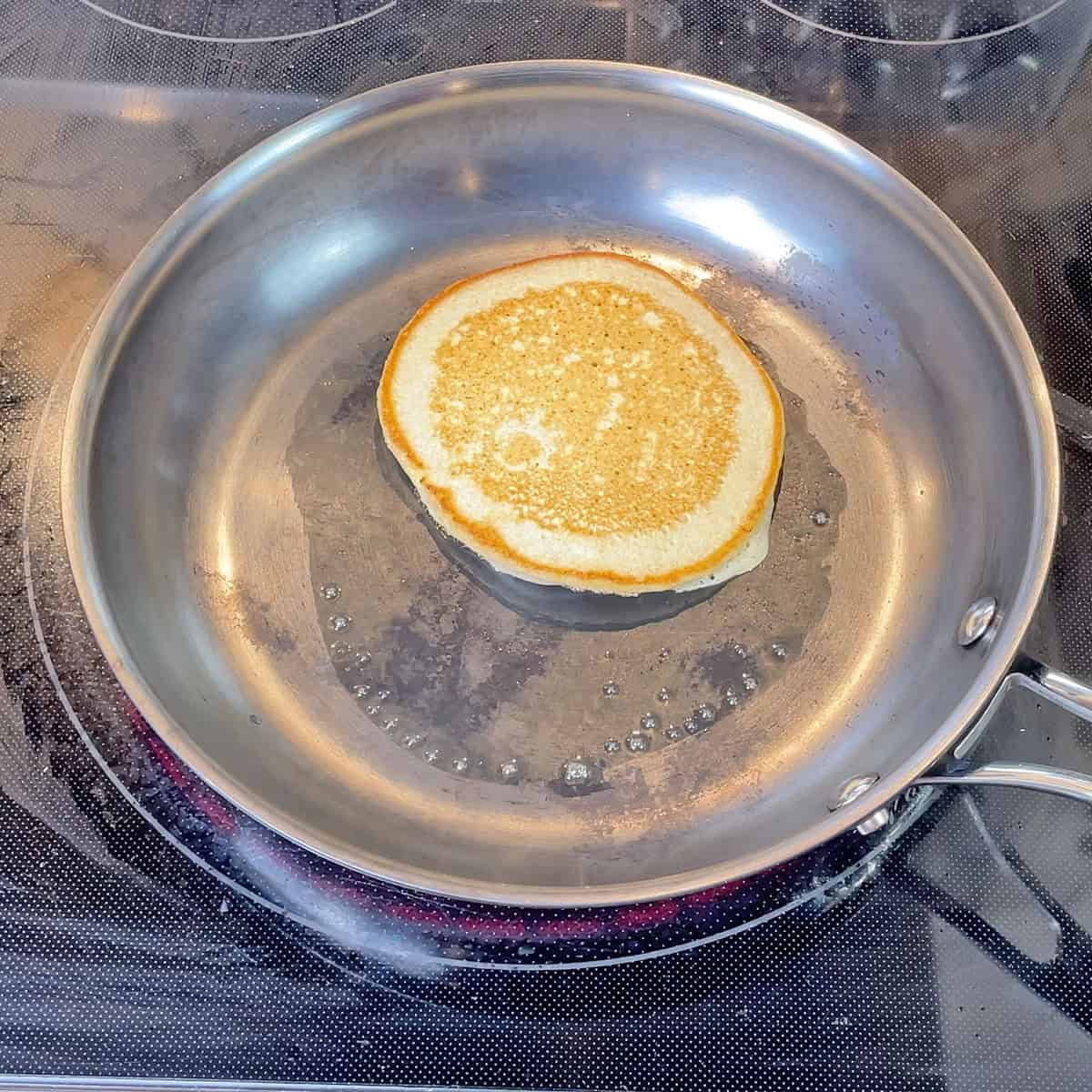
After several weeks of use, the surface darkened slightly and the bluish tint faded, but I haven’t seen any true seasoning buildup like you would on raw carbon steel. Even after cooking plenty of fatty foods, there’s no visible layer forming.
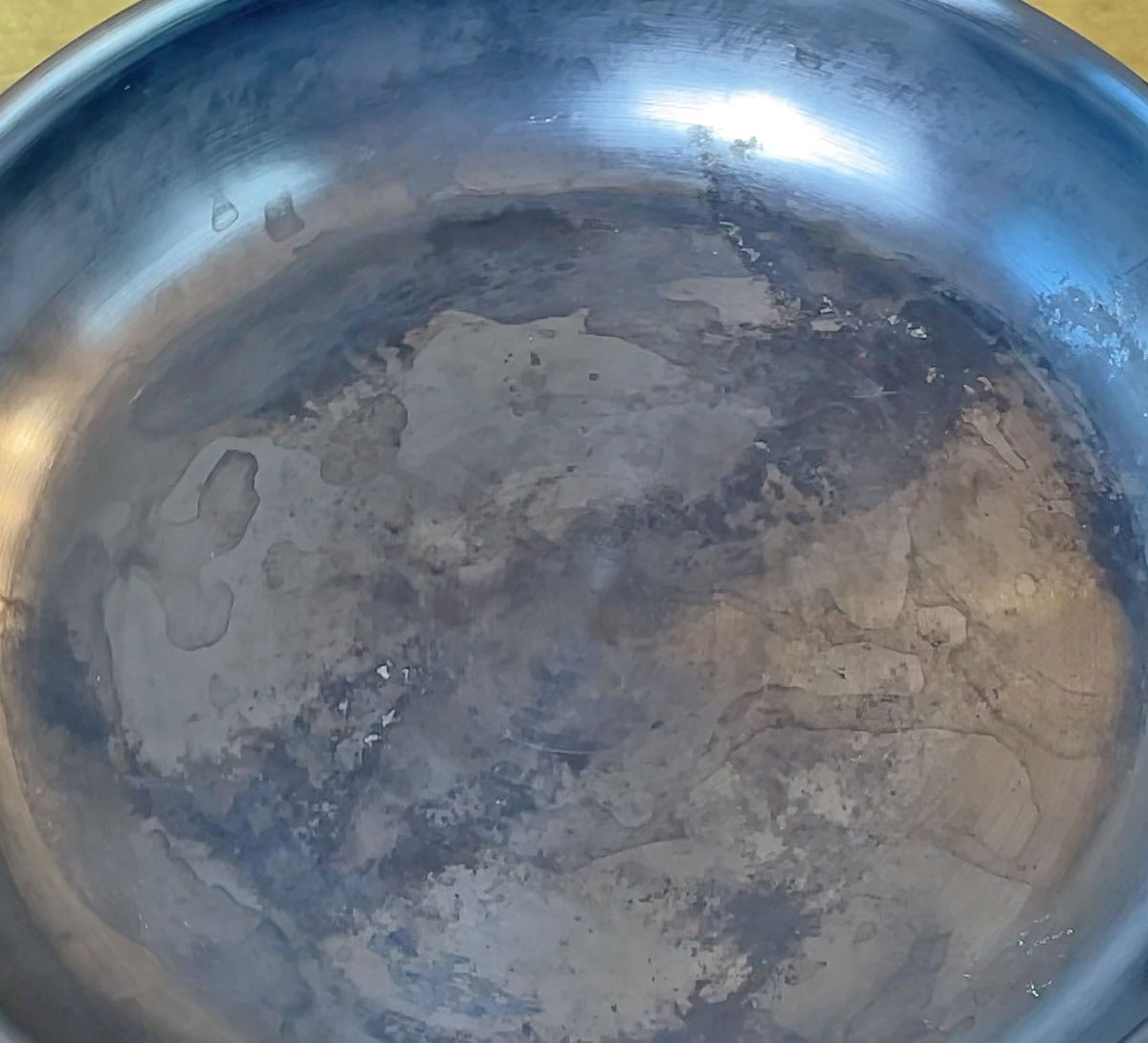
My assumption is that the nitriding process hardens the surface so much that oil can’t bond in the same way it does with unfinished steel. The result is a surface that changes in appearance but doesn’t take on seasoning like traditional carbon steel.
Functionally, that’s not a problem. The pan remains easy to clean, and food still releases well. I wouldn’t call it slippery like Teflon, but it performs well with minimal fat and maintains that performance over time.
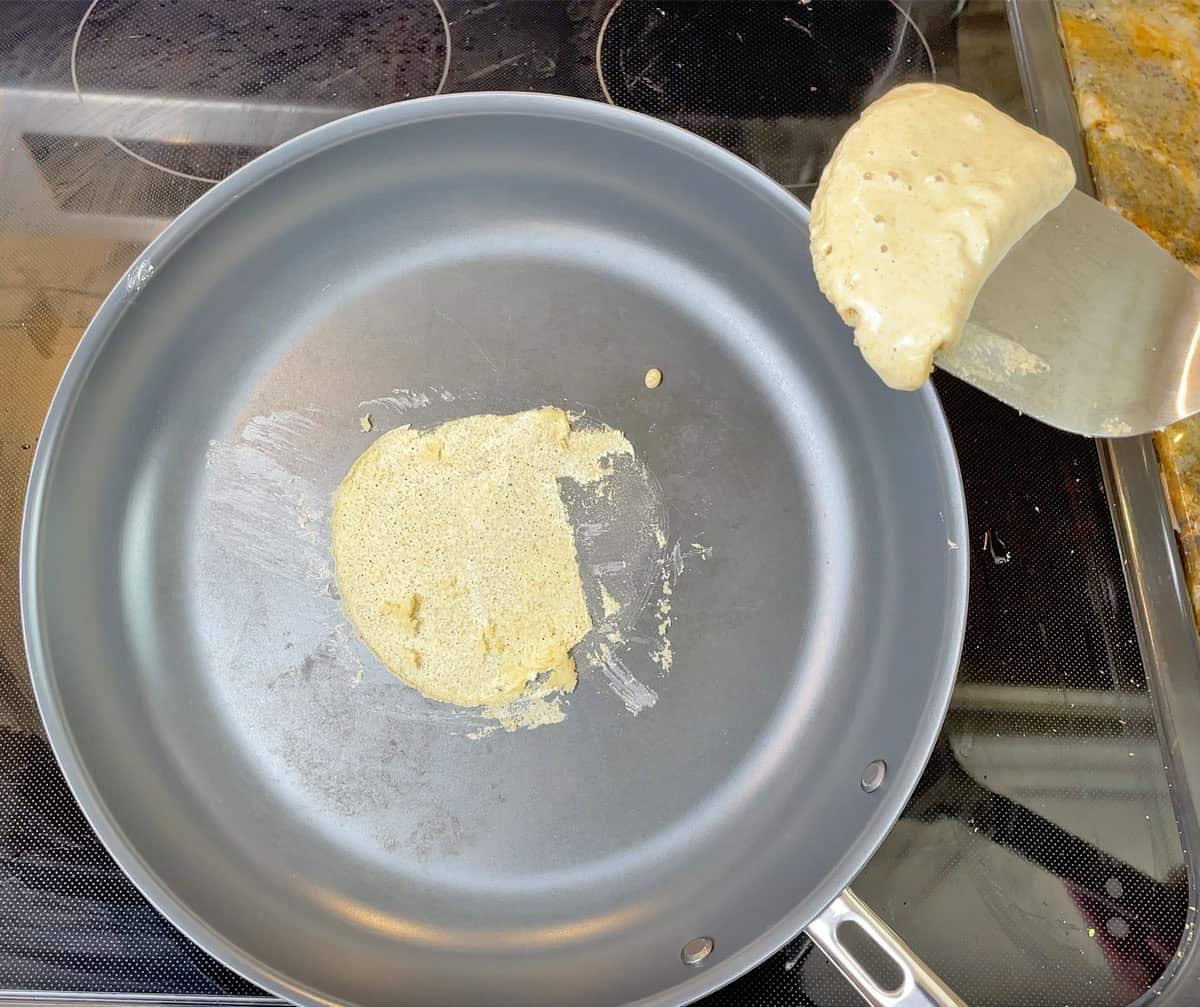
To test the limits, I cooked pancakes without adding any butter or oil to the pan. The pancake stuck slightly to the Anolon and left a thin residue that required a light scrub to remove, but it was still flippable.
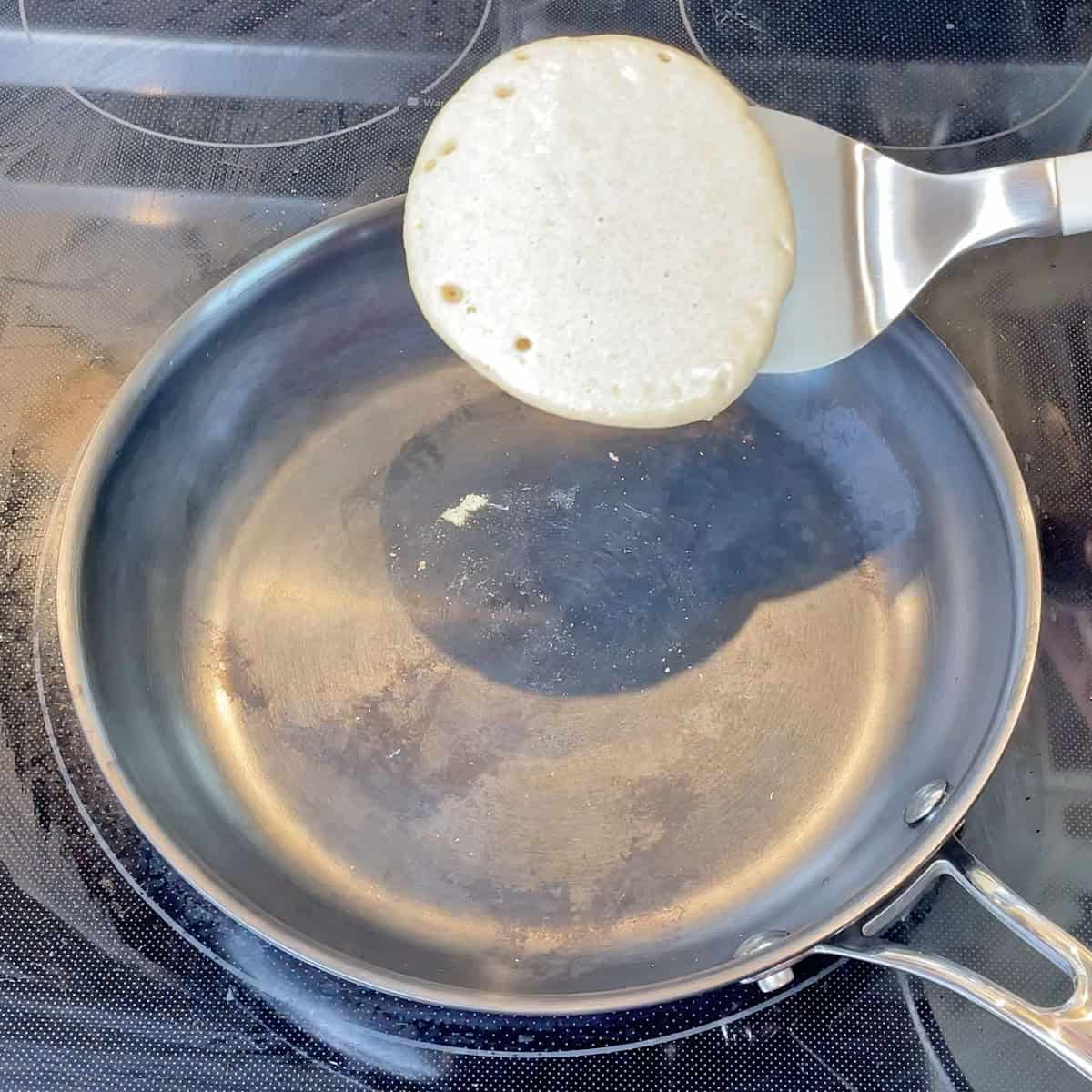
In comparison, both Misen and Strata stuck more aggressively—the pancakes tore and left a noticeable layer behind. So while all three pans needed some fat for ideal performance, Anolon had a slight edge when cooking completely dry.
What stands out most from all my cooking is how consistent the surface performance remains over time. Even after scraping it with metal utensils and running multiple stress tests, the surface didn’t degrade. Food release stayed the same from day one to the end of testing.
Design
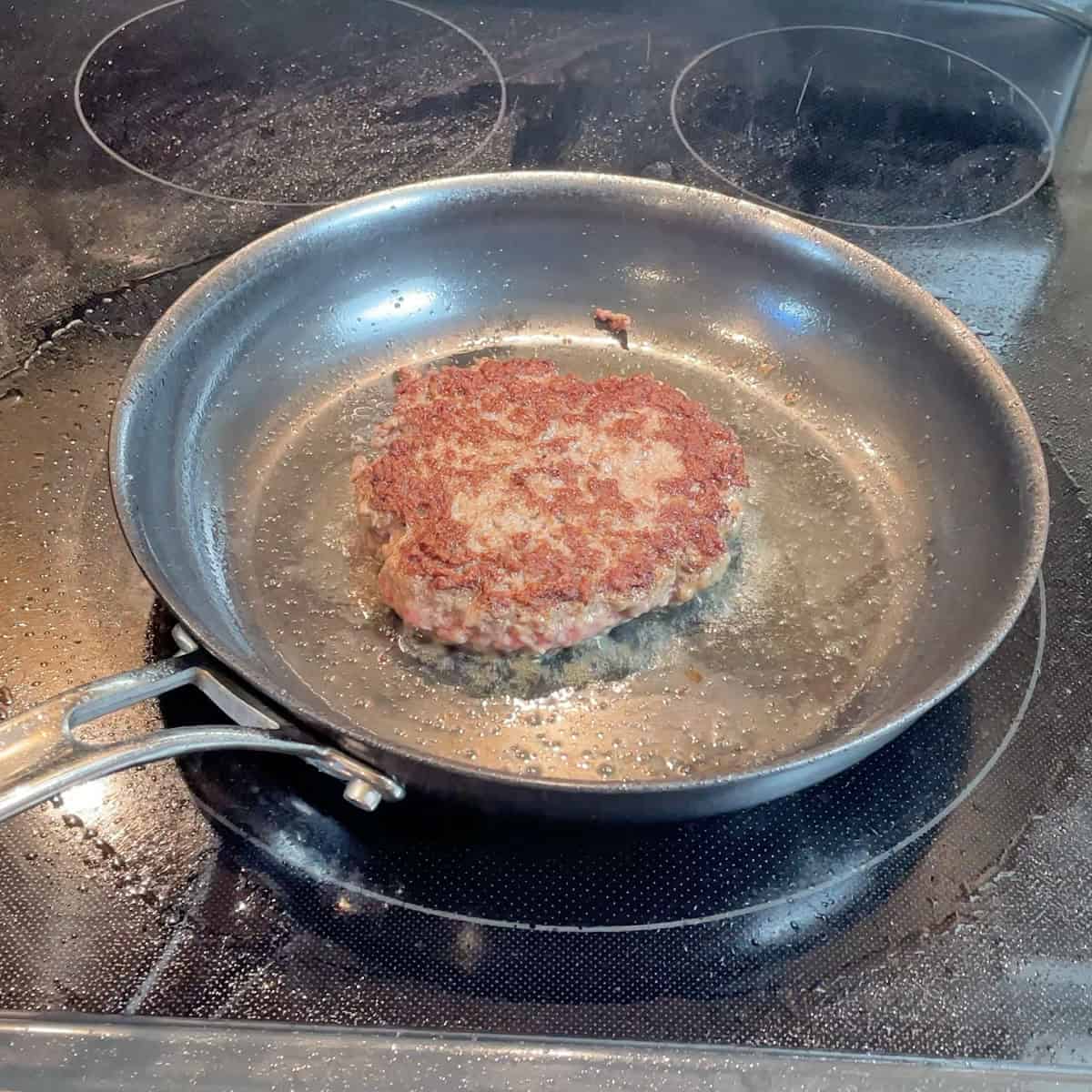
Visually, the Anolon EverLast N2 is one of the best-looking pans I’ve tested. The polished finish and gentle curve of the sidewalls give it a refined look. It’s not nearly as rugged looking as carbon steel pans like Matfer Bourgeat or Lodge.
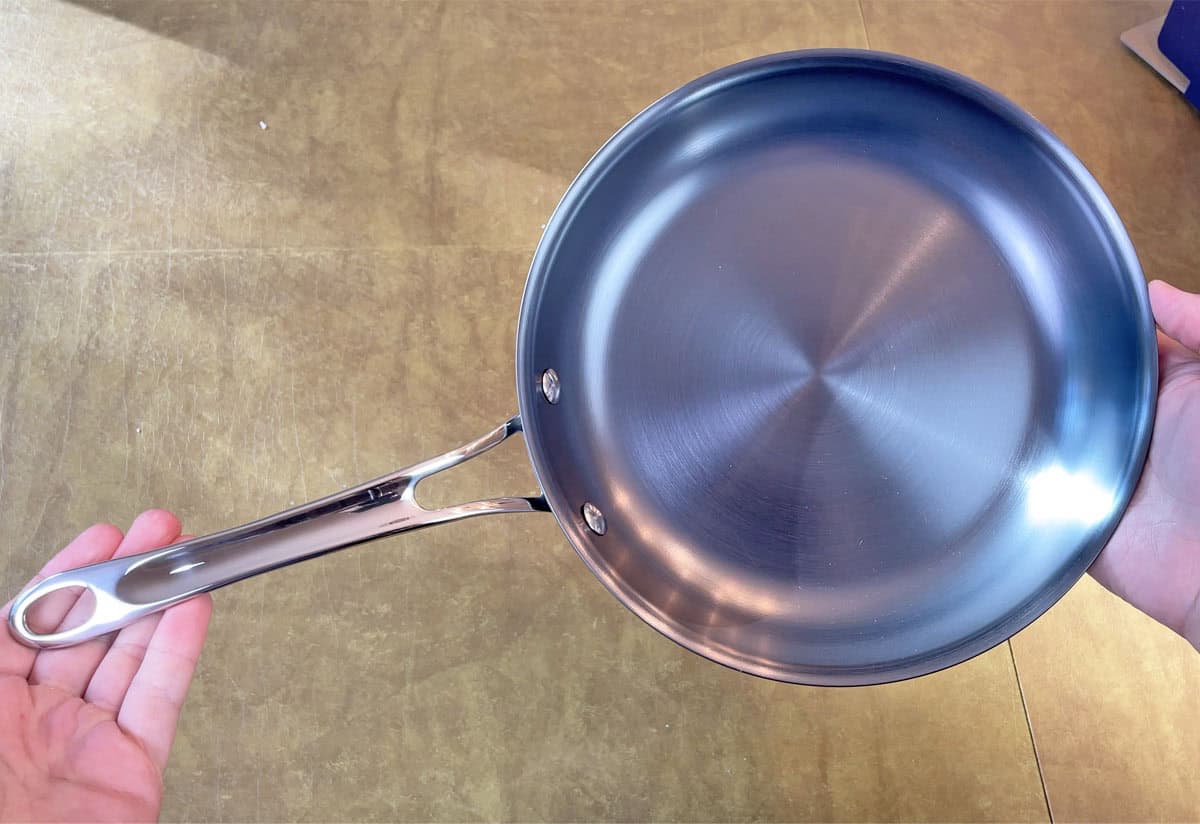
At just under three pounds, the 10-inch fry pan is heavy but manageable. The extra weight gives it stability on the cooktop, though it could feel bulky if you have weaker wrists or difficulty handling heavier pans.
The 12-inch version is heavier at around 4.3 pounds, but it includes a helper handle that makes lifting and transferring easier.
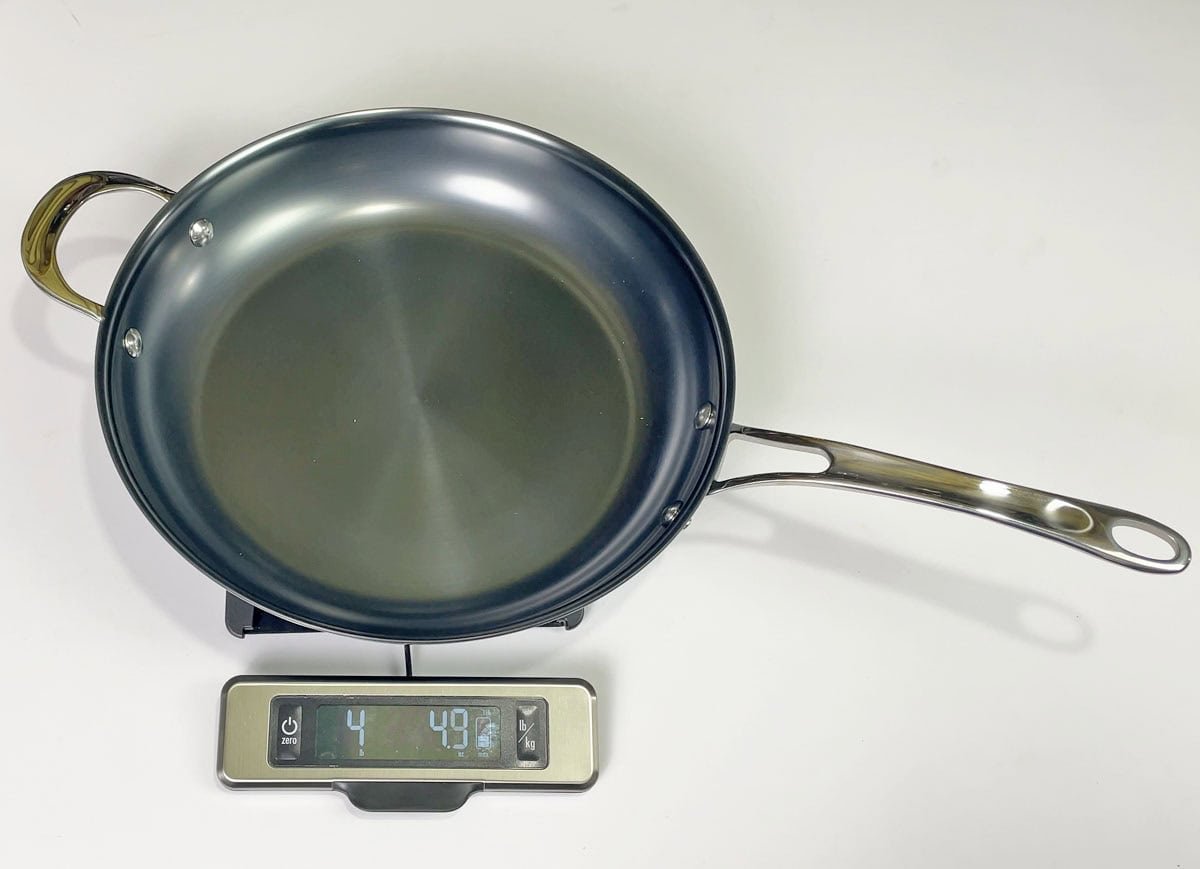
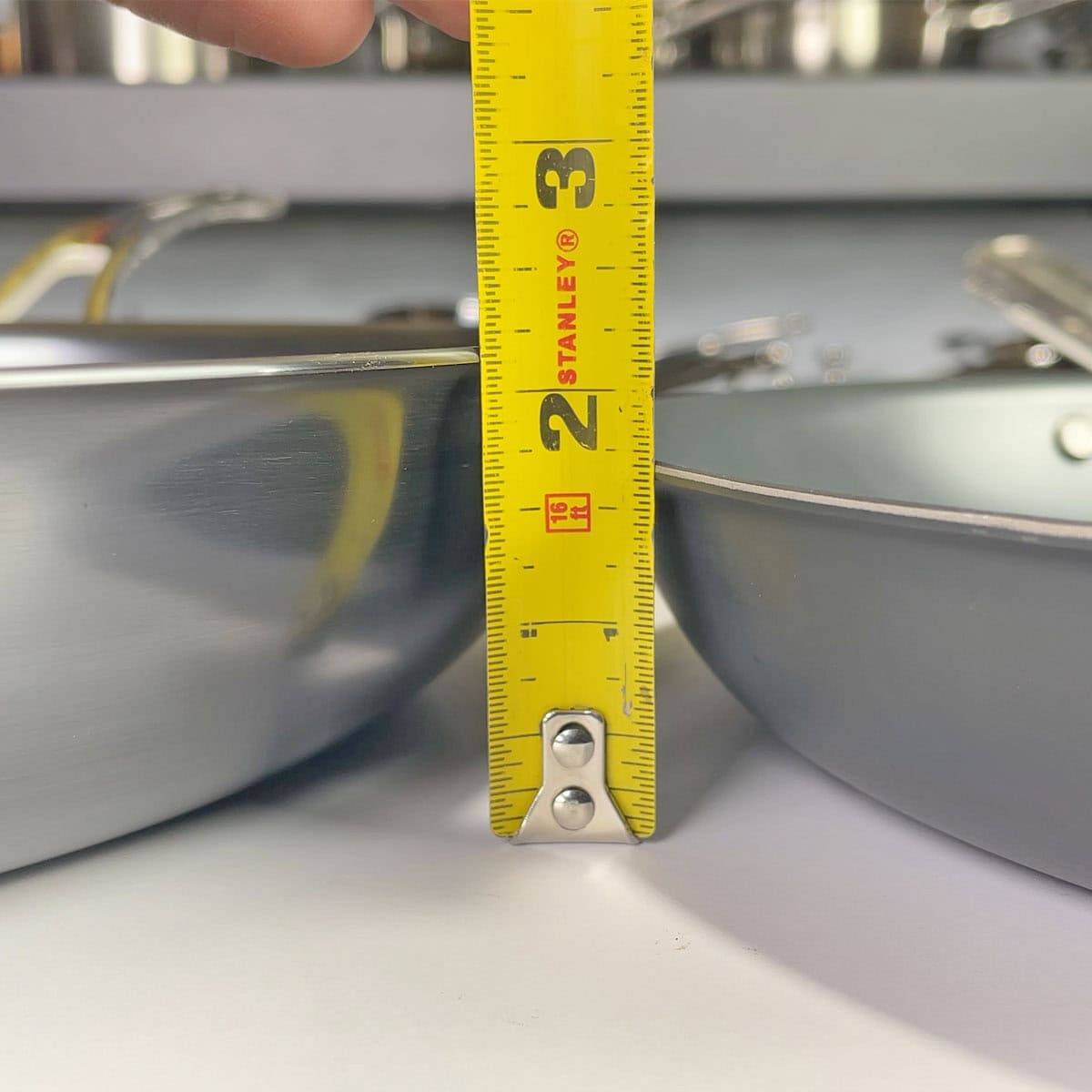
It also has slightly taller walls at 2.25 inches. The 10-inch pan’s walls are just 1.8 inches. Taller walls make it better suited for larger meals or foods that splatter.
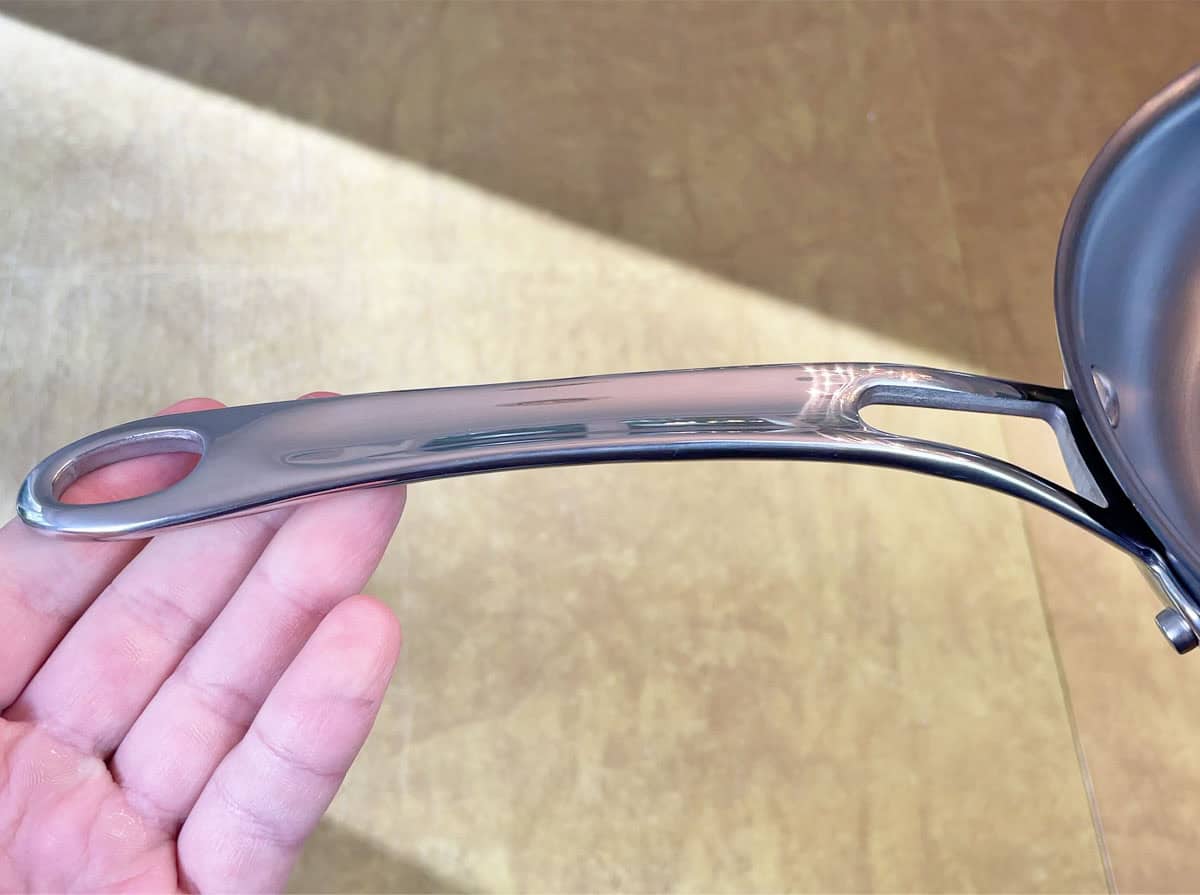
The handle is flat with a subtle groove along the top that gives your thumb a natural resting spot and keeps the pan from rotating when you tilt or toss it. The forked connection near the base helps disperse heat, and in all my testing it never got hot, even during long, high-heat sears.
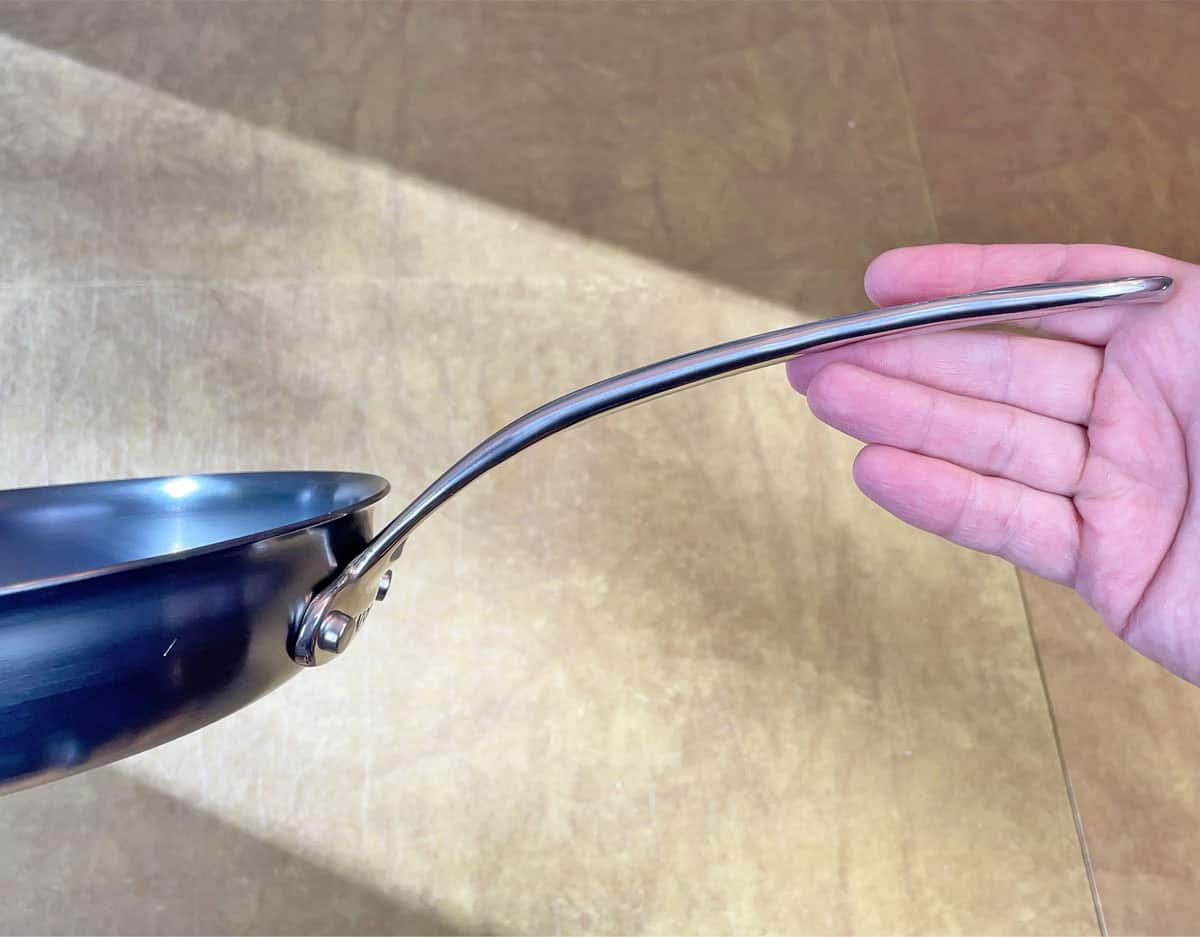
The only thing I would change about the handle is the thickness. I wish it was a bit thicker so it feels more substantial and fills up your hand. If you have large hands, you might find the handle a little too slim for a pan of this weight.
Final Verdict: Are Anolon EverLast N2 Pans Worth It?
After months of testing, I can confidently say that Anolon EverLast N2 pans live up to most of their promises.
It’s one of the most durable and low-maintenance pans I’ve tested. The nitrided carbon steel surface resists scratches, doesn’t rust, and releases food easily without any coatings or seasoning.
The key difference between this and traditional carbon steel is that you don’t have to build up a seasoning layer or worry about it wearing down after cooking acidic foods. It’s stick-resistant and rust-resistant right out of the box, and it stays that way.
On the negative side, it’s heavy, the handle could be thicker, and it heats so fast that you need to stay alert to avoid smoking oil or burning food. It’s not the most forgiving pan for beginners, but once you get a feel for it, it performs exceptionally well.
If you prefer a lighter, easier-to-control pan, Misen Carbon Nonstick might be a better fit. But if you want a pan with taller walls that heats faster, Anolon EverLast N2 is an excellent choice.
Check the current prices and read more reviews on Anolon.com and Amazon.
Related Topics
- Is Anolon Cookware Any Good? An In-Depth Review
- Anolon X Review: Is This Hybrid Cookware Worth Buying?
- Misen Carbon Nonstick vs. Anolon EverLast N2 vs. Strata (Test Results)
- Anolon vs. Circulon Cookware: What’s the Difference?
- HexClad vs. Anolon X: Which Hybrid Pans Are Better?
- Anolon vs. All-Clad Cookware: What’s the Difference?
- Calphalon vs. Anolon Cookware: What’s the Difference?
- Anolon Advanced vs. Advanced Home: Is There a Difference?

