

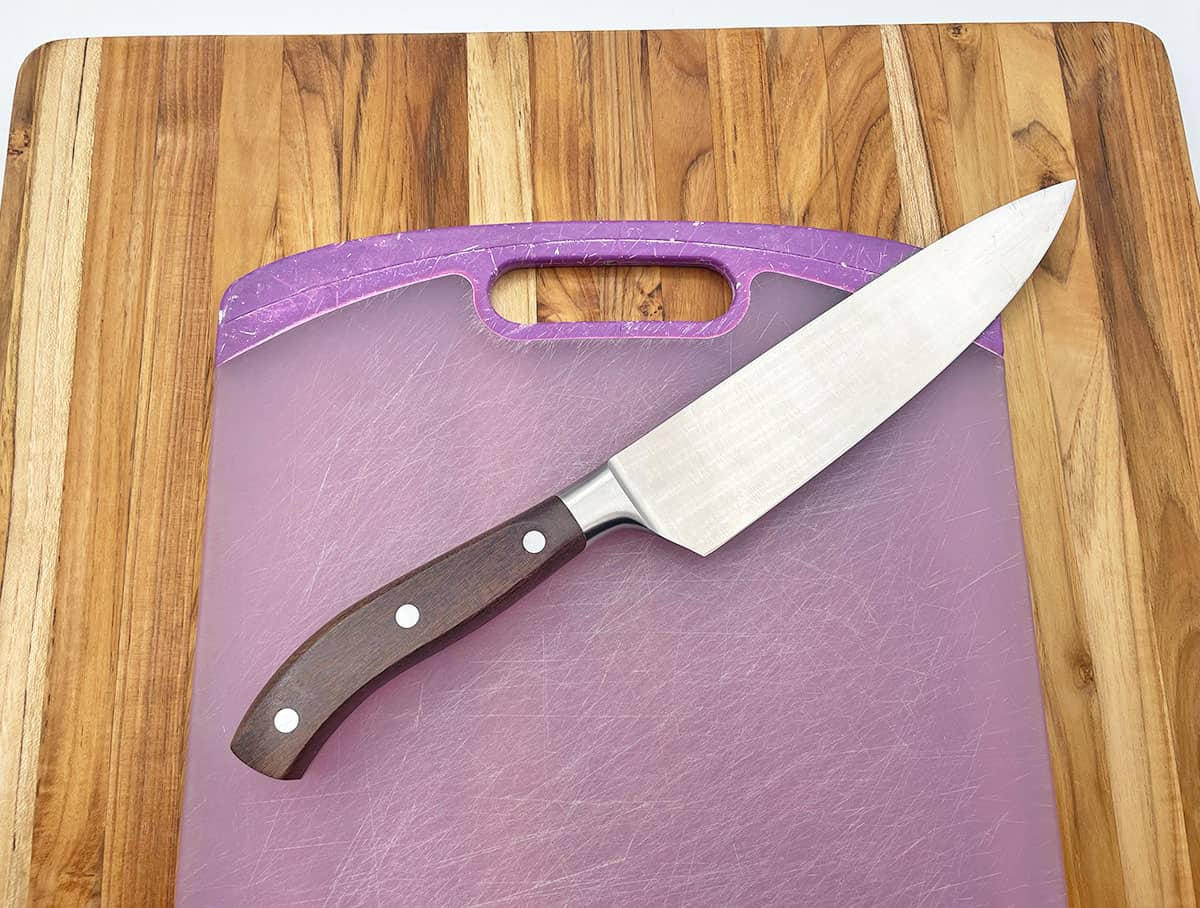
Are wood cutting boards gentler on knives than plastic? Are plastic boards really more sanitary? Which type is better?
To answer these questions and find out which material is the best, I tested several wood and plastic cutting boards side by side.
I measured how much each one dulled knives, how loud they were to chop on, how well they resisted stains and odors, and how they held up over months of use. I also reviewed the most relevant scientific research on bacteria survival, microplastics, and food safety.
In this comparison of wood vs. plastic cutting boards, I break down the real differences. By the end, you’ll know whether wood or plastic is the better fit for your kitchen.
Key Takeaways
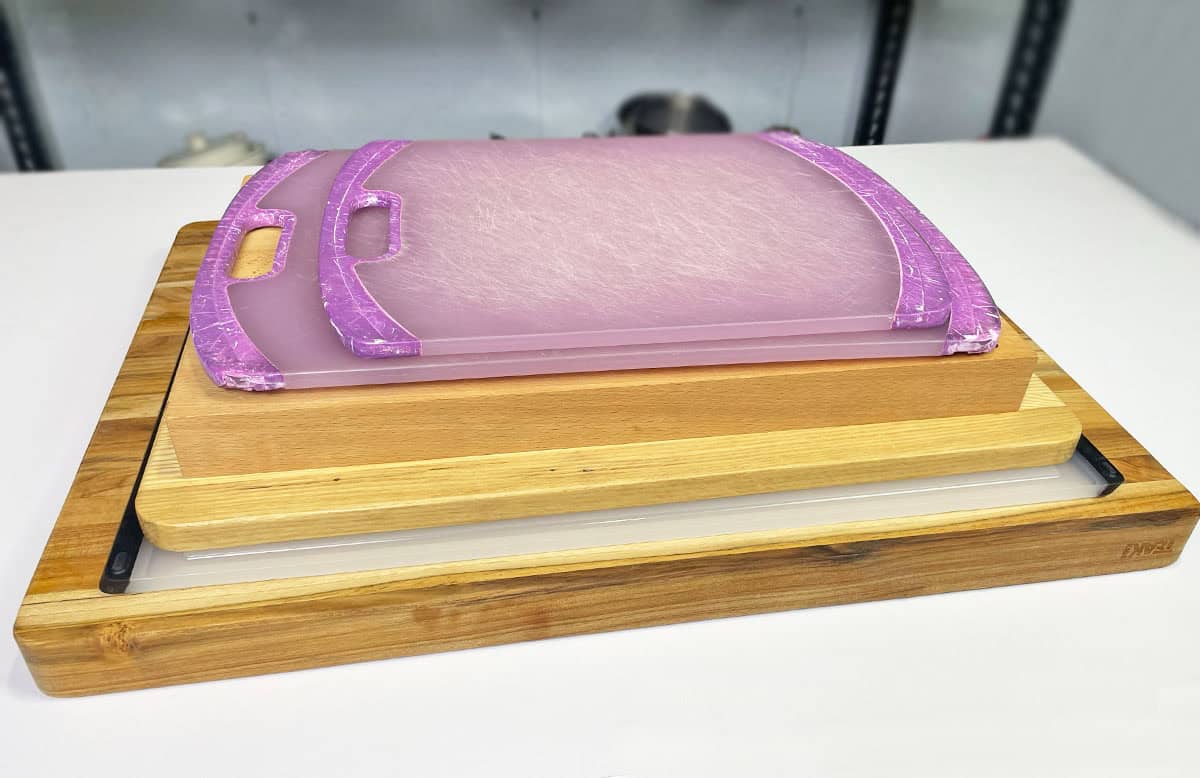
Safety: A scientific study conducted at the University of Wisconsin shows that wood cutting boards have natural antimicrobial properties, while deep grooves in plastic boards can trap and harbor bacteria. A North Dakota State study proved that plastic can also shed microplastics into food as you chop, so older scarred boards should be replaced.
Knife Sharpness: In my testing, knives used on plastic boards lost their edge much faster than knives used on wood boards.
Noise and Feel: Noise levels were similar, but wood felt softer and smoother under the knife compared to the harder and more “clicky” feel of plastic.
Stains and Odor: Plastic resisted stains and odors completely, while wood sometimes held onto garlic smells or beet stains, although they usually faded after a second wash.
Durability: Plastic boards warped in the dishwasher and scarred quickly, while wood boards can crack, especially if they absorb too much moisture.
Cleaning and Maintenance: Plastic can go in the dishwasher but will warp over time. Wood requires hand washing, even drying, and occasional oiling, but with proper care it can last for years.
My Recommendation: Based on my testing and research, wood is the clear winner. My favorite boards are TeakHaus and Boos because they perform the best across sharpness, feel, and overall durability.
Use the links below to navigate the comparison:
- Health and Safety
- Knife Dulling
- Noise and Cutting Feel
- Stains and Odor
- Durability
- Maintenance
- Bottom Line: Should You Buy Plastic or Wood Cutting Boards?
Health and Safety
When it comes to cutting boards, many people assume plastic is safer because it does not absorb liquids and can go in the dishwasher, while wood seems risky because it is porous. That idea has been repeated for years, but research tells a different story.
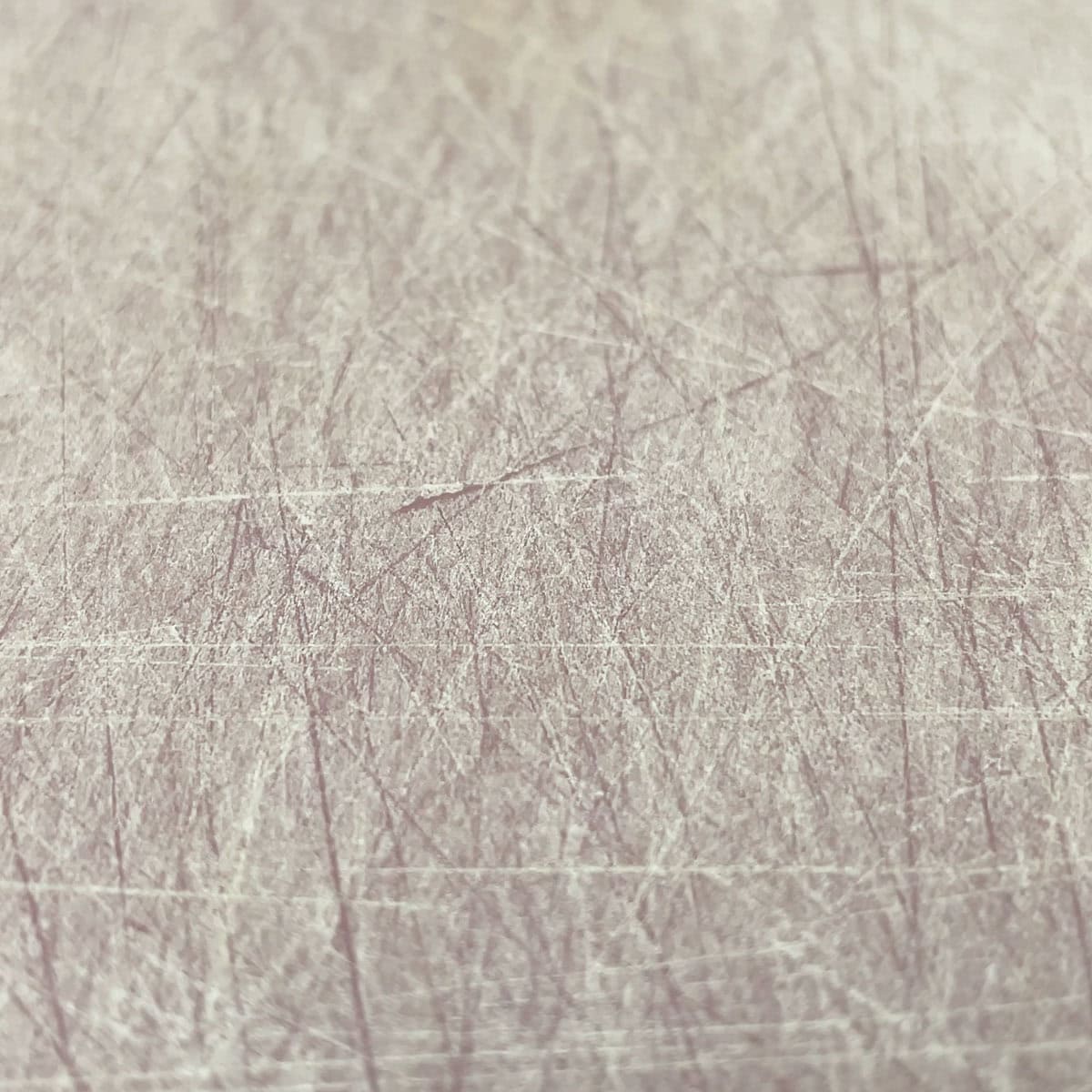
A University of Wisconsin study showed that bacteria behave differently on wood compared to plastic. On plastic, bacteria lingered in knife scars and were difficult to remove, especially when food juices were present. On wood, liquids and bacteria were pulled below the surface within minutes, and researchers were unable to recover them. Once inside, the bacteria quickly died off. In other words, wood does not harbor bacteria the way most people think.
One detail that matters is finishing. A 2023 Oregon State University study tested unfinished wood against boards treated with mineral oil or linseed oil. The finished boards left more live bacteria on the surface compared to unfinished ones because the oils blocked the wood’s ability to absorb moisture. This made the boards behave more like plastic.
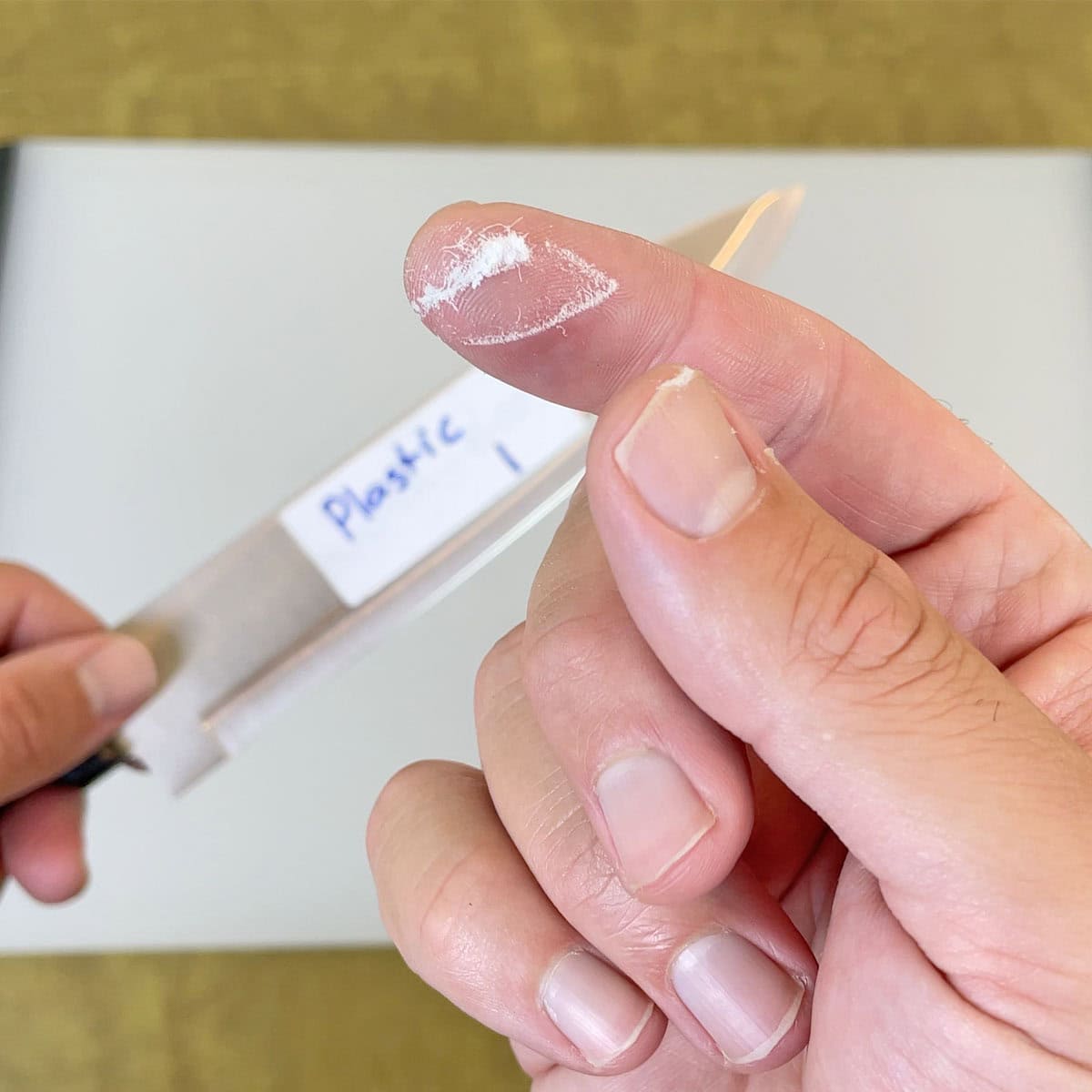
Another safety issue that has only recently come into focus is microplastics. While chopping during my knife dulling test on a plastic board, I noticed small amounts of plastic dust collecting on the blade.
A 2023 study estimated that a person could ingest several grams of microplastics every year from plastic cutting boards alone. Other studies show these particles can move through the body, build up in organs, and may contribute to inflammation or other health problems.
The takeaway is that plastic boards are more prone to developing deep scars where bacteria can collect and be difficult to wash out, and they also shed microplastics into food every time you chop. If your plastic board is older and full of grooves, it is best to replace it.
Wood requires more maintenance, but when kept in good condition it can naturally reduce bacteria on the surface.
Both wood and plastic can be safe options as long as you wash them thoroughly with hot water and soap after each use.
Knife Dulling
A common belief is that wood cutting boards are gentler on knives than plastic. I wanted to see if that was really true, and if so, by how much. To test it, I sharpened identical knives to the same starting level (as close as I could get them).
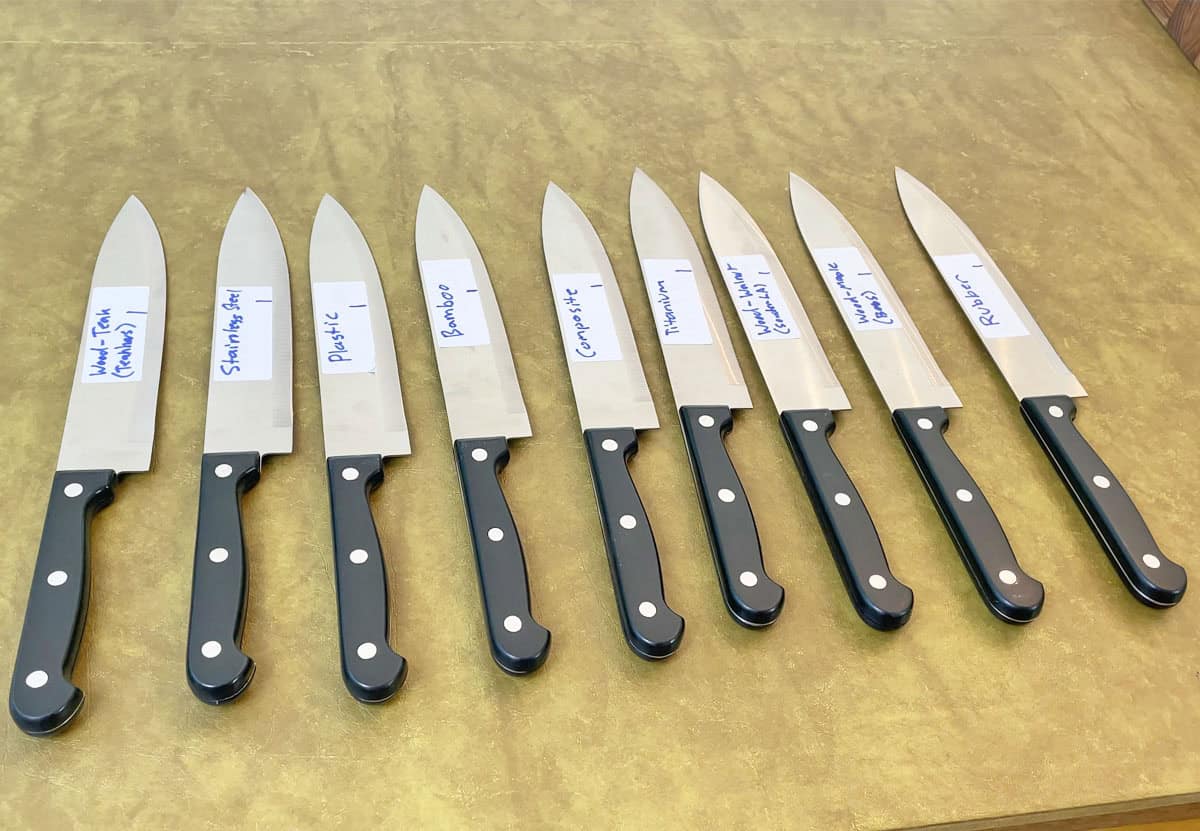
Then, I dulled each knife with 300 straight chops and 300 rocking cuts on each board.
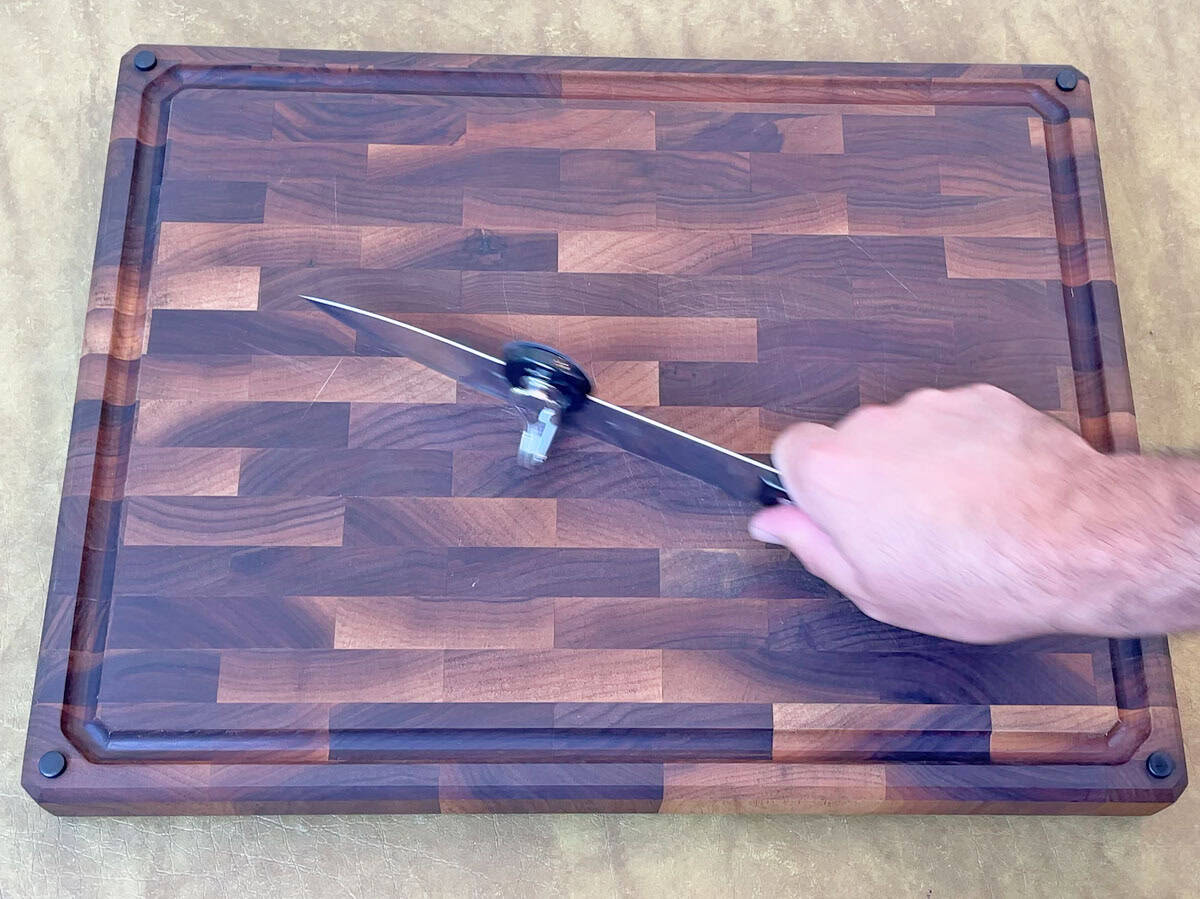
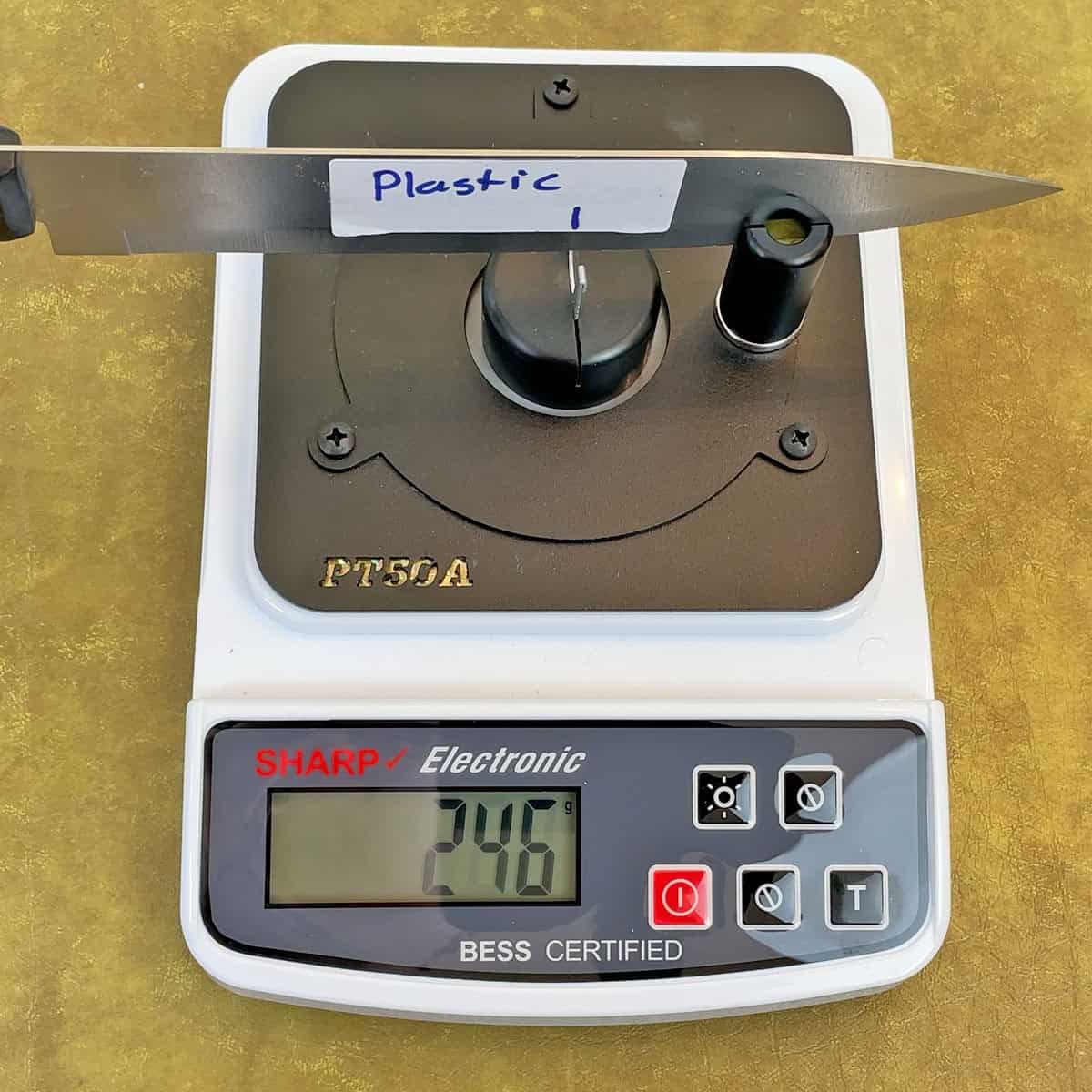
After chopping, I measured the edge with a BESS-certified sharpness tester, which shows how many grams of pressure it takes for the blade to cut a thin wire. Lower numbers mean a sharper edge.
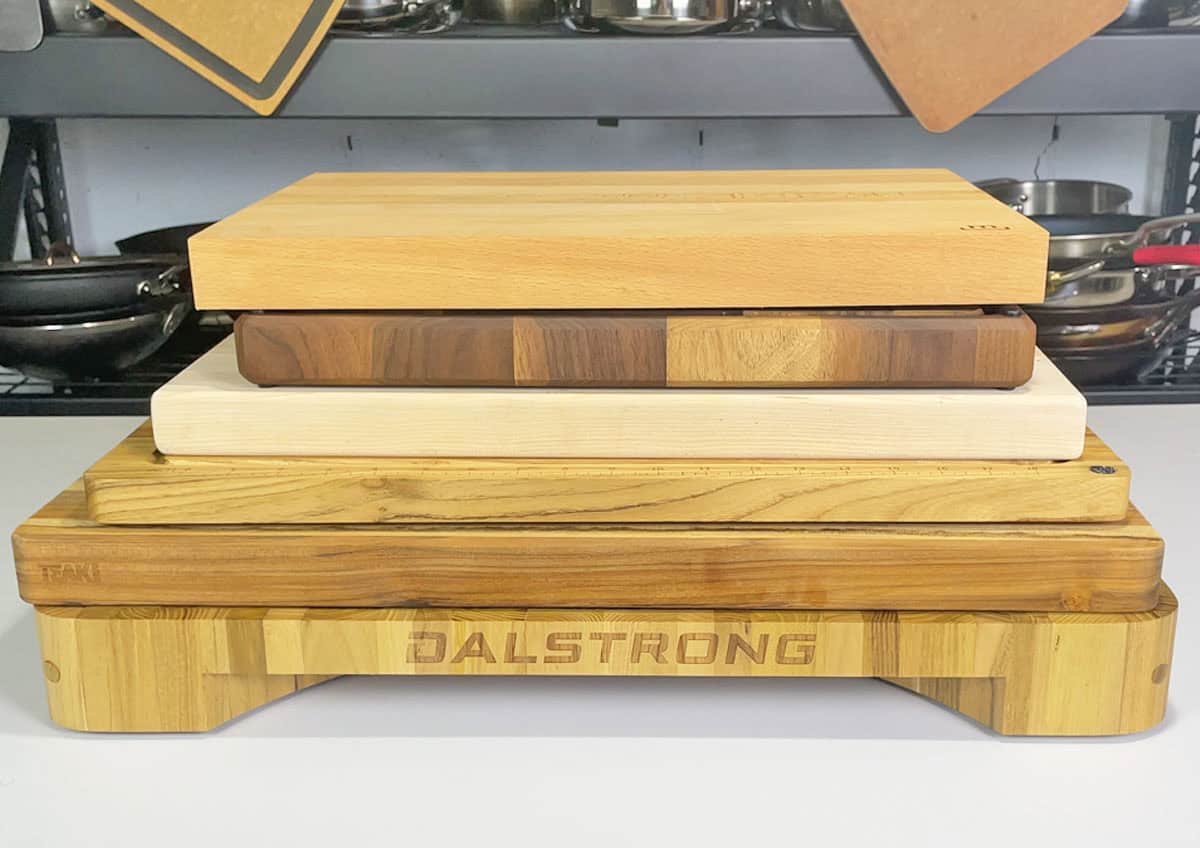
I tested a polypropylene plastic board alongside several wood boards made from different species and grain orientations: walnut (end grain), maple (edge grain), and teak (both edge grain and end grain). I included multiple wood boards because the hardness of the wood and whether the grain runs edge-to-edge or end-to-end can make a difference in how much a knife dulls.
Here are the results:
| Board | Starting Sharpness (BESS) | After Test | Difference |
|---|---|---|---|
| Walnut (end grain) | 238 | 253 | 15 |
| Teak (end grain) | 318 | 345 | 27 |
| Maple (edge grain) | 252 | 293 | 41 |
| Teak (edge grain) | 264 | 306 | 42 |
| Plastic (polypropylene) | 181 | 246 | 65 |
The results confirmed the belief, but they also showed just how big the difference can be. The plastic board dulled the knife the most, with a 65-point drop in sharpness. The walnut end grain board was by far the easiest on the blade, with only a 15-point drop. Even the harder woods like maple and teak dulled knives less than plastic.
In practice, this means using a plastic board as your main cutting surface will wear your knives down faster, leading to more frequent sharpening. A good wood board, especially an end grain style, helps knives stay sharper for longer.
Noise and Cutting Feel
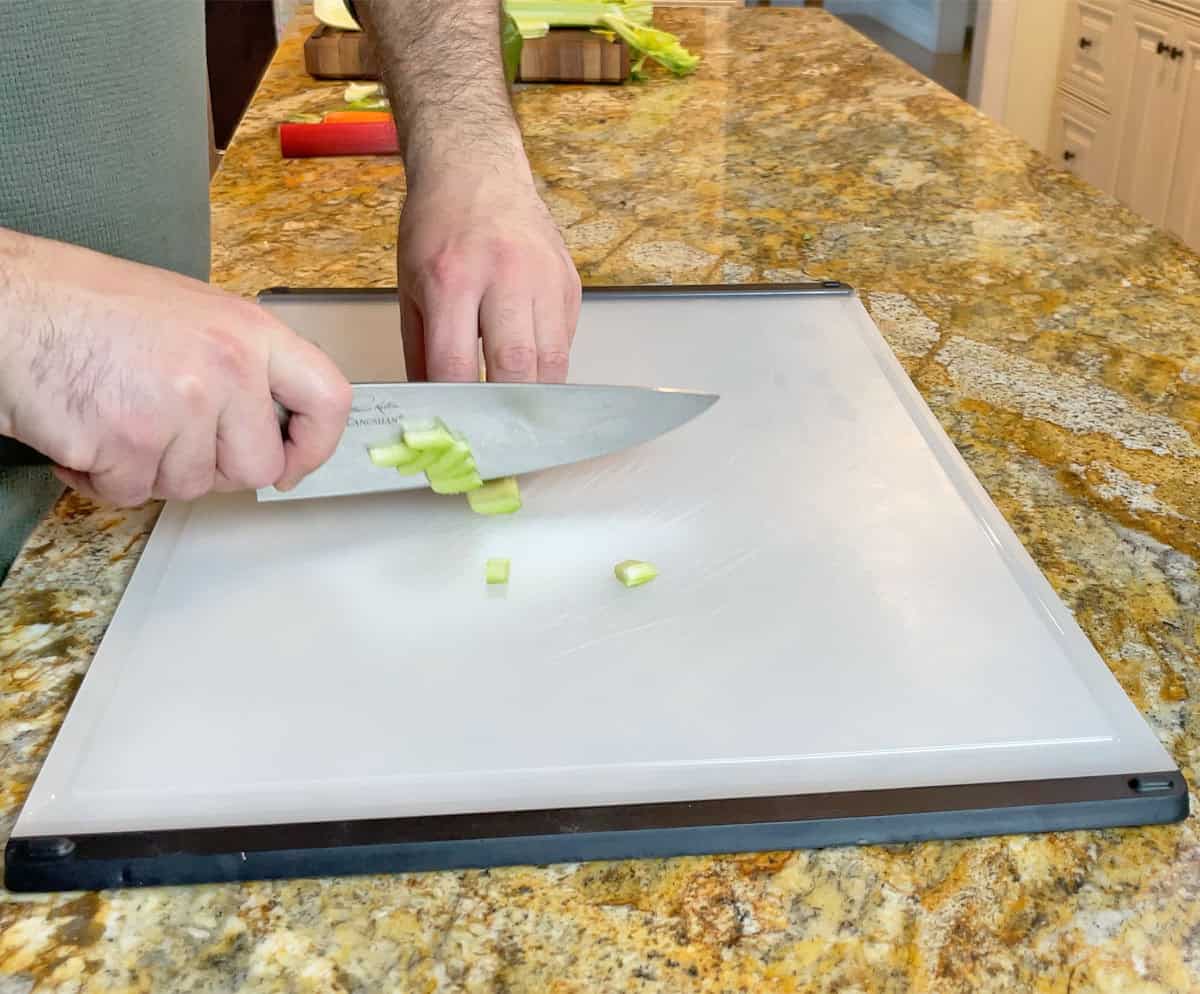
A common belief is that wood boards are quieter and more pleasant to cut on than plastic. To test this, I measured the sound of chopping and rocking cuts on each board using a decibel meter. For consistency, I recorded 20 chopping motions and 20 rocking motions on each surface and averaged the results.

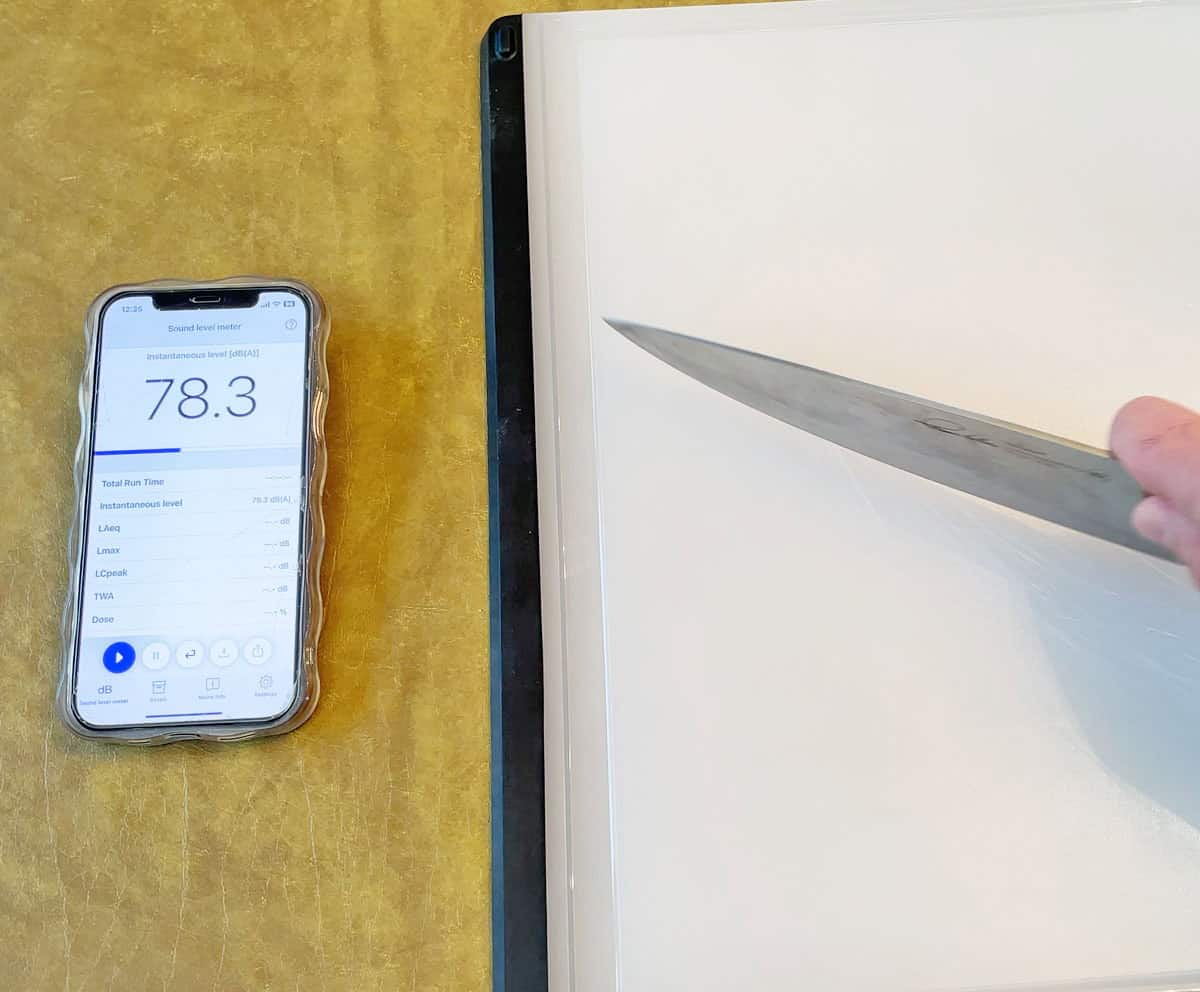
Here are the results:
| Board | Chopping Average (dBA) | Rocking Average (dBA) | Notes on Feel |
|---|---|---|---|
| Walnut (end grain) | 71.0 | 54.5 | Soft, smooth, pleasant give under the knife |
| Maple (edge grain) | 67.6 | 53.2 | Stable feel, a bit firmer than walnut |
| Teak (edge grain) | 65.3 | 55.4 | Slightly harder, but still comfortable |
| Teak (end grain) | 71.5 | 53.5 | Noticeable “cushion” with a solid feel |
| Plastic (polypropylene) | 72.6 | 53.8 | Harder, sharper, more “clicky” feel |
The numbers show that plastic is only slightly louder than some of the wood boards, especially during chopping. The real difference is in the feel. Wood boards have a natural softness that cushions the knife and makes long prep sessions more comfortable. End grain boards, in particular, have a subtle “give” that feels smooth and controlled.
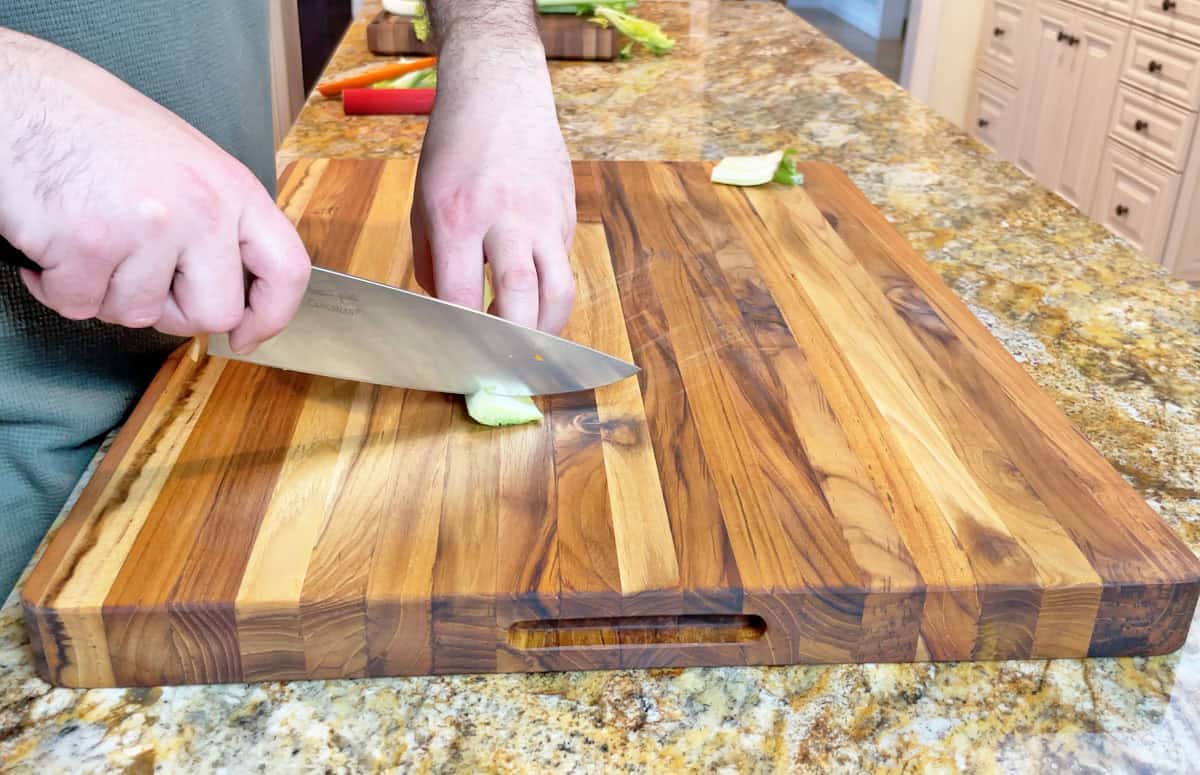
Plastic, on the other hand, feels harder and produces a sharper, more “clicky” sound when the knife hits the surface. Even though the decibel readings are close, the harder feedback from plastic is noticeable.
Stains and Odor
Another important factor with cutting boards is how they handle strong-smelling or colorful foods. To see how plastic and wood cutting boards compare in this category, I mashed garlic, beets, and chipotle peppers on each board, let them sit for 20 minutes, and then washed them with hot water and soap.
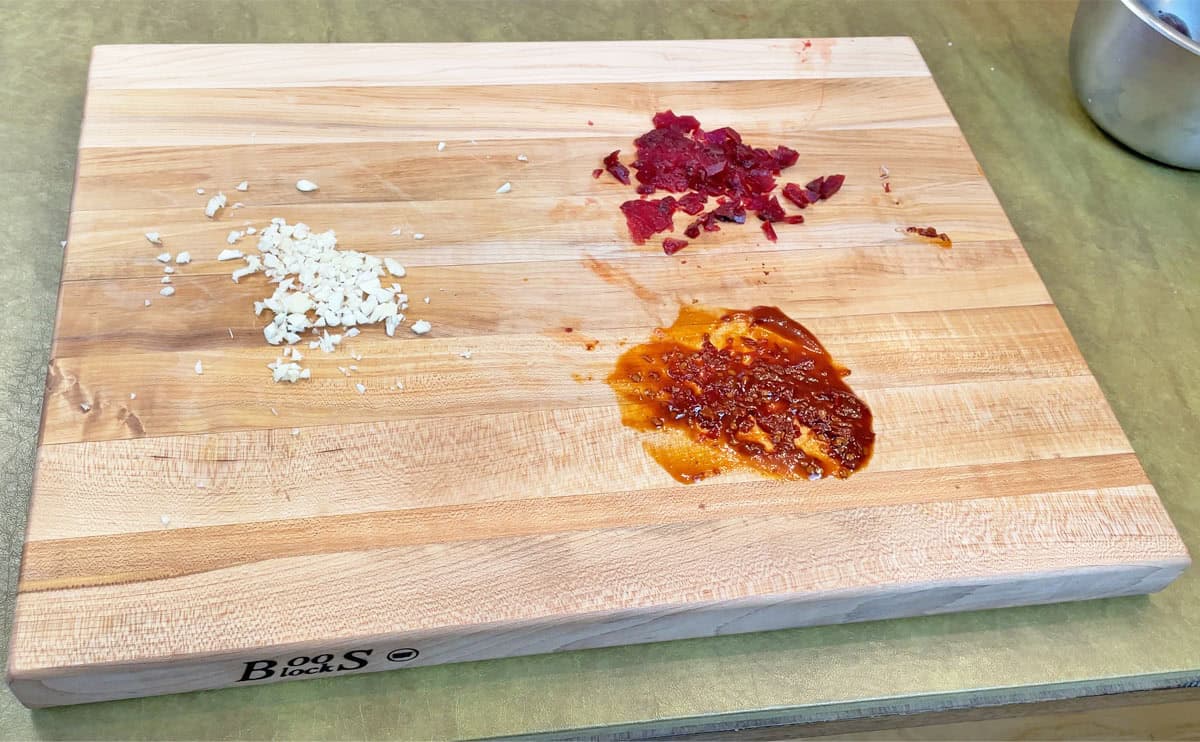
I checked whether the boards held onto stains or odors after the first and second wash.
Here are the results:
| Board | Staining | Odor Retention | Notes |
|---|---|---|---|
| Walnut (end grain) | No staining | Garlic odor lingered | Smell faded after a second wash |
| Maple (edge grain) | Beet and chili stains visible | Garlic odor lingered | Stains faded after a second wash |
| Teak (edge grain) | No staining | Garlic odor lingered | Relatively easy to clean |
| Teak (end grain) | No staining | Garlic odor lingered | Similar to other woods |
| Plastic (polypropylene) | No staining | No odor retention | Completely clean after one wash |
Plastic boards performed best here. They didn’t hold onto beet stains or chipotle residue, and garlic odor rinsed away completely after one wash.
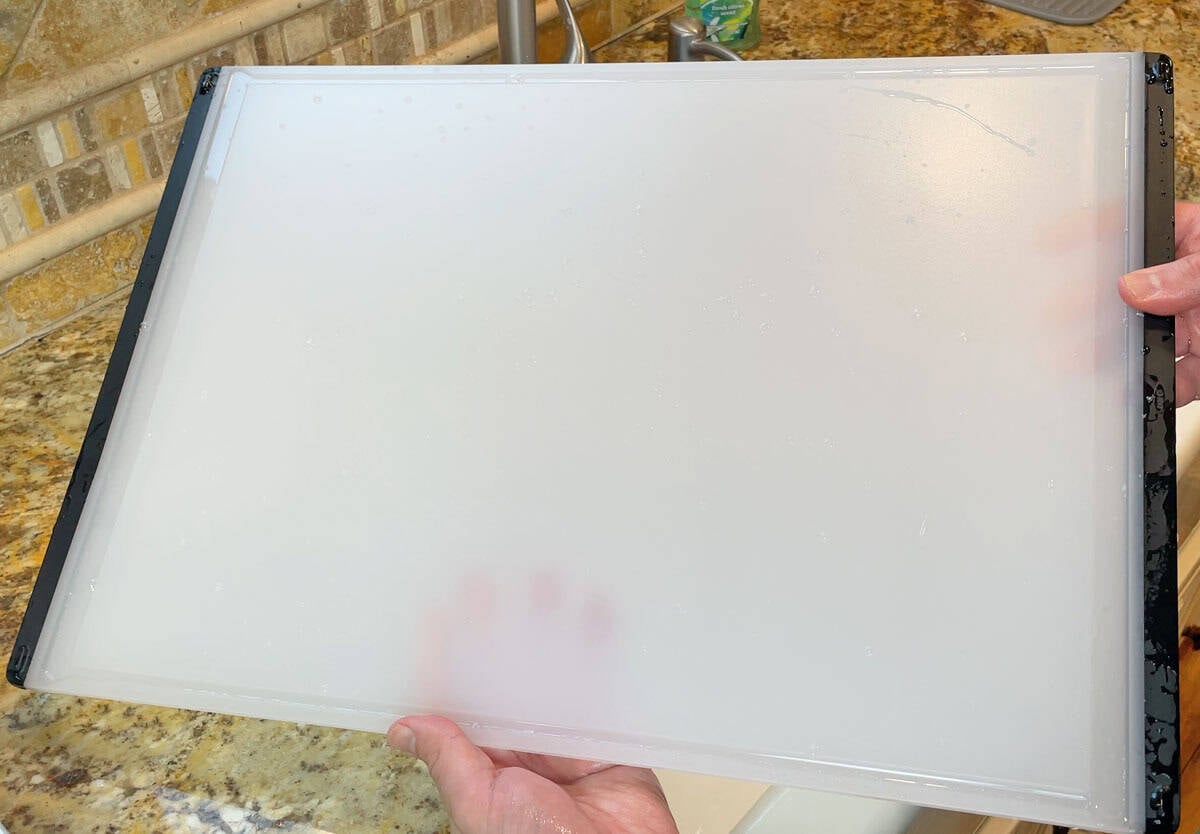
Wood boards were more prone to holding onto smells. All of them retained a faint garlic odor after the first wash, though it usually faded after the second. Maple showed some beet and chili stains, while walnut and teak resisted staining better. Even when staining occurred, it lightened significantly after a second wash.

If you prep a lot of garlic, beets, or turmeric, a small plastic board can be handy. Wood boards clean up well with a little extra care, but you may notice occasional faint odors until the board dries fully.
Durability
Durability is a weakness for both wood and plastic, just in different ways.
The plastic board scarred up quickly in my testing. Knife marks formed deep grooves that made the surface harder to clean, and one of the boards warped in the dishwasher.
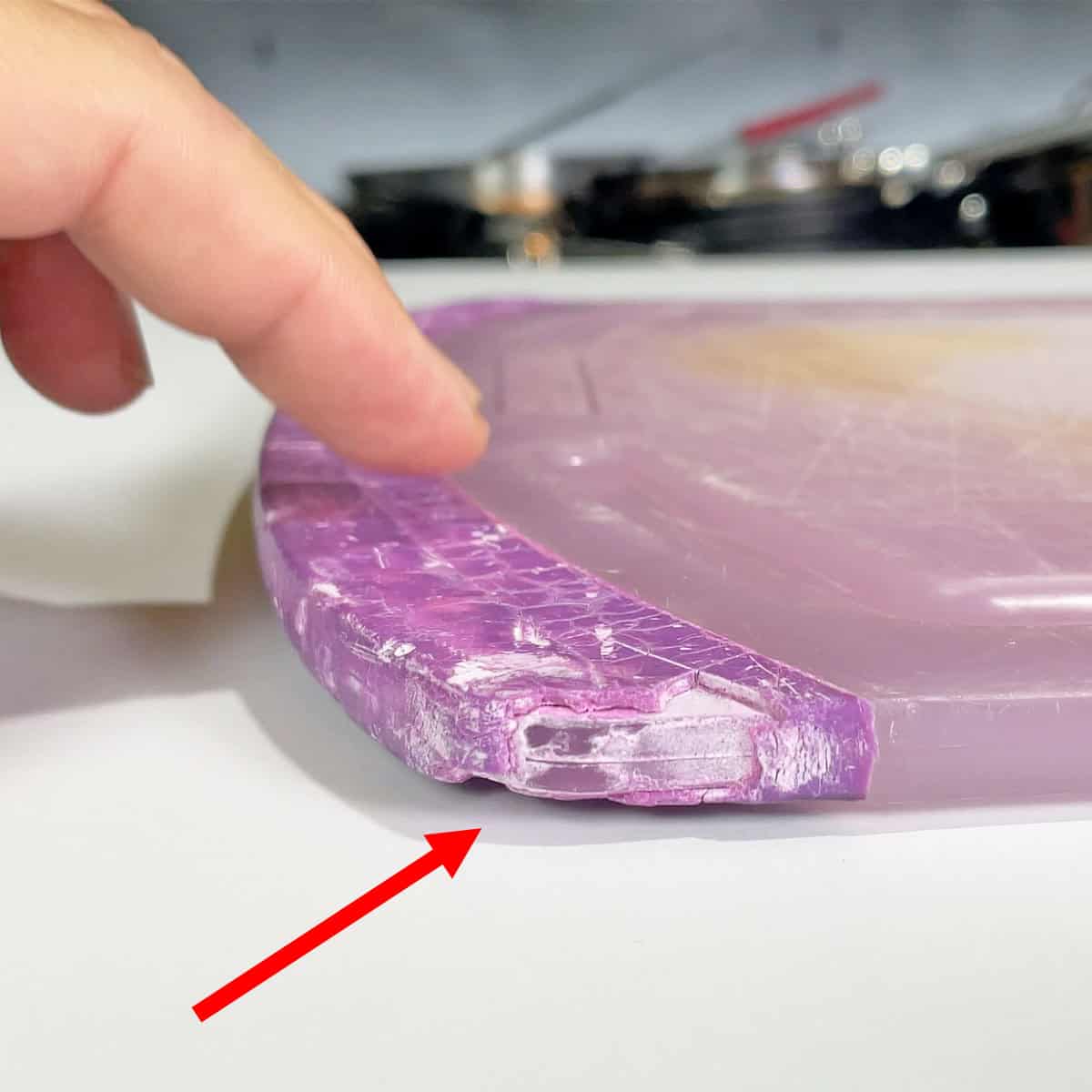
The wood boards mostly held their shape, but the large end grain teak board was a different story. Because it is heavy and built from many small blocks glued together, the weight created stress that eventually caused several cracks along the seams.
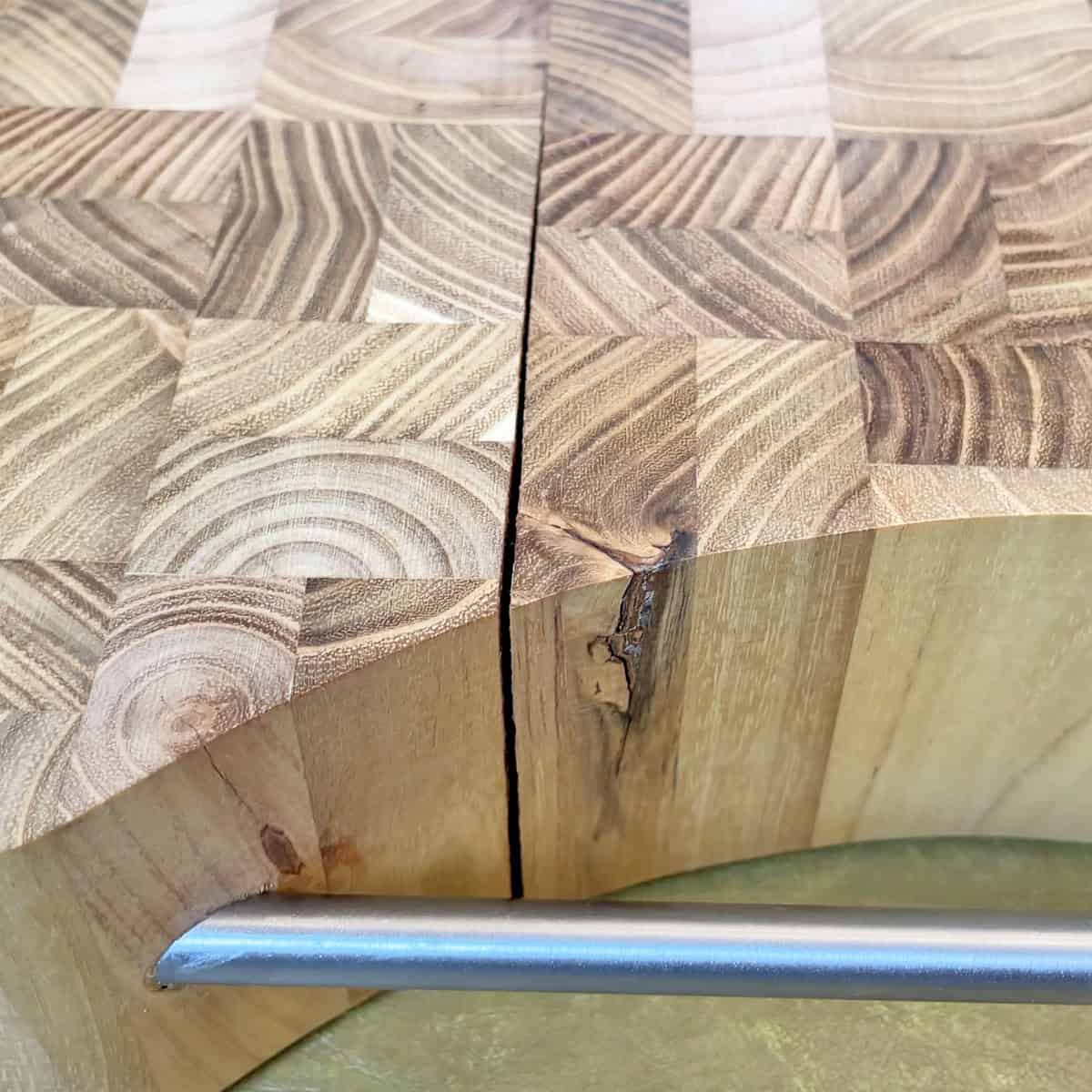
End grain boards have the advantage of being gentler on knives and hiding cut marks, but the sheer weight of a large one can put stress on the joints over time.
Maintenance
Plastic boards are the easiest to deal with. You can rinse them off and toss them in the dishwasher without thinking twice, and you don’t need to worry about oiling or special care.
Wood boards take a little more effort. After each use, scrape off any scraps, wash with hot water and a bit of soap, and dry with a towel. Stand the board on its edge so both sides can air out evenly. Since wood absorbs moisture, letting one side stay wetter than the other can cause warping or cracks.
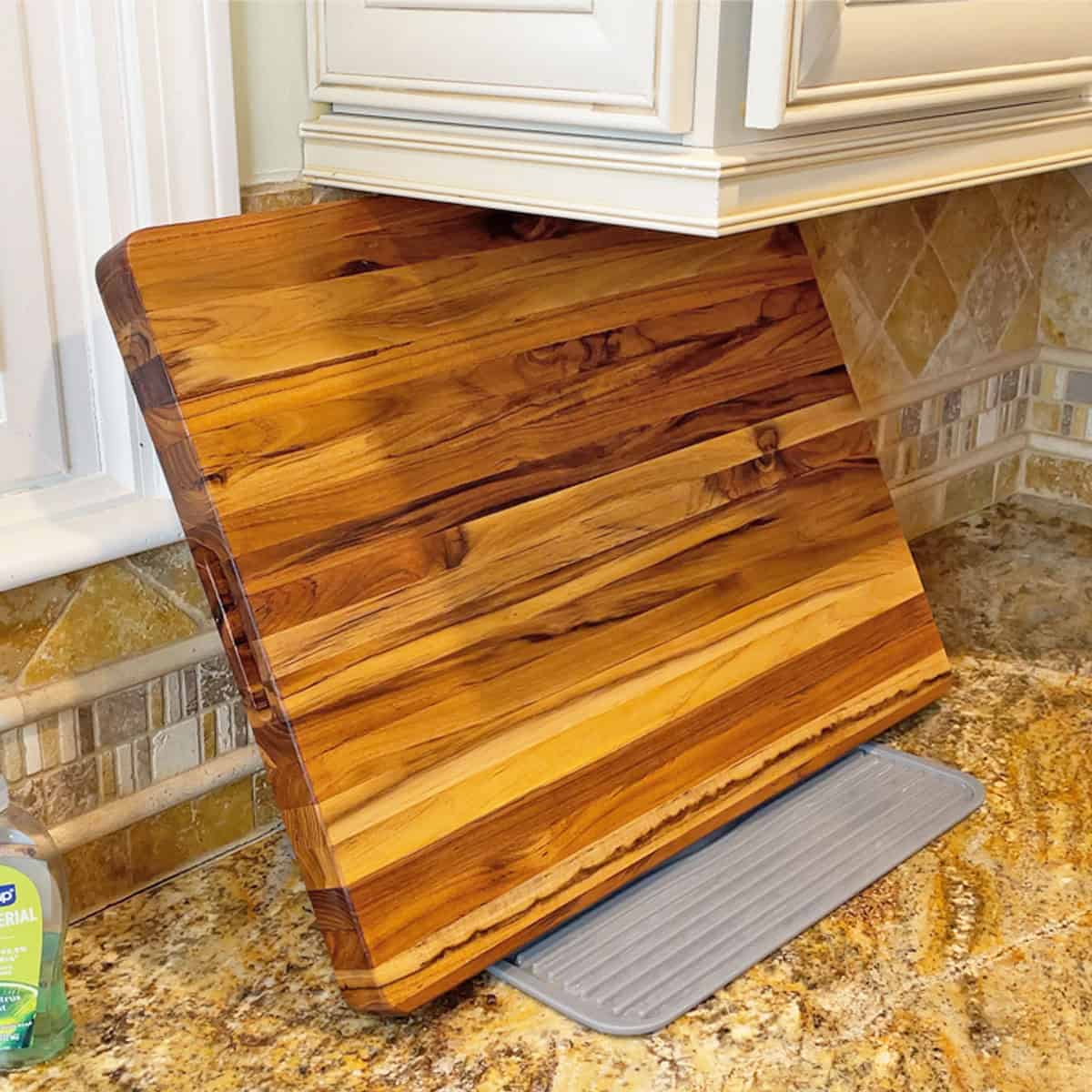
The most important step with wood boards is oiling. About once a month or whenever the board looks dry, coat the wood with food-grade mineral oil or a board cream made from mineral oil and beeswax.
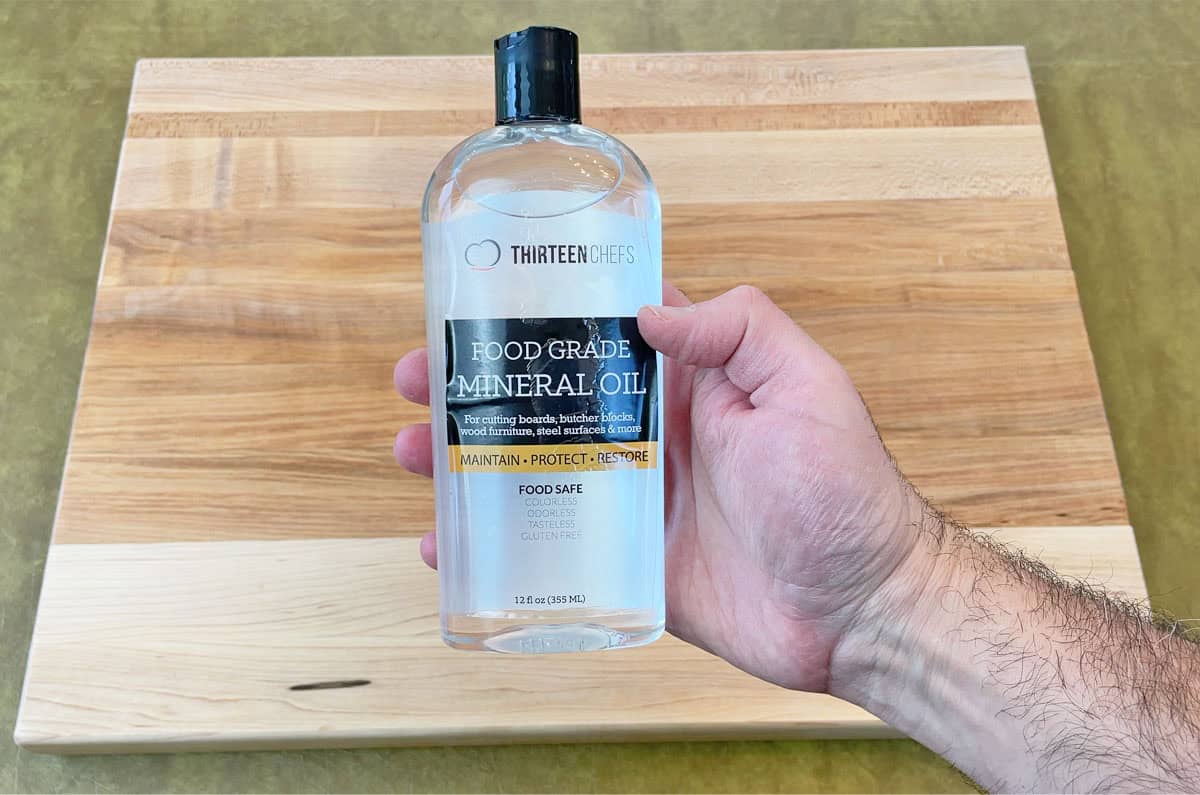
This keeps the wood from drying out, helps it resist warping, and makes it last much longer.
Bottom Line: Should You Buy Plastic or Wood Cutting Boards?
After putting wood and plastic boards to the test, wood is the clear winner for most home cooks. It’s gentler on knives, more pleasant to cut on, and with proper care it can last for decades.
Plastic may be cheap and convenient, but it dulls knives faster, develops deep scars that trap bacteria, and sheds microplastics into food as you chop. For those reasons, I don’t recommend plastic as your main cutting board.
If wood feels too heavy, expensive, or high-maintenance, a composite board is the best alternative. These boards are made from layers of paper or wood fiber soaked in resin and pressed under high heat. They’re dishwasher safe, durable, and don’t carry the same microplastic concerns. But if you don’t mind a little upkeep, wood is hands down the cutting board material I recommend for your kitchen.

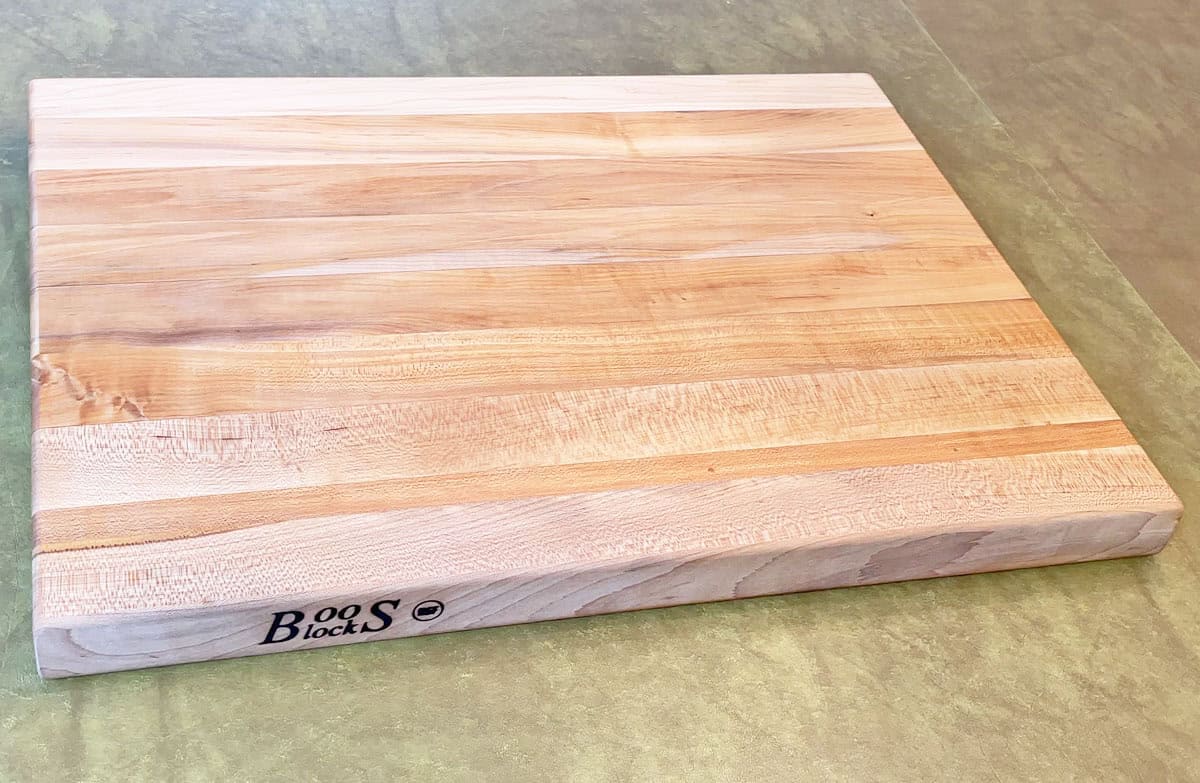
My top-performing wood boards are TeakHaus and Boos. They balance durability, cutting comfort, and knife-friendliness better than the rest. If you want a board that will perform well for years, those are the ones I recommend.
Related Topics
- Best Cutting Board? I Tested Epicurean, OXO, Boos, Teakhaus & More
- Titanium and Stainless Steel Cutting Boards Review (Pros, Cons, Test Results)
- I Tested 27 Chef’s Knives & These Are the Best for Every Budget
- The Definitive Guide to the Best Kitchen Knife Brands
- The 8 Most Expensive Chef’s Knives (That Are Actually Worth It)
- Best Kitchen Knives NOT Made in China: The Definitive Guide
- Best Kitchen Knives Made in the USA: Top Brands Reviewed
- 21 Different Types of Kitchen Knives Explained (With Comparison Chart)

