

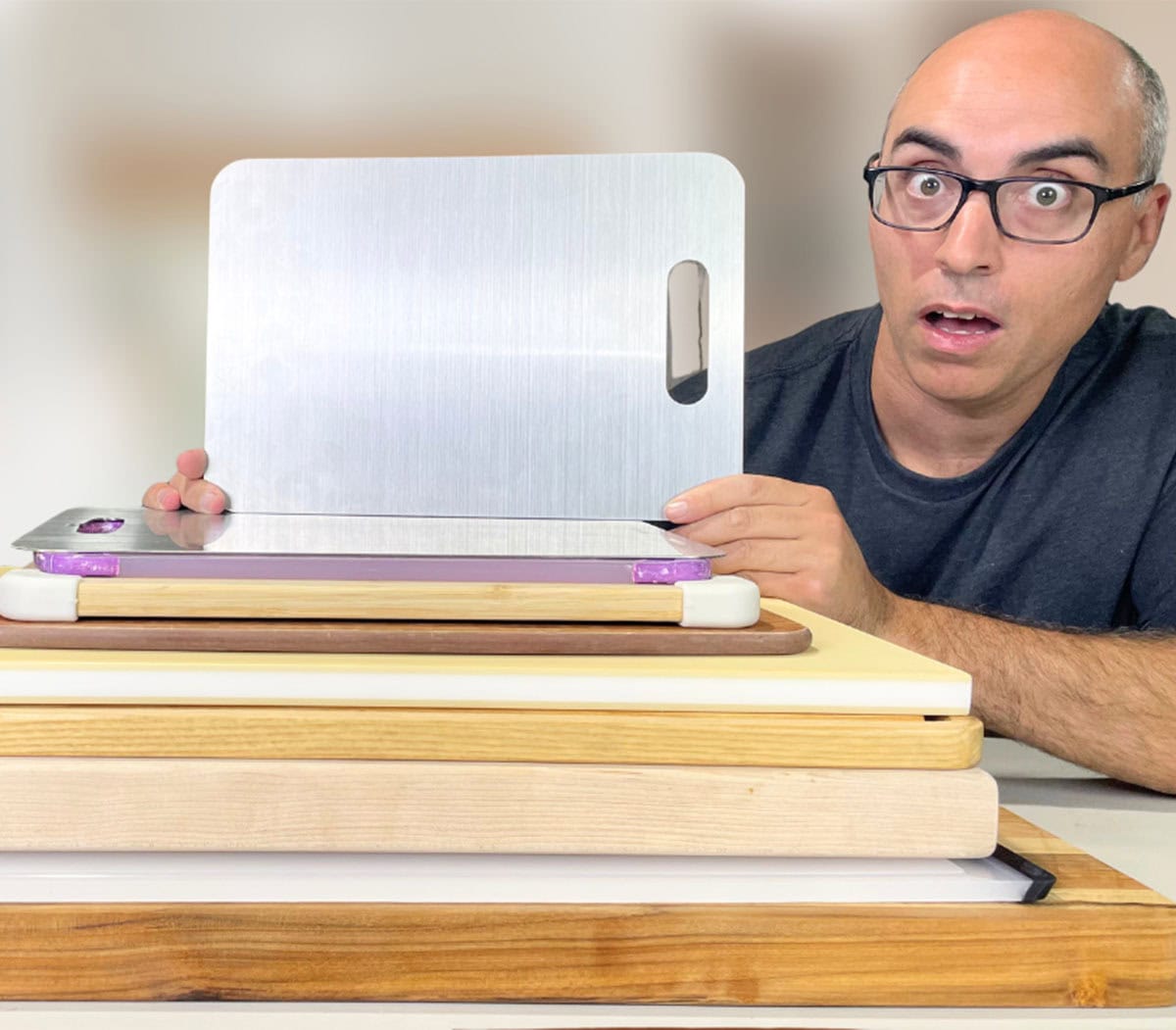
Titanium and stainless steel cutting boards are everywhere right now. They’re all over Amazon and heavily debated on Reddit and cooking forums. Some people see them as the future of food prep, while others think they’re nothing more than a gimmick.
So are they worth it or just hype? To find out, I tested titanium and stainless steel boards against wood, plastic, bamboo, composite, and rubber.
I measured how quickly they dulled knives, how loud they were, how they handled stains and odors, and how they held up over time.
Here’s the truth about titanium and stainless steel cutting boards after putting them to the test.
Key Takeaways
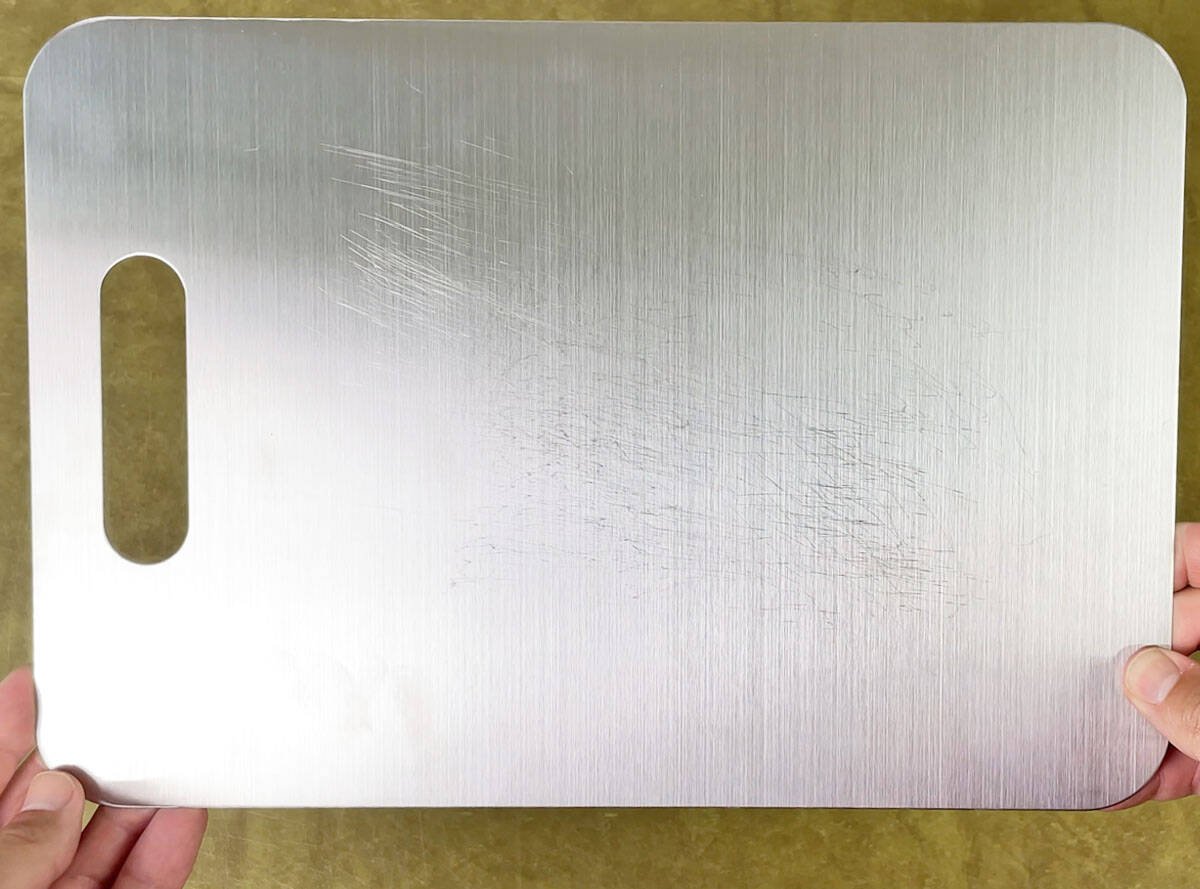
Knife Dulling: In my tests, titanium and stainless steel dulled knives faster than any other material. Titanium was the single worst performer.
Noise: Both boards were the loudest surfaces I tested, with a harsh clanking and screeching sound that made them uncomfortable to use.
Cleaning: On the plus side, they resisted stains, odors, and moisture better than wood or plastic.
Design: Their thin, lightweight design makes them easy to move and store, but also slippery, unstable, and sharp around the edges.
Overall: While they look sleek and modern, the drawbacks outweigh the benefits. Most home cooks are better off with a quality wood board. The winners from my testing are Teakhaus and Boos.
Use the links below to navigate the review:
- Knife Dulling
- Noise and Cutting Feel
- Stains and Cleaning
- Design and Thickness
- Durability
- Bottom Line: Are Titanium and Stainless Steel Cutting Boards Worth It?
Knife Dulling
The number one issue people argue about with titanium and stainless steel cutting boards is whether they dull knives quickly. Some people claim they don’t cause much damage, while others say they’re the worst surfaces you can cut on. To find out the truth, I sharpened the same knives until their edges measured nearly identical on a BESS-certified sharpness tester.
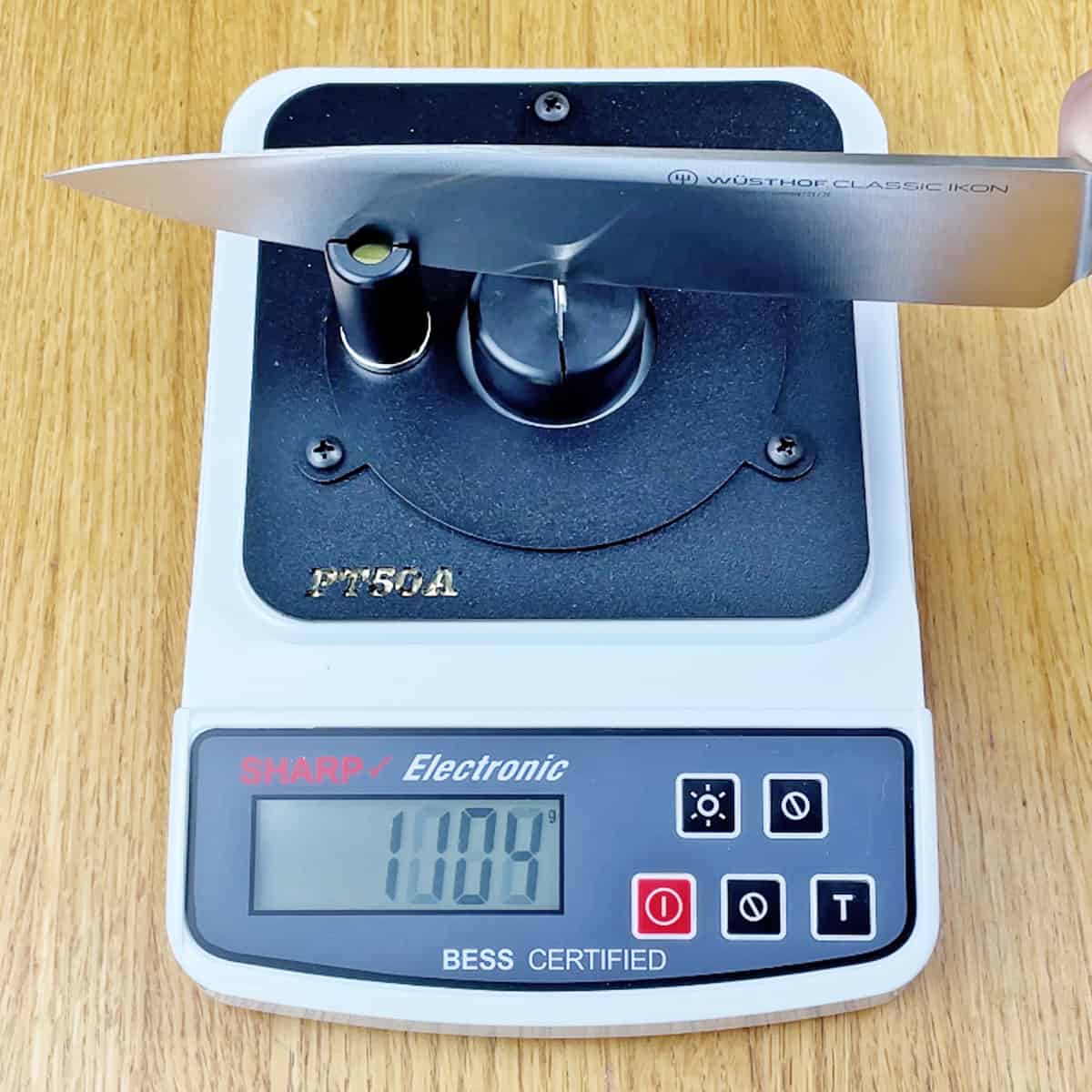
The tester works by measuring how many grams of pressure it takes for the knife edge to cut through a thin wire. The lower the number, the sharper the edge. By getting each knife to start at a similar low number, I could make fair comparisons across different boards.
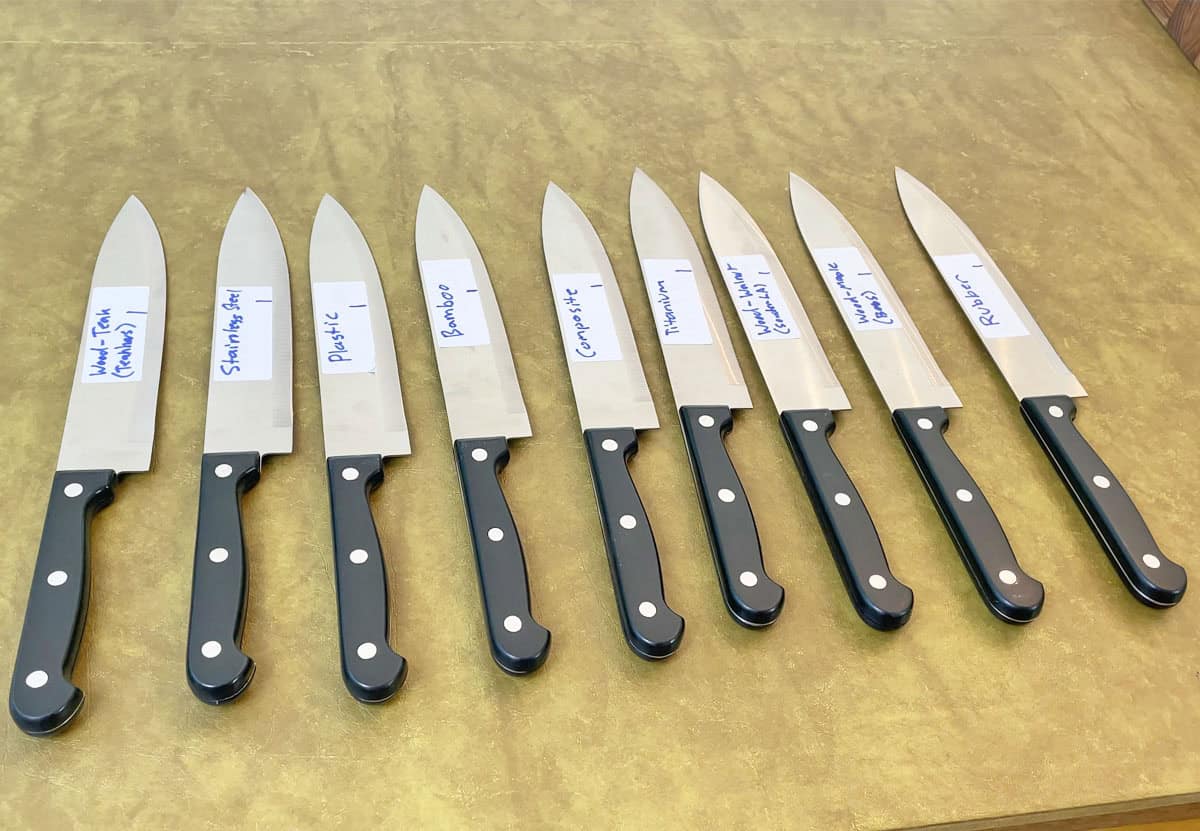
For each test, I dulled the knives with 300 rocking cuts and 300 straight chops, applying consistent force with a weighted magnet, and then measured the results again.
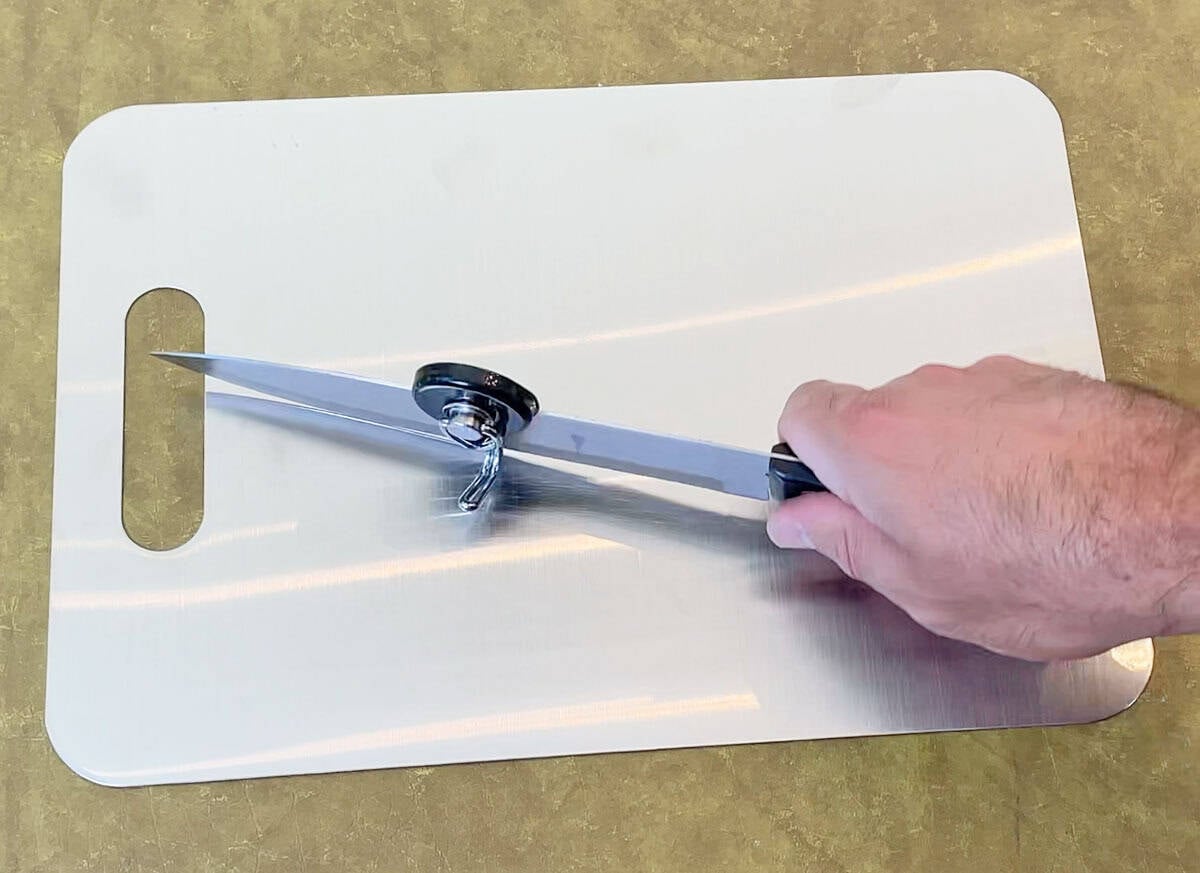
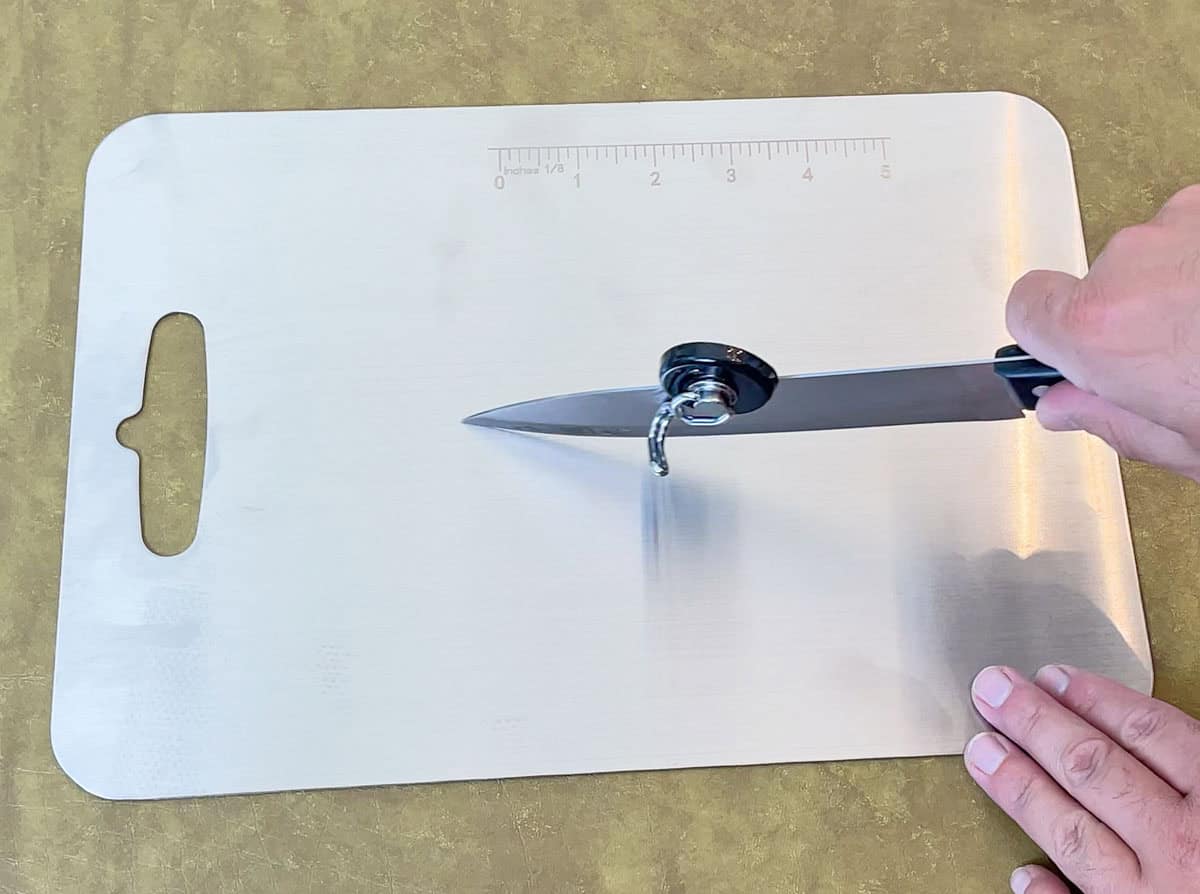
Here are the results for titanium and stainless steel compared to other popular cutting board materials:
| Board / Material | Starting Sharpness (BESS) | After Test | Difference (Sharpness Loss) |
|---|---|---|---|
| Titanium | 345 | 789, 757, 671 (avg 739) | 444 |
| Stainless steel | 269 | 453 | 184 |
| Composite (Richlite) | 237 | 354 | 117 |
| Bamboo | 292 | 347 | 55 |
| Plastic (polypropylene) | 181 | 246 | 65 |
| Teak (edge grain) | 264 | 306 | 42 |
| Maple (edge grain) | 252 | 293 | 41 |
| Teak (end grain) | 318 | 345 | 27 |
| Walnut (end grain) | 238 | 253 | 15 |
| Rubber (Hasegawa) | 297 | 307 | 10 |
Titanium was by far the worst, dulling knives an average of 444 points across three tests.
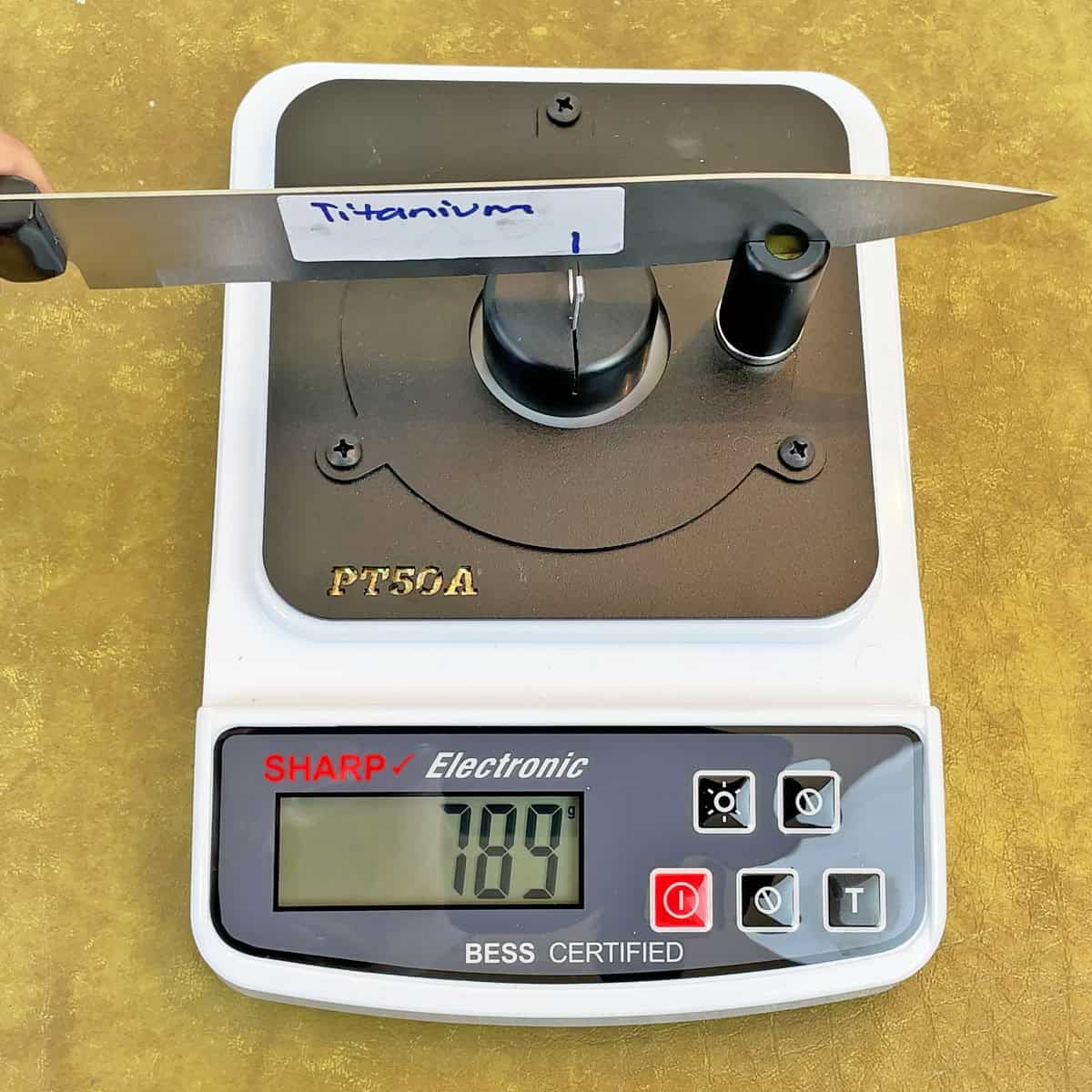
Stainless steel performed better but still ranked second to last, with a 184-point loss. Both metals were dramatically worse than plastic, wood, or rubber, which were all much gentler on knife edges.
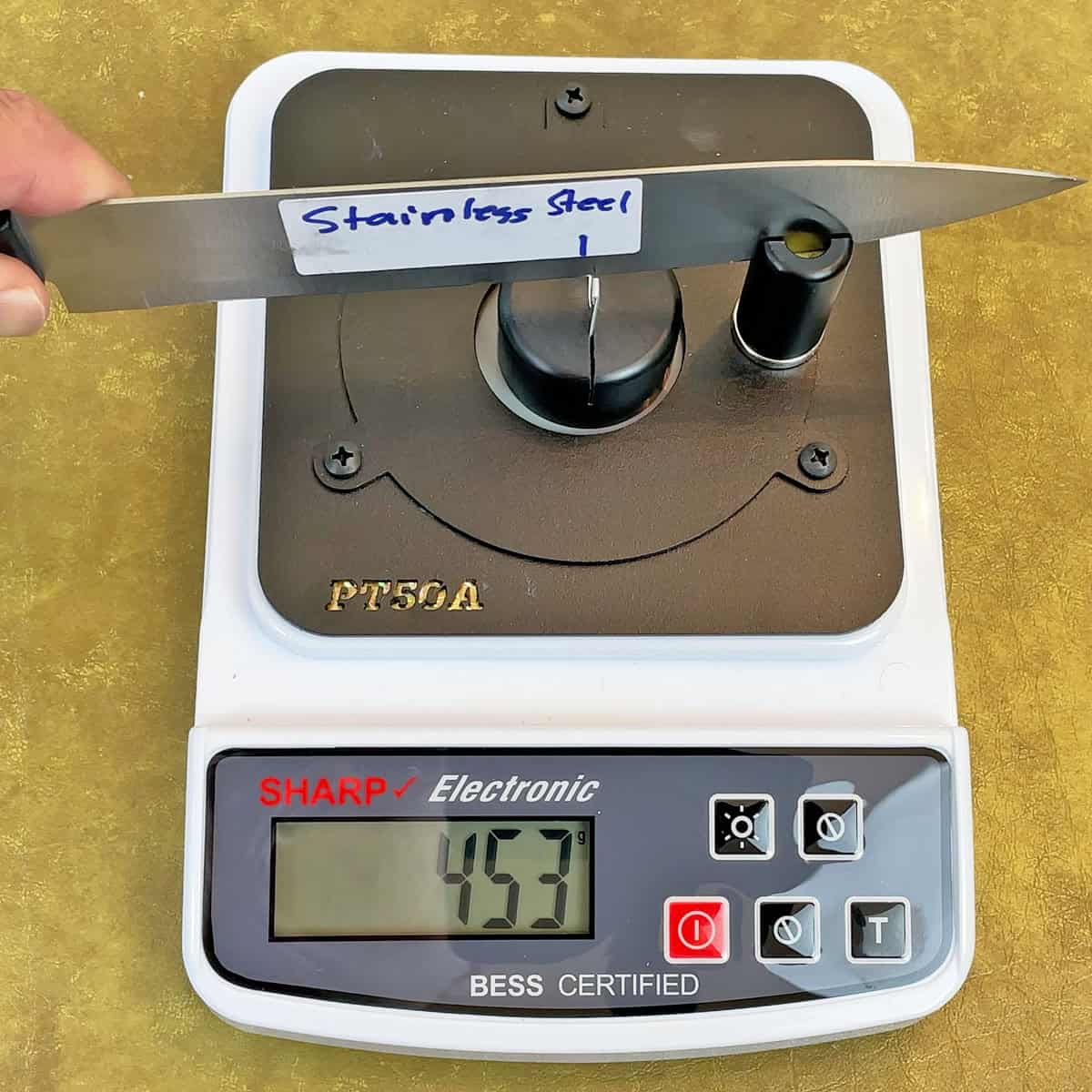
To make sure the titanium results weren’t a fluke, I set up a second test using two brand-new Miyabi chef’s knives.
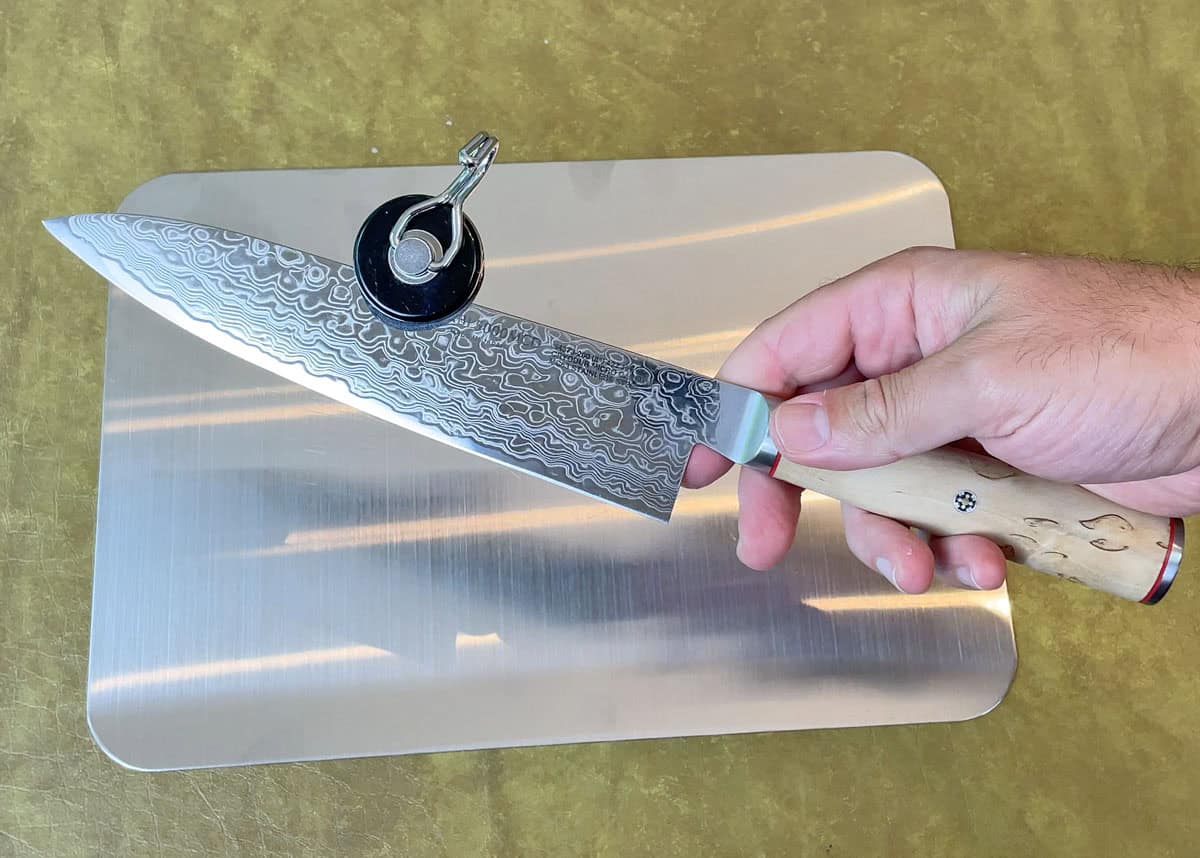
I chose these because they’re expensive, high-end knives made with SG2 micro-carbide powder steel and a Rockwell hardness of 63. They’re known for holding an edge much longer than typical kitchen knives, which usually use softer steel.
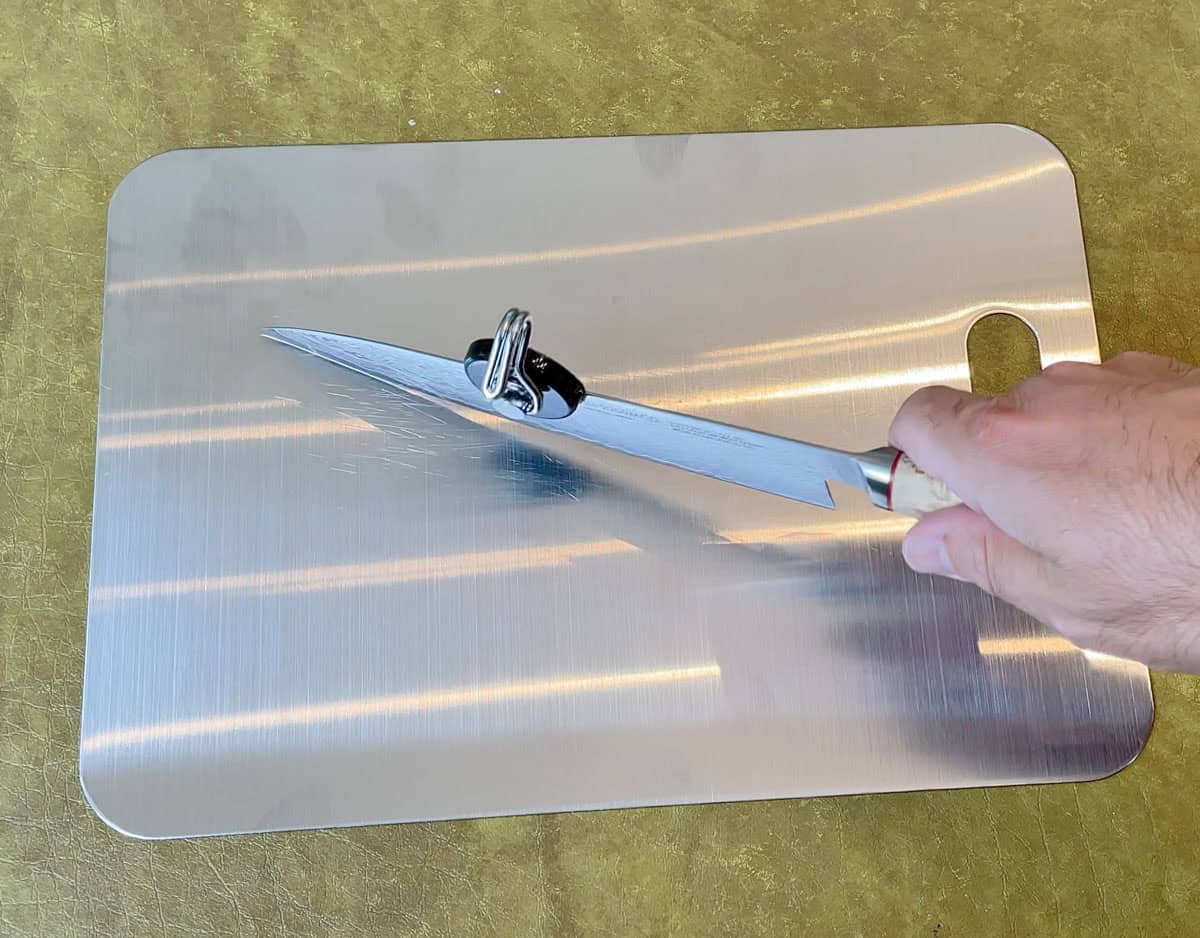
By using two knives made from the exact same steel, I could directly compare how titanium versus end grain walnut affected the edge. One knife dulled on the titanium board, dropping from 205 to 433. The other dulled on the walnut board, dropping only from 131 to 168. Same steel, same hardness, same test, completely different results.
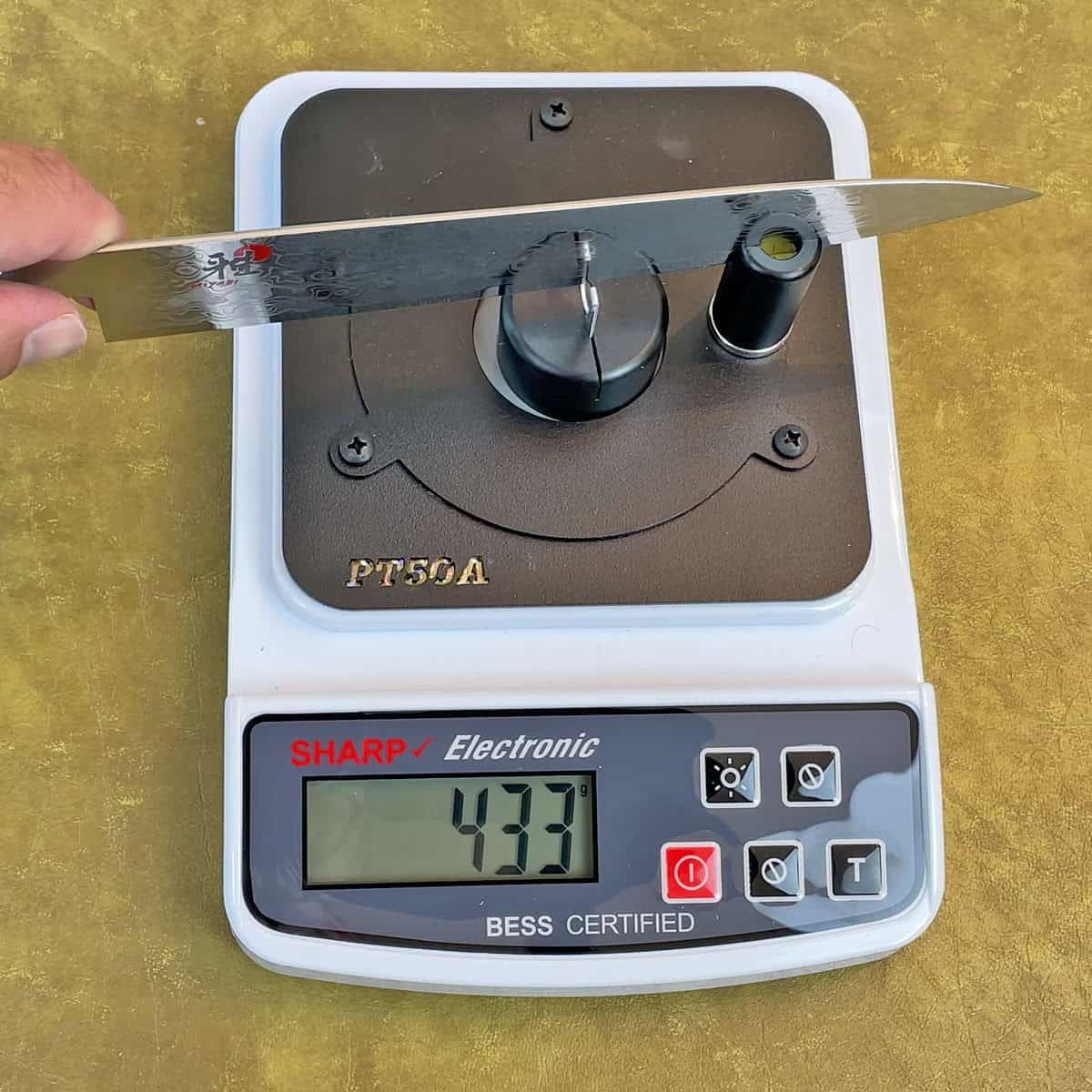
The takeaway is clear: both titanium and stainless steel are brutal on knives, and titanium is the single worst performer out of every cutting board material I tested.
Noise and Cutting Feel
Noise was the second-biggest drawback of titanium and stainless steel boards. To measure it, I recorded the sound level of 20 chopping motions and 20 rocking motions on each board and compared the averages.
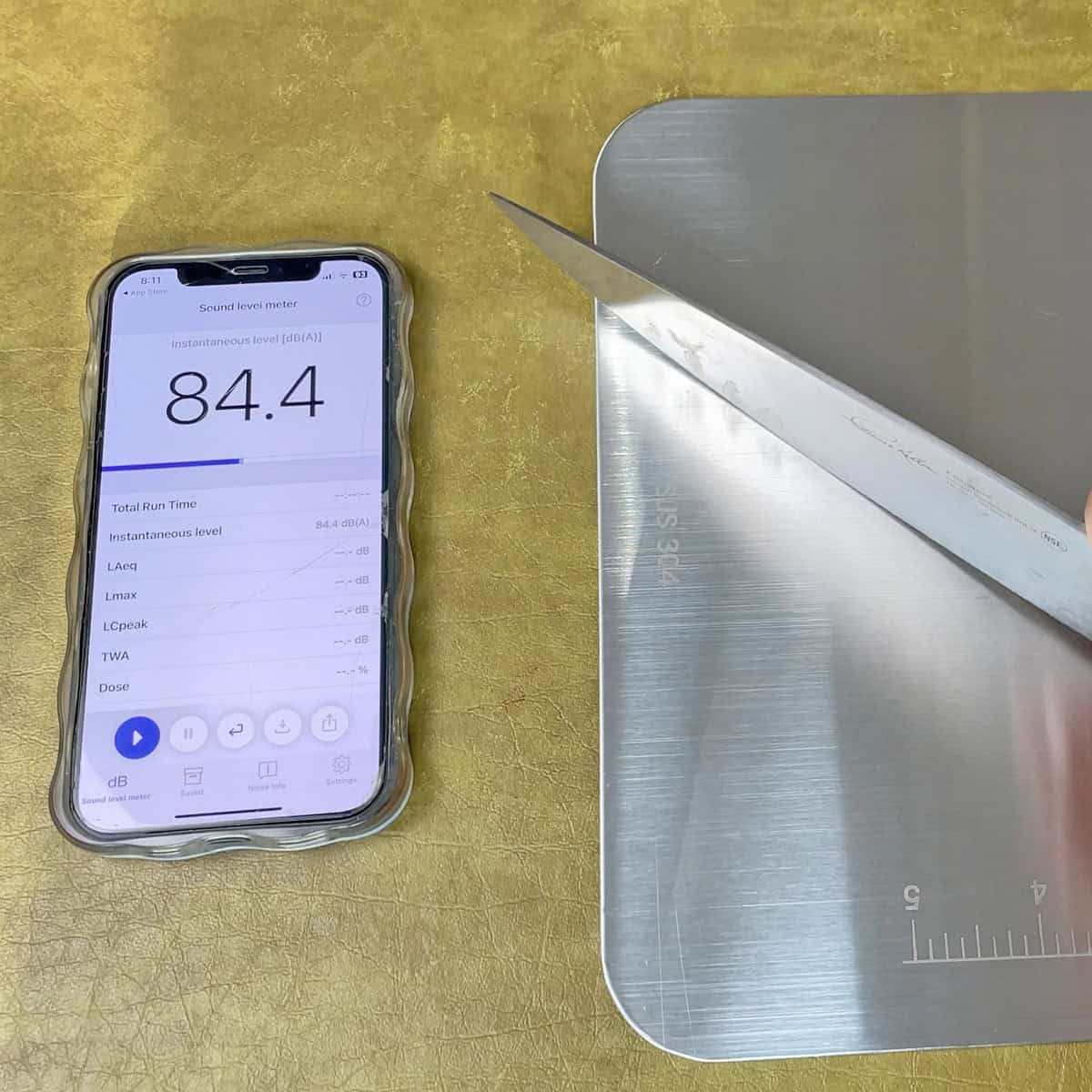
Here are the results:
| Board | Chopping (dBA) | Rocking (dBA) |
|---|---|---|
| Stainless steel | 82.5 | 65.0 |
| Titanium | 80.6 | 64.7 |
| Bamboo | 75.5 | 61.5 |
| Composite (Richlite) | 74.4 | 62.2 |
| Dalstrong Teak (end grain) | 71.5 | 53.5 |
| Walnut (end grain) | 71.0 | 54.5 |
| Plastic (polypropylene) | 72.6 | 53.8 |
| Maple (edge grain) | 67.6 | 53.2 |
| Teak (edge grain) | 65.3 | 55.4 |
| Rubber (Hasegawa) | 59.4 | 48.3 |
Both titanium and stainless steel boards were the loudest by a wide margin. Every chop produced a harsh metallic clank, and sliding the knife across the surface created a screeching sound that felt like nails on a chalkboard. Rubber and wood boards were significantly quieter and more comfortable to use.
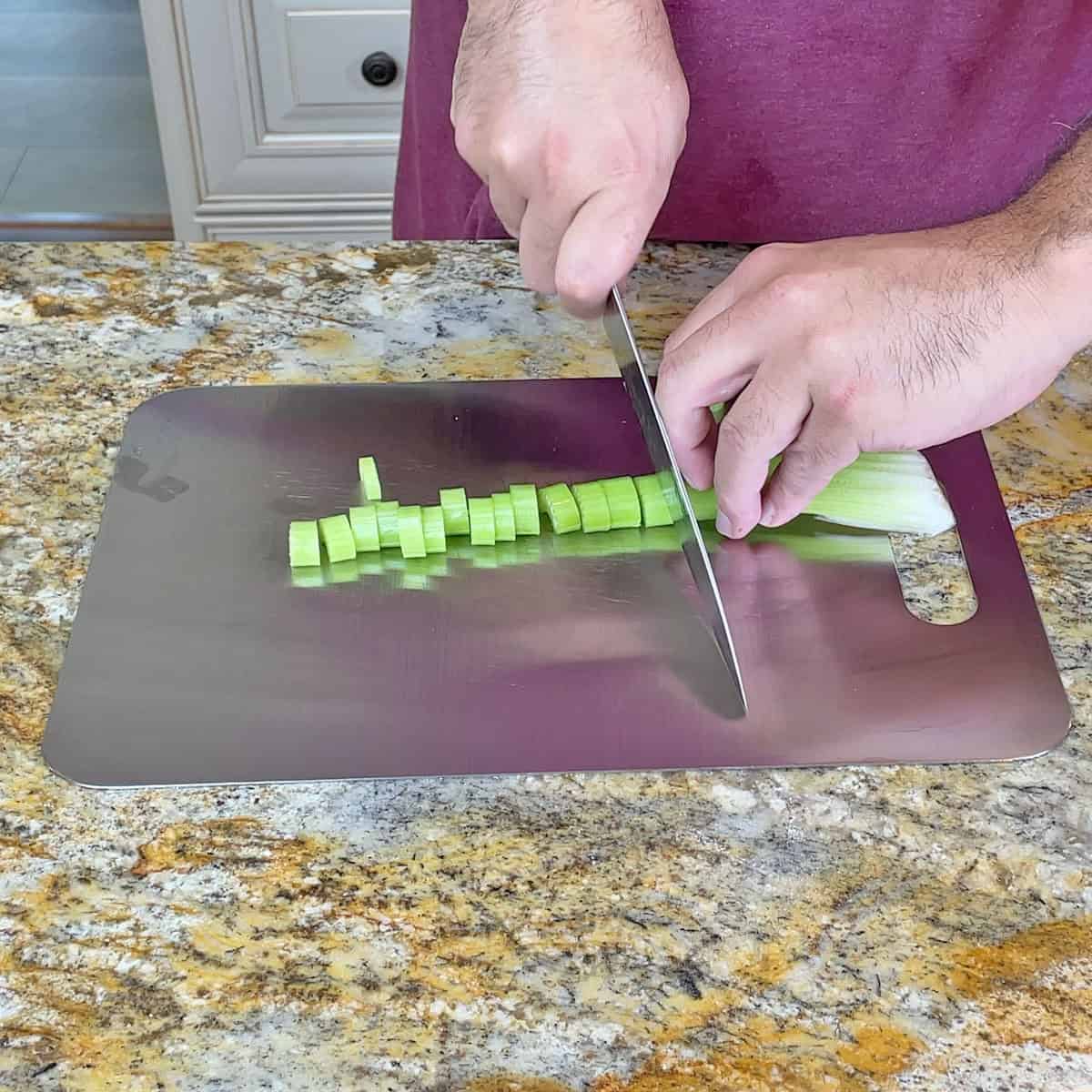
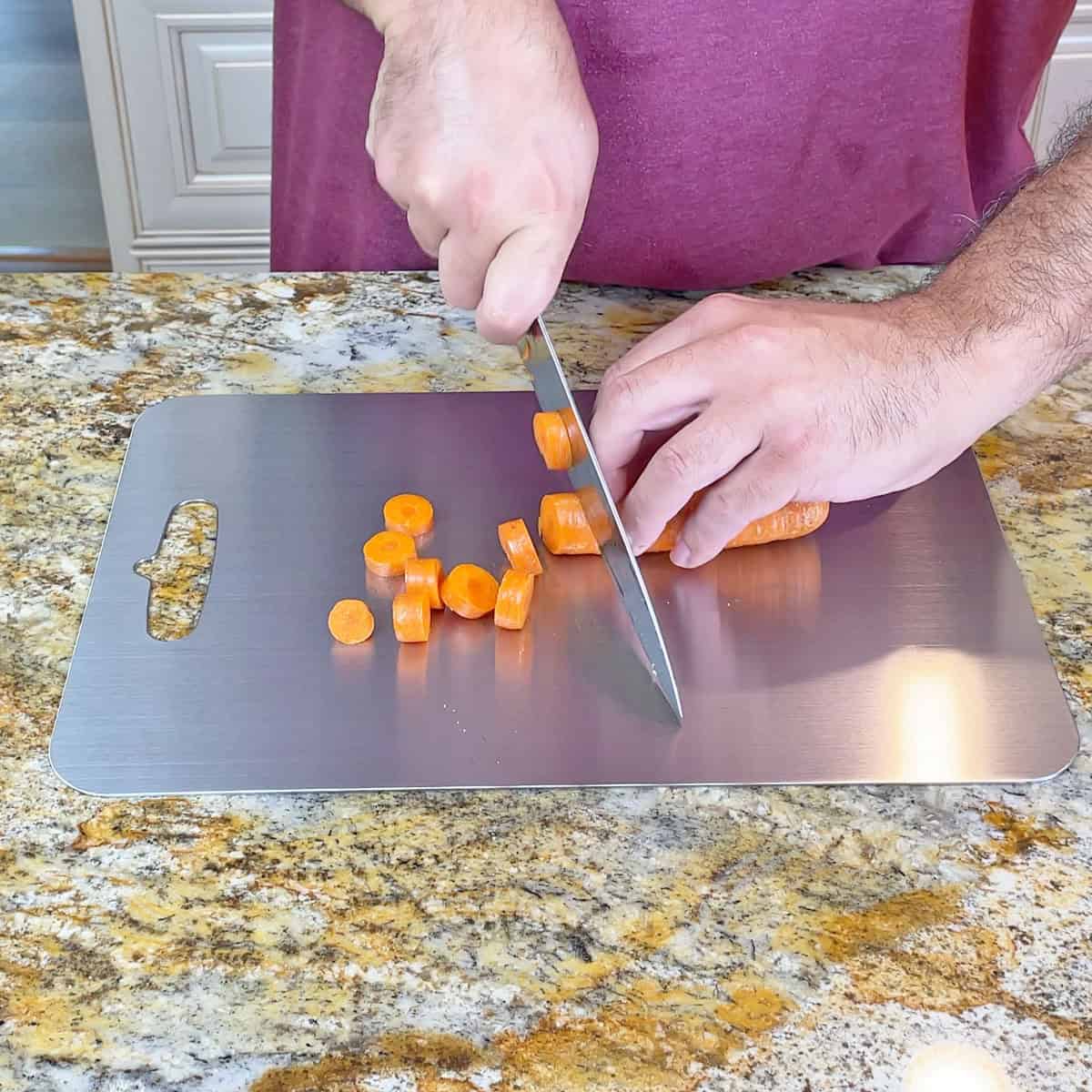
The cutting feel was equally problematic and unpleasant. Instead of the soft give you get from wood or the neutral feel of plastic, the blade struck metal with a jarring hardness. It doesn’t feet smooth the way wood does.
Stains and Cleaning
One area where titanium and stainless steel excelled was stain and odor resistance. To test this, I chopped and mashed garlic, beets, and chipotle peppers onto each board, let them sit for 20 minutes, then washed the boards with hot water and soap. I checked for visible stains and lingering odors after washing.
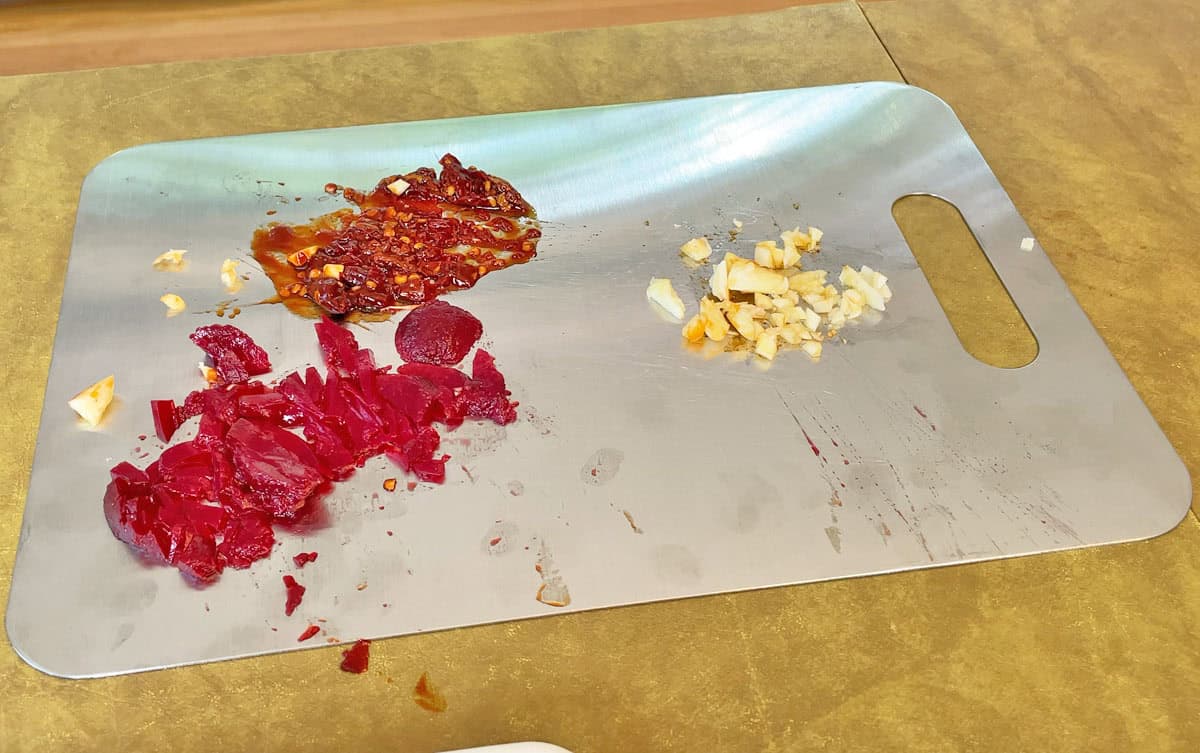
Here are the results:
| Board | Stains | Odors |
|---|---|---|
| Titanium | None | None |
| Stainless steel | None | None |
| Rubber (Hasegawa) | None | Slight garlic |
| Walnut (end grain) | None | Garlic |
| Teak (end grain) | None | Garlic |
| Maple (edge grain) | Beets & chilis | Garlic |
| Teak (edge grain) | None | Garlic |
| Bamboo | Slight outline | Garlic |
| Plastic (polypropylene) | None | None |
| Composite (Richlite) | None | None |
Metal boards came out on top in this test, along with plastic and composite. Neither titanium nor stainless steel absorbed odors, stained, or held onto residue. They also didn’t require much scrubbing to clean them completely.
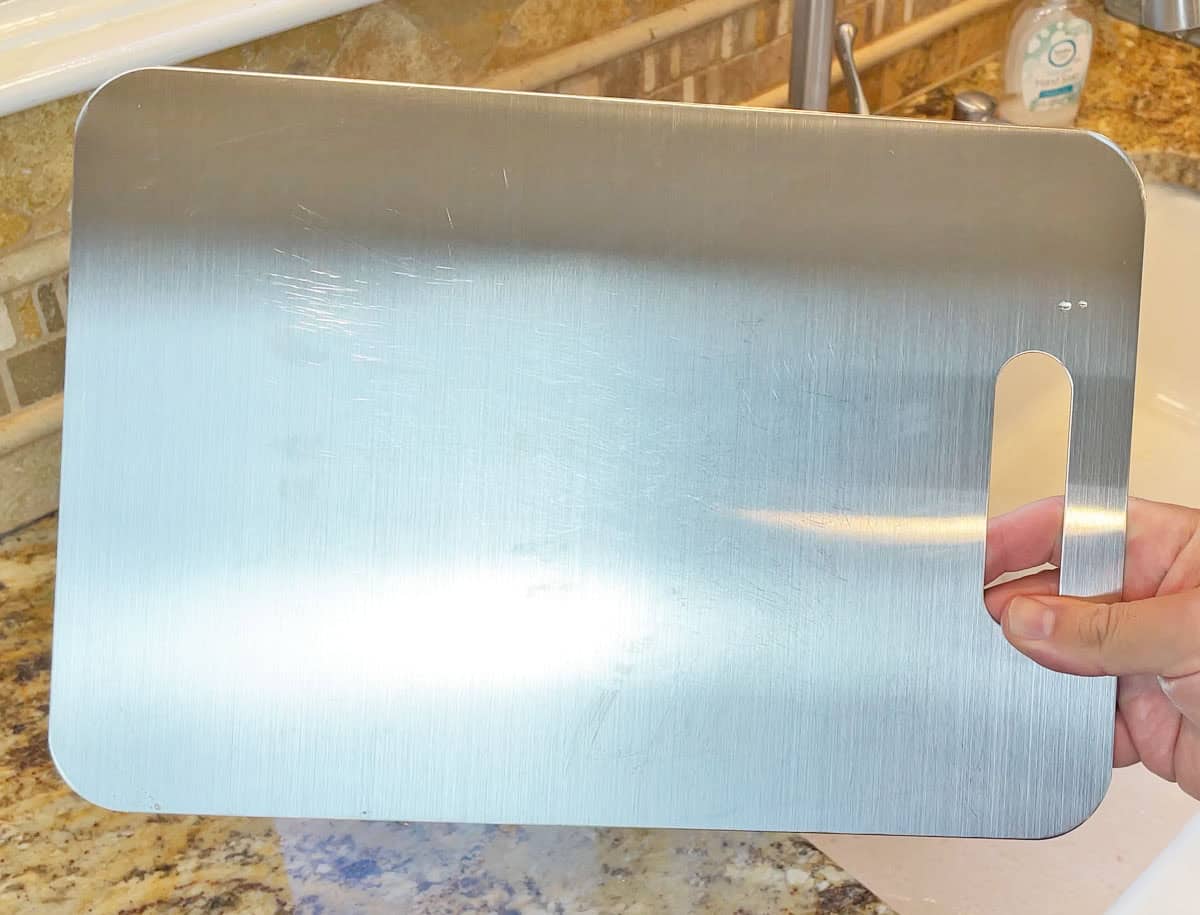
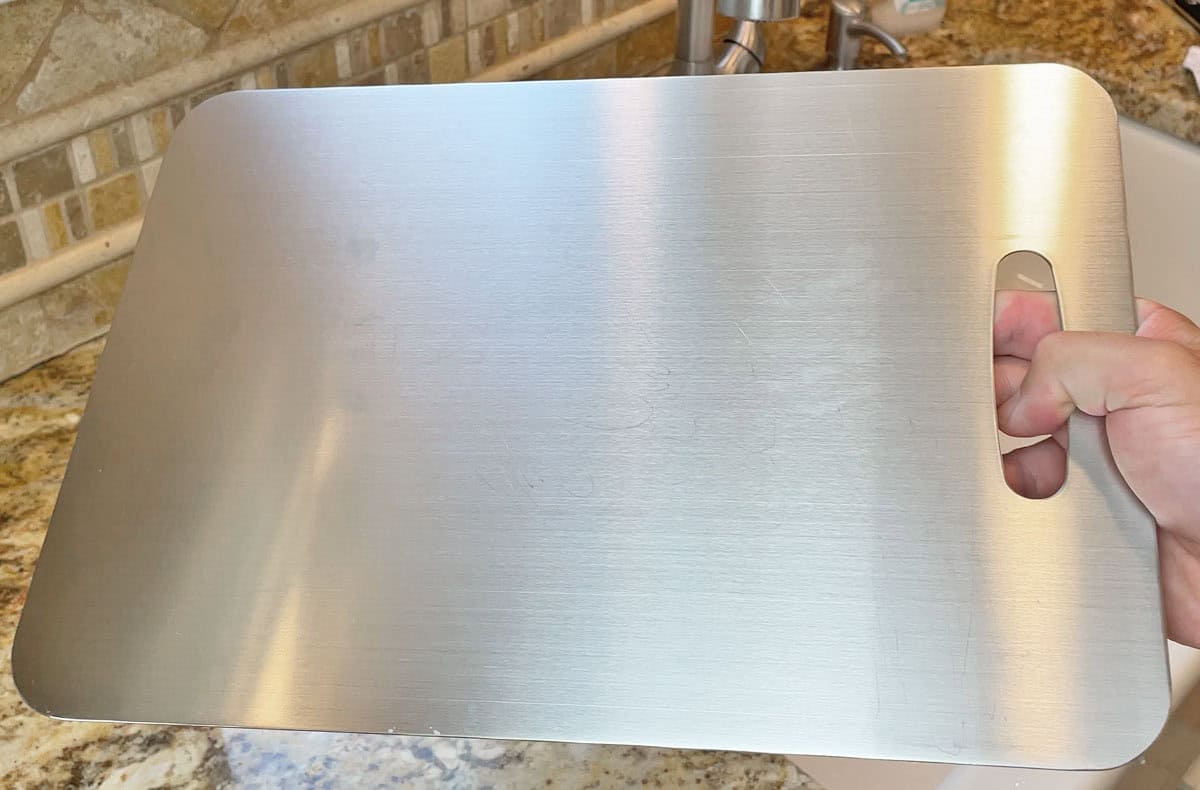
Both are dishwasher safe and nonporous, which makes them easy to sanitize and maintain. In this one area, titanium and stainless steel outperformed almost every other material I tested.
Design and Thickness
Most titanium and stainless steel cutting boards are ultra-thin and lightweight. They’re easy to pick up, move around, and store. However, their thinness also creates some problems.
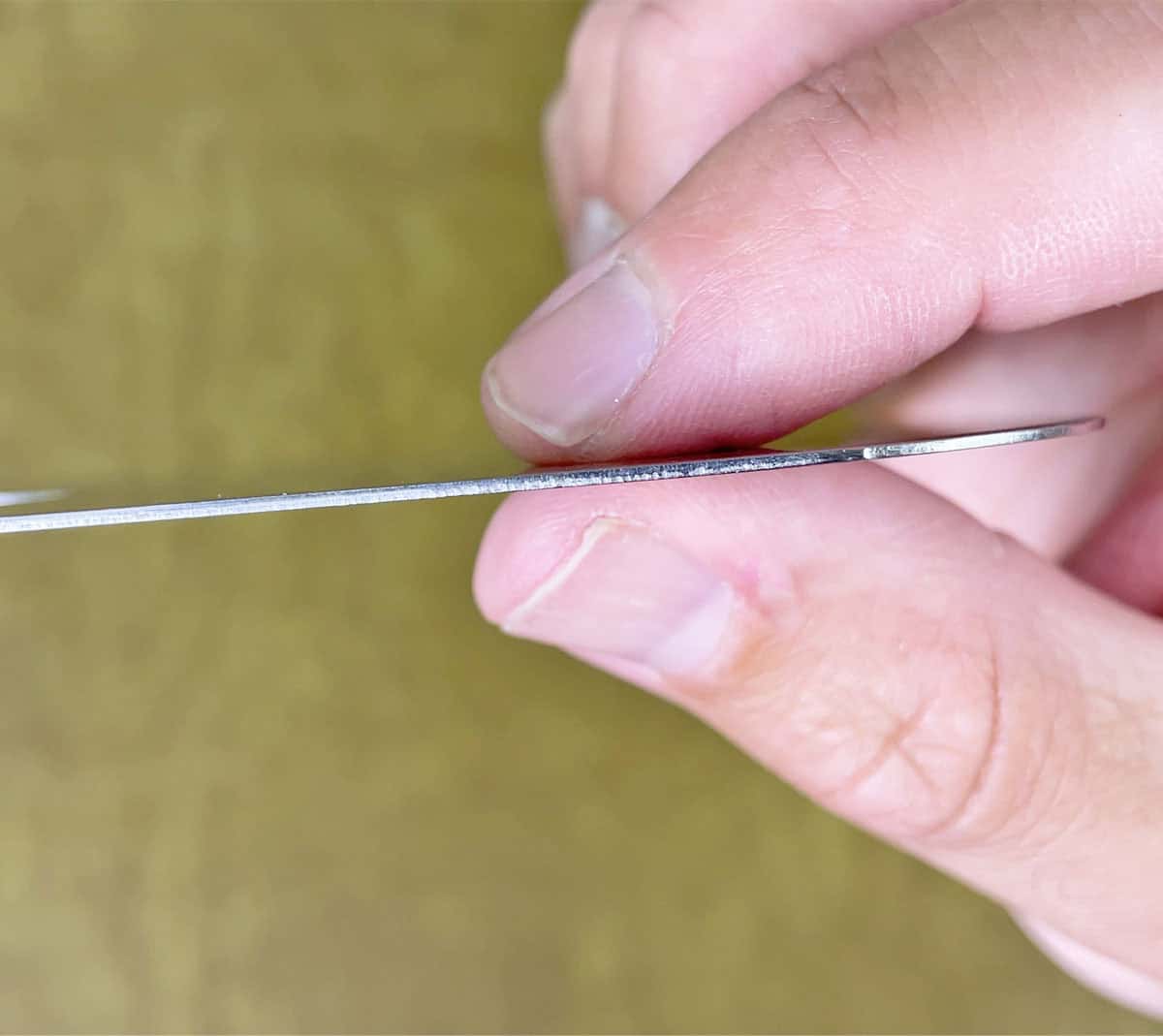
Because the boards are so slim, food tends to slide off the edges more easily compared to a thicker board. Their lightweight design also makes them prone to slipping on countertops, especially since most metal boards don’t come with rubber feet or textured grips. Unless you place a towel or non-slip mat underneath, they shift during use, which can be both frustrating and unsafe.
On the titanium and stainless steel boards I tested, the thin edges felt almost sharp in my hand, making them awkward to pick up and handle.
And because they sit nearly flush with the counter, it’s easy to lose track of where the board ends and the countertop begins. More than once, I found myself sliding the knife right to the edge without realizing it, almost slipping off the board.
Durability
One thing I’ll give titanium and stainless steel boards credit for is how tough they are. They don’t warp, crack, or scar up like wood, bamboo, or plastic. After weeks of chopping, they still looked almost brand new.
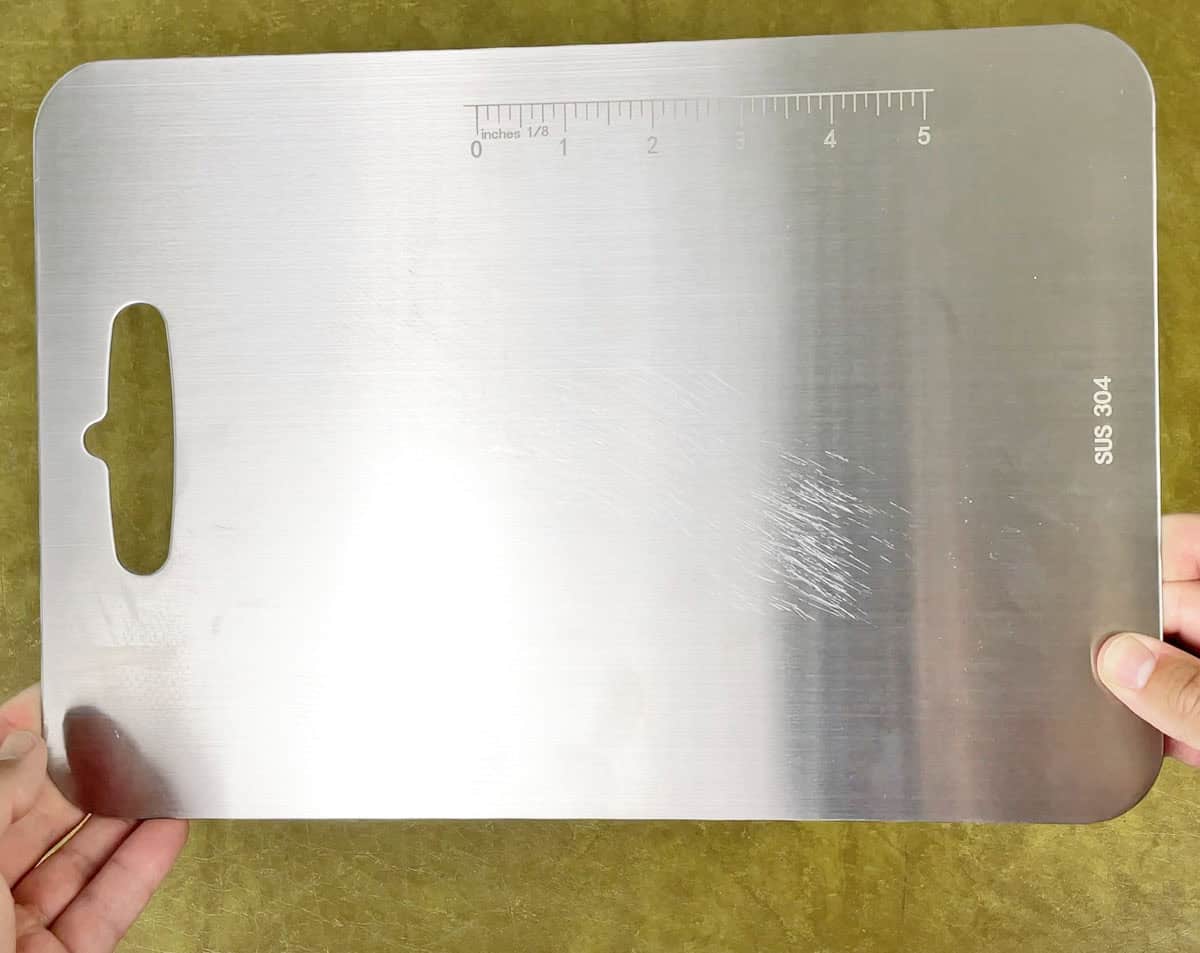
With plastic boards, those deep grooves can trap bacteria. With wood and bamboo, the glued seams sometimes split or the board warps if it absorbs too much water. A solid piece of metal doesn’t have any of those problems.

The tradeoff is that the durability comes at your knife’s expense. Instead of the board wearing down, your blade does. Every cut takes more of a toll, and in my tests these boards dulled knives faster than anything else. That means sharpening more often, which shortens the overall life of your knives.
Bottom Line: Should You Buy a Titanium or Stainless Steel Cutting Board?
Titanium and stainless steel cutting boards look sleek, they don’t stain, they don’t absorb odors, they’re dishwasher safe, and unlike wood or plastic, they don’t crack, warp, or scar up over time.
The problem is everything else. In my testing, they dulled knives faster than any other material, they were the loudest and harshest boards to cut on, and their thin, flat design made them slippery and awkward to use.
For most home cooks, the tradeoffs just aren’t worth it. A big wood board is still the best option if you want something that feels good to cut on and is gentle on your knives. The winners from my testing are Teakhaus and Boos. Plastic works fine as a backup for messy jobs, and rubber boards are great if you want the quietest, most knife-friendly surface.
So while titanium and stainless boards might be trendy, they failed most of my tests.
Related Topics
- Wood vs. Plastic Cutting Boards: Which Material Is Better? (Test Results)
- Best Cutting Board? I Tested Epicurean, OXO, Boos, Teakhaus & More
- I Tested 27 Chef’s Knives & These Are the Best for Every Budget
- The Definitive Guide to the Best Kitchen Knife Brands
- The 8 Most Expensive Chef’s Knives (That Are Actually Worth It)
- Best Kitchen Knives NOT Made in China: The Definitive Guide
- Best Kitchen Knives Made in the USA: Top Brands Reviewed
- 21 Different Types of Kitchen Knives Explained (With Comparison Chart)
- Best German Kitchen Knives: Top 5 Brands Reviewed
- Best Grill Brush? I Tested Grill Rescue, BBQ Daddy, Weber & More
- Best Instant-Read Thermometer? ThermoWorks, ThermoPro, Lavatools, or Typhur?

