

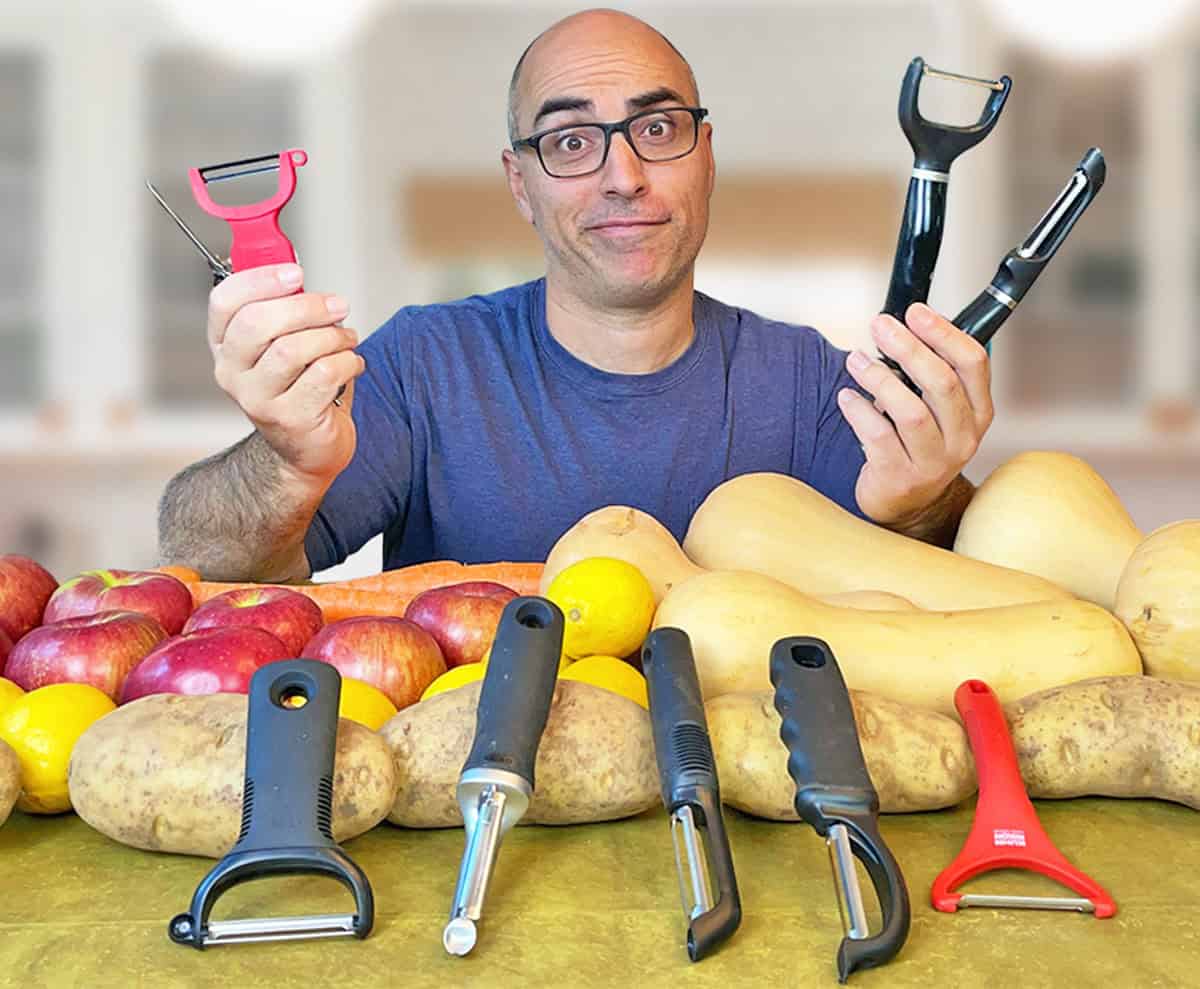
Are all vegetable peelers the same, or are some actually better than others? What about Y-shaped vs straight? And which type of edge actually performs better, straight or serrated?
To answer these questions and find out which peeler is truly the best, I tested the top nine options on the market, including the OXO, KitchenAid, Kuhn Rikon, Spring Chef, and Linden Sweden.
In this review, I go through the results of my tests and show you which peelers are worth buying and which you should skip. I’ll also give you a handy chart so you can easily compare the options side by side.
Key Takeaways
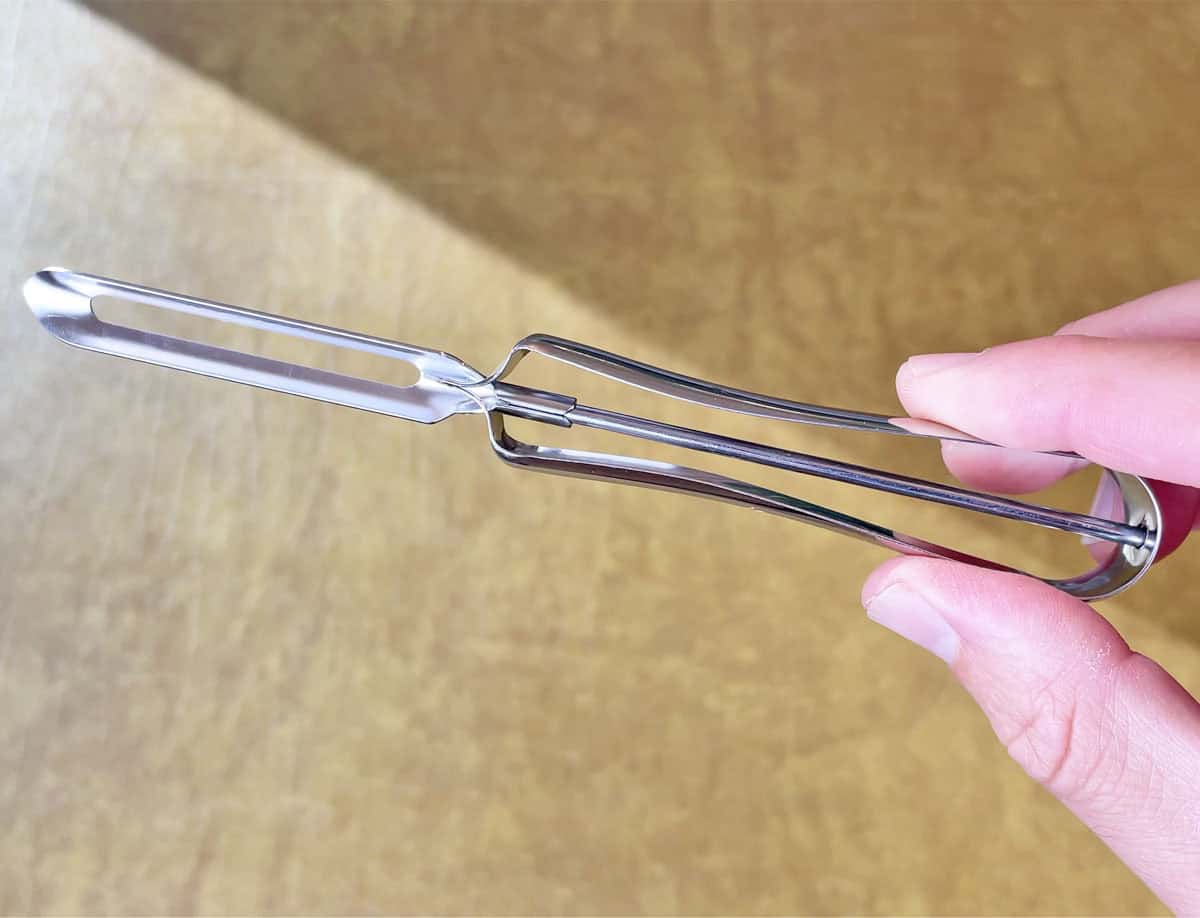
The best overall peeler is the Linden Sweden Original Jonas. It’s lightweight, simple, and sharper than anything else I tested. It peeled every type of produce smoothly, from carrots to butternut squash, and produced the cleanest, most consistent results. The thin stainless steel handle isn’t the most comfortable for long sessions, but no other peeler matched its speed and precision.
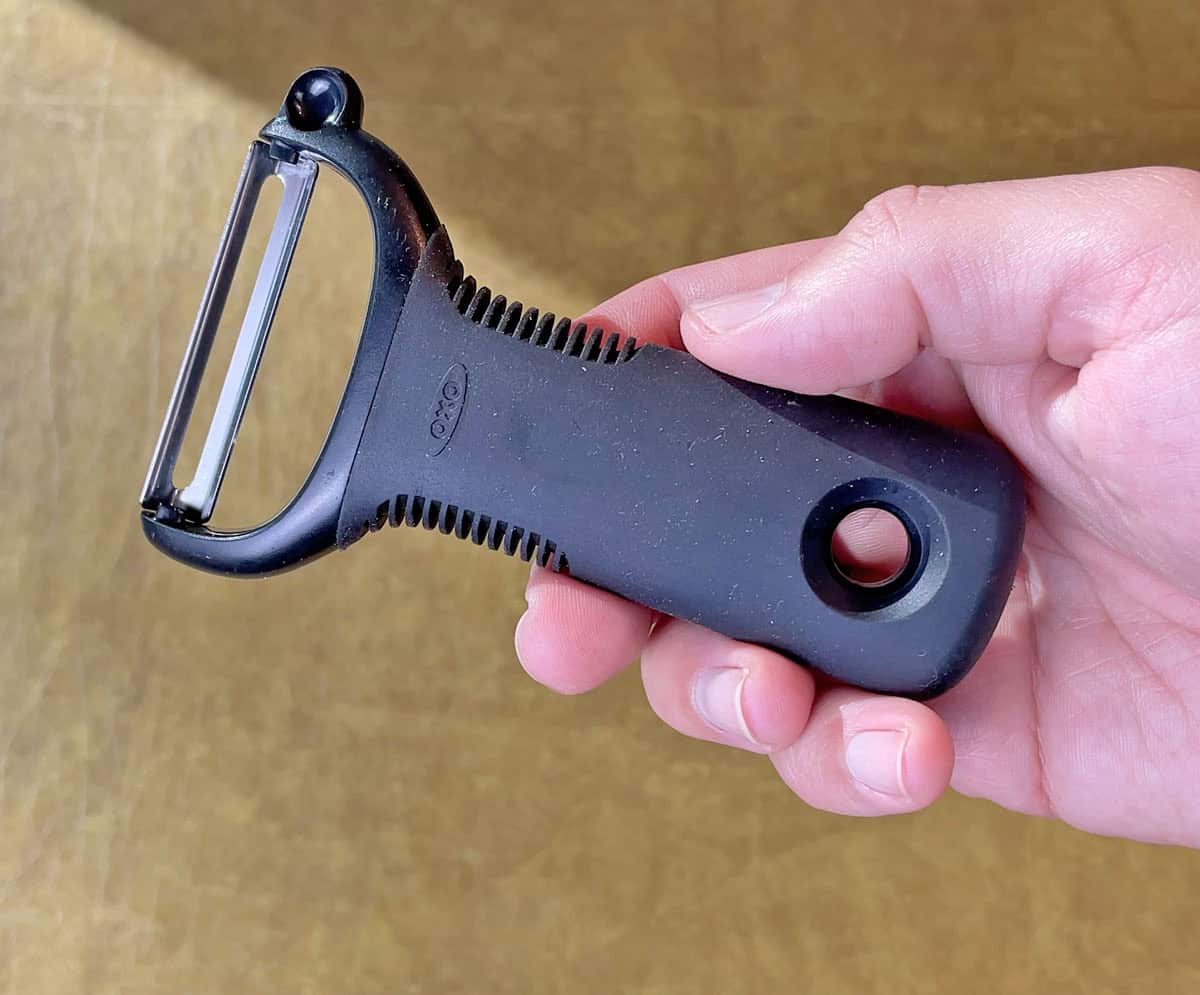
If you prefer a Y-peeler, the OXO Good Grips Y-Peeler is the best option. It’s sharp, comfortable, and can peel in both directions, making it efficient and easy to control. The Kuhn Rikon Serrated Piranha Y-Peeler is great for tomatoes and peaches, while the OXO Pro Swivel Peeler stands out for build quality but feels heavy after a while.
The only ones I don’t recommend are the KitchenAid Classic Euro, KitchenAid Classic Y, and Spring Chef Swivel Peeler. The KitchenAid handles are too slippery, and the Spring Chef’s dull blade and flawed frame make it frustrating to use. If you want one dependable, comfortable, and sharp peeler, go with the Linden Sweden Original Jonas; it’s the clear winner.
Compare prices of all the peelers I tested at the links below:
- Linden Sweden Original Jonas Peeler (Amazon)
- OXO Good Grips Y-Peeler (Amazon)
- OXO Good Grips Pro Swivel Peeler (Amazon)
- OXO Good Grips Serrated Peeler (Amazon)
- KitchenAid Classic Euro Peeler (Amazon)
- KitchenAid Classic Y-Peeler (Amazon)
- Kuhn Rikon Original Swiss Peeler (Amazon)
- Kuhn Rikon Serrated Piranha Y-Peeler (Amazon)
- Spring Chef Premium Swivel Peeler (Amazon)
Use the links below to navigate the review:
- Comparison Chart
- Test Methods
- OXO Pro Swivel
- OXO Serrated
- OXO Y-Peeler
- KitchenAid Classic Euro
- KitchenAid Classic Y-Peeler
- Kuhn Rikon Red Original Swiss
- Kuhn Rikon Serrated Piranha Y-Peeler
- Spring Chef Premium Swivel
- Linden Sweden Original Jonas
- Bottom Line: Which Vegetable Peeler Is the Best?
Comparison Chart
Swipe to view the entire chart on mobile.
| Peeler | OXO Pro Swivel | KitchenAid Euro | KitchenAid Y | Spring Chef | OXO Serrated | OXO Y-Peeler | Kuhn Rikon Y Peeler | Linden Sweden | Kuhn Rikon Original Swiss |
|---|---|---|---|---|---|---|---|---|---|
| Where to Buy | Amazon | Amazon | Amazon | Amazon | Amazon | Amazon | Amazon | Amazon | Amazon |
| Type | Straight | Straight | Y | Straight | Straight | Y | Y | Straight | Y |
| Blade | Straight edge | Serrated edge | Straight edge | Straight edge | Serrated edge | Straight edge | Serrated edge | Straight edge | Straight edge |
| Blade Material | Stainless Steel | Stainless Steel | Stainless Steel | Stainless Steel | Stainless Steel | Stainless Steel | Stainless Steel | Stainless Steel | Carbon Steel |
| Dishwasher Safe | Yes | Yes | Yes | Yes | Yes | Yes | Yes | Yes | No |
| Weight (g) | 120 | 96 | 94 | 76 | 70 | 56 | 42 | 22 | 13 |
| Total Length (in) | 7.25 | 8.75 | 7.25 | 7.5 | 7.25 | 4.75 | 6 | 6.75 | 4.25 |
| Blade Length (in) | 2.25 | 2.25 | 2.25 | 2.25 | 2.3 | 2.25 | 2.2 | 2.6 | 2 |
| Handle Length (in) | 4 | 4.8 | 4.8 | 4.25 | 4.25 | 3.5 | 3.75 | 3.8 | 2.8 |
| Blade Clearance (mm) | 3.3 | 4.4 | 2.5 | 3.9 | 4.7 | 3.2 | 3.9 | 4 | 3.3 |
| Top Reason to Buy | Comfortable, bidirectional use. | Works well on soft foods. | Smooth, consistent peels. | Decent all-around performance. | Strong grip, handles tough skins. | Sharp, smooth, secure grip. | Extremely sharp and fast. | Smoothest, cleanest peels. | Razor-sharp, very thin peels. |
| Top Reason to Not Buy | Heavy, strains wrist. | Skips, digs too deep, rolls off counter. | Handle too long. | Dull blade, flawed design, weak tip. | Cuts too deep, tears fruit. | Takes too much pith. | Removes too much pith. | Handle digs into hand. | Flimsy handle, can rust. |
Test Methods
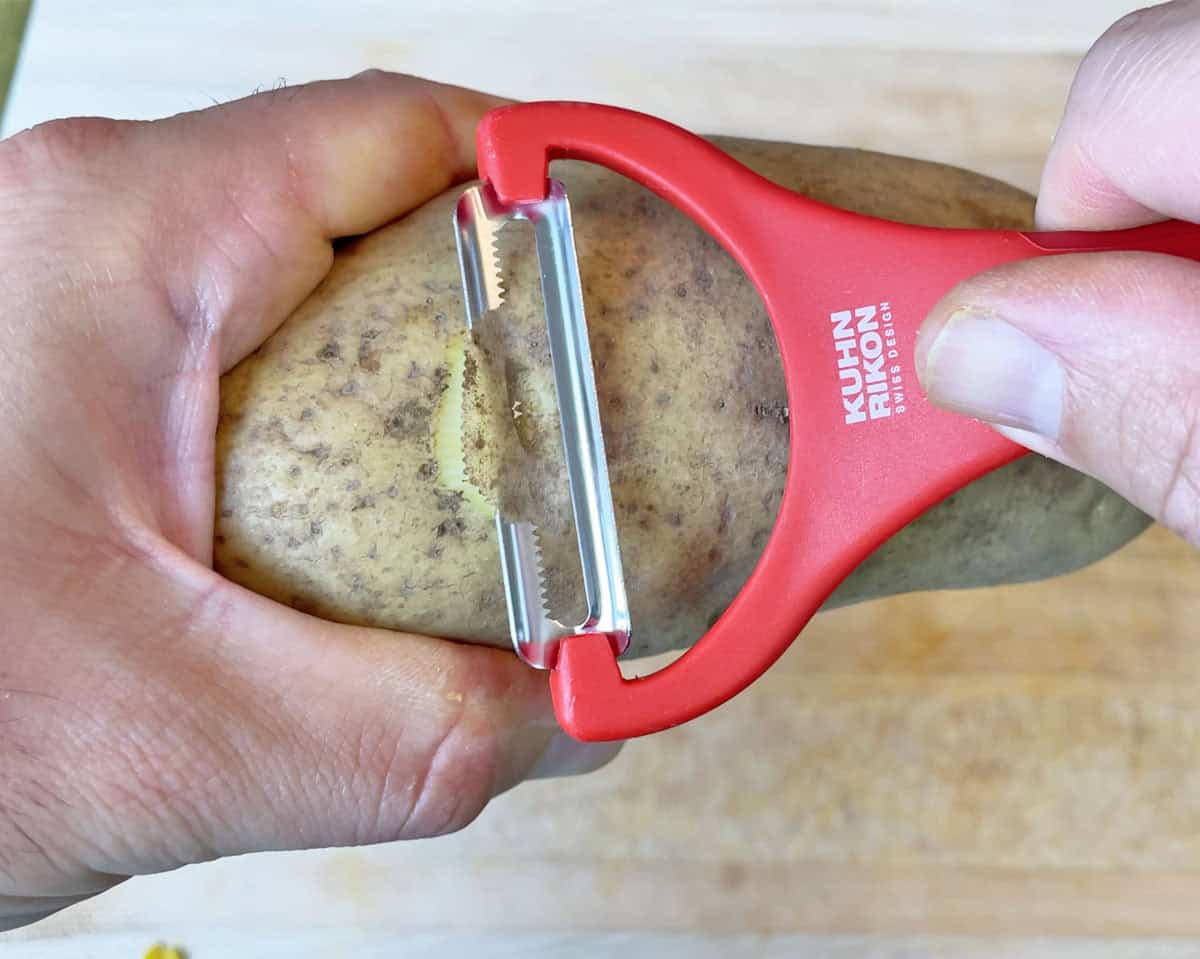
To evaluate each peeler’s real-world performance, I used the same set of foods: potatoes, apples, carrots, lemons, and butternut squash. These ingredients vary in texture and density, which helps reveal how each blade handles everything from soft fruit skins to tough, waxy squash.
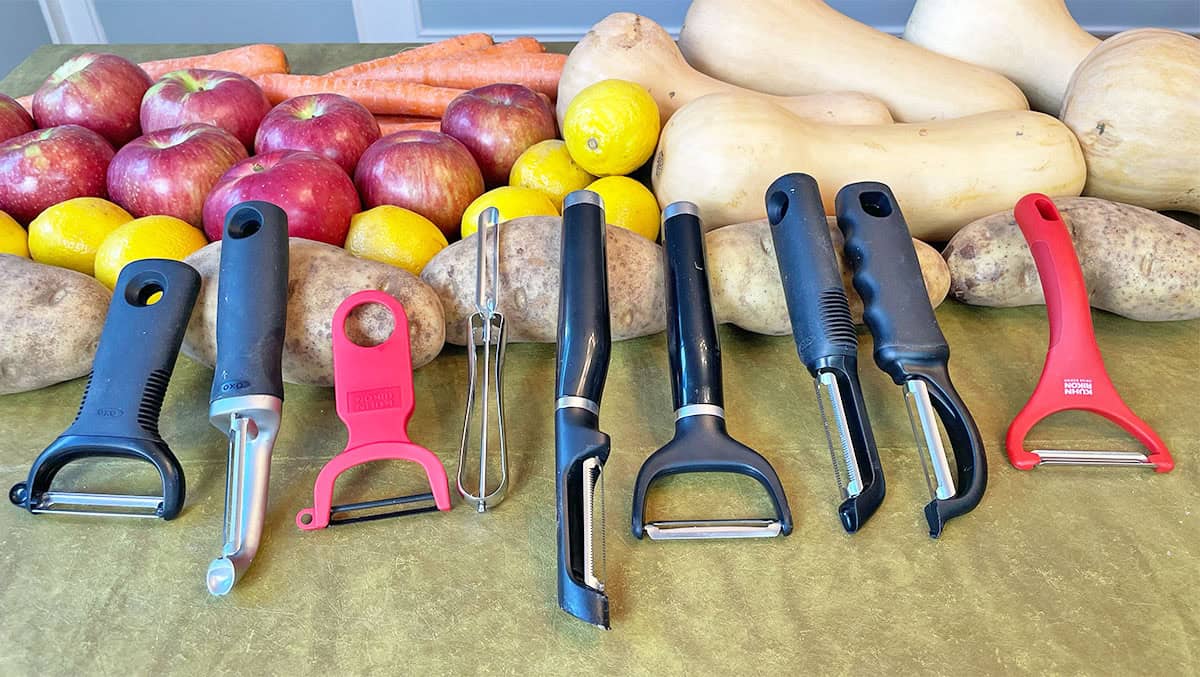
During testing, I recorded how easily each blade “bit” into the surface, how smooth and consistent the peeling strokes were, and how evenly thin the peels came off. I also noted when a blade skipped, clogged with residue, or dug too deep into the flesh – all signs of poor edge geometry or improper tension between the dual blades.
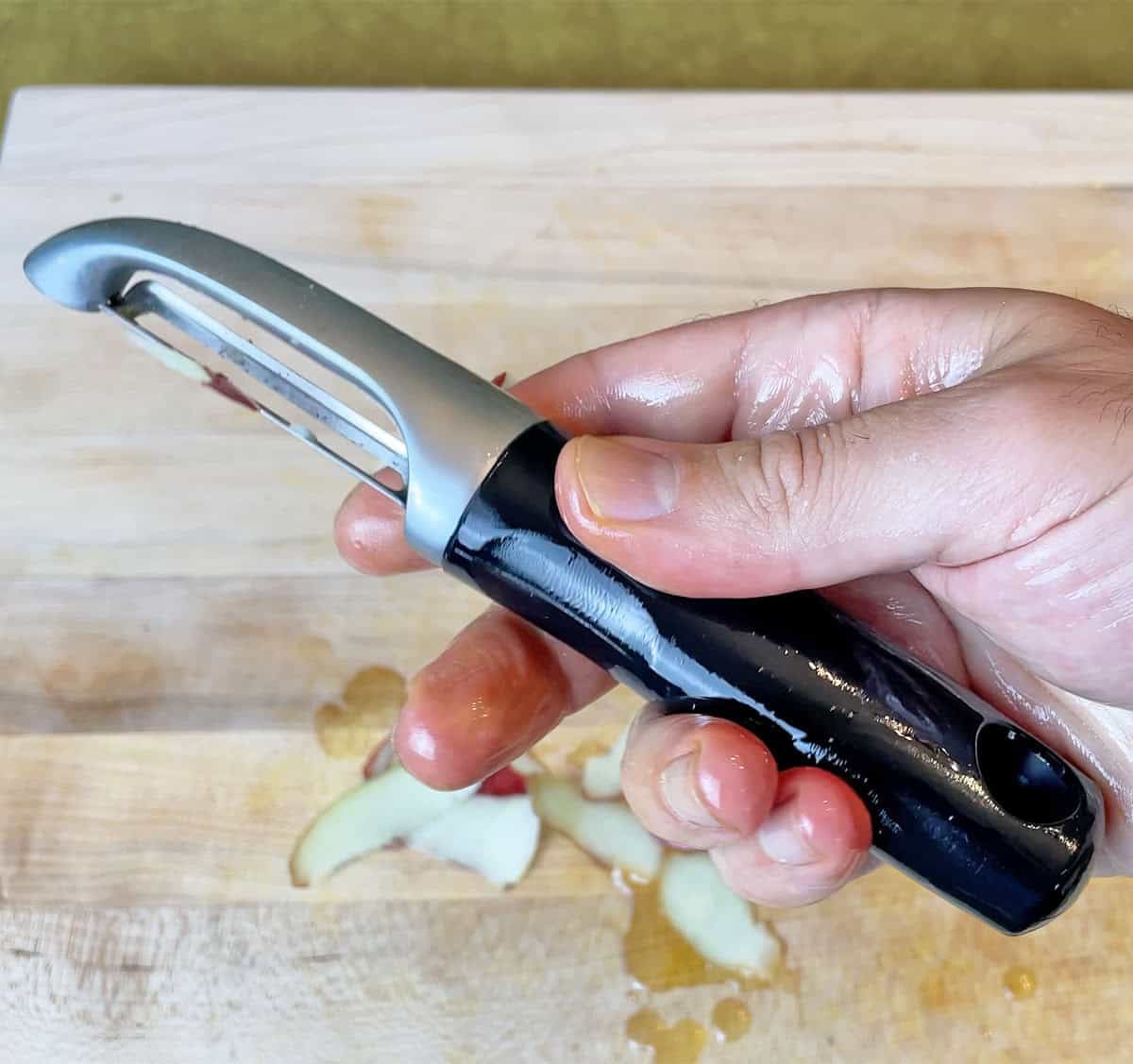
To assess grip security, I coated my hand in vegetable oil and peeled the same set of foods again. This revealed which handles maintained traction when slick and which became slippery.
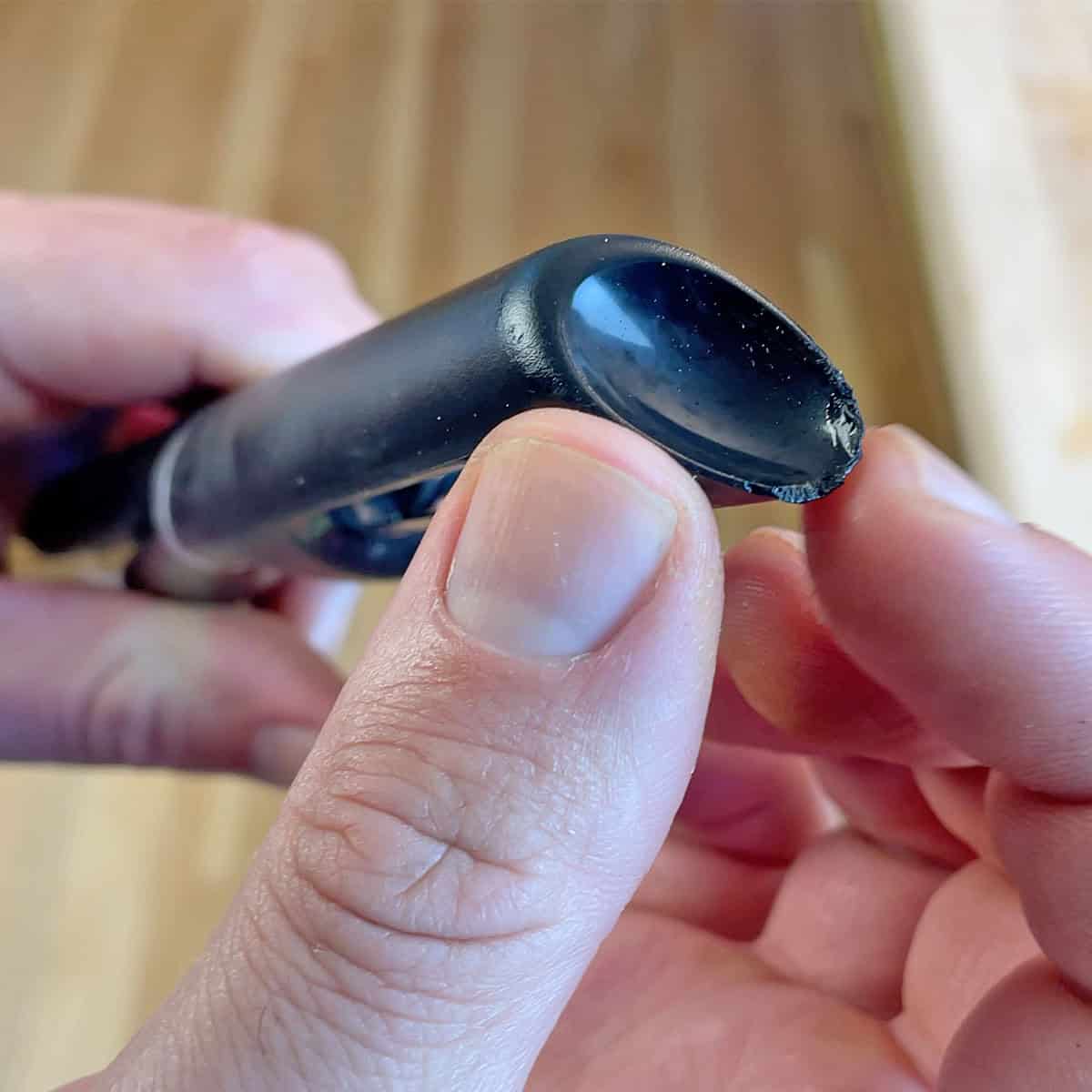
For durability, I dropped each peeler twice from table height (about 30 inches) onto a hard floor, then immediately resumed peeling to check for alignment issues, loose blades, or cracked handles.
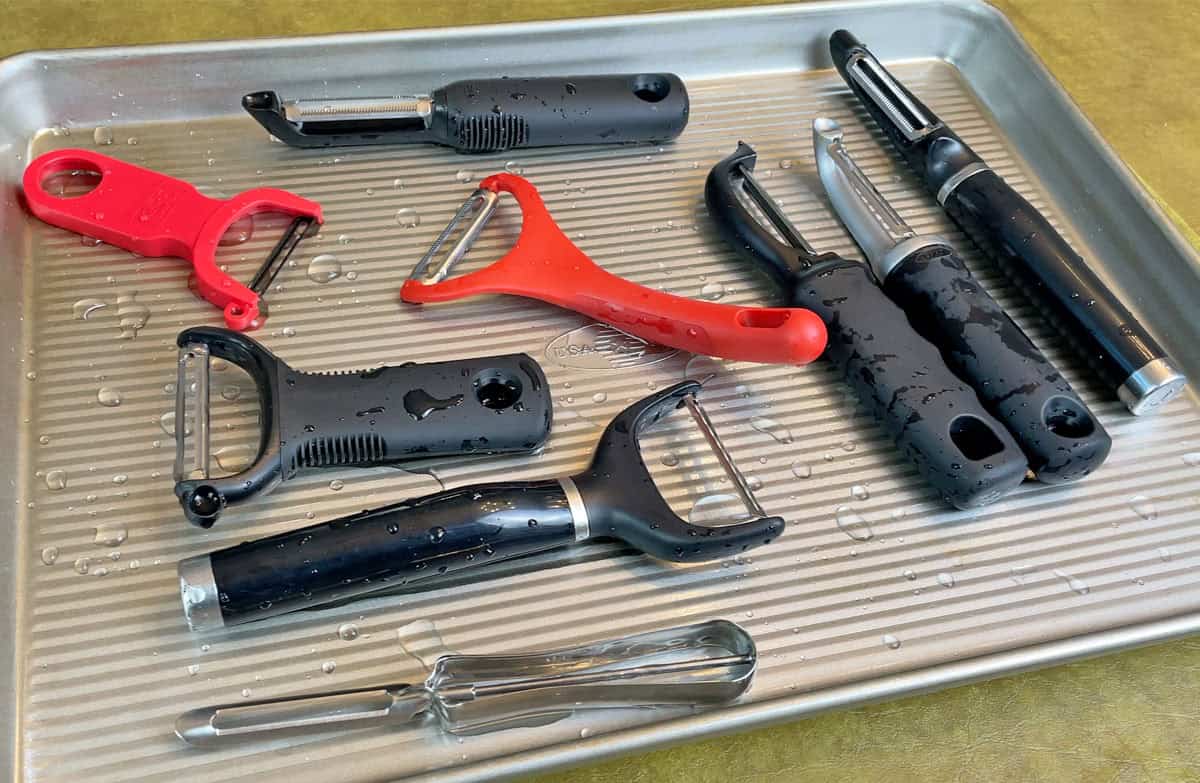
I also soaked all peelers overnight and left them wet to see which rusted.
Finally, to verify consistency, I hired a second tester to repeat every test independently.
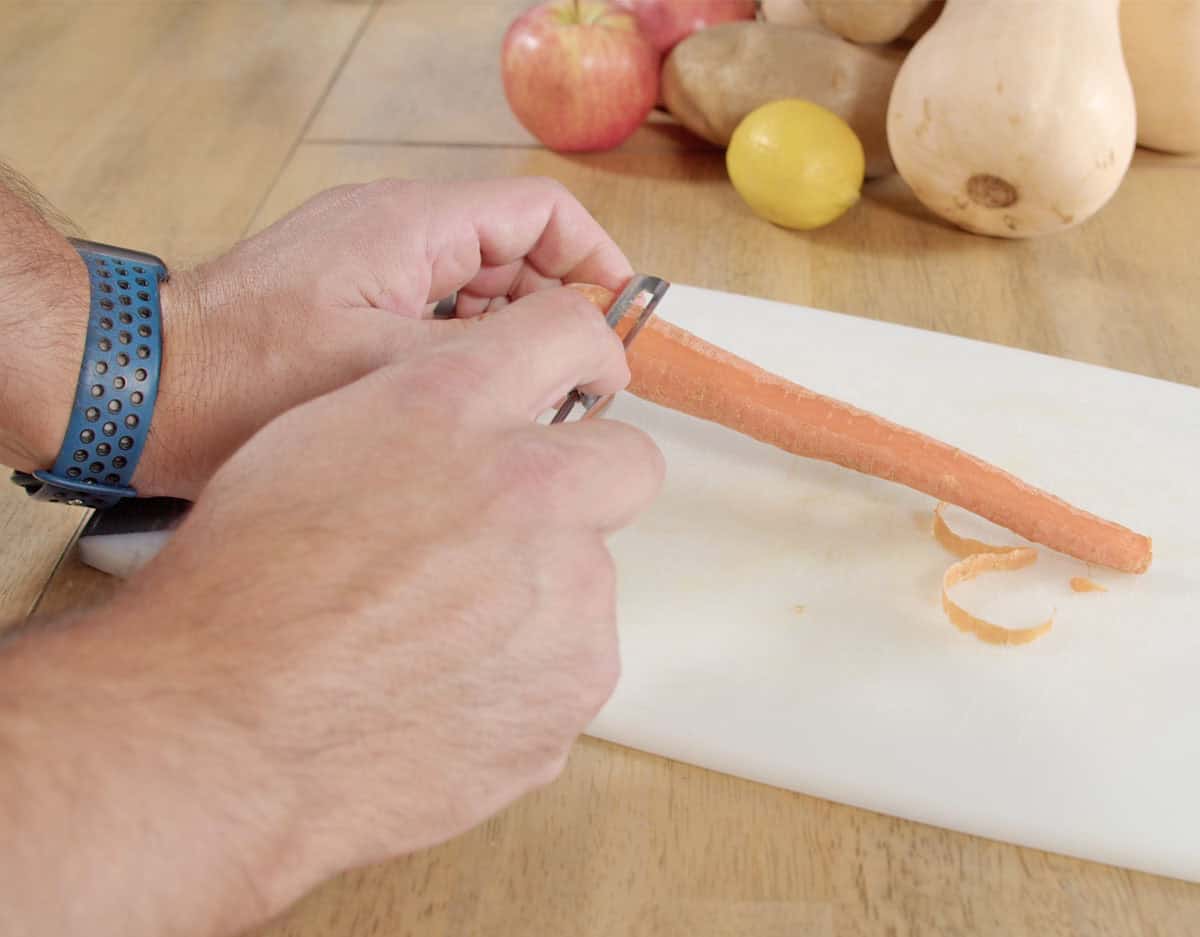
Between the two of us, we peeled over 100 fruits and vegetables. This helped confirm that results weren’t just based on technique or personal preference.
OXO Good Grips Pro Swivel Peeler
The OXO Good Grips Pro Swivel Peeler is OXO’s premium straight-style model and a Wirecutter and America’s Test Kitchen top pick.
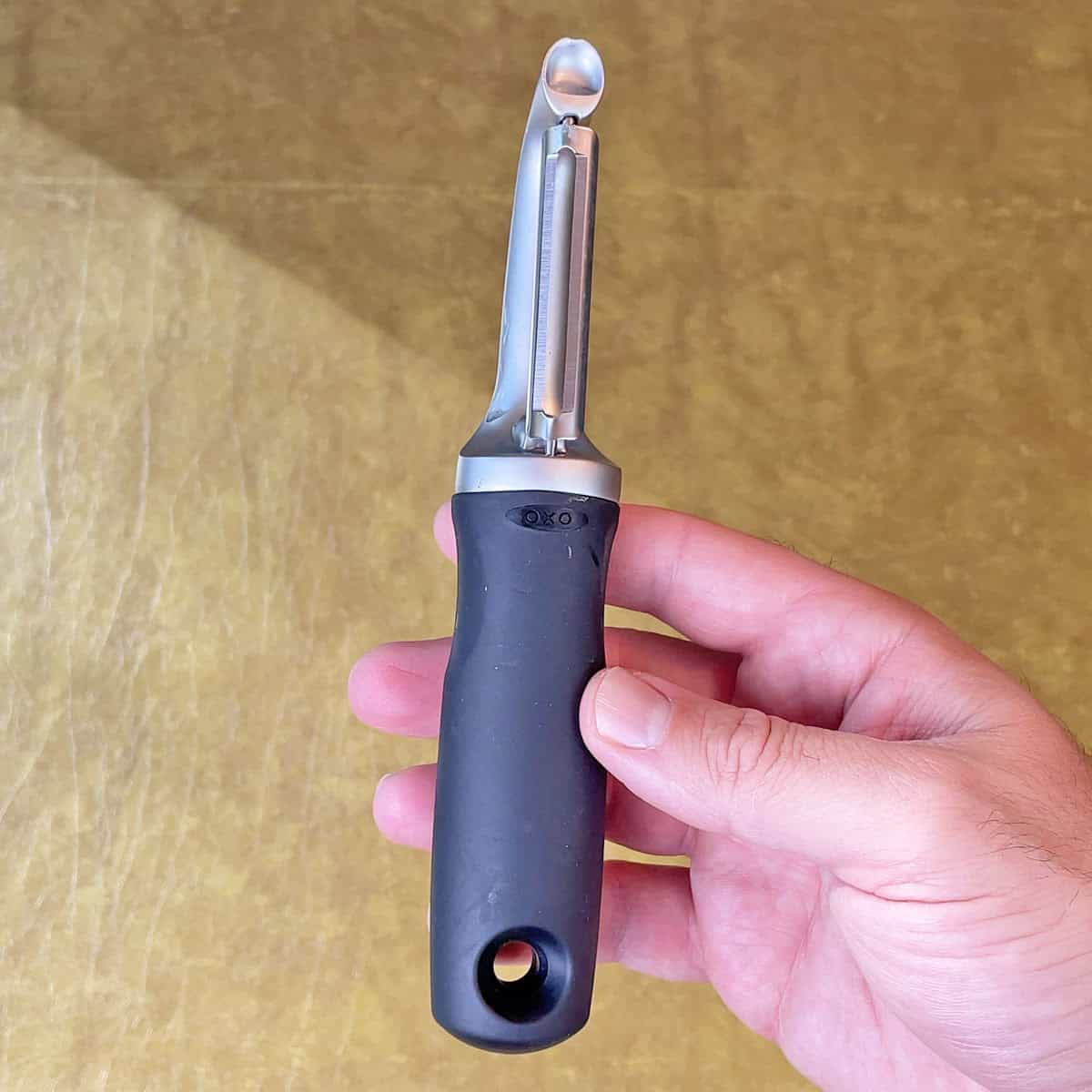
It has a stainless steel straight-edge blade, a die-cast zinc head, and a thick rubberized handle that feels sturdy and balanced. At 120 grams, it’s the heaviest peeler I tested—about six times heavier than the Kuhn Rikon Original Swiss and five times heavier than the Linden Sweden Jonas.
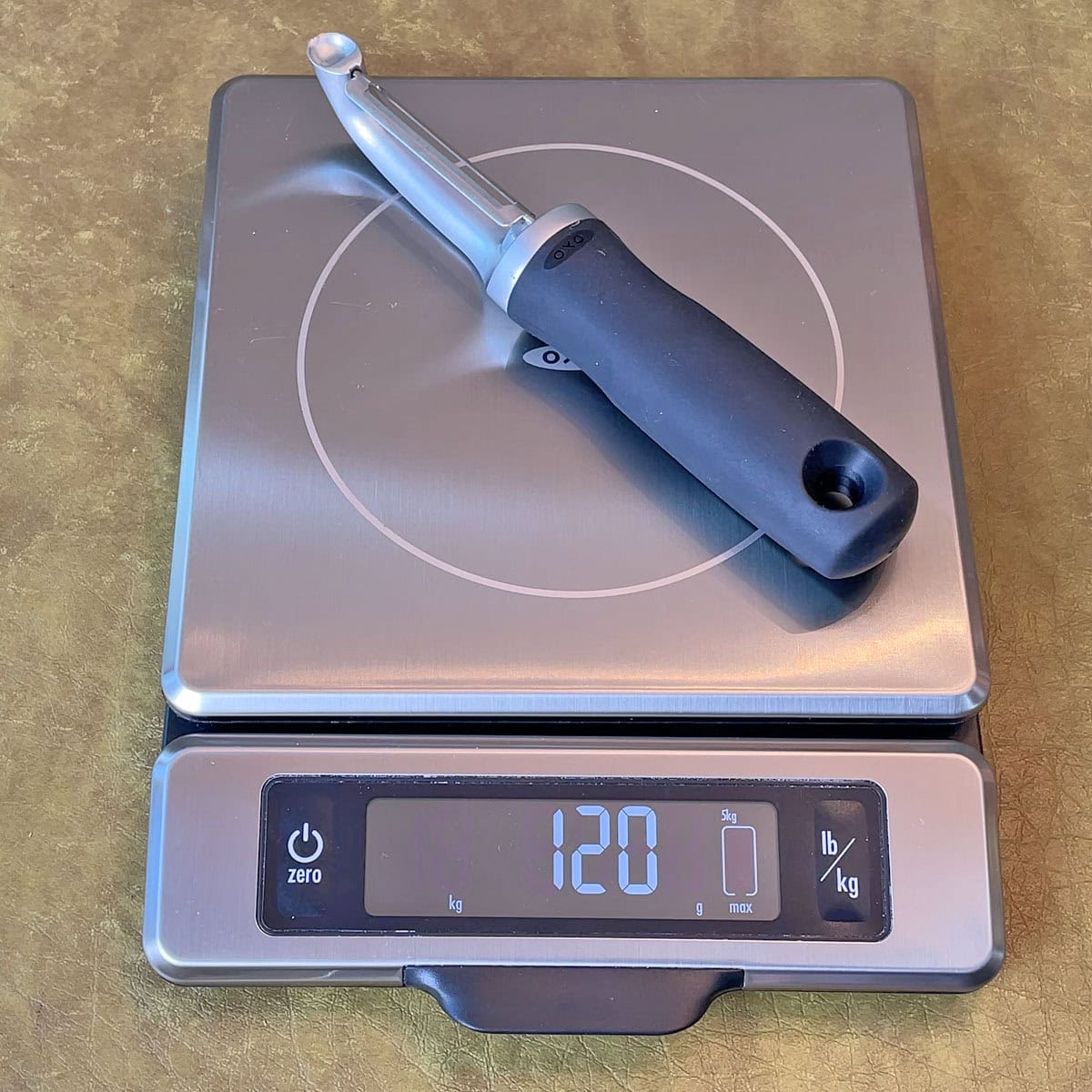
That weight gives it a high-end, durable feel, but it also adds strain during long peeling sessions. With peelers, heavier doesn’t mean better; the extra mass doesn’t improve sharpness and can make quick, repetitive movements more tiring.
In performance tests, the OXO Pro Swivel produced smooth, thin peels on apples and carrots with very consistent results. The bi-directional swivel blade, which cuts both forward and backward, helped it glide quickly through long ingredients like carrots.
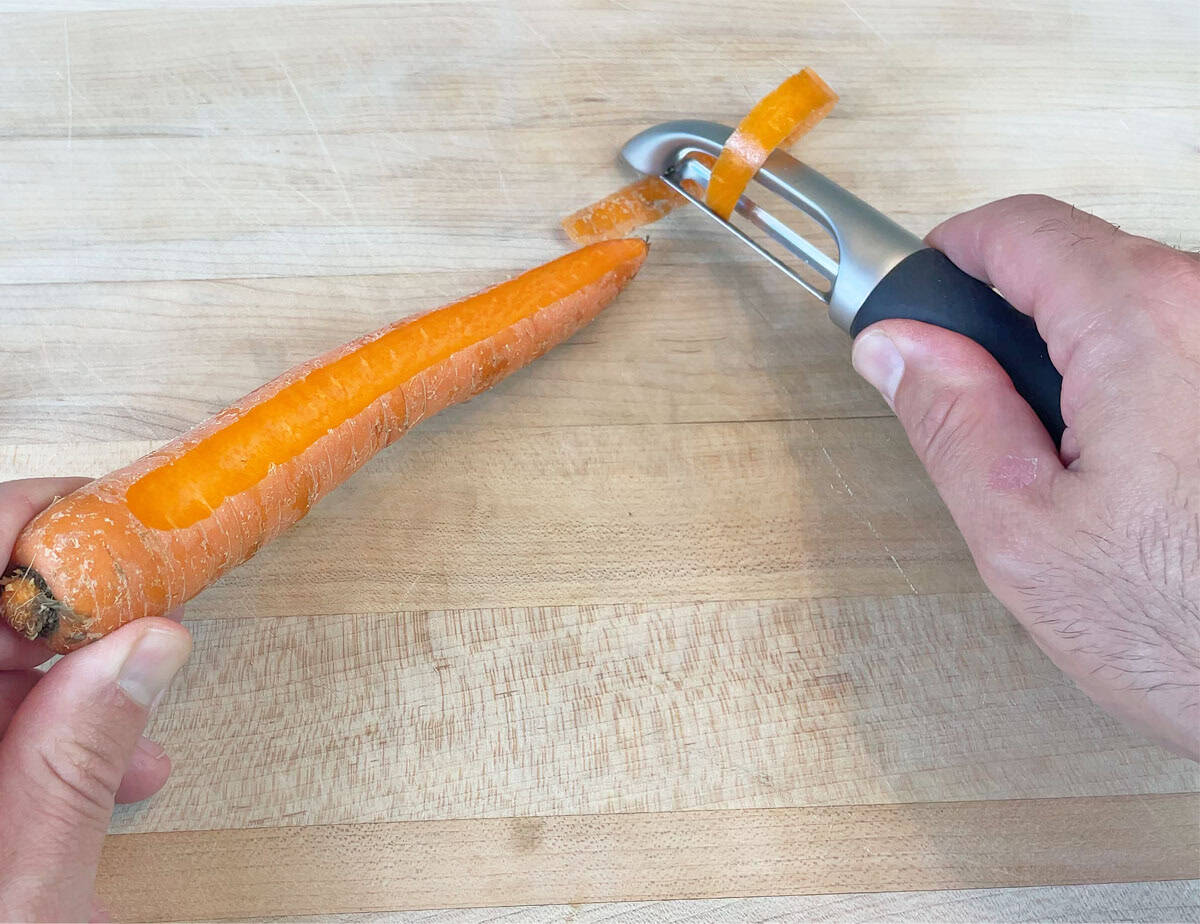
It struggled slightly with potatoes, where the blade occasionally skipped and caused small jerky catches. On lemons and butternut squash, it needed more pressure to cut through the tougher skins, but once adjusted, it peeled cleanly without tearing into the flesh.
The stainless steel blade resisted rust completely after overnight exposure to water, and the potato-eye remover tip only chipped slightly after two drop tests from table height.
OXO Good Grips Serrated Peeler
The OXO Good Grips Serrated Peeler looks almost identical to the Pro Swivel but has a few key differences.
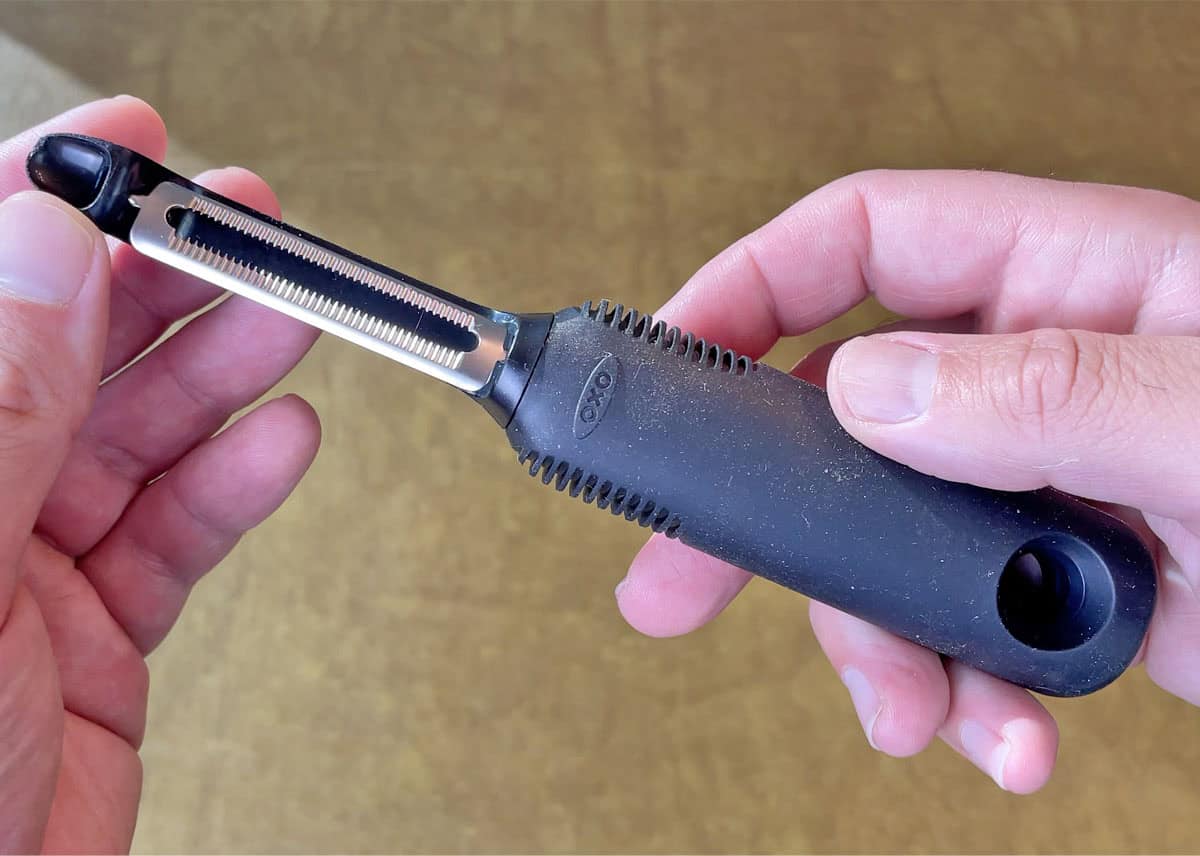
The head is made of plastic instead of die-cast zinc, and the blade is serrated rather than straight. At 70 grams, it’s noticeably lighter and easier to handle for extended use. The blade has a 4.7-millimeter clearance—the widest among all the peelers I tested—which causes it to bite deeper into food than necessary, especially on softer produce.
The handle feels comfortable and well-balanced, with the same soft rubber grip found on the Pro model. The textured rubber sides kept my fingers secure even when I intentionally coated my hands in oil. That stability made it easier to control the cutting depth and angle.
In performance tests, the OXO Serrated Peeler handled most foods well. It was smoother on tough produce like butternut squash than other serrated models and had no issues with apples, carrots, or potatoes.
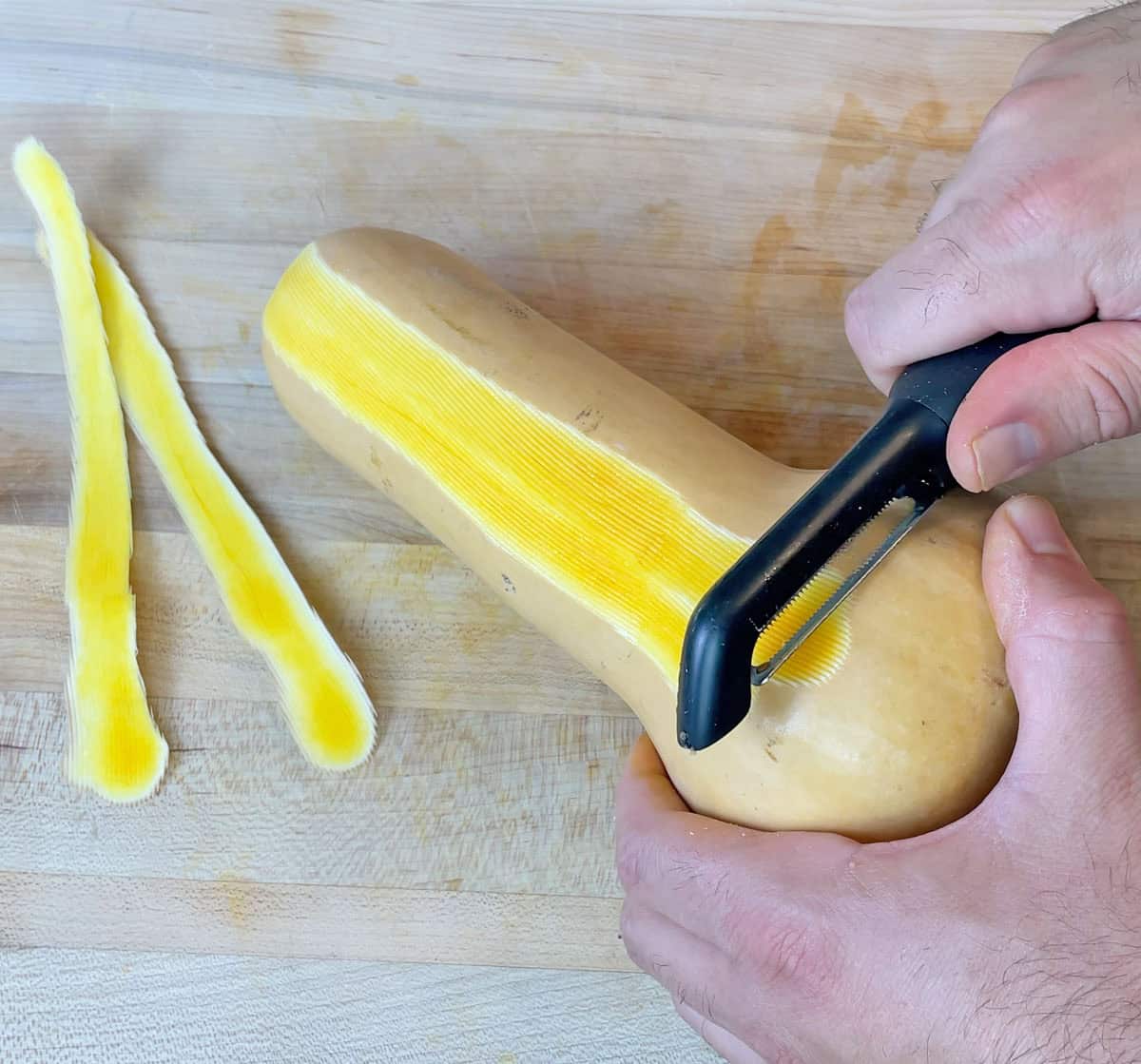
The potato-eye remover was sharp and well-designed, making it easy to dig out blemishes without damaging the surrounding surface.
The main issue appeared with lemons, where the blade sometimes caught and removed small chunks of the fruit instead of making clean, thin strips. That’s likely due to the combination of the serrated edge and wide blade gap, which increases cutting aggressiveness.
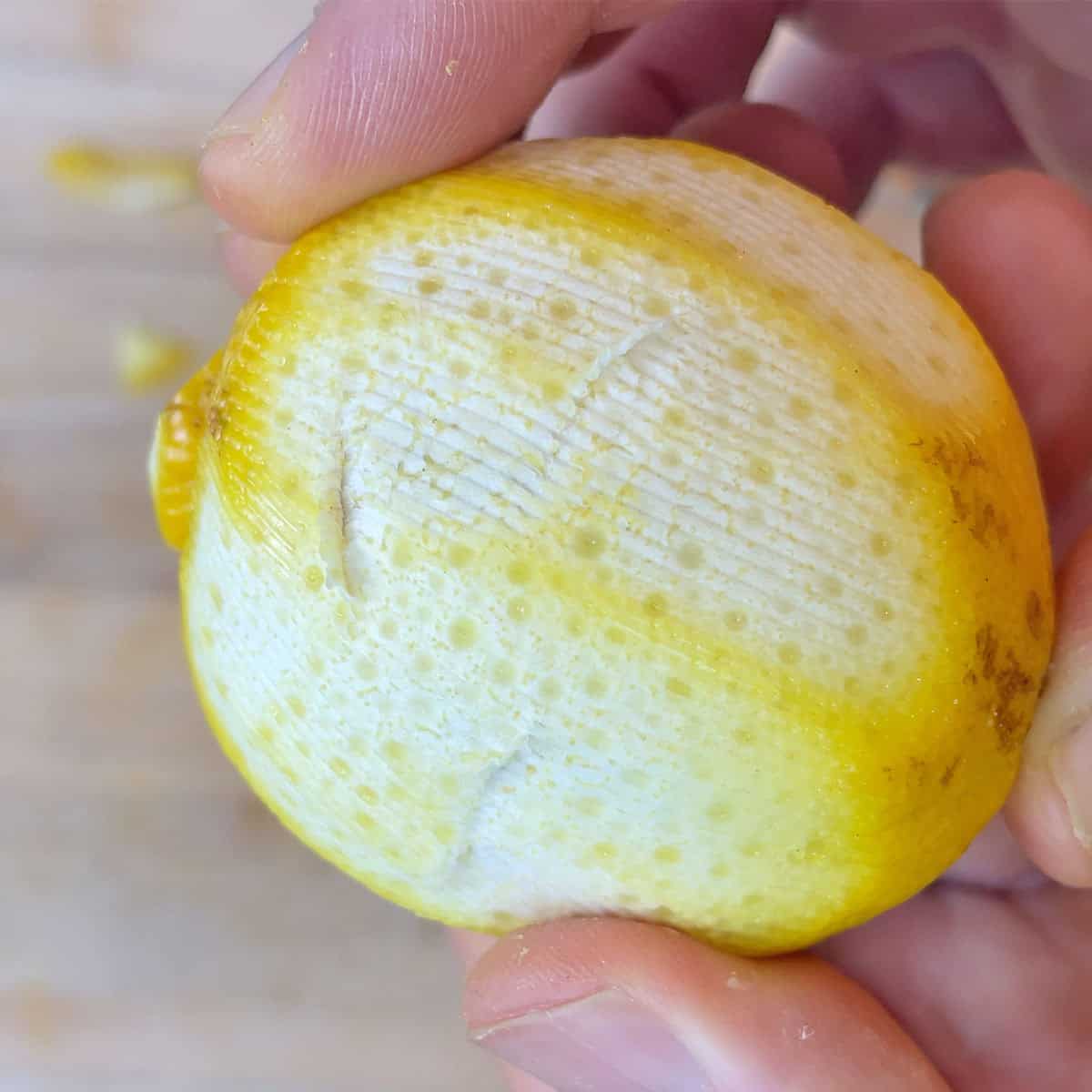
Like all serrated peelers, this one leaves faint grooves on the surface of peeled foods. It doesn’t affect taste or performance, but it’s something to consider.
OXO Good Grips Y-Peeler
The OXO Good Grips Y-Peeler feels completely different from the straight swivel peelers. Its horizontal Y-shaped design changes how you use it.
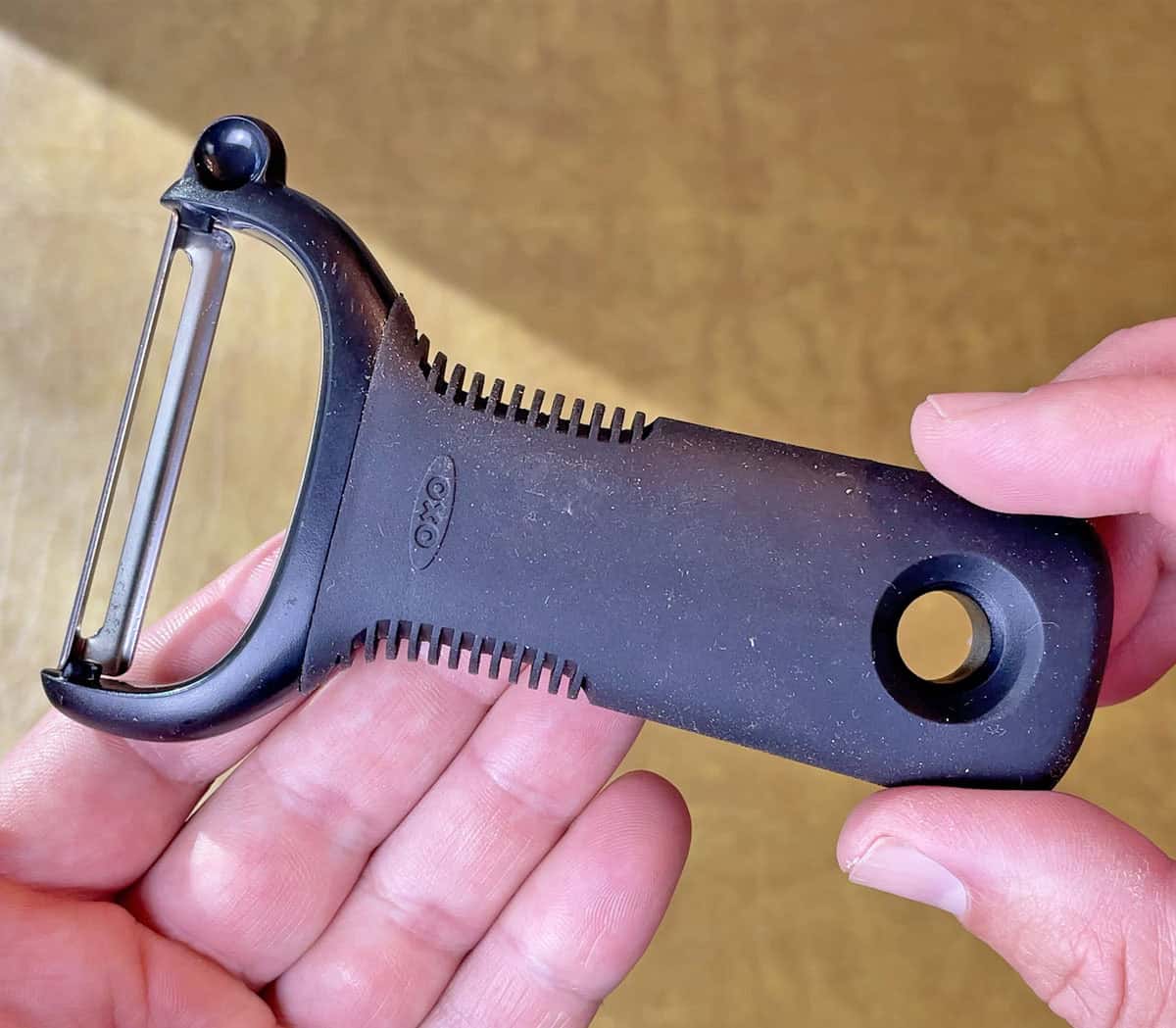
Instead of flexing your wrist and elbow in a back-and-forth motion, you keep your wrist steady and guide the blade with your shoulder and upper arm. This motion can feel more natural for some people, and because the blade sits in front of the handle, it’s easier to see exactly where you’re cutting. That visibility is one of the main advantages of Y peelers, especially for precision work like zesting or trimming thin-skinned produce.
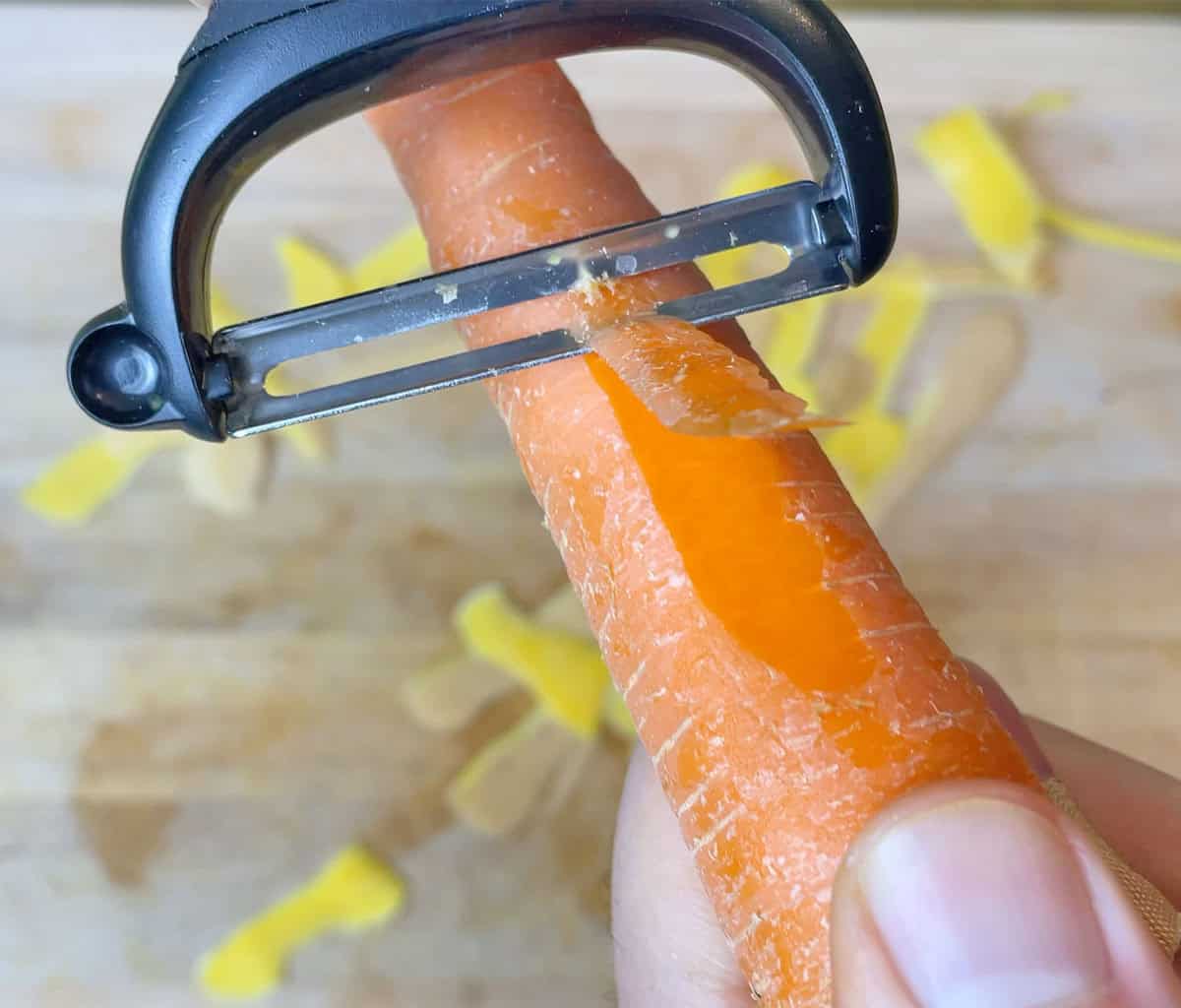
This model weighs 56 grams, making it significantly lighter than OXO’s Pro Swivel Peeler (120 grams) and easier to maneuver for long prep sessions. The stainless steel straight-edge blade has a 3.2-millimeter clearance – narrow enough to produce thin, consistent peels without digging into the flesh.
In my tests, it performed well across every food type. It sliced through apples and carrots with little resistance and handled tough-skinned produce like butternut squash and lemons without hesitation. It did remove a bit more pith from lemons than some straight peelers, but not enough to affect the results for most uses.
The 3.5-inch handle has the same textured rubber surface as other OXO models, providing a secure, non-slip grip even with oily hands. It felt balanced and comfortable without being bulky or heavy. After two drop tests, the blade and handle showed no damage, and the stainless steel stayed completely rust-free after being left wet overnight.
KitchenAid Classic Euro Peeler
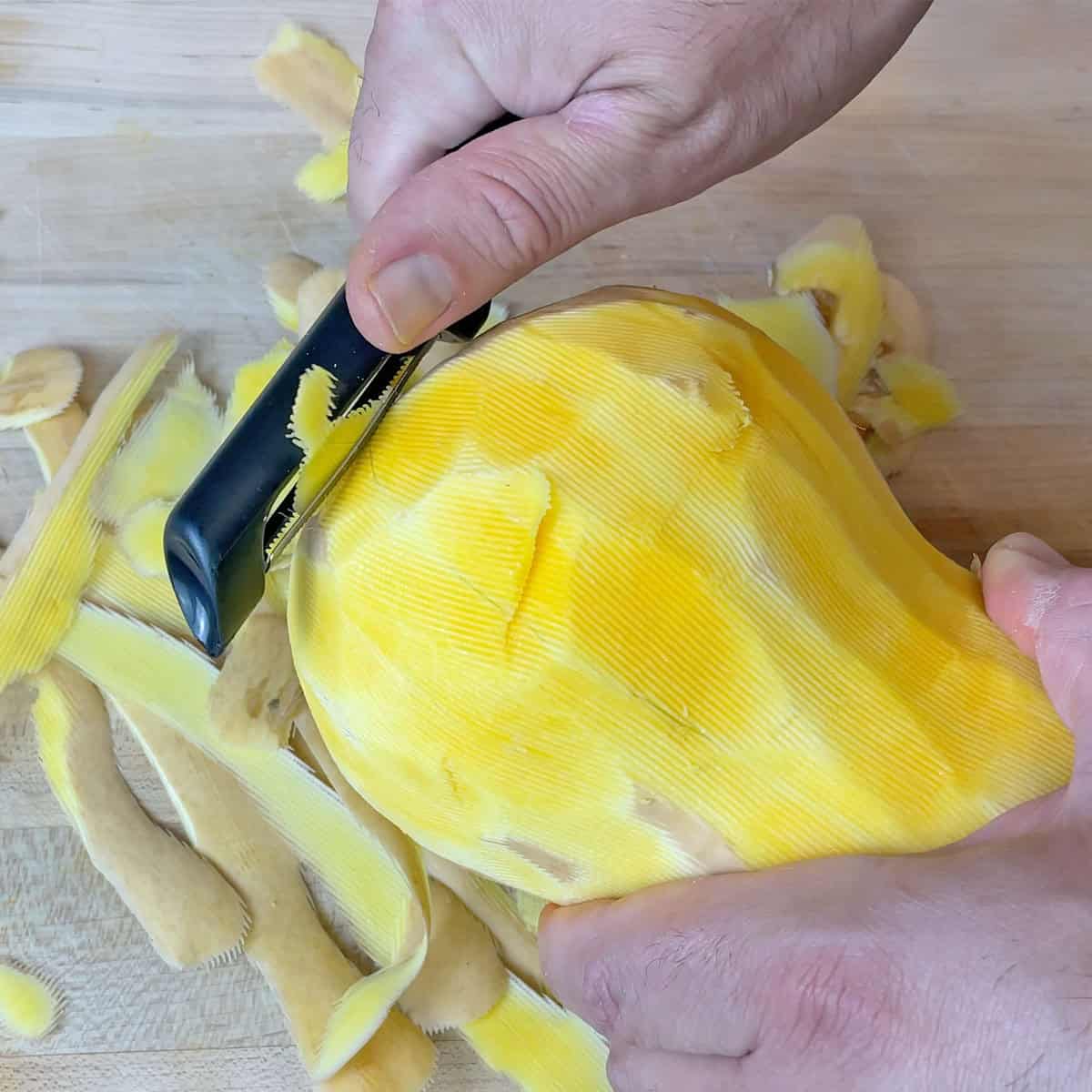
The KitchenAid Classic Euro Peeler is a straight-style model with a serrated stainless steel blade and a relatively wide 4.4-millimeter blade gap. That large clearance causes the blade to bite deeper into the surface of foods, removing thicker strips of peel than necessary.
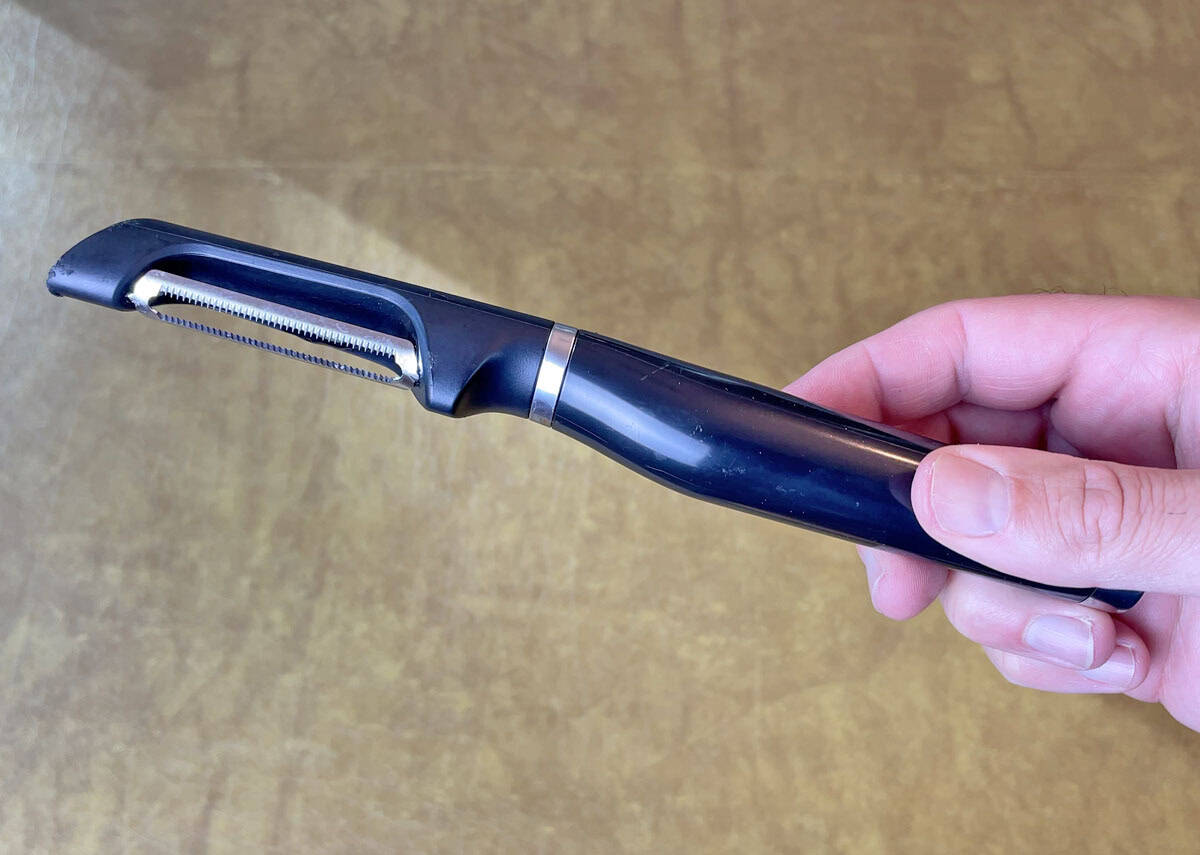
During testing, it often dug too far into the flesh of butternut squash and lemons, occasionally tearing out small chunks. On smoother produce like apples and carrots, it performed fine, but the cuts were still less consistent than peelers with narrower blade spacing.
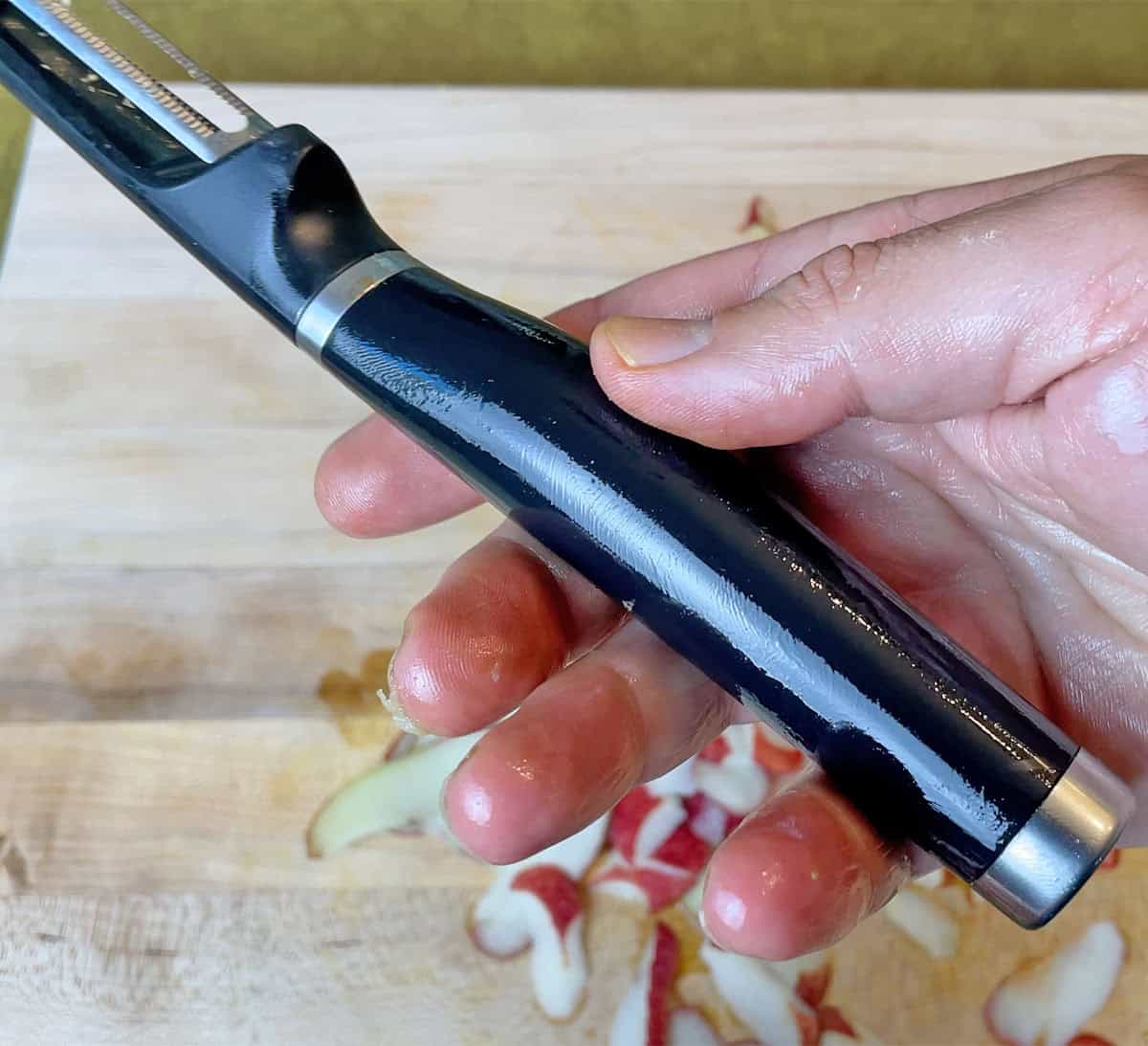
At 96 grams, it’s one of the heavier plastic-handled peelers I tested. The smooth, glossy handle offers little grip compared to textured designs like OXO’s. When my hands were oily, it became slippery.
One unexpected quirk is that the rounded handle allows the peeler to roll when placed on a countertop, which can cause it to fall if the surface isn’t perfectly level.
The KitchenAid Classic Euro Peeler is dishwasher safe and durable enough to withstand drops without visible damage, but its performance and ergonomics lag behind competitors. The deep-cutting serrated edge, slick handle, and awkwardly long handle make it less enjoyable to use than similarly priced options.
KitchenAid Classic Y-Peeler
The KitchenAid Classic Y-Peeler features a stainless steel straight-edge blade that’s sharp and consistent, producing clean, even peels on everything from apples and carrots to tougher ingredients like lemons and butternut squash.
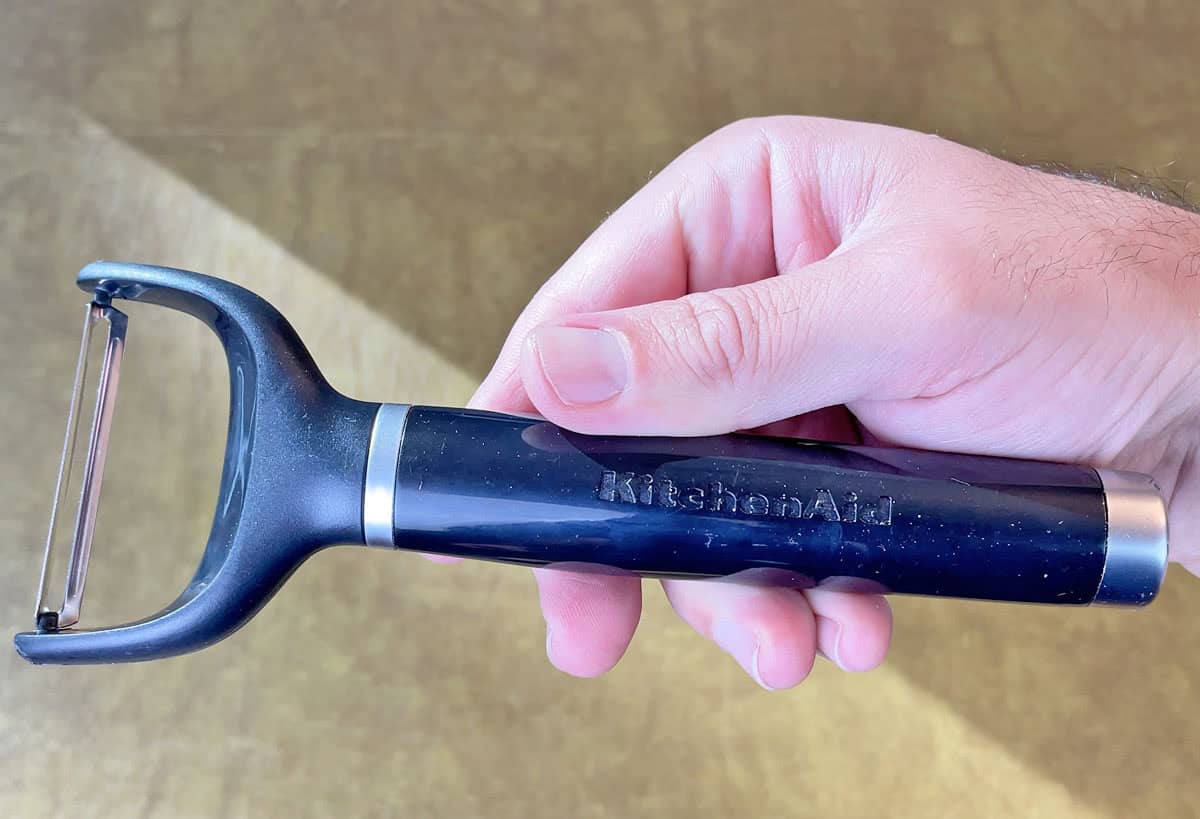
The blade clearance is 2.5 millimeters, the narrowest among all the peelers I tested.
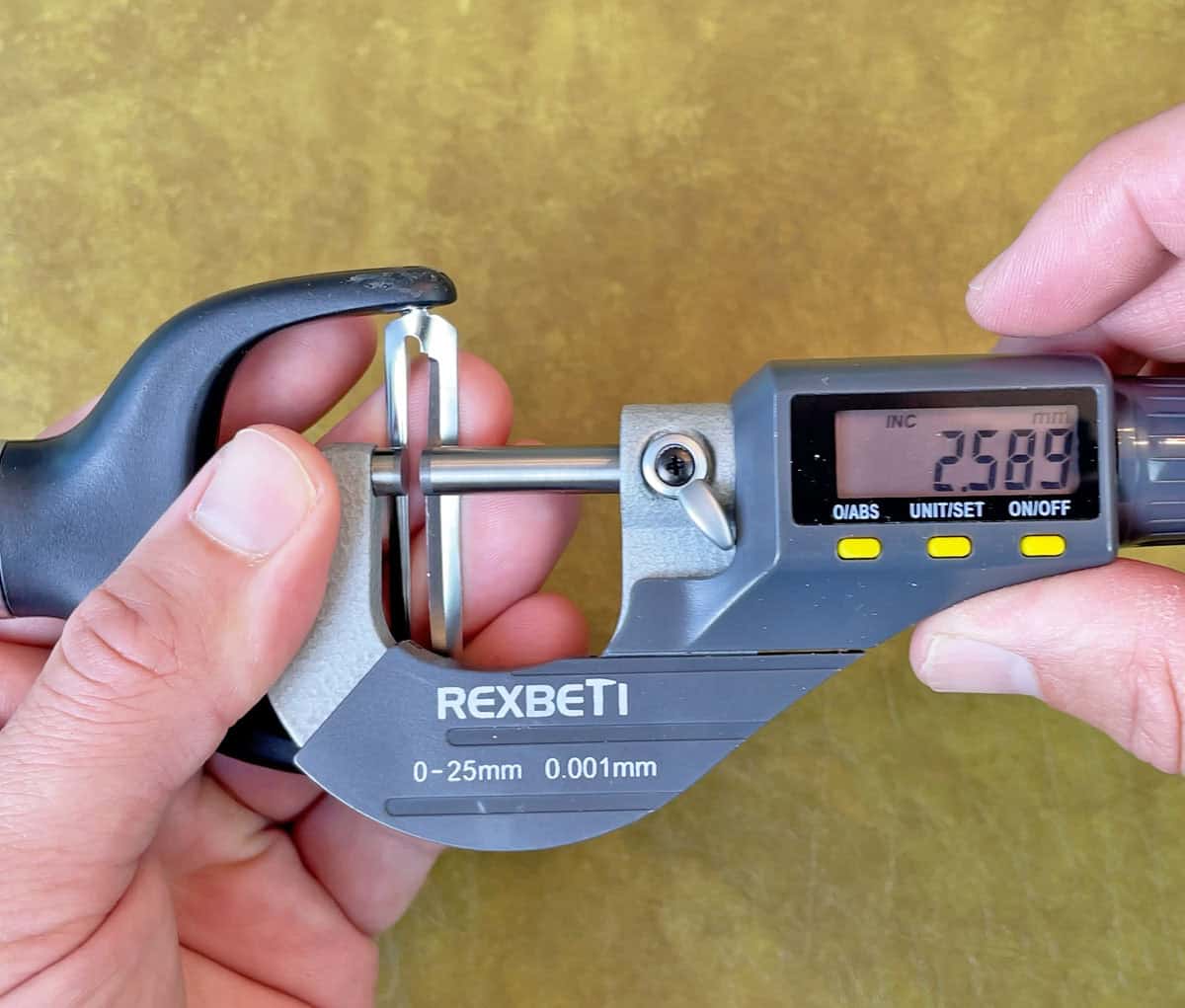
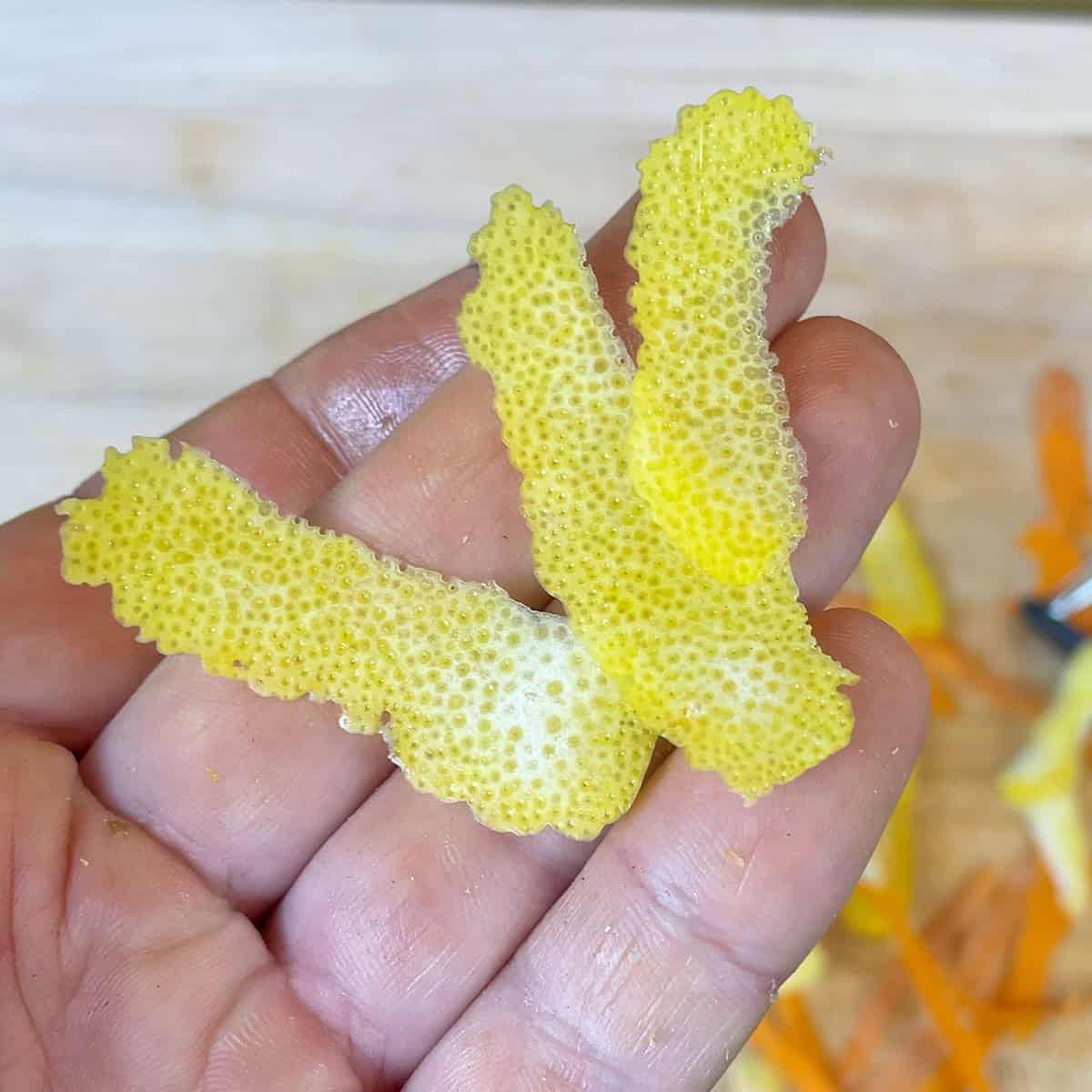
This helps it remove only a thin layer of skin while leaving the underlying flesh intact. That tight spacing also made it one of the best for minimizing lemon pith.
At 94 grams, it’s on the heavier side for a Y-peeler, but the added weight doesn’t impact maneuverability much. The handle design is identical to the KitchenAid Classic Euro Peeler: smooth, round, and made from glossy plastic. While it looks sleek, it lacks grip. When my hands were oily, it felt slippery, and the circular shape provided little traction or control.
Like the Euro Peeler, its long 7.25-inch frame makes it feel slightly oversized and less balanced than more compact options like the OXO or Kuhn Rikon Y-style peelers.
This model doesn’t include a potato-eye remover, however, the blade itself was durable and stayed sharp through all the tests. It showed no rust or damage after being dropped twice and left wet overnight.
Kuhn Rikon Red Original Swiss Peeler
The Kuhn Rikon Original Swiss Peeler is a well-known favorite, named the best overall Y-peeler by both The New York Times and America’s Test Kitchen.
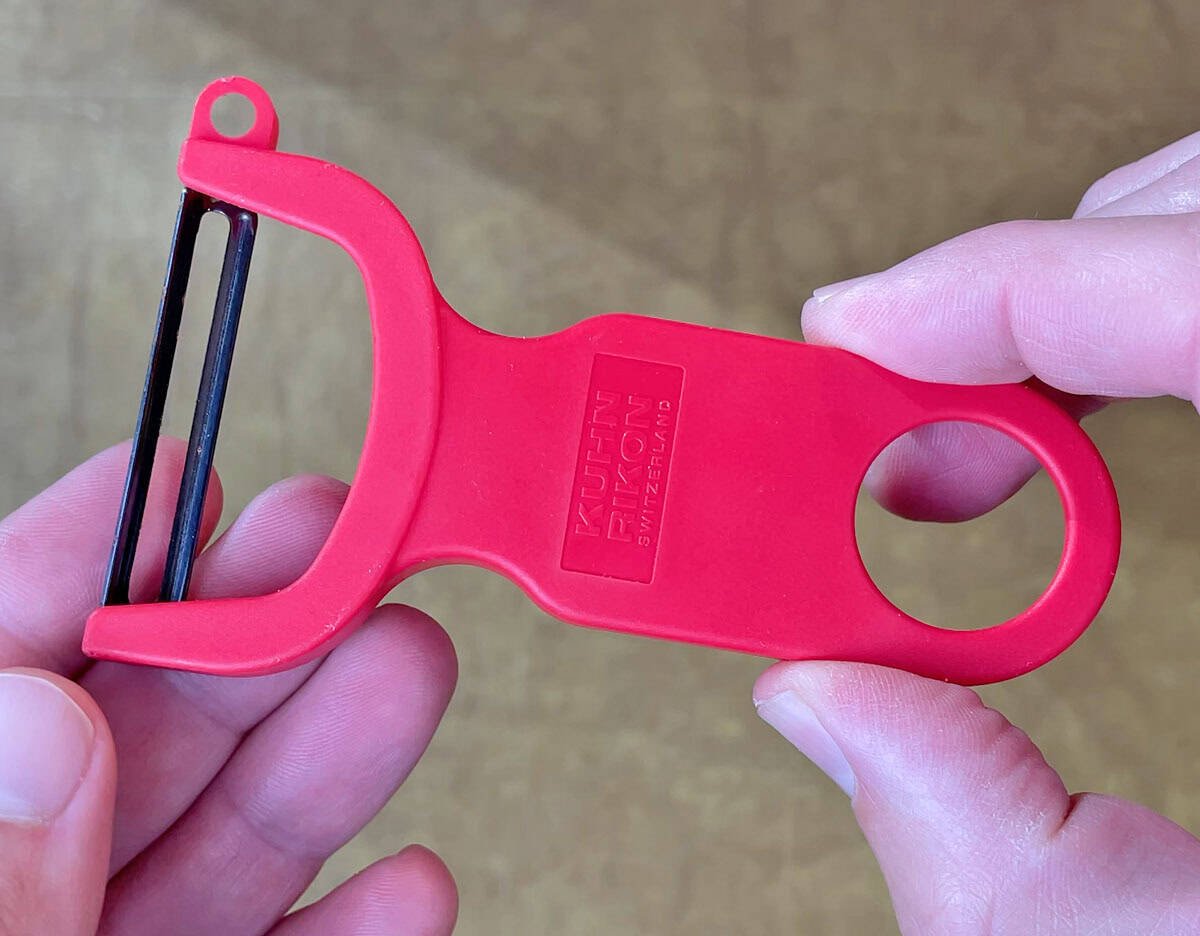
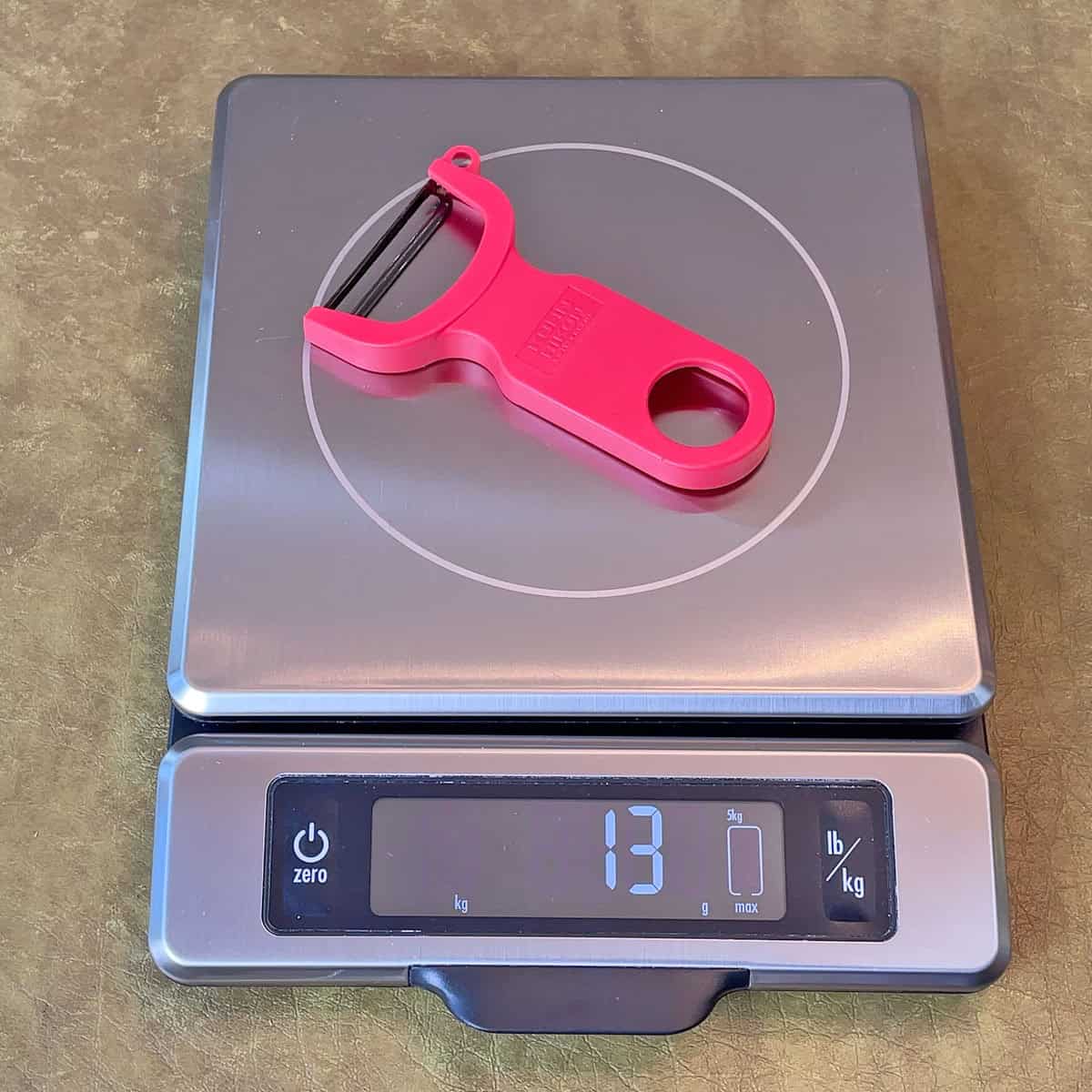
It’s the lightest model I tested at only 13 grams, yet also one of the sharpest. The thin, carbon steel straight-edge blade cuts with almost no resistance and creates extremely fine, consistent peels.
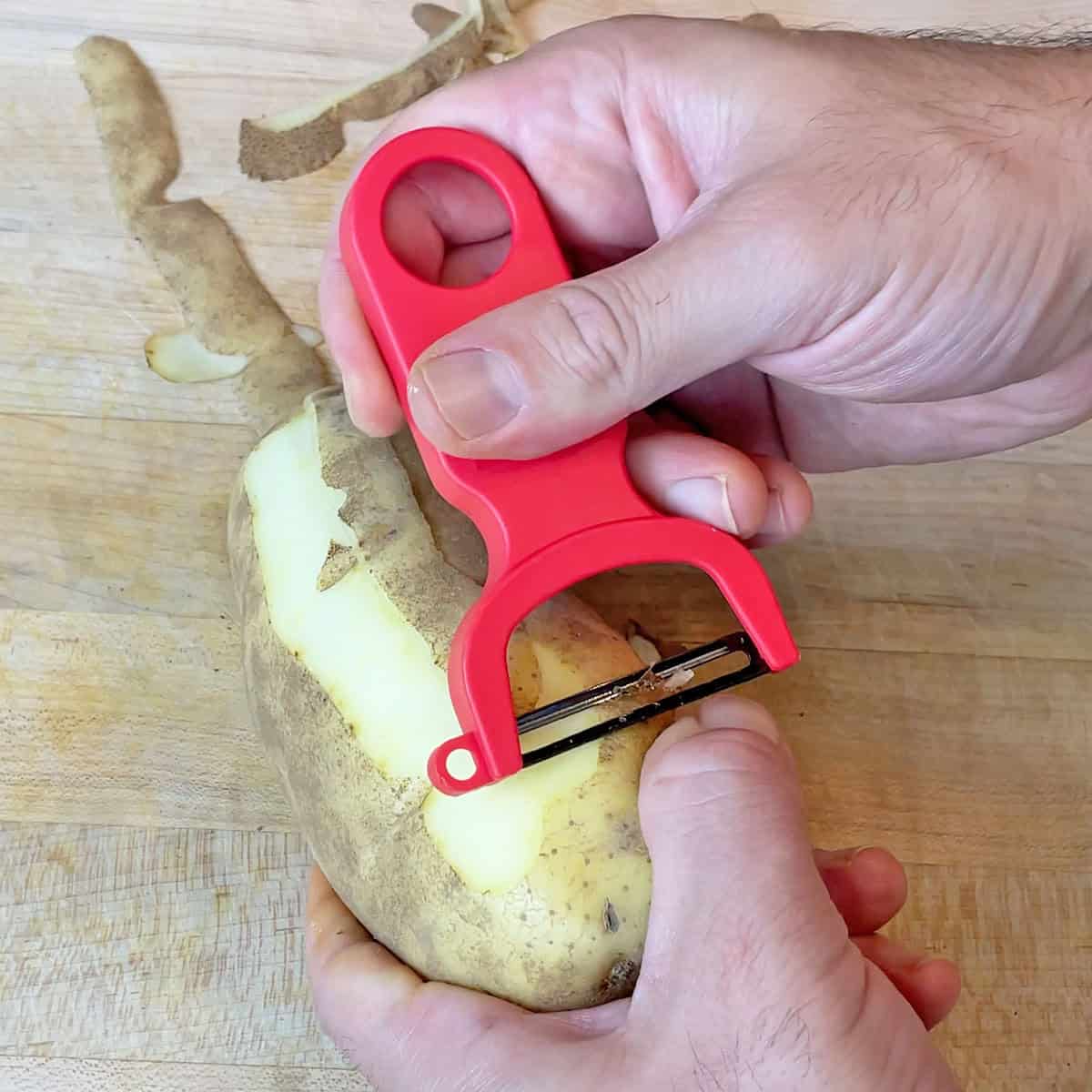
On apples, carrots, and butternut squash, it sliced through cleanly and left smooth surfaces. It struggled slightly with lemons, requiring a bit more pressure, but still removed very little pith compared to most other peelers.
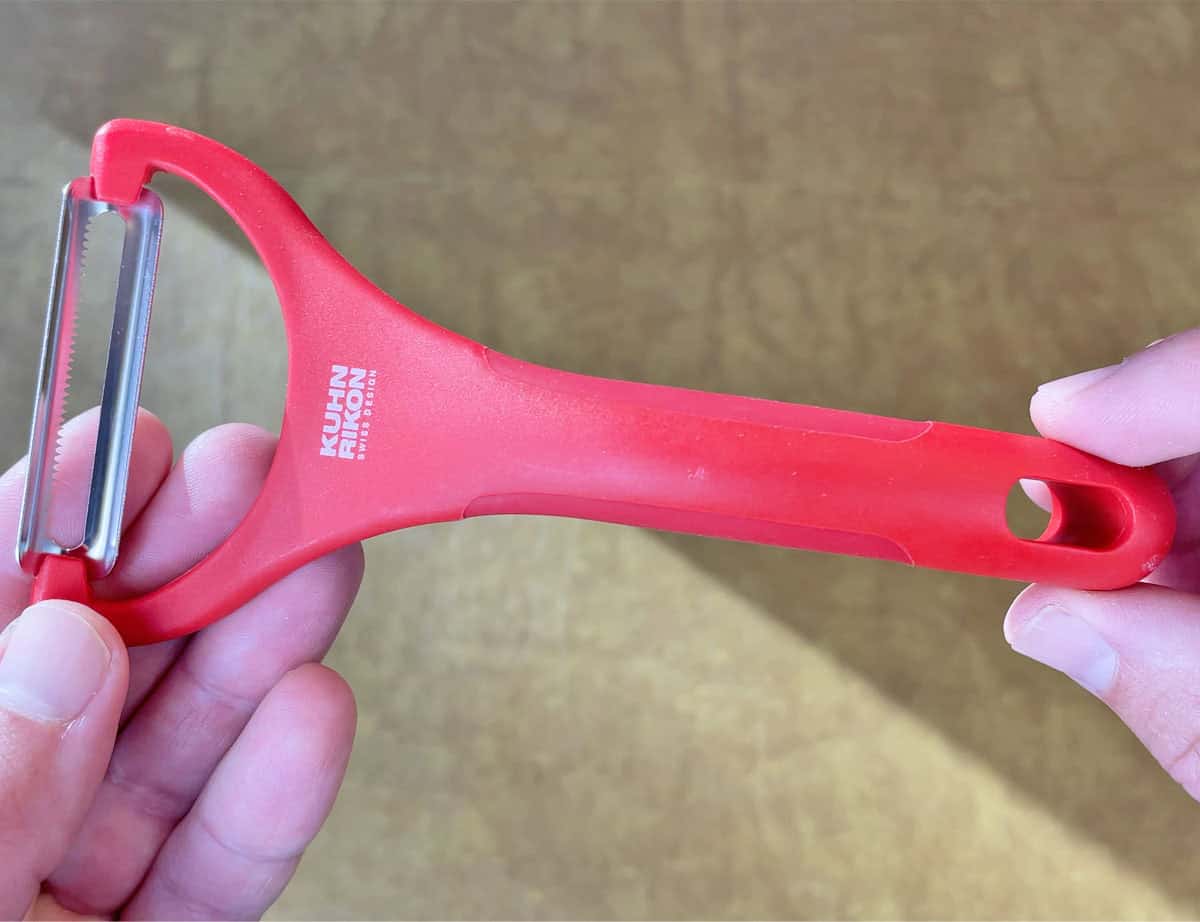
The biggest drawback is the handle. It’s short and flat, measuring just 4.25 inches long, and made of lightweight plastic. It doesn’t feel as secure or ergonomic as peelers with thicker, contoured grips. Because of its small size, there isn’t much to hold onto, which makes it less stable when working with large or irregularly shaped produce. However, the low weight means it doesn’t tire your wrist, even during extended peeling sessions.
One functional limitation is that only one side of the blade is sharpened. You can’t peel in both directions like you can with the OXO and KitchenAid models. Instead, you have to peel in a single downward stroke, lift, and start again. It’s a small inconvenience, but noticeable if you’re used to the efficiency of bi-directional peelers.
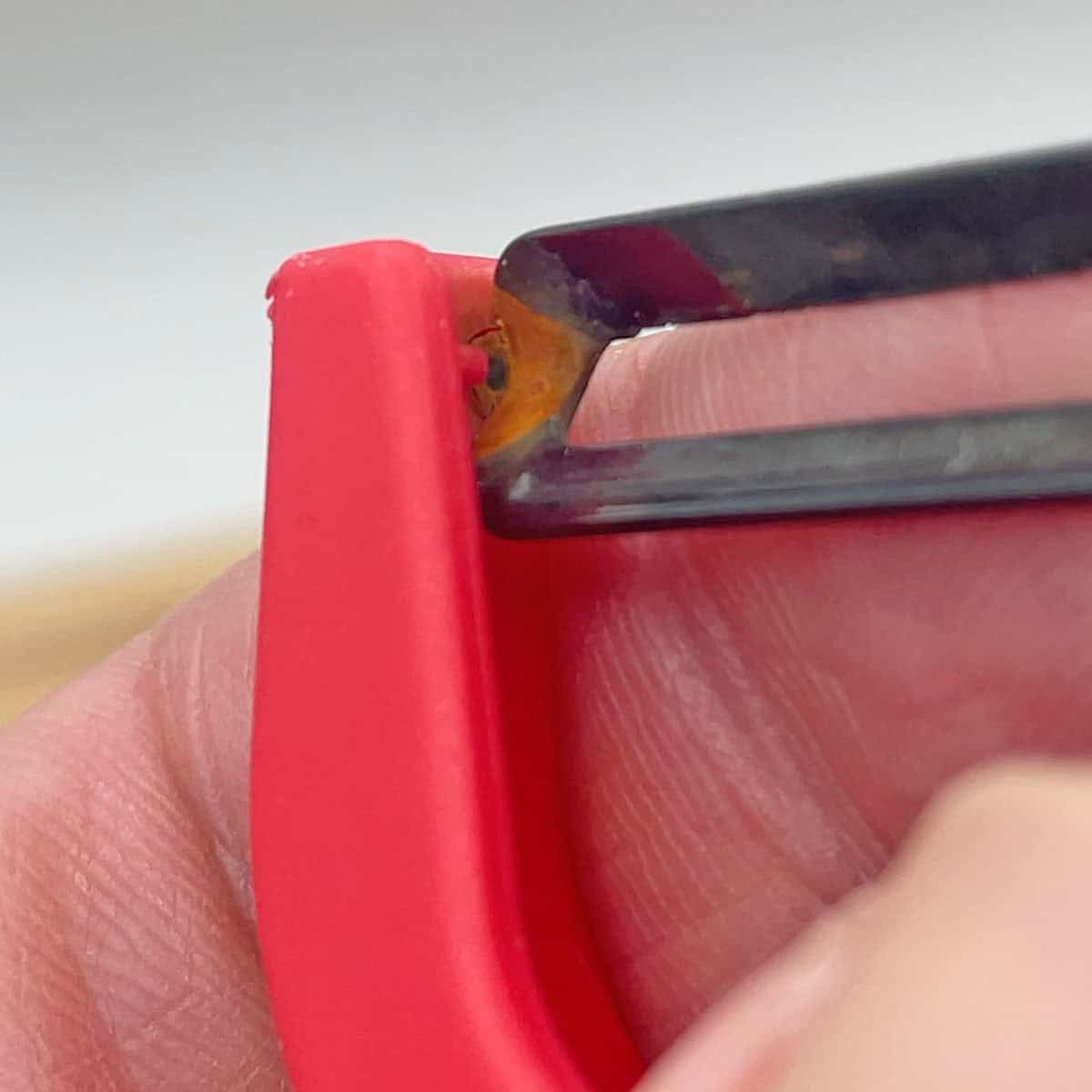
The carbon steel blade is what makes this model so sharp, but it also requires extra care. Carbon steel holds its edge better than stainless steel but is more prone to rust if left wet. This was the only peeler in my testing that showed slight rust spots after being soaked and left overnight. It’s also the only one that’s not dishwasher safe.
Despite its cheap-feeling handle and single-direction blade, the Kuhn Rikon Original Swiss Peeler delivers excellent performance and precision. It’s ideal if you value speed, thin peels, and light handling, as long as you don’t mind handwashing and drying it immediately after use.
Kuhn Rikon Serrated Piranha Y-Peeler
The Kuhn Rikon Serrated Piranha Y-Peeler features a stainless steel serrated blade designed to grip and slice through tough skins with minimal effort. At 42 grams, it’s lightweight but still feels substantial and well-balanced in the hand.
In my testing, it cut through everything from apples and carrots to thick-skinned produce like butternut squash with almost no resistance. The 3.9-millimeter blade clearance allowed it to remove peels quickly while maintaining consistent thickness.
The handle measures 3.75 inches and is made from a grippy, soft-touch material that feels secure and comfortable, even with wet or oily hands. It offered better control than the smaller, flatter handle of the Kuhn Rikon Original Swiss Peeler, which made it easier to maintain a steady angle through long peeling motions.
The main downside is its aggressiveness on citrus. During lemon tests, the blade bit too deeply and removed more pith than any other peeler in the group, occasionally cutting into the fruit itself.
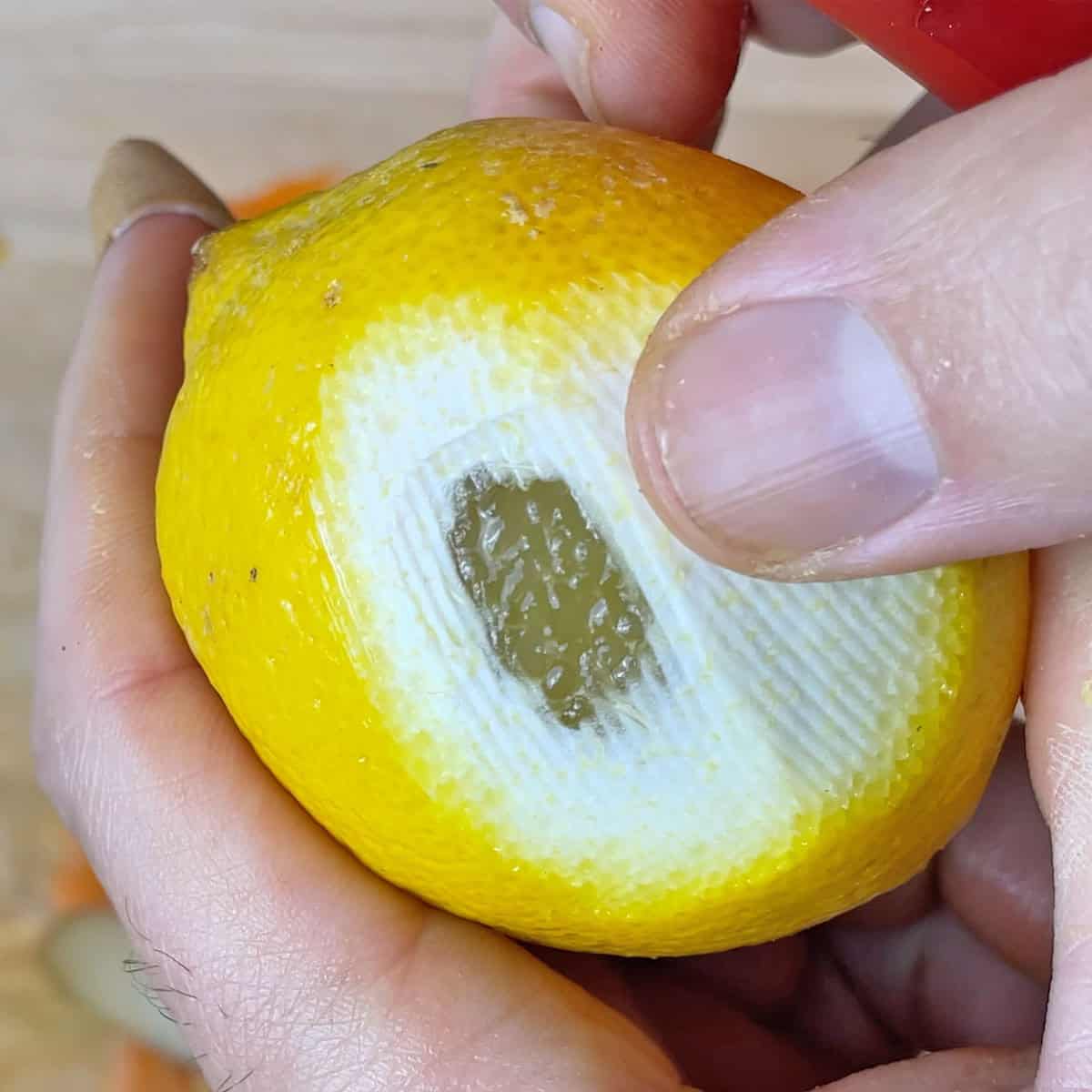
That’s the trade-off with serrated designs: they’re excellent for grabbing slippery skins, like tomatoes or peaches, but can be too forceful for delicate or thin-skinned produce.
Spring Chef Premium Swivel Peeler
The Spring Chef Premium Swivel Peeler is one of the most popular and affordable peelers on Amazon. It’s a straight-style peeler with a stainless steel blade, a lightweight plastic frame, and a total weight of 76 grams.
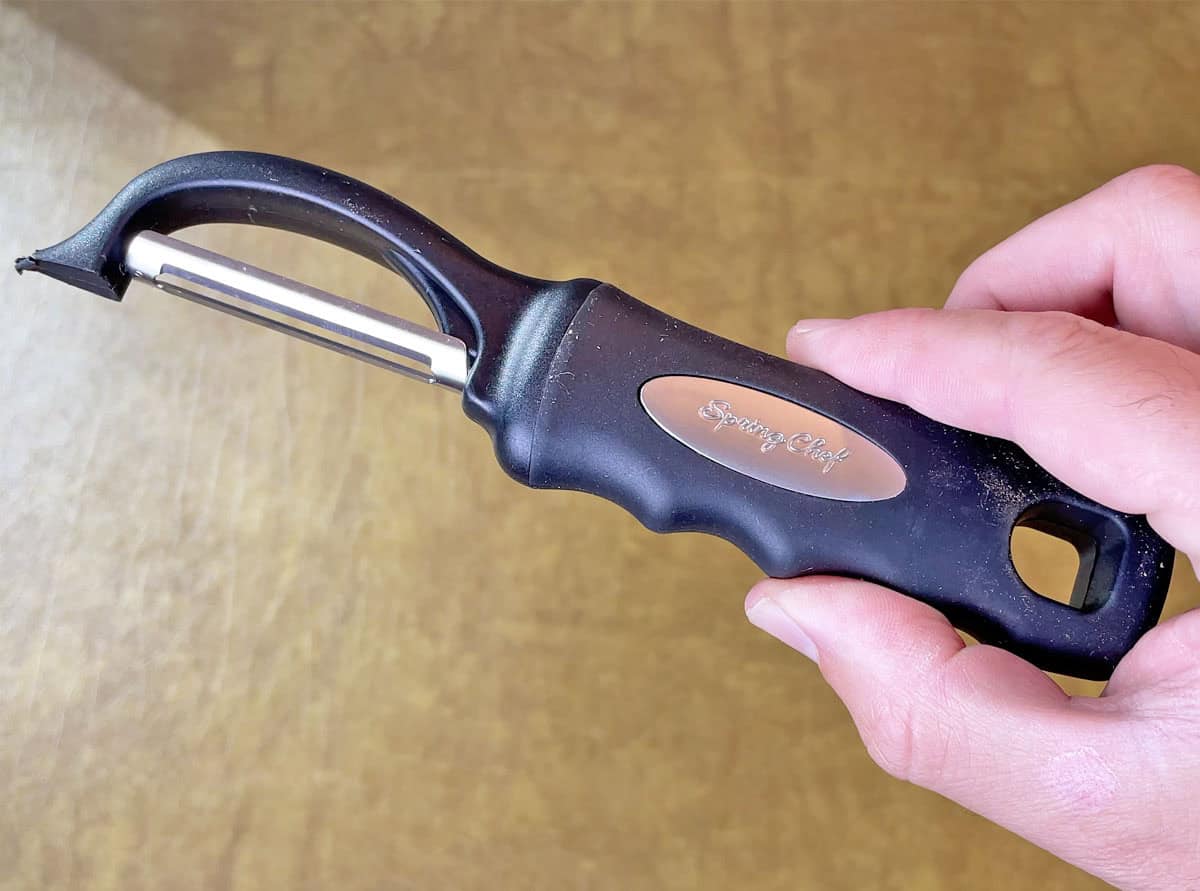
While it performed adequately on softer foods like apples, carrots, and potatoes, it was noticeably duller than the sharper straight-edge models such as the OXO Pro Swivel or the Linden Sweden Jonas. On tougher produce like lemons and butternut squash, it required more pressure and produced slightly uneven peels.
The handle design looks ergonomic at first glance, with molded finger grooves along the underside. However, during real use, your grip naturally shifts to the sides rather than the bottom, making those grooves less useful.
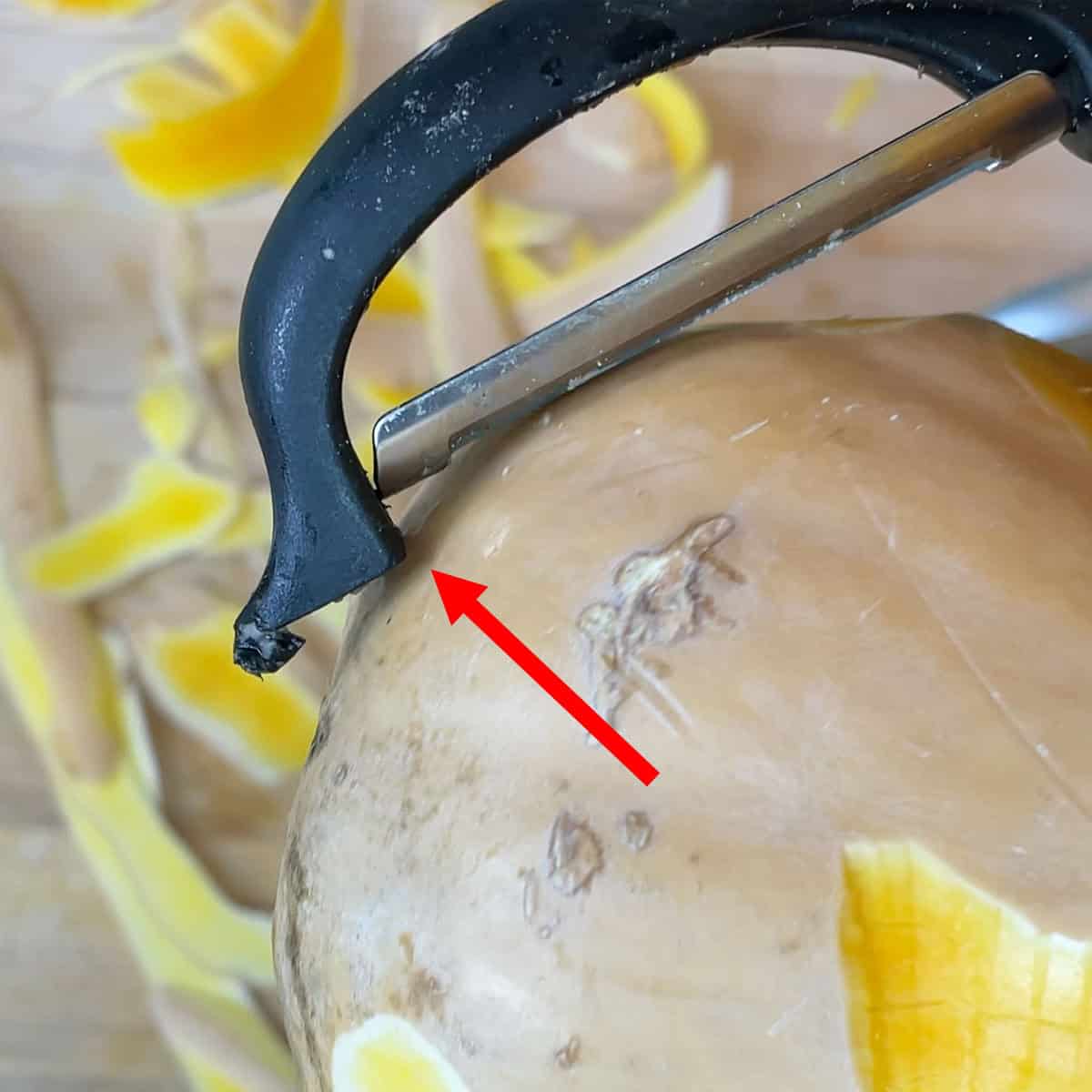
The biggest issue with this peeler is its blade housing. The plastic frame extends slightly beyond the metal edge, so when peeling wider foods such as the base of a butternut squash, the plastic hits the surface before the blade makes contact. This design flaw interrupts the motion and forces you to reposition frequently to get a clean cut.
Durability was another concern. During drop testing, the thin plastic tip that doubles as a potato-eye remover cracked and became unusable. The stainless steel blade stayed intact and rust-free after soaking, but the damage to the frame raised questions about long-term reliability.
Linden Sweden Original Jonas Peeler
The Linden Sweden Original Jonas Peeler has an old-school design, but it delivered some of the best results in my testing. It’s a lightweight, all-stainless-steel straight peeler that weighs just 22 grams, making it one of the lightest tools in the group.
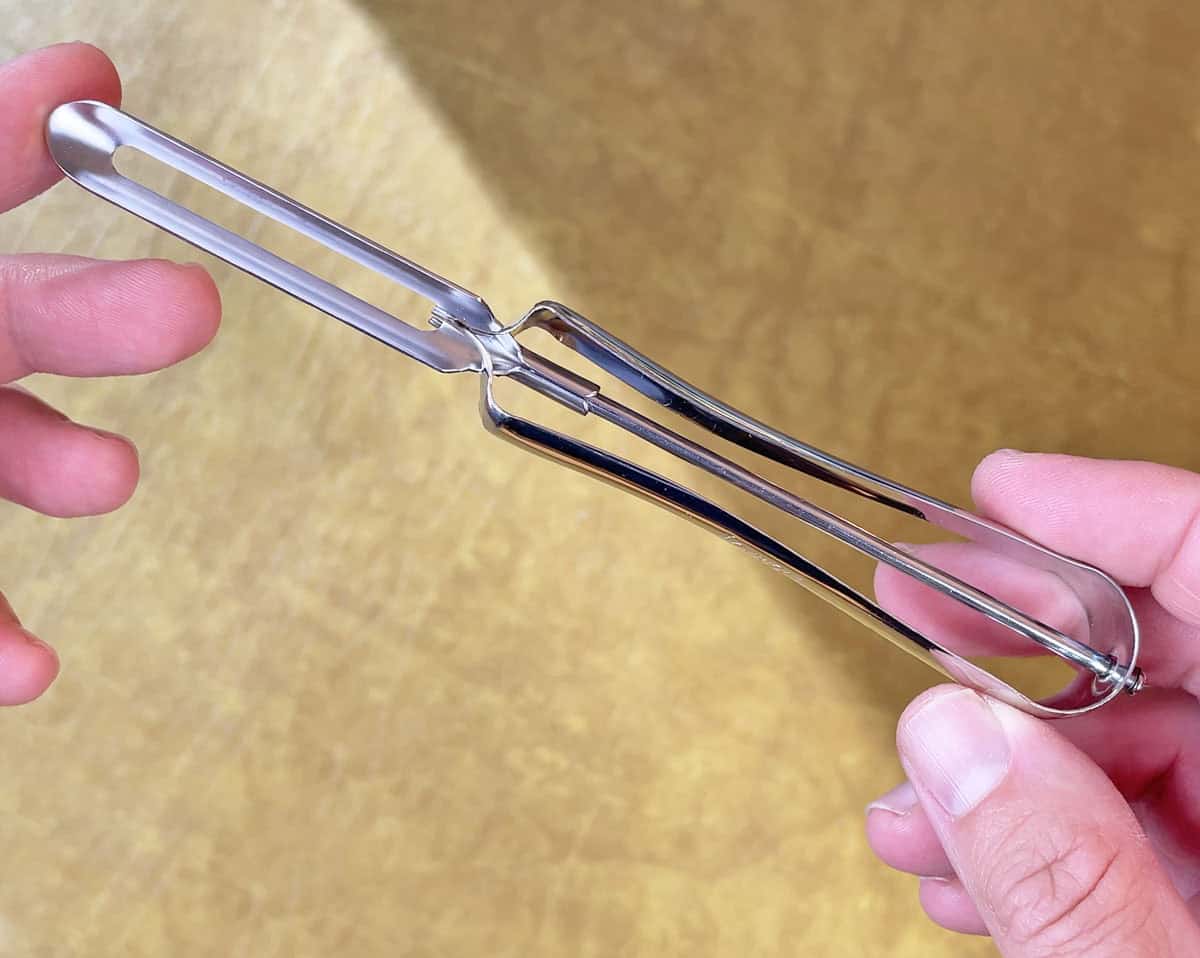
Despite its minimal design, it peeled everything with ease and consistency. The 2.6-inch straight-edge blade produced smooth, even strips on apples, carrots, and potatoes without a single skip or snag. The metal-on-metal motion creates a distinct “click” with each stroke, a small detail that makes the process surprisingly satisfying.
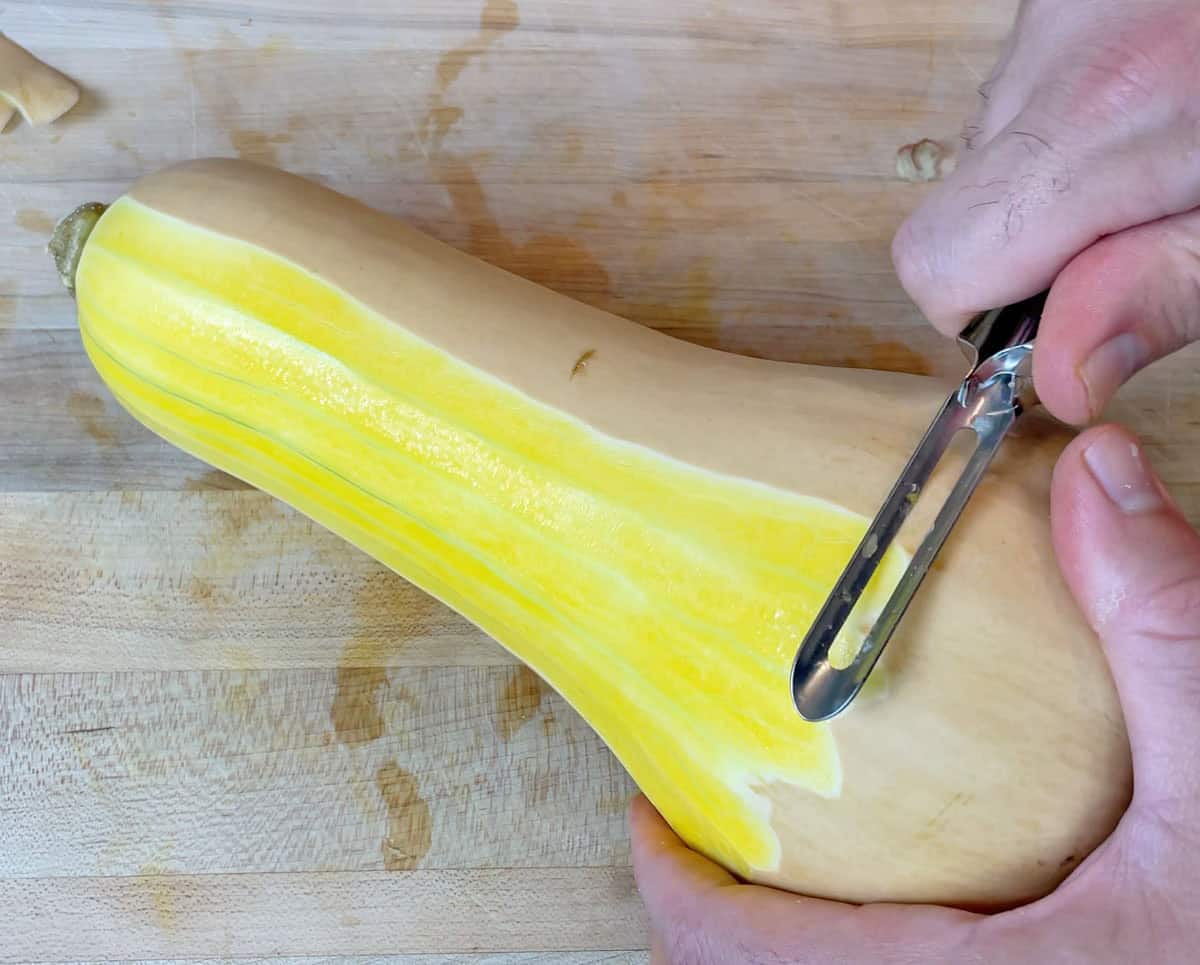
The 4-millimeter blade gap is well-balanced, wide enough to handle tougher skins but still precise enough to create thin peels. It performed exceptionally well on lemons and made quick, effortless work of butternut squash, which tends to challenge most straight-edge peelers. The sharpness of the stainless steel blade and the lack of flex in the frame gave it a clean, controlled feel from start to finish.
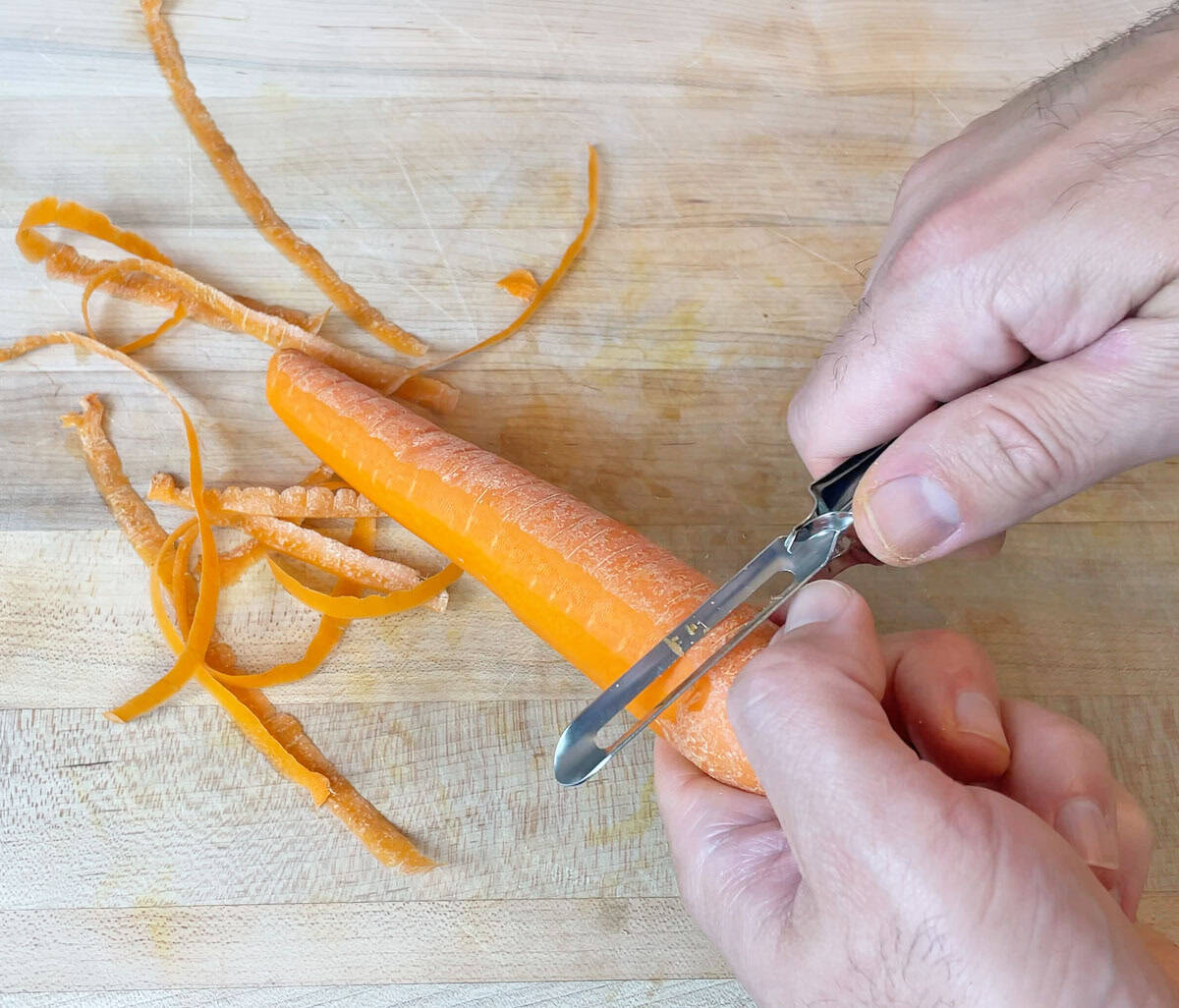
On the negative side, the thin metal handle is not the most comfortable, and during longer sessions, the edges can start to dig into your fingers. It’s not painful, but it’s less comfortable than the thicker, cushioned handles of peelers like the OXO Pro Swivel. The upside is that its slim, lightweight build reduces wrist fatigue.
The Linden Sweden Original Jonas Peeler is dishwasher safe, rust-resistant, and showed no damage in durability tests. It’s simple, inexpensive, and extremely effective.
Bottom Line: Which Vegetable Peeler Is the Best?
So after all that testing, which peeler should you buy?
The truth is, every peeler I tested will get the job done, and they’re all under fifteen bucks, so this isn’t a major investment. They should last for years if you take care of them, but like any small kitchen tool, they can eventually break.
The biggest differences come down to shape and blade type. Between Y and straight peelers, it’s really personal preference. I prefer straight peelers because I find that I can peel faster with them and they provide a bit more control, especially for smaller or odd-shaped foods like ginger.
And between serrated and straight edges, I prefer straight. They peel smoother and don’t dig in or get caught in bumps as often. Serrated blades can be better for peeling softer fruits like peaches or tomatoes, but in most cases, straight edges perform better.
All that said, here’s my recommendations.
Based on all of my testing, the best overall peeler is the Linden Sweden Original Jonas. The design is basic, but it peeled smoother than anything else I tested.
If you prefer a Y-peeler, go with the OXO Good Grips Y-Peeler. It’s sharp, comfortable, and it peels in both directions.
The two Kuhn Rikon peelers and the two OXO straight peelers are also great, but minor flaws caused me to rank them lower.
The only ones I don’t recommend are the KitchenAid Classic Euro, KitchenAid Classic Y, and the Spring Chef Swivel Peeler. The KitchenAid handles were too slippery, and the Spring Chef wasn’t noticeably duller than the others.
Compare prices of all the peelers I tested at the links below:
- Linden Sweden Original Jonas Peeler (Amazon)
- OXO Good Grips Y-Peeler (Amazon)
- OXO Good Grips Pro Swivel Peeler (Amazon)
- OXO Good Grips Serrated Peeler (Amazon)
- KitchenAid Classic Euro Peeler (Amazon)
- KitchenAid Classic Y-Peeler (Amazon)
- Kuhn Rikon Original Swiss Peeler (Amazon)
- Kuhn Rikon Serrated Piranha Y-Peeler (Amazon)
- Spring Chef Premium Swivel Peeler (Amazon)
