

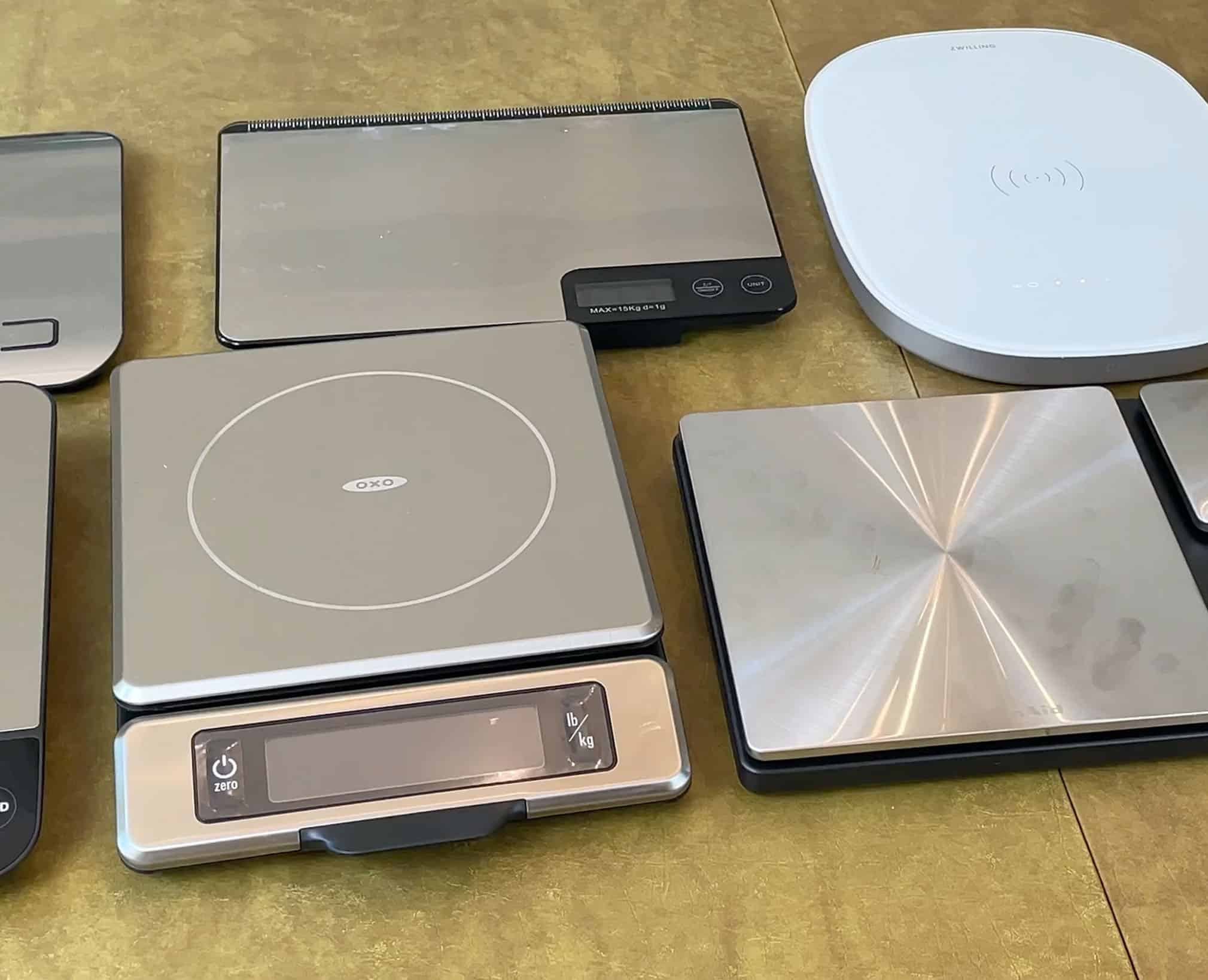
Which kitchen scale is the best? Are expensive kitchen scales worth it? Or are the cheaper ones just as good?
To answer these questions, I tested the 7 highest rated brands on the market, including OXO, KitchenAid, Zwilling, Amazon Basics, Escali, Ultrean, and Etekcity.
In this review, I quickly breakdown the pros and cons of each scale. You’ll find out which ones are worth it, and which ones you should avoid.
Key Takeaways
The OXO Good Grips was the most well-rounded scale I tested. The pull-out display, long 30-minute timeout, and removable platform made it the most practical and user-friendly.
If you’re looking for something cheaper, the Escali Primo is a solid choice. It was the most accurate overall and easy to clean, though the small platform and lack of backlight are trade-offs.
Etekcity and Zwilling both have sleek designs, built-in rechargeable batteries, and easy-to-clean surfaces, but their accuracy at low weights was inconsistent.
KitchenAid’s dual-scale concept is interesting, but the large platform read low consistently, and the display layout was confusing.
Ultrean and Amazon Basics were the most affordable, but they struggled with precision and build quality.
Compare the current prices of each scale at the links below:
Use the links below to navigate the review:
- Comparison Chart
- Test Methods
- Ultrean
- Amazon Basics
- KitchenAid Dual Platform
- Escali Primo
- Etekcity
- OXO Good Grips
- Zwilling Enfinigy
- Bottom Line: Which Kitchen Scale Is Best?
Comparison Chart
| Ultrean | Amazon Basics | KitchenAid | Escali Primo | Etekcity | OXO Good Grips | Zwilling Enfinigy | |
|---|---|---|---|---|---|---|---|
| Price | $ (Amazon) | $ (Amazon) | $$ (Amazon) | $$ (Amazon) | $$$ (Amazon) | $$$ (Amazon) | $$$$ (Amazon) |
| Platform Dimensions | 5.5 x 5.5 in | 6.75 in diameter | 6.6 x 6.6 in (Main), 3.4 x 3.4 in (Precision) | 5.3 in diameter | 7 x 6.6 in | 7 x 7 in | 9.65 x 7.4 in |
| Display Size | 1.5 x 0.75 in | 1.75 x 0.9 in | 2.5 x 1.5 in | 1.8 x 0.75 in | 2.25 x 1 in | 3.4 x 1 in | 1.8 x 1 in |
| Max Capacity | 11 lb | 11 lb | 11 lb (Main), 16 oz (Precision) | 11 lb | 22 lb | 11 lb | 22 lb |
| Units | g, kg, lb, oz, ml, milk ml | g, lb:oz, ml, fl oz | g, oz, lb:oz | g, oz, lb:oz | g, oz, lb:oz, ml, fl oz | g, kg, oz, lb | g, oz |
| Buttons | Physical | Physical | Physical | Physical | Touch | Physical | Touch |
| Battery | 1 x CR2032 | 2 x AAA | 3 x AAA | 2 x AA | Rechargeable (USB-C) | 4 x AAA | Rechargeable (USB-C) |
| Auto-Off Timeout | 3 min | 2 min | 3 min | 4.5 min | 3 min | 30 min | 3 min |
| Removable Platform | No | No | No | Yes | No | Yes | No |
| Backlit Display | Yes | No | Yes | No | Yes | Yes | Yes |
| Weight Increments | 1g / 0.01oz | 1g / 0.1oz | 1g / 0.1oz (Main), 0.01g / 0.001oz (Precision) | 1g / 0.1oz | 1g / 0.05oz | 1g / 0.1oz | 1g / 0.1oz |
| Water Resistance | No | No | No | No | IPX6 | No | No |
Test Methods
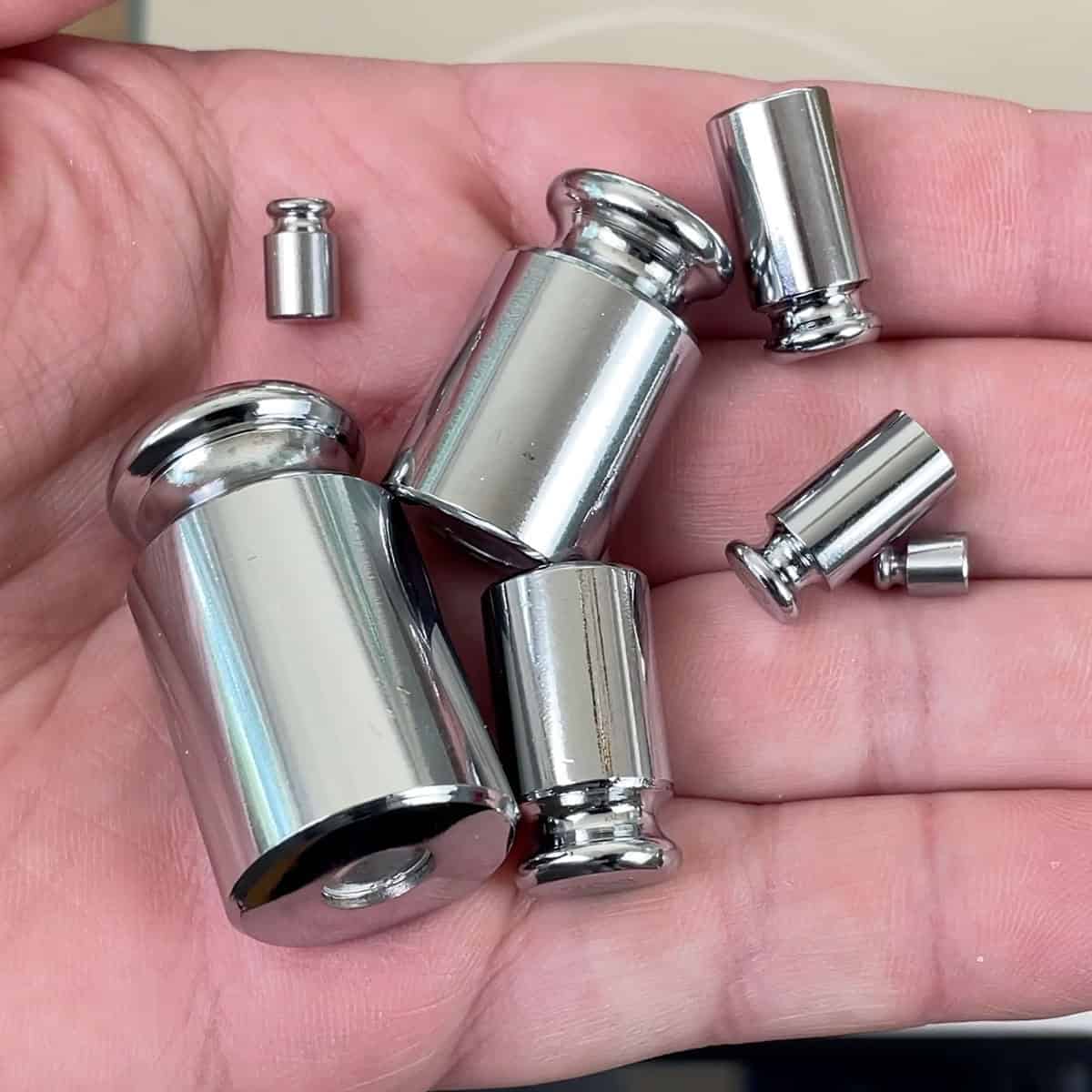
To evaluate each kitchen scale, I started by measuring accuracy using certified calibration weights ranging from 1 gram to 100 grams. I tested each weight in the center of the platform, at all four corners, and again on a slightly uneven surface to check for consistency across different positions and conditions.
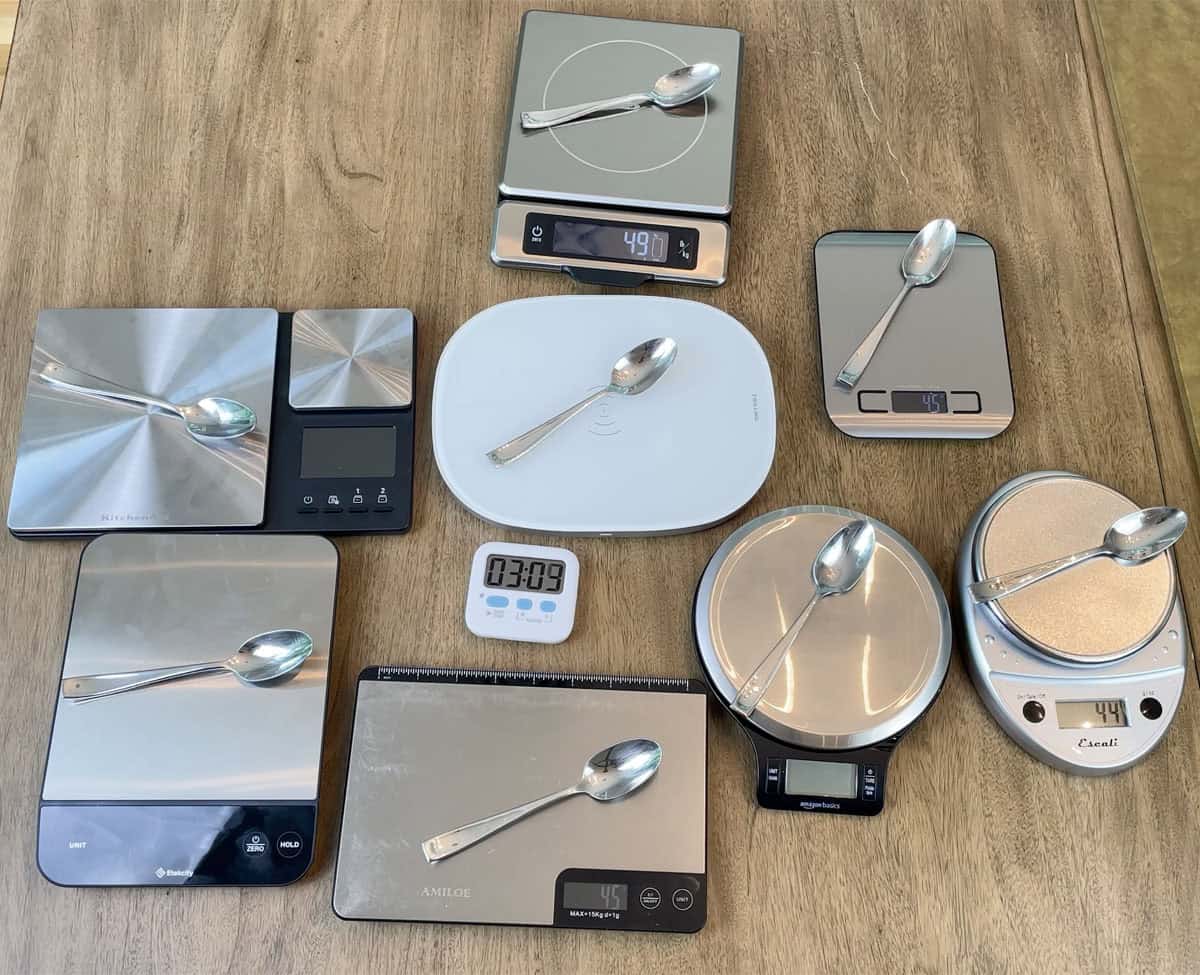
I also timed how long each display stayed on before shutting off automatically. This matters when you’re portioning ingredients slowly and don’t want the screen to disappear mid-task.
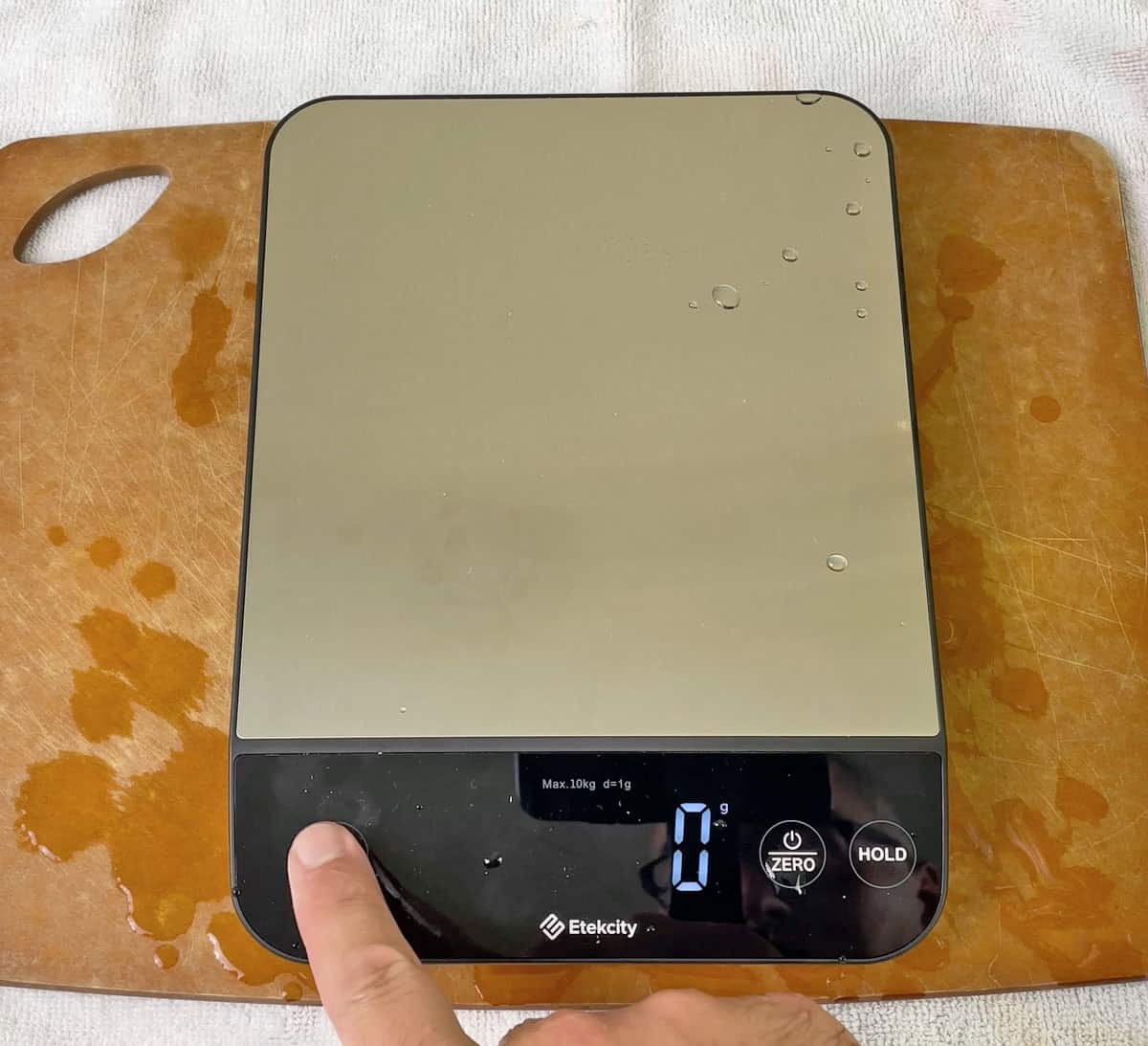
To test usability, I pressed the tare, unit, and power buttons with wet fingers to simulate real cooking conditions.
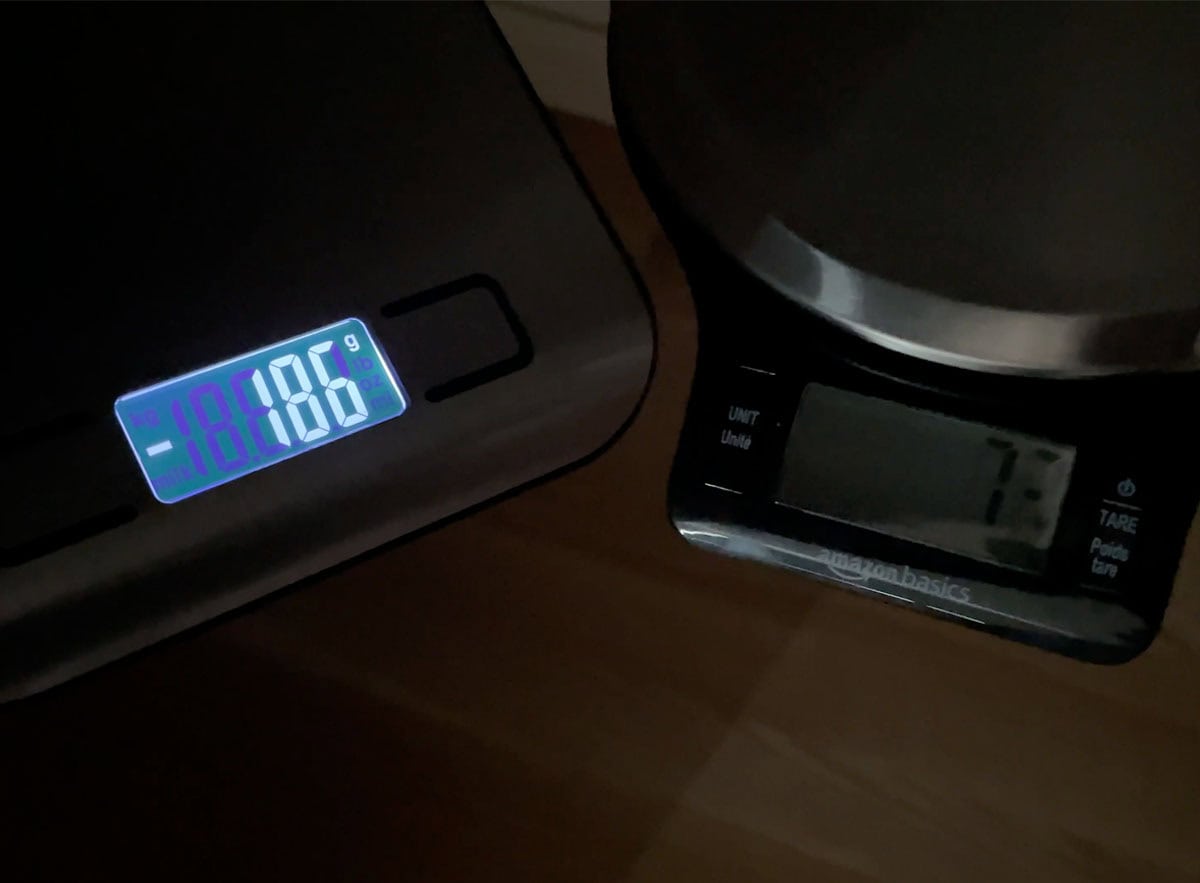
I compared screen visibility in both bright sunlight and dim lighting to see which displays were easiest to read in different environments.
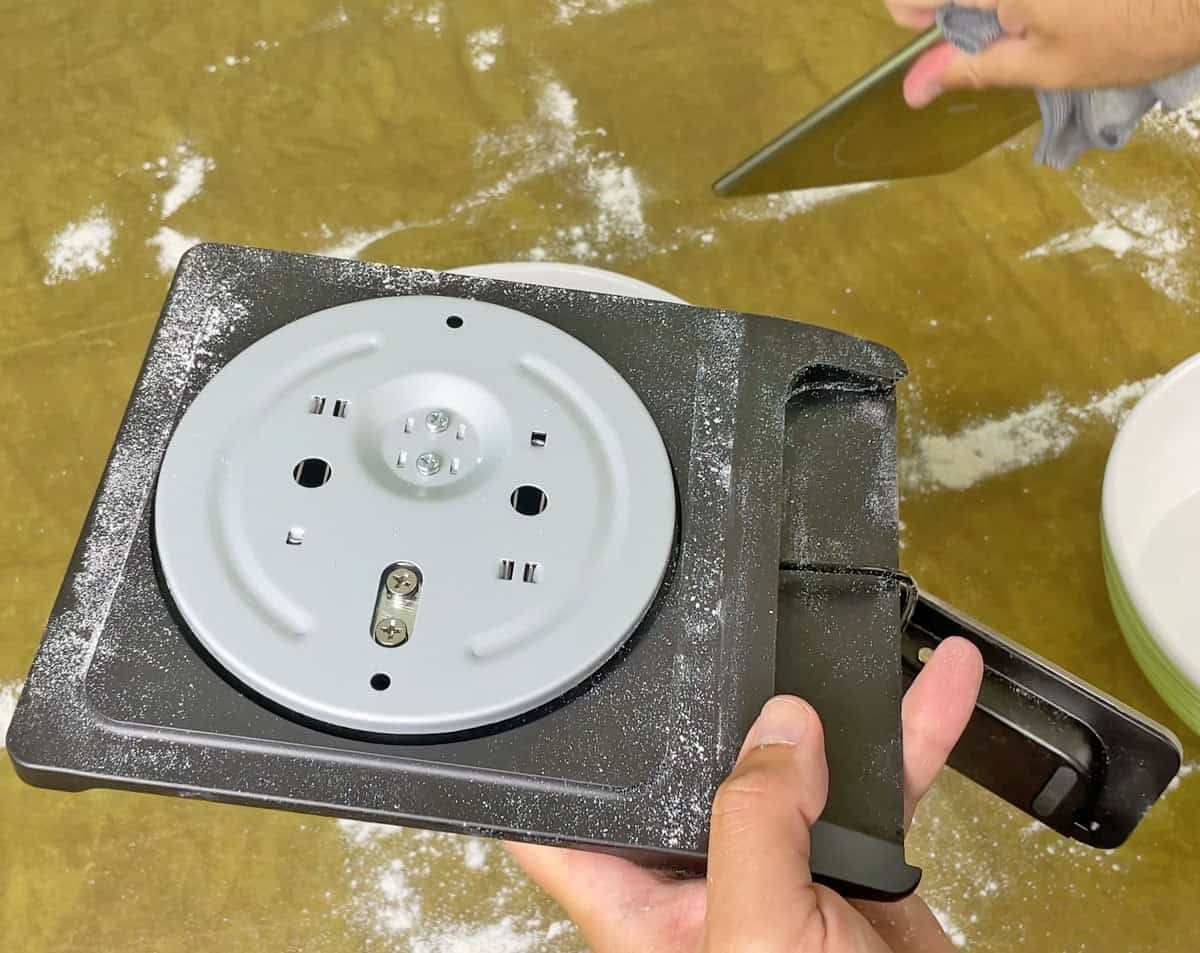
To evaluate ease of cleaning, I coated each scale in flour, worked it into the seams and around the buttons, then brushed it off to see how well the surfaces handled mess and whether any residue got trapped.

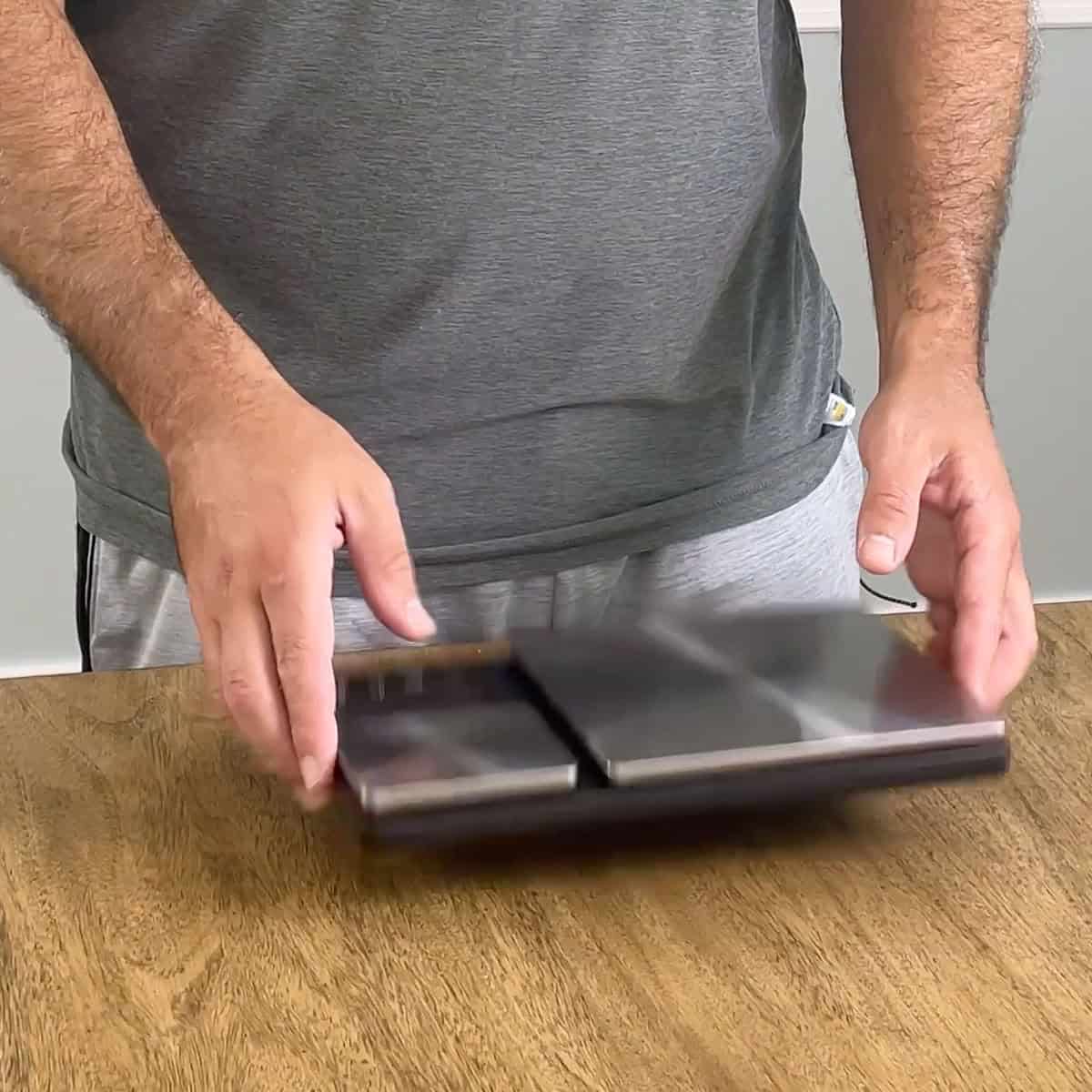
For durability, I dropped each scale 30 times from a height of 2 inches. This simulates the kind of repeated impacts that happen when storing it in a drawer. I also pressed the tare and unit buttons 200 times each to test how they held up under long-term use.
After all that, I re-tested accuracy to check for any performance issues or calibration drift.
Ultrean Digital Kitchen Scale
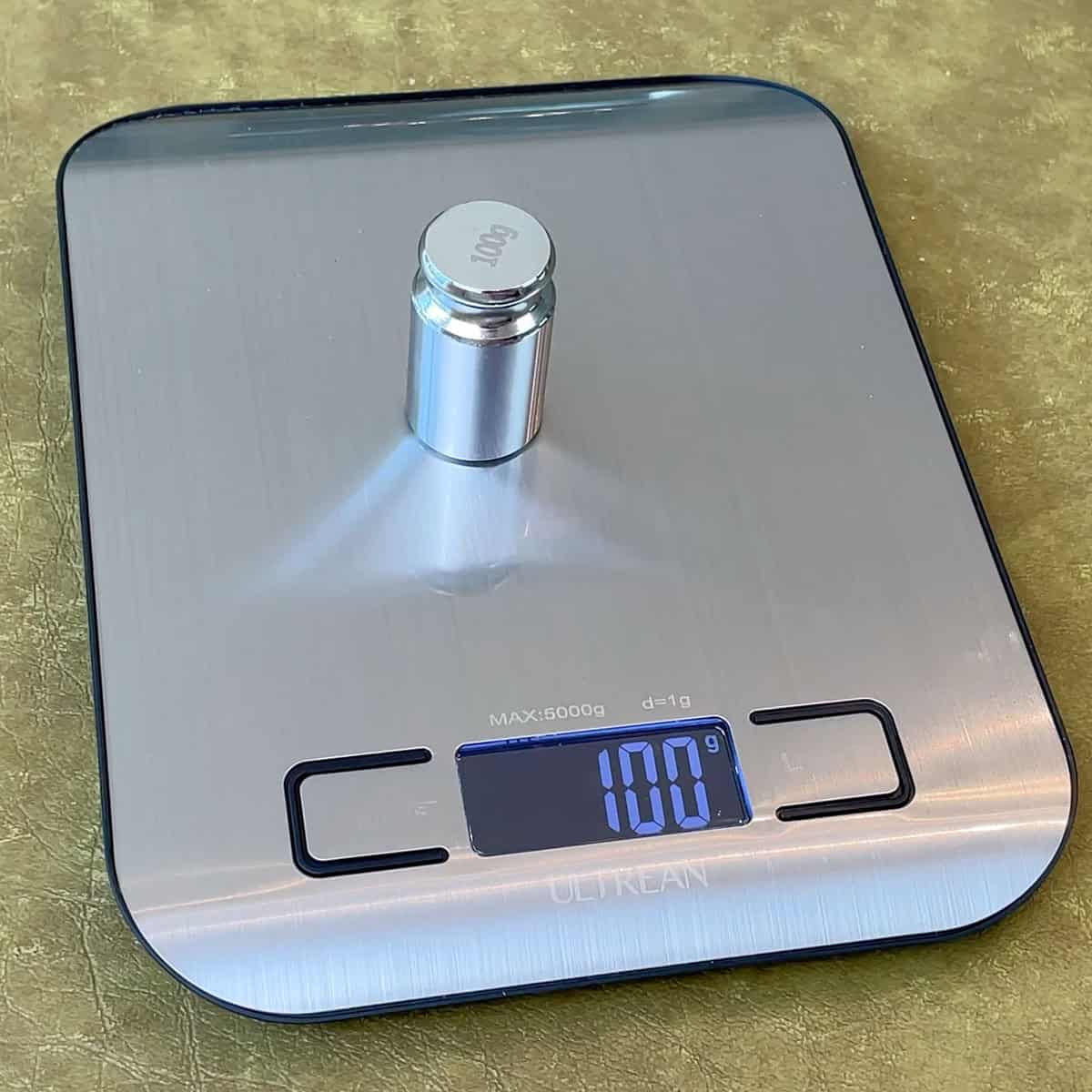
The Ultrean is the cheapest, lightest, and most compact scale I tested. It weighs just 187 grams and measures 5.5 by 5.5 inches, making it easy to store but less practical for weighing large items. The 1.5-by-0.75-inch backlit LCD display was one of the easiest to read in low light. It automatically shuts off after three minutes.
Pressing the tare or unit button causes the displayed weight to fluctuate slightly. Each press registers a brief spike in the reading, which makes the scale feel jumpy and less stable during use. This doesn’t prevent it from functioning, but it adds a layer of annoyance, especially during precise measurements.
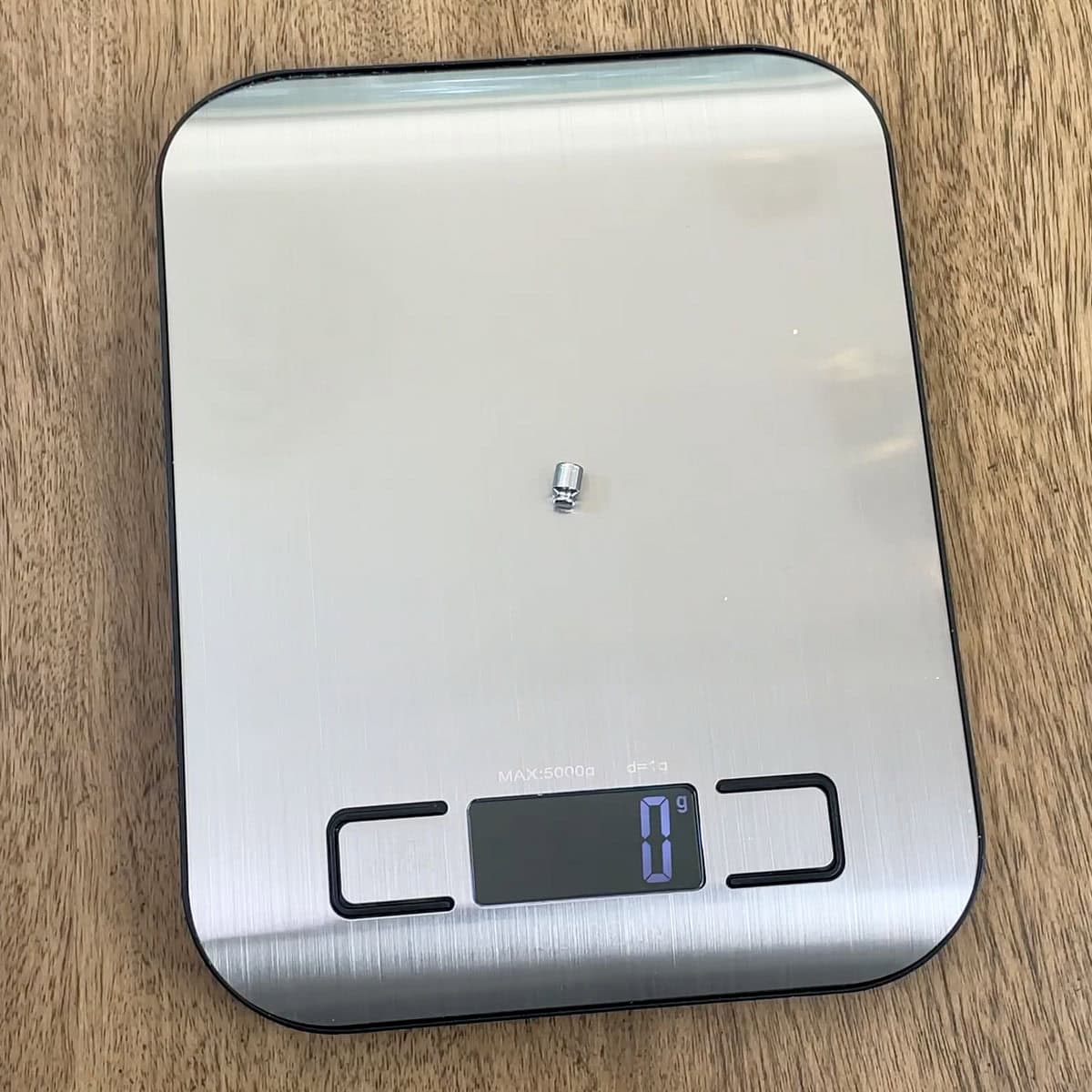
Accuracy was an issue at lower weights. The scale didn’t detect a 1-gram weight at all and occasionally rounded 2 grams down to 1. It became accurate with 10 grams and above, including at all four corners of the platform, but this inconsistency at the low end limits its usefulness for tasks like weighing yeast or spices.
It passed both the durability tests without any problems. After 30 drops from two inches and 200 presses of the tare and unit buttons, everything still worked normally.
Cleaning, however, was frustrating. There’s a narrow gap between the stainless steel top and the plastic base, as well as around the physical buttons. Flour got stuck in both areas and didn’t fully come out even after a thorough wipe.
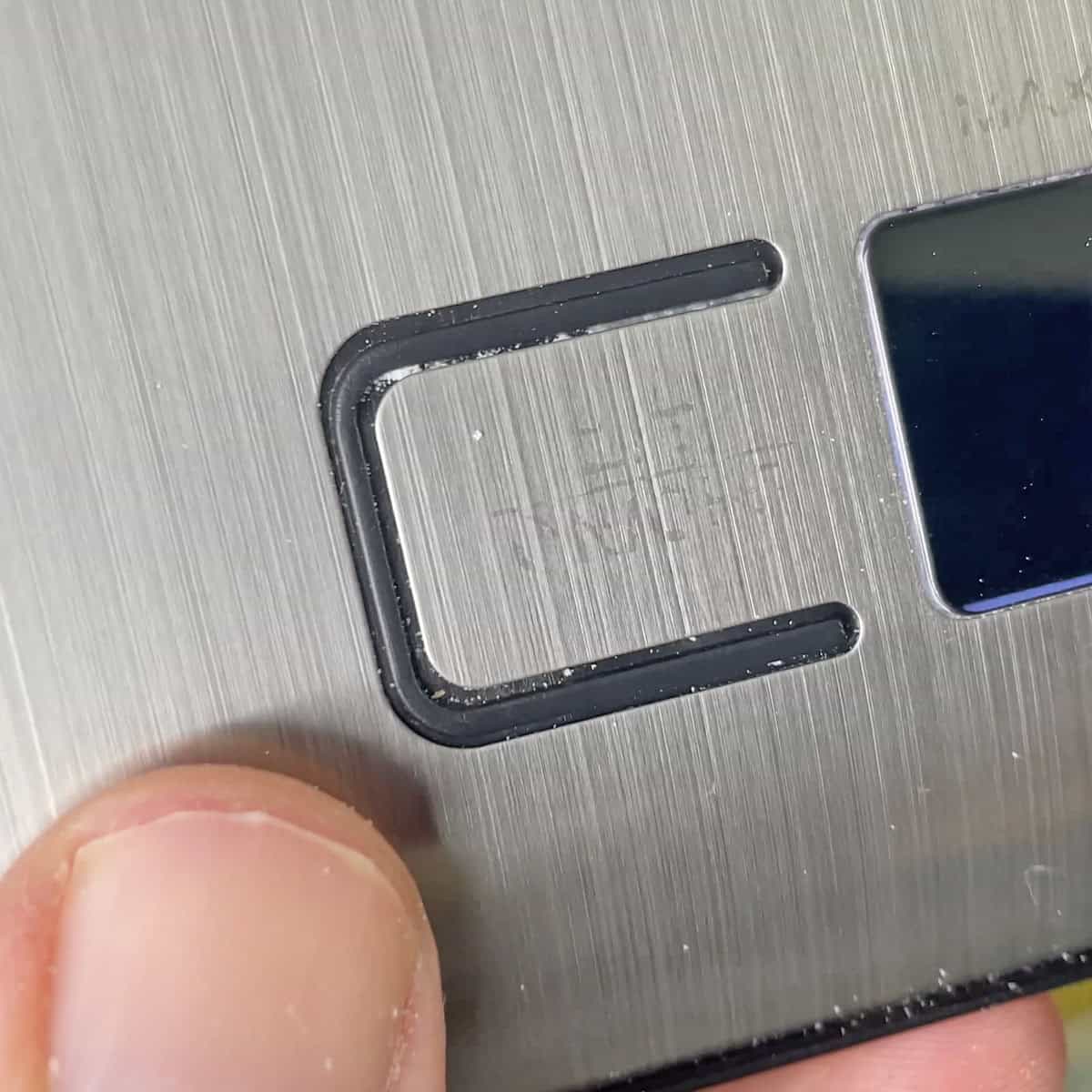
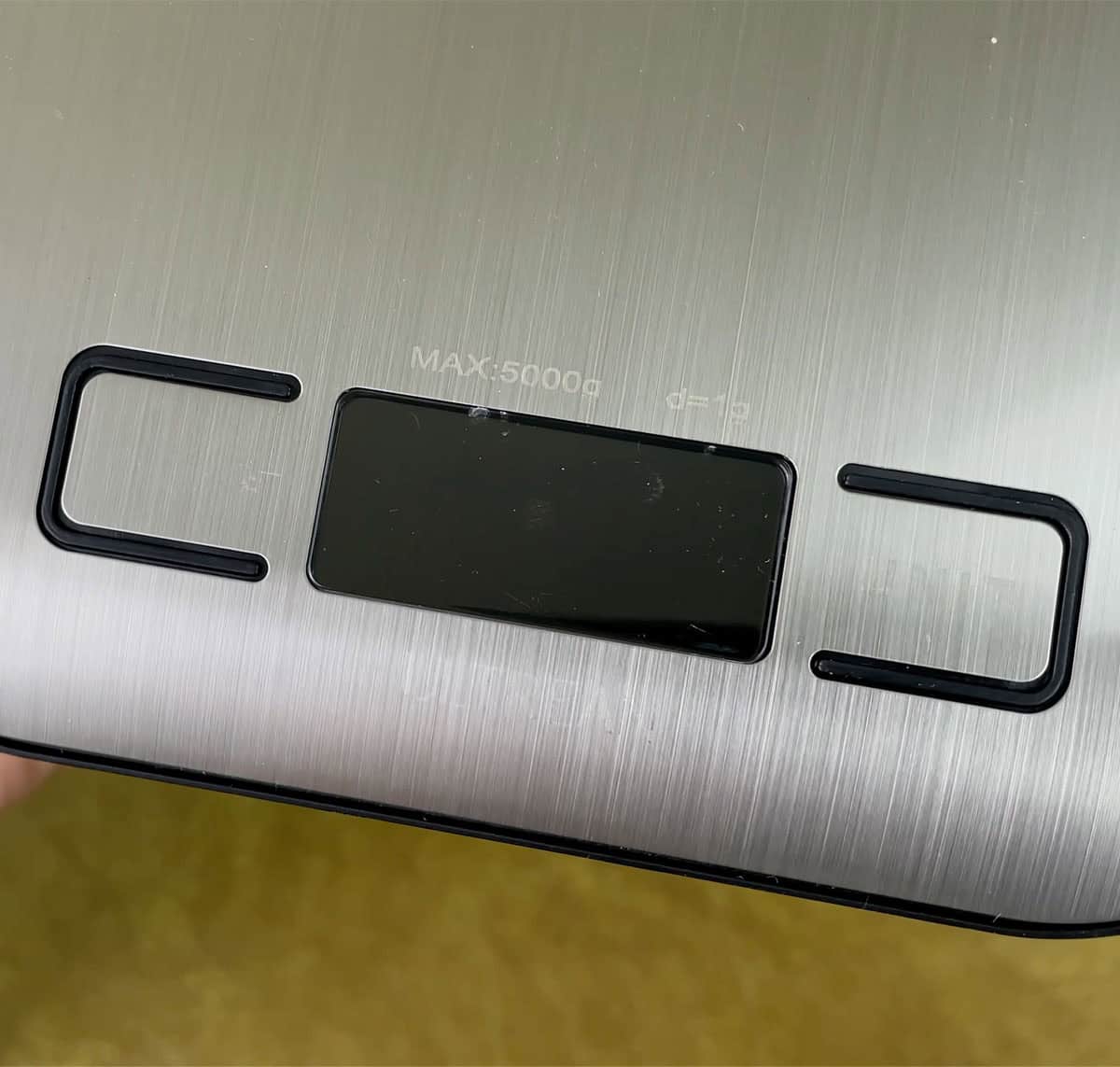
One last issue: the printed labels for the buttons and logo were already fading straight out of the box, which raises concerns about long-term durability and usability.
Amazon Basics
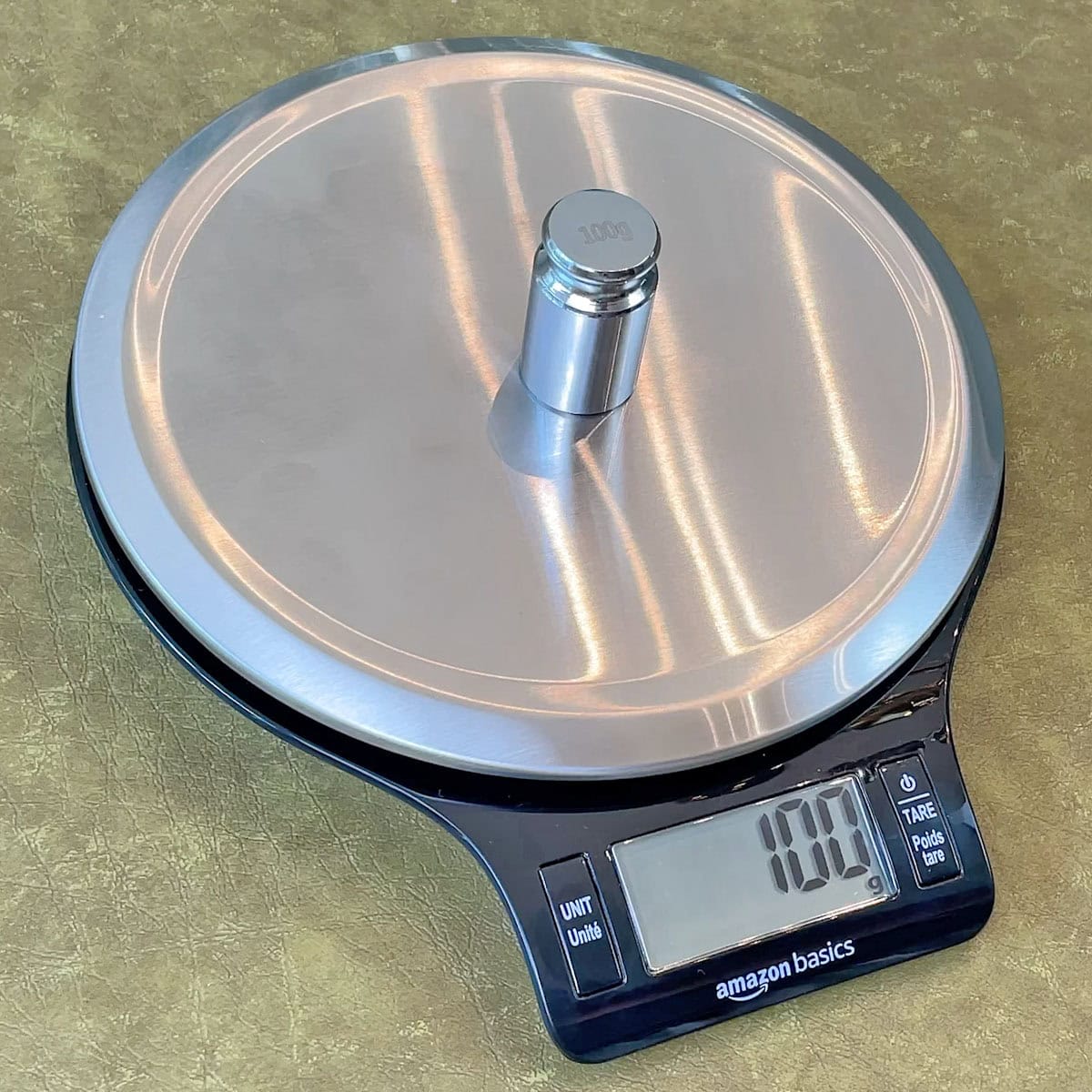
The Amazon Basics scale features a stainless steel platform with a simple, round design measuring 6.75 inches in diameter. It uses physical buttons for tare, unit selection, and power, and weighs 401 grams. The LCD screen is 1.75 by 0.9 inches, but it’s not backlit, which made it one of the hardest displays to read in dim lighting.
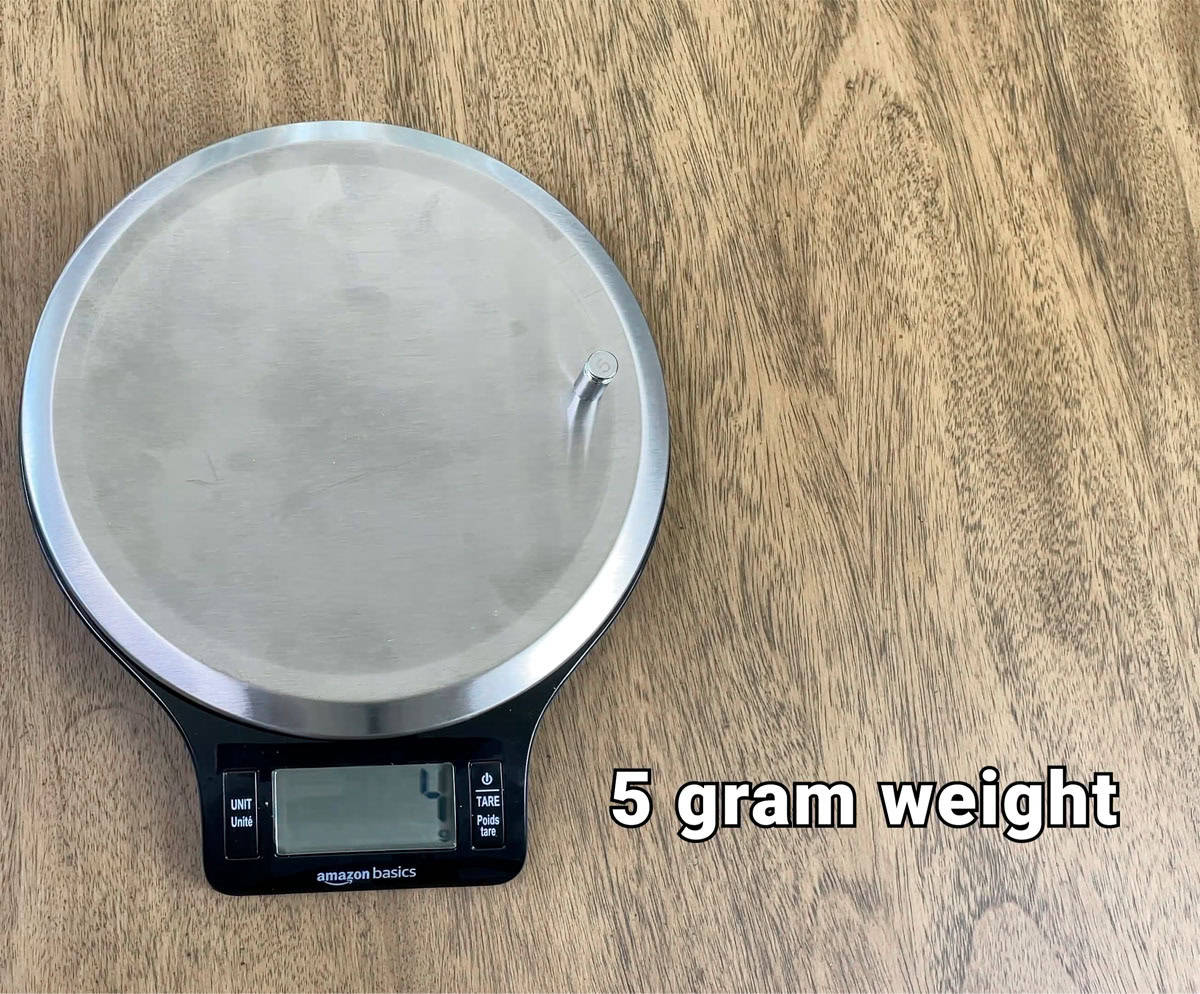
In testing, the scale struggled with accuracy at lower weights. It was often off by 1 gram when measuring items under 20 grams. Quick movements caused inconsistent readings—if I picked up a weight and placed it back down too quickly, the measurement would sometimes fail to register. Even with slow, careful placement, it wasn’t always reliable for precision tasks.
It passed both the durability tests with no issues. After 30 drops and 200 button presses, everything continued working as expected. However, the auto shut-off timer is just two minutes, the shortest of any scale I tested. That’s not ideal when you need more time to portion ingredients.
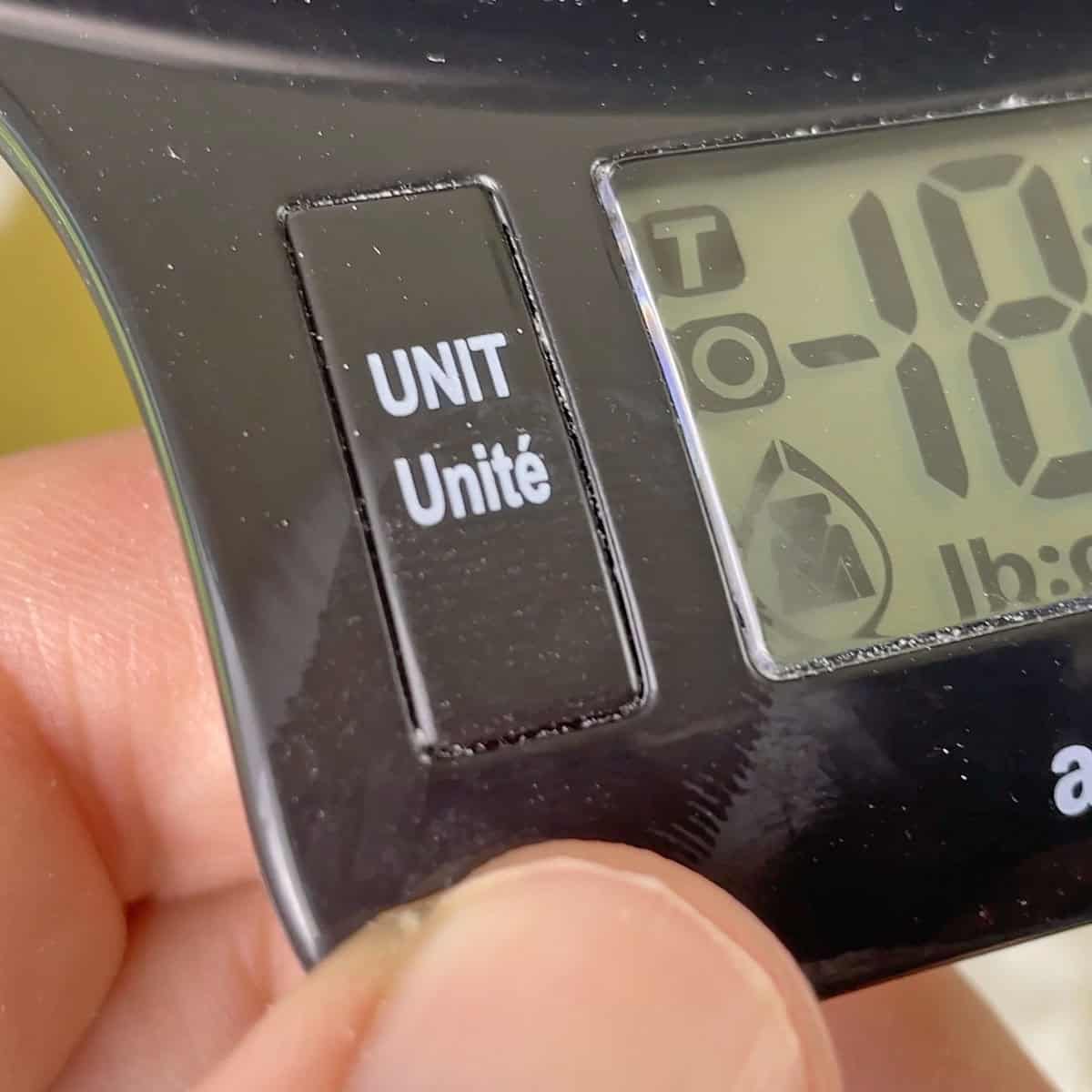
Cleaning was also a challenge. There’s a visible gap between the platform and the plastic base that collects flour and crumbs. This made it harder to clean thoroughly compared to sealed or flush designs.
KitchenAid Dual Platform
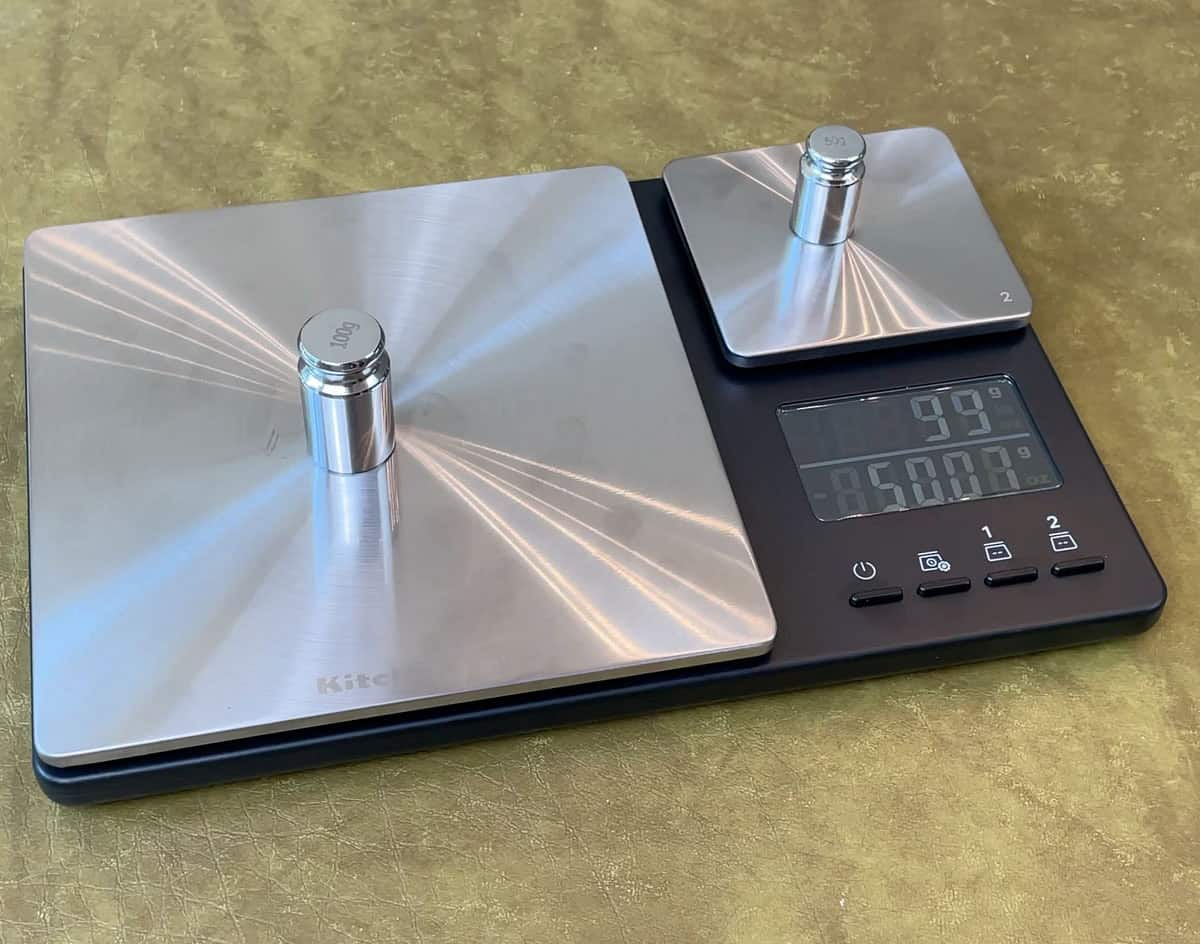
KitchenAid is the only brand I tested with a dual platform setup. It has a large main scale with a 6.6-inch square platform and a smaller 3.4-inch precision scale built into the same unit. In theory, this allows you to weigh bulk ingredients and tiny amounts on one device. In practice, it didn’t work well.
The large scale consistently read 1 gram too low across multiple tests, even before any stress testing. The smaller scale was much more accurate, detecting 1-gram and 2-gram weights reliably. However, the two platforms aren’t fully independent. Sometimes placing a weight on the large platform triggered ghost readings on the small one, which defeats the point of the dual design.
One usability win is the power button. Unlike most scales that require a long press, this one turns on and off with a single tap.
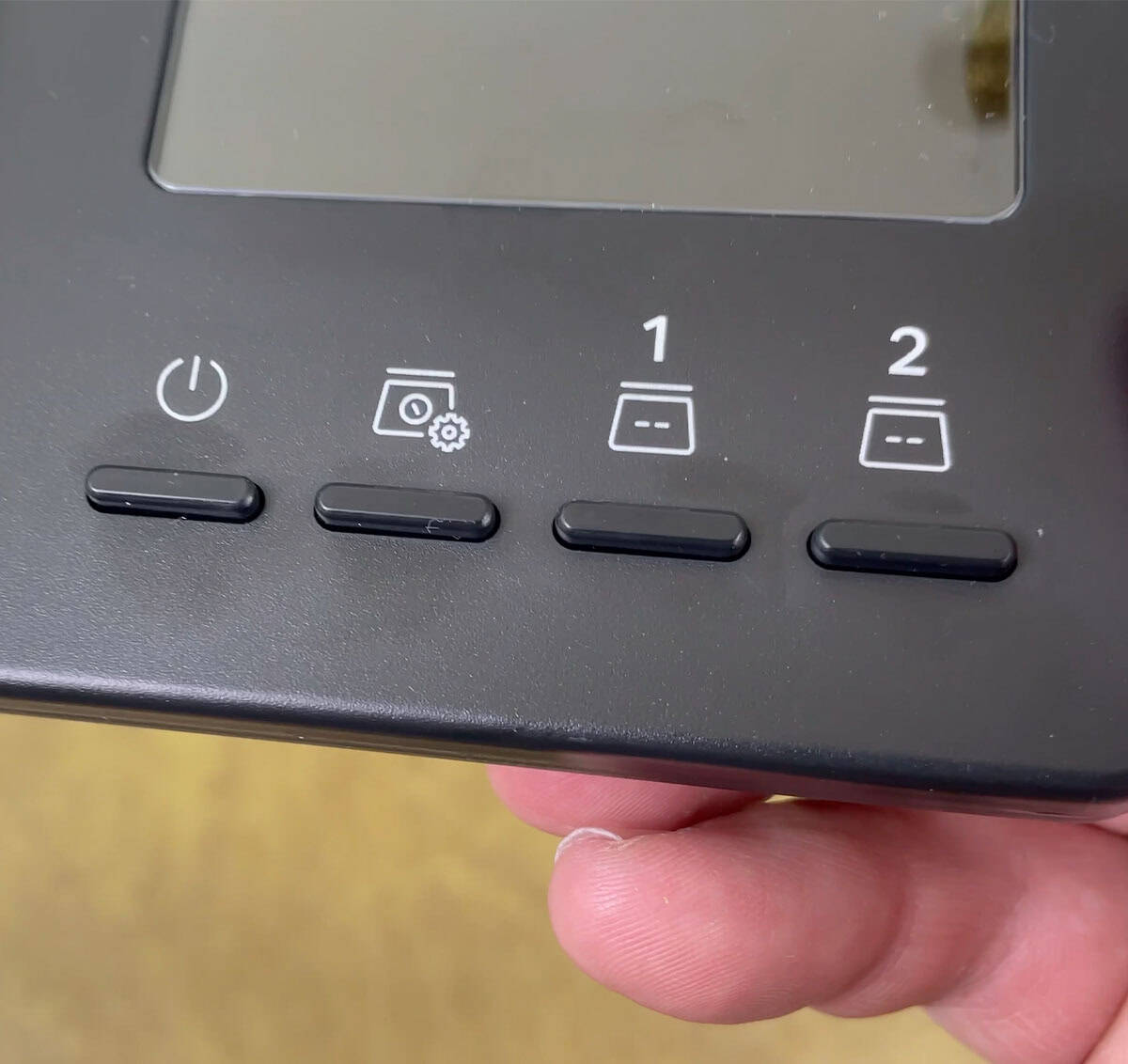
But the display layout is confusing. The large screen shows two numbers side by side, and the top one corresponds to the large scale—even though it’s located directly beneath the small platform. That design choice led to a few misreads during testing.
During the cleaning test, flour collected in the seams around both platforms and around the buttons. I had to press the buttons repeatedly to work the flour loose. There’s no removable platform, so cleaning was more difficult compared to flush-top designs.
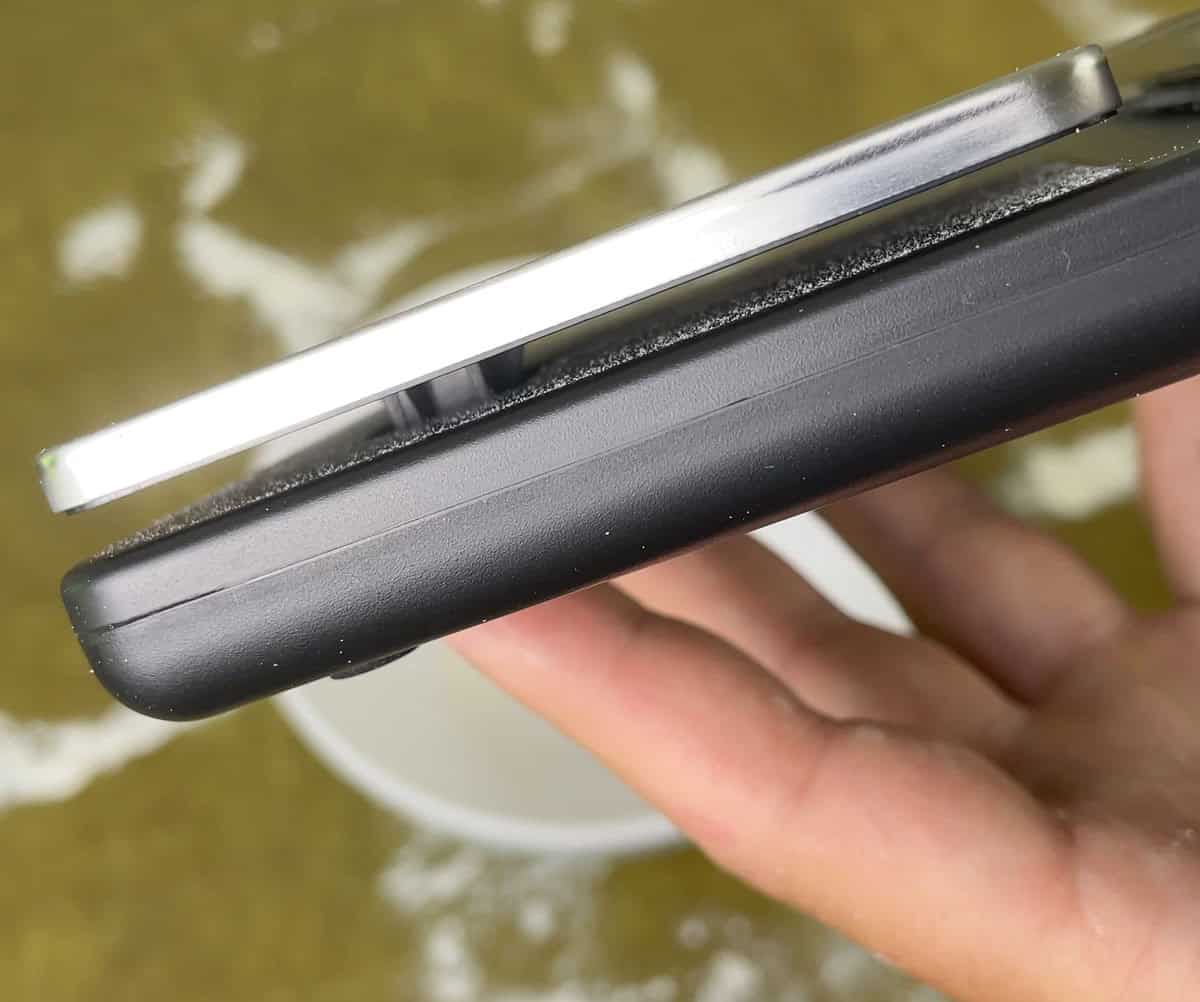
It passed the drop test and button test without any failures. The large scale remained inaccurate but did not degrade further after 30 drops and 200 button presses. That said, its persistent accuracy issues limit its value despite the unique concept.
Escali Primo
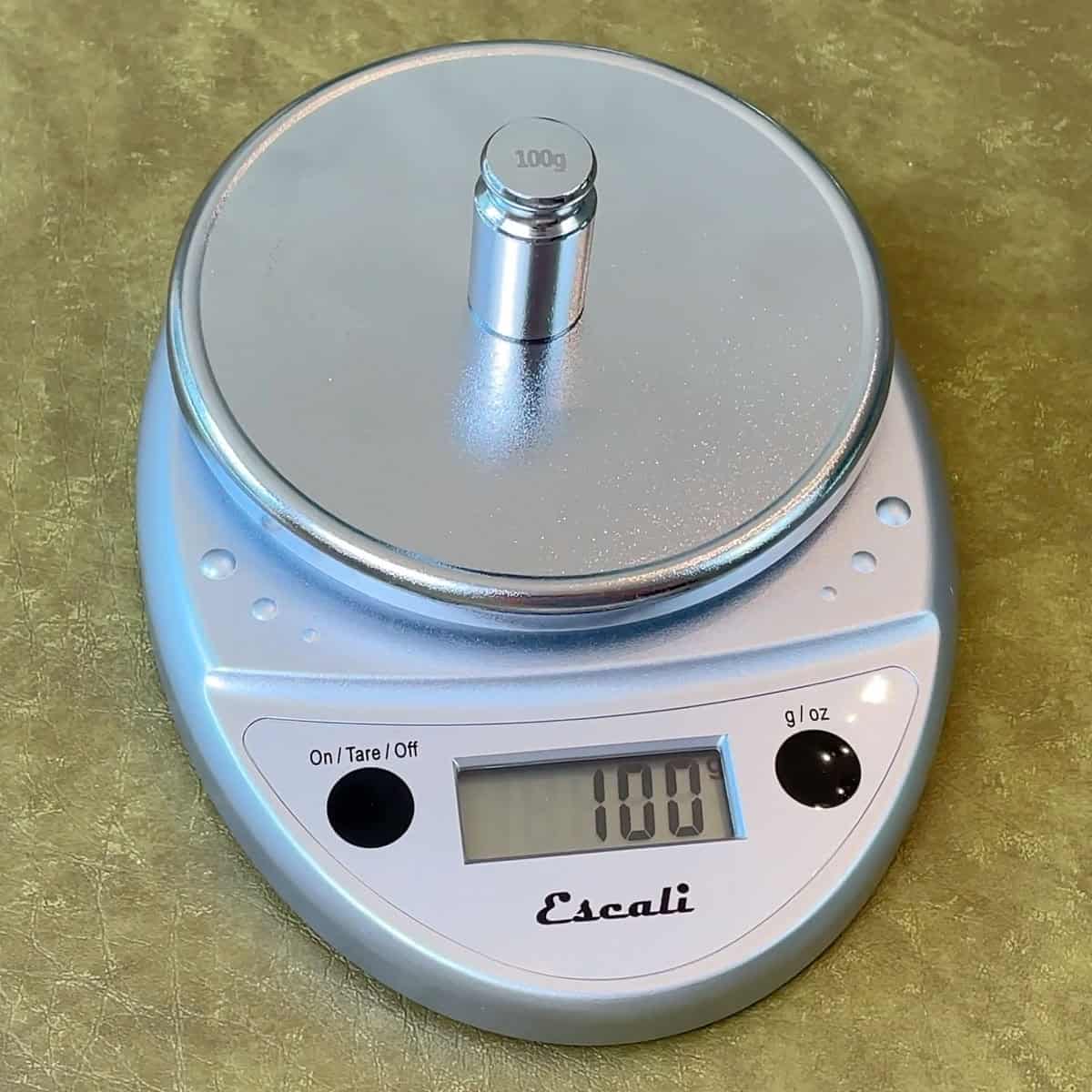
The Escali Primo is one of the most recommended kitchen scales on the market. It’s the top pick from The New York Times Wirecutter and was also named the best budget scale by Serious Eats. One standout feature is the extended screen timeout—at 4 minutes and 30 seconds, it stays on longer than most others I tested, which typically shut off after 2 to 3 minutes.
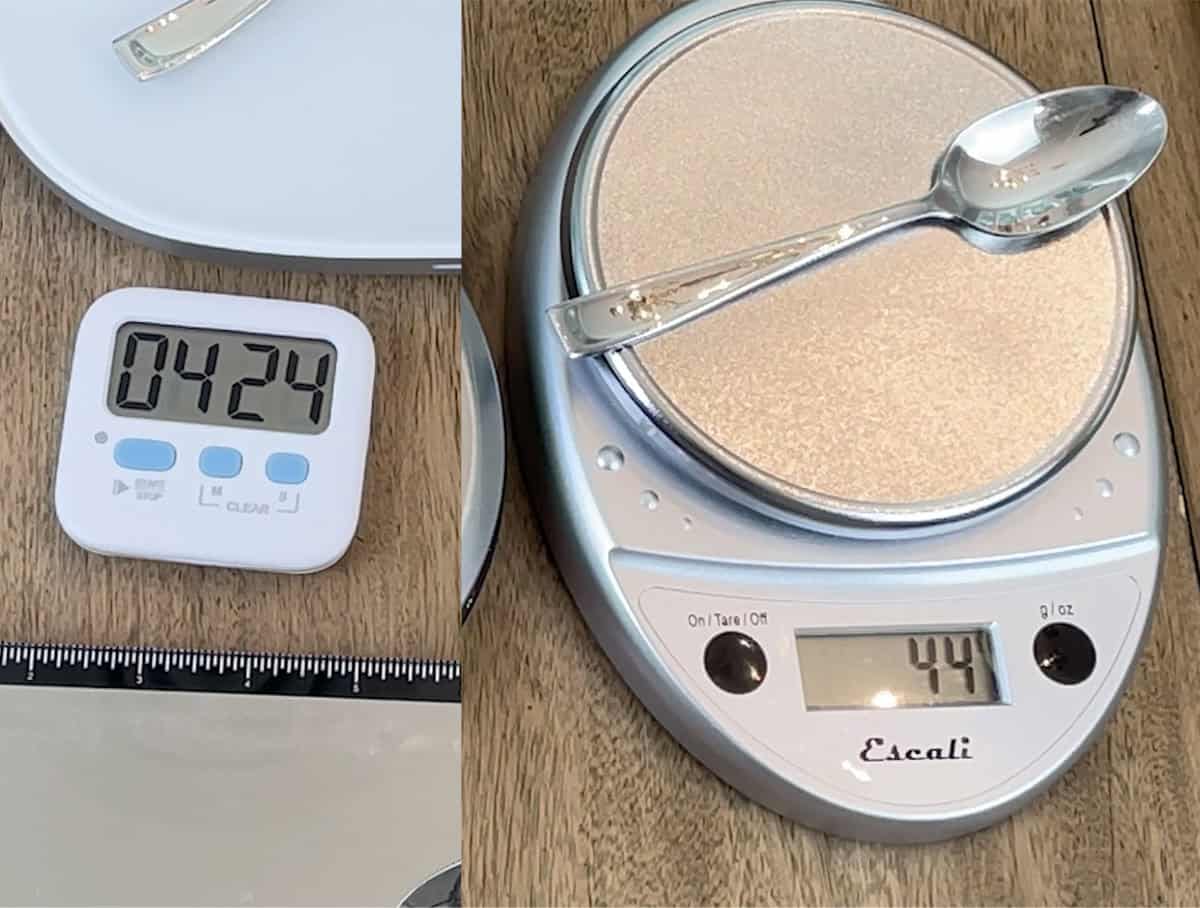
In terms of accuracy, this was the best performer. It was the only scale to register every calibration weight correctly, including the 1-gram weight. It maintained that precision regardless of placement on the platform or on an uneven surface. Even after 30 drops and 200 button presses, its accuracy didn’t change.
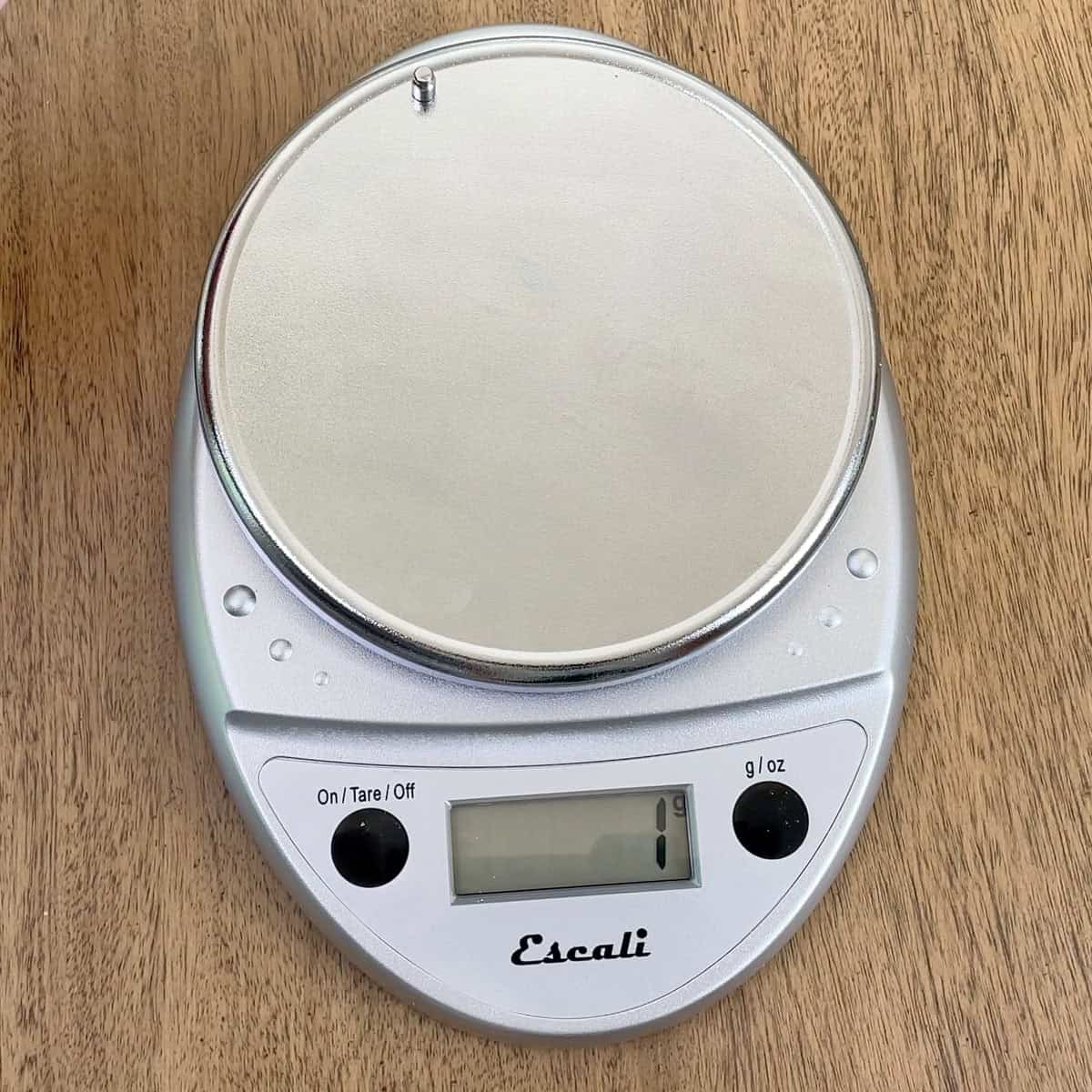
The buttons are physical and laminated directly into the surface. There are no seams around them, which helps prevent flour or moisture from getting inside. Still, some flour collected in the gap between the removable platform and the base during the cleaning test.
There are a few small drawbacks. The platform looks like stainless steel but is actually coated plastic, which feels cheaper than most others I tested. The display is not backlit, so visibility in low light is limited. Also, the unit label (such as grams or ounces) is pushed to the far right side of the screen, and on some units it was slightly cut off.
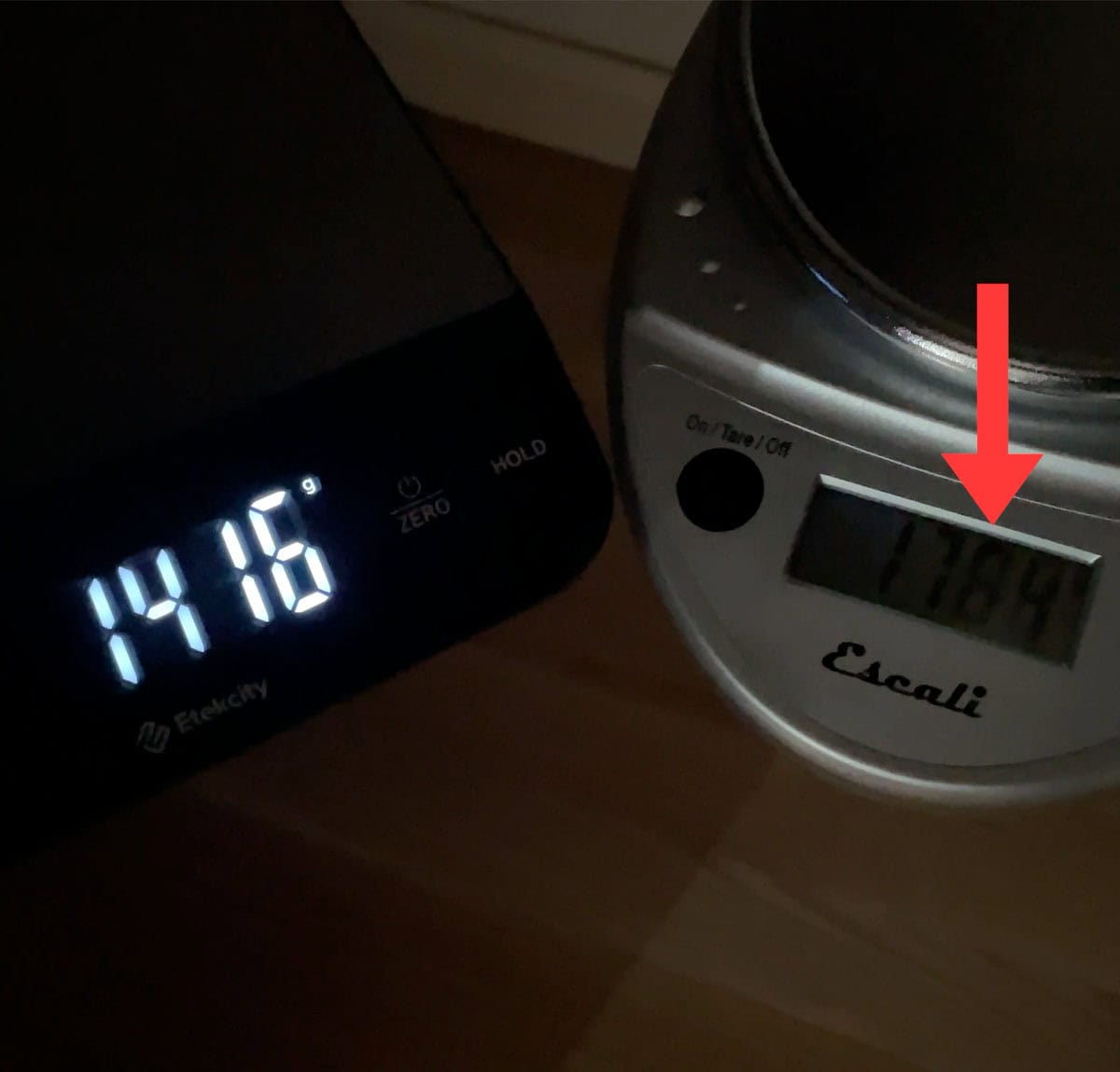
Despite those minor issues, the Escali Primo stood out as the most accurate and consistent scale in this group, especially for the price.
Etekcity
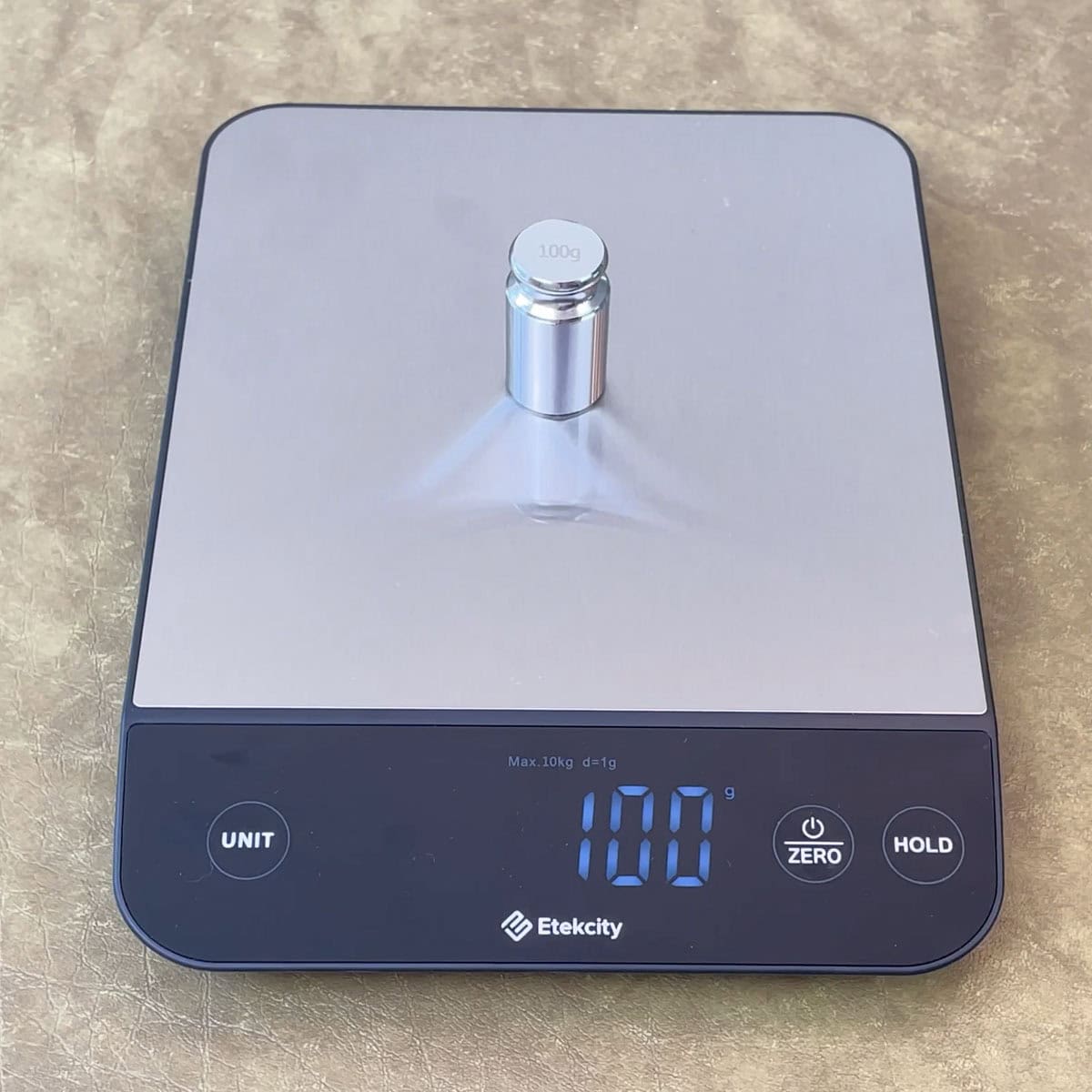
The Etekcity scale includes a built-in rechargeable lithium-ion battery and charges via USB-C. It’s also the only model I tested with an IPX6 water resistance rating, which means it can handle direct splashes or even rinsing in the sink. Most other scales need to be wiped carefully with a damp cloth.
It has a bright 2.25-by-1-inch LED display that was one of the easiest to read in the dark. It also includes a hold feature that locks the weight on screen, which is useful if a large bowl blocks the display during use.
Accuracy was inconsistent. It didn’t register 1-gram or 2-gram weights and was often off by 1 gram in the center. Oddly, the edges sometimes produced more accurate results than the middle. After the drop and button durability tests, performance stayed the same—still unreliable at low weights.
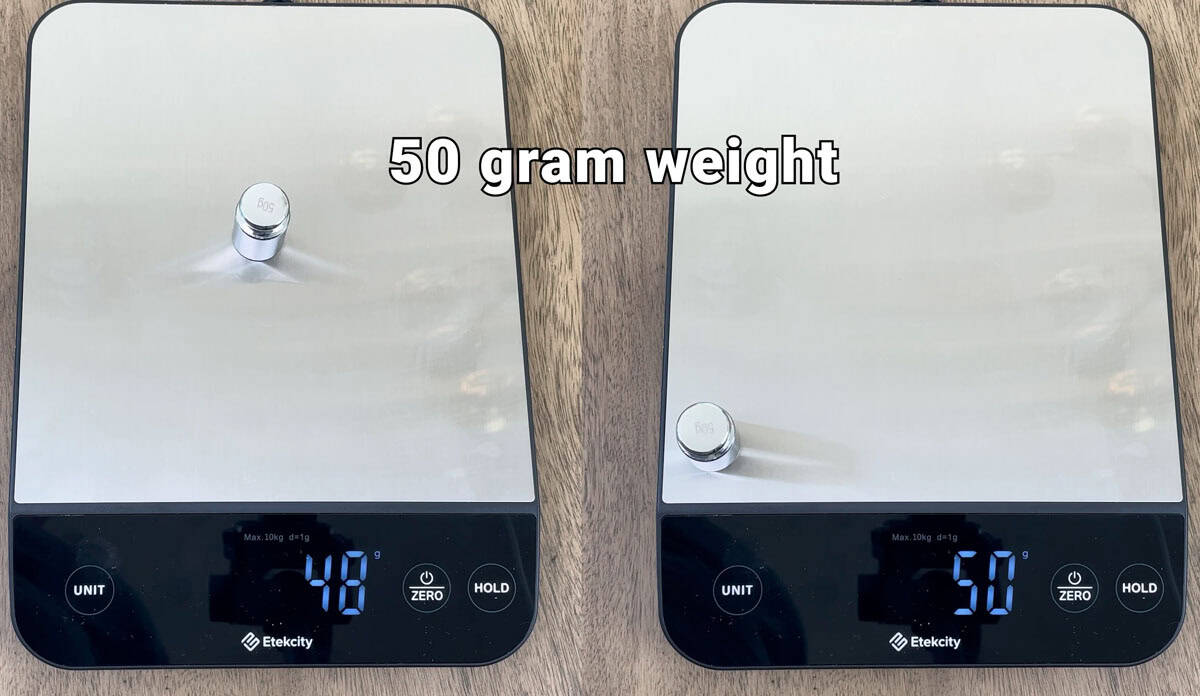
The seamless stainless steel surface and touch controls made it easy to wipe clean. No flour got trapped during the cleaning test. That said, I prefer the feel and responsiveness of physical buttons. The touch interface works, but it lacks feedback and can be harder to use quickly or confidently.
OXO Good Grips
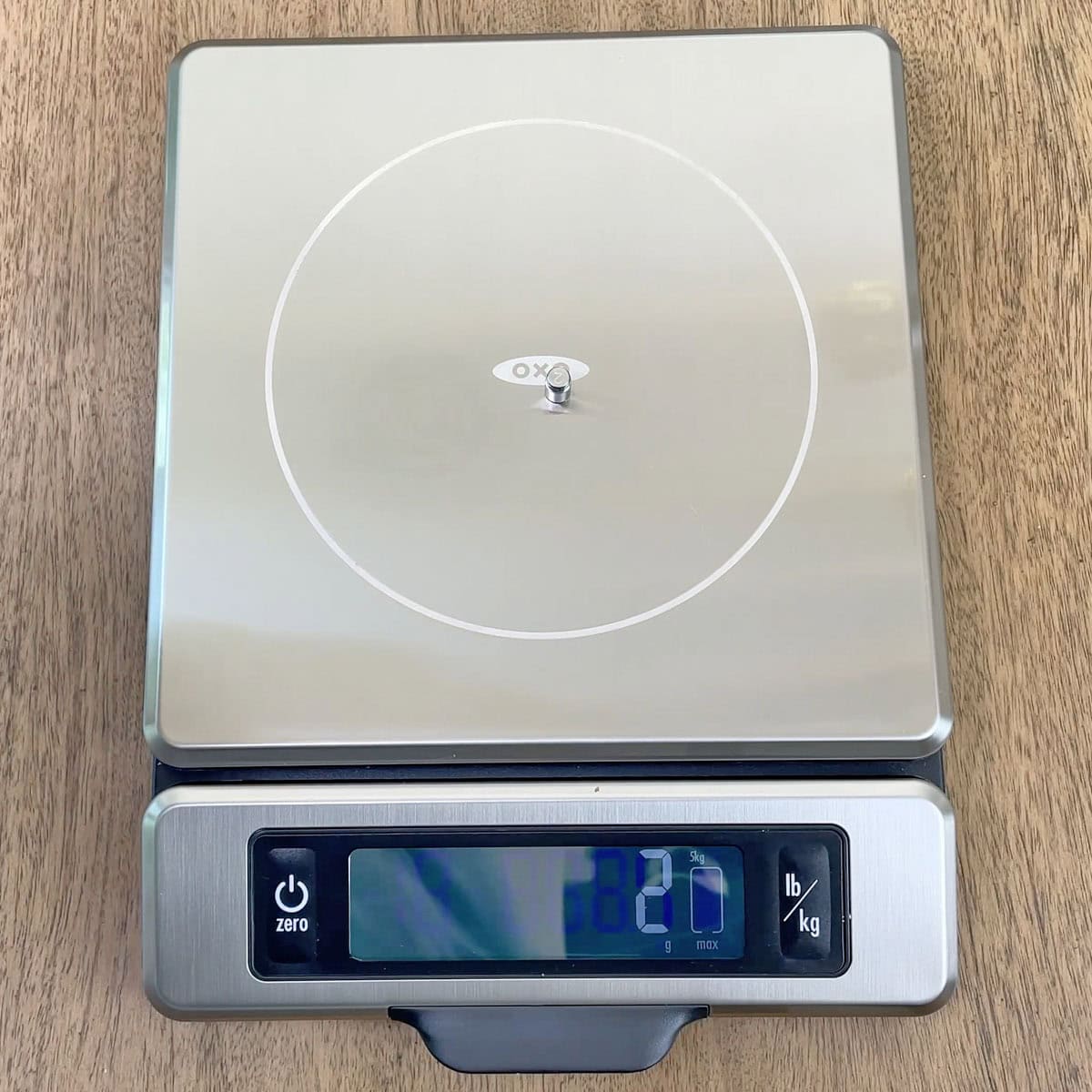
The OXO Good Grips scale was named Best Overall by America’s Test Kitchen, and it stands out for several practical features. It’s the only model I tested with a pull-out display, which extends about 4 inches. That allows you to see the screen clearly even when using oversized bowls or plates that would normally block the readout.
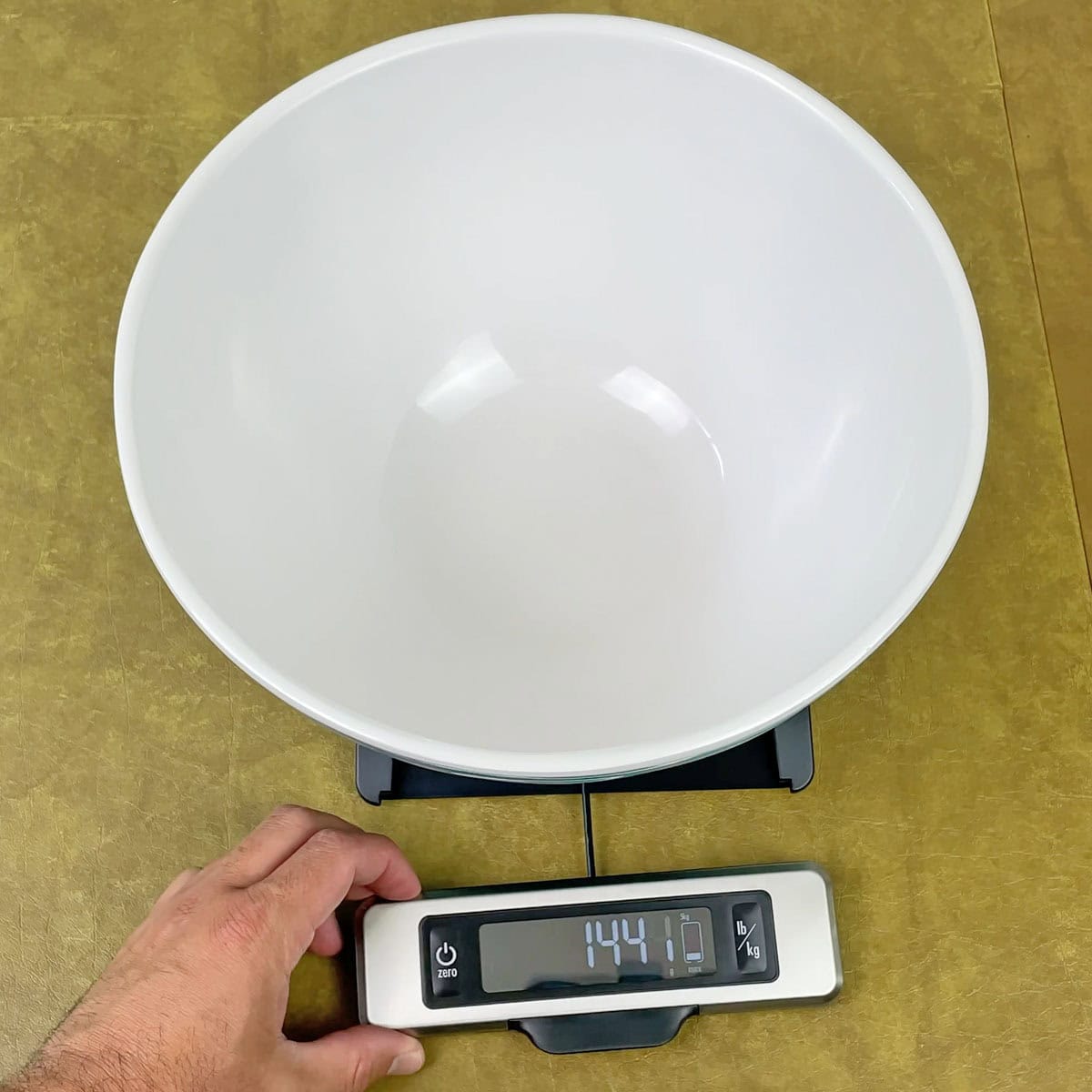
The backlit digital display is 3.4 by 1 inches—one of the largest and most readable. It also stays on for 30 minutes, by far the longest timeout of any scale in this group. Most shut off after just 2 to 4 minutes, so this gives you plenty of time to prep ingredients without interruption.
Accuracy was solid. The scale didn’t detect the 1-gram calibration weight, but it correctly measured all other weights in the 2- to 100-gram range, including those placed on the edges and on an uneven surface. Performance remained consistent after all durability tests.
The pull-out display adds complexity when it comes to cleaning, but the platform is removable, which makes it easier to wipe down thoroughly. The physical buttons are laminated, so there are no gaps for flour or moisture to get inside.
One unique feature is the on-screen progress bar that shows how close you are to the 11-pound (5000-gram) capacity.
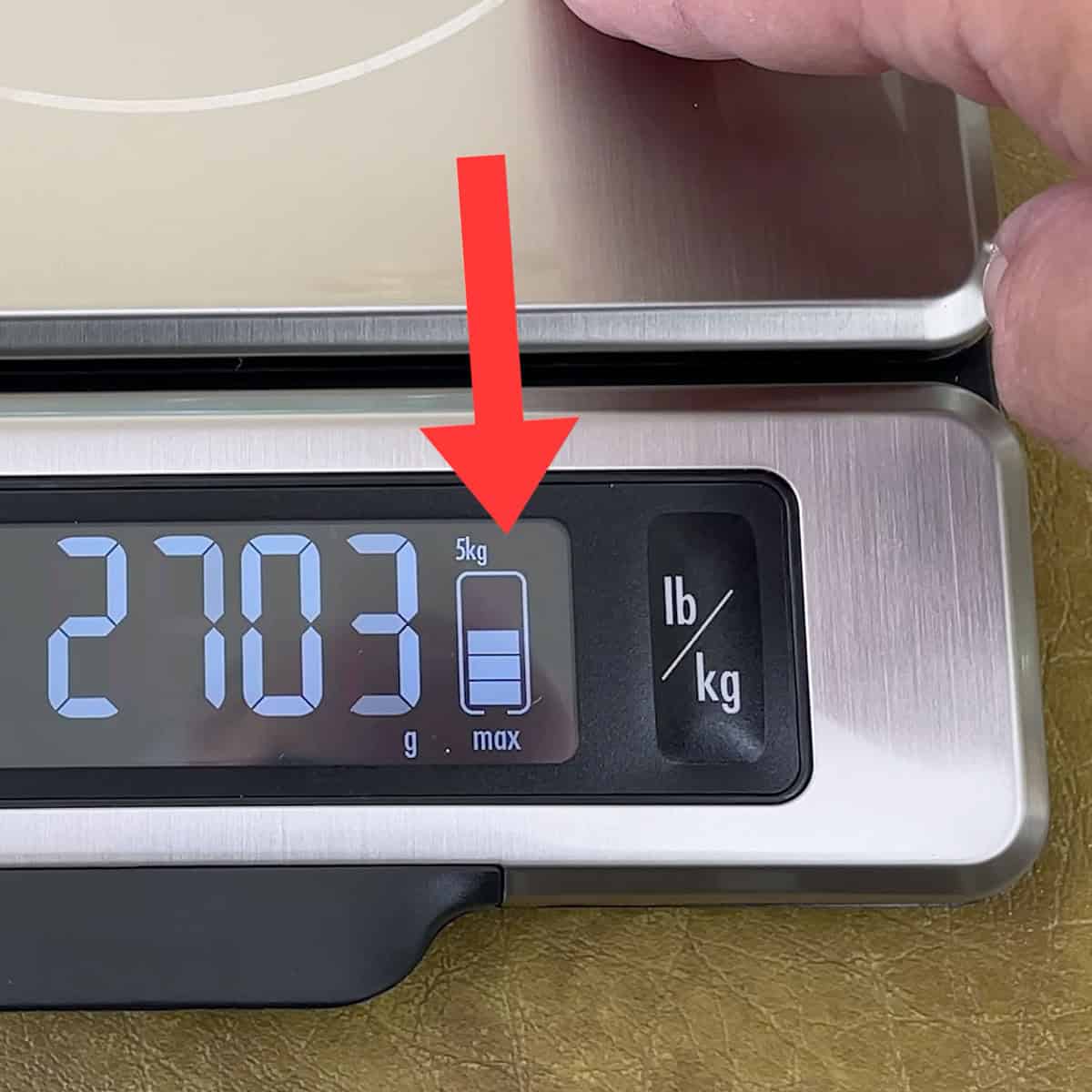
It’s helpful for avoiding overloads, though I wish the screen also showed battery life. This model uses four AAA batteries and includes a low battery indicator, but no live battery level.
Zwilling Enfinigy
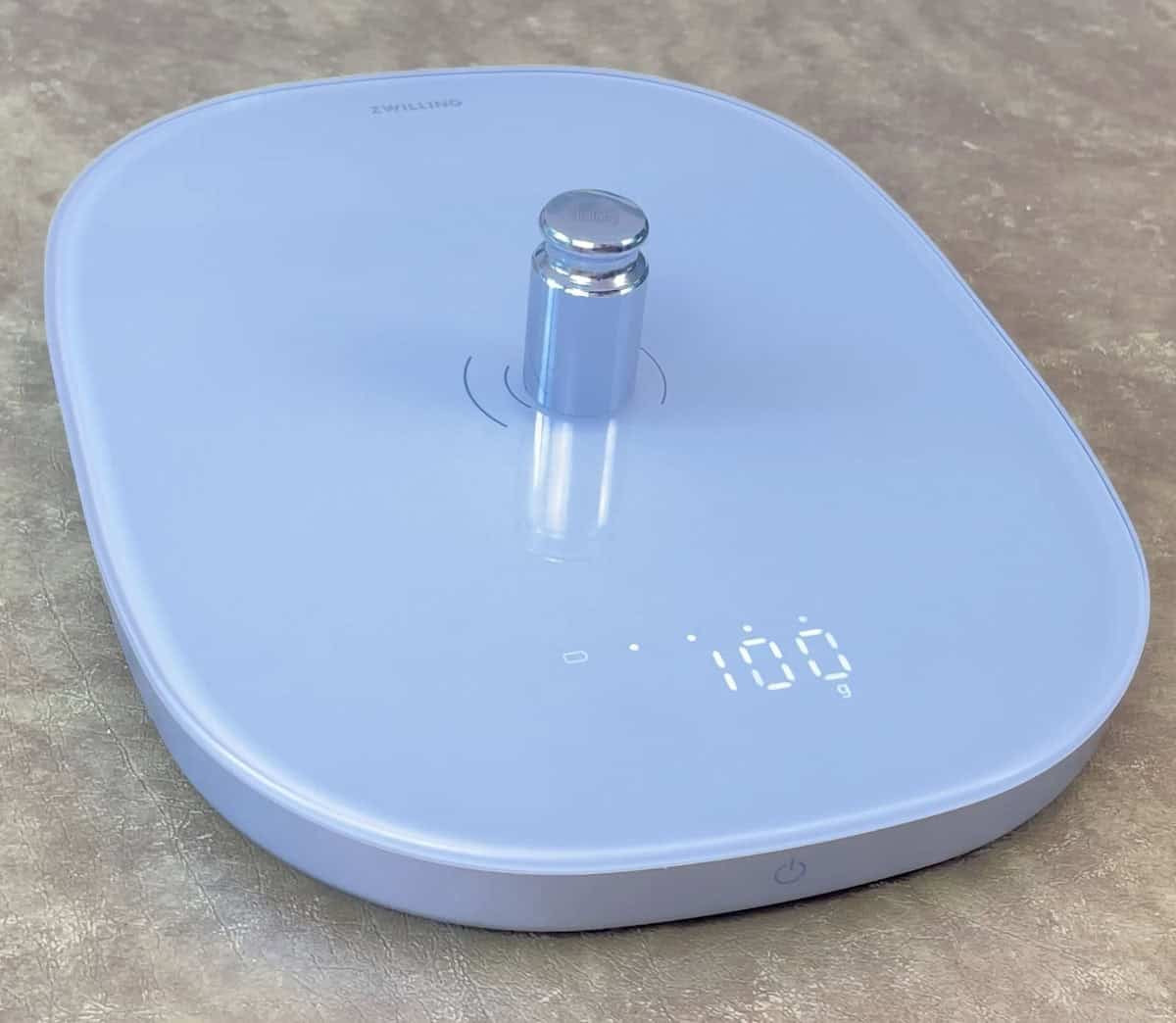
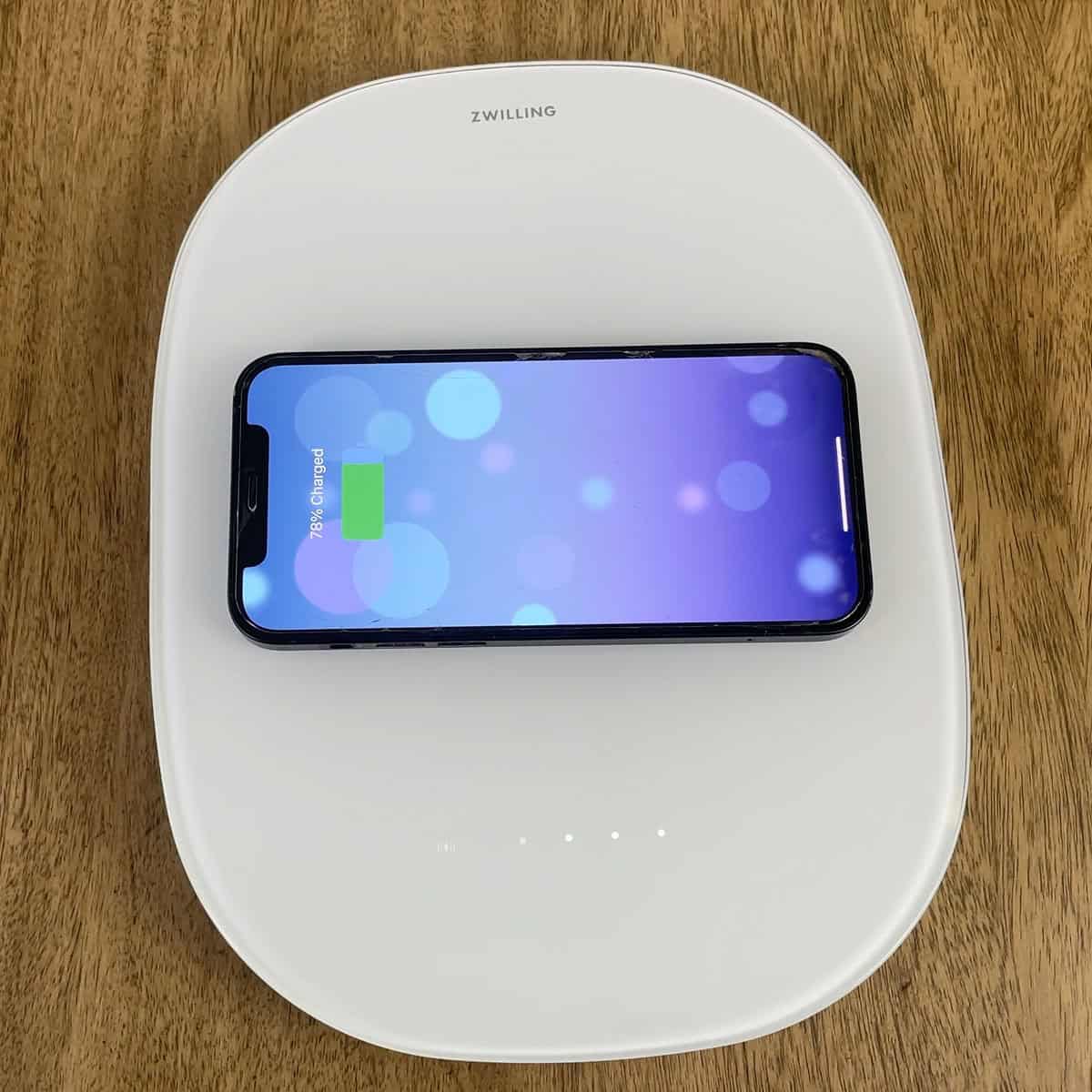
The Zwilling Enfinigy is the most expensive scale I tested. It includes a built-in rechargeable lithium-ion battery and charges via USB-C. It also functions as a wireless charging pad for your phone or tablet. While that’s a unique feature, I’m not a fan of placing a potentially dirty phone on the same surface where I prep food.
Accuracy was good overall. It didn’t register the 1-gram calibration weight, but it handled everything else correctly, including higher weights and edge placements. Results were consistent before and after the durability tests.
Cleaning was especially easy. The 9.65-by-7.4-inch seamless glass surface has no visible seams, gaps, or buttons, so flour and residue wiped off cleanly with minimal effort.
The biggest downside is the button layout. The power and tare button is a touch-sensitive area on the front edge, completely flush with the glass. There’s no tactile feedback, and it’s hard to see unless you’re crouched in front of it.
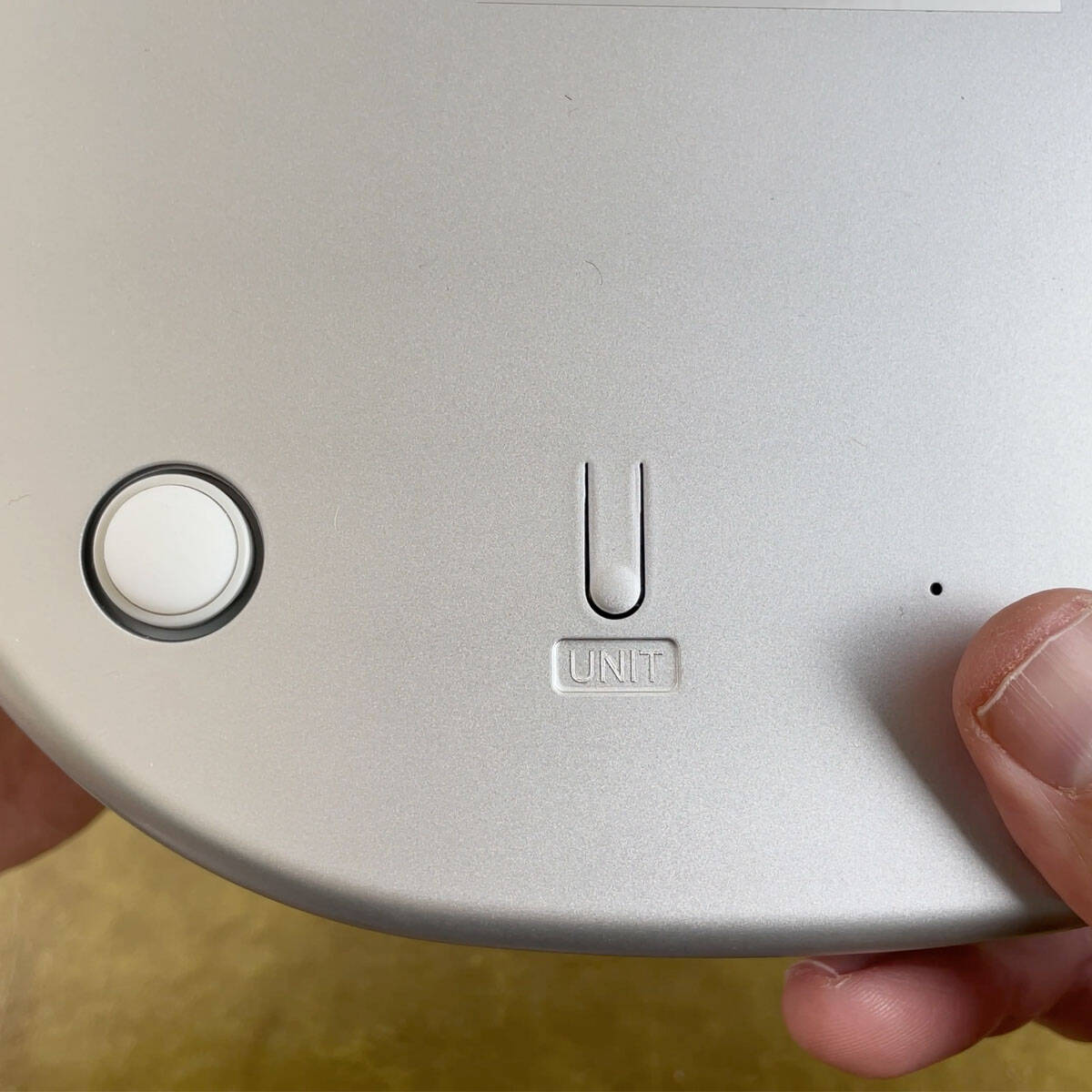
Even worse, the unit button is located on the bottom of the scale, so you have to lift the entire device just to switch between grams and ounces. That design choice makes quick adjustments frustrating during use.
Bottom Line: Which Kitchen Scale Is Best?
Now that you’ve seen the pros and cons of each scale, which one is actually worth buying?
First, it’s important to note that all of these scales are capable of providing accurate measurements for everyday cooking and baking. Even if one is occasionally off by a gram, that’s rarely going to affect the outcome of a recipe.
What matters more are the features that impact real-world usability. Platform size, maximum capacity, ease of cleaning, display readability, button responsiveness, and how long the screen stays on—those are the details that separate a good scale from a frustrating one.
Based on all of those factors, the best overall scale is the OXO Good Grips. It’s the only model with a pull-out display, which makes a big difference when you’re working with large bowls that would otherwise block the screen. It also has a removable platform that makes cleaning easier, a long 30-minute screen timeout, and reliable performance in every test.
If you want something more affordable, the Escali Primo is the best budget option. It’s simple, accurate, and easy to clean thanks to its sealed, laminated buttons. Just keep in mind that the platform is smaller than most others, which can be limiting depending on what you’re weighing.
Read more reviews and compare the current prices of each scale at the links below:
- Ultrea (Amazon)
- Amazon Basics (Amazon)
- KitchenAid Dual Platform (Amazon)
- Escali Primo (Amazon)
- Etekcity (Amazon)
- OXO Good Grips (Amazon, OXO.com)
- Zwilling Enfinigy (Amazon, Zwilling.com)
Related Topics
- Best Instant-Read Thermometer? ThermoWorks, ThermoPro, Lavatools, or Typhur?
- Best Sheet Pan? I Tested Nordic Ware, Caraway, Made In, Vollrath, Hestan, and USA Pan
- Hestan OvenBond Sheet Pan Review: Is It Worth the High Price?
- Are Made In Sheet Pans Worth Buying? (Review & Test Results)
- ThermoWorks Thermapen ONE vs. ThermoPop 2: Which Is Better?
- Best Non-Toxic Cookware? I Tested 45+ Healthy Brands
- Best Food Storage Containers? I Tested OXO, Pyrex, Rubbermaid, & More
- Best Induction Cookware? I Tested All-Clad, Lodge, Made In & More
- Best Cutting Board? I Tested Epicurean, OXO, Boos, Teakhaus & More
